Cambridge A Level Islamic Studies 9013 — 2020 Oct/Nov Paper 2 · Variant 2
9013/22/O/N/20 · 11 questions · 100 marks · ≈113 min
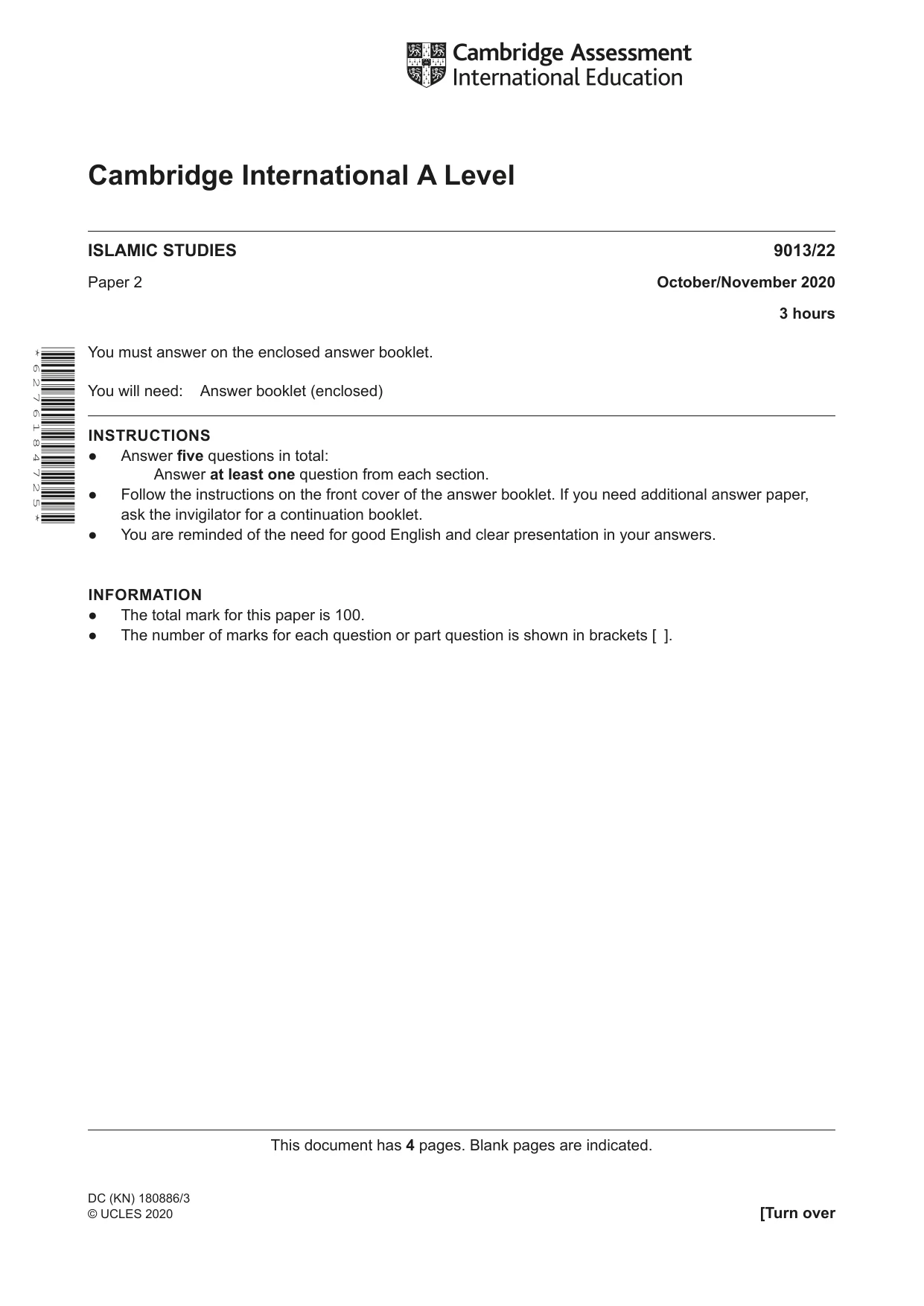
The question paper and its mark scheme, free to read here and free to download. This is Cambridge’s own paper, exactly as it was sat.
Question paper4 pages
Mark scheme9 pages
Answers below. Sit the paper first if you are practising.
Questions as text
Q1 · Outline the main political events through the first decades of the eighth century that…
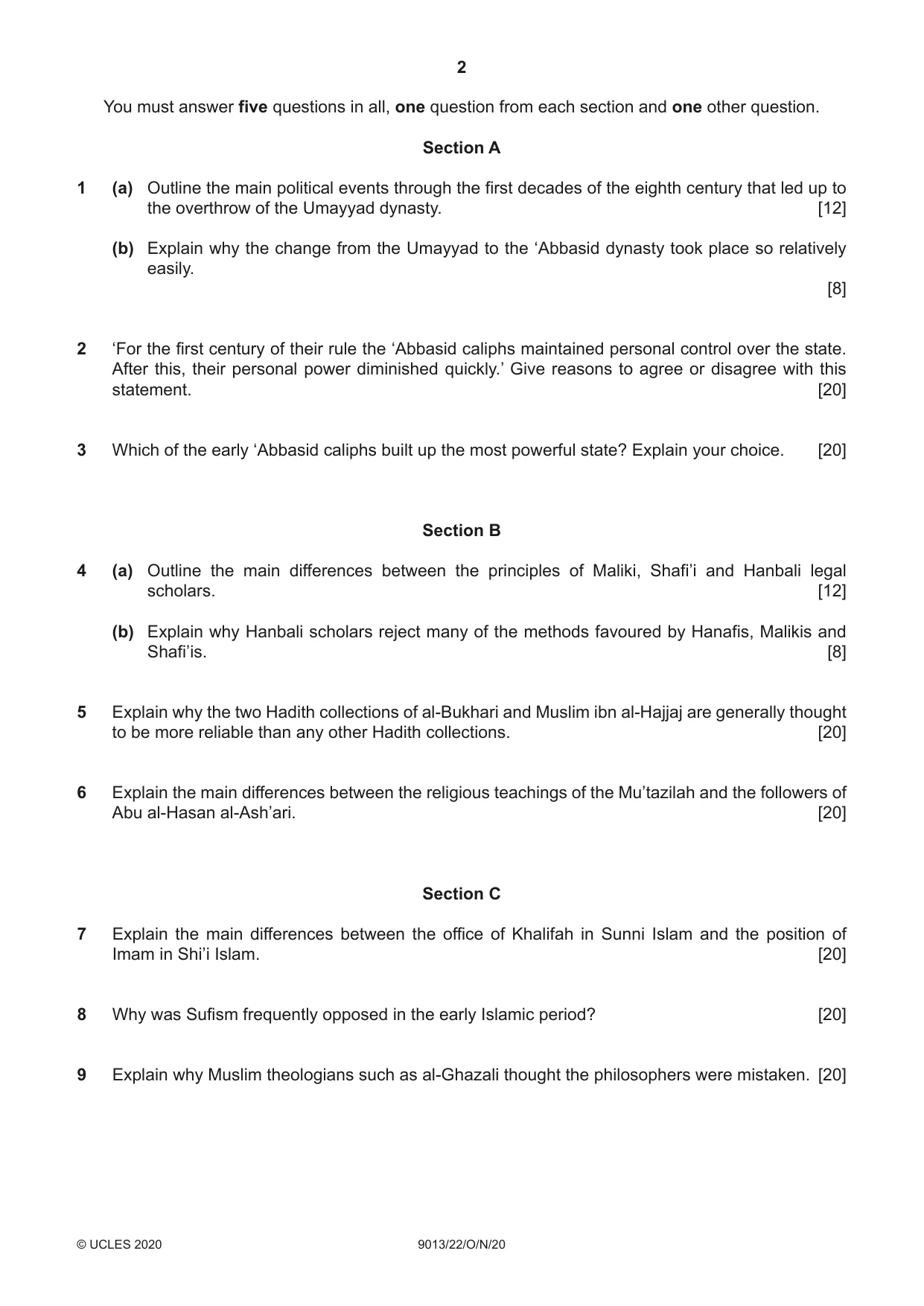
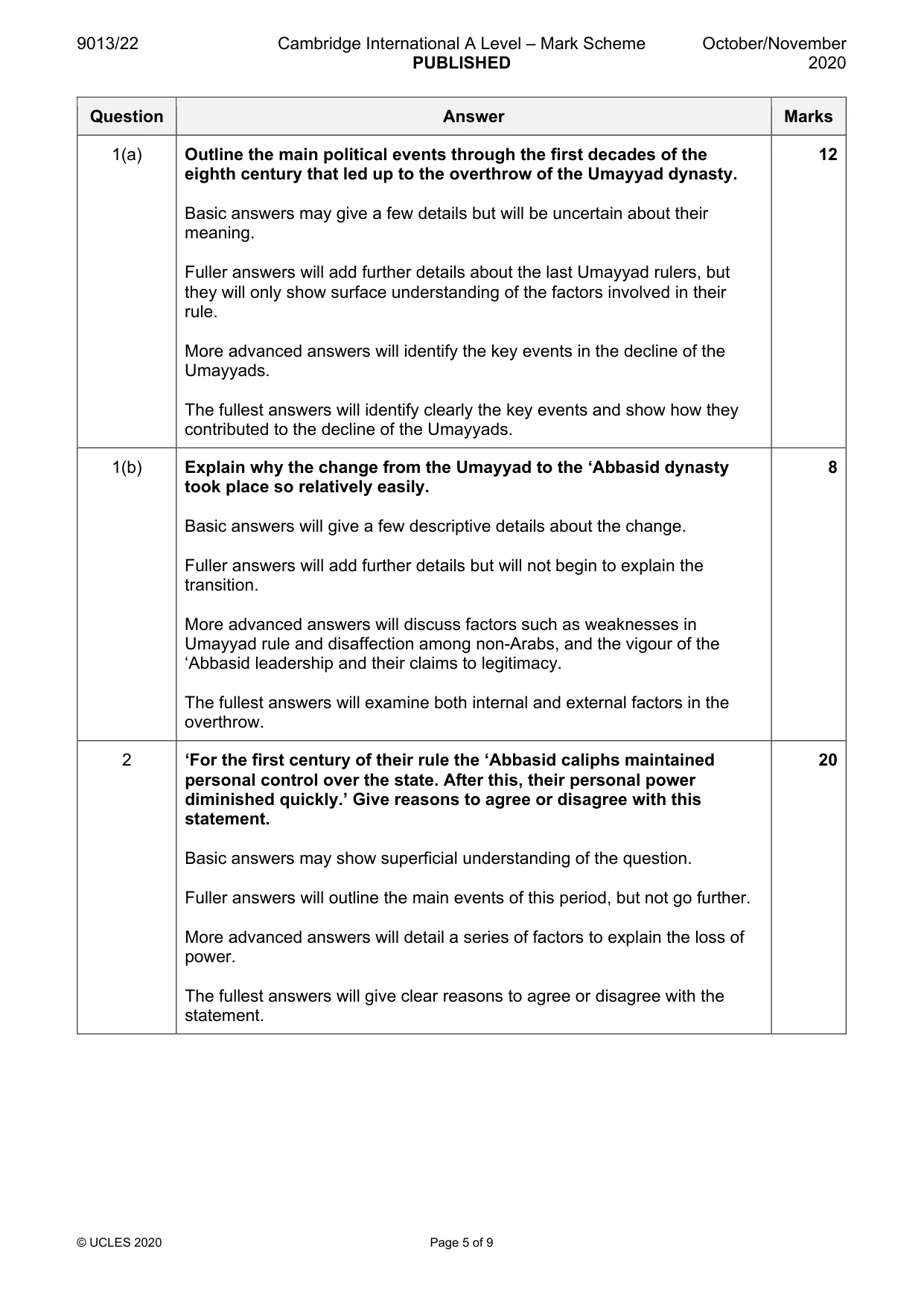
1 (a) Outline the main political events through the first decades of the eighth century that led up to the overthrow of the Umayyad dynasty. [12] (b) Explain why the change from the Umayyad to the ‘Abbasid dynasty took place so relatively easily. [8]
Mark scheme: Question Answer Marks 1(a) Outline the main political events through the first decades of the 12 eighth century that led up to the overthrow of the Umayyad dynasty. Basic answers may give a few details but will be uncertain about their meaning. Fuller answers will add further details about the last Umayyad rulers, but they will only show surface understanding of the factors involved in their rule. More advanced answers will identify the key events in the decline of the Umayyads. The fullest answers will identify clearly the key events and show how they contributed to the decline of the Umayyads. 1(b) Explain why the change from the Umayyad to the ‘Abbasid dynasty 8 took place so relatively easily. Basic answers will give a few descriptive details about the change. Fuller answers will add further details but will not begin to explain the transition. More advanced answers will discuss factors such as weaknesses in Umayyad rule and disaffection among non-Arabs, and the vigour of the ‘Abbasid leadership and their claims to legitimacy. The fullest answers will examine both internal and external factors in the overthrow.
Q2 · ‘For the first century of their rule the ‘Abbasid caliphs maintained personal control…
2 ‘For the first century of their rule the ‘Abbasid caliphs maintained personal control over the state. After this, their personal power diminished quickly.’ Give reasons to agree or disagree with this statement. [20]
Mark scheme: 2 ‘For the first century of their rule the ‘Abbasid caliphs maintained 20 personal control over the state. After this, their personal power diminished quickly.’ Give reasons to agree or disagree with this statement. Basic answers may show superficial understanding of the question. Fuller answers will outline the main events of this period, but not go further. More advanced answers will detail a series of factors to explain the loss of power. The fullest answers will give clear reasons to agree or disagree with the statement.
Q3 · Which of the early ‘Abbasid caliphs built up the most powerful state?
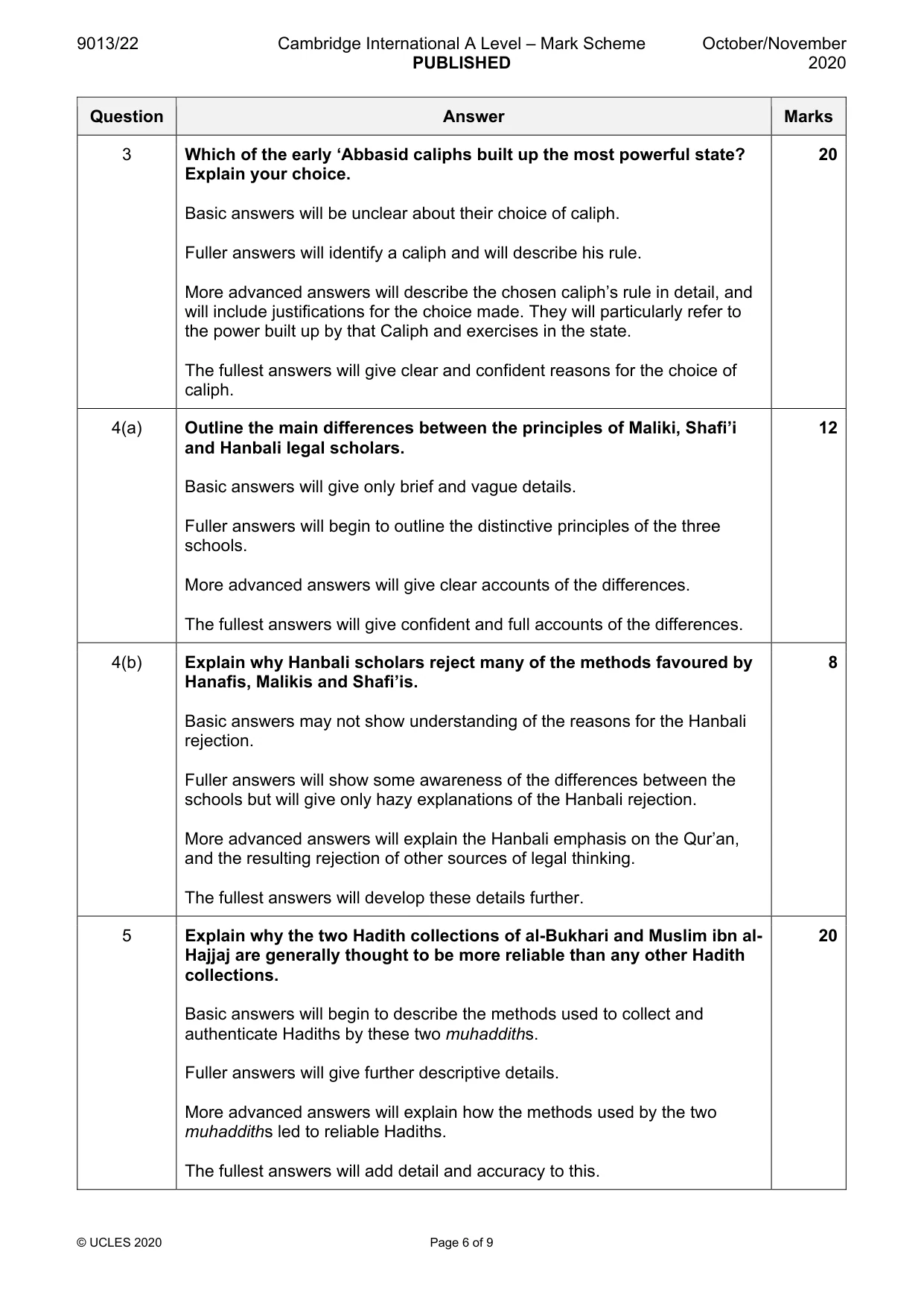
3 Which of the early ‘Abbasid caliphs built up the most powerful state? Explain your choice. [20]
Mark scheme: 3 Which of the early ‘Abbasid caliphs built up the most powerful state? 20 Explain your choice. Basic answers will be unclear about their choice of caliph. Fuller answers will identify a caliph and will describe his rule. More advanced answers will describe the chosen caliph’s rule in detail, and will include justifications for the choice made. They will particularly refer to the power built up by that Caliph and exercises in the state. The fullest answers will give clear and confident reasons for the choice of caliph.
Q4 · Outline the main differences between the principles of Maliki, Shafi’i and Hanbali legal…
4 (a) Outline the main differences between the principles of Maliki, Shafi’i and Hanbali legal scholars. [12] (b) Explain why Hanbali scholars reject many of the methods favoured by Hanafis, Malikis and Shafi’is. [8]
Mark scheme: 4(a) Outline the main differences between the principles of Maliki, Shafi’i 12 and Hanbali legal scholars. Basic answers will give only brief and vague details. Fuller answers will begin to outline the distinctive principles of the three schools. More advanced answers will give clear accounts of the differences. The fullest answers will give confident and full accounts of the differences. 4(b) Explain why Hanbali scholars reject many of the methods favoured by 8 Hanafis, Malikis and Shafi’is. Basic answers may not show understanding of the reasons for the Hanbali rejection. Fuller answers will show some awareness of the differences between the schools but will give only hazy explanations of the Hanbali rejection. More advanced answers will explain the Hanbali emphasis on the Qur’an, and the resulting rejection of other sources of legal thinking. The fullest answers will develop these details further.
Q5 · Explain why the two Hadith collections of al-Bukhari and Muslim ibn al-Hajjaj are…
5 Explain why the two Hadith collections of al-Bukhari and Muslim ibn al-Hajjaj are generally thought to be more reliable than any other Hadith collections. [20]
Mark scheme: 5 Explain why the two Hadith collections of al-Bukhari and Muslim ibn al- 20 Hajjaj are generally thought to be more reliable than any other Hadith collections. Basic answers will begin to describe the methods used to collect and authenticate Hadiths by these two muhaddiths. Fuller answers will give further descriptive details. More advanced answers will explain how the methods used by the two muhaddiths led to reliable Hadiths. The fullest answers will add detail and accuracy to this.
Q6 · Explain the main differences between the religious teachings of the Mu’tazilah and the…
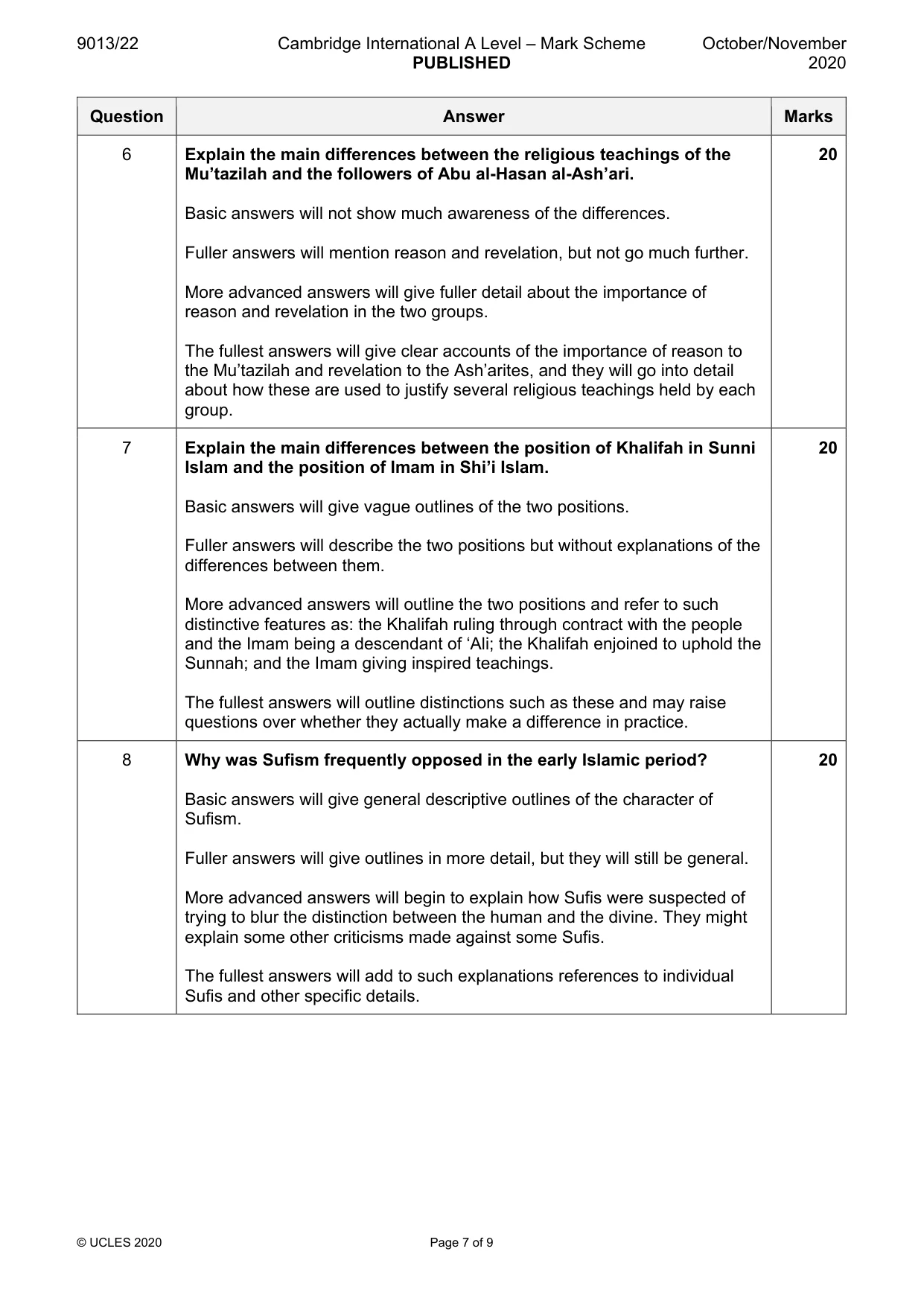
6 Explain the main differences between the religious teachings of the Mu’tazilah and the followers of Abu al-Hasan al-Ash’ari. [20] Section C
Mark scheme: 6 Explain the main differences between the religious teachings of the 20 Mu’tazilah and the followers of Abu al-Hasan al-Ash’ari. Basic answers will not show much awareness of the differences. Fuller answers will mention reason and revelation, but not go much further. More advanced answers will give fuller detail about the importance of reason and revelation in the two groups. The fullest answers will give clear accounts of the importance of reason to the Mu’tazilah and revelation to the Ash’arites, and they will go into detail about how these are used to justify several religious teachings held by each group.
Q7 · Explain the main differences between the office of Khalifah in Sunni Islam and the…
7 Explain the main differences between the office of Khalifah in Sunni Islam and the position of Imam in Shi’i Islam. [20]
Mark scheme: 7 Explain the main differences between the position of Khalifah in Sunni 20 Islam and the position of Imam in Shi’i Islam. Basic answers will give vague outlines of the two positions. Fuller answers will describe the two positions but without explanations of the differences between them. More advanced answers will outline the two positions and refer to such distinctive features as: the Khalifah ruling through contract with the people and the Imam being a descendant of ‘Ali; the Khalifah enjoined to uphold the Sunnah; and the Imam giving inspired teachings. The fullest answers will outline distinctions such as these and may raise questions over whether they actually make a difference in practice.
Q8 · Why was Sufism frequently opposed in the early Islamic period?
8 Why was Sufism frequently opposed in the early Islamic period? [20]
Mark scheme: 8 Why was Sufism frequently opposed in the early Islamic period? 20 Basic answers will give general descriptive outlines of the character of Sufism. Fuller answers will give outlines in more detail, but they will still be general. More advanced answers will begin to explain how Sufis were suspected of trying to blur the distinction between the human and the divine. They might explain some other criticisms made against some Sufis. The fullest answers will add to such explanations references to individual Sufis and other specific details.
Q10 · Which of the following do you think has contributed most to the development of Islam in…
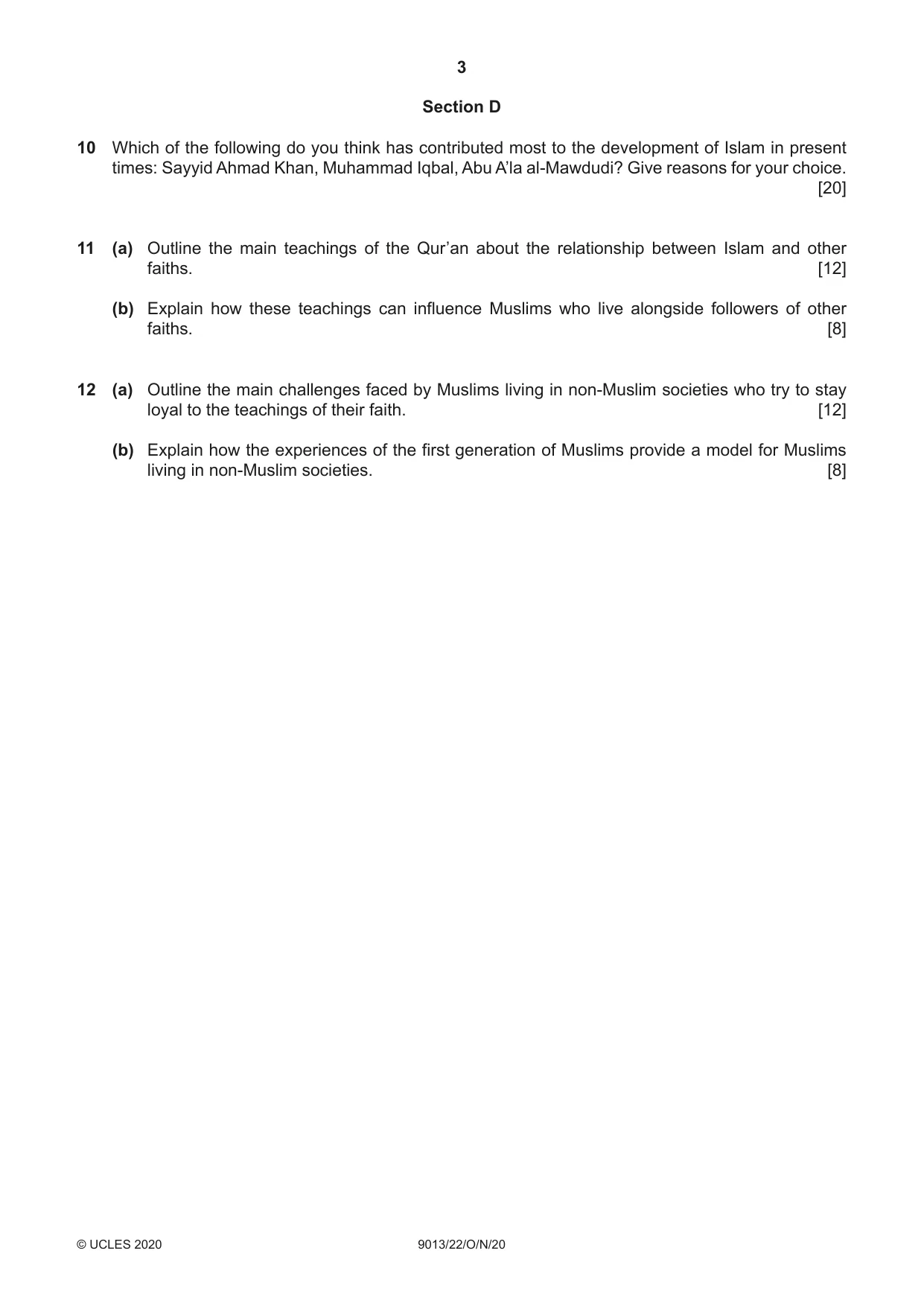
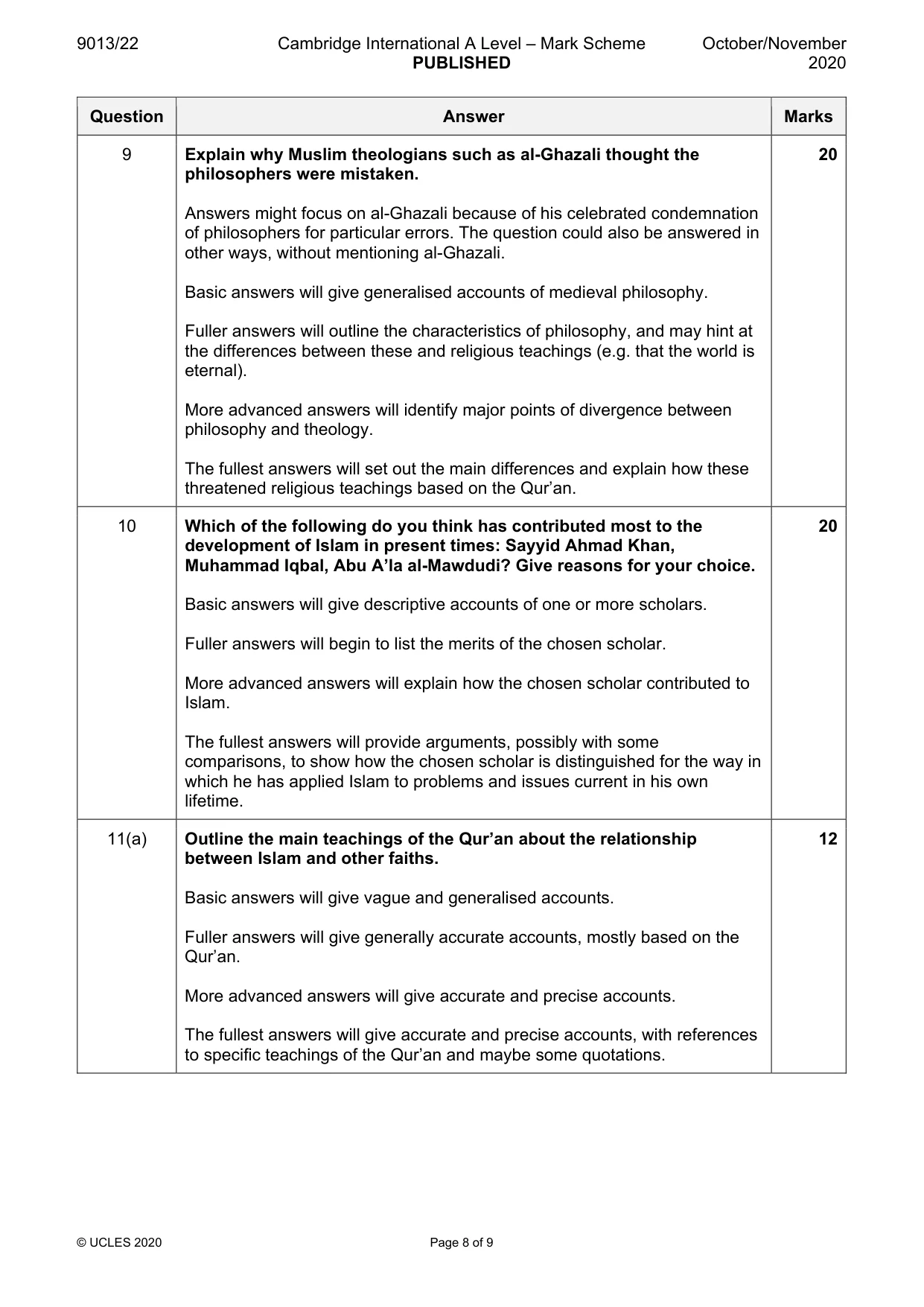
10 Which of the following do you think has contributed most to the development of Islam in present times: Sayyid Ahmad Khan, Muhammad Iqbal, Abu A’la al-Mawdudi? Give reasons for your choice. [20]
Mark scheme: 10 Which of the following do you think has contributed most to the 20 development of Islam in present times: Sayyid Ahmad Khan, Muhammad Iqbal, Abu A’la al-Mawdudi? Give reasons for your choice. Basic answers will give descriptive accounts of one or more scholars. Fuller answers will begin to list the merits of the chosen scholar. More advanced answers will explain how the chosen scholar contributed to Islam. The fullest answers will provide arguments, possibly with some comparisons, to show how the chosen scholar is distinguished for the way in which he has applied Islam to problems and issues current in his own lifetime.
Q11 · Outline the main teachings of the Qur’an about the relationship between Islam and other…
11 (a) Outline the main teachings of the Qur’an about the relationship between Islam and other faiths. [12] (b) Explain how these teachings can influence Muslims who live alongside followers of other faiths. [8]
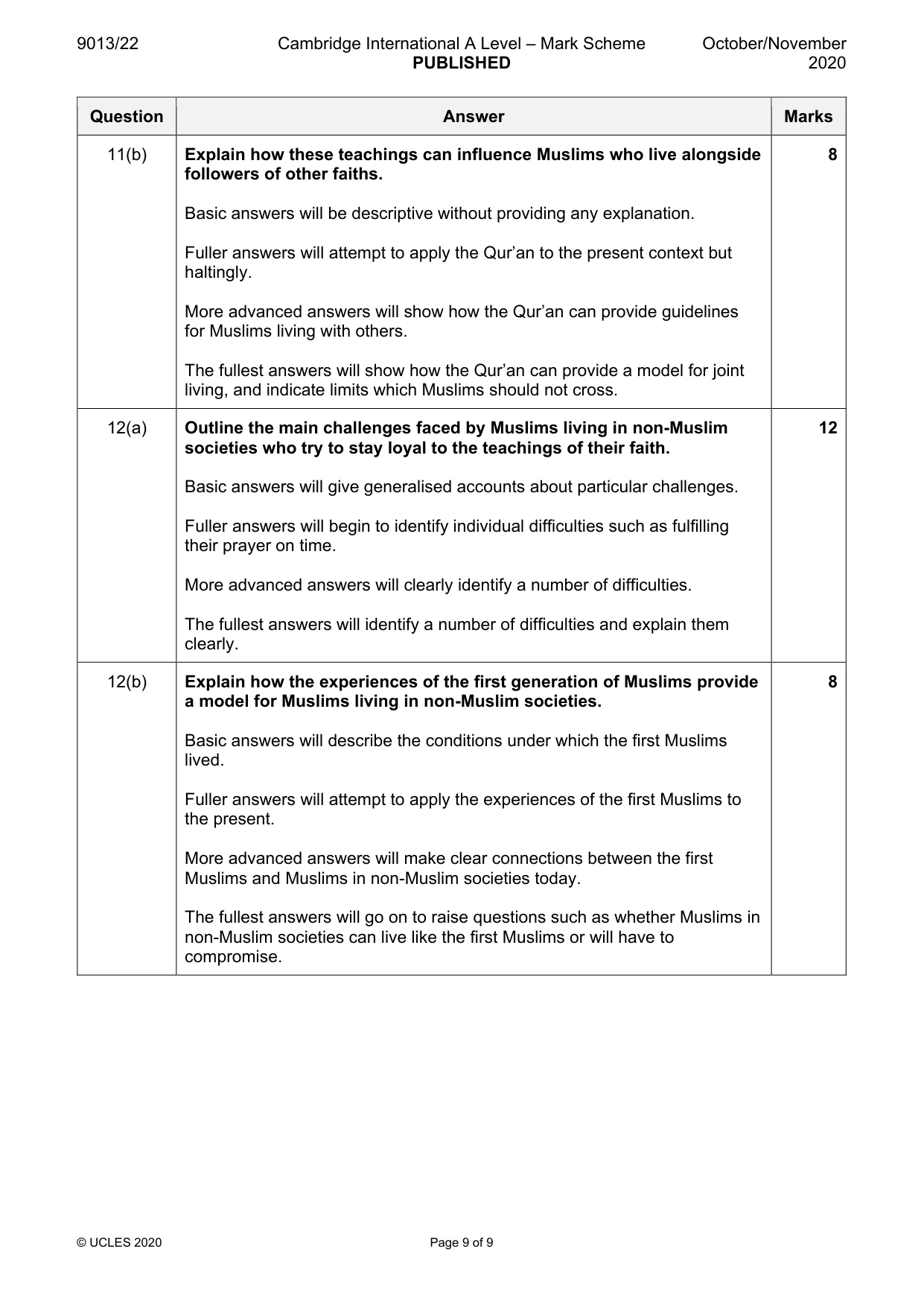
Mark scheme: 11(a) Outline the main teachings of the Qur’an about the relationship 12 between Islam and other faiths. Basic answers will give vague and generalised accounts. Fuller answers will give generally accurate accounts, mostly based on the Qur’an. More advanced answers will give accurate and precise accounts. The fullest answers will give accurate and precise accounts, with references to specific teachings of the Qur’an and maybe some quotations. 11(b) Explain how these teachings can influence Muslims who live alongside 8 followers of other faiths. Basic answers will be descriptive without providing any explanation. Fuller answers will attempt to apply the Qur’an to the present context but haltingly. More advanced answers will show how the Qur’an can provide guidelines for Muslims living with others. The fullest answers will show how the Qur’an can provide a model for joint living, and indicate limits which Muslims should not cross.
Q12 · Outline the main challenges faced by Muslims living in non-Muslim societies who try to…
12 (a) Outline the main challenges faced by Muslims living in non-Muslim societies who try to stay loyal to the teachings of their faith. [12] (b) Explain how the experiences of the first generation of Muslims provide a model for Muslims living in non-Muslim societies. [8]
Mark scheme: 12(a) Outline the main challenges faced by Muslims living in non-Muslim 12 societies who try to stay loyal to the teachings of their faith. Basic answers will give generalised accounts about particular challenges. Fuller answers will begin to identify individual difficulties such as fulfilling their prayer on time. More advanced answers will clearly identify a number of difficulties. The fullest answers will identify a number of difficulties and explain them clearly. 12(b) Explain how the experiences of the first generation of Muslims provide 8 a model for Muslims living in non-Muslim societies. Basic answers will describe the conditions under which the first Muslims lived. Fuller answers will attempt to apply the experiences of the first Muslims to the present. More advanced answers will make clear connections between the first Muslims and Muslims in non-Muslim societies today. The fullest answers will go on to raise questions such as whether Muslims in non-Muslim societies can live like the first Muslims or will have to compromise.
What you needed in this session
Cambridge’s own grade thresholds for 2020 Oct/Nov, Paper 2 · Variant 2. A higher threshold means an easier paper — the bar moves with how the cohort did.