Cambridge A Level Islamic Studies 9013 — 2018 Oct/Nov Paper 2 · Variant 2
9013/22/O/N/18 · 12 questions · 100 marks · ≈113 min
The question paper and its mark scheme, free to read here and free to download. This is Cambridge’s own paper, exactly as it was sat.
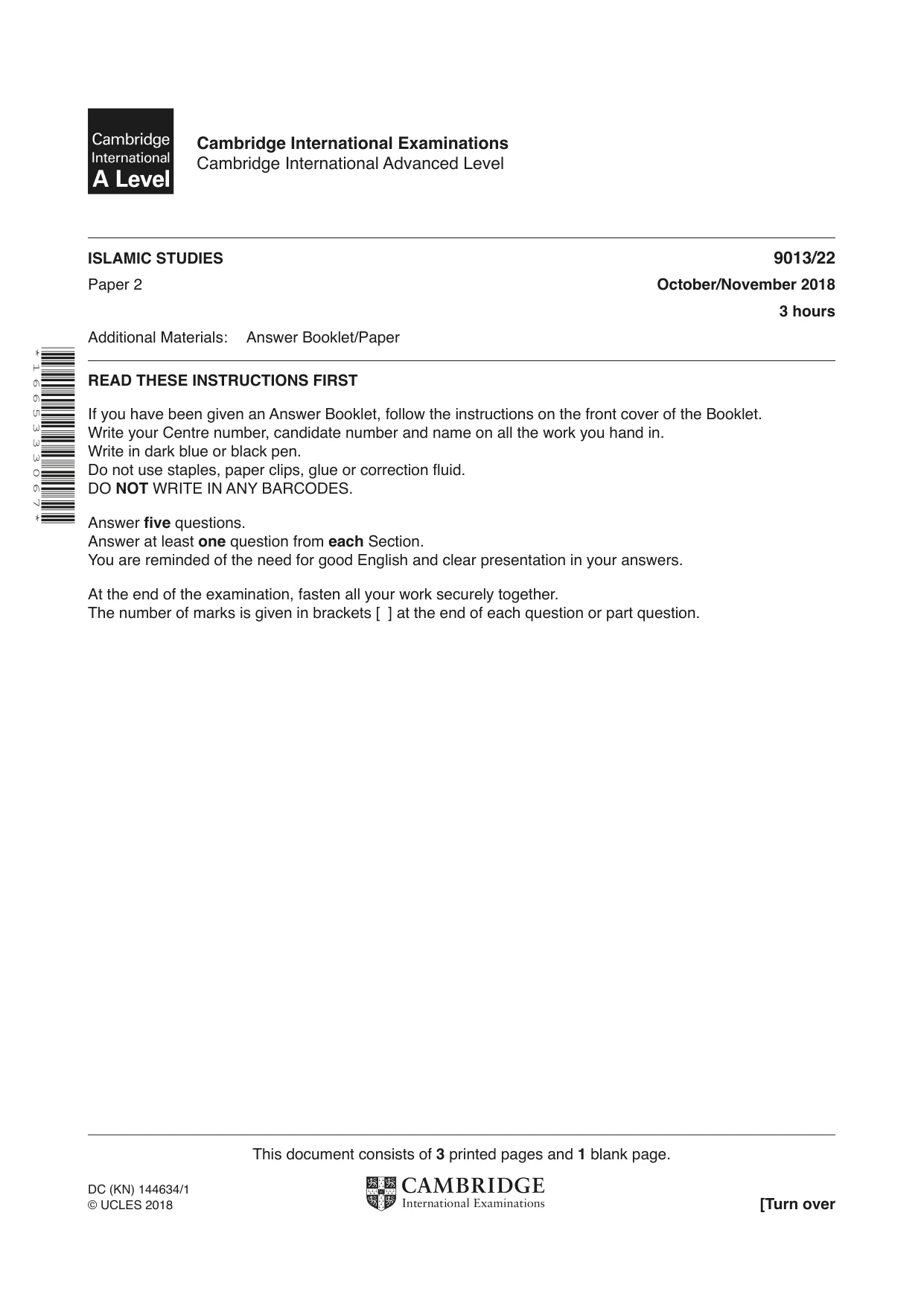
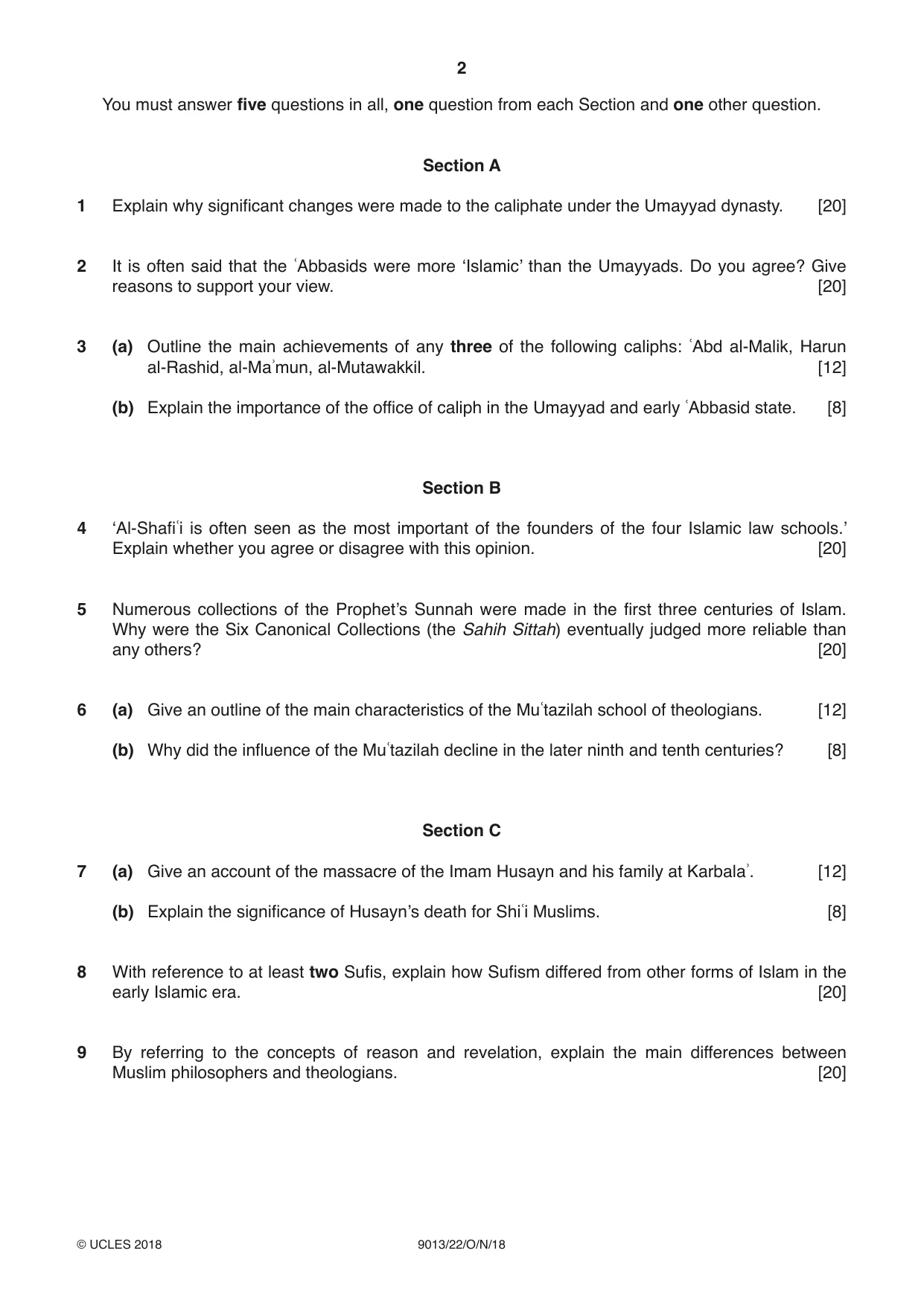
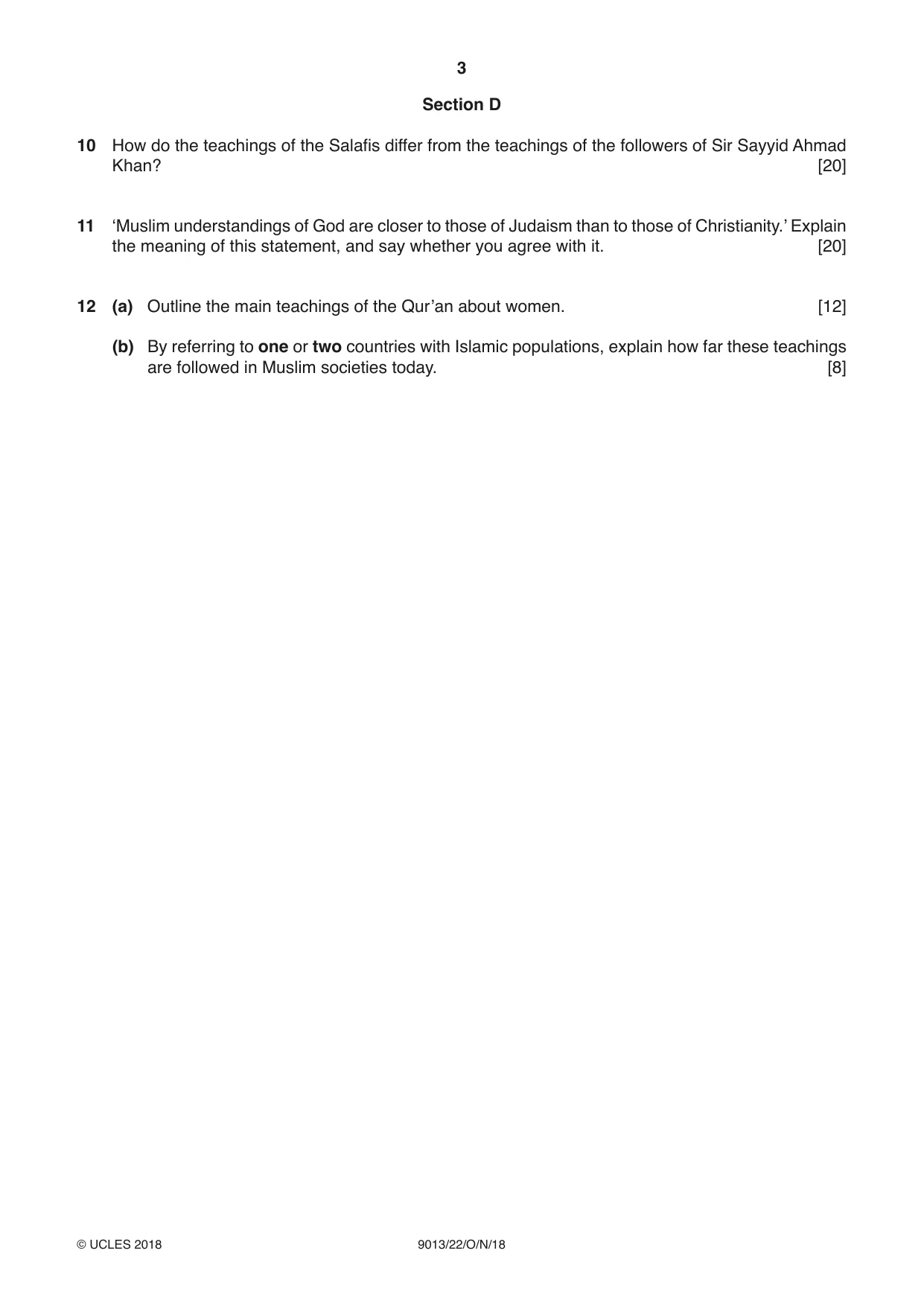
Question paper4 pages

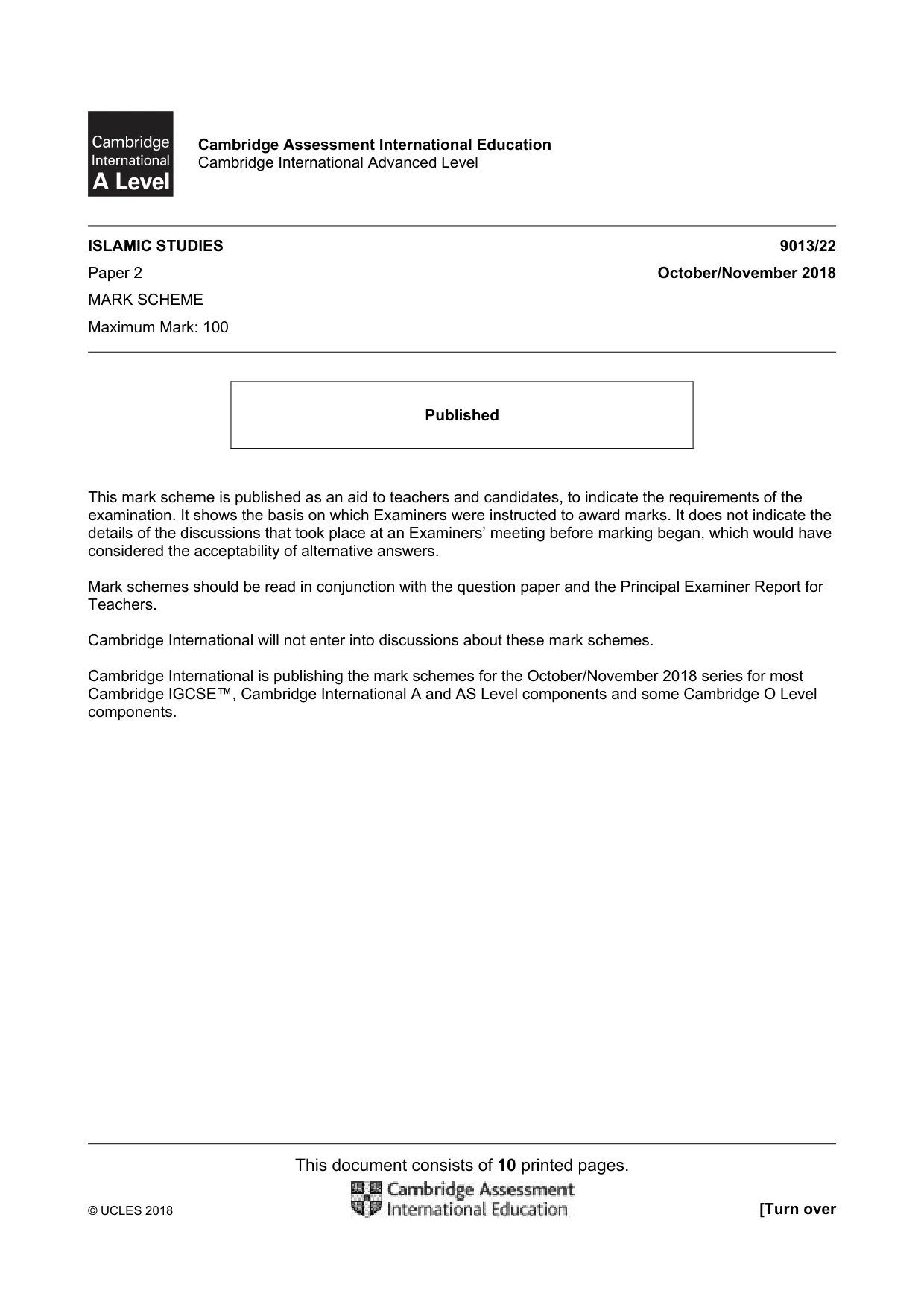
Mark scheme10 pages
Answers below. Sit the paper first if you are practising.
Questions as text
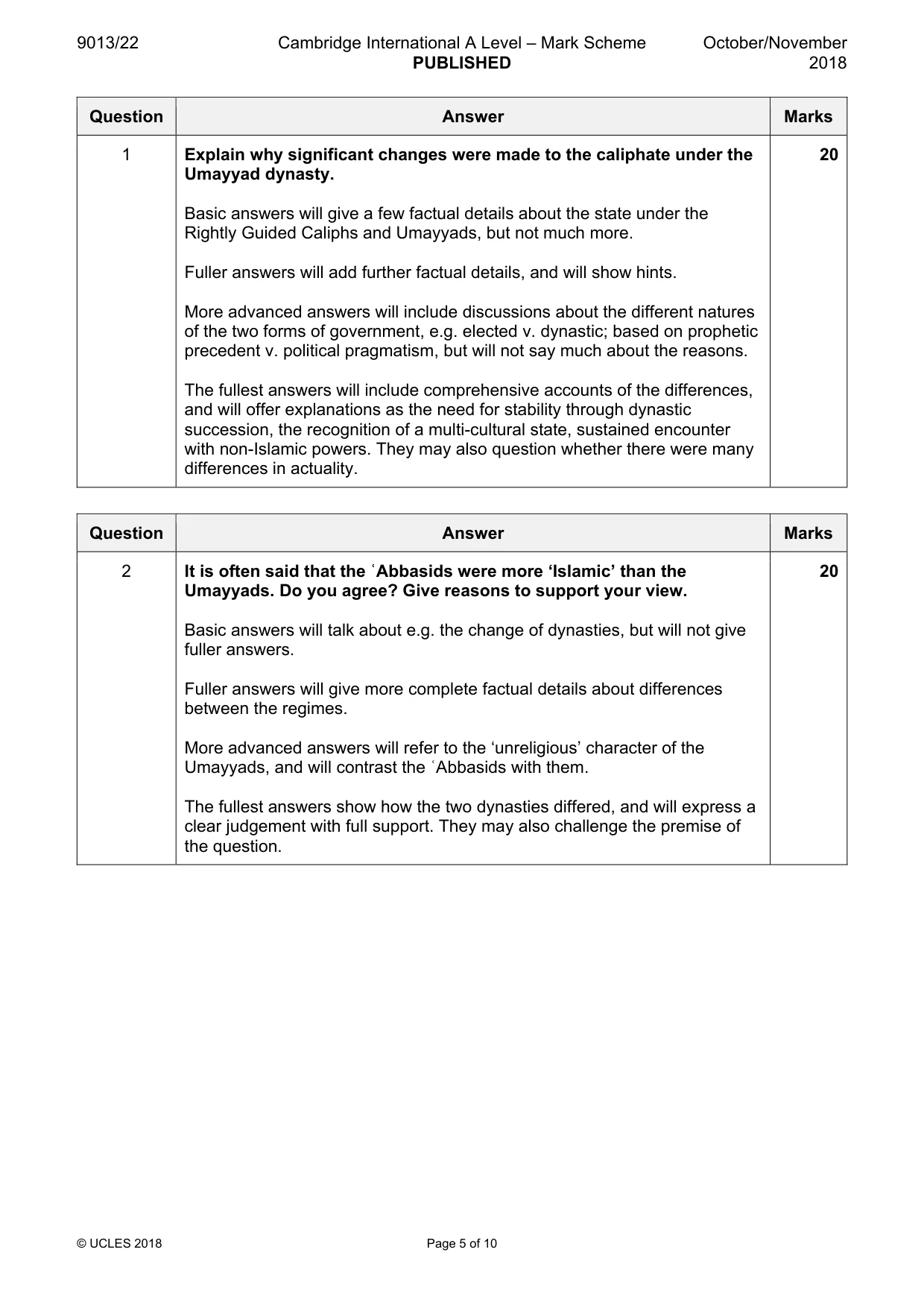
Q1 · Explain why significant changes were made to the caliphate under the Umayyad dynasty
1 Explain why significant changes were made to the caliphate under the Umayyad dynasty. [20]
Mark scheme: Question Answer Marks 1 Explain why significant changes were made to the caliphate under the 20 Umayyad dynasty. Basic answers will give a few factual details about the state under the Rightly Guided Caliphs and Umayyads, but not much more. Fuller answers will add further factual details, and will show hints. More advanced answers will include discussions about the different natures of the two forms of government, e.g. elected v. dynastic; based on prophetic precedent v. political pragmatism, but will not say much about the reasons. The fullest answers will include comprehensive accounts of the differences, and will offer explanations as the need for stability through dynastic succession, the recognition of a multi-cultural state, sustained encounter with non-Islamic powers. They may also question whether there were many differences in actuality.
Q2 · It is often said that the ʿAbbasids were more ‘Islamic’ than the Umayyads
2 It is often said that the ʿAbbasids were more ‘Islamic’ than the Umayyads. Do you agree? Give reasons to support your view. [20]
Mark scheme: 2 It is often said that the ʿAbbasids were more ‘Islamic’ than the 20 Umayyads. Do you agree? Give reasons to support your view. Basic answers will talk about e.g. the change of dynasties, but will not give fuller answers. Fuller answers will give more complete factual details about differences between the regimes. More advanced answers will refer to the ‘unreligious’ character of the Umayyads, and will contrast the ʿAbbasids with them. The fullest answers show how the two dynasties differed, and will express a clear judgement with full support. They may also challenge the premise of the question.
Q3 · Outline the main achievements of any three of the following caliphs: ʿAbd al-Malik, Harun…
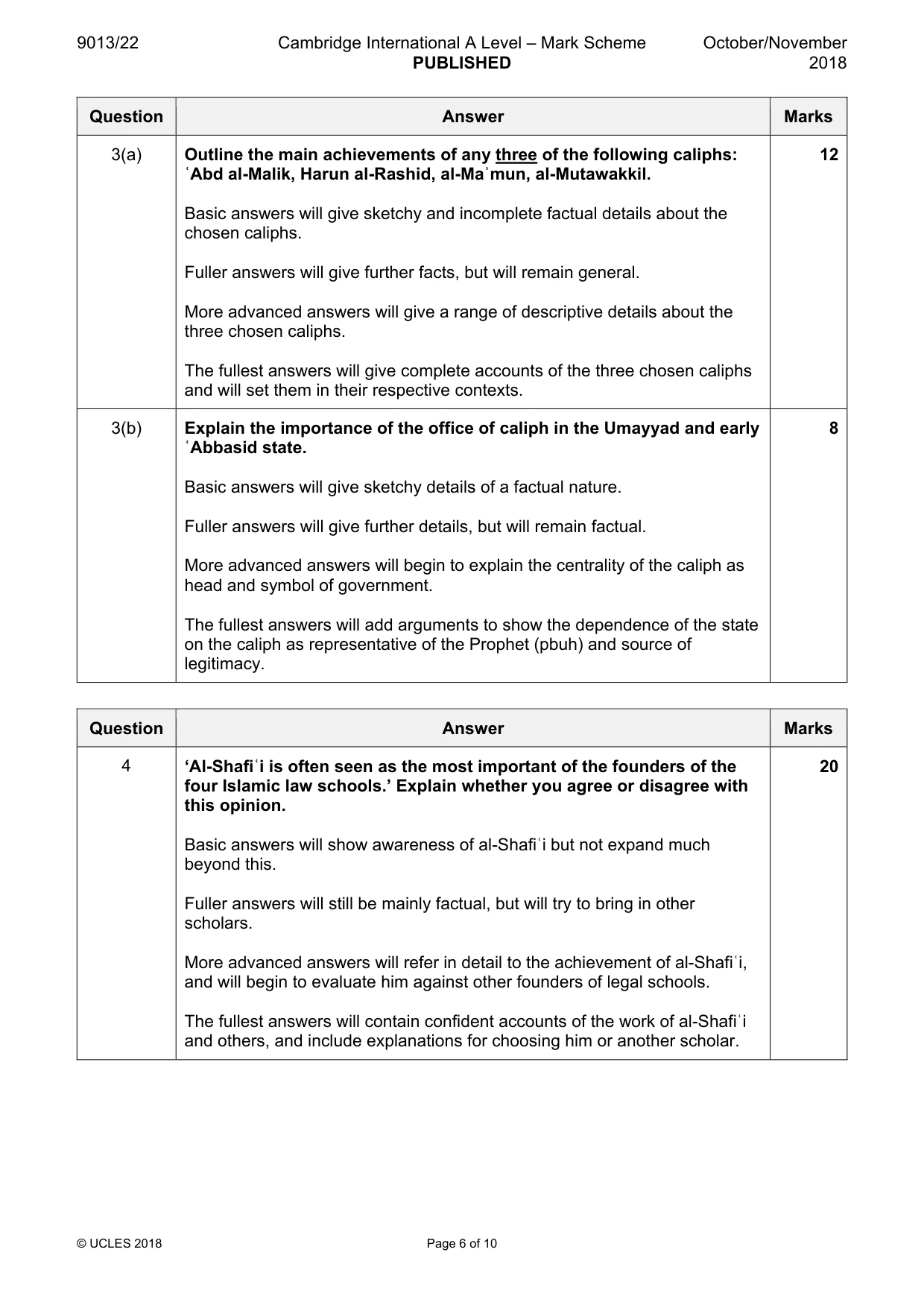
3 (a) Outline the main achievements of any three of the following caliphs: ʿAbd al-Malik, Harun al-Rashid, al-Maʾmun, al-Mutawakkil. [12] (b) Explain the importance of the office of caliph in the Umayyad and early ʿAbbasid state. [8]
Mark scheme: 3(a) Outline the main achievements of any three of the following caliphs: 12 ʿAbd al-Malik, Harun al-Rashid, al-Maʾmun, al-Mutawakkil. Basic answers will give sketchy and incomplete factual details about the chosen caliphs. Fuller answers will give further facts, but will remain general. More advanced answers will give a range of descriptive details about the three chosen caliphs. The fullest answers will give complete accounts of the three chosen caliphs and will set them in their respective contexts. 3(b) Explain the importance of the office of caliph in the Umayyad and early 8 ʿAbbasid state. Basic answers will give sketchy details of a factual nature. Fuller answers will give further details, but will remain factual. More advanced answers will begin to explain the centrality of the caliph as head and symbol of government. The fullest answers will add arguments to show the dependence of the state on the caliph as representative of the Prophet (pbuh) and source of legitimacy.
Q4 · ‘Al-Shafiʿi is often seen as the most important of the founders of the four Islamic law…
4 ‘Al-Shafiʿi is often seen as the most important of the founders of the four Islamic law schools.’ Explain whether you agree or disagree with this opinion. [20]
Mark scheme: 4 ‘Al-Shafiʿi is often seen as the most important of the founders of the 20 four Islamic law schools.’ Explain whether you agree or disagree with this opinion. Basic answers will show awareness of al-Shafiʿi but not expand much beyond this. Fuller answers will still be mainly factual, but will try to bring in other scholars. More advanced answers will refer in detail to the achievement of al-Shafiʿi, and will begin to evaluate him against other founders of legal schools. The fullest answers will contain confident accounts of the work of al-Shafiʿi and others, and include explanations for choosing him or another scholar.
Q5 · Numerous collections of the Prophet’s Sunnah were made in the first three centuries of…
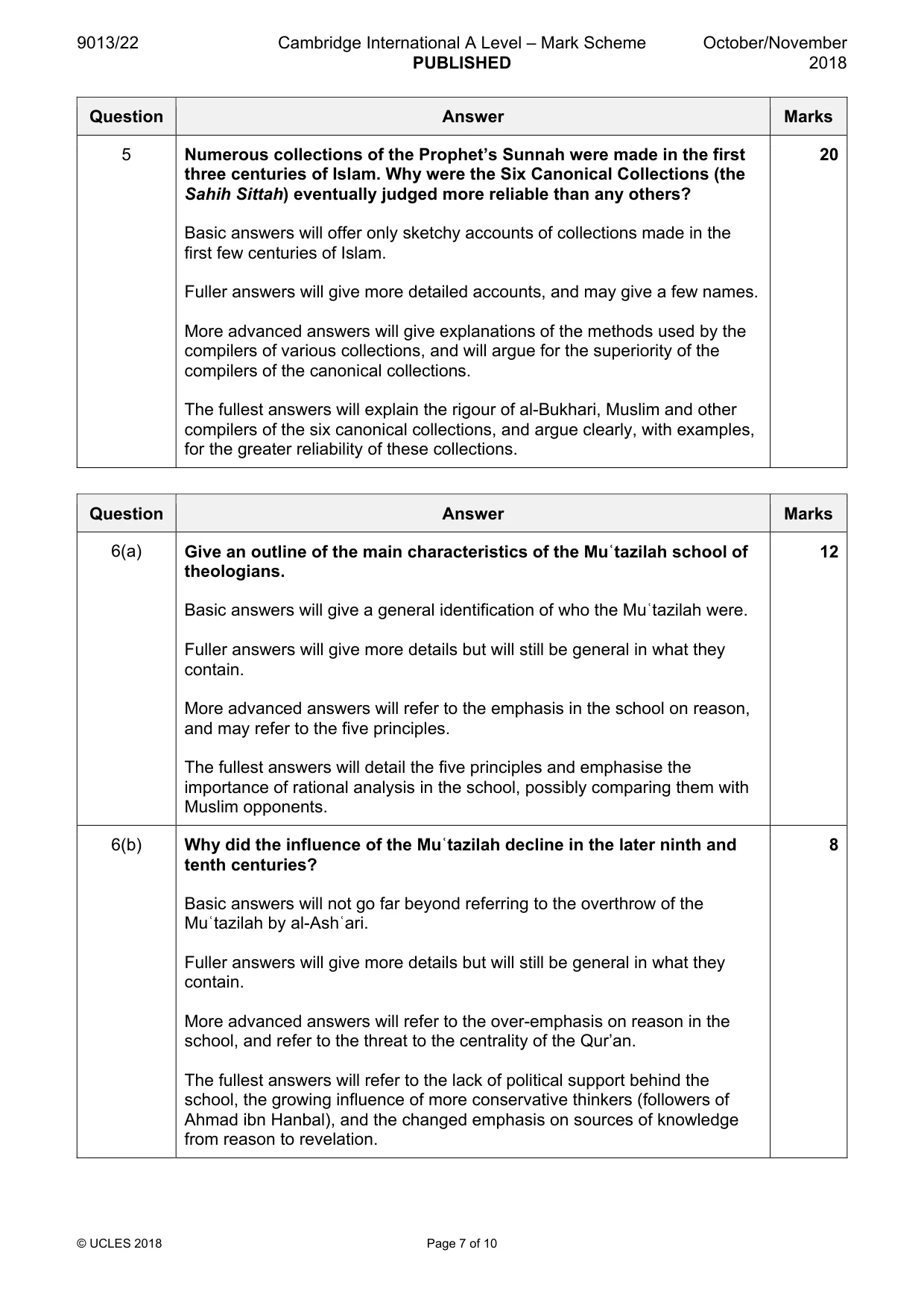
5 Numerous collections of the Prophet’s Sunnah were made in the first three centuries of Islam. Why were the Six Canonical Collections (the Sahih Sittah) eventually judged more reliable than any others? [20]
Mark scheme: 5 Numerous collections of the Prophet’s Sunnah were made in the first 20 three centuries of Islam. Why were the Six Canonical Collections (the Sahih Sittah) eventually judged more reliable than any others? Basic answers will offer only sketchy accounts of collections made in the first few centuries of Islam. Fuller answers will give more detailed accounts, and may give a few names. More advanced answers will give explanations of the methods used by the compilers of various collections, and will argue for the superiority of the compilers of the canonical collections. The fullest answers will explain the rigour of al-Bukhari, Muslim and other compilers of the six canonical collections, and argue clearly, with examples, for the greater reliability of these collections.
Q6 · Give an outline of the main characteristics of the Muʿtazilah school of theologians
6 (a) Give an outline of the main characteristics of the Muʿtazilah school of theologians. [12] (b) Why did the influence of the Muʿtazilah decline in the later ninth and tenth centuries? [8] Section C
Mark scheme: 6(a) Give an outline of the main characteristics of the Muʿtazilah school of 12 theologians. Basic answers will give a general identification of who the Muʿtazilah were. Fuller answers will give more details but will still be general in what they contain. More advanced answers will refer to the emphasis in the school on reason, and may refer to the five principles. The fullest answers will detail the five principles and emphasise the importance of rational analysis in the school, possibly comparing them with Muslim opponents. 6(b) Why did the influence of the Muʿtazilah decline in the later ninth and 8 tenth centuries? Basic answers will not go far beyond referring to the overthrow of the Muʿtazilah by al-Ashʿari. Fuller answers will give more details but will still be general in what they contain. More advanced answers will refer to the over-emphasis on reason in the school, and refer to the threat to the centrality of the Qur’an. The fullest answers will refer to the lack of political support behind the school, the growing influence of more conservative thinkers (followers of Ahmad ibn Hanbal), and the changed emphasis on sources of knowledge from reason to revelation.
Q7 · Give an account of the massacre of the Imam Husayn and his family at Karbalaʾ
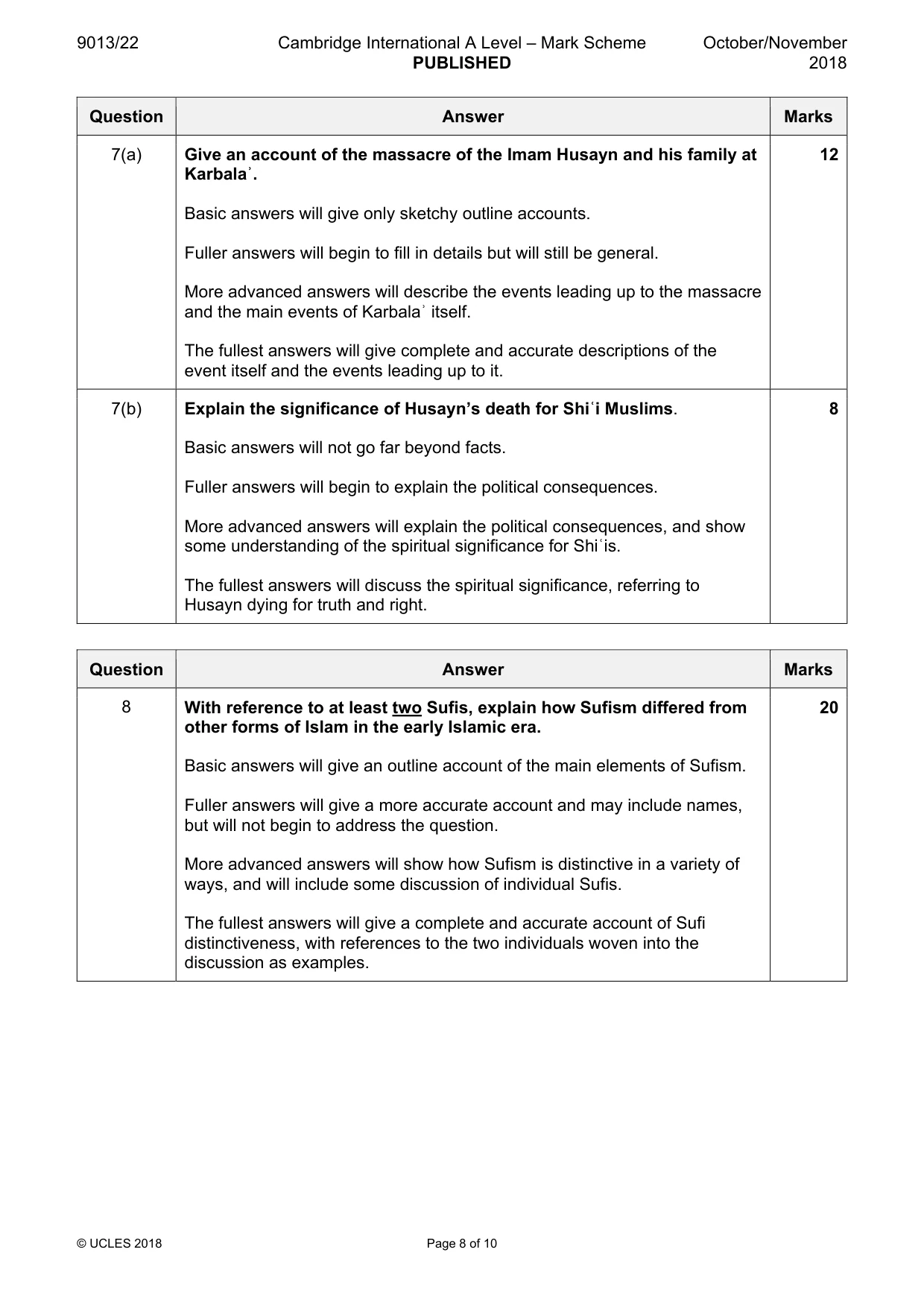
7 (a) Give an account of the massacre of the Imam Husayn and his family at Karbalaʾ. [12] (b) Explain the significance of Husayn’s death for Shiʿi Muslims. [8]
Mark scheme: 7(a) Give an account of the massacre of the Imam Husayn and his family at 12 Karbalaʾ. Basic answers will give only sketchy outline accounts. Fuller answers will begin to fill in details but will still be general. More advanced answers will describe the events leading up to the massacre and the main events of Karbalaʾ itself. The fullest answers will give complete and accurate descriptions of the event itself and the events leading up to it. 7(b) Explain the significance of Husayn’s death for Shiʿi Muslims. 8 Basic answers will not go far beyond facts. Fuller answers will begin to explain the political consequences. More advanced answers will explain the political consequences, and show some understanding of the spiritual significance for Shiʿis. The fullest answers will discuss the spiritual significance, referring to Husayn dying for truth and right.
Q8 · With reference to at least two Sufis, explain how Sufism differed from other forms of…
8 With reference to at least two Sufis, explain how Sufism differed from other forms of Islam in the early Islamic era. [20]
Mark scheme: 8 With reference to at least two Sufis, explain how Sufism differed from 20 other forms of Islam in the early Islamic era. Basic answers will give an outline account of the main elements of Sufism. Fuller answers will give a more accurate account and may include names, but will not begin to address the question. More advanced answers will show how Sufism is distinctive in a variety of ways, and will include some discussion of individual Sufis. The fullest answers will give a complete and accurate account of Sufi distinctiveness, with references to the two individuals woven into the discussion as examples.
Q9 · By referring to the concepts of reason and revelation, explain the main differences…
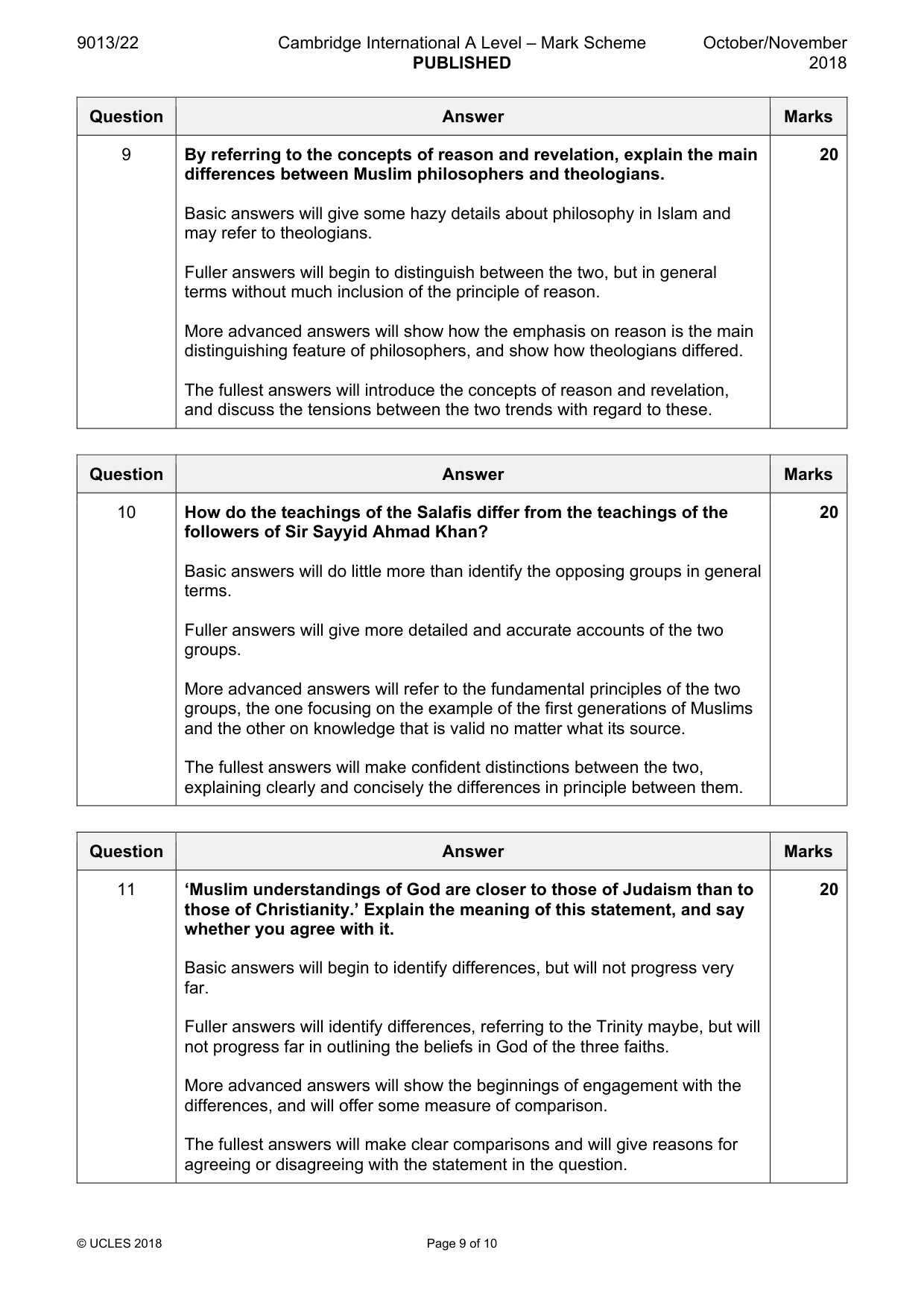
9 By referring to the concepts of reason and revelation, explain the main differences between Muslim philosophers and theologians. [20] Section D
Mark scheme: 9 By referring to the concepts of reason and revelation, explain the main 20 differences between Muslim philosophers and theologians. Basic answers will give some hazy details about philosophy in Islam and may refer to theologians. Fuller answers will begin to distinguish between the two, but in general terms without much inclusion of the principle of reason. More advanced answers will show how the emphasis on reason is the main distinguishing feature of philosophers, and show how theologians differed. The fullest answers will introduce the concepts of reason and revelation, and discuss the tensions between the two trends with regard to these.
Q10 · How do the teachings of the Salafis differ from the teachings of the followers of Sir…
10 How do the teachings of the Salafis differ from the teachings of the followers of Sir Sayyid Ahmad Khan? [20]
Mark scheme: 10 How do the teachings of the Salafis differ from the teachings of the 20 followers of Sir Sayyid Ahmad Khan? Basic answers will do little more than identify the opposing groups in general terms. Fuller answers will give more detailed and accurate accounts of the two groups. More advanced answers will refer to the fundamental principles of the two groups, the one focusing on the example of the first generations of Muslims and the other on knowledge that is valid no matter what its source. The fullest answers will make confident distinctions between the two, explaining clearly and concisely the differences in principle between them.
Q11 · ‘Muslim understandings of God are closer to those of Judaism than to those of…
11 ‘Muslim understandings of God are closer to those of Judaism than to those of Christianity.’ Explain the meaning of this statement, and say whether you agree with it. [20]
Mark scheme: 11 ‘Muslim understandings of God are closer to those of Judaism than to 20 those of Christianity.’ Explain the meaning of this statement, and say whether you agree with it. Basic answers will begin to identify differences, but will not progress very far. Fuller answers will identify differences, referring to the Trinity maybe, but will not progress far in outlining the beliefs in God of the three faiths. More advanced answers will show the beginnings of engagement with the differences, and will offer some measure of comparison. The fullest answers will make clear comparisons and will give reasons for agreeing or disagreeing with the statement in the question.
Q12 · Outline the main teachings of the Qur’an about women
12 (a) Outline the main teachings of the Qur’an about women. [12] (b) By referring to one or two countries with Islamic populations, explain how far these teachings are followed in Muslim societies today. [8]
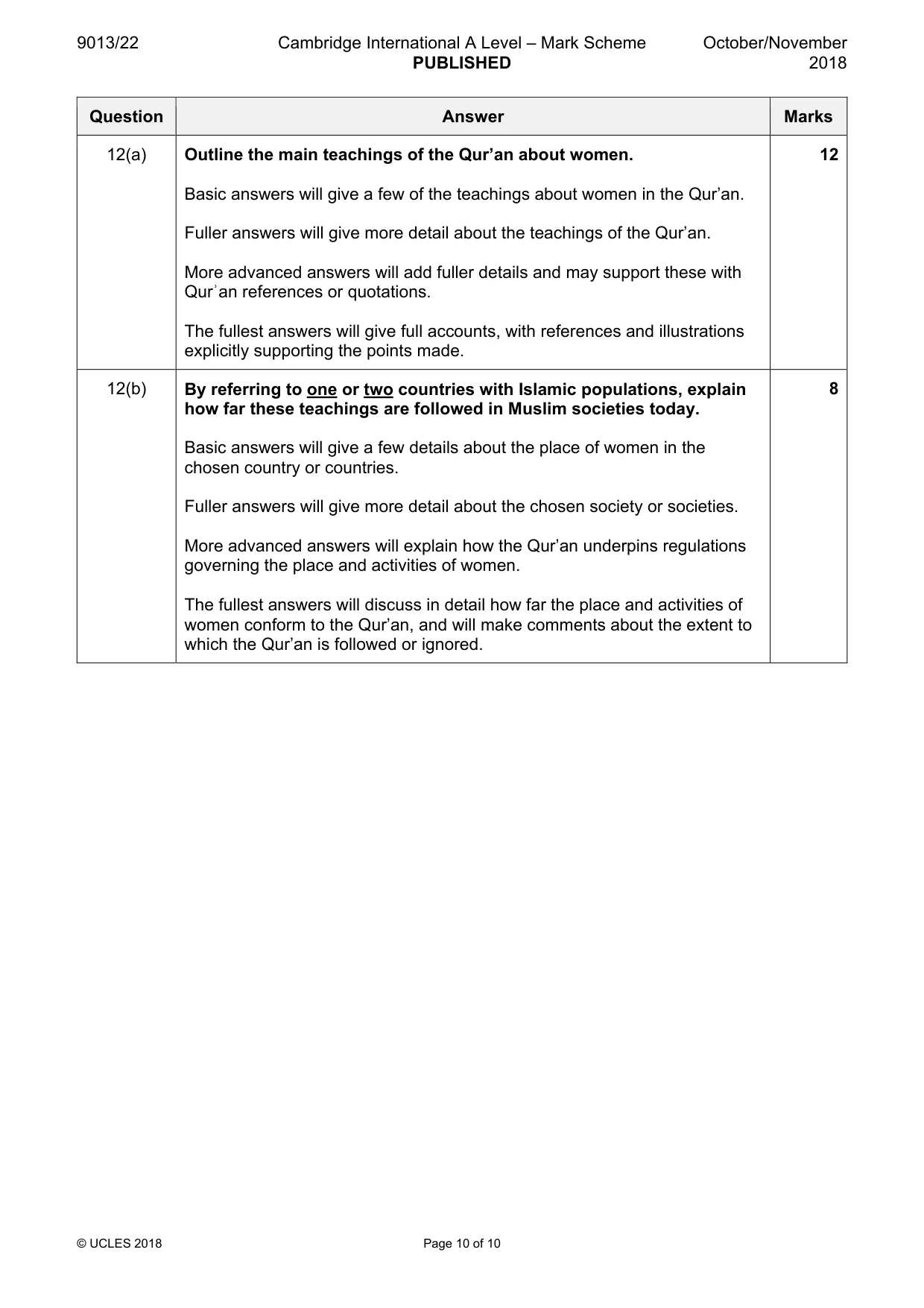
Mark scheme: 12(a) Outline the main teachings of the Qur’an about women. 12 Basic answers will give a few of the teachings about women in the Qur’an. Fuller answers will give more detail about the teachings of the Qur’an. More advanced answers will add fuller details and may support these with Qurʾan references or quotations. The fullest answers will give full accounts, with references and illustrations explicitly supporting the points made. 12(b) By referring to one or two countries with Islamic populations, explain 8 how far these teachings are followed in Muslim societies today. Basic answers will give a few details about the place of women in the chosen country or countries. Fuller answers will give more detail about the chosen society or societies. More advanced answers will explain how the Qur’an underpins regulations governing the place and activities of women. The fullest answers will discuss in detail how far the place and activities of women conform to the Qur’an, and will make comments about the extent to which the Qur’an is followed or ignored.
What you needed in this session
Cambridge’s own grade thresholds for 2018 Oct/Nov, Paper 2 · Variant 2. A higher threshold means an easier paper — the bar moves with how the cohort did.