Cambridge A Level Design and Textiles 9631 — 2017 Oct/Nov Paper 3 · Variant 1
9631/31/O/N/17 · 5 questions · 100 marks · ≈113 min
The question paper and its mark scheme, free to read here and free to download. This is Cambridge’s own paper, exactly as it was sat.
Question paper4 pages
Mark scheme14 pages
Answers below. Sit the paper first if you are practising.
Questions as text
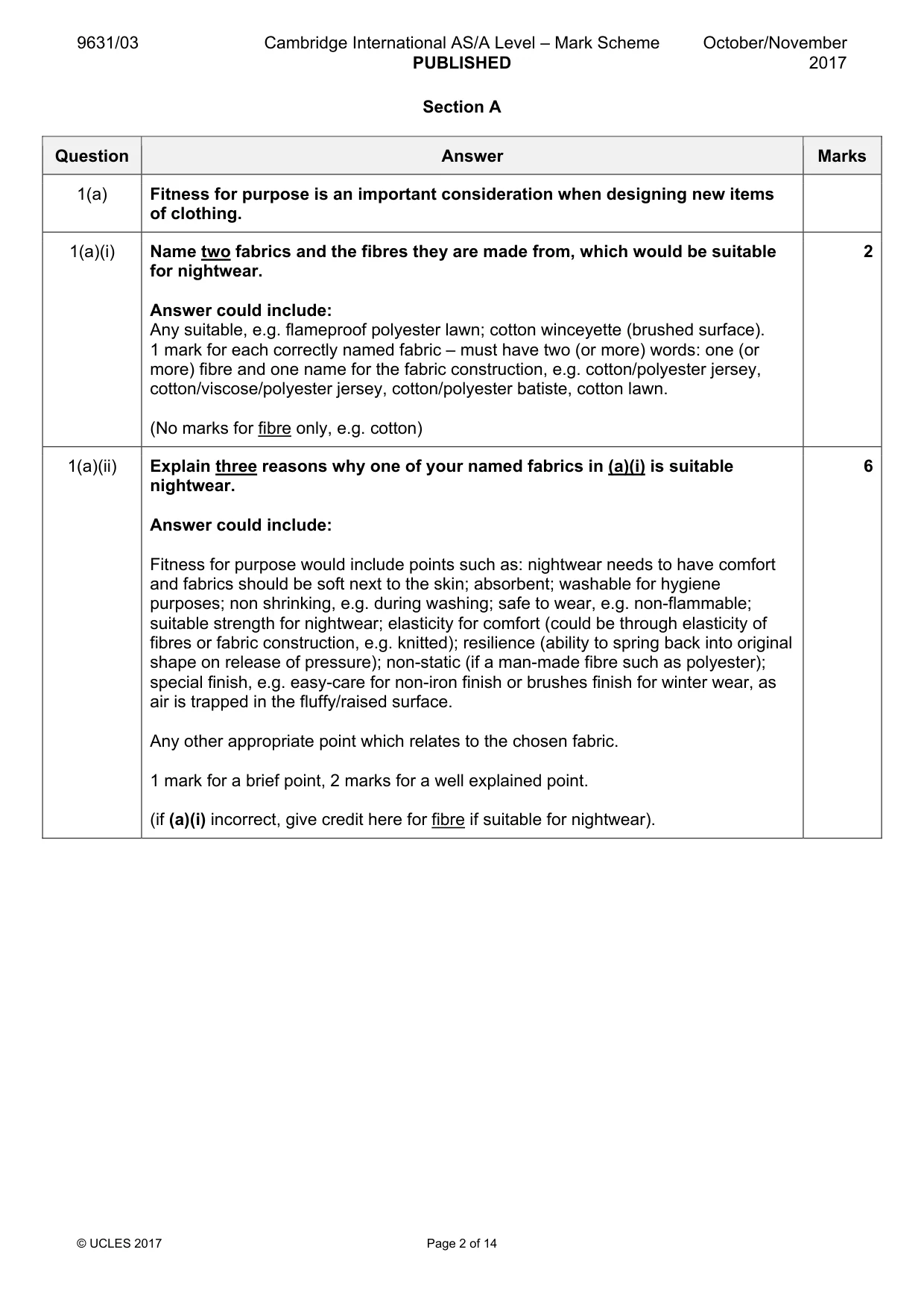
Q1 · Fitness for purpose is an important consideration when designing new items of clothing
1 Fitness for purpose is an important consideration when designing new items of clothing. (a) (i) Name two fabrics and the fibres they are made from, which would be suitable for nightwear. [2] (ii) Explain three reasons why one of your named fabrics in (a)(i) is suitable for nightwear. [6] (b) Assess the environmental issues a fashion designer needs to consider when designing new items of clothing. [6] (c) Discuss which fabrics and suitable finishes are available when choosing luxury fabrics for designing ladies’ evening/party wear. [11] [Total 25 marks]
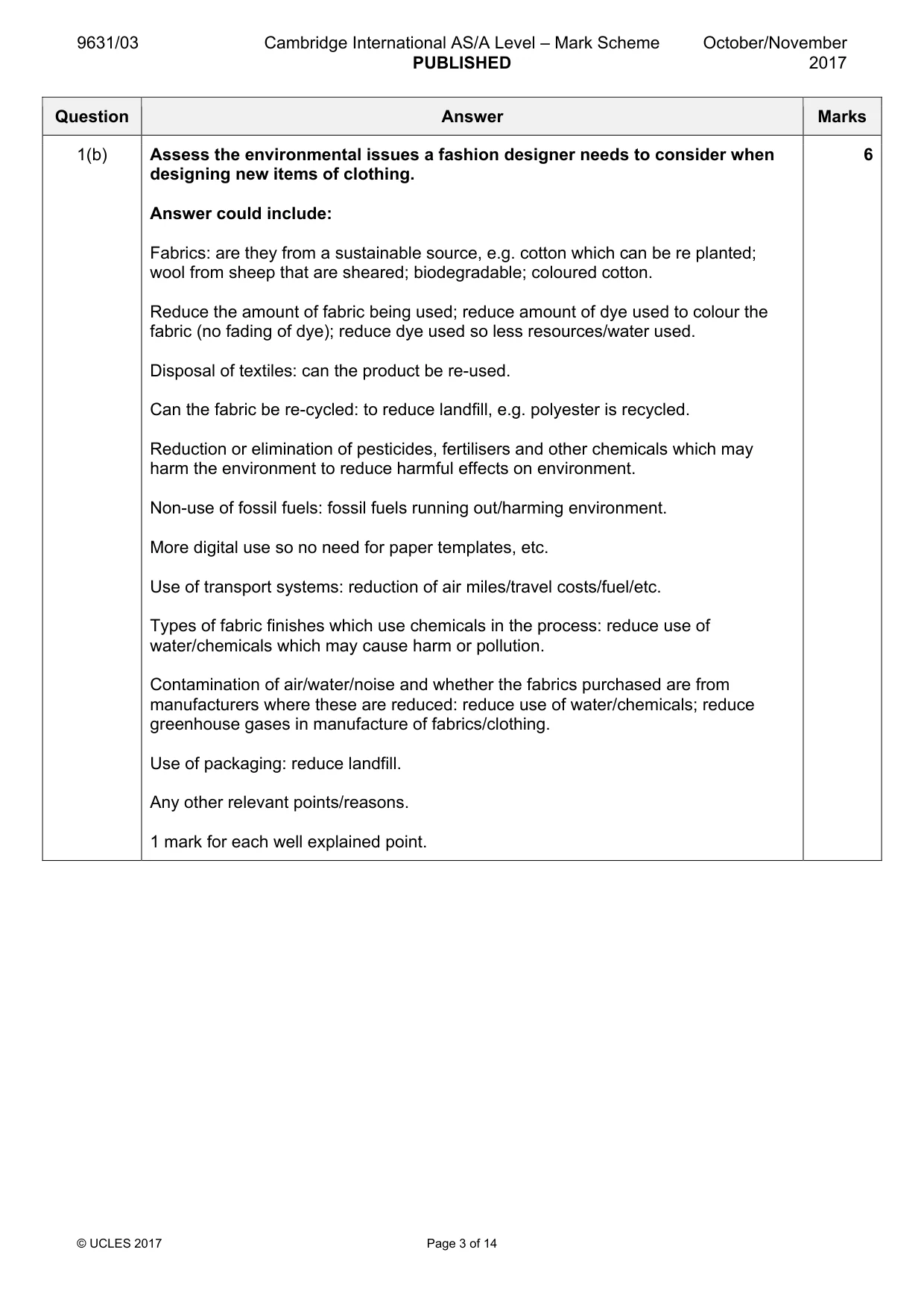
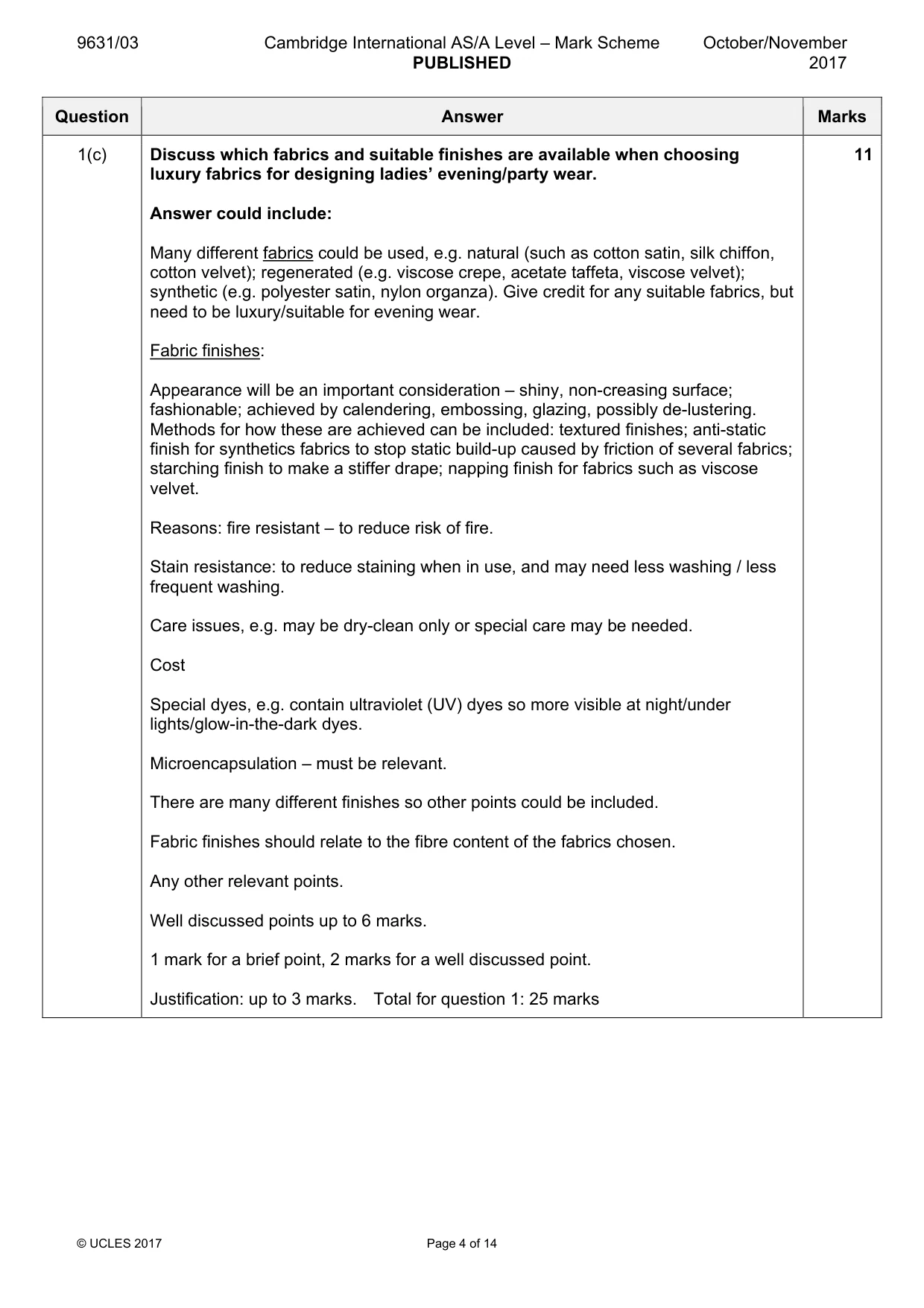
Mark scheme: Question Answer Marks 1(a) Fitness for purpose is an important consideration when designing new items of clothing. 1(a)(i) Name two fabrics and the fibres they are made from, which would be suitable 2 for nightwear. Answer could include: Any suitable, e.g. flameproof polyester lawn; cotton winceyette (brushed surface). 1 mark for each correctly named fabric – must have two (or more) words: one (or more) fibre and one name for the fabric construction, e.g. cotton/polyester jersey, cotton/viscose/polyester jersey, cotton/polyester batiste, cotton lawn. (No marks for fibre only, e.g. cotton) 1(a)(ii) Explain three reasons why one of your named fabrics in (a)(i) is suitable 6 nightwear. Answer could include: Fitness for purpose would include points such as: nightwear needs to have comfort and fabrics should be soft next to the skin; absorbent; washable for hygiene purposes; non shrinking, e.g. during washing; safe to wear, e.g. non-flammable; suitable strength for nightwear; elasticity for comfort (could be through elasticity of fibres or fabric construction, e.g. knitted); resilience (ability to spring back into original shape on release of pressure); non-static (if a man-made fibre such as polyester); special finish, e.g. easy-care for non-iron finish or brushes finish for winter wear, as air is trapped in the fluffy/raised surface. Any other appropriate point which relates to the chosen fabric. 1 mark for a brief point, 2 marks for a well explained point. (if (a)(i) incorrect, give credit here for fibre if suitable for nightwear). 1(b) Assess the environmental issues a fashion designer needs to consider when 6 designing new items of clothing. Answer could include: Fabrics: are they from a sustainable source, e.g. cotton which can be re planted; wool from sheep that are sheared; biodegradable; coloured cotton. Reduce the amount of fabric being used; reduce amount of dye used to colour the fabric (no fading of dye); reduce dye used so less resources/water used. Disposal of textiles: can the product be re-used. Can the fabric be re-cycled: to reduce landfill, e.g. polyester is recycled. Reduction or elimination of pesticides, fertilisers and other chemicals which may harm the environment to reduce harmful effects on environment. Non-use of fossil fuels: fossil fuels running out/harming environment. More digital use so no need for paper templates, etc. Use of transport systems: reduction of air miles/travel costs/fuel/etc. Types of fabric finishes which use chemicals in the process: reduce use of water/chemicals which may cause harm or pollution. Contamination of air/water/noise and whether the fabrics purchased are from manufacturers where these are reduced: reduce use of water/chemicals; reduce greenhouse gases in manufacture of fabrics/clothing. Use of packaging: reduce landfill. Any other relevant points/reasons. 1 mark for each well explained point. 1(c) Discuss which fabrics and suitable finishes are available when choosing 11 luxury fabrics for designing ladies’ evening/party wear. Answer could include: Many different fabrics could be used, e.g. natural (such as cotton satin, silk chiffon, cotton velvet); regenerated (e.g. viscose crepe, acetate taffeta, viscose velvet); synthetic (e.g. polyester satin, nylon organza). Give credit for any suitable fabrics, but need to be luxury/suitable for evening wear. Fabric finishes: Appearance will be an important consideration – shiny, non-creasing surface; fashionable; achieved by calendering, embossing, glazing, possibly de-lustering. Methods for how these are achieved can be included: textured finishes; anti-static finish for synthetics fabrics to stop static build-up caused by friction of several fabrics; starching finish to make a stiffer drape; napping finish for fabrics such as viscose velvet. Reasons: fire resistant – to reduce risk of fire. Stain resistance: to reduce staining when in use, and may need less washing / less frequent washing. Care issues, e.g. may be dry-clean only or special care may be needed. Cost Special dyes, e.g. contain ultraviolet (UV) dyes so more visible at night/under lights/glow-in-the-dark dyes. Microencapsulation – must be relevant. There are many different finishes so other points could be included. Fabric finishes should relate to the fibre content of the fabrics chosen. Any other relevant points. Well discussed points up to 6 marks. 1 mark for a brief point, 2 marks for a well discussed point. Justification: up to 3 marks. Total for question 1: 25 marks
Q2 · When mixing pigments explain what is meant by: (i) secondary colours [2] (ii) tertiary…
2 (a) When mixing pigments explain what is meant by: (i) secondary colours [2] (ii) tertiary colours [2] You may include a diagram in your answer. (b) Assess the choices available to the manufacturer of applying colour to fabric. [10] (c) Discuss whether the choice of a coloured fabric influences a fashion designer in the design of new textile products. [11] [Total 25 marks]
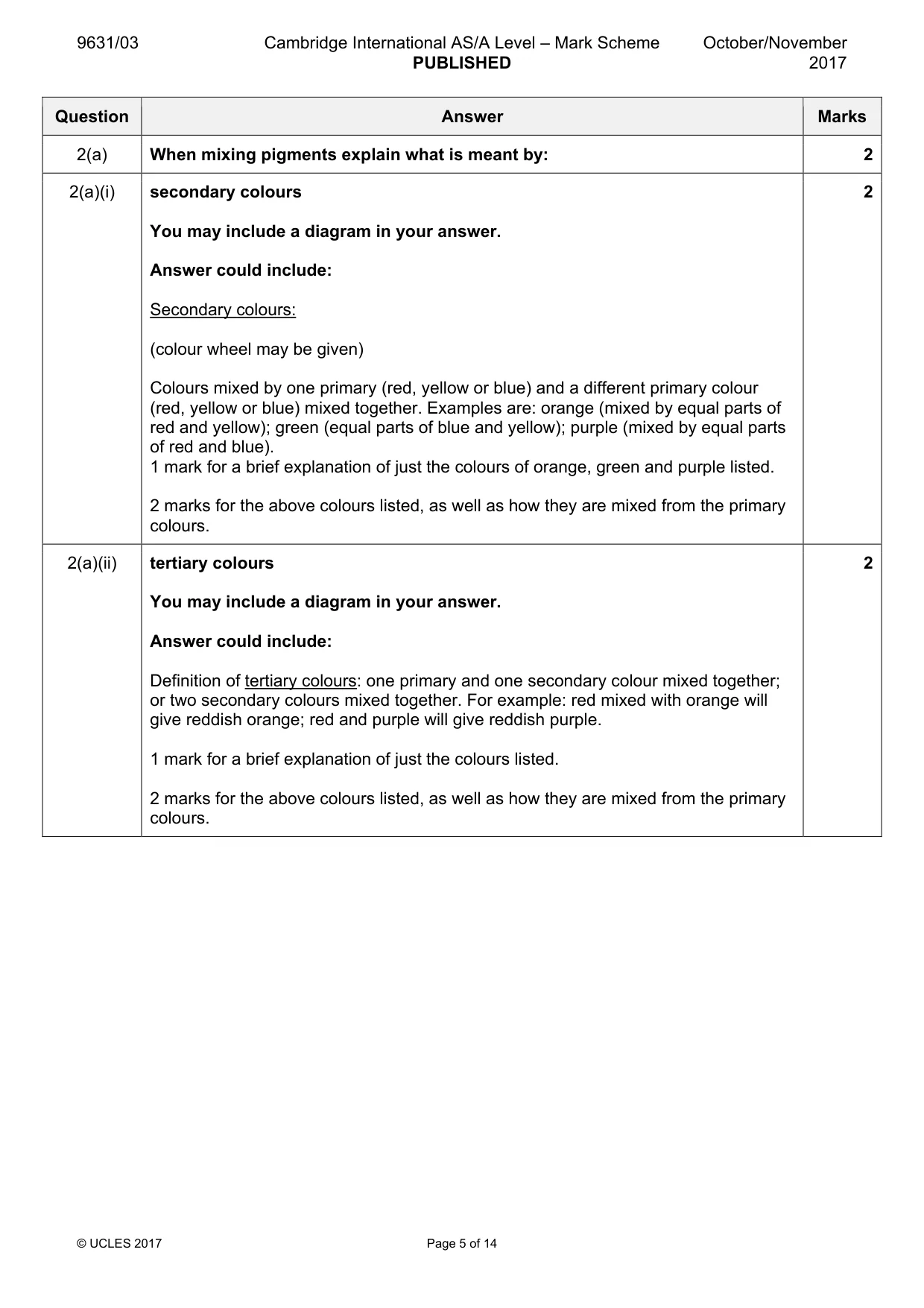
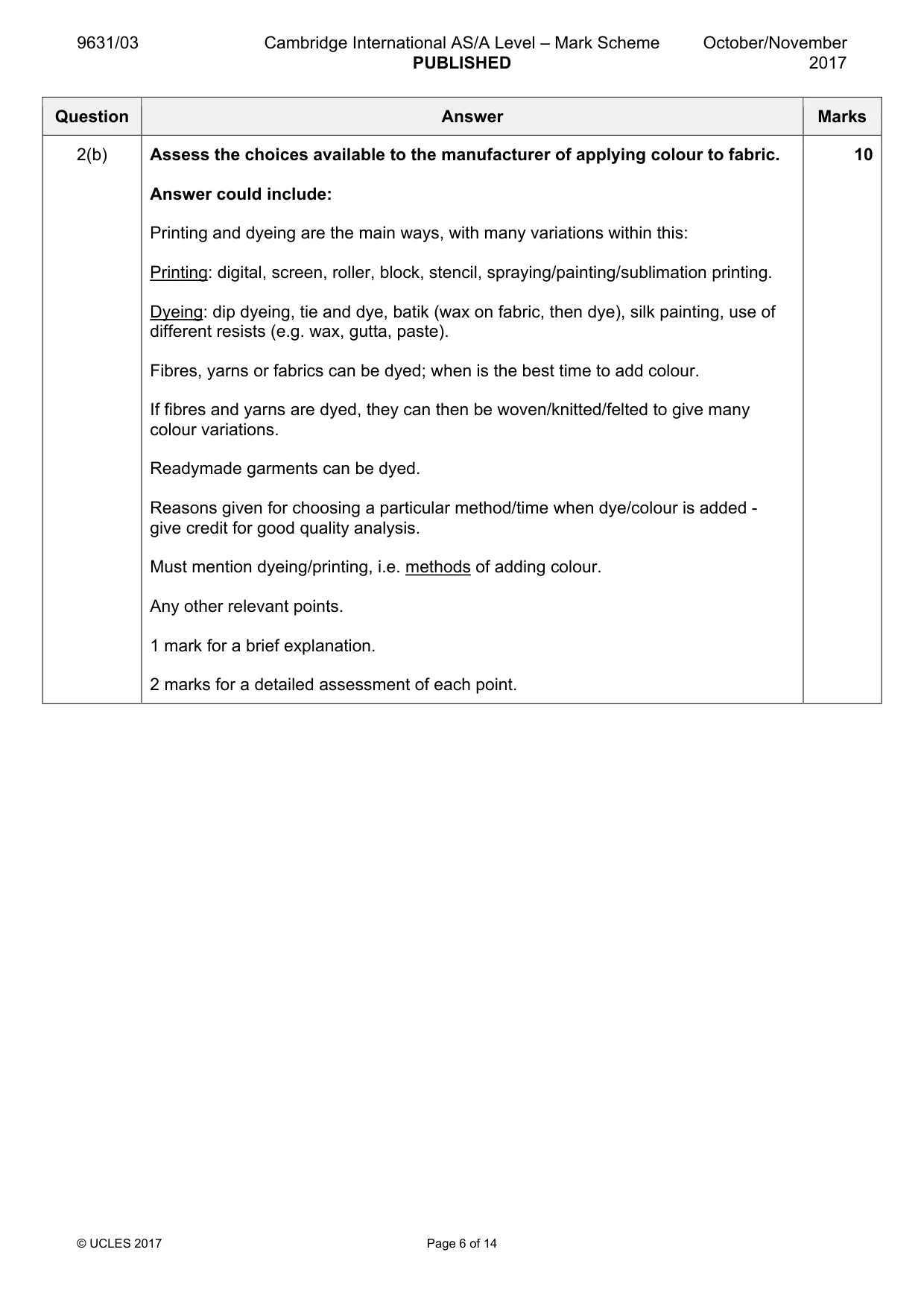
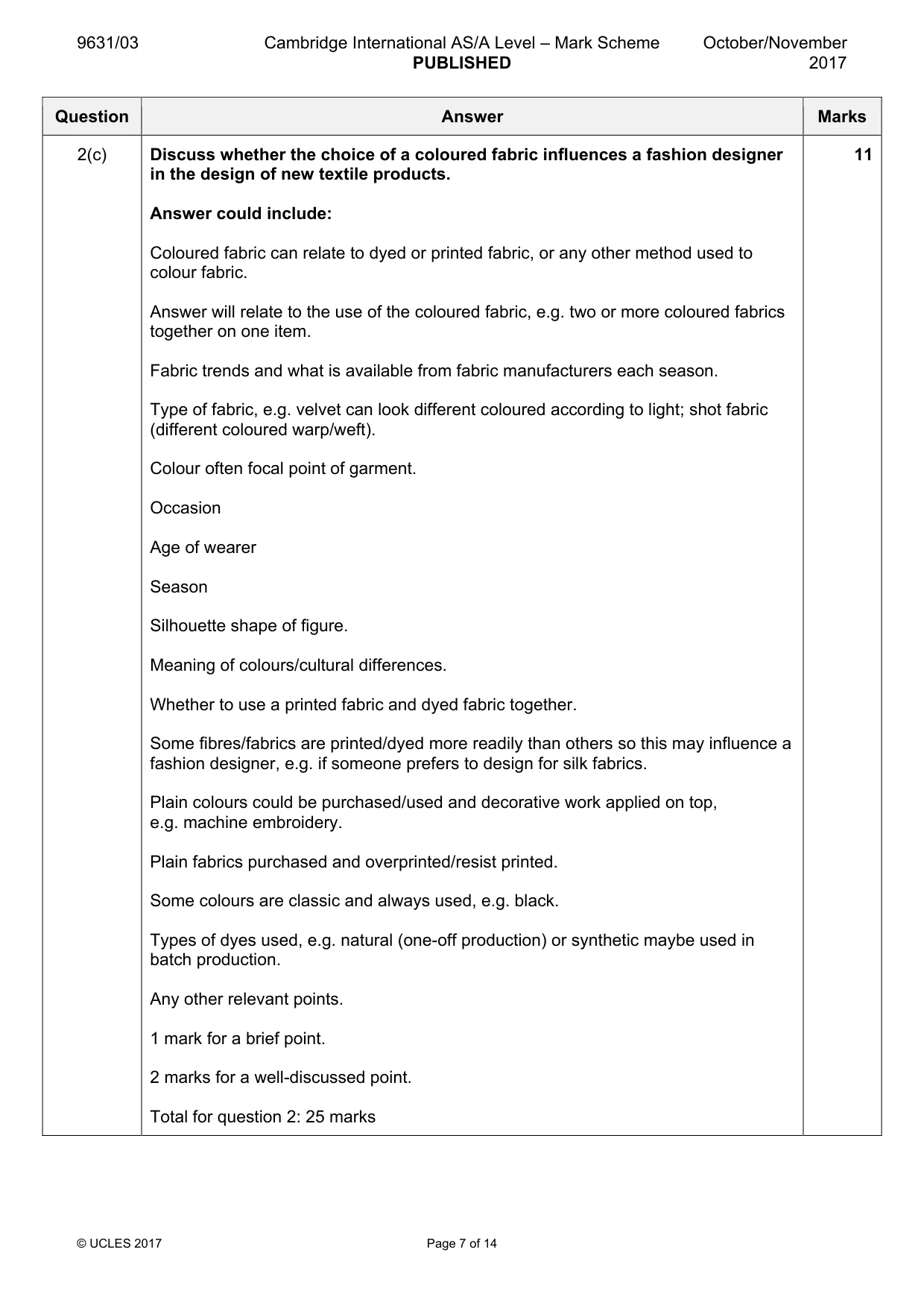
Mark scheme: 2(a) When mixing pigments explain what is meant by: 2 2(a)(i) secondary colours 2 You may include a diagram in your answer. Answer could include: Secondary colours: (colour wheel may be given) Colours mixed by one primary (red, yellow or blue) and a different primary colour (red, yellow or blue) mixed together. Examples are: orange (mixed by equal parts of red and yellow); green (equal parts of blue and yellow); purple (mixed by equal parts of red and blue). 1 mark for a brief explanation of just the colours of orange, green and purple listed. 2 marks for the above colours listed, as well as how they are mixed from the primary colours. 2(a)(ii) tertiary colours 2 You may include a diagram in your answer. Answer could include: Definition of tertiary colours: one primary and one secondary colour mixed together; or two secondary colours mixed together. For example: red mixed with orange will give reddish orange; red and purple will give reddish purple. 1 mark for a brief explanation of just the colours listed. 2 marks for the above colours listed, as well as how they are mixed from the primary colours. 2(b) Assess the choices available to the manufacturer of applying colour to fabric. 10 Answer could include: Printing and dyeing are the main ways, with many variations within this: Printing: digital, screen, roller, block, stencil, spraying/painting/sublimation printing. Dyeing: dip dyeing, tie and dye, batik (wax on fabric, then dye), silk painting, use of different resists (e.g. wax, gutta, paste). Fibres, yarns or fabrics can be dyed; when is the best time to add colour. If fibres and yarns are dyed, they can then be woven/knitted/felted to give many colour variations. Readymade garments can be dyed. Reasons given for choosing a particular method/time when dye/colour is added - give credit for good quality analysis. Must mention dyeing/printing, i.e. methods of adding colour. Any other relevant points. 1 mark for a brief explanation. 2 marks for a detailed assessment of each point. 2(c) Discuss whether the choice of a coloured fabric influences a fashion designer 11 in the design of new textile products. Answer could include: Coloured fabric can relate to dyed or printed fabric, or any other method used to colour fabric. Answer will relate to the use of the coloured fabric, e.g. two or more coloured fabrics together on one item. Fabric trends and what is available from fabric manufacturers each season. Type of fabric, e.g. velvet can look different coloured according to light; shot fabric (different coloured warp/weft). Colour often focal point of garment. Occasion Age of wearer Season Silhouette shape of figure. Meaning of colours/cultural differences. Whether to use a printed fabric and dyed fabric together. Some fibres/fabrics are printed/dyed more readily than others so this may influence a fashion designer, e.g. if someone prefers to design for silk fabrics. Plain colours could be purchased/used and decorative work applied on top, e.g. machine embroidery. Plain fabrics purchased and overprinted/resist printed. Some colours are classic and always used, e.g. black. Types of dyes used, e.g. natural (one-off production) or synthetic maybe used in batch production. Any other relevant points. 1 mark for a brief point. 2 marks for a well-discussed point. Total for question 2: 25 marks Section B Answer two questions.
Q3 · Discuss some of the factors to be considered when designing clothing using creative…
3 (a) Discuss some of the factors to be considered when designing clothing using creative techniques. [12] (b) Assess a range of different ways to manipulate fabrics in order to produce interesting design features and surface textures for clothing. [13] [Total 25 marks]
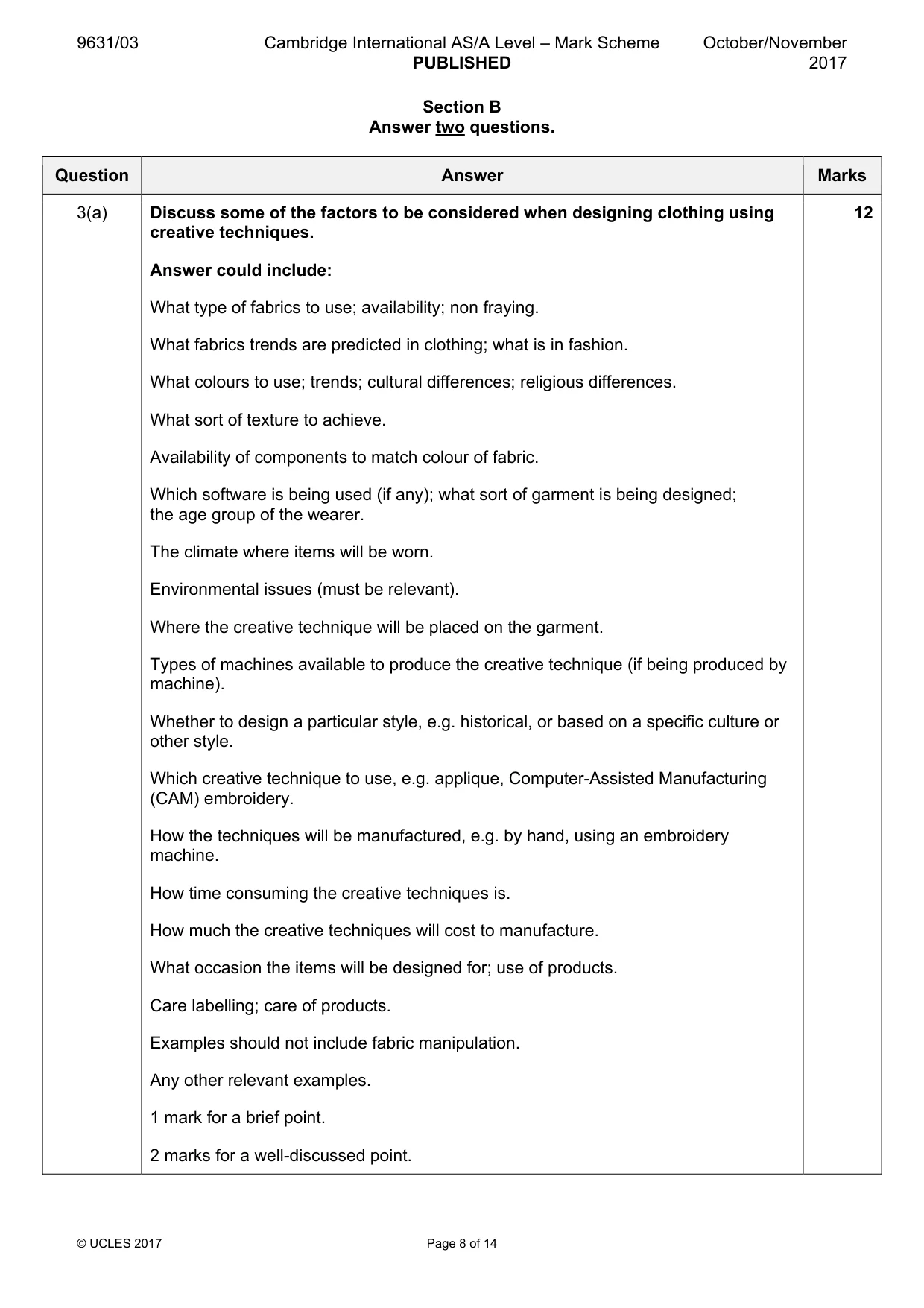
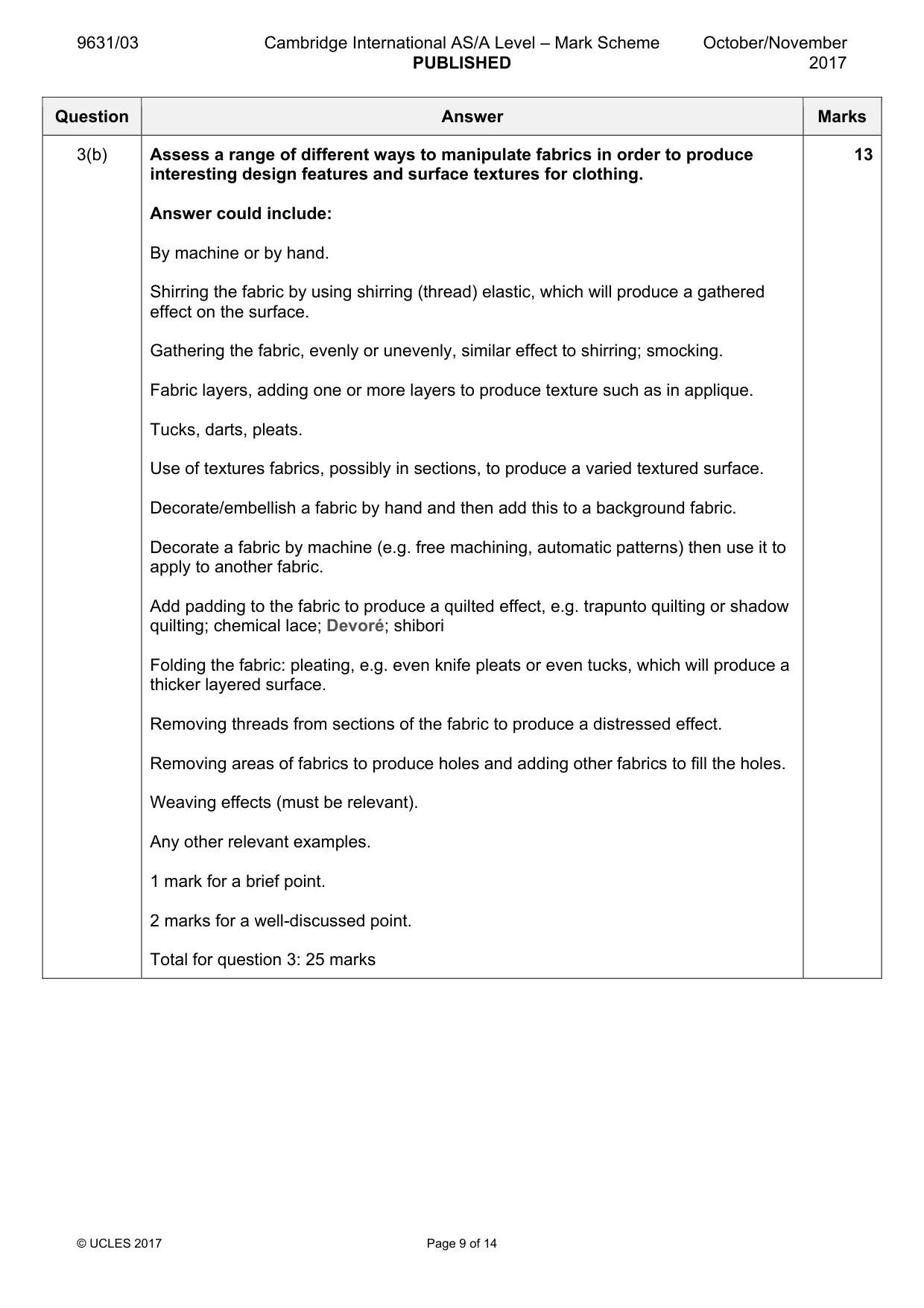
Mark scheme: 3(a) Discuss some of the factors to be considered when designing clothing using 12 creative techniques. Answer could include: What type of fabrics to use; availability; non fraying. What fabrics trends are predicted in clothing; what is in fashion. What colours to use; trends; cultural differences; religious differences. What sort of texture to achieve. Availability of components to match colour of fabric. Which software is being used (if any); what sort of garment is being designed; the age group of the wearer. The climate where items will be worn. Environmental issues (must be relevant). Where the creative technique will be placed on the garment. Types of machines available to produce the creative technique (if being produced by machine). Whether to design a particular style, e.g. historical, or based on a specific culture or other style. Which creative technique to use, e.g. applique, Computer-Assisted Manufacturing (CAM) embroidery. How the techniques will be manufactured, e.g. by hand, using an embroidery machine. How time consuming the creative techniques is. How much the creative techniques will cost to manufacture. What occasion the items will be designed for; use of products. Care labelling; care of products. Examples should not include fabric manipulation. Any other relevant examples. 1 mark for a brief point. 2 marks for a well-discussed point. 3(b) Assess a range of different ways to manipulate fabrics in order to produce 13 interesting design features and surface textures for clothing. Answer could include: By machine or by hand. Shirring the fabric by using shirring (thread) elastic, which will produce a gathered effect on the surface. Gathering the fabric, evenly or unevenly, similar effect to shirring; smocking. Fabric layers, adding one or more layers to produce texture such as in applique. Tucks, darts, pleats. Use of textures fabrics, possibly in sections, to produce a varied textured surface. Decorate/embellish a fabric by hand and then add this to a background fabric. Decorate a fabric by machine (e.g. free machining, automatic patterns) then use it to apply to another fabric. Add padding to the fabric to produce a quilted effect, e.g. trapunto quilting or shadow quilting; chemical lace; Devoré; shibori Folding the fabric: pleating, e.g. even knife pleats or even tucks, which will produce a thicker layered surface. Removing threads from sections of the fabric to produce a distressed effect. Removing areas of fabrics to produce holes and adding other fabrics to fill the holes. Weaving effects (must be relevant). Any other relevant examples. 1 mark for a brief point. 2 marks for a well-discussed point. Total for question 3: 25 marks
Q4 · Compare the performance characteristics of staple fibre yarns with filament yarns
4 (a) Compare the performance characteristics of staple fibre yarns with filament yarns. [12] (b) Discuss how a manufacturer would choose and estimate the quantities of all materials and components needed for the design task of a jacket. [13] [Total 25 marks]
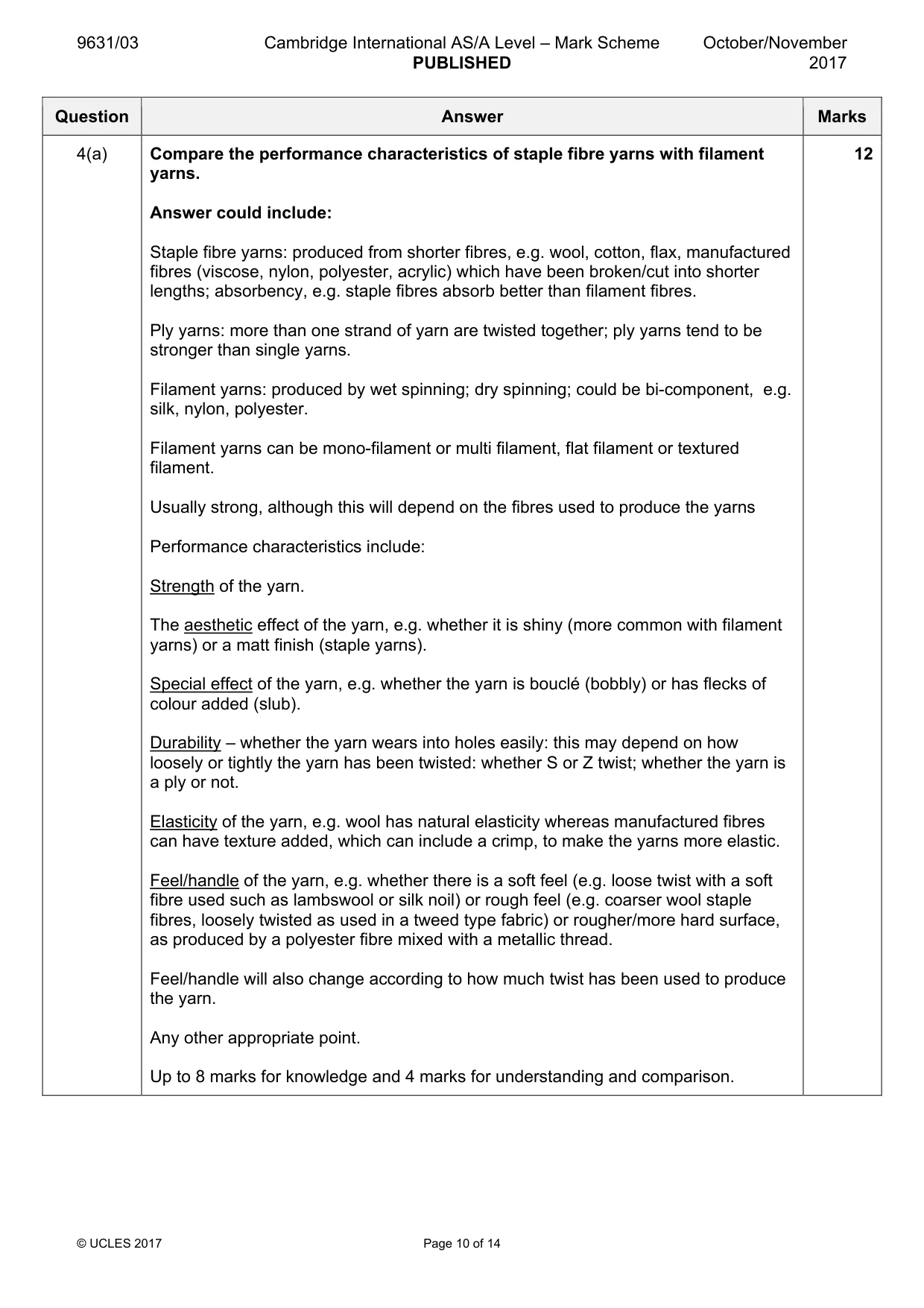
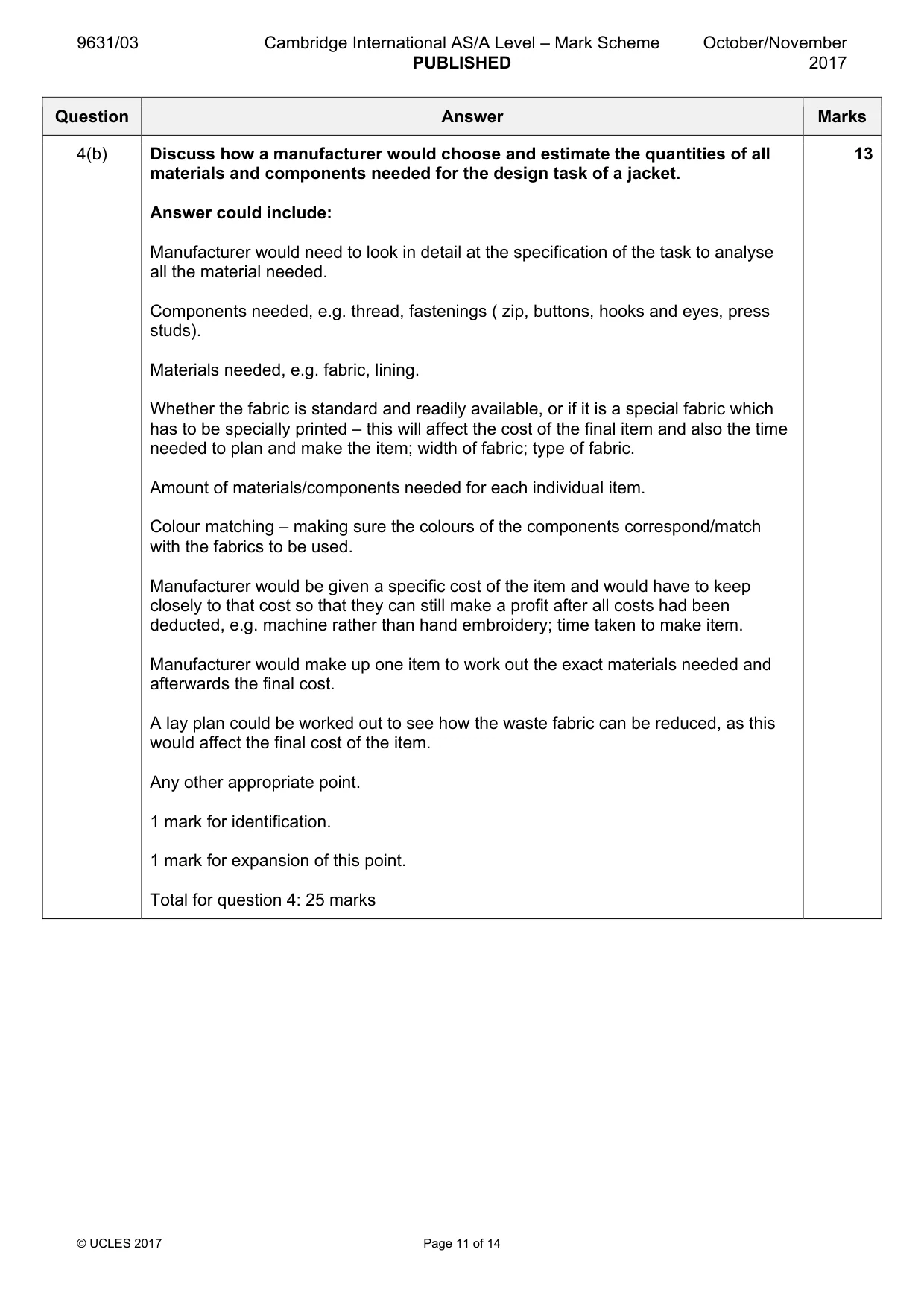
Mark scheme: 4(a) Compare the performance characteristics of staple fibre yarns with filament 12 yarns. Answer could include: Staple fibre yarns: produced from shorter fibres, e.g. wool, cotton, flax, manufactured fibres (viscose, nylon, polyester, acrylic) which have been broken/cut into shorter lengths; absorbency, e.g. staple fibres absorb better than filament fibres. Ply yarns: more than one strand of yarn are twisted together; ply yarns tend to be stronger than single yarns. Filament yarns: produced by wet spinning; dry spinning; could be bi-component, e.g. silk, nylon, polyester. Filament yarns can be mono-filament or multi filament, flat filament or textured filament. Usually strong, although this will depend on the fibres used to produce the yarns Performance characteristics include: Strength of the yarn. The aesthetic effect of the yarn, e.g. whether it is shiny (more common with filament yarns) or a matt finish (staple yarns). Special effect of the yarn, e.g. whether the yarn is bouclé (bobbly) or has flecks of colour added (slub). Durability – whether the yarn wears into holes easily: this may depend on how loosely or tightly the yarn has been twisted: whether S or Z twist; whether the yarn is a ply or not. Elasticity of the yarn, e.g. wool has natural elasticity whereas manufactured fibres can have texture added, which can include a crimp, to make the yarns more elastic. Feel/handle of the yarn, e.g. whether there is a soft feel (e.g. loose twist with a soft fibre used such as lambswool or silk noil) or rough feel (e.g. coarser wool staple fibres, loosely twisted as used in a tweed type fabric) or rougher/more hard surface, as produced by a polyester fibre mixed with a metallic thread. Feel/handle will also change according to how much twist has been used to produce the yarn. Any other appropriate point. Up to 8 marks for knowledge and 4 marks for understanding and comparison. 4(b) Discuss how a manufacturer would choose and estimate the quantities of all 13 materials and components needed for the design task of a jacket. Answer could include: Manufacturer would need to look in detail at the specification of the task to analyse all the material needed. Components needed, e.g. thread, fastenings ( zip, buttons, hooks and eyes, press studs). Materials needed, e.g. fabric, lining. Whether the fabric is standard and readily available, or if it is a special fabric which has to be specially printed – this will affect the cost of the final item and also the time needed to plan and make the item; width of fabric; type of fabric. Amount of materials/components needed for each individual item. Colour matching – making sure the colours of the components correspond/match with the fabrics to be used. Manufacturer would be given a specific cost of the item and would have to keep closely to that cost so that they can still make a profit after all costs had been deducted, e.g. machine rather than hand embroidery; time taken to make item. Manufacturer would make up one item to work out the exact materials needed and afterwards the final cost. A lay plan could be worked out to see how the waste fabric can be reduced, as this would affect the final cost of the item. Any other appropriate point. 1 mark for identification. 1 mark for expansion of this point. Total for question 4: 25 marks
Q5 · Explain how a designer would decide on initial ideas for designs of textile items to be…
5 (a) Explain how a designer would decide on initial ideas for designs of textile items to be used as home accessories. [4] (b) Discuss what would influence a designer when choosing fabrics for cushions. [9] (c) Compare how decorated cushions would be made using two different manufacturing methods. [12] [Total 25 marks]
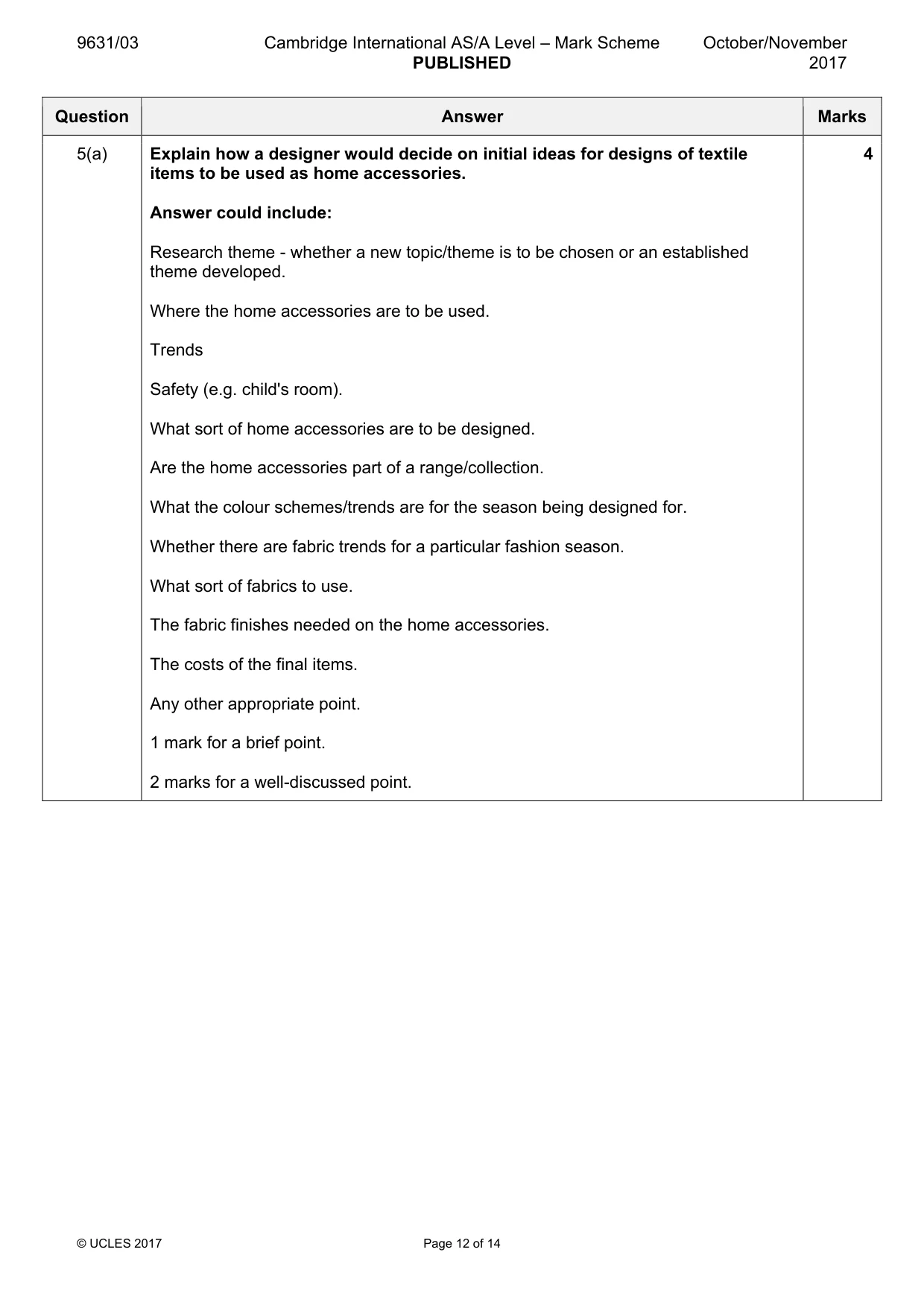
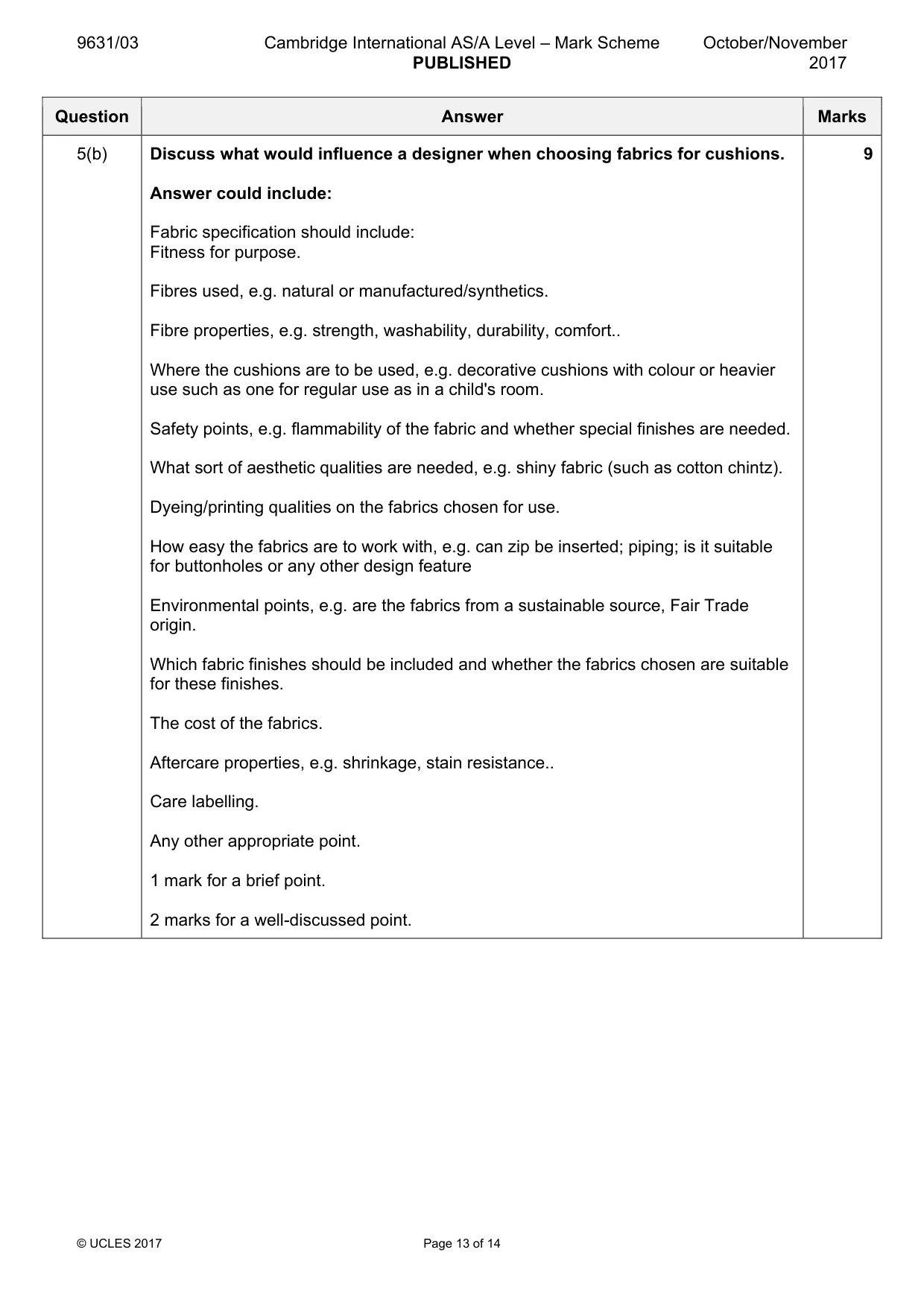
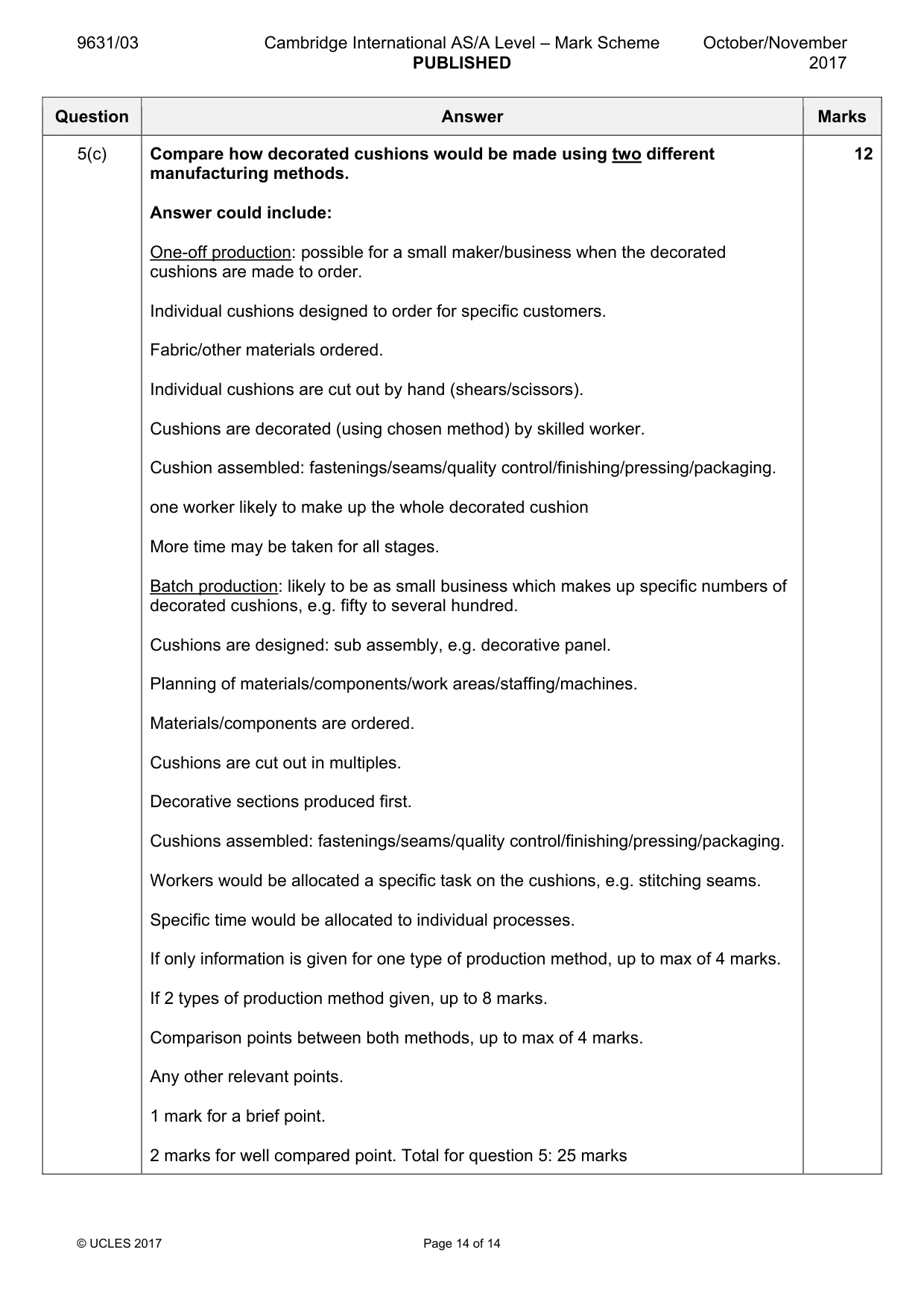
Mark scheme: 5(a) Explain how a designer would decide on initial ideas for designs of textile 4 items to be used as home accessories. Answer could include: Research theme - whether a new topic/theme is to be chosen or an established theme developed. Where the home accessories are to be used. Trends Safety (e.g. child's room). What sort of home accessories are to be designed. Are the home accessories part of a range/collection. What the colour schemes/trends are for the season being designed for. Whether there are fabric trends for a particular fashion season. What sort of fabrics to use. The fabric finishes needed on the home accessories. The costs of the final items. Any other appropriate point. 1 mark for a brief point. 2 marks for a well-discussed point. 5(b) Discuss what would influence a designer when choosing fabrics for cushions. 9 Answer could include: Fabric specification should include: Fitness for purpose. Fibres used, e.g. natural or manufactured/synthetics. Fibre properties, e.g. strength, washability, durability, comfort.. Where the cushions are to be used, e.g. decorative cushions with colour or heavier use such as one for regular use as in a child's room. Safety points, e.g. flammability of the fabric and whether special finishes are needed. What sort of aesthetic qualities are needed, e.g. shiny fabric (such as cotton chintz). Dyeing/printing qualities on the fabrics chosen for use. How easy the fabrics are to work with, e.g. can zip be inserted; piping; is it suitable for buttonholes or any other design feature Environmental points, e.g. are the fabrics from a sustainable source, Fair Trade origin. Which fabric finishes should be included and whether the fabrics chosen are suitable for these finishes. The cost of the fabrics. Aftercare properties, e.g. shrinkage, stain resistance.. Care labelling. Any other appropriate point. 1 mark for a brief point. 2 marks for a well-discussed point. 5(c) Compare how decorated cushions would be made using two different 12 manufacturing methods. Answer could include: One-off production: possible for a small maker/business when the decorated cushions are made to order. Individual cushions designed to order for specific customers. Fabric/other materials ordered. Individual cushions are cut out by hand (shears/scissors). Cushions are decorated (using chosen method) by skilled worker. Cushion assembled: fastenings/seams/quality control/finishing/pressing/packaging. one worker likely to make up the whole decorated cushion More time may be taken for all stages. Batch production: likely to be as small business which makes up specific numbers of decorated cushions, e.g. fifty to several hundred. Cushions are designed: sub assembly, e.g. decorative panel. Planning of materials/components/work areas/staffing/machines. Materials/components are ordered. Cushions are cut out in multiples. Decorative sections produced first. Cushions assembled: fastenings/seams/quality control/finishing/pressing/packaging. Workers would be allocated a specific task on the cushions, e.g. stitching seams. Specific time would be allocated to individual processes. If only information is given for one type of production method, up to max of 4 marks. If 2 types of production method given, up to 8 marks. Comparison points between both methods, up to max of 4 marks. Any other relevant points. 1 mark for a brief point. 2 marks for well compared point. Total for question 5: 25 marks
What you needed in this session
Cambridge’s own grade thresholds for 2017 Oct/Nov, Paper 3 · Variant 1. A higher threshold means an easier paper — the bar moves with how the cohort did.