Cambridge A Level Chemistry 9701 — 2005 Oct/Nov Paper 6 · Variant 1
9701/61/O/N/05
The question paper and its mark scheme, free to read here and free to download. This is Cambridge’s own paper, exactly as it was sat.
Question paper12 pages


Mark scheme7 pages
Answers below. Sit the paper first if you are practising.
Paper as text
Question paper, page 1
This document consists of 9 printed pages and 3 blank pages. SP (CW/SLM) S90135/3 © UCLES 2005 [Turn over UNIVERSITY OF CAMBRIDGE INTERNATIONAL EXAMINATIONS General Certificate of Education Advanced Subsidiary Level and Advanced Level CHEMISTRY 9701/06 Paper 6 Options October/November 2005 1 hour Additional Materials: Answer Paper Data Booklet READ THESE INSTRUCTIONS FIRST Write your name, Centre number and candidate number on the front of any work handed in. Write in dark blue or black pen in the spaces provided on the Question Paper. You may use a pencil for any diagrams, graphs or rough working. Do not use staples, paper clips, highlighters, glue or correction fluid. Write your answers on the separate answer paper provided. Answer all questions on two of the Options. At the end of the examination, fasten all your work securely together. The number of marks is given in brackets [ ] at the end of each question or part question. You may use a calculator.
Question paper, page 2
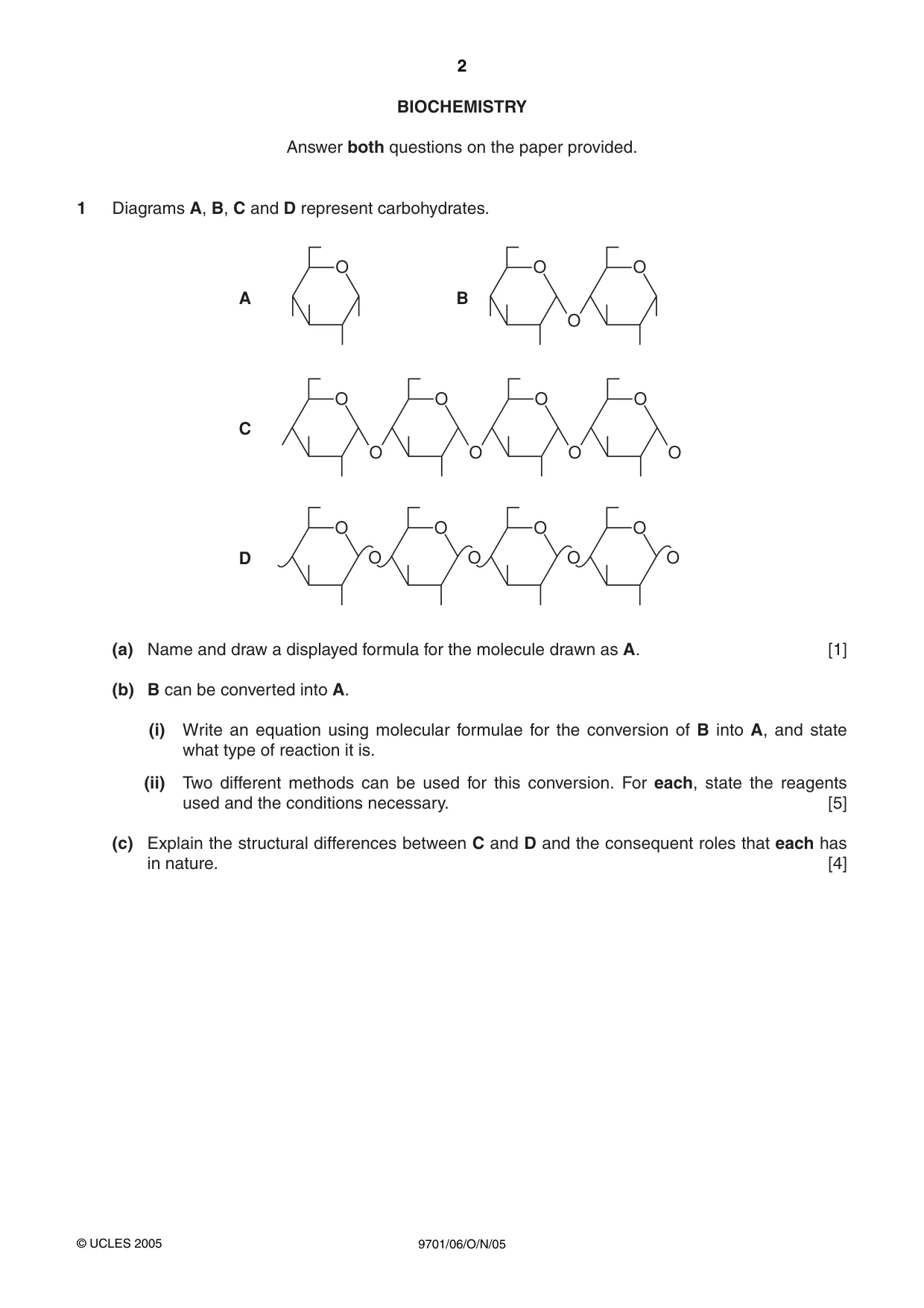
BIOCHEMISTRY Answer both questions on the paper provided. 1 Diagrams A, B, C and D represent carbohydrates. (a) Name and draw a displayed formula for the molecule drawn as A. [1] (b) B can be converted into A. (i) Write an equation using molecular formulae for the conversion of B into A, and state what type of reaction it is. (ii) Two different methods can be used for this conversion. For each, state the reagents used and the conditions necessary. [5] (c) Explain the structural differences between C and D and the consequent roles that each has in nature. [4] A C D B O O O O O O O O O O O O O O O O O O O O 2 9701/06/O/N/05 © UCLES 2005
Question paper, page 3
[Turn over 2 The principal ester in olive oil has the common name glyceryl trioleate. Hydrolysis of olive oil yields 3 moles of oleic acid per mole of this ester. The systematic name for oleic acid is cis-octadec-9-enoic acid and its structural formula is CH3(CH2)7CH=CH(CH2)7CO2H. (a) (i) Name two functional groups in oleic acid. (ii) Draw the structural formula of the ester, glyceryl trioleate. In your diagram, use R to represent CH3(CH2)7CH=CH(CH2)7. [3] (b) (i) Complete hydrolysis of 1.00 g of glyceryl trioleate liberated 3.50 ×10⁻³ moles of oleic acid. Use these data to calculate the relative molecular mass of glyceryl trioleate. (ii) State one function of triglyceryl esters in the human diet. [3] (c) (i) State two fat-soluble vitamins which may be found in a margarine made from olive oil. (ii) For one of the vitamins: • name a common source of the vitamin (other than from olive oil or its derivatives), • state the effect on the human body caused by a deficiency of this vitamin. [4] 3 9701/06/O/N/05 © UCLES 2005
Question paper, page 4
ENVIRONMENTAL CHEMISTRY Answer both questions on the paper provided. 3 (a) Clays are composed of layers containing silicon/oxygen and aluminium/oxygen sheets. (i) What is the difference in geometry between the silicon/oxygen and aluminium/oxygen units? (ii) Sketch the structure of a 2:1 clay. (iii) Explain why soils containing 2:1 clays crack rather than crumbling when they dry out. [5] (b) Explain how ion retention occurs on the surface of silicate clays, and why this is important for plant growth. [3] (c) In 1986 the Chernobyl power station accident released large amounts of radioactive caesium compounds into the environment. The isotope 137Cs was found to contaminate soils in a wide region for a considerable period. Explain how clays could have been involved in the retention of 137Cs+ ions in the soil. [2] 4 There has been a great deal of research in recent years on problems associated with the ‘greenhouse effect’, and its potential effects on the climate of the Earth. (a) Outline why gases such as methane and carbon dioxide are considered to be greenhouse gases, whereas oxygen and nitrogen are not. [2] (b) The combustion of fossil fuels is a major source of carbon dioxide in the atmosphere. State another important source and give a balanced equation for the reaction that produces carbon dioxide. [2] (c) (i) Explain why the oceans are important in helping to control the amount of carbon dioxide in the atmosphere. (ii) Suggest what other functions the oceans play in regulating the climate on Earth. [6] 4 9701/06/O/N/05 © UCLES 2005
Question paper, page 5
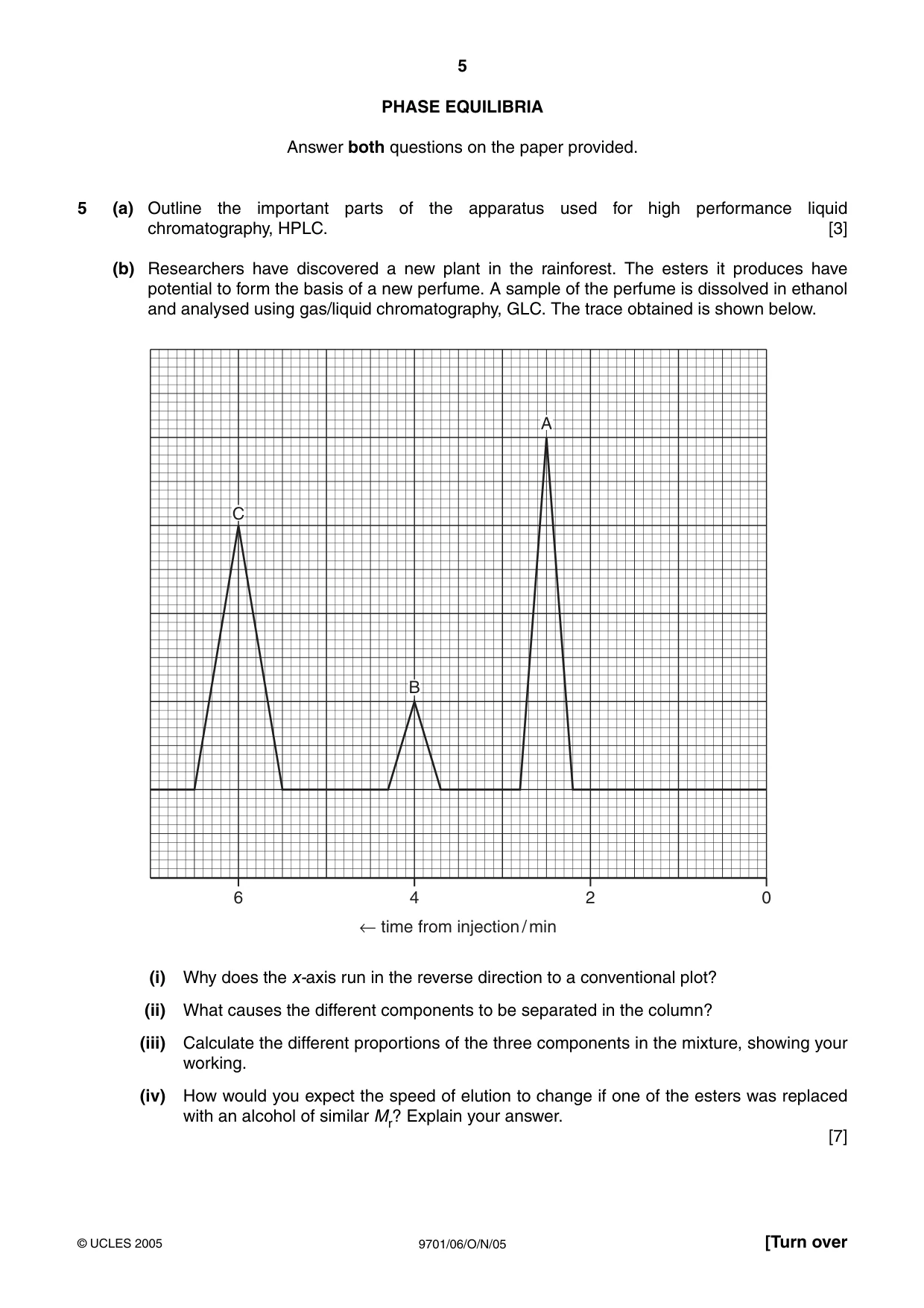
[Turn over PHASE EQUILIBRIA Answer both questions on the paper provided. 5 (a) Outline the important parts of the apparatus used for high performance liquid chromatography, HPLC. [3] (b) Researchers have discovered a new plant in the rainforest. The esters it produces have potential to form the basis of a new perfume. A sample of the perfume is dissolved in ethanol and analysed using gas/liquid chromatography, GLC. The trace obtained is shown below. (i) Why does the x-axis run in the reverse direction to a conventional plot? (ii) What causes the different components to be separated in the column? (iii) Calculate the different proportions of the three components in the mixture, showing your working. (iv) How would you expect the speed of elution to change if one of the esters was replaced with an alcohol of similar Mr? Explain your answer. [7] 6 4 2 0 ← time from injection / min C B A 5 9701/06/O/N/05 © UCLES 2005
Question paper, page 6
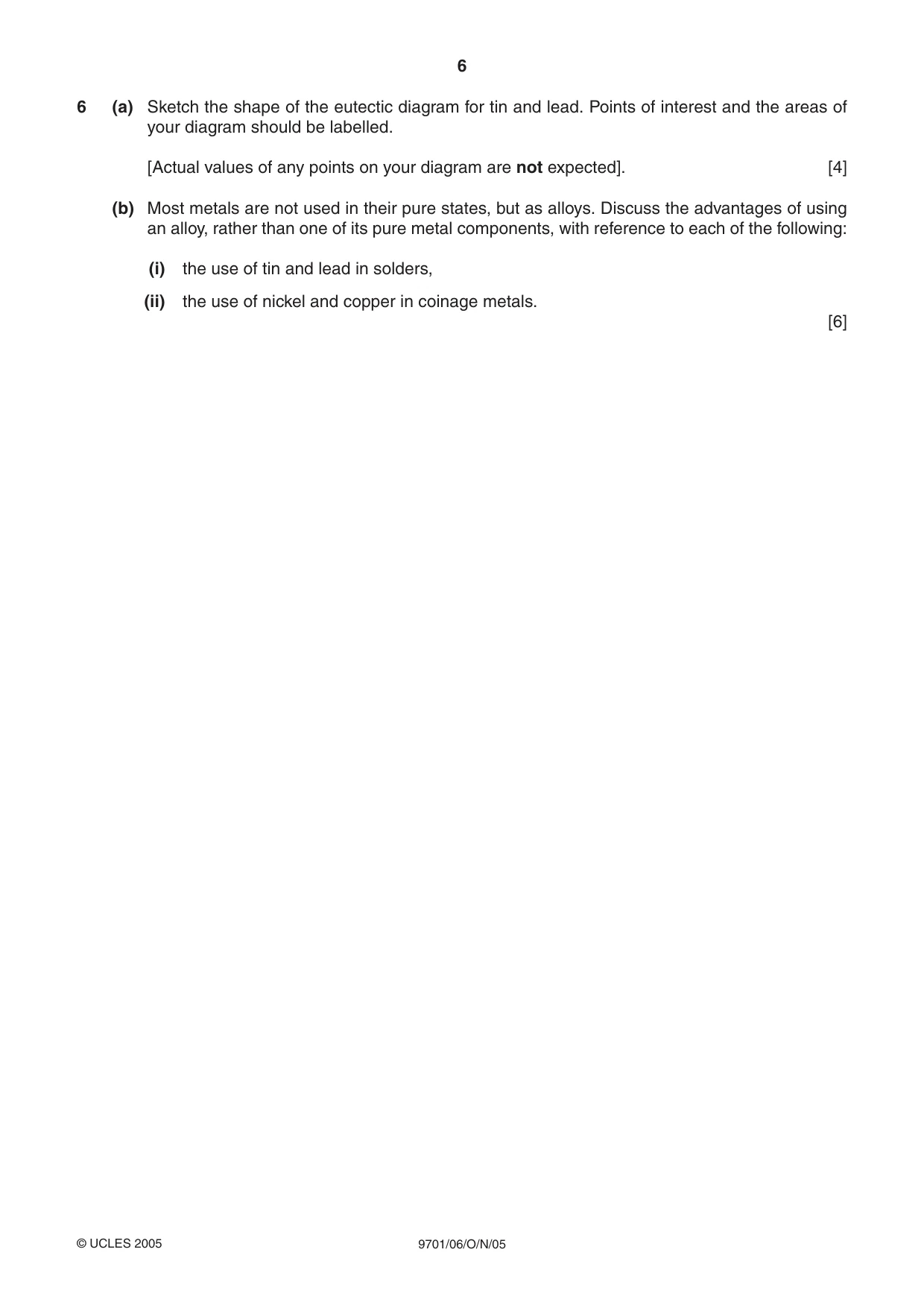
6 (a) Sketch the shape of the eutectic diagram for tin and lead. Points of interest and the areas of your diagram should be labelled. [Actual values of any points on your diagram are not expected]. [4] (b) Most metals are not used in their pure states, but as alloys. Discuss the advantages of using an alloy, rather than one of its pure metal components, with reference to each of the following: (i) the use of tin and lead in solders, (ii) the use of nickel and copper in coinage metals. [6] 6 9701/06/O/N/05 © UCLES 2005
Question paper, page 7
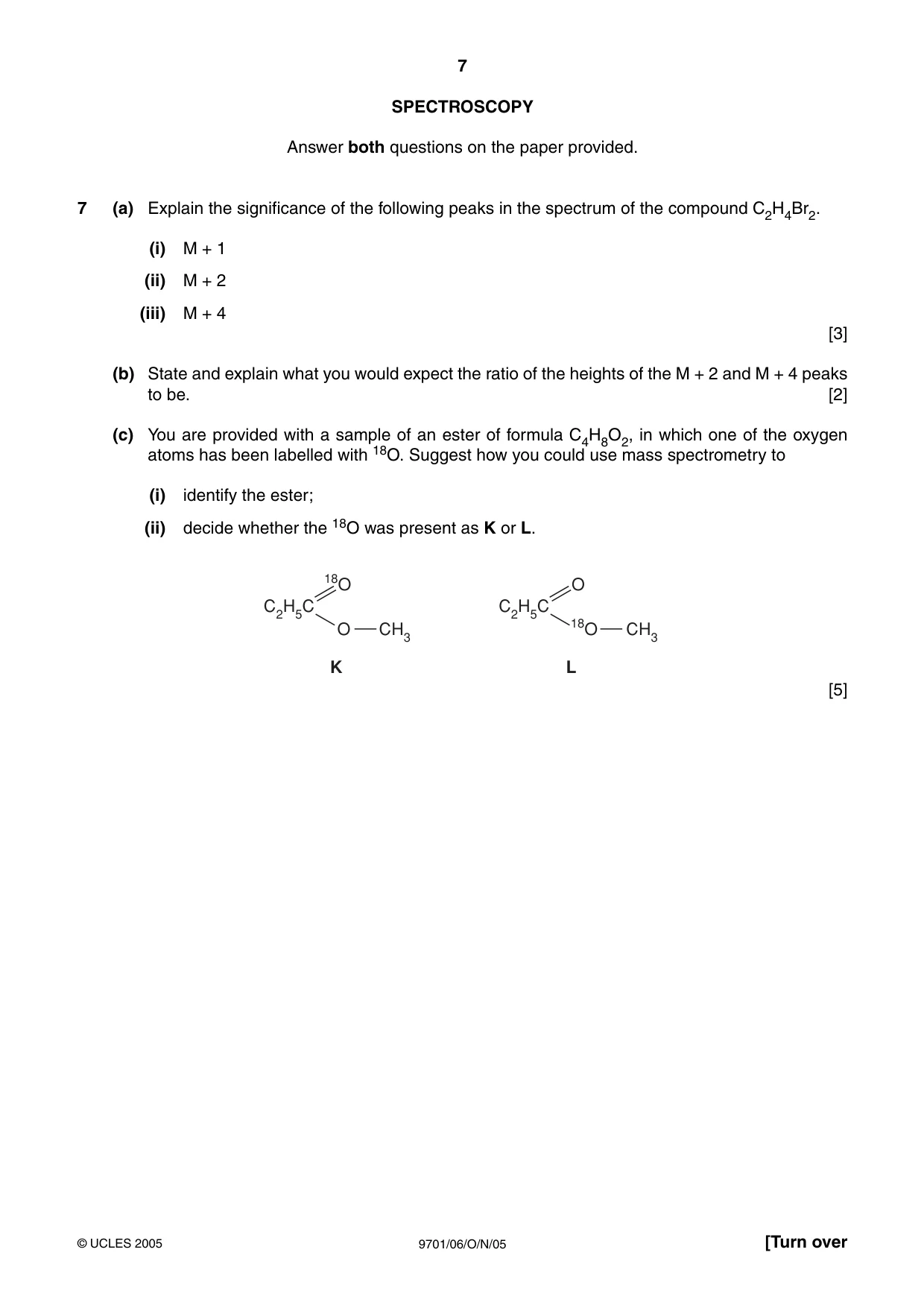
[Turn over SPECTROSCOPY Answer both questions on the paper provided. 7 (a) Explain the significance of the following peaks in the spectrum of the compound C2H4Br2. (i) M + 1 (ii) M + 2 (iii) M + 4 [3] (b) State and explain what you would expect the ratio of the heights of the M + 2 and M + 4 peaks to be. [2] (c) You are provided with a sample of an ester of formula C4H8O2, in which one of the oxygen atoms has been labelled with 18O. Suggest how you could use mass spectrometry to (i) identify the ester; (ii) decide whether the 18O was present as K or L. [5] C2H5C 18O O CH3 K C2H5C O 18O CH3 L 7 9701/06/O/N/05 © UCLES 2005
Question paper, page 8
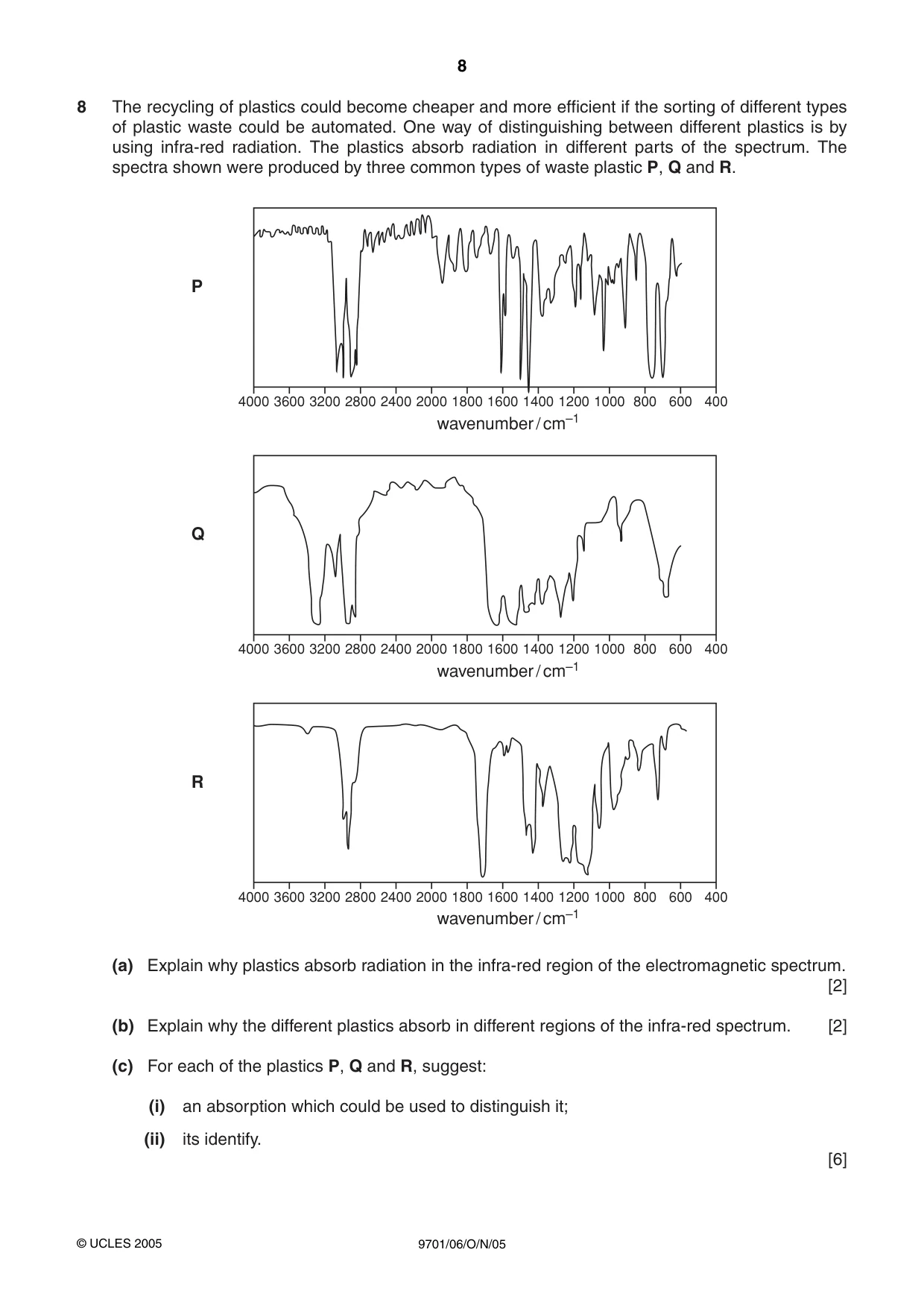
8 The recycling of plastics could become cheaper and more efficient if the sorting of different types of plastic waste could be automated. One way of distinguishing between different plastics is by using infra-red radiation. The plastics absorb radiation in different parts of the spectrum. The spectra shown were produced by three common types of waste plastic P, Q and R. (a) Explain why plastics absorb radiation in the infra-red region of the electromagnetic spectrum. [2] (b) Explain why the different plastics absorb in different regions of the infra-red spectrum. [2] (c) For each of the plastics P, Q and R, suggest: (i) an absorption which could be used to distinguish it; (ii) its identify. [6] P 4000 3600 3200 2800 2400 2000 1800 1600 1400 1200 1000 800 600 400 wavenumber / cm–1 Q 4000 3600 3200 2800 2400 2000 1800 1600 1400 1200 1000 800 600 400 wavenumber / cm–1 R 4000 3600 3200 2800 2400 2000 1800 1600 1400 1200 1000 800 600 400 wavenumber / cm–1 8 9701/06/O/N/05 © UCLES 2005
Question paper, page 9
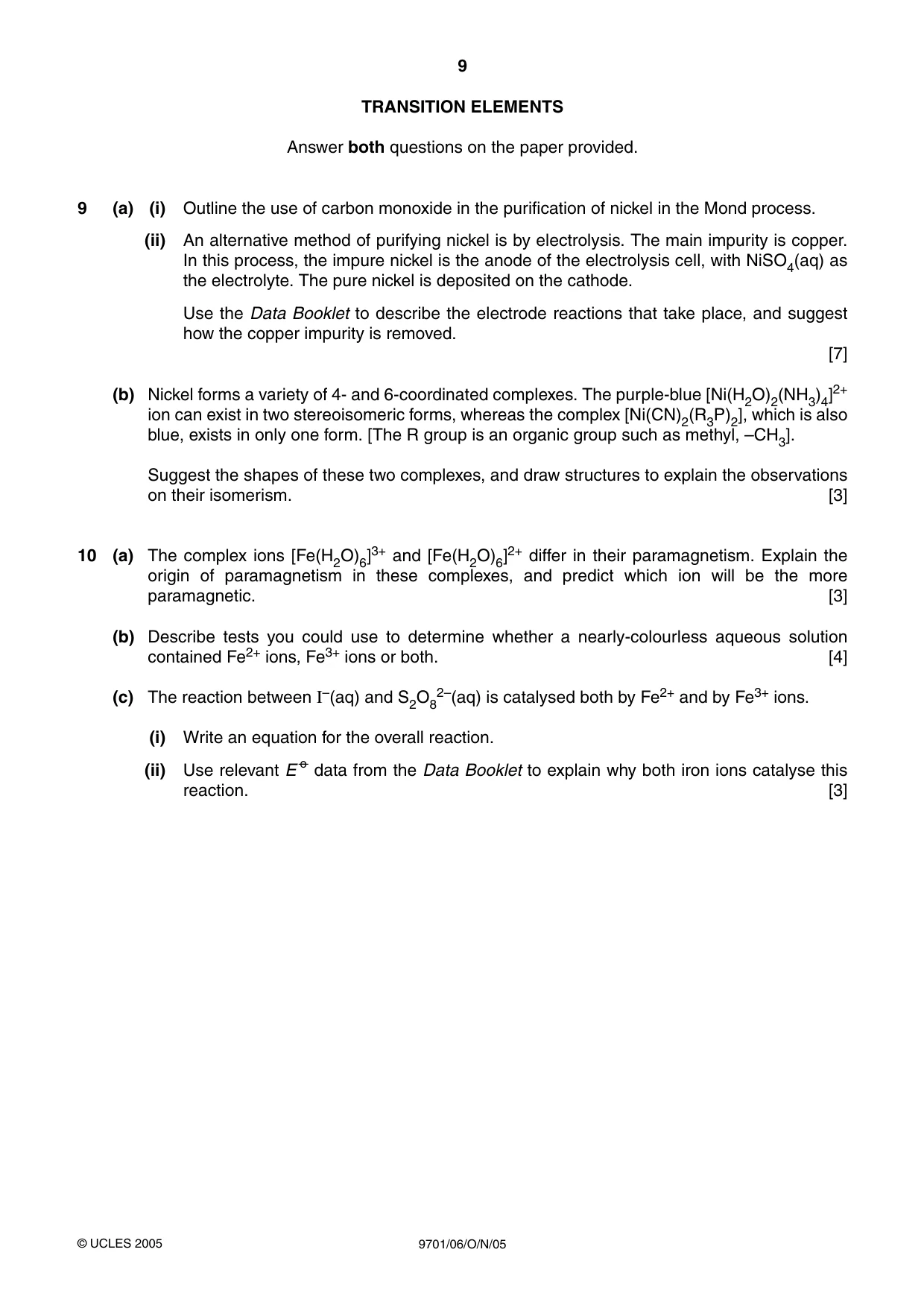
TRANSITION ELEMENTS Answer both questions on the paper provided. 9 (a) (i) Outline the use of carbon monoxide in the purification of nickel in the Mond process. (ii) An alternative method of purifying nickel is by electrolysis. The main impurity is copper. In this process, the impure nickel is the anode of the electrolysis cell, with NiSO4(aq) as the electrolyte. The pure nickel is deposited on the cathode. Use the Data Booklet to describe the electrode reactions that take place, and suggest how the copper impurity is removed. [7] (b) Nickel forms a variety of 4- and 6-coordinated complexes. The purple-blue [Ni(H2O)2(NH3)4]2+ ion can exist in two stereoisomeric forms, whereas the complex [Ni(CN)2(R3P)2], which is also blue, exists in only one form. [The R group is an organic group such as methyl, –CH3]. Suggest the shapes of these two complexes, and draw structures to explain the observations on their isomerism. [3] 10 (a) The complex ions [Fe(H2O)6]3+ and [Fe(H2O)6]2+ differ in their paramagnetism. Explain the origin of paramagnetism in these complexes, and predict which ion will be the more paramagnetic. [3] (b) Describe tests you could use to determine whether a nearly-colourless aqueous solution contained Fe2+ ions, Fe3+ ions or both. [4] (c) The reaction between I–(aq) and S2O8 2–(aq) is catalysed both by Fe2+ and by Fe3+ ions. (i) Write an equation for the overall reaction. (ii) Use relevant E o–– data from the Data Booklet to explain why both iron ions catalyse this reaction. [3] 9 9701/06/O/N/05 © UCLES 2005
Question paper, page 12
BLANK PAGE 12 9701/06/O/N/05 Permission to reproduce items where third-party owned material protected by copyright is included has been sought and cleared where possible. Every reasonable effort has been made by the publisher (UCLES) to trace copyright holders, but if any items requiring clearance have unwittingly been included, the publisher will be pleased to make amends at the earliest possible opportunity. University of Cambridge International Examinations is part of the University of Cambridge Local Examinations Syndicate (UCLES), which is itself a department of the University of Cambridge.
Mark scheme, page 1
UNIVERSITY OF CAMBRIDGE INTERNATIONAL EXAMINATIONS GCE A Level MARK SCHEME for the November 2005 question paper 9701 CHEMISTRY 9701/06 Paper 6 maximum raw mark 40 This mark scheme is published as an aid to teachers and students, to indicate the requirements of the examination. It shows the basis on which Examiners were initially instructed to award marks. It does not indicate the details of the discussions that took place at an Examiners’ meeting before marking began. Any substantial changes to the mark scheme that arose from these discussions will be recorded in the published Report on the Examination. All Examiners are instructed that alternative correct answers and unexpected approaches in candidates’ scripts must be given marks that fairly reflect the relevant knowledge and skills demonstrated. Mark schemes must be read in conjunction with the question papers and the Report on the Examination. The minimum marks in these components needed for various grades were previously published with these mark schemes, but are now instead included in the Report on the Examination for this session. • CIE will not enter into discussion or correspondence in connection with these mark schemes. CIE is publishing the mark schemes for the November 2005 question papers for most IGCSE and GCE Advanced Level and Advanced Subsidiary Level syllabuses and some Ordinary Level syllabuses.
Mark scheme, page 2
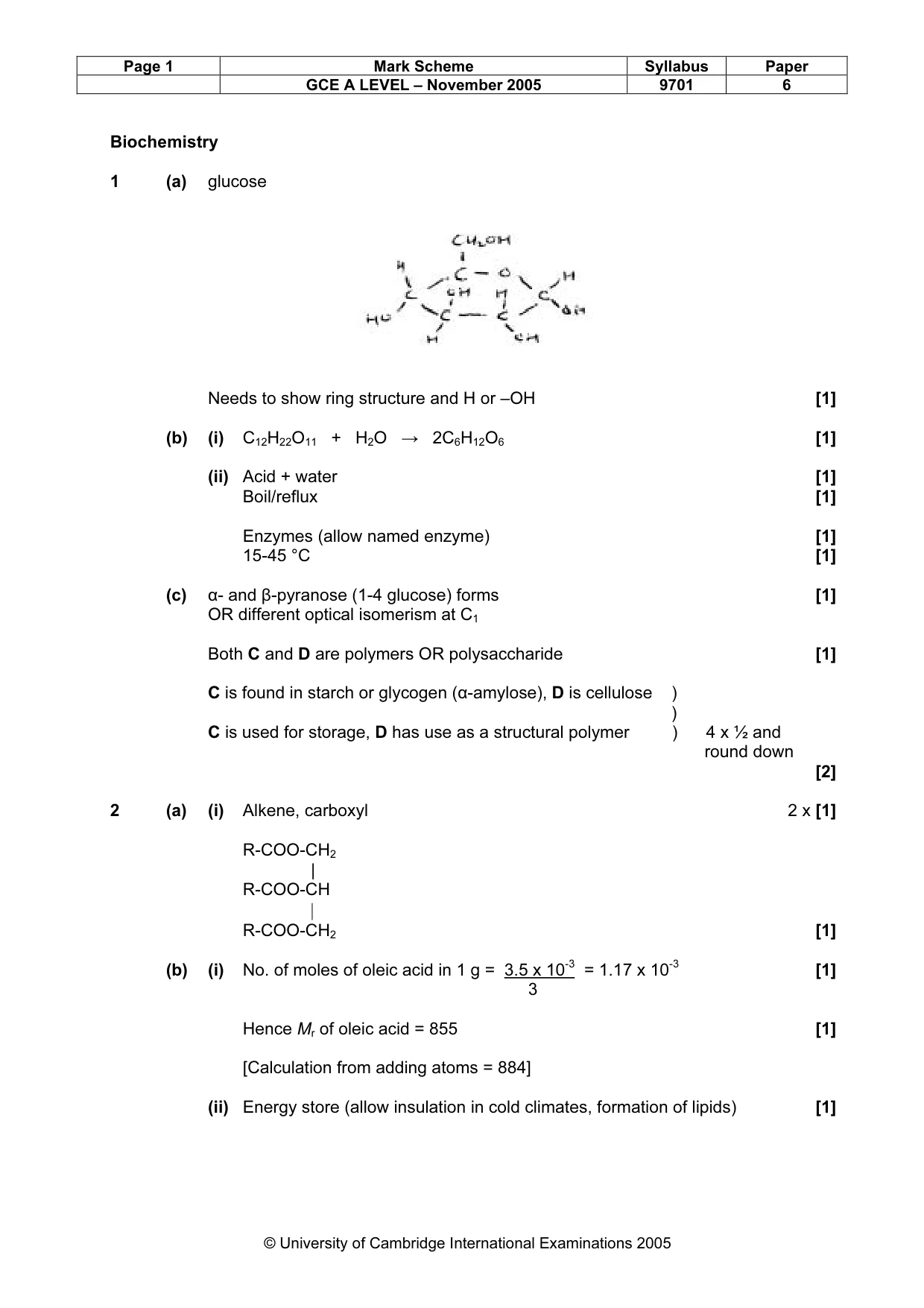
Page 1 Mark Scheme Syllabus Paper GCE A LEVEL – November 2005 9701 6 © University of Cambridge International Examinations 2005 Biochemistry 1 (a) glucose Needs to show ring structure and H or –OH [1] (b) (i) C12H22O11 + H2O → 2C6H12O6 [1] (ii) Acid + water [1] Boil/reflux [1] Enzymes (allow named enzyme) [1] 15-45 °C [1] (c) α- and β-pyranose (1-4 glucose) forms [1] OR different optical isomerism at C1 Both C and D are polymers OR polysaccharide [1] C is found in starch or glycogen (α-amylose), D is cellulose ) ) C is used for storage, D has use as a structural polymer ) 4 x ½ and round down [2] 2 (a) (i) Alkene, carboxyl 2 x [1] R-COO-CH2 | R-COO-CH | R-COO-CH2 [1] (b) (i) No. of moles of oleic acid in 1 g = 3.5 x 10-3 = 1.17 x 10⁻³ [1] 3 Hence Mr of oleic acid = 855 [1] [Calculation from adding atoms = 884] (ii) Energy store (allow insulation in cold climates, formation of lipids) [1]
Mark scheme, page 3
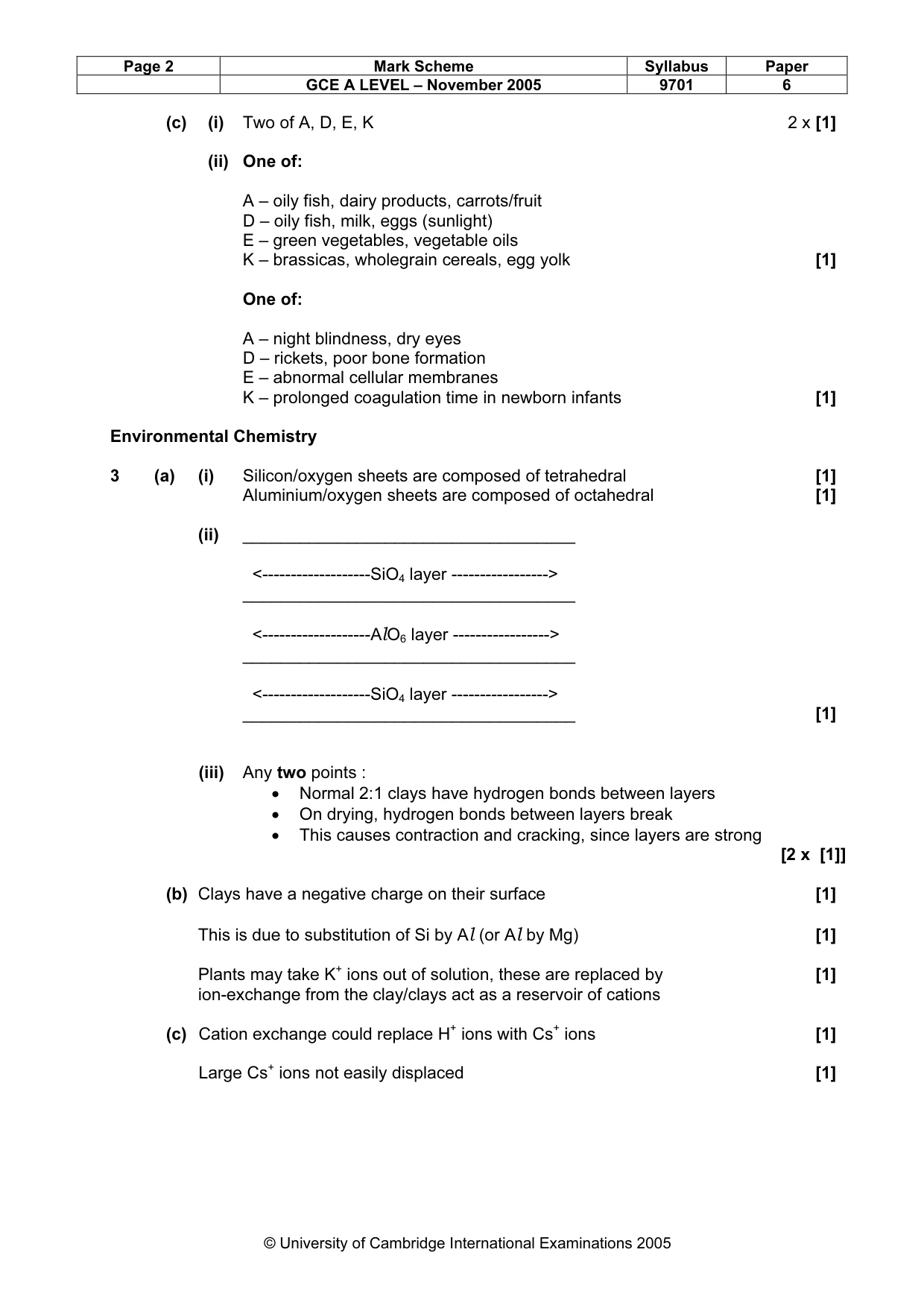
Page 2 Mark Scheme Syllabus Paper GCE A LEVEL – November 2005 9701 6 © University of Cambridge International Examinations 2005 (c) (i) Two of A, D, E, K 2 x [1] (ii) One of: A – oily fish, dairy products, carrots/fruit D – oily fish, milk, eggs (sunlight) E – green vegetables, vegetable oils K – brassicas, wholegrain cereals, egg yolk [1] One of: A – night blindness, dry eyes D – rickets, poor bone formation E – abnormal cellular membranes K – prolonged coagulation time in newborn infants [1] Environmental Chemistry 3 (a) (i) Silicon/oxygen sheets are composed of tetrahedral [1] Aluminium/oxygen sheets are composed of octahedral [1] (ii) ___________________________________ <-------------------SiO4 layer -----------------> ___________________________________ <-------------------AlO6 layer -----------------> ___________________________________ <-------------------SiO4 layer -----------------> ___________________________________ [1] (iii) Any two points : • Normal 2:1 clays have hydrogen bonds between layers • On drying, hydrogen bonds between layers break • This causes contraction and cracking, since layers are strong [2 x [1]] (b) Clays have a negative charge on their surface [1] This is due to substitution of Si by Al (or Al by Mg) [1] Plants may take K+ ions out of solution, these are replaced by [1] ion-exchange from the clay/clays act as a reservoir of cations (c) Cation exchange could replace H+ ions with Cs+ ions [1] Large Cs+ ions not easily displaced [1]
Mark scheme, page 4
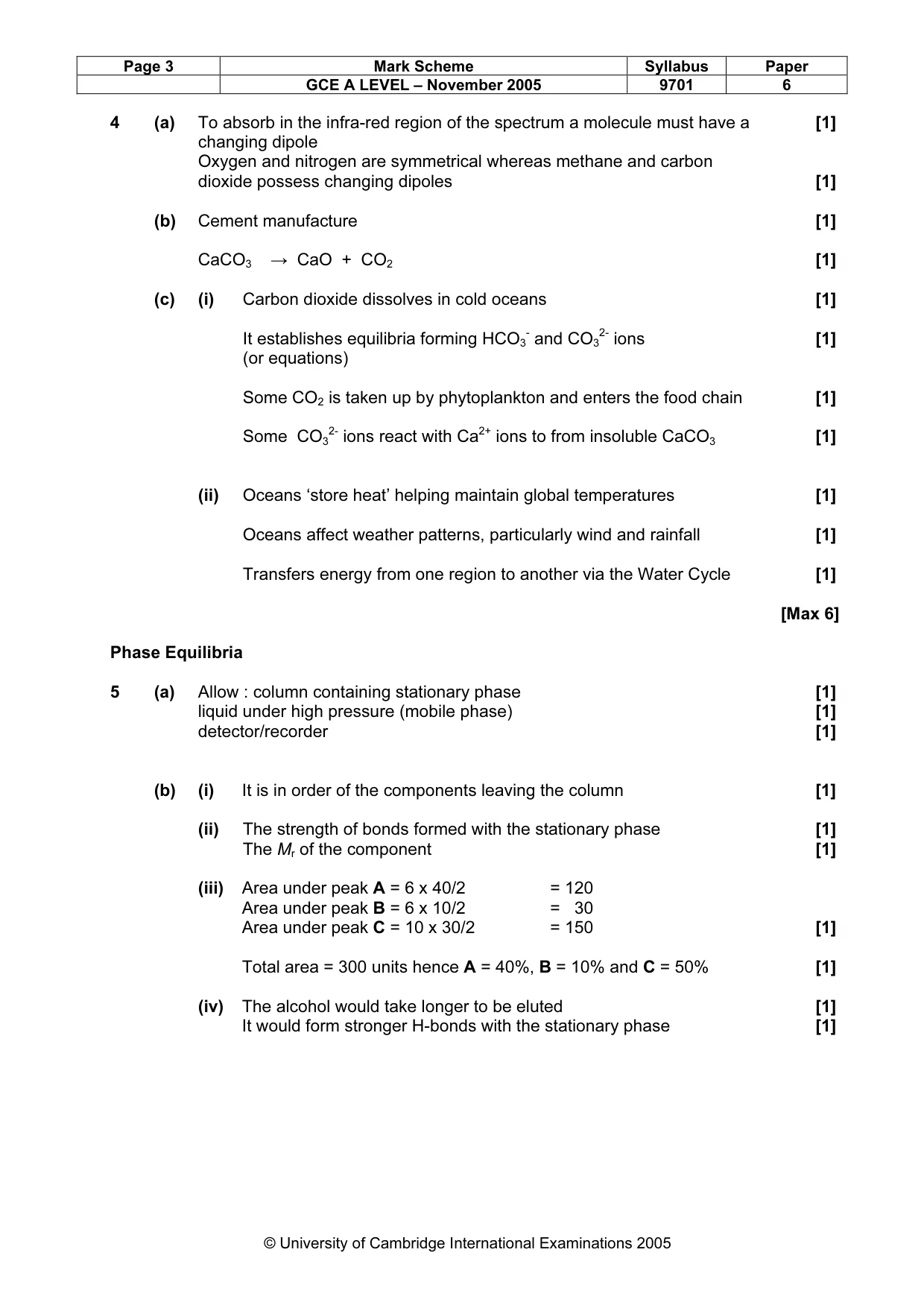
Page 3 Mark Scheme Syllabus Paper GCE A LEVEL – November 2005 9701 6 © University of Cambridge International Examinations 2005 4 (a) To absorb in the infra-red region of the spectrum a molecule must have a [1] changing dipole Oxygen and nitrogen are symmetrical whereas methane and carbon dioxide possess changing dipoles [1] (b) Cement manufacture [1] CaCO3 → CaO + CO2 [1] (c) (i) Carbon dioxide dissolves in cold oceans [1] It establishes equilibria forming HCO3 - and CO3 2- ions [1] (or equations) Some CO2 is taken up by phytoplankton and enters the food chain [1] Some CO3 2- ions react with Ca2+ ions to from insoluble CaCO3 [1] (ii) Oceans ‘store heat’ helping maintain global temperatures [1] Oceans affect weather patterns, particularly wind and rainfall [1] Transfers energy from one region to another via the Water Cycle [1] [Max 6] Phase Equilibria 5 (a) Allow : column containing stationary phase [1] liquid under high pressure (mobile phase) [1] detector/recorder [1] (b) (i) It is in order of the components leaving the column [1] (ii) The strength of bonds formed with the stationary phase [1] The Mr of the component [1] (iii) Area under peak A = 6 x 40/2 = 120 Area under peak B = 6 x 10/2 = 30 Area under peak C = 10 x 30/2 = 150 [1] Total area = 300 units hence A = 40%, B = 10% and C = 50% [1] (iv) The alcohol would take longer to be eluted [1] It would form stronger H-bonds with the stationary phase [1]
Mark scheme, page 5
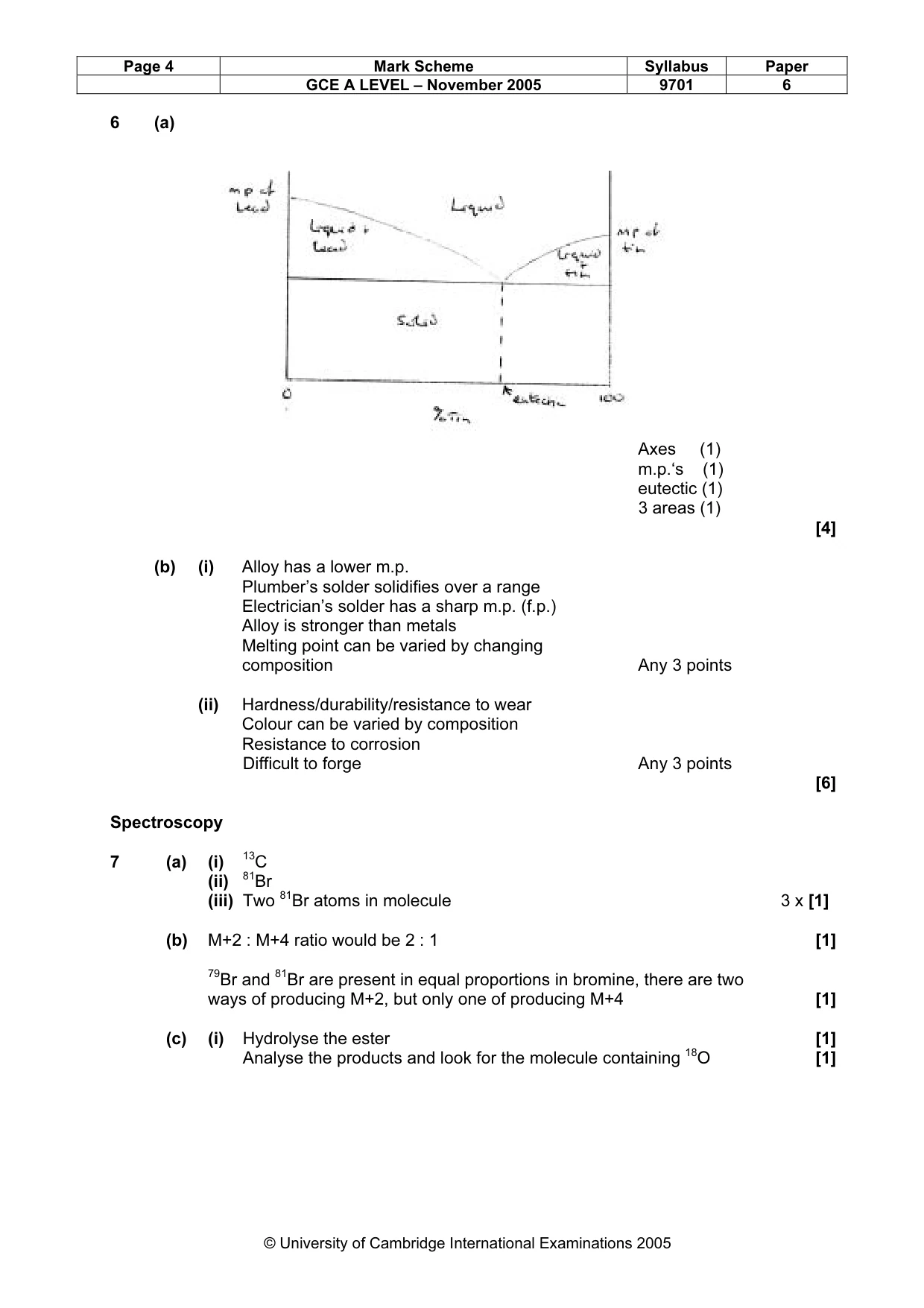
Page 4 Mark Scheme Syllabus Paper GCE A LEVEL – November 2005 9701 6 © University of Cambridge International Examinations 2005 6 (a) Axes (1) m.p.‘s (1) eutectic (1) 3 areas (1) [4] (b) (i) Alloy has a lower m.p. Plumber’s solder solidifies over a range Electrician’s solder has a sharp m.p. (f.p.) Alloy is stronger than metals Melting point can be varied by changing composition Any 3 points (ii) Hardness/durability/resistance to wear Colour can be varied by composition Resistance to corrosion Difficult to forge Any 3 points [6] Spectroscopy 7 (a) (i) 13C (ii) 81Br (iii) Two 81Br atoms in molecule 3 x [1] (b) M+2 : M+4 ratio would be 2 : 1 [1] 79Br and 81Br are present in equal proportions in bromine, there are two ways of producing M+2, but only one of producing M+4 [1] (c) (i) Hydrolyse the ester [1] Analyse the products and look for the molecule containing 18O [1]
Mark scheme, page 6
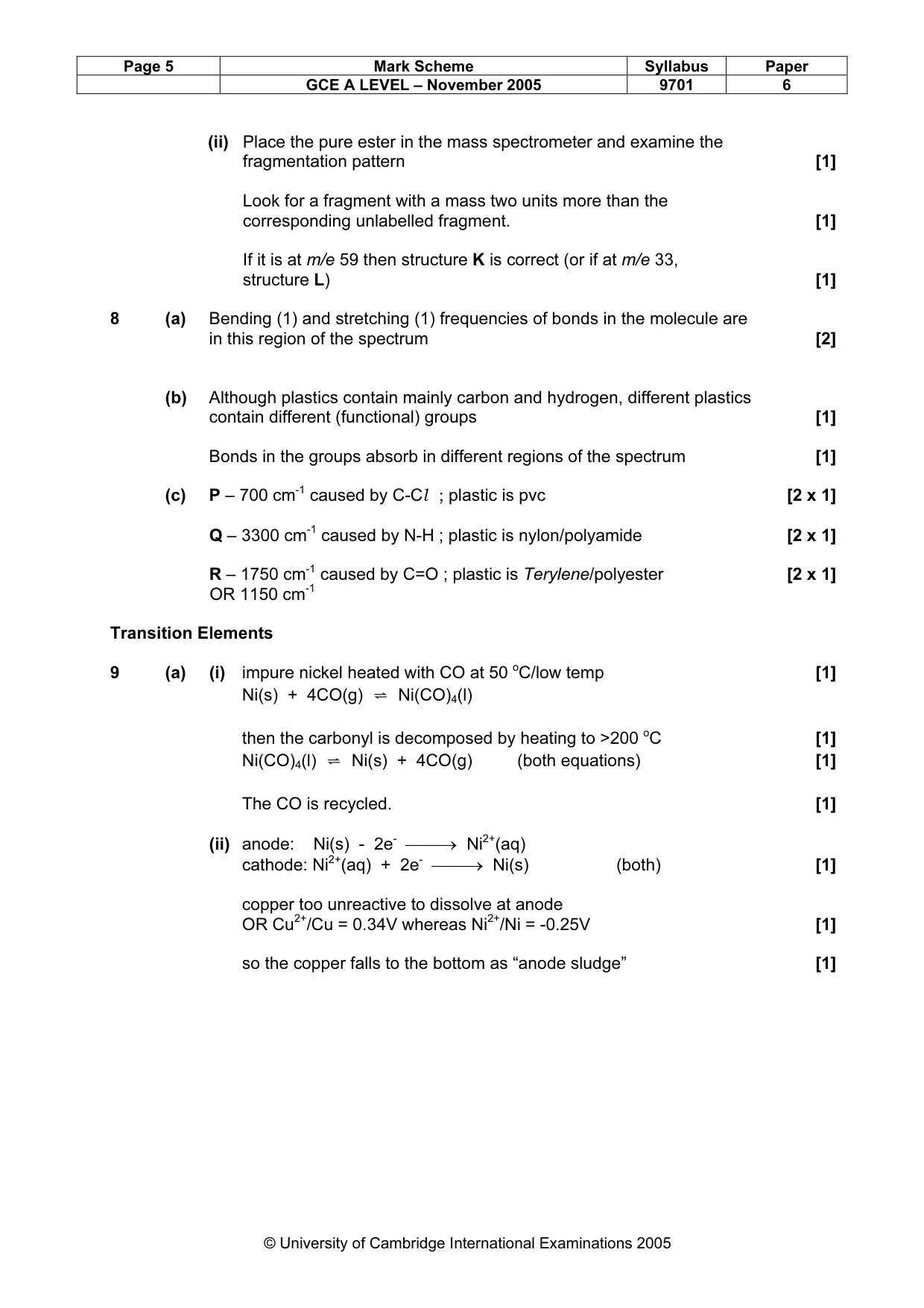
Page 5 Mark Scheme Syllabus Paper GCE A LEVEL – November 2005 9701 6 © University of Cambridge International Examinations 2005 (ii) Place the pure ester in the mass spectrometer and examine the fragmentation pattern [1] Look for a fragment with a mass two units more than the corresponding unlabelled fragment. [1] If it is at m/e 59 then structure K is correct (or if at m/e 33, structure L) [1] 8 (a) Bending (1) and stretching (1) frequencies of bonds in the molecule are in this region of the spectrum [2] (b) Although plastics contain mainly carbon and hydrogen, different plastics contain different (functional) groups [1] Bonds in the groups absorb in different regions of the spectrum [1] (c) P – 700 cm-1 caused by C-Cl ; plastic is pvc [2 x 1] Q – 3300 cm-1 caused by N-H ; plastic is nylon/polyamide [2 x 1] R – 1750 cm-1 caused by C=O ; plastic is Terylene/polyester [2 x 1] OR 1150 cm-1 Transition Elements 9 (a) (i) impure nickel heated with CO at 50 oC/low temp [1] Ni(s) + 4CO(g) ⇋ Ni(CO)4(l) then the carbonyl is decomposed by heating to >200 oC [1] Ni(CO)4(l) ⇋ Ni(s) + 4CO(g) (both equations) [1] The CO is recycled. [1] (ii) anode: Ni(s) - 2e- → Ni2+(aq) cathode: Ni2+(aq) + 2e- → Ni(s) (both) [1] copper too unreactive to dissolve at anode OR Cu2+/Cu = 0.34V whereas Ni2+/Ni = -0.25V [1] so the copper falls to the bottom as “anode sludge” [1]
Mark scheme, page 7
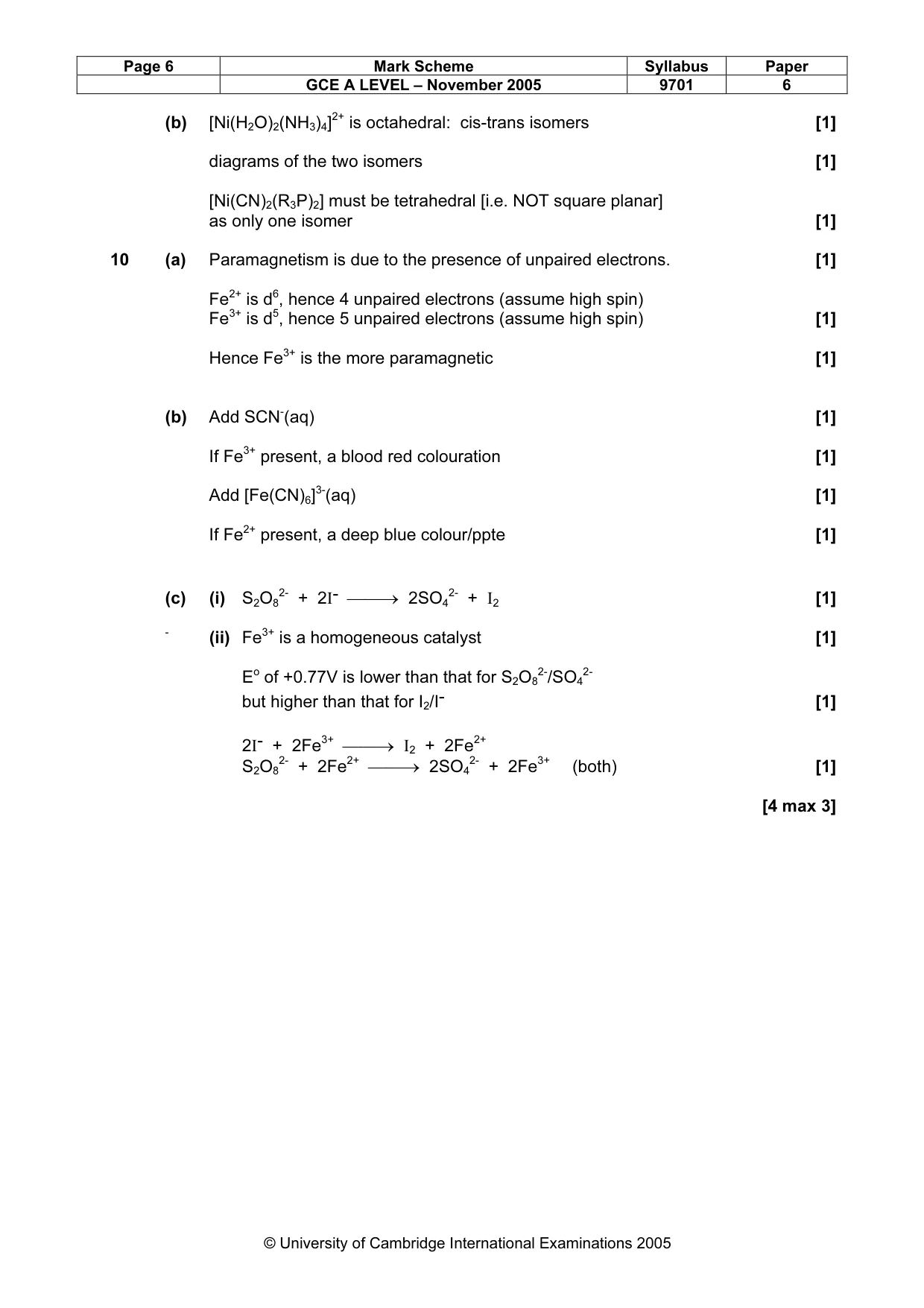
Page 6 Mark Scheme Syllabus Paper GCE A LEVEL – November 2005 9701 6 © University of Cambridge International Examinations 2005 (b) [Ni(H2O)2(NH3)4]2+ is octahedral: cis-trans isomers [1] diagrams of the two isomers [1] [Ni(CN)2(R3P)2] must be tetrahedral [i.e. NOT square planar] as only one isomer [1] 10 (a) Paramagnetism is due to the presence of unpaired electrons. [1] Fe2+ is d6, hence 4 unpaired electrons (assume high spin) Fe3+ is d5, hence 5 unpaired electrons (assume high spin) [1] Hence Fe3+ is the more paramagnetic [1] (b) Add SCN-(aq) [1] If Fe3+ present, a blood red colouration [1] Add [Fe(CN)6]3-(aq) [1] If Fe2+ present, a deep blue colour/ppte [1] (c) (i) S2O8 2- + 2I- → 2SO4 2- + I2 [1] - (ii) Fe3+ is a homogeneous catalyst [1] Eo of +0.77V is lower than that for S2O8 2-/SO4 2- but higher than that for I2/I- [1] 2I- + 2Fe3+ → I2 + 2Fe2+ S2O8 2- + 2Fe2+ → 2SO4 2- + 2Fe3+ (both) [1] [4 max 3]