Cambridge A Level Business (for first examination in 2016) 9609 — 2024 Oct/Nov Paper 4 · Variant 2
9609/42/O/N/24 · 2 questions · 40 marks · ≈45 min
The question paper and its mark scheme, free to read here and free to download. This is Cambridge’s own paper, exactly as it was sat.
Question paper4 pages

Mark scheme19 pages
Answers below. Sit the paper first if you are practising.
Questions as text
Q1 · Evaluate the success of Idir’s strategy for improving employee performance between 2020…
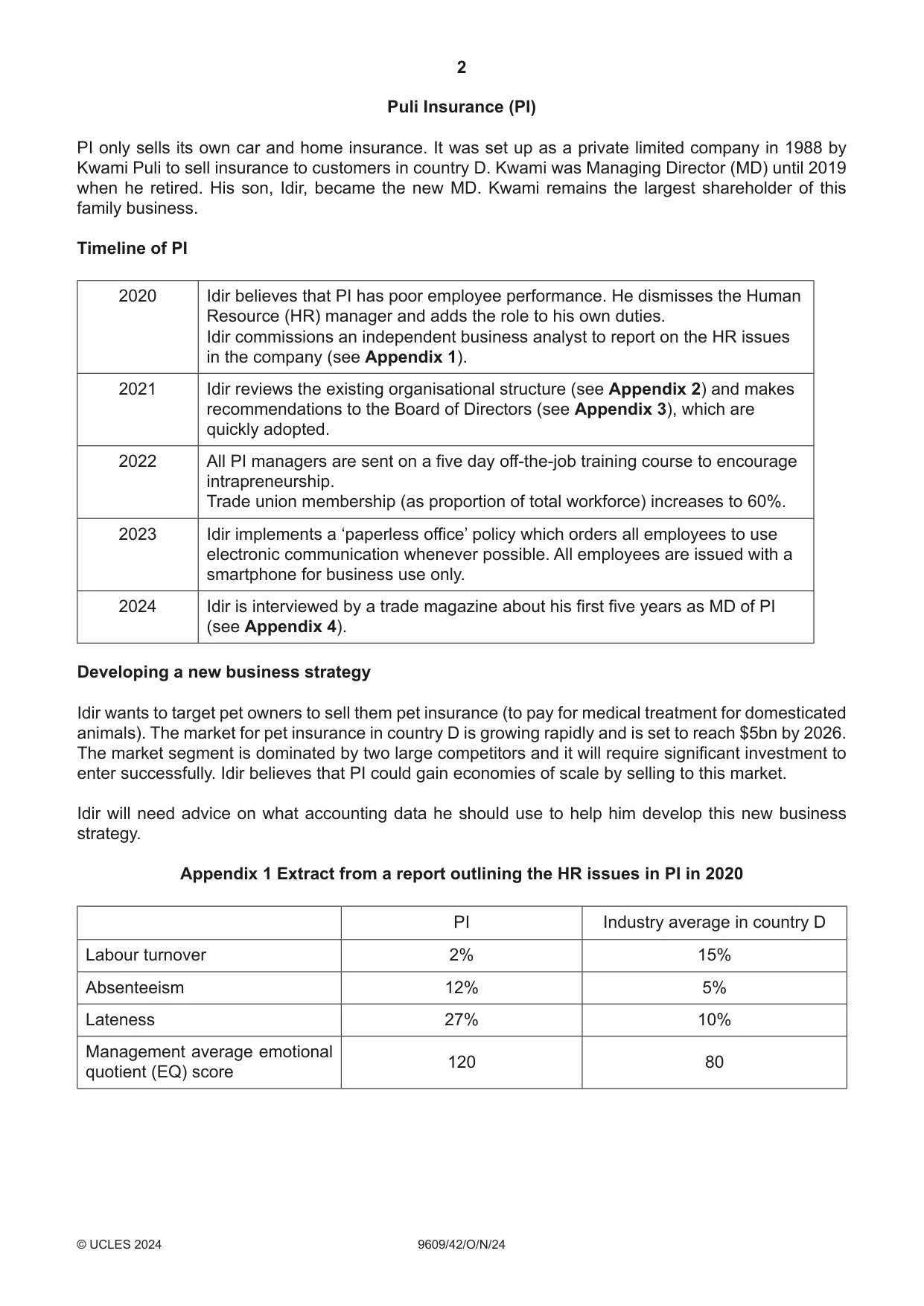
1 Evaluate the success of Idir’s strategy for improving employee performance between 2020 and 2024. [20]
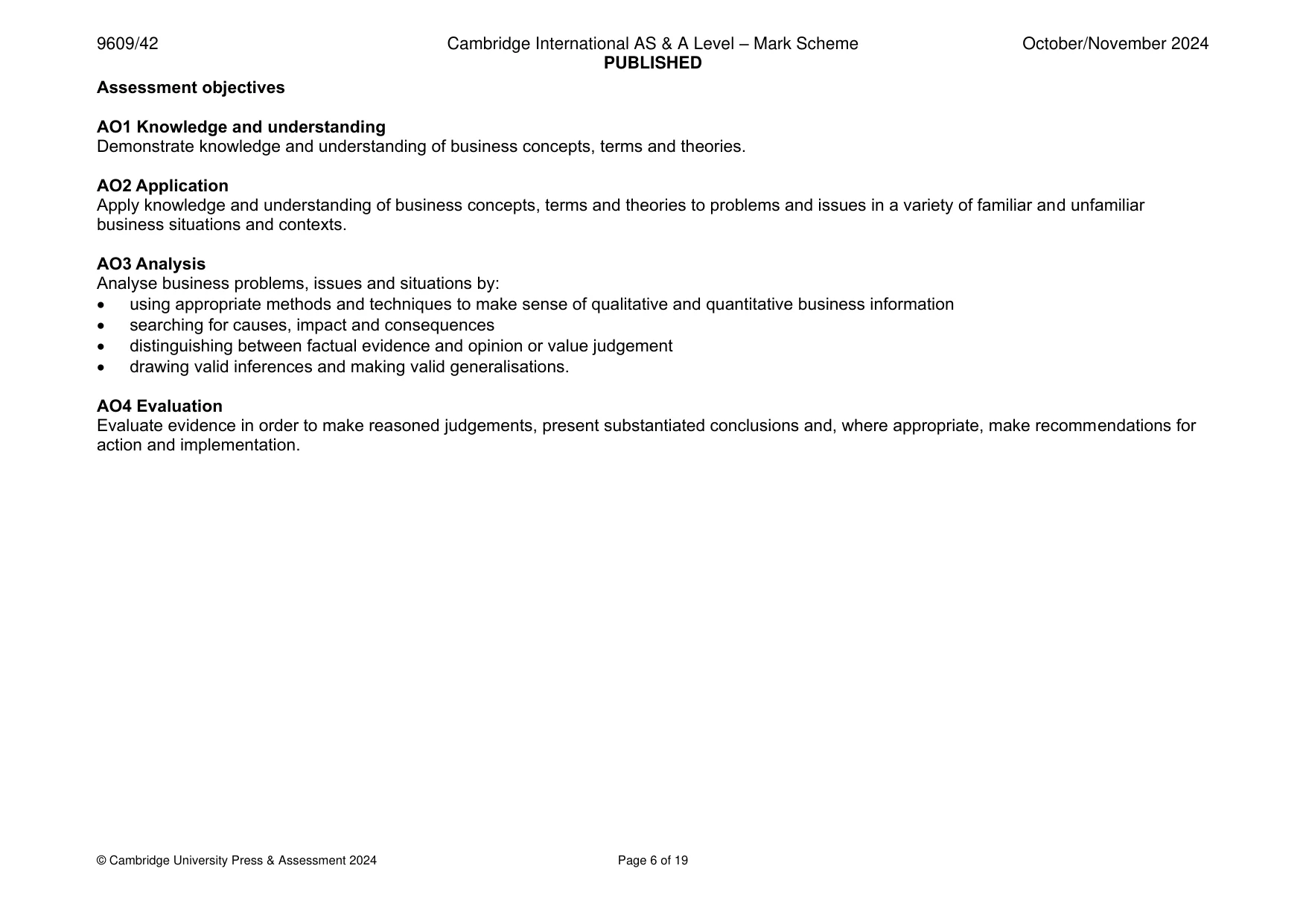
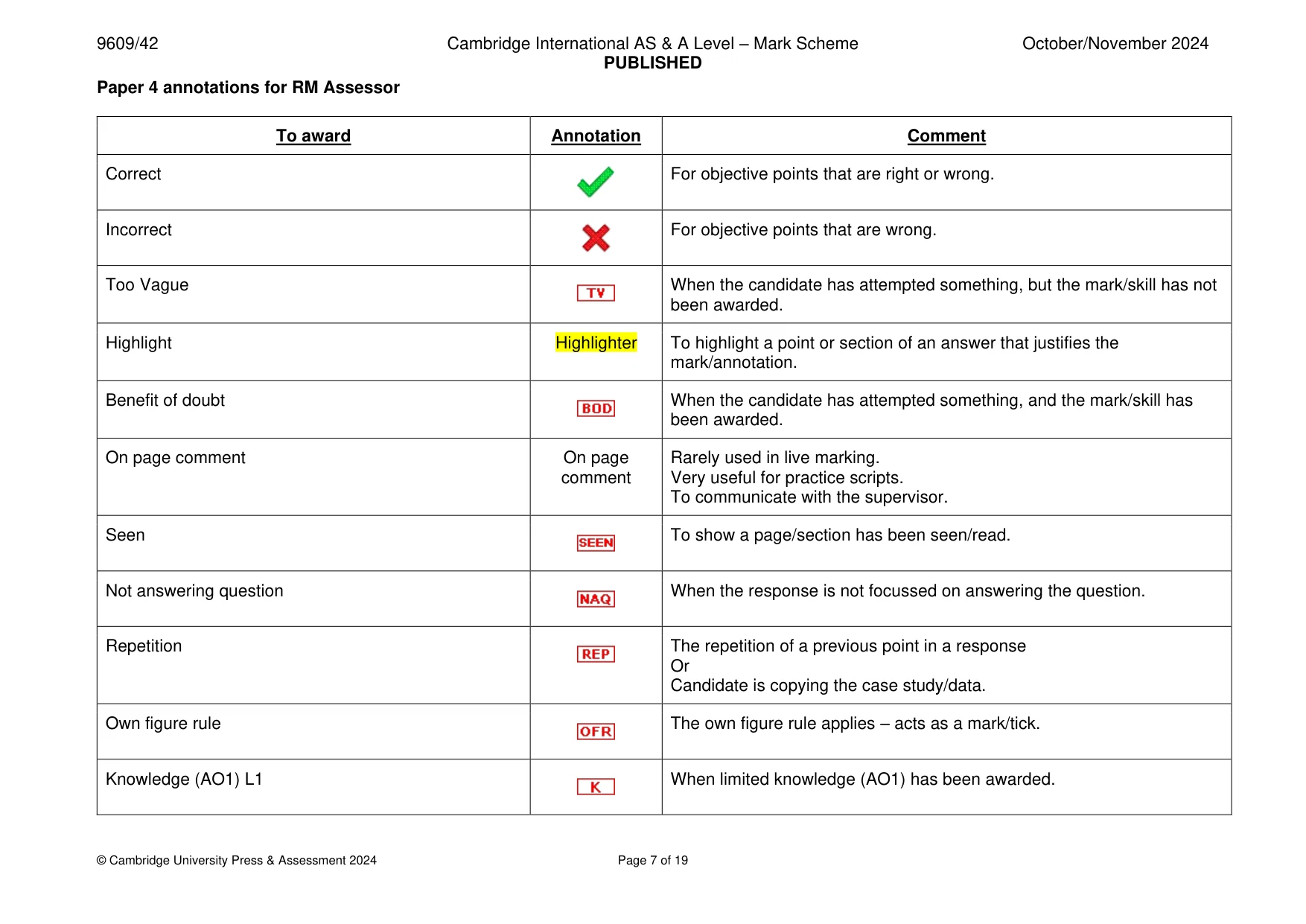
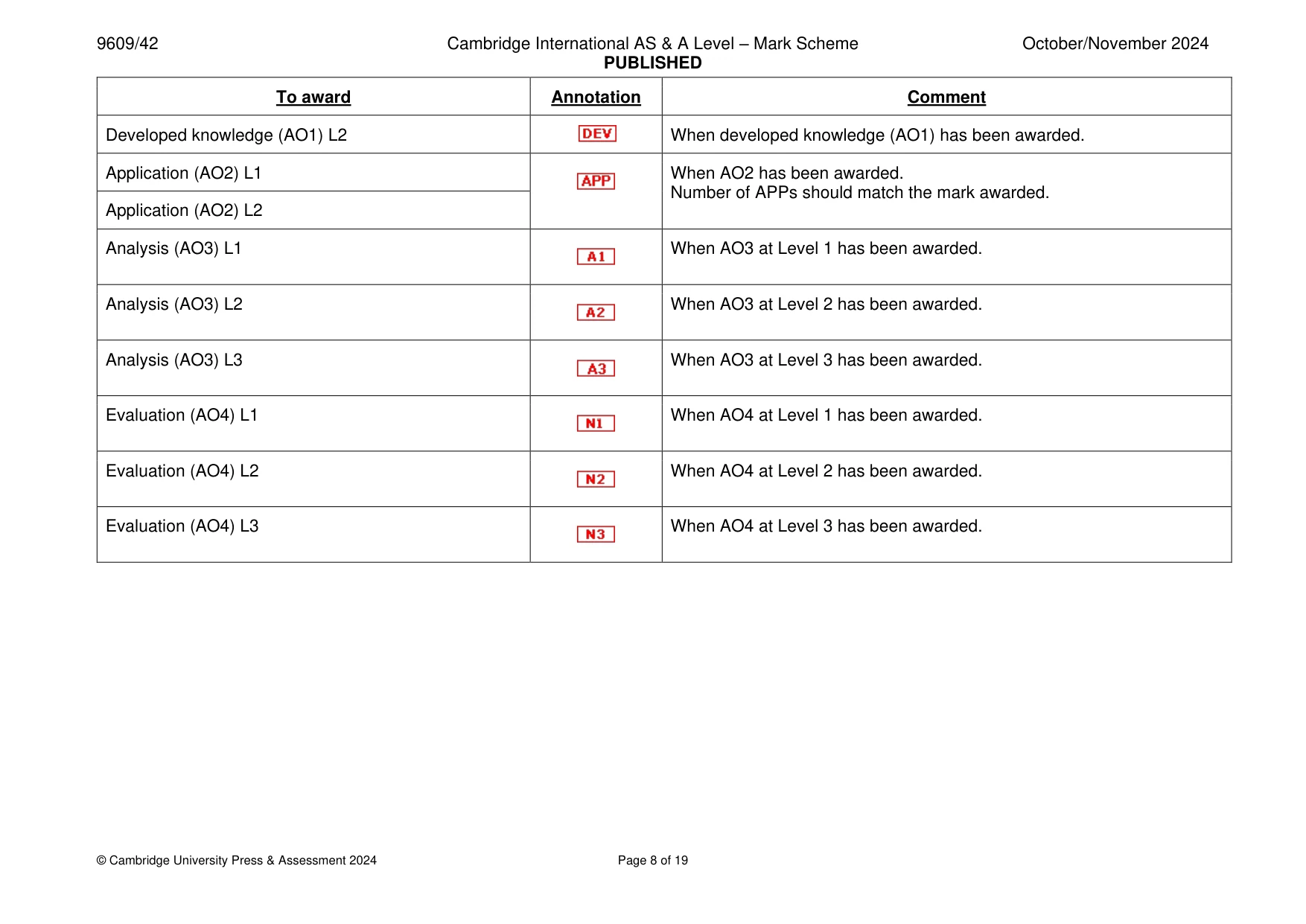
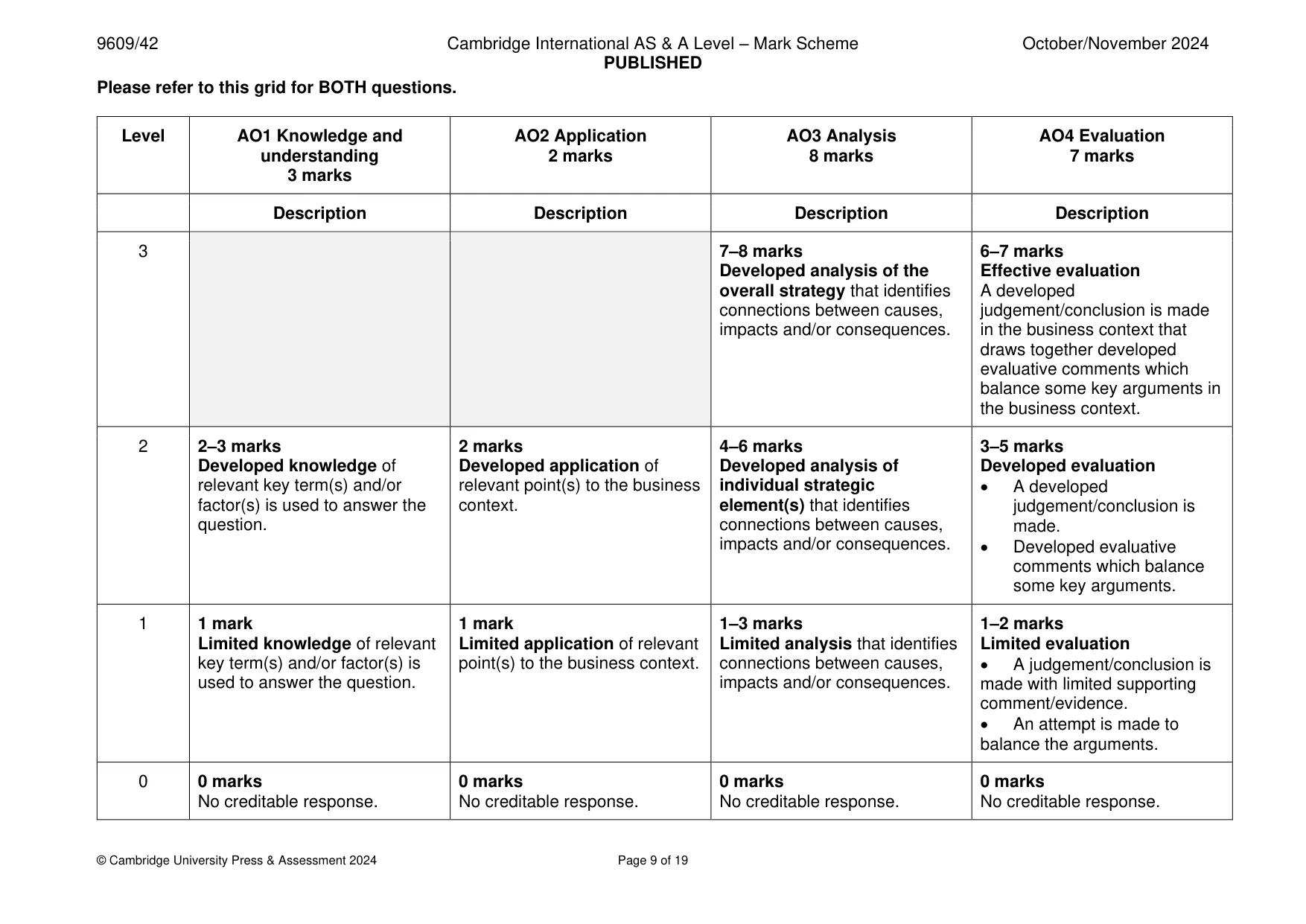
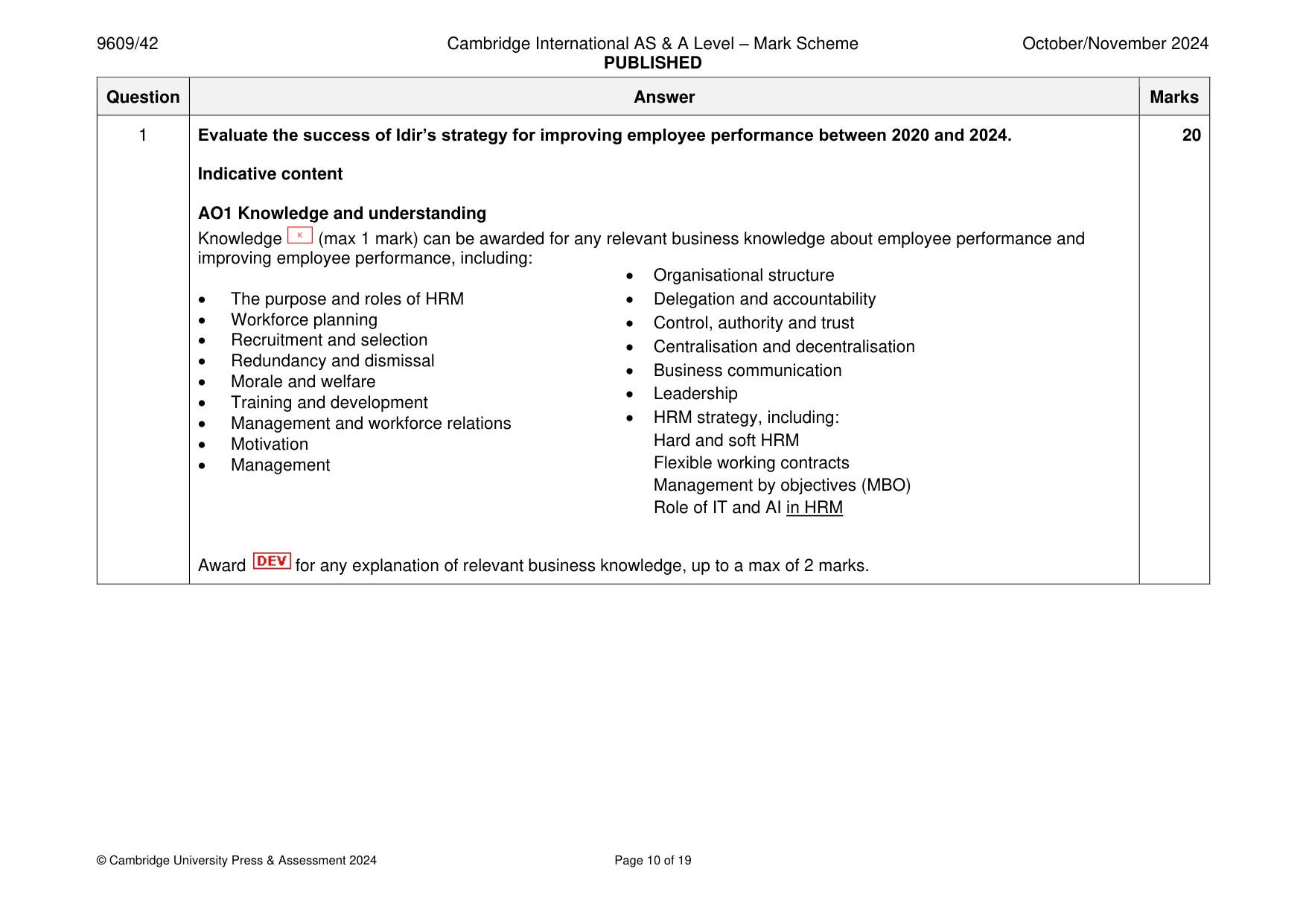
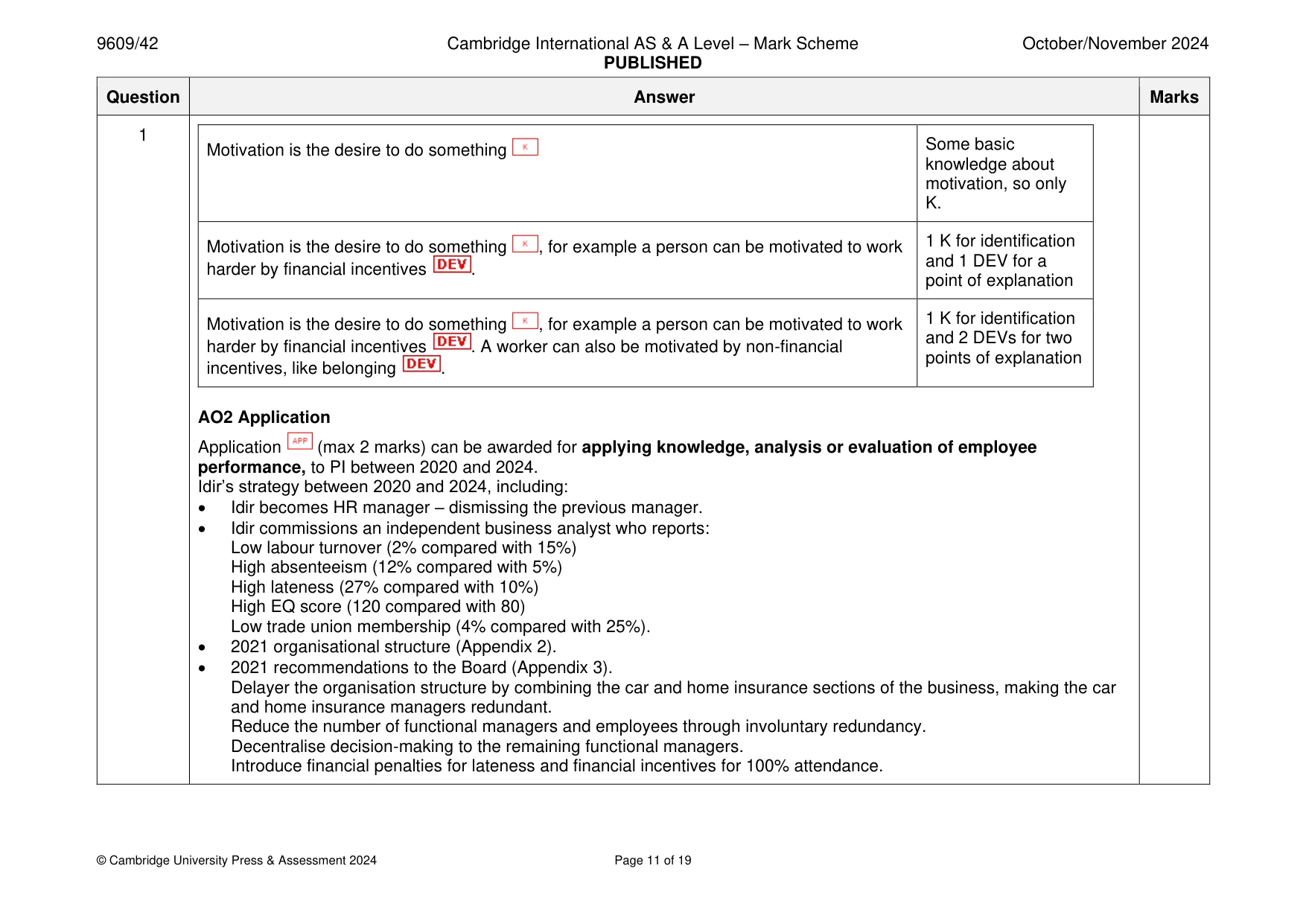
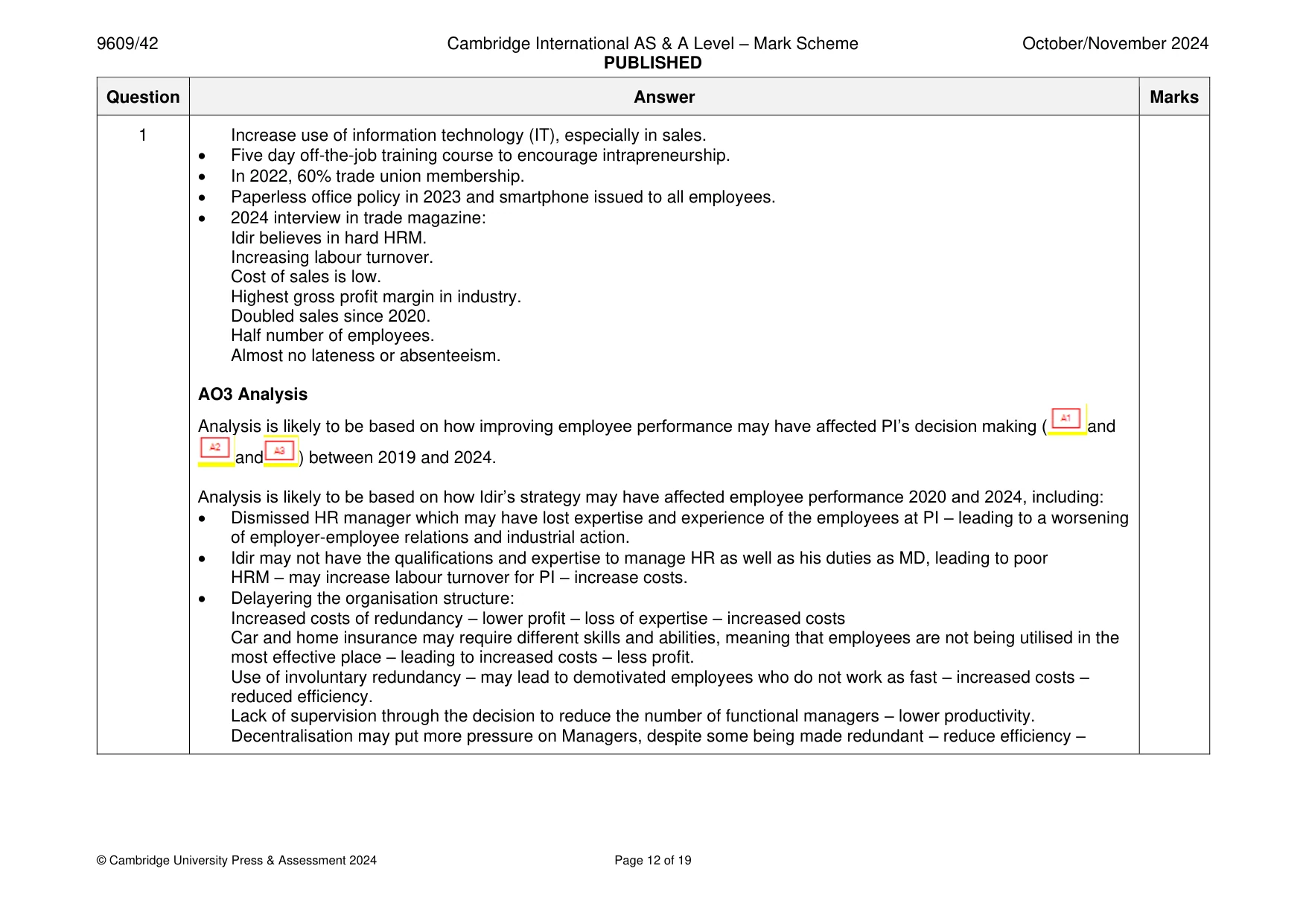
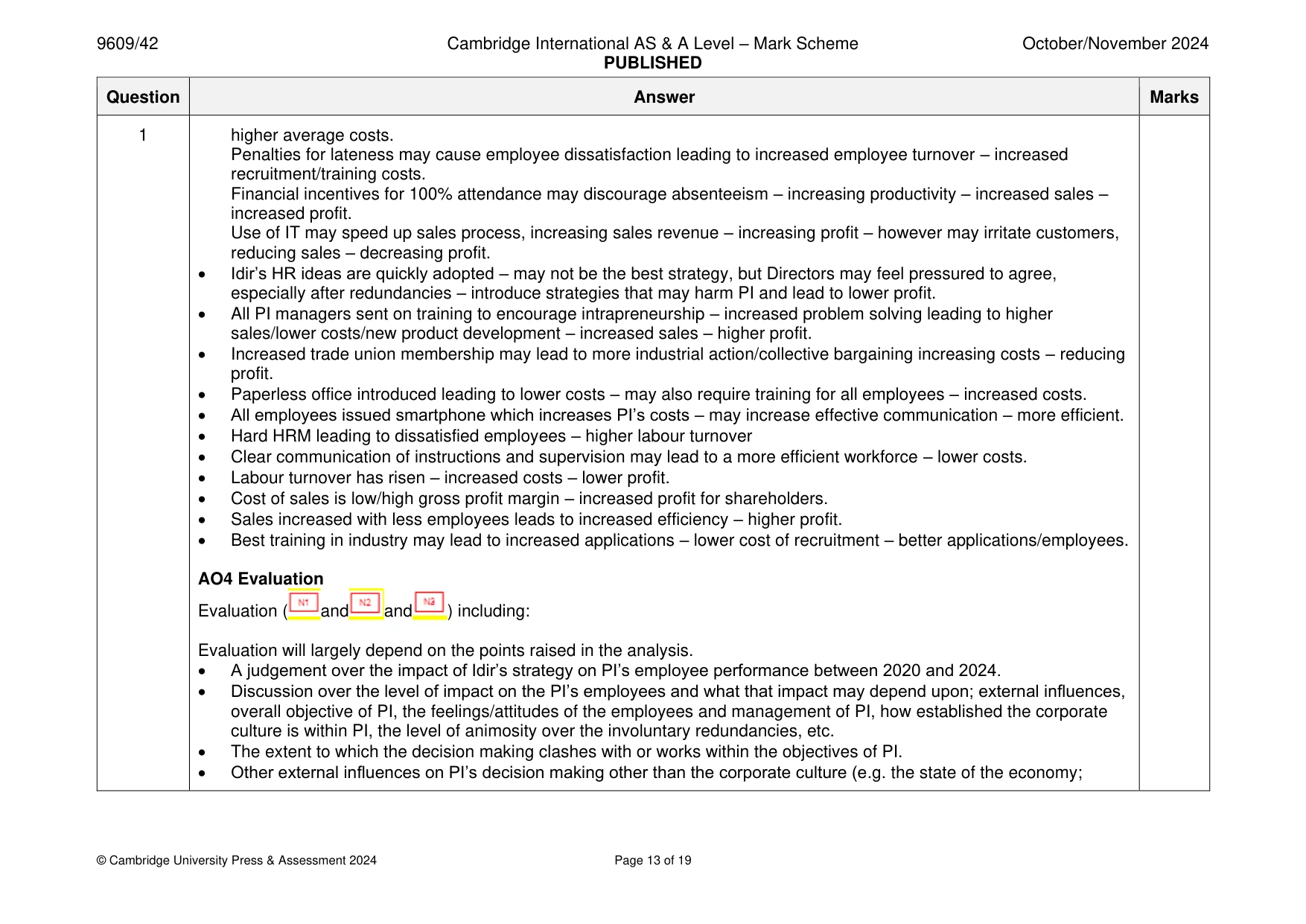
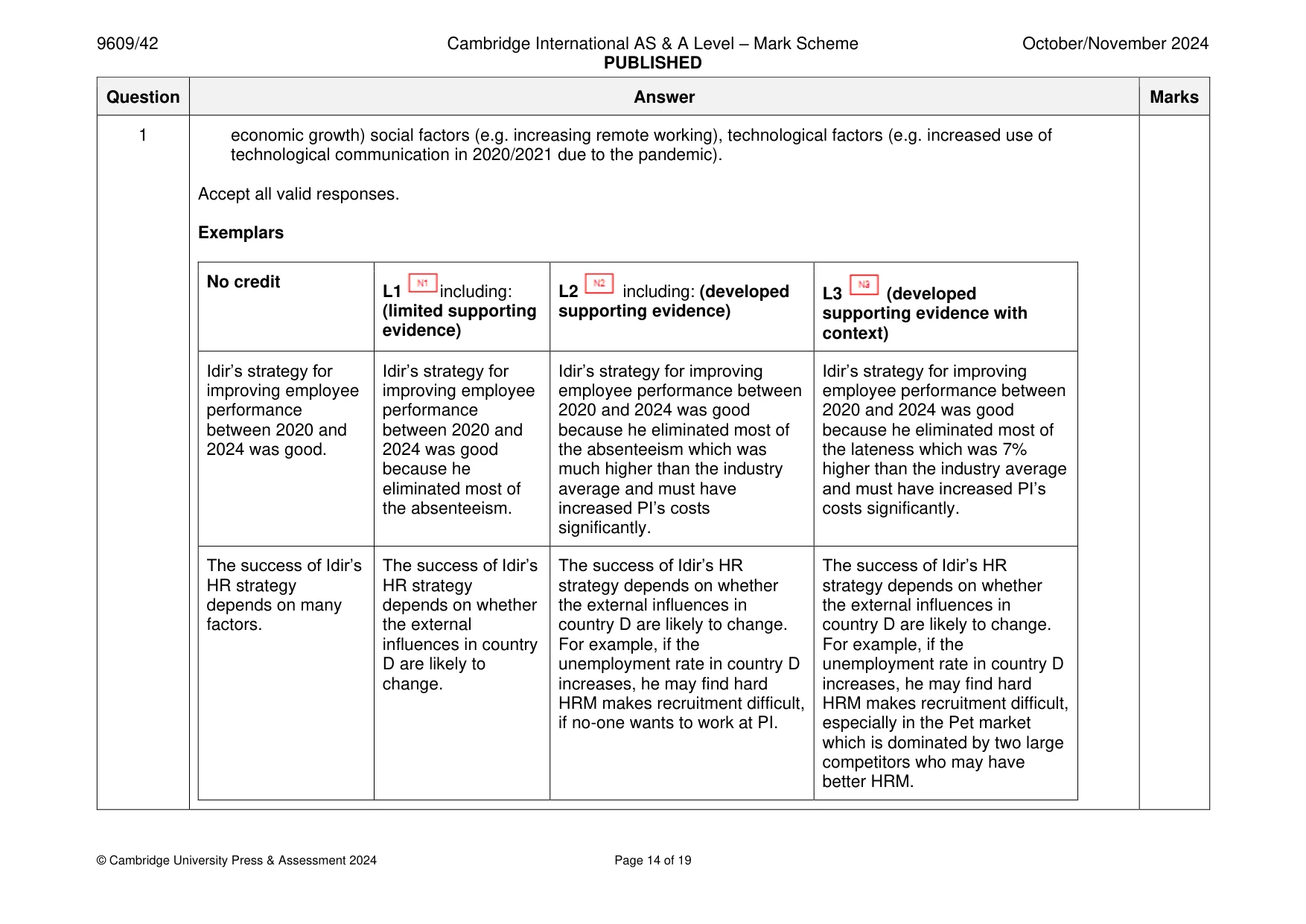
Mark scheme: Question Answer Marks 1 Evaluate the success of Idir’s strategy for improving employee performance between 2020 and 2024. 20 Indicative content AO1 Knowledge and understanding Knowledge (max 1 mark) can be awarded for any relevant business knowledge about employee performance and improving employee performance, including: • Organisational structure • The purpose and roles of HRM • Delegation and accountability • Workforce planning • Control, authority and trust • Recruitment and selection • Centralisation and decentralisation • Redundancy and dismissal • Business communication • Morale and welfare • Leadership • Training and development • HRM strategy, including: • Management and workforce relations • Motivation Hard and soft HRM • Management Flexible working contracts Management by objectives (MBO) Role of IT and AI in HRM Award for any explanation of relevant business knowledge, up to a max of 2 marks. 1 Some basic Motivation is the desire to do something knowledge about motivation, so only K. 1 K for identification Motivation is the desire to do something , for example a person can be motivated to work and 1 DEV for a harder by financial incentives . point of explanation 1 K for identification Motivation is the desire to do something , for example a person can be motivated to work and 2 DEVs for two harder by financial incentives . A worker can also be motivated by non-financial points of explanation incentives, like belonging . AO2 Application Application (max 2 marks) can be awarded for applying knowledge, analysis or evaluation of employee performance, to PI between 2020 and 2024. Idir’s strategy between 2020 and 2024, including: • Idir becomes HR manager – dismissing the previous manager. • Idir commissions an independent business analyst who reports: Low labour turnover (2% compared with 15%) High absenteeism (12% compared with 5%) High lateness (27% compared with 10%) High EQ score (120 compared with 80) Low trade union membership (4% compared with 25%). • 2021 organisational structure (Appendix 2). • 2021 recommendations to the Board (Appendix 3). Delayer the organisation structure by combining the car and home insurance sections of the business, making the car and home insurance managers redundant. Reduce the number of functional managers and employees through involuntary redundancy. Decentralise decision-making to the remaining functional managers. Introduce financial penalties for lateness and financial incentives for 100% attendance. 1 Increase use of information technology (IT), especially in sales. • Five day off-the-job training course to encourage intrapreneurship. • In 2022, 60% trade union membership. • Paperless office policy in 2023 and smartphone issued to all employees. • 2024 interview in trade magazine: Idir believes in hard HRM. Increasing labour turnover. Cost of sales is low. Highest gross profit margin in industry. Doubled sales since 2020. Half number of employees. Almost no lateness or absenteeism. AO3 Analysis Analysis is likely to be based on how improving employee performance may have affected PI’s decision making ( and and ) between 2019 and 2024. Analysis is likely to be based on how Idir’s strategy may have affected employee performance 2020 and 2024, including: • Dismissed HR manager which may have lost expertise and experience of the employees at PI – leading to a worsening of employer-employee relations and industrial action. • Idir may not have the qualifications and expertise to manage HR as well as his duties as MD, leading to poor HRM – may increase labour turnover for PI – increase costs. • Delayering the organisation structure: Increased costs of redundancy – lower profit – loss of expertise – increased costs Car and home insurance may require different skills and abilities, meaning that employees are not being utilised in the most effective place – leading to increased costs – less profit. Use of involuntary redundancy – may lead to demotivated employees who do not work as fast – increased costs – reduced efficiency. Lack of supervision through the decision to reduce the number of functional managers – lower productivity. Decentralisation may put more pressure on Managers, despite some being made redundant – reduce efficiency – 1 higher average costs. Penalties for lateness may cause employee dissatisfaction leading to increased employee turnover – increased recruitment/training costs. Financial incentives for 100% attendance may discourage absenteeism – increasing productivity – increased sales – increased profit. Use of IT may speed up sales process, increasing sales revenue – increasing profit – however may irritate customers, reducing sales – decreasing profit. • Idir’s HR ideas are quickly adopted – may not be the best strategy, but Directors may feel pressured to agree, especially after redundancies – introduce strategies that may harm PI and lead to lower profit. • All PI managers sent on training to encourage intrapreneurship – increased problem solving leading to higher sales/lower costs/new product development – increased sales – higher profit. • Increased trade union membership may lead to more industrial action/collective bargaining increasing costs – reducing profit. • Paperless office introduced leading to lower costs – may also require training for all employees – increased costs. • All employees issued smartphone which increases PI’s costs – may increase effective communication – more efficient. • Hard HRM leading to dissatisfied employees – higher labour turnover • Clear communication of instructions and supervision may lead to a more efficient workforce – lower costs. • Labour turnover has risen – increased costs – lower profit. • Cost of sales is low/high gross profit margin – increased profit for shareholders. • Sales increased with less employees leads to increased efficiency – higher profit. • Best training in industry may lead to increased applications – lower cost of recruitment – better applications/employees. AO4 Evaluation Evaluation ( and and ) including: Evaluation will largely depend on the points raised in the analysis. • A judgement over the impact of Idir’s strategy on PI’s employee performance between 2020 and 2024. • Discussion over the level of impact on the PI’s employees and what that impact may depend upon; external influences, overall objective of PI, the feelings/attitudes of the employees and management of PI, how established the corporate culture is within PI, the level of animosity over the involuntary redundancies, etc. • The extent to which the decision making clashes with or works within the objectives of PI. • Other external influences on PI’s decision making other than the corporate culture (e.g. the state of the economy; 1 economic growth) social factors (e.g. increasing remote working), technological factors (e.g. increased use of technological communication in 2020/2021 due to the pandemic). Accept all valid responses. Exemplars No credit L1 including: L2 including: (developed L3 (developed (limited supporting supporting evidence) supporting evidence with evidence) context) Idir’s strategy for Idir’s strategy for Idir’s strategy for improving Idir’s strategy for improving improving employee improving employee employee performance between employee performance between performance performance 2020 and 2024 was good 2020 and 2024 was good between 2020 and between 2020 and because he eliminated most of because he eliminated most of 2024 was good. 2024 was good the absenteeism which was the lateness which was 7% because he much higher than the industry higher than the industry average eliminated most of average and must have and must have increased PI’s the absenteeism. increased PI’s costs costs significantly. significantly. The success of Idir’s The success of Idir’s The success of Idir’s HR The success of Idir’s HR HR strategy HR strategy strategy depends on whether strategy depends on whether depends on many depends on whether the external influences in the external influences in factors. the external country D are likely to change. country D are likely to change. influences in country For example, if the For example, if the D are likely to unemployment rate in country D unemployment rate in country D change. increases, he may find hard increases, he may find hard HRM makes recruitment difficult, HRM makes recruitment difficult, if no-one wants to work at PI. especially in the Pet market which is dominated by two large competitors who may have better HRM.
Q2 · Advise Idir on what accounting data he should use to help him develop a new business…
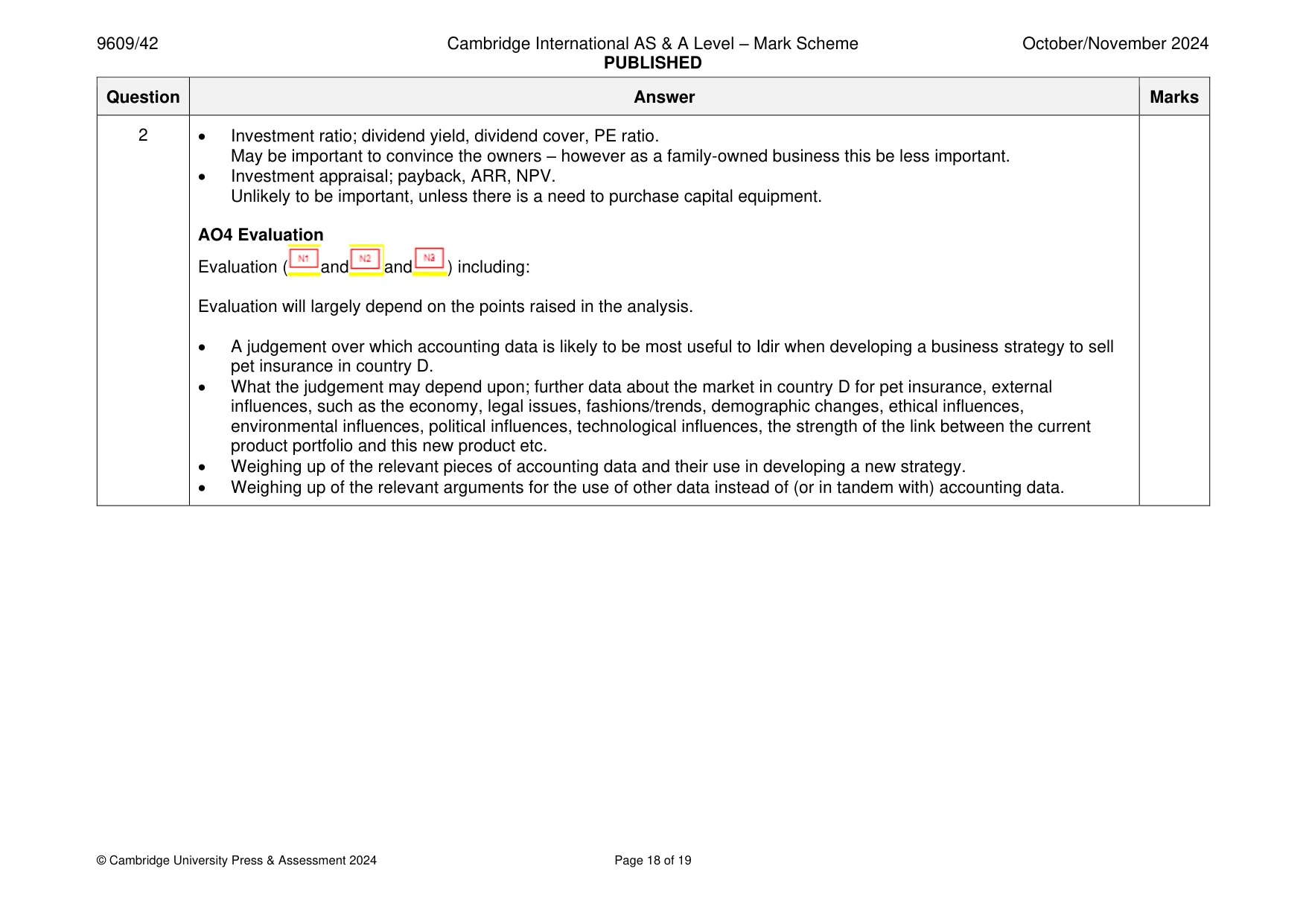
2 Advise Idir on what accounting data he should use to help him develop a new business strategy for PI to sell pet insurance. [20]
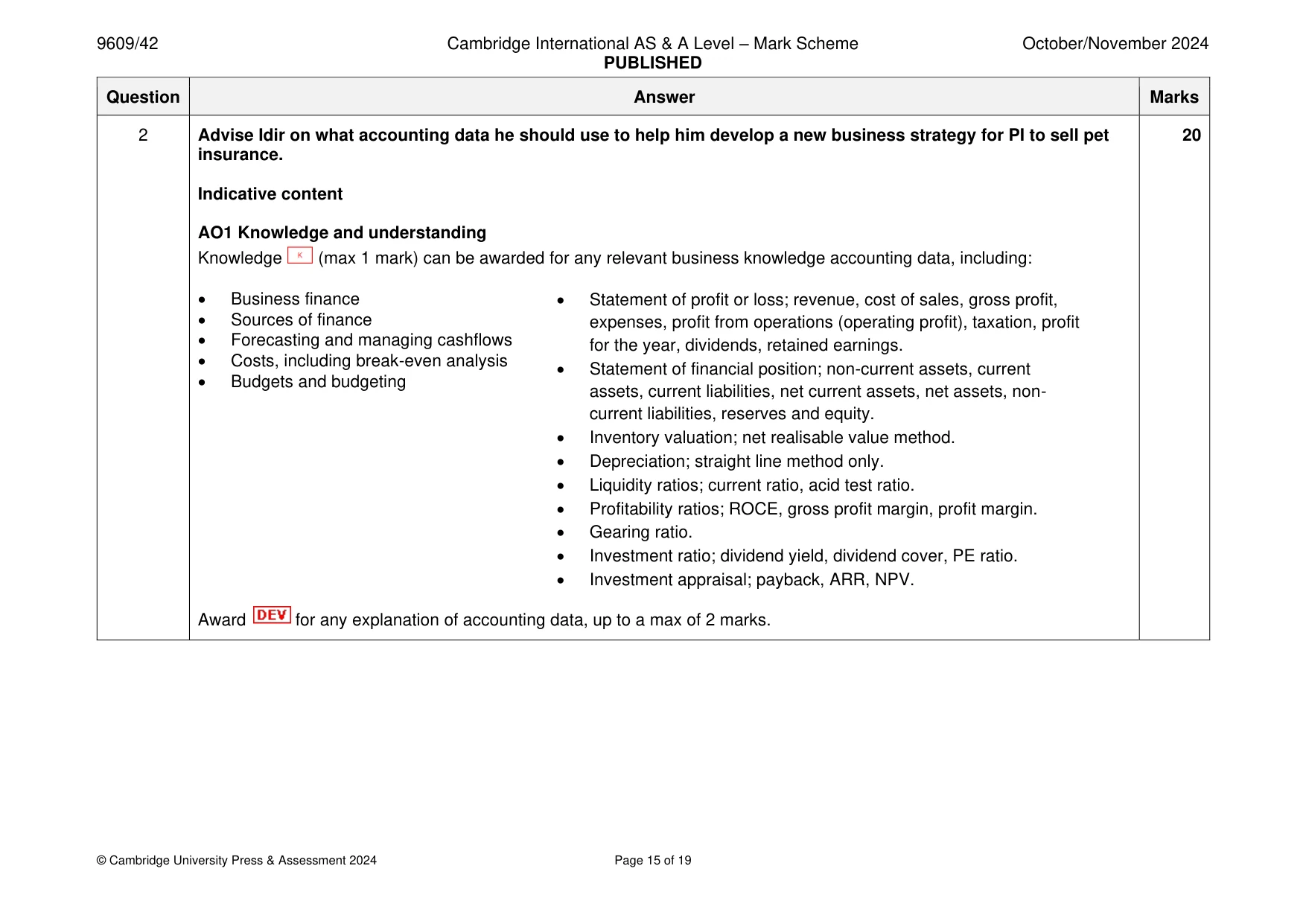
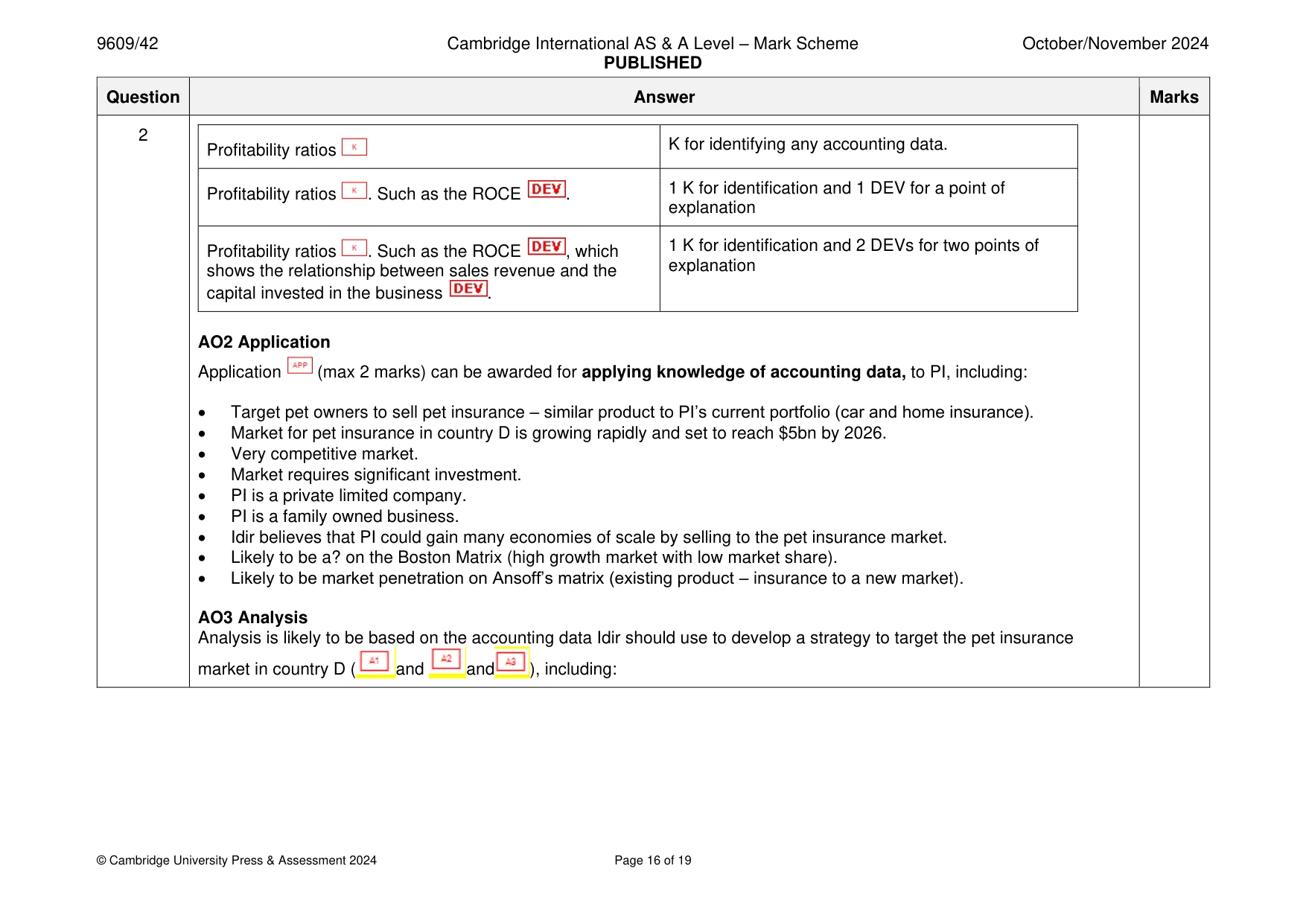
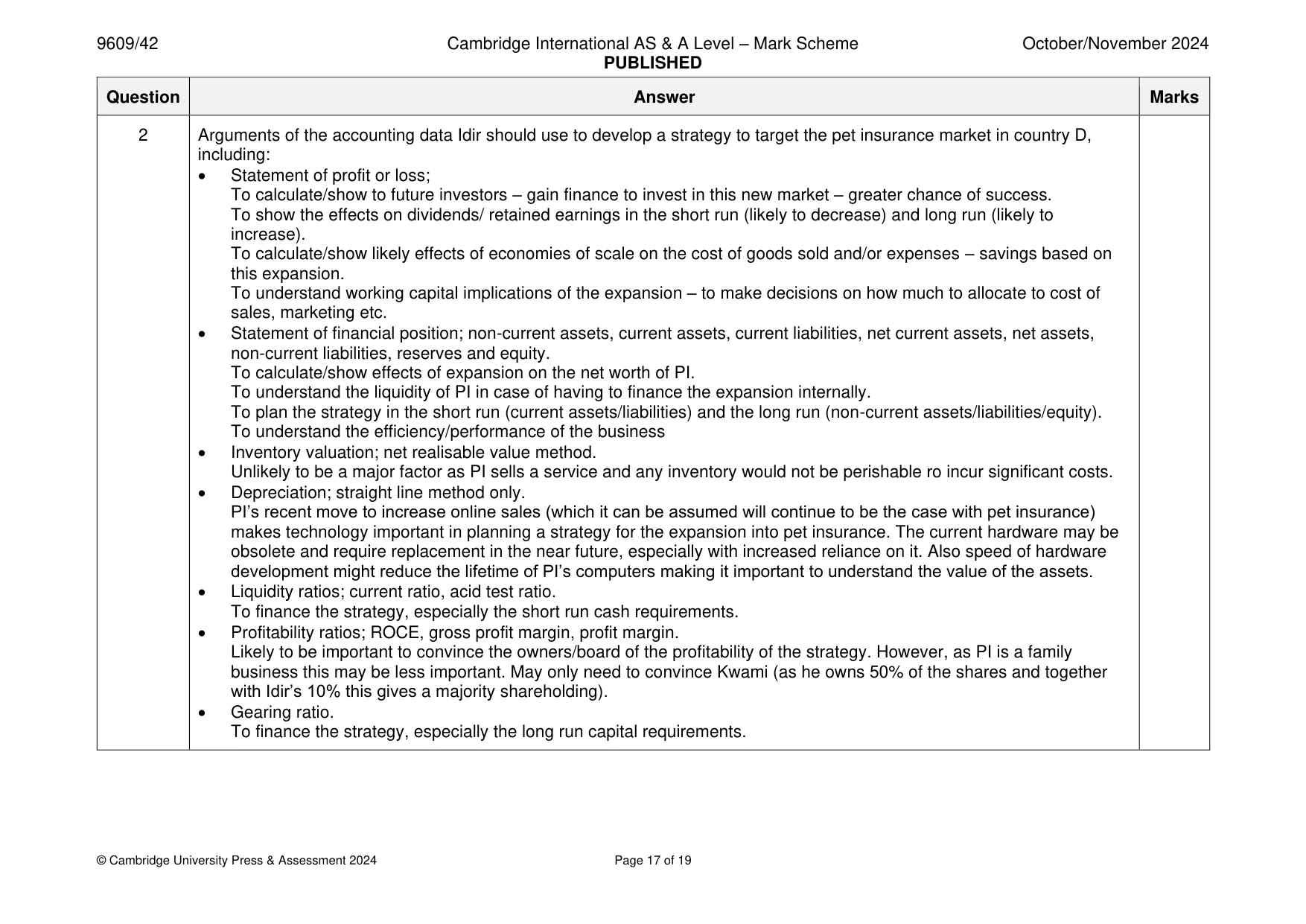
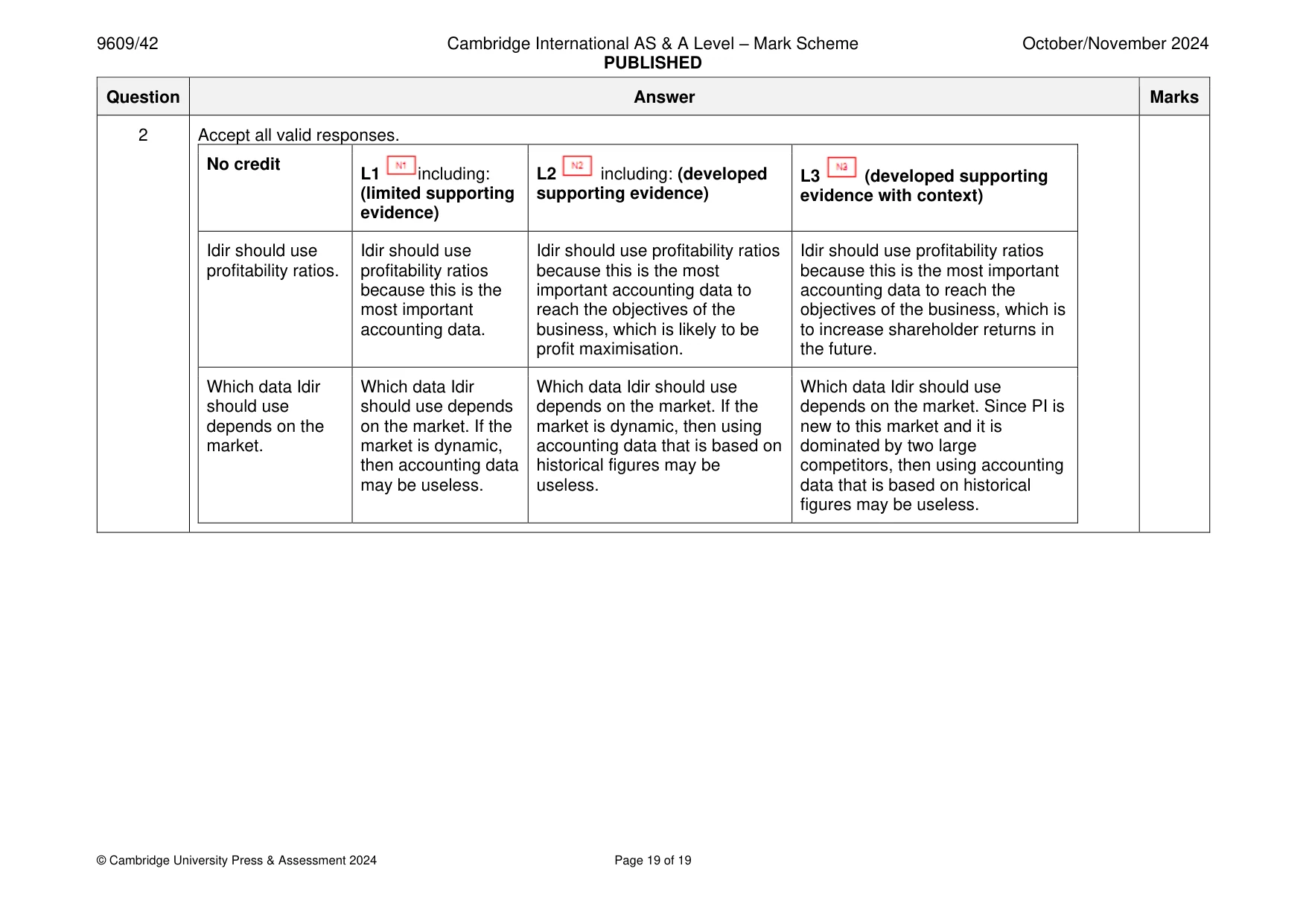
Mark scheme: 2 Advise Idir on what accounting data he should use to help him develop a new business strategy for PI to sell pet 20 insurance. Indicative content AO1 Knowledge and understanding Knowledge (max 1 mark) can be awarded for any relevant business knowledge accounting data, including: • Business finance • Statement of profit or loss; revenue, cost of sales, gross profit, • Sources of finance expenses, profit from operations (operating profit), taxation, profit • Forecasting and managing cashflows for the year, dividends, retained earnings. • Costs, including break-even analysis • Statement of financial position; non-current assets, current • Budgets and budgeting assets, current liabilities, net current assets, net assets, non- current liabilities, reserves and equity. • Inventory valuation; net realisable value method. • Depreciation; straight line method only. • Liquidity ratios; current ratio, acid test ratio. • Profitability ratios; ROCE, gross profit margin, profit margin. • Gearing ratio. • Investment ratio; dividend yield, dividend cover, PE ratio. • Investment appraisal; payback, ARR, NPV. Award for any explanation of accounting data, up to a max of 2 marks. 2 K for identifying any accounting data. Profitability ratios 1 K for identification and 1 DEV for a point of Profitability ratios . Such as the ROCE . explanation 1 K for identification and 2 DEVs for two points of Profitability ratios . Such as the ROCE , which explanation shows the relationship between sales revenue and the capital invested in the business . AO2 Application Application (max 2 marks) can be awarded for applying knowledge of accounting data, to PI, including: • Target pet owners to sell pet insurance – similar product to PI’s current portfolio (car and home insurance). • Market for pet insurance in country D is growing rapidly and set to reach $5bn by 2026. • Very competitive market. • Market requires significant investment. • PI is a private limited company. • PI is a family owned business. • Idir believes that PI could gain many economies of scale by selling to the pet insurance market. • Likely to be a? on the Boston Matrix (high growth market with low market share). • Likely to be market penetration on Ansoff’s matrix (existing product – insurance to a new market). AO3 Analysis Analysis is likely to be based on the accounting data Idir should use to develop a strategy to target the pet insurance market in country D ( and and ), including: 2 Arguments of the accounting data Idir should use to develop a strategy to target the pet insurance market in country D, including: • Statement of profit or loss; To calculate/show to future investors – gain finance to invest in this new market – greater chance of success. To show the effects on dividends/ retained earnings in the short run (likely to decrease) and long run (likely to increase). To calculate/show likely effects of economies of scale on the cost of goods sold and/or expenses – savings based on this expansion. To understand working capital implications of the expansion – to make decisions on how much to allocate to cost of sales, marketing etc. • Statement of financial position; non-current assets, current assets, current liabilities, net current assets, net assets, non-current liabilities, reserves and equity. To calculate/show effects of expansion on the net worth of PI. To understand the liquidity of PI in case of having to finance the expansion internally. To plan the strategy in the short run (current assets/liabilities) and the long run (non-current assets/liabilities/equity). To understand the efficiency/performance of the business • Inventory valuation; net realisable value method. Unlikely to be a major factor as PI sells a service and any inventory would not be perishable ro incur significant costs. • Depreciation; straight line method only. PI’s recent move to increase online sales (which it can be assumed will continue to be the case with pet insurance) makes technology important in planning a strategy for the expansion into pet insurance. The current hardware may be obsolete and require replacement in the near future, especially with increased reliance on it. Also speed of hardware development might reduce the lifetime of PI’s computers making it important to understand the value of the assets. • Liquidity ratios; current ratio, acid test ratio. To finance the strategy, especially the short run cash requirements. • Profitability ratios; ROCE, gross profit margin, profit margin. Likely to be important to convince the owners/board of the profitability of the strategy. However, as PI is a family business this may be less important. May only need to convince Kwami (as he owns 50% of the shares and together with Idir’s 10% this gives a majority shareholding). • Gearing ratio. To finance the strategy, especially the long run capital requirements. 2 • Investment ratio; dividend yield, dividend cover, PE ratio. May be important to convince the owners – however as a family-owned business this be less important. • Investment appraisal; payback, ARR, NPV. Unlikely to be important, unless there is a need to purchase capital equipment. AO4 Evaluation Evaluation ( and and ) including: Evaluation will largely depend on the points raised in the analysis. • A judgement over which accounting data is likely to be most useful to Idir when developing a business strategy to sell pet insurance in country D. • What the judgement may depend upon; further data about the market in country D for pet insurance, external influences, such as the economy, legal issues, fashions/trends, demographic changes, ethical influences, environmental influences, political influences, technological influences, the strength of the link between the current product portfolio and this new product etc. • Weighing up of the relevant pieces of accounting data and their use in developing a new strategy. • Weighing up of the relevant arguments for the use of other data instead of (or in tandem with) accounting data. 2 Accept all valid responses. No credit L1 including: L2 including: (developed L3 (developed supporting (limited supporting supporting evidence) evidence with context) evidence) Idir should use Idir should use Idir should use profitability ratios Idir should use profitability ratios profitability ratios. profitability ratios because this is the most because this is the most important because this is the important accounting data to accounting data to reach the most important reach the objectives of the objectives of the business, which is accounting data. business, which is likely to be to increase shareholder returns in profit maximisation. the future. Which data Idir Which data Idir Which data Idir should use Which data Idir should use should use should use depends depends on the market. If the depends on the market. Since PI is depends on the on the market. If the market is dynamic, then using new to this market and it is market. market is dynamic, accounting data that is based on dominated by two large then accounting data historical figures may be competitors, then using accounting may be useless. useless. data that is based on historical figures may be useless.
What was in this paper
The subtopics covered by these 2 questions, and how many questions each got. Open one in a new tab to see every Cambridge question on it.
What you needed in this session
Cambridge’s own grade thresholds for 2024 Oct/Nov, Paper 4 · Variant 2. A higher threshold means an easier paper — the bar moves with how the cohort did.