Cambridge IGCSE History American BES 0409 — 2018 May/June Paper 2 · Variant 0
0409/20/M/J/18 · 20 questions · 180 marks · ≈203 min
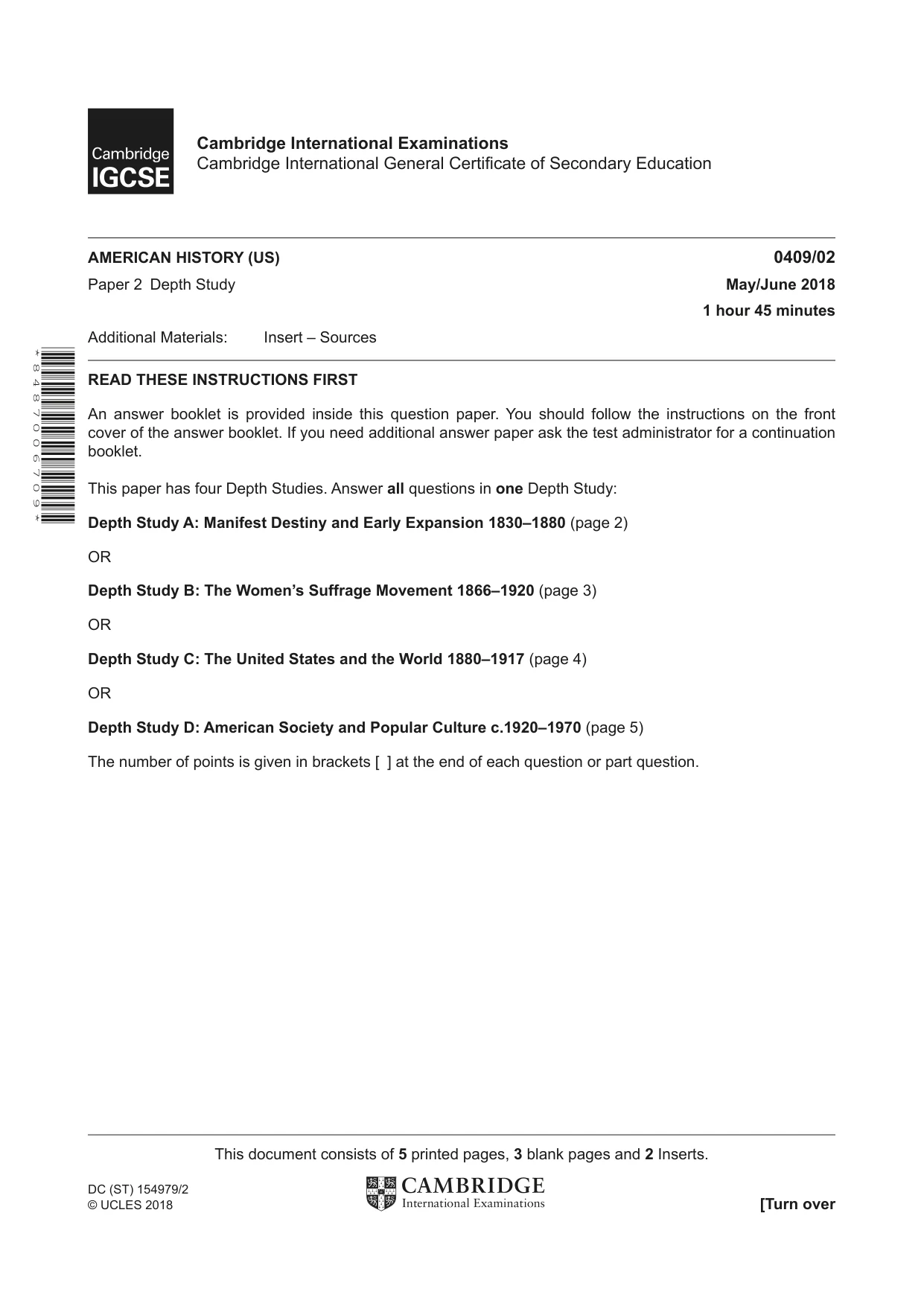
The question paper and its mark scheme, free to read here and free to download. This is Cambridge’s own paper, exactly as it was sat.
Question paper8 pages


Mark scheme
No mark scheme is in the library for this paper.
Questions as text
Question 1
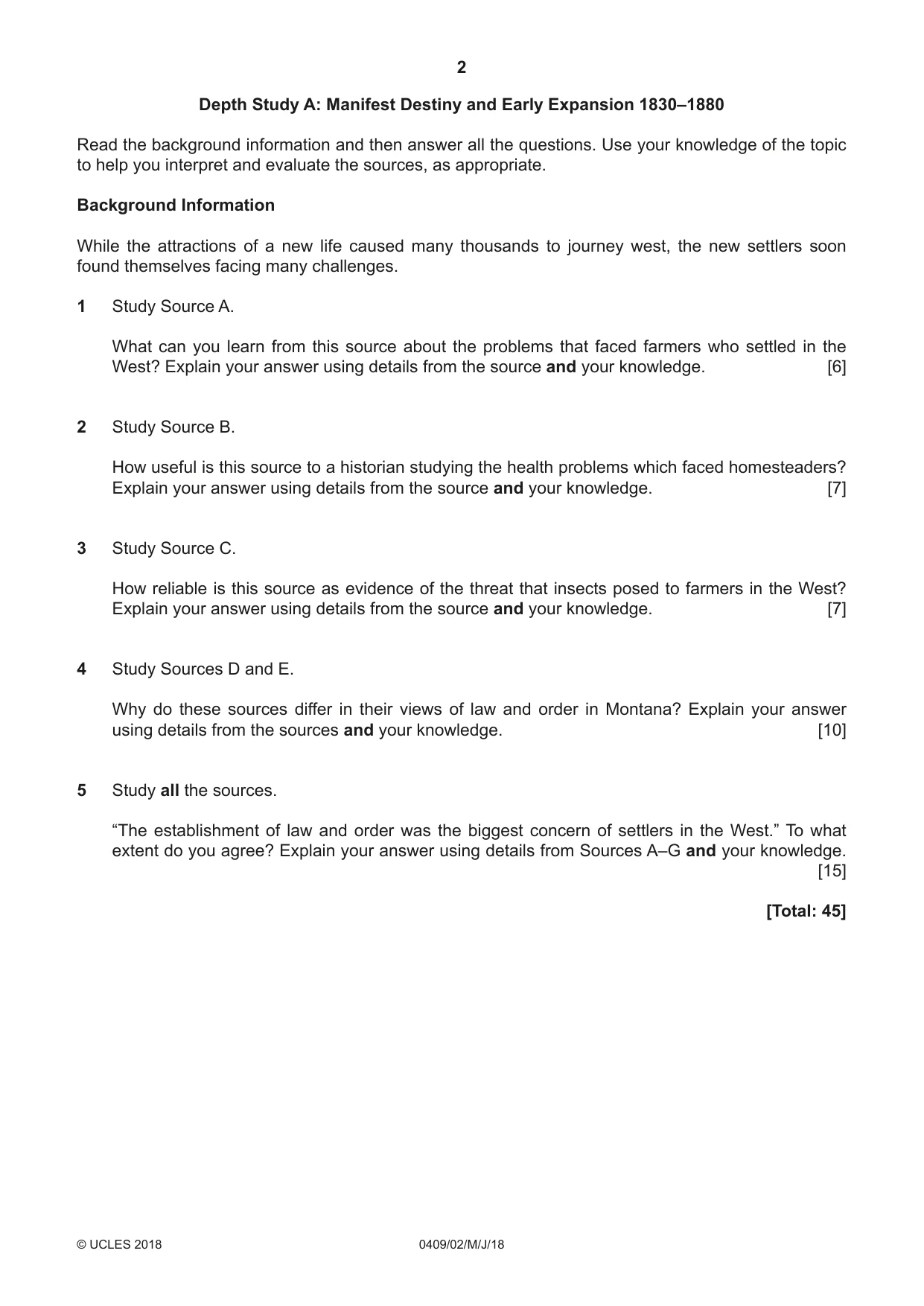
1 Study Source A. What can you learn from this source about the problems that faced farmers who settled in the West? Explain your answer using details from the source and your knowledge. [6]
Question 2
2 Study Source B. How useful is this source to a historian studying the health problems which faced homesteaders? Explain your answer using details from the source and your knowledge. [7]
Question 3
3 Study Source C. How reliable is this source as evidence of the threat that insects posed to farmers in the West? Explain your answer using details from the source and your knowledge. [7]
Q4 · Study Sources D and E
4 Study Sources D and E. Why do these sources differ in their views of law and order in Montana? Explain your answer using details from the sources and your knowledge. [10]
Q5 · Study all the sources
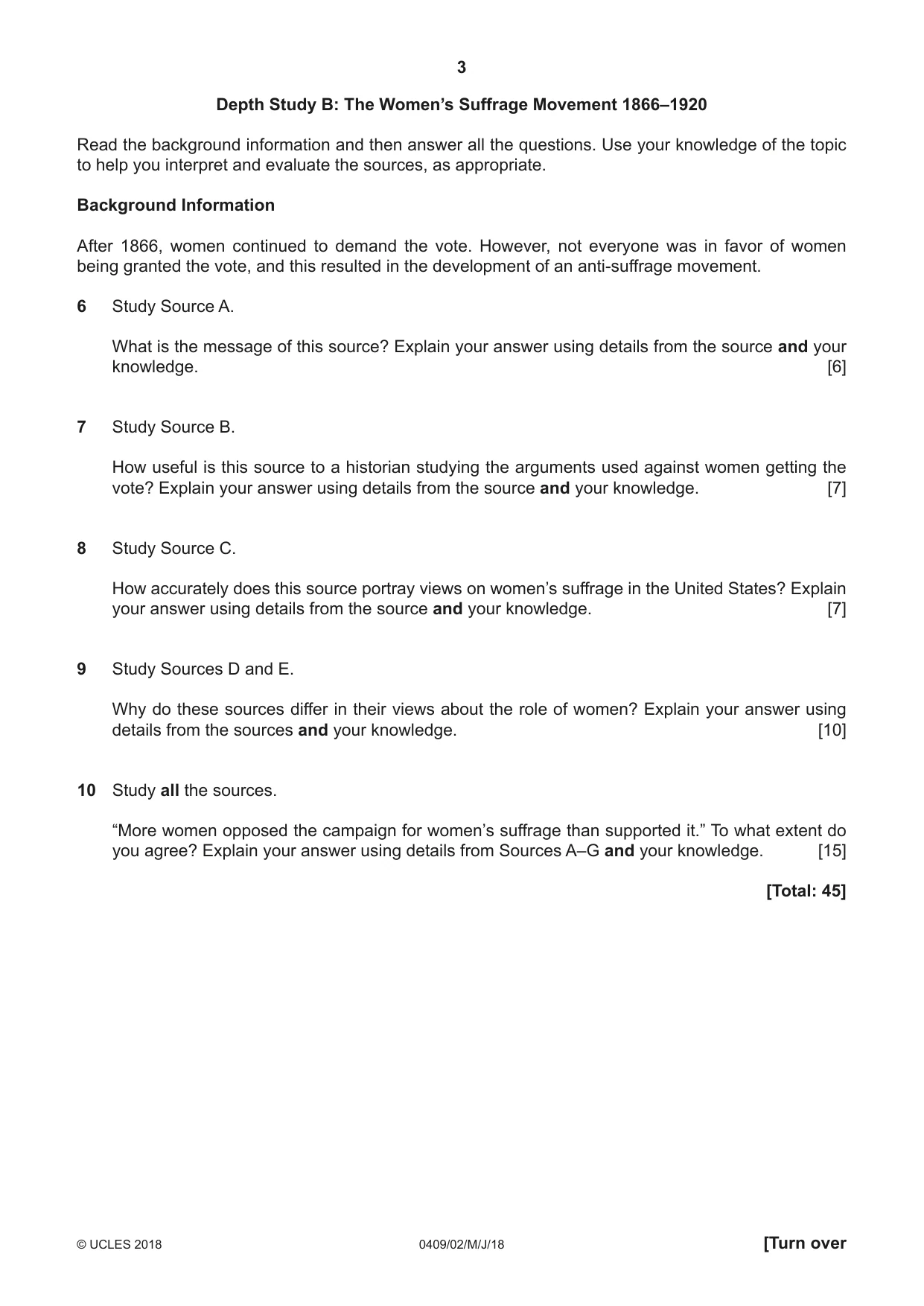
5 Study all the sources. “The establishment of law and order was the biggest concern of settlers in the West.” To what extent do you agree? Explain your answer using details from Sources A–G and your knowledge. [15] [Total: 45] Depth Study B: The Women’s Suffrage Movement 1866–1920 Read the background information and then answer all the questions. Use your knowledge of the topic to help you interpret and evaluate the sources, as appropriate. Background Information After 1866, women continued to demand the vote. However, not everyone was in favor of women being granted the vote, and this resulted in the development of an anti-suffrage movement.
Question 6
6 Study Source A. What is the message of this source? Explain your answer using details from the source and your knowledge. [6]
Question 7
7 Study Source B. How useful is this source to a historian studying the arguments used against women getting the vote? Explain your answer using details from the source and your knowledge. [7]
Question 8
8 Study Source C. How accurately does this source portray views on women’s suffrage in the United States? Explain your answer using details from the source and your knowledge. [7]
Q9 · Study Sources D and E
9 Study Sources D and E. Why do these sources differ in their views about the role of women? Explain your answer using details from the sources and your knowledge. [10]
Q10 · Study all the sources
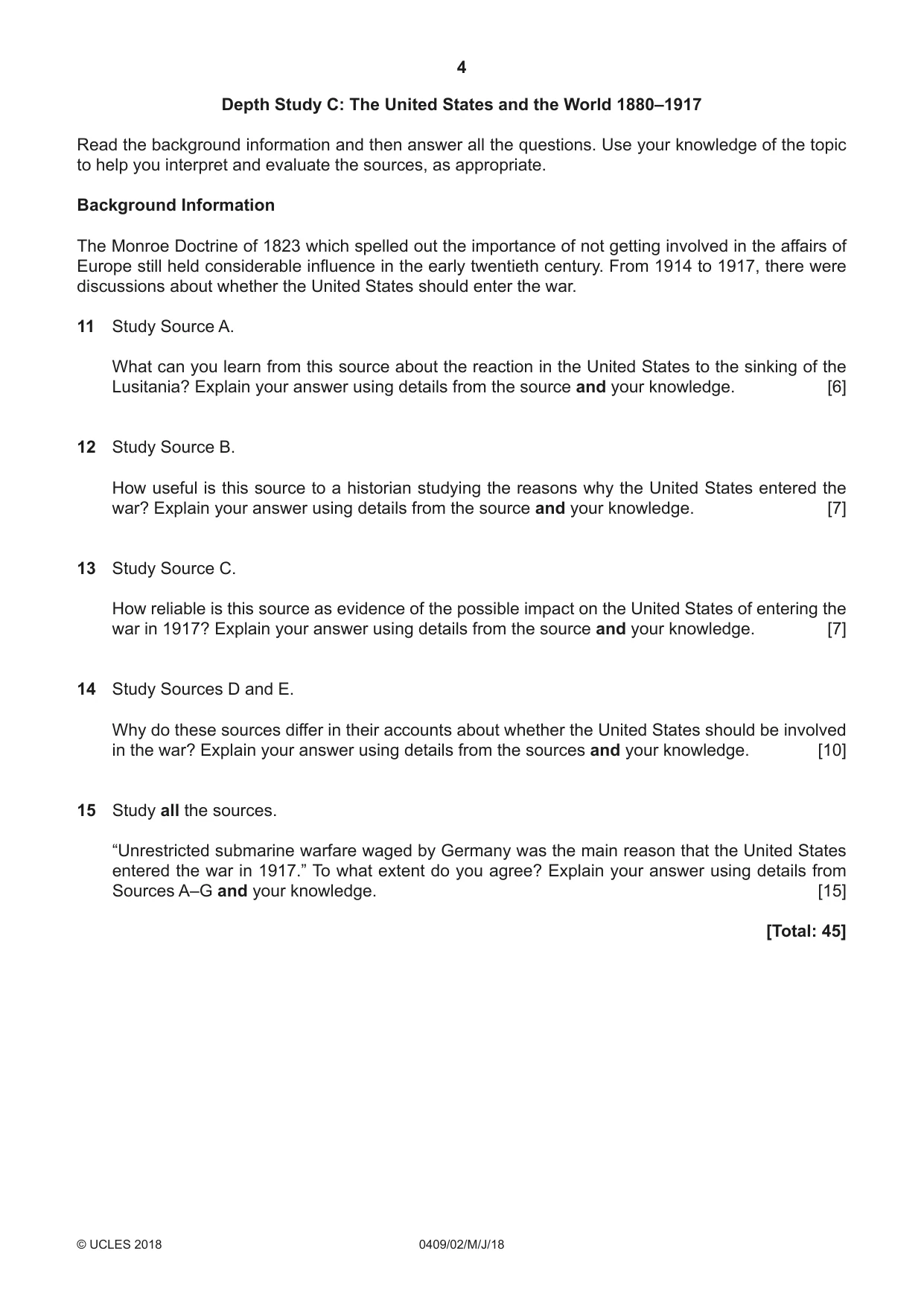
10 Study all the sources. “More women opposed the campaign for women’s suffrage than supported it.” To what extent do you agree? Explain your answer using details from Sources A–G and your knowledge. [15] [Total: 45] Depth Study C: The United States and the World 1880–1917 Read the background information and then answer all the questions. Use your knowledge of the topic to help you interpret and evaluate the sources, as appropriate. Background Information The Monroe Doctrine of 1823 which spelled out the importance of not getting involved in the affairs of Europe still held considerable influence in the early twentieth century. From 1914 to 1917, there were discussions about whether the United States should enter the war.
Question 11
11 Study Source A. What can you learn from this source about the reaction in the United States to the sinking of the Lusitania? Explain your answer using details from the source and your knowledge. [6]
Question 12
12 Study Source B. How useful is this source to a historian studying the reasons why the United States entered the war? Explain your answer using details from the source and your knowledge. [7]
Question 13
13 Study Source C. How reliable is this source as evidence of the possible impact on the United States of entering the war in 1917? Explain your answer using details from the source and your knowledge. [7]
Q14 · Study Sources D and E
14 Study Sources D and E. Why do these sources differ in their accounts about whether the United States should be involved in the war? Explain your answer using details from the sources and your knowledge. [10]
Q15 · Study all the sources
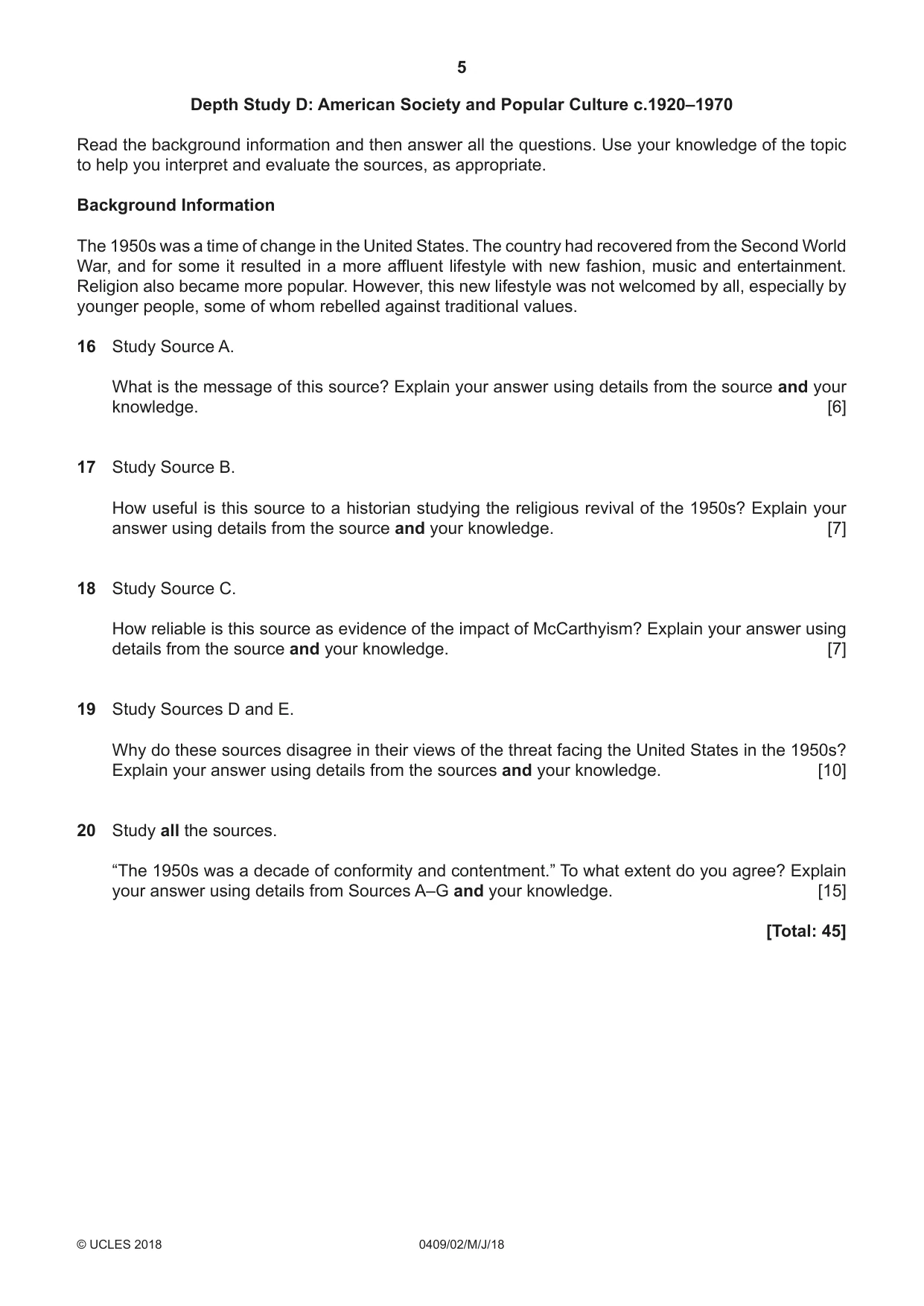
15 Study all the sources. “Unrestricted submarine warfare waged by Germany was the main reason that the United States entered the war in 1917.” To what extent do you agree? Explain your answer using details from Sources A–G and your knowledge. [15] [Total: 45] Depth Study D: American Society and Popular Culture c.1920–1970 Read the background information and then answer all the questions. Use your knowledge of the topic to help you interpret and evaluate the sources, as appropriate. Background Information The 1950s was a time of change in the United States. The country had recovered from the Second World War, and for some it resulted in a more affluent lifestyle with new fashion, music and entertainment. Religion also became more popular. However, this new lifestyle was not welcomed by all, especially by younger people, some of whom rebelled against traditional values.
Question 16
16 Study Source A. What is the message of this source? Explain your answer using details from the source and your knowledge. [6]
Question 17
17 Study Source B. How useful is this source to a historian studying the religious revival of the 1950s? Explain your answer using details from the source and your knowledge. [7]
Question 18
18 Study Source C. How reliable is this source as evidence of the impact of McCarthyism? Explain your answer using details from the source and your knowledge. [7]
Q19 · Study Sources D and E
19 Study Sources D and E. Why do these sources disagree in their views of the threat facing the United States in the 1950s? Explain your answer using details from the sources and your knowledge. [10]
Q20 · Study all the sources
20 Study all the sources. “The 1950s was a decade of conformity and contentment.” To what extent do you agree? Explain your answer using details from Sources A–G and your knowledge. [15] [Total: 45]