Cambridge IGCSE History American BES 0409 — 2022 May/June Paper 2 · Variant 0
0409/20/M/J/22 · 20 questions · 45 marks · ≈51 min
The question paper and its mark scheme, free to read here and free to download. This is Cambridge’s own paper, exactly as it was sat.
Question paper8 pages


Mark scheme
No mark scheme is in the library for this paper.
Questions as text
Question 1
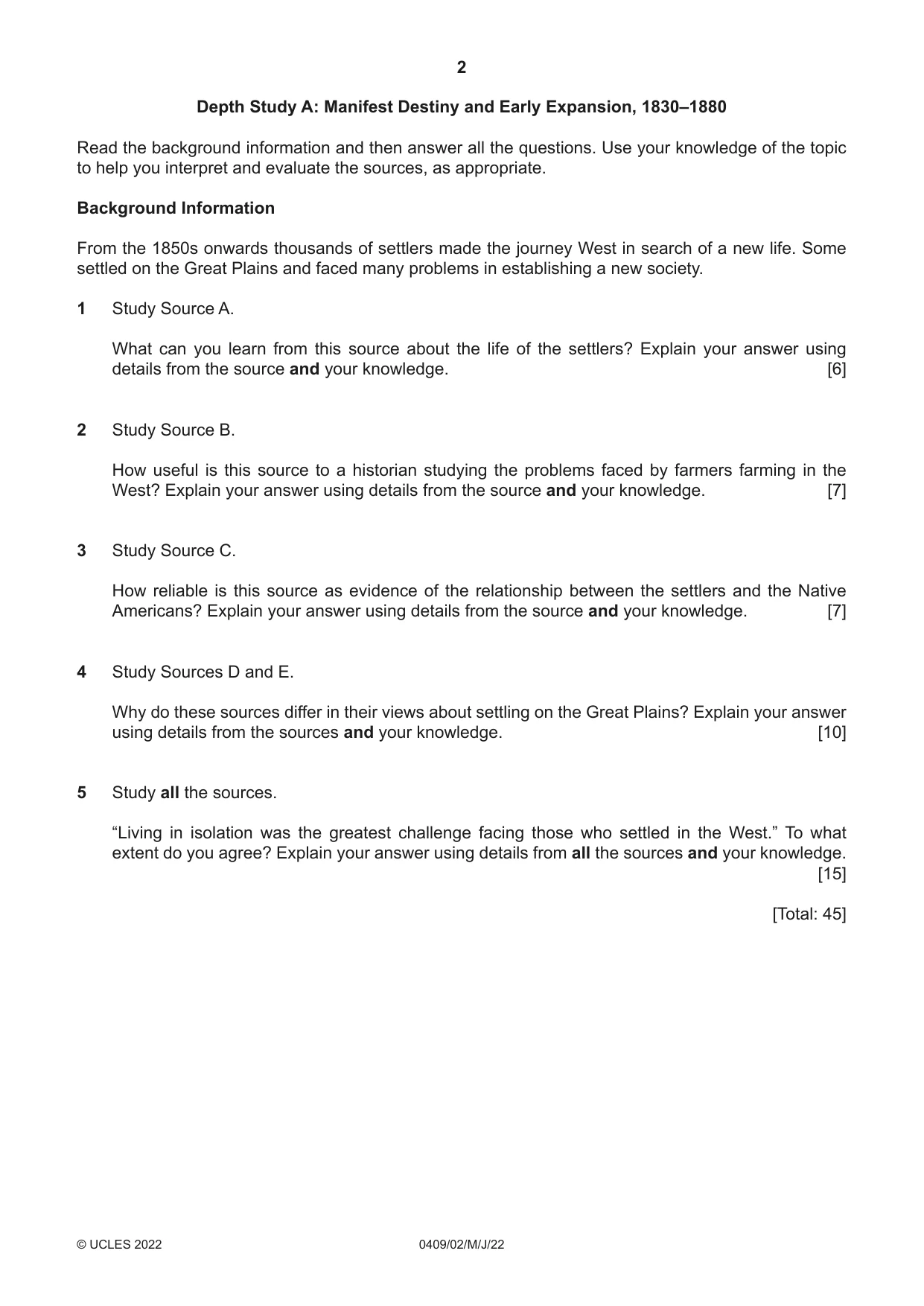
1 Study Source A. What can you learn from this source about the life of the settlers? Explain your answer using details from the source and your knowledge. [6]
Question 2
2 Study Source B. How useful is this source to a historian studying the problems faced by farmers farming in the West? Explain your answer using details from the source and your knowledge. [7]
Question 3
3 Study Source C. How reliable is this source as evidence of the relationship between the settlers and the Native Americans? Explain your answer using details from the source and your knowledge. [7]
Q4 · Study Sources D and E
4 Study Sources D and E. Why do these sources differ in their views about settling on the Great Plains? Explain your answer using details from the sources and your knowledge. [10]
Q5 · Study all the sources
5 Study all the sources. “Living in isolation was the greatest challenge facing those who settled in the West.” To what extent do you agree? Explain your answer using details from all the sources and your knowledge. [15] [Total: 45] Depth Study B: The Women’s Suffrage Movement, 1866–1920 Read the background information and then answer all the questions. Use your knowledge of the topic to help you interpret and evaluate the sources, as appropriate. Background Information During the early twentieth century the campaign for female suffrage became more active. Different strategies were used in the methods of campaigning both for and against the extension of the vote.
Question 6
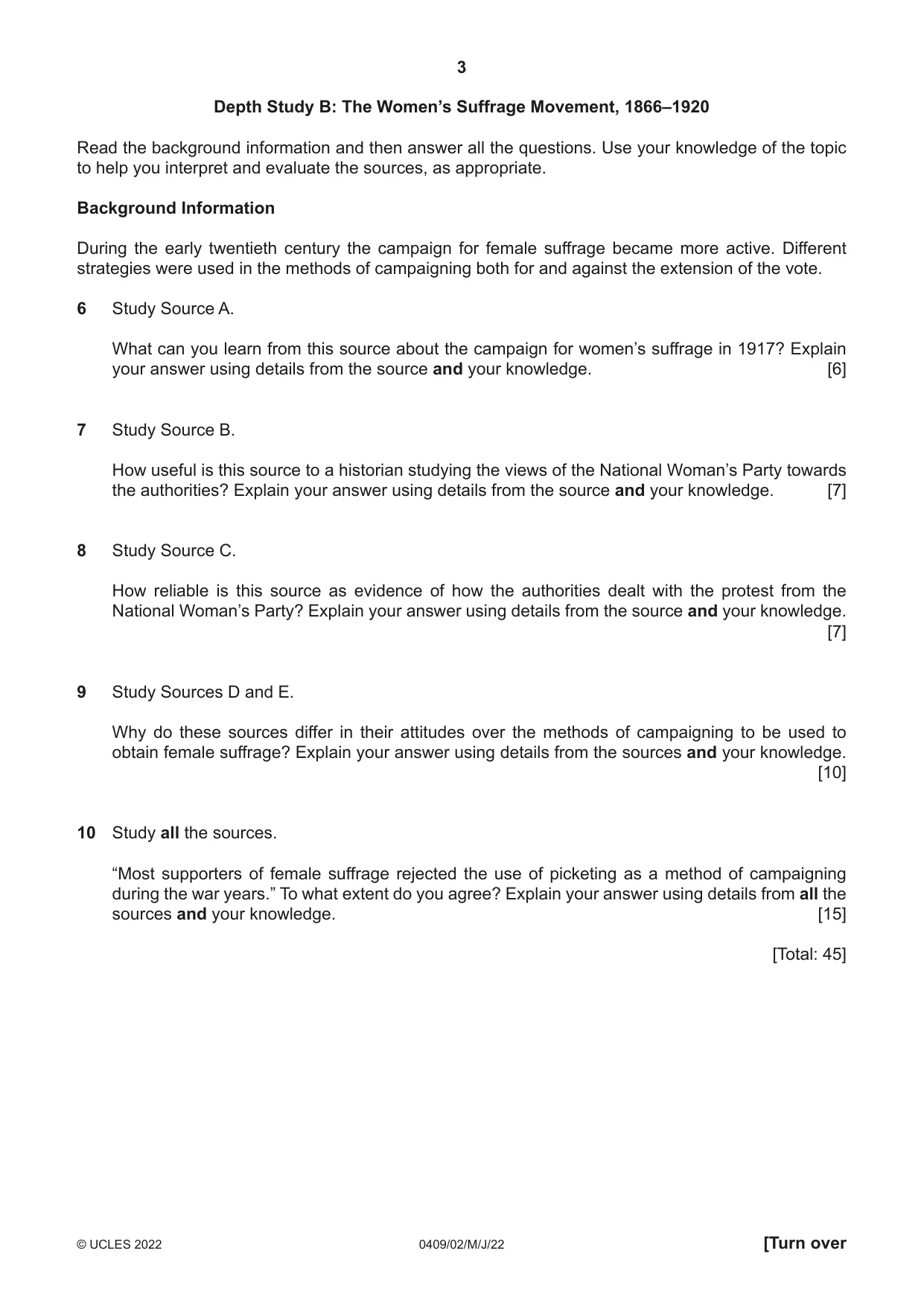
6 Study Source A. What can you learn from this source about the campaign for women’s suffrage in 1917? Explain your answer using details from the source and your knowledge. [6]
Question 7
7 Study Source B. How useful is this source to a historian studying the views of the National Woman’s Party towards the authorities? Explain your answer using details from the source and your knowledge. [7]
Question 8
8 Study Source C. How reliable is this source as evidence of how the authorities dealt with the protest from the National Woman’s Party? Explain your answer using details from the source and your knowledge. [7]
Q9 · Study Sources D and E
9 Study Sources D and E. Why do these sources differ in their attitudes over the methods of campaigning to be used to obtain female suffrage? Explain your answer using details from the sources and your knowledge. [10]
Q10 · Study all the sources
10 Study all the sources. “Most supporters of female suffrage rejected the use of picketing as a method of campaigning during the war years.” To what extent do you agree? Explain your answer using details from all the sources and your knowledge. [15] [Total: 45] Depth Study C: The United States and the World, 1880–1917 Read the background information and then answer all the questions. Use your knowledge of the topic to help you interpret and evaluate the sources, as appropriate. Background Information After 1902 the United States became increasingly more involved in the affairs of its near neighbors in Central and South America. Such involvement met with mixed success.
Question 11
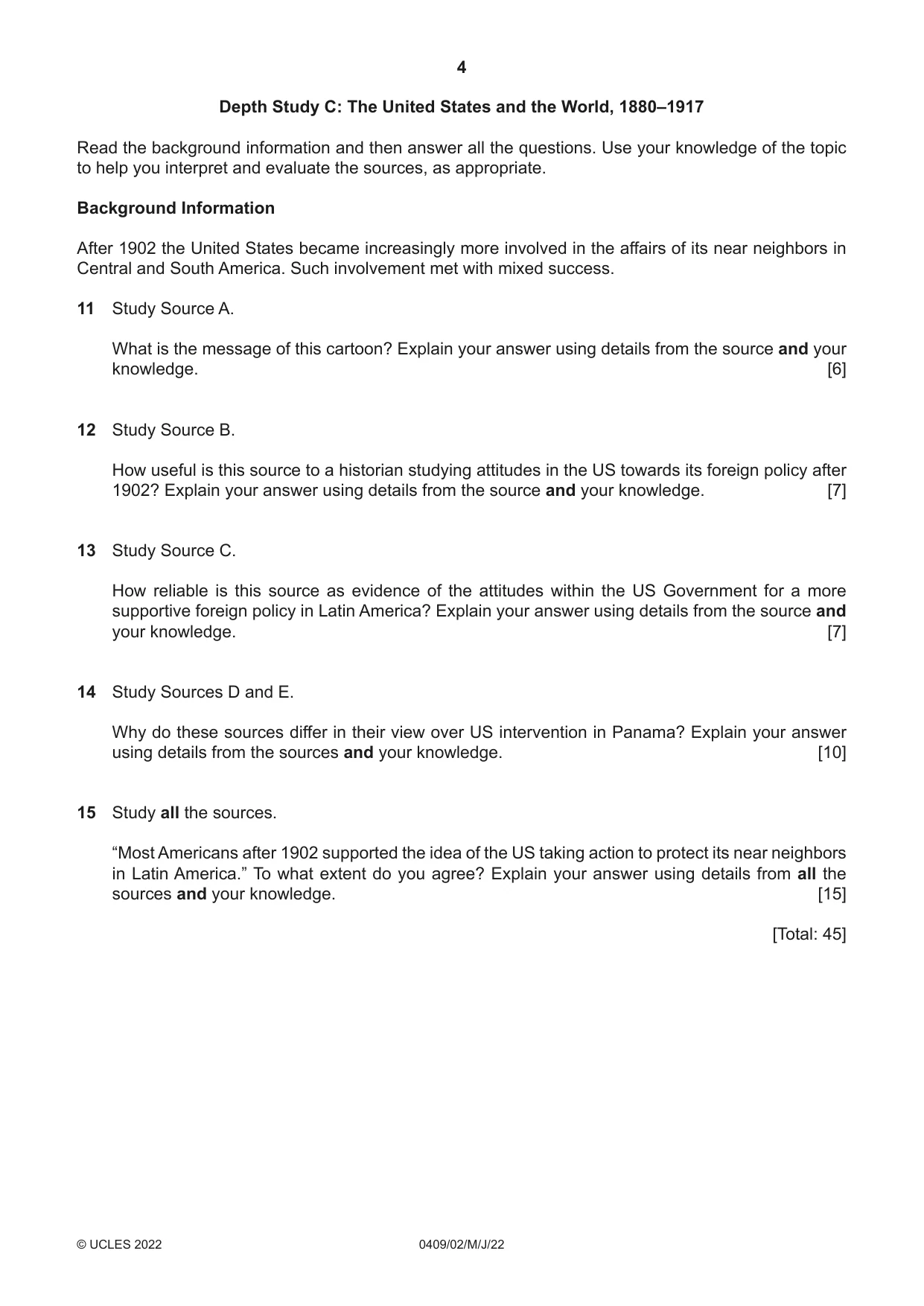
11 Study Source A. What is the message of this cartoon? Explain your answer using details from the source and your knowledge. [6]
Question 12
12 Study Source B. How useful is this source to a historian studying attitudes in the US towards its foreign policy after 1902? Explain your answer using details from the source and your knowledge. [7]
Question 13
13 Study Source C. How reliable is this source as evidence of the attitudes within the US Government for a more supportive foreign policy in Latin America? Explain your answer using details from the source and your knowledge. [7]
Q14 · Study Sources D and E
14 Study Sources D and E. Why do these sources differ in their view over US intervention in Panama? Explain your answer using details from the sources and your knowledge. [10]
Q15 · Study all the sources
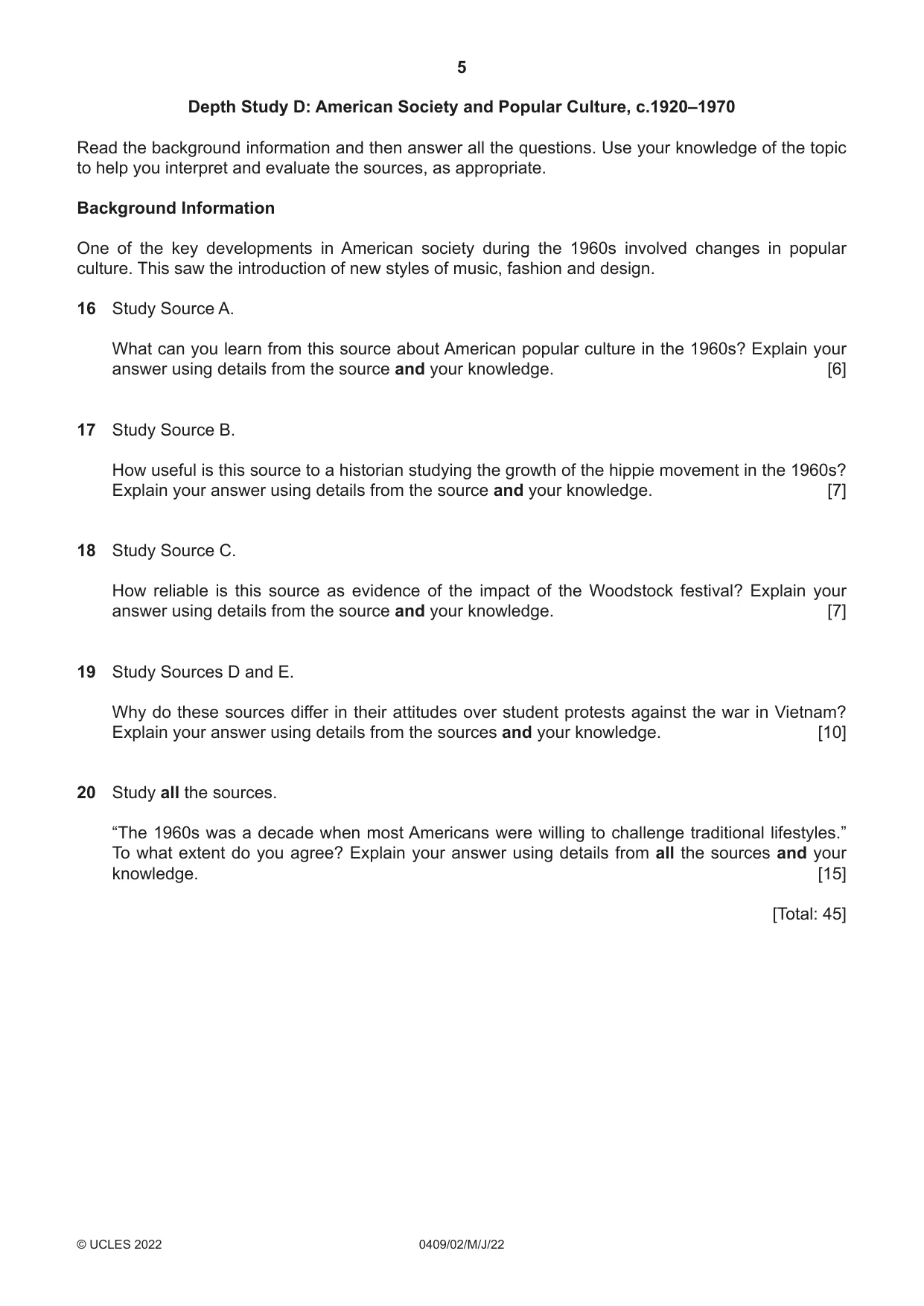
15 Study all the sources. “Most Americans after 1902 supported the idea of the US taking action to protect its near neighbors in Latin America.” To what extent do you agree? Explain your answer using details from all the sources and your knowledge. [15] [Total: 45] Depth Study D: American Society and Popular Culture, c.1920–1970 Read the background information and then answer all the questions. Use your knowledge of the topic to help you interpret and evaluate the sources, as appropriate. Background Information One of the key developments in American society during the 1960s involved changes in popular culture. This saw the introduction of new styles of music, fashion and design.
Question 16
16 Study Source A. What can you learn from this source about American popular culture in the 1960s? Explain your answer using details from the source and your knowledge. [6]
Question 17
17 Study Source B. How useful is this source to a historian studying the growth of the hippie movement in the 1960s? Explain your answer using details from the source and your knowledge. [7]
Question 18
18 Study Source C. How reliable is this source as evidence of the impact of the Woodstock festival? Explain your answer using details from the source and your knowledge. [7]
Q19 · Study Sources D and E
19 Study Sources D and E. Why do these sources differ in their attitudes over student protests against the war in Vietnam? Explain your answer using details from the sources and your knowledge. [10]
Q20 · Study all the sources
20 Study all the sources. “The 1960s was a decade when most Americans were willing to challenge traditional lifestyles.” To what extent do you agree? Explain your answer using details from all the sources and your knowledge. [15] [Total: 45]
What you needed in this session
Cambridge’s own grade thresholds for 2022 May/June, Paper 2 · Variant 0. A higher threshold means an easier paper — the bar moves with how the cohort did.