Cambridge IGCSE Business Studies (9-1) 0986 — 2022 Oct/Nov Paper 2 · Variant 1
0986/21/O/N/22 · 4 questions · 80 marks · ≈90 min
The question paper and its mark scheme, free to read here and free to download. This is Cambridge’s own paper, exactly as it was sat.
Question paper12 pages


Mark scheme22 pages
Answers below. Sit the paper first if you are practising.
Questions as text
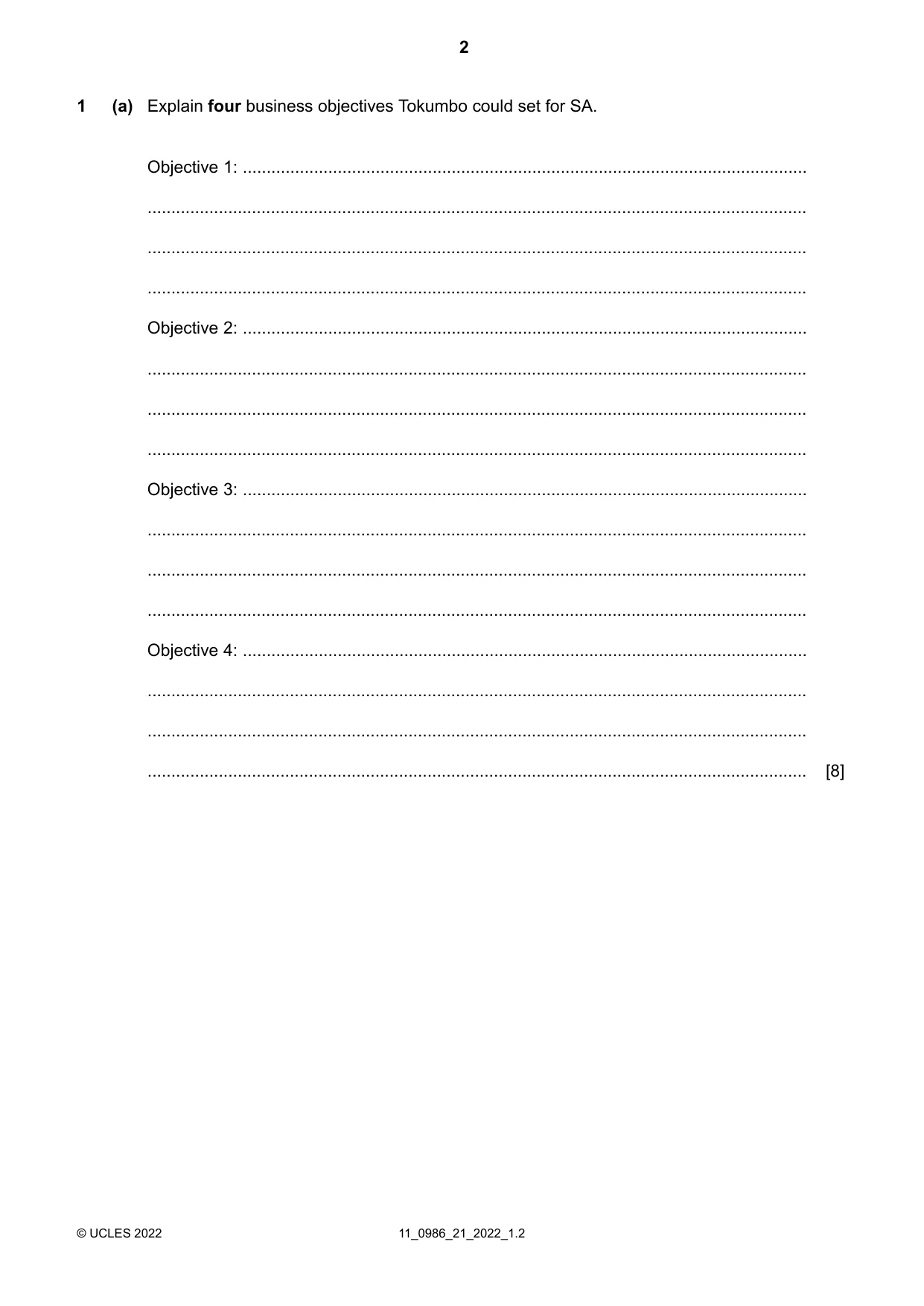
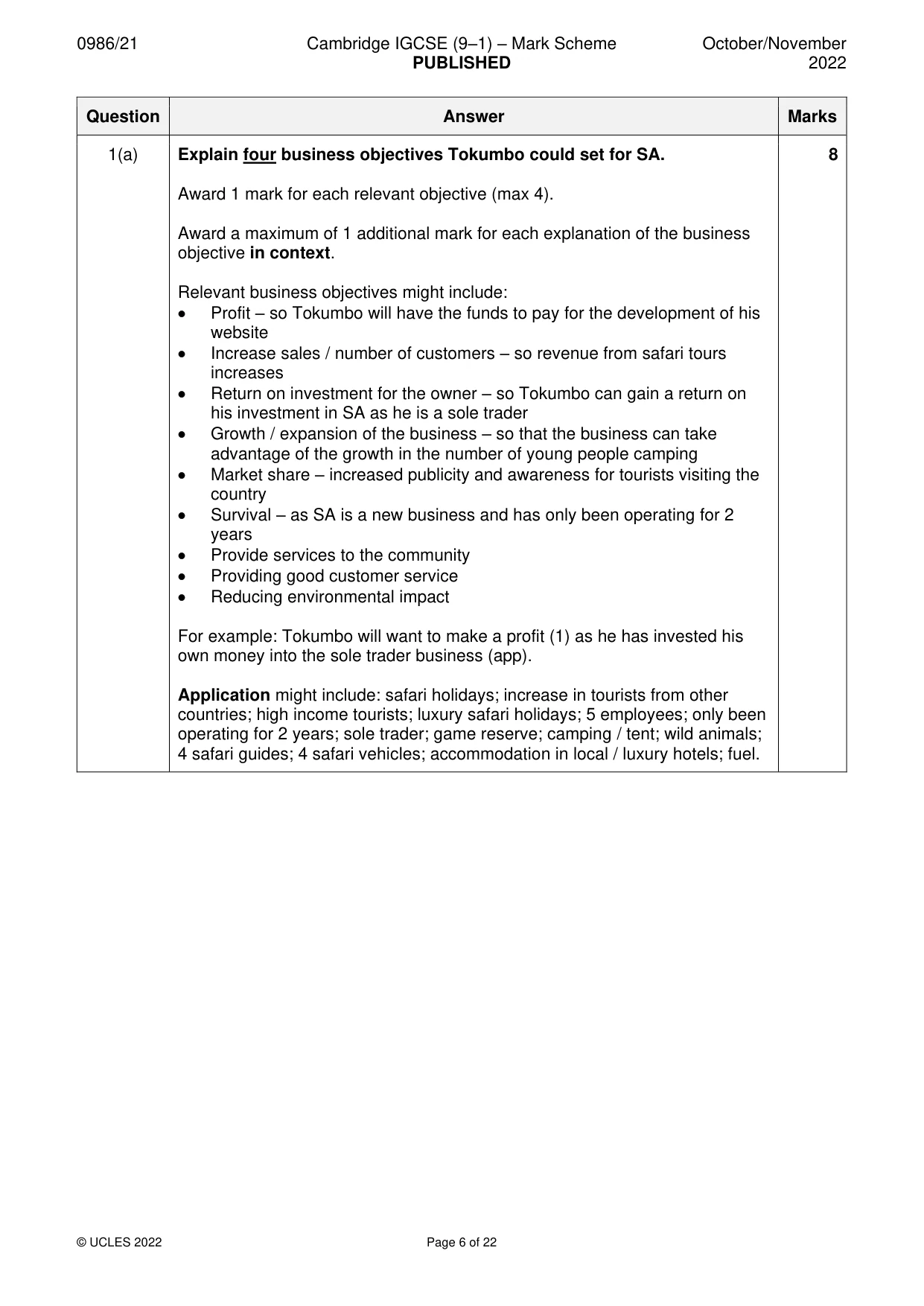
Q1 · Explain four business objectives Tokumbo could set for SA
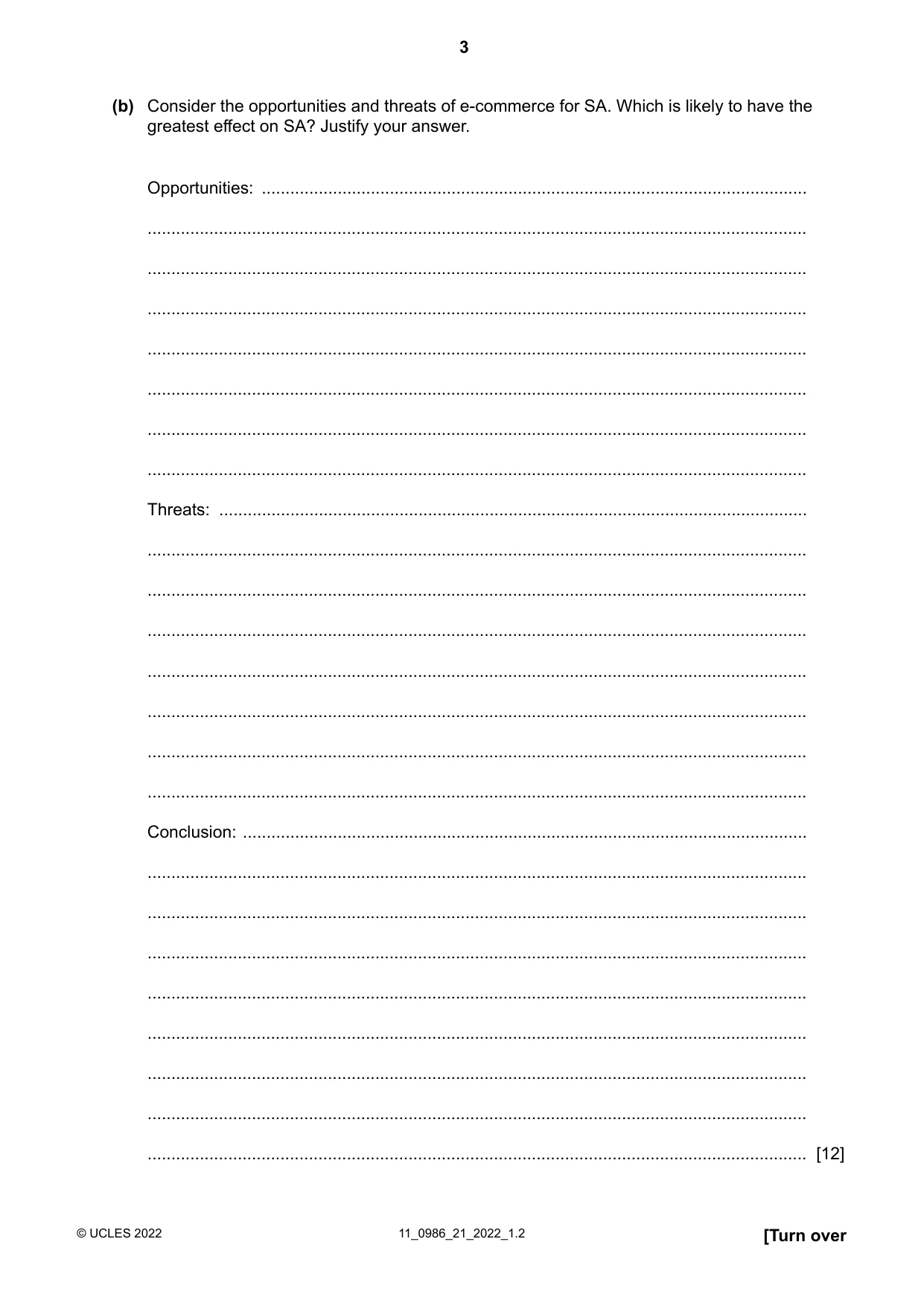
1 (a) Explain four business objectives Tokumbo could set for SA. Objective 1: ....................................................................................................................... ........................................................................................................................................... ........................................................................................................................................... ........................................................................................................................................... Objective 2: ....................................................................................................................... ........................................................................................................................................... ........................................................................................................................................... ........................................................................................................................................... Objective 3: ....................................................................................................................... ........................................................................................................................................... ........................................................................................................................................... ........................................................................................................................................... Objective 4: ....................................................................................................................... ........................................................................................................................................... ........................................................................................................................................... ........................................................................................................................................... [8] (b) Consider the opportunities and threats of e-commerce for SA. Which is likely to have the greatest effect on SA? Justify your answer. Opportunities: ................................................................................................................... ........................................................................................................................................... ........................................................................................................................................... ........................................................................................................................................... ........................................................................................................................................... ........................................................................................................................................... ........................................................................................................................................... ........................................................................................................................................... Threats: ............................................................................................................................ ........................................................................................................................................... ........................................................................................................................................... ........................................................................................................................................... ........................................................................................................................................... ........................................................................................................................................... ........................................................................................................................................... ........................................................................................................................................... Conclusion: ....................................................................................................................... ........................................................................................................................................... ........................................................................................................................................... ........................................................................................................................................... ........................................................................................................................................... ........................................................................................................................................... ........................................................................................................................................... ........................................................................................................................................... ........................................................................................................................................... [12]
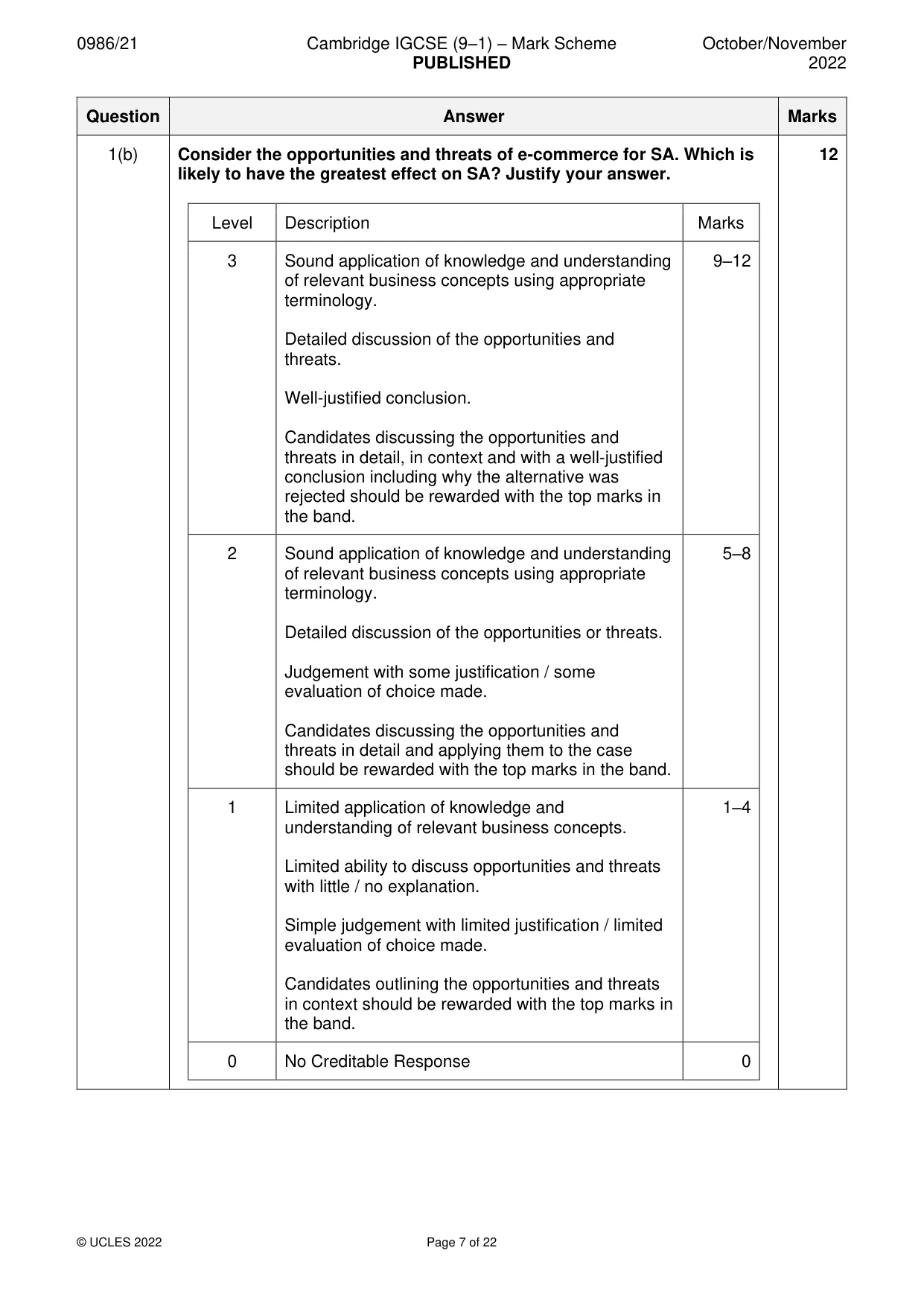
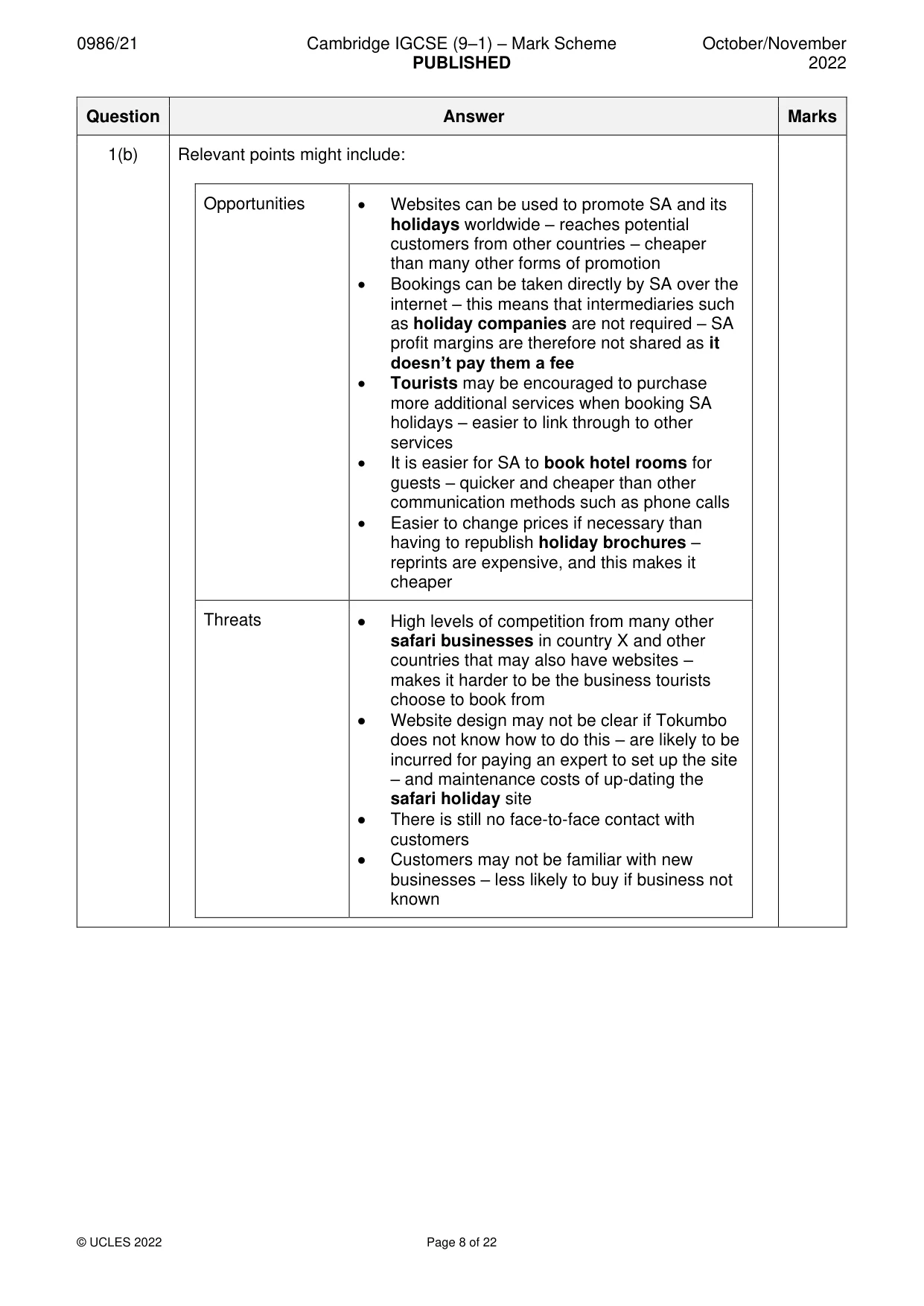
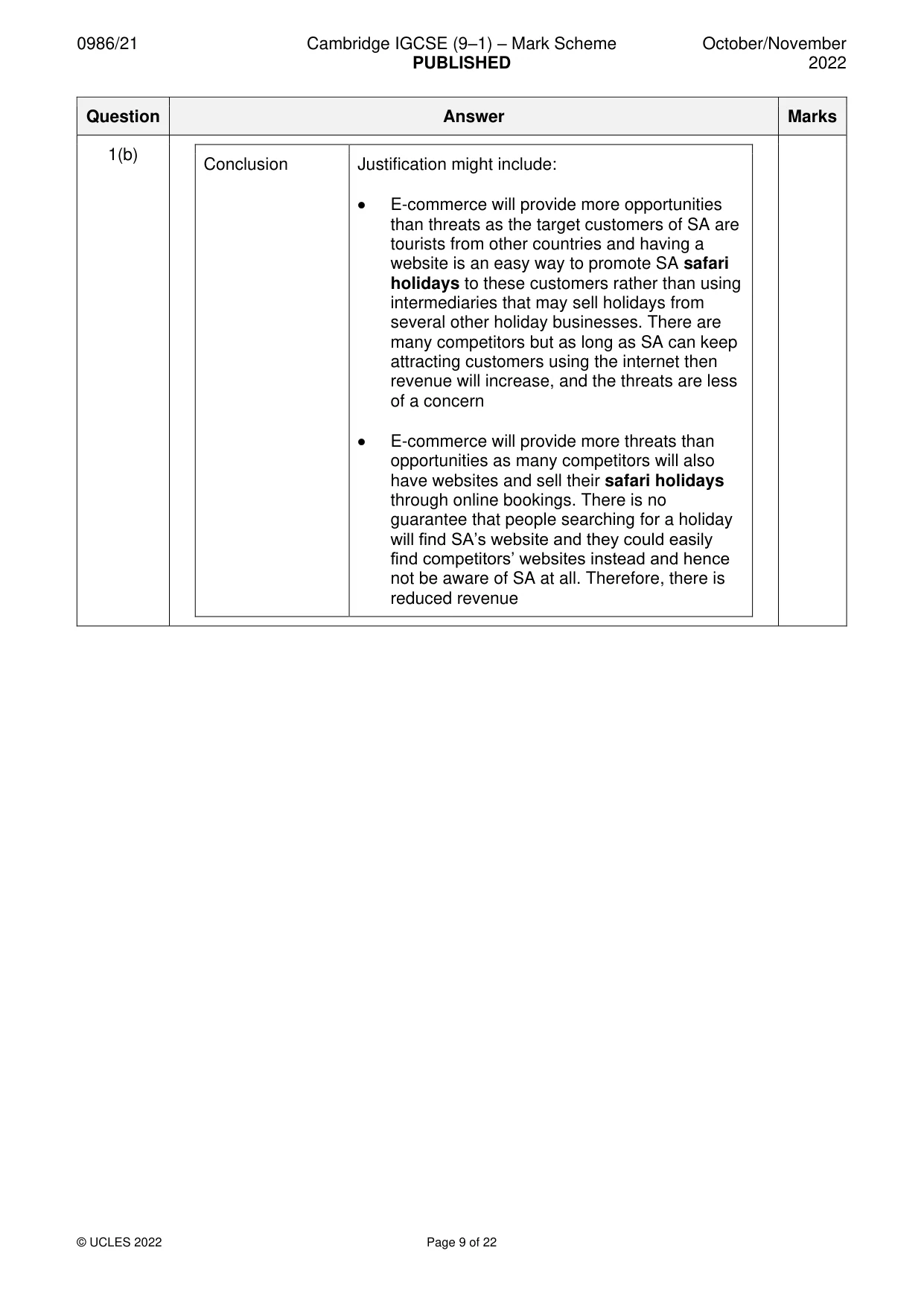
Mark scheme: Question Answer Marks 1(a) Explain four business objectives Tokumbo could set for SA. 8 Award 1 mark for each relevant objective (max 4). Award a maximum of 1 additional mark for each explanation of the business objective in context. Relevant business objectives might include: • Profit – so Tokumbo will have the funds to pay for the development of his website • Increase sales / number of customers – so revenue from safari tours increases • Return on investment for the owner – so Tokumbo can gain a return on his investment in SA as he is a sole trader • Growth / expansion of the business – so that the business can take advantage of the growth in the number of young people camping • Market share – increased publicity and awareness for tourists visiting the country • Survival – as SA is a new business and has only been operating for 2 years • Provide services to the community • Providing good customer service • Reducing environmental impact For example: Tokumbo will want to make a profit (1) as he has invested his own money into the sole trader business (app). Application might include: safari holidays; increase in tourists from other countries; high income tourists; luxury safari holidays; 5 employees; only been operating for 2 years; sole trader; game reserve; camping / tent; wild animals; 4 safari guides; 4 safari vehicles; accommodation in local / luxury hotels; fuel. 1(b) Consider the opportunities and threats of e-commerce for SA. Which is 12 likely to have the greatest effect on SA? Justify your answer. Level Description Marks 3 Sound application of knowledge and understanding 9–12 of relevant business concepts using appropriate terminology. Detailed discussion of the opportunities and threats. Well-justified conclusion. Candidates discussing the opportunities and threats in detail, in context and with a well-justified conclusion including why the alternative was rejected should be rewarded with the top marks in the band. 2 Sound application of knowledge and understanding 5–8 of relevant business concepts using appropriate terminology. Detailed discussion of the opportunities or threats. Judgement with some justification / some evaluation of choice made. Candidates discussing the opportunities and threats in detail and applying them to the case should be rewarded with the top marks in the band. 1 Limited application of knowledge and 1–4 understanding of relevant business concepts. Limited ability to discuss opportunities and threats with little / no explanation. Simple judgement with limited justification / limited evaluation of choice made. Candidates outlining the opportunities and threats in context should be rewarded with the top marks in the band. 0 No Creditable Response 0 1(b) Relevant points might include: Opportunities • Websites can be used to promote SA and its holidays worldwide – reaches potential customers from other countries – cheaper than many other forms of promotion • Bookings can be taken directly by SA over the internet – this means that intermediaries such as holiday companies are not required – SA profit margins are therefore not shared as it doesn’t pay them a fee • Tourists may be encouraged to purchase more additional services when booking SA holidays – easier to link through to other services • It is easier for SA to book hotel rooms for guests – quicker and cheaper than other communication methods such as phone calls • Easier to change prices if necessary than having to republish holiday brochures – reprints are expensive, and this makes it cheaper Threats • High levels of competition from many other safari businesses in country X and other countries that may also have websites – makes it harder to be the business tourists choose to book from • Website design may not be clear if Tokumbo does not know how to do this – are likely to be incurred for paying an expert to set up the site – and maintenance costs of up-dating the safari holiday site • There is still no face-to-face contact with customers • Customers may not be familiar with new businesses – less likely to buy if business not known 1(b) Conclusion Justification might include: • E-commerce will provide more opportunities than threats as the target customers of SA are tourists from other countries and having a website is an easy way to promote SA safari holidays to these customers rather than using intermediaries that may sell holidays from several other holiday businesses. There are many competitors but as long as SA can keep attracting customers using the internet then revenue will increase, and the threats are less of a concern • E-commerce will provide more threats than opportunities as many competitors will also have websites and sell their safari holidays through online bookings. There is no guarantee that people searching for a holiday will find SA’s website and they could easily find competitors’ websites instead and hence not be aware of SA at all. Therefore, there is reduced revenue
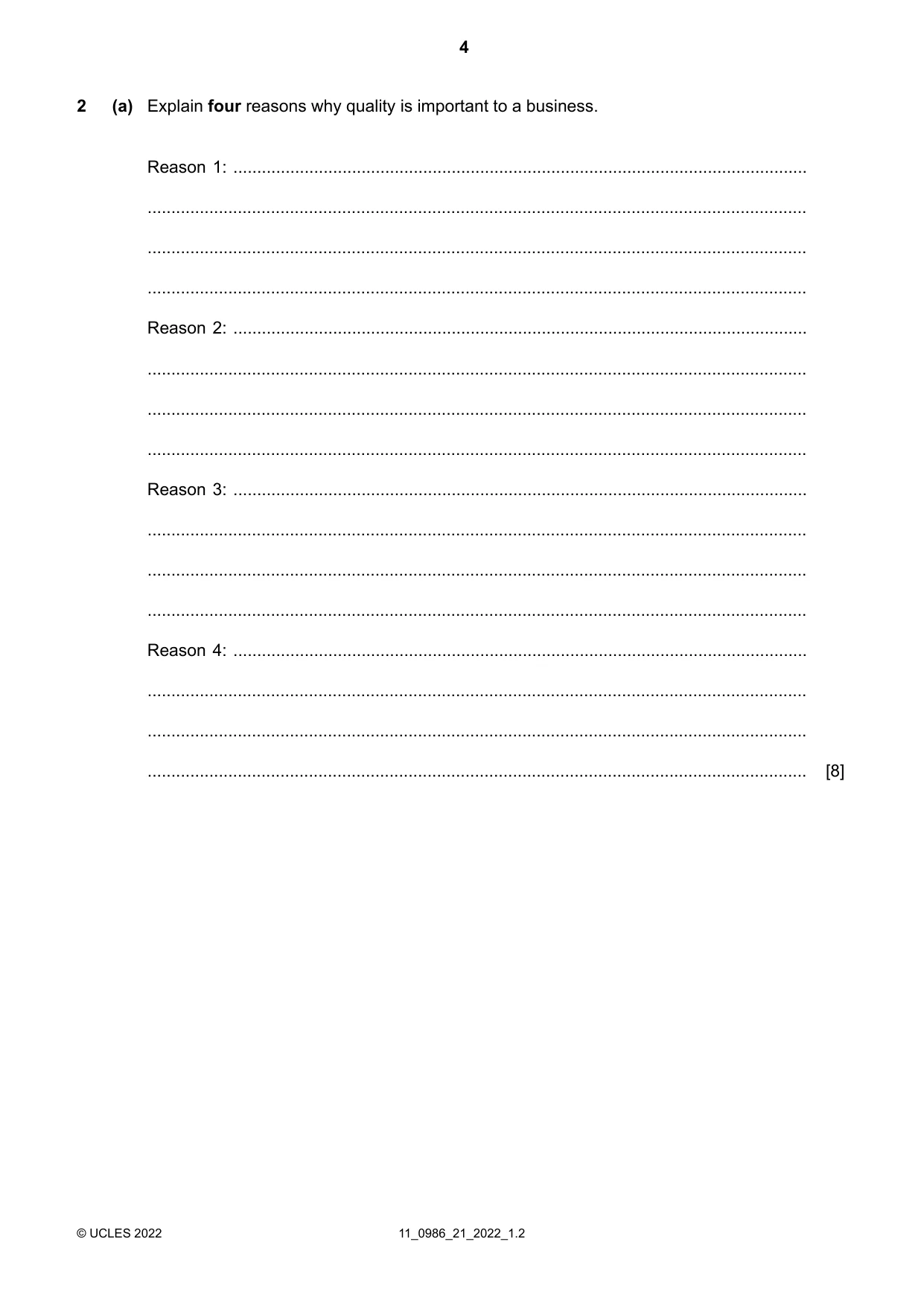
Q2 · Explain four reasons why quality is important to a business
2 (a) Explain four reasons why quality is important to a business. Reason 1: ......................................................................................................................... ........................................................................................................................................... ........................................................................................................................................... ........................................................................................................................................... Reason 2: ......................................................................................................................... ........................................................................................................................................... ........................................................................................................................................... ........................................................................................................................................... Reason 3: ......................................................................................................................... ........................................................................................................................................... ........................................................................................................................................... ........................................................................................................................................... Reason 4: ......................................................................................................................... ........................................................................................................................................... ........................................................................................................................................... ........................................................................................................................................... [8] (b) Consider the following three sources of finance Tokumbo could use for the new vehicles. Which source should he choose? Justify your answer. • Leasing • Bank loan • Retained profit Leasing: ............................................................................................................................ ........................................................................................................................................... ........................................................................................................................................... ........................................................................................................................................... ........................................................................................................................................... ........................................................................................................................................... Bank loan: ......................................................................................................................... ........................................................................................................................................... ........................................................................................................................................... ........................................................................................................................................... ........................................................................................................................................... ........................................................................................................................................... Retained profit: ................................................................................................................. ........................................................................................................................................... ........................................................................................................................................... ........................................................................................................................................... ........................................................................................................................................... ........................................................................................................................................... Recommendation: ............................................................................................................ ........................................................................................................................................... ........................................................................................................................................... ........................................................................................................................................... ........................................................................................................................................... ........................................................................................................................................... [12]
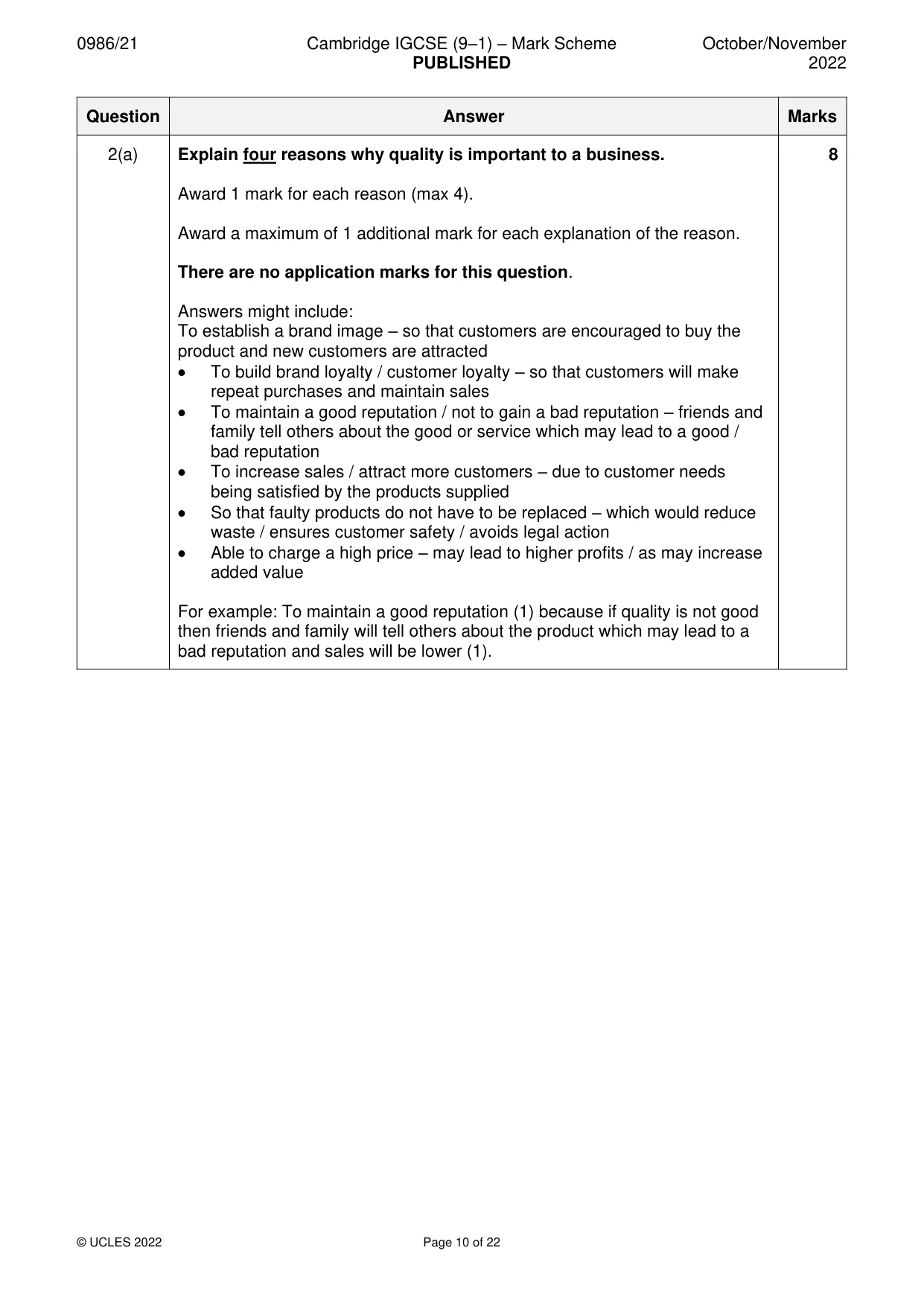
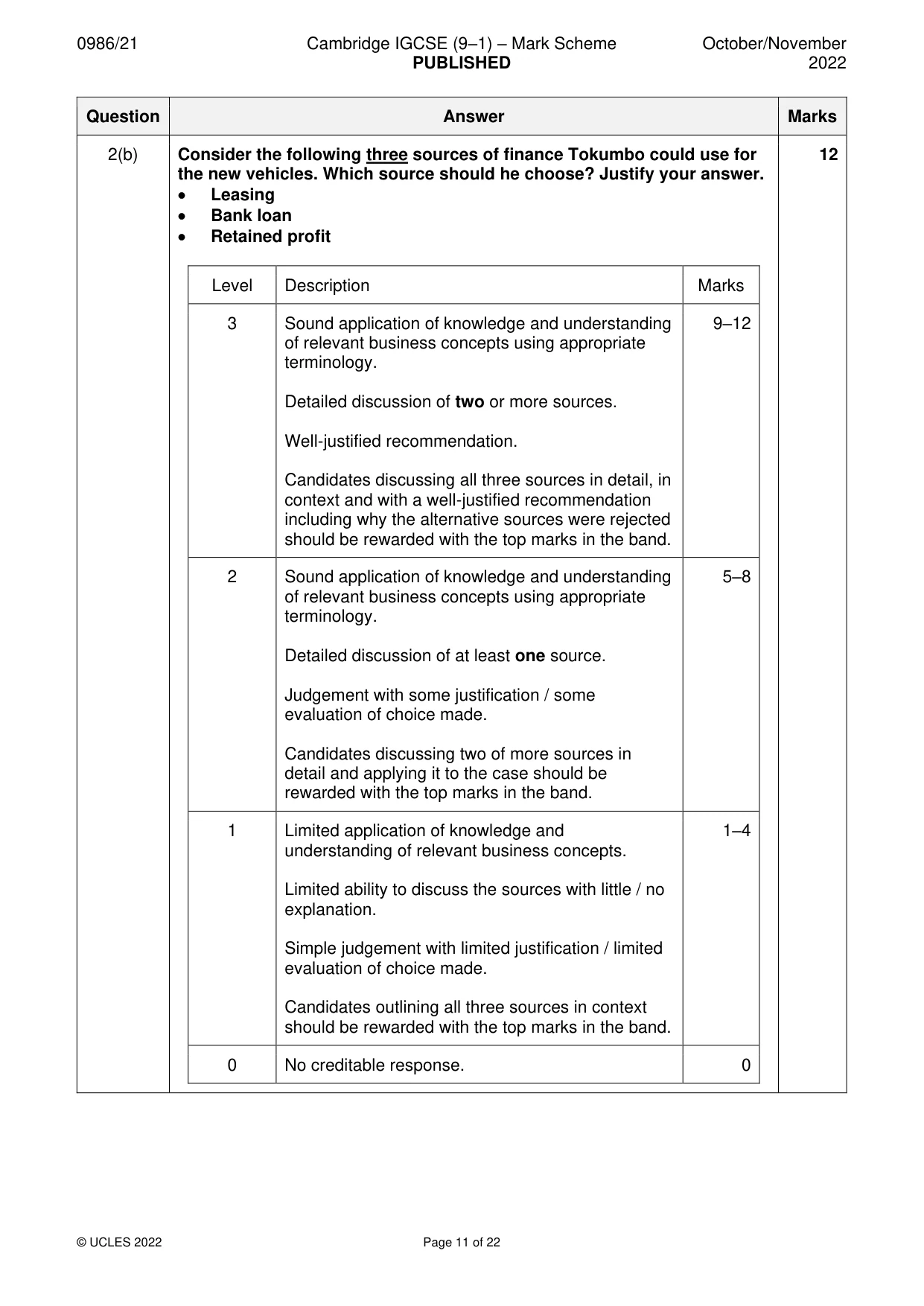
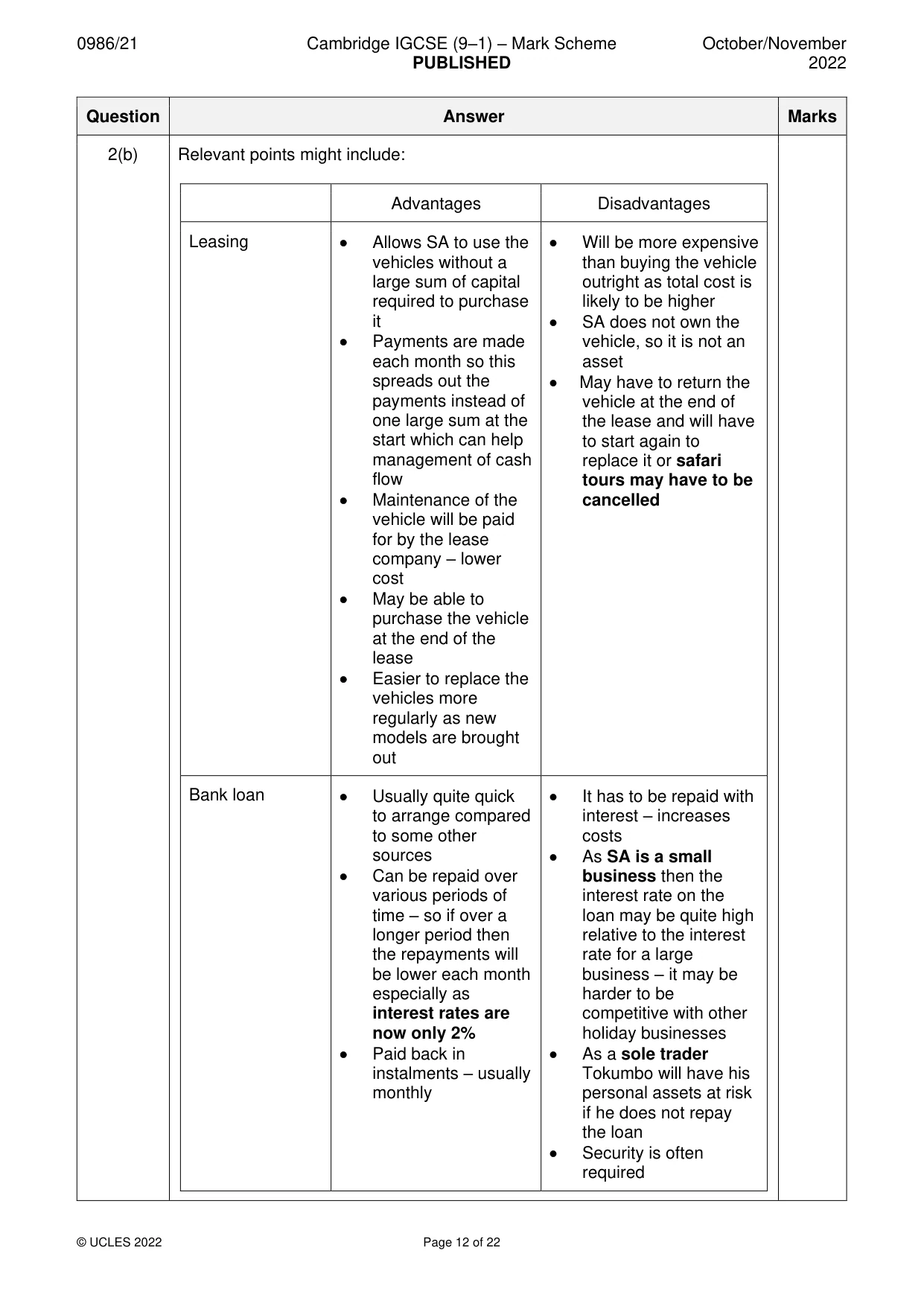
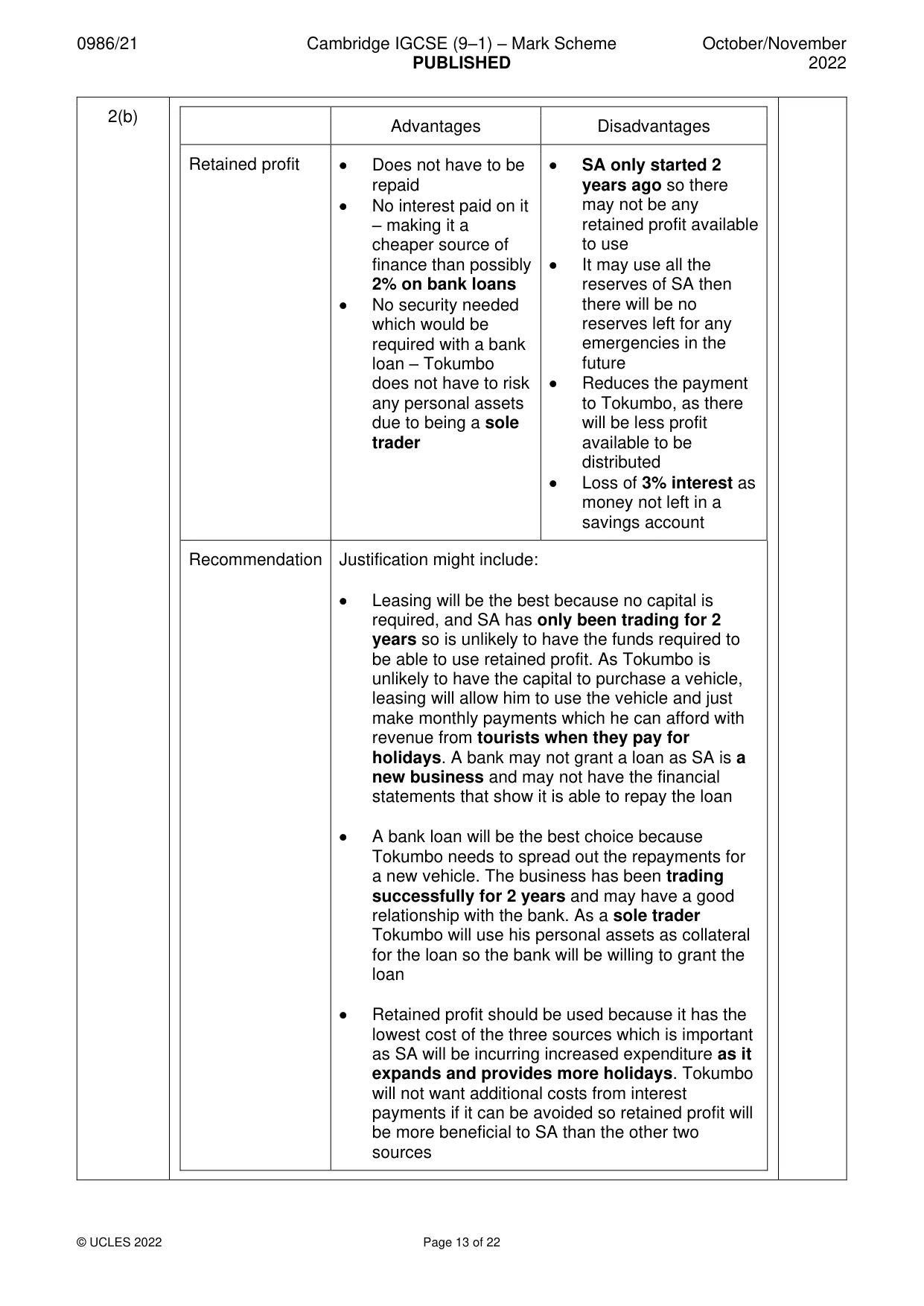
Mark scheme: 2(a) Explain four reasons why quality is important to a business. 8 Award 1 mark for each reason (max 4). Award a maximum of 1 additional mark for each explanation of the reason. There are no application marks for this question. Answers might include: To establish a brand image – so that customers are encouraged to buy the product and new customers are attracted • To build brand loyalty / customer loyalty – so that customers will make repeat purchases and maintain sales • To maintain a good reputation / not to gain a bad reputation – friends and family tell others about the good or service which may lead to a good / bad reputation • To increase sales / attract more customers – due to customer needs being satisfied by the products supplied • So that faulty products do not have to be replaced – which would reduce waste / ensures customer safety / avoids legal action • Able to charge a high price – may lead to higher profits / as may increase added value For example: To maintain a good reputation (1) because if quality is not good then friends and family will tell others about the product which may lead to a bad reputation and sales will be lower (1). 2(b) Consider the following three sources of finance Tokumbo could use for 12 the new vehicles. Which source should he choose? Justify your answer. • Leasing • Bank loan • Retained profit Level Description Marks 3 Sound application of knowledge and understanding 9–12 of relevant business concepts using appropriate terminology. Detailed discussion of two or more sources. Well-justified recommendation. Candidates discussing all three sources in detail, in context and with a well-justified recommendation including why the alternative sources were rejected should be rewarded with the top marks in the band. 2 Sound application of knowledge and understanding 5–8 of relevant business concepts using appropriate terminology. Detailed discussion of at least one source. Judgement with some justification / some evaluation of choice made. Candidates discussing two of more sources in detail and applying it to the case should be rewarded with the top marks in the band. 1 Limited application of knowledge and 1–4 understanding of relevant business concepts. Limited ability to discuss the sources with little / no explanation. Simple judgement with limited justification / limited evaluation of choice made. Candidates outlining all three sources in context should be rewarded with the top marks in the band. 0 No creditable response. 0 2(b) Relevant points might include: Advantages Disadvantages Leasing • Allows SA to use the • Will be more expensive vehicles without a than buying the vehicle large sum of capital outright as total cost is required to purchase likely to be higher it • SA does not own the • Payments are made vehicle, so it is not an each month so this asset spreads out the • May have to return the payments instead of vehicle at the end of one large sum at the the lease and will have start which can help to start again to management of cash replace it or safari flow tours may have to be • Maintenance of the cancelled vehicle will be paid for by the lease company – lower cost • May be able to purchase the vehicle at the end of the lease • Easier to replace the vehicles more regularly as new models are brought out Bank loan • Usually quite quick • It has to be repaid with to arrange compared interest – increases to some other costs sources • As SA is a small • Can be repaid over business then the various periods of interest rate on the time – so if over a loan may be quite high longer period then relative to the interest the repayments will rate for a large be lower each month business – it may be especially as harder to be interest rates are competitive with other now only 2% holiday businesses • Paid back in • As a sole trader instalments – usually Tokumbo will have his monthly personal assets at risk if he does not repay the loan • Security is often required 2(b) Advantages Disadvantages Retained profit • Does not have to be • SA only started 2 repaid years ago so there • No interest paid on it may not be any – making it a retained profit available cheaper source of to use finance than possibly • It may use all the 2% on bank loans reserves of SA then • No security needed there will be no which would be reserves left for any required with a bank emergencies in the loan – Tokumbo future does not have to risk • Reduces the payment any personal assets to Tokumbo, as there due to being a sole will be less profit trader available to be distributed • Loss of 3% interest as money not left in a savings account Recommendation Justification might include: • Leasing will be the best because no capital is required, and SA has only been trading for 2 years so is unlikely to have the funds required to be able to use retained profit. As Tokumbo is unlikely to have the capital to purchase a vehicle, leasing will allow him to use the vehicle and just make monthly payments which he can afford with revenue from tourists when they pay for holidays. A bank may not grant a loan as SA is a new business and may not have the financial statements that show it is able to repay the loan • A bank loan will be the best choice because Tokumbo needs to spread out the repayments for a new vehicle. The business has been trading successfully for 2 years and may have a good relationship with the bank. As a sole trader Tokumbo will use his personal assets as collateral for the loan so the bank will be willing to grant the loan • Retained profit should be used because it has the lowest cost of the three sources which is important as SA will be incurring increased expenditure as it expands and provides more holidays. Tokumbo will not want additional costs from interest payments if it can be avoided so retained profit will be more beneficial to SA than the other two sources
Q3 · Explain one advantage and one disadvantage to Tokumbo of being a sole trader
3 (a) Explain one advantage and one disadvantage to Tokumbo of being a sole trader. Advantage: ....................................................................................................................... ........................................................................................................................................... Explanation: ...................................................................................................................... ........................................................................................................................................... ........................................................................................................................................... ........................................................................................................................................... ........................................................................................................................................... ........................................................................................................................................... Disadvantage: ................................................................................................................... ........................................................................................................................................... Explanation: ...................................................................................................................... ........................................................................................................................................... ........................................................................................................................................... ........................................................................................................................................... ........................................................................................................................................... ........................................................................................................................................... [8] (b) Using Appendix 3 and other information, consider the three options for the future growth of SA. Which option should Tokumbo choose? Justify your answer using appropriate calculations. Option 1: ........................................................................................................................... ........................................................................................................................................... ........................................................................................................................................... ........................................................................................................................................... ........................................................................................................................................... ........................................................................................................................................... Option 2: ........................................................................................................................... ........................................................................................................................................... ........................................................................................................................................... ........................................................................................................................................... ........................................................................................................................................... ........................................................................................................................................... Option 3: ........................................................................................................................... ........................................................................................................................................... ........................................................................................................................................... ........................................................................................................................................... ........................................................................................................................................... ........................................................................................................................................... Recommendation: ............................................................................................................ ........................................................................................................................................... ........................................................................................................................................... ........................................................................................................................................... ........................................................................................................................................... ........................................................................................................................................... ........................................................................................................................................... [12]
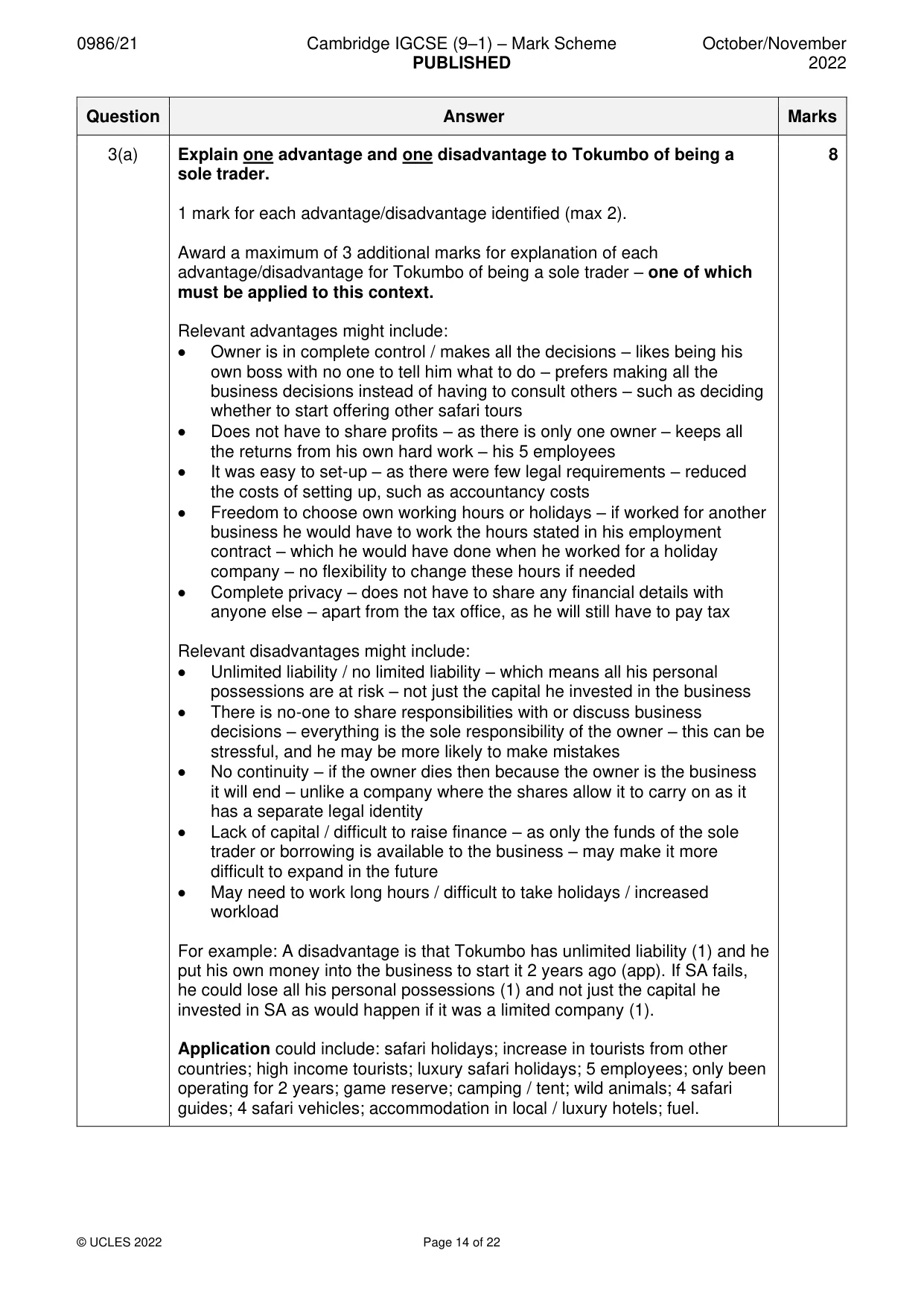
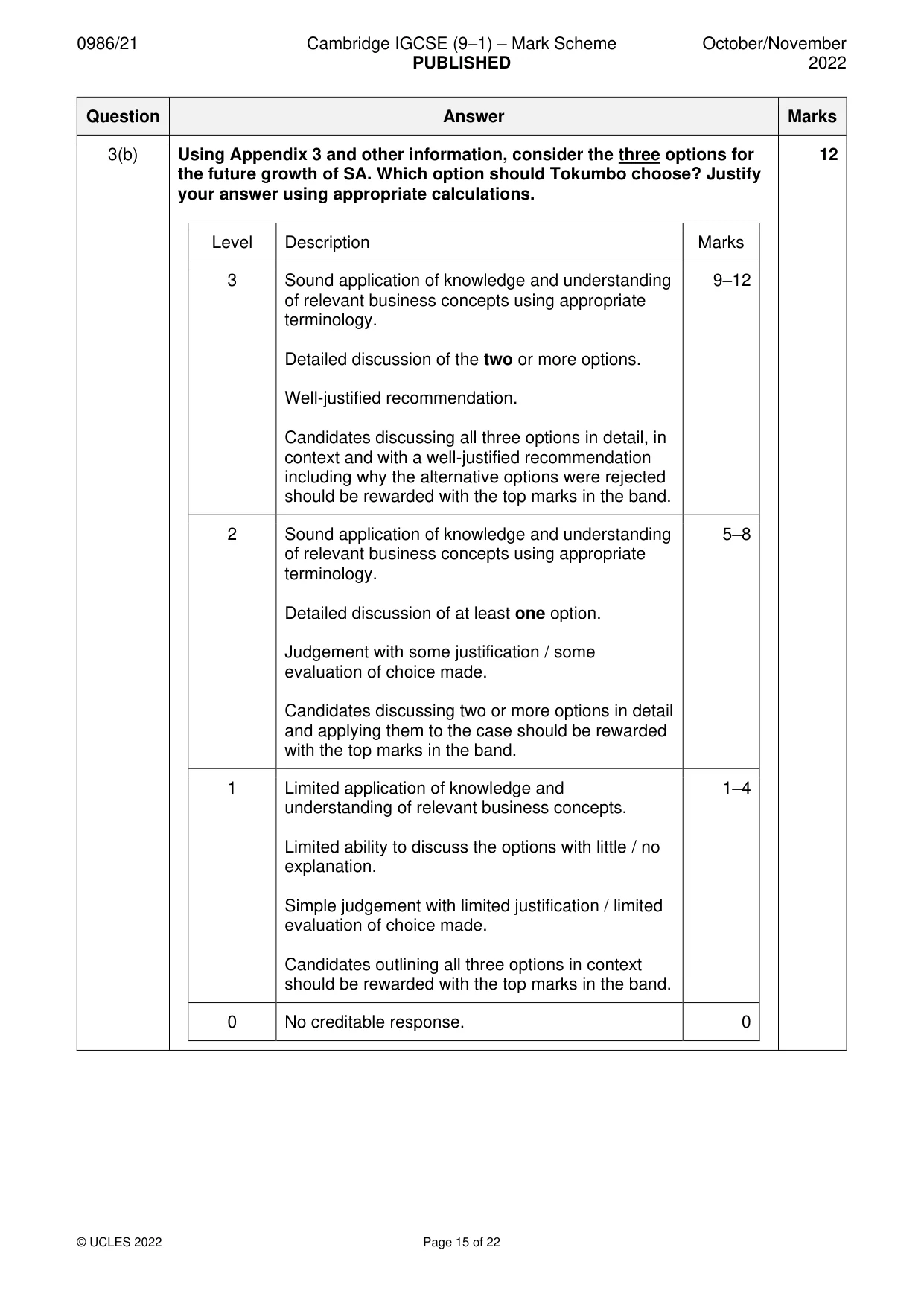
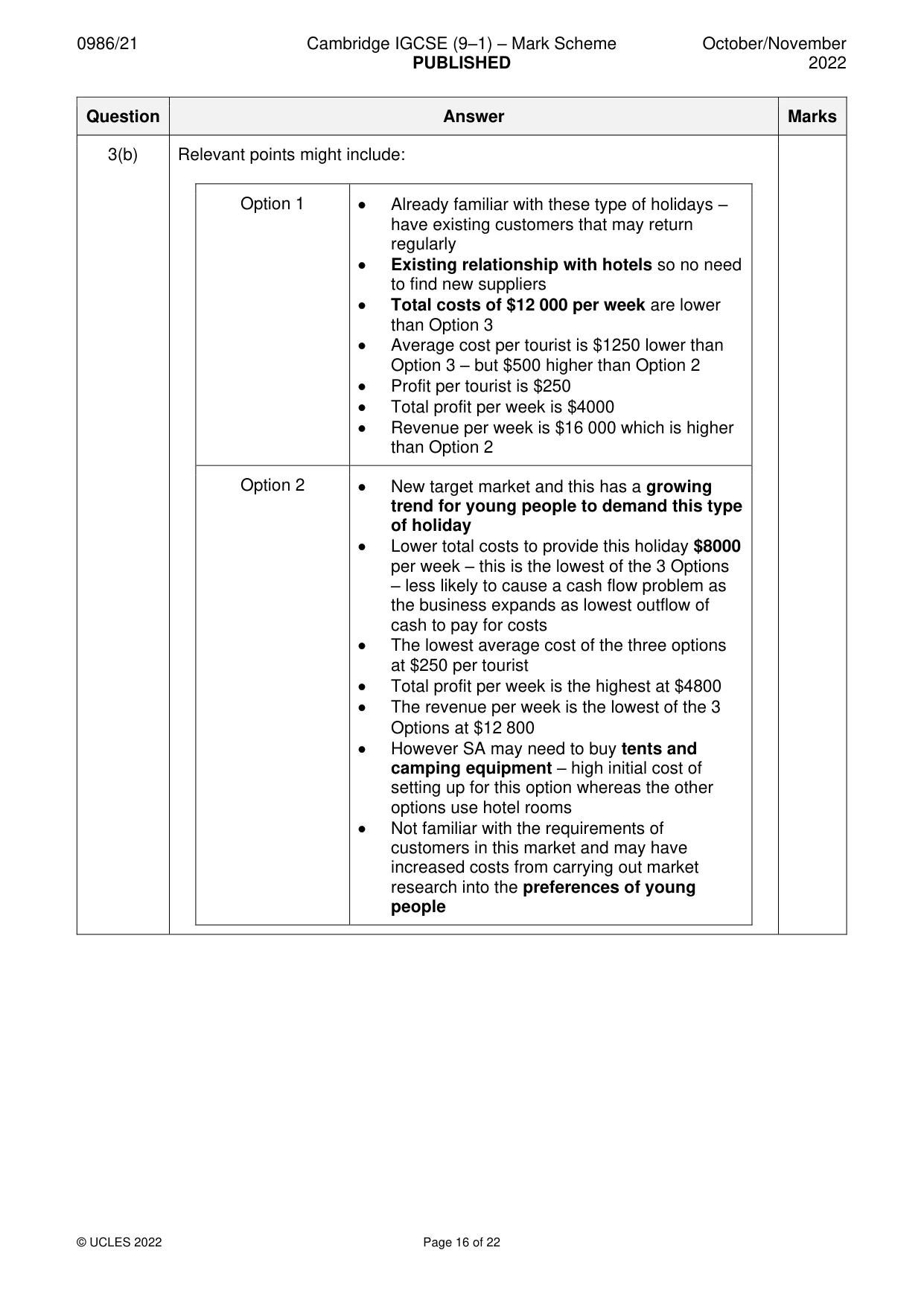
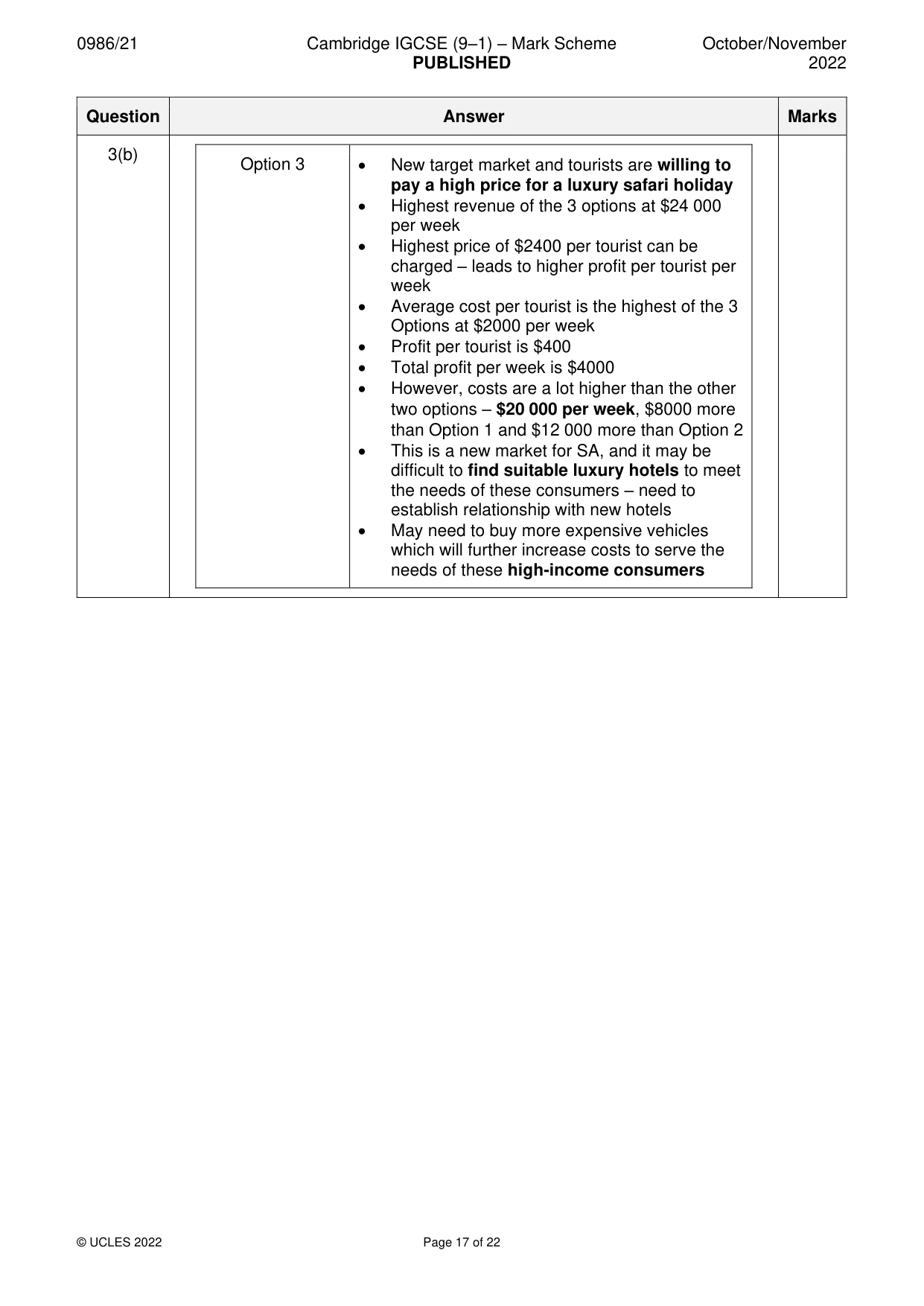
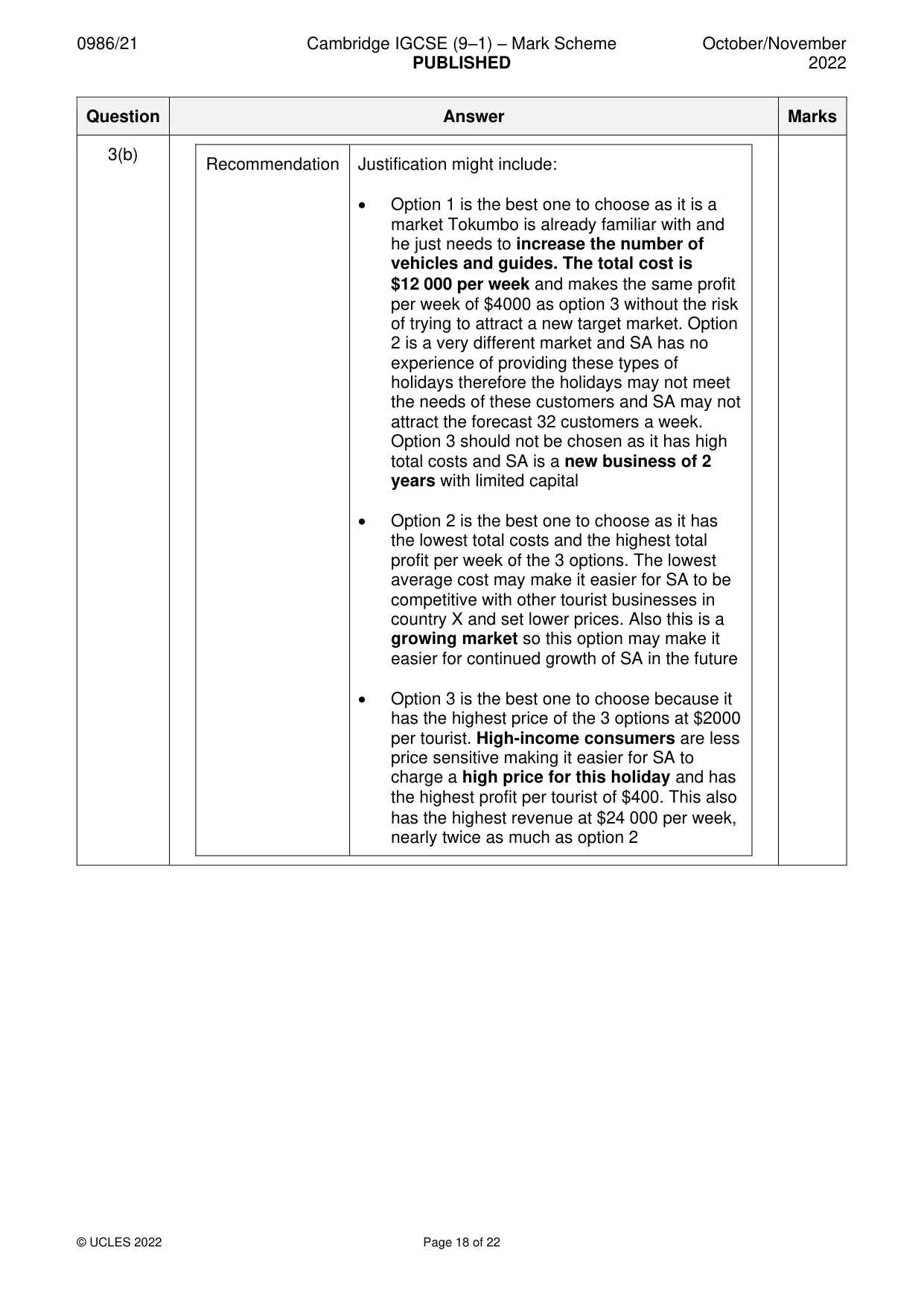
Mark scheme: 3(a) Explain one advantage and one disadvantage to Tokumbo of being a 8 sole trader. 1 mark for each advantage/disadvantage identified (max 2). Award a maximum of 3 additional marks for explanation of each advantage/disadvantage for Tokumbo of being a sole trader – one of which must be applied to this context. Relevant advantages might include: • Owner is in complete control / makes all the decisions – likes being his own boss with no one to tell him what to do – prefers making all the business decisions instead of having to consult others – such as deciding whether to start offering other safari tours • Does not have to share profits – as there is only one owner – keeps all the returns from his own hard work – his 5 employees • It was easy to set-up – as there were few legal requirements – reduced the costs of setting up, such as accountancy costs • Freedom to choose own working hours or holidays – if worked for another business he would have to work the hours stated in his employment contract – which he would have done when he worked for a holiday company – no flexibility to change these hours if needed • Complete privacy – does not have to share any financial details with anyone else – apart from the tax office, as he will still have to pay tax Relevant disadvantages might include: • Unlimited liability / no limited liability – which means all his personal possessions are at risk – not just the capital he invested in the business • There is no-one to share responsibilities with or discuss business decisions – everything is the sole responsibility of the owner – this can be stressful, and he may be more likely to make mistakes • No continuity – if the owner dies then because the owner is the business it will end – unlike a company where the shares allow it to carry on as it has a separate legal identity • Lack of capital / difficult to raise finance – as only the funds of the sole trader or borrowing is available to the business – may make it more difficult to expand in the future • May need to work long hours / difficult to take holidays / increased workload For example: A disadvantage is that Tokumbo has unlimited liability (1) and he put his own money into the business to start it 2 years ago (app). If SA fails, he could lose all his personal possessions (1) and not just the capital he invested in SA as would happen if it was a limited company (1). Application could include: safari holidays; increase in tourists from other countries; high income tourists; luxury safari holidays; 5 employees; only been operating for 2 years; game reserve; camping / tent; wild animals; 4 safari guides; 4 safari vehicles; accommodation in local / luxury hotels; fuel. 3(b) Using Appendix 3 and other information, consider the three options for 12 the future growth of SA. Which option should Tokumbo choose? Justify your answer using appropriate calculations. Level Description Marks 3 Sound application of knowledge and understanding 9–12 of relevant business concepts using appropriate terminology. Detailed discussion of the two or more options. Well-justified recommendation. Candidates discussing all three options in detail, in context and with a well-justified recommendation including why the alternative options were rejected should be rewarded with the top marks in the band. 2 Sound application of knowledge and understanding 5–8 of relevant business concepts using appropriate terminology. Detailed discussion of at least one option. Judgement with some justification / some evaluation of choice made. Candidates discussing two or more options in detail and applying them to the case should be rewarded with the top marks in the band. 1 Limited application of knowledge and 1–4 understanding of relevant business concepts. Limited ability to discuss the options with little / no explanation. Simple judgement with limited justification / limited evaluation of choice made. Candidates outlining all three options in context should be rewarded with the top marks in the band. 0 No creditable response. 0 3(b) Relevant points might include: Option 1 • Already familiar with these type of holidays – have existing customers that may return regularly • Existing relationship with hotels so no need to find new suppliers • Total costs of $12 000 per week are lower than Option 3 • Average cost per tourist is $1250 lower than Option 3 – but $500 higher than Option 2 • Profit per tourist is $250 • Total profit per week is $4000 • Revenue per week is $16 000 which is higher than Option 2 Option 2 • New target market and this has a growing trend for young people to demand this type of holiday • Lower total costs to provide this holiday $8000 per week – this is the lowest of the 3 Options – less likely to cause a cash flow problem as the business expands as lowest outflow of cash to pay for costs • The lowest average cost of the three options at $250 per tourist • Total profit per week is the highest at $4800 • The revenue per week is the lowest of the 3 Options at $12 800 • However SA may need to buy tents and camping equipment – high initial cost of setting up for this option whereas the other options use hotel rooms • Not familiar with the requirements of customers in this market and may have increased costs from carrying out market research into the preferences of young people 3(b) Option 3 • New target market and tourists are willing to pay a high price for a luxury safari holiday • Highest revenue of the 3 options at $24 000 per week • Highest price of $2400 per tourist can be charged – leads to higher profit per tourist per week • Average cost per tourist is the highest of the 3 Options at $2000 per week • Profit per tourist is $400 • Total profit per week is $4000 • However, costs are a lot higher than the other two options – $20 000 per week, $8000 more than Option 1 and $12 000 more than Option 2 • This is a new market for SA, and it may be difficult to find suitable luxury hotels to meet the needs of these consumers – need to establish relationship with new hotels • May need to buy more expensive vehicles which will further increase costs to serve the needs of these high-income consumers 3(b) Recommendation Justification might include: • Option 1 is the best one to choose as it is a market Tokumbo is already familiar with and he just needs to increase the number of vehicles and guides. The total cost is $12 000 per week and makes the same profit per week of $4000 as option 3 without the risk of trying to attract a new target market. Option 2 is a very different market and SA has no experience of providing these types of holidays therefore the holidays may not meet the needs of these customers and SA may not attract the forecast 32 customers a week. Option 3 should not be chosen as it has high total costs and SA is a new business of 2 years with limited capital • Option 2 is the best one to choose as it has the lowest total costs and the highest total profit per week of the 3 options. The lowest average cost may make it easier for SA to be competitive with other tourist businesses in country X and set lower prices. Also this is a growing market so this option may make it easier for continued growth of SA in the future • Option 3 is the best one to choose because it has the highest price of the 3 options at $2000 per tourist. High-income consumers are less price sensitive making it easier for SA to charge a high price for this holiday and has the highest profit per tourist of $400. This also has the highest revenue at $24 000 per week, nearly twice as much as option 2
Q4 · Explain two possible effects on SA of the increase in the rate of inflation in country X
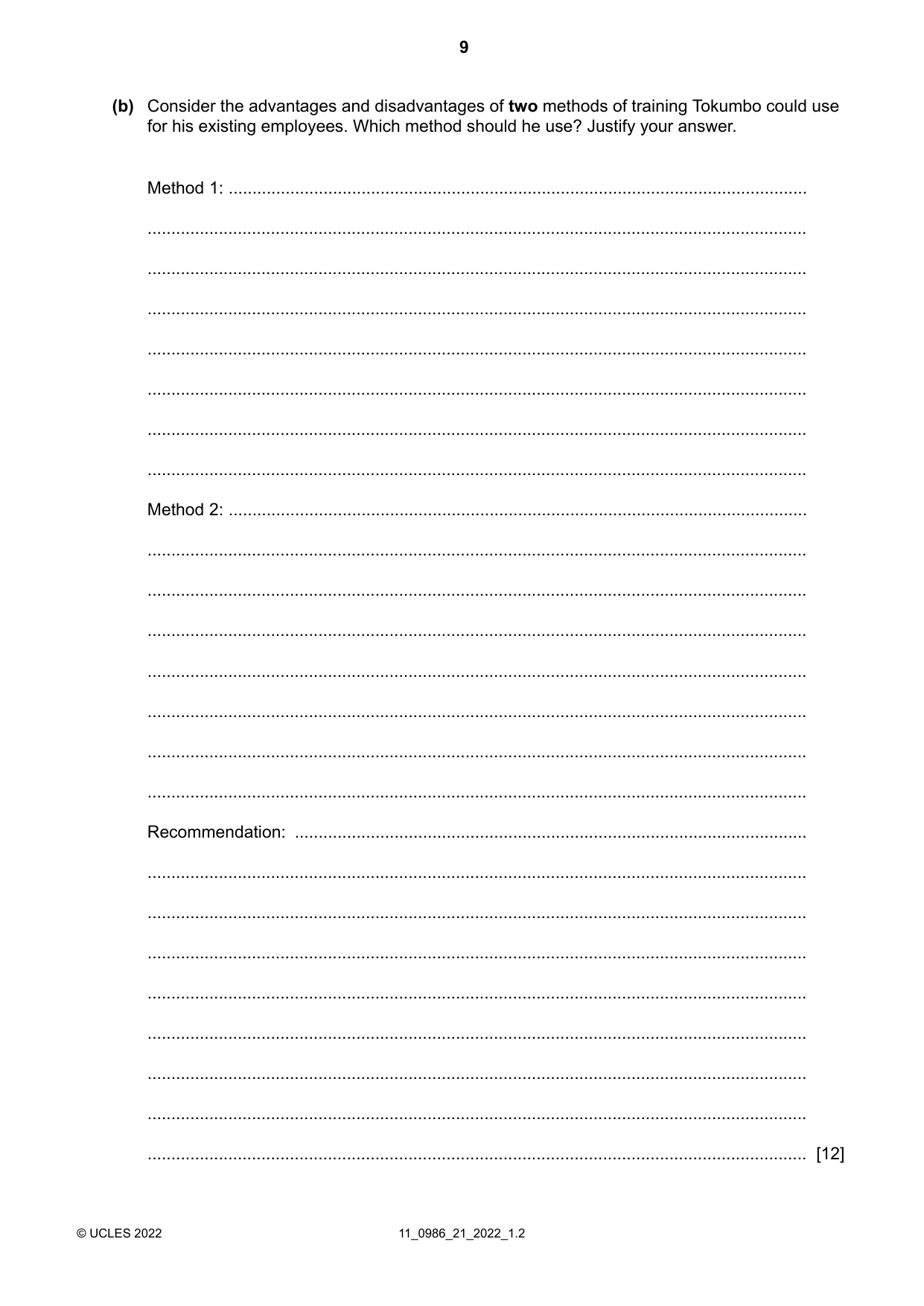
4 (a) Explain two possible effects on SA of the increase in the rate of inflation in country X. Effect 1: ............................................................................................................................. ........................................................................................................................................... Explanation: ...................................................................................................................... ........................................................................................................................................... ........................................................................................................................................... ........................................................................................................................................... ........................................................................................................................................... ........................................................................................................................................... Effect 2: ............................................................................................................................. ........................................................................................................................................... Explanation: ...................................................................................................................... ........................................................................................................................................... ........................................................................................................................................... ........................................................................................................................................... ........................................................................................................................................... ........................................................................................................................................... [8] (b) Consider the advantages and disadvantages of two methods of training Tokumbo could use for his existing employees. Which method should he use? Justify your answer. Method 1: .......................................................................................................................... ........................................................................................................................................... ........................................................................................................................................... ........................................................................................................................................... ........................................................................................................................................... ........................................................................................................................................... ........................................................................................................................................... ........................................................................................................................................... Method 2: .......................................................................................................................... ........................................................................................................................................... ........................................................................................................................................... ........................................................................................................................................... ........................................................................................................................................... ........................................................................................................................................... ........................................................................................................................................... ........................................................................................................................................... Recommendation: ............................................................................................................ ........................................................................................................................................... ........................................................................................................................................... ........................................................................................................................................... ........................................................................................................................................... ........................................................................................................................................... ........................................................................................................................................... ........................................................................................................................................... ........................................................................................................................................... [12]
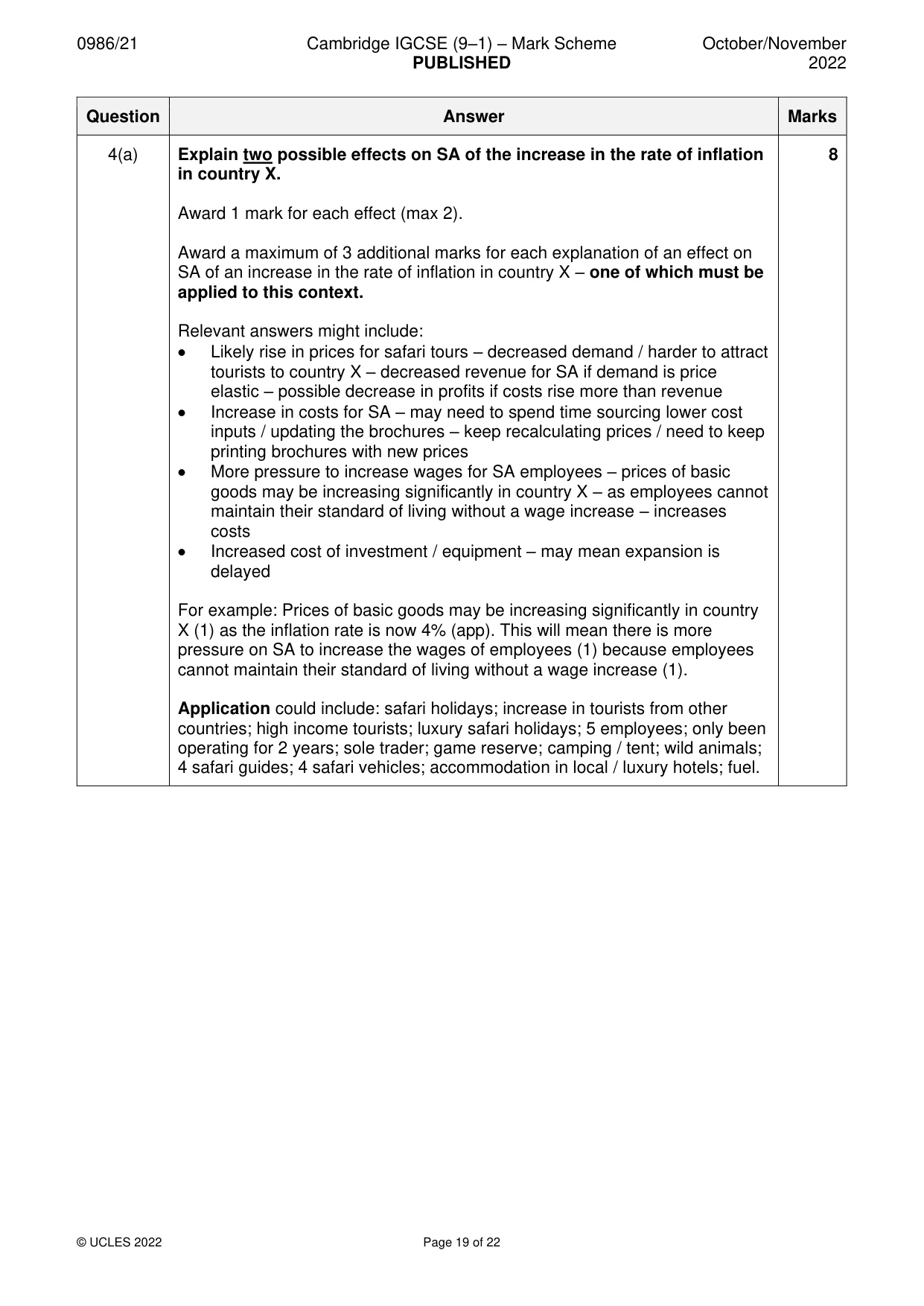
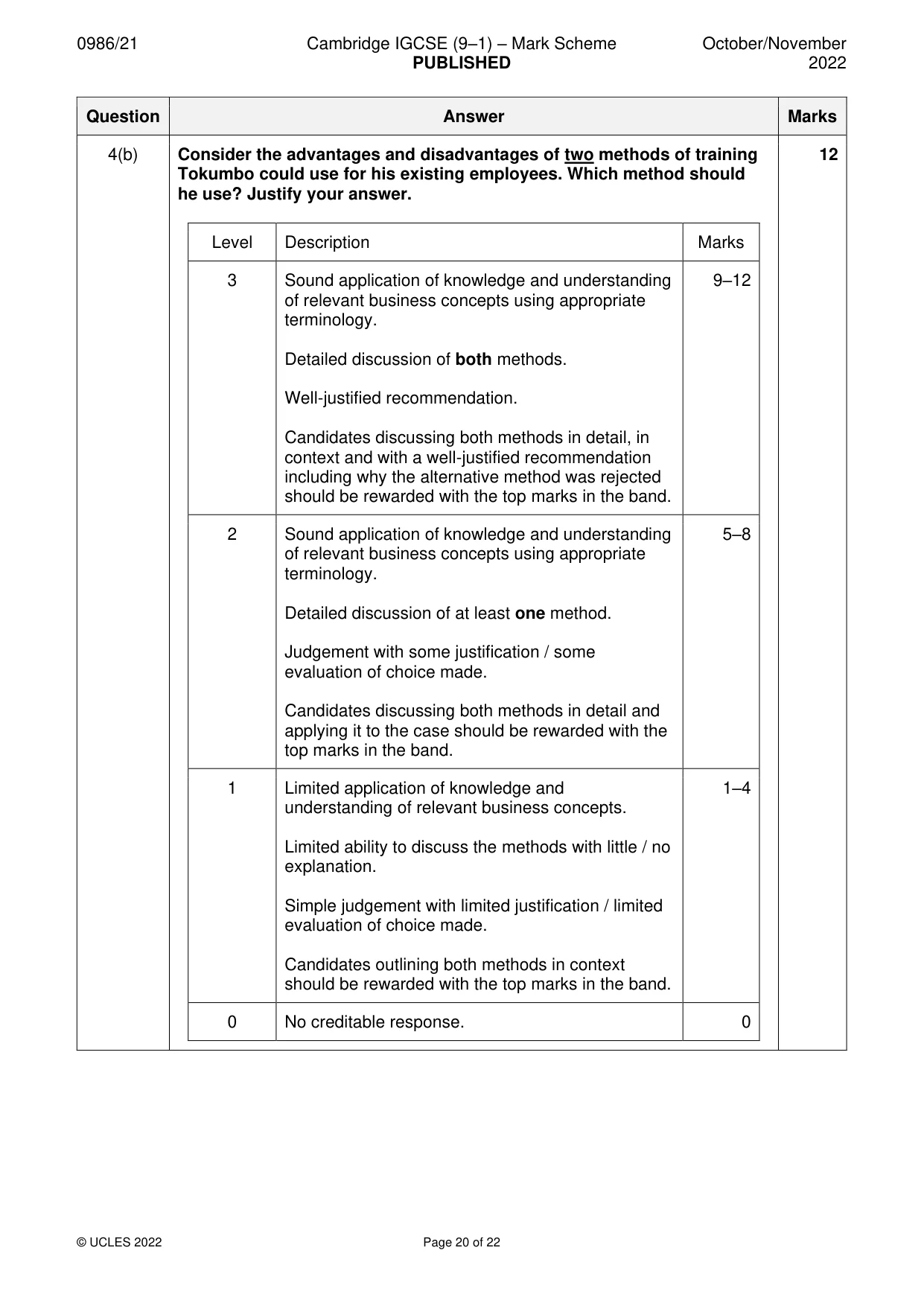
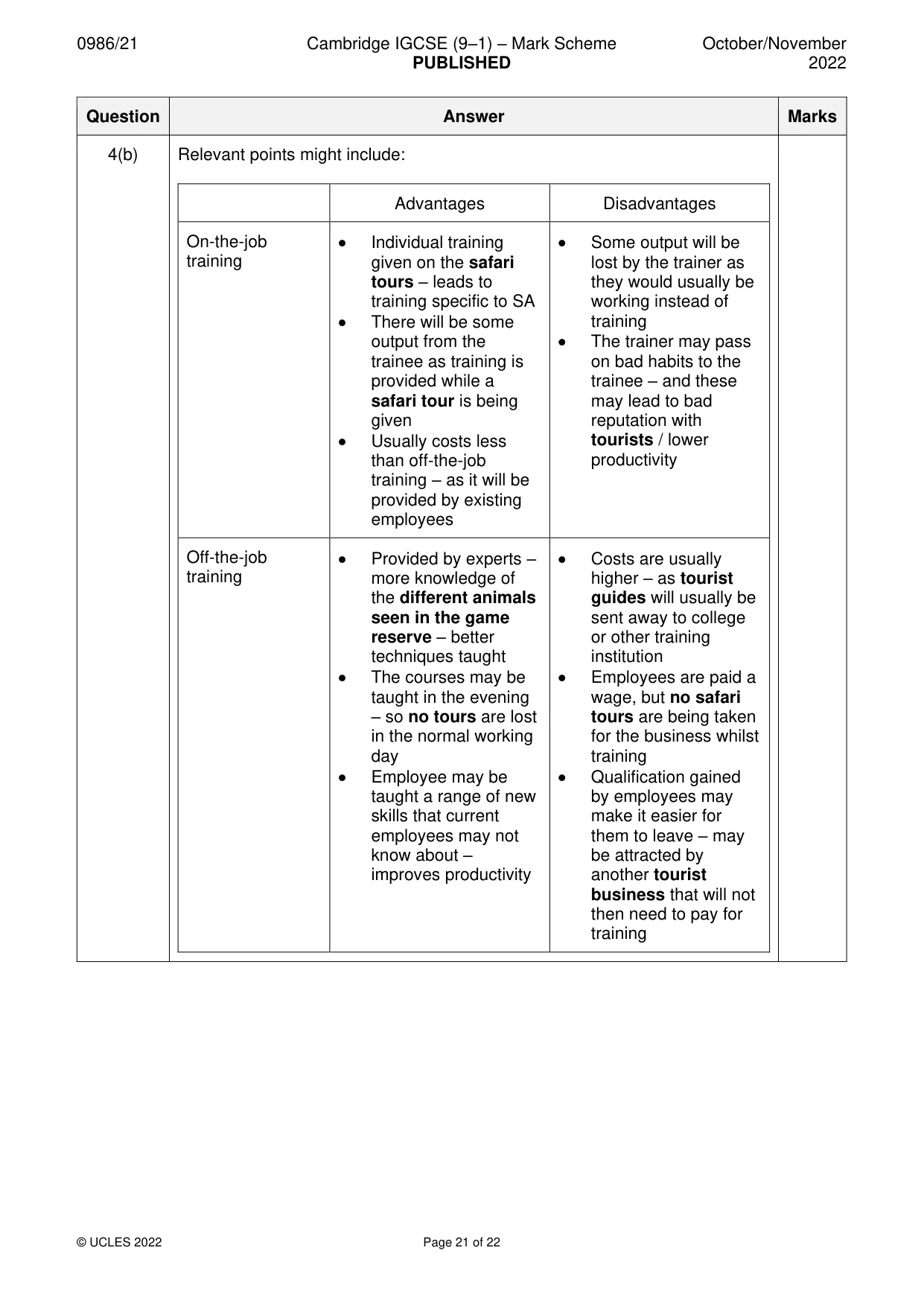
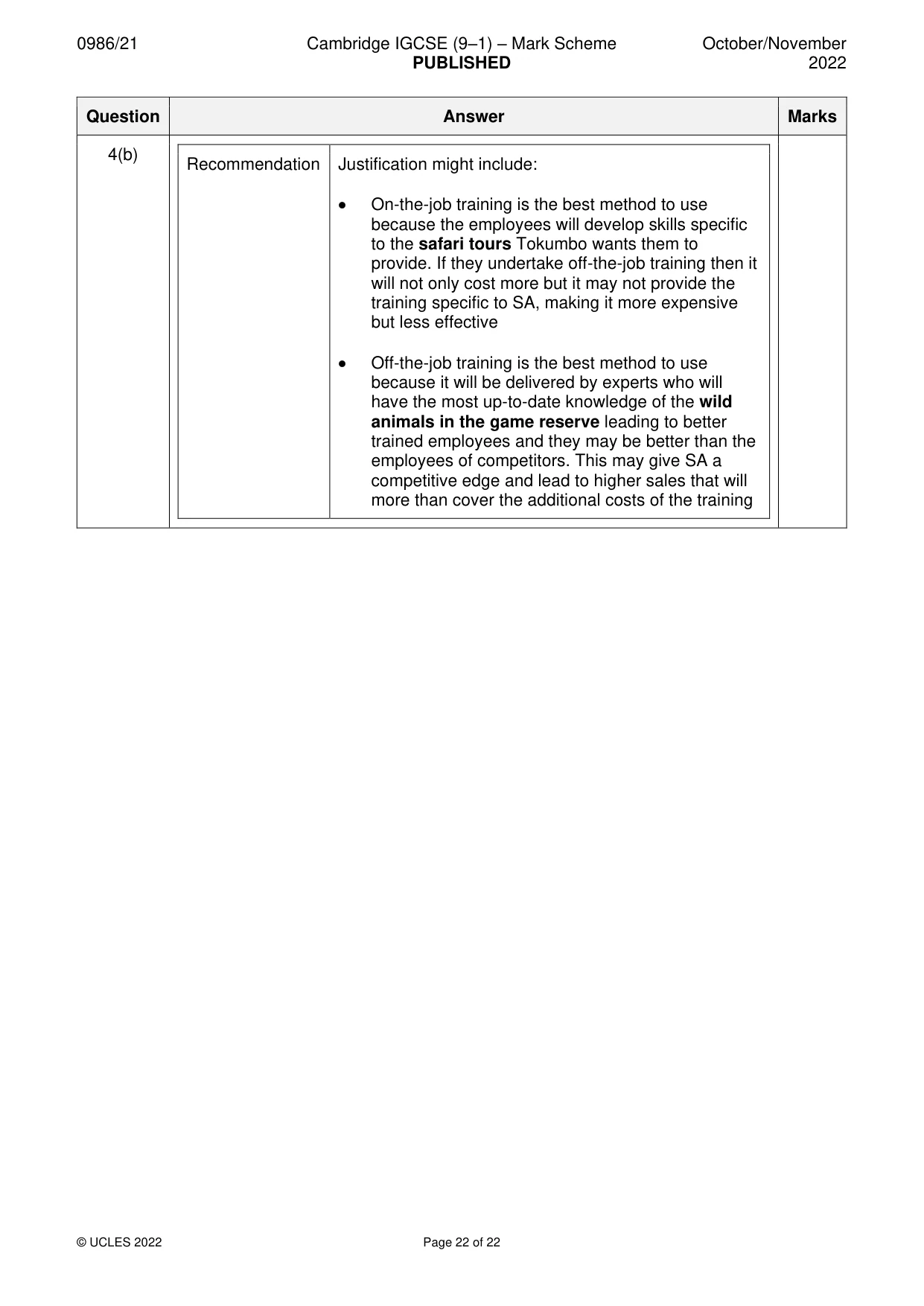
Mark scheme: 4(a) Explain two possible effects on SA of the increase in the rate of inflation 8 in country X. Award 1 mark for each effect (max 2). Award a maximum of 3 additional marks for each explanation of an effect on SA of an increase in the rate of inflation in country X – one of which must be applied to this context. Relevant answers might include: • Likely rise in prices for safari tours – decreased demand / harder to attract tourists to country X – decreased revenue for SA if demand is price elastic – possible decrease in profits if costs rise more than revenue • Increase in costs for SA – may need to spend time sourcing lower cost inputs / updating the brochures – keep recalculating prices / need to keep printing brochures with new prices • More pressure to increase wages for SA employees – prices of basic goods may be increasing significantly in country X – as employees cannot maintain their standard of living without a wage increase – increases costs • Increased cost of investment / equipment – may mean expansion is delayed For example: Prices of basic goods may be increasing significantly in country X (1) as the inflation rate is now 4% (app). This will mean there is more pressure on SA to increase the wages of employees (1) because employees cannot maintain their standard of living without a wage increase (1). Application could include: safari holidays; increase in tourists from other countries; high income tourists; luxury safari holidays; 5 employees; only been operating for 2 years; sole trader; game reserve; camping / tent; wild animals; 4 safari guides; 4 safari vehicles; accommodation in local / luxury hotels; fuel. 4(b) Consider the advantages and disadvantages of two methods of training 12 Tokumbo could use for his existing employees. Which method should he use? Justify your answer. Level Description Marks 3 Sound application of knowledge and understanding 9–12 of relevant business concepts using appropriate terminology. Detailed discussion of both methods. Well-justified recommendation. Candidates discussing both methods in detail, in context and with a well-justified recommendation including why the alternative method was rejected should be rewarded with the top marks in the band. 2 Sound application of knowledge and understanding 5–8 of relevant business concepts using appropriate terminology. Detailed discussion of at least one method. Judgement with some justification / some evaluation of choice made. Candidates discussing both methods in detail and applying it to the case should be rewarded with the top marks in the band. 1 Limited application of knowledge and 1–4 understanding of relevant business concepts. Limited ability to discuss the methods with little / no explanation. Simple judgement with limited justification / limited evaluation of choice made. Candidates outlining both methods in context should be rewarded with the top marks in the band. 0 No creditable response. 0 4(b) Relevant points might include: Advantages Disadvantages On-the-job • Individual training • Some output will be training given on the safari lost by the trainer as tours – leads to they would usually be training specific to SA working instead of • There will be some training output from the • The trainer may pass trainee as training is on bad habits to the provided while a trainee – and these safari tour is being may lead to bad given reputation with • Usually costs less tourists / lower than off-the-job productivity training – as it will be provided by existing employees Off-the-job • Provided by experts – • Costs are usually training more knowledge of higher – as tourist the different animals guides will usually be seen in the game sent away to college reserve – better or other training techniques taught institution • The courses may be • Employees are paid a taught in the evening wage, but no safari – so no tours are lost tours are being taken in the normal working for the business whilst day training • Employee may be • Qualification gained taught a range of new by employees may skills that current make it easier for employees may not them to leave – may know about – be attracted by improves productivity another tourist business that will not then need to pay for training 4(b) Recommendation Justification might include: • On-the-job training is the best method to use because the employees will develop skills specific to the safari tours Tokumbo wants them to provide. If they undertake off-the-job training then it will not only cost more but it may not provide the training specific to SA, making it more expensive but less effective • Off-the-job training is the best method to use because it will be delivered by experts who will have the most up-to-date knowledge of the wild animals in the game reserve leading to better trained employees and they may be better than the employees of competitors. This may give SA a competitive edge and lead to higher sales that will more than cover the additional costs of the training
What was in this paper
The subtopics covered by these 4 questions, and how many questions each got. Open one in a new tab to see every Cambridge question on it.
What you needed in this session
Cambridge’s own grade thresholds for 2022 Oct/Nov, Paper 2 · Variant 1. A higher threshold means an easier paper — the bar moves with how the cohort did.