Cambridge IGCSE Business Studies (9-1) 0986 — 2021 Oct/Nov Paper 2 · Variant 1
0986/21/O/N/21 · 4 questions · 80 marks · ≈90 min
The question paper and its mark scheme, free to read here and free to download. This is Cambridge’s own paper, exactly as it was sat.
Question paper12 pages


Mark scheme17 pages
Answers below. Sit the paper first if you are practising.

Questions as text
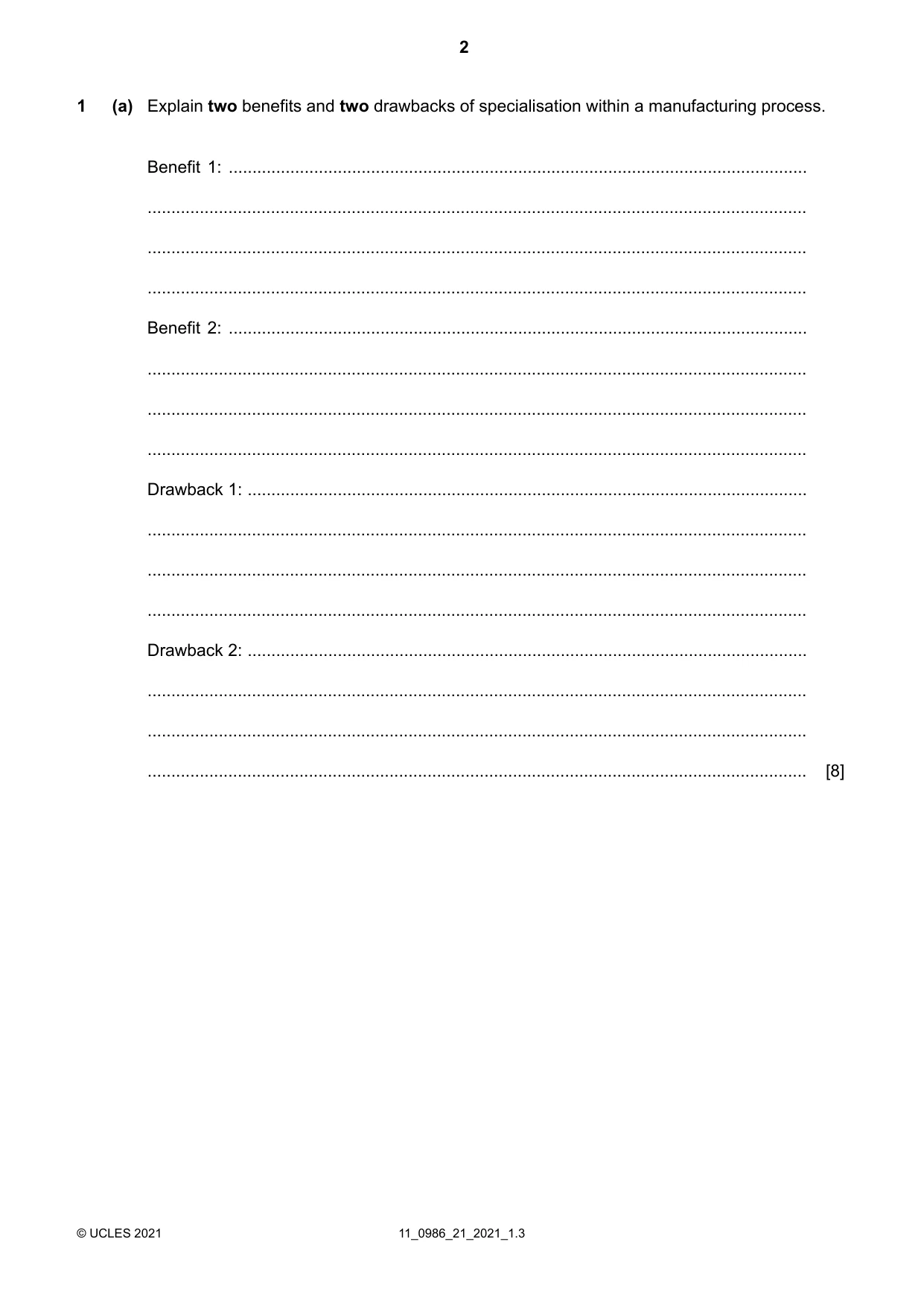
Q1 · Explain two benefits and two drawbacks of specialisation within a manufacturing process
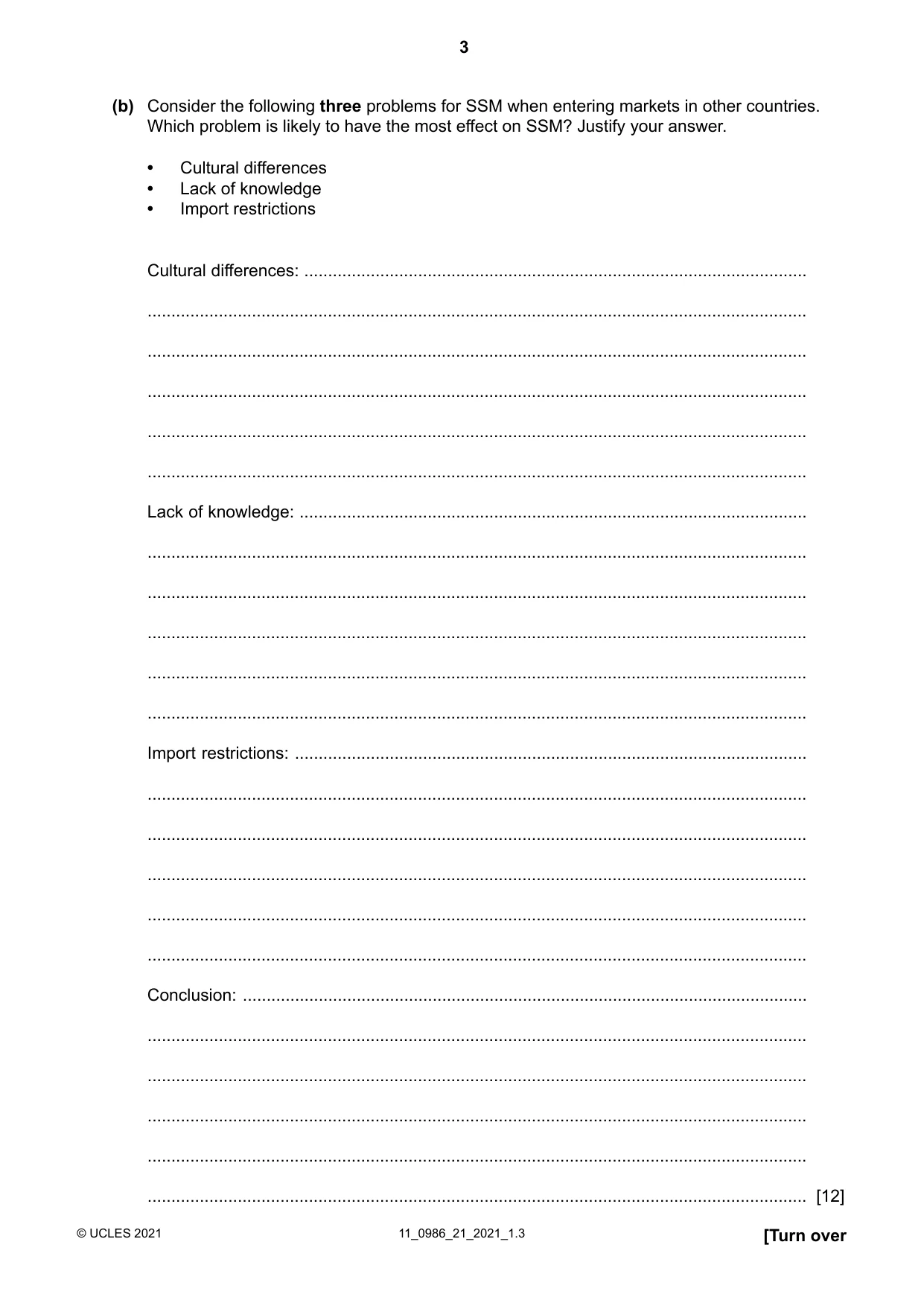
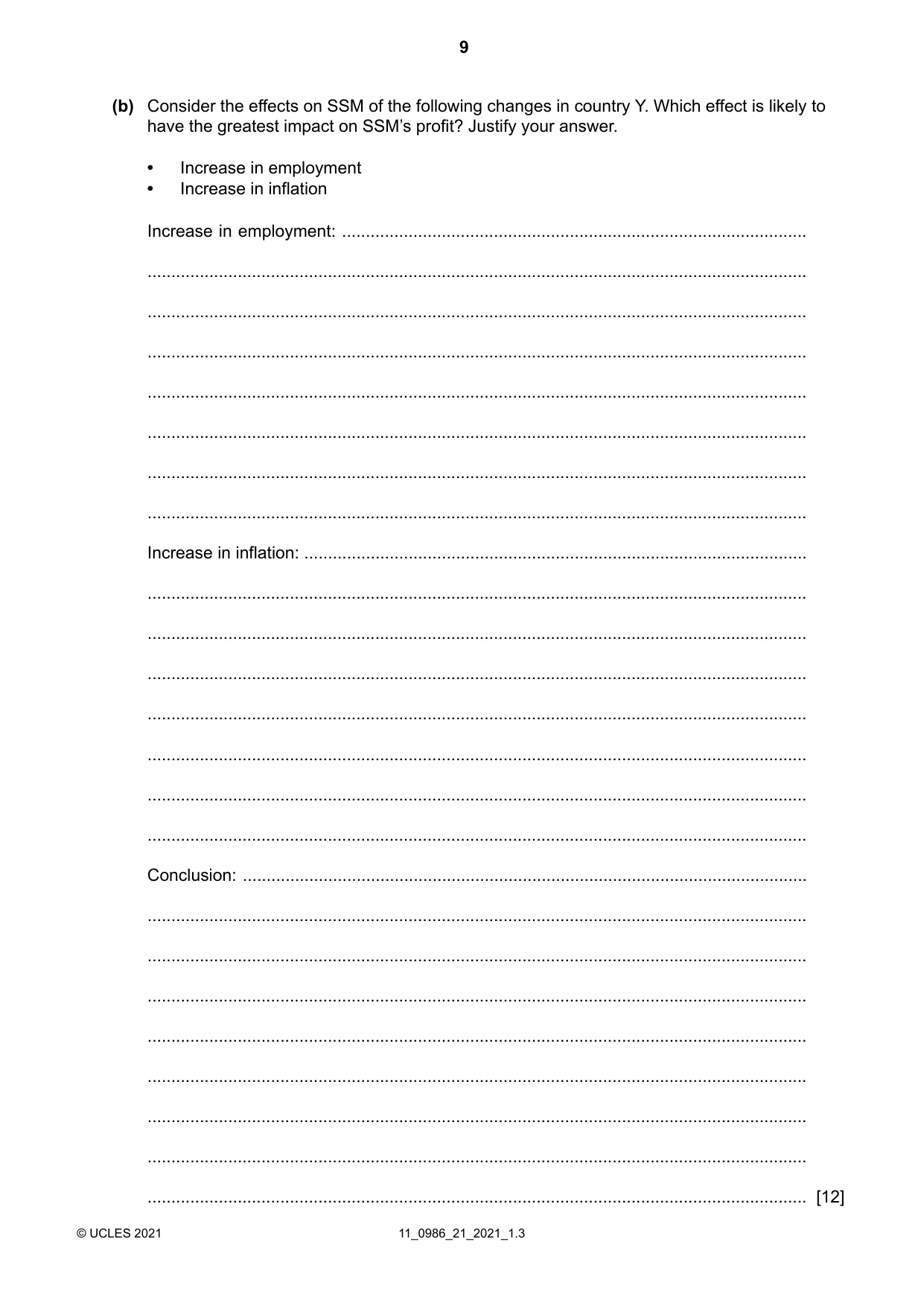
1 (a) Explain two benefits and two drawbacks of specialisation within a manufacturing process. Benefit 1: .......................................................................................................................... ........................................................................................................................................... ........................................................................................................................................... ........................................................................................................................................... Benefit 2: .......................................................................................................................... ........................................................................................................................................... ........................................................................................................................................... ........................................................................................................................................... Drawback 1: ...................................................................................................................... ........................................................................................................................................... ........................................................................................................................................... ........................................................................................................................................... Drawback 2: ...................................................................................................................... ........................................................................................................................................... ........................................................................................................................................... ........................................................................................................................................... [8] (b) Consider the following three problems for SSM when entering markets in other countries. Which problem is likely to have the most effect on SSM? Justify your answer. • Cultural differences • Lack of knowledge • Import restrictions Cultural differences: .......................................................................................................... ........................................................................................................................................... ........................................................................................................................................... ........................................................................................................................................... ........................................................................................................................................... ........................................................................................................................................... Lack of knowledge: ........................................................................................................... ........................................................................................................................................... ........................................................................................................................................... ........................................................................................................................................... ........................................................................................................................................... ........................................................................................................................................... Import restrictions: ............................................................................................................ ........................................................................................................................................... ........................................................................................................................................... ........................................................................................................................................... ........................................................................................................................................... ........................................................................................................................................... Conclusion: ....................................................................................................................... ........................................................................................................................................... ........................................................................................................................................... ........................................................................................................................................... ........................................................................................................................................... ........................................................................................................................................... [12]
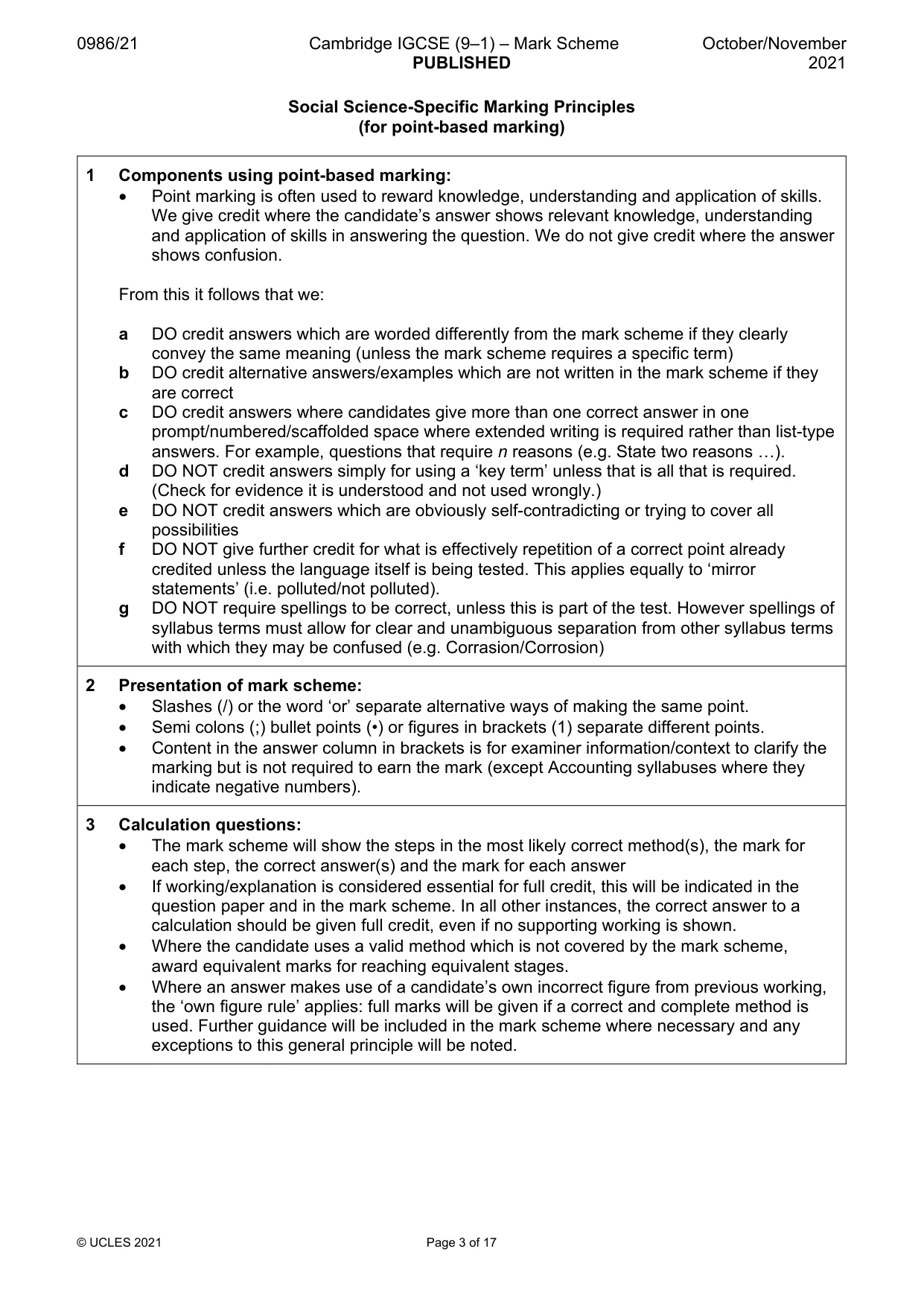
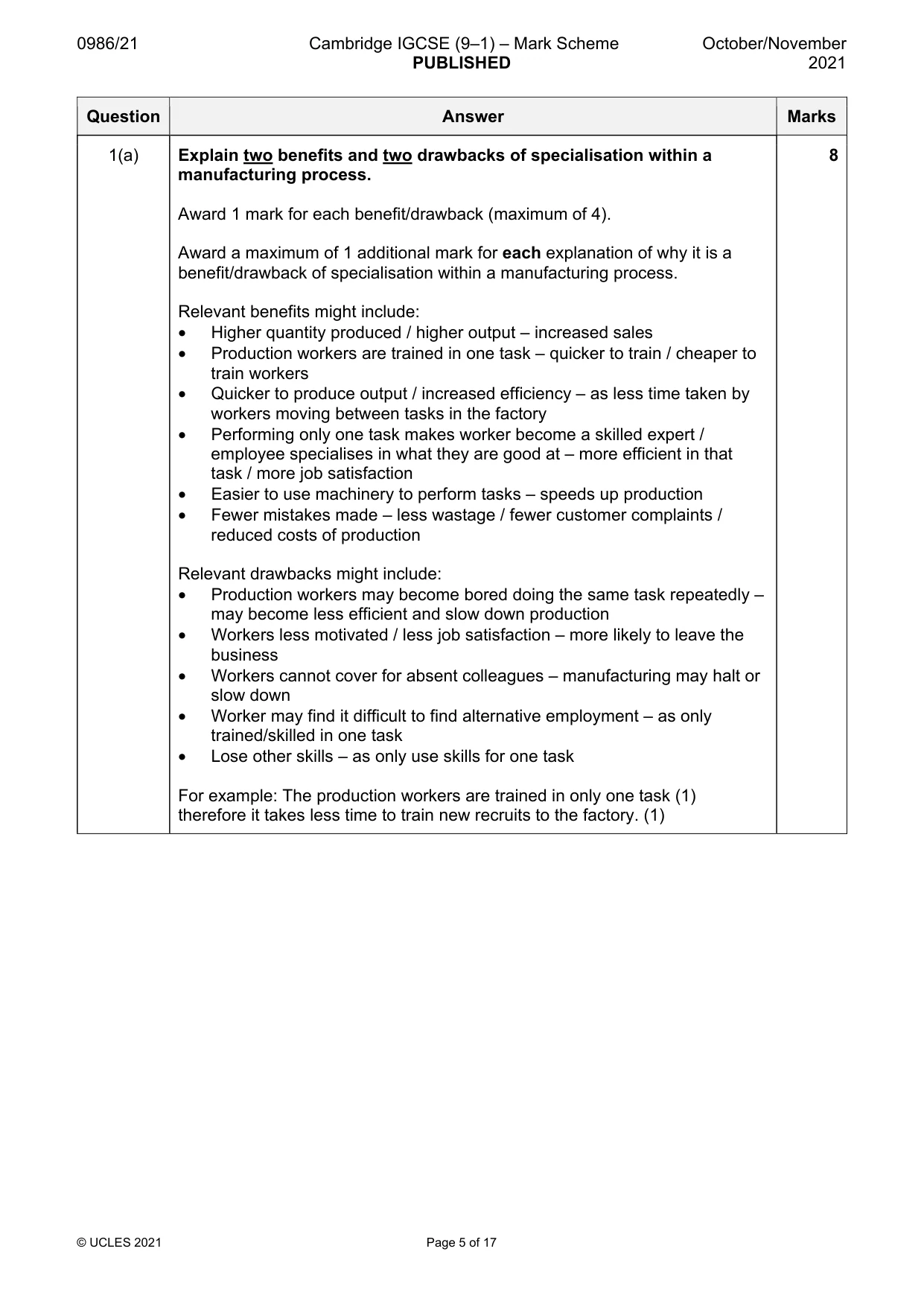
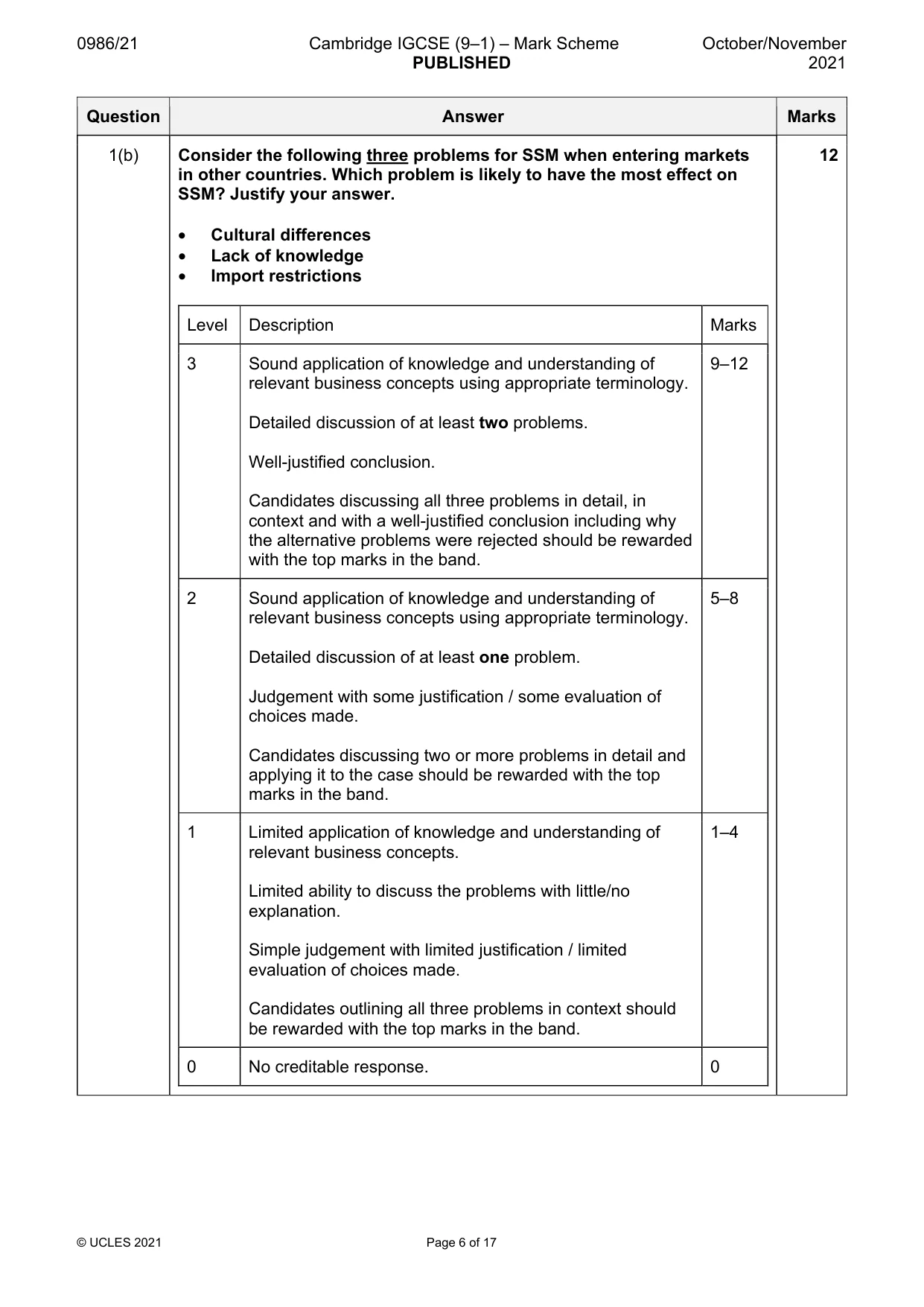
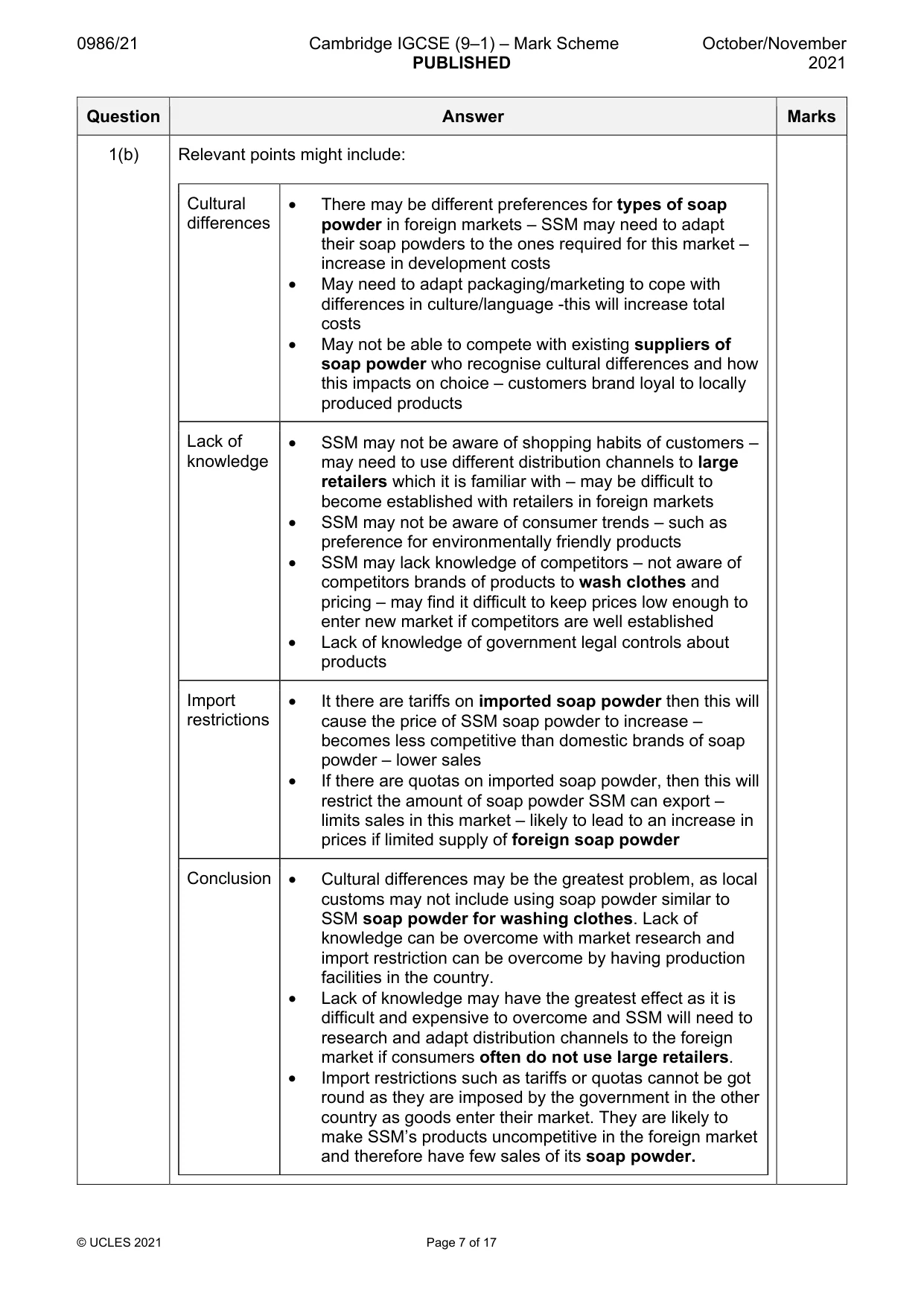
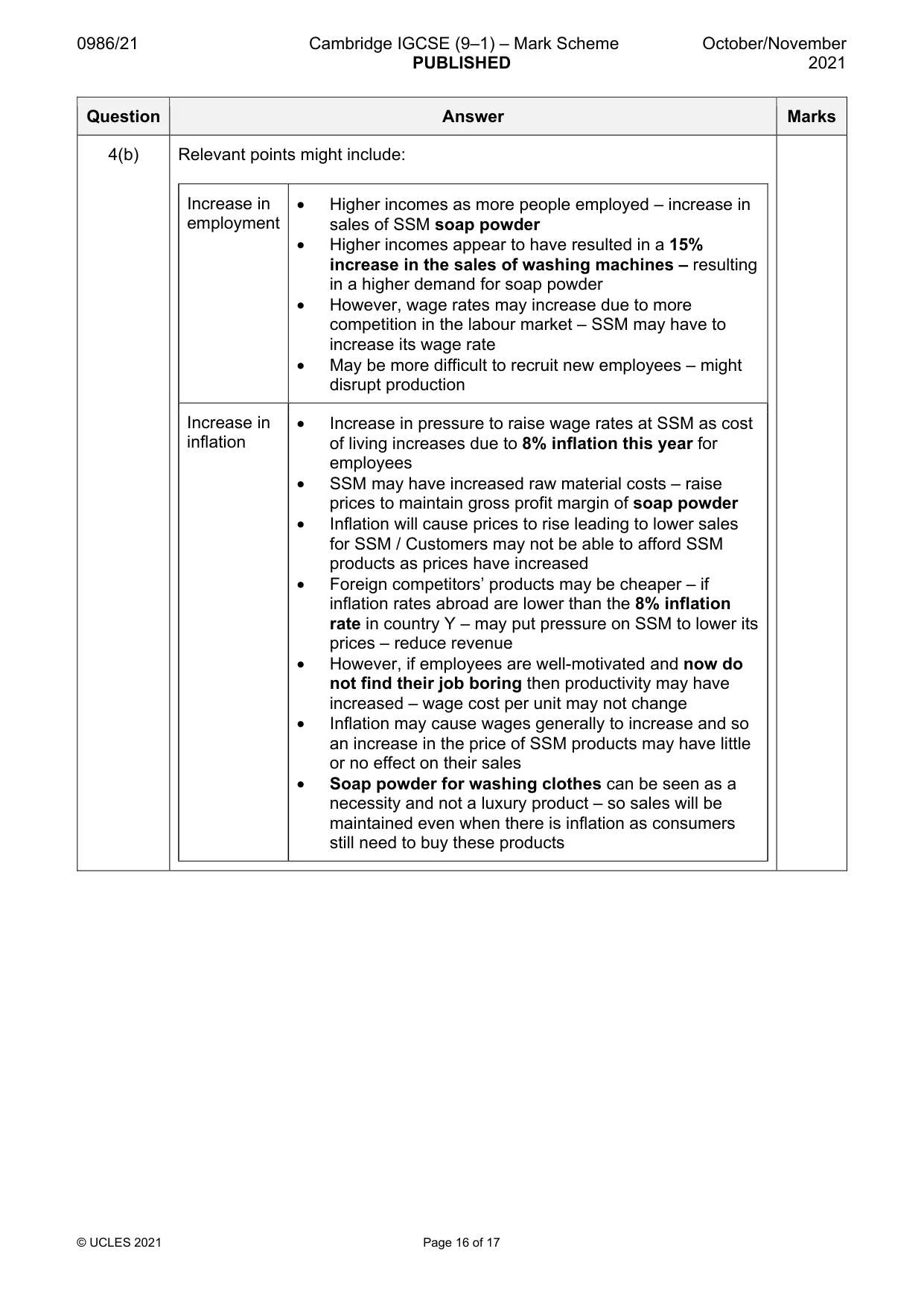
Mark scheme: Question Answer Marks 1(a) Explain two benefits and two drawbacks of specialisation within a 8 manufacturing process. Award 1 mark for each benefit/drawback (maximum of 4). Award a maximum of 1 additional mark for each explanation of why it is a benefit/drawback of specialisation within a manufacturing process. Relevant benefits might include: • Higher quantity produced / higher output – increased sales • Production workers are trained in one task – quicker to train / cheaper to train workers • Quicker to produce output / increased efficiency – as less time taken by workers moving between tasks in the factory • Performing only one task makes worker become a skilled expert / employee specialises in what they are good at – more efficient in that task / more job satisfaction • Easier to use machinery to perform tasks – speeds up production • Fewer mistakes made – less wastage / fewer customer complaints / reduced costs of production Relevant drawbacks might include: • Production workers may become bored doing the same task repeatedly – may become less efficient and slow down production • Workers less motivated / less job satisfaction – more likely to leave the business • Workers cannot cover for absent colleagues – manufacturing may halt or slow down • Worker may find it difficult to find alternative employment – as only trained/skilled in one task • Lose other skills – as only use skills for one task For example: The production workers are trained in only one task (1) therefore it takes less time to train new recruits to the factory. (1) 1(b) Consider the following three problems for SSM when entering markets 12 in other countries. Which problem is likely to have the most effect on SSM? Justify your answer. • Cultural differences • Lack of knowledge • Import restrictions Level Description Marks 3 Sound application of knowledge and understanding of 9–12 relevant business concepts using appropriate terminology. Detailed discussion of at least two problems. Well-justified conclusion. Candidates discussing all three problems in detail, in context and with a well-justified conclusion including why the alternative problems were rejected should be rewarded with the top marks in the band. 2 Sound application of knowledge and understanding of 5–8 relevant business concepts using appropriate terminology. Detailed discussion of at least one problem. Judgement with some justification / some evaluation of choices made. Candidates discussing two or more problems in detail and applying it to the case should be rewarded with the top marks in the band. 1 Limited application of knowledge and understanding of 1–4 relevant business concepts. Limited ability to discuss the problems with little/no explanation. Simple judgement with limited justification / limited evaluation of choices made. Candidates outlining all three problems in context should be rewarded with the top marks in the band. 0 No creditable response. 0 1(b) Relevant points might include: Cultural • There may be different preferences for types of soap differences powder in foreign markets – SSM may need to adapt their soap powders to the ones required for this market – increase in development costs • May need to adapt packaging/marketing to cope with differences in culture/language -this will increase total costs • May not be able to compete with existing suppliers of soap powder who recognise cultural differences and how this impacts on choice – customers brand loyal to locally produced products Lack of • SSM may not be aware of shopping habits of customers – knowledge may need to use different distribution channels to large retailers which it is familiar with – may be difficult to become established with retailers in foreign markets • SSM may not be aware of consumer trends – such as preference for environmentally friendly products • SSM may lack knowledge of competitors – not aware of competitors brands of products to wash clothes and pricing – may find it difficult to keep prices low enough to enter new market if competitors are well established • Lack of knowledge of government legal controls about products Import • It there are tariffs on imported soap powder then this will restrictions cause the price of SSM soap powder to increase – becomes less competitive than domestic brands of soap powder – lower sales • If there are quotas on imported soap powder, then this will restrict the amount of soap powder SSM can export – limits sales in this market – likely to lead to an increase in prices if limited supply of foreign soap powder Conclusion • Cultural differences may be the greatest problem, as local customs may not include using soap powder similar to SSM soap powder for washing clothes. Lack of knowledge can be overcome with market research and import restriction can be overcome by having production facilities in the country. • Lack of knowledge may have the greatest effect as it is difficult and expensive to overcome and SSM will need to research and adapt distribution channels to the foreign market if consumers often do not use large retailers. • Import restrictions such as tariffs or quotas cannot be got round as they are imposed by the government in the other country as goods enter their market. They are likely to make SSM’s products uncompetitive in the foreign market and therefore have few sales of its soap powder.
Q2 · Explain two ways SSM can grow
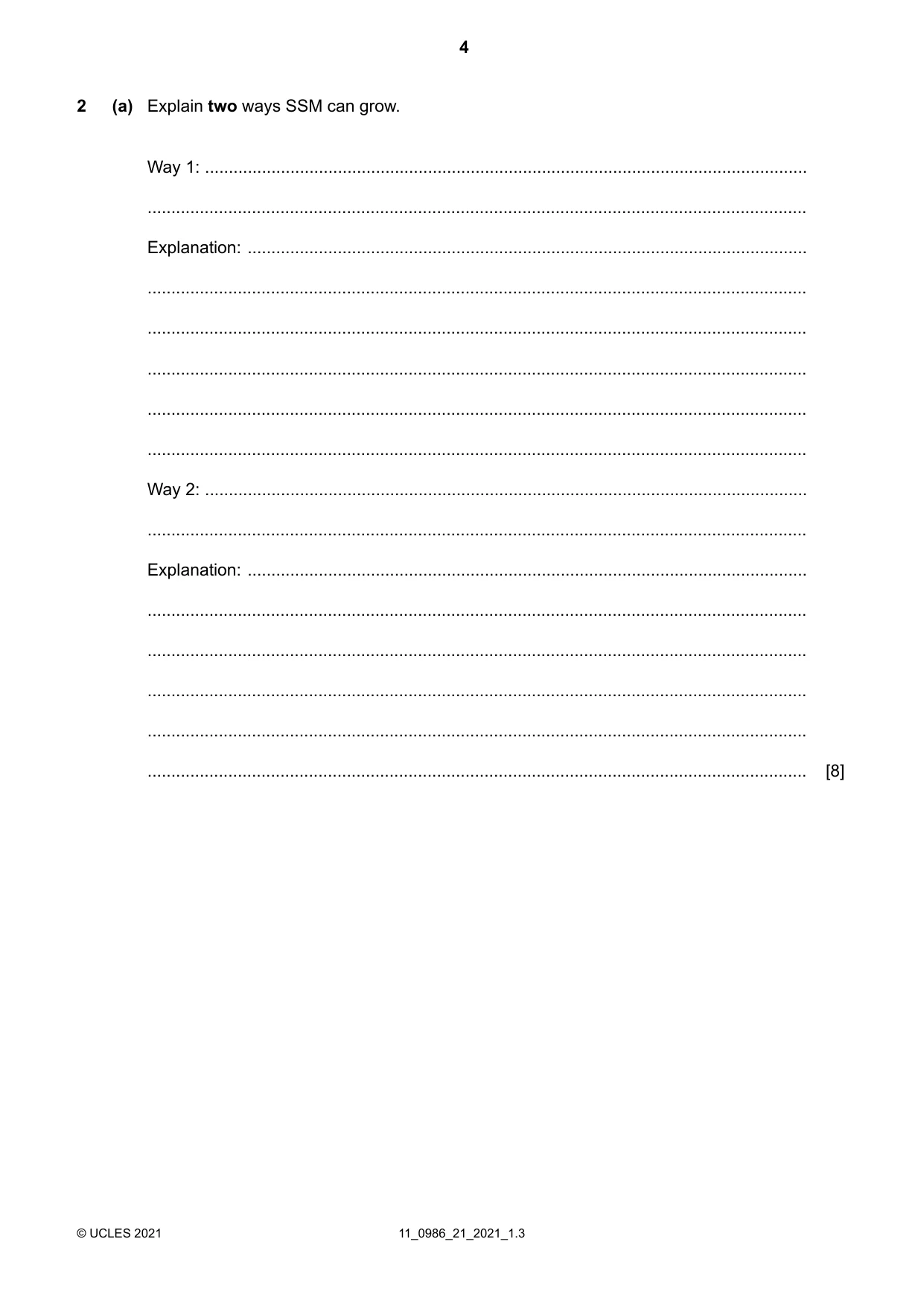
2 (a) Explain two ways SSM can grow. Way 1: ............................................................................................................................... ........................................................................................................................................... Explanation: ...................................................................................................................... ........................................................................................................................................... ........................................................................................................................................... ........................................................................................................................................... ........................................................................................................................................... ........................................................................................................................................... Way 2: ............................................................................................................................... ........................................................................................................................................... Explanation: ...................................................................................................................... ........................................................................................................................................... ........................................................................................................................................... ........................................................................................................................................... ........................................................................................................................................... ........................................................................................................................................... [8] (b) Consider the advantages of using primary and secondary market research to gather information about the potential sales in the new market. Which is the best method for SSM to use? Justify your answer. Advantages of primary market research: ......................................................................... ........................................................................................................................................... ........................................................................................................................................... ........................................................................................................................................... ........................................................................................................................................... ........................................................................................................................................... ........................................................................................................................................... ........................................................................................................................................... Advantages of secondary market research: ..................................................................... ........................................................................................................................................... ........................................................................................................................................... ........................................................................................................................................... ........................................................................................................................................... ........................................................................................................................................... ........................................................................................................................................... ........................................................................................................................................... Recommendation: ............................................................................................................ ........................................................................................................................................... ........................................................................................................................................... ........................................................................................................................................... ........................................................................................................................................... ........................................................................................................................................... ........................................................................................................................................... ........................................................................................................................................... [12]
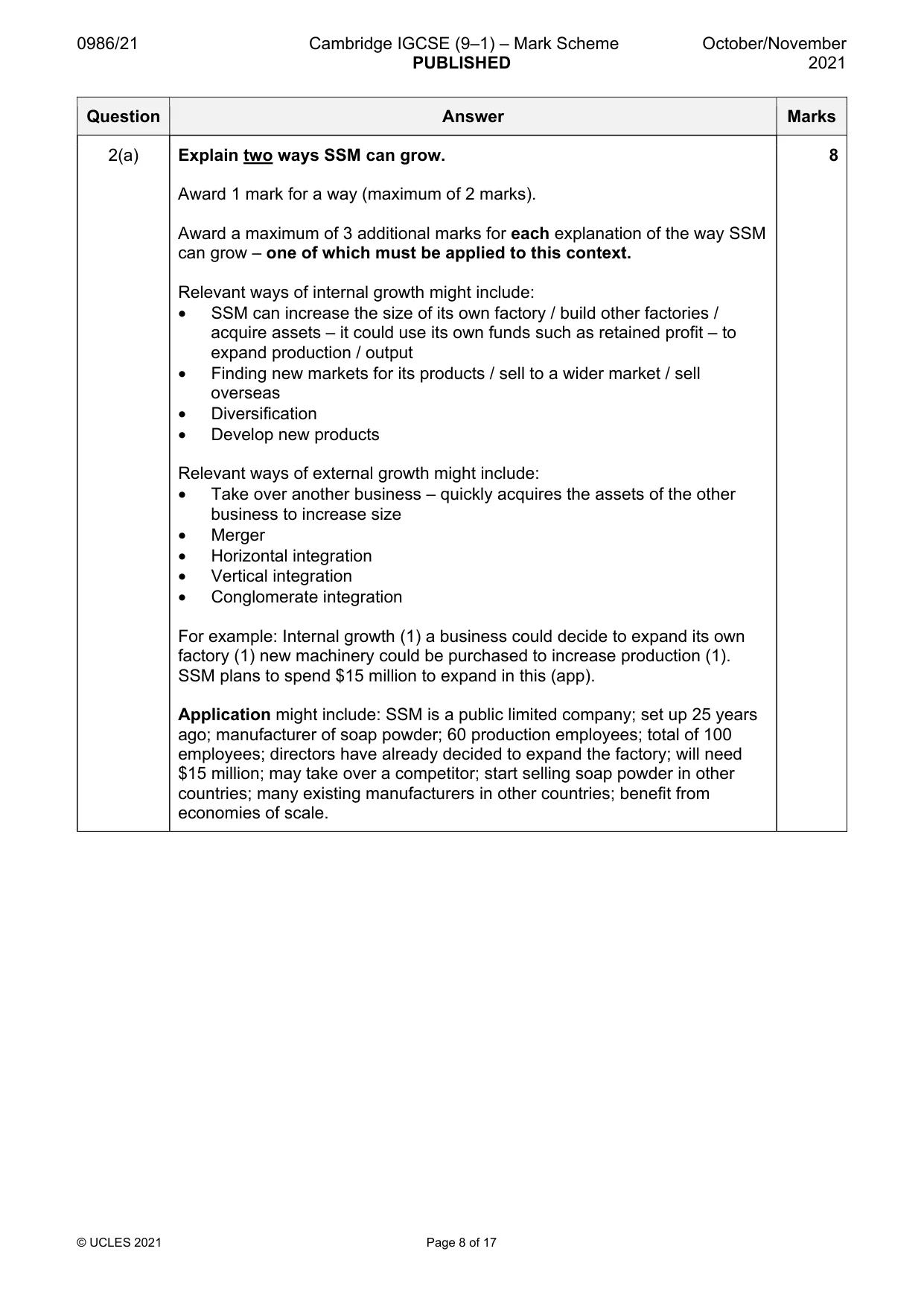
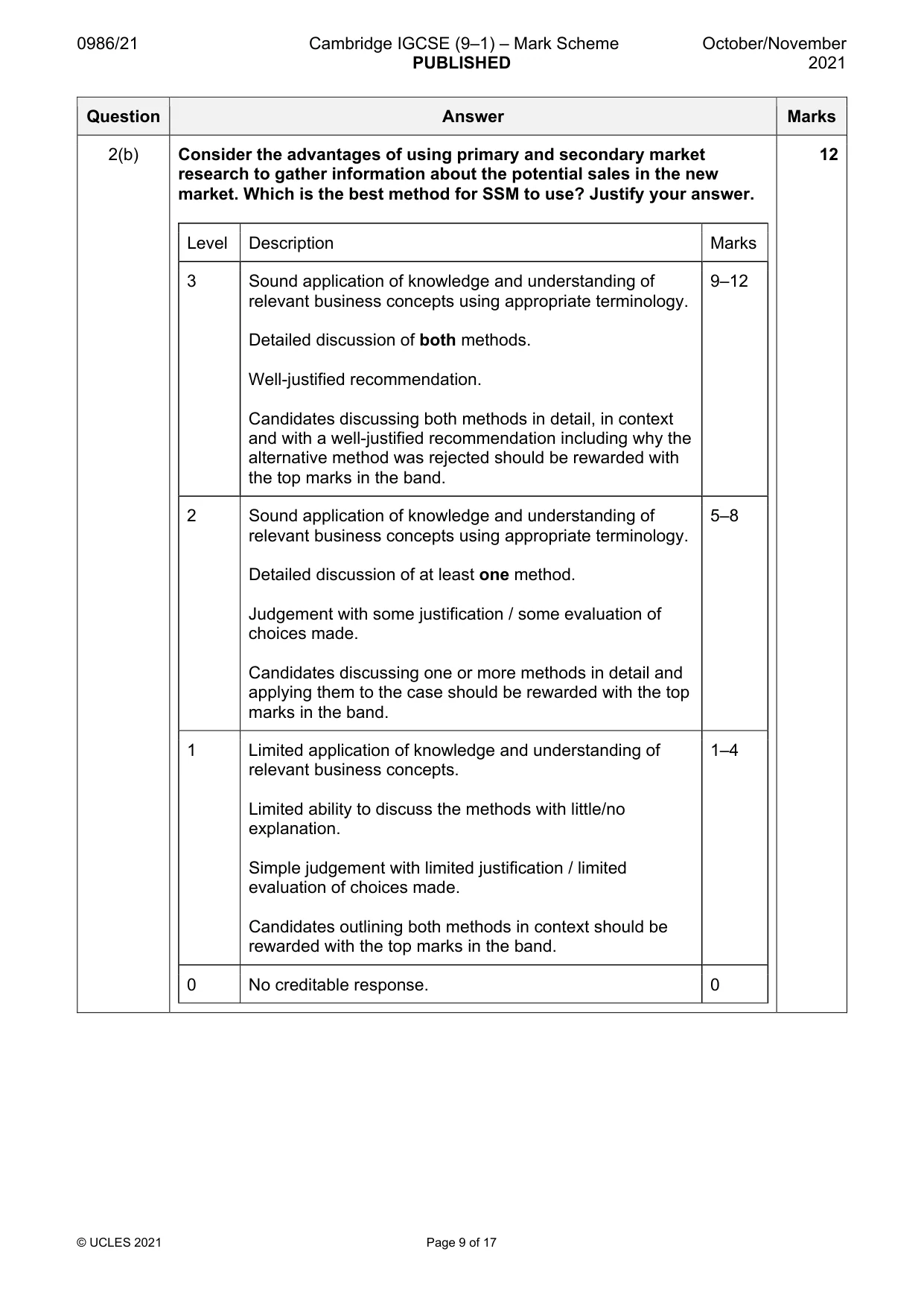
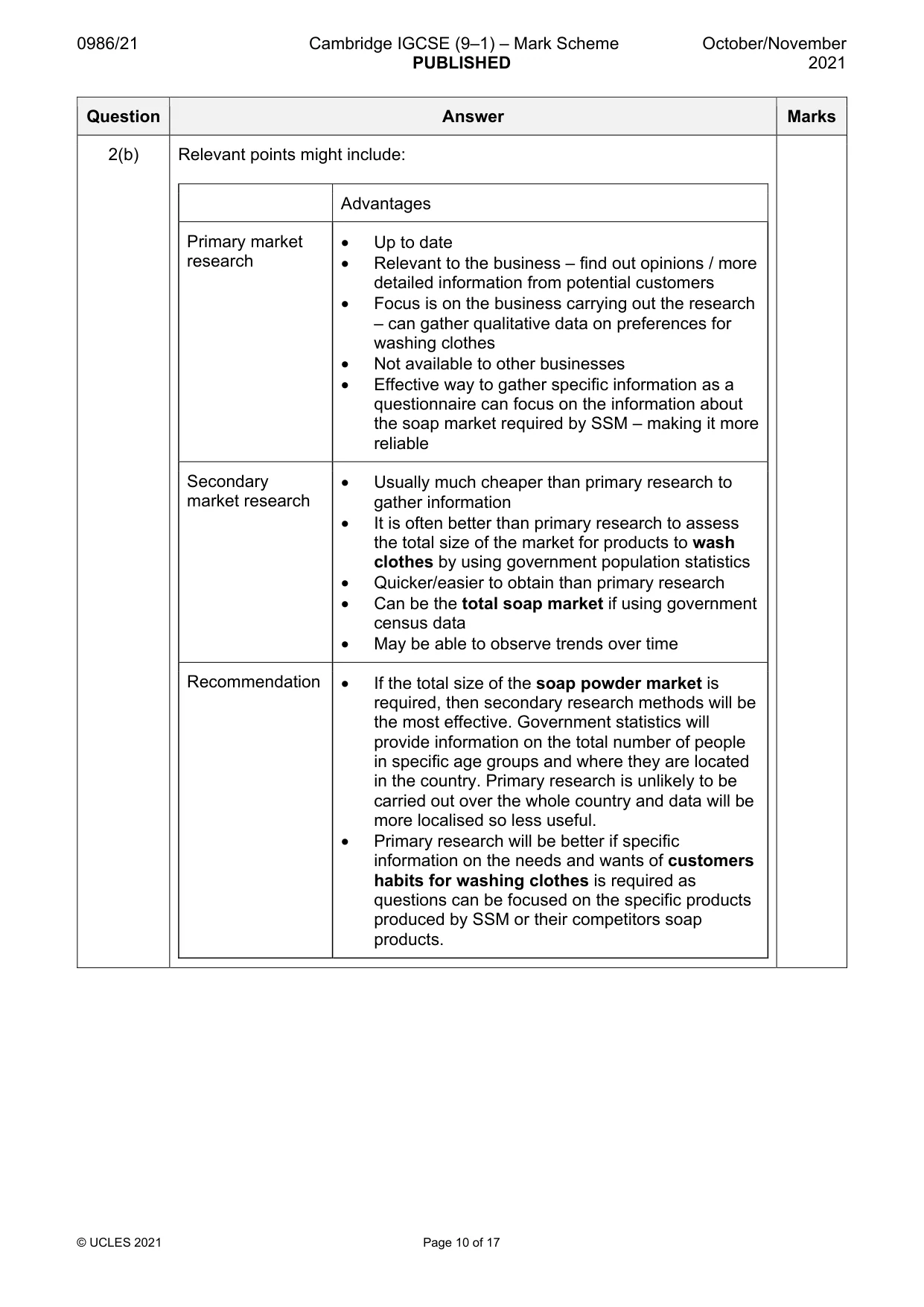
Mark scheme: 2(a) Explain two ways SSM can grow. 8 Award 1 mark for a way (maximum of 2 marks). Award a maximum of 3 additional marks for each explanation of the way SSM can grow – one of which must be applied to this context. Relevant ways of internal growth might include: • SSM can increase the size of its own factory / build other factories / acquire assets – it could use its own funds such as retained profit – to expand production / output • Finding new markets for its products / sell to a wider market / sell overseas • Diversification • Develop new products Relevant ways of external growth might include: • Take over another business – quickly acquires the assets of the other business to increase size • Merger • Horizontal integration • Vertical integration • Conglomerate integration For example: Internal growth (1) a business could decide to expand its own factory (1) new machinery could be purchased to increase production (1). SSM plans to spend $15 million to expand in this (app). Application might include: SSM is a public limited company; set up 25 years ago; manufacturer of soap powder; 60 production employees; total of 100 employees; directors have already decided to expand the factory; will need $15 million; may take over a competitor; start selling soap powder in other countries; many existing manufacturers in other countries; benefit from economies of scale. 2(b) Consider the advantages of using primary and secondary market 12 research to gather information about the potential sales in the new market. Which is the best method for SSM to use? Justify your answer. Level Description Marks 3 Sound application of knowledge and understanding of 9–12 relevant business concepts using appropriate terminology. Detailed discussion of both methods. Well-justified recommendation. Candidates discussing both methods in detail, in context and with a well-justified recommendation including why the alternative method was rejected should be rewarded with the top marks in the band. 2 Sound application of knowledge and understanding of 5–8 relevant business concepts using appropriate terminology. Detailed discussion of at least one method. Judgement with some justification / some evaluation of choices made. Candidates discussing one or more methods in detail and applying them to the case should be rewarded with the top marks in the band. 1 Limited application of knowledge and understanding of 1–4 relevant business concepts. Limited ability to discuss the methods with little/no explanation. Simple judgement with limited justification / limited evaluation of choices made. Candidates outlining both methods in context should be rewarded with the top marks in the band. 0 No creditable response. 0 2(b) Relevant points might include: Advantages Primary market • Up to date research • Relevant to the business – find out opinions / more detailed information from potential customers • Focus is on the business carrying out the research – can gather qualitative data on preferences for washing clothes • Not available to other businesses • Effective way to gather specific information as a questionnaire can focus on the information about the soap market required by SSM – making it more reliable Secondary • Usually much cheaper than primary research to market research gather information • It is often better than primary research to assess the total size of the market for products to wash clothes by using government population statistics • Quicker/easier to obtain than primary research • Can be the total soap market if using government census data • May be able to observe trends over time Recommendation • If the total size of the soap powder market is required, then secondary research methods will be the most effective. Government statistics will provide information on the total number of people in specific age groups and where they are located in the country. Primary research is unlikely to be carried out over the whole country and data will be more localised so less useful. • Primary research will be better if specific information on the needs and wants of customers habits for washing clothes is required as questions can be focused on the specific products produced by SSM or their competitors soap products.
Q3 · Explain four ways SSM could increase the motivation of its production workers
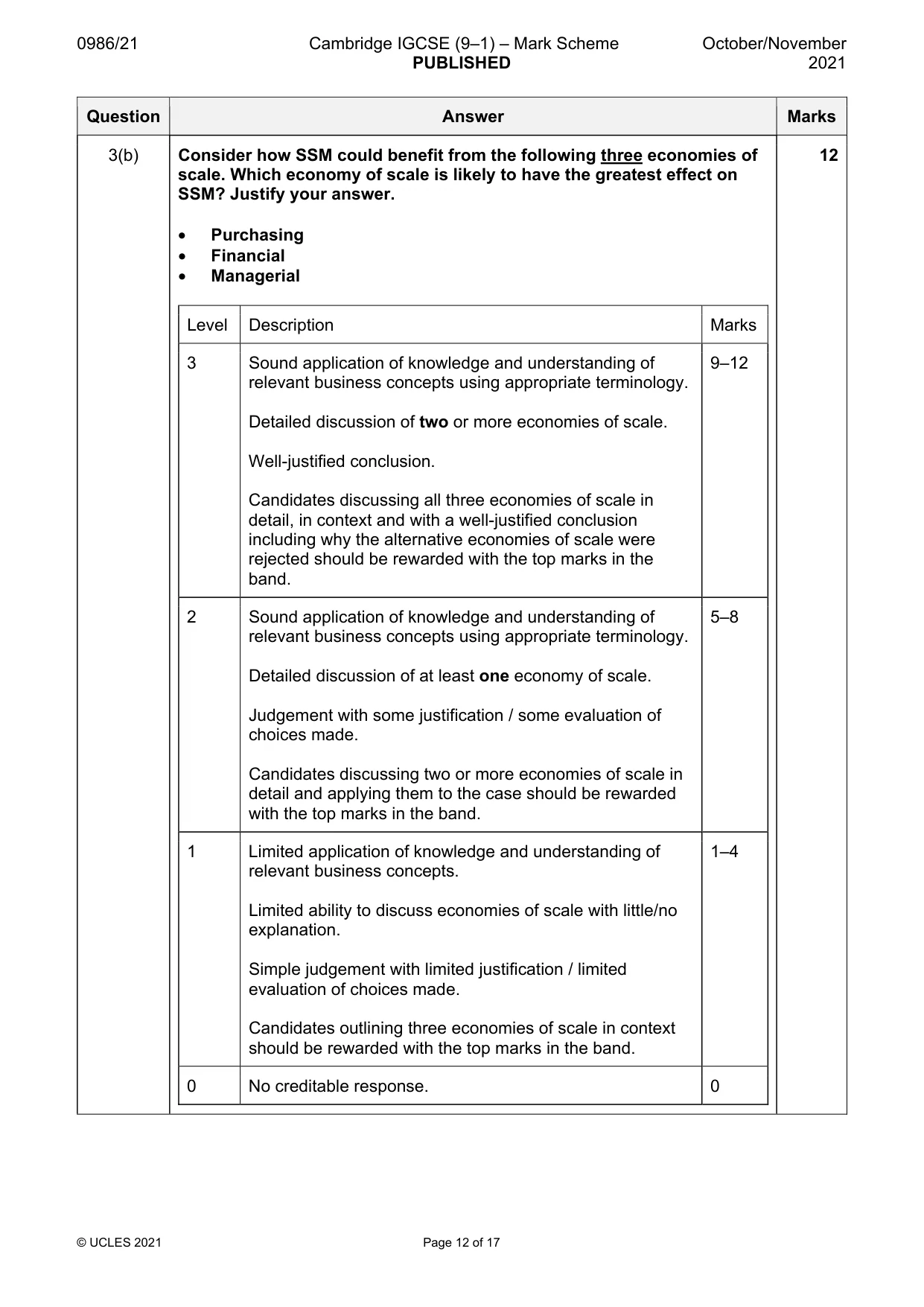
3 (a) Explain four ways SSM could increase the motivation of its production workers. Way 1 : .............................................................................................................................. ........................................................................................................................................... ........................................................................................................................................... ........................................................................................................................................... Way 2: ............................................................................................................................... ........................................................................................................................................... ........................................................................................................................................... ........................................................................................................................................... Way 3 : .............................................................................................................................. ........................................................................................................................................... ........................................................................................................................................... ........................................................................................................................................... Way 4: ............................................................................................................................... ........................................................................................................................................... ........................................................................................................................................... ........................................................................................................................................... ........................................................................................................................................... [8] (b) Consider how SSM could benefit from the following three economies of scale. Which economy of scale is likely to have the greatest effect on SSM? Justify your answer. • Purchasing • Financial • Managerial Purchasing: ....................................................................................................................... ........................................................................................................................................... ........................................................................................................................................... ........................................................................................................................................... ........................................................................................................................................... ........................................................................................................................................... Financial: .......................................................................................................................... ........................................................................................................................................... ........................................................................................................................................... ........................................................................................................................................... ........................................................................................................................................... ........................................................................................................................................... Managerial: ....................................................................................................................... ........................................................................................................................................... ........................................................................................................................................... ........................................................................................................................................... ........................................................................................................................................... ........................................................................................................................................... Conclusion: ....................................................................................................................... ........................................................................................................................................... ........................................................................................................................................... ........................................................................................................................................... ........................................................................................................................................... ........................................................................................................................................... [12]
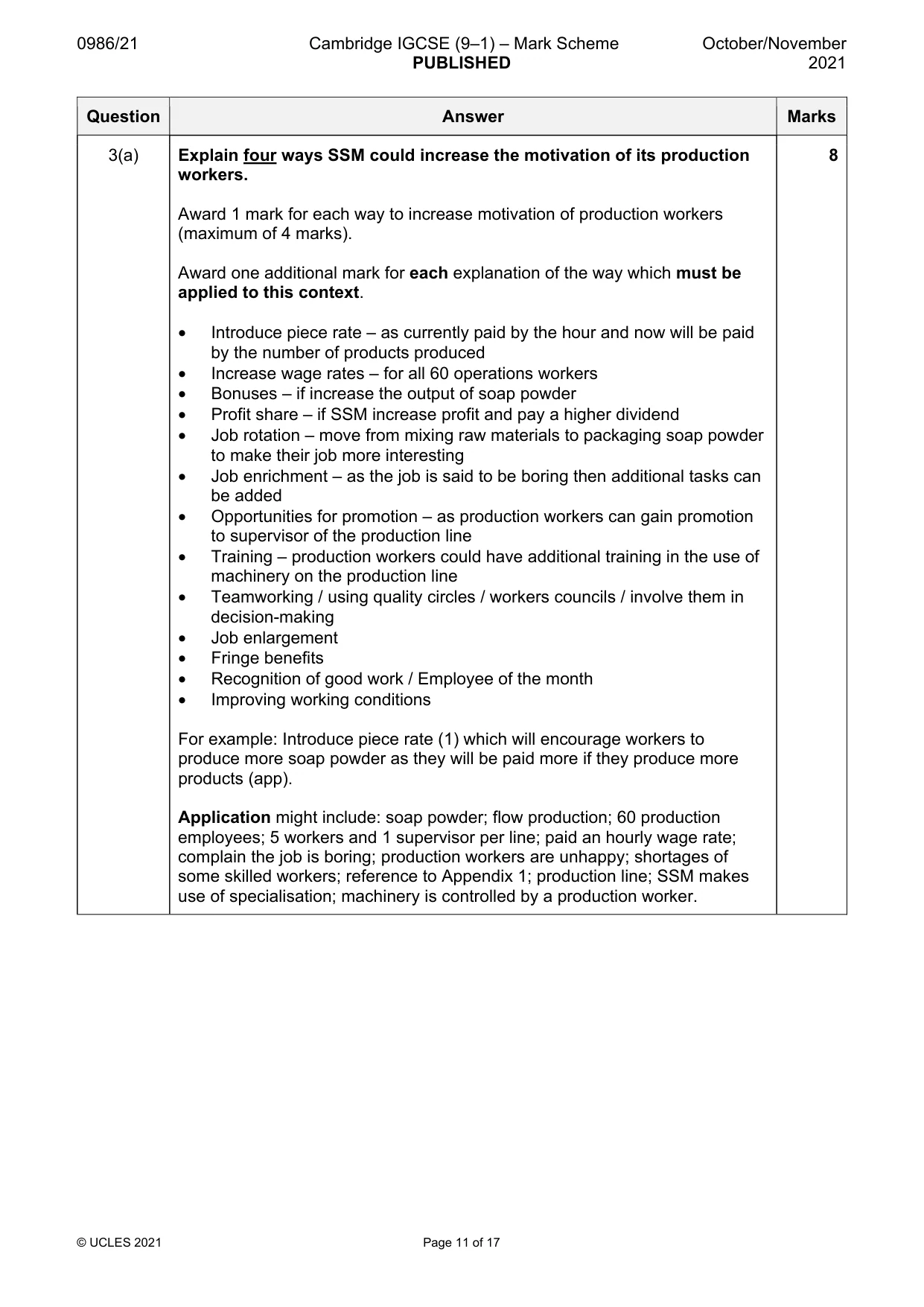
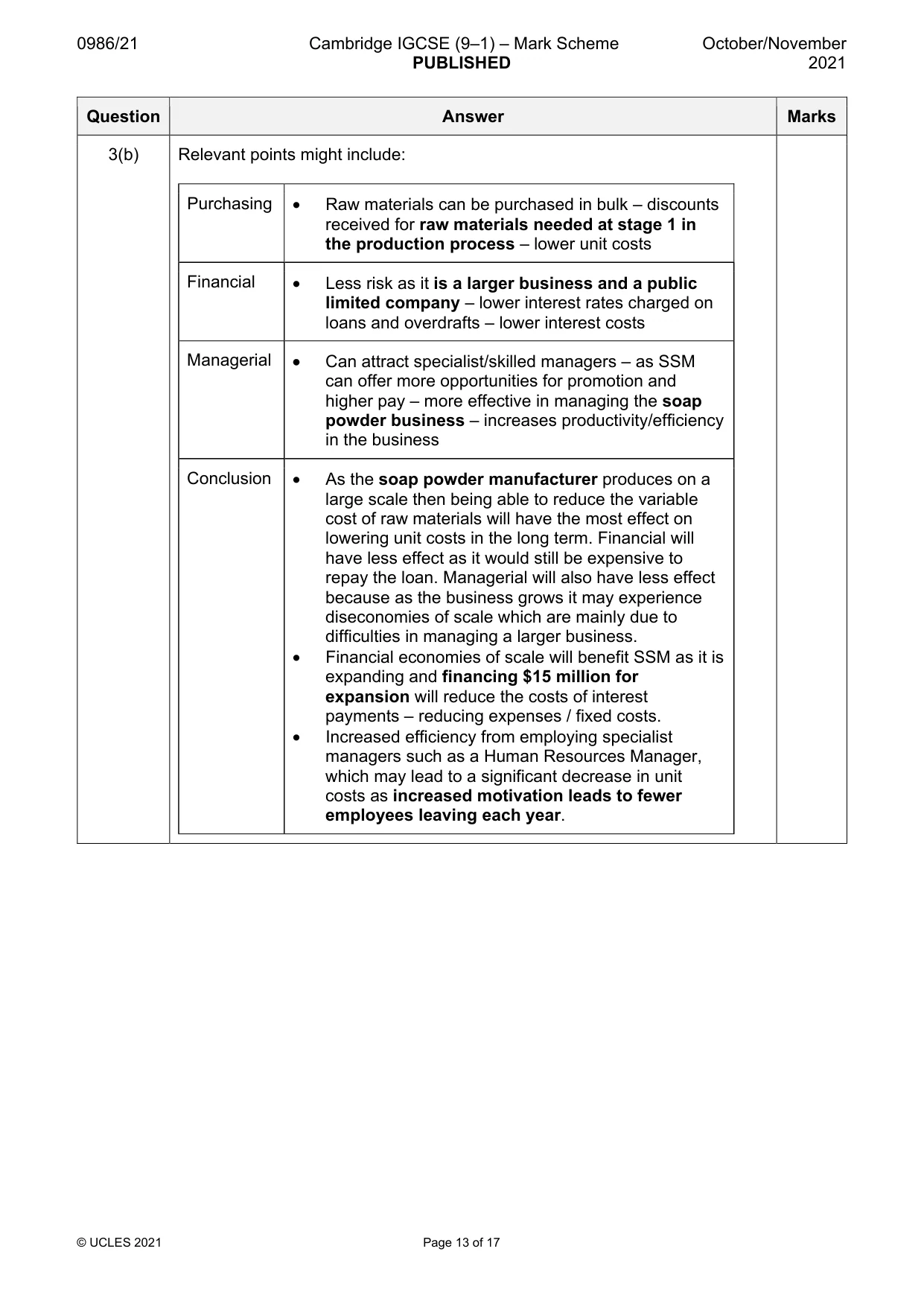
Mark scheme: 3(a) Explain four ways SSM could increase the motivation of its production 8 workers. Award 1 mark for each way to increase motivation of production workers (maximum of 4 marks). Award one additional mark for each explanation of the way which must be applied to this context. • Introduce piece rate – as currently paid by the hour and now will be paid by the number of products produced • Increase wage rates – for all 60 operations workers • Bonuses – if increase the output of soap powder • Profit share – if SSM increase profit and pay a higher dividend • Job rotation – move from mixing raw materials to packaging soap powder to make their job more interesting • Job enrichment – as the job is said to be boring then additional tasks can be added • Opportunities for promotion – as production workers can gain promotion to supervisor of the production line • Training – production workers could have additional training in the use of machinery on the production line • Teamworking / using quality circles / workers councils / involve them in decision-making • Job enlargement • Fringe benefits • Recognition of good work / Employee of the month • Improving working conditions For example: Introduce piece rate (1) which will encourage workers to produce more soap powder as they will be paid more if they produce more products (app). Application might include: soap powder; flow production; 60 production employees; 5 workers and 1 supervisor per line; paid an hourly wage rate; complain the job is boring; production workers are unhappy; shortages of some skilled workers; reference to Appendix 1; production line; SSM makes use of specialisation; machinery is controlled by a production worker. 3(b) Consider how SSM could benefit from the following three economies of 12 scale. Which economy of scale is likely to have the greatest effect on SSM? Justify your answer. • Purchasing • Financial • Managerial Level Description Marks 3 Sound application of knowledge and understanding of 9–12 relevant business concepts using appropriate terminology. Detailed discussion of two or more economies of scale. Well-justified conclusion. Candidates discussing all three economies of scale in detail, in context and with a well-justified conclusion including why the alternative economies of scale were rejected should be rewarded with the top marks in the band. 2 Sound application of knowledge and understanding of 5–8 relevant business concepts using appropriate terminology. Detailed discussion of at least one economy of scale. Judgement with some justification / some evaluation of choices made. Candidates discussing two or more economies of scale in detail and applying them to the case should be rewarded with the top marks in the band. 1 Limited application of knowledge and understanding of 1–4 relevant business concepts. Limited ability to discuss economies of scale with little/no explanation. Simple judgement with limited justification / limited evaluation of choices made. Candidates outlining three economies of scale in context should be rewarded with the top marks in the band. 0 No creditable response. 0 3(b) Relevant points might include: Purchasing • Raw materials can be purchased in bulk – discounts received for raw materials needed at stage 1 in the production process – lower unit costs Financial • Less risk as it is a larger business and a public limited company – lower interest rates charged on loans and overdrafts – lower interest costs Managerial • Can attract specialist/skilled managers – as SSM can offer more opportunities for promotion and higher pay – more effective in managing the soap powder business – increases productivity/efficiency in the business Conclusion • As the soap powder manufacturer produces on a large scale then being able to reduce the variable cost of raw materials will have the most effect on lowering unit costs in the long term. Financial will have less effect as it would still be expensive to repay the loan. Managerial will also have less effect because as the business grows it may experience diseconomies of scale which are mainly due to difficulties in managing a larger business. • Financial economies of scale will benefit SSM as it is expanding and financing $15 million for expansion will reduce the costs of interest payments – reducing expenses / fixed costs. • Increased efficiency from employing specialist managers such as a Human Resources Manager, which may lead to a significant decrease in unit costs as increased motivation leads to fewer employees leaving each year.
More questions on Costs, scale of production and break-even analysis
Q4 · Explain two ways SSM’s cash-flow problems could be overcome
4 (a) Explain two ways SSM’s cash-flow problems could be overcome. Way 1: ............................................................................................................................... ........................................................................................................................................... Explanation: ...................................................................................................................... ........................................................................................................................................... ........................................................................................................................................... ........................................................................................................................................... ........................................................................................................................................... ........................................................................................................................................... Way 2: ............................................................................................................................... ........................................................................................................................................... Explanation: ...................................................................................................................... ........................................................................................................................................... ........................................................................................................................................... ........................................................................................................................................... ........................................................................................................................................... ........................................................................................................................................... [8] (b) Consider the effects on SSM of the following changes in country Y. Which effect is likely to have the greatest impact on SSM’s profit? Justify your answer. • Increase in employment • Increase in inflation Increase in employment: .................................................................................................. ........................................................................................................................................... ........................................................................................................................................... ........................................................................................................................................... ........................................................................................................................................... ........................................................................................................................................... ........................................................................................................................................... ........................................................................................................................................... Increase in inflation: .......................................................................................................... ........................................................................................................................................... ........................................................................................................................................... ........................................................................................................................................... ........................................................................................................................................... ........................................................................................................................................... ........................................................................................................................................... ........................................................................................................................................... Conclusion: ....................................................................................................................... ........................................................................................................................................... ........................................................................................................................................... ........................................................................................................................................... ........................................................................................................................................... ........................................................................................................................................... ........................................................................................................................................... ........................................................................................................................................... ........................................................................................................................................... [12]
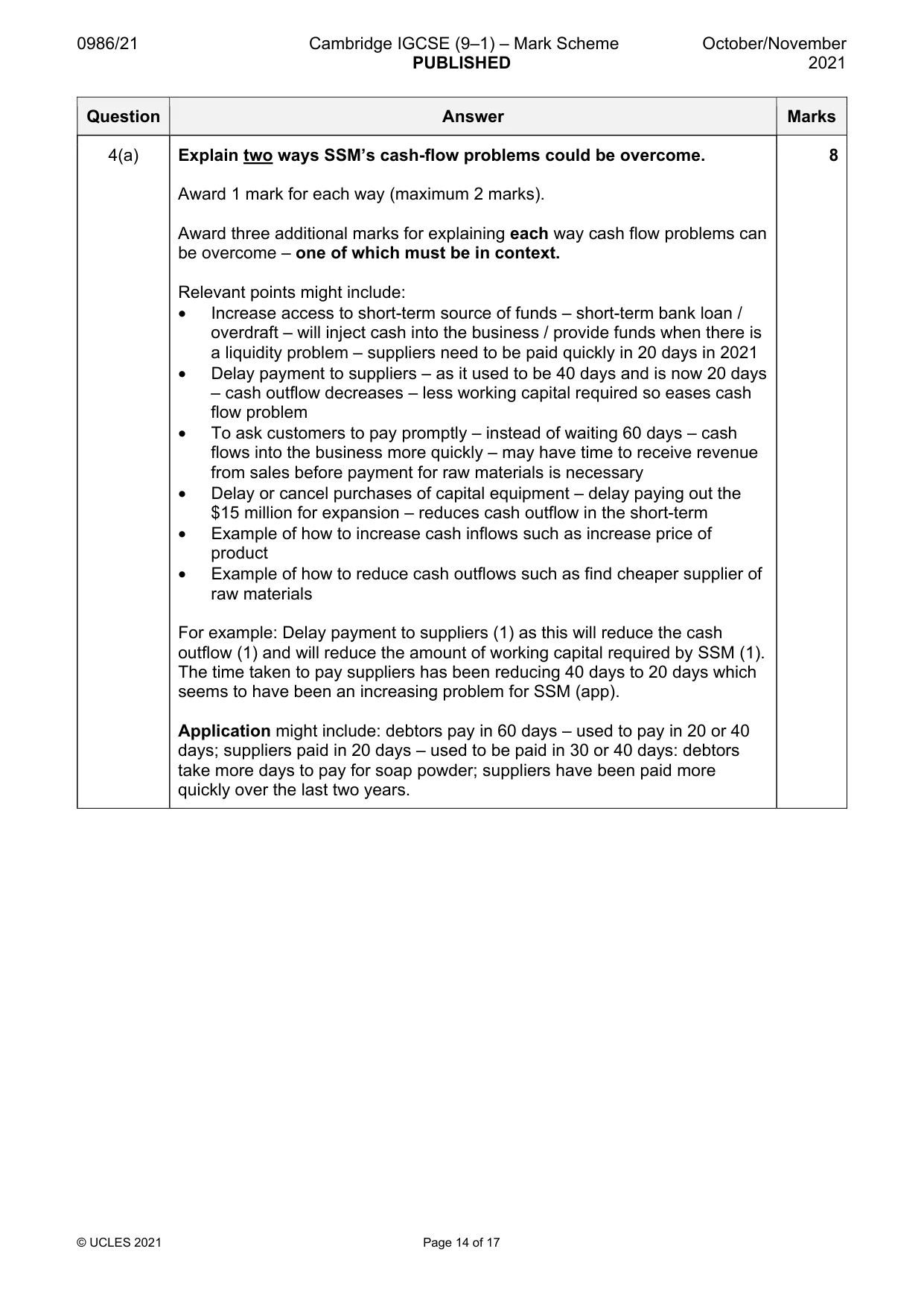
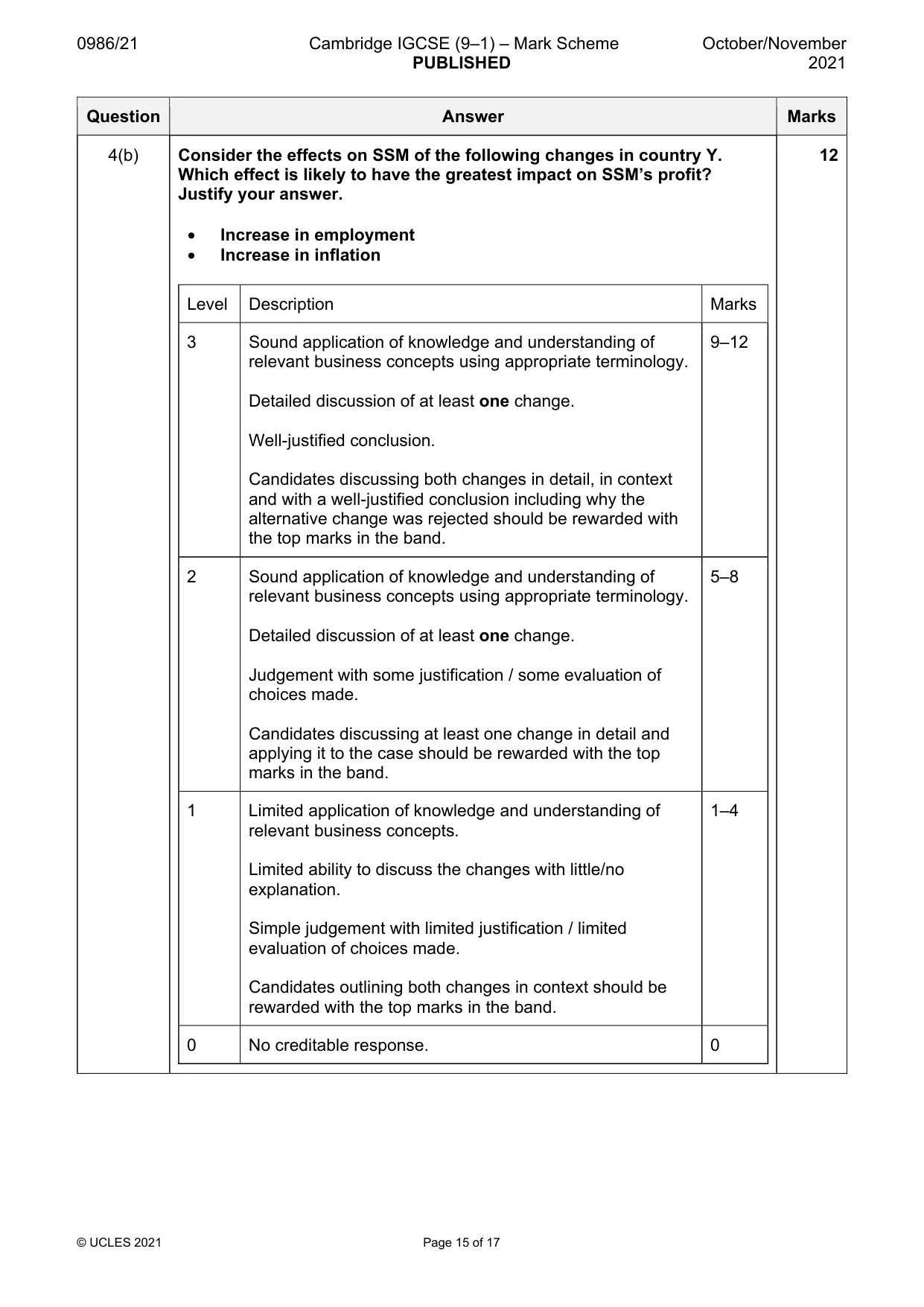
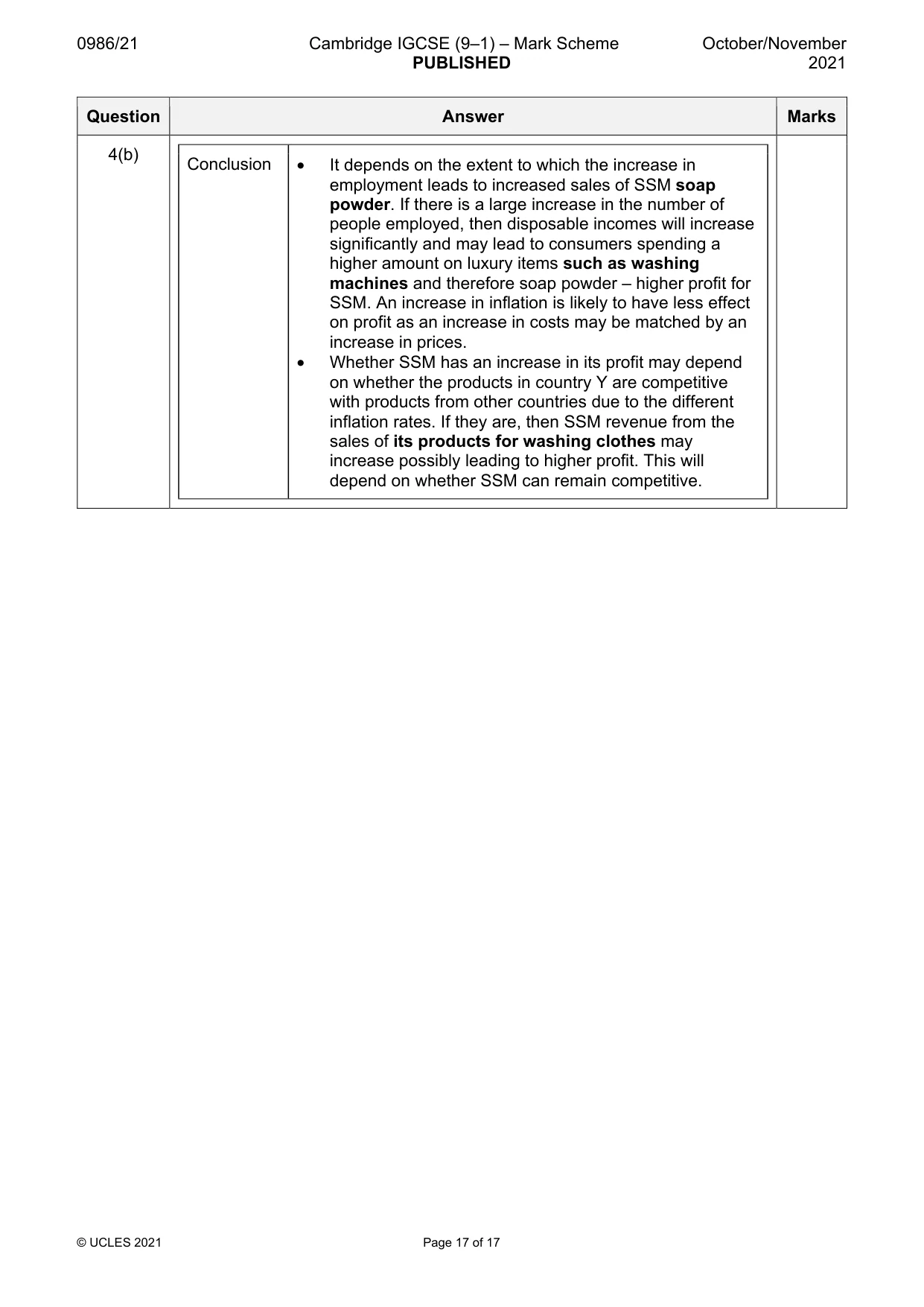
Mark scheme: 4(a) Explain two ways SSM’s cash-flow problems could be overcome. 8 Award 1 mark for each way (maximum 2 marks). Award three additional marks for explaining each way cash flow problems can be overcome – one of which must be in context. Relevant points might include: • Increase access to short-term source of funds – short-term bank loan / overdraft – will inject cash into the business / provide funds when there is a liquidity problem – suppliers need to be paid quickly in 20 days in 2021 • Delay payment to suppliers – as it used to be 40 days and is now 20 days – cash outflow decreases – less working capital required so eases cash flow problem • To ask customers to pay promptly – instead of waiting 60 days – cash flows into the business more quickly – may have time to receive revenue from sales before payment for raw materials is necessary • Delay or cancel purchases of capital equipment – delay paying out the $15 million for expansion – reduces cash outflow in the short-term • Example of how to increase cash inflows such as increase price of product • Example of how to reduce cash outflows such as find cheaper supplier of raw materials For example: Delay payment to suppliers (1) as this will reduce the cash outflow (1) and will reduce the amount of working capital required by SSM (1). The time taken to pay suppliers has been reducing 40 days to 20 days which seems to have been an increasing problem for SSM (app). Application might include: debtors pay in 60 days – used to pay in 20 or 40 days; suppliers paid in 20 days – used to be paid in 30 or 40 days: debtors take more days to pay for soap powder; suppliers have been paid more quickly over the last two years. 4(b) Consider the effects on SSM of the following changes in country Y. 12 Which effect is likely to have the greatest impact on SSM’s profit? Justify your answer. • Increase in employment • Increase in inflation Level Description Marks 3 Sound application of knowledge and understanding of 9–12 relevant business concepts using appropriate terminology. Detailed discussion of at least one change. Well-justified conclusion. Candidates discussing both changes in detail, in context and with a well-justified conclusion including why the alternative change was rejected should be rewarded with the top marks in the band. 2 Sound application of knowledge and understanding of 5–8 relevant business concepts using appropriate terminology. Detailed discussion of at least one change. Judgement with some justification / some evaluation of choices made. Candidates discussing at least one change in detail and applying it to the case should be rewarded with the top marks in the band. 1 Limited application of knowledge and understanding of 1–4 relevant business concepts. Limited ability to discuss the changes with little/no explanation. Simple judgement with limited justification / limited evaluation of choices made. Candidates outlining both changes in context should be rewarded with the top marks in the band. 0 No creditable response. 0 4(b) Relevant points might include: Increase in • Higher incomes as more people employed – increase in employment sales of SSM soap powder • Higher incomes appear to have resulted in a 15% increase in the sales of washing machines – resulting in a higher demand for soap powder • However, wage rates may increase due to more competition in the labour market – SSM may have to increase its wage rate • May be more difficult to recruit new employees – might disrupt production Increase in • Increase in pressure to raise wage rates at SSM as cost inflation of living increases due to 8% inflation this year for employees • SSM may have increased raw material costs – raise prices to maintain gross profit margin of soap powder • Inflation will cause prices to rise leading to lower sales for SSM / Customers may not be able to afford SSM products as prices have increased • Foreign competitors’ products may be cheaper – if inflation rates abroad are lower than the 8% inflation rate in country Y – may put pressure on SSM to lower its prices – reduce revenue • However, if employees are well-motivated and now do not find their job boring then productivity may have increased – wage cost per unit may not change • Inflation may cause wages generally to increase and so an increase in the price of SSM products may have little or no effect on their sales • Soap powder for washing clothes can be seen as a necessity and not a luxury product – so sales will be maintained even when there is inflation as consumers still need to buy these products 4(b) Conclusion • It depends on the extent to which the increase in employment leads to increased sales of SSM soap powder. If there is a large increase in the number of people employed, then disposable incomes will increase significantly and may lead to consumers spending a higher amount on luxury items such as washing machines and therefore soap powder – higher profit for SSM. An increase in inflation is likely to have less effect on profit as an increase in costs may be matched by an increase in prices. • Whether SSM has an increase in its profit may depend on whether the products in country Y are competitive with products from other countries due to the different inflation rates. If they are, then SSM revenue from the sales of its products for washing clothes may increase possibly leading to higher profit. This will depend on whether SSM can remain competitive.
What was in this paper
The subtopics covered by these 4 questions, and how many questions each got. Open one in a new tab to see every Cambridge question on it.
What you needed in this session
Cambridge’s own grade thresholds for 2021 Oct/Nov, Paper 2 · Variant 1. A higher threshold means an easier paper — the bar moves with how the cohort did.