Cambridge IGCSE Biology (BES) 0438 — 2017 Oct/Nov Paper 4 · Variant 1
0438/41/O/N/17 · 80 marks · ≈90 min
The question paper and its mark scheme, free to read here and free to download. This is Cambridge’s own paper, exactly as it was sat.
Question paper20 pages



Mark scheme9 pages
Answers below. Sit the paper first if you are practising.
Paper as text
Question paper, page 1
* 4 2 3 3 1 6 2 7 8 8 * This document consists of 18 printed pages and 2 blank pages. DC (KS) 156057 © UCLES 2017 [Turn over Cambridge International Examinations Cambridge International General Certificate of Secondary Education BIOLOGY (US) 0438/41 Paper 4 Theory (Extended) October/November 2017 1 hour 15 minutes Candidates answer on the Question Paper. No Additional Materials are required. READ THESE INSTRUCTIONS FIRST Write your Center number, candidate number and name on all the work you hand in. Write in dark blue or black pen. You may use an HB pencil for any diagrams or graphs. Do not use staples, paper clips, glue or correction fluid. DO NOT WRITE IN ANY BARCODES. Answer all questions. Electronic calculators may be used. You may lose marks if you do not show your working or if you do not use appropriate units. At the end of the examination, fasten all your work securely together. The number of marks is given in brackets [ ] at the end of each question or part question.
Question paper, page 2
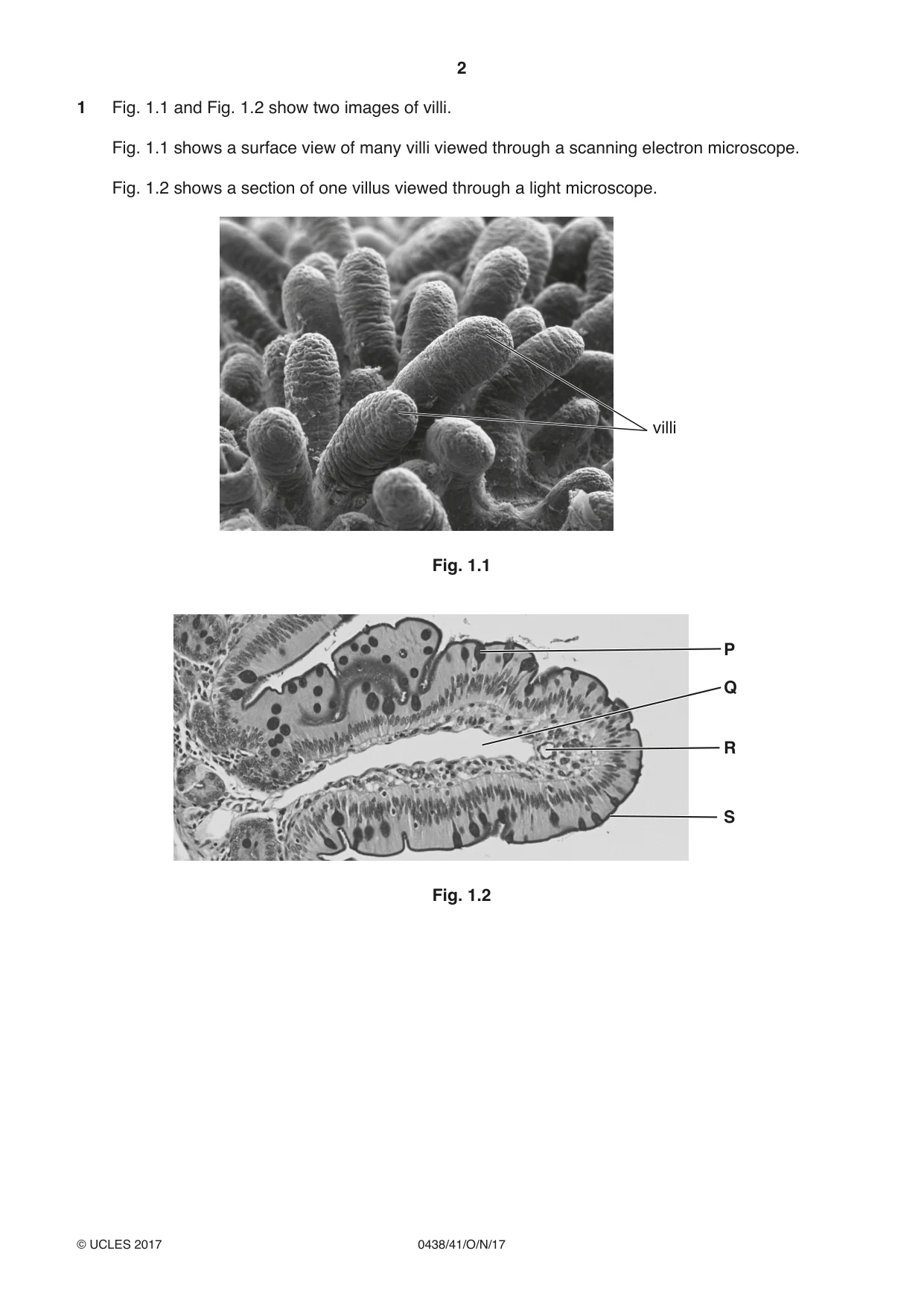
2 0438/41/O/N/17 © UCLES 2017 1 Fig. 1.1 and Fig. 1.2 show two images of villi. Fig. 1.1 shows a surface view of many villi viewed through a scanning electron microscope. Fig. 1.2 shows a section of one villus viewed through a light microscope. villi Fig. 1.1 P Q R S Fig. 1.2
Question paper, page 3
3 0438/41/O/N/17 © UCLES 2017 [Turn over Villi are found in the small intestine. (a) State the function of villi. … …[1] (b) Identify and describe two of the labeled components of a villus. Use the letters in Fig. 1.2 in your answer. … … … … … … … … …[4] (c) Some infections in the small intestine can cause diarrhea. (i) Describe the effects of diarrhea on the body. … … … … …[2] (ii) State the treatment for the effects of severe diarrhea. …[1] (d) (i) Blood transports nutrients. State the component of the blood that transports nutrients. …[1]
Question paper, page 4
4 0438/41/O/N/17 © UCLES 2017 (ii) The nutrients in the blood can be used to become part of cells. State the name of this process. …[1] (iii) Amino acids are an example of a type of nutrient transported in the blood. State two examples of larger molecules found in cells that are made from amino acids. 1 … 2 … [2] [Total: 12]
Question paper, page 5
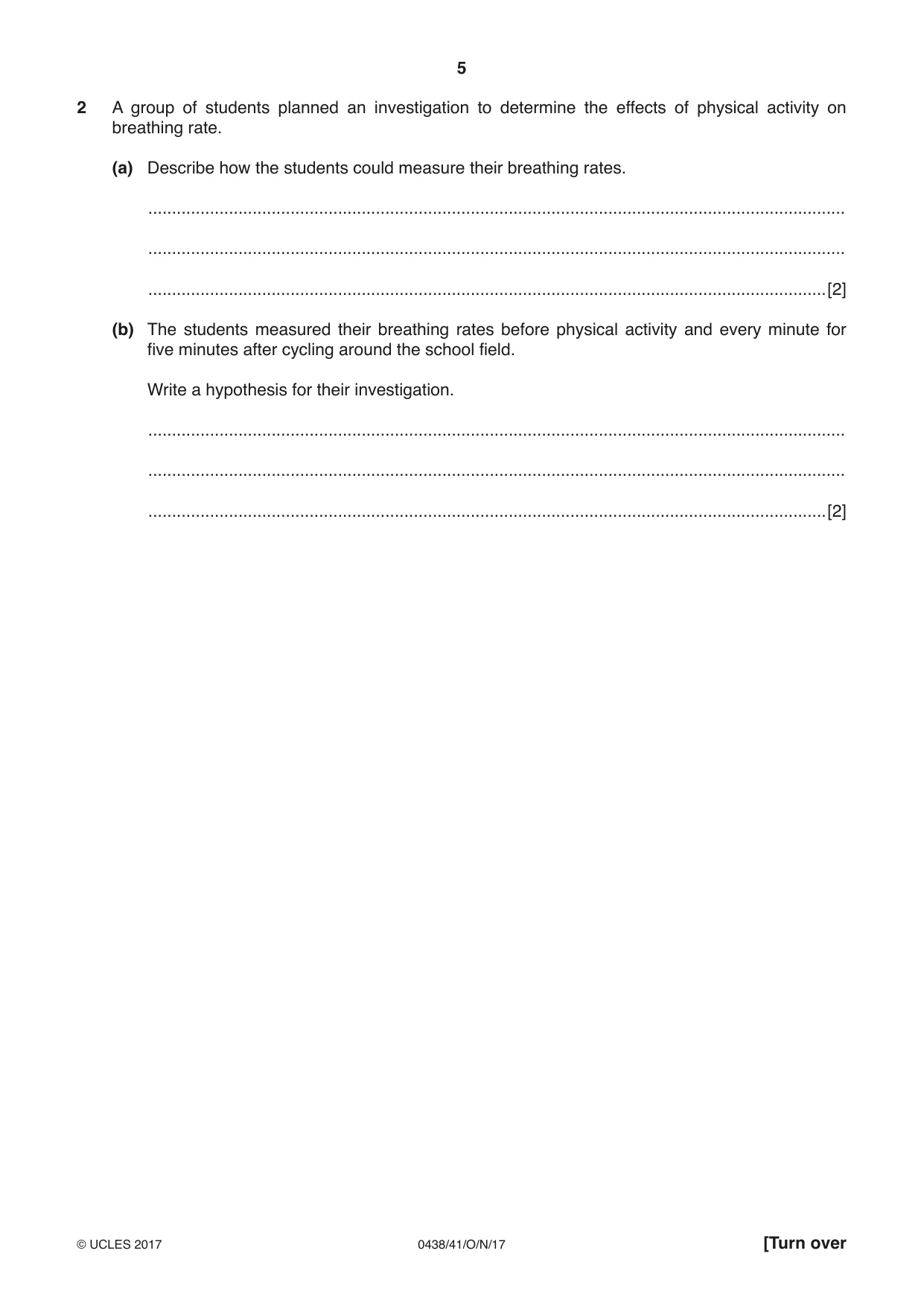
5 0438/41/O/N/17 © UCLES 2017 [Turn over 2 A group of students planned an investigation to determine the effects of physical activity on breathing rate. (a) Describe how the students could measure their breathing rates. … … …[2] (b) The students measured their breathing rates before physical activity and every minute for five minutes after cycling around the school field. Write a hypothesis for their investigation. … … …[2]
Question paper, page 6
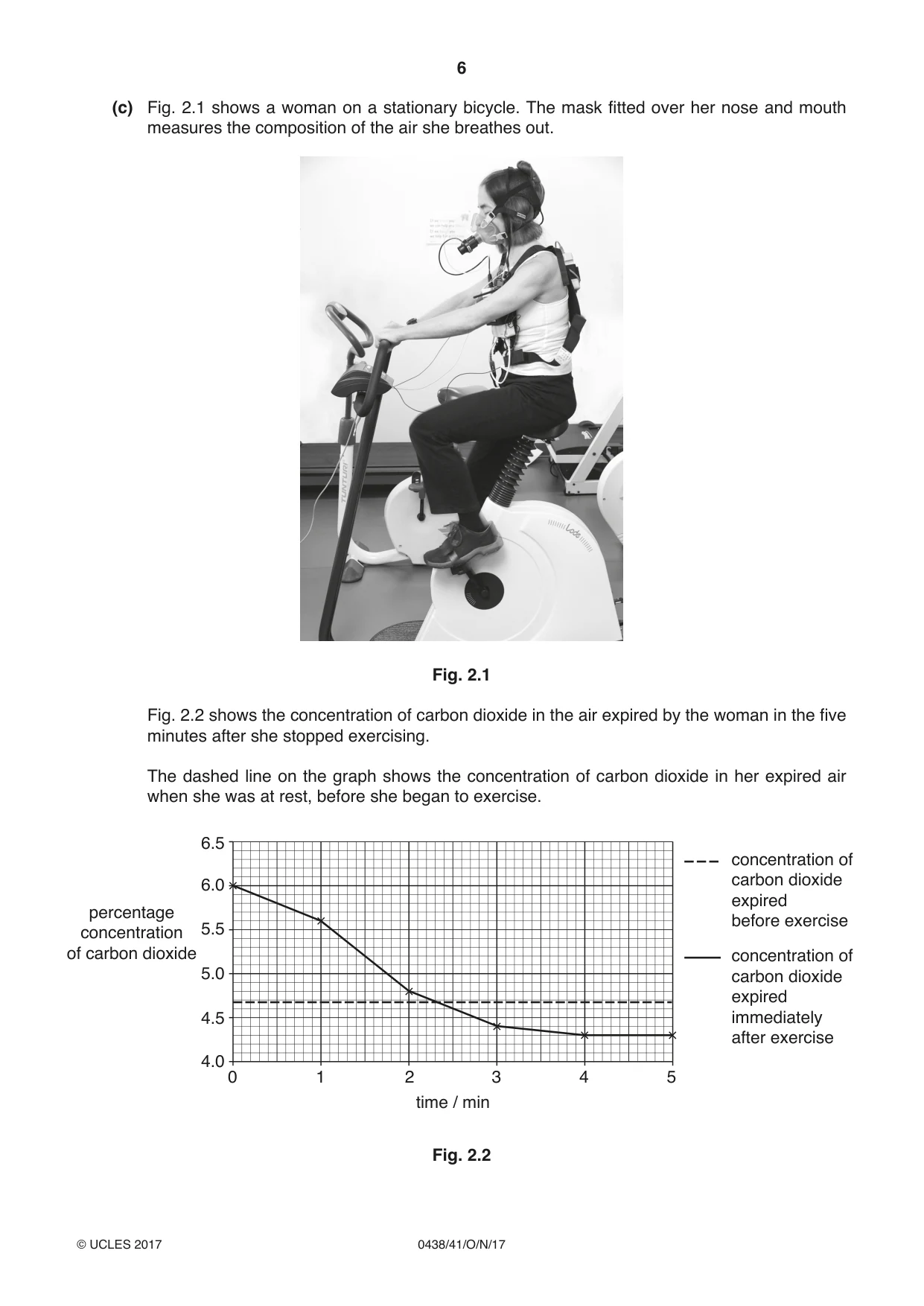
6 0438/41/O/N/17 © UCLES 2017 (c) Fig. 2.1 shows a woman on a stationary bicycle. The mask fitted over her nose and mouth measures the composition of the air she breathes out. Fig. 2.1 Fig. 2.2 shows the concentration of carbon dioxide in the air expired by the woman in the five minutes after she stopped exercising. The dashed line on the graph shows the concentration of carbon dioxide in her expired air when she was at rest, before she began to exercise. 6.5 6.0 5.5 5.0 4.5 4.0 0 1 2 time / min 3 4 5 percentage concentration of carbon dioxide concentration of carbon dioxide expired before exercise concentration of carbon dioxide expired immediately after exercise Fig. 2.2
Question paper, page 7
7 0438/41/O/N/17 © UCLES 2017 [Turn over Describe and explain the results of the investigation shown in Fig. 2.2. Use the data in Fig. 2.2 in your answer. … … … … … … … … … … … … …[6] (d) Before starting the investigation, the researchers confirmed that the woman did not have coronary heart disease. (i) Suggest why. … …[1] (ii) Explain why exercise is recommended for people with a high risk of developing coronary heart disease. … … … … … … …[3] [Total: 14]
Question paper, page 8
8 0438/41/O/N/17 © UCLES 2017 3 The flowers of pea plants can be pollinated by bees. (a) State three features of flowers that would attract insects such as bees. 1 … … 2 … … 3 … … [3] (b) Successful pollination results in fertilization. Describe the events that occur after pollen grains leave the anther of a flower until fertilization takes place. … … … … … … … … …[5]
Question paper, page 9
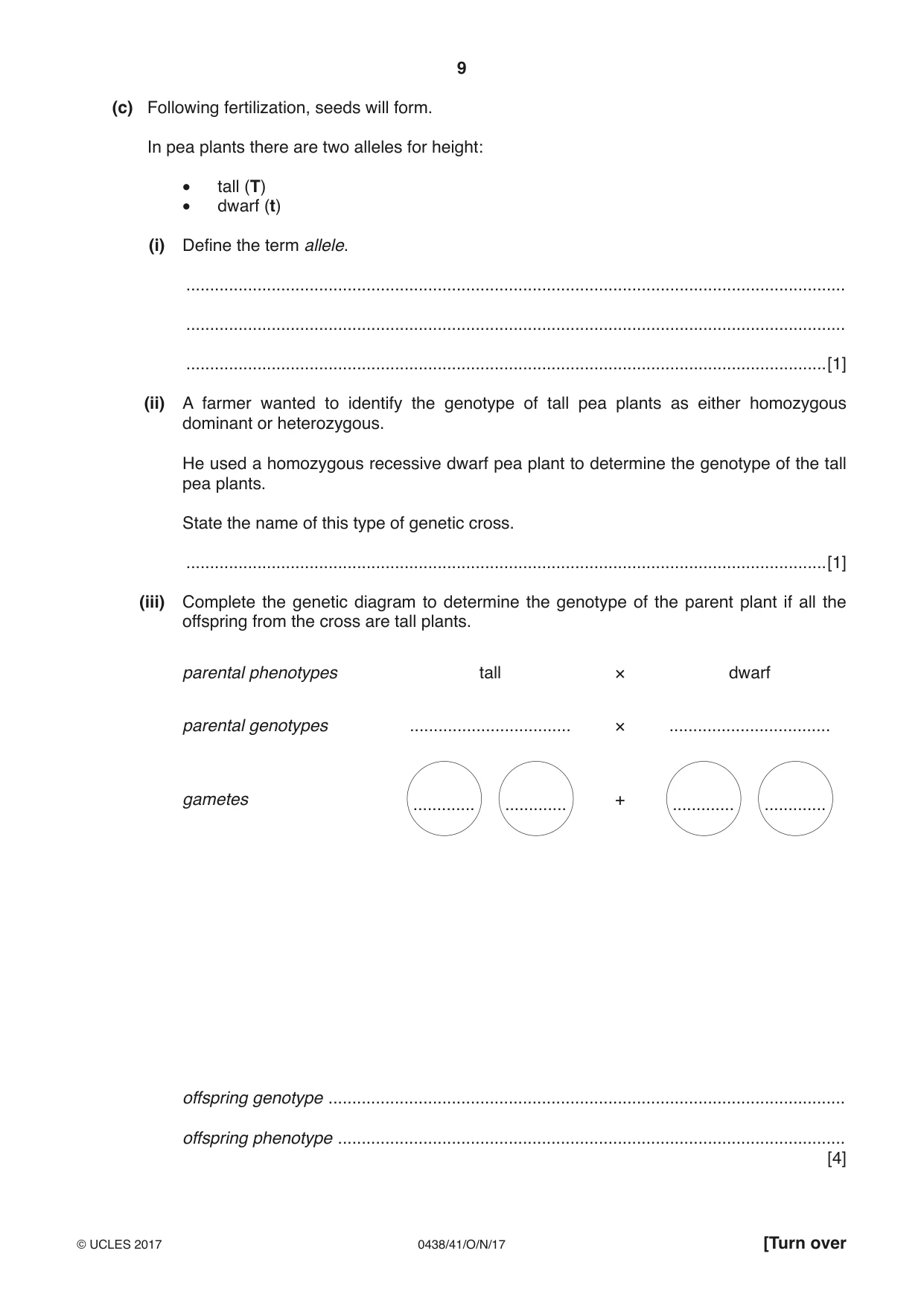
9 0438/41/O/N/17 © UCLES 2017 [Turn over (c) Following fertilization, seeds will form. In pea plants there are two alleles for height: • tall (T) • dwarf (t) (i) Define the term allele. … … …[1] (ii) A farmer wanted to identify the genotype of tall pea plants as either homozygous dominant or heterozygous. He used a homozygous recessive dwarf pea plant to determine the genotype of the tall pea plants. State the name of this type of genetic cross. …[1] (iii) Complete the genetic diagram to determine the genotype of the parent plant if all the offspring from the cross are tall plants. parental phenotypes tall × dwarf parental genotypes … × … gametes … … + … … offspring genotype … offspring phenotype … [4]
Question paper, page 10
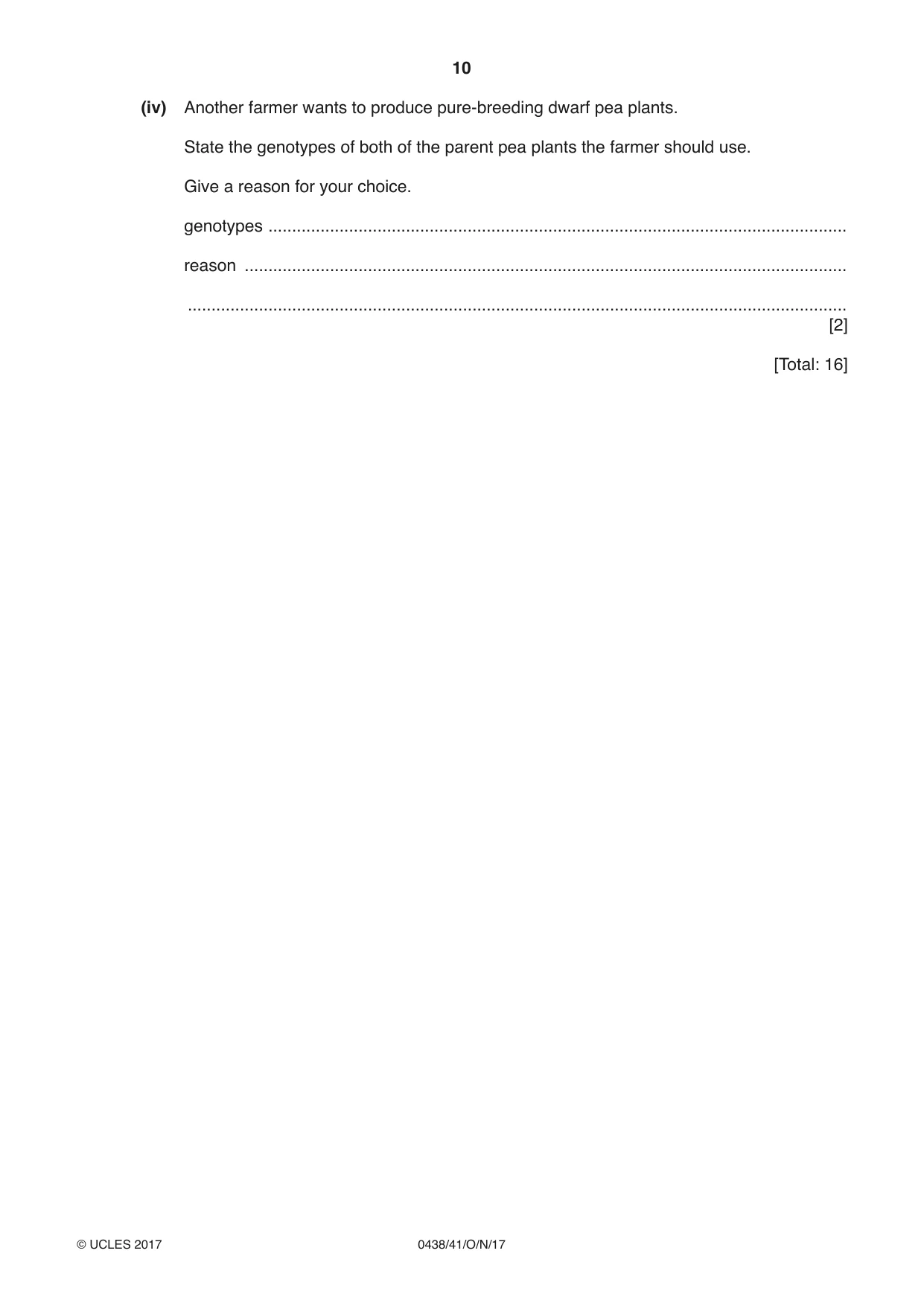
10 0438/41/O/N/17 © UCLES 2017 (iv) Another farmer wants to produce pure-breeding dwarf pea plants. State the genotypes of both of the parent pea plants the farmer should use. Give a reason for your choice. genotypes … reason … … [2] [Total: 16]
Question paper, page 11
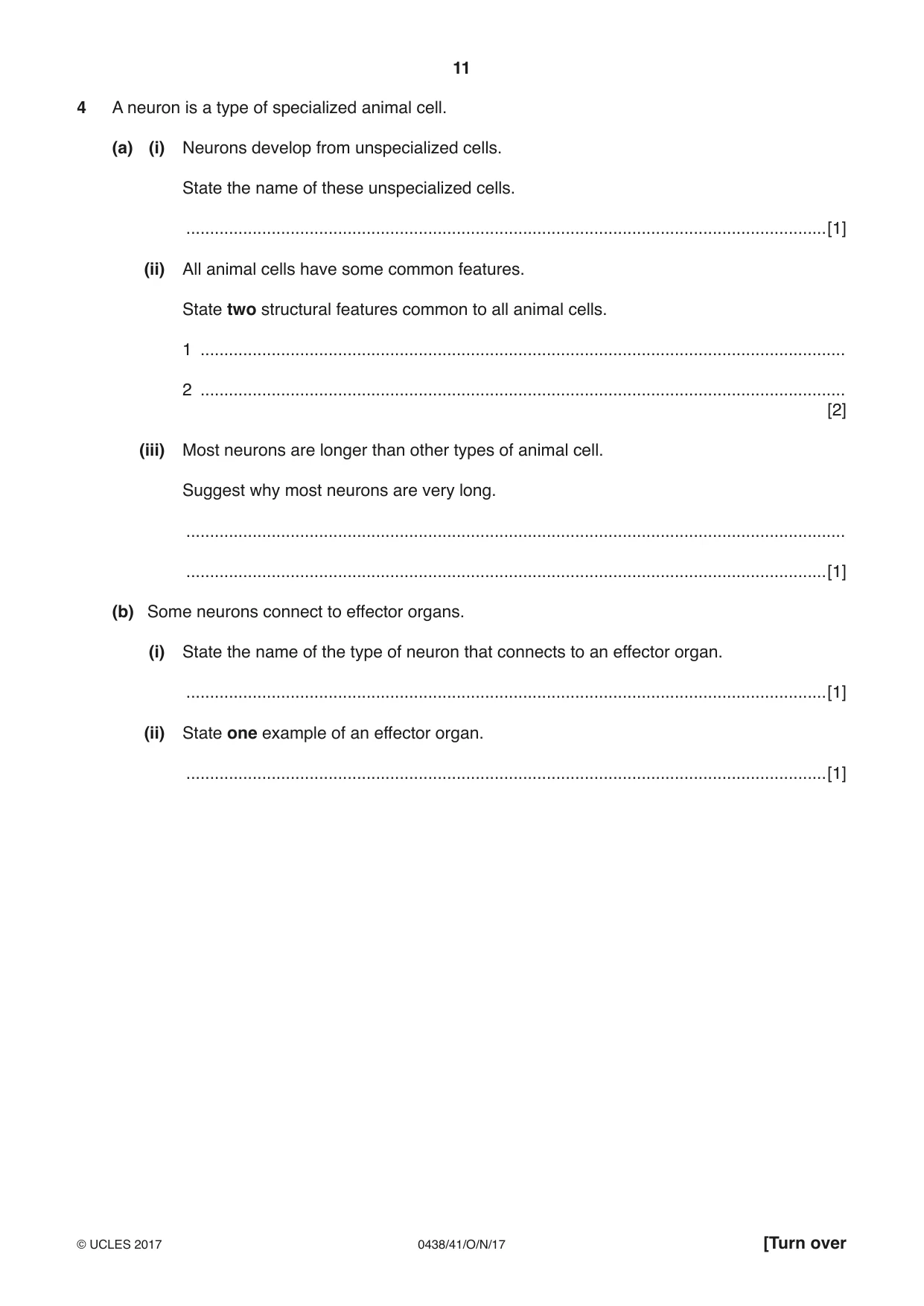
11 0438/41/O/N/17 © UCLES 2017 [Turn over 4 A neuron is a type of specialized animal cell. (a) (i) Neurons develop from unspecialized cells. State the name of these unspecialized cells. …[1] (ii) All animal cells have some common features. State two structural features common to all animal cells. 1 … 2 … [2] (iii) Most neurons are longer than other types of animal cell. Suggest why most neurons are very long. … …[1] (b) Some neurons connect to effector organs. (i) State the name of the type of neuron that connects to an effector organ. …[1] (ii) State one example of an effector organ. …[1]
Question paper, page 12
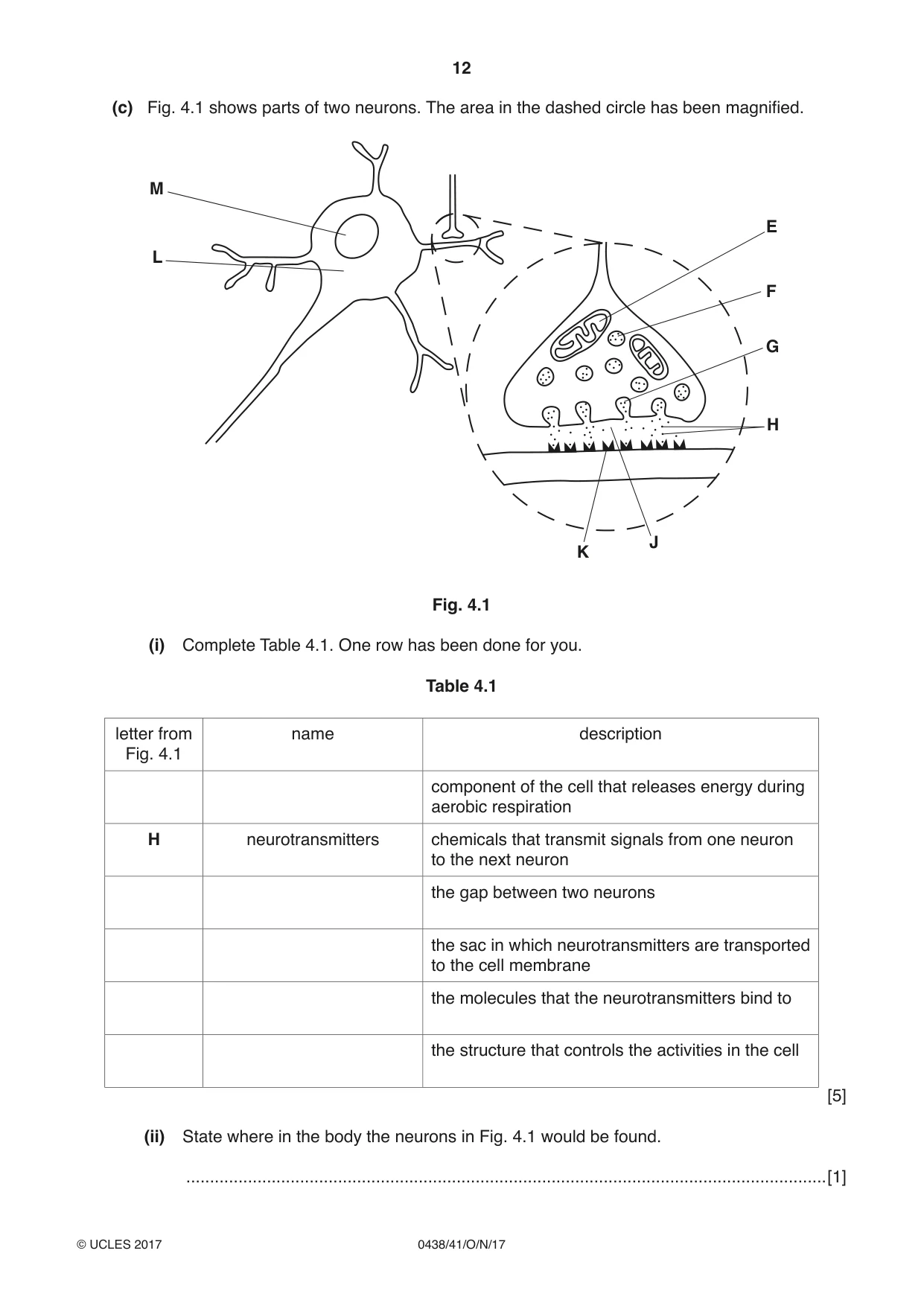
12 0438/41/O/N/17 © UCLES 2017 (c) Fig. 4.1 shows parts of two neurons. The area in the dashed circle has been magnified. M E F G H J K L Fig. 4.1 (i) Complete Table 4.1. One row has been done for you. Table 4.1 letter from Fig. 4.1 name description component of the cell that releases energy during aerobic respiration H neurotransmitters chemicals that transmit signals from one neuron to the next neuron the gap between two neurons the sac in which neurotransmitters are transported to the cell membrane the molecules that the neurotransmitters bind to the structure that controls the activities in the cell [5] (ii) State where in the body the neurons in Fig. 4.1 would be found. …[1]
Question paper, page 13
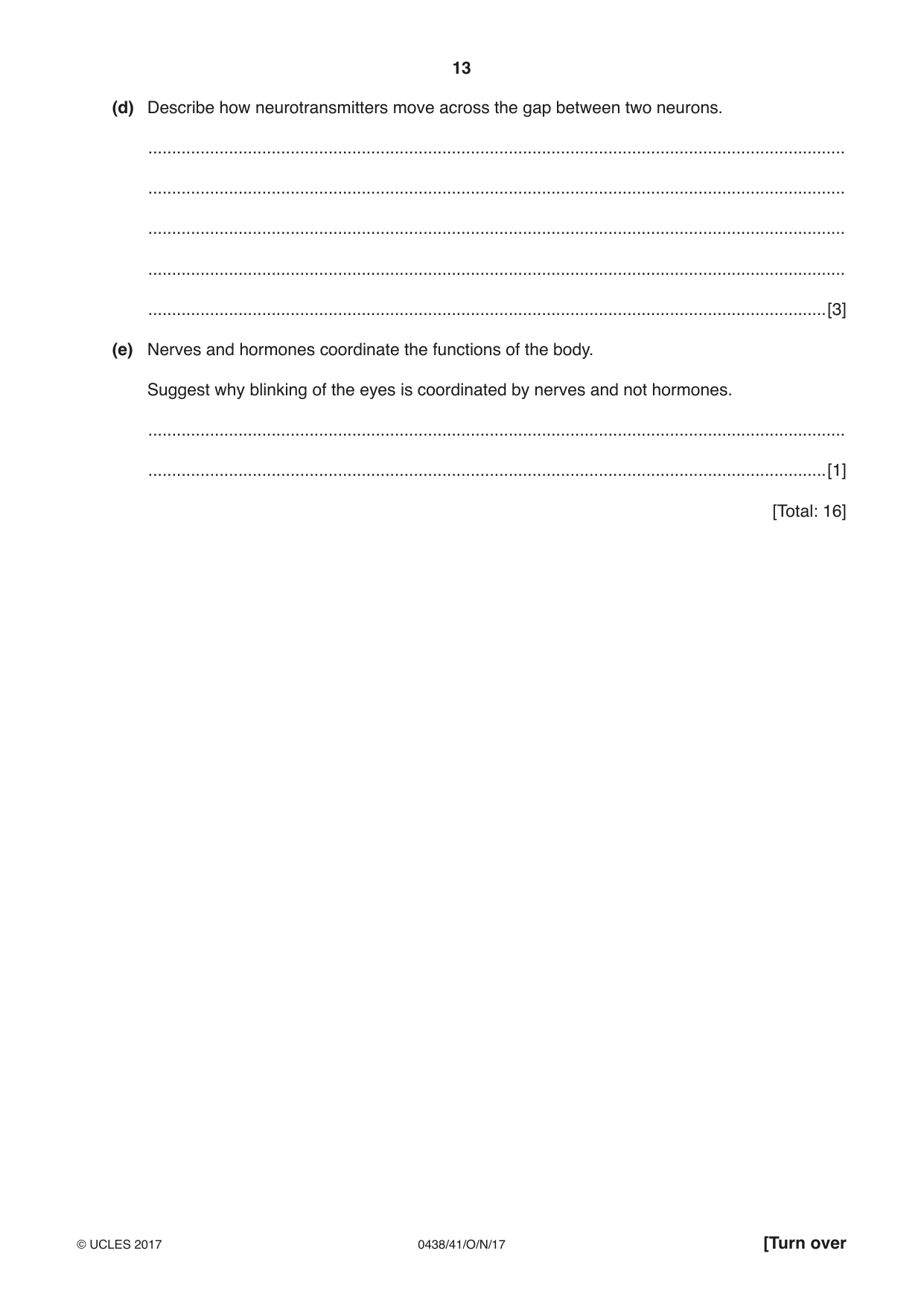
13 0438/41/O/N/17 © UCLES 2017 [Turn over (d) Describe how neurotransmitters move across the gap between two neurons. … … … … …[3] (e) Nerves and hormones coordinate the functions of the body. Suggest why blinking of the eyes is coordinated by nerves and not hormones. … …[1] [Total: 16]
Question paper, page 14
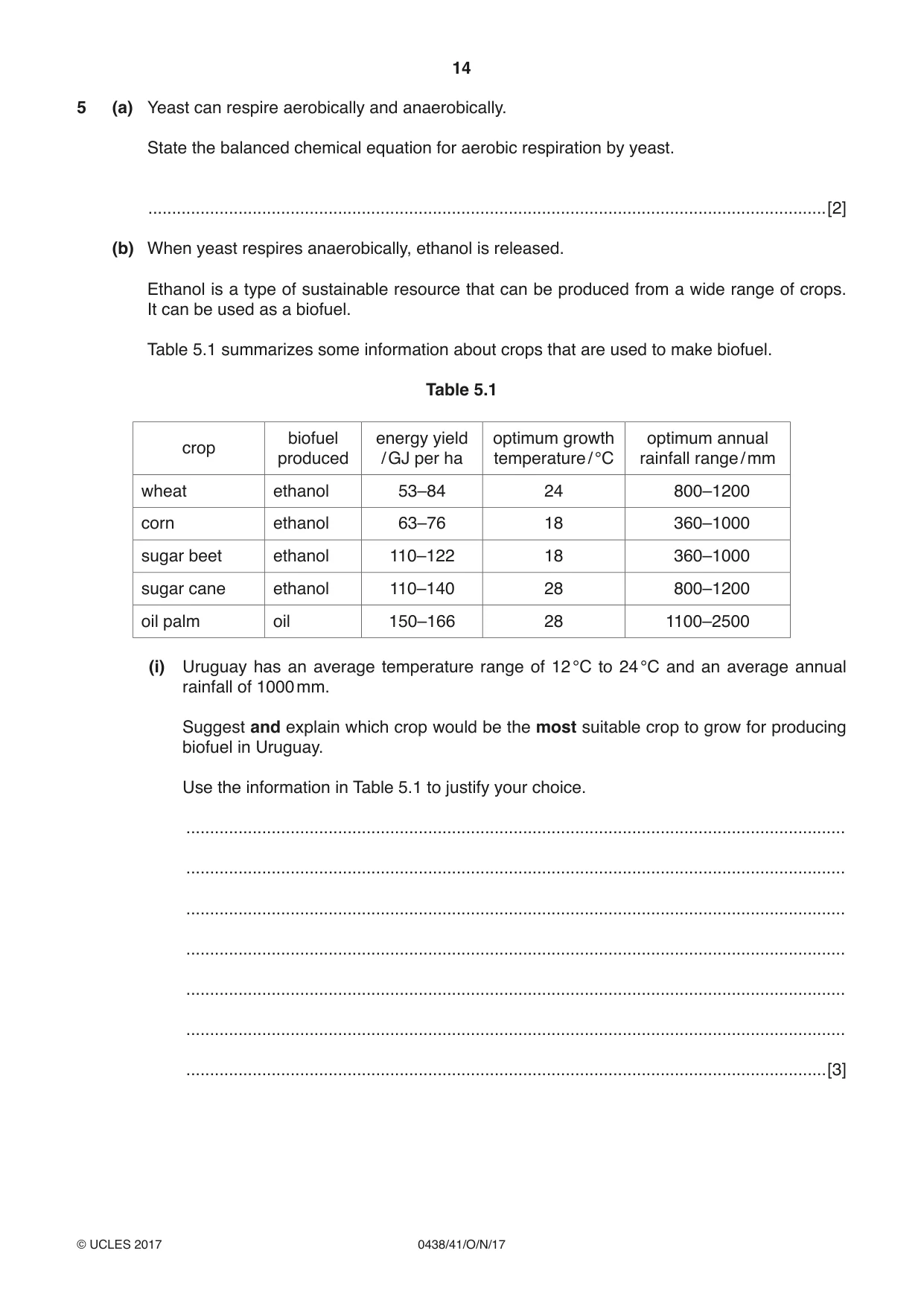
14 0438/41/O/N/17 © UCLES 2017 5 (a) Yeast can respire aerobically and anaerobically. State the balanced chemical equation for aerobic respiration by yeast. …[2] (b) When yeast respires anaerobically, ethanol is released. Ethanol is a type of sustainable resource that can be produced from a wide range of crops. It can be used as a biofuel. Table 5.1 summarizes some information about crops that are used to make biofuel. Table 5.1 crop biofuel produced energy yield / GJ per ha optimum growth temperature / °C optimum annual rainfall range / mm wheat ethanol 53–84 24 800–1200 corn ethanol 63–76 18 360–1000 sugar beet ethanol 110–122 18 360–1000 sugar cane ethanol 110–140 28 800–1200 oil palm oil 150–166 28 1100–2500 (i) Uruguay has an average temperature range of 12 °C to 24 °C and an average annual rainfall of 1000 mm. Suggest and explain which crop would be the most suitable crop to grow for producing biofuel in Uruguay. Use the information in Table 5.1 to justify your choice. … … … … … … …[3]
Question paper, page 15
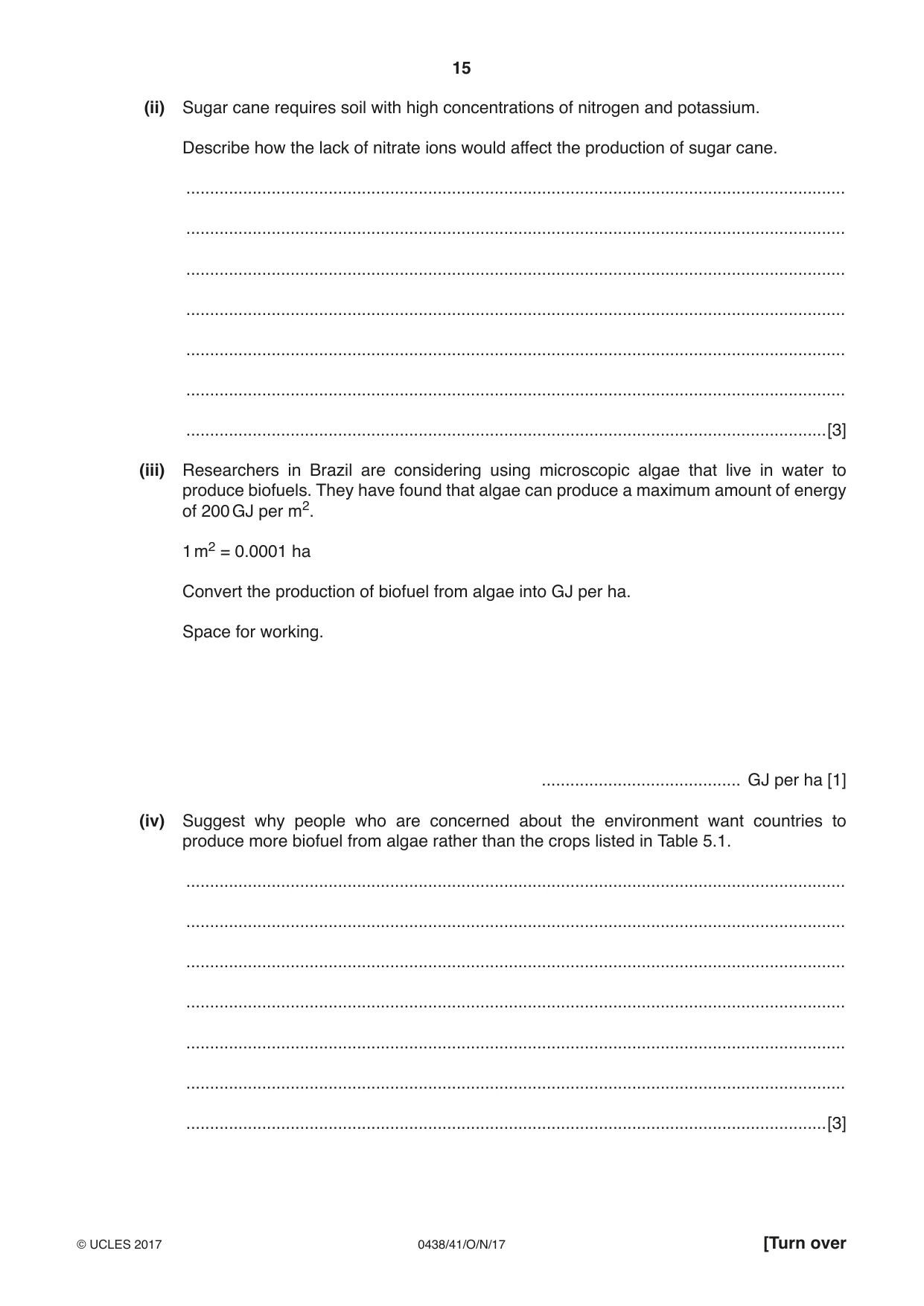
15 0438/41/O/N/17 © UCLES 2017 [Turn over (ii) Sugar cane requires soil with high concentrations of nitrogen and potassium. Describe how the lack of nitrate ions would affect the production of sugar cane. … … … … … … …[3] (iii) Researchers in Brazil are considering using microscopic algae that live in water to produce biofuels. They have found that algae can produce a maximum amount of energy of 200 GJ per m2. 1 m2 = 0.0001 ha Convert the production of biofuel from algae into GJ per ha. Space for working. … GJ per ha [1] (iv) Suggest why people who are concerned about the environment want countries to produce more biofuel from algae rather than the crops listed in Table 5.1. … … … … … … …[3]
Question paper, page 16
16 0438/41/O/N/17 © UCLES 2017 (c) Define the term sustainable development. … … …[2] [Total: 14]
Question paper, page 17
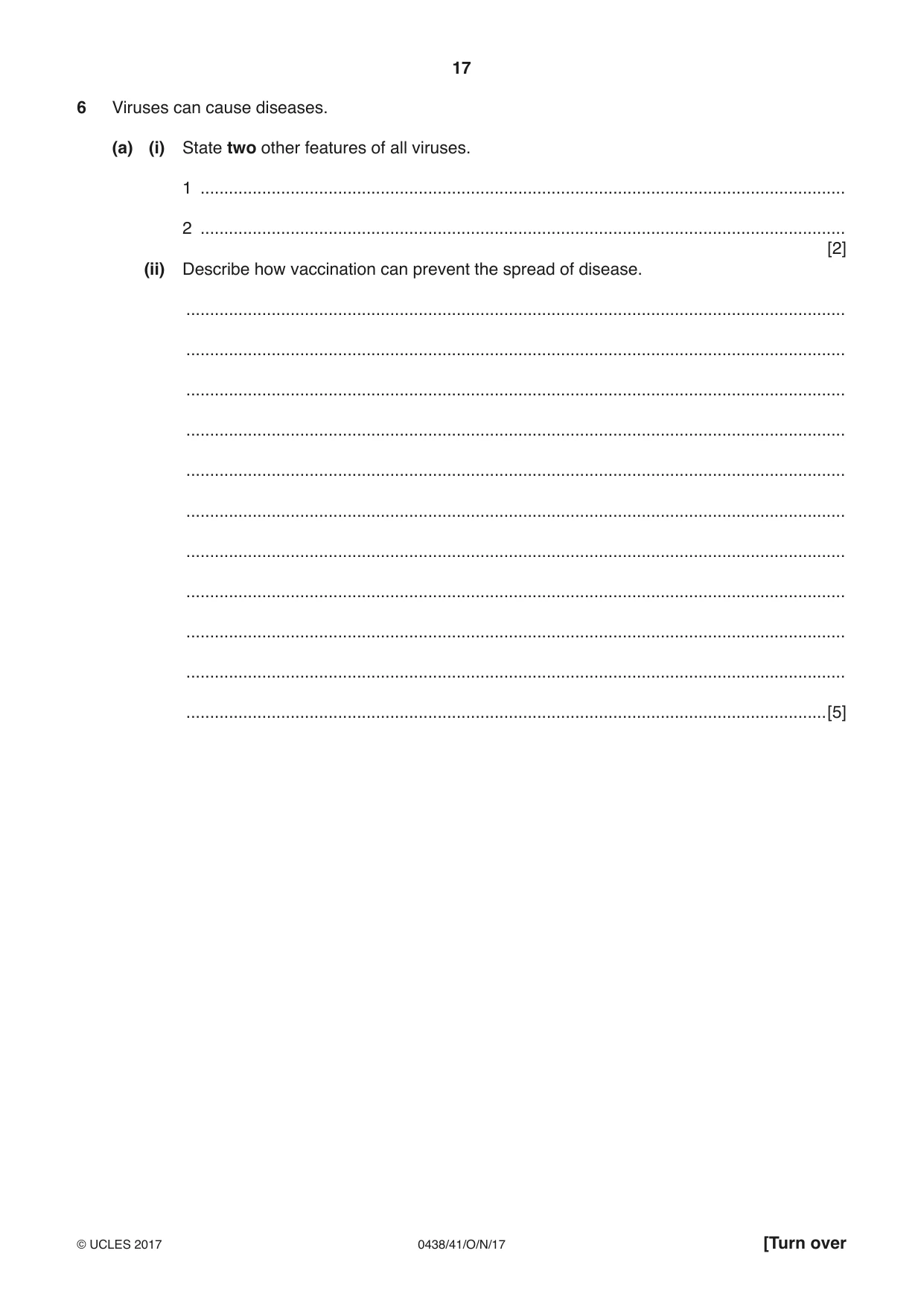
17 0438/41/O/N/17 © UCLES 2017 [Turn over 6 Viruses can cause diseases. (a) (i) State two other features of all viruses. 1 … 2 … [2] (ii) Describe how vaccination can prevent the spread of disease. … … … … … … … … … … …[5]
Question paper, page 18
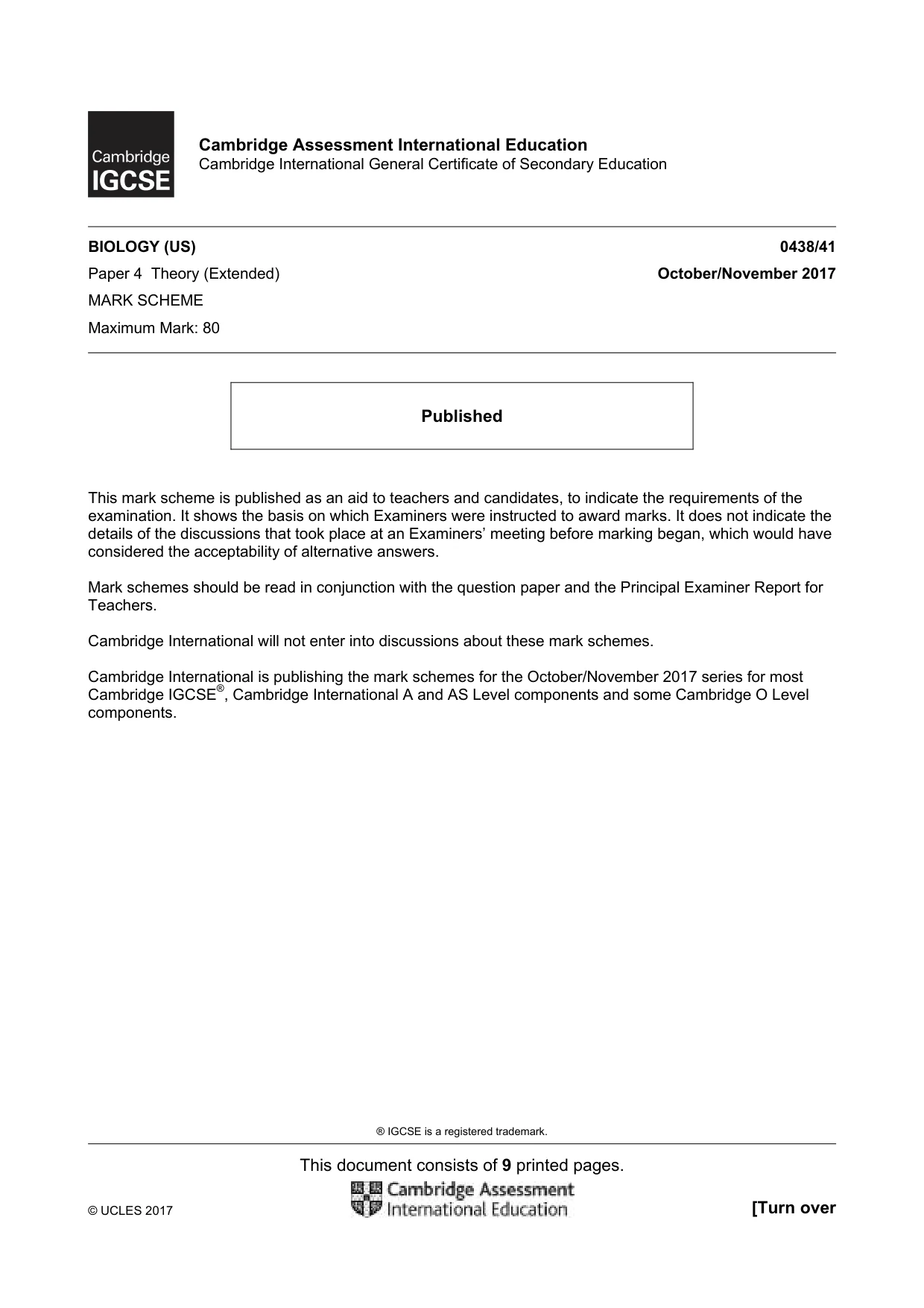
18 0438/41/O/N/17 © UCLES 2017 (b) Fig. 6.1 shows four different viruses. adenovirus picornavirus retrovirus herpesvirus Fig. 6.1 Suggest one feature that could be used to classify viruses into groups. … …[1] [Total: 8]
Question paper, page 19
19 0438/41/O/N/17 © UCLES 2017 BLANK PAGE
Question paper, page 20
20 0438/41/O/N/17 © UCLES 2017 Permission to reproduce items where third-party owned material protected by copyright is included has been sought and cleared where possible. Every reasonable effort has been made by the publisher (UCLES) to trace copyright holders, but if any items requiring clearance have unwittingly been included, the publisher will be pleased to make amends at the earliest possible opportunity. To avoid the issue of disclosure of answer-related information to candidates, all copyright acknowledgements are reproduced online in the Cambridge International Examinations Copyright Acknowledgements Booklet. This is produced for each series of examinations and is freely available to download at www.cie.org.uk after the live examination series. Cambridge International Examinations is part of the Cambridge Assessment Group. Cambridge Assessment is the brand name of University of Cambridge Local Examinations Syndicate (UCLES), which is itself a department of the University of Cambridge. BLANK PAGE
Mark scheme, page 1
® IGCSE is a registered trademark. This document consists of 9 printed pages. © UCLES 2017 [Turn over Cambridge Assessment International Education Cambridge International General Certificate of Secondary Education BIOLOGY (US) 0438/41 Paper 4 Theory (Extended) October/November 2017 MARK SCHEME Maximum Mark: 80 Published This mark scheme is published as an aid to teachers and candidates, to indicate the requirements of the examination. It shows the basis on which Examiners were instructed to award marks. It does not indicate the details of the discussions that took place at an Examiners’ meeting before marking began, which would have considered the acceptability of alternative answers. Mark schemes should be read in conjunction with the question paper and the Principal Examiner Report for Teachers. Cambridge International will not enter into discussions about these mark schemes. Cambridge International is publishing the mark schemes for the October/November 2017 series for most Cambridge IGCSE®, Cambridge International A and AS Level components and some Cambridge O Level components.
Mark scheme, page 2
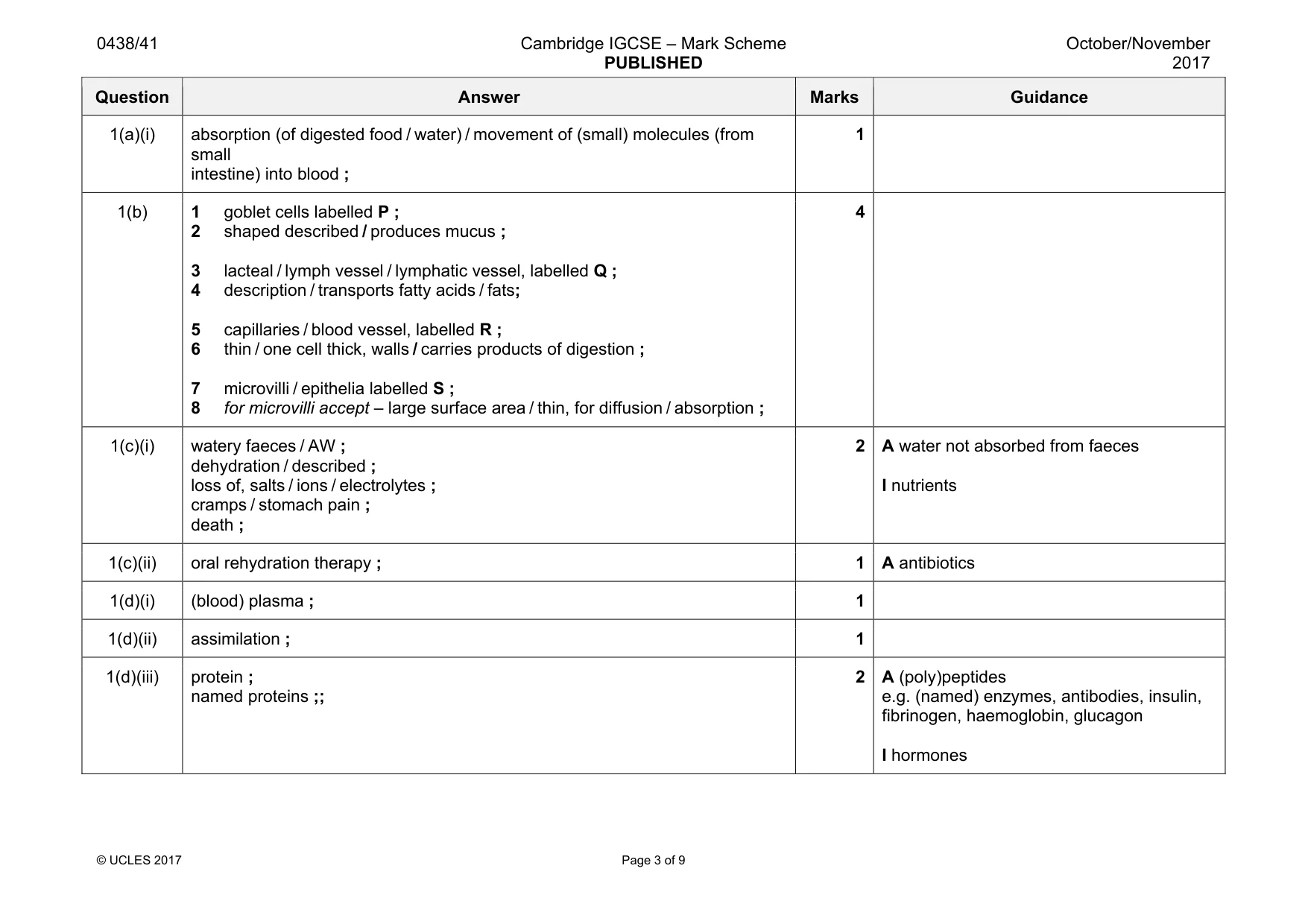
0438/41 Cambridge IGCSE – Mark Scheme PUBLISHED October/November 2017 © UCLES 2017 Page 2 of 9 Mark schemes will use these abbreviations • ; separates marking points • / alternatives • I ignore • R reject • A accept (for answers correctly cued by the question, or guidance for examiners) • AW alternative wording (where responses vary more than usual) • AVP any valid point • ecf credit a correct statement / calculation that follows a previous wrong response • ora or reverse argument • ( ) the word / phrase in brackets is not required, but sets the context • underline actual word given must be used by candidate (grammatical variants excepted) • max indicates the maximum number of marks that can be given
Mark scheme, page 3
0438/41 Cambridge IGCSE – Mark Scheme PUBLISHED October/November 2017 © UCLES 2017 Page 3 of 9 Question Answer Marks Guidance 1(a)(i) absorption (of digested food / water) / movement of (small) molecules (from small intestine) into blood ; 1 1(b) 1 goblet cells labelled P ; 2 shaped described / produces mucus ; 3 lacteal / lymph vessel / lymphatic vessel, labelled Q ; 4 description / transports fatty acids / fats; 5 capillaries / blood vessel, labelled R ; 6 thin / one cell thick, walls / carries products of digestion ; 7 microvilli / epithelia labelled S ; 8 for microvilli accept – large surface area / thin, for diffusion / absorption ; 4 1(c)(i) watery faeces / AW ; dehydration / described ; loss of, salts / ions / electrolytes ; cramps / stomach pain ; death ; 2 A water not absorbed from faeces I nutrients 1(c)(ii) oral rehydration therapy ; 1 A antibiotics 1(d)(i) (blood) plasma ; 1 1(d)(ii) assimilation ; 1 1(d)(iii) protein ; named proteins ;; 2 A (poly)peptides e.g. (named) enzymes, antibodies, insulin, fibrinogen, haemoglobin, glucagon I hormones
Mark scheme, page 4
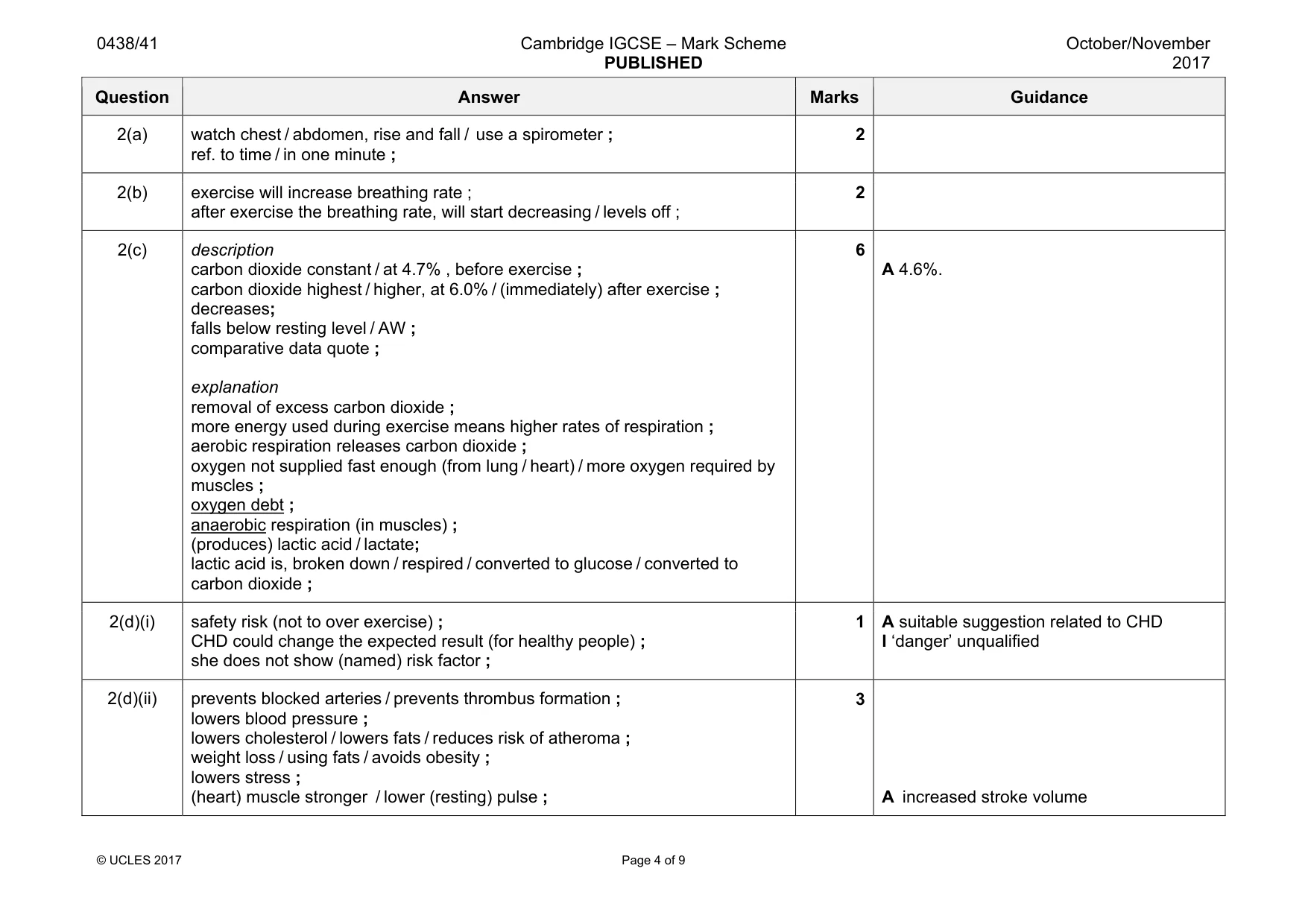
0438/41 Cambridge IGCSE – Mark Scheme PUBLISHED October/November 2017 © UCLES 2017 Page 4 of 9 Question Answer Marks Guidance 2(a) watch chest / abdomen, rise and fall / use a spirometer ; ref. to time / in one minute ; 2 2(b) exercise will increase breathing rate ; after exercise the breathing rate, will start decreasing / levels off ; 2 2(c) description carbon dioxide constant / at 4.7% , before exercise ; carbon dioxide highest / higher, at 6.0% / (immediately) after exercise ; decreases; falls below resting level / AW ; comparative data quote ; explanation removal of excess carbon dioxide ; more energy used during exercise means higher rates of respiration ; aerobic respiration releases carbon dioxide ; oxygen not supplied fast enough (from lung / heart) / more oxygen required by muscles ; oxygen debt ; anaerobic respiration (in muscles) ; (produces) lactic acid / lactate; lactic acid is, broken down / respired / converted to glucose / converted to carbon dioxide ; 6 A 4.6%. 2(d)(i) safety risk (not to over exercise) ; CHD could change the expected result (for healthy people) ; she does not show (named) risk factor ; 1 A suitable suggestion related to CHD I ‘danger’ unqualified 2(d)(ii) prevents blocked arteries / prevents thrombus formation ; lowers blood pressure ; lowers cholesterol / lowers fats / reduces risk of atheroma ; weight loss / using fats / avoids obesity ; lowers stress ; (heart) muscle stronger / lower (resting) pulse ; 3 A increased stroke volume
Mark scheme, page 5
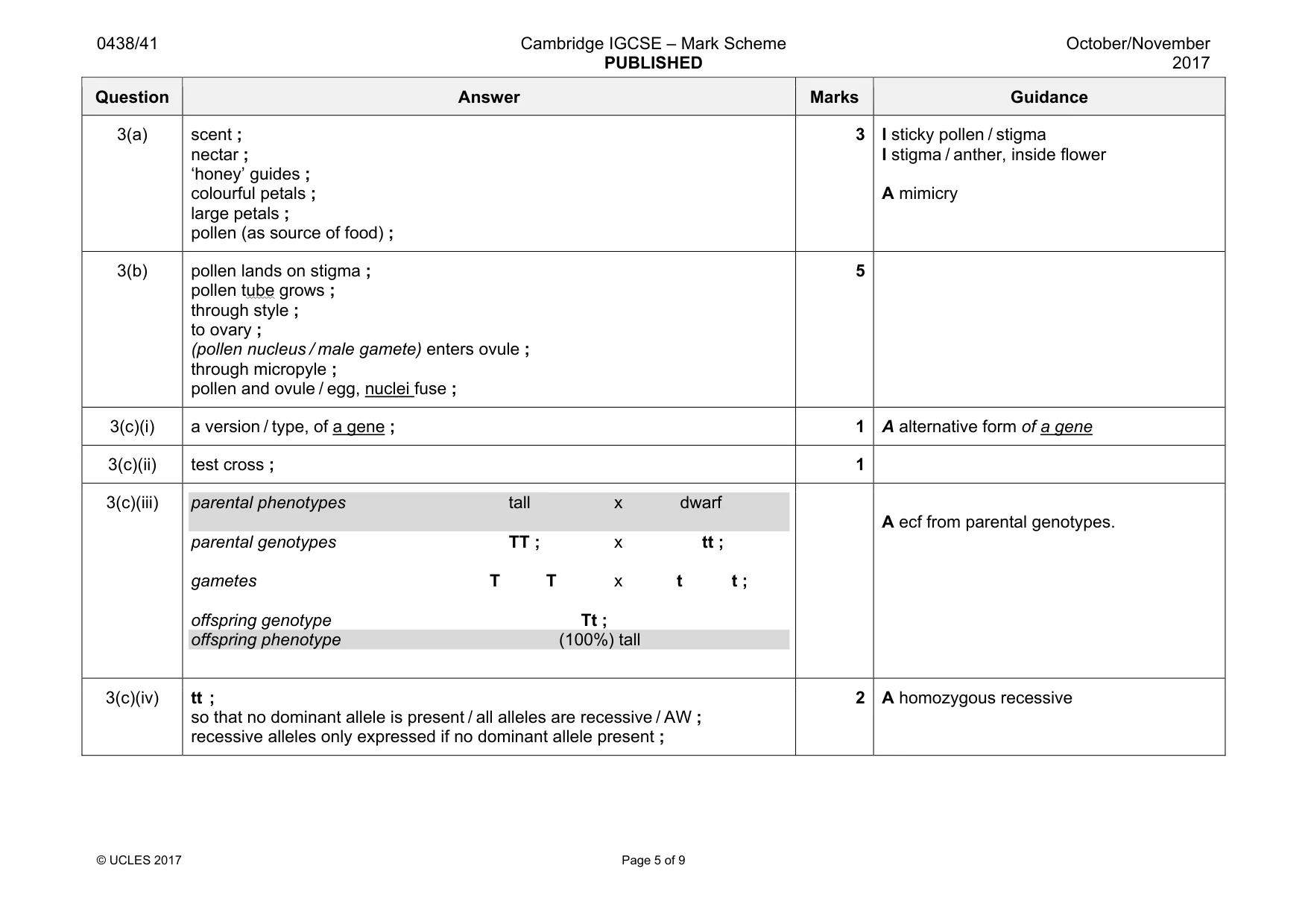
0438/41 Cambridge IGCSE – Mark Scheme PUBLISHED October/November 2017 © UCLES 2017 Page 5 of 9 Question Answer Marks Guidance 3(a) scent ; nectar ; ‘honey’ guides ; colourful petals ; large petals ; pollen (as source of food) ; 3 I sticky pollen / stigma I stigma / anther, inside flower A mimicry 3(b) pollen lands on stigma ; pollen tube grows ; through style ; to ovary ; (pollen nucleus / male gamete) enters ovule ; through micropyle ; pollen and ovule / egg, nuclei fuse ; 5 3(c)(i) a version / type, of a gene ; 1 A alternative form of a gene 3(c)(ii) test cross ; 1 3(c)(iii) parental phenotypes tall x dwarf parental genotypes TT ; x tt ; gametes T T x t t ; offspring genotype Tt ; offspring phenotype (100%) tall A ecf from parental genotypes. 3(c)(iv) tt ; so that no dominant allele is present / all alleles are recessive / AW ; recessive alleles only expressed if no dominant allele present ; 2 A homozygous recessive
Mark scheme, page 6
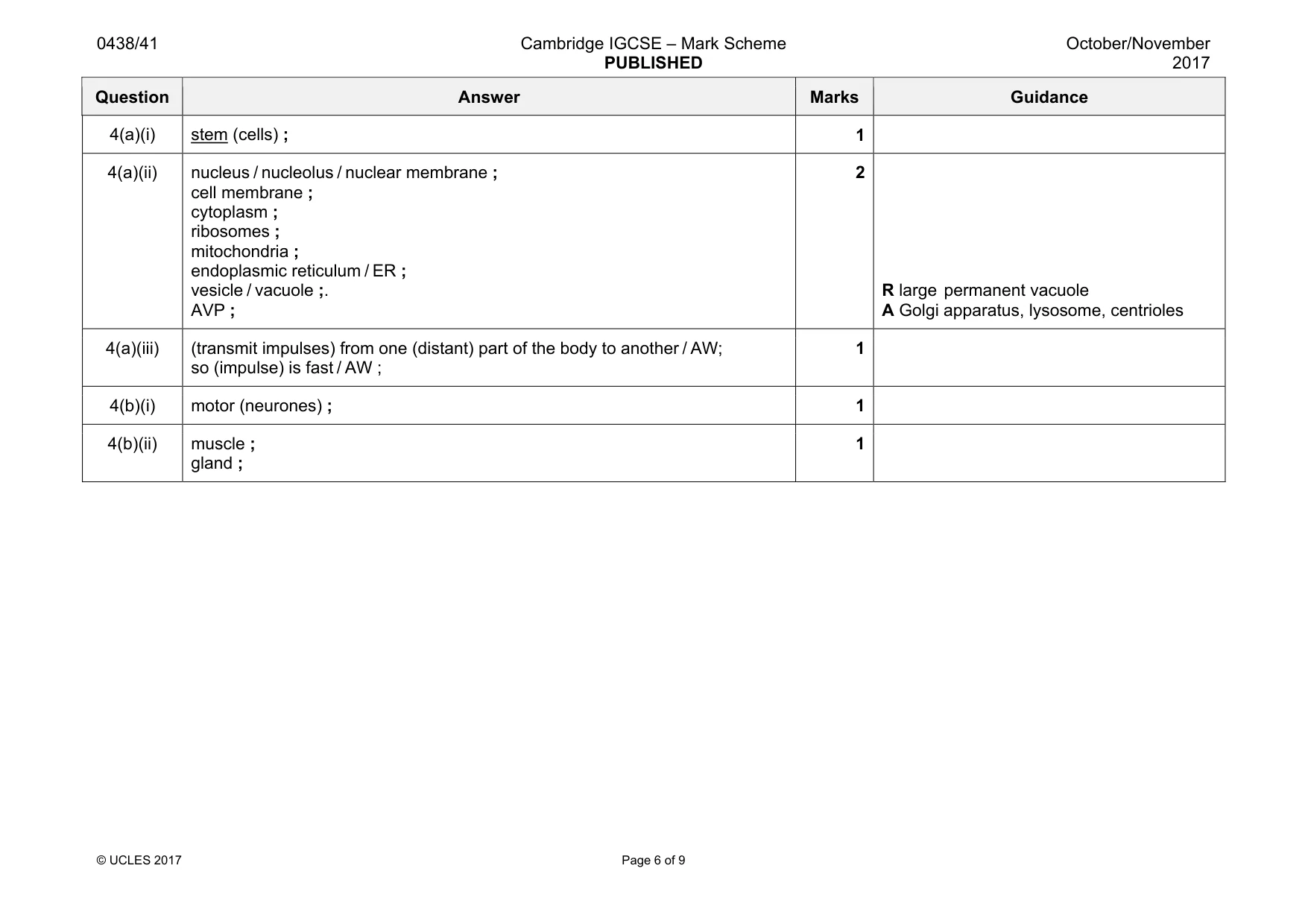
0438/41 Cambridge IGCSE – Mark Scheme PUBLISHED October/November 2017 © UCLES 2017 Page 6 of 9 Question Answer Marks Guidance 4(a)(i) stem (cells) ; 1 4(a)(ii) nucleus / nucleolus / nuclear membrane ; cell membrane ; cytoplasm ; ribosomes ; mitochondria ; endoplasmic reticulum / ER ; vesicle / vacuole ;. AVP ; 2 R large permanent vacuole A Golgi apparatus, lysosome, centrioles 4(a)(iii) (transmit impulses) from one (distant) part of the body to another / AW; so (impulse) is fast / AW ; 1 4(b)(i) motor (neurones) ; 1 4(b)(ii) muscle ; gland ; 1
Mark scheme, page 7
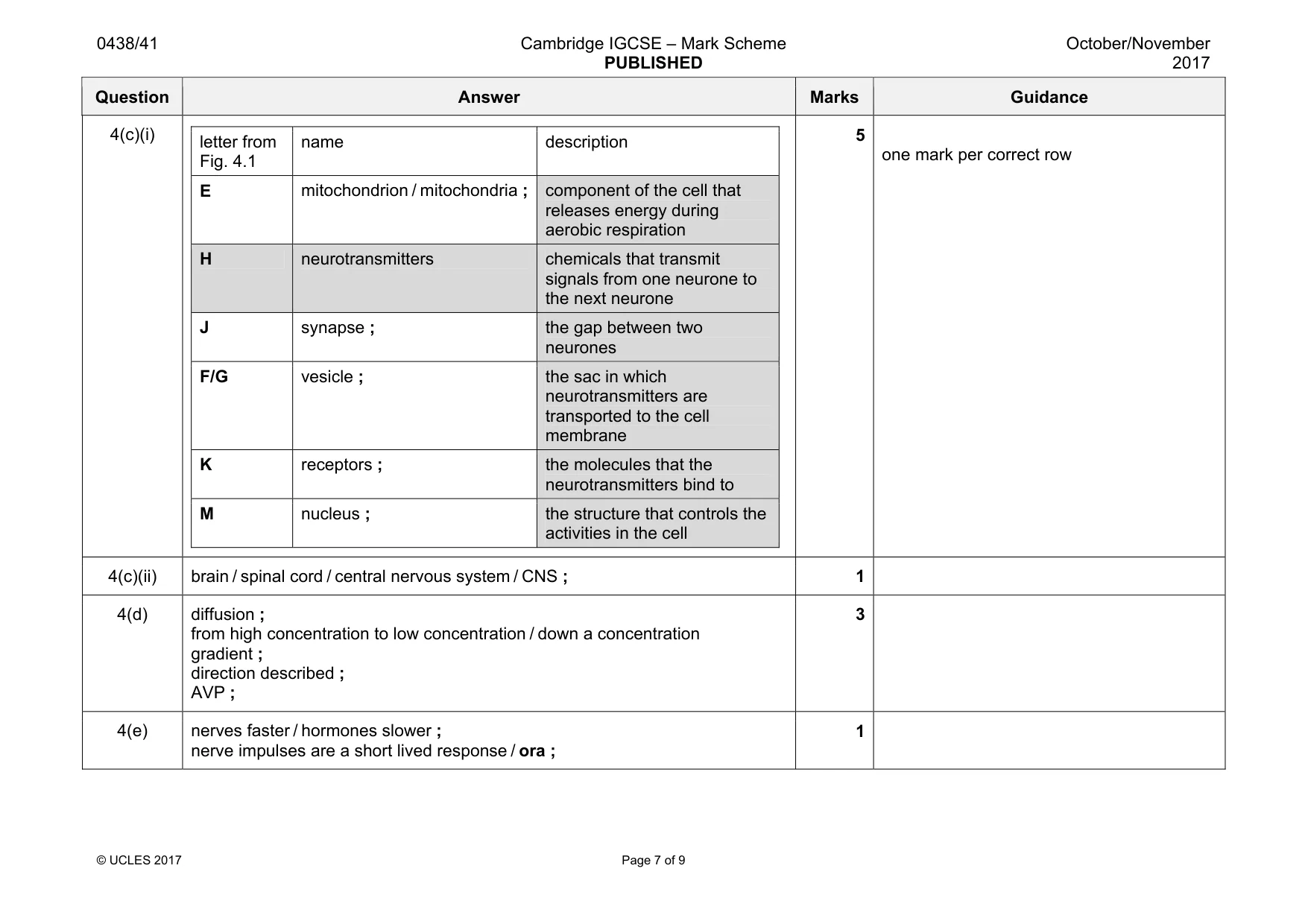
0438/41 Cambridge IGCSE – Mark Scheme PUBLISHED October/November 2017 © UCLES 2017 Page 7 of 9 Question Answer Marks Guidance 4(c)(i) letter from Fig. 4.1 name description E mitochondrion / mitochondria ; component of the cell that releases energy during aerobic respiration H neurotransmitters chemicals that transmit signals from one neurone to the next neurone J synapse ; the gap between two neurones F/G vesicle ; the sac in which neurotransmitters are transported to the cell membrane K receptors ; the molecules that the neurotransmitters bind to M nucleus ; the structure that controls the activities in the cell 5 one mark per correct row 4(c)(ii) brain / spinal cord / central nervous system / CNS ; 1 4(d) diffusion ; from high concentration to low concentration / down a concentration gradient ; direction described ; AVP ; 3 4(e) nerves faster / hormones slower ; nerve impulses are a short lived response / ora ; 1
Mark scheme, page 8
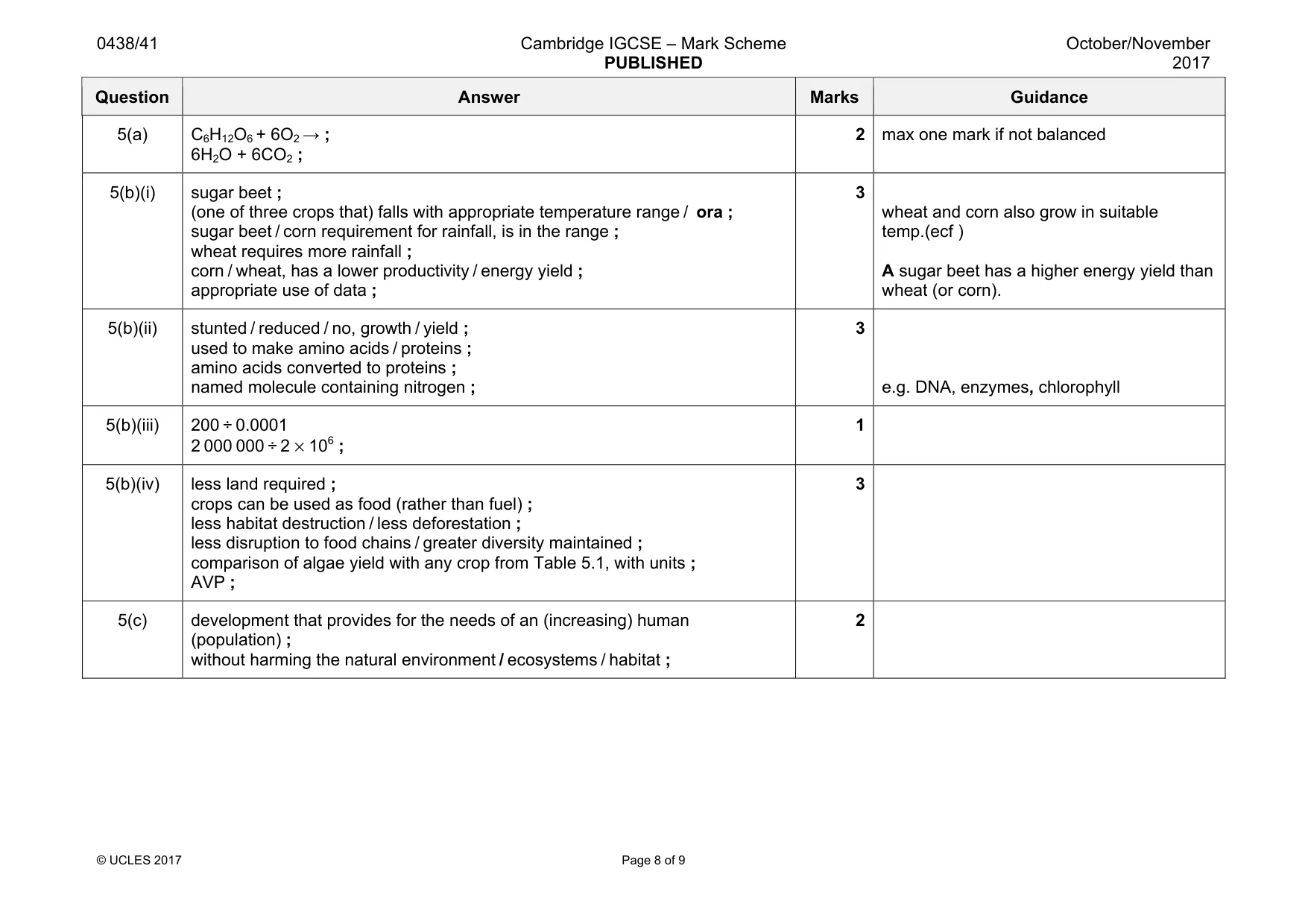
0438/41 Cambridge IGCSE – Mark Scheme PUBLISHED October/November 2017 © UCLES 2017 Page 8 of 9 Question Answer Marks Guidance 5(a) C6H12O6 + 6O2 → ; 6H2O + 6CO2 ; 2 max one mark if not balanced 5(b)(i) sugar beet ; (one of three crops that) falls with appropriate temperature range / ora ; sugar beet / corn requirement for rainfall, is in the range ; wheat requires more rainfall ; corn / wheat, has a lower productivity / energy yield ; appropriate use of data ; 3 wheat and corn also grow in suitable temp.(ecf ) A sugar beet has a higher energy yield than wheat (or corn). 5(b)(ii) stunted / reduced / no, growth / yield ; used to make amino acids / proteins ; amino acids converted to proteins ; named molecule containing nitrogen ; 3 e.g. DNA, enzymes, chlorophyll 5(b)(iii) 200 ÷ 0.0001 2 000 000 ÷ 2 × 10⁶ ; 1 5(b)(iv) less land required ; crops can be used as food (rather than fuel) ; less habitat destruction / less deforestation ; less disruption to food chains / greater diversity maintained ; comparison of algae yield with any crop from Table 5.1, with units ; AVP ; 3 5(c) development that provides for the needs of an (increasing) human (population) ; without harming the natural environment / ecosystems / habitat ; 2
Mark scheme, page 9
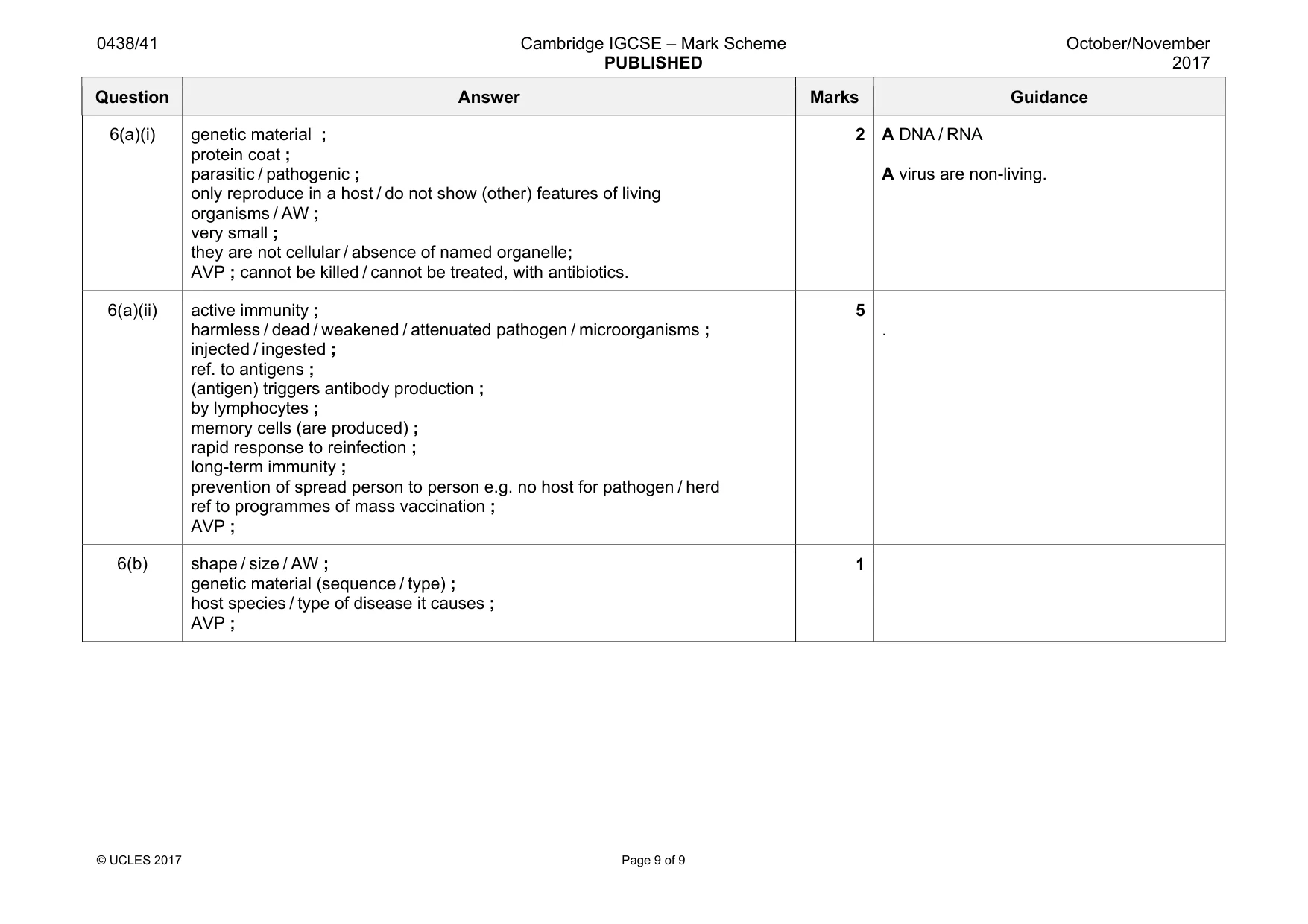
0438/41 Cambridge IGCSE – Mark Scheme PUBLISHED October/November 2017 © UCLES 2017 Page 9 of 9 Question Answer Marks Guidance 6(a)(i) genetic material ; protein coat ; parasitic / pathogenic ; only reproduce in a host / do not show (other) features of living organisms / AW ; very small ; they are not cellular / absence of named organelle; AVP ; cannot be killed / cannot be treated, with antibiotics. 2 A DNA / RNA A virus are non-living. 6(a)(ii) active immunity ; harmless / dead / weakened / attenuated pathogen / microorganisms ; injected / ingested ; ref. to antigens ; (antigen) triggers antibody production ; by lymphocytes ; memory cells (are produced) ; rapid response to reinfection ; long-term immunity ; prevention of spread person to person e.g. no host for pathogen / herd ref to programmes of mass vaccination ; AVP ; 5 . 6(b) shape / size / AW ; genetic material (sequence / type) ; host species / type of disease it causes ; AVP ; 1
What you needed in this session
Cambridge’s own grade thresholds for 2017 Oct/Nov, Paper 4 · Variant 1. A higher threshold means an easier paper — the bar moves with how the cohort did.