Cambridge A Level Thinking Skills 9694 — 2018 May/June Paper 4 · Variant 2
9694/42/M/J/18 · 50 marks · ≈56 min
The question paper and its mark scheme, free to read here and free to download. This is Cambridge’s own paper, exactly as it was sat.
Question paper8 pages

Mark scheme13 pages
Answers below. Sit the paper first if you are practising.
Paper as text
Question paper, page 1
* 2 4 6 1 9 2 7 6 3 1 * This document consists of 7 printed pages, 1 blank page and 1 Insert. DC (RW/CGW) 151399/1 © UCLES 2018 [Turn over Cambridge International Examinations Cambridge International Advanced Subsidiary and Advanced Level THINKING SKILLS 9694/42 Paper 4 Applied Reasoning May/June 2018 1 hour 30 minutes No Additional Materials are required. READ THESE INSTRUCTIONS FIRST An answer booklet is provided inside this question paper. You should follow the instructions on the front cover of the answer booklet. If you need additional answer paper ask the invigilator for a continuation booklet. Answer all the questions. The number of marks is given in brackets [ ] at the end of each question.
Question paper, page 2
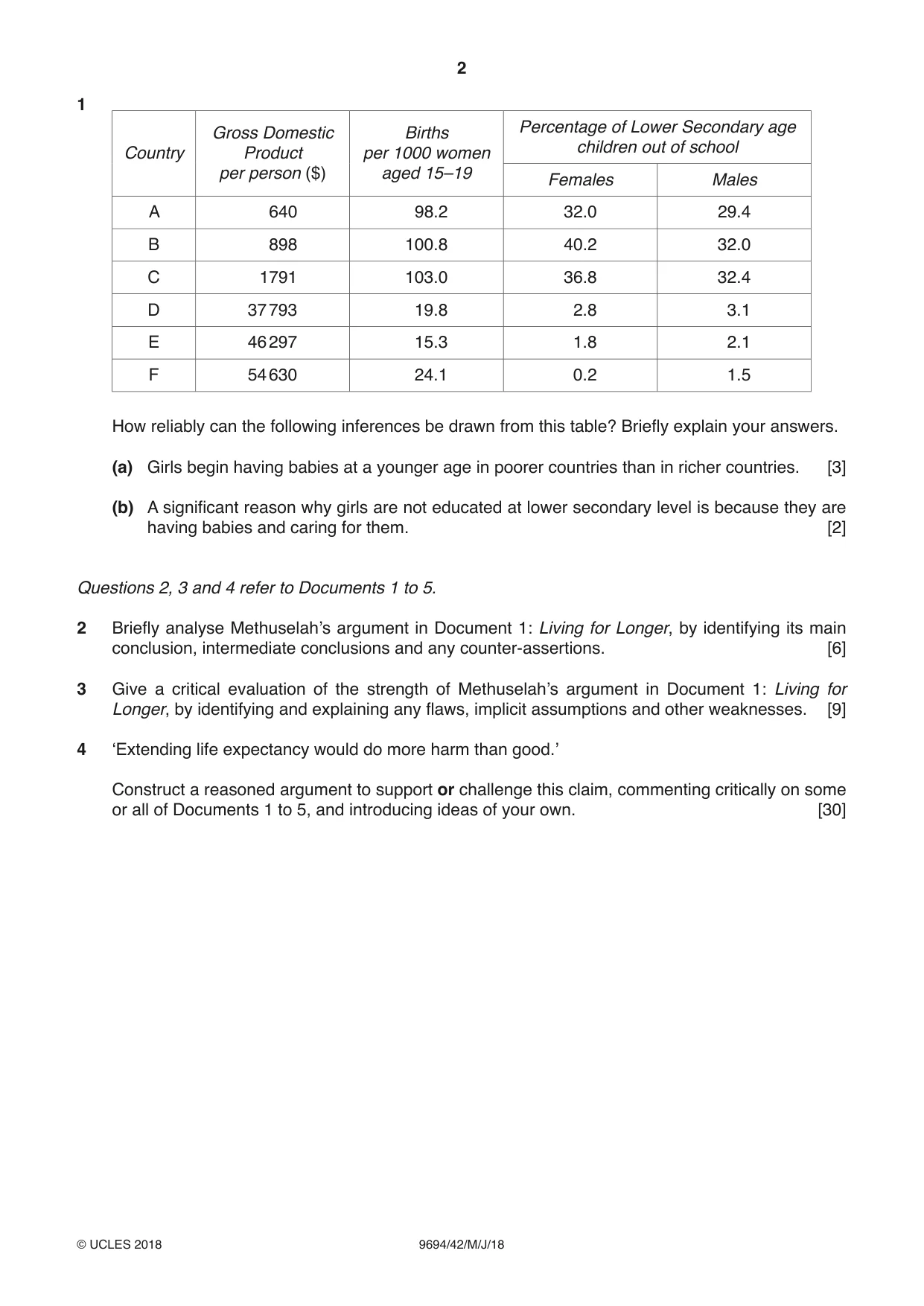
2 9694/42/M/J/18 © UCLES 2018 1 Country Gross Domestic Product per person ($) Births per 1000 women aged 15–19 Percentage of Lower Secondary age children out of school Females Males A 640 98.2 32.0 29.4 B 898 100.8 40.2 32.0 C 1791 103.0 36.8 32.4 D 37 793 19.8 2.8 3.1 E 46 297 15.3 1.8 2.1 F 54 630 24.1 0.2 1.5 How reliably can the following inferences be drawn from this table? Briefly explain your answers. (a) Girls begin having babies at a younger age in poorer countries than in richer countries. [3] (b) A significant reason why girls are not educated at lower secondary level is because they are having babies and caring for them. [2] Questions 2, 3 and 4 refer to Documents 1 to 5. 2 Briefly analyse Methuselah’s argument in Document 1: Living for Longer, by identifying its main conclusion, intermediate conclusions and any counter-assertions. [6] 3 Give a critical evaluation of the strength of Methuselah’s argument in Document 1: Living for Longer, by identifying and explaining any flaws, implicit assumptions and other weaknesses. [9] 4 ‘Extending life expectancy would do more harm than good.’ Construct a reasoned argument to support or challenge this claim, commenting critically on some or all of Documents 1 to 5, and introducing ideas of your own. [30]
Question paper, page 3
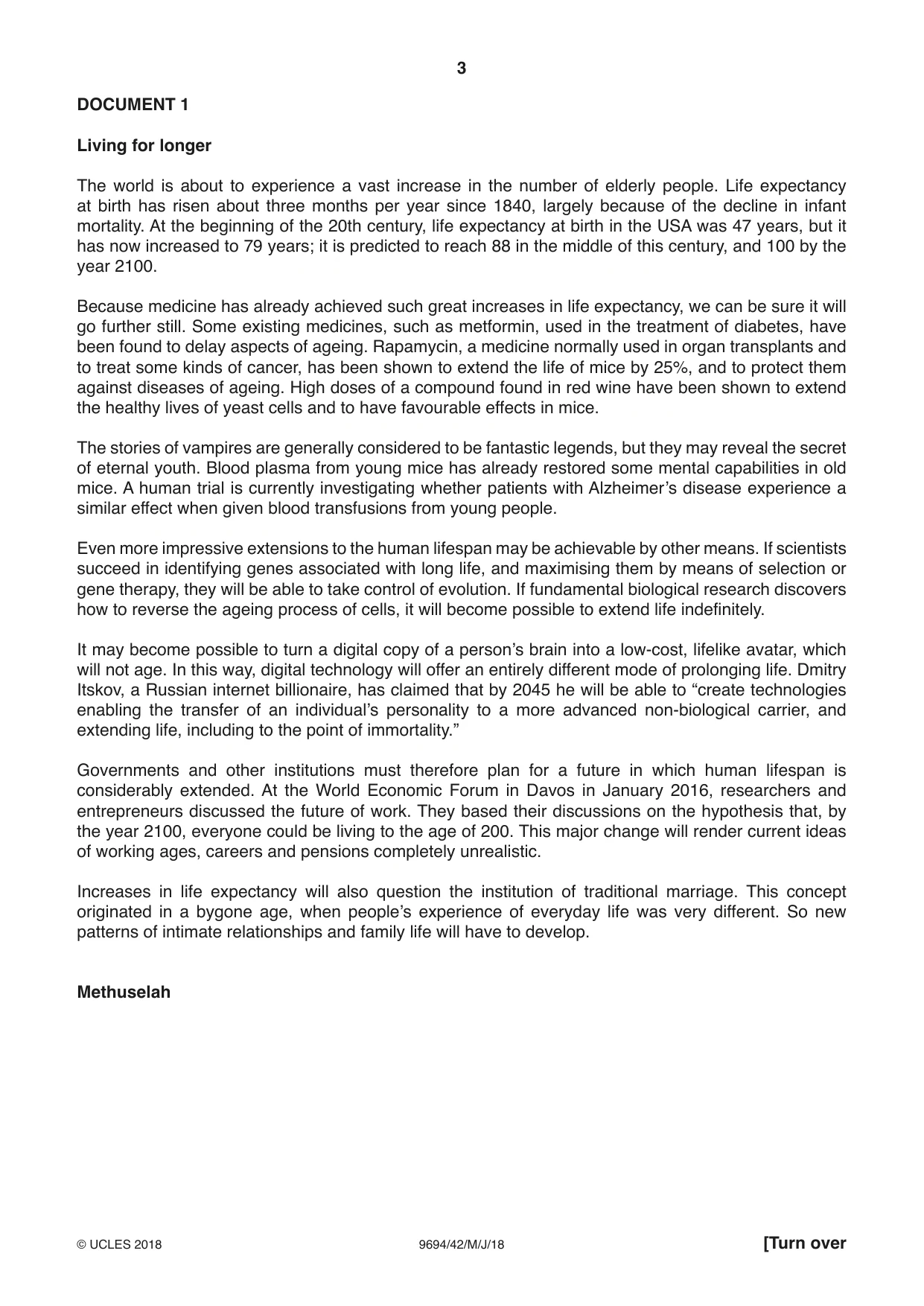
3 9694/42/M/J/18 © UCLES 2018 [Turn over DOCUMENT 1 Living for longer The world is about to experience a vast increase in the number of elderly people. Life expectancy at birth has risen about three months per year since 1840, largely because of the decline in infant mortality. At the beginning of the 20th century, life expectancy at birth in the USA was 47 years, but it has now increased to 79 years; it is predicted to reach 88 in the middle of this century, and 100 by the year 2100. Because medicine has already achieved such great increases in life expectancy, we can be sure it will go further still. Some existing medicines, such as metformin, used in the treatment of diabetes, have been found to delay aspects of ageing. Rapamycin, a medicine normally used in organ transplants and to treat some kinds of cancer, has been shown to extend the life of mice by 25%, and to protect them against diseases of ageing. High doses of a compound found in red wine have been shown to extend the healthy lives of yeast cells and to have favourable effects in mice. The stories of vampires are generally considered to be fantastic legends, but they may reveal the secret of eternal youth. Blood plasma from young mice has already restored some mental capabilities in old mice. A human trial is currently investigating whether patients with Alzheimer’s disease experience a similar effect when given blood transfusions from young people. Even more impressive extensions to the human lifespan may be achievable by other means. If scientists succeed in identifying genes associated with long life, and maximising them by means of selection or gene therapy, they will be able to take control of evolution. If fundamental biological research discovers how to reverse the ageing process of cells, it will become possible to extend life indefinitely. It may become possible to turn a digital copy of a person’s brain into a low-cost, lifelike avatar, which will not age. In this way, digital technology will offer an entirely different mode of prolonging life. Dmitry Itskov, a Russian internet billionaire, has claimed that by 2045 he will be able to “create technologies enabling the transfer of an individual’s personality to a more advanced non-biological carrier, and extending life, including to the point of immortality.” Governments and other institutions must therefore plan for a future in which human lifespan is considerably extended. At the World Economic Forum in Davos in January 2016, researchers and entrepreneurs discussed the future of work. They based their discussions on the hypothesis that, by the year 2100, everyone could be living to the age of 200. This major change will render current ideas of working ages, careers and pensions completely unrealistic. Increases in life expectancy will also question the institution of traditional marriage. This concept originated in a bygone age, when people’s experience of everyday life was very different. So new patterns of intimate relationships and family life will have to develop. Methuselah
Question paper, page 4
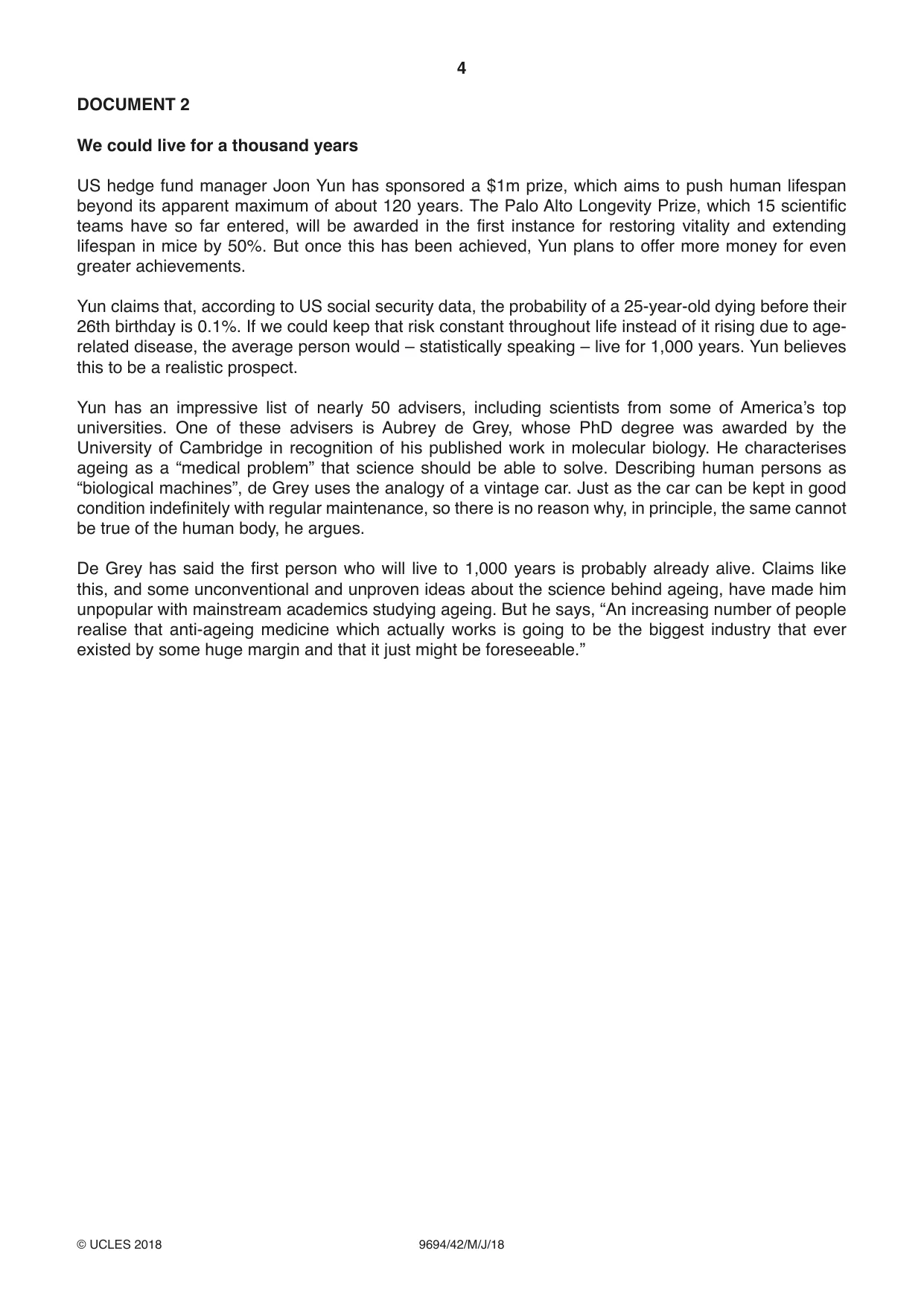
4 9694/42/M/J/18 © UCLES 2018 DOCUMENT 2 We could live for a thousand years US hedge fund manager Joon Yun has sponsored a $1m prize, which aims to push human lifespan beyond its apparent maximum of about 120 years. The Palo Alto Longevity Prize, which 15 scientific teams have so far entered, will be awarded in the first instance for restoring vitality and extending lifespan in mice by 50%. But once this has been achieved, Yun plans to offer more money for even greater achievements. Yun claims that, according to US social security data, the probability of a 25-year-old dying before their 26th birthday is 0.1%. If we could keep that risk constant throughout life instead of it rising due to age- related disease, the average person would – statistically speaking – live for 1,000 years. Yun believes this to be a realistic prospect. Yun has an impressive list of nearly 50 advisers, including scientists from some of America’s top universities. One of these advisers is Aubrey de Grey, whose PhD degree was awarded by the University of Cambridge in recognition of his published work in molecular biology. He characterises ageing as a “medical problem” that science should be able to solve. Describing human persons as “biological machines”, de Grey uses the analogy of a vintage car. Just as the car can be kept in good condition indefinitely with regular maintenance, so there is no reason why, in principle, the same cannot be true of the human body, he argues. De Grey has said the first person who will live to 1,000 years is probably already alive. Claims like this, and some unconventional and unproven ideas about the science behind ageing, have made him unpopular with mainstream academics studying ageing. But he says, “An increasing number of people realise that anti-ageing medicine which actually works is going to be the biggest industry that ever existed by some huge margin and that it just might be foreseeable.”
Question paper, page 5
5 9694/42/M/J/18 © UCLES 2018 [Turn over DOCUMENT 3 In the most developed countries, the proportion of the population aged 65 and over is expected to rise from 16% to 26% over the next 40 years, and the developing world is not far behind. These changes will pose great challenges to labour markets and social protection structures. For most people, living longer will inevitably mean more time spent working. Retirement ages will have to be delayed, to enable individuals to support themselves without overburdening a nation’s social security system. This is not entirely bad news. With skilled workers remaining in the workforce longer, economic productivity will go up. And if people become bored with their jobs, they can change careers. But if you have people staying in their jobs for 100 years, that is going to make it really difficult for young people to move into a career and make progress within it. People who continue paid work beyond the normal retirement age generate additional income which helps to finance pensions. Most young people now realise that they will have to work longer than their parents. However, some employers are reluctant to keep older workers on their payroll. A large proportion of government budgets consists of public expenditure on health. According to a recent report, the over-65 age group accounts for 40–50% of spending on healthcare. It appears likely that public expenditure will rise in line with an increase in life expectancy. Access to medical assistance and adequate social services are essential aspects of social security, and healthy ageing is impossible without them. There can be no doubt that, in the future, beneficiaries of pension schemes will claim benefits over a much longer period than at present. Many countries have failed to respond to this challenge, and have not raised the statutory age of retirement. Furthermore, many people take advantage of schemes for early retirement, which make the problems even worse. One of the biggest challenges will be to guarantee adequate income for old people without creating an unbearable load for the younger age groups.
Question paper, page 6
6 9694/42/M/J/18 © UCLES 2018 DOCUMENT 4 Welcome release “I’m tired, and I’m ready to go home.” Anyone who has spent much time with elderly people has heard these words on many occasions. Sometimes they refer to an outing or social event, but often they have a more universal significance. The old person is tired of life and will welcome death as a release. For many centuries, the age of 70 was recognised as the natural end of life. The minority who lived on for another decade expected to be increasingly limited by weakness of both body and mind. In some periods and locations, most people in practice lived for much less than this, because of disease, hunger and war, but 70 remained the target, and those who reached it were considered to have “had a good innings” (as cricketing nations tend to express it). Aiming to extend life beyond its natural endpoint is contrary to the wisdom of ages as expressed in various religious and non‐religious spiritual traditions. Although these traditions are united in regarding life as desirable and in condemning attempts to end it prematurely, they also agree that focusing one’s attention on the preservation of the self or “ego” causes one to miss the whole purpose of life. The most significant human experiences are those which can be described as “transcendent”, in which consciousness is concentrated on something other than oneself. Many people find these experiences of transcendence through religion, but music, literature, drama and the visual arts can all act as doorways into the eternal, in which the self becomes insignificant. Such experiences are more important and more fulfilling than the mere prolongation of physical existence. Most scientists and philosophers believe that awareness of mortality is one of the most significant defining characteristics of humans, which other species do not share. Rather than frantically trying to postpone the inevitable, we should prepare ourselves for death and when the time comes embrace it.
Question paper, page 7
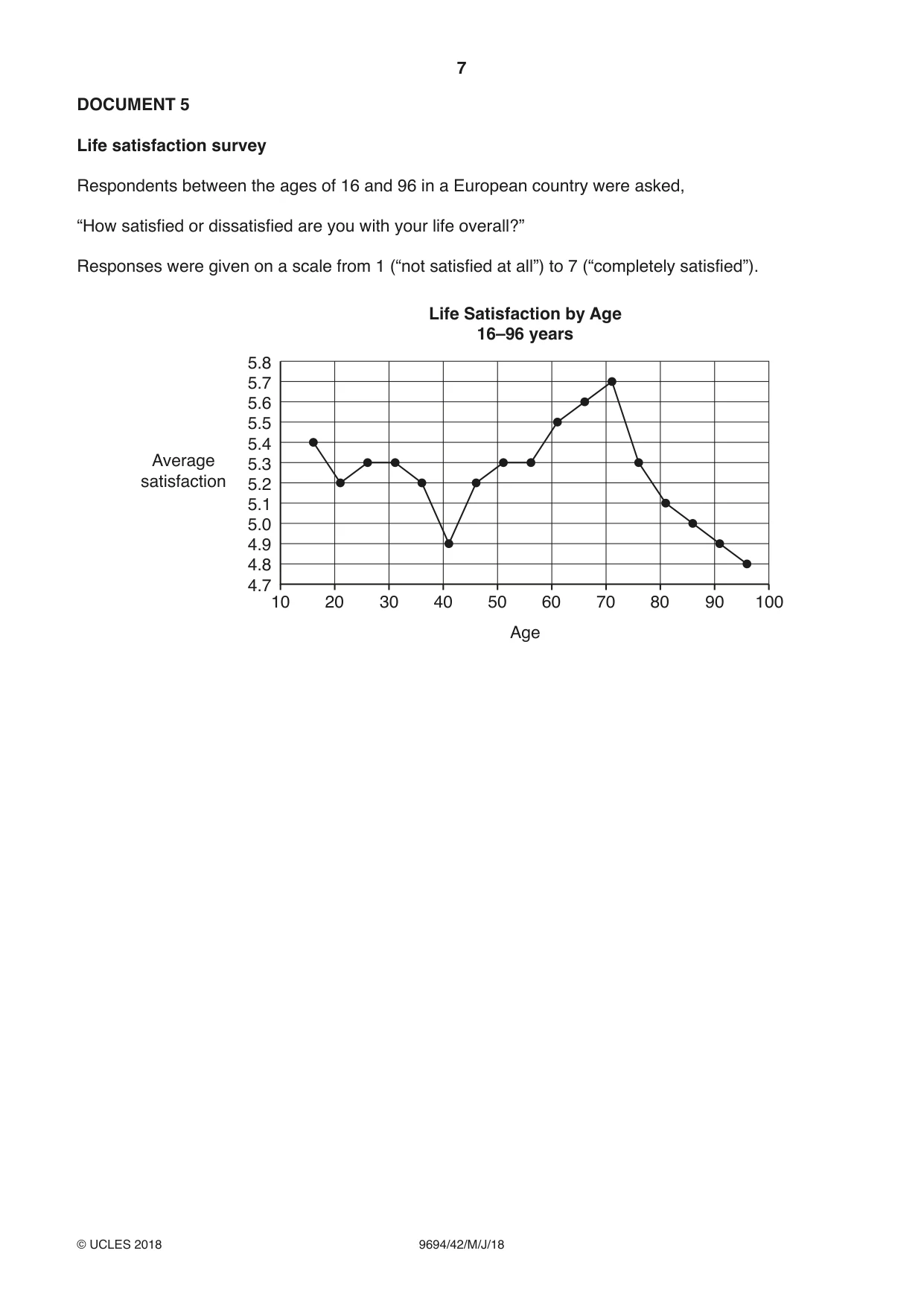
7 9694/42/M/J/18 © UCLES 2018 DOCUMENT 5 Life satisfaction survey Respondents between the ages of 16 and 96 in a European country were asked, “How satisfied or dissatisfied are you with your life overall?” Responses were given on a scale from 1 (“not satisfied at all”) to 7 (“completely satisfied”). 10 20 4.7 4.8 4.9 5.0 5.1 5.2 5.3 5.4 5.5 5.6 5.7 5.8 30 40 50 Age Average satisfaction Life Satisfaction by Age 16–96 years 60 70 90 100 80
Question paper, page 8
8 9694/42/M/J/18 © UCLES 2018 BLANK PAGE Permission to reproduce items where third-party owned material protected by copyright is included has been sought and cleared where possible. Every reasonable effort has been made by the publisher (UCLES) to trace copyright holders, but if any items requiring clearance have unwittingly been included, the publisher will be pleased to make amends at the earliest possible opportunity. To avoid the issue of disclosure of answer-related information to candidates, all copyright acknowledgements are reproduced online in the Cambridge International Examinations Copyright Acknowledgements Booklet. This is produced for each series of examinations and is freely available to download at www.cie.org.uk after the live examination series. Cambridge International Examinations is part of the Cambridge Assessment Group. Cambridge Assessment is the brand name of University of Cambridge Local Examinations Syndicate (UCLES), which is itself a department of the University of Cambridge.
Mark scheme, page 1
IGCSE™ is a registered trademark. This document consists of 13 printed pages. © UCLES 2018 [Turn over Cambridge Assessment International Education Cambridge International Advanced Subsidiary and Advanced Level THINKING SKILLS 9694/42 Paper 4 Applied Reasoning May/June 2018 MARK SCHEME Maximum Mark: 50 Published This mark scheme is published as an aid to teachers and candidates, to indicate the requirements of the examination. It shows the basis on which Examiners were instructed to award marks. It does not indicate the details of the discussions that took place at an Examiners’ meeting before marking began, which would have considered the acceptability of alternative answers. Mark schemes should be read in conjunction with the question paper and the Principal Examiner Report for Teachers. Cambridge International will not enter into discussions about these mark schemes. Cambridge International is publishing the mark schemes for the May/June 2018 series for most Cambridge IGCSE™, Cambridge International A and AS Level and Cambridge Pre-U components, and some Cambridge O Level components.
Mark scheme, page 2
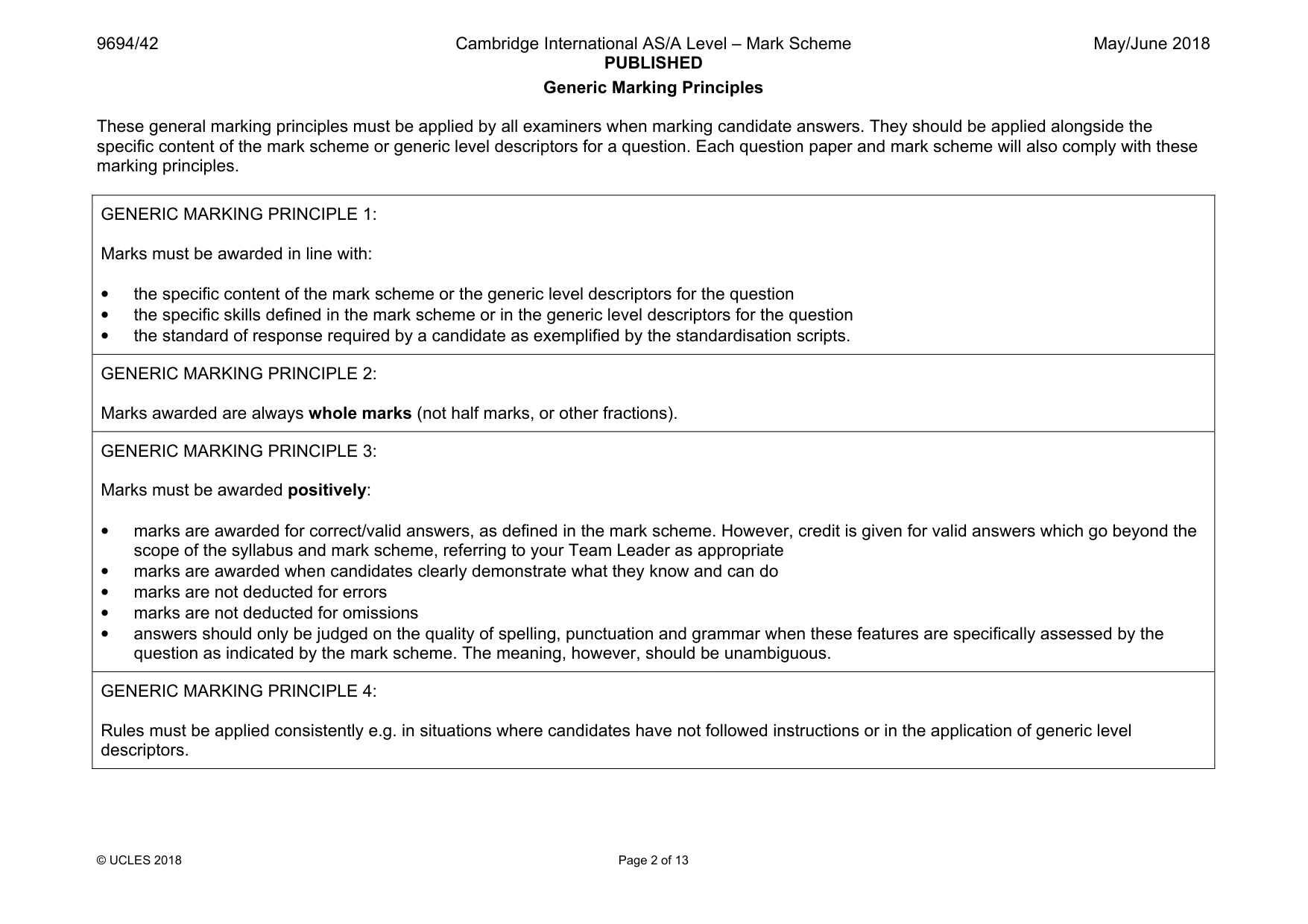
9694/42 Cambridge International AS/A Level – Mark Scheme PUBLISHED May/June 2018 © UCLES 2018 Page 2 of 13 Generic Marking Principles These general marking principles must be applied by all examiners when marking candidate answers. They should be applied alongside the specific content of the mark scheme or generic level descriptors for a question. Each question paper and mark scheme will also comply with these marking principles. GENERIC MARKING PRINCIPLE 1: Marks must be awarded in line with: • the specific content of the mark scheme or the generic level descriptors for the question • the specific skills defined in the mark scheme or in the generic level descriptors for the question • the standard of response required by a candidate as exemplified by the standardisation scripts. GENERIC MARKING PRINCIPLE 2: Marks awarded are always whole marks (not half marks, or other fractions). GENERIC MARKING PRINCIPLE 3: Marks must be awarded positively: • marks are awarded for correct/valid answers, as defined in the mark scheme. However, credit is given for valid answers which go beyond the scope of the syllabus and mark scheme, referring to your Team Leader as appropriate • marks are awarded when candidates clearly demonstrate what they know and can do • marks are not deducted for errors • marks are not deducted for omissions • answers should only be judged on the quality of spelling, punctuation and grammar when these features are specifically assessed by the question as indicated by the mark scheme. The meaning, however, should be unambiguous. GENERIC MARKING PRINCIPLE 4: Rules must be applied consistently e.g. in situations where candidates have not followed instructions or in the application of generic level descriptors.
Mark scheme, page 3
9694/42 Cambridge International AS/A Level – Mark Scheme PUBLISHED May/June 2018 © UCLES 2018 Page 3 of 13 GENERIC MARKING PRINCIPLE 5: Marks should be awarded using the full range of marks defined in the mark scheme for the question (however; the use of the full mark range may be limited according to the quality of the candidate responses seen). GENERIC MARKING PRINCIPLE 6: Marks awarded are based solely on the requirements as defined in the mark scheme. Marks should not be awarded with grade thresholds or grade descriptors in mind.
Mark scheme, page 4
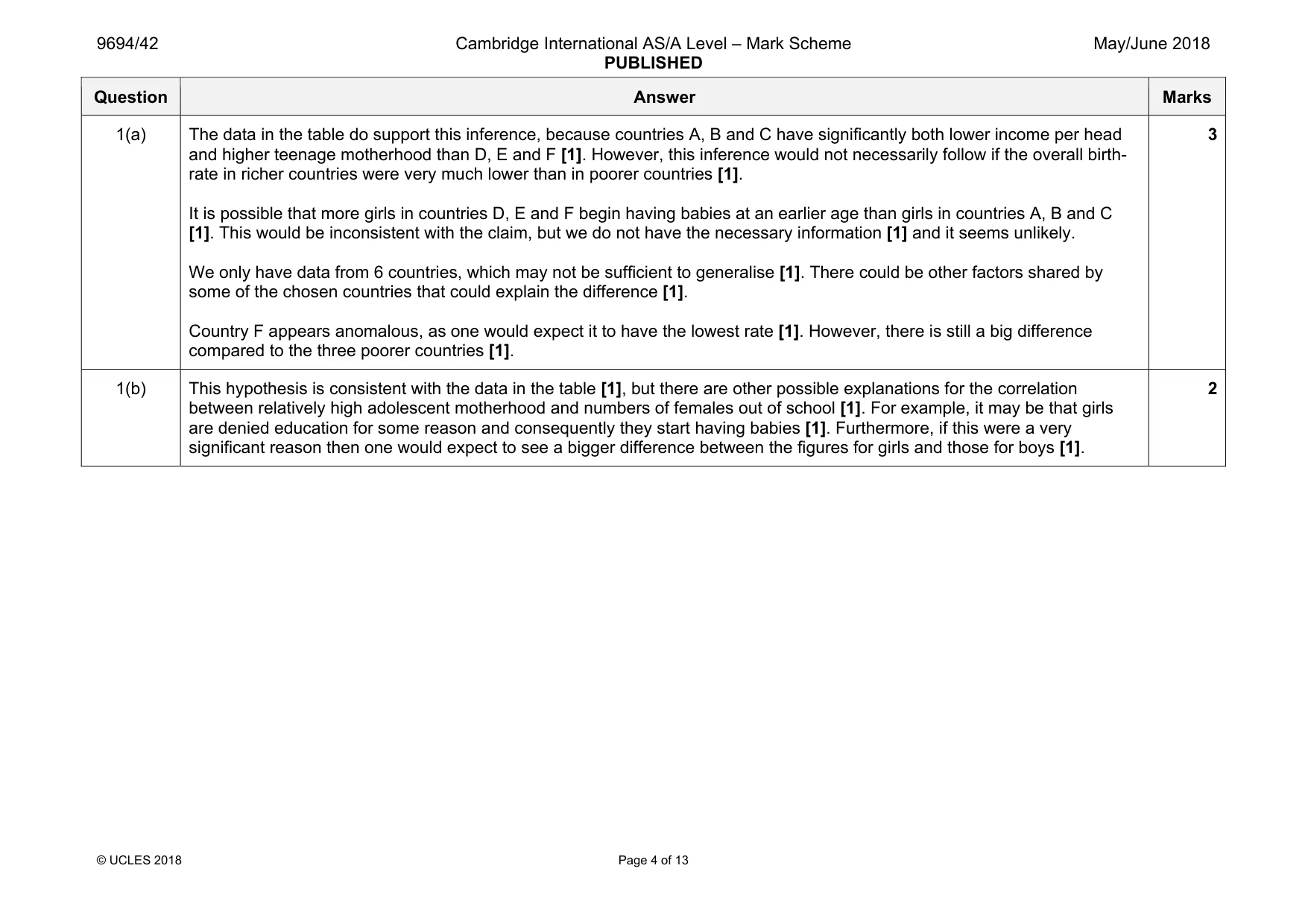
9694/42 Cambridge International AS/A Level – Mark Scheme PUBLISHED May/June 2018 © UCLES 2018 Page 4 of 13 Question Answer Marks 1(a) The data in the table do support this inference, because countries A, B and C have significantly both lower income per head and higher teenage motherhood than D, E and F [1]. However, this inference would not necessarily follow if the overall birth- rate in richer countries were very much lower than in poorer countries [1]. It is possible that more girls in countries D, E and F begin having babies at an earlier age than girls in countries A, B and C [1]. This would be inconsistent with the claim, but we do not have the necessary information [1] and it seems unlikely. We only have data from 6 countries, which may not be sufficient to generalise [1]. There could be other factors shared by some of the chosen countries that could explain the difference [1]. Country F appears anomalous, as one would expect it to have the lowest rate [1]. However, there is still a big difference compared to the three poorer countries [1]. 3 1(b) This hypothesis is consistent with the data in the table [1], but there are other possible explanations for the correlation between relatively high adolescent motherhood and numbers of females out of school [1]. For example, it may be that girls are denied education for some reason and consequently they start having babies [1]. Furthermore, if this were a very significant reason then one would expect to see a bigger difference between the figures for girls and those for boys [1]. 2
Mark scheme, page 5
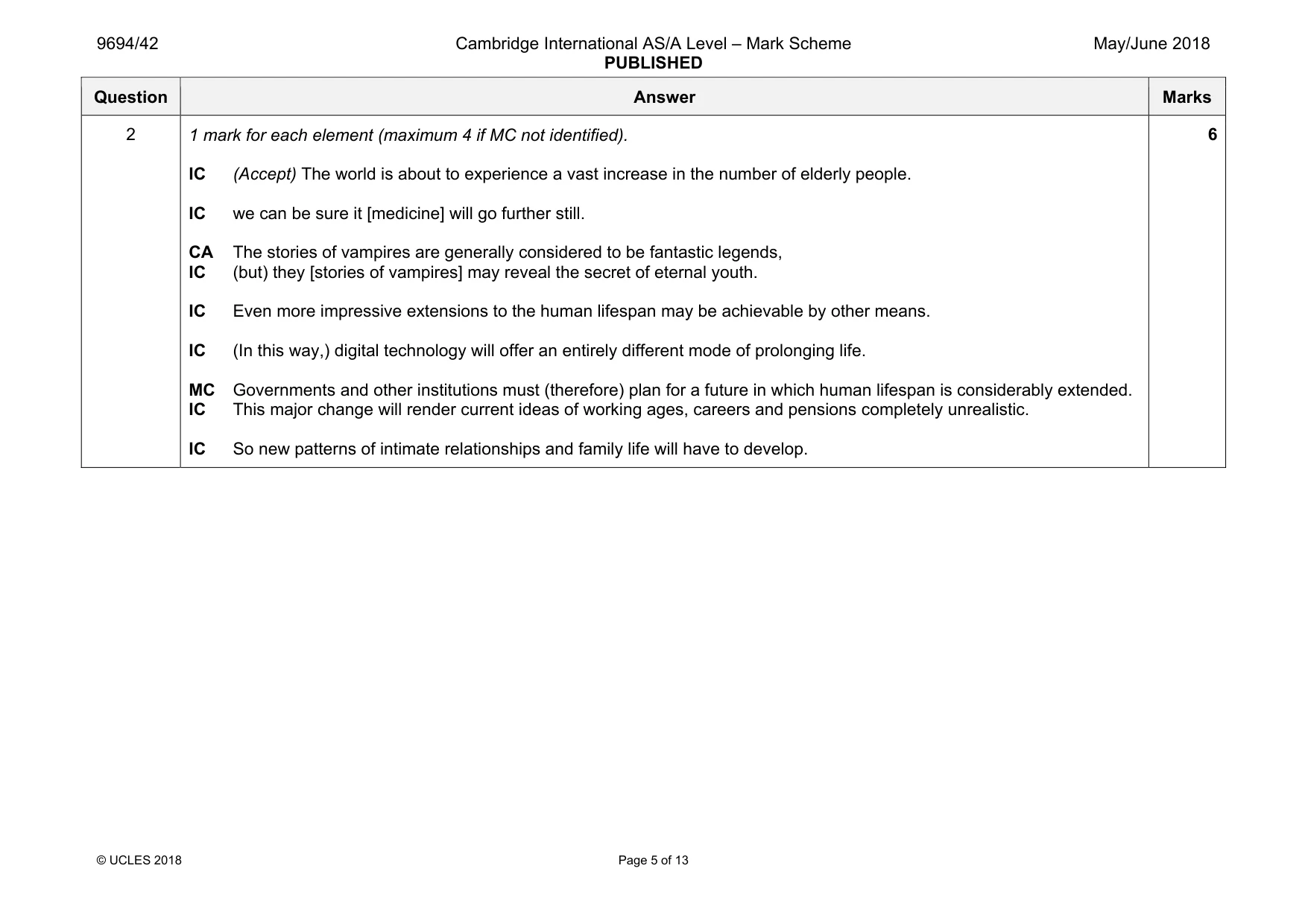
9694/42 Cambridge International AS/A Level – Mark Scheme PUBLISHED May/June 2018 © UCLES 2018 Page 5 of 13 Question Answer Marks 2 1 mark for each element (maximum 4 if MC not identified). IC (Accept) The world is about to experience a vast increase in the number of elderly people. IC we can be sure it [medicine] will go further still. CA The stories of vampires are generally considered to be fantastic legends, IC (but) they [stories of vampires] may reveal the secret of eternal youth. IC Even more impressive extensions to the human lifespan may be achievable by other means. IC (In this way,) digital technology will offer an entirely different mode of prolonging life. MC Governments and other institutions must (therefore) plan for a future in which human lifespan is considerably extended. IC This major change will render current ideas of working ages, careers and pensions completely unrealistic. IC So new patterns of intimate relationships and family life will have to develop. 6
Mark scheme, page 6
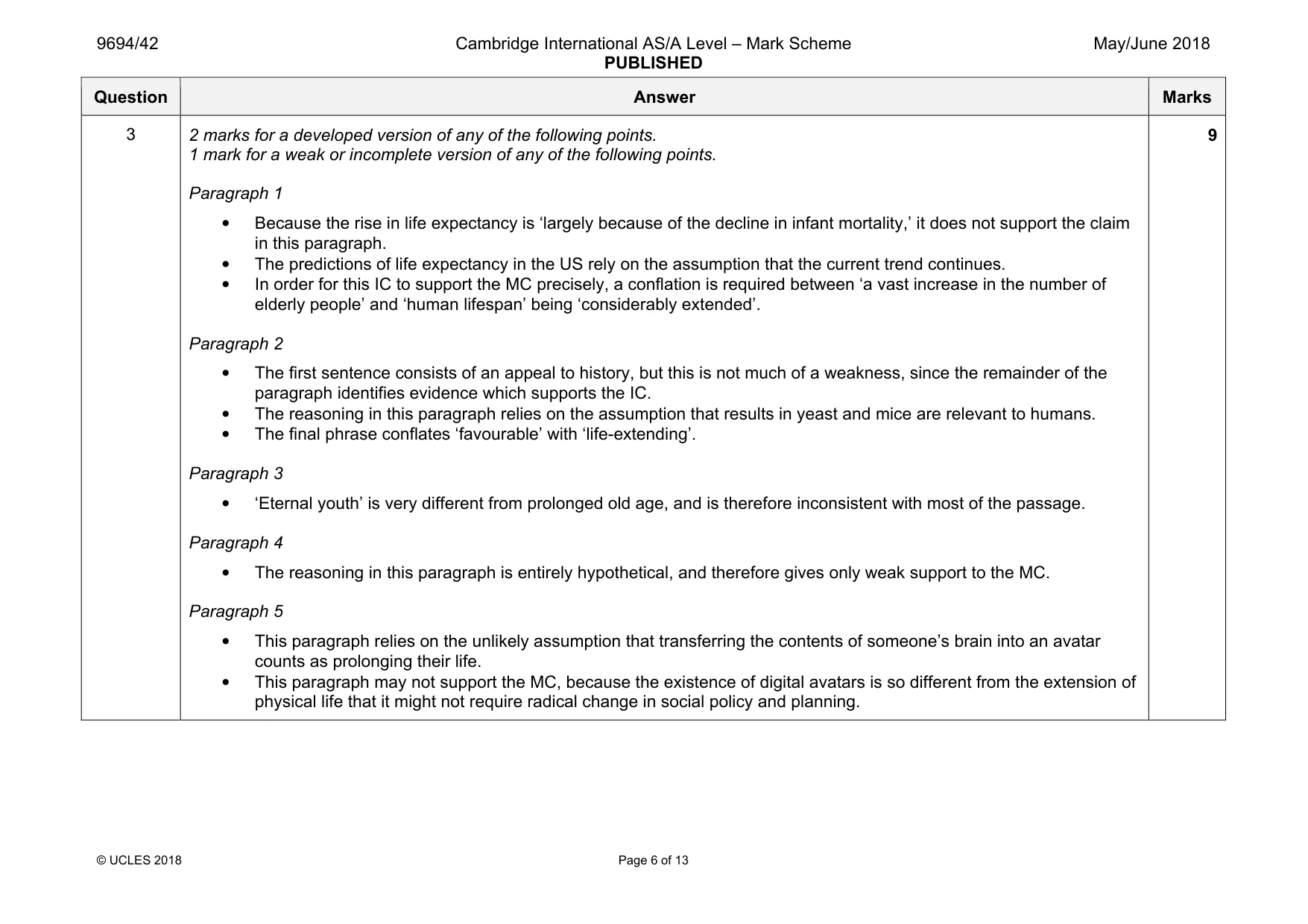
9694/42 Cambridge International AS/A Level – Mark Scheme PUBLISHED May/June 2018 © UCLES 2018 Page 6 of 13 Question Answer Marks 3 2 marks for a developed version of any of the following points. 1 mark for a weak or incomplete version of any of the following points. Paragraph 1 • Because the rise in life expectancy is ‘largely because of the decline in infant mortality,’ it does not support the claim in this paragraph. • The predictions of life expectancy in the US rely on the assumption that the current trend continues. • In order for this IC to support the MC precisely, a conflation is required between ‘a vast increase in the number of elderly people’ and ‘human lifespan’ being ‘considerably extended’. Paragraph 2 • The first sentence consists of an appeal to history, but this is not much of a weakness, since the remainder of the paragraph identifies evidence which supports the IC. • The reasoning in this paragraph relies on the assumption that results in yeast and mice are relevant to humans. • The final phrase conflates ‘favourable’ with ‘life-extending’. Paragraph 3 • ‘Eternal youth’ is very different from prolonged old age, and is therefore inconsistent with most of the passage. Paragraph 4 • The reasoning in this paragraph is entirely hypothetical, and therefore gives only weak support to the MC. Paragraph 5 • This paragraph relies on the unlikely assumption that transferring the contents of someone’s brain into an avatar counts as prolonging their life. • This paragraph may not support the MC, because the existence of digital avatars is so different from the extension of physical life that it might not require radical change in social policy and planning. 9
Mark scheme, page 7
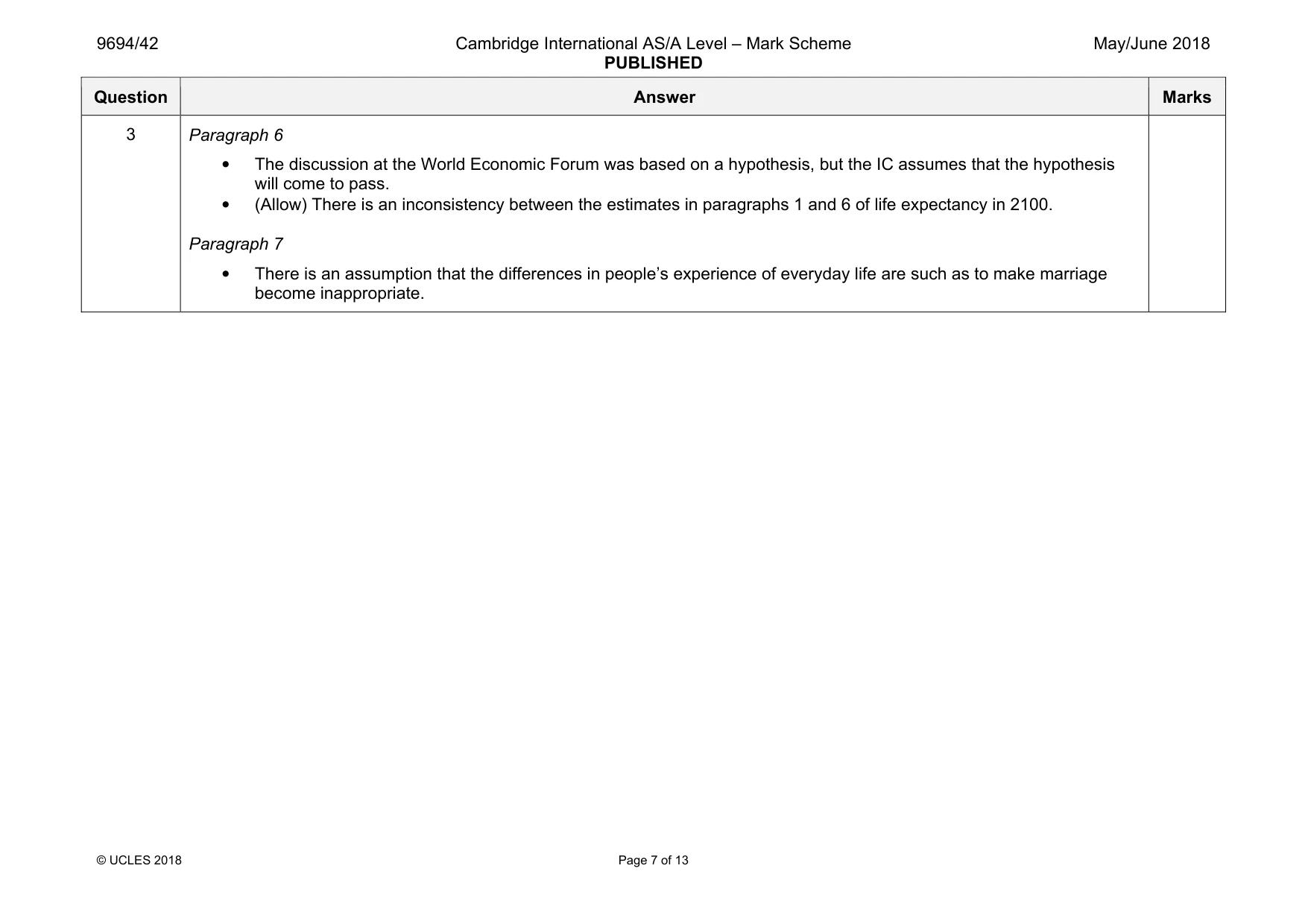
9694/42 Cambridge International AS/A Level – Mark Scheme PUBLISHED May/June 2018 © UCLES 2018 Page 7 of 13 Question Answer Marks 3 Paragraph 6 • The discussion at the World Economic Forum was based on a hypothesis, but the IC assumes that the hypothesis will come to pass. • (Allow) There is an inconsistency between the estimates in paragraphs 1 and 6 of life expectancy in 2100. Paragraph 7 • There is an assumption that the differences in people’s experience of everyday life are such as to make marriage become inappropriate.
Mark scheme, page 8
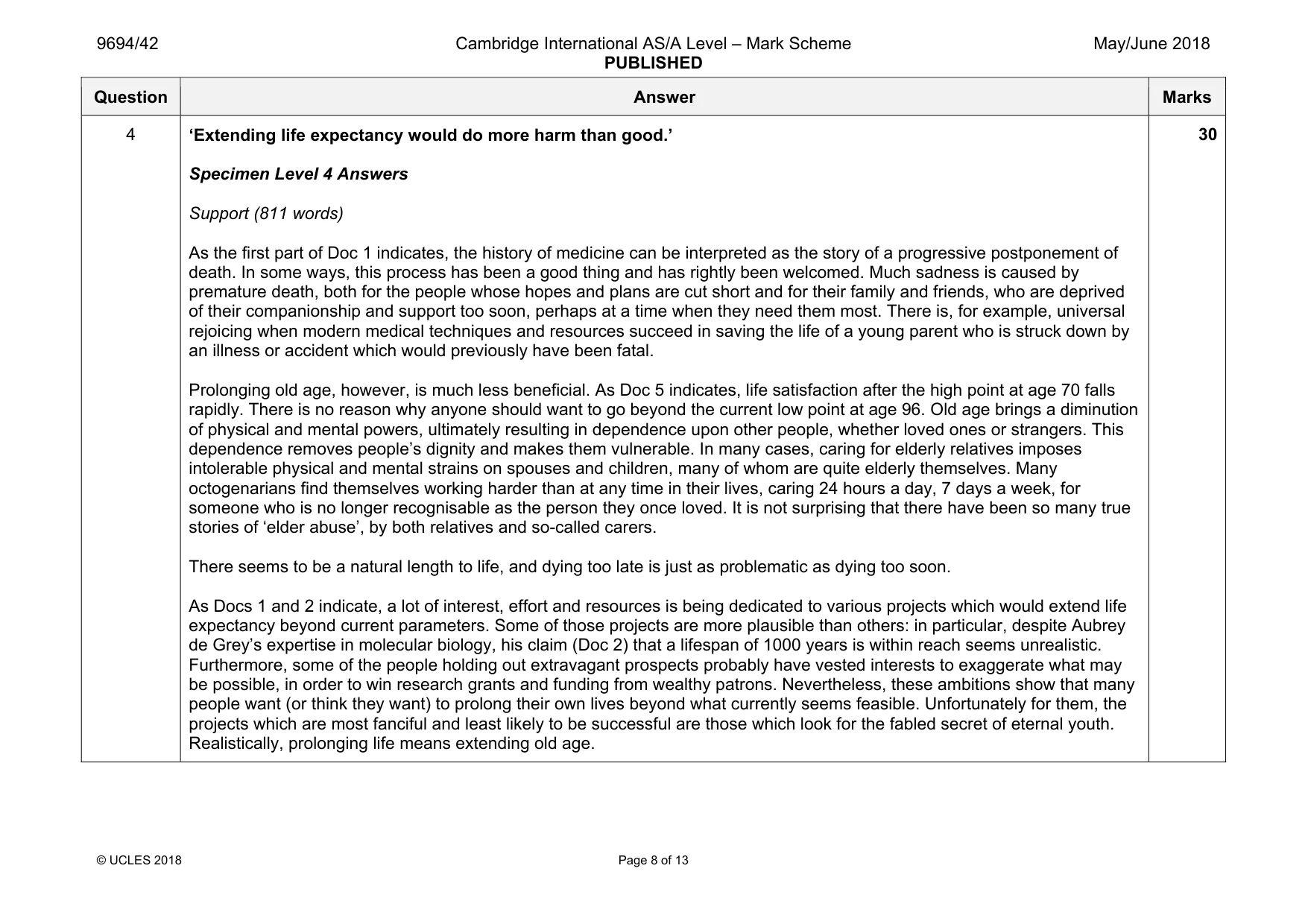
9694/42 Cambridge International AS/A Level – Mark Scheme PUBLISHED May/June 2018 © UCLES 2018 Page 8 of 13 Question Answer Marks 4 ‘Extending life expectancy would do more harm than good.’ Specimen Level 4 Answers Support (811 words) As the first part of Doc 1 indicates, the history of medicine can be interpreted as the story of a progressive postponement of death. In some ways, this process has been a good thing and has rightly been welcomed. Much sadness is caused by premature death, both for the people whose hopes and plans are cut short and for their family and friends, who are deprived of their companionship and support too soon, perhaps at a time when they need them most. There is, for example, universal rejoicing when modern medical techniques and resources succeed in saving the life of a young parent who is struck down by an illness or accident which would previously have been fatal. Prolonging old age, however, is much less beneficial. As Doc 5 indicates, life satisfaction after the high point at age 70 falls rapidly. There is no reason why anyone should want to go beyond the current low point at age 96. Old age brings a diminution of physical and mental powers, ultimately resulting in dependence upon other people, whether loved ones or strangers. This dependence removes people’s dignity and makes them vulnerable. In many cases, caring for elderly relatives imposes intolerable physical and mental strains on spouses and children, many of whom are quite elderly themselves. Many octogenarians find themselves working harder than at any time in their lives, caring 24 hours a day, 7 days a week, for someone who is no longer recognisable as the person they once loved. It is not surprising that there have been so many true stories of ‘elder abuse’, by both relatives and so-called carers. There seems to be a natural length to life, and dying too late is just as problematic as dying too soon. As Docs 1 and 2 indicate, a lot of interest, effort and resources is being dedicated to various projects which would extend life expectancy beyond current parameters. Some of those projects are more plausible than others: in particular, despite Aubrey de Grey’s expertise in molecular biology, his claim (Doc 2) that a lifespan of 1000 years is within reach seems unrealistic. Furthermore, some of the people holding out extravagant prospects probably have vested interests to exaggerate what may be possible, in order to win research grants and funding from wealthy patrons. Nevertheless, these ambitions show that many people want (or think they want) to prolong their own lives beyond what currently seems feasible. Unfortunately for them, the projects which are most fanciful and least likely to be successful are those which look for the fabled secret of eternal youth. Realistically, prolonging life means extending old age. 30
Mark scheme, page 9
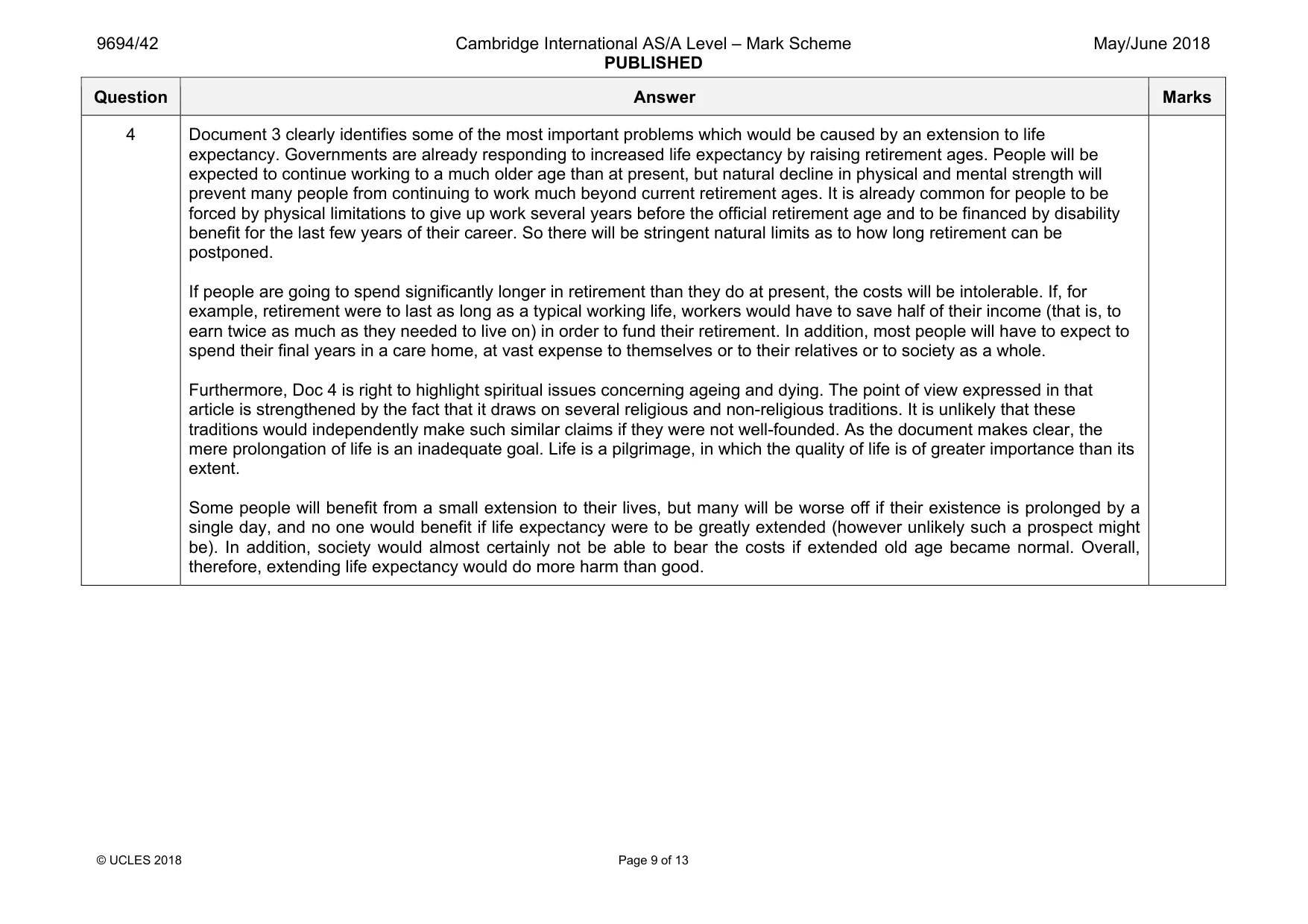
9694/42 Cambridge International AS/A Level – Mark Scheme PUBLISHED May/June 2018 © UCLES 2018 Page 9 of 13 Question Answer Marks 4 Document 3 clearly identifies some of the most important problems which would be caused by an extension to life expectancy. Governments are already responding to increased life expectancy by raising retirement ages. People will be expected to continue working to a much older age than at present, but natural decline in physical and mental strength will prevent many people from continuing to work much beyond current retirement ages. It is already common for people to be forced by physical limitations to give up work several years before the official retirement age and to be financed by disability benefit for the last few years of their career. So there will be stringent natural limits as to how long retirement can be postponed. If people are going to spend significantly longer in retirement than they do at present, the costs will be intolerable. If, for example, retirement were to last as long as a typical working life, workers would have to save half of their income (that is, to earn twice as much as they needed to live on) in order to fund their retirement. In addition, most people will have to expect to spend their final years in a care home, at vast expense to themselves or to their relatives or to society as a whole. Furthermore, Doc 4 is right to highlight spiritual issues concerning ageing and dying. The point of view expressed in that article is strengthened by the fact that it draws on several religious and non-religious traditions. It is unlikely that these traditions would independently make such similar claims if they were not well-founded. As the document makes clear, the mere prolongation of life is an inadequate goal. Life is a pilgrimage, in which the quality of life is of greater importance than its extent. Some people will benefit from a small extension to their lives, but many will be worse off if their existence is prolonged by a single day, and no one would benefit if life expectancy were to be greatly extended (however unlikely such a prospect might be). In addition, society would almost certainly not be able to bear the costs if extended old age became normal. Overall, therefore, extending life expectancy would do more harm than good.
Mark scheme, page 10
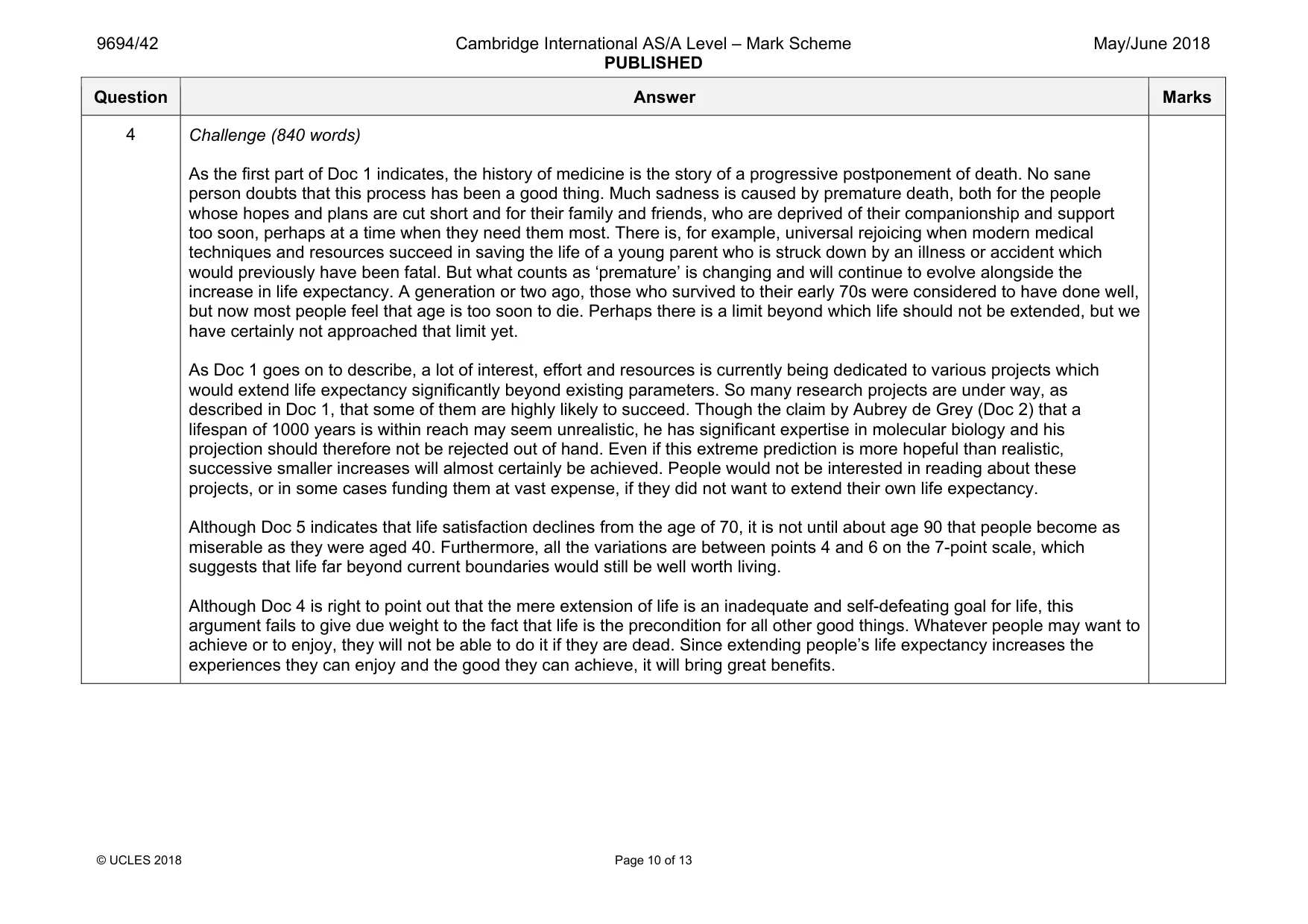
9694/42 Cambridge International AS/A Level – Mark Scheme PUBLISHED May/June 2018 © UCLES 2018 Page 10 of 13 Question Answer Marks 4 Challenge (840 words) As the first part of Doc 1 indicates, the history of medicine is the story of a progressive postponement of death. No sane person doubts that this process has been a good thing. Much sadness is caused by premature death, both for the people whose hopes and plans are cut short and for their family and friends, who are deprived of their companionship and support too soon, perhaps at a time when they need them most. There is, for example, universal rejoicing when modern medical techniques and resources succeed in saving the life of a young parent who is struck down by an illness or accident which would previously have been fatal. But what counts as ‘premature’ is changing and will continue to evolve alongside the increase in life expectancy. A generation or two ago, those who survived to their early 70s were considered to have done well, but now most people feel that age is too soon to die. Perhaps there is a limit beyond which life should not be extended, but we have certainly not approached that limit yet. As Doc 1 goes on to describe, a lot of interest, effort and resources is currently being dedicated to various projects which would extend life expectancy significantly beyond existing parameters. So many research projects are under way, as described in Doc 1, that some of them are highly likely to succeed. Though the claim by Aubrey de Grey (Doc 2) that a lifespan of 1000 years is within reach may seem unrealistic, he has significant expertise in molecular biology and his projection should therefore not be rejected out of hand. Even if this extreme prediction is more hopeful than realistic, successive smaller increases will almost certainly be achieved. People would not be interested in reading about these projects, or in some cases funding them at vast expense, if they did not want to extend their own life expectancy. Although Doc 5 indicates that life satisfaction declines from the age of 70, it is not until about age 90 that people become as miserable as they were aged 40. Furthermore, all the variations are between points 4 and 6 on the 7-point scale, which suggests that life far beyond current boundaries would still be well worth living. Although Doc 4 is right to point out that the mere extension of life is an inadequate and self-defeating goal for life, this argument fails to give due weight to the fact that life is the precondition for all other good things. Whatever people may want to achieve or to enjoy, they will not be able to do it if they are dead. Since extending people’s life expectancy increases the experiences they can enjoy and the good they can achieve, it will bring great benefits.
Mark scheme, page 11
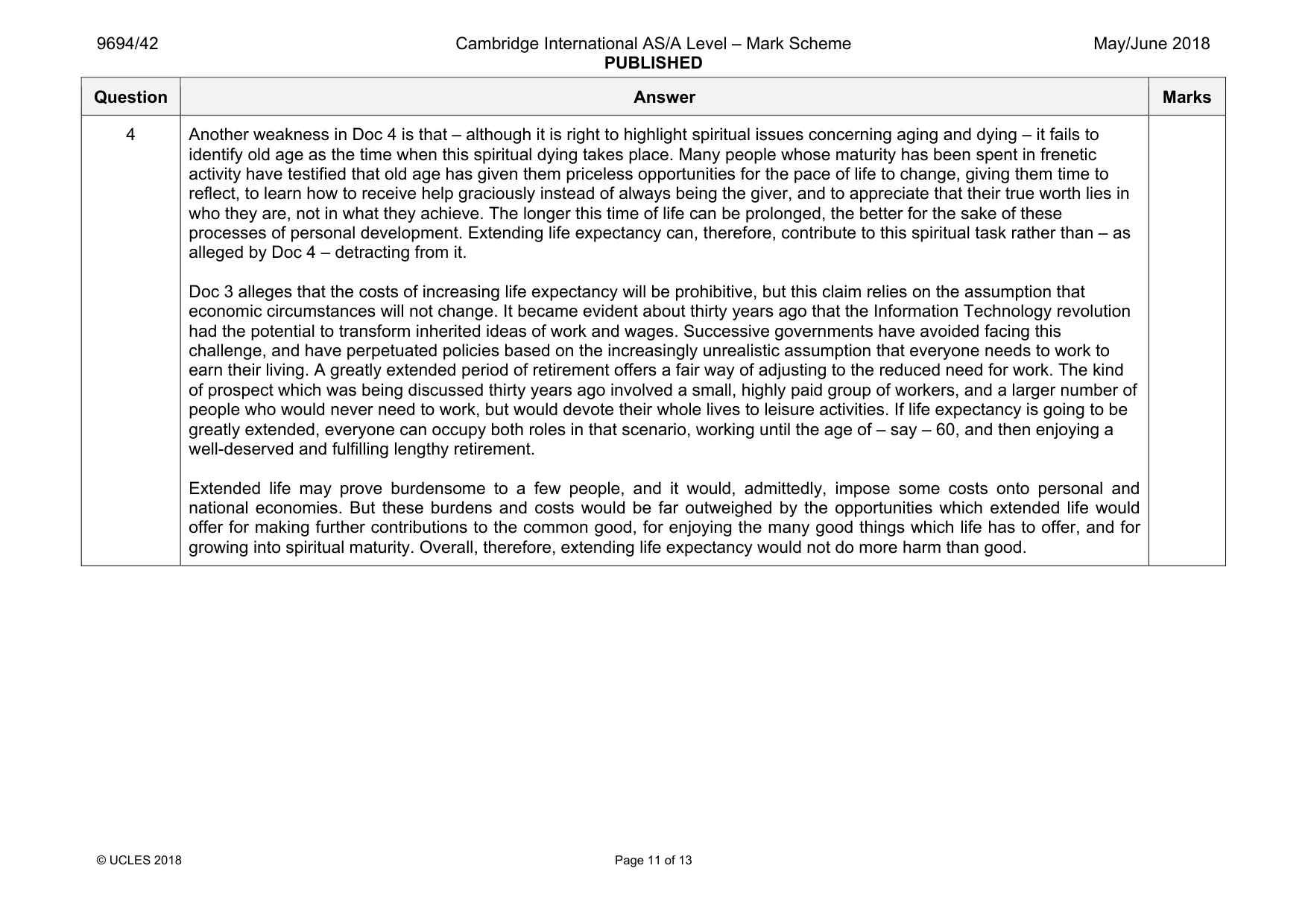
9694/42 Cambridge International AS/A Level – Mark Scheme PUBLISHED May/June 2018 © UCLES 2018 Page 11 of 13 Question Answer Marks 4 Another weakness in Doc 4 is that – although it is right to highlight spiritual issues concerning aging and dying – it fails to identify old age as the time when this spiritual dying takes place. Many people whose maturity has been spent in frenetic activity have testified that old age has given them priceless opportunities for the pace of life to change, giving them time to reflect, to learn how to receive help graciously instead of always being the giver, and to appreciate that their true worth lies in who they are, not in what they achieve. The longer this time of life can be prolonged, the better for the sake of these processes of personal development. Extending life expectancy can, therefore, contribute to this spiritual task rather than – as alleged by Doc 4 – detracting from it. Doc 3 alleges that the costs of increasing life expectancy will be prohibitive, but this claim relies on the assumption that economic circumstances will not change. It became evident about thirty years ago that the Information Technology revolution had the potential to transform inherited ideas of work and wages. Successive governments have avoided facing this challenge, and have perpetuated policies based on the increasingly unrealistic assumption that everyone needs to work to earn their living. A greatly extended period of retirement offers a fair way of adjusting to the reduced need for work. The kind of prospect which was being discussed thirty years ago involved a small, highly paid group of workers, and a larger number of people who would never need to work, but would devote their whole lives to leisure activities. If life expectancy is going to be greatly extended, everyone can occupy both roles in that scenario, working until the age of – say – 60, and then enjoying a well-deserved and fulfilling lengthy retirement. Extended life may prove burdensome to a few people, and it would, admittedly, impose some costs onto personal and national economies. But these burdens and costs would be far outweighed by the opportunities which extended life would offer for making further contributions to the common good, for enjoying the many good things which life has to offer, and for growing into spiritual maturity. Overall, therefore, extending life expectancy would not do more harm than good.
Mark scheme, page 12
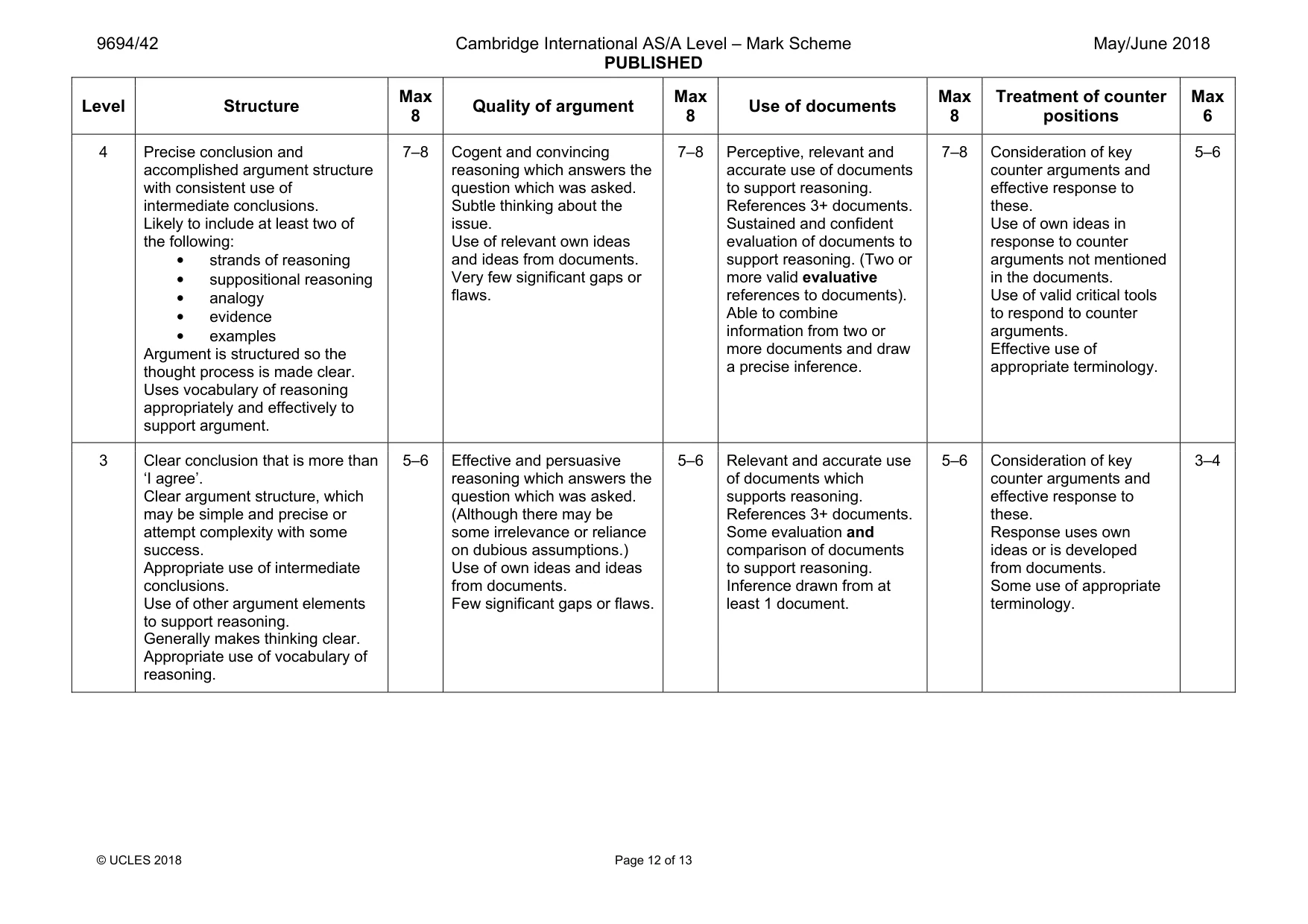
9694/42 Cambridge International AS/A Level – Mark Scheme PUBLISHED May/June 2018 © UCLES 2018 Page 12 of 13 Level Structure Max 8 Quality of argument Max 8 Use of documents Max 8 Treatment of counter positions Max 6 4 Precise conclusion and accomplished argument structure with consistent use of intermediate conclusions. Likely to include at least two of the following: • strands of reasoning • suppositional reasoning • analogy • evidence • examples Argument is structured so the thought process is made clear. Uses vocabulary of reasoning appropriately and effectively to support argument. 7–8 Cogent and convincing reasoning which answers the question which was asked. Subtle thinking about the issue. Use of relevant own ideas and ideas from documents. Very few significant gaps or flaws. 7–8 Perceptive, relevant and accurate use of documents to support reasoning. References 3+ documents. Sustained and confident evaluation of documents to support reasoning. (Two or more valid evaluative references to documents). Able to combine information from two or more documents and draw a precise inference. 7–8 Consideration of key counter arguments and effective response to these. Use of own ideas in response to counter arguments not mentioned in the documents. Use of valid critical tools to respond to counter arguments. Effective use of appropriate terminology. 5–6 3 Clear conclusion that is more than ‘I agree’. Clear argument structure, which may be simple and precise or attempt complexity with some success. Appropriate use of intermediate conclusions. Use of other argument elements to support reasoning. Generally makes thinking clear. Appropriate use of vocabulary of reasoning. 5–6 Effective and persuasive reasoning which answers the question which was asked. (Although there may be some irrelevance or reliance on dubious assumptions.) Use of own ideas and ideas from documents. Few significant gaps or flaws. 5–6 Relevant and accurate use of documents which supports reasoning. References 3+ documents. Some evaluation and comparison of documents to support reasoning. Inference drawn from at least 1 document. 5–6 Consideration of key counter arguments and effective response to these. Response uses own ideas or is developed from documents. Some use of appropriate terminology. 3–4
Mark scheme, page 13
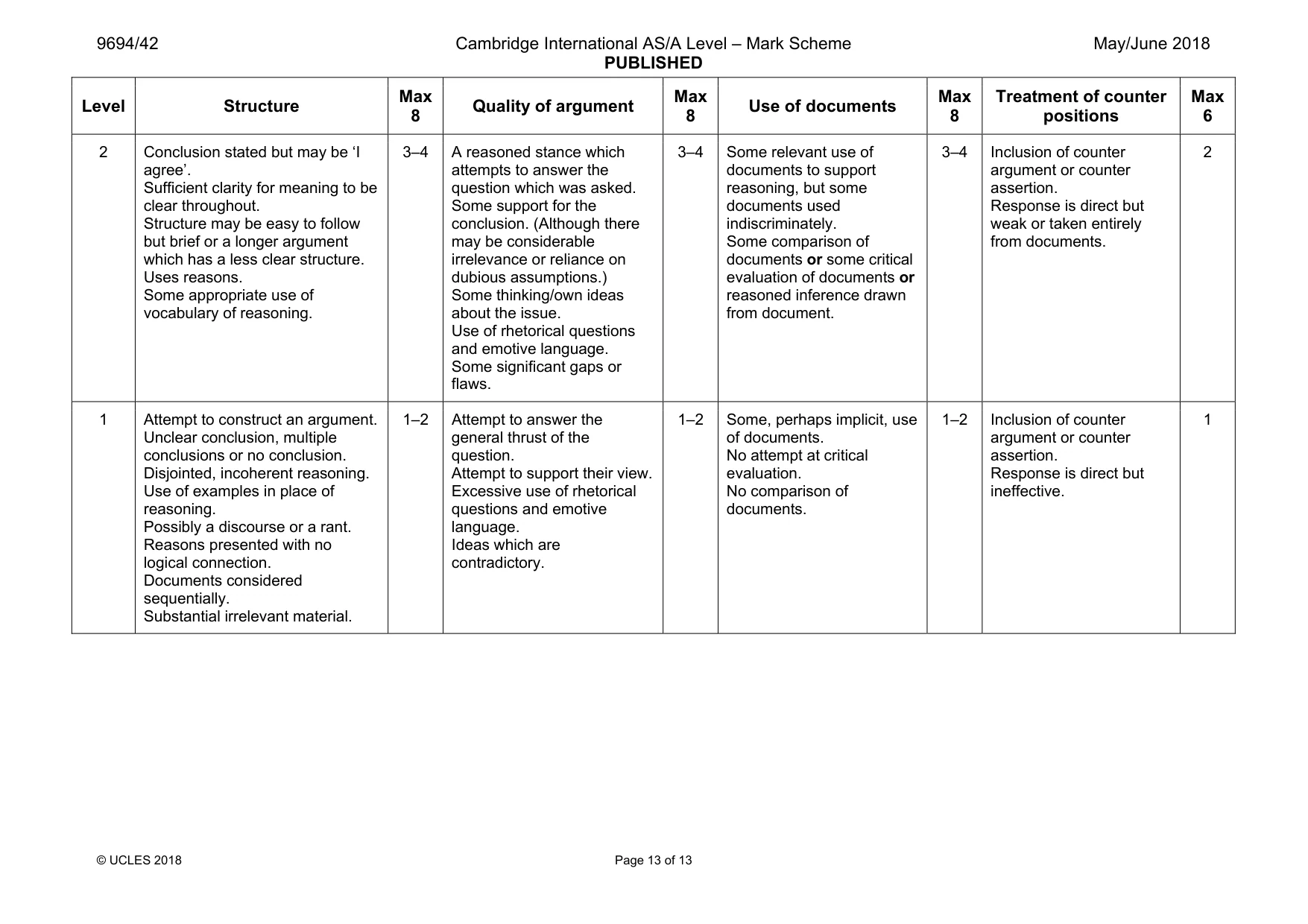
9694/42 Cambridge International AS/A Level – Mark Scheme PUBLISHED May/June 2018 © UCLES 2018 Page 13 of 13 Level Structure Max 8 Quality of argument Max 8 Use of documents Max 8 Treatment of counter positions Max 6 2 Conclusion stated but may be ‘I agree’. Sufficient clarity for meaning to be clear throughout. Structure may be easy to follow but brief or a longer argument which has a less clear structure. Uses reasons. Some appropriate use of vocabulary of reasoning. 3–4 A reasoned stance which attempts to answer the question which was asked. Some support for the conclusion. (Although there may be considerable irrelevance or reliance on dubious assumptions.) Some thinking/own ideas about the issue. Use of rhetorical questions and emotive language. Some significant gaps or flaws. 3–4 Some relevant use of documents to support reasoning, but some documents used indiscriminately. Some comparison of documents or some critical evaluation of documents or reasoned inference drawn from document. 3–4 Inclusion of counter argument or counter assertion. Response is direct but weak or taken entirely from documents. 2 1 Attempt to construct an argument. Unclear conclusion, multiple conclusions or no conclusion. Disjointed, incoherent reasoning. Use of examples in place of reasoning. Possibly a discourse or a rant. Reasons presented with no logical connection. Documents considered sequentially. Substantial irrelevant material. 1–2 Attempt to answer the general thrust of the question. Attempt to support their view. Excessive use of rhetorical questions and emotive language. Ideas which are contradictory. 1–2 Some, perhaps implicit, use of documents. No attempt at critical evaluation. No comparison of documents. 1–2 Inclusion of counter argument or counter assertion. Response is direct but ineffective. 1
What you needed in this session
Cambridge’s own grade thresholds for 2018 May/June, Paper 4 · Variant 2. A higher threshold means an easier paper — the bar moves with how the cohort did.