Cambridge A Level Physics 9702 — 2021 Feb/March Paper 5 · Variant 2
9702/52/F/M/21 · 2 questions · 30 marks · ≈34 min
The question paper and its mark scheme, free to read here and free to download. This is Cambridge’s own paper, exactly as it was sat.
Question paper12 pages




Mark scheme9 pages
Answers below. Sit the paper first if you are practising.
Questions as text
Q1 · A student investigates the vertical oscillations of a solid cylinder which floats in…
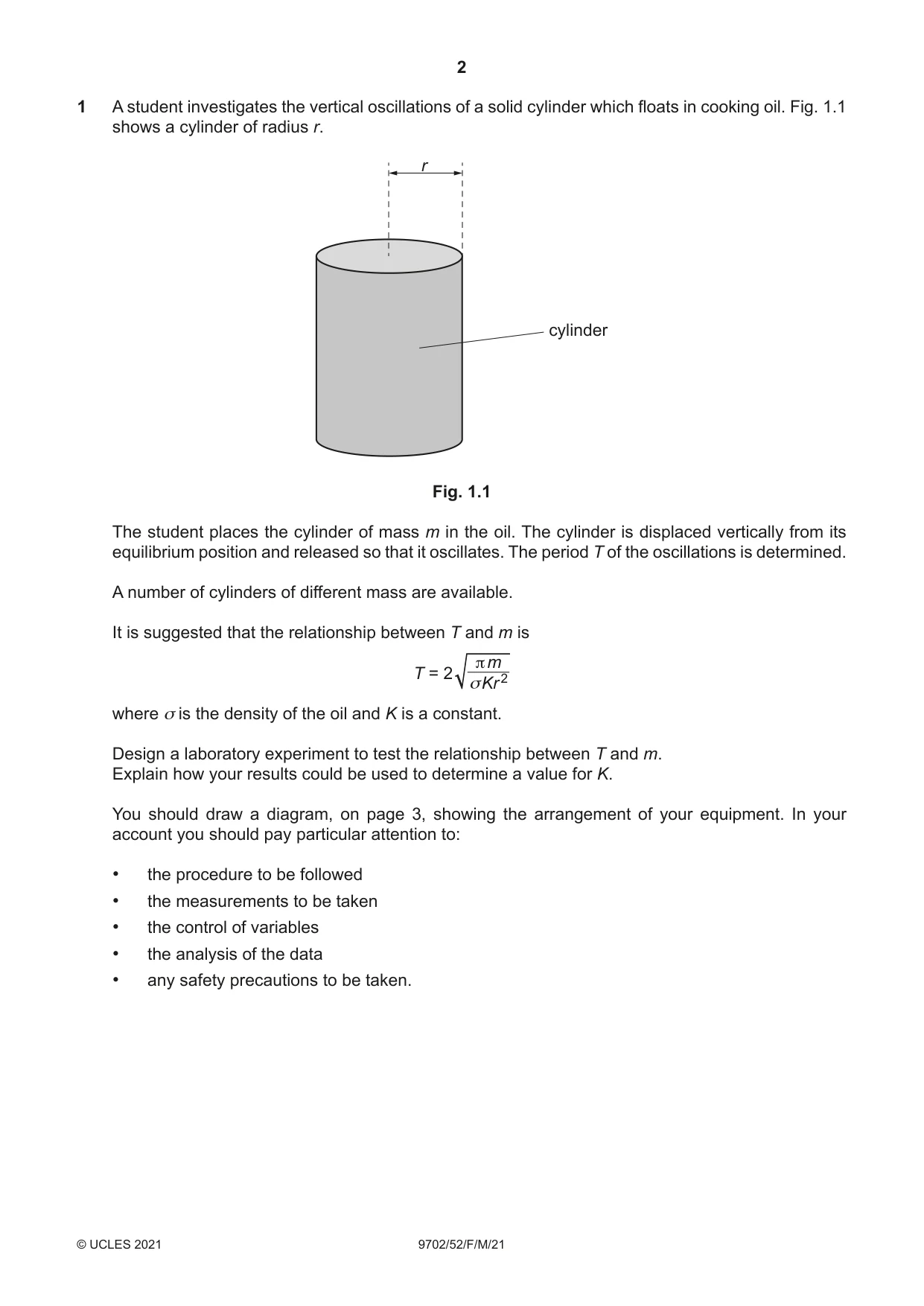
1 A student investigates the vertical oscillations of a solid cylinder which floats in cooking oil. Fig. 1.1 shows a cylinder of radius r. r cylinder Fig. 1.1 The student places the cylinder of mass m in the oil. The cylinder is displaced vertically from its equilibrium position and released so that it oscillates. The period T of the oscillations is determined. A number of cylinders of different mass are available. It is suggested that the relationship between T and m is π m T = 2 2 σ Kr where σ is the density of the oil and K is a constant. Design a laboratory experiment to test the relationship between T and m. Explain how your results could be used to determine a value for K. You should draw a diagram, on page 3, showing the arrangement of your equipment. In your account you should pay particular attention to: • the procedure to be followed • the measurements to be taken • the control of variables • the analysis of the data • any safety precautions to be taken. Diagram .................................................................................................................................................................. .................................................................................................................................................................. .................................................................................................................................................................. .................................................................................................................................................................. .................................................................................................................................................................. .................................................................................................................................................................. .................................................................................................................................................................. .................................................................................................................................................................. .................................................................................................................................................................. .................................................................................................................................................................. .................................................................................................................................................................. .................................................................................................................................................................. .................................................................................................................................................................. .................................................................................................................................................................. .................................................................................................................................................................. .................................................................................................................................................................. .................................................................................................................................................................. .................................................................................................................................................................. .................................................................................................................................................................. .................................................................................................................................................................. .................................................................................................................................................................. .................................................................................................................................................................. .................................................................................................................................................................. .................................................................................................................................................................. .................................................................................................................................................................. .................................................................................................................................................................. .................................................................................................................................................................. .................................................................................................................................................................. .................................................................................................................................................................. .................................................................................................................................................................. .................................................................................................................................................................. .................................................................................................................................................................. .................................................................................................................................................................. .................................................................................................................................................................. .................................................................................................................................................................. .................................................................................................................................................................. .................................................................................................................................................................. .................................................................................................................................................................. .................................................................................................................................................................. .................................................................................................................................................................. .......................................................................................................................................................... [15]
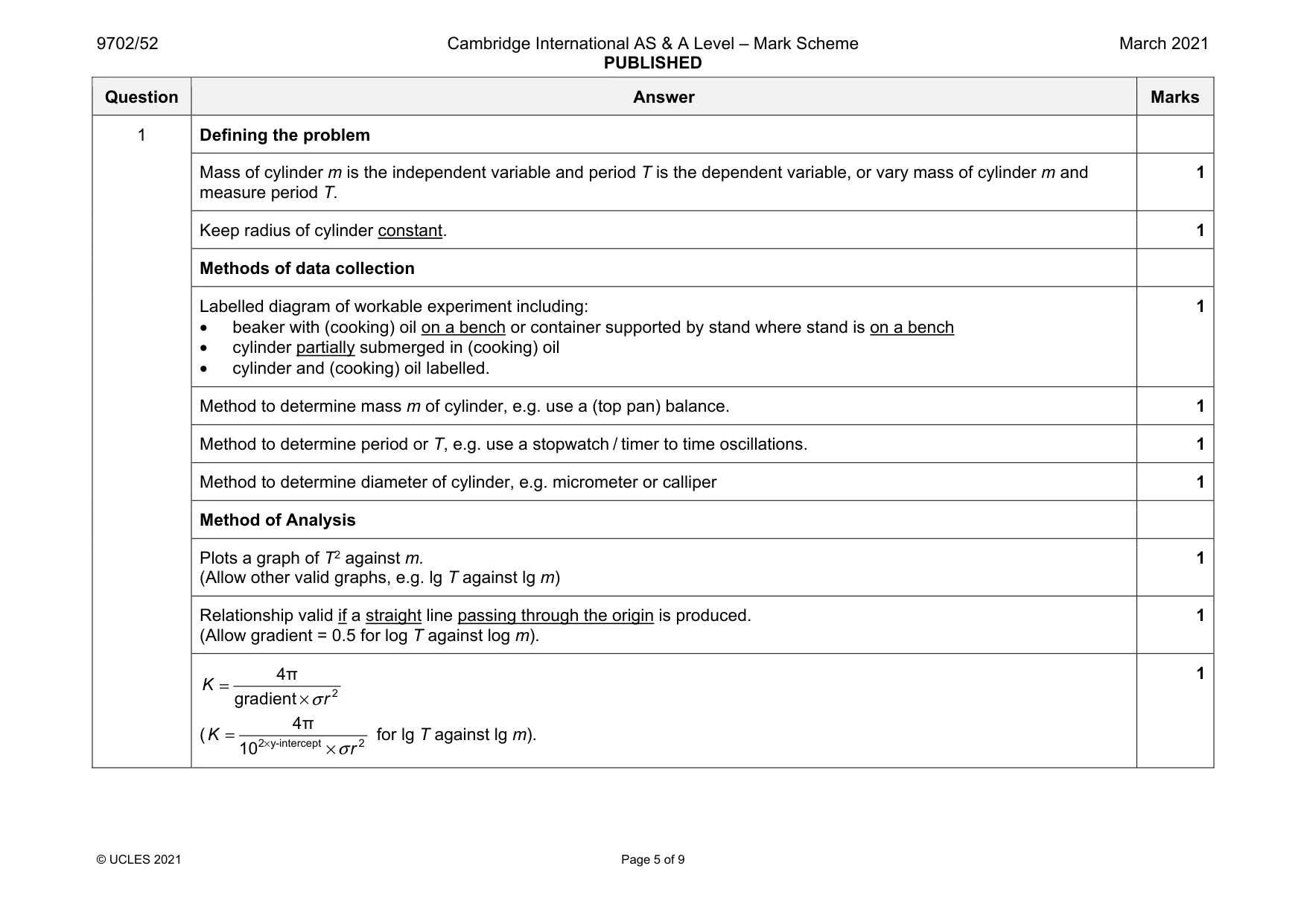
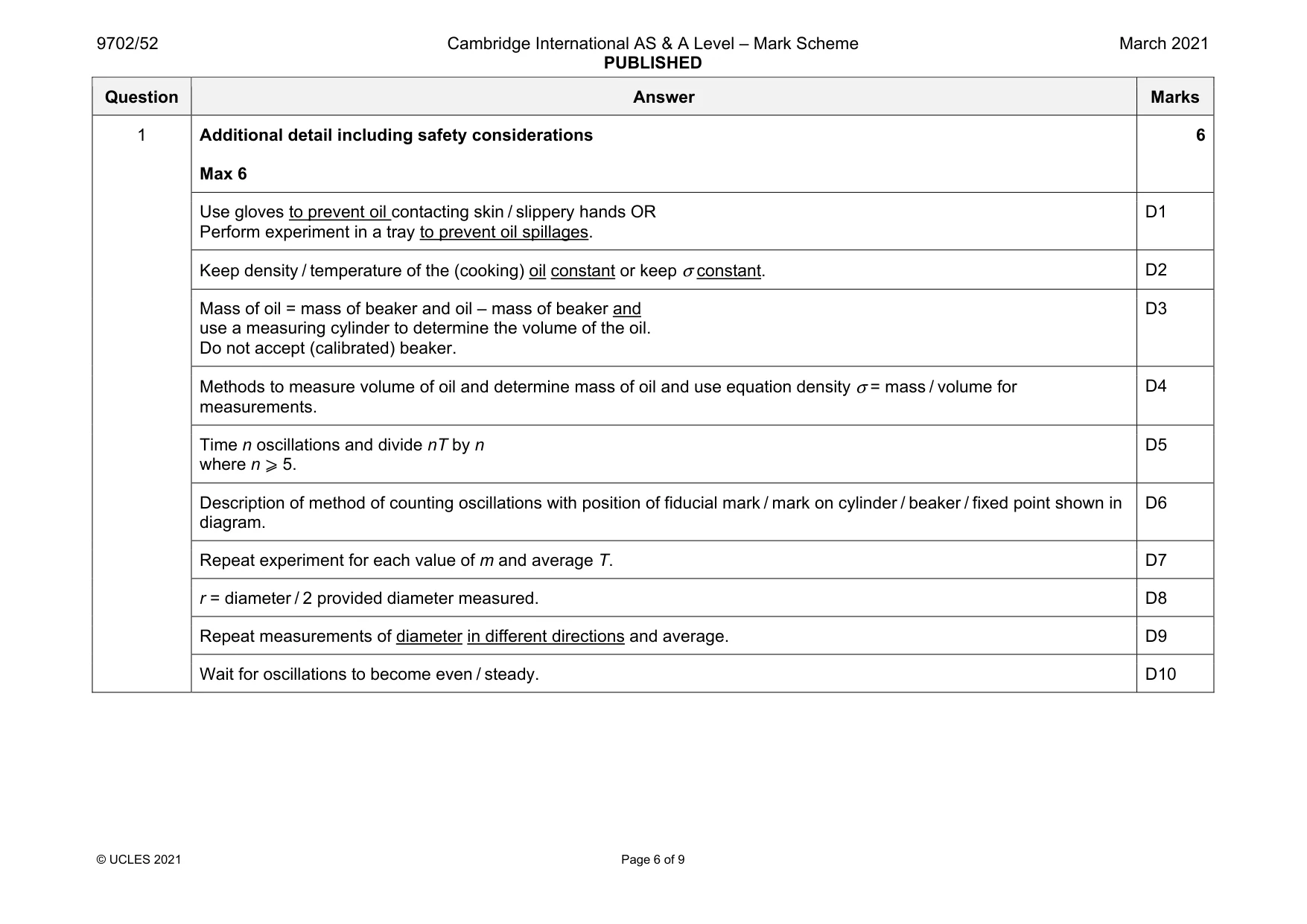
Mark scheme: 1 Defining the problem Mass of cylinder m is the independent variable and period T is the dependent variable, or vary mass of cylinder m and measure period T. 1 Keep radius of cylinder constant. 1 Methods of data collection Labelled diagram of workable experiment including: • beaker with (cooking) oil on a bench or container supported by stand where stand is on a bench • cylinder partially submerged in (cooking) oil • cylinder and (cooking) oil labelled. 1 Method to determine mass m of cylinder, e.g. use a (top pan) balance. 1 Method to determine period or T, e.g. use a stopwatch / timer to time oscillations. 1 Method to determine diameter of cylinder, e.g. micrometer or calliper 1 Method of Analysis Plots a graph of T2 against m. (Allow other valid graphs, e.g. lg T against lg m) 1 Relationship valid if a straight line passing through the origin is produced. (Allow gradient = 0.5 for log T against log m). 1 σ = × 2 4π gradient K r ( σ × = × 2 y-intercept 2 4π 10 K r for lg T against lg m). 1 Question Answer Marks 1 Additional detail including safety considerations Max 6 6 Use gloves to prevent oil contacting skin / slippery hands OR Perform experiment in a tray to prevent oil spillages. D1 Keep density / temperature of the (cooking) oil constant or keep σ constant. D2 Mass of oil = mass of beaker and oil – mass of beaker and use a measuring cylinder to determine the volume of the oil. Do not accept (calibrated) beaker. D3 Methods to measure volume of oil and determine mass of oil and use equation density σ = mass / volume for measurements. D4 Time n oscillations and divide nT by n where n ⩾ 5. D5 Description of method of counting oscillations with position of fiducial mark / mark on cylinder / beaker / fixed point shown in diagram. D6 Repeat experiment for each value of m and average T. D7 r = diameter / 2 provided diameter measured. D8 Repeat measurements of diameter in different directions and average. D9 Wait for oscillations to become even / steady. D10
Q2 · A student investigates the collision of two gliders A and B on a linear air-track, as…
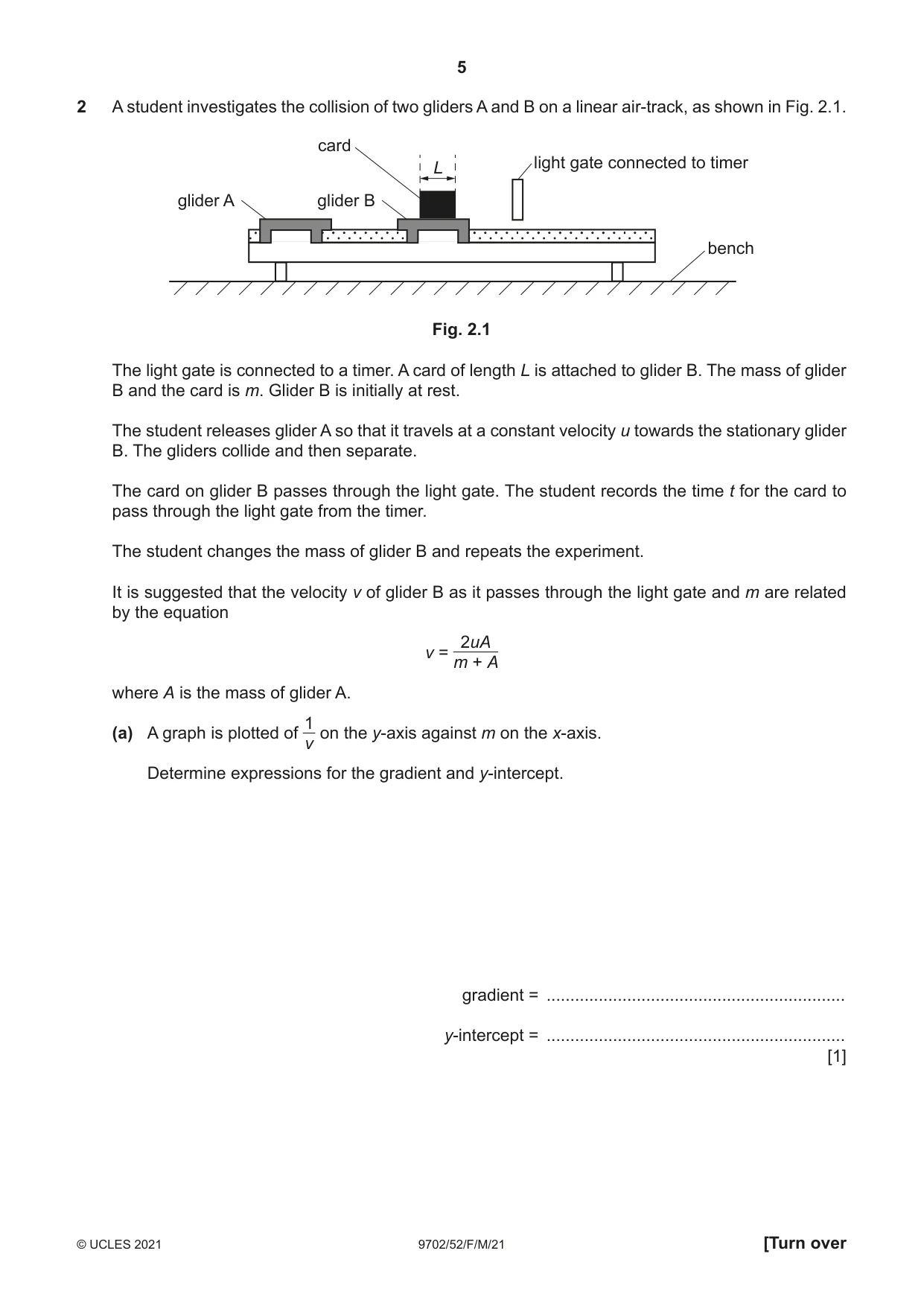
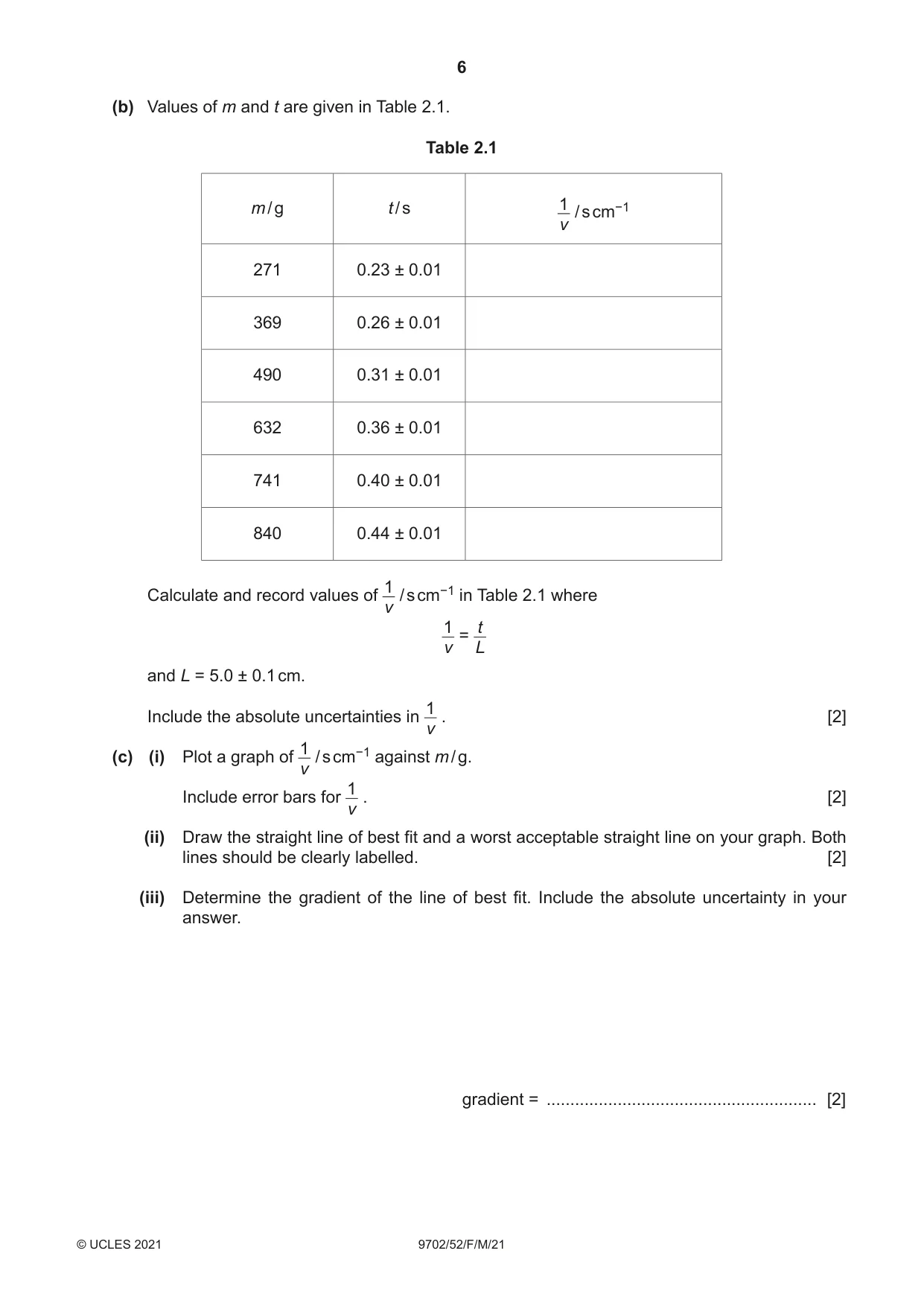
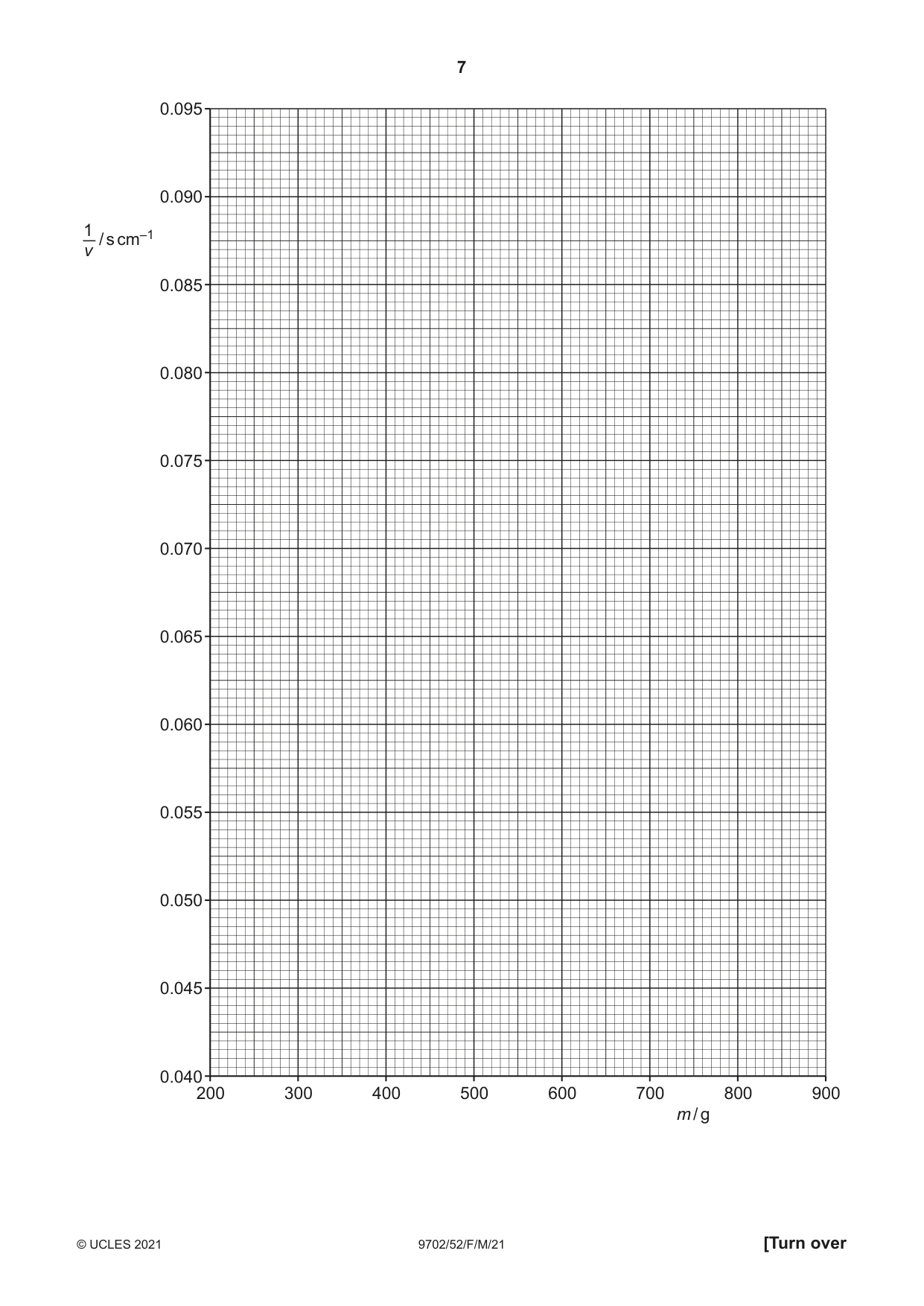
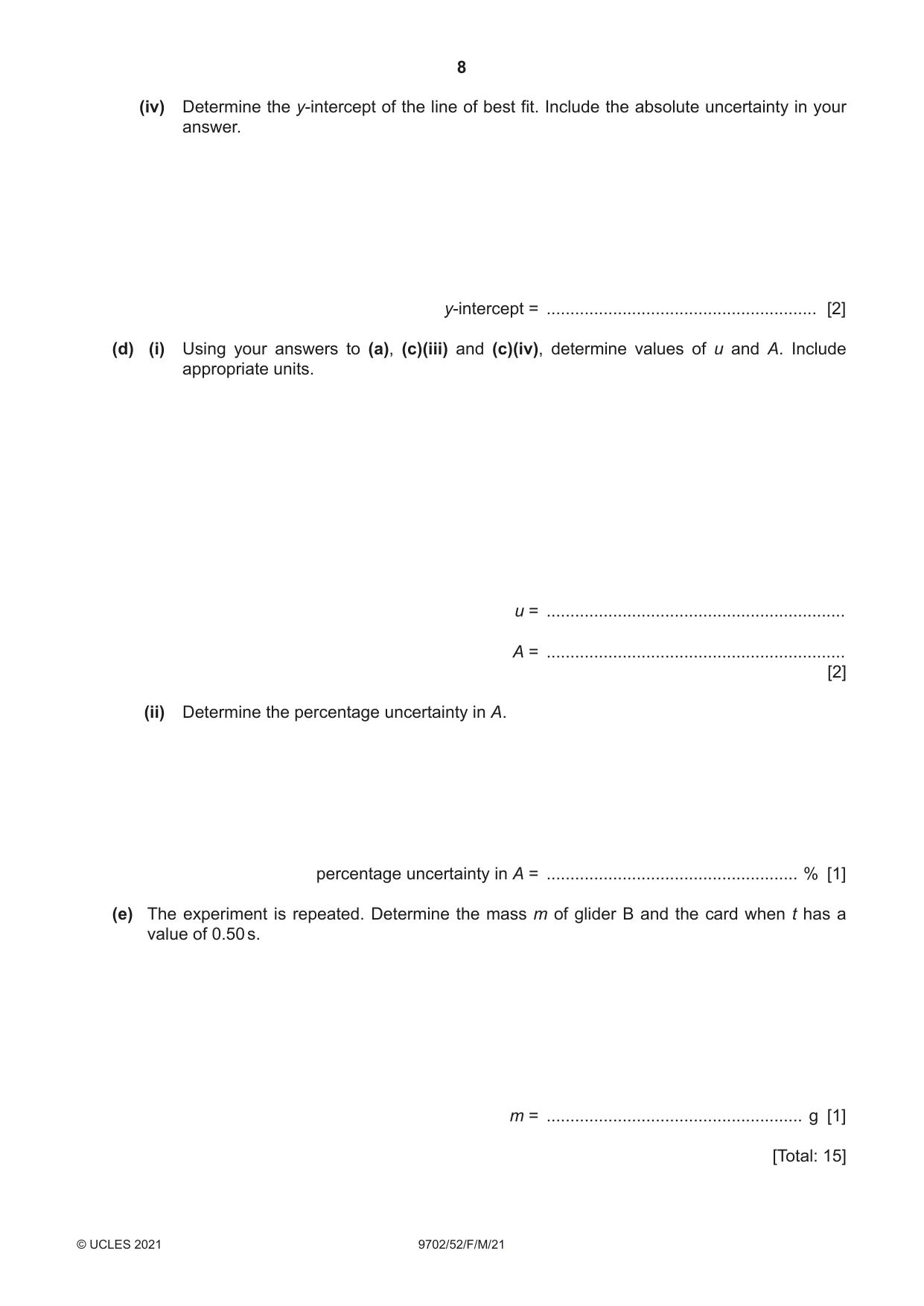
2 A student investigates the collision of two gliders A and B on a linear air-track, as shown in Fig. 2.1. card light gate connected to timer L glider A glider B bench Fig. 2.1 The light gate is connected to a timer. A card of length L is attached to glider B. The mass of glider B and the card is m. Glider B is initially at rest. The student releases glider A so that it travels at a constant velocity u towards the stationary glider B. The gliders collide and then separate. The card on glider B passes through the light gate. The student records the time t for the card to pass through the light gate from the timer. The student changes the mass of glider B and repeats the experiment. It is suggested that the velocity v of glider B as it passes through the light gate and m are related by the equation 2uA v = m + A where A is the mass of glider A. 1 (a) A graph is plotted of on the y-axis against m on the x-axis. v Determine expressions for the gradient and y-intercept. gradient = ............................................................... y-intercept = ............................................................... [1] (b) Values of m and t are given in Table 2.1. Table 2.1 m / g t / s 1 / s cm−1 v 271 0.23 ± 0.01 369 0.26 ± 0.01 490 0.31 ± 0.01 632 0.36 ± 0.01 741 0.40 ± 0.01 840 0.44 ± 0.01 1 Calculate and record values of / s cm−1 in Table 2.1 where v 1 t = v L and L = 5.0 ± 0.1 cm. 1 Include the absolute uncertainties in . [2] v 1(c) (i) Plot a graph of / s cm−1 against m / g. v 1 Include error bars for . [2] v (ii) Draw the straight line of best fit and a worst acceptable straight line on your graph. Both lines should be clearly labelled. [2] (iii) Determine the gradient of the line of best fit. Include the absolute uncertainty in your answer. gradient = ......................................................... [2]
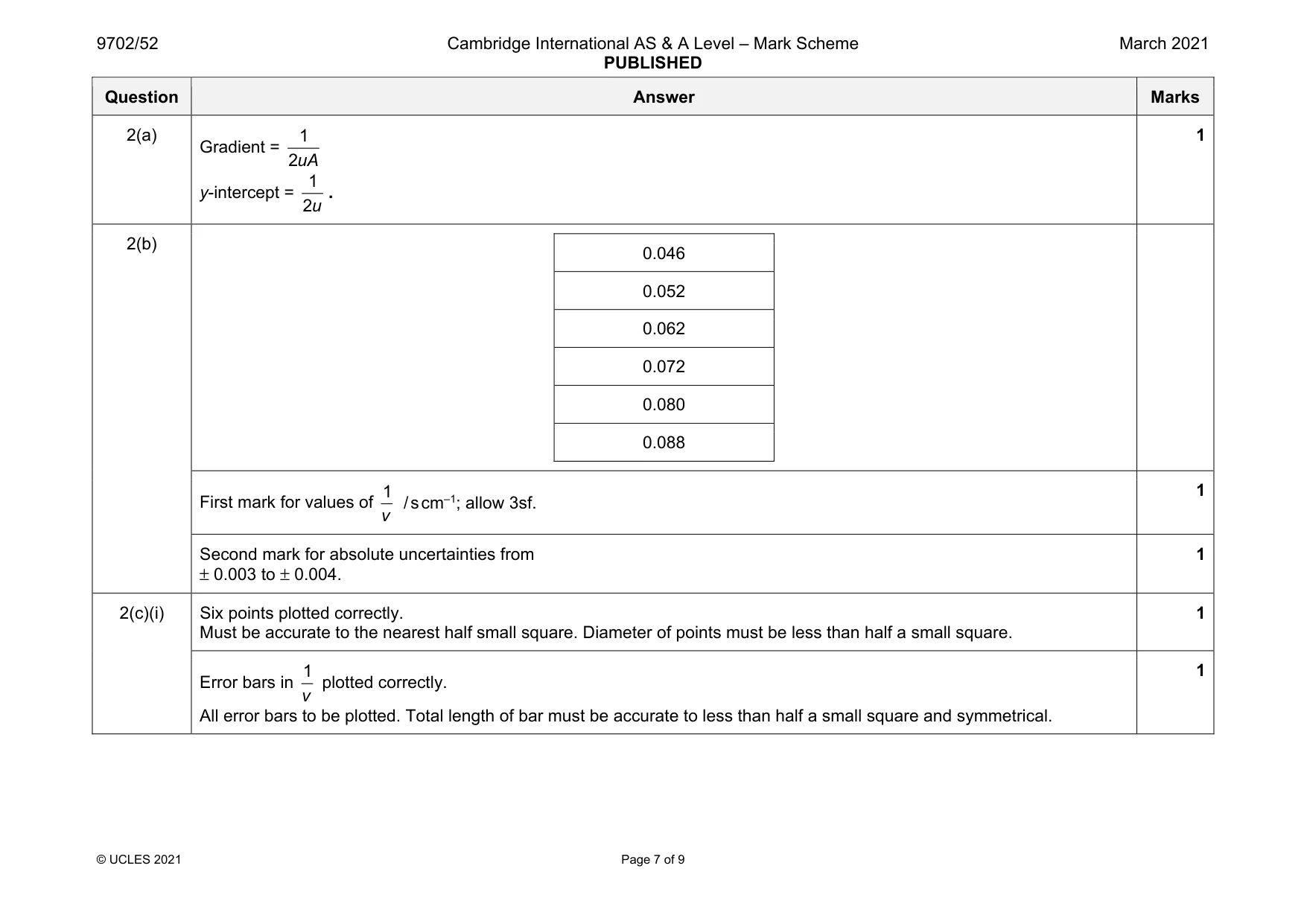
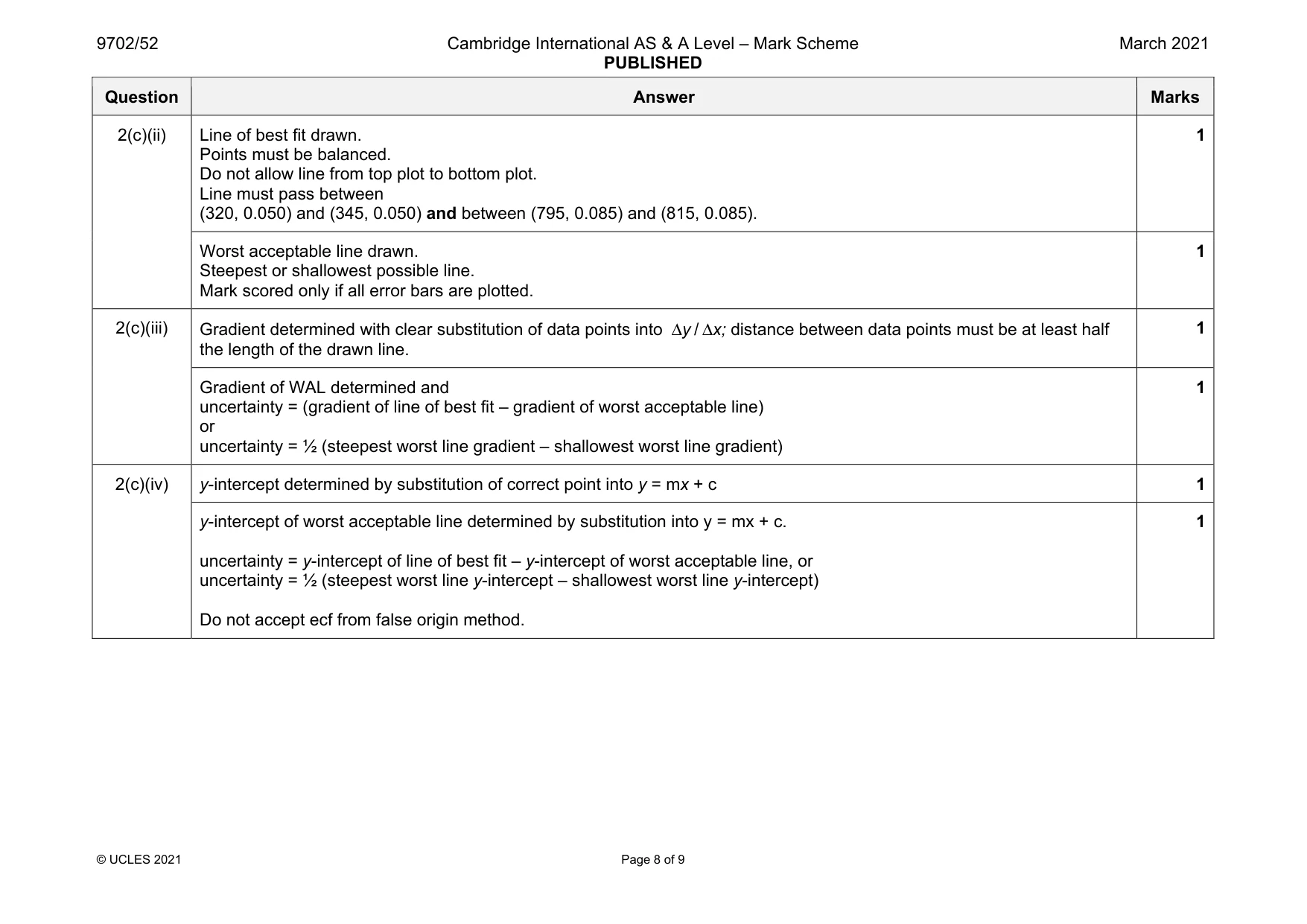
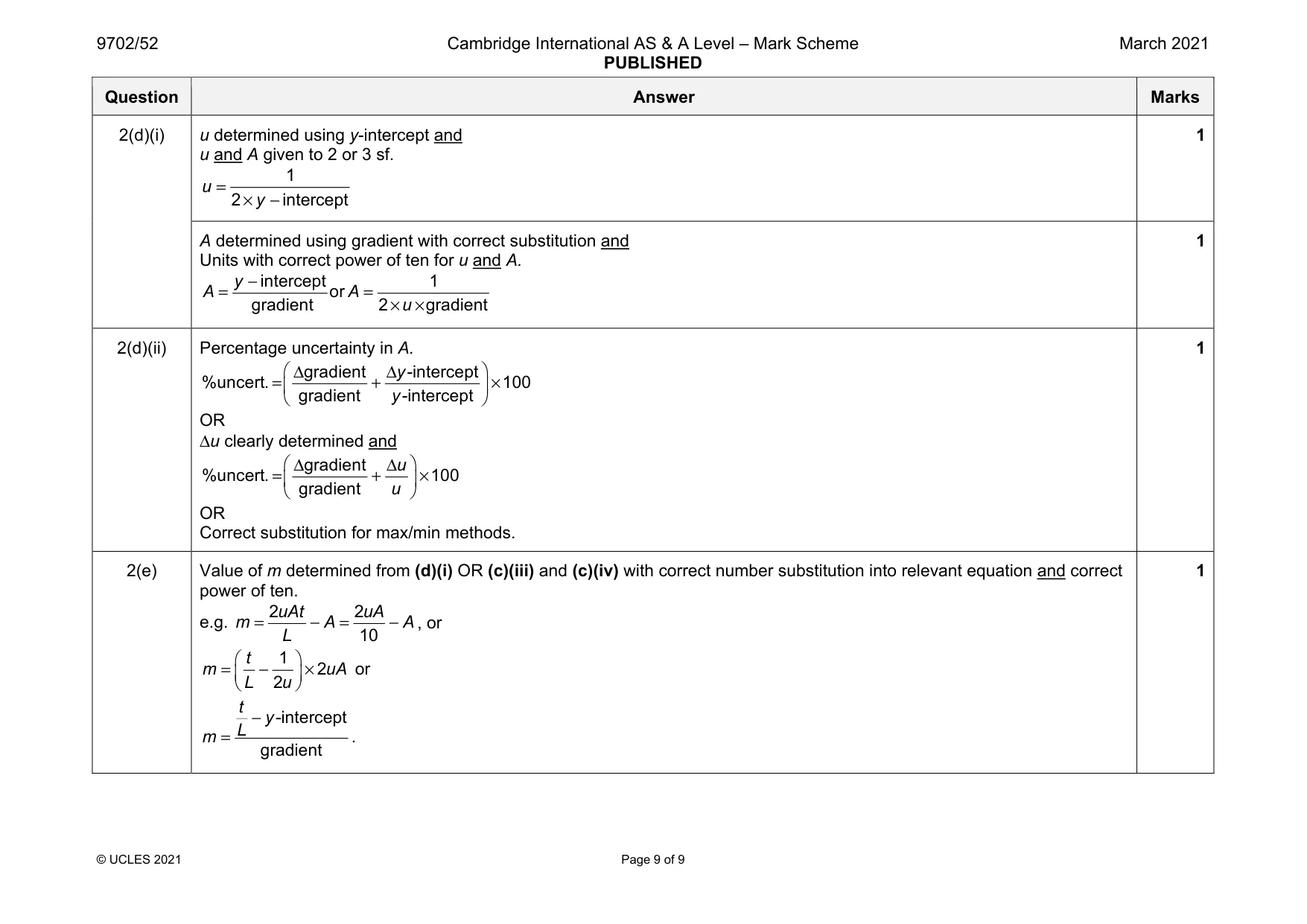
Mark scheme: 2(a) Gradient = 1 2uA y-intercept = 1 2u . 1 2(b) 0.046 0.052 0.062 0.072 0.080 0.088 First mark for values of 1 v / s cm–1; allow 3sf. 1 Second mark for absolute uncertainties from ± 0.003 to ± 0.004. 1 2(c)(i) Six points plotted correctly. Must be accurate to the nearest half small square. Diameter of points must be less than half a small square. 1 Error bars in 1 v plotted correctly. All error bars to be plotted. Total length of bar must be accurate to less than half a small square and symmetrical. 1 Question Answer Marks 2(c)(ii) Line of best fit drawn. Points must be balanced. Do not allow line from top plot to bottom plot. Line must pass between (320, 0.050) and (345, 0.050) and between (795, 0.085) and (815, 0.085). 1 Worst acceptable line drawn. Steepest or shallowest possible line. Mark scored only if all error bars are plotted. 1 2(c)(iii) Gradient determined with clear substitution of data points into Δy / Δx; distance between data points must be at least half the length of the drawn line. 1 Gradient of WAL determined and uncertainty = (gradient of line of best fit – gradient of worst acceptable line) or uncertainty = ½ (steepest worst line gradient – shallowest worst line gradient) 1 2(c)(iv) y-intercept determined by substitution of correct point into y = mx + c 1 y-intercept of worst acceptable line determined by substitution into y = mx + c. uncertainty = y-intercept of line of best fit – y-intercept of worst acceptable line, or uncertainty = ½ (steepest worst line y-intercept – shallowest worst line y-intercept) Do not accept ecf from false origin method. 1 Question Answer Marks 2(d)(i) u determined using y-intercept and u and A given to 2 or 3 sf. = × − 1 2 intercept u y 1 A determined using gradient with correct substitution and Units with correct power of ten for u and A. − = = × × intercept 1 or gradient 2 gradient y A A u 1 2(d)(ii) Percentage uncertainty in A. Δ Δ = + × gradient -intercept %uncert. 100 gradient -intercept y y OR Δu clearly determined and Δ Δ = + × gradient %uncert. 100 gradient u u OR Correct substitution for max/min methods. 1 2(e) Value of m determined from (d)(i) OR (c)(iii) and (c)(iv) with correct number substitution into relevant equation and correct power of ten. e.g. = − = − 2 2 10 uAt uA m A A L , or = − × 1 2 2 t m uA L u or − = -intercept gradient t y L m . 1
What was in this paper
The subtopics covered by these 2 questions, and how many questions each got. Open one in a new tab to see every Cambridge question on it.
What you needed in this session
Cambridge’s own grade thresholds for 2021 Feb/March, Paper 5 · Variant 2. A higher threshold means an easier paper — the bar moves with how the cohort did.