Cambridge A Level Physics 9702 — 2016 Feb/March Paper 5 · Variant 2
9702/52/F/M/16 · 2 questions · 30 marks · ≈34 min
The question paper and its mark scheme, free to read here and free to download. This is Cambridge’s own paper, exactly as it was sat.
Question paper8 pages

Mark scheme4 pages
Answers below. Sit the paper first if you are practising.
Questions as text
Q1 · A student is interested in ‘bungee jumping’, where a person attached to an elastic cord…
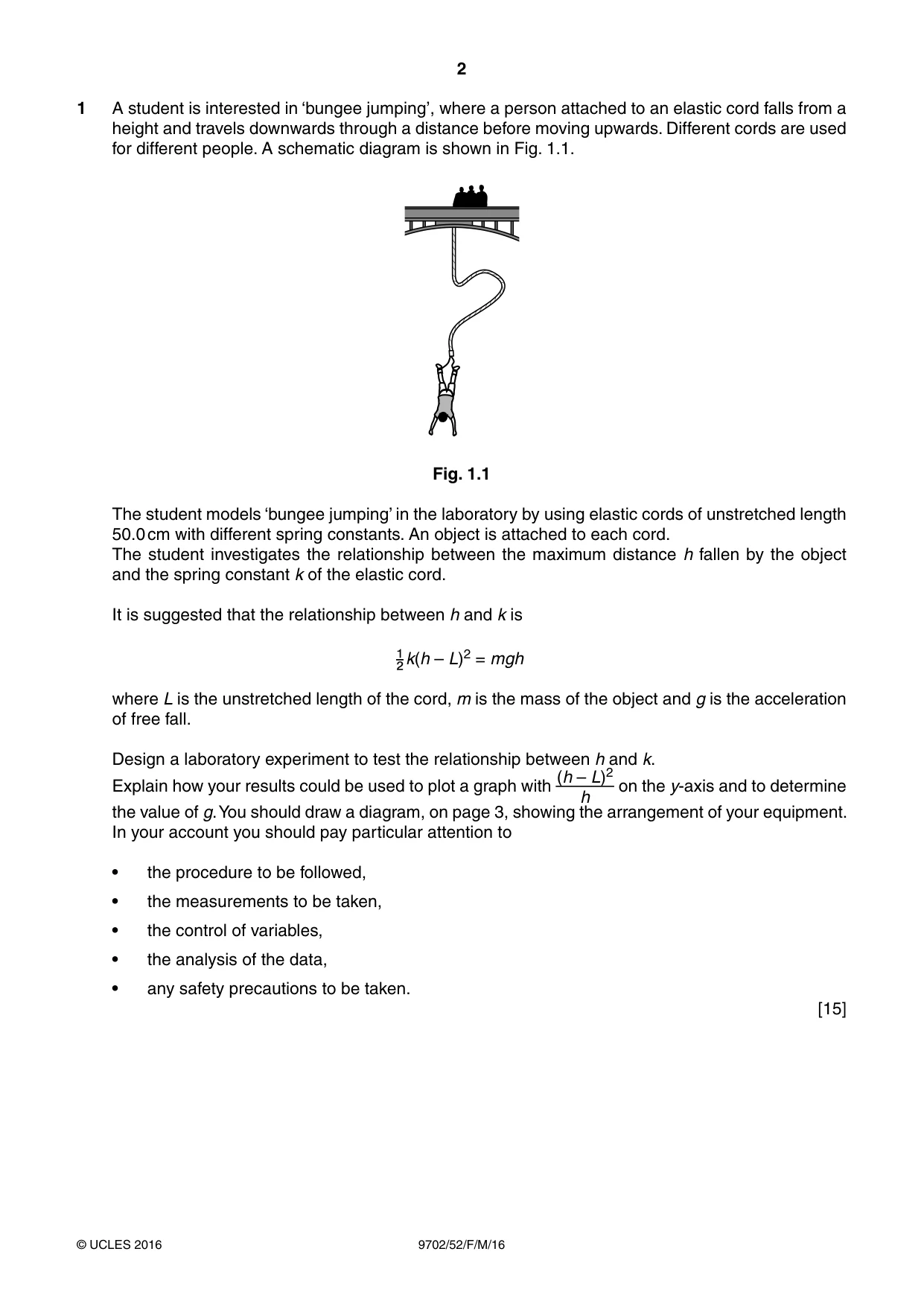
1 A student is interested in ‘bungee jumping’, where a person attached to an elastic cord falls from a height and travels downwards through a distance before moving upwards. Different cords are used for different people. A schematic diagram is shown in Fig. 1.1. Fig. 1.1 The student models ‘bungee jumping’ in the laboratory by using elastic cords of unstretched length 50.0 cm with different spring constants. An object is attached to each cord. The student investigates the relationship between the maximum distance h fallen by the object and the spring constant k of the elastic cord. It is suggested that the relationship between h and k is k(h – L)2 = mgh where L is the unstretched length of the cord, m is the mass of the object and g is the acceleration of free fall. Design a laboratory experiment to test the relationship between h and k. (h – L)2 Explain how your results could be used to plot a graph with on the y-axis and to determine h the value of g. You should draw a diagram, on page 3, showing the arrangement of your equipment. In your account you should pay particular attention to • the procedure to be followed, • the measurements to be taken, • the control of variables, • the analysis of the data, • any safety precautions to be taken. [15] Diagram .................................................................................................................................................................. .................................................................................................................................................................. .................................................................................................................................................................. .................................................................................................................................................................. .................................................................................................................................................................. .................................................................................................................................................................. .................................................................................................................................................................. .................................................................................................................................................................. .................................................................................................................................................................. .................................................................................................................................................................. .................................................................................................................................................................. .................................................................................................................................................................. .................................................................................................................................................................. .................................................................................................................................................................. .................................................................................................................................................................. .................................................................................................................................................................. .................................................................................................................................................................. .................................................................................................................................................................. .................................................................................................................................................................. .................................................................................................................................................................. .................................................................................................................................................................. .................................................................................................................................................................. .................................................................................................................................................................. .................................................................................................................................................................. .................................................................................................................................................................. .................................................................................................................................................................. .................................................................................................................................................................. .................................................................................................................................................................. .................................................................................................................................................................. .................................................................................................................................................................. .................................................................................................................................................................. .................................................................................................................................................................. .................................................................................................................................................................. .................................................................................................................................................................. .................................................................................................................................................................. .................................................................................................................................................................. .................................................................................................................................................................. .................................................................................................................................................................. .................................................................................................................................................................. .................................................................................................................................................................. .................................................................................................................................................................. .................................................................................................................................................................. [Total: 15]
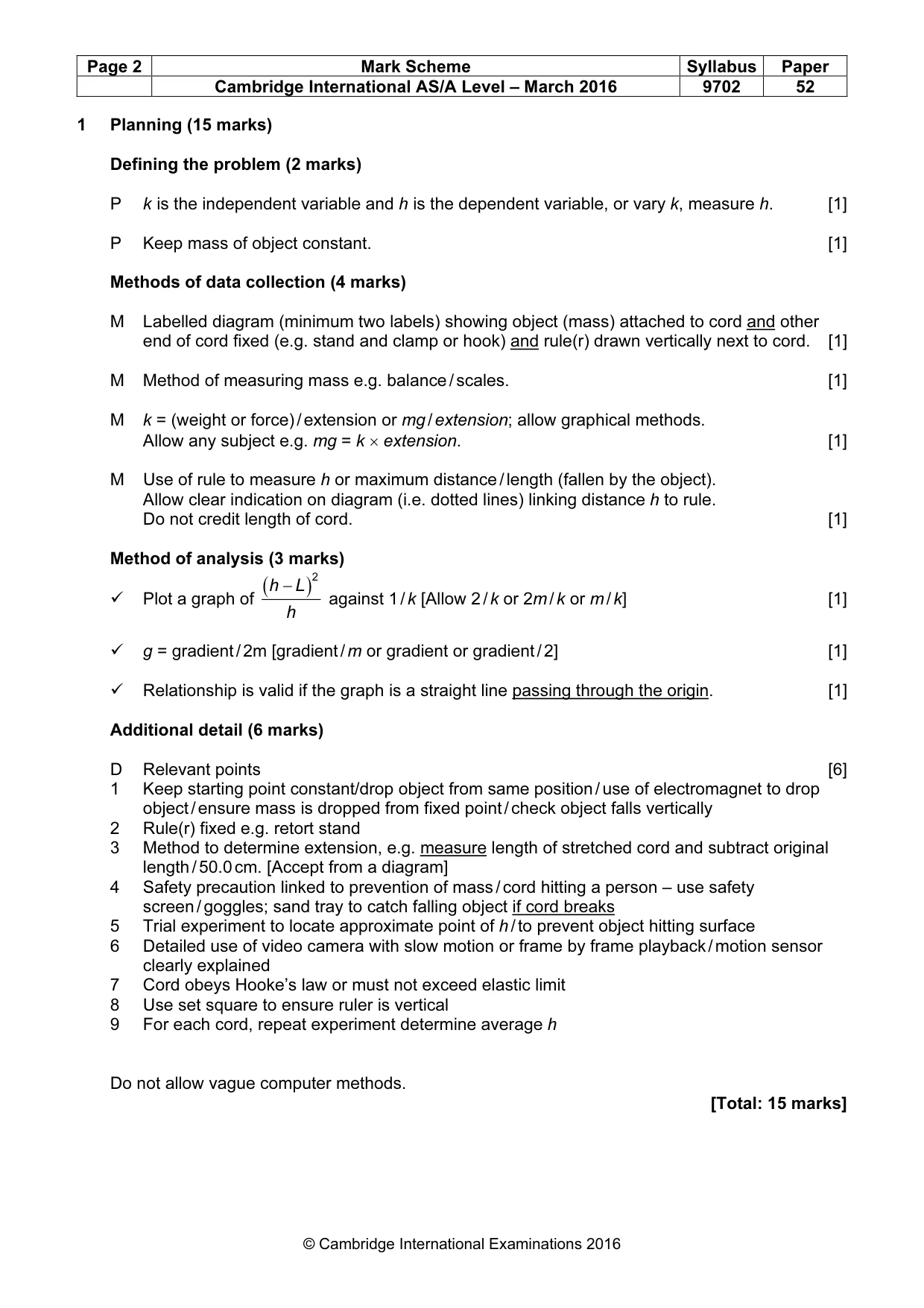
Mark scheme: 1 Planning (15 marks) Defining the problem (2 marks) P k is the independent variable and h is the dependent variable, or vary k, measure h. [1] P Keep mass of object constant. [1] Methods of data collection (4 marks) M Labelled diagram (minimum two labels) showing object (mass) attached to cord and other end of cord fixed (e.g. stand and clamp or hook) and rule(r) drawn vertically next to cord. [1] M Method of measuring mass e.g. balance / scales. [1] M k = (weight or force) / extension or mg / extension; allow graphical methods. Allow any subject e.g. mg = k × extension. [1] M Use of rule to measure h or maximum distance / length (fallen by the object). Allow clear indication on diagram (i.e. dotted lines) linking distance h to rule. Do not credit length of cord. [1] Method of analysis (3 marks) ( h − L ) 2 Plot a graph of against 1 / k [Allow 2 / k or 2m / k or m / k] [1] h g = gradient / 2m [gradient / m or gradient or gradient / 2] [1] Relationship is valid if the graph is a straight line passing through the origin. [1] Additional detail (6 marks) D Relevant points [6] 1 Keep starting point constant/drop object from same position / use of electromagnet to drop object / ensure mass is dropped from fixed point / check object falls vertically 2 Rule(r) fixed e.g. retort stand 3 Method to determine extension, e.g. measure length of stretched cord and subtract original length / 50.0 cm. [Accept from a diagram] 4 Safety precaution linked to prevention of mass / cord hitting a person – use safety screen / goggles; sand tray to catch falling object if cord breaks 5 Trial experiment to locate approximate point of h / to prevent object hitting surface 6 Detailed use of video camera with slow motion or frame by frame playback / motion sensor clearly explained 7 Cord obeys Hooke’s law or must not exceed elastic limit 8 Use set square to ensure ruler is vertical 9 For each cord, repeat experiment determine average h Do not allow vague computer methods. [Total: 15 marks]
Q2 · A student is investigating the heating of metal blocks immersed in water
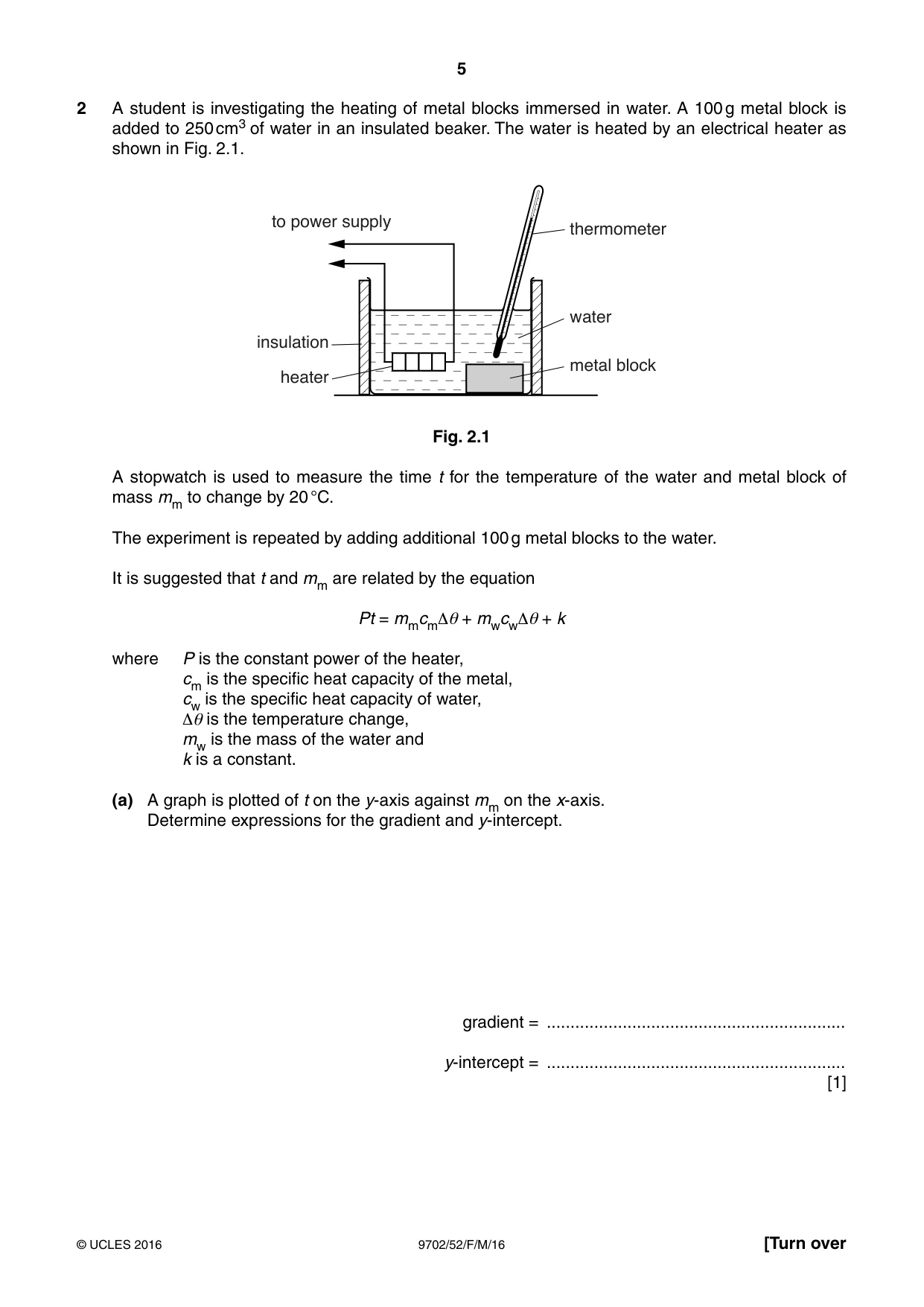
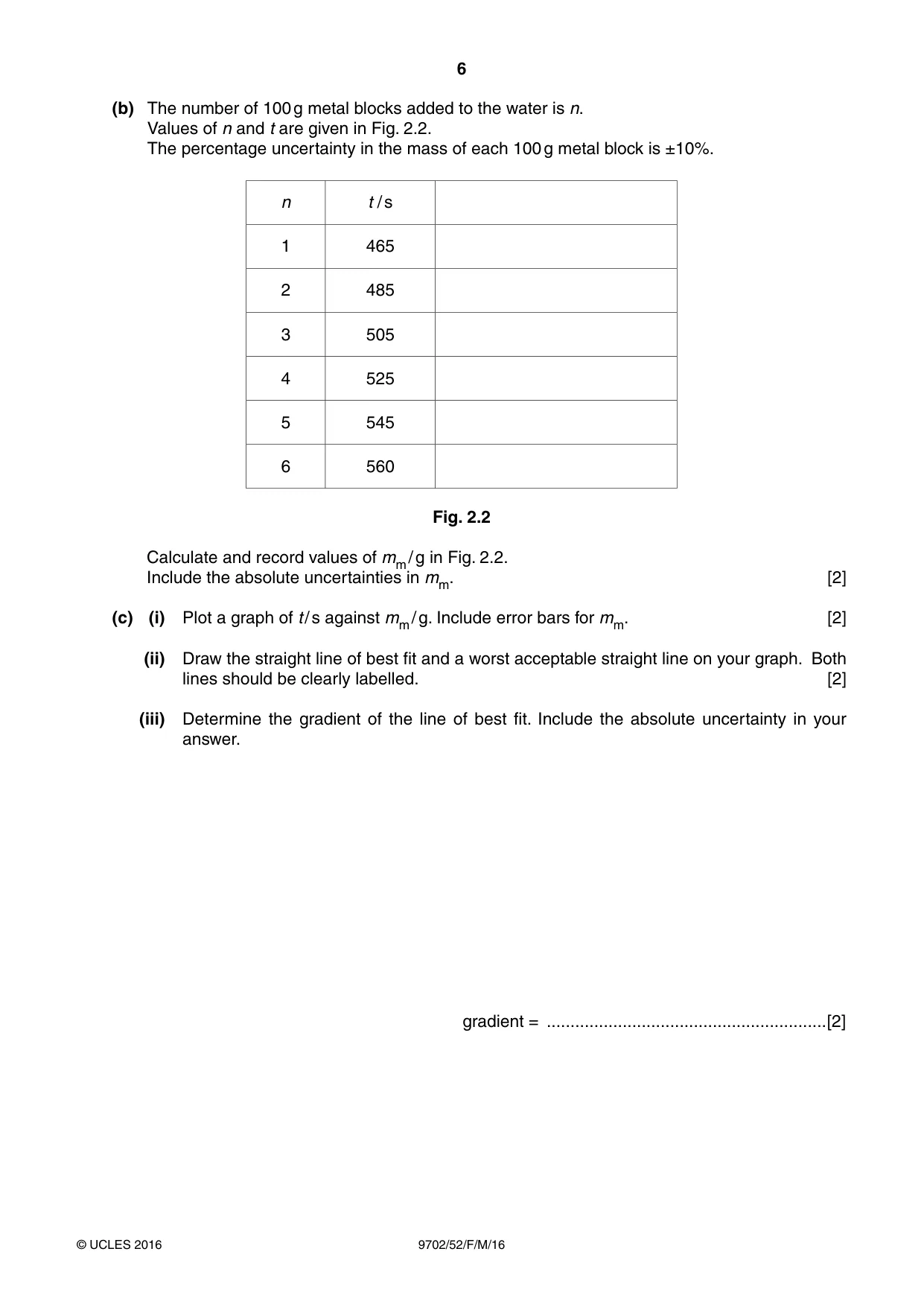
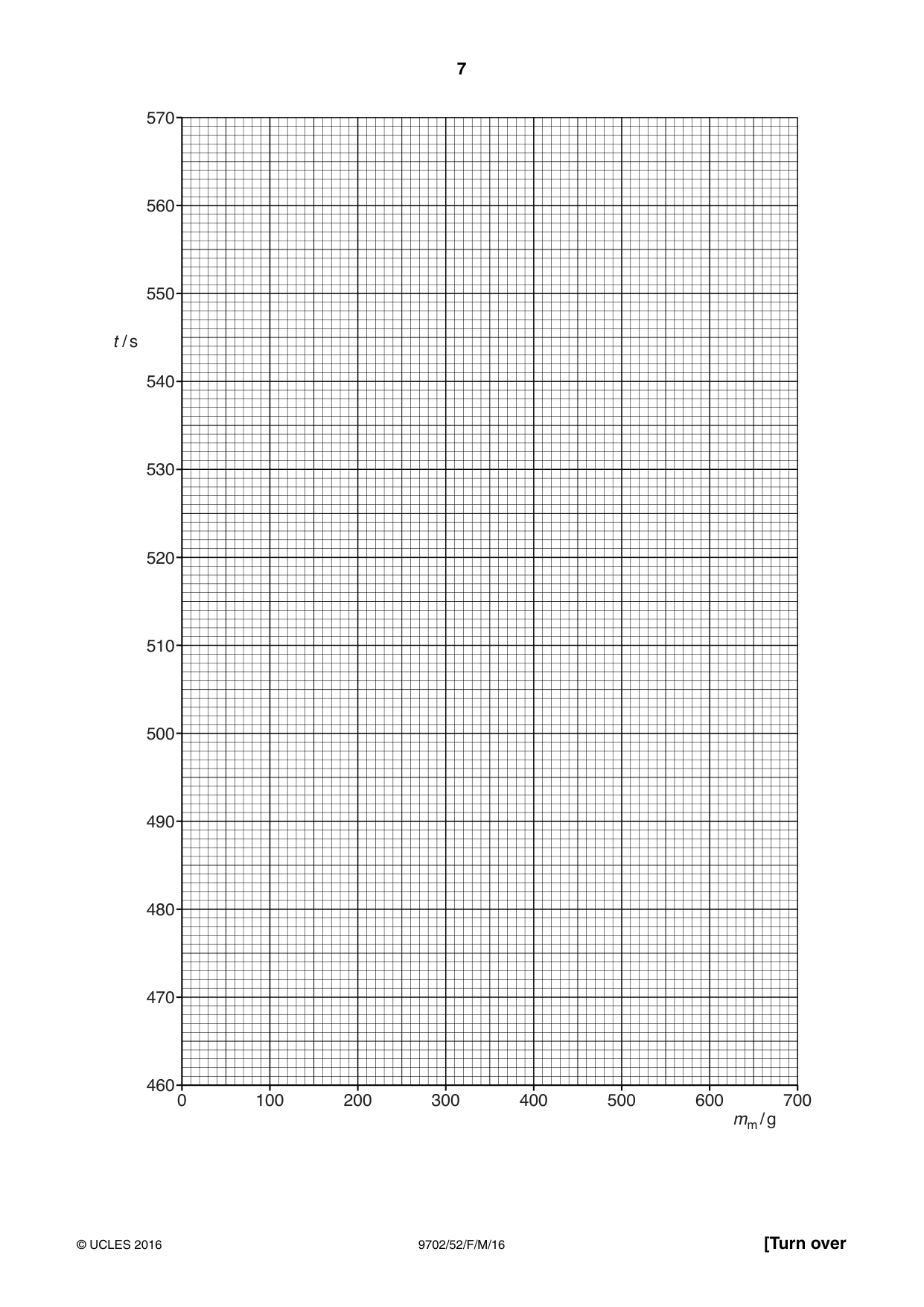
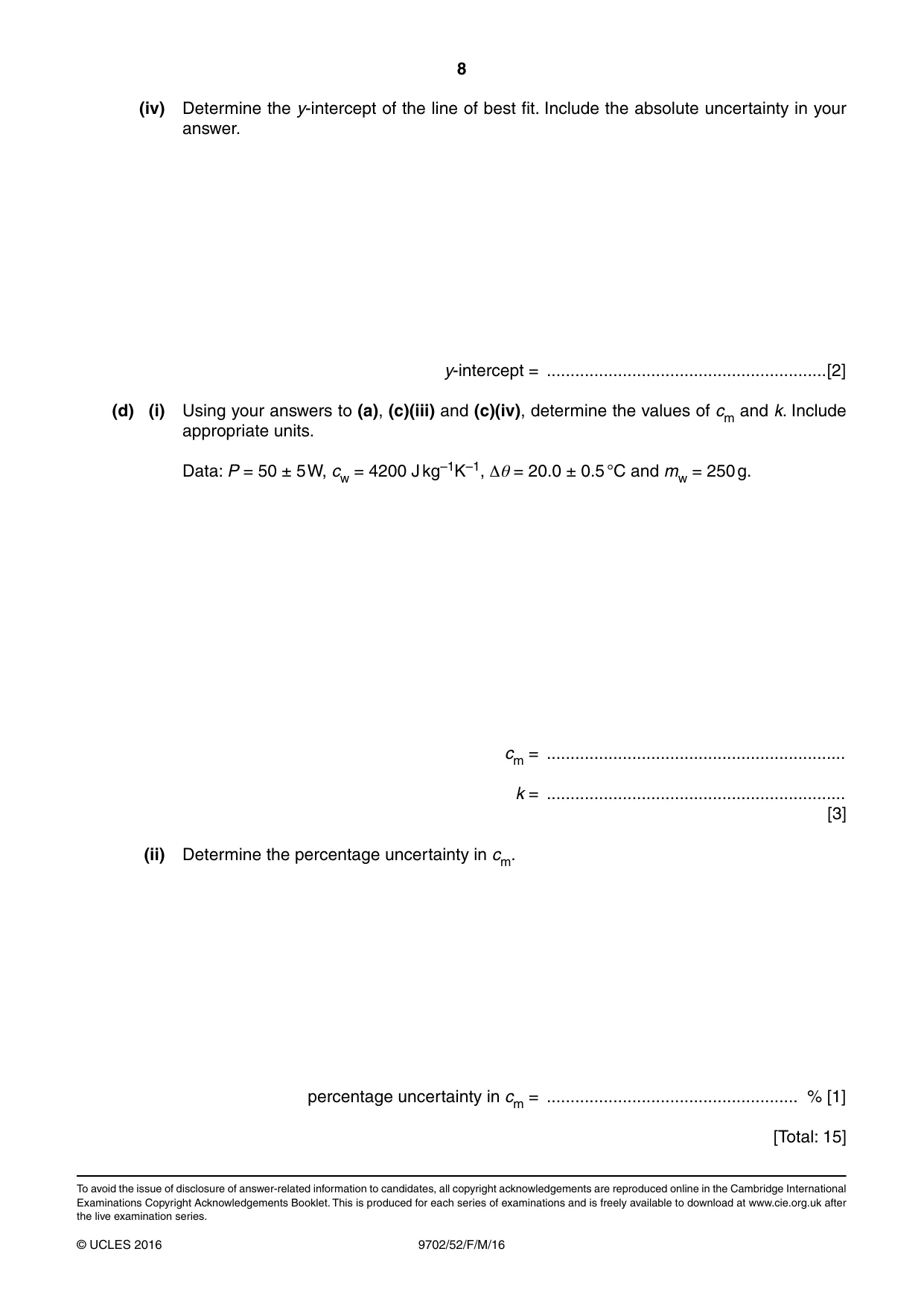
2 A student is investigating the heating of metal blocks immersed in water. A 100 g metal block is added to 250 cm3 of water in an insulated beaker. The water is heated by an electrical heater as shown in Fig. 2.1. to power supply thermometer water insulation metal block heater Fig. 2.1 A stopwatch is used to measure the time t for the temperature of the water and metal block of mass mm to change by 20 °C. The experiment is repeated by adding additional 100 g metal blocks to the water. It is suggested that t and mm are related by the equation Pt = mmcmΔθ + mwcwΔθ + k where P is the constant power of the heater, cm is the specific heat capacity of the metal, cw is the specific heat capacity of water, Δθ is the temperature change, mw is the mass of the water and k is a constant. (a) A graph is plotted of t on the y-axis against mm on the x-axis. Determine expressions for the gradient and y-intercept. gradient = ............................................................... y-intercept = ............................................................... [1] (b) The number of 100 g metal blocks added to the water is n. Values of n and t are given in Fig. 2.2. The percentage uncertainty in the mass of each 100 g metal block is ±10%. n t / s 1 465 2 485 3 505 4 525 5 545 6 560 Fig. 2.2 Calculate and record values of mm / g in Fig. 2.2. Include the absolute uncertainties in mm. [2] (c) (i) Plot a graph of t / s against mm / g. Include error bars for mm. [2] (ii) Draw the straight line of best fit and a worst acceptable straight line on your graph. Both lines should be clearly labelled. [2] (iii) Determine the gradient of the line of best fit. Include the absolute uncertainty in your answer. gradient = ...........................................................[2] 570 560 550 t / s 540 530 520 510 500 490 480 470 460 0 100 200 300 400 500 600 700 mm / g
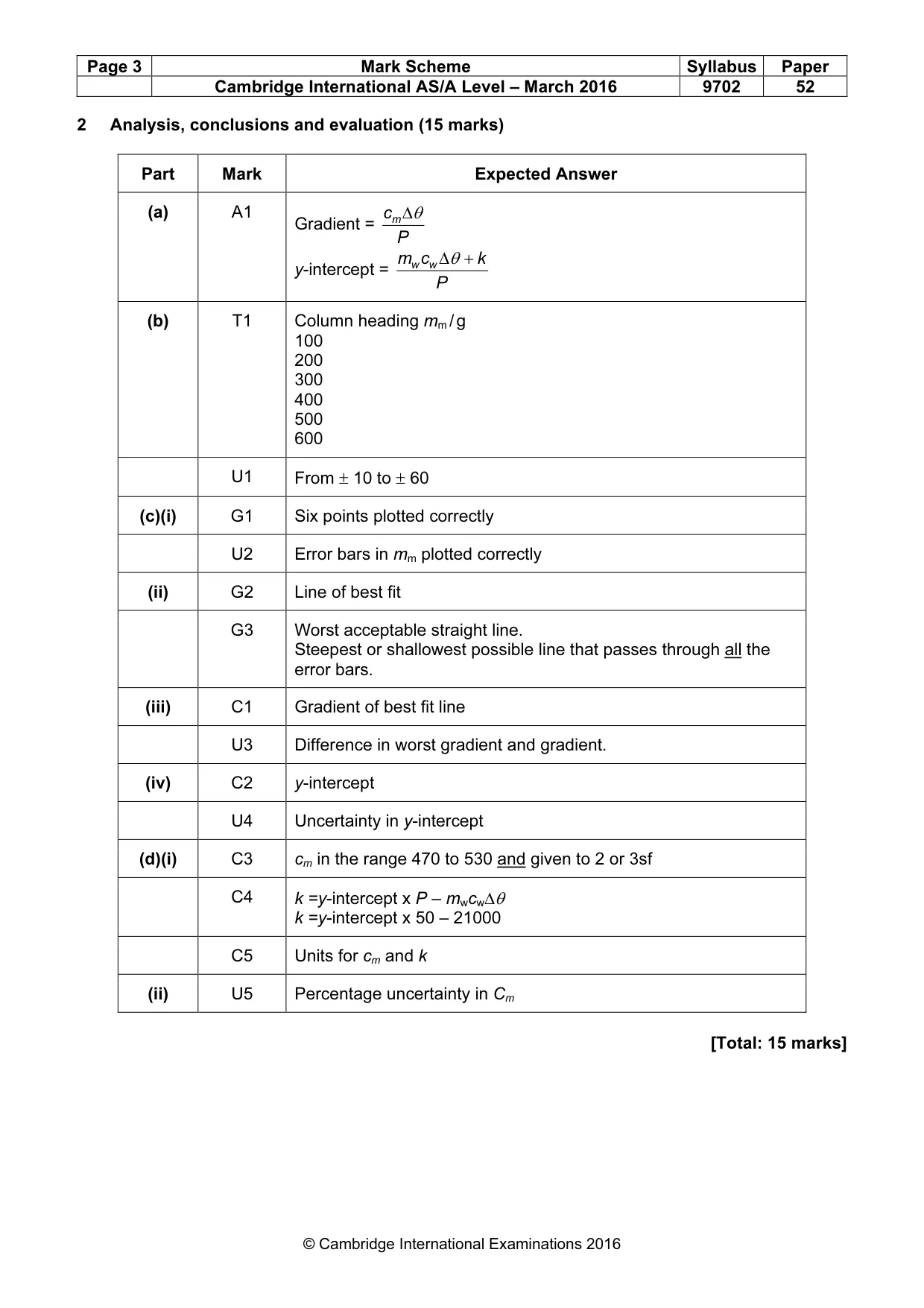
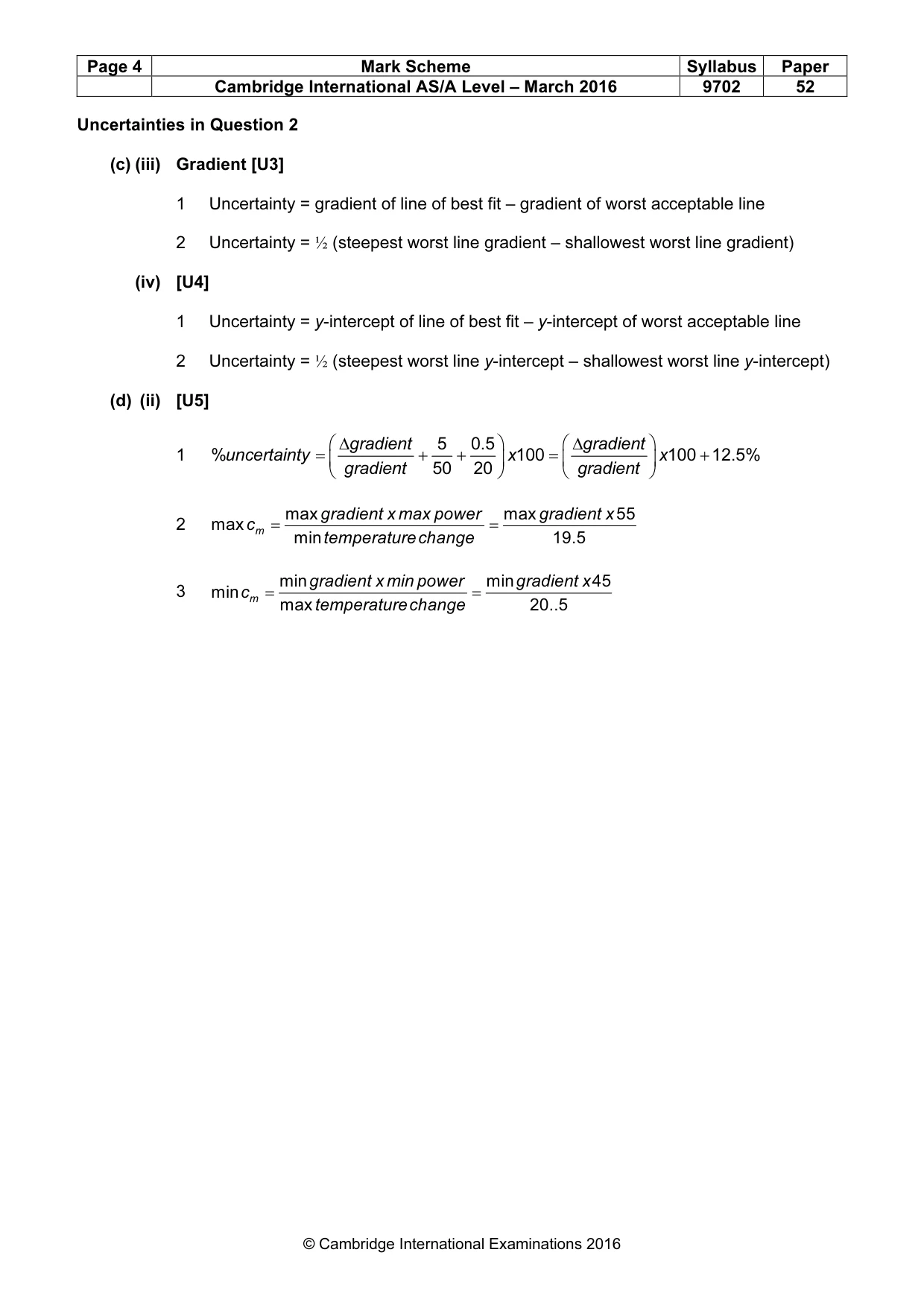
Mark scheme: 2 Analysis, conclusions and evaluation (15 marks) Part Mark Expected Answer (a) A1 c m ∆θ Gradient = P mw cw ∆θ + k y-intercept = P (b) T1 Column heading mm / g 100 200 300 400 500 600 U1 From ± 10 to ± 60 (c)(i) G1 Six points plotted correctly U2 Error bars in mm plotted correctly (ii) G2 Line of best fit G3 Worst acceptable straight line. Steepest or shallowest possible line that passes through all the error bars. (iii) C1 Gradient of best fit line U3 Difference in worst gradient and gradient. (iv) C2 y-intercept U4 Uncertainty in y-intercept (d)(i) C3 cm in the range 470 to 530 and given to 2 or 3sf C4 k =y-intercept x P – mwcw∆θ k =y-intercept x 50 – 21000 C5 Units for cm and k (ii) U5 Percentage uncertainty in Cm [Total: 15 marks] Uncertainties in Question 2 (c) (iii) Gradient [U3] 1 Uncertainty = gradient of line of best fit – gradient of worst acceptable line 2 Uncertainty = ½ (steepest worst line gradient – shallowest worst line gradient) (iv) [U4] 1 Uncertainty = y-intercept of line of best fit – y-intercept of worst acceptable line 2 Uncertainty = ½ (steepest worst line y-intercept – shallowest worst line y-intercept) (d) (ii) [U5] ∆gradient 5 0.5 ∆gradient 1 %uncertainty = + + x100 = x100 + 12.5% gradient 50 20 gradient max gradient x max power max gradient x 55 2 max c m = = min temperaturechange 19.5 min gradient x min power min gradient x 45 3 min c m = = max temperaturechange 20..5
More questions on Specific heat capacity and specific latent heat
What was in this paper
The subtopics covered by these 2 questions, and how many questions each got. Open one in a new tab to see every Cambridge question on it.
What you needed in this session
Cambridge’s own grade thresholds for 2016 Feb/March, Paper 5 · Variant 2. A higher threshold means an easier paper — the bar moves with how the cohort did.