Cambridge A Level Media Studies 9607 — 2024 May/June Paper 4 · Variant 3
9607/43/M/J/24 · 4 questions · 60 marks · 120 min
The question paper and its mark scheme, free to read here and free to download. This is Cambridge’s own paper, exactly as it was sat.
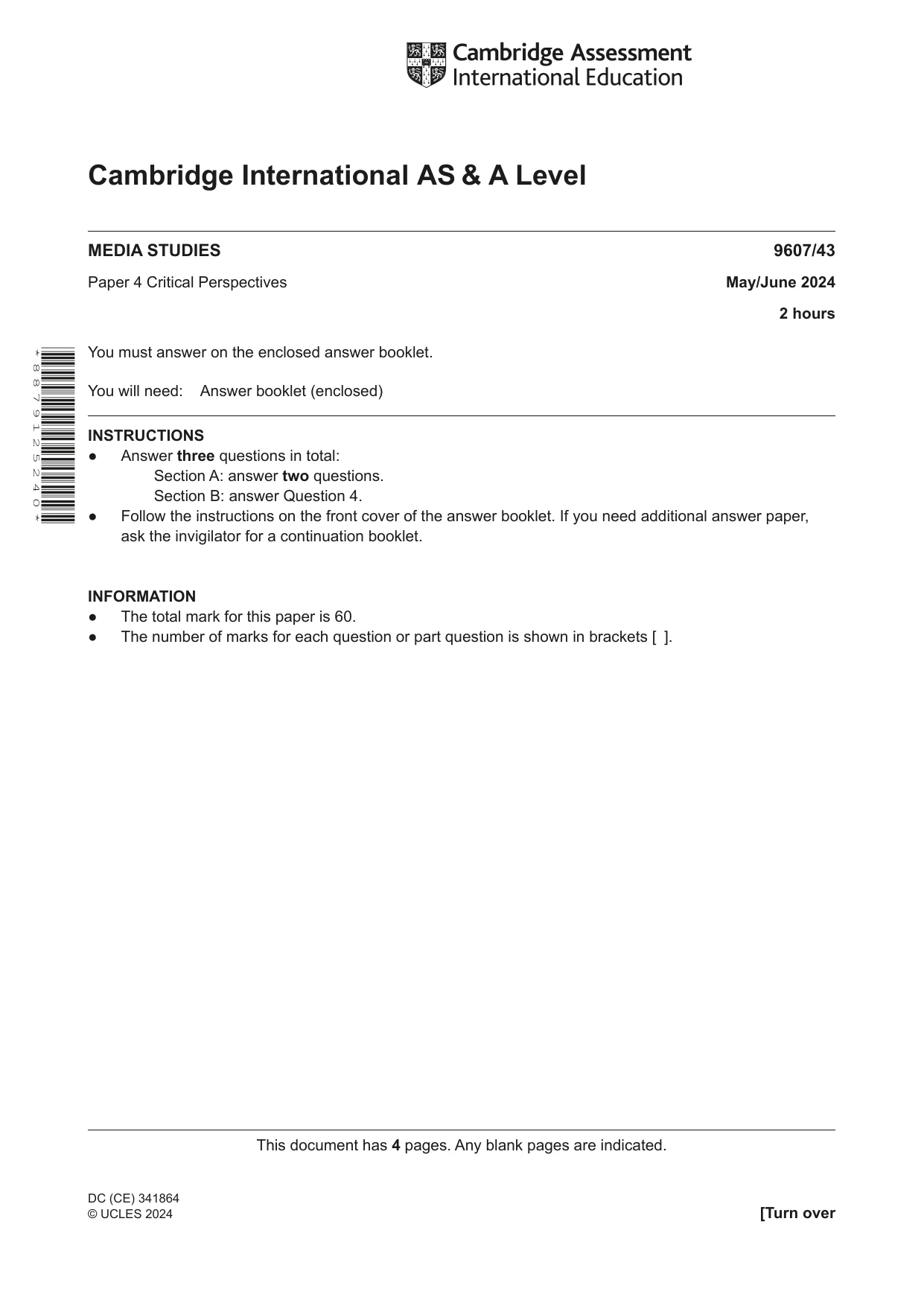
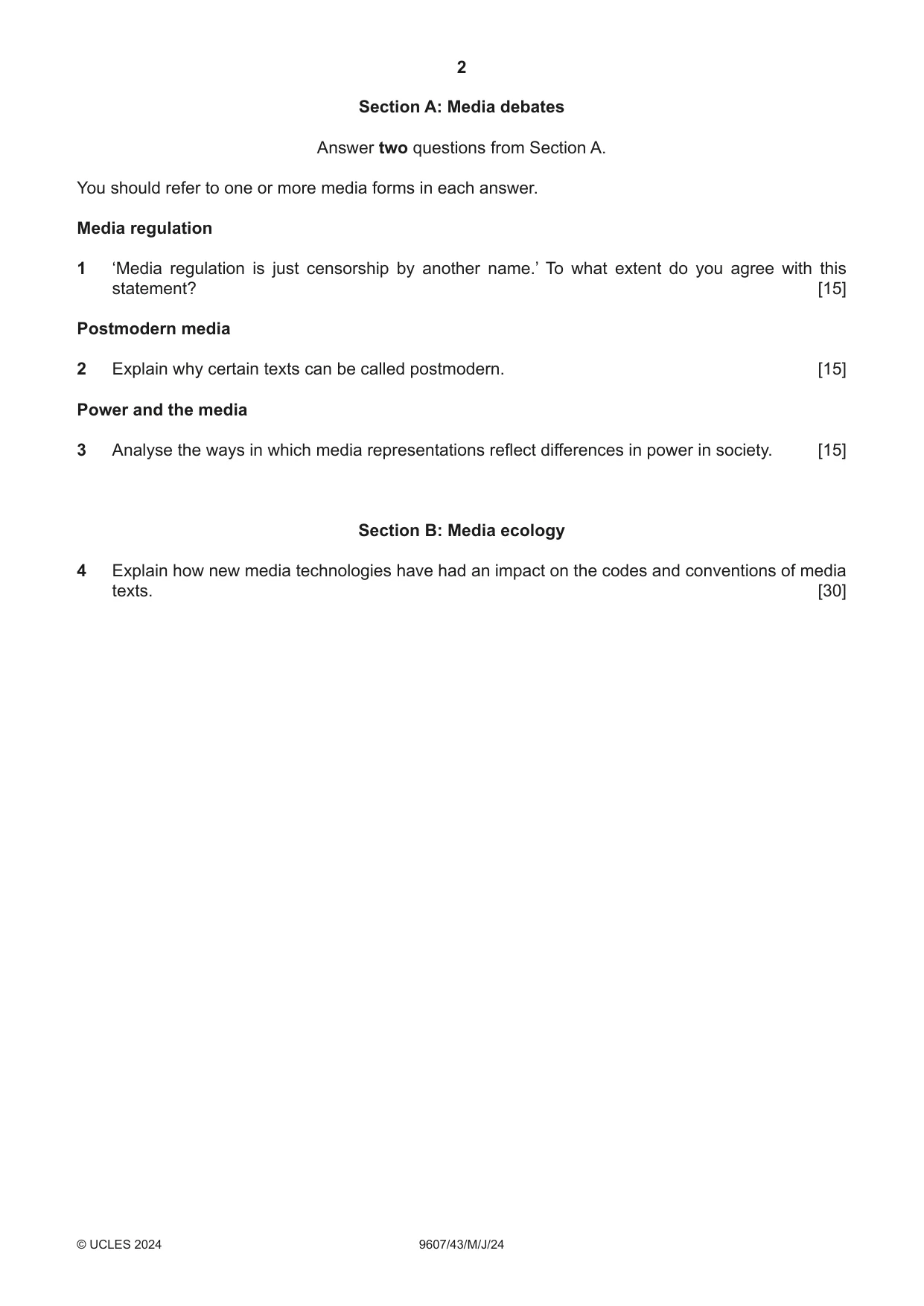
Question paper4 pages

Mark scheme14 pages
Answers below. Sit the paper first if you are practising.
Questions as text
Q1 · ‘Media regulation is just censorship by another name.’ To what extent do you agree with…
1 ‘Media regulation is just censorship by another name.’ To what extent do you agree with this statement? [15] Postmodern media
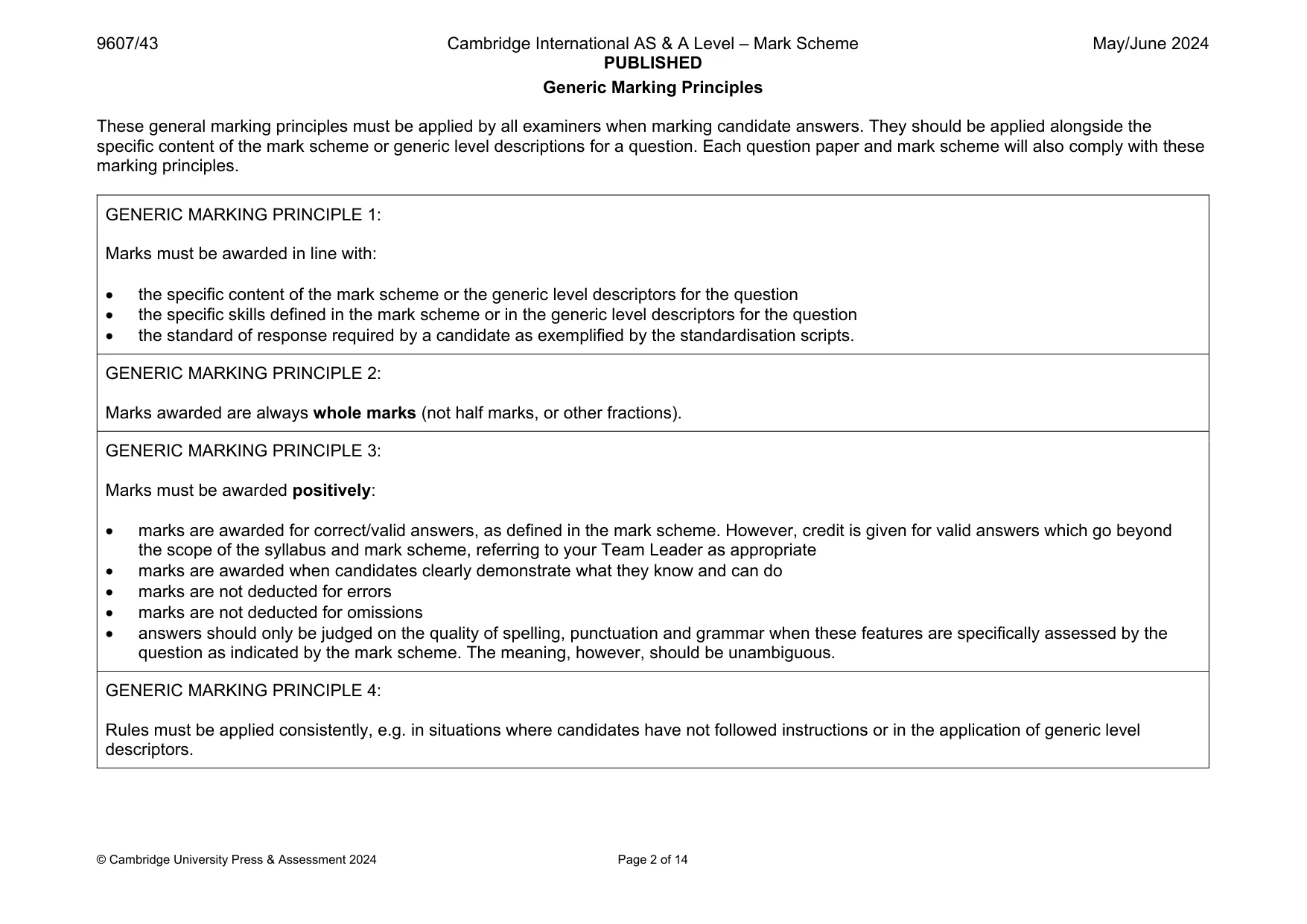
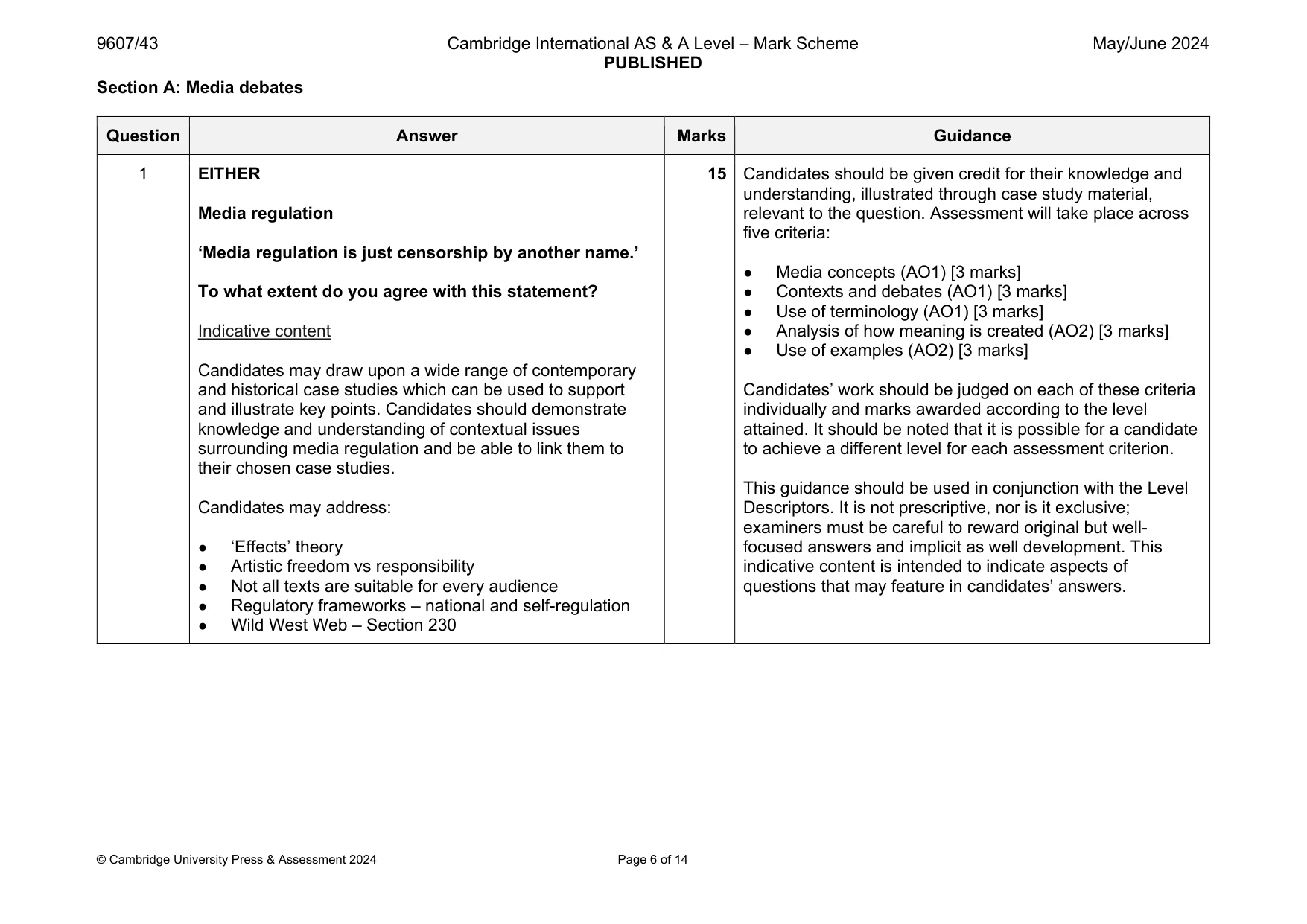
Mark scheme: 1 EITHER Media regulation ‘Media regulation is just censorship by another name.’ To what extent do you agree with this statement? Indicative content Candidates may draw upon a wide range of contemporary and historical case studies which can be used to support and illustrate key points. Candidates should demonstrate knowledge and understanding of contextual issues surrounding media regulation and be able to link them to their chosen case studies. Candidates may address: ● ‘Effects’ theory ● Artistic freedom vs responsibility ● Not all texts are suitable for every audience ● Regulatory frameworks – national and self-regulation ● Wild West Web – Section 230 understanding, illustrated through case study material, relevant to the question. Assessment will take place across five criteria: ● Media concepts (AO1) [3 marks] ● Contexts and debates (AO1) [3 marks] ● Use of terminology (AO1) [3 marks] ● Analysis of how meaning is created (AO2) [3 marks] ● Use of examples (AO2) [3 marks] Candidates’ work should be judged on each of these criteria individually and marks awarded according to the level attained. It should be noted that it is possible for a candidate to achieve a different level for each assessment criterion. This guidance should be used in conjunction with the Level Descriptors. It is not prescriptive, nor is it exclusive; examiners must be careful to reward original but well- focused answers and implicit as well development. This indicative content is intended to indicate aspects of questions that may feature in candidates’ answers.
Q2 · Explain why certain texts can be called postmodern
2 Explain why certain texts can be called postmodern. [15] Power and the media
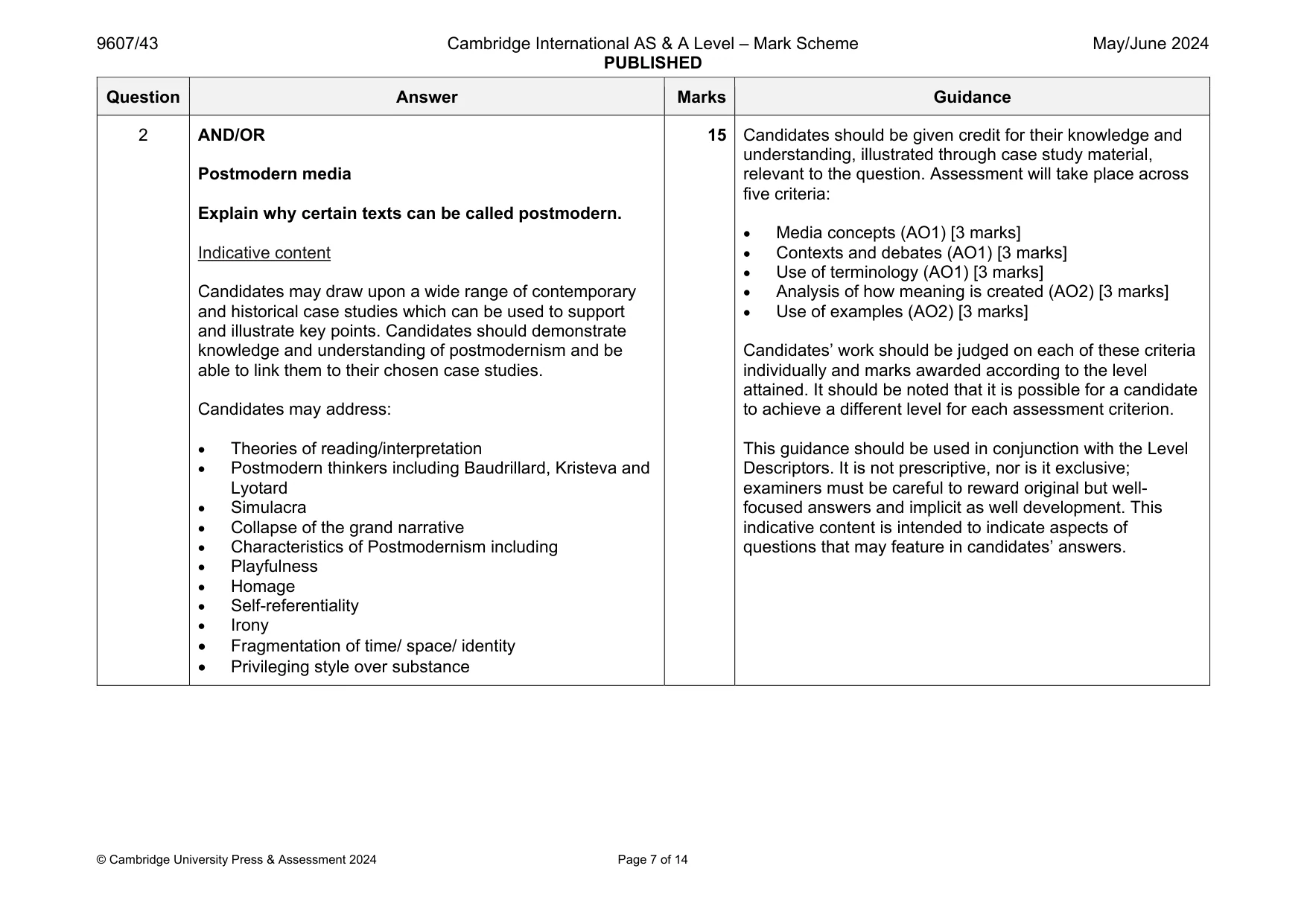
Mark scheme: 2 AND/OR Postmodern media Explain why certain texts can be called postmodern. Indicative content Candidates may draw upon a wide range of contemporary and historical case studies which can be used to support and illustrate key points. Candidates should demonstrate knowledge and understanding of postmodernism and be able to link them to their chosen case studies. Candidates may address: Theories of reading/interpretation Postmodern thinkers including Baudrillard, Kristeva and Lyotard Simulacra Collapse of the grand narrative Characteristics of Postmodernism including Playfulness Homage Self-referentiality Irony Fragmentation of time/ space/ identity Privileging style over substance 15 Candidates should be given credit for their knowledge and understanding, illustrated through case study material, relevant to the question. Assessment will take place across five criteria: Media concepts (AO1) [3 marks] Contexts and debates (AO1) [3 marks] Use of terminology (AO1) [3 marks] Analysis of how meaning is created (AO2) [3 marks] Use of examples (AO2) [3 marks] Candidates’ work should be judged on each of these criteria individually and marks awarded according to the level attained. It should be noted that it is possible for a candidate to achieve a different level for each assessment criterion. This guidance should be used in conjunction with the Level Descriptors. It is not prescriptive, nor is it exclusive; examiners must be careful to reward original but well- focused answers and implicit as well development. This indicative content is intended to indicate aspects of questions that may feature in candidates’ answers.
Q3 · Analyse the ways in which media representations reflect differences in power in society
3 Analyse the ways in which media representations reflect differences in power in society. [15]
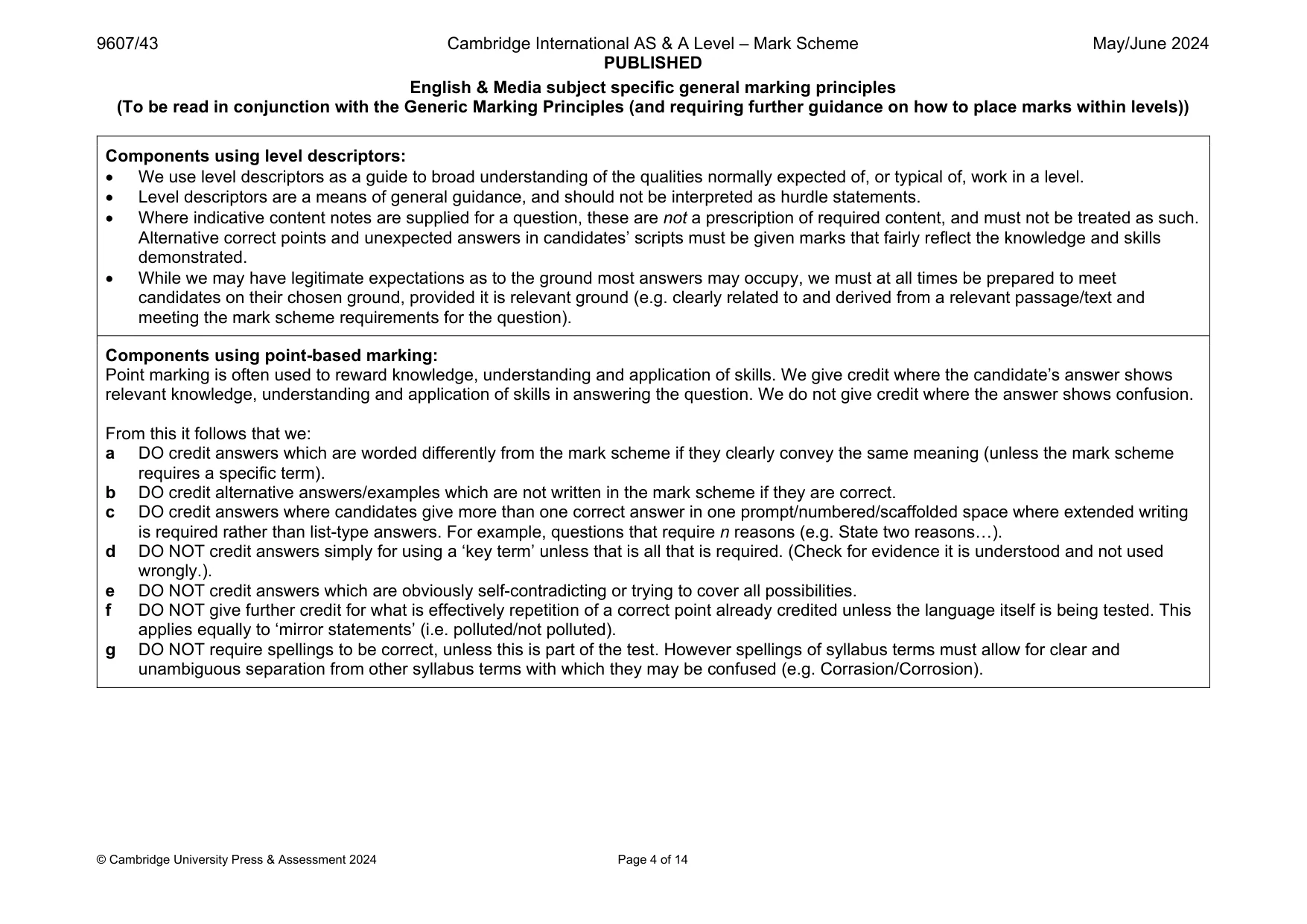
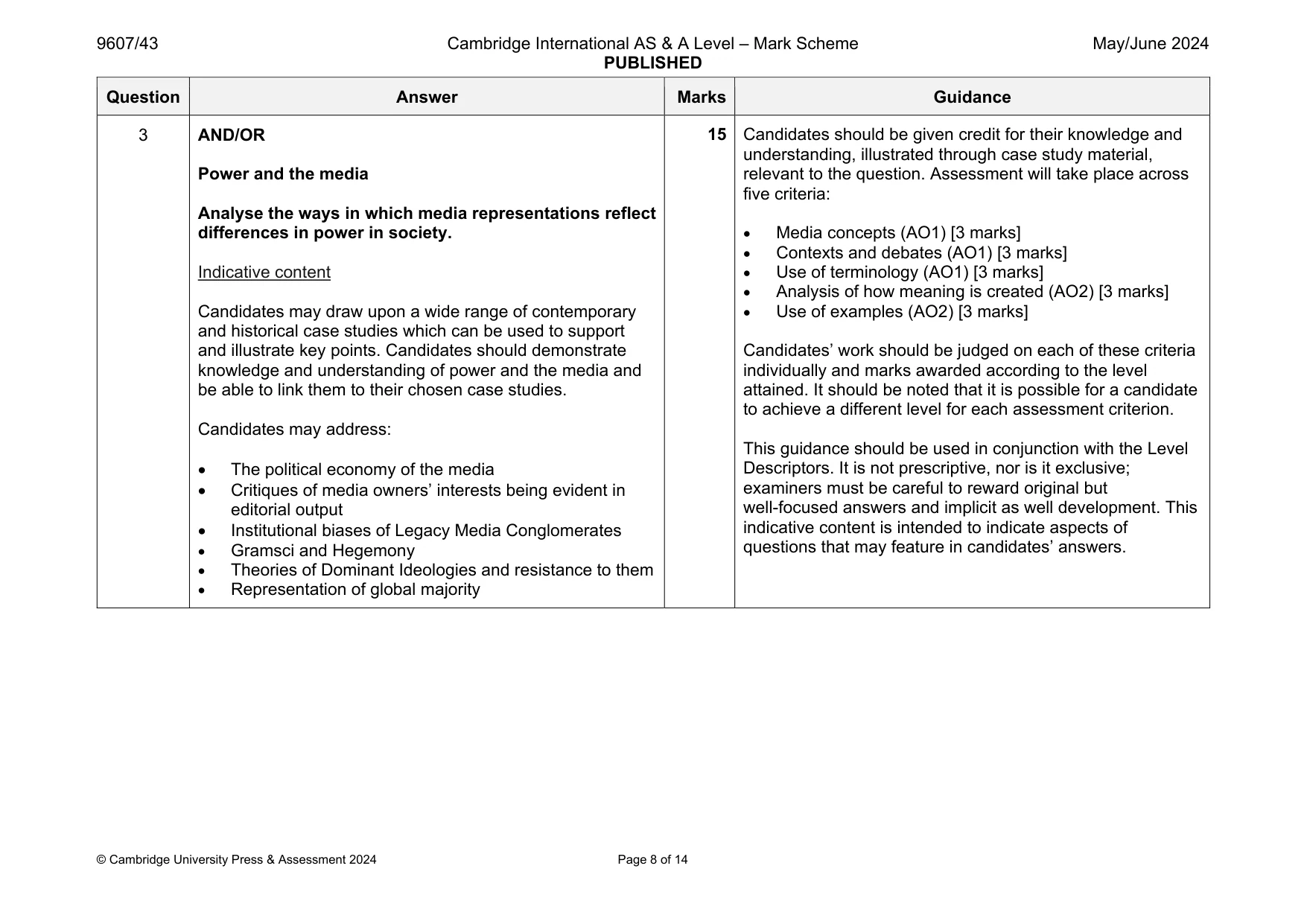
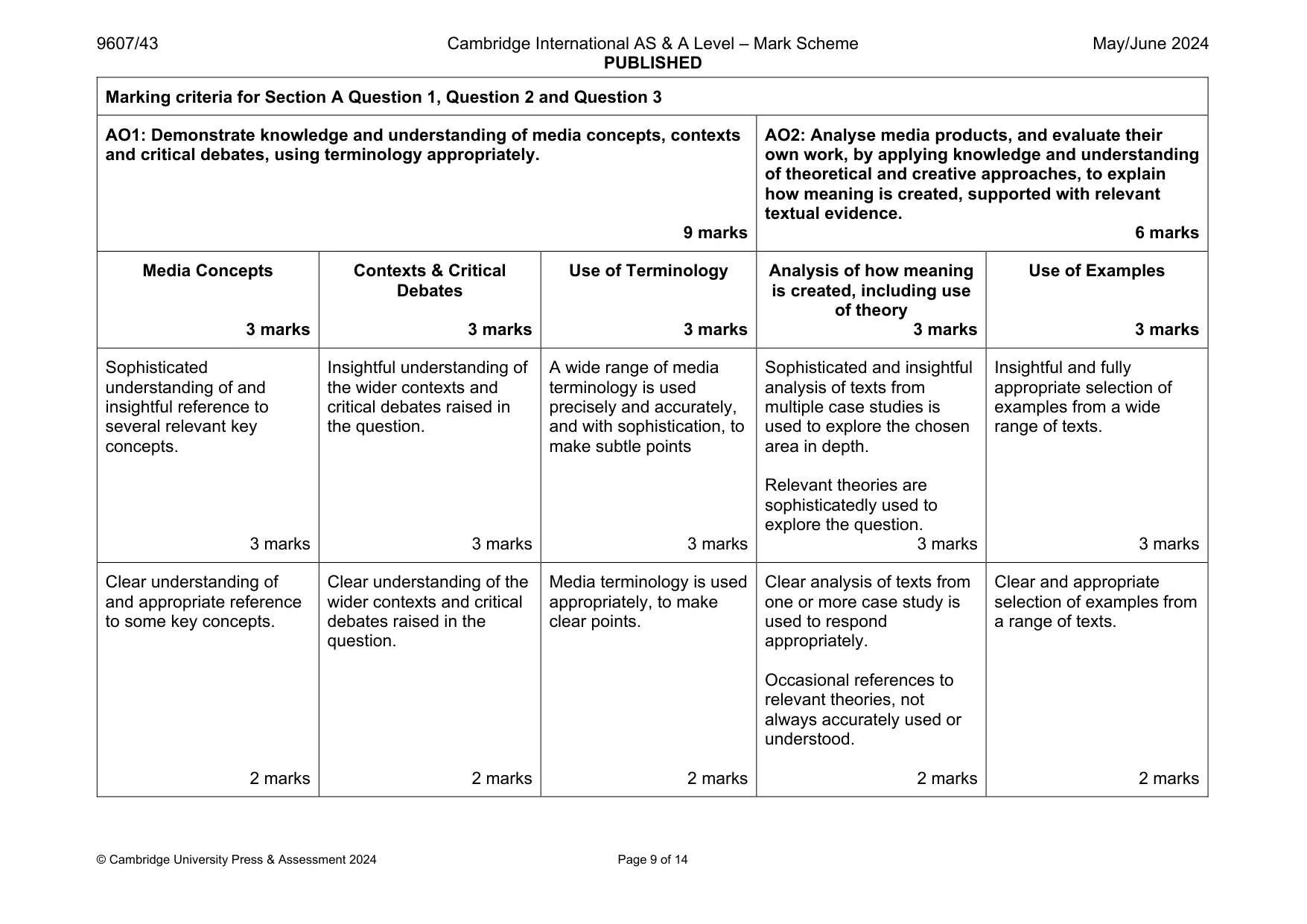
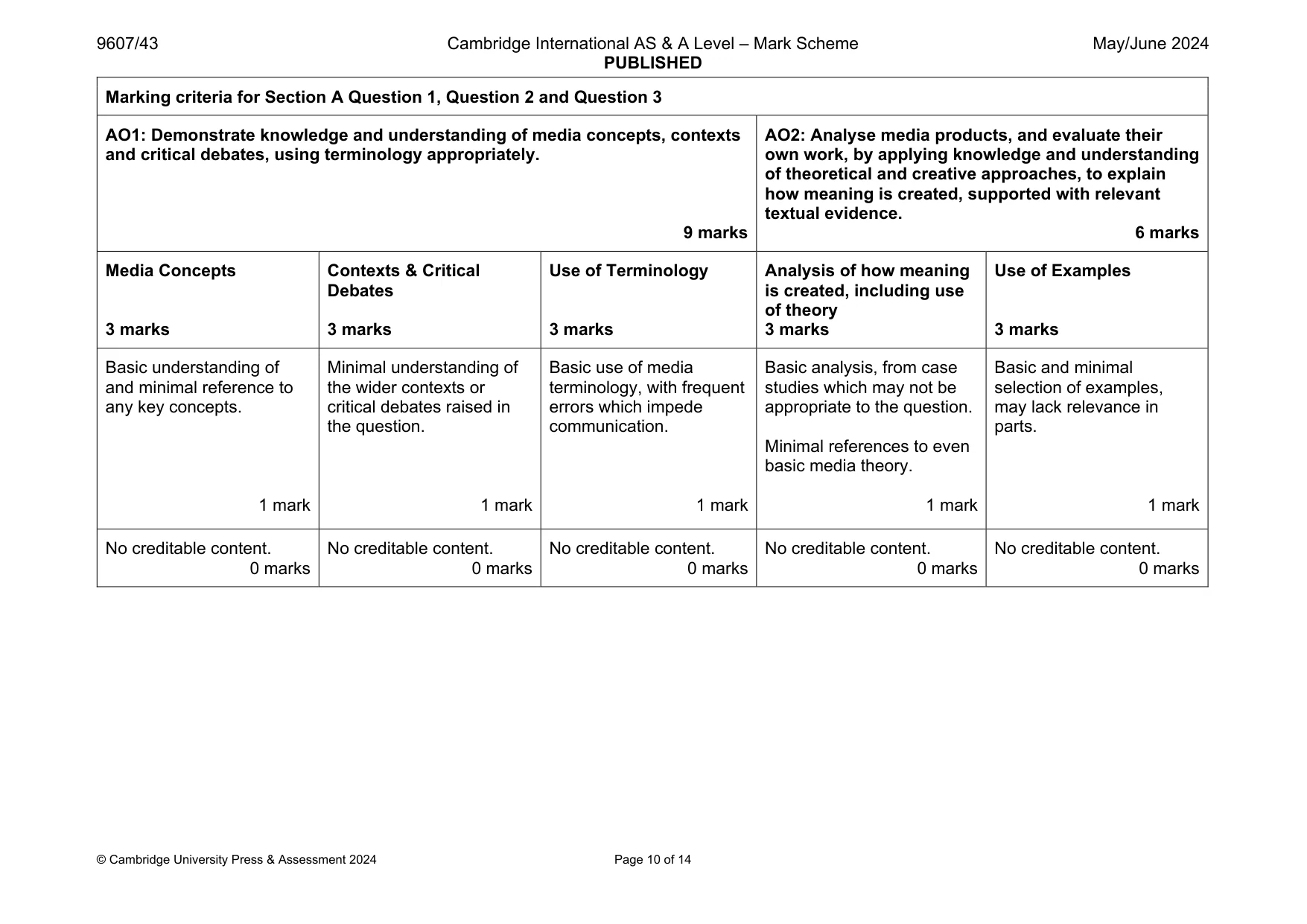
Mark scheme: 3 AND/OR Power and the media Analyse the ways in which media representations reflect differences in power in society. Indicative content Candidates may draw upon a wide range of contemporary and historical case studies which can be used to support and illustrate key points. Candidates should demonstrate knowledge and understanding of power and the media and be able to link them to their chosen case studies. Candidates may address: The political economy of the media Critiques of media owners’ interests being evident in editorial output Institutional biases of Legacy Media Conglomerates Gramsci and Hegemony Theories of Dominant Ideologies and resistance to them Representation of global majority understanding, illustrated through case study material, relevant to the question. Assessment will take place across five criteria: Media concepts (AO1) [3 marks] Contexts and debates (AO1) [3 marks] Use of terminology (AO1) [3 marks] Analysis of how meaning is created (AO2) [3 marks] Use of examples (AO2) [3 marks] Candidates’ work should be judged on each of these criteria individually and marks awarded according to the level attained. It should be noted that it is possible for a candidate to achieve a different level for each assessment criterion. This guidance should be used in conjunction with the Level Descriptors. It is not prescriptive, nor is it exclusive; examiners must be careful to reward original but well-focused answers and implicit as well development. This indicative content is intended to indicate aspects of questions that may feature in candidates’ answers. Marking criteria for Section A Question 1, Question 2 and Question 3 AO1: Demonstrate knowledge and understanding of media concepts, contexts and critical debates, using terminology appropriately. 9 marks AO2: Analyse media products, and evaluate their own work, by applying knowledge and understanding of theoretical and creative approaches, to explain how meaning is created, supported with relevant textual evidence. 6 marks Media Concepts 3 marks Contexts & Critical Debates 3 marks Use of Terminology 3 marks Analysis of how meaning is created, including use of theory 3 marks Use of Examples 3 marks Sophisticated understanding of and insightful reference to several relevant key concepts. 3 marks Insightful understanding of the wider contexts and critical debates raised in the question. 3 marks A wide range of media terminology is used precisely and accurately, and with sophistication, to make subtle points 3 marks Sophisticated and insightful analysis of texts from multiple case studies is used to explore the chosen area in depth. Relevant theories are sophisticatedly used to explore the question. 3 marks Insightful and fully appropriate selection of examples from a wide range of texts. 3 marks Clear understanding of and appropriate reference to some key concepts. 2 marks Clear understanding of the wider contexts and critical debates raised in the question. 2 marks Media terminology is used appropriately, to make clear points. 2 marks Clear analysis of texts from one or more case study is used to respond appropriately. Occasional references to relevant theories, not always accurately used or understood. 2 marks Clear and appropriate selection of examples from a range of texts. 2 marks Marking criteria for Section A Question 1, Question 2 and Question 3 AO1: Demonstrate knowledge and understanding of media concepts, contexts and critical debates, using terminology appropriately. 9 marks AO2: Analyse media products, and evaluate their own work, by applying knowledge and understanding of theoretical and creative approaches, to explain how meaning is created, supported with relevant textual evidence. 6 marks Media Concepts 3 marks Contexts & Critical Debates 3 marks Use of Terminology 3 marks Analysis of how meaning is created, including use of theory 3 marks Use of Examples 3 marks Basic understanding of and minimal reference to any key concepts. 1 mark Minimal understanding of the wider contexts or critical debates raised in the question. 1 mark Basic use of media terminology, with frequent errors which impede communication. 1 mark Basic analysis, from case studies which may not be appropriate to the question. Minimal references to even basic media theory. 1 mark Basic and minimal selection of examples, may lack relevance in parts. 1 mark No creditable content. 0 marks No creditable content. 0 marks No creditable content. 0 marks No creditable content. 0 marks No creditable content. 0 marks
Q4 · Explain how new media technologies have had an impact on the codes and conventions of…
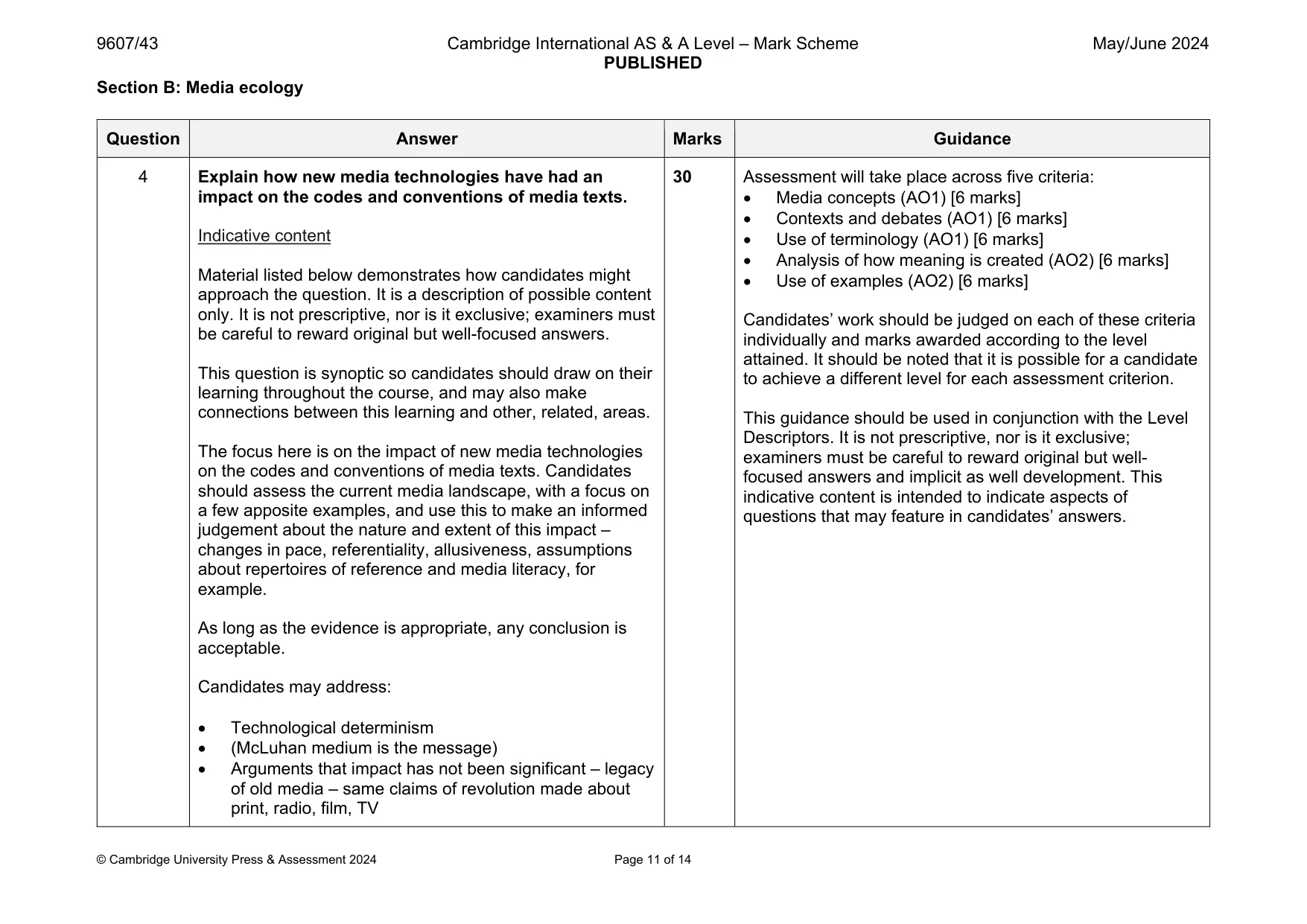
4 Explain how new media technologies have had an impact on the codes and conventions of media texts. [30]
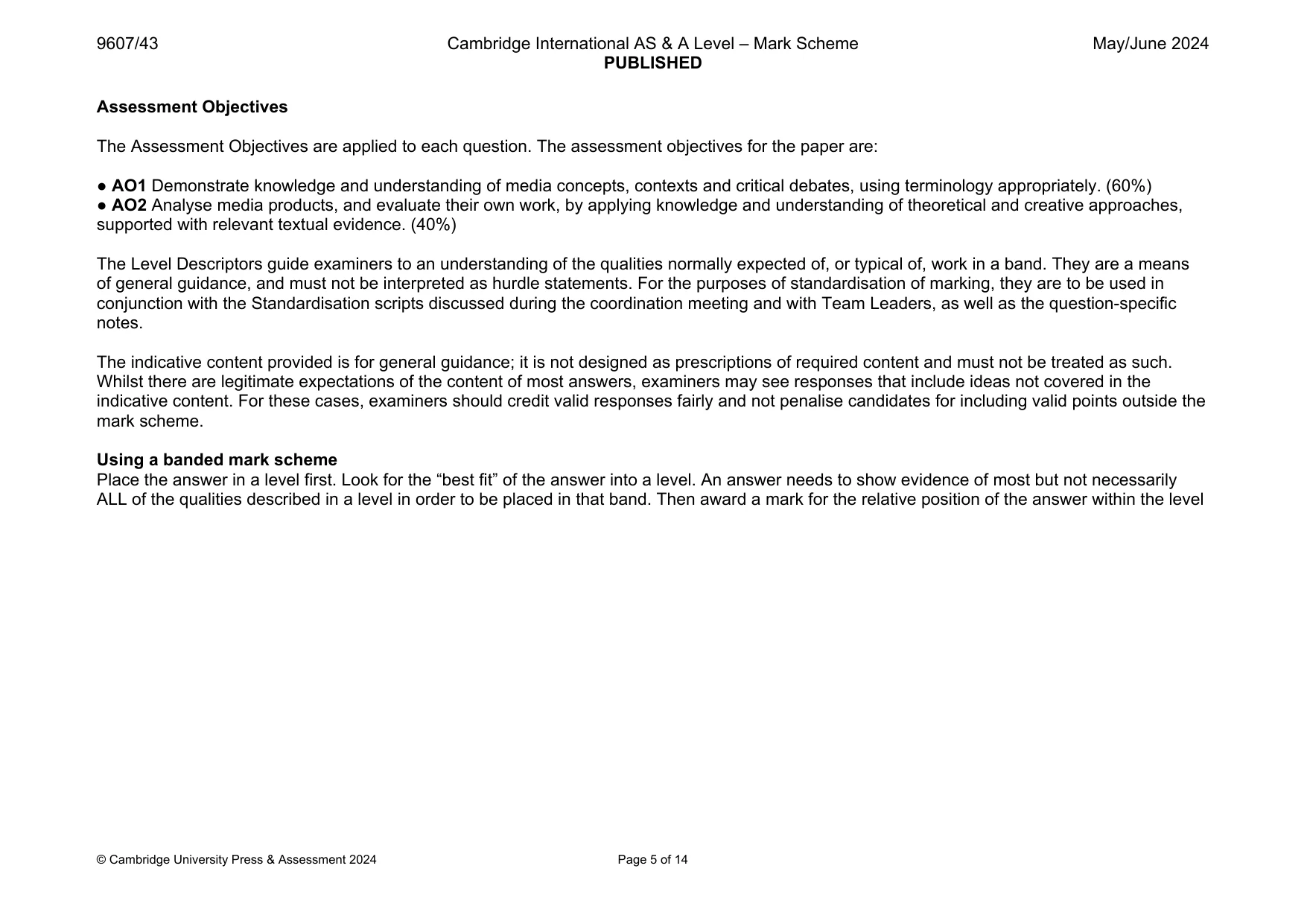
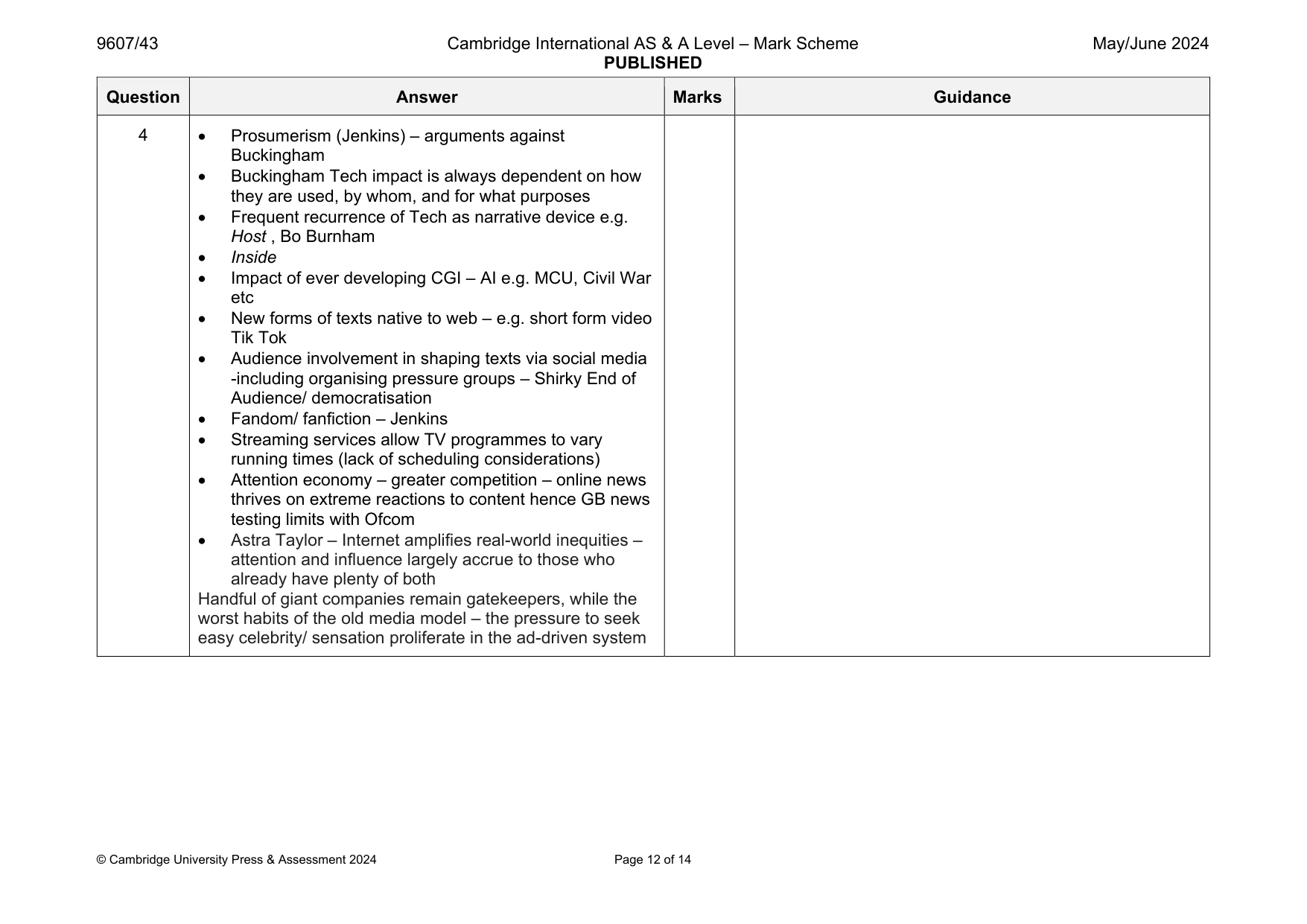
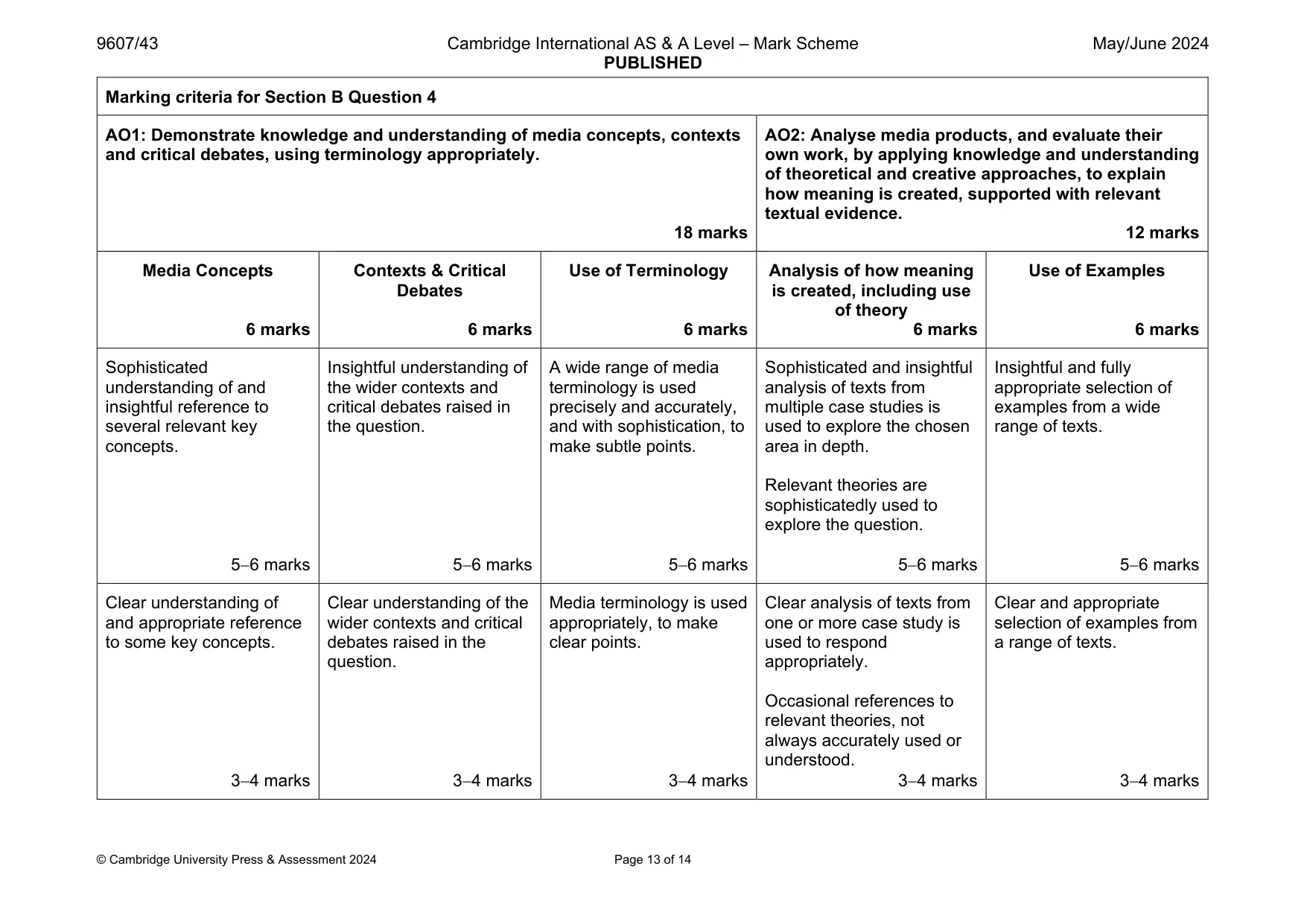
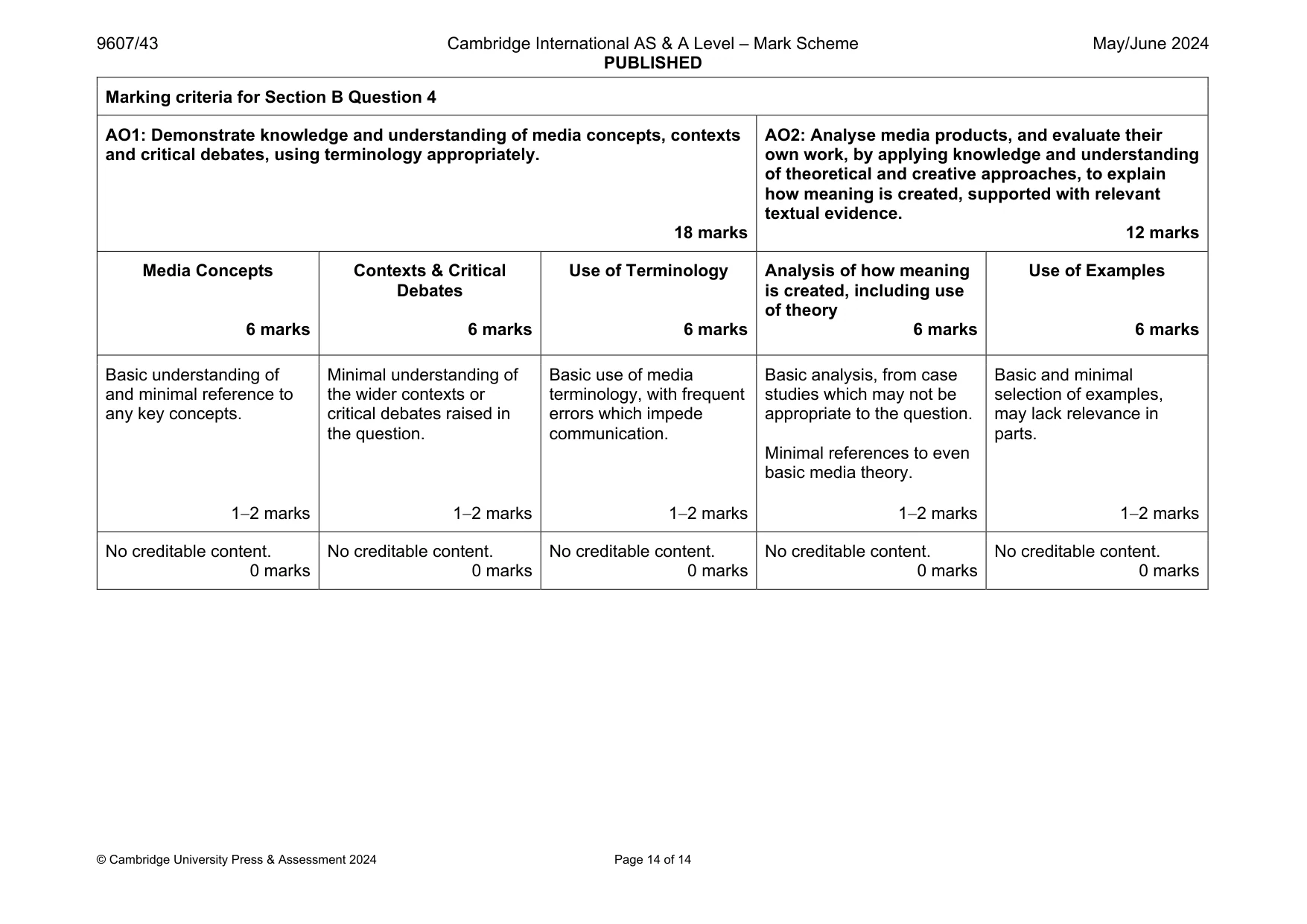
Mark scheme: 4 Explain how new media technologies have had an impact on the codes and conventions of media texts. Indicative content Material listed below demonstrates how candidates might approach the question. It is a description of possible content only. It is not prescriptive, nor is it exclusive; examiners must be careful to reward original but well-focused answers. This question is synoptic so candidates should draw on their learning throughout the course, and may also make connections between this learning and other, related, areas. The focus here is on the impact of new media technologies on the codes and conventions of media texts. Candidates should assess the current media landscape, with a focus on a few apposite examples, and use this to make an informed judgement about the nature and extent of this impact – changes in pace, referentiality, allusiveness, assumptions about repertoires of reference and media literacy, for example. As long as the evidence is appropriate, any conclusion is acceptable. Candidates may address: Technological determinism (McLuhan medium is the message) Arguments that impact has not been significant – legacy of old media – same claims of revolution made about print, radio, film, TV Media concepts (AO1) [6 marks] Contexts and debates (AO1) [6 marks] Use of terminology (AO1) [6 marks] Analysis of how meaning is created (AO2) [6 marks] Use of examples (AO2) [6 marks] Candidates’ work should be judged on each of these criteria individually and marks awarded according to the level attained. It should be noted that it is possible for a candidate to achieve a different level for each assessment criterion. This guidance should be used in conjunction with the Level Descriptors. It is not prescriptive, nor is it exclusive; examiners must be careful to reward original but well- focused answers and implicit as well development. This indicative content is intended to indicate aspects of questions that may feature in candidates’ answers. Question Answer Marks Guidance 4 Prosumerism (Jenkins) – arguments against Buckingham Buckingham Tech impact is always dependent on how they are used, by whom, and for what purposes Frequent recurrence of Tech as narrative device e.g. Host , Bo Burnham Inside Impact of ever developing CGI – AI e.g. MCU, Civil War etc New forms of texts native to web – e.g. short form video Tik Tok Audience involvement in shaping texts via social media -including organising pressure groups – Shirky End of Audience/ democratisation Fandom/ fanfiction – Jenkins Streaming services allow TV programmes to vary running times (lack of scheduling considerations) Attention economy – greater competition – online news thrives on extreme reactions to content hence GB news testing limits with Ofcom Astra Taylor – Internet amplifies real-world inequities – attention and influence largely accrue to those who already have plenty of both Handful of giant companies remain gatekeepers, while the worst habits of the old media model – the pressure to seek easy celebrity/ sensation proliferate in the ad-driven system Marking criteria for Section B Question 4 AO1: Demonstrate knowledge and understanding of media concepts, contexts and critical debates, using terminology appropriately. 18 marks AO2: Analyse media products, and evaluate their own work, by applying knowledge and understanding of theoretical and creative approaches, to explain how meaning is created, supported with relevant textual evidence. 12 marks Media Concepts 6 marks Contexts & Critical Debates 6 marks Use of Terminology 6 marks Analysis of how meaning is created, including use of theory 6 marks Use of Examples 6 marks Sophisticated understanding of and insightful reference to several relevant key concepts. 56 marks Insightful understanding of the wider contexts and critical debates raised in the question. 56 marks A wide range of media terminology is used precisely and accurately, and with sophistication, to make subtle points. 56 marks Sophisticated and insightful analysis of texts from multiple case studies is used to explore the chosen area in depth. Relevant theories are sophisticatedly used to explore the question. 56 marks Insightful and fully appropriate selection of examples from a wide range of texts. 56 marks Clear understanding of and appropriate reference to some key concepts. 34 marks Clear understanding of the wider contexts and critical debates raised in the question. 34 marks Media terminology is used appropriately, to make clear points. 34 marks Clear analysis of texts from one or more case study is used to respond appropriately. Occasional references to relevant theories, not always accurately used or understood. 34 marks Clear and appropriate selection of examples from a range of texts. 34 marks Marking criteria for Section B Question 4 AO1: Demonstrate knowledge and understanding of media concepts, contexts and critical debates, using terminology appropriately. 18 marks AO2: Analyse media products, and evaluate their own work, by applying knowledge and understanding of theoretical and creative approaches, to explain how meaning is created, supported with relevant textual evidence. 12 marks Media Concepts 6 marks Contexts & Critical Debates 6 marks Use of Terminology 6 marks Analysis of how meaning is created, including use of theory 6 marks Use of Examples 6 marks Basic understanding of and minimal reference to any key concepts. 12 marks Minimal understanding of the wider contexts or critical debates raised in the question. 12 marks Basic use of media terminology, with frequent errors which impede communication. 12 marks Basic analysis, from case studies which may not be appropriate to the question. Minimal references to even basic media theory. 12 marks Basic and minimal selection of examples, may lack relevance in parts. 12 marks No creditable content. 0 marks No creditable content. 0 marks No creditable content. 0 marks No creditable content. 0 marks No creditable content. 0 marks
What was in this paper
The subtopics covered by these 4 questions, and how many questions each got. Open one in a new tab to see every Cambridge question on it.
What you needed in this session
Cambridge’s own grade thresholds for 2024 May/June, Paper 4 · Variant 3. A higher threshold means an easier paper — the bar moves with how the cohort did.