Cambridge A Level Media Studies 9607 — 2019 Oct/Nov Paper 4 · Variant 1
9607/41/O/N/19 · 10 questions · 100 marks · ≈113 min
The question paper and its mark scheme, free to read here and free to download. This is Cambridge’s own paper, exactly as it was sat.
Question paper4 pages
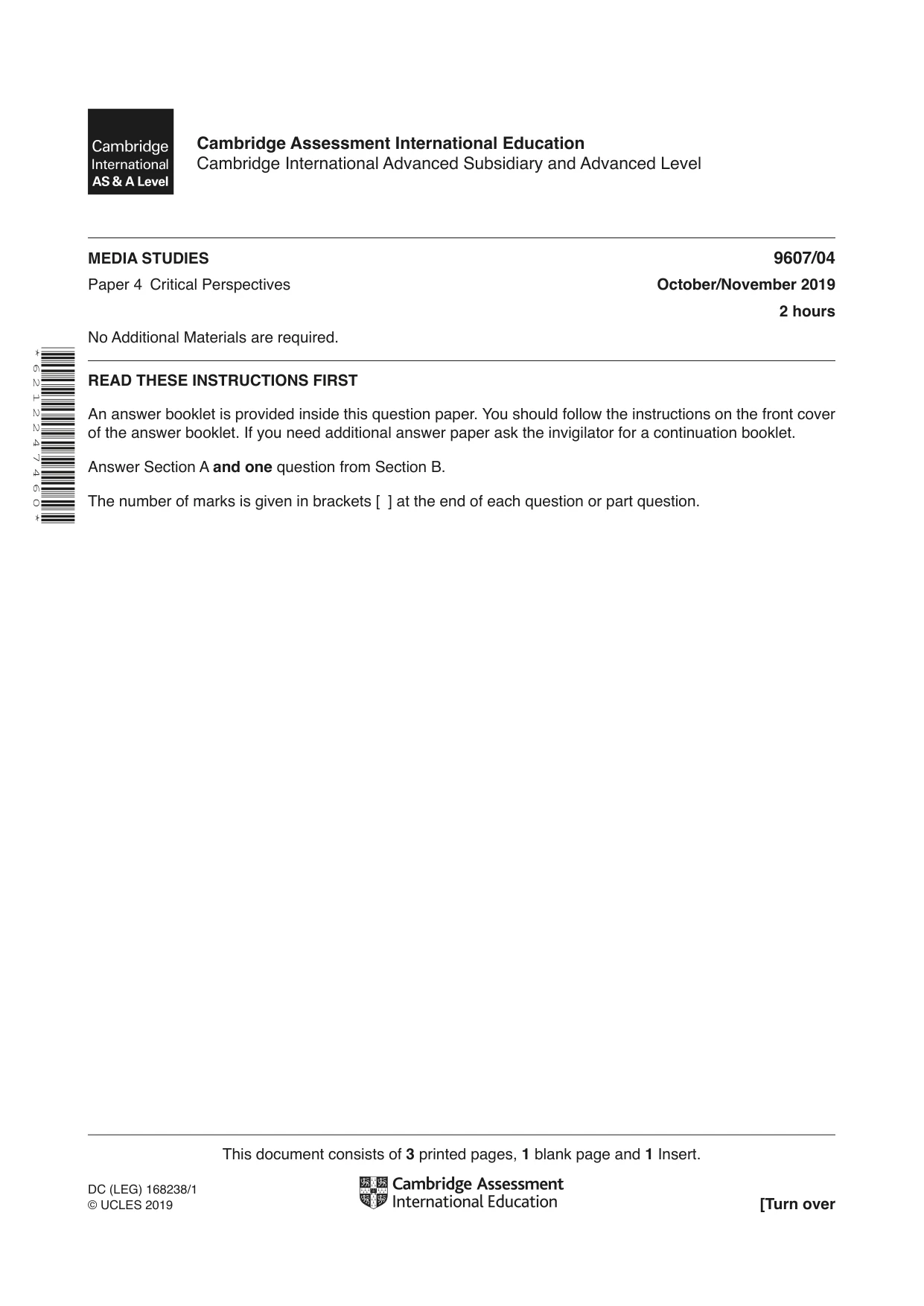

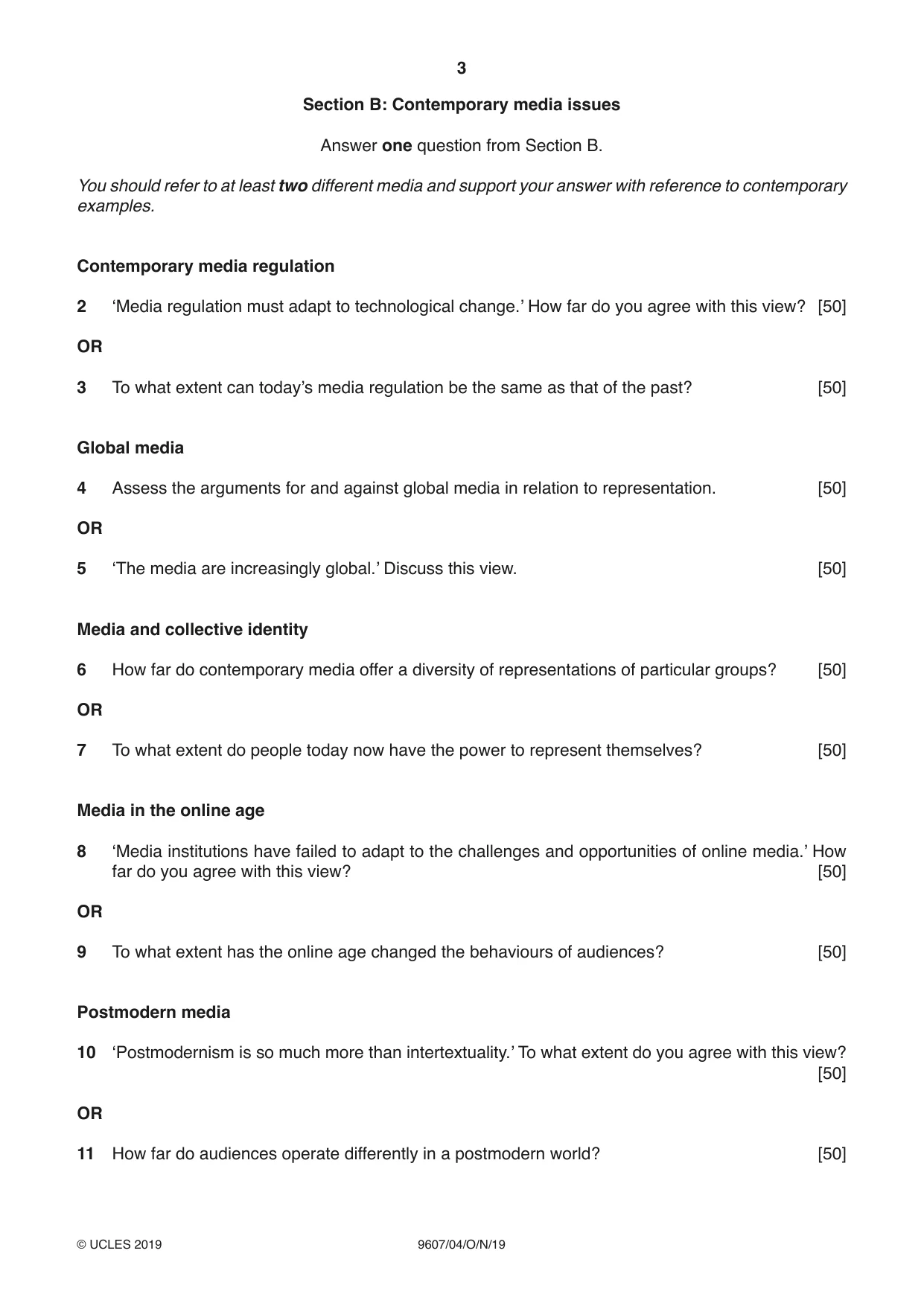

Mark scheme10 pages
Answers below. Sit the paper first if you are practising.
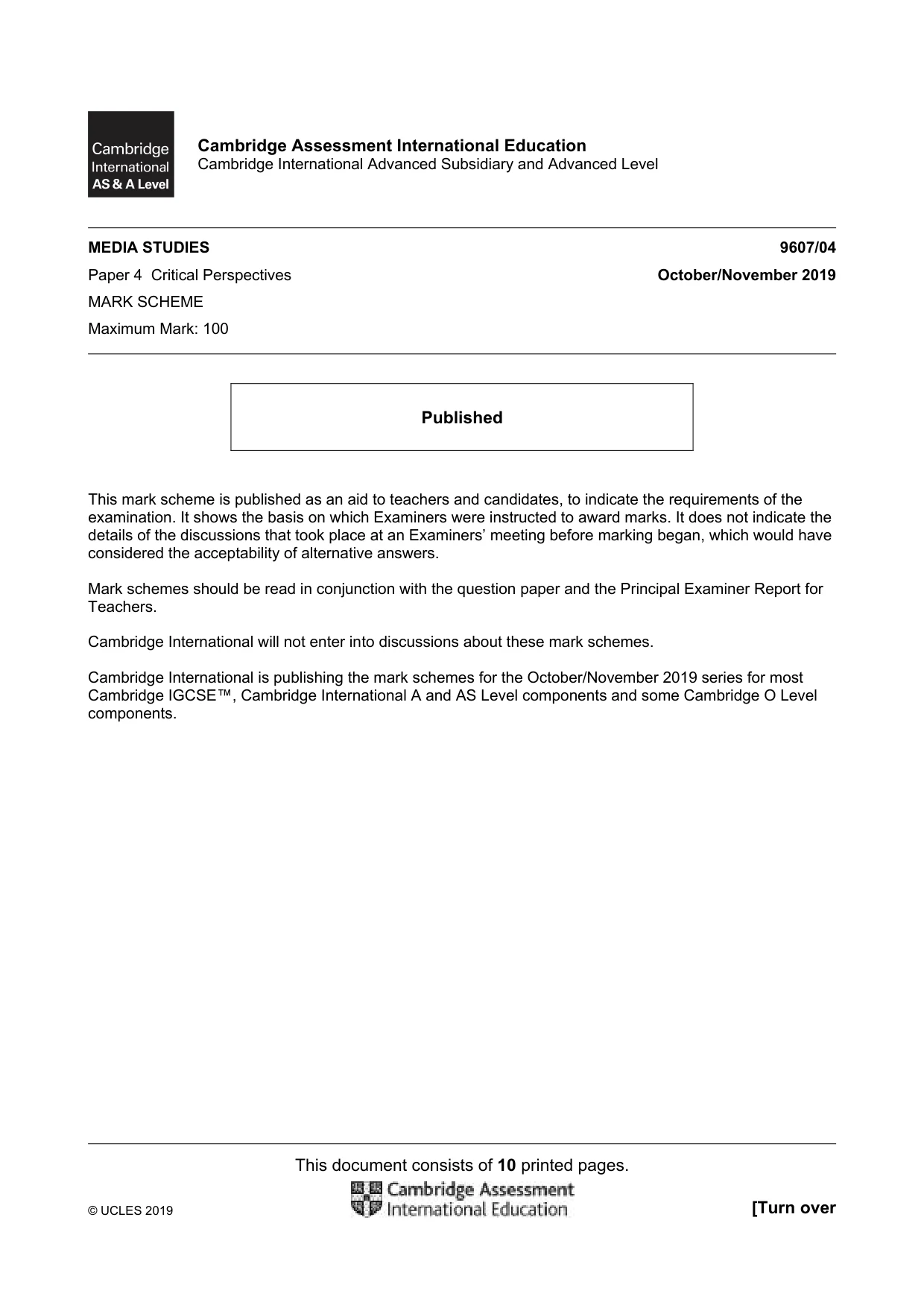
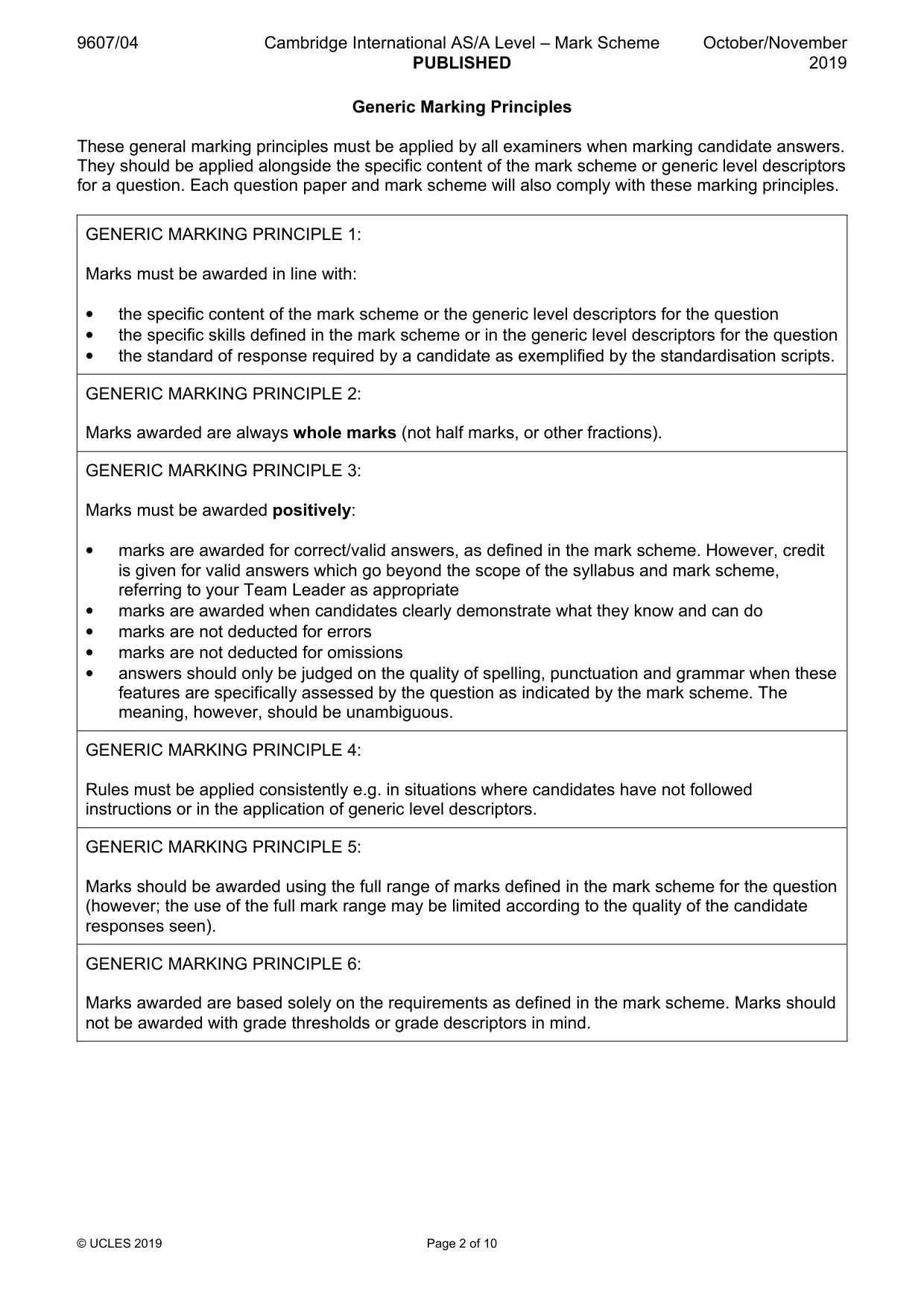

Questions as text
Q1 · Assess the relationship between digital technology and creativity in your production work
1 (a) Assess the relationship between digital technology and creativity in your production work. [25] (b) Evaluate one of your productions in relation to the concept of narrative. [25]
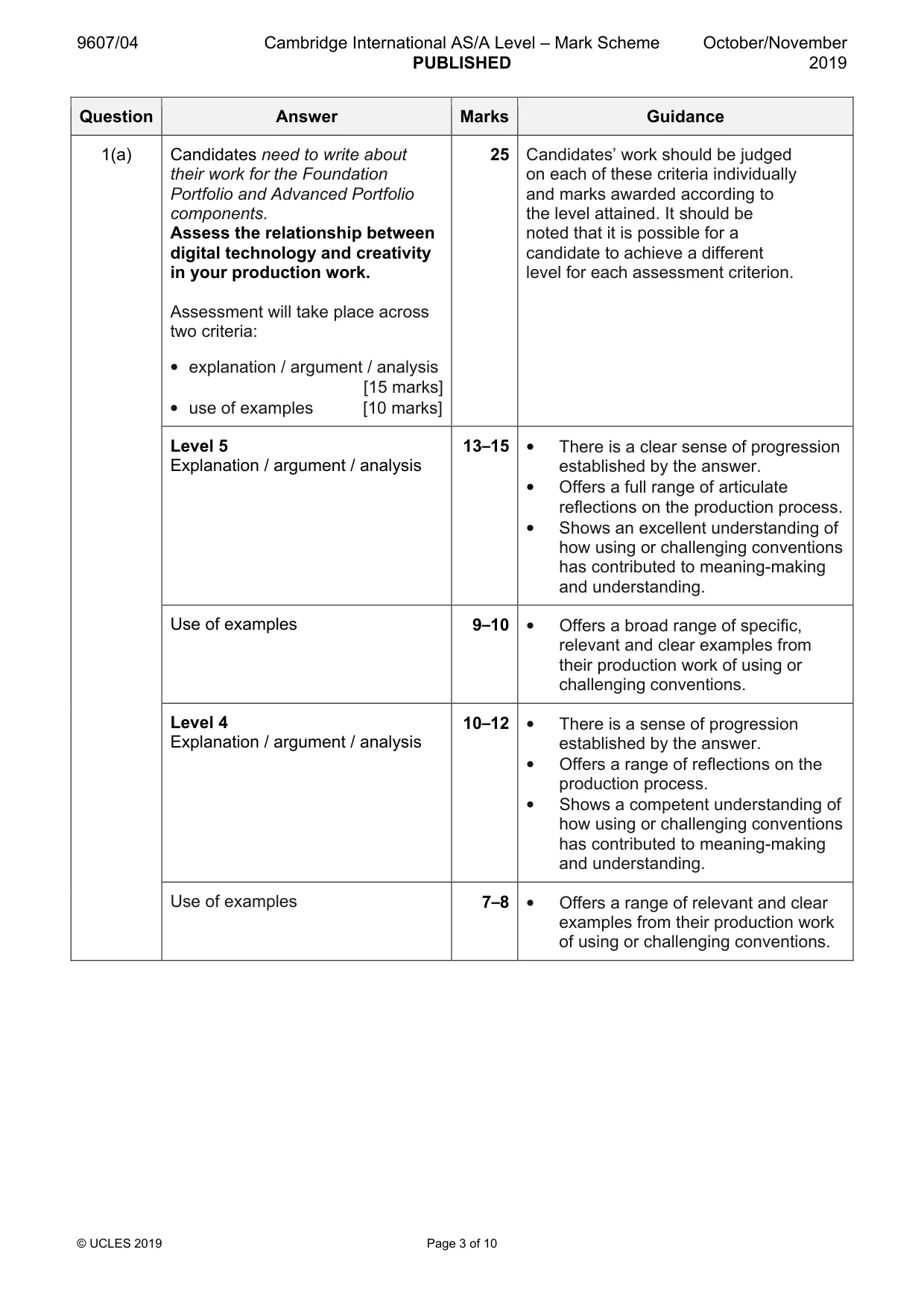
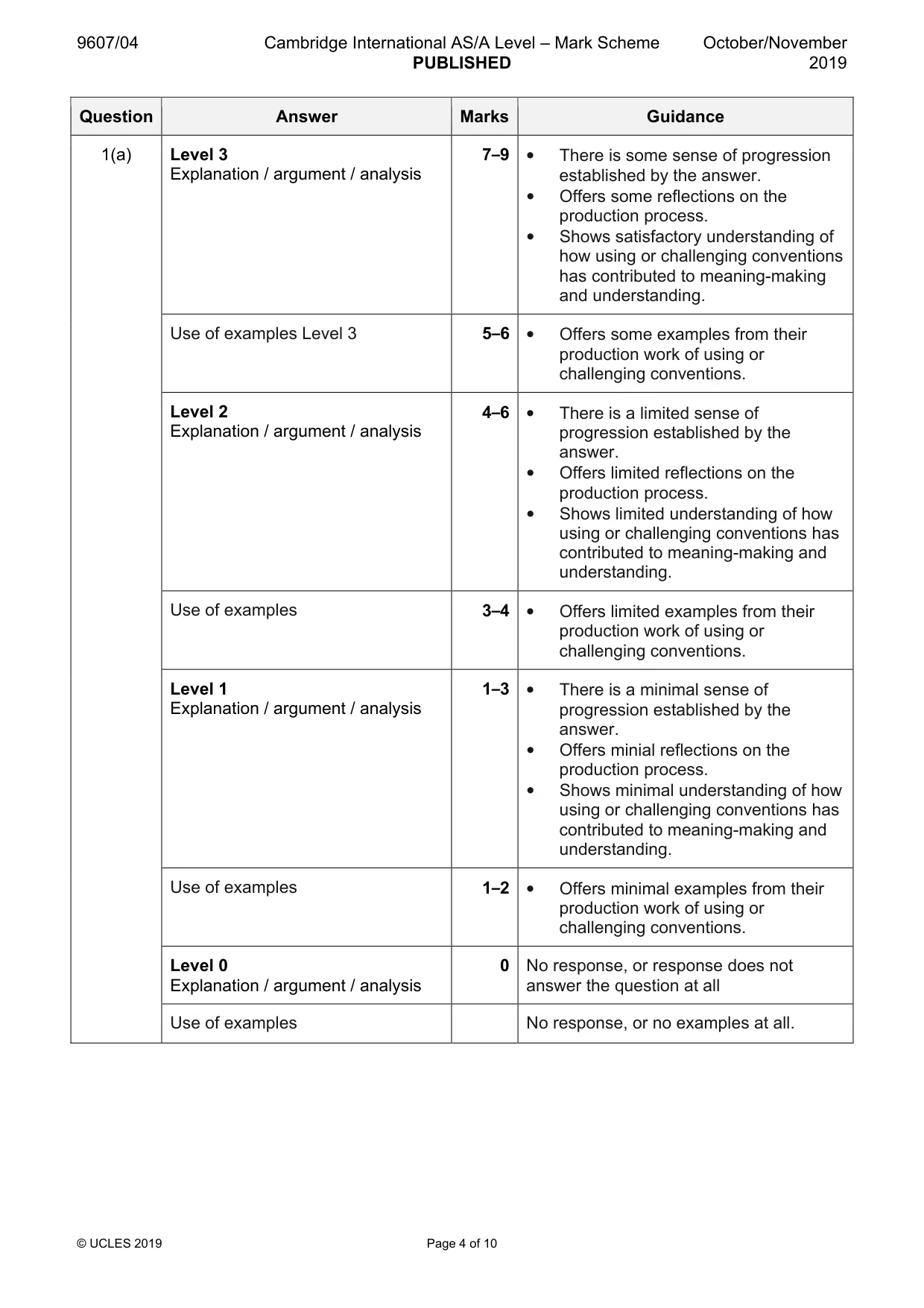
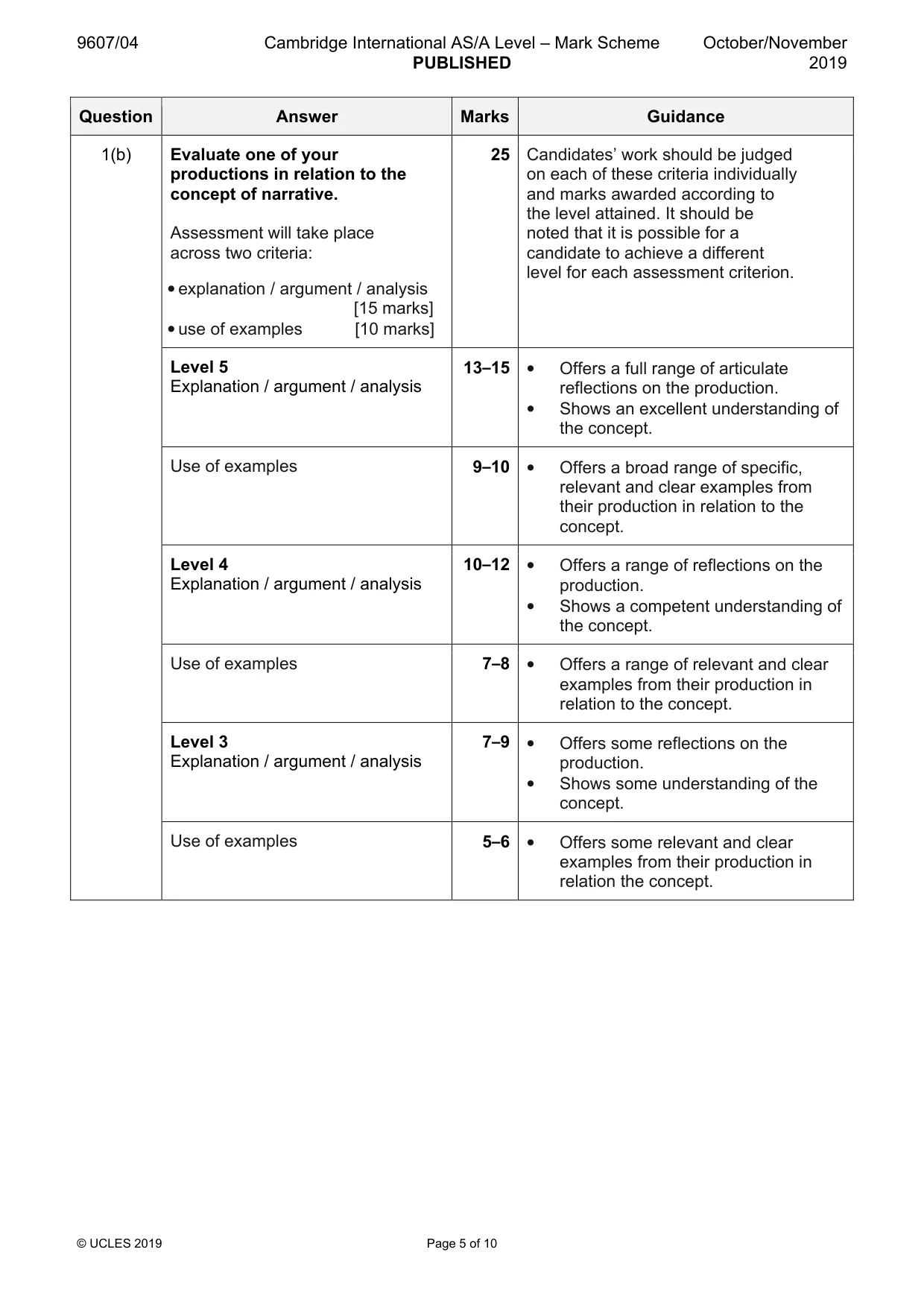
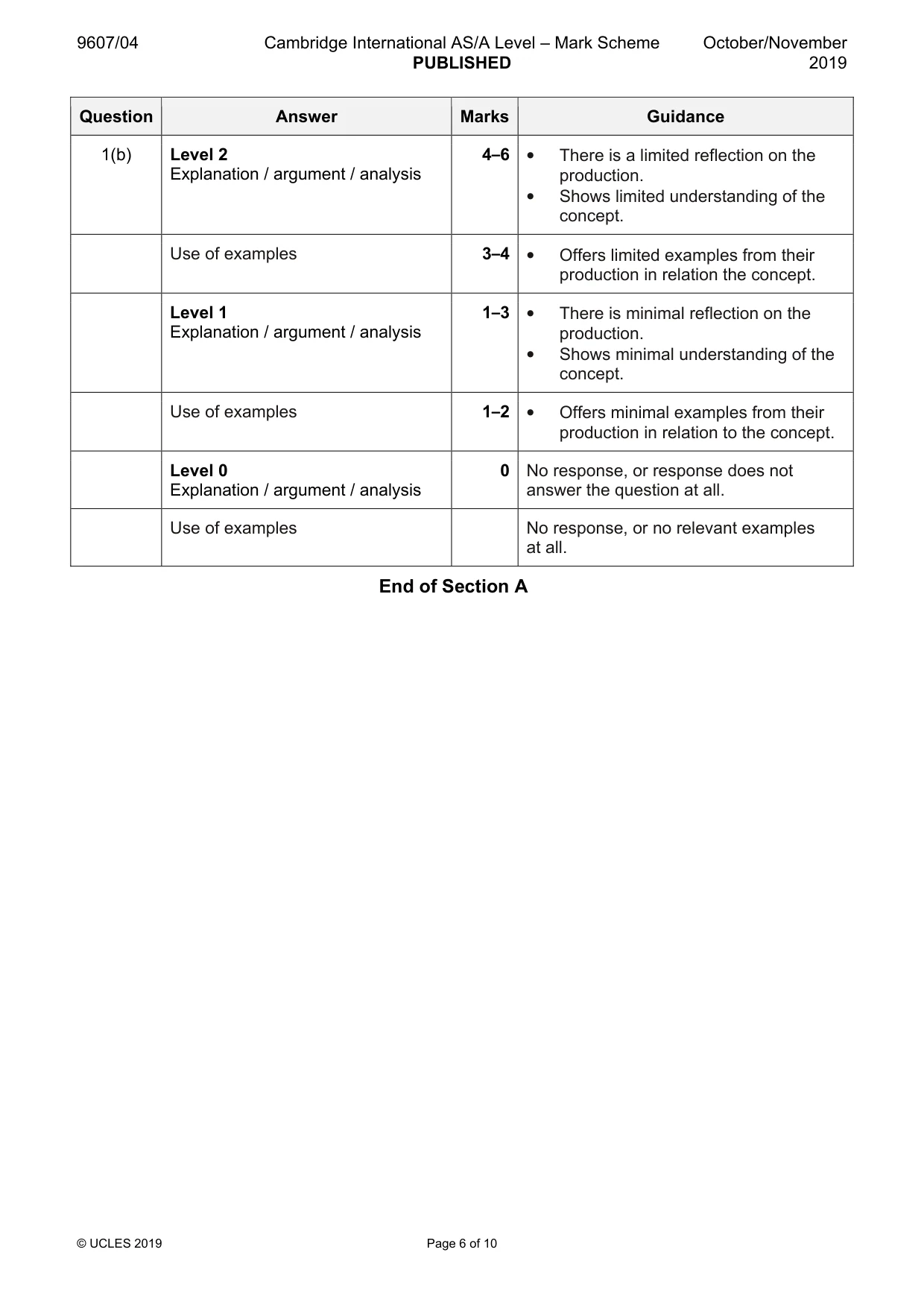
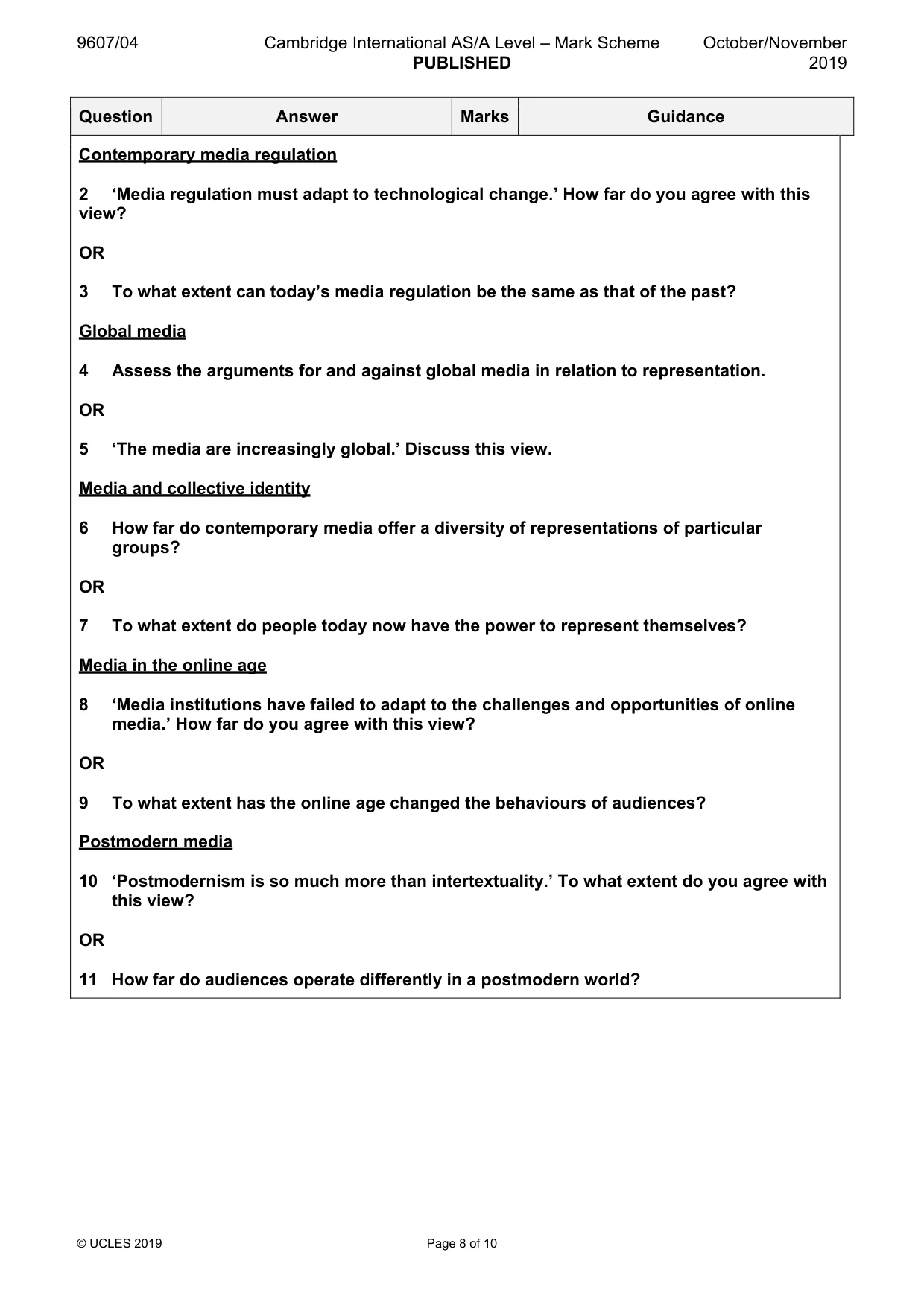
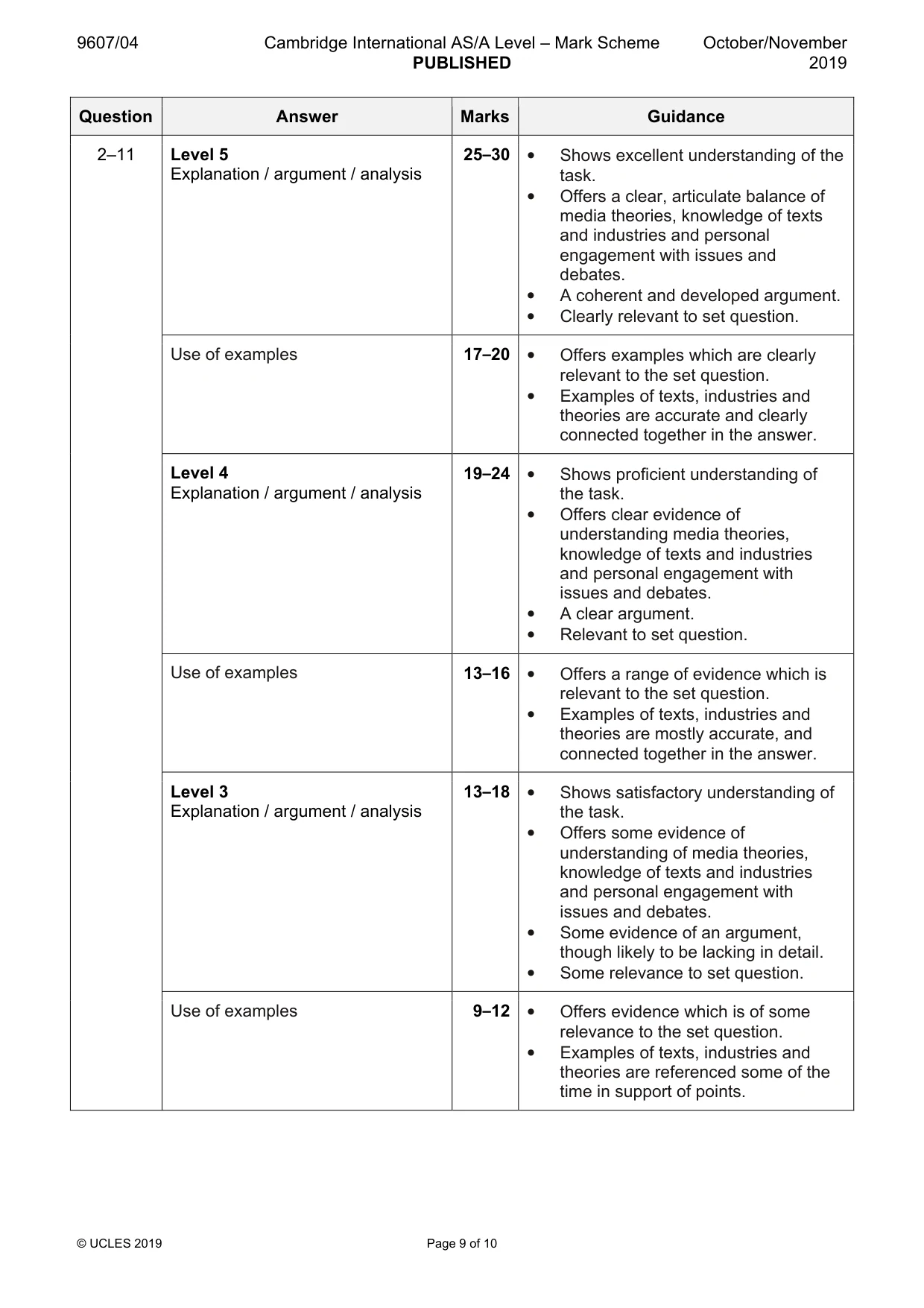
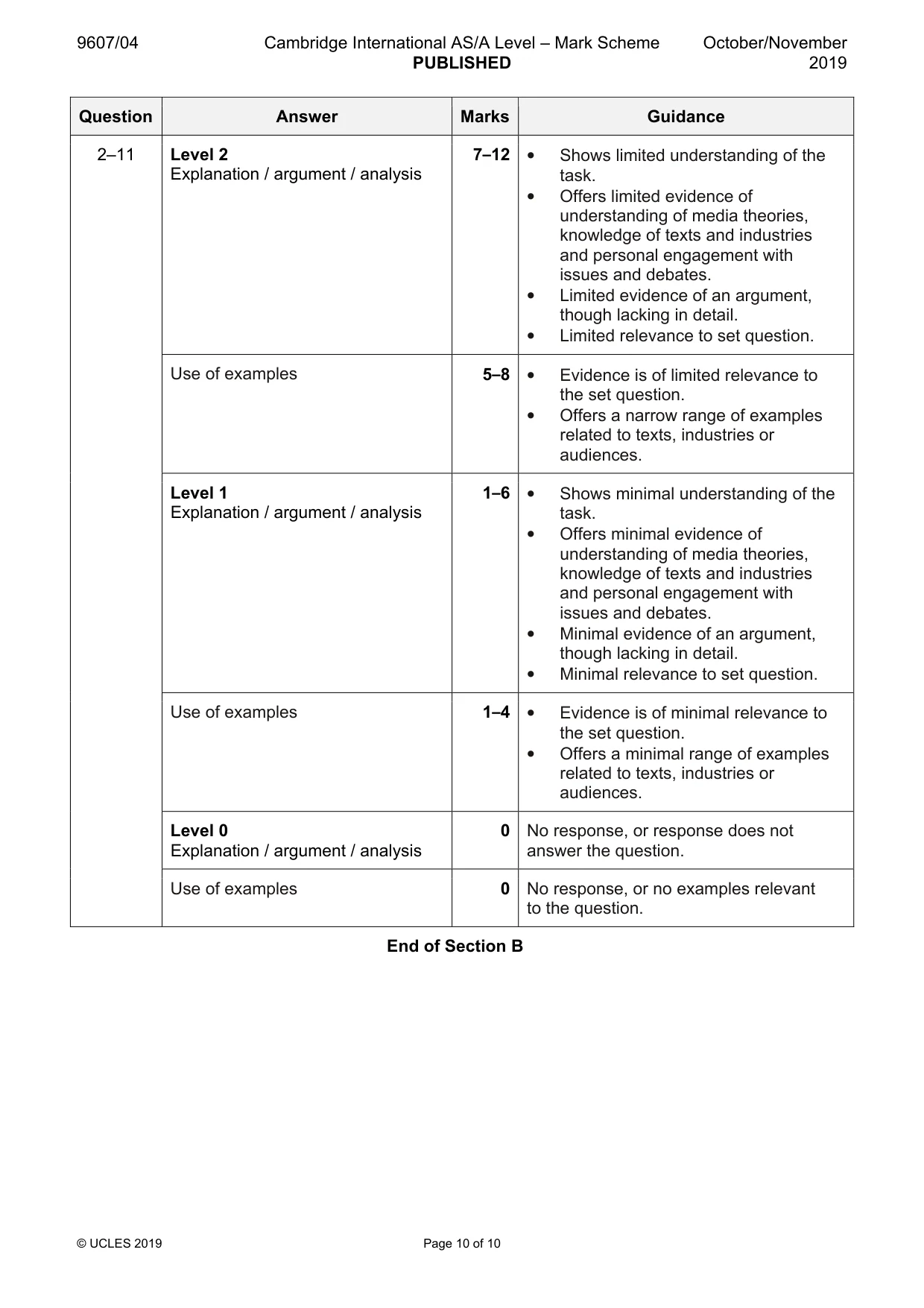
Mark scheme: Question Answer Marks Guidance 1(a) Candidates need to write about 25 Candidates’ work should be judged their work for the Foundation on each of these criteria individually Portfolio and Advanced Portfolio and marks awarded according to components. the level attained. It should be Assess the relationship between noted that it is possible for a digital technology and creativity candidate to achieve a different in your production work. level for each assessment criterion. Assessment will take place across two criteria: • explanation / argument / analysis [15 marks] • use of examples [10 marks] Level 5 13–15 • There is a clear sense of progression Explanation / argument / analysis established by the answer. • Offers a full range of articulate reflections on the production process. • Shows an excellent understanding of how using or challenging conventions has contributed to meaning-making and understanding. Use of examples 9–10 • Offers a broad range of specific, relevant and clear examples from their production work of using or challenging conventions. Level 4 10–12 • There is a sense of progression Explanation / argument / analysis established by the answer. • Offers a range of reflections on the production process. • Shows a competent understanding of how using or challenging conventions has contributed to meaning-making and understanding. Use of examples 7–8 • Offers a range of relevant and clear examples from their production work of using or challenging conventions. 1(a) Level 3 7–9 • There is some sense of progression Explanation / argument / analysis established by the answer. • Offers some reflections on the production process. • Shows satisfactory understanding of how using or challenging conventions has contributed to meaning-making and understanding. Use of examples Level 3 5–6 • Offers some examples from their production work of using or challenging conventions. Level 2 4–6 • There is a limited sense of Explanation / argument / analysis progression established by the answer. • Offers limited reflections on the production process. • Shows limited understanding of how using or challenging conventions has contributed to meaning-making and understanding. Use of examples 3–4 • Offers limited examples from their production work of using or challenging conventions. Level 1 1–3 • There is a minimal sense of Explanation / argument / analysis progression established by the answer. • Offers minial reflections on the production process. • Shows minimal understanding of how using or challenging conventions has contributed to meaning-making and understanding. Use of examples 1–2 • Offers minimal examples from their production work of using or challenging conventions. Level 0 0 No response, or response does not Explanation / argument / analysis answer the question at all Use of examples No response, or no examples at all. 1(b) Evaluate one of your 25 Candidates’ work should be judged productions in relation to the on each of these criteria individually concept of narrative. and marks awarded according to the level attained. It should be Assessment will take place noted that it is possible for a across two criteria: candidate to achieve a different level for each assessment criterion. • explanation / argument / analysis [15 marks] • use of examples [10 marks] Level 5 13–15 • Offers a full range of articulate Explanation / argument / analysis reflections on the production. • Shows an excellent understanding of the concept. Use of examples 9–10 • Offers a broad range of specific, relevant and clear examples from their production in relation to the concept. Level 4 10–12 • Offers a range of reflections on the Explanation / argument / analysis production. • Shows a competent understanding of the concept. Use of examples 7–8 • Offers a range of relevant and clear examples from their production in relation to the concept. Level 3 7–9 • Offers some reflections on the Explanation / argument / analysis production. • Shows some understanding of the concept. Use of examples 5–6 • Offers some relevant and clear examples from their production in relation the concept. 1(b) Level 2 4–6 • There is a limited reflection on the Explanation / argument / analysis production. • Shows limited understanding of the concept. Use of examples 3–4 • Offers limited examples from their production in relation the concept. Level 1 1–3 • There is minimal reflection on the Explanation / argument / analysis production. • Shows minimal understanding of the concept. Use of examples 1–2 • Offers minimal examples from their production in relation to the concept. Level 0 0 No response, or response does not Explanation / argument / analysis answer the question at all. Use of examples No response, or no relevant examples at all. End of Section A 2–11 Candidates should refer to at 50 Candidates’ work should be judged on least two different media and each of these criteria individually and support their answers with marks awarded according to the level reference to contemporary attained. It should be noted that it is examples. possible for a candidate to achieve a different level for each assessment Assessment will take place criterion. across two criteria: • explanation / argument / analysis [30 marks] • use of examples [20 marks] Contemporary media regulation 2 ‘Media regulation must adapt to technological change.’ How far do you agree with this view? OR 3 To what extent can today’s media regulation be the same as that of the past? Global media 4 Assess the arguments for and against global media in relation to representation. OR 5 ‘The media are increasingly global.’ Discuss this view. Media and collective identity 6 How far do contemporary media offer a diversity of representations of particular groups? OR 7 To what extent do people today now have the power to represent themselves? Media in the online age 8 ‘Media institutions have failed to adapt to the challenges and opportunities of online media.’ How far do you agree with this view? OR 9 To what extent has the online age changed the behaviours of audiences? Postmodern media 10 ‘Postmodernism is so much more than intertextuality.’ To what extent do you agree with this view? OR 11 How far do audiences operate differently in a postmodern world? 2–11 Level 5 25–30 • Shows excellent understanding of the Explanation / argument / analysis task. • Offers a clear, articulate balance of media theories, knowledge of texts and industries and personal engagement with issues and debates. • A coherent and developed argument. • Clearly relevant to set question. Use of examples 17–20 • Offers examples which are clearly relevant to the set question. • Examples of texts, industries and theories are accurate and clearly connected together in the answer. Level 4 19–24 • Shows proficient understanding of Explanation / argument / analysis the task. • Offers clear evidence of understanding media theories, knowledge of texts and industries and personal engagement with issues and debates. • A clear argument. • Relevant to set question. Use of examples 13–16 • Offers a range of evidence which is relevant to the set question. • Examples of texts, industries and theories are mostly accurate, and connected together in the answer. Level 3 13–18 • Shows satisfactory understanding of Explanation / argument / analysis the task. • Offers some evidence of understanding of media theories, knowledge of texts and industries and personal engagement with issues and debates. • Some evidence of an argument, though likely to be lacking in detail. • Some relevance to set question. Use of examples 9–12 • Offers evidence which is of some relevance to the set question. • Examples of texts, industries and theories are referenced some of the time in support of points. 2–11 Level 2 7–12 • Shows limited understanding of the Explanation / argument / analysis task. • Offers limited evidence of understanding of media theories, knowledge of texts and industries and personal engagement with issues and debates. • Limited evidence of an argument, though lacking in detail. • Limited relevance to set question. Use of examples 5–8 • Evidence is of limited relevance to the set question. • Offers a narrow range of examples related to texts, industries or audiences. Level 1 1–6 • Shows minimal understanding of the Explanation / argument / analysis task. • Offers minimal evidence of understanding of media theories, knowledge of texts and industries and personal engagement with issues and debates. • Minimal evidence of an argument, though lacking in detail. • Minimal relevance to set question. Use of examples 1–4 • Evidence is of minimal relevance to the set question. • Offers a minimal range of examples related to texts, industries or audiences. Level 0 0 No response, or response does not Explanation / argument / analysis answer the question. Use of examples 0 No response, or no examples relevant to the question. End of Section B
Q2 · ‘Media regulation must adapt to technological change.’ How far do you agree with this…
2 ‘Media regulation must adapt to technological change.’ How far do you agree with this view? [50] OR
Mark scheme: Question Answer Marks Guidance Contemporary media regulation 2 ‘Media regulation must adapt to technological change.’ How far do you agree with this view? OR
Q3 · To what extent can today’s media regulation be the same as that of the past?
3 To what extent can today’s media regulation be the same as that of the past? [50] Global media
Mark scheme: Question Answer Marks Guidance Contemporary media regulation 2 ‘Media regulation must adapt to technological change.’ How far do you agree with this view? OR 3 To what extent can today’s media regulation be the same as that of the past? Global media
Q4 · Assess the arguments for and against global media in relation to representation
4 Assess the arguments for and against global media in relation to representation. [50] OR
Mark scheme: Question Answer Marks Guidance Contemporary media regulation 2 ‘Media regulation must adapt to technological change.’ How far do you agree with this view? OR 3 To what extent can today’s media regulation be the same as that of the past? Global media 4 Assess the arguments for and against global media in relation to representation. OR
Q5 · ‘The media are increasingly global.’ Discuss this view
5 ‘The media are increasingly global.’ Discuss this view. [50] Media and collective identity
Mark scheme: Question Answer Marks Guidance Contemporary media regulation 2 ‘Media regulation must adapt to technological change.’ How far do you agree with this view? OR 3 To what extent can today’s media regulation be the same as that of the past? Global media 4 Assess the arguments for and against global media in relation to representation. OR 5 ‘The media are increasingly global.’ Discuss this view. Media and collective identity
Q6 · How far do contemporary media offer a diversity of representations of particular groups?
6 How far do contemporary media offer a diversity of representations of particular groups? [50] OR
Mark scheme: Question Answer Marks Guidance Contemporary media regulation 2 ‘Media regulation must adapt to technological change.’ How far do you agree with this view? OR 3 To what extent can today’s media regulation be the same as that of the past? Global media 4 Assess the arguments for and against global media in relation to representation. OR 5 ‘The media are increasingly global.’ Discuss this view. Media and collective identity 6 How far do contemporary media offer a diversity of representations of particular groups? OR
Q7 · To what extent do people today now have the power to represent themselves?
7 To what extent do people today now have the power to represent themselves? [50] Media in the online age
Mark scheme: Question Answer Marks Guidance Contemporary media regulation 2 ‘Media regulation must adapt to technological change.’ How far do you agree with this view? OR 3 To what extent can today’s media regulation be the same as that of the past? Global media 4 Assess the arguments for and against global media in relation to representation. OR 5 ‘The media are increasingly global.’ Discuss this view. Media and collective identity 6 How far do contemporary media offer a diversity of representations of particular groups? OR 7 To what extent do people today now have the power to represent themselves? Media in the online age
Q8 · ‘Media institutions have failed to adapt to the challenges and opportunities of online…
8 ‘Media institutions have failed to adapt to the challenges and opportunities of online media.’ How far do you agree with this view? [50] OR
Mark scheme: Question Answer Marks Guidance Contemporary media regulation 2 ‘Media regulation must adapt to technological change.’ How far do you agree with this view? OR 3 To what extent can today’s media regulation be the same as that of the past? Global media 4 Assess the arguments for and against global media in relation to representation. OR 5 ‘The media are increasingly global.’ Discuss this view. Media and collective identity 6 How far do contemporary media offer a diversity of representations of particular groups? OR 7 To what extent do people today now have the power to represent themselves? Media in the online age 8 ‘Media institutions have failed to adapt to the challenges and opportunities of online media.’ How far do you agree with this view? OR
Q9 · To what extent has the online age changed the behaviours of audiences?
9 To what extent has the online age changed the behaviours of audiences? [50] Postmodern media
Mark scheme: Question Answer Marks Guidance Contemporary media regulation 2 ‘Media regulation must adapt to technological change.’ How far do you agree with this view? OR 3 To what extent can today’s media regulation be the same as that of the past? Global media 4 Assess the arguments for and against global media in relation to representation. OR 5 ‘The media are increasingly global.’ Discuss this view. Media and collective identity 6 How far do contemporary media offer a diversity of representations of particular groups? OR 7 To what extent do people today now have the power to represent themselves? Media in the online age 8 ‘Media institutions have failed to adapt to the challenges and opportunities of online media.’ How far do you agree with this view? OR 9 To what extent has the online age changed the behaviours of audiences? Postmodern media
Q10 · ‘Postmodernism is so much more than intertextuality.’ To what extent do you agree with…
10 ‘Postmodernism is so much more than intertextuality.’ To what extent do you agree with this view? [50] OR
Mark scheme: Question Answer Marks Guidance Contemporary media regulation 2 ‘Media regulation must adapt to technological change.’ How far do you agree with this view? OR 3 To what extent can today’s media regulation be the same as that of the past? Global media 4 Assess the arguments for and against global media in relation to representation. OR 5 ‘The media are increasingly global.’ Discuss this view. Media and collective identity 6 How far do contemporary media offer a diversity of representations of particular groups? OR 7 To what extent do people today now have the power to represent themselves? Media in the online age 8 ‘Media institutions have failed to adapt to the challenges and opportunities of online media.’ How far do you agree with this view? OR 9 To what extent has the online age changed the behaviours of audiences? Postmodern media 10 ‘Postmodernism is so much more than intertextuality.’ To what extent do you agree with this view? OR
What was in this paper
The subtopics covered by these 10 questions, and how many questions each got. Open one in a new tab to see every Cambridge question on it.
What you needed in this session
Cambridge’s own grade thresholds for 2019 Oct/Nov, Paper 4 · Variant 1. A higher threshold means an easier paper — the bar moves with how the cohort did.