Questions as text
Q1 · Find the roots of the equation z 3 = - 1 - i , giving your answers in the form r e ii… 9231/21 May/June 2020
3 (a) Find the roots of the equation z 3 = - 1 - i , giving your answers in the form r e ii, where r 2 0 and 0 G i 1 2 r . [5] … … … … … … … … … … … … … … … … Let w = z 31 k 3 k 3 k 3 + z 2 + z 3 , where k is a positive integer and z 1 , z 2 , z 3 are the roots of z = - 1 - i . (b) Express w in the form Re ia, where R 2 0 , giving R and a in terms of k. [3] … … … … … … … …
8 marks
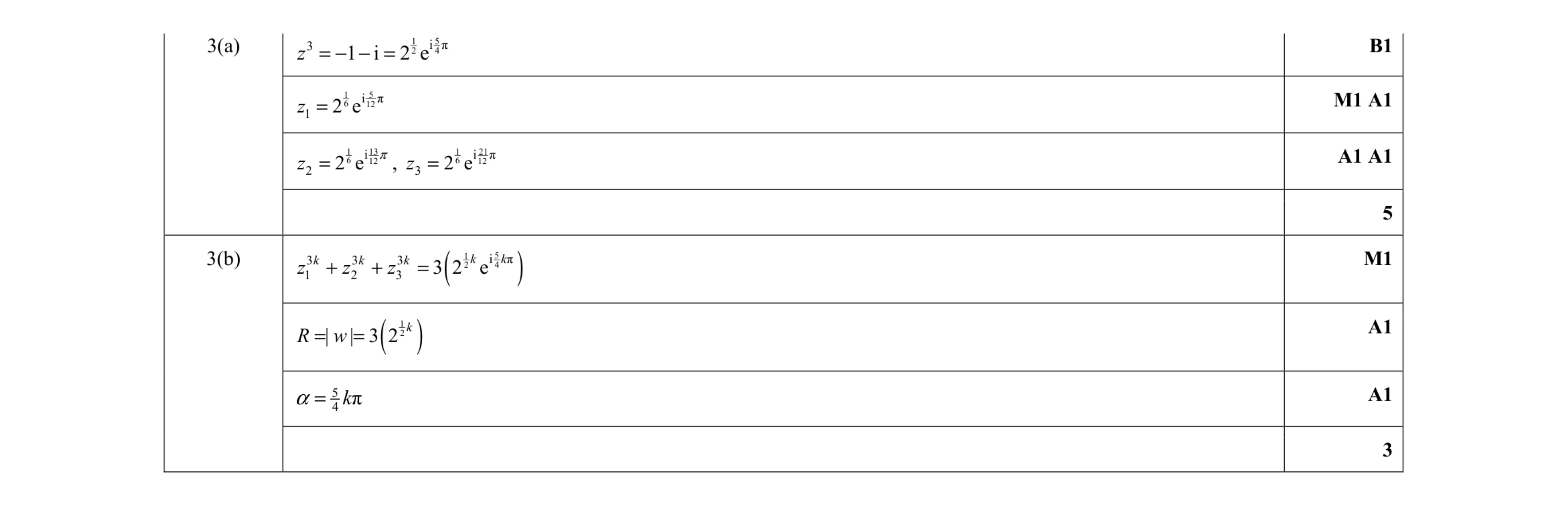
Mark scheme: 3(a) 5 1 2 4i π 3 1 i 2 e z = −−= B1 1 5 6 12 i π 1 2 e z = M1 A1 1 13 6 12 i 2 2 e π = z , 1 21 6 12 i π 3 2 e z = A1 A1 5 3(b) ( ) 5 1 2 4i π 3 3 3 1 2 3 3 2 e k k k k k z z z + + = M1 ( ) 1 2 | | 3 2 = = k R w A1 5 4 π k α = A1 3
This question in 9231/21 May/June 2020
Q2 · Find the roots of the equation z 3 = - 1 - i , giving your answers in the form r e ii… 9231/22 May/June 2020
3 (a) Find the roots of the equation z 3 = - 1 - i , giving your answers in the form r e ii, where r 2 0 and 0 G i 1 2 r . [5] … … … … … … … … … … … … … … … … Let w = z 31 k 3 k 3 k 3 + z 2 + z 3 , where k is a positive integer and z 1 , z 2 , z 3 are the roots of z = - 1 - i . (b) Express w in the form Re ia, where R 2 0 , giving R and a in terms of k. [3] … … … … … … … …
8 marks
Mark scheme: 3(a) 5 1 2 4i π 3 1 i 2 e z = −−= B1 1 5 6 12 i π 1 2 e z = M1 A1 1 13 6 12 i 2 2 e π = z , 1 21 6 12 i π 3 2 e z = A1 A1 5 3(b) ( ) 5 1 2 4i π 3 3 3 1 2 3 3 2 e k k k k k z z z + + = M1 ( ) 1 2 | | 3 2 = = k R w A1 5 4 π k α = A1 3
This question in 9231/22 May/June 2020
Q3 · I - 6 cos 4i + 15 cos 2i - 10) 9231/23 May/June 2020
i - 6 cos 4i + 15 cos 2i - 10) . [6]8 (a) Use de Moivre’s theorem to show that sin 6 i =- 321 ( cos 6 … … … … … … … … … … … … … … … … i + 6 cos 4i + 15 cos 2i + 10) . It is given that cos 6 i = 321 ( cos 6 1 r 3 (b) Find the exact value of 6 1 6 1 cos ( 4 x) + sin ( 4 x) d x . [4] y 0 b l … … … … … … … … … … … … … … … … … 3 (c) Express each root of the equation 16c 6 + 16 1 - c 2 - 13 = 0 in the form coskr, where k is a ` j rational number. [5] … … … … … … … … … … … … … … … … … … Additional Page If you use the following lined page to complete the answer(s) to any question(s), the question number(s) must be clearly shown. … … … … … … … … … … … … … … … … … … … … … …
15 marks
Mark scheme: 8(a) 1 2i sin z z θ − − = B1 ( ) ( ) ( ) ( ) 6 1 6 6 4 4 2 2 6 15 20 z z z z z z z z − − − − − = + − + + + − M1 A1 ( ) ( ) ( ) 6 2isin 2cos6 6 2cos4 15 2cos2 20 θ θ θ θ = − + − M1 A1 ( ) 6 1 32 sin cos6 6cos4 15cos2 10 θ θ θ θ = − + − + A1 6 8(b) 1 3 6 6 1 1 4 4 0 cos sin d x x x π + = 1 3 1 8 0 3cos 5d x x π + M1 A1 [ ] ( ) 1 3 5 3 1 1 8 8 3 2 0 3sin 5 π 3 x x π + = + √ . M1 A1 4 8(c) 2 2 cos 1 sin c c θ θ = − = B1 ( ) 3 6 2 16 16 1 13 0 6cos4 3 0 c c θ + − − = −= M1 A1 4θ = 5 7 1 11 3 3 3 3 π, π, π, π M1 ( ) ( ) ( ) ( ) 5 7 1 11 12 12 12 12 cos π , cos π ,cos π ,cos π c = A1 5
This question in 9231/23 May/June 2020
Q4 · I - 4 cos 2i + 3) 9231/21 Oct/Nov 2020
i - 4 cos 2i + 3) . [5]6 (a) Use de Moivre’s theorem to show that sin 4 i = 18 ( cos 4 … … … … … … … … … … … … … … … … … … … … … … … … … … … (b) Find the solution of the differential equation d y 3 + y cot i = sin i di r . [6] for which y = 0 when i = 12 … … … … … … … … … … … … … … … … … … … … … … … … …
11 marks
Mark scheme: 6(a) 1 2isinθ − − = z z B1 Use of 1 2isinθ − − = z z . ( ) ( ) ( ) 4 1 4 4 2 2 4 6 − − − − = + − + + z z z z z z M1 A1 Expands and groups. ( ) ( ) ( ) 4 2isin 2cos4 4 2cos2 6 θ θ θ = − + M1 Substitutes 2cos θ − + = n n z z n ( ) 4 1 cos4 4cos2 3 sin 8 θ θ θ = − + A1 AG 5 6(b) cot lnsin sin θ θ θ θ = = d e e M1 A1 Finds integrating factor. ( ) ( ) 4 1 cos4 4cos2 3 d sin sin 8 d θ θ θ θ θ = − = + y M1 Correct form on LHS and uses identity given in (a). 1 1 sin 4 2sin 2 3 8 4 sinθ θ θ θ = − + + C y A1 0 π 1 3 8 2 C = + M1 Substitutes initial conditions. 1 1 3 sin 4 2sin 2 3 in π s 8 4 2 y θ θ θ θ = − + − A1 OE 6
This question in 9231/21 Oct/Nov 2020
Q5 · Find all the roots of the equation ( w + 1 ) 6 = 1, giving your answers in the form x +… 9231/22 Oct/Nov 2020
3 Find all the roots of the equation ( w + 1 ) 6 = 1, giving your answers in the form x + yi where x and y are real and exact. [4] … … … … … … … … … … … … … …
4 marks
Mark scheme: 3 2 π isin π, 0, ,5 2 1 cos 6 6 n w n n = = + + M1 A1 Uses the 6th roots of unity. 1 3 0, i 3, i 3, 2 1 1 2 2 2 2 = − √ ± √ ± − − w A1 A1 A1 for 3 correct roots. A1 Gives all six roots of the equation in exact form. 4
This question in 9231/22 Oct/Nov 2020
Question 6 9231/22 Oct/Nov 2020
! 0, 1, - 1. [2]7 (a) Show that z 2 r = -1 , for z z - z r =1 … … … … … … … … … … … … … … … … … … … … … … … … … … (b) By letting z = cos i + i sin i , show that, if sin i ! 0 , n sin ( 2n + 1) i 1 + 2 cos ( 2 ri) = . [5] sin i =/r 1 … … … … … … … … … … … … … … … … … … … … … … … … … …
7 marks
Mark scheme: 7(a) ( ) 2 2 2 2 2 2 2 1 2 1 ( ) ( ) 1 − − + + + = − n n z z z z z z z z M1 Uses sum of geometric series. ( ) 2 2 1 2 1 2 1 1 1 1 − + − − − − − × = − n n z z z z z z z z z A1 Divides numerator and denominator by z. Must see at least 2 2 2 2 , 1 + − − n z z z AG. 2 7(b) 1 2isinθ −= − z z B1 Simplifies denominator. 2 1 1 2 isi cos( 1) 2 n(2 1) cos i i s is n in θ θ θ θ θ + − + + − − − − + = n z z n z n z M1 A1 Applies de Moivre’s theorem to numerator. ( ) 1 2 sin sin(2 1) sin(2 1) 1 cos 2 2sin 2sin θ θ θ θ θ θ = + = − − + = n r n n r M1 Equates real parts. ( ) 1 sin(2 1) 1 2 cos 2 sin θ θ θ = + + = n r n r A1 AG 5
This question in 9231/22 Oct/Nov 2020
Q7 · I - 4 cos 2i + 3) 9231/23 Oct/Nov 2020
i - 4 cos 2i + 3) . [5]6 (a) Use de Moivre’s theorem to show that sin 4 i = 18 ( cos 4 … … … … … … … … … … … … … … … … … … … … … … … … … … … (b) Find the solution of the differential equation d y 3 + y cot i = sin i di r . [6] for which y = 0 when i = 12 … … … … … … … … … … … … … … … … … … … … … … … … …
11 marks
Mark scheme: 6(a) 1 2isinθ − − = z z B1 Use of 1 2isinθ − − = z z . ( ) ( ) ( ) 4 1 4 4 2 2 4 6 − − − − = + − + + z z z z z z M1 A1 Expands and groups. ( ) ( ) ( ) 4 2isin 2cos4 4 2cos2 6 θ θ θ = − + M1 Substitutes 2cos θ − + = n n z z n ( ) 4 1 cos4 4cos2 3 sin 8 θ θ θ = − + A1 AG 5 6(b) cot lnsin sin θ θ θ θ = = d e e M1 A1 Finds integrating factor. ( ) ( ) 4 1 cos4 4cos2 3 d sin sin 8 d θ θ θ θ θ = − = + y M1 Correct form on LHS and uses identity given in (a). 1 1 sin 4 2sin 2 3 8 4 sinθ θ θ θ = − + + C y A1 0 π 1 3 8 2 C = + M1 Substitutes initial conditions. 1 1 3 sin 4 2sin 2 3 in π s 8 4 2 y θ θ θ θ = − + − A1 OE 6
This question in 9231/23 Oct/Nov 2020
Q8 · State the sum of the series z + z 2 + z 3 + .. 9231/21 May/June 2021
5 (a) State the sum of the series z + z 2 + z 3 + ... + zn , for z ! 1. [1] … … … (b) Given that z is an nth root of unity and z ! 1, deduce that 1 + z + z 2 + ... + z n - 1 = 0 . [2] … … … … … i + i sin i) , use de Moivre’s theorem to show that (c) Given instead that z = 13 ( cos 3 -m 3 cos i - 1 3 cos m i = . [7] 10 - 6 cos i =/m 1 … … … … … … … … … … … … … … … … … … … … … … … … … … … … … … … … … … … … … … … … … … …
10 marks
Mark scheme: 5(a) 1 1 + − − n z z z or 1 . 1 − n z z z B1 1 5(b) 1 n z = and 1 z ≠ leading to 2 3 ... 0 n z z z z + + + + = leading to 2 1 1 ... 0 n z z z − + + + + = M1 A1 Must see 1. = nz 2 5(c) 1 cos isin 1 3 cos isin m m z z z θ θ θ θ ∞ = + = = − − − M1 A1 Applies sum to infinity and substitutes for z. ( )( ) ( ) 2 2 i c s isin sin os 3 cos 3 cos in θ θ θ θ θ θ − + + − + M1 A1 Rationalises denominator. ( ) 2 2 2 2 s 3 c cos sin isin cos i in 3 cos s cos 9 6cos in os θ θ θ θ θ θ θ θ θ θ − − + + − + − + M1 Applies 2 2 1 sin cos θ θ + = or i i . e e 2 cos θ θ θ − + = 1 3cos Re 10 6 1 cos θ θ ∞ = = − − m m z M1 A1 Takes the real part, AG. 7
This question in 9231/21 May/June 2021
Q9 · State the sum of the series z + z 2 + z 3 + .. 9231/22 May/June 2021
5 (a) State the sum of the series z + z 2 + z 3 + ... + zn , for z ! 1. [1] … … … (b) Given that z is an nth root of unity and z ! 1, deduce that 1 + z + z 2 + ... + z n - 1 = 0 . [2] … … … … … i + i sin i) , use de Moivre’s theorem to show that (c) Given instead that z = 13 ( cos 3 -m 3 cos i - 1 3 cos m i = . [7] 10 - 6 cos i =/m 1 … … … … … … … … … … … … … … … … … … … … … … … … … … … … … … … … … … … … … … … … … … …
10 marks
Mark scheme: 5(a) 1 1 + − − n z z z or 1 . 1 − n z z z B1 1 5(b) 1 n z = and 1 z ≠ leading to 2 3 ... 0 n z z z z + + + + = leading to 2 1 1 ... 0 n z z z − + + + + = M1 A1 Must see 1. = nz 2 5(c) 1 cos isin 1 3 cos isin m m z z z θ θ θ θ ∞ = + = = − − − M1 A1 Applies sum to infinity and substitutes for z. ( )( ) ( ) 2 2 i c s isin sin os 3 cos 3 cos in θ θ θ θ θ θ − + + − + M1 A1 Rationalises denominator. ( ) 2 2 2 2 s 3 c cos sin isin cos i in 3 cos s cos 9 6cos in os θ θ θ θ θ θ θ θ θ θ − − + + − + − + M1 Applies 2 2 1 sin cos θ θ + = or i i . e e 2 cos θ θ θ − + = 1 3cos Re 10 6 1 cos θ θ ∞ = = − − m m z M1 A1 Takes the real part, AG. 7
This question in 9231/22 May/June 2021
Q10 · Find a and b such that z 8 - iz 5 - z 3 + i = ( z 5 - a)( z 3 - b) 9231/23 May/June 2021
1 (a) Find a and b such that z 8 - iz 5 - z 3 + i = ( z 5 - a)( z 3 - b) . [1] … … … … (b) Hence find the roots of z 8 - iz 5 - z 3 + i = 0 , giving your answers in the form re ii, where r 2 0 and 0 G i 1 2r . [6] … … … … … … … … … … … … … … … … … … …
7 marks
Mark scheme: 1(a) = B1 1 1(b) 2 5 π ie k z = M1 Finds one fifth root of unity. 2 5 π ie , 0,1,2,3,4 k z k = = A1 Gives all fifth roots of unity. Accept 1 not in exponential form. A0 if 1 = r not seen or implied. Argument of i is 1 2 π. B1 1 6i π e z = M1 A1 Finds one root of 3 i. = z A0 if first root not given in exponential form. 5 3 6 2 i π i π e , e z = A1 Finds other two roots of 3 i. = z A0 if 1 = r not seen or implied. Withhold final A1 if a and b reversed in part (b) but all other work correct. 6 SC If ( ) 2 1 10 5 π π ie , 0,1,2,3,4 k z k + = = award M1 A1 A1 only. SC If ( ) 2 3 π ie , 0,1,2 k z k = = award M1 A1 only.
This question in 9231/23 May/June 2021
Q11 · By considering the binomial expansions of z + and z - , where z = cos i + i sin i , use… 9231/23 May/June 2021
4 By considering the binomial expansions of z + and z - , where z = cos i + i sin i , use de z z Moivre’s theorem to show that sin 5i - a sin 3i + b sin i tan 5i = , cos 5i + a cos 3i + b cos i where a and b are integers to be determined. [7] … … … … … … … … … … … … … … … … … … … … … … … … … … … … … … … … … … … … … … … … … … … … … … … … … … … …
7 marks
Mark scheme: 4 1 2isinθ − − = z z and 1 2cosθ − + = z z B1 Use of 1 2isinθ − − = z z and 1 2cosθ − + = z z ( ) ( ) ( ) ( ) 5 3 3 1 5 1 5 5 10 − − − − − = − − − + − z z z z z z z z M1 A1 Expands and groups. A0 if grouping not shown. ( ) ( ) ( ) ( ) 5 3 3 1 5 1 5 5 10 − − − − + = + + + + + z z z z z z z z M1 A1 Expands and groups. A0 if grouping not shown. ( ) ( ) 5 5 5 5 ) 2 0 isin 2isin5 2cos5 2 co i 5(2isin3 1 (2 sin ) 5 2cos3 10 s 2cos θ θ θ θ θ θ θ θ = − + + + M1 Substitutes 2cos θ − + = n n z z n and 2isin . θ − − = n n z z n 5 sin5 5sin3 10sin . cos5 5cos3 10c t os an θ θ θ θ θ θ θ − + = + + A1 Justifies cancellation of constants. 7
This question in 9231/23 May/June 2021
Q12 · Use de Moivre’s theorem to show that cosec 5 i cosec 5i = 4 2 9231/21 Oct/Nov 2021
6 (a) Use de Moivre’s theorem to show that cosec 5 i cosec 5i = 4 2 . [6] 5 cosec i - 20 cosec i + 16 … … … … … … … … … … … … … … … … … … … … … … … … … (b) Hence obtain the roots of the equation x 5 - 10x 4 + 40x 2 - 32 = 0 in the form cosec ( qr ) , where q is rational. [4] … … … … … … … … … … … … … … … … … … … … … … … … …
10 marks
Mark scheme: 6(a) ( ) ( ) 5 isin cos5 i 5 θ θ + = + c s M1 Uses binomial theorem. 5 2 3 4 sin5 10 5 θ − + = s s c c s A1 ( ) ( ) 2 5 2 3 2 10 1 5 1 s s s s s − − + − M1 Uses 2 2 1 = − c s or 2 2 cosec 1 cot θ θ = − after dividing numerator and denominator by 5. s 5 3 16 20 5 s s s − + A1 5 5 3 5 cosec cosec 16 20 5 cose 5 c 1 θ θ θ × + = − s s s M1 Divides simplified numerator and denominator by 5. s 4 2 5 6 c 2 osec cosec co c 5 0 se 1 θ θ θ − + A1 AG 6 6(b) ( ) 5 4 2 2 5 20 16 x x x = − + leading to 5 4 2 2 5 20 16 x x x = − + M1 Relates with equation in part (a). 2 cose 5 c θ = leading to 1 2 sin5θ = M1 Solves 1 2 sin5 . θ = ( ) 1 30 π cosec x = A1 Gives one correct solution. ( ) ( ) ( ) ( ) 5 7 13 11 30 30 30 30 c π osec ,cosec ,cosec ,cos π ec π π − − A1 Gives four other solutions. Allow different values of q as long as all five solutions are found. 9.56, 2, –1.49, –1.09, 1.02 4
This question in 9231/21 Oct/Nov 2021
Q13 · Write down all the roots of the equation x 5 - 1 = 0 9231/22 Oct/Nov 2021
4 (a) Write down all the roots of the equation x 5 - 1 = 0 . [2] … … … (b) Use de Moivre’s theorem to show that cos 4i = 8 cos 4 i - 8 cos 2 i+ 1. [4] … … … … … … … … … … … … … … … … … … … … … … … (c) Use the results of parts (a) and (b) to express each real root of the equation 8x 9 - 8x 7 + x 5 - 8x 4 + 8x 2 - 1 = 0 in the form coskr, where k is a rational number. [4] … … … … … … … … … … … … … … … … … … … … … … … … …
10 marks
Mark scheme: 4(a) 2 5 π ie , 0,1,2,3,4 = k k B2 OE. B1 for 1 correct fifth root of unity. B2 for exactly 5 distinct, correct roots. 2 4(b) ( ) 4 4 3 2 2 3 4 i 4 (i ) 6 (i ) 4 (i ) (i ) + = + + + + c s c c s c s c s s M1 A1 Uses binomial expansion. Can also go RHS to LHS using 1 2cos . θ − = + z z 4 2 2 4 4 2 2 2 2 cos4 6 6 (1 ) (1 ) θ − + = − + − = − c c s s c c c c M1 Applies 2 2 1 = − s c or 1 2cos . θ − = + z z 4 2 8cos 1 8cos θ θ − + A1 AG. Can get final A1 without first. SC: Using double angle formulae scores 1/4. 4 Question Answer Marks Guidance 4(c) 9 7 5 4 2 5 4 2 8 8 8 8 1 ( 1)(8 8 1) − + − + −= − − + x x x x x x x x B1 cos4 0 θ = leading to 1 2 4 (2 1)π k θ = + M1 A1 Solves cos4 0. θ = A1 for 3 5 7 1 2 2 2 2 π, π, π, π 4θ = OE. 3 5 7 8 8 1 8 8 π, cos π, cos π, cos π cos0, cos A1 Gives exactly 5 distinct, real roots. Accept 3 1 8 8 cos π, cos π. 1, ± ± 4
This question in 9231/22 Oct/Nov 2021
Q14 · Use de Moivre’s theorem to show that cosec 5 i cosec 5i = 4 2 9231/23 Oct/Nov 2021
6 (a) Use de Moivre’s theorem to show that cosec 5 i cosec 5i = 4 2 . [6] 5 cosec i - 20 cosec i + 16 … … … … … … … … … … … … … … … … … … … … … … … … … (b) Hence obtain the roots of the equation x 5 - 10x 4 + 40x 2 - 32 = 0 in the form cosec ( qr ) , where q is rational. [4] … … … … … … … … … … … … … … … … … … … … … … … … …
10 marks
Mark scheme: 6(a) ( ) ( ) 5 isin cos5 i 5 θ θ + = + c s M1 Uses binomial theorem. 5 2 3 4 sin5 10 5 θ − + = s s c c s A1 ( ) ( ) 2 5 2 3 2 10 1 5 1 s s s s s − − + − M1 Uses 2 2 1 = − c s or 2 2 cosec 1 cot θ θ = − after dividing numerator and denominator by 5. s 5 3 16 20 5 s s s − + A1 5 5 3 5 cosec cosec 16 20 5 cose 5 c 1 θ θ θ × + = − s s s M1 Divides simplified numerator and denominator by 5. s 4 2 5 6 c 2 osec cosec co c 5 0 se 1 θ θ θ − + A1 AG 6 6(b) ( ) 5 4 2 2 5 20 16 x x x = − + leading to 5 4 2 2 5 20 16 x x x = − + M1 Relates with equation in part (a). 2 cose 5 c θ = leading to 1 2 sin5θ = M1 Solves 1 2 sin5 . θ = ( ) 1 30 π cosec x = A1 Gives one correct solution. ( ) ( ) ( ) ( ) 5 7 13 11 30 30 30 30 c π osec ,cosec ,cosec ,cos π ec π π − − A1 Gives four other solutions. Allow different values of q as long as all five solutions are found. 9.56, 2, –1.49, –1.09, 1.02 4
This question in 9231/23 Oct/Nov 2021
Q15 · Use de Moivre’s theorem to show that cosec 7 i cosec 7i = 6 4 2 9231/21 May/June 2022
7 (a) Use de Moivre’s theorem to show that cosec 7 i cosec 7i = 6 4 2 . 7 cosec i - 56 cosec i + 112 cosec i - 64 [6] … … … … … … … … … … … … … … … … … … … … … … … … … … (b) Hence obtain the roots of the equation x 7 - 14x 6 + 112x 4 - 224x 2 + 128 = 0 in the form cosecqr, where q is rational. [5] … … … … … … … … … … … … … … … … … … … … … … … … …
11 marks
Mark scheme: 7(a) 7 Im i 7 i s n c s 7 2 5 4 3 6 sin7 21 35 7 s c s c s c s A1 2 3 7 2 5 2 3 2 sin7 21 1 35 1 7 1 s s s s s s s 7 2 5 2 4 3 2 4 6 sin7 21 1 35 1 2 7 1 3 3 s s s s s s s s s s M1 Uses 2 2 1 . c s 7 5 3 1 s 5 in7 64 12 6 7 s s s s A1 7 5 3 1 64 112 5 cose 6 c7 7 s s s s M1 Divides numerator and denominator by 7. s 6 4 7 2 cosec cosec7 cosec cosec cosec 7 56 112 64 A1 AG CWO 6 7(b) 7 7 6 4 2 6 4 2 2 7 56 112 64 leading to 2 7 56 112 64 x x x x x x x x M1 A1 Relates with equation in part (a). 1 2 2 leadi c ng to osec7 si n7 M1 Solves 1 2 sin7 . 1 42 π cosec x A1 Gives one correct solution. 19 7 5 13 17 11 42 42 42 42 42 42 cosec , , , , π , , x q q A1 Gives six other solutions. Allow different values of q as long as all seven solutions are found. 5
This question in 9231/21 May/June 2022
Q16 · Use de Moivre’s theorem to show that cosec 7 i cosec 7i = 6 4 2 9231/22 May/June 2022
7 (a) Use de Moivre’s theorem to show that cosec 7 i cosec 7i = 6 4 2 . 7 cosec i - 56 cosec i + 112 cosec i - 64 [6] … … … … … … … … … … … … … … … … … … … … … … … … … … (b) Hence obtain the roots of the equation x 7 - 14x 6 + 112x 4 - 224x 2 + 128 = 0 in the form cosecqr, where q is rational. [5] … … … … … … … … … … … … … … … … … … … … … … … … …
11 marks
Mark scheme: 7(a) 7 Im i 7 i s n c s 7 2 5 4 3 6 sin7 21 35 7 s c s c s c s A1 2 3 7 2 5 2 3 2 sin7 21 1 35 1 7 1 s s s s s s s 7 2 5 2 4 3 2 4 6 sin7 21 1 35 1 2 7 1 3 3 s s s s s s s s s s M1 Uses 2 2 1 . c s 7 5 3 1 s 5 in7 64 12 6 7 s s s s A1 7 5 3 1 64 112 5 cose 6 c7 7 s s s s M1 Divides numerator and denominator by 7. s 6 4 7 2 cosec cosec7 cosec cosec cosec 7 56 112 64 A1 AG CWO 6 7(b) 7 7 6 4 2 6 4 2 2 7 56 112 64 leading to 2 7 56 112 64 x x x x x x x x M1 A1 Relates with equation in part (a). 1 2 2 leadi c ng to osec7 si n7 M1 Solves 1 2 sin7 . 1 42 π cosec x A1 Gives one correct solution. 19 7 5 13 17 11 42 42 42 42 42 42 cosec , , , , π , , x q q A1 Gives six other solutions. Allow different values of q as long as all seven solutions are found. 5
This question in 9231/22 May/June 2022
Q17 · State the sum of the series 1 + w + w 2 + w 3 + f + w n - 1 , for w ! 9231/21 Oct/Nov 2022
7 (a) State the sum of the series 1 + w + w 2 + w 3 + f + w n - 1 , for w ! 1. [1] … … r . [2] (b) Show that ( 1 + i tan i) k = sec k i ( cos ki + i sin ki ) , where i is not an integer multiple of 12 … … … … n 1 (c) By considering ( 1 + i tan i) k , show that -/ k = 0 n 1 sec k i sin ki = cot i ( 1 - sec n i cos ni) , -/ k = 0 r . [5] provided i is not an integer multiple of 12 … … … … … … … … … … … … … … … … … … … … … … … … … … … … … … 6m - 1 r in terms of m. [2](d) Hence find 2k sin 13 k / b l k = 0 … … … … … … … … … … … …
10 marks
Mark scheme: 7(a) w n − 1 B1 w − 1 1 7(b) (1 + i tan) k = seck ( cos+ i sin) k = seck ( cos k+ i sin k) M1 A1 Applies de Moivre’s theorem, AG. 2 7(c) n −1 n M1 A1 Applies part (a). k (1 + itan) − 1 1 + itan) = ( k = 0 itan − cotsecn ( icos n− sin n) +icot A1 n −1 M1 A1 Takes imaginary part, AG. sec k sin k= cot 1 − sec n cos n ( ) k = 0 5 6 m −17(d) M1 A1 Sets = 13 π. 1 k 1 1 6 m 1 6 m 1 − 2 2 sin ( 3 kπ ) = 3 3 ( 1 − 2 cos ( 2mπ ) ) = 3 3 ( ) = 3 π k = 0 2
This question in 9231/21 Oct/Nov 2022
Q18 · Write down the fourth roots of unity 9231/22 Oct/Nov 2022
5 (a) Write down the fourth roots of unity. [1] … … (b) Use de Moivre’s theorem to show that cos 4i = 8 cos 4 i - 8 cos 2 i + 1. [4] … … … … … … … … … … … … … … … … … … … … … … … (c) Hence obtain the real roots of the equation 16 ( 8x 4 - 8 x 2 + 1 ) 4 - 9 = 0 in the form cos ( q r ) , where q is a rational number. [5] … … … … … … … … … … … … … … … … … … … … … … … … …
10 marks
Mark scheme: 5(a) 1, i B1 0 i π2 πi i 3π2 Accept exponential form e , e , e ,e or trigonometric form. Four values specified. 1 5(b) 4 4 2 2 4 M1 A1 Expands and takes real part. cos4= Re ( cos+ isin) = cos − 6cos sin + sin cos 4 − 6cos 2 1 − cos 2 + 1 − 2cos 2 + cos 4 M1 Applies sin 2 = 1 − cos 2 . ( ) ( ) 8 cos 4 − 8cos 2 + 1 A1 AG. Can award final A1 without previous A1 if penultimate line seen. SC. Applying cos2 A = 2cos 2 A − 1 twice scores 1/4. 4 8 x − 8 x + 1 = 16 , x = cos5(c) ( 4 2 4 9 M1 Applies identify given in (b). ) cos4= 12 3 A1 Need and exact value for A1. 4= 16 π + 2 kπ 4= 56 π + 2 kπ M1 Solves cos4= 12 3 or cos4= − 12 3 1 π ) A1 Gives one correct solution. cos ( 24 cos( 1124 π), cos( 1324 π),cos( 2423 π), A1 Gives other solutions. Accept 1 11 5 7 cos ( 24 π ) , cos( 24 π), cos( 24 π), cos( 24 π) cos( 245 π),cos( 247 π),cos( 1724 π),cos( 1924 π), 5
This question in 9231/22 Oct/Nov 2022
Q19 · State the sum of the series 1 + w + w 2 + w 3 + f + w n - 1 , for w ! 9231/23 Oct/Nov 2022
7 (a) State the sum of the series 1 + w + w 2 + w 3 + f + w n - 1 , for w ! 1. [1] … … r . [2] (b) Show that ( 1 + i tan i) k = sec k i ( cos ki + i sin ki ) , where i is not an integer multiple of 12 … … … … n 1 (c) By considering ( 1 + i tan i) k , show that -/ k = 0 n 1 sec k i sin ki = cot i ( 1 - sec n i cos ni) , -/ k = 0 r . [5] provided i is not an integer multiple of 12 … … … … … … … … … … … … … … … … … … … … … … … … … … … … … … 6m - 1 r in terms of m. [2](d) Hence find 2k sin 13 k / b l k = 0 … … … … … … … … … … … …
10 marks
Mark scheme: 7(a) w n − 1 B1 w − 1 1 7(b) (1 + i tan) k = seck ( cos+ i sin) k = seck ( cos k+ i sin k) M1 A1 Applies de Moivre’s theorem, AG. 2 7(c) n −1 n M1 A1 Applies part (a). k (1 + itan) − 1 1 + itan) = ( k = 0 itan − cotsecn ( icos n− sin n) +icot A1 n −1 M1 A1 Takes imaginary part, AG. sec k sin k= cot 1 − sec n cos n ( ) k = 0 5 6 m −17(d) M1 A1 Sets = 13 π. 1 k 1 1 6 m 1 6 m 1 − 2 2 sin ( 3 kπ ) = 3 3 ( 1 − 2 cos ( 2mπ ) ) = 3 3 ( ) = 3 π k = 0 2
This question in 9231/23 Oct/Nov 2022
Q20 · By considering the binomial expansion of ( z + z -1 ) 4 , where z = cos i + i sin i , use… 9231/21 May/June 2023
3 (a) By considering the binomial expansion of ( z + z -1 ) 4 , where z = cos i + i sin i , use de Moivre’s i + 4 cos 2i + 3) . [5] theorem to show that cos 4 i = 18 ( cos 4 … … … … … … … … … … … … 1 (b) Use the substitution x = sin i to find the exact value of 2 ( 1 - x 2 ) 23 d x . [3] y0 … … … … … … … … … … … … …
8 marks
Mark scheme: 3(a) 1 2cos z z B1 Use of 1 2cos z z . 4 1 4 4 2 2 4 6 z z z z z z M1 A1 Expands and groups. M1 A0 for no clear grouping. Correct substitution of n co is s i nz n n for each term scores M1 A1. 4 2cos 2cos4 4 2cos2 6 M1 Substitutes 2cos . n n z z n If n co is s i nz n n used then must cancel sin. 4 1 8 cos cos4 4cos2 3 A1 AG. SC B1 expands 4 i c s os in and uses trigonometric identities. 5 3(b) 1 1 3 1 2 6 2 6 π π 1 8 0 2 1 4 4 0 0 1 d cos d sin 4 2sin 2 3 x x M1 A1 Applies substitution (M1) gets to 4 cos d , changes limits, integration correct (A1). 9 1 16 4 3 π A1 3
This question in 9231/21 May/June 2023
Q21 · By considering the binomial expansion of ( z + z -1 ) 4 , where z = cos i + i sin i , use… 9231/22 May/June 2023
3 (a) By considering the binomial expansion of ( z + z -1 ) 4 , where z = cos i + i sin i , use de Moivre’s i + 4 cos 2i + 3) . [5] theorem to show that cos 4 i = 18 ( cos 4 … … … … … … … … … … … … 1 (b) Use the substitution x = sin i to find the exact value of 2 ( 1 - x 2 ) 23 d x . [3] y0 … … … … … … … … … … … … …
8 marks
Mark scheme: 3(a) 1 2cos z z B1 Use of 1 2cos z z . 4 1 4 4 2 2 4 6 z z z z z z M1 A1 Expands and groups. M1 A0 for no clear grouping. Correct substitution of n co is s i nz n n for each term scores M1 A1. 4 2cos 2cos4 4 2cos2 6 M1 Substitutes 2cos . n n z z n If n co is s i nz n n used then must cancel sin. 4 1 8 cos cos4 4cos2 3 A1 AG. SC B1 expands 4 i c s os in and uses trigonometric identities. 5 3(b) 1 1 3 1 2 6 2 6 π π 1 8 0 2 1 4 4 0 0 1 d cos d sin 4 2sin 2 3 x x M1 A1 Applies substitution (M1) gets to 4 cos d , changes limits, integration correct (A1). 9 1 16 4 3 π A1 3
This question in 9231/22 May/June 2023
Q22 · By considering the binomial expansions of z + and z - , where z = cos i + i sin i , use… 9231/23 May/June 2023
3 By considering the binomial expansions of z + and z - , where z = cos i + i sin i , use de z z Moivre’s theorem to show that cos 4 i + a cos 2i + b cot 4i = , cos 4 i - a cos 2i + b where a and b are integers to be determined. [7] … … … … … … … … … … … … … … … … … … … … … … … …
7 marks
Mark scheme: 3 1 2isin z z and 1 2cos z z B1 Use of 1 2isin z z and 1 2cos z z 4 1 4 4 2 2 4 6 z z z z z z M1 A1 Expands and groups. 4 1 4 4 2 2 4 6 z z z z z z M1 A1 Expands and groups. Only withhold one A1 mark (this or the previous) for no clear grouping. 4 4 4 4 4 2cos2 6 4 2cos2 6 2cos4 2 cos 2cos4 2 sin M1 Substitutes 2cos n n z z n once in LHS. 4 3 cos4 c 4cos2 3 4 c cos o 2 t os4 A1 7
This question in 9231/23 May/June 2023
Q23 · Find the roots of the equation ( z + 5i) 3 = 4 + 4 3 i , giving your answers in the form… 9231/21 Oct/Nov 2023
2 Find the roots of the equation ( z + 5i) 3 = 4 + 4 3 i , giving your answers in the form r cos i + i ( r sin i - 5) , where r 2 0 and 0 1 i 1 2 r . [5] … … … … … … … … … … … … … … … … … … … … … … … … … … …
5 marks
Mark scheme: 12 π B1 Finds modulus and argument of 4 + 4i 3. 3 3 ( z + 5i) = 4 + 4i 3 = 8e 1 1 1 1 M1 A1 Finds one root. z1 = 2 cos π + isin π − 5i = 2cos π + i 2sin π − 5 9 9 9 9 7 7 13 13 A1 FT Finds other two roots. FT on their modulus. z 2 = 2cos π + i 2 sin π − 5 , z3 = 2cos π + i 2 sin π − 5 9 9 9 9 A1 FT 5
This question in 9231/21 Oct/Nov 2023
Q24 · State the sum of the series 1 + z + z 2 + f + z n - 1 , for z ! 9231/21 Oct/Nov 2023
8 (a) State the sum of the series 1 + z + z 2 + f + z n - 1 , for z ! 1. [1] … (b) By letting z = cos i + i sin i , where cos i ! 1, show that 1 sin ni sin i 1 + cos i + cos 2i + f + cos ( n - 1) i = 1 - cos n i + [7] 2 e 1 - cos i o. … … … … … … … … … … … … … … … … … … … … … … … y 1 O 1 2 n - 1 1 x n n n The diagram shows the curve with equation y = cos x for 0 G x G 1, together with a set of n rectangles of width 1. n (c) By considering the sum of the areas of these rectangles, show that 1 1 1 sin 1 sin n cos xd x 1 1 - cos 1 + . [4] 2n y0 f 1 - cos n1 p … … … … … … (d) Use a similar method to find, in terms of n, a lower bound for cosxd x . [3] 1y0 … … … … … … Additional page If you use the following page to complete the answer to any question, the question number must be clearly shown. … … … … … … … … … … … … … … … … … … … … … …
15 marks
Mark scheme: 8(a) nz − 1 B1 z − 1 1 8(b) nz − 1 cos n−+1 isi n n B1 = z − 1 cos− 1 + i sin ( cos n−+1 isin n)( cos−−1 isin) M1 Multiplies numerator and denominator by complex ( cos−+1 isin)( cos−−1 isin) conjugate. nz − 1 cos ncos+ sin nsin− cos n− cos+ 1 M1 Takes real part. Re = 2 2 cos( n − 1)= cos ncos+ sin nsin z − 1 ( cos− 1) + sin cos ncos+ sin nsin− cos n 1 A1 = + 2 (1 − cos) 2 cos n( cos− 1) + sin nsin 1 M1 Factorises. = + 2 (1 − cos) 2 8(b) 1 sin nsin M1 A1 Divides through by denominator. AG. = 1 − cos n+ 2 1 − cos Alternative method for question 8(b) z n − 1 e i n − 1 B1 = z − 1 e i − 1 1 1 1 1 1 ( n − 2 ) e i − e − i 1 2 cos ( n − 2 )+ isin ( n − 2 )− cos 2 + isin ( 2 ) M1 = 2 e i 1 2 − e − i 1 2isin 12 z n − 1 sin( n − 12 )+ sin 12 M1 Takes real part Re = 1 z − 1 2sin 2 1 sin ( n − 2 ) 1 A1 = + 2sin 12 2 sin ncos 12 − cos nsin 12 1 M1 Uses compound angle identity = + 2 sin 12 2 sin ncos 12 1 1 M1 Divides through by denominator. = − cos n+ 2sin 12 2 2 sin nsin 1 1 s i n nsin 1 1 A1 AG. si n = 2 sin 12 cos 12 and − cos n+ = − cos n+ 1 − cos) 2 2 4s in 2 12 2 2 2 ( 2 sin 2 12 = 1 − cos. 7 8(c) 1 1 1 1 1 2 1 n − 1 M1 A1 Forms sum of areas of rectangles given in the diagram. A0 if comparison with integral missing or unclear. 0 cos x dx n + n cos n + n cos n + n cos n n 1 M1 A1 sin sin Applies result from part (b) with = 1. AG. 1 1 2 n − 1 1 n n n n = 1 + cos + cos + + cos = 1 − cos + n n n n 2 n n 1 − cos 1 n 4 8(d) 1 1 1 1 2 1 n M1 A1 Forms sum of areas of rectangles. A0 if comparison with integral missing or unclear. 0 cos x dx n cos n + n cos n + n cos n 1 1 A1 1 sin1sin n 1 1 1 sin1sin n = 1 − cos1 + + cos1 − = cos1 −+1 2 n 1 n n 2 n 1 1 − cos 1 − cos n n 3
This question in 9231/21 Oct/Nov 2023
Q25 · Use de Moivre’s theorem to show that cos 5i = 16 cos 5 i - 20 cos 3 i + 5 cos i 9231/22 Oct/Nov 2023
3 (a) Use de Moivre’s theorem to show that cos 5i = 16 cos 5 i - 20 cos 3 i + 5 cos i . [4] … … … … … … … … … … (b) Hence obtain the roots of the equation 32x 5 - 40x 3 + 10x - 2 = 0 in the form cos ( qr ) , where q is a rational number. [4] … … … … … … … … … … … … …
8 marks
Mark scheme: 3(a) 5 5 2 3 4 M1 A1 Expands and takes real part. Accept cos 5= Re ( cos+ isin) = cos − 10sin cos + 5 sin cos 1 RHS to LHS using 2 cos= z + . z = cos 5 − 10cos 3 1 − cos 2 + 5cos 1 − 2cos 2 + cos 4 M1 Applies sin 2 = 1 − cos 2 . ( ) ( ) = 16 cos 5 − 20cos 3 + 5cos A1 AG 4 3(b) x = cos, cos5= 12 2 M1 Applies identify given in (b). 5 = 14 + 2k M1 Solves cos5= 12 2 1 π ) A1 Gives one correct solution. Accept cos ( 20 q = 20.1 cos( 209 π), cos( 1720 π),cos( 2250 π),cos( 3230 π) A1 Gives other solutions. OE. A0 for repeated roots. 4
This question in 9231/22 Oct/Nov 2023
Q26 · Find the roots of the equation ( z + 5i) 3 = 4 + 4 3 i , giving your answers in the form… 9231/23 Oct/Nov 2023
2 Find the roots of the equation ( z + 5i) 3 = 4 + 4 3 i , giving your answers in the form r cos i + i ( r sin i - 5) , where r 2 0 and 0 1 i 1 2 r . [5] … … … … … … … … … … … … … … … … … … … … … … … … … … …
5 marks
Mark scheme: 12 π B1 Finds modulus and argument of 4 + 4i 3. 3 3 ( z + 5i) = 4 + 4i 3 = 8e 1 1 1 1 M1 A1 Finds one root. z1 = 2 cos π + isin π − 5i = 2cos π + i 2sin π − 5 9 9 9 9 7 7 13 13 A1 FT Finds other two roots. FT on their modulus. z 2 = 2cos π + i 2 sin π − 5 , z3 = 2cos π + i 2 sin π − 5 9 9 9 9 A1 FT 5
This question in 9231/23 Oct/Nov 2023
Q27 · State the sum of the series 1 + z + z 2 + f + z n - 1 , for z ! 9231/23 Oct/Nov 2023
8 (a) State the sum of the series 1 + z + z 2 + f + z n - 1 , for z ! 1. [1] … (b) By letting z = cos i + i sin i , where cos i ! 1, show that 1 sin ni sin i 1 + cos i + cos 2i + f + cos ( n - 1) i = 1 - cos n i + [7] 2 e 1 - cos i o. … … … … … … … … … … … … … … … … … … … … … … … y 1 O 1 2 n - 1 1 x n n n The diagram shows the curve with equation y = cos x for 0 G x G 1, together with a set of n rectangles of width 1. n (c) By considering the sum of the areas of these rectangles, show that 1 1 1 sin 1 sin n cos xd x 1 1 - cos 1 + . [4] 2n y0 f 1 - cos n1 p … … … … … … (d) Use a similar method to find, in terms of n, a lower bound for cosxd x . [3] 1y0 … … … … … … Additional page If you use the following page to complete the answer to any question, the question number must be clearly shown. … … … … … … … … … … … … … … … … … … … … … …
15 marks
Mark scheme: 8(a) nz − 1 B1 z − 1 1 8(b) nz − 1 cos n−+1 isi n n B1 = z − 1 cos− 1 + i sin ( cos n−+1 isin n)( cos−−1 isin) M1 Multiplies numerator and denominator by complex ( cos−+1 isin)( cos−−1 isin) conjugate. nz − 1 cos ncos+ sin nsin− cos n− cos+ 1 M1 Takes real part. Re = 2 2 cos( n − 1)= cos ncos+ sin nsin z − 1 ( cos− 1) + sin cos ncos+ sin nsin− cos n 1 A1 = + 2 (1 − cos) 2 cos n( cos− 1) + sin nsin 1 M1 Factorises. = + 2 (1 − cos) 2 8(b) 1 sin nsin M1 A1 Divides through by denominator. AG. = 1 − cos n+ 2 1 − cos Alternative method for question 8(b) z n − 1 e i n − 1 B1 = z − 1 e i − 1 1 1 1 1 1 ( n − 2 ) e i − e − i 1 2 cos ( n − 2 )+ isin ( n − 2 )− cos 2 + isin ( 2 ) M1 = 2 e i 1 2 − e − i 1 2isin 12 z n − 1 sin( n − 12 )+ sin 12 M1 Takes real part Re = 1 z − 1 2sin 2 1 sin ( n − 2 ) 1 A1 = + 2sin 12 2 sin ncos 12 − cos nsin 12 1 M1 Uses compound angle identity = + 2 sin 12 2 sin ncos 12 1 1 M1 Divides through by denominator. = − cos n+ 2sin 12 2 2 sin nsin 1 1 s i n nsin 1 1 A1 AG. si n = 2 sin 12 cos 12 and − cos n+ = − cos n+ 1 − cos) 2 2 4s in 2 12 2 2 2 ( 2 sin 2 12 = 1 − cos. 7 8(c) 1 1 1 1 1 2 1 n − 1 M1 A1 Forms sum of areas of rectangles given in the diagram. A0 if comparison with integral missing or unclear. 0 cos x dx n + n cos n + n cos n + n cos n n 1 M1 A1 sin sin Applies result from part (b) with = 1. AG. 1 1 2 n − 1 1 n n n n = 1 + cos + cos + + cos = 1 − cos + n n n n 2 n n 1 − cos 1 n 4 8(d) 1 1 1 1 2 1 n M1 A1 Forms sum of areas of rectangles. A0 if comparison with integral missing or unclear. 0 cos x dx n cos n + n cos n + n cos n 1 1 A1 1 sin1sin n 1 1 1 sin1sin n = 1 − cos1 + + cos1 − = cos1 −+1 2 n 1 n n 2 n 1 1 − cos 1 − cos n n 3
This question in 9231/23 Oct/Nov 2023
Q28 · Find the roots of the equation z 3 = - 108 3 + 108i , giving your answers in the form r… 9231/21 May/June 2024
1 Find the roots of the equation z 3 = - 108 3 + 108i , giving your answers in the form r cos i + i sin i , where r 2 0 and 0 1 i 1 2r . [5] … … … … … … … … … … … … … … … … … … … … … … … … … … …
5 marks
Mark scheme: 1 5 5 6 6 3 π π 216cos i216sin z B1 Finds modulus and argument of 108 3 108i 5 5 18 18 π π 1 6cos i6sin z M1 A1FT Finds one root. FT on their modulus. For M1 must have divided their argument of 108 3 108i by 3. 2 18 18 18 18 2 17π 17π 9π 29π 3 6cos i6sin , 6cos i6sin z z M1 A1 Finds other two roots. 5
This question in 9231/21 May/June 2024
Q29 · Find the roots of the equation z 3 = - 108 3 + 108i , giving your answers in the form r… 9231/22 May/June 2024
1 Find the roots of the equation z 3 = - 108 3 + 108i , giving your answers in the form r cos i + i sin i , where r 2 0 and 0 1 i 1 2r . [5] … … … … … … … … … … … … … … … … … … … … … … … … … … …
5 marks
Mark scheme: 1 5 5 6 6 3 π π 216cos i216sin z B1 Finds modulus and argument of 108 3 108i 5 5 18 18 π π 1 6cos i6sin z M1 A1FT Finds one root. FT on their modulus. For M1 must have divided their argument of 108 3 108i by 3. 2 18 18 18 18 2 17π 17π 9π 29π 3 6cos i6sin , 6cos i6sin z z M1 A1 Finds other two roots. 5
This question in 9231/22 May/June 2024
Q30 · By considering the binomial expansion of bz + l , where z = cos i + isin i , use de… 9231/21 Oct/Nov 2024
8 (a) By considering the binomial expansion of bz + l , where z = cos i + isin i , use de Moivre’s z theorem to show that cos 7i = a cos 7 i + b cos 5 i + c cos 3 i + d cos i , where a, b, c and d are constants to be determined. [5] … … … … … … … … … … … … … … … … … … … … … … … … 1 r 4 Let I = cos n i di . n y 0 (b) Show that - 21 n nI = 2 + ( n - 1) I . [4] n n - 2 … … … … … … … … … … … … … … … … … … … … … … … … (c) Using the results given in parts (a) and (b), find the exact value of I9. [5] … … … … … … … … … … … … … … … … … … … … … … … … … … …
14 marks
Mark scheme: 8(a) z + z −1 = 2cos B1 For LHS. −1 7 7 −7 5 −5 3 −3 −1 M1A1 Expands and groups. A0 if not grouped clearly. z + z = z + z + 7 z + z + 21 z + z + 35 z + z ( ) ( ) ( ) ( ) ( ) 27 cos7 = 2cos 7+ 7 ( 2cos 5) + 21( 2cos3) + 35 ( 2cos) M1 Substitutes z n + z − n = 2cos n. cos7 = 641 cos7+ 647 cos5+ 6421 cos3+ 3564 cos A1 5 8(b) 14 π n −1 n −1 14 π 14 π n − 2 2 M1A1 Applies integration by parts. cos cosd = cos sin cos sin d 0 nI = 0 + ( n − 1) 0 1 n −1 4 π 14 π n − 2 2 M1 Applies sin 2 = 1 − cos 2 cos 1 − cos d ( ) I n = cos sin 0 + ( n − 1) 0 − n2 − n2 A1 AG. I n = 2 + (n − 1) I n − 2 − (n − 1) I n nI n = 2 + ( n − 1) I n − 2 4 8(c) − 92 1 − 12 M1A1 Applies reduction formula from (b). 2 + 8 I 7 9 I 9 = 2 + 8 I 7 = 16 ( ) 14π 1 7 21 35 M1 Applies identity from (a). Allow 64 cos7+ 64 cos5+ 64 cos 3+ 64 cosd missing/incorrect limits. I 7 = 0 14π A1 1 1 7 21 I 7 = 64 7 sin 7+ 5 sin 5+ 3 sin3+ 35sin 0 1 − 12 2 2 − 12 − 12 A1 Check their exact answer when 9I is the subject, 2 −2− 1 −2− 1 2 + 35 2 + 81 9 I 9 = 161 ( ) 7 ( ) + 75 ( ) + 213 ( ) ( ) ) ( like terms collected. ISW. 0.402237 2 2 − 1 = 128670080 2 I 9 = 50286740 ( ) 5
This question in 9231/21 Oct/Nov 2024
Q31 · Use de Moivre’s theorem to show that cot 6 i - 15 cot 4 i + 15 cot 2 i - 1 cot 6 i = 9231/22 Oct/Nov 2024
4 (a) Use de Moivre’s theorem to show that cot 6 i - 15 cot 4 i + 15 cot 2 i - 1 cot 6 i = . [6] 6 cot 5 i - 20 cot 3 i + 6 cot i … … … … … … … … … … … … … … … … … … … … … … … … … … (b) Hence obtain the roots of the equation x 6 - 6 x 5 - 15x 4 + 20x 3 + 15x 2 - 6x - 1 = 0 in the form cot ( qr ) , where q is a rational number. [4] … … … … … … … … … … … … … … … … … … … … … … … … …
10 marks
Mark scheme: 4(a) 6 6 4 2 2 4 6 M1A1 Expands and takes real part. cos6= Re ( cos+ isin) = cos − 15 cos sin + 15 cos sin − sin 6 5 3 3 5 M1A1 Takes imaginary part sin6= Im ( cos+ isin) = 6cos sin− 20cos sin + 6cossin cos 6 − 15cos 4 sin 2 + 15cos 2 sin 4 − sin 6 sin −6 M1 Divides numerator and denominator by cot6 = 6cos 5 sin− 20cos 3 sin 3 + 6cossi n 5 sin −6 sin 6 . cot 6 − 15cot 4 + 15co t 2 − 1 A1 AG cot6= 6 cot 5 − 20cot 3 + 6 cot 6 4(b) x = cot, cot 6= 1 B1 Applies identity given in (b). 6 = 14 + k M1 Solves cot6= 1 1 π ) A1 Gives one correct solution. cot ( 24 7.60 13 17 3 π ) ,cot ( 7 π ) A1 Gives other five solutions. cot ( 24 5 π ) ,cot ( 8 24 π ) ,cot ( 24 π ) ,cot ( 8 1.30, 0.41, –0.13, –0.77, –2.41 Withhold A1 mark for repeated roots. 4
This question in 9231/22 Oct/Nov 2024
Q32 · By considering the binomial expansion of bz + l , where z = cos i + isin i , use de… 9231/23 Oct/Nov 2024
8 (a) By considering the binomial expansion of bz + l , where z = cos i + isin i , use de Moivre’s z theorem to show that cos 7i = a cos 7 i + b cos 5 i + c cos 3 i + d cos i , where a, b, c and d are constants to be determined. [5] … … … … … … … … … … … … … … … … … … … … … … … … 1 r 4 Let I = cos n i di . n y 0 (b) Show that - 21 n nI = 2 + ( n - 1) I . [4] n n - 2 … … … … … … … … … … … … … … … … … … … … … … … … (c) Using the results given in parts (a) and (b), find the exact value of I9. [5] … … … … … … … … … … … … … … … … … … … … … … … … … … …
14 marks
Mark scheme: 8(a) z + z −1 = 2cos B1 For LHS. −1 7 7 −7 5 −5 3 −3 −1 M1A1 Expands and groups. A0 if not grouped clearly. z + z = z + z + 7 z + z + 21 z + z + 35 z + z ( ) ( ) ( ) ( ) ( ) 27 cos7 = 2cos 7+ 7 ( 2cos 5) + 21( 2cos3) + 35 ( 2cos) M1 Substitutes z n + z − n = 2cos n. cos7 = 641 cos7+ 647 cos5+ 6421 cos3+ 3564 cos A1 5 8(b) 14 π n −1 n −1 14 π 14 π n − 2 2 M1A1 Applies integration by parts. cos cosd = cos sin cos sin d 0 nI = 0 + ( n − 1) 0 1 n −1 4 π 14 π n − 2 2 M1 Applies sin 2 = 1 − cos 2 cos 1 − cos d ( ) I n = cos sin 0 + ( n − 1) 0 − n2 − n2 A1 AG. I n = 2 + (n − 1) I n − 2 − (n − 1) I n nI n = 2 + ( n − 1) I n − 2 4 8(c) − 92 1 − 12 M1A1 Applies reduction formula from (b). 2 + 8 I 7 9 I 9 = 2 + 8 I 7 = 16 ( ) 14π 1 7 21 35 M1 Applies identity from (a). Allow 64 cos7+ 64 cos5+ 64 cos 3+ 64 cosd missing/incorrect limits. I 7 = 0 14π A1 1 1 7 21 I 7 = 64 7 sin 7+ 5 sin 5+ 3 sin3+ 35sin 0 1 − 12 1 1 − 12 7 − 12 21 − 12 − 12 A1 Check their exact answer when 9I is the subject, 2 −2 −2 2 + 35 2 + 8 9 I 9 = 16 ( ) 7 ( ) + 5 ( ) + 3 ( ) ( ) ) ( like terms collected. ISW. 0.402237 2 2 − 1 = 128670080 2 I 9 = 50286740 ( ) 5
This question in 9231/23 Oct/Nov 2024
Q33 · Find the roots of the equation z 3 = 27 - 27i , giving your answers in the form reii… 9231/21 May/June 2025
1 Find the roots of the equation z 3 = 27 - 27i , giving your answers in the form reii, where r 2 0 and - r G i 1 r . [5] … … … … … … … … … … … … … … … … … … … … … … … … … … …
5 marks
Mark scheme: Question Answer Marks Guidance 1 z 3 = 27 − 27i = 27 2e − 4i1 π B1 Modulus and argument of 3z (does not need to be in exponential form). 1 6 − i 121 π M1 A1 Finds one root. Cube root must be taken for M1. z1 = 3 2 e 1 6 i 127 π 16 − i 129 π A1FT A1FT Finds other two roots. FT on modulus. Withhold one z 2 = 3 2 e , z 3 = 3 2 e answer mark for omission of i. 5
This question in 9231/21 May/June 2025
Q34 · By considering the binomial expansion of bz - l , where z = cos i + isin i , use de… 9231/21 May/June 2025
3 By considering the binomial expansion of bz - l , where z = cos i + isin i , use de Moivre’s theorem z to show that a cosec 5i = , sin 5i + b sin 3 i + c sin i where a, b and c are integers to be determined. [6] … … … … … … … … … … … … … … … … … … … … … … … … … … … … … … … … … … … … … … … … … … … … … … … … … … …
6 marks
Mark scheme: 3 z − z −1 = 2isin B1 Use of z − z −1 = 2isin −1 5 5 −5 3 −3 −1 M1 A1 Expands and groups. No clear grouping is M1 A0. z − z = z − z − 5 z − z + 10 z − z ( ) ( ) ( ) ( ) 25 isin 5 = 2isin5− 5(2isin3) + 10(2isin) M1 A1FT Substitutes z n − z − n = 2isin n on RHS. FT on signs of coefficients only. Substituting z n − z − n = isin non RHS is M1 A0. Omission of i is M0. 5 16 A1 Cancelation of i justified. cosec = . sin5− 5 sin3+ 1 0 si n 6
This question in 9231/21 May/June 2025
Q35 · Find the roots of the equation z 3 = 27 - 27i , giving your answers in the form reii… 9231/22 May/June 2025
1 Find the roots of the equation z 3 = 27 - 27i , giving your answers in the form reii, where r 2 0 and - r G i 1 r . [5] … … … … … … … … … … … … … … … … … … … … … … … … … … …
5 marks
Mark scheme: Question Answer Marks Guidance 1 z 3 = 27 − 27i = 27 2e − 4i1 π B1 Modulus and argument of 3z (does not need to be in exponential form). 1 6 − i 121 π M1 A1 Finds one root. Cube root must be taken for M1. z1 = 3 2 e 1 6 i 127 π 16 − i 129 π A1FT A1FT Finds other two roots. FT on modulus. Withhold one z 2 = 3 2 e , z 3 = 3 2 e answer mark for omission of i. 5
This question in 9231/22 May/June 2025
Q36 · By considering the binomial expansion of bz - l , where z = cos i + isin i , use de… 9231/22 May/June 2025
3 By considering the binomial expansion of bz - l , where z = cos i + isin i , use de Moivre’s theorem z to show that a cosec 5i = , sin 5i + b sin 3 i + c sin i where a, b and c are integers to be determined. [6] … … … … … … … … … … … … … … … … … … … … … … … … … … … … … … … … … … … … … … … … … … … … … … … … … … …
6 marks
Mark scheme: 3 z − z −1 = 2isin B1 Use of z − z −1 = 2isin −1 5 5 −5 3 −3 −1 M1 A1 Expands and groups. No clear grouping is M1 A0. z − z = z − z − 5 z − z + 10 z − z ( ) ( ) ( ) ( ) 25 isin 5 = 2isin5− 5(2isin3) + 10(2isin) M1 A1FT Substitutes z n − z − n = 2isin n on RHS. FT on signs of coefficients only. Substituting z n − z − n = isin non RHS is M1 A0. Omission of i is M0. 5 16 A1 Cancelation of i justified. cosec = . sin5− 5 sin3+ 1 0 si n 6
This question in 9231/22 May/June 2025
Q37 · Use de Moivre’s theorem to show that sec 5 i sec 5 i = 9231/23 May/June 2025
5 (a) Use de Moivre’s theorem to show that sec 5 i sec 5 i = . [6] 5 sec 4 i - 20 sec 2 i + 16 … … … … … … … … … … … … … … … … … … … … … … … … … (b) Hence, obtain the roots of the equation 3 x 5 - 10x 4 + 40 x 2 - 32 = 0 in the form sec ( q r ) , where q is rational. [4] … … … … … … … … … … … … … … … … … … … … … … … … …
10 marks
Mark scheme: 5(a) ( cos5+ isin 5) = ( c + is )5 M1 Uses binomial theorem. cos5= c5 − 10s 2 c3 + 5s 4 c A1 2 2 2 5 2 3 2 M1 Uses s = 1 − c . = c − 10 1 − c c + 5 1 − c c ( ) ( ) = 16c5 − 20c3 + 5c A1 1 sec 5 M1 Divides simplified numerator and sec 5= 16c 5 − 20c 3 + 5c sec 5 denominator by c5. sec 5 A1 AG. = 5 sec 4 − 20 sec 2 + 16 6 5(b) 5 2 4 2 x 5 2 B1 Relates with equation in part (a). Can be x = 5 x − 20 x + 16 = 3 ( ) 4 2 3 implied by M1 mark. 5 x − 20 x + 16 sec 5 = 2 cos5 = 23 M1 Solves cos5= 23 . 3 1 π ) A1 Gives one correct solution. x = sec ( 30 13 11 sec ( 25 π ) A1 Gives four other solutions. Allow different 30 π ) ,sec ( 30 π ) ,sec ( 30 23 π ) , sec ( 30 values of q as long as all five solutions are found. -1.35, -1.15, 1.01, 2.46, 4.81 4
This question in 9231/23 May/June 2025
![Question 1: (a) Find the roots of the equation z 3 = - 1 - i , giving your answers in the form r e ii, where r 2 0 and 0 G i 1 2 r . [5] ..............…](https://img.pastlit.com/crops/89e0dfad-bd84-45e0-8f8e-147ea4bdc57e/q3.webp) 1 / 63
1 / 63![Question 2: (a) Find the roots of the equation z 3 = - 1 - i , giving your answers in the form r e ii, where r 2 0 and 0 G i 1 2 r . [5] ..............…](https://img.pastlit.com/crops/1173443d-e41a-4a15-956d-6fd1901edc70/q3.webp) 2 / 63
2 / 63![Question 3: i - 6 cos 4i + 15 cos 2i - 10) . [6]8 (a) Use de Moivre’s theorem to show that sin 6 i =- 321 ( cos 6 .....................................…](https://img.pastlit.com/crops/4f6929d2-d976-474f-8558-fabee716ddce/q8.webp)
![Question 4: i - 4 cos 2i + 3) . [5]6 (a) Use de Moivre’s theorem to show that sin 4 i = 18 ( cos 4 ....................................................…](https://img.pastlit.com/crops/9e0d81ab-c316-40c0-bf12-65a87e06fd87/q6.webp)
![Question 5: Find all the roots of the equation ( w + 1 ) 6 = 1, giving your answers in the form x + yi where x and y are real and exact. [4] ..........…](https://img.pastlit.com/crops/85756c47-6b13-4f9a-8704-ae9255223efa/q3.webp) 7 / 63
7 / 63![Question 6: ! 0, 1, - 1. [2]7 (a) Show that z 2 r = -1 , for z z - z r =1 .............................................................................…](https://img.pastlit.com/crops/85756c47-6b13-4f9a-8704-ae9255223efa/q7.webp)
![Question 7: i - 4 cos 2i + 3) . [5]6 (a) Use de Moivre’s theorem to show that sin 4 i = 18 ( cos 4 ....................................................…](https://img.pastlit.com/crops/54cf079f-39fe-4acf-9fb1-48f4ad52c3f4/q6.webp)
![Question 8: (a) State the sum of the series z + z 2 + z 3 + ... + zn , for z ! 1. [1] .................................................................…](https://img.pastlit.com/crops/7cf942a4-4ee5-405a-b91f-c6307c76c95e/q5.webp)
![Question 9: (a) State the sum of the series z + z 2 + z 3 + ... + zn , for z ! 1. [1] .................................................................…](https://img.pastlit.com/crops/550be3fd-043a-4b10-b6f8-c5b83aa6bba7/q5.webp)
![Question 10: (a) Find a and b such that z 8 - iz 5 - z 3 + i = ( z 5 - a)( z 3 - b) . [1] ..............................................................…](https://img.pastlit.com/crops/89660413-3a24-4d81-859c-74a73faa05b0/q1.webp) 16 / 63
16 / 63
![Question 12: (a) Use de Moivre’s theorem to show that cosec 5 i cosec 5i = 4 2 . [6] 5 cosec i - 20 cosec i + 16 .......................................…](https://img.pastlit.com/crops/025a2b64-491b-482b-9234-bfb8278d4209/q6.webp)
![Question 13: (a) Write down all the roots of the equation x 5 - 1 = 0 . [2] ............................................................................…](https://img.pastlit.com/crops/c852ea5f-5a77-431f-bfbf-1ff7e0d15b98/q4.webp)
![Question 14: (a) Use de Moivre’s theorem to show that cosec 5 i cosec 5i = 4 2 . [6] 5 cosec i - 20 cosec i + 16 .......................................…](https://img.pastlit.com/crops/60b7f6ac-6a03-41e1-8d9e-1034b39ef58f/q6.webp)
![Question 15: (a) Use de Moivre’s theorem to show that cosec 7 i cosec 7i = 6 4 2 . 7 cosec i - 56 cosec i + 112 cosec i - 64 [6] .......................…](https://img.pastlit.com/crops/c996c76a-a575-4fa5-8544-47f4d4ff6306/q7.webp)
![Question 16: (a) Use de Moivre’s theorem to show that cosec 7 i cosec 7i = 6 4 2 . 7 cosec i - 56 cosec i + 112 cosec i - 64 [6] .......................…](https://img.pastlit.com/crops/391cde4f-c1ad-495e-8a00-a8242374863a/q7.webp)
![Question 17: (a) State the sum of the series 1 + w + w 2 + w 3 + f + w n - 1 , for w ! 1. [1] ..........................................................…](https://img.pastlit.com/crops/b9d308c9-59d3-4fbb-a22b-3ff25893fe2d/q7.webp)
![Question 18: (a) Write down the fourth roots of unity. [1] .............................................................................................…](https://img.pastlit.com/crops/4104c3fd-857d-488b-b369-97c686df85f3/q5.webp)
![Question 19: (a) State the sum of the series 1 + w + w 2 + w 3 + f + w n - 1 , for w ! 1. [1] ..........................................................…](https://img.pastlit.com/crops/cb66db27-ea65-46ce-a79b-bd28d4c752a1/q7.webp)
![Question 20: (a) By considering the binomial expansion of ( z + z -1 ) 4 , where z = cos i + i sin i , use de Moivre’s i + 4 cos 2i + 3) . [5] theorem t…](https://img.pastlit.com/crops/998fc5b1-0b9d-49a1-88ed-c79b0f47cd11/q3.webp) 34 / 63
34 / 63![Question 21: (a) By considering the binomial expansion of ( z + z -1 ) 4 , where z = cos i + i sin i , use de Moivre’s i + 4 cos 2i + 3) . [5] theorem t…](https://img.pastlit.com/crops/bfb0784d-5baa-4fa8-9350-9f062ee932e0/q3.webp) 35 / 63
35 / 63 36 / 63
 37 / 63
![Question 24: (a) State the sum of the series 1 + z + z 2 + f + z n - 1 , for z ! 1. [1] ................................................................…](https://img.pastlit.com/crops/cab16493-3bfe-4d84-b971-a9d941abf47f/q8.webp)
![Question 25: (a) Use de Moivre’s theorem to show that cos 5i = 16 cos 5 i - 20 cos 3 i + 5 cos i . [4] .................................................…](https://img.pastlit.com/crops/f83eed48-2e0b-41e6-bd2c-61968a06af8b/q3.webp) 41 / 63
41 / 63 42 / 63
![Question 27: (a) State the sum of the series 1 + z + z 2 + f + z n - 1 , for z ! 1. [1] ................................................................…](https://img.pastlit.com/crops/0cc441c3-668f-4013-ae5c-1dd481b221dd/q8.webp)
![Question 28: Find the roots of the equation z 3 = - 108 3 + 108i , giving your answers in the form r cos i + i sin i , where r 2 0 and 0 1 i 1 2r . [5] …](https://img.pastlit.com/crops/fb5d6198-10a2-48b3-b30b-a507e52d25ab/q1.webp) 46 / 63
46 / 63![Question 29: Find the roots of the equation z 3 = - 108 3 + 108i , giving your answers in the form r cos i + i sin i , where r 2 0 and 0 1 i 1 2r . [5] …](https://img.pastlit.com/crops/861e3110-30c5-433b-83d3-daede154fe0e/q1.webp) 47 / 63
47 / 63
![Question 31: (a) Use de Moivre’s theorem to show that cot 6 i - 15 cot 4 i + 15 cot 2 i - 1 cot 6 i = . [6] 6 cot 5 i - 20 cot 3 i + 6 cot i ...........…](https://img.pastlit.com/crops/16bbe4f2-ae7f-404b-ba79-3f21c406a159/q4.webp)
![Question 33: Find the roots of the equation z 3 = 27 - 27i , giving your answers in the form reii, where r 2 0 and - r G i 1 r . [5] ...................…](https://img.pastlit.com/crops/dd88f97d-fa26-4369-9ddc-818de8053781/q1.webp) 56 / 63
56 / 63
![Question 35: Find the roots of the equation z 3 = 27 - 27i , giving your answers in the form reii, where r 2 0 and - r G i 1 r . [5] ...................…](https://img.pastlit.com/crops/b93c4c21-9206-4157-9953-19110e384279/q1.webp) 59 / 63
59 / 63
![Question 37: (a) Use de Moivre’s theorem to show that sec 5 i sec 5 i = . [6] 5 sec 4 i - 20 sec 2 i + 16 ..............................................…](https://img.pastlit.com/crops/3c4d6e38-f742-4fe6-823e-22e27b79cb5c/q5.webp)
 8
8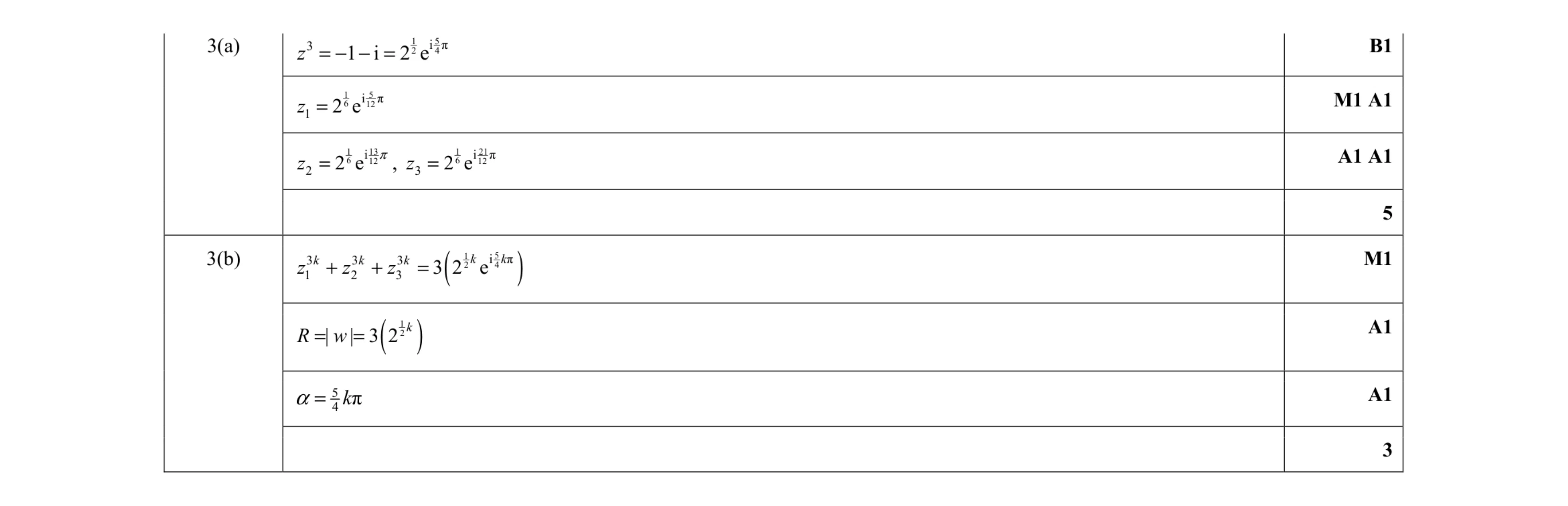 8
8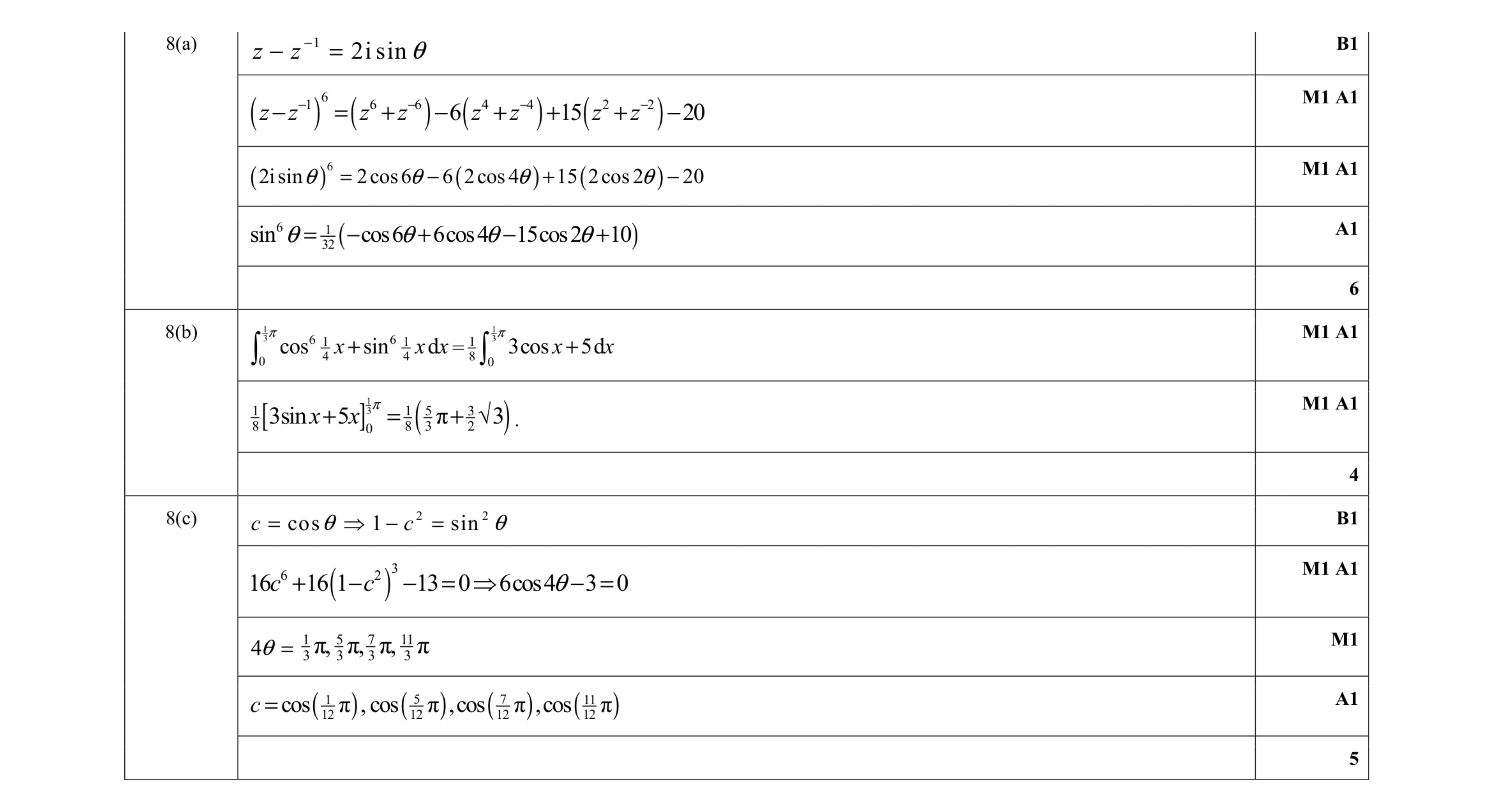 15
15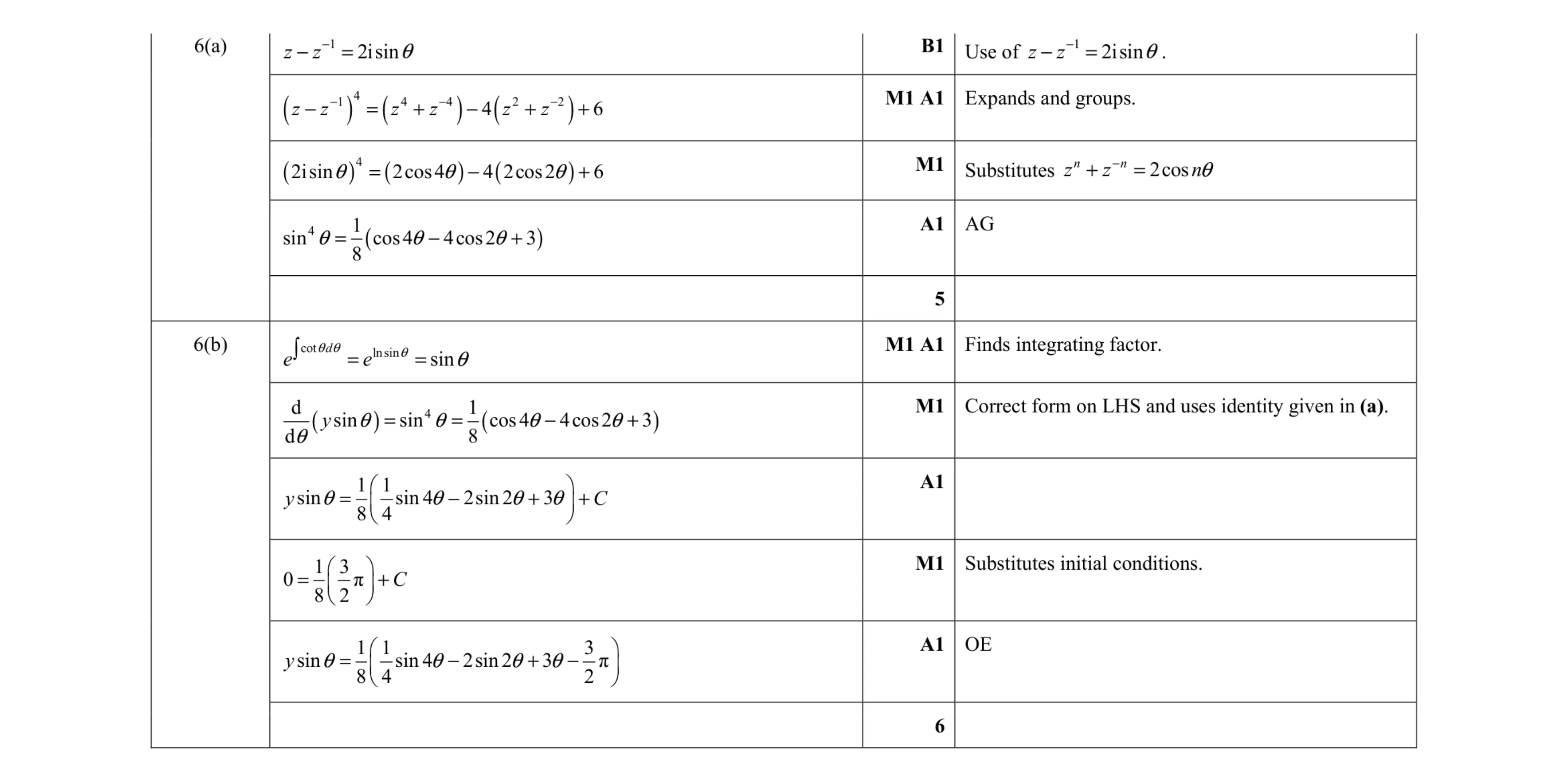 11
11 4
4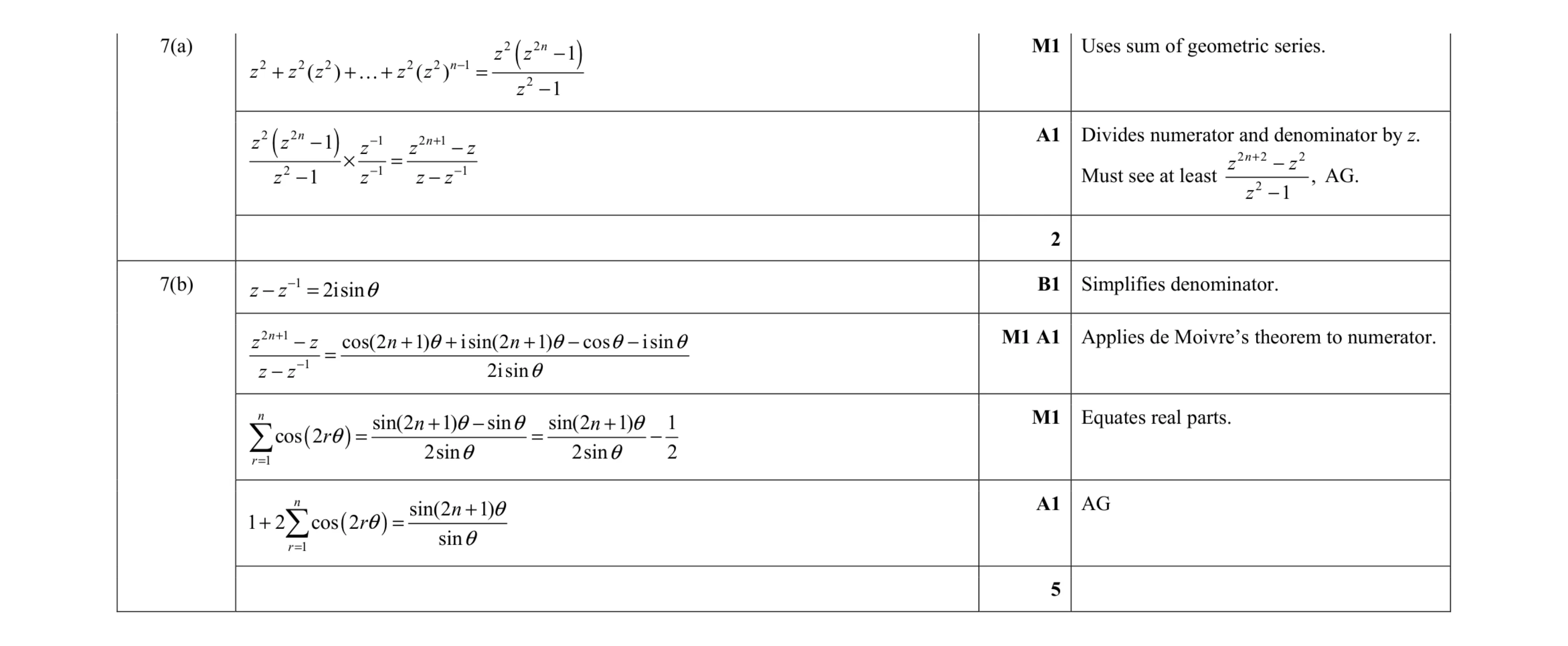 7
7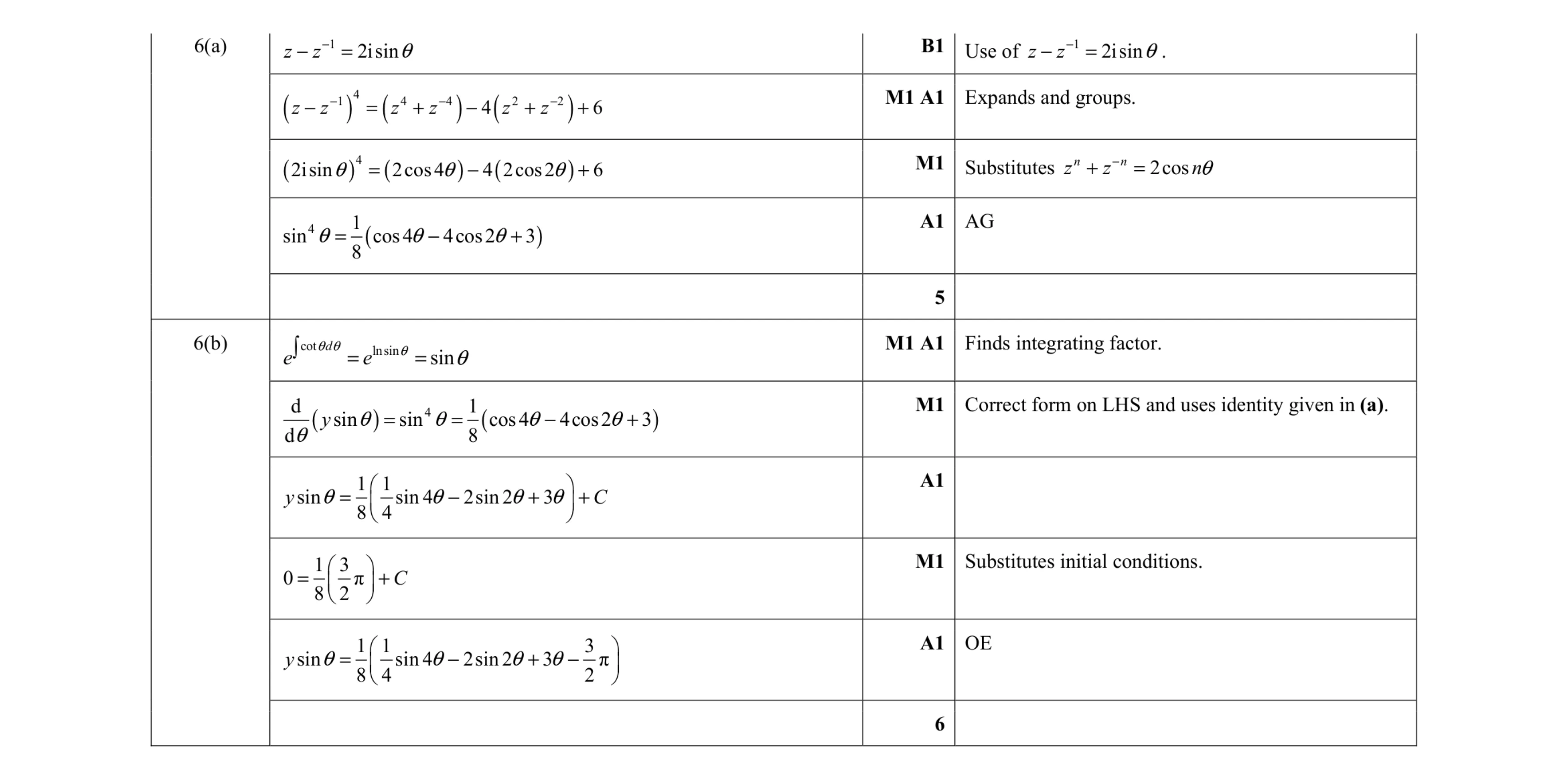 11
11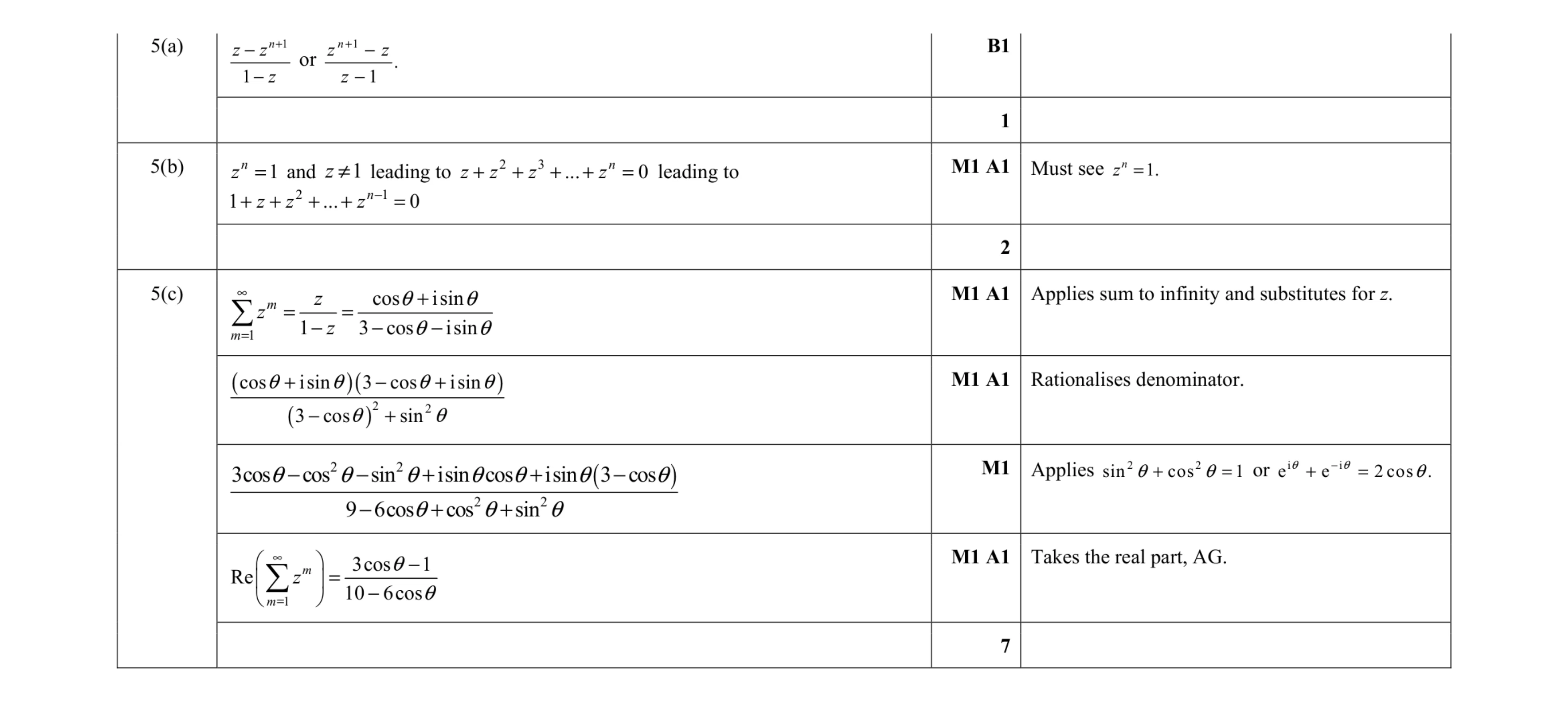 10
10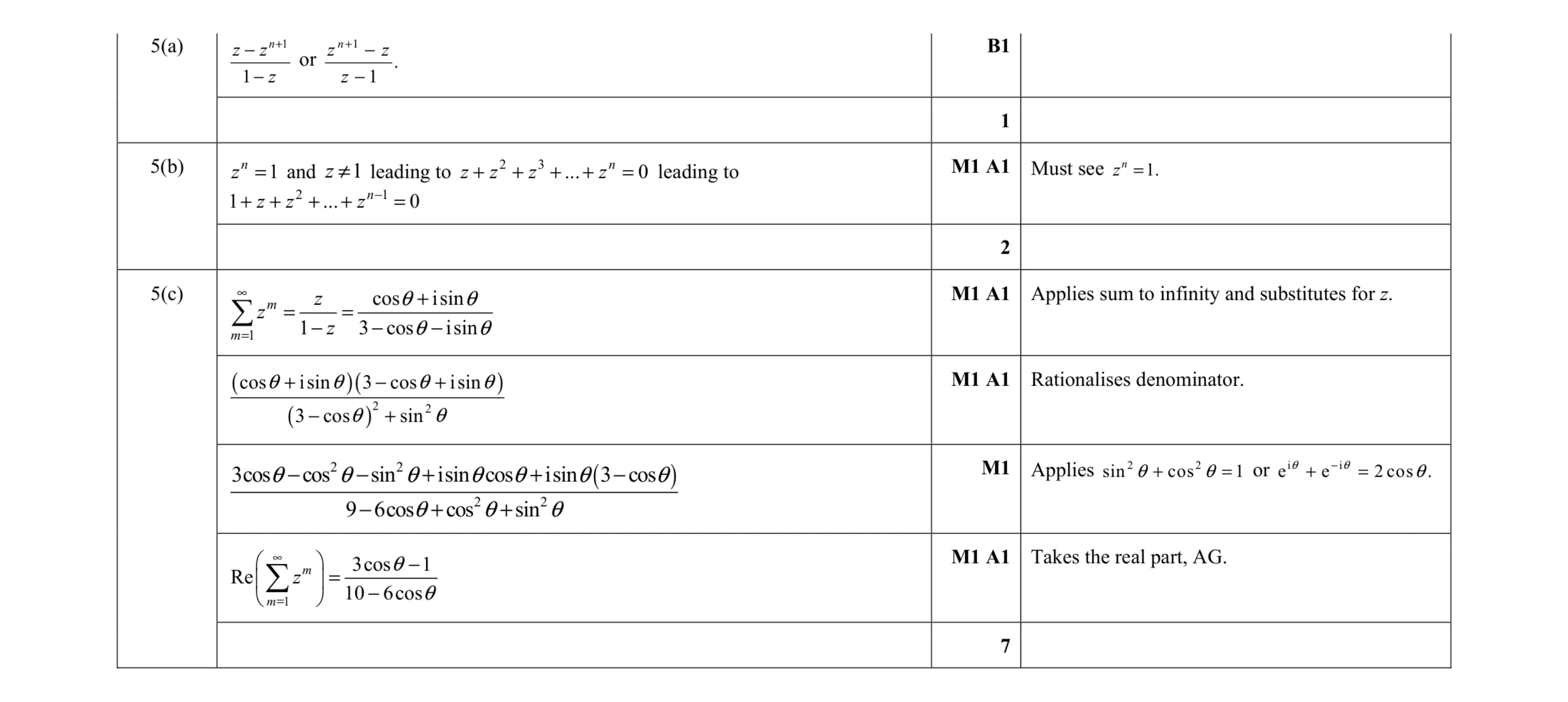 10
10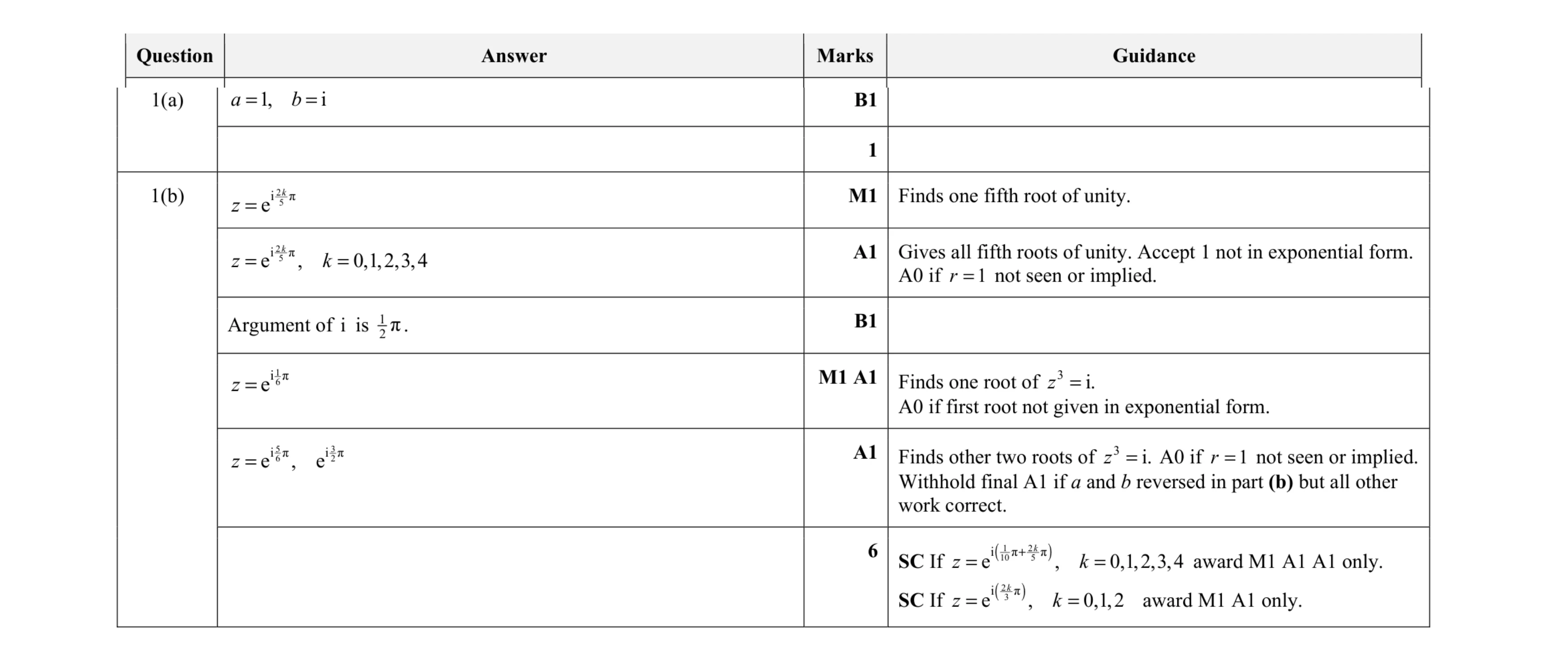 7
7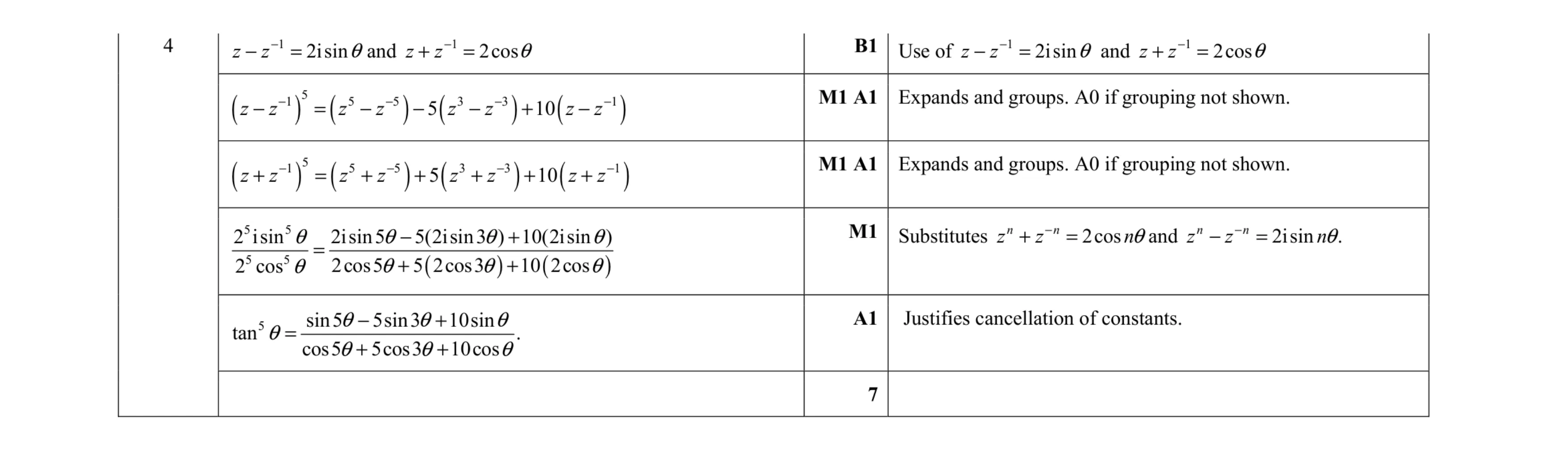 7
7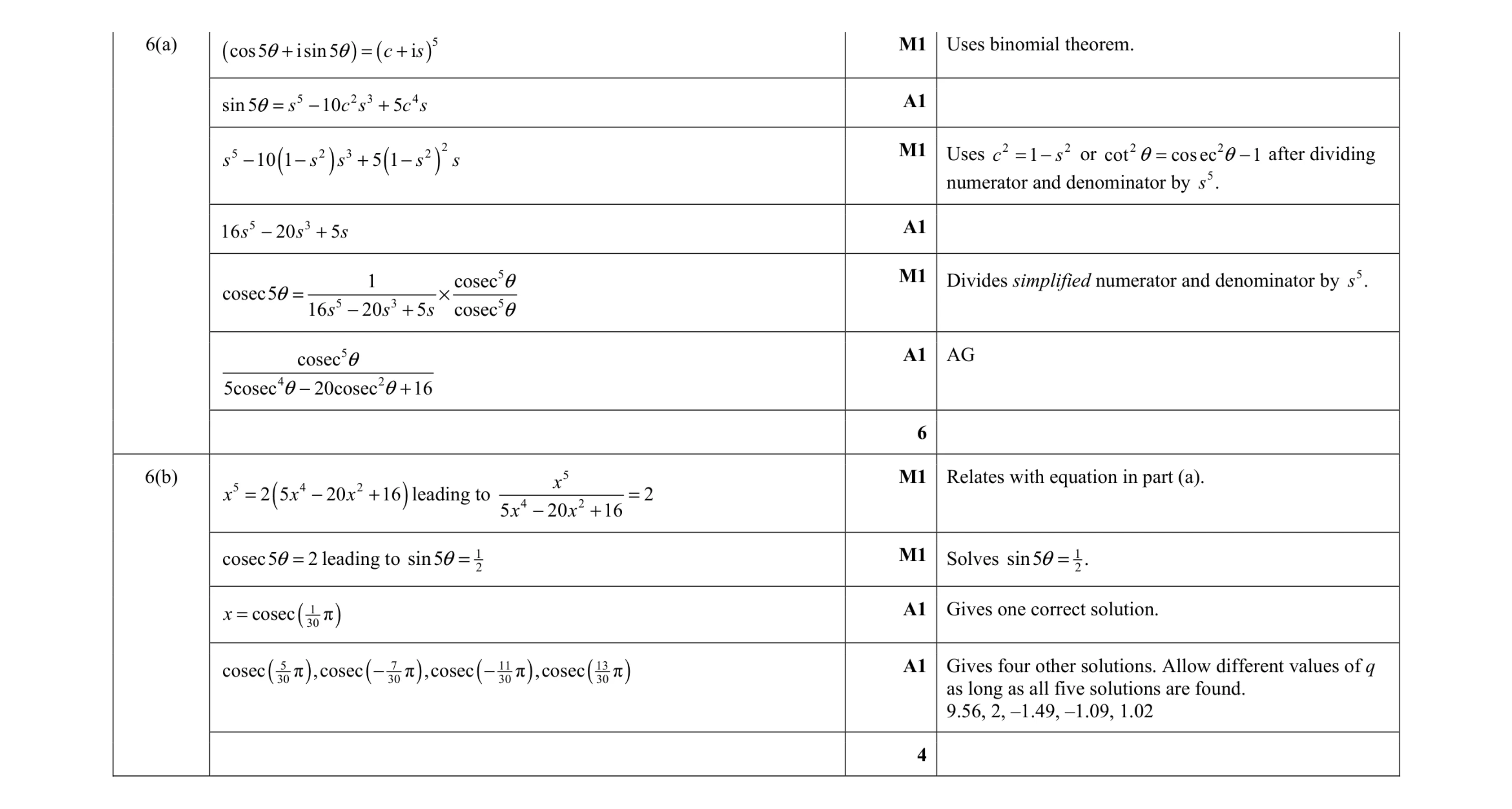 10
10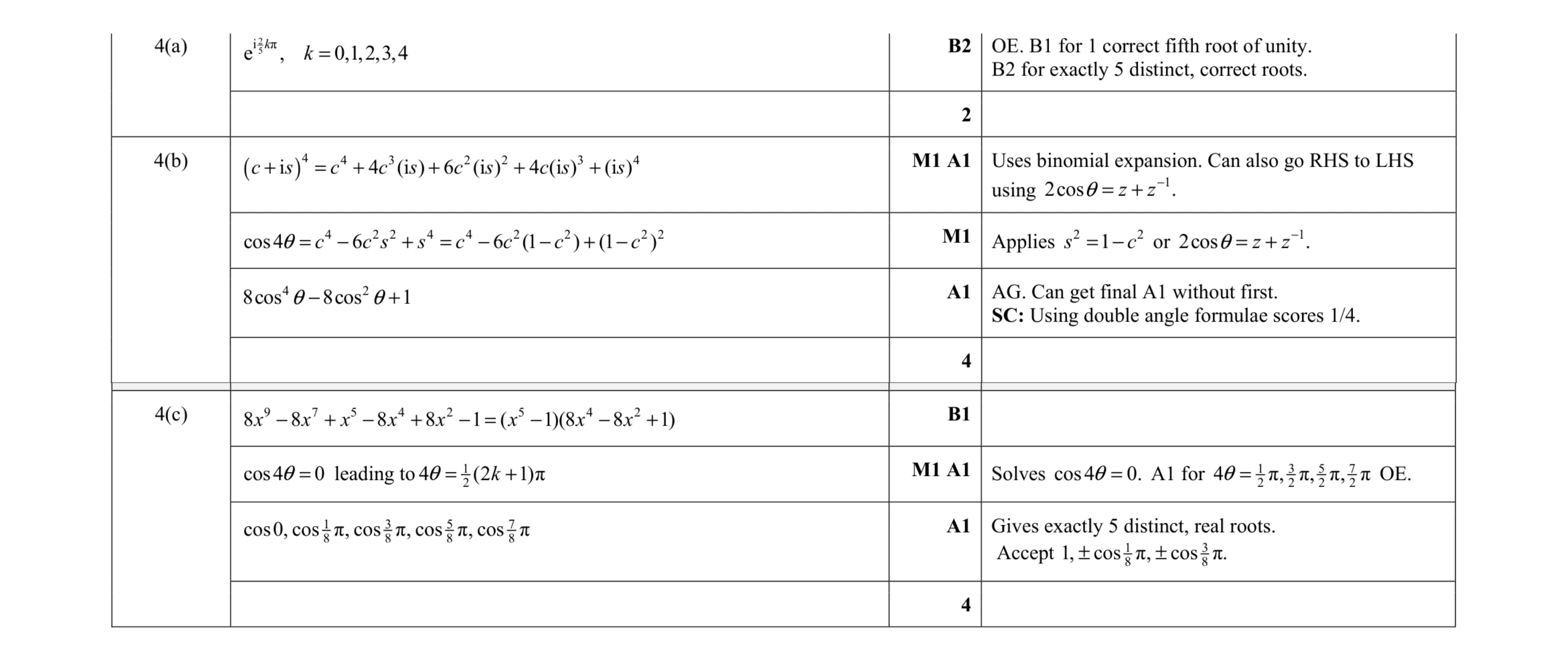 10
10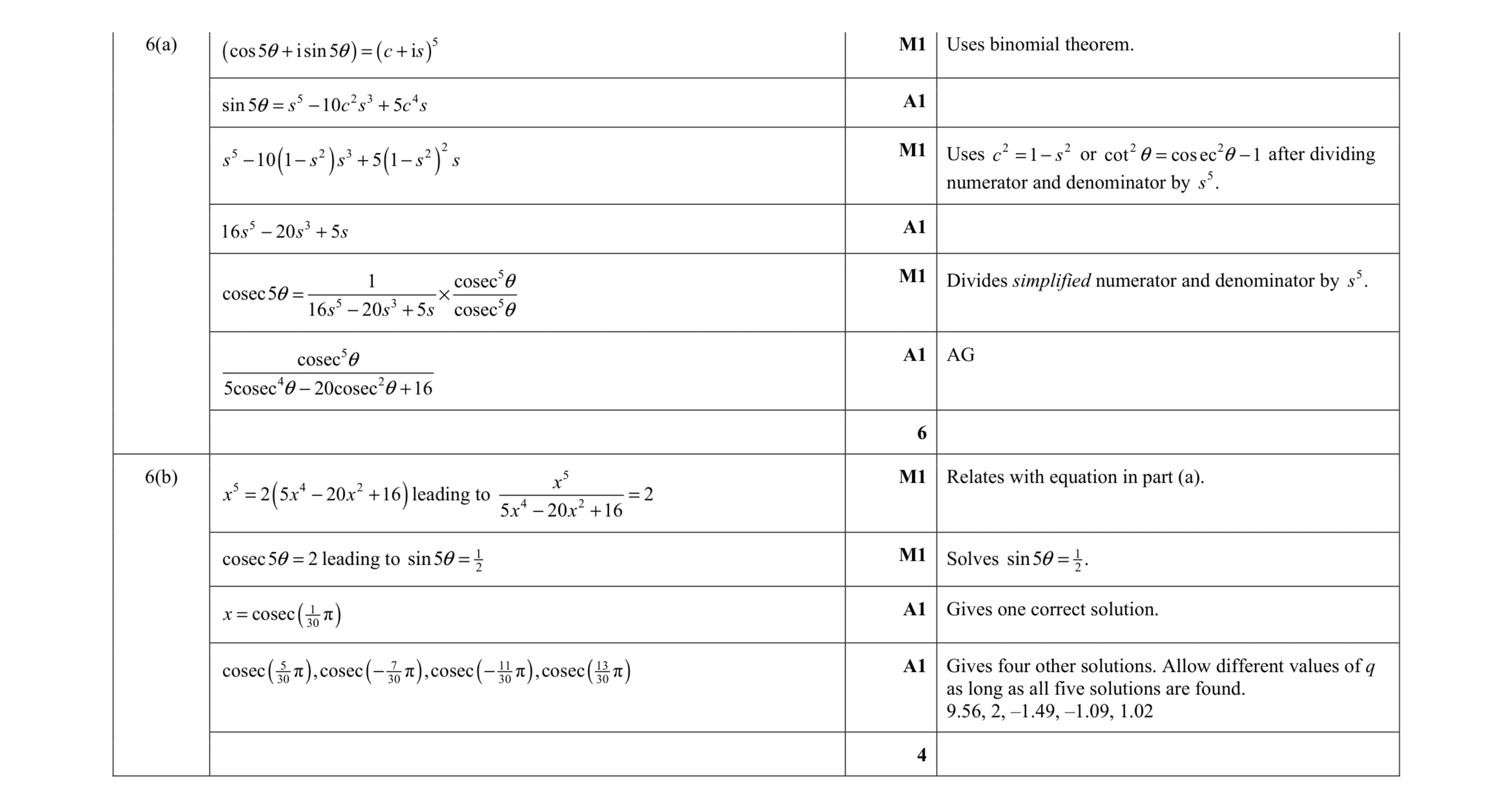 10
10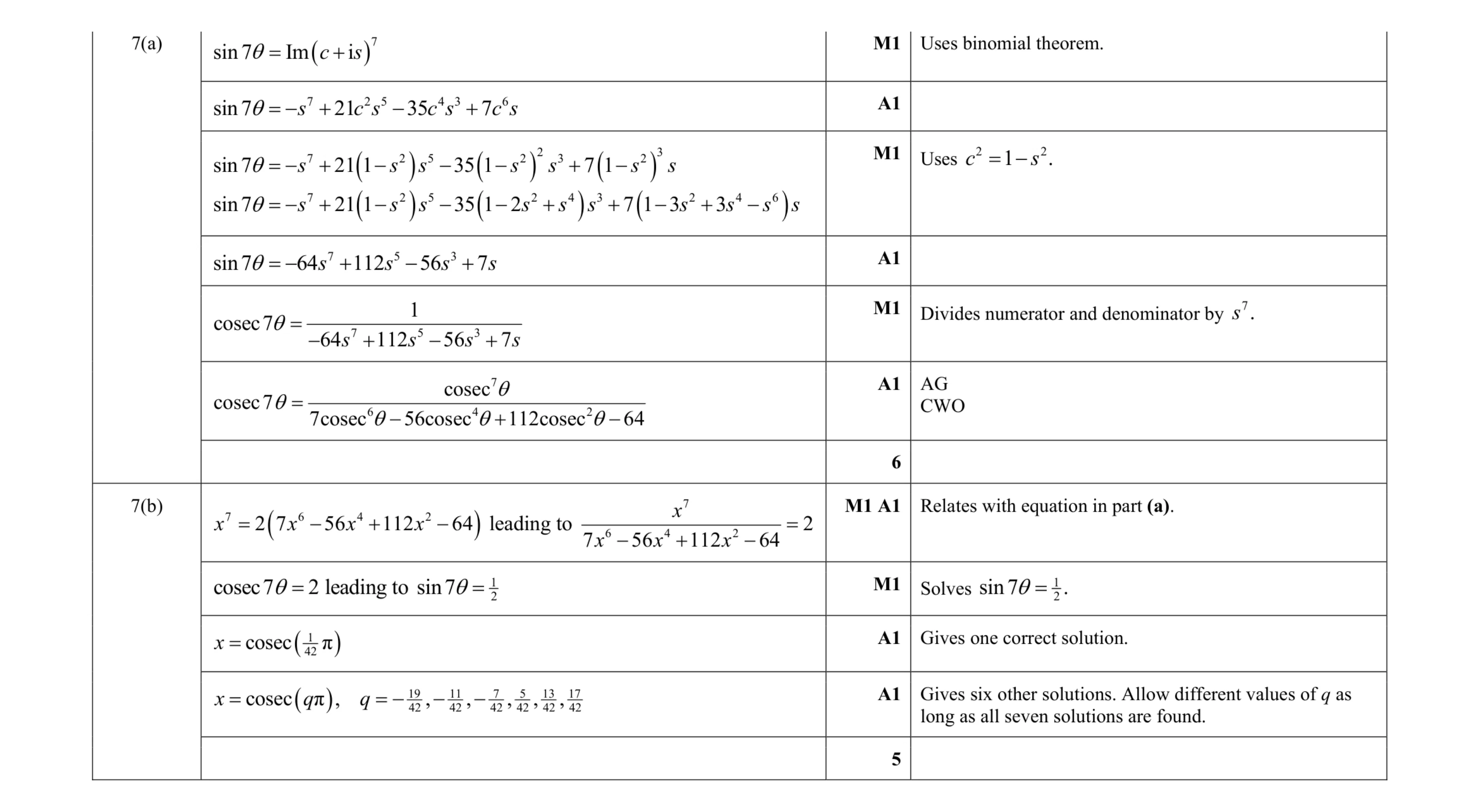 11
11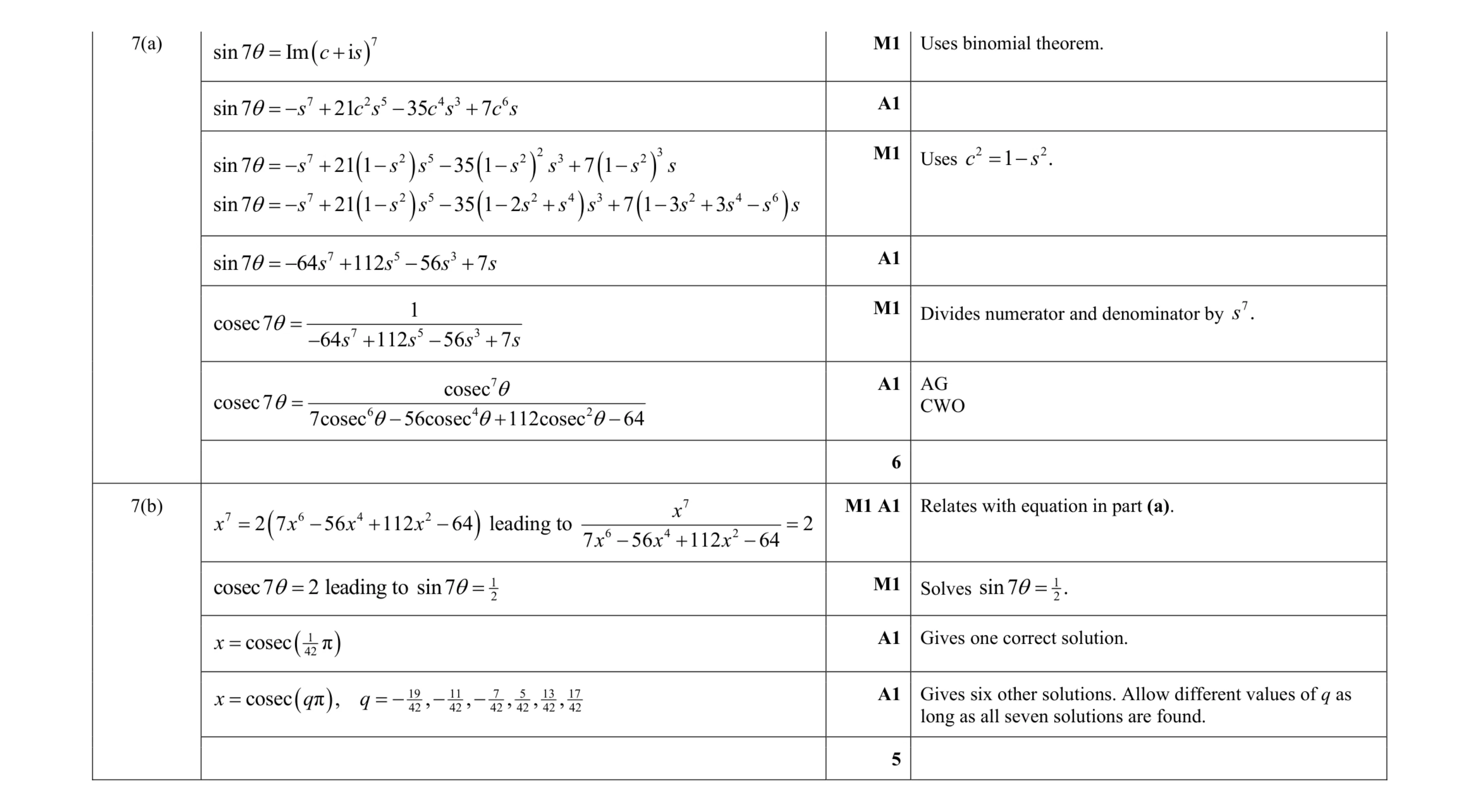 11
11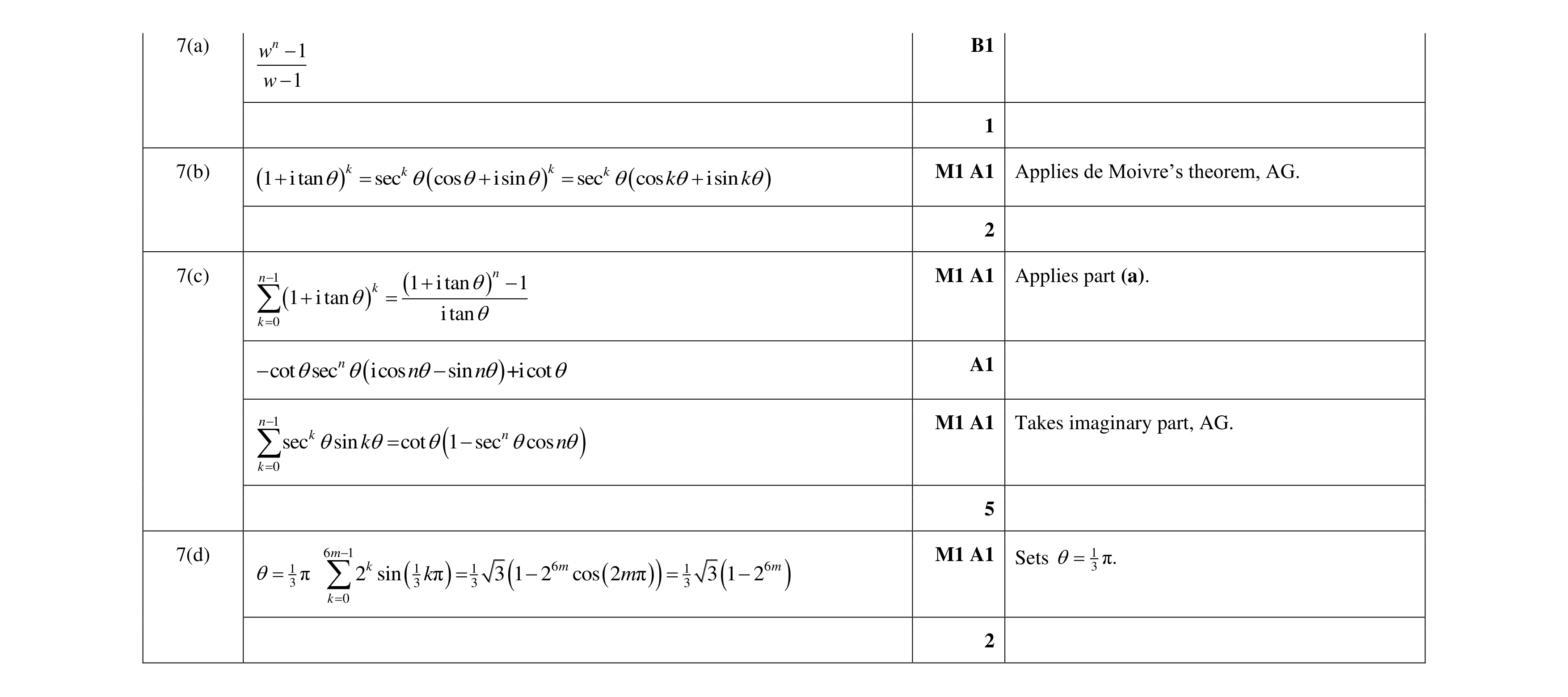 10
10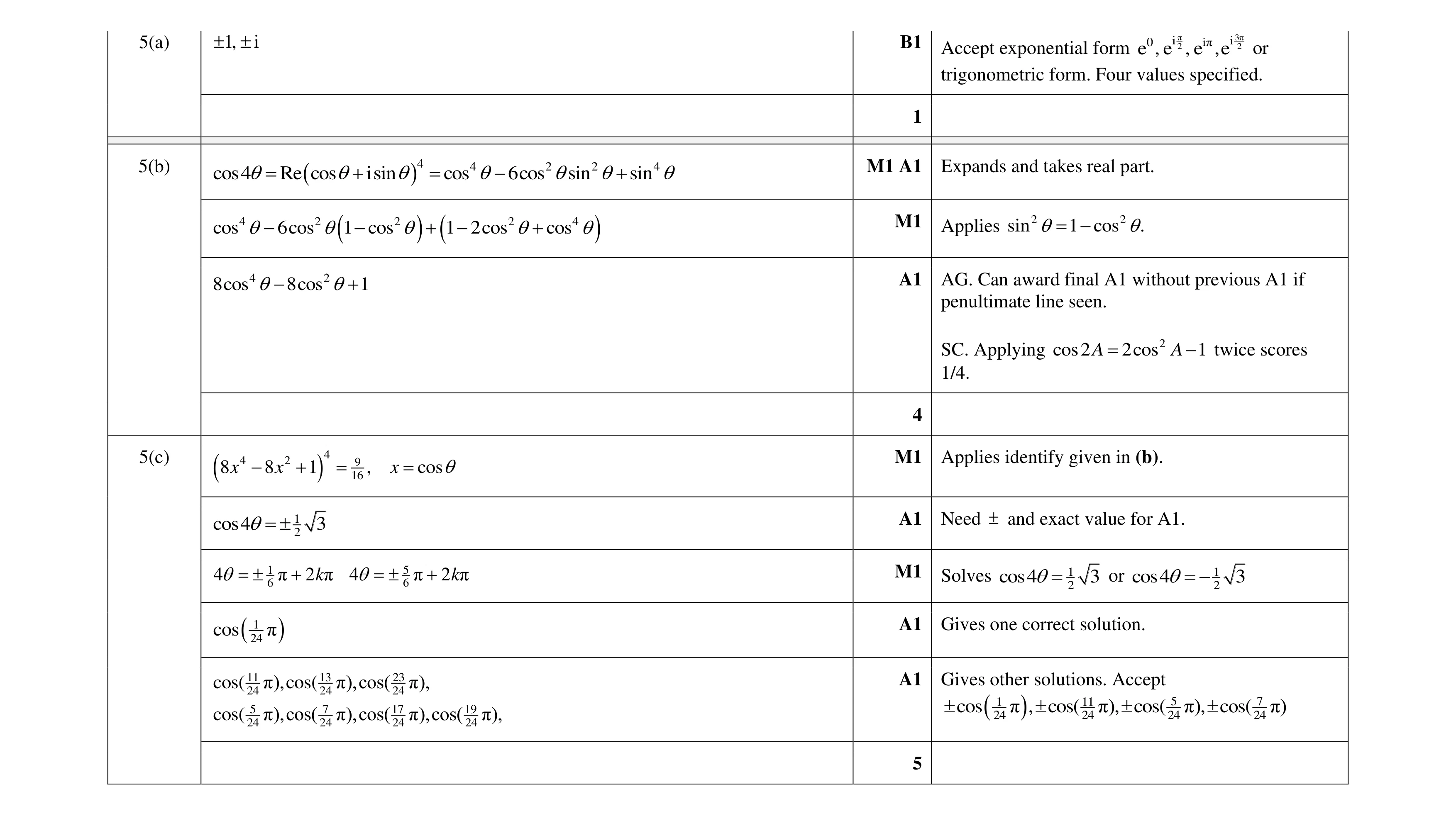 10
10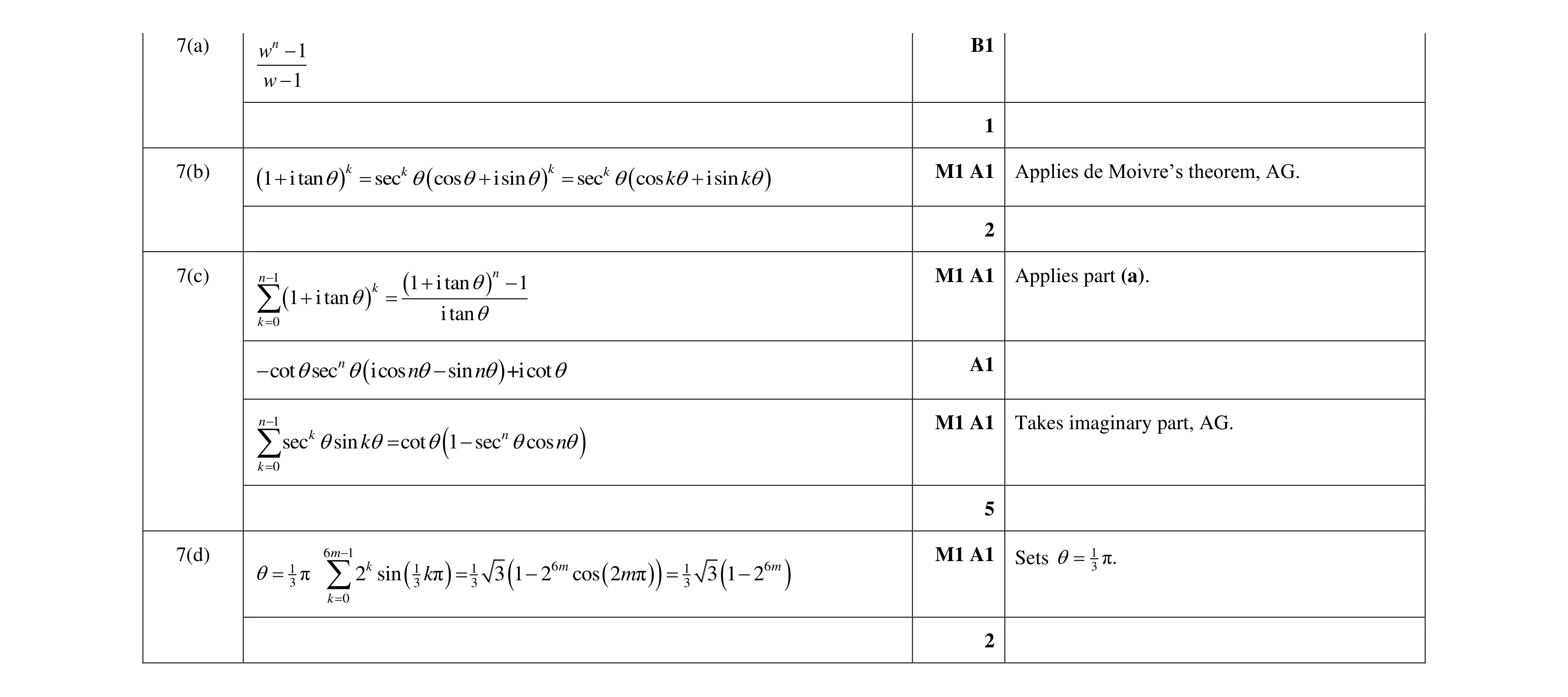 10
10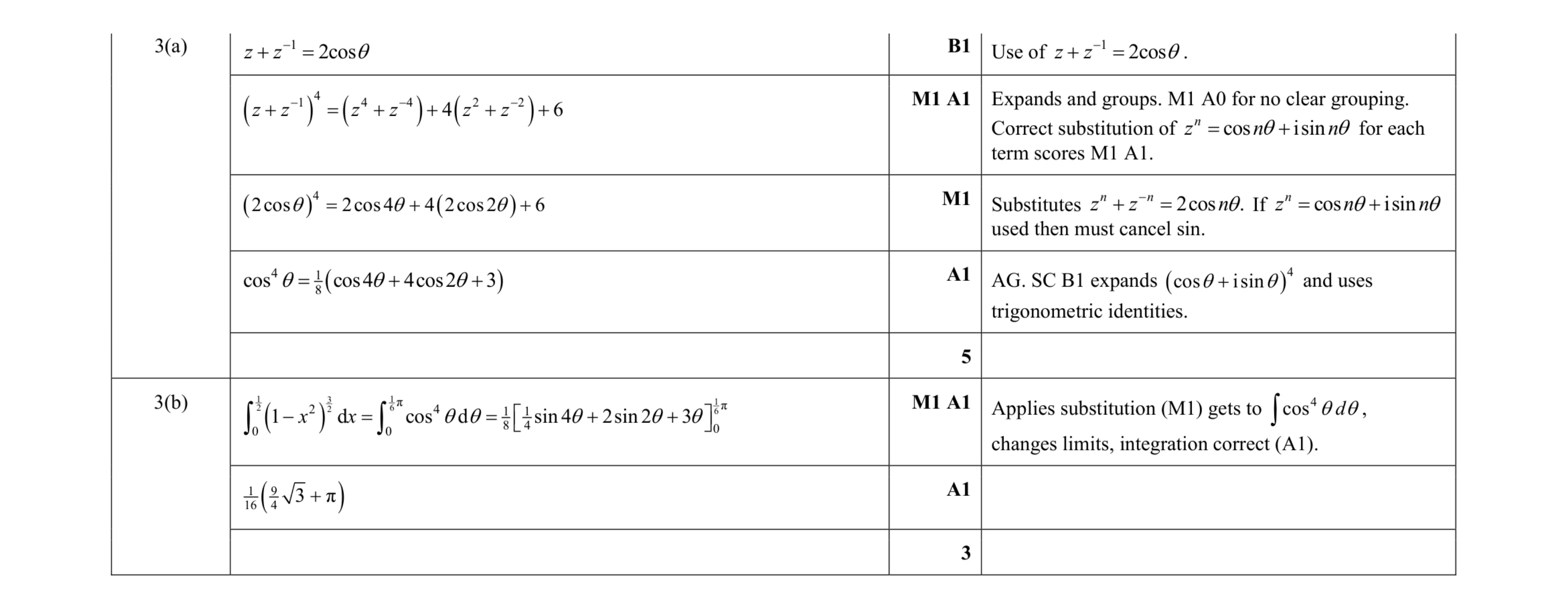 8
8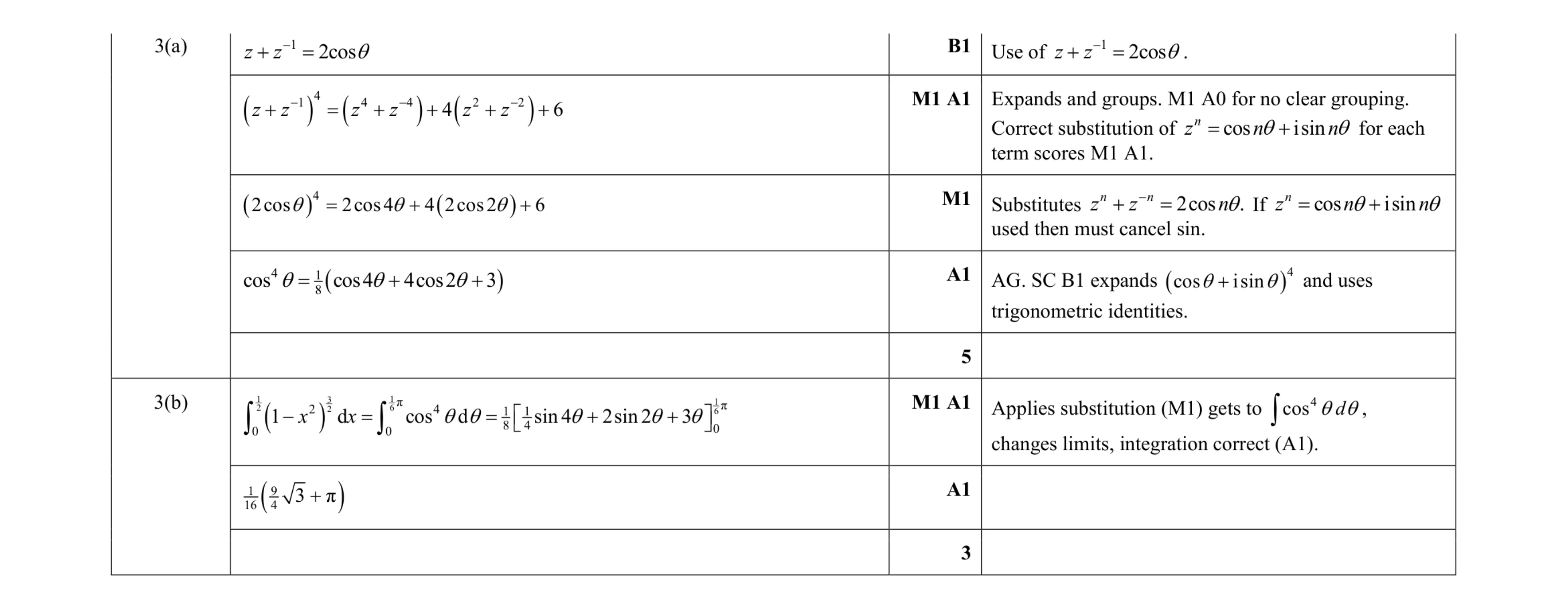 8
8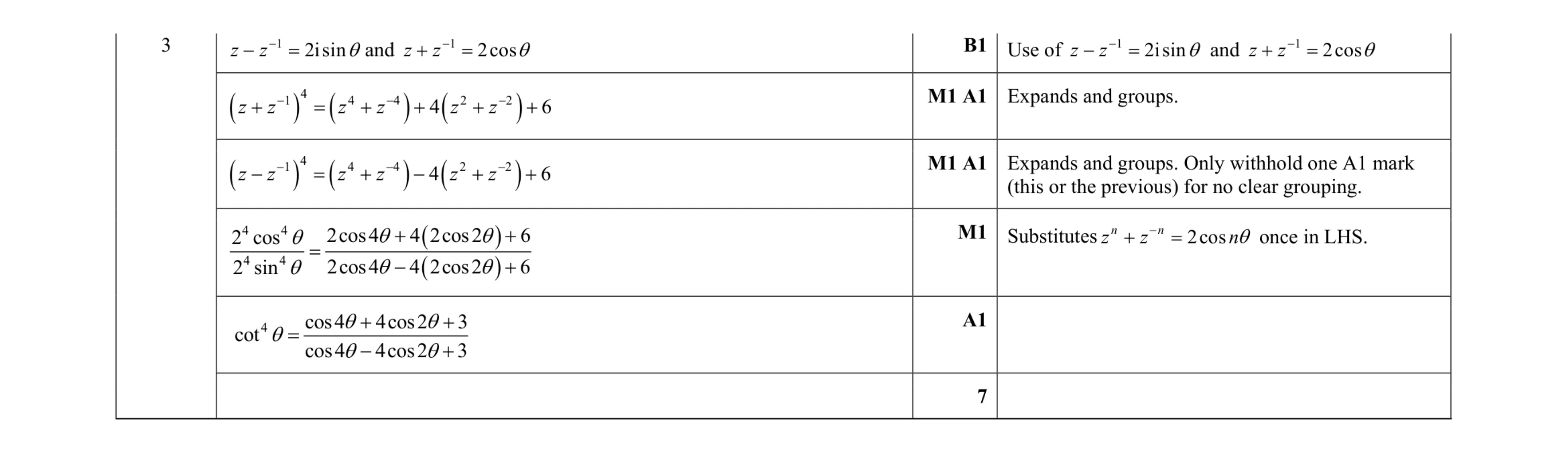 7
7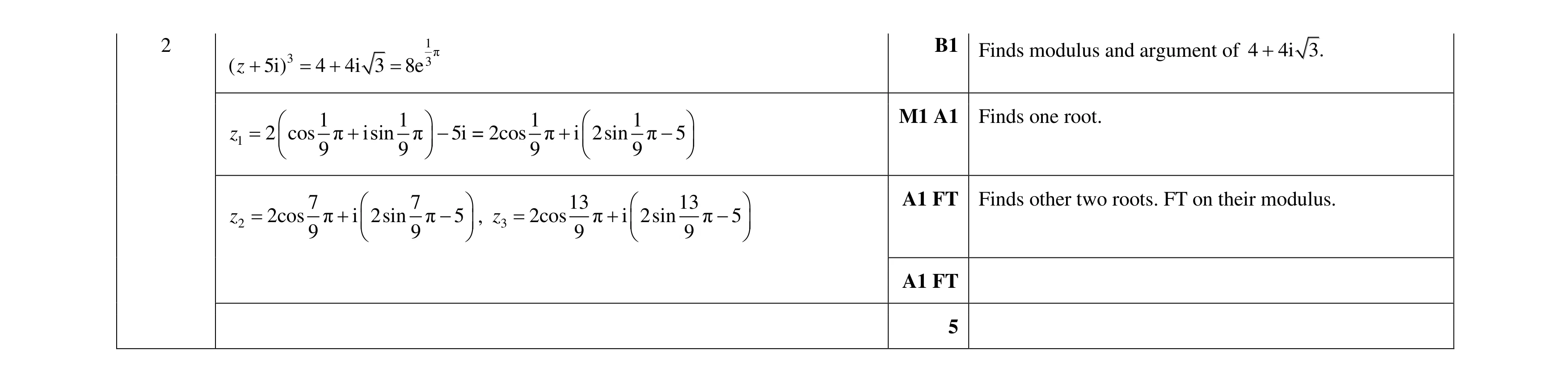 5
5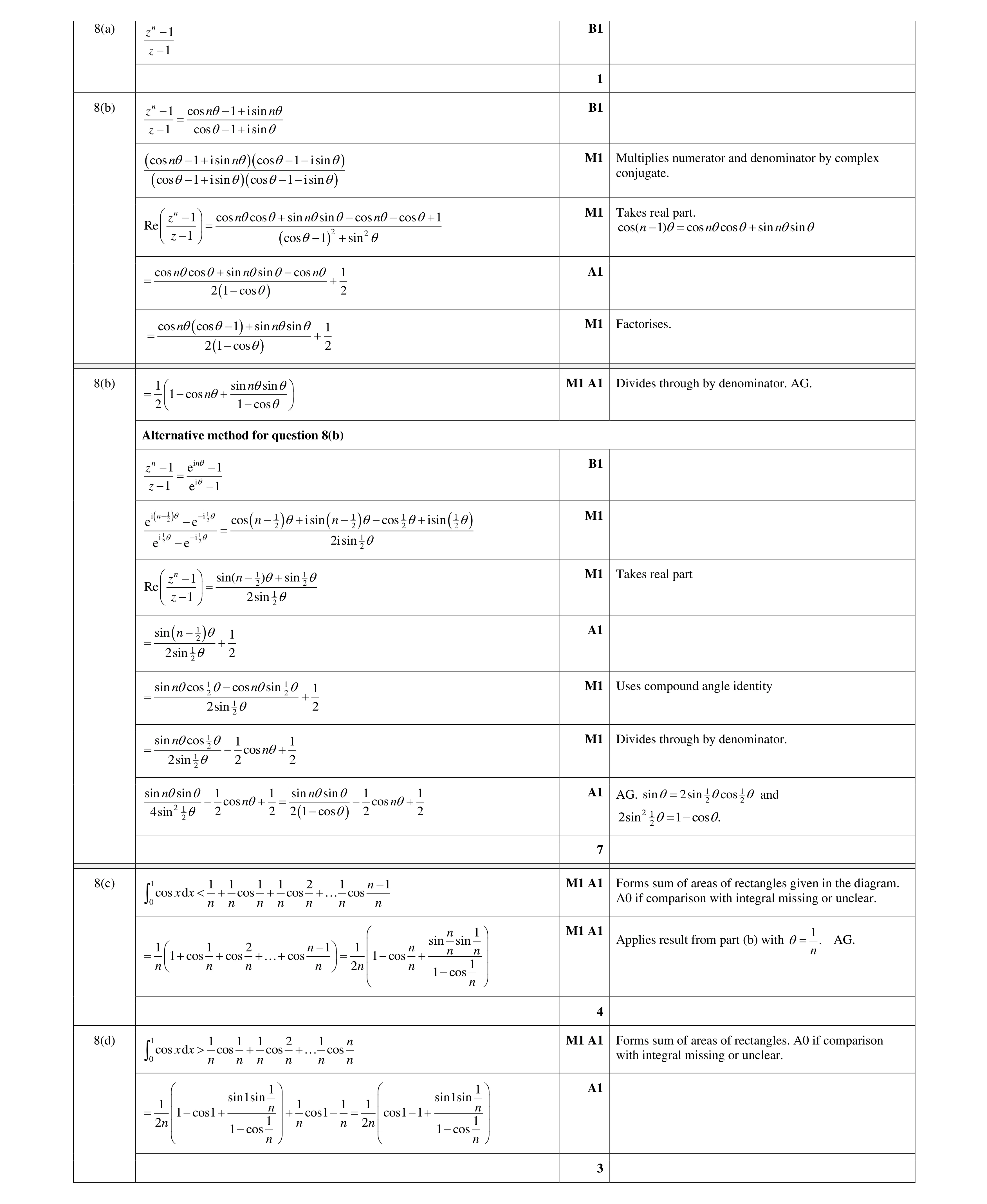 15
15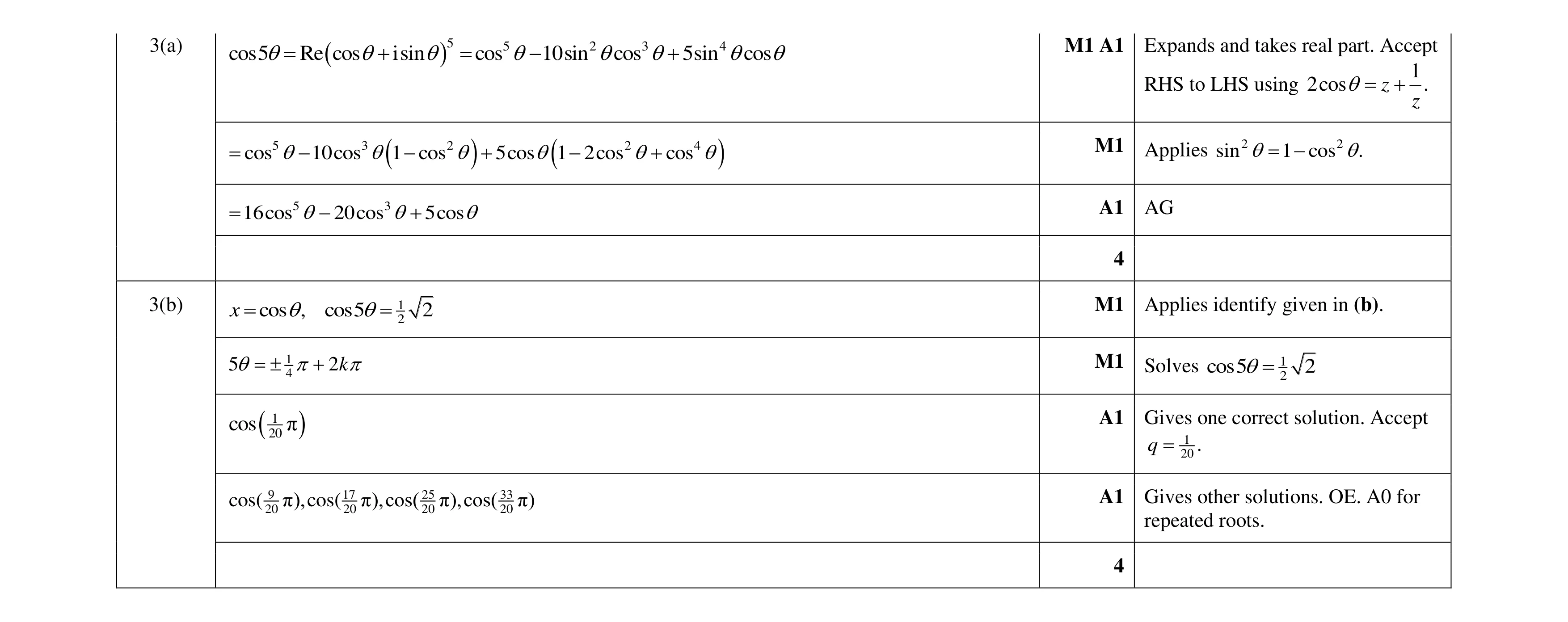 8
8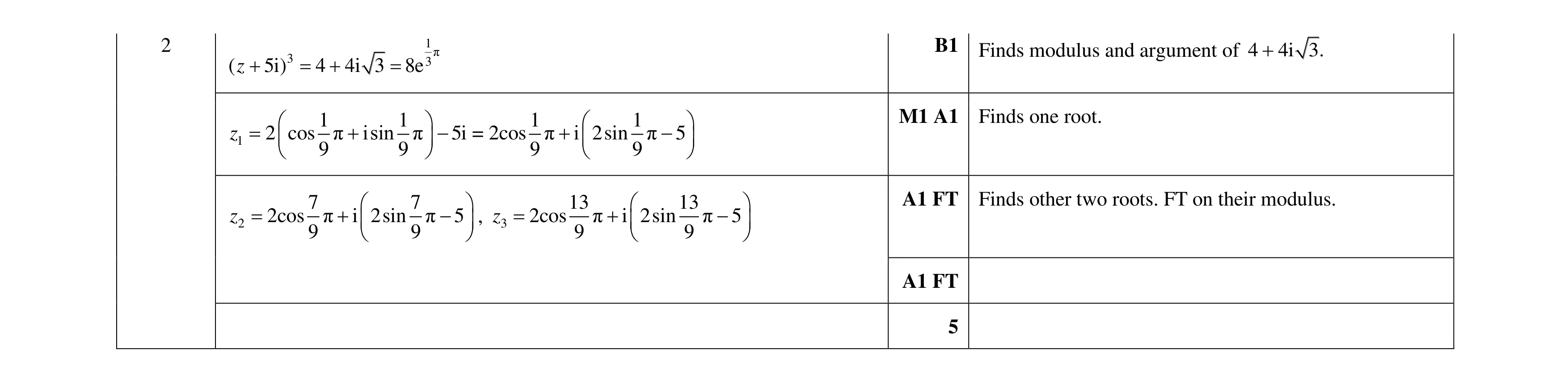 5
5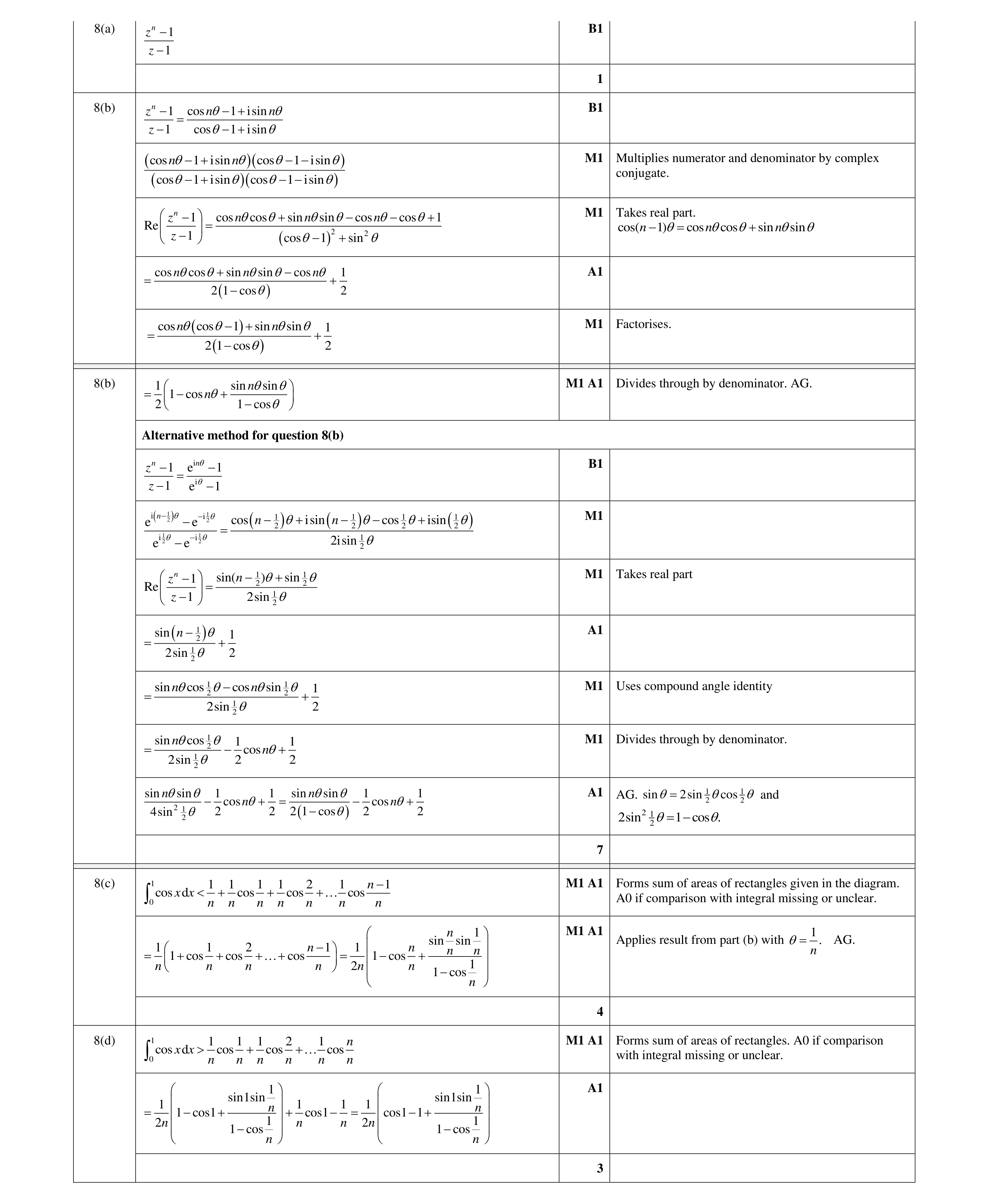 15
15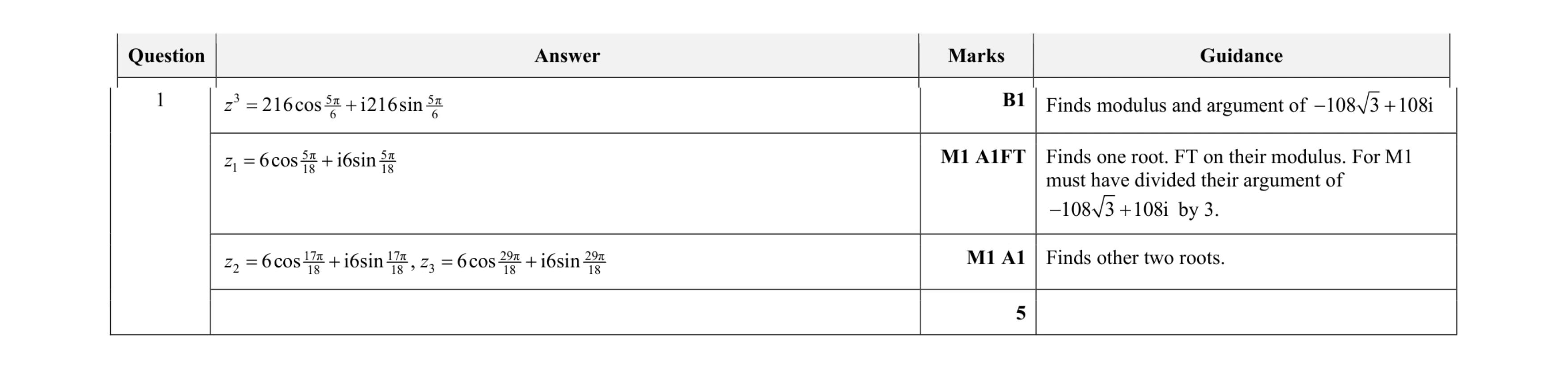 5
5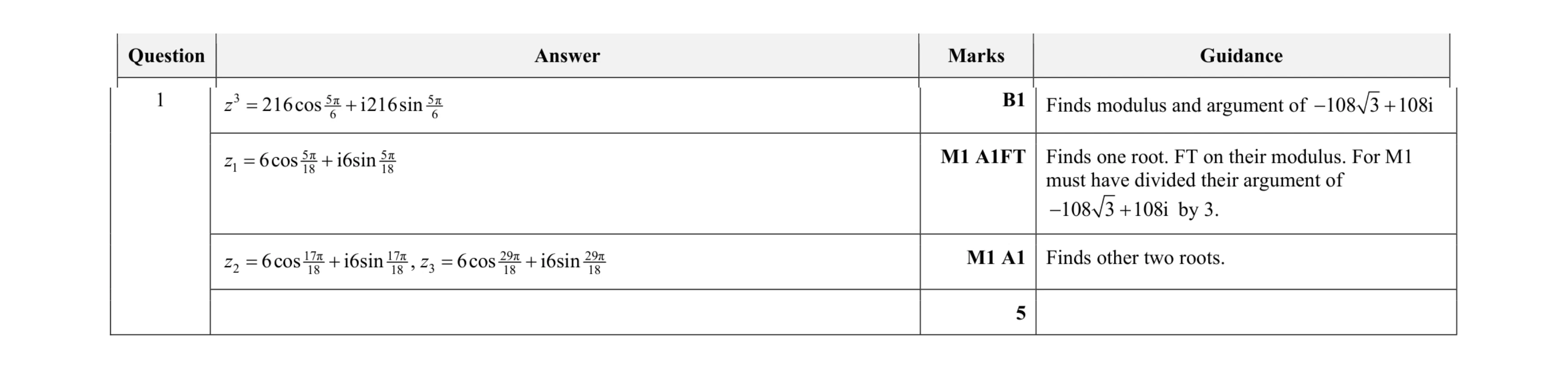 5
5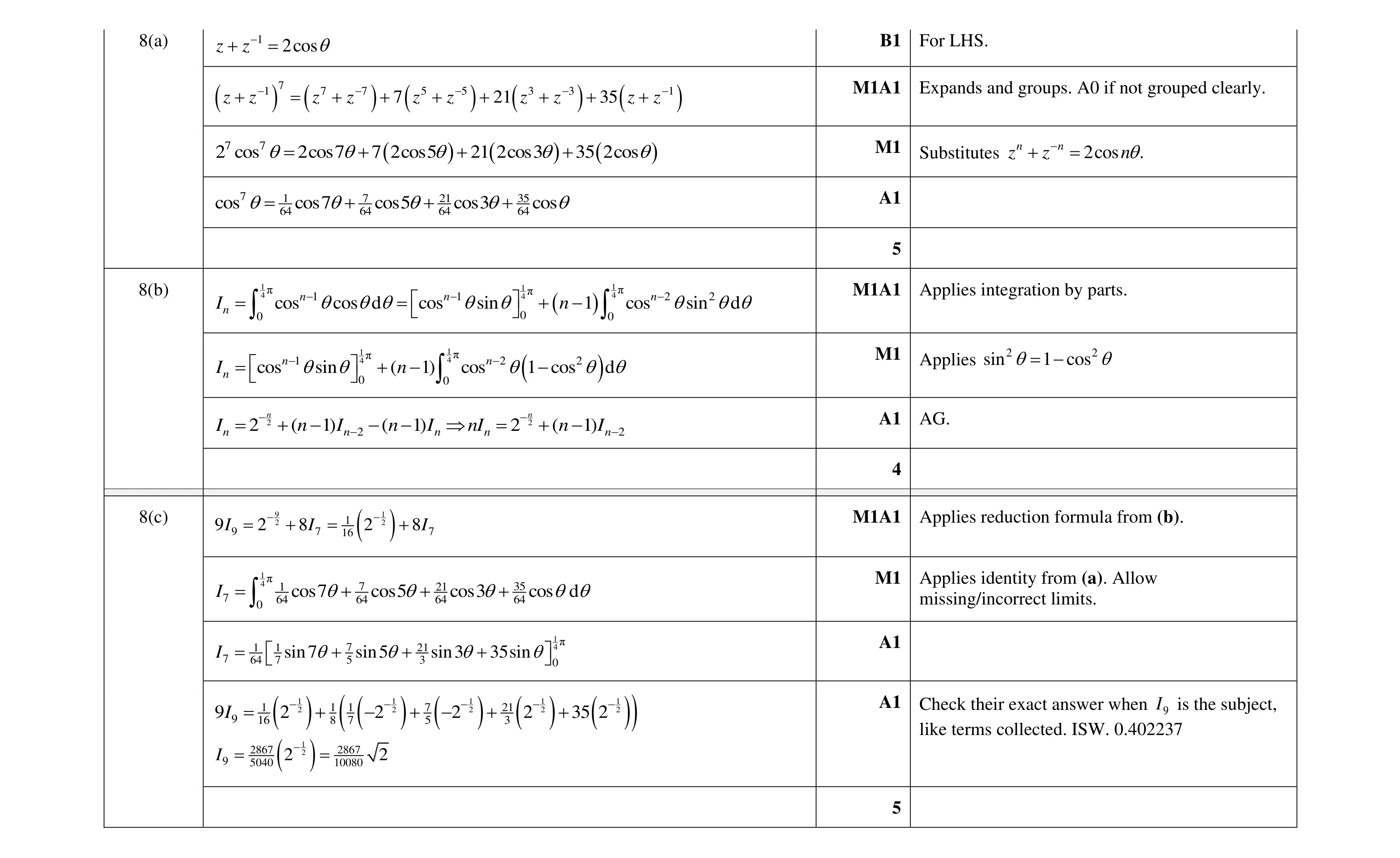 14
14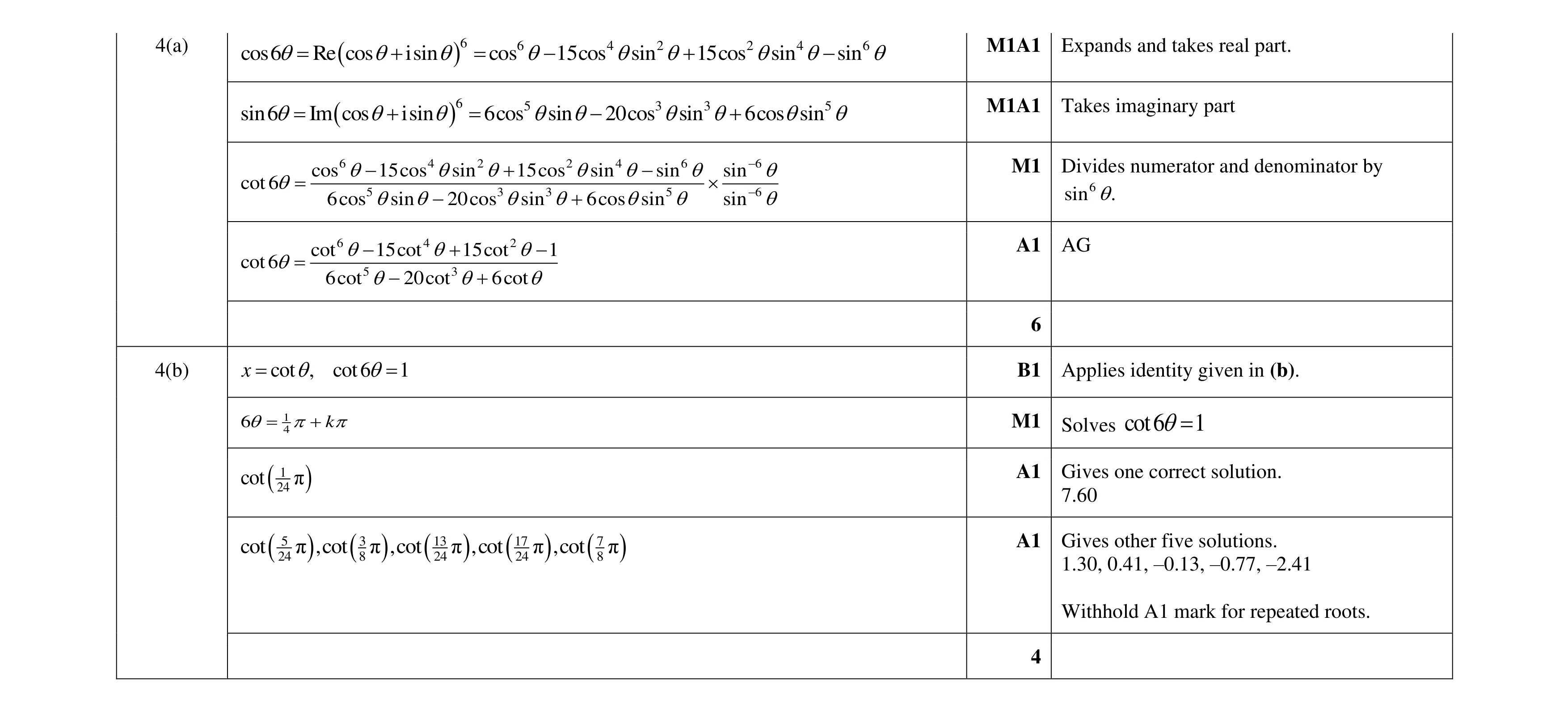 10
10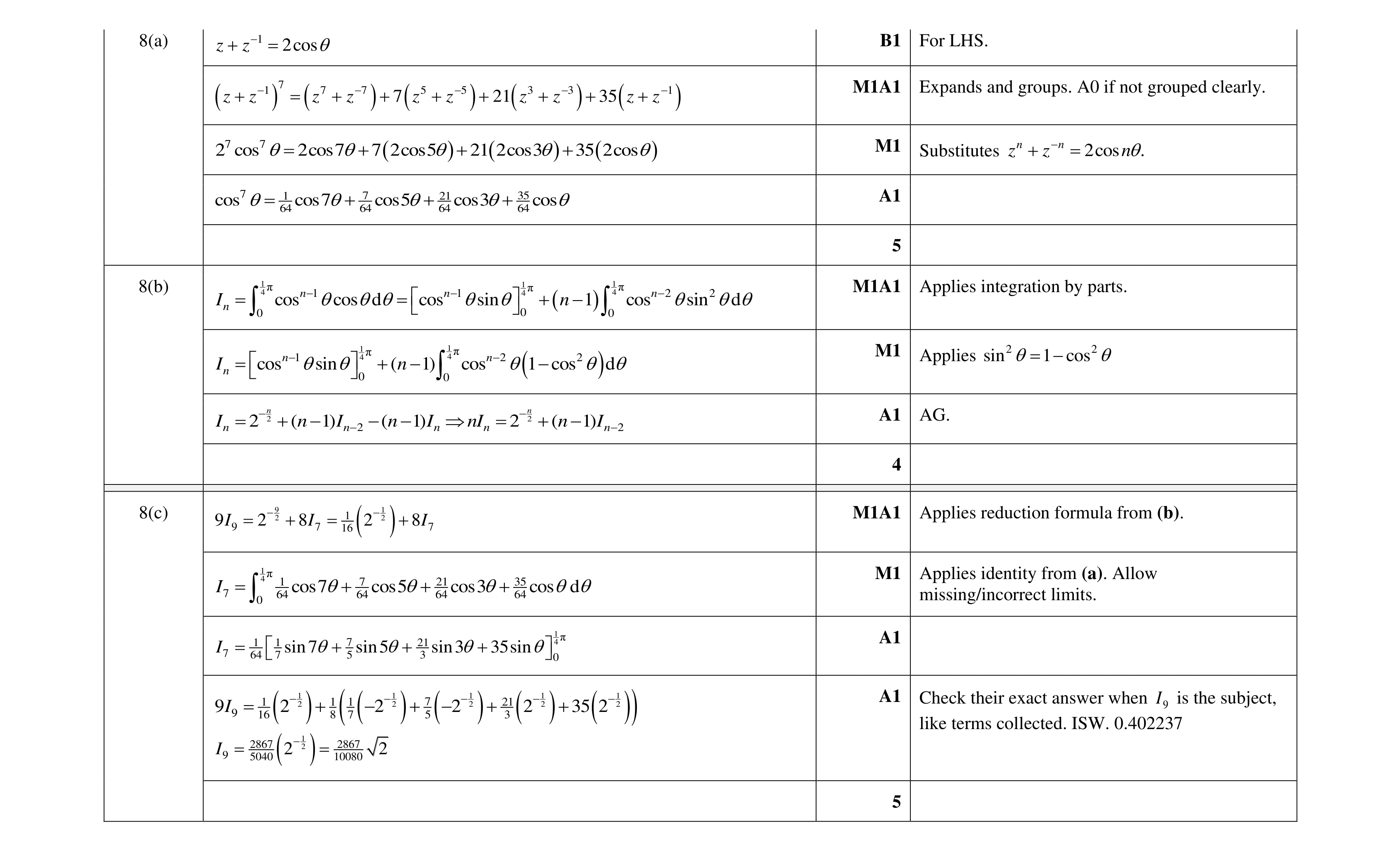 14
14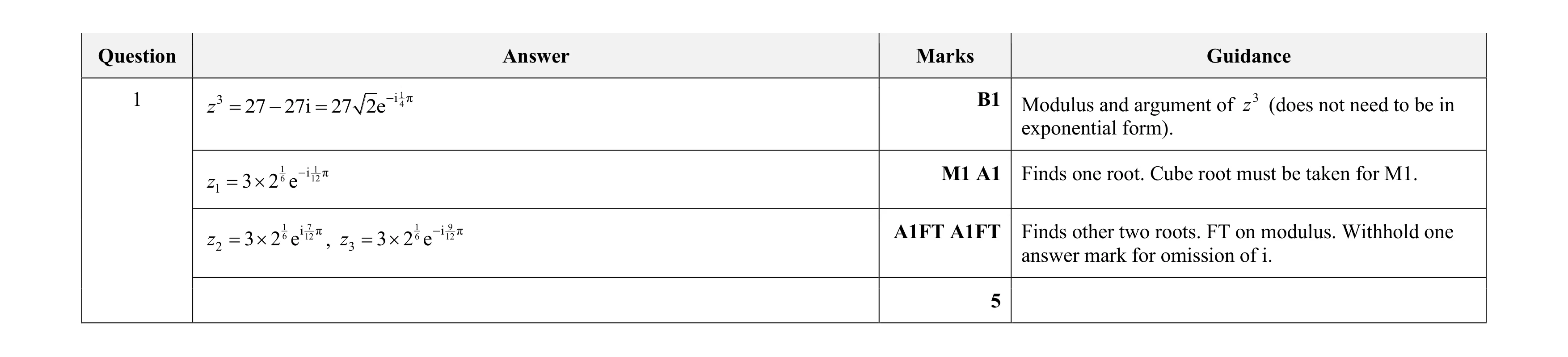 5
5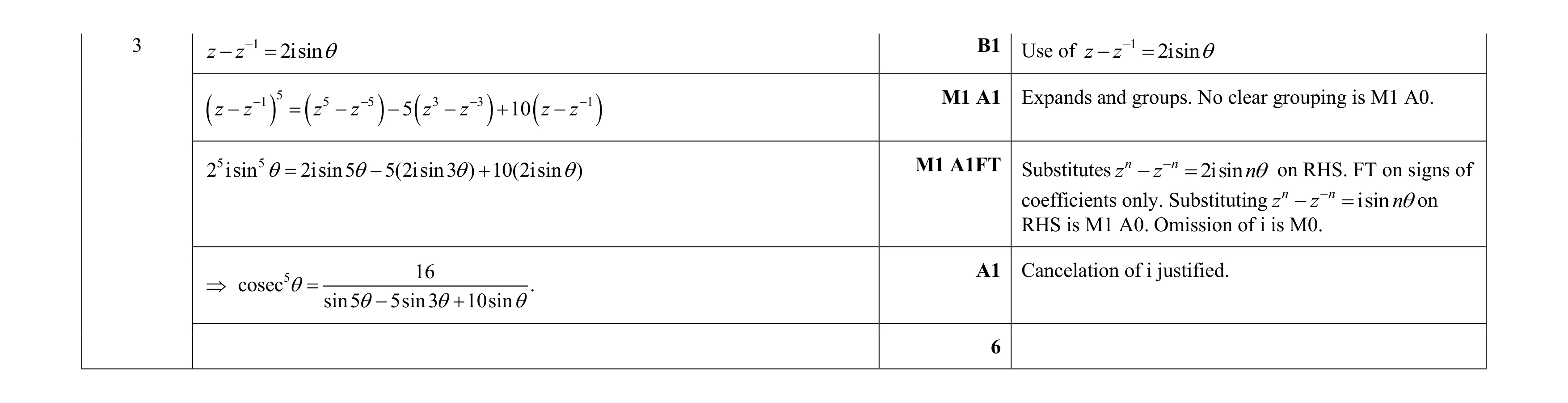 6
6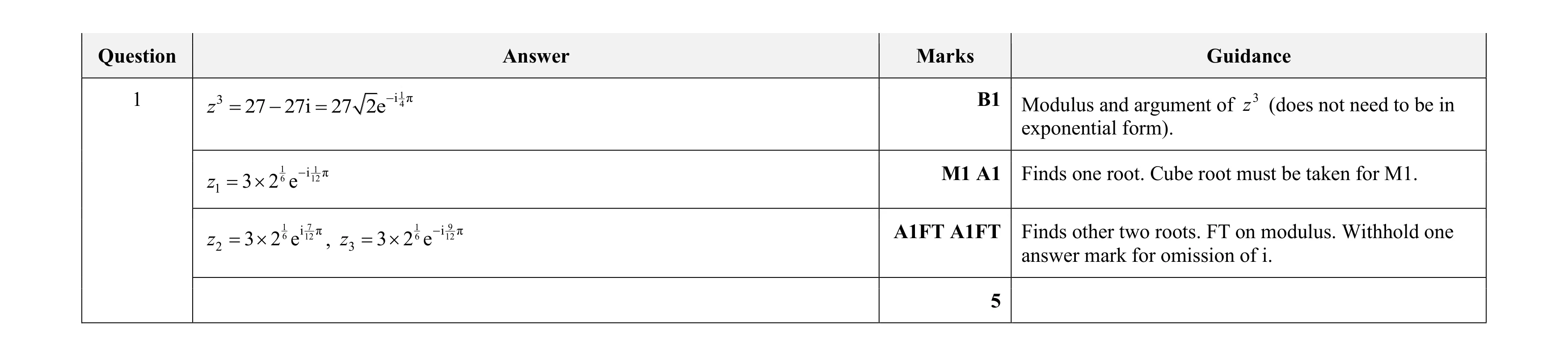 5
5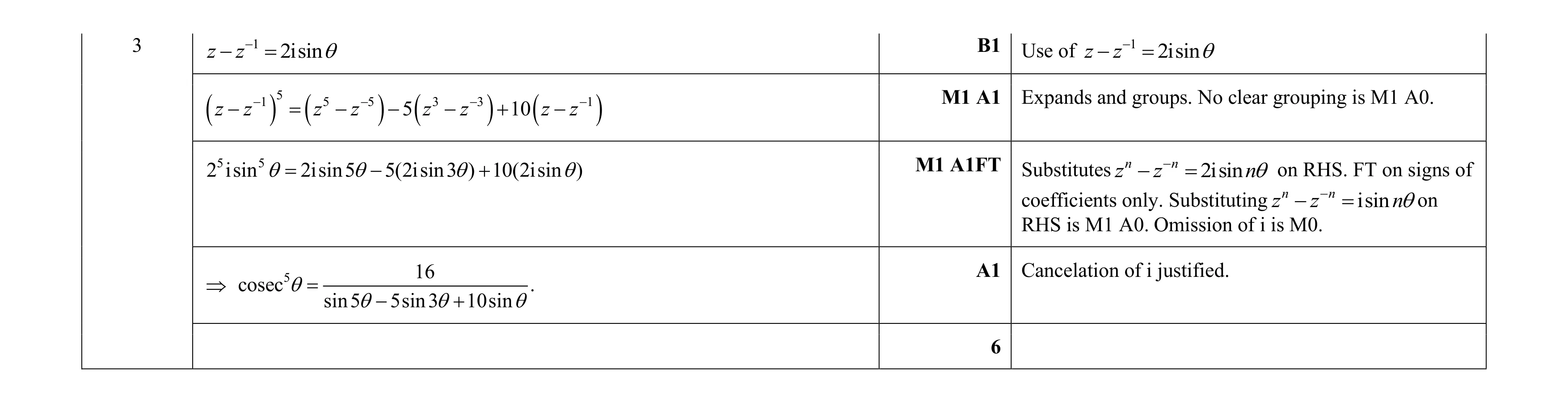 6
6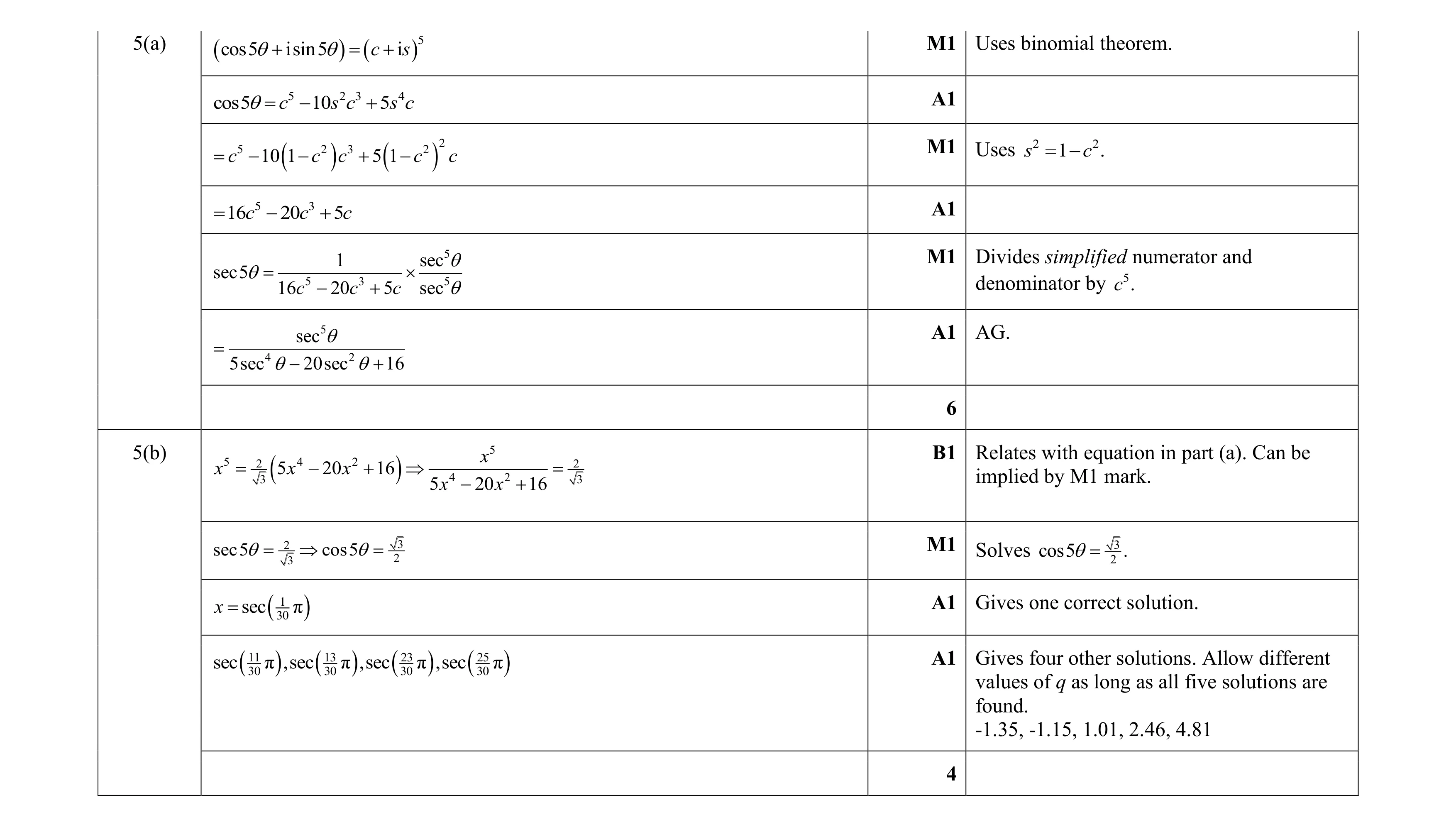 10
10