Cambridge A Level Mathematics 9709 — 2022 Oct/Nov Paper 5 · Variant 2
9709/52/O/N/22 · 6 questions · 50 marks · ≈56 min
The question paper and its mark scheme, free to read here and free to download. This is Cambridge’s own paper, exactly as it was sat.
Question paper16 pages



Mark scheme18 pages
Answers below. Sit the paper first if you are practising.
Questions as text
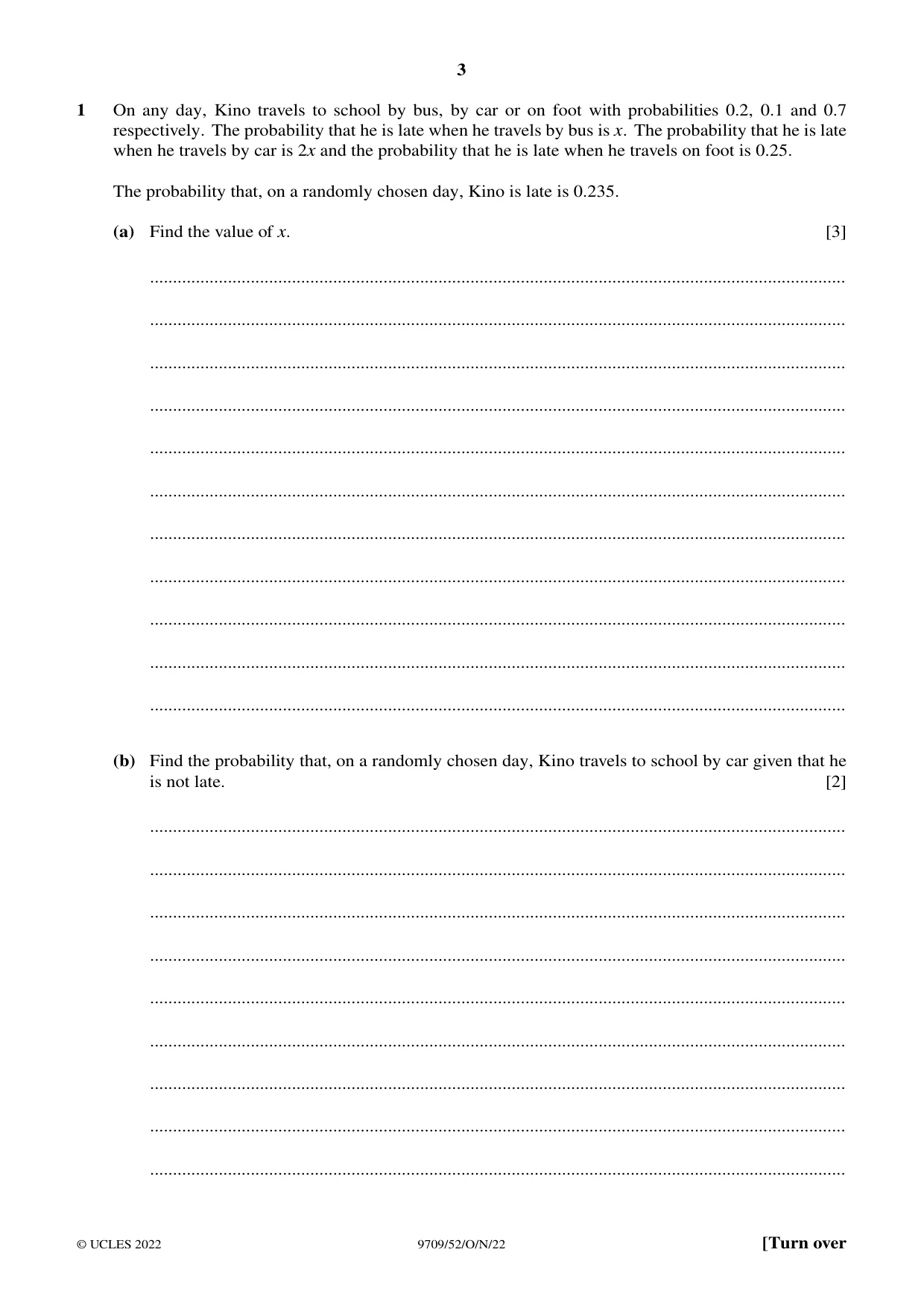
Q1 · On any day, Kino travels to school by bus, by car or on foot with probabilities 0.2, 0.1…
1 On any day, Kino travels to school by bus, by car or on foot with probabilities 0.2, 0.1 and 0.7 respectively. The probability that he is late when he travels by bus is x. The probability that he is late when he travels by car is 2x and the probability that he is late when he travels on foot is 0.25. The probability that, on a randomly chosen day, Kino is late is 0.235. (a) Find the value of x. [3] ........................................................................................................................................................ ........................................................................................................................................................ ........................................................................................................................................................ ........................................................................................................................................................ ........................................................................................................................................................ ........................................................................................................................................................ ........................................................................................................................................................ ........................................................................................................................................................ ........................................................................................................................................................ ........................................................................................................................................................ ........................................................................................................................................................ (b) Find the probability that, on a randomly chosen day, Kino travels to school by car given that he is not late. [2] ........................................................................................................................................................ ........................................................................................................................................................ ........................................................................................................................................................ ........................................................................................................................................................ ........................................................................................................................................................ ........................................................................................................................................................ ........................................................................................................................................................ ........................................................................................................................................................ ........................................................................................................................................................
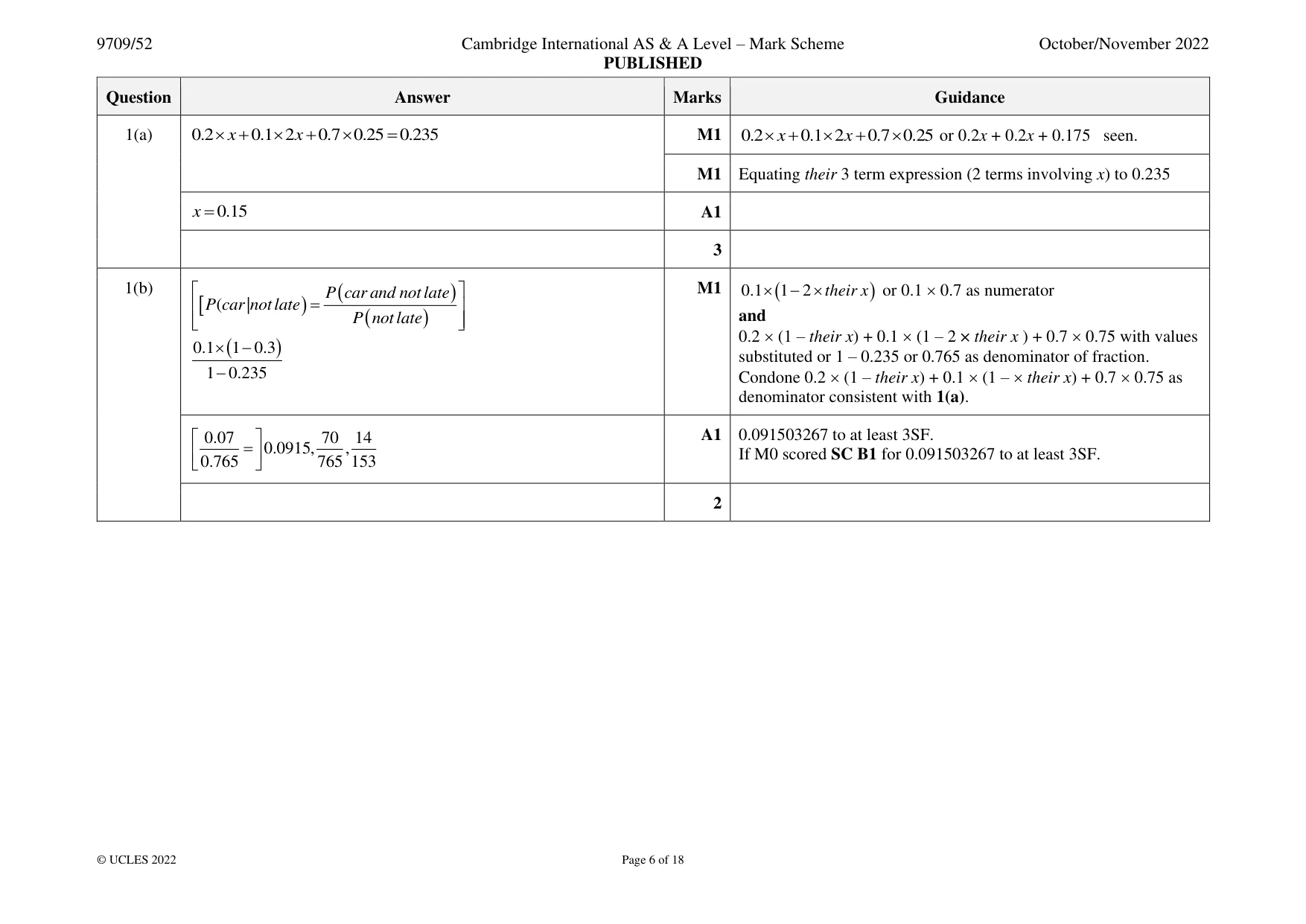
Mark scheme: Question Answer Marks Guidance 1(a) 0.2 +x 0.1 2 x + 0.7 0.25 = 0.235 M1 0.2 +x 0.1 2 x + 0.7 0.25 or 0.2x + 0.2x + 0.175 seen. M1 Equating their 3 term expression (2 terms involving x) to 0.235 x = 0.15 A1 3 1(b) P ( car and notlate ) M1 0.1 (1 − 2 their x ) or 0.1 0.7 as numerator P (car |notlate ) = P ( notlate ) and 0.2 (1 – their x) + 0.1 (1 – 2 × their x ) + 0.7 0.75 with values 0.1 (1 − 0.3 ) substituted or 1 – 0.235 or 0.765 as denominator of fraction. 1 − 0.235 Condone 0.2 (1 – their x) + 0.1 (1 – their x) + 0.7 0.75 as denominator consistent with 1(a). 0.07 70 14 A1 0.091503267 to at least 3SF. = 0.0915, , If M0 scored SC B1 for 0.091503267 to at least 3SF. 0.765 765 153 2
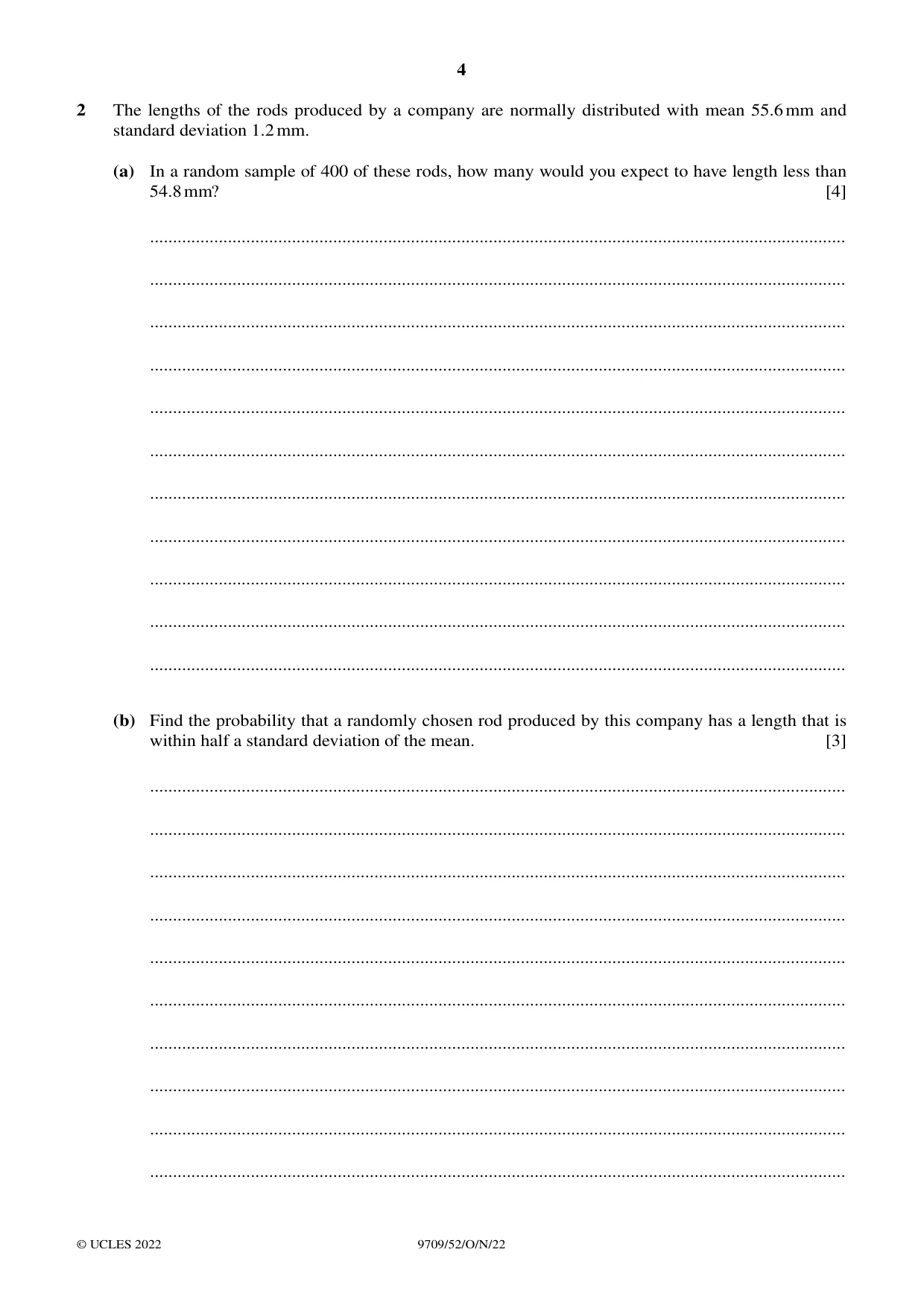
Q2 · The lengths of the rods produced by a company are normally distributed with mean 55.6mm…
2 The lengths of the rods produced by a company are normally distributed with mean 55.6mm and standard deviation 1.2mm. (a) In a random sample of 400 of these rods, how many would you expect to have length less than 54.8mm? [4] ........................................................................................................................................................ ........................................................................................................................................................ ........................................................................................................................................................ ........................................................................................................................................................ ........................................................................................................................................................ ........................................................................................................................................................ ........................................................................................................................................................ ........................................................................................................................................................ ........................................................................................................................................................ ........................................................................................................................................................ ........................................................................................................................................................ (b) Find the probability that a randomly chosen rod produced by this company has a length that is within half a standard deviation of the mean. [3] ........................................................................................................................................................ ........................................................................................................................................................ ........................................................................................................................................................ ........................................................................................................................................................ ........................................................................................................................................................ ........................................................................................................................................................ ........................................................................................................................................................ ........................................................................................................................................................ ........................................................................................................................................................ ........................................................................................................................................................
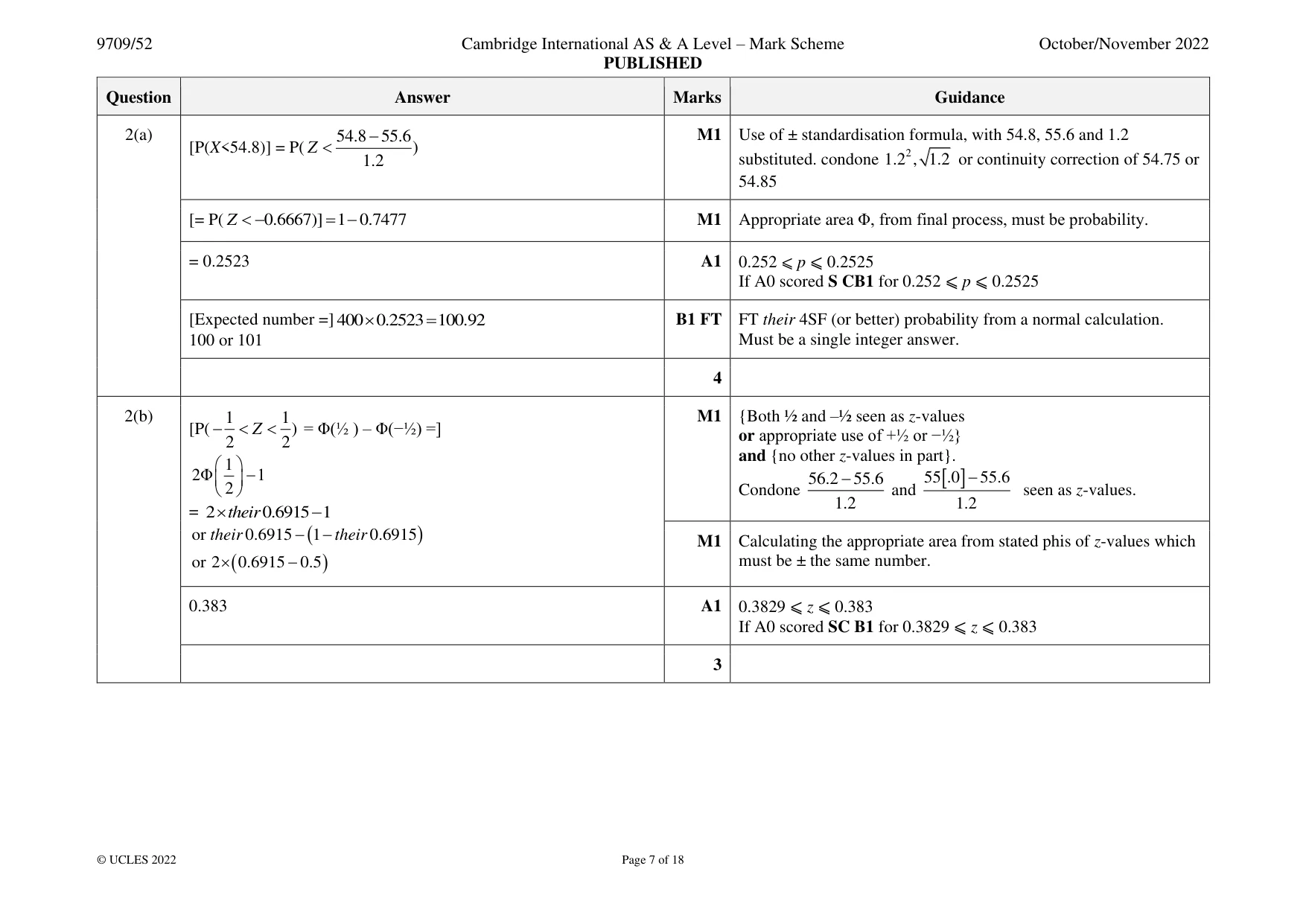
Mark scheme: 2(a) 54.8 − M1 Use of ± standardisation formula, with 54.8, 55.6 and 1.2 [P(X<54.8)] = P( Z 55.6) 2 1.2 substituted. condone 1.2 , 1.2 or continuity correction of 54.75 or 54.85 [= P( Z −0.6667)] = 1 − 0.7477 M1 Appropriate area Φ, from final process, must be probability. = 0.2523 A1 0.252 ⩽ p ⩽ 0.2525 If A0 scored S CB1 for 0.252 ⩽ p ⩽ 0.2525 [Expected number =] 400 0.2523 = 100.92 B1 FT FT their 4SF (or better) probability from a normal calculation. 100 or 101 Must be a single integer answer. 4 2(b) 1 M1 {Both ½ and –½ seen as z-values [P( − Z 1) = Φ(½ ) – Φ(−½) =] or appropriate use of +½ or −½} 2 2 and {no other z-values in part}. 1 2Φ − 1 56.2 − 55.6 55 .0 − 55.6 2 Condone and seen as z-values. 1.2 1.2 = 2 their 0.6915 − 1 or their 0.6915 − (1 − their 0.6915 ) M1 Calculating the appropriate area from stated phis of z-values which or 2 ( 0.6915 − 0.5 ) must be ± the same number. 0.383 A1 0.3829 ⩽ z ⩽ 0.383 If A0 scored SC B1 for 0.3829 ⩽ z ⩽ 0.383 3
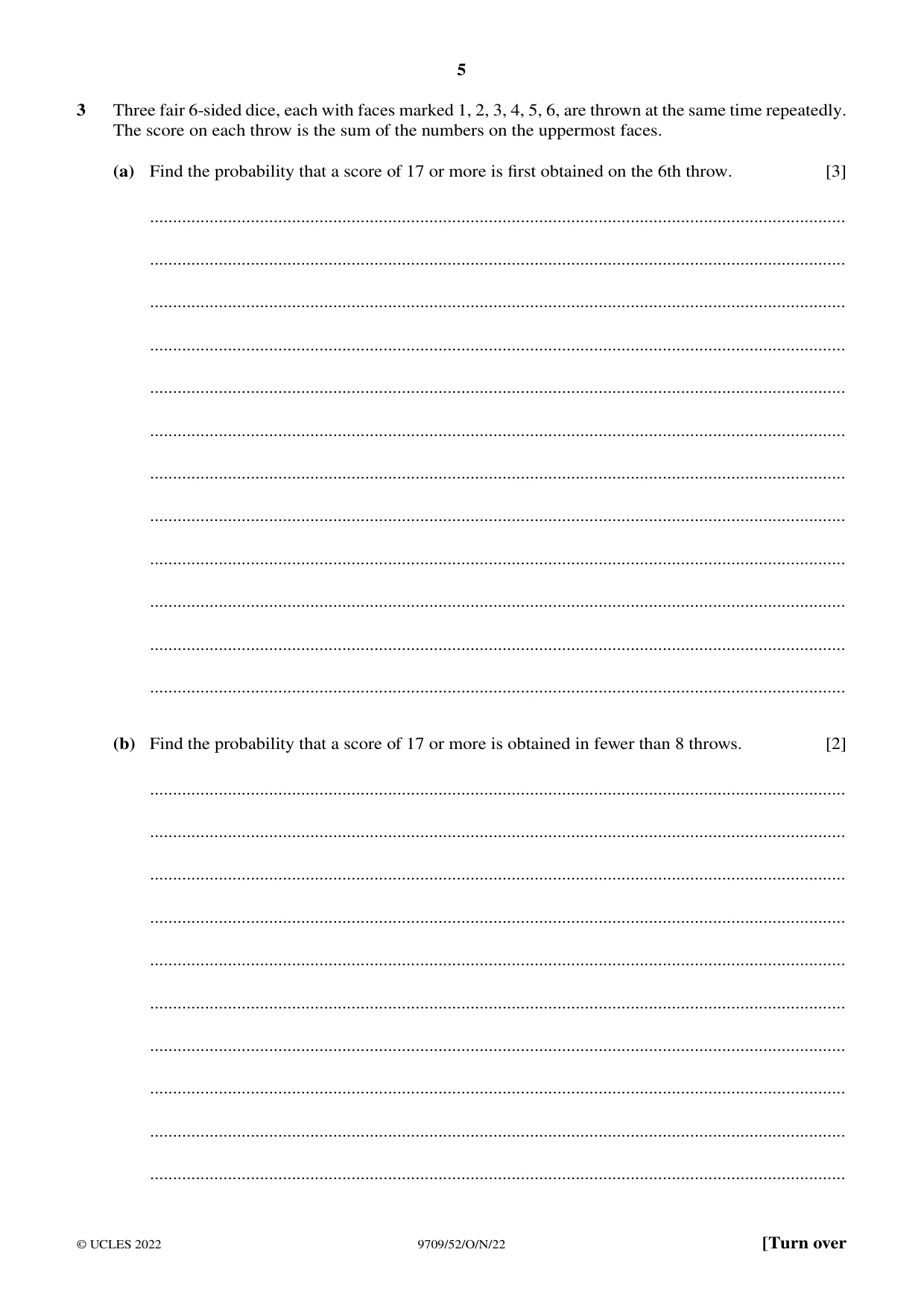
Q3 · Three fair 6-sided dice, each with faces marked 1, 2, 3, 4, 5, 6, are thrown at the same…
3 Three fair 6-sided dice, each with faces marked 1, 2, 3, 4, 5, 6, are thrown at the same time repeatedly. The score on each throw is the sum of the numbers on the uppermost faces. (a) Find the probability that a score of 17 or more is first obtained on the 6th throw. [3] ........................................................................................................................................................ ........................................................................................................................................................ ........................................................................................................................................................ ........................................................................................................................................................ ........................................................................................................................................................ ........................................................................................................................................................ ........................................................................................................................................................ ........................................................................................................................................................ ........................................................................................................................................................ ........................................................................................................................................................ ........................................................................................................................................................ ........................................................................................................................................................ (b) Find the probability that a score of 17 or more is obtained in fewer than 8 throws. [2] ........................................................................................................................................................ ........................................................................................................................................................ ........................................................................................................................................................ ........................................................................................................................................................ ........................................................................................................................................................ ........................................................................................................................................................ ........................................................................................................................................................ ........................................................................................................................................................ ........................................................................................................................................................ ........................................................................................................................................................
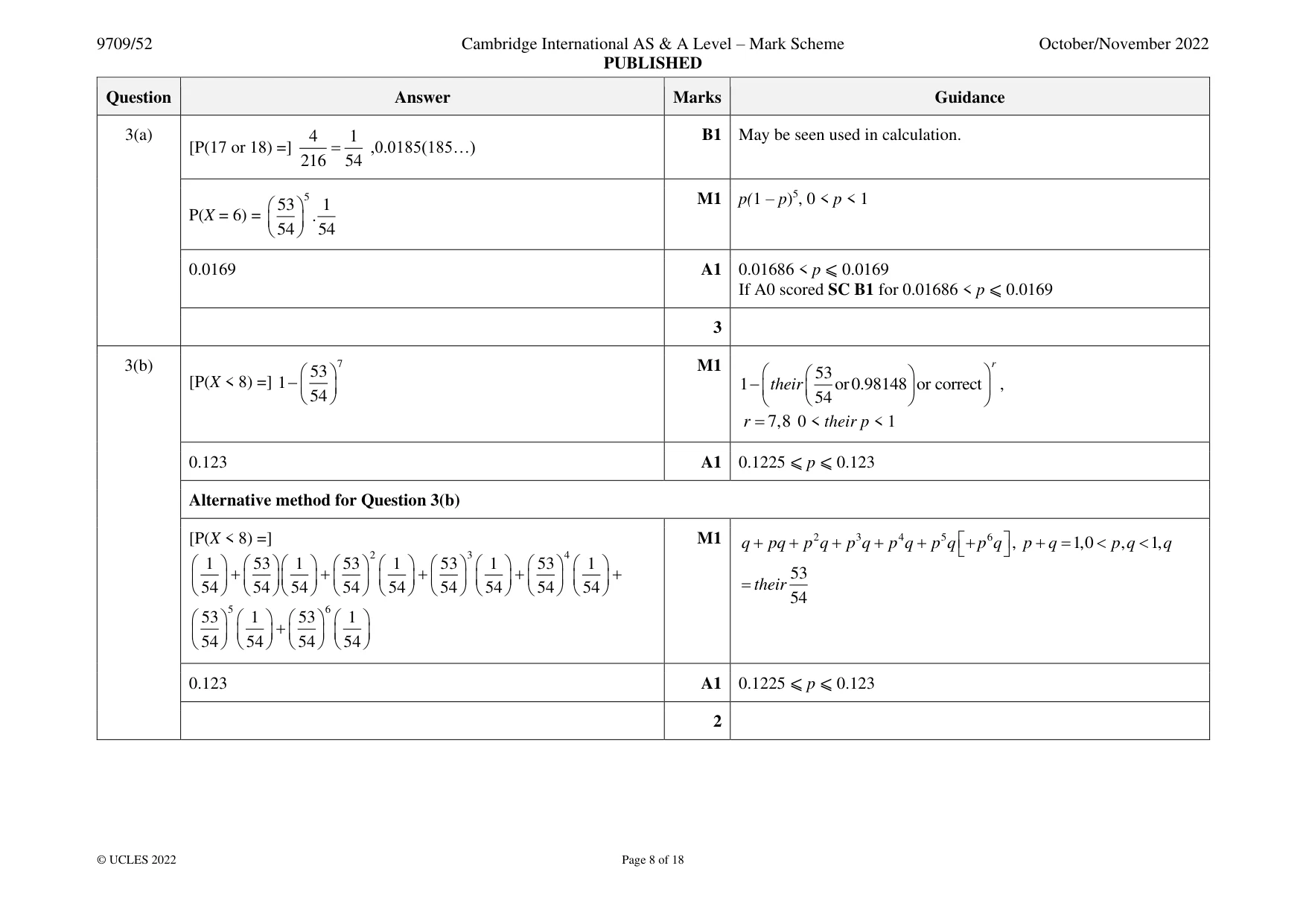
Mark scheme: 3(a) 4 1 B1 May be seen used in calculation. [P(17 or 18) =] = ,0.0185(185…) 216 54 5 M1 p(1 – p)5, 0 < p < 1 53 1 P(X = 6) = . 54 54 0.0169 A1 0.01686 < p ⩽ 0.0169 If A0 scored SC B1 for 0.01686 < p ⩽ 0.0169 3 3(b) 7 M1 r 53 53 [P(X < 8) =] 1 − 1 − their or 0.98148 or correct , 54 54 r = 7,8 0 < their p < 1 0.123 A1 0.1225 ⩽ p ⩽ 0.123 Alternative method for Question 3(b) [P(X < 8) =] M1 q + pq + p 2 q + p 3 q + p 4 q + p 5 q + p 6 q , p + q = 1, 0 p , q 1, q 2 3 4 1 53 1 53 1 53 1 53 1 + + + + + 53 = their 54 54 54 54 54 54 54 54 54 54 53 5 1 53 6 1 + 54 54 54 54 0.123 A1 0.1225 ⩽ p ⩽ 0.123 2
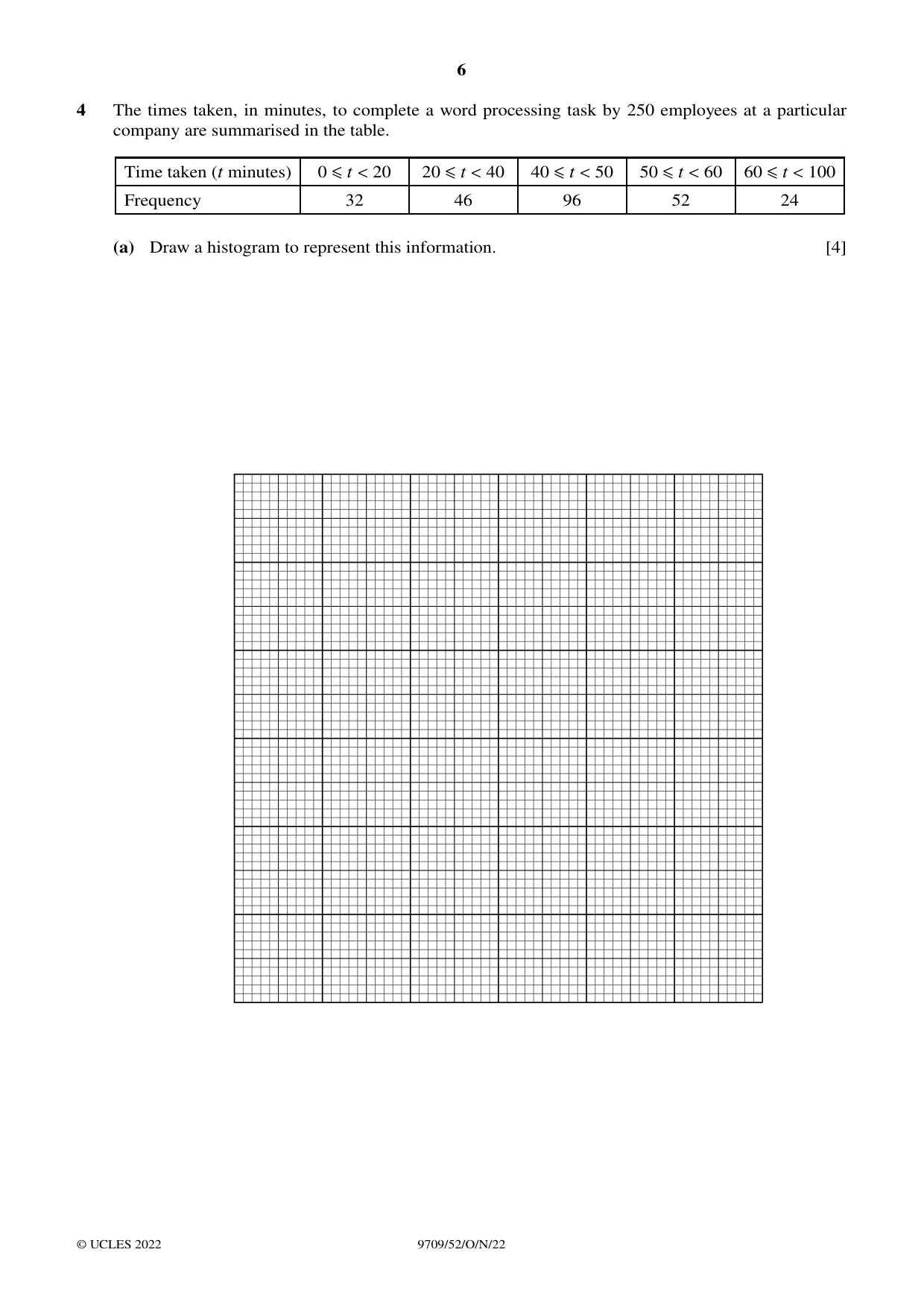
Q4 · The times taken, in minutes, to complete a word processing task by 250 employees at a…
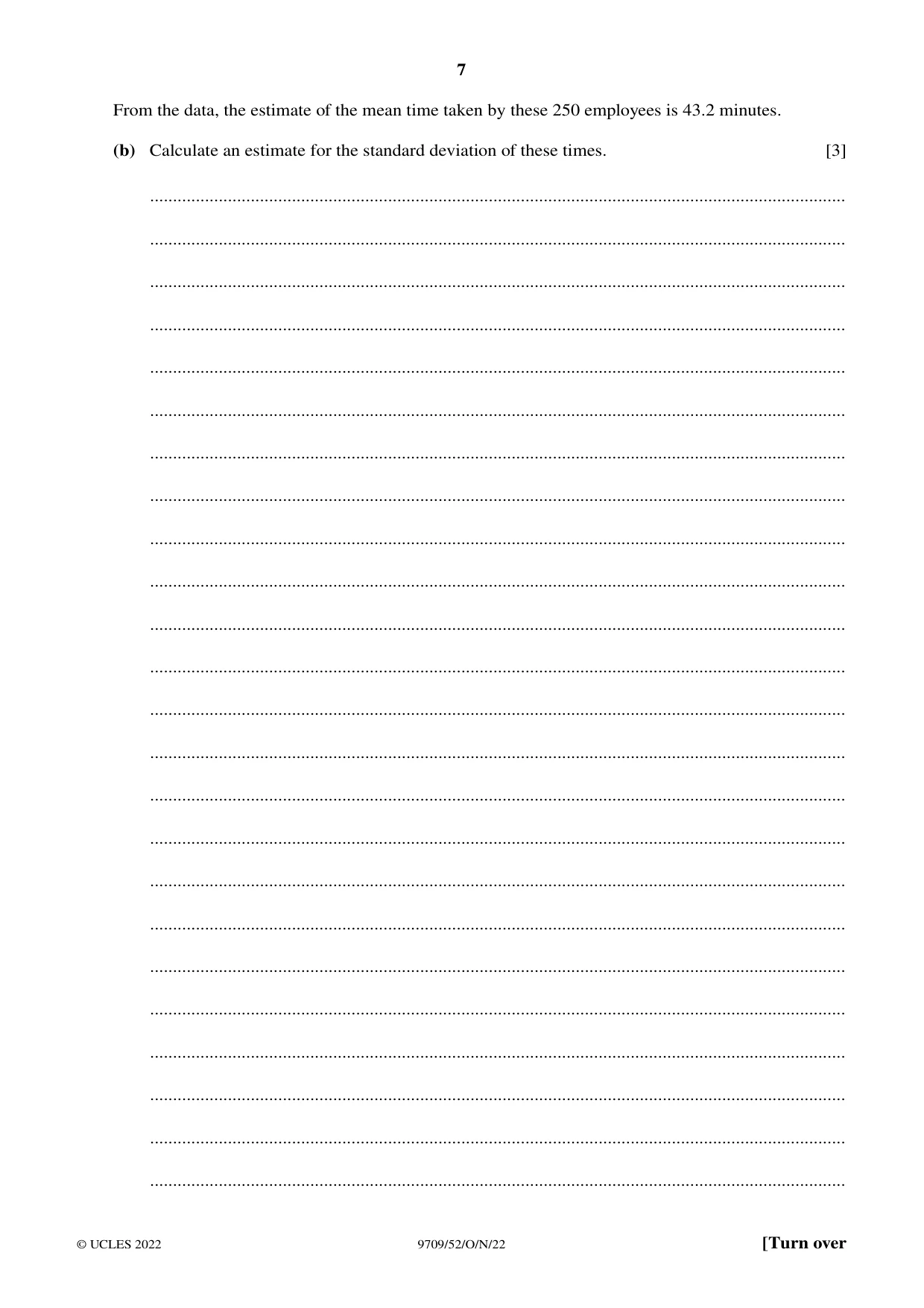
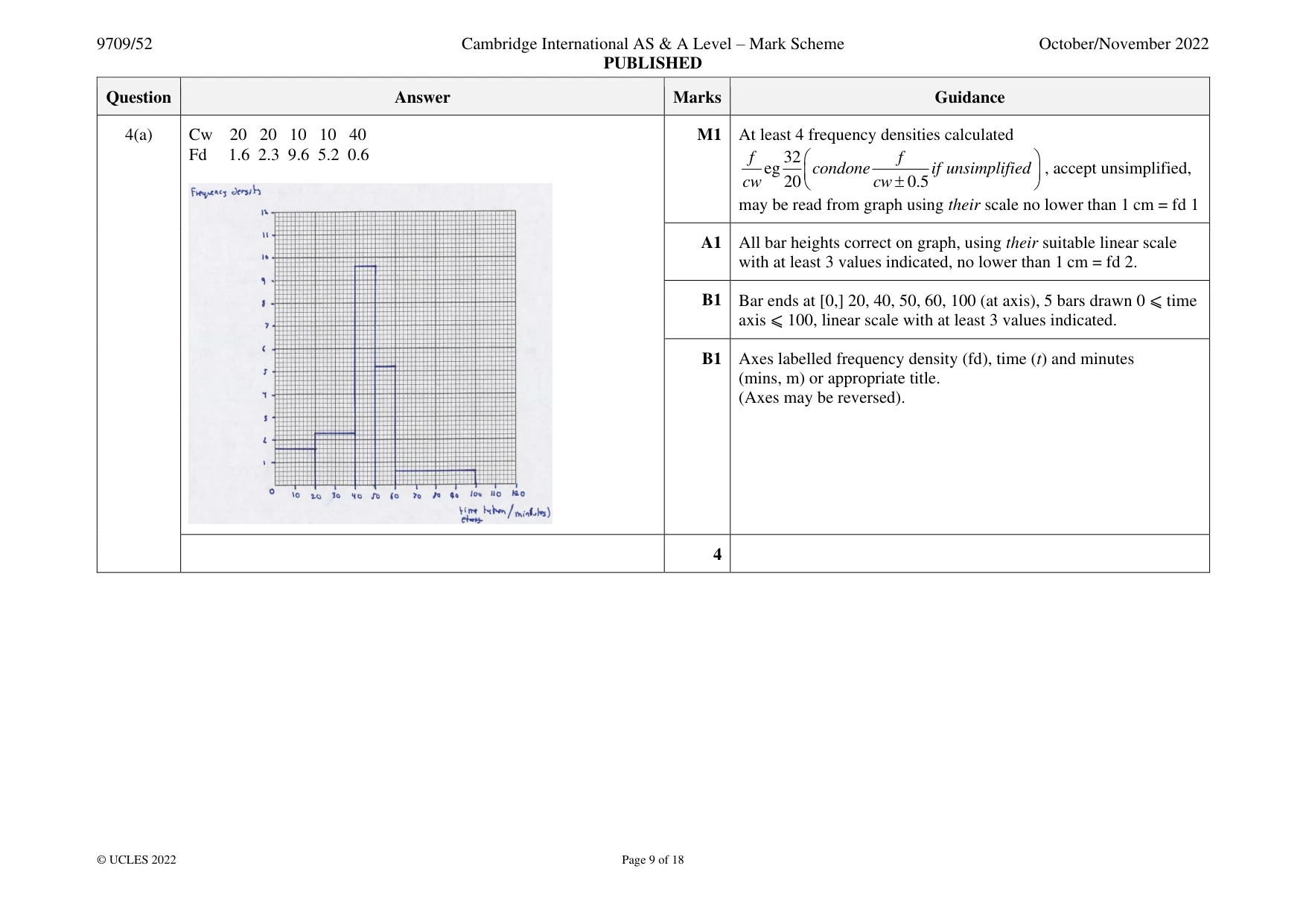
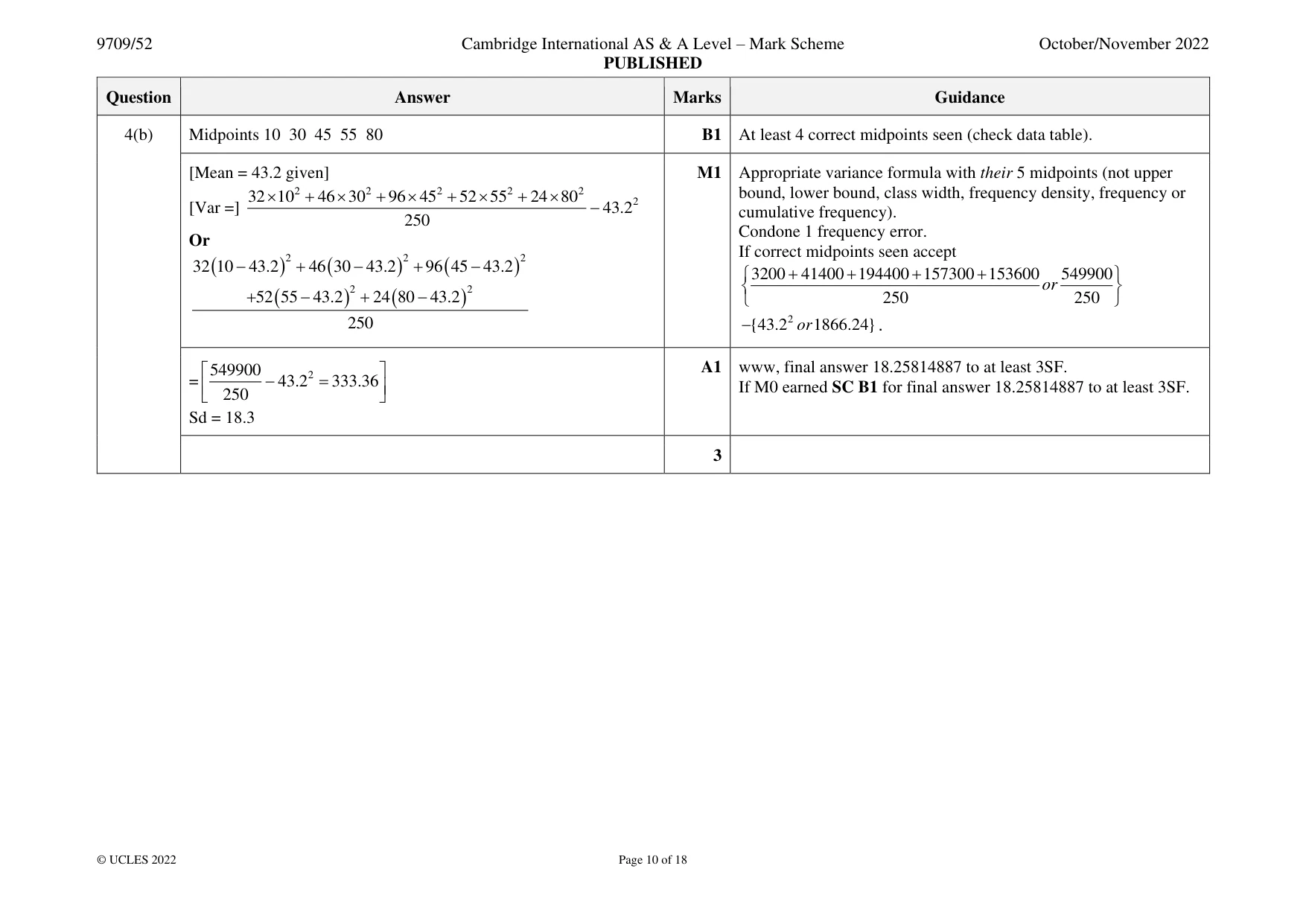
4 The times taken, in minutes, to complete a word processing task by 250 employees at a particular company are summarised in the table. Time taken (t minutes) 0 ≤t < 20 20 ≤t < 40 40 ≤t < 50 50 ≤t < 60 60 ≤t < 100 Frequency 32 46 96 52 24 (a) Draw a histogram to represent this information. [4] From the data, the estimate of the mean time taken by these 250 employees is 43.2 minutes. (b) Calculate an estimate for the standard deviation of these times. [3] ........................................................................................................................................................ ........................................................................................................................................................ ........................................................................................................................................................ ........................................................................................................................................................ ........................................................................................................................................................ ........................................................................................................................................................ ........................................................................................................................................................ ........................................................................................................................................................ ........................................................................................................................................................ ........................................................................................................................................................ ........................................................................................................................................................ ........................................................................................................................................................ ........................................................................................................................................................ ........................................................................................................................................................ ........................................................................................................................................................ ........................................................................................................................................................ ........................................................................................................................................................ ........................................................................................................................................................ ........................................................................................................................................................ ........................................................................................................................................................ ........................................................................................................................................................ ........................................................................................................................................................ ........................................................................................................................................................ ........................................................................................................................................................
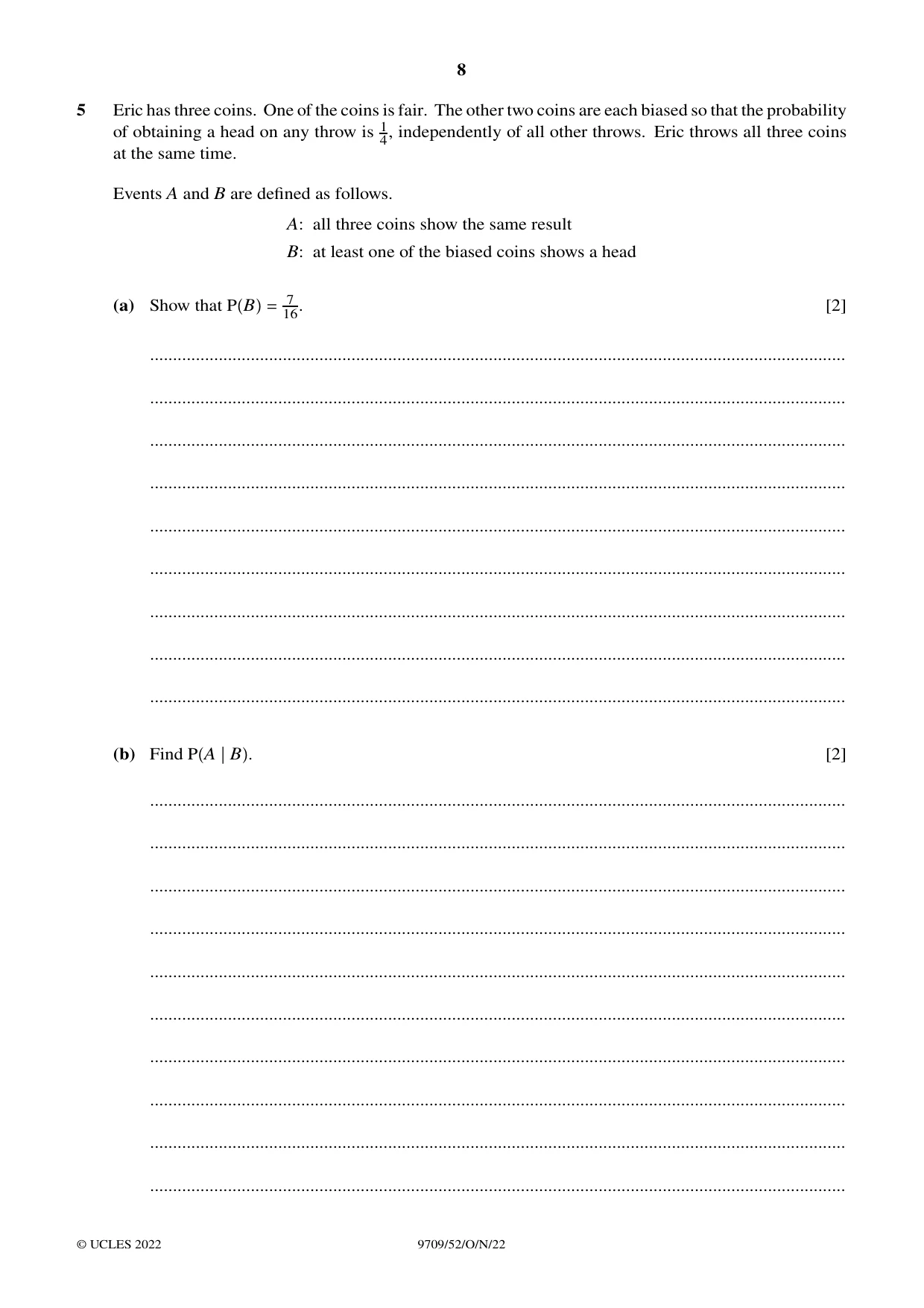
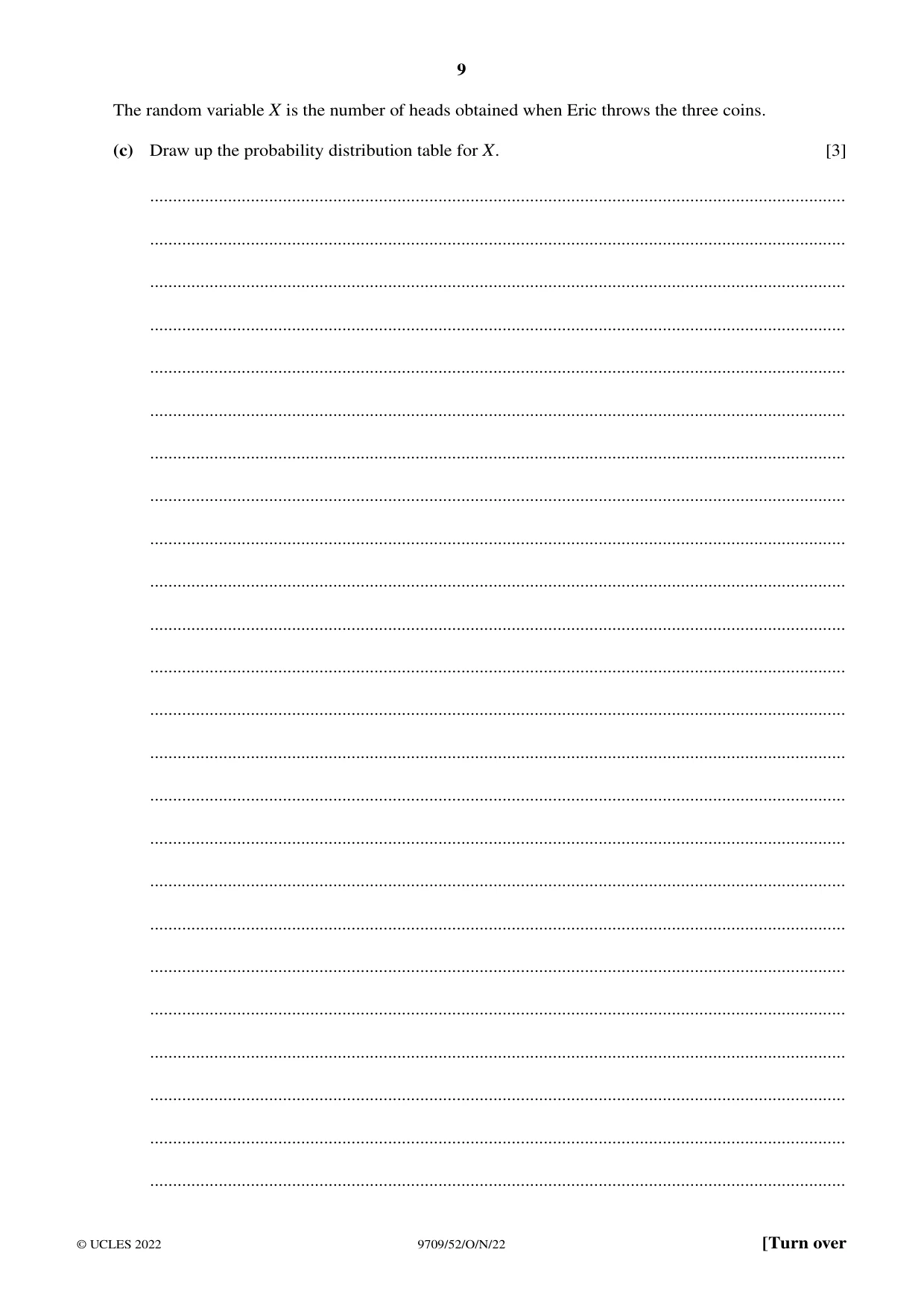
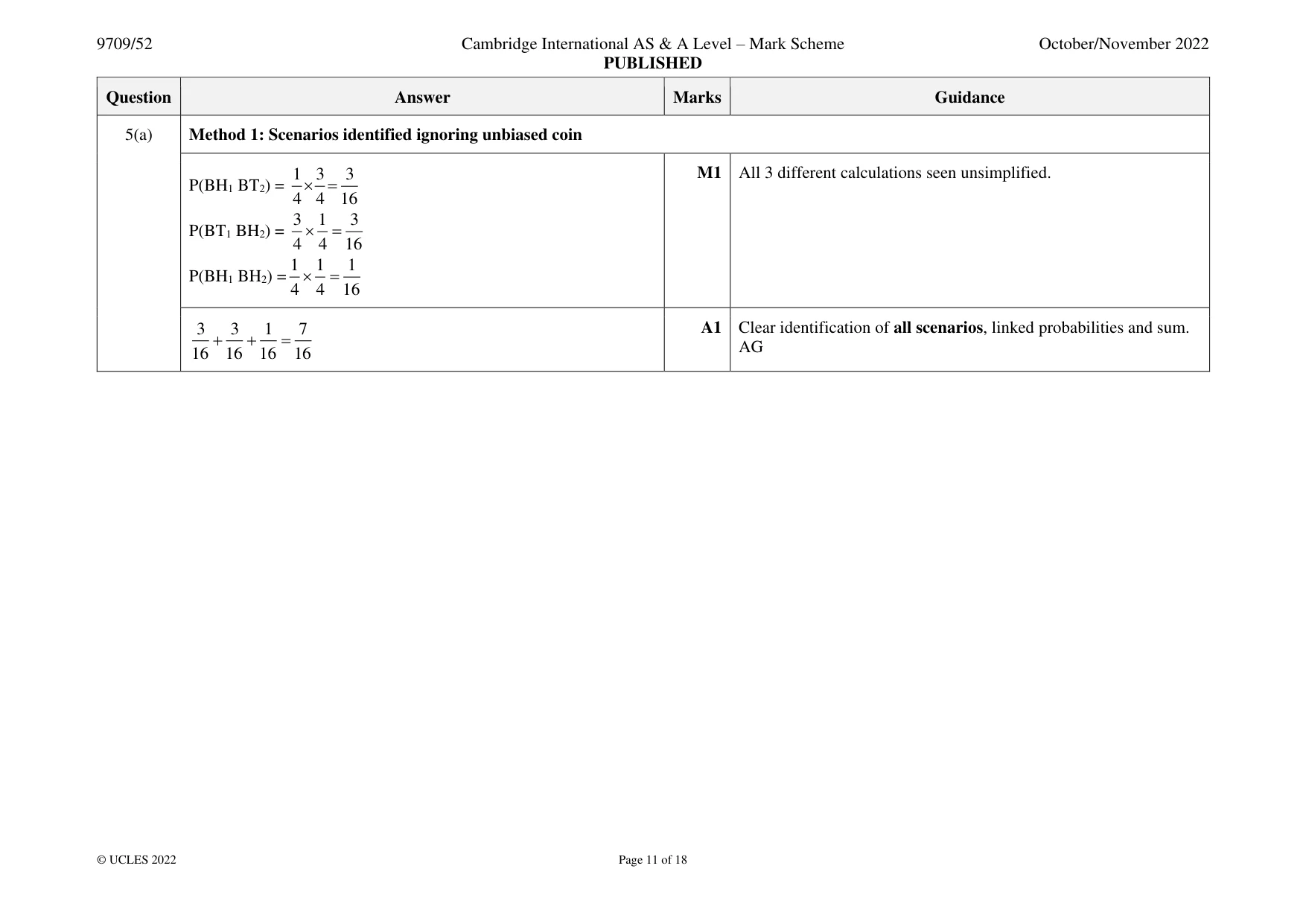
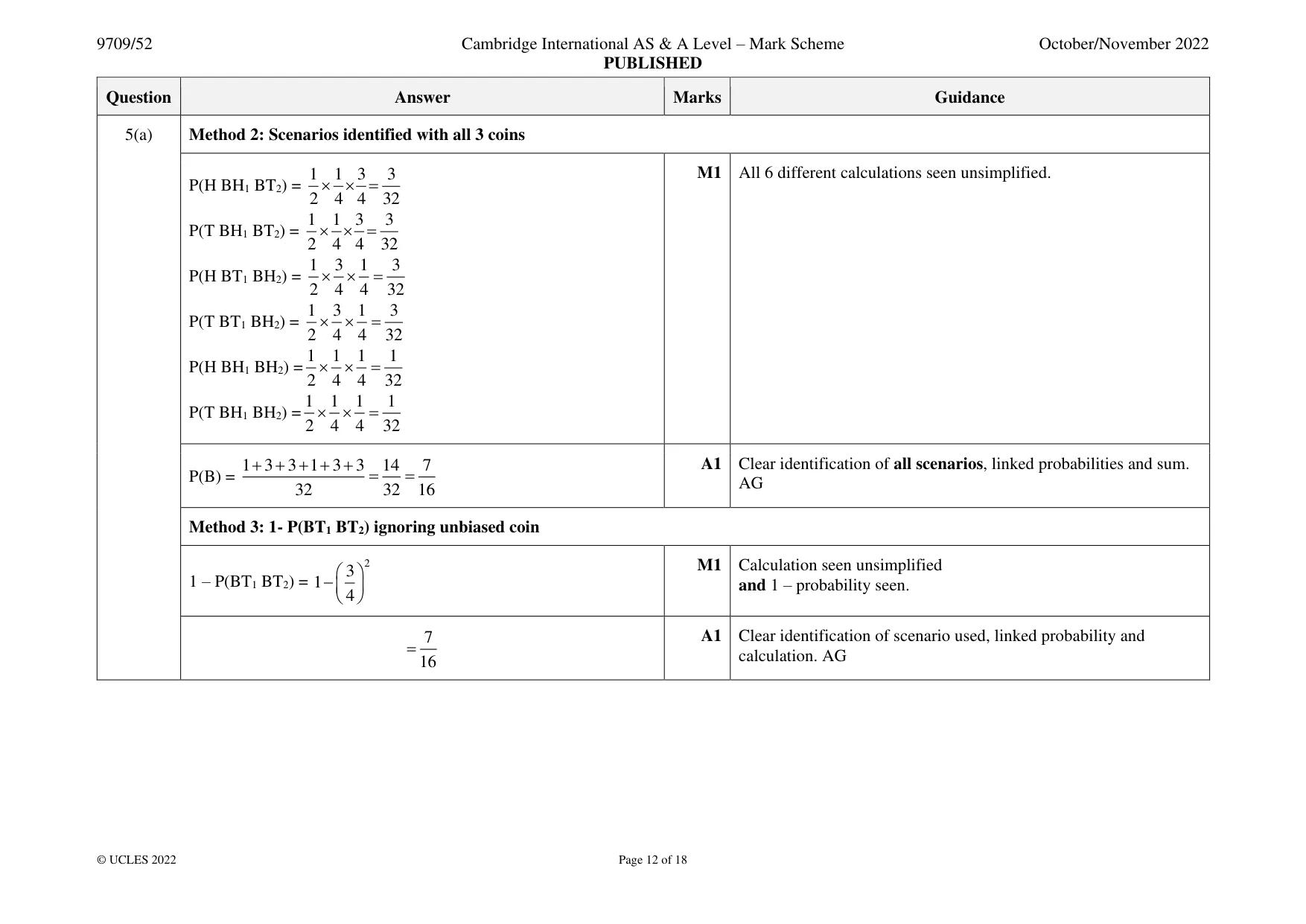
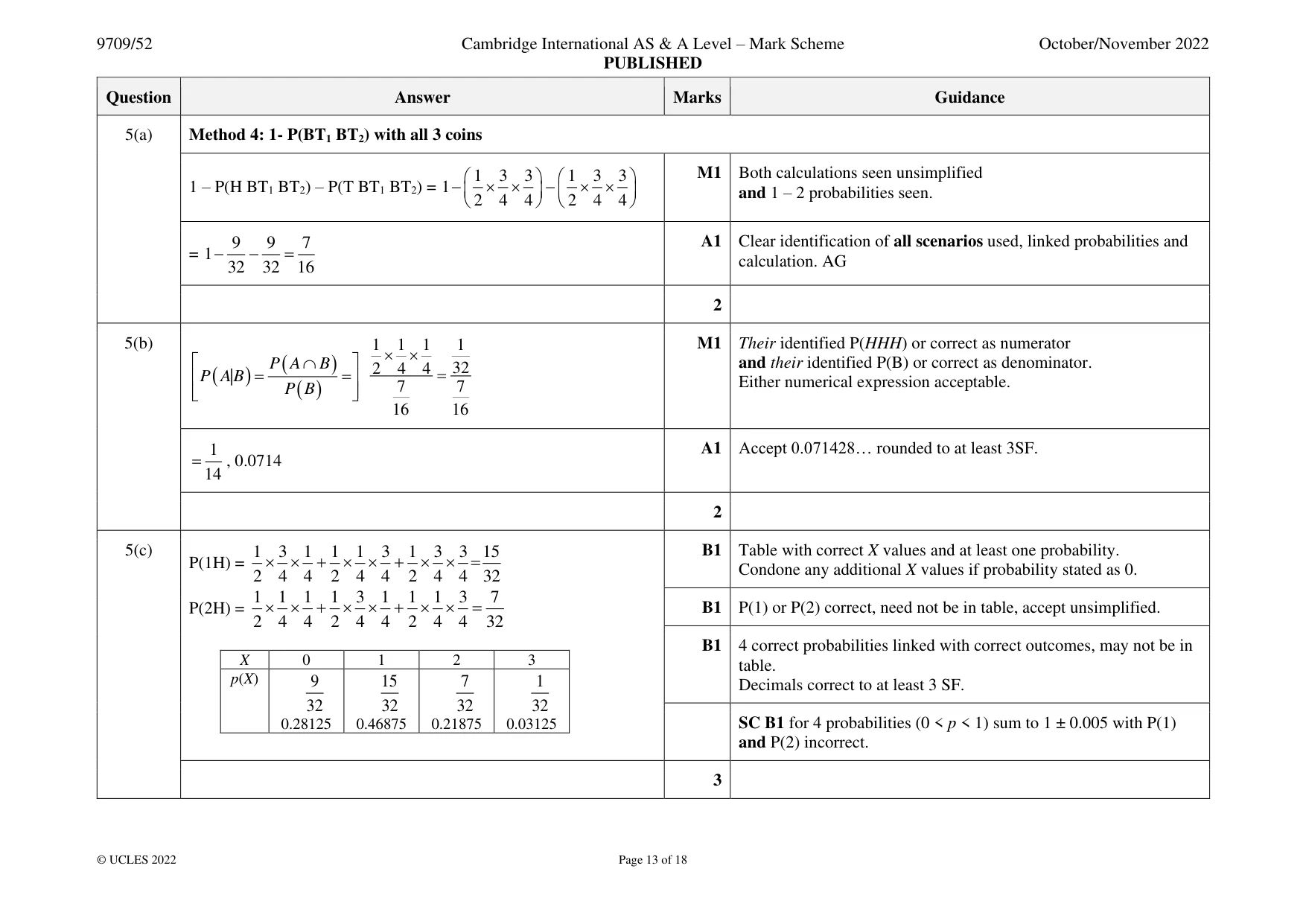
Mark scheme: 4(a) Cw 20 20 10 10 40 M1 At least 4 frequency densities calculated Fd 1.6 2.3 9.6 5.2 0.6 f 32 f eg condone if unsimplified , accept unsimplified, cw 20 cw 0.5 may be read from graph using their scale no lower than 1 cm = fd 1 A1 All bar heights correct on graph, using their suitable linear scale with at least 3 values indicated, no lower than 1 cm = fd 2. B1 Bar ends at [0,] 20, 40, 50, 60, 100 (at axis), 5 bars drawn 0 ⩽ time axis ⩽ 100, linear scale with at least 3 values indicated. B1 Axes labelled frequency density (fd), time (t) and minutes (mins, m) or appropriate title. (Axes may be reversed). 4 4(b) Midpoints 10 30 45 55 80 B1 At least 4 correct midpoints seen (check data table). [Mean = 43.2 given] M1 Appropriate variance formula with their 5 midpoints (not upper 32 10 2 + 46 30 2 + 96 45 2 + 52 55 2 + 24 80 2 2 bound, lower bound, class width, frequency density, frequency or [Var =] − 43.2 cumulative frequency). 250 Condone 1 frequency error. Or 2 2 2 If correct midpoints seen accept 32 (10 − 43.2 ) + 46 ( 30 − 43.2 ) + 96 ( 45 − 43.2 ) 3200 + 41400 + 194400 + 157300 + 153600 549900 2 2 or +52 ( 55 − 43.2 ) + 24 ( 80 − 43.2 ) 250 250 250 −{43.2 2 or 1866.24} . 549900 2 A1 www, final answer 18.25814887 to at least 3SF. = − 43.2 = 333.36 If M0 earned SC B1 for final answer 18.25814887 to at least 3SF. 250 Sd = 18.3 3 5(a) Method 1: Scenarios identified ignoring unbiased coin 1 3 3 M1 All 3 different calculations seen unsimplified. P(BH1 BT2) = = 4 4 16 3 1 3 P(BT1 BH2) = = 4 4 16 1 1 1 P(BH1 BH2) = = 4 4 16 3 3 1 7 A1 Clear identification of all scenarios, linked probabilities and sum. + + = AG 16 16 16 16 5(a) Method 2: Scenarios identified with all 3 coins 1 1 3 3 M1 All 6 different calculations seen unsimplified. P(H BH1 BT2) = = 2 4 4 32 1 1 3 3 P(T BH1 BT2) = = 2 4 4 32 1 3 1 3 P(H BT1 BH2) = = 2 4 4 32 1 3 1 3 P(T BT1 BH2) = = 2 4 4 32 1 1 1 1 P(H BH1 BH2) = = 2 4 4 32 1 1 1 1 P(T BH1 BH2) = = 2 4 4 32 1 + 3 + 3 + 1 + 3 + 3 14 7 A1 Clear identification of all scenarios, linked probabilities and sum. P(B) = = = AG 32 32 16 Method 3: 1- P(BT1 BT2) ignoring unbiased coin 2 M1 Calculation seen unsimplified 3 1 – P(BT1 BT2) = 1 − and 1 – probability seen. 4 7 A1 Clear identification of scenario used, linked probability and = calculation. AG 16
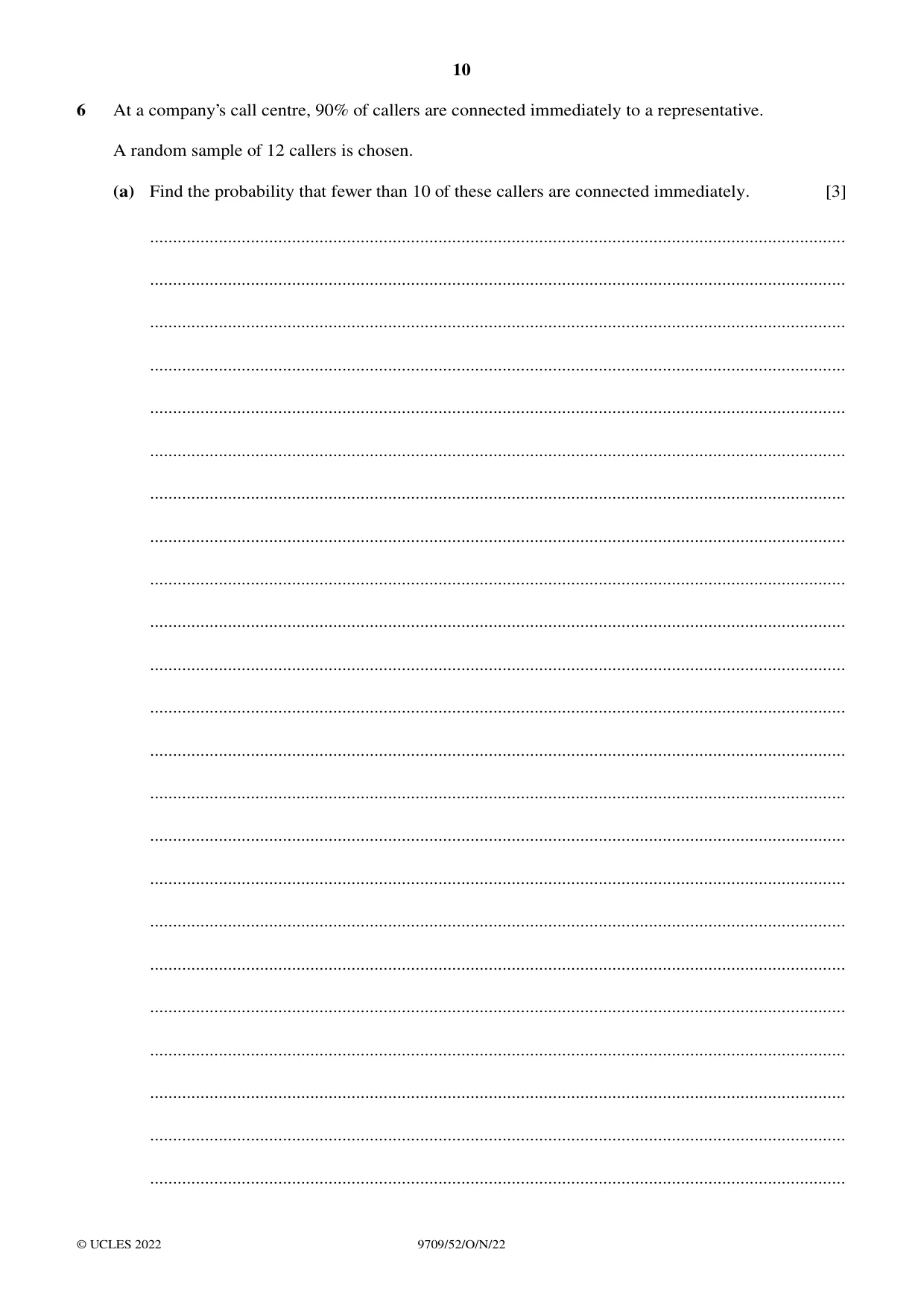
Q6 · At a company’s call centre, 90% of callers are connected immediately to a representative
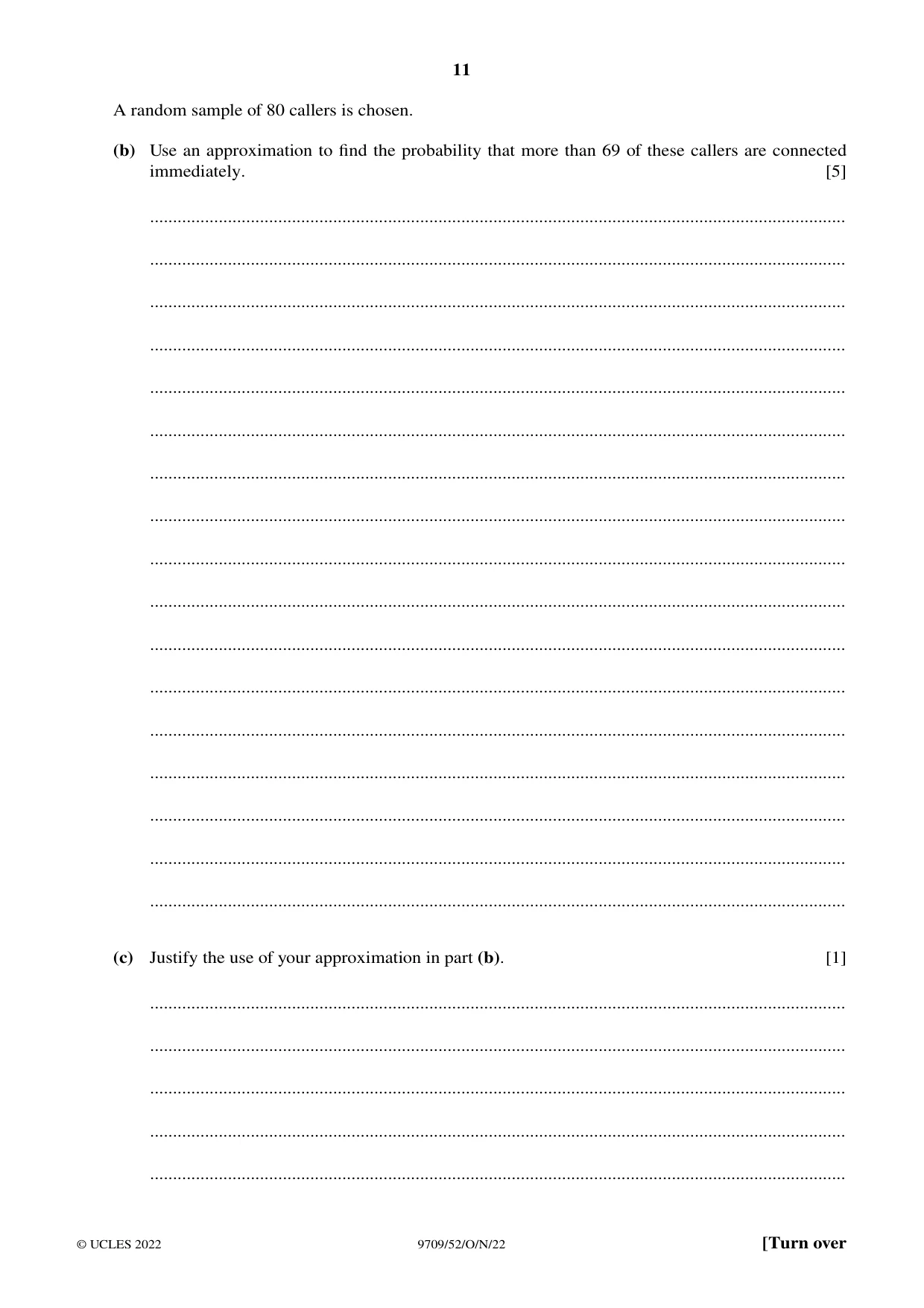
6 At a company’s call centre, 90% of callers are connected immediately to a representative. A random sample of 12 callers is chosen. (a) Find the probability that fewer than 10 of these callers are connected immediately. [3] ........................................................................................................................................................ ........................................................................................................................................................ ........................................................................................................................................................ ........................................................................................................................................................ ........................................................................................................................................................ ........................................................................................................................................................ ........................................................................................................................................................ ........................................................................................................................................................ ........................................................................................................................................................ ........................................................................................................................................................ ........................................................................................................................................................ ........................................................................................................................................................ ........................................................................................................................................................ ........................................................................................................................................................ ........................................................................................................................................................ ........................................................................................................................................................ ........................................................................................................................................................ ........................................................................................................................................................ ........................................................................................................................................................ ........................................................................................................................................................ ........................................................................................................................................................ ........................................................................................................................................................ ........................................................................................................................................................ A random sample of 80 callers is chosen. (b) Use an approximation to find the probability that more than 69 of these callers are connected immediately. [5] ........................................................................................................................................................ ........................................................................................................................................................ ........................................................................................................................................................ ........................................................................................................................................................ ........................................................................................................................................................ ........................................................................................................................................................ ........................................................................................................................................................ ........................................................................................................................................................ ........................................................................................................................................................ ........................................................................................................................................................ ........................................................................................................................................................ ........................................................................................................................................................ ........................................................................................................................................................ ........................................................................................................................................................ ........................................................................................................................................................ ........................................................................................................................................................ ........................................................................................................................................................ (c) Justify the use of your approximation in part (b). [1] ........................................................................................................................................................ ........................................................................................................................................................ ........................................................................................................................................................ ........................................................................................................................................................ ........................................................................................................................................................
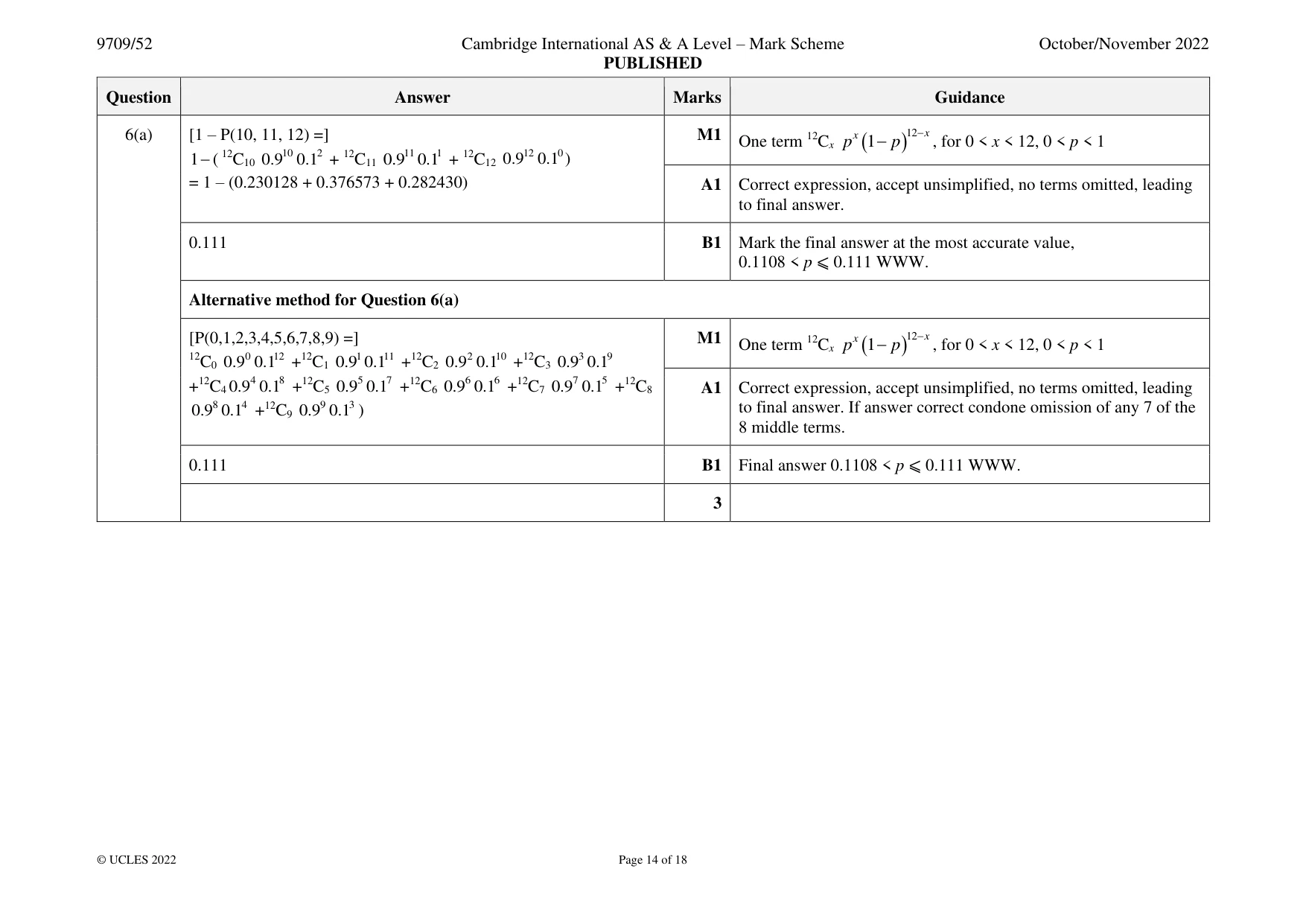
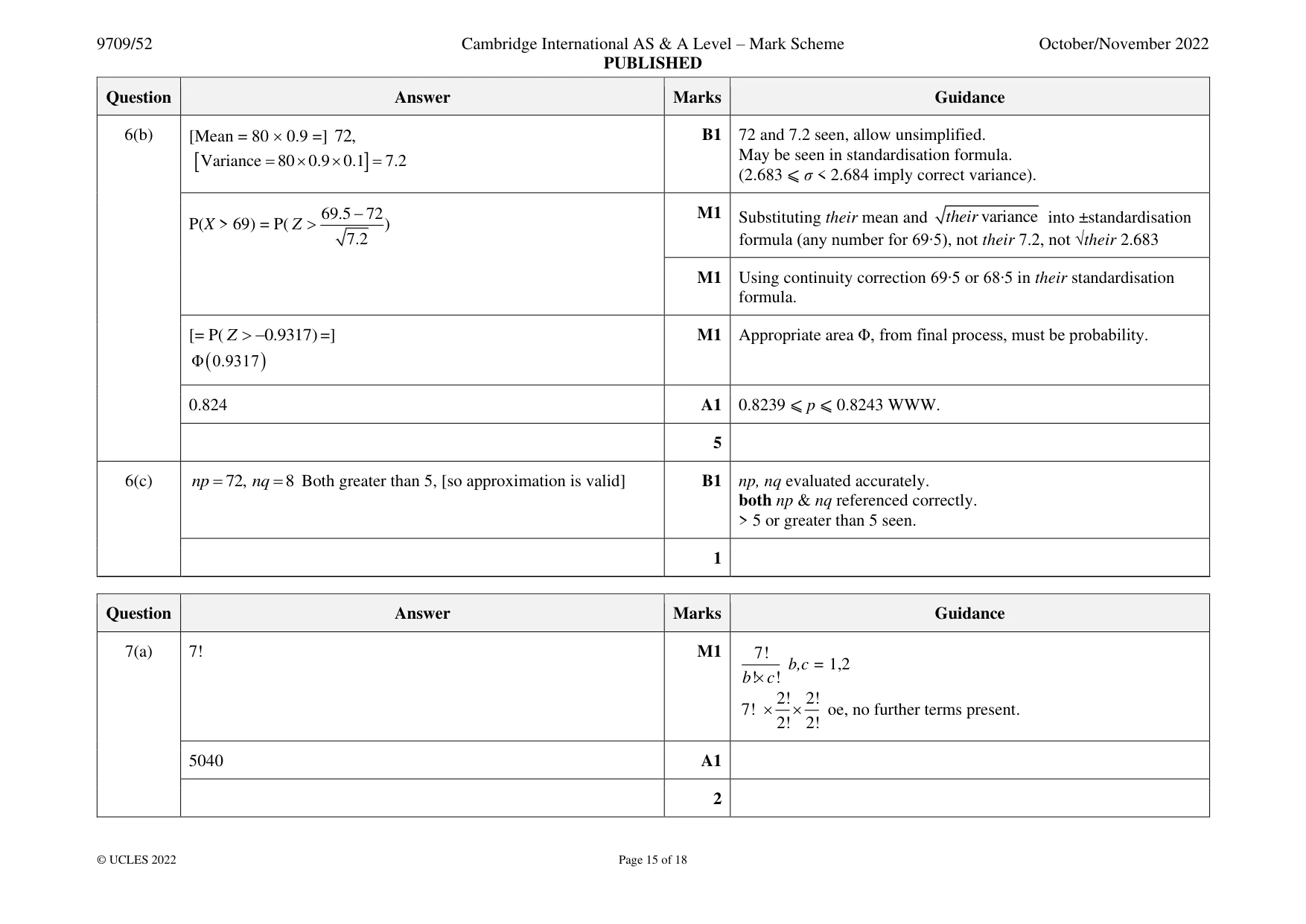
Mark scheme: 6(a) [1 – P(10, 11, 12) =] M1 x 12 − x One term 12Cx p (1 − p ) , for 0 < x < 12, 0 < p < 1 1 − ( 12C10 0.910 0.12 + 12C11 0.911 0.11 + 12C12 0.912 0.10 ) = 1 – (0.230128 + 0.376573 + 0.282430) A1 Correct expression, accept unsimplified, no terms omitted, leading to final answer. 0.111 B1 Mark the final answer at the most accurate value, 0.1108 < p ⩽ 0.111 WWW. Alternative method for Question 6(a) [P(0,1,2,3,4,5,6,7,8,9) =] M1 x 12 − x One term 12Cx p (1 − p ) , for 0 < x < 12, 0 < p < 1 12C0 0.9 0 0.112 +12C1 0.91 0.111 +12C2 0.9 2 0.110 +12C3 0.93 0.19 +12C4 0.9 4 0.18 +12C5 0.95 0.17 +12C6 0.96 0.16 +12C7 0.97 0.15 +12C8 A1 Correct expression, accept unsimplified, no terms omitted, leading 0.98 0.14 +12C9 0.99 0.13 ) to final answer. If answer correct condone omission of any 7 of the 8 middle terms. 0.111 B1 Final answer 0.1108 < p ⩽ 0.111 WWW. 3 6(b) [Mean = 80 0.9 =] 72, B1 72 and 7.2 seen, allow unsimplified. Variance = 80 0.9 0.1 = 7.2 May be seen in standardisation formula. (2.683 ⩽ σ < 2.684 imply correct variance). 69.5 − M1 Substituting their mean and their variance into ±standardisation P(X > 69) = P( Z 72) 7.2 formula (any number for 69∙5), not their 7.2, not √their 2.683 M1 Using continuity correction 69∙5 or 68∙5 in their standardisation formula. [= P( Z −0.9317) =] M1 Appropriate area Φ, from final process, must be probability. Φ ( 0.9317 ) 0.824 A1 0.8239 ⩽ p ⩽ 0.8243 WWW. 5 6(c) np = 72, nq = 8 Both greater than 5, [so approximation is valid] B1 np, nq evaluated accurately. both np & nq referenced correctly. > 5 or greater than 5 seen. 1
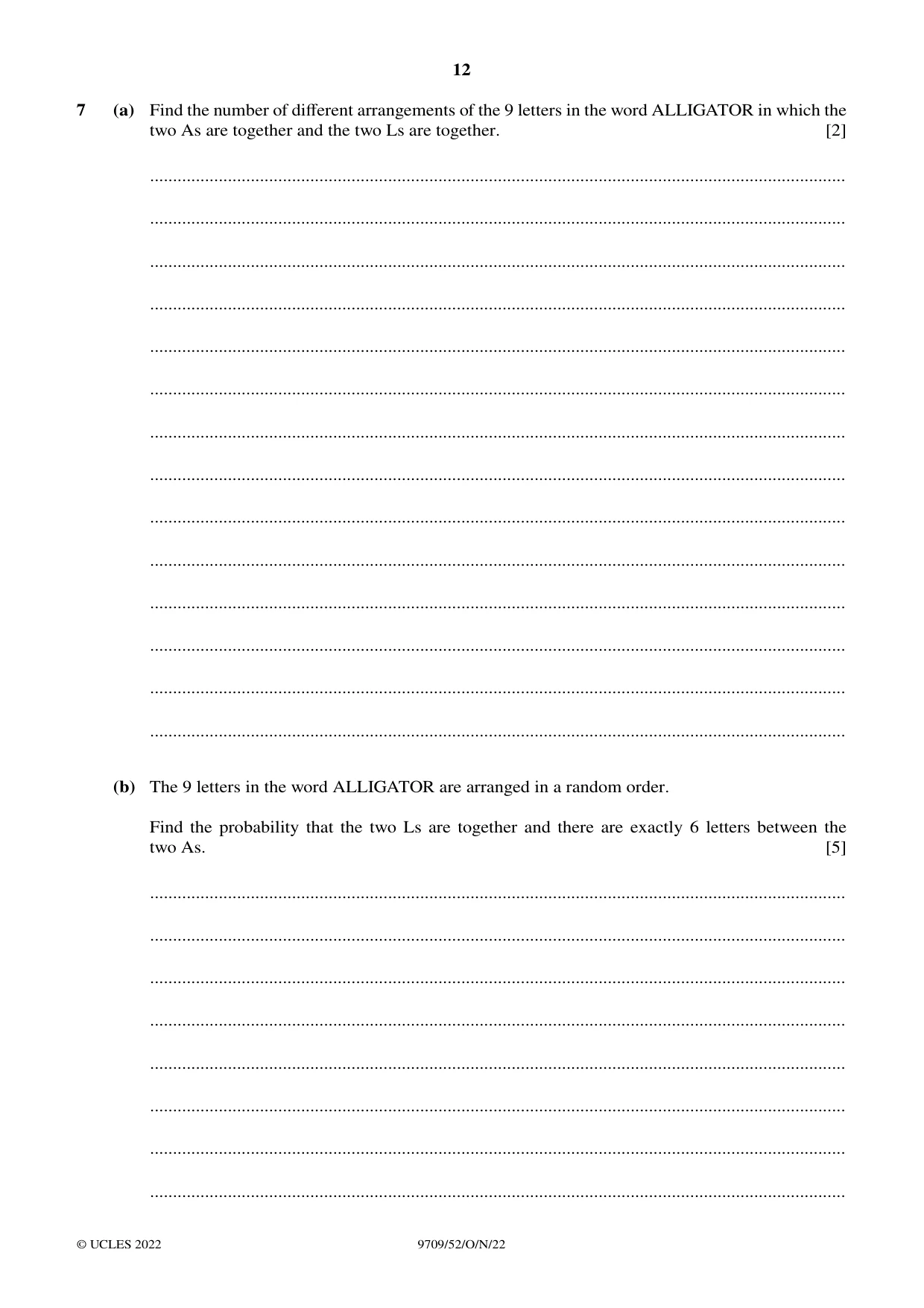
Q7 · Find the number of different arrangements of the 9 letters in the word ALLIGATOR in which…
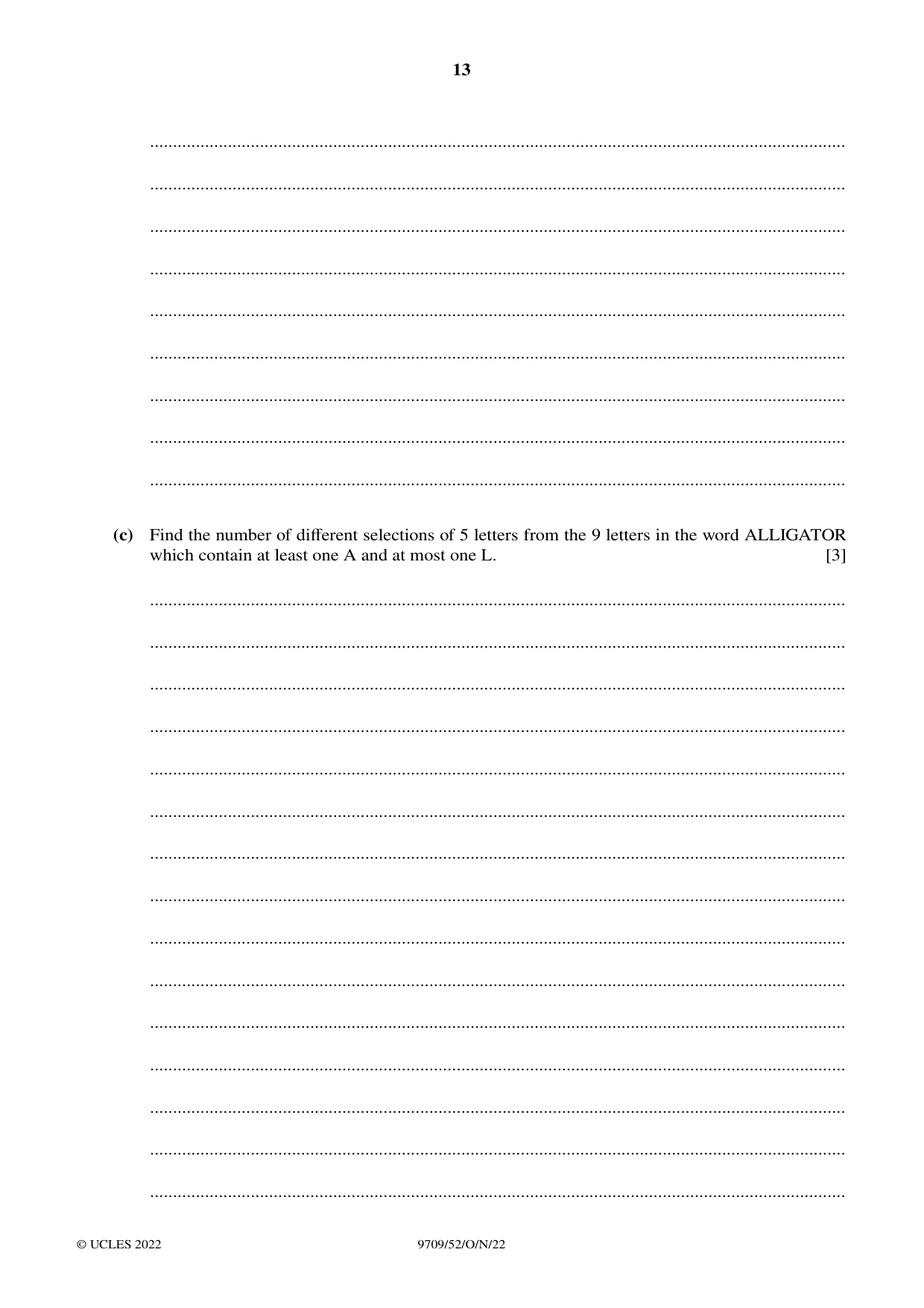
7 (a) Find the number of different arrangements of the 9 letters in the word ALLIGATOR in which the two As are together and the two Ls are together. [2] ........................................................................................................................................................ ........................................................................................................................................................ ........................................................................................................................................................ ........................................................................................................................................................ ........................................................................................................................................................ ........................................................................................................................................................ ........................................................................................................................................................ ........................................................................................................................................................ ........................................................................................................................................................ ........................................................................................................................................................ ........................................................................................................................................................ ........................................................................................................................................................ ........................................................................................................................................................ ........................................................................................................................................................ (b) The 9 letters in the word ALLIGATOR are arranged in a random order. Find the probability that the two Ls are together and there are exactly 6 letters between the two As. [5] ........................................................................................................................................................ ........................................................................................................................................................ ........................................................................................................................................................ ........................................................................................................................................................ ........................................................................................................................................................ ........................................................................................................................................................ ........................................................................................................................................................ ........................................................................................................................................................ ........................................................................................................................................................ ........................................................................................................................................................ ........................................................................................................................................................ ........................................................................................................................................................ ........................................................................................................................................................ ........................................................................................................................................................ ........................................................................................................................................................ ........................................................................................................................................................ ........................................................................................................................................................ (c) Find the number of different selections of 5 letters from the 9 letters in the word ALLIGATOR which contain at least one A and at most one L. [3] ........................................................................................................................................................ ........................................................................................................................................................ ........................................................................................................................................................ ........................................................................................................................................................ ........................................................................................................................................................ ........................................................................................................................................................ ........................................................................................................................................................ ........................................................................................................................................................ ........................................................................................................................................................ ........................................................................................................................................................ ........................................................................................................................................................ ........................................................................................................................................................ ........................................................................................................................................................ ........................................................................................................................................................ ........................................................................................................................................................
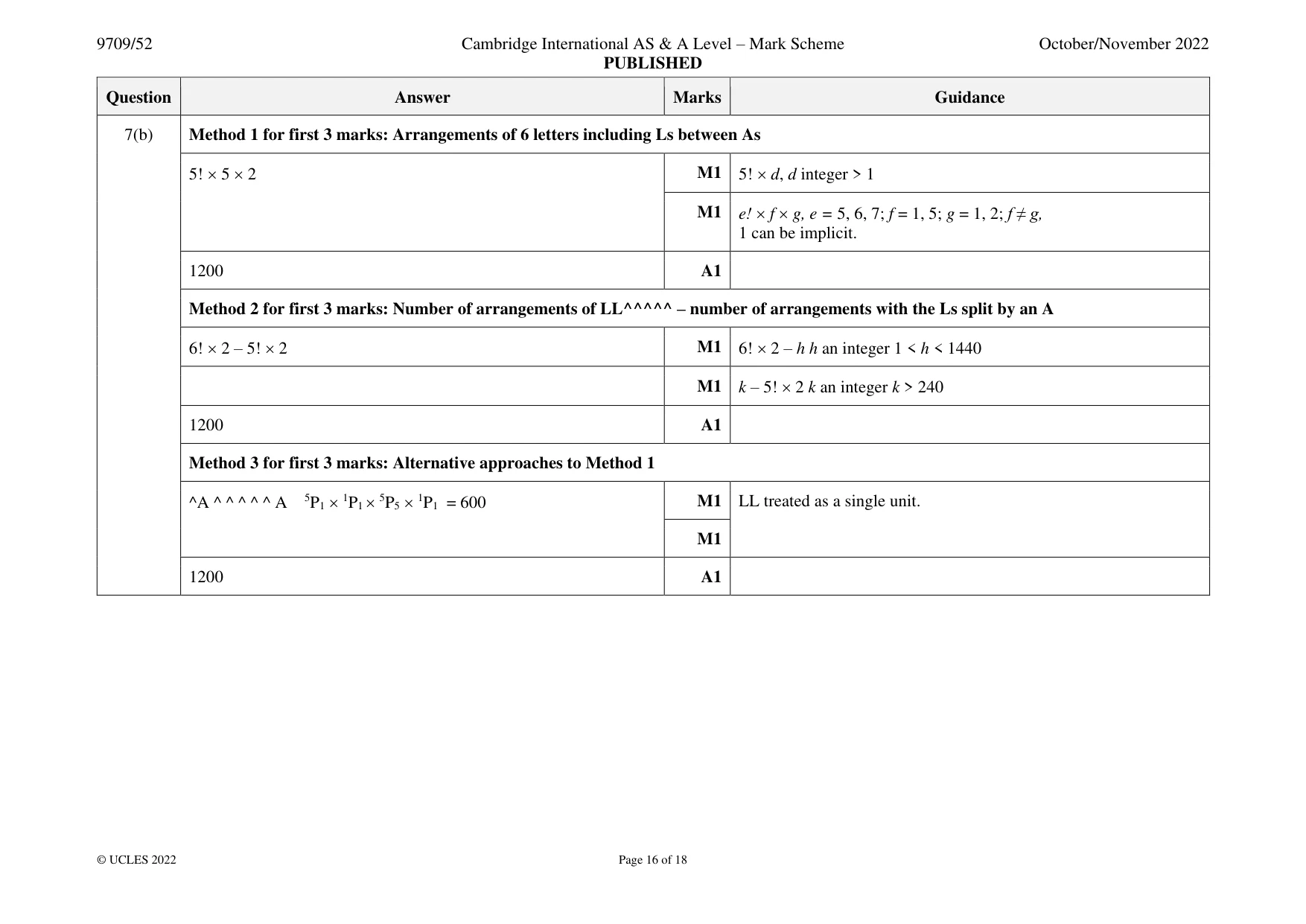
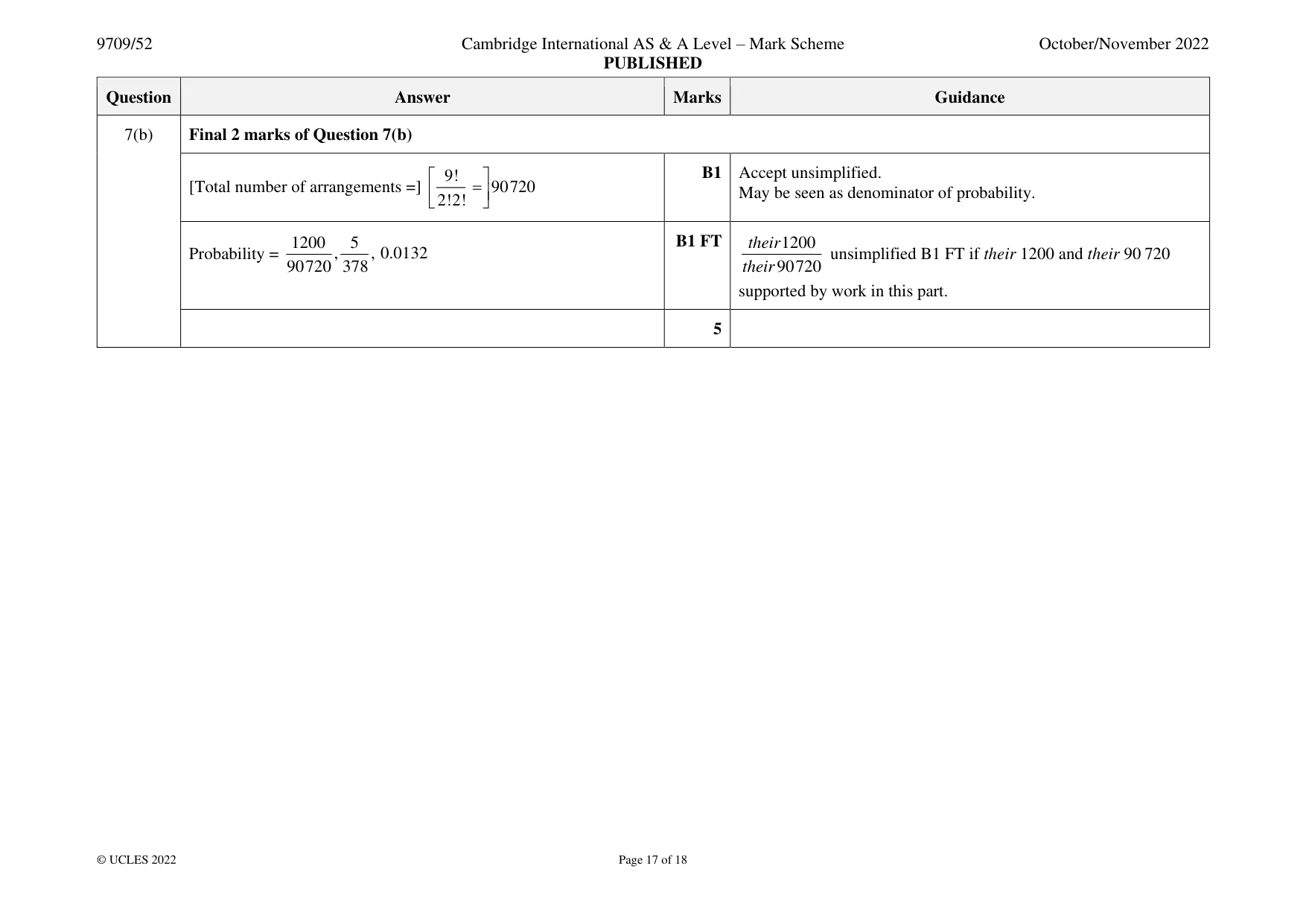
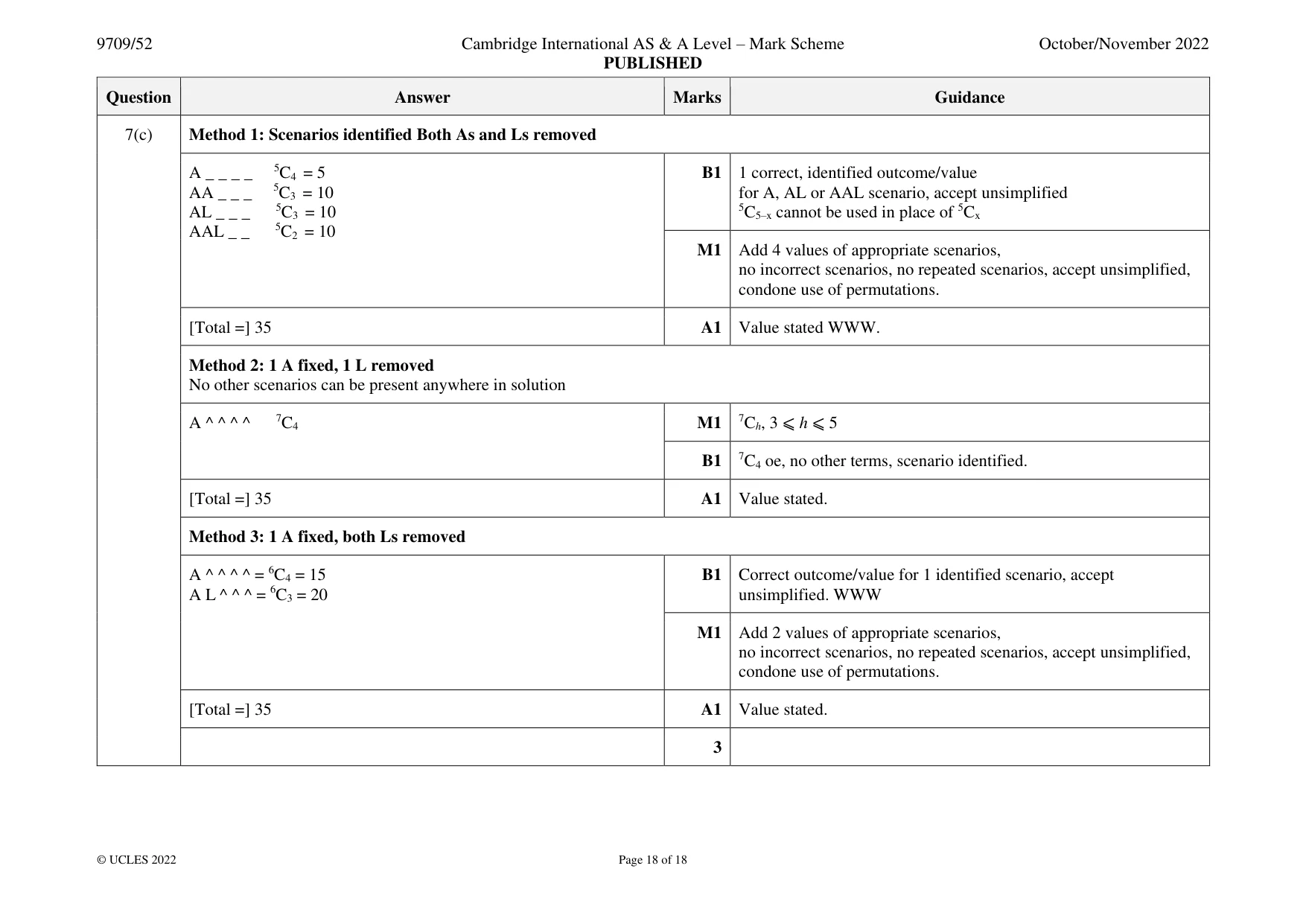
Mark scheme: 7(a) 7! M1 7! b,c = 1,2 b ! c ! 2! 2! 7! oe, no further terms present. 2! 2! 5040 A1 2 7(b) Method 1 for first 3 marks: Arrangements of 6 letters including Ls between As 5! 5 2 M1 5! d, d integer > 1 M1 e! f g, e = 5, 6, 7; f = 1, 5; g = 1, 2; f ≠ g, 1 can be implicit. 1200 A1 Method 2 for first 3 marks: Number of arrangements of LL^^^^^ – number of arrangements with the Ls split by an A 6! 2 – 5! 2 M1 6! 2 – h h an integer 1 < h < 1440 M1 k – 5! 2 k an integer k > 240 1200 A1 Method 3 for first 3 marks: Alternative approaches to Method 1 ^A ^ ^ ^ ^ ^ A 5P1 1P1 5P5 1P1 = 600 M1 LL treated as a single unit. M1 1200 A1 7(b) Final 2 marks of Question 7(b) 9! B1 Accept unsimplified. [Total number of arrangements =] = 90720 May be seen as denominator of probability. 2!2! 1200 5 B1 FT their 1200 Probability = , , 0.0132 unsimplified B1 FT if their 1200 and their 90 720 90720 378 their 90720 supported by work in this part. 5 7(c) Method 1: Scenarios identified Both As and Ls removed A _ _ _ _ 5C4 = 5 B1 1 correct, identified outcome/value AA _ _ _ 5C3 = 10 for A, AL or AAL scenario, accept unsimplified AL _ _ _ 5C3 = 10 5C5–x cannot be used in place of 5Cx AAL _ _ 5C2 = 10 M1 Add 4 values of appropriate scenarios, no incorrect scenarios, no repeated scenarios, accept unsimplified, condone use of permutations. [Total =] 35 A1 Value stated WWW. Method 2: 1 A fixed, 1 L removed No other scenarios can be present anywhere in solution A ^ ^ ^ ^ 7C4 M1 7Ch, 3 ⩽ h ⩽ 5 B1 7C4 oe, no other terms, scenario identified. [Total =] 35 A1 Value stated. Method 3: 1 A fixed, both Ls removed A ^ ^ ^ ^ = 6C4 = 15 B1 Correct outcome/value for 1 identified scenario, accept A L ^ ^ ^ = 6C3 = 20 unsimplified. WWW M1 Add 2 values of appropriate scenarios, no incorrect scenarios, no repeated scenarios, accept unsimplified, condone use of permutations. [Total =] 35 A1 Value stated. 3
What was in this paper
The subtopics covered by these 6 questions, and how many questions each got. Open one in a new tab to see every Cambridge question on it.
What you needed in this session
Cambridge’s own grade thresholds for 2022 Oct/Nov, Paper 5 · Variant 2. A higher threshold means an easier paper — the bar moves with how the cohort did.