Cambridge A Level Mathematics 9709 — 2022 Oct/Nov Paper 4 · Variant 2
9709/42/O/N/22 · 7 questions · 50 marks · ≈56 min
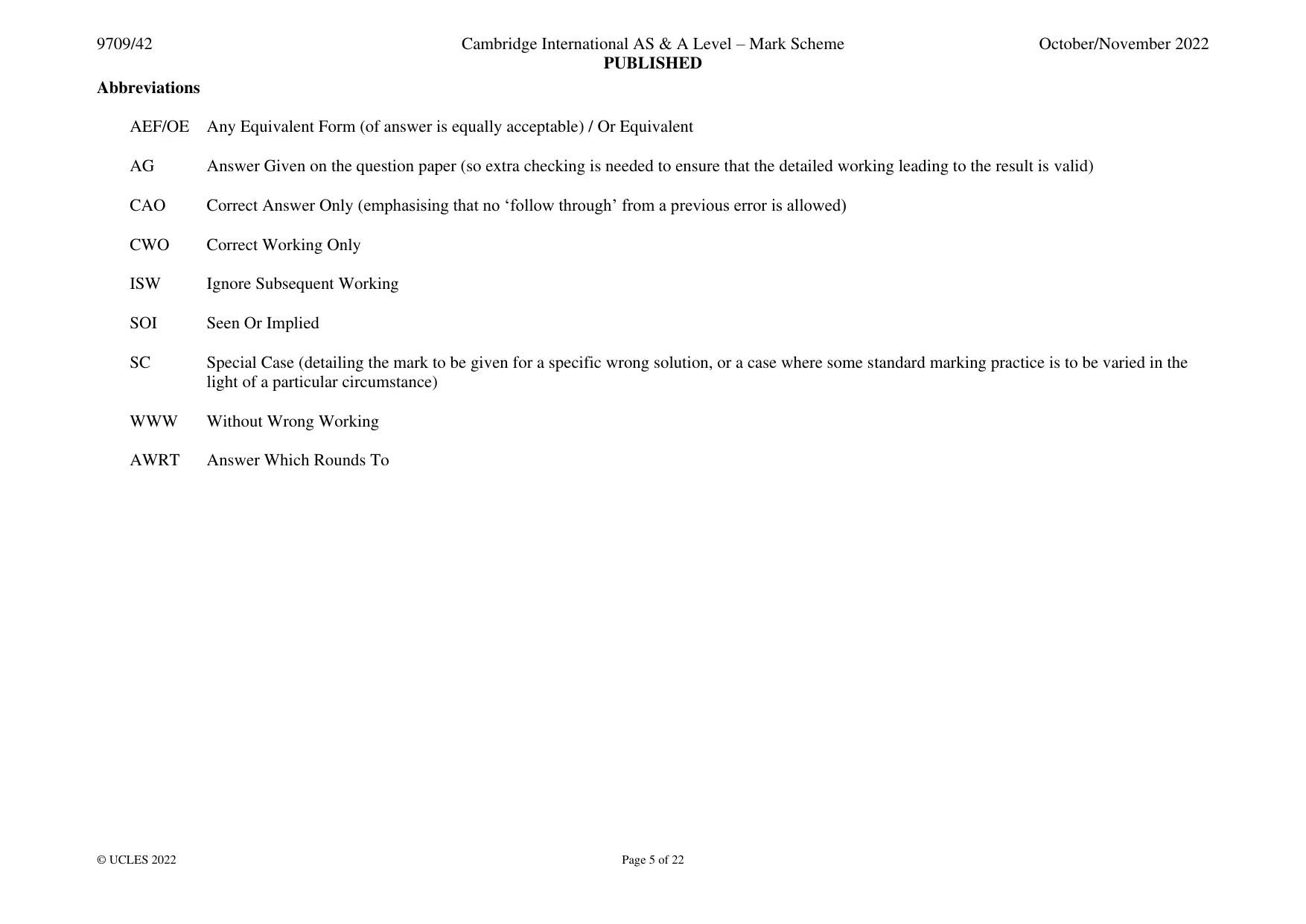
The question paper and its mark scheme, free to read here and free to download. This is Cambridge’s own paper, exactly as it was sat.
Question paper12 pages
Mark scheme22 pages
Answers below. Sit the paper first if you are practising.
Questions as text
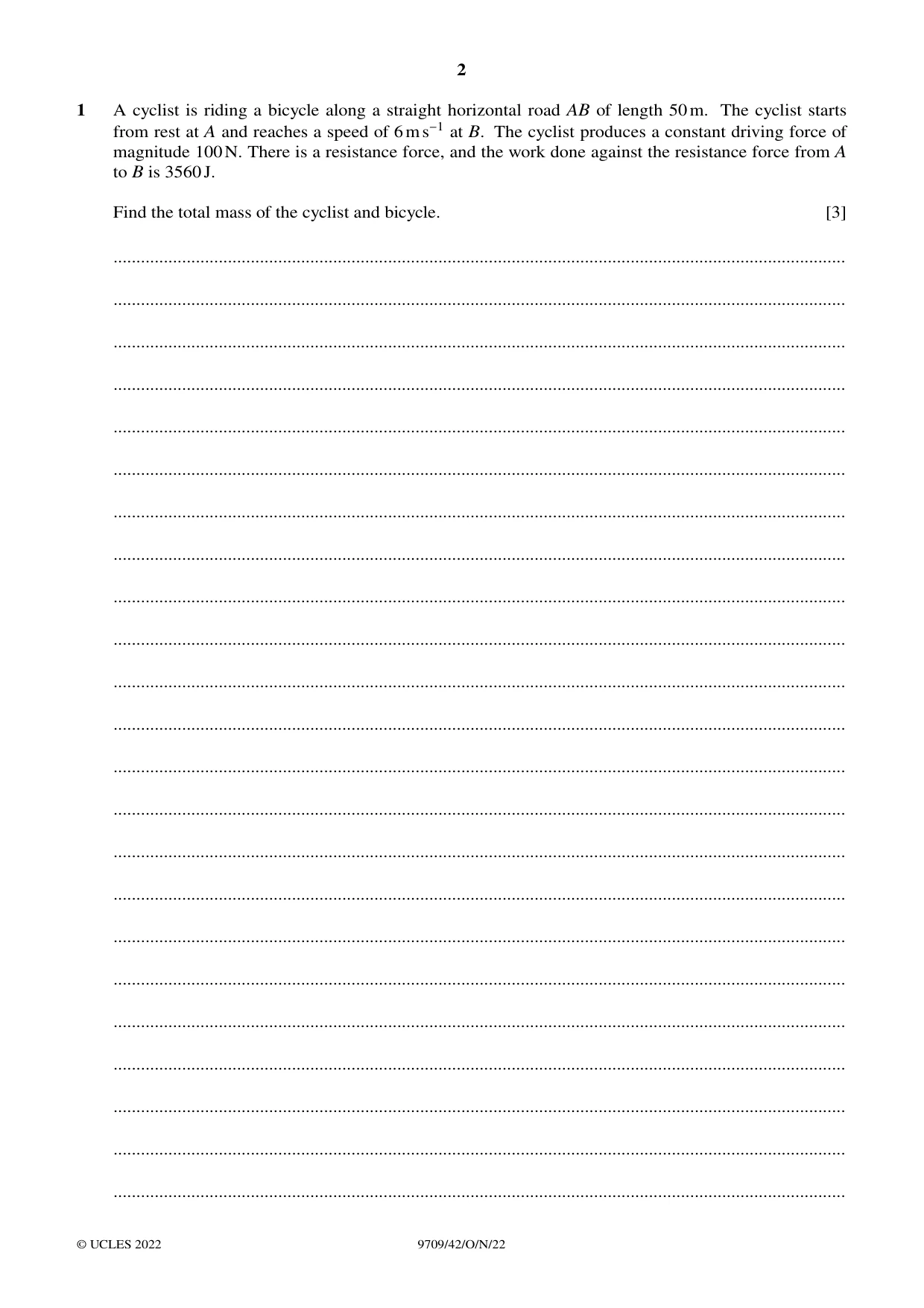
Q1 · A cyclist is riding a bicycle along a straight horizontal road AB of length 50m
1 A cyclist is riding a bicycle along a straight horizontal road AB of length 50m. The cyclist starts from rest at A and reaches a speed of 6ms−1 at B. The cyclist produces a constant driving force of magnitude 100N. There is a resistance force, and the work done against the resistance force from A to B is 3560J. Find the total mass of the cyclist and bicycle. [3] ................................................................................................................................................................ ................................................................................................................................................................ ................................................................................................................................................................ ................................................................................................................................................................ ................................................................................................................................................................ ................................................................................................................................................................ ................................................................................................................................................................ ................................................................................................................................................................ ................................................................................................................................................................ ................................................................................................................................................................ ................................................................................................................................................................ ................................................................................................................................................................ ................................................................................................................................................................ ................................................................................................................................................................ ................................................................................................................................................................ ................................................................................................................................................................ ................................................................................................................................................................ ................................................................................................................................................................ ................................................................................................................................................................ ................................................................................................................................................................ ................................................................................................................................................................ ................................................................................................................................................................ ................................................................................................................................................................
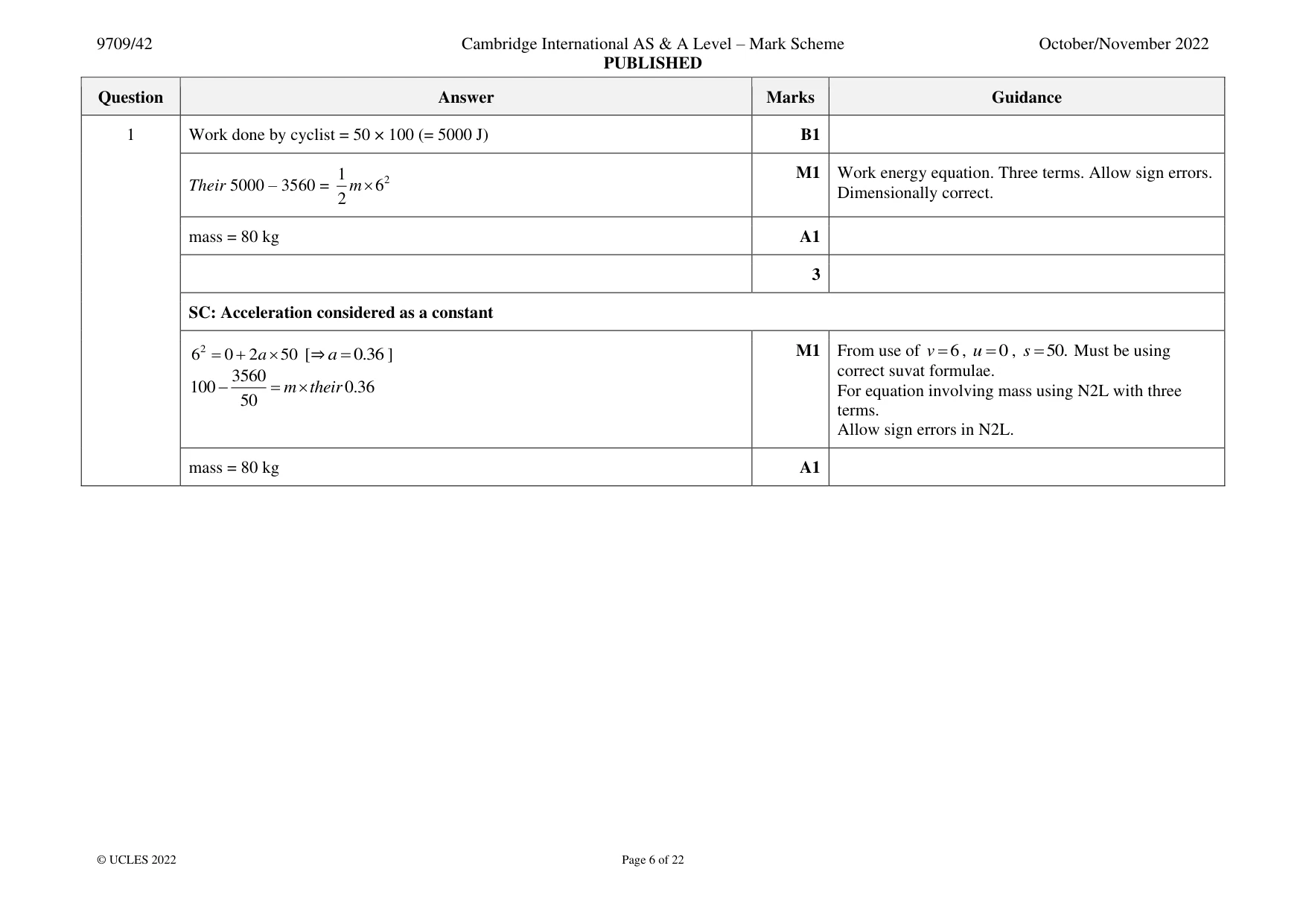
Mark scheme: Question Answer Marks Guidance 1 Work done by cyclist = 50 × 100 (= 5000 J) B1 1 2 M1 Work energy equation. Three terms. Allow sign errors. Their 5000 – 3560 = m 6 Dimensionally correct. 2 mass = 80 kg A1 3 SC: Acceleration considered as a constant 6 2 = 0 + 2 a 50 [⇒ a = 0.36 ] M1 From use of v = 6 , u = 0 , s = 50. Must be using correct suvat formulae. 3560 100 − = m their 0.36 For equation involving mass using N2L with three 50 terms. Allow sign errors in N2L. mass = 80 kg A1
Q2 · A particle P of mass 0.4kg is in limiting equilibrium on a plane inclined at 30Å to the…
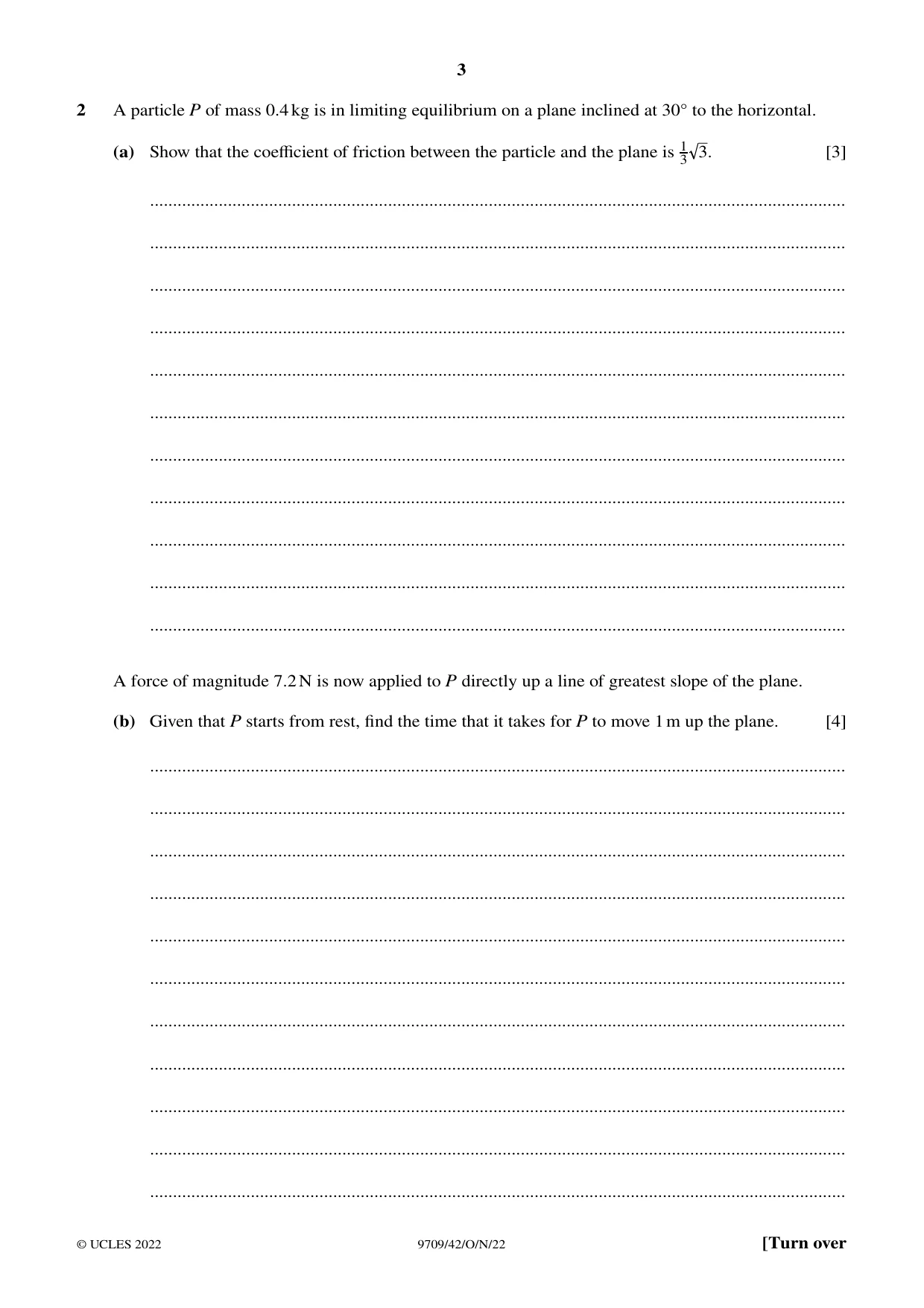
2 A particle P of mass 0.4kg is in limiting equilibrium on a plane inclined at 30Å to the horizontal. (a) Show that the coefficient of friction between the particle and the plane is 1 3. [3] 3 ........................................................................................................................................................ ........................................................................................................................................................ ........................................................................................................................................................ ........................................................................................................................................................ ........................................................................................................................................................ ........................................................................................................................................................ ........................................................................................................................................................ ........................................................................................................................................................ ........................................................................................................................................................ ........................................................................................................................................................ ........................................................................................................................................................ A force of magnitude 7.2N is now applied to P directly up a line of greatest slope of the plane. (b) Given that P starts from rest, find the time that it takes for P to move 1m up the plane. [4] ........................................................................................................................................................ ........................................................................................................................................................ ........................................................................................................................................................ ........................................................................................................................................................ ........................................................................................................................................................ ........................................................................................................................................................ ........................................................................................................................................................ ........................................................................................................................................................ ........................................................................................................................................................ ........................................................................................................................................................ ........................................................................................................................................................
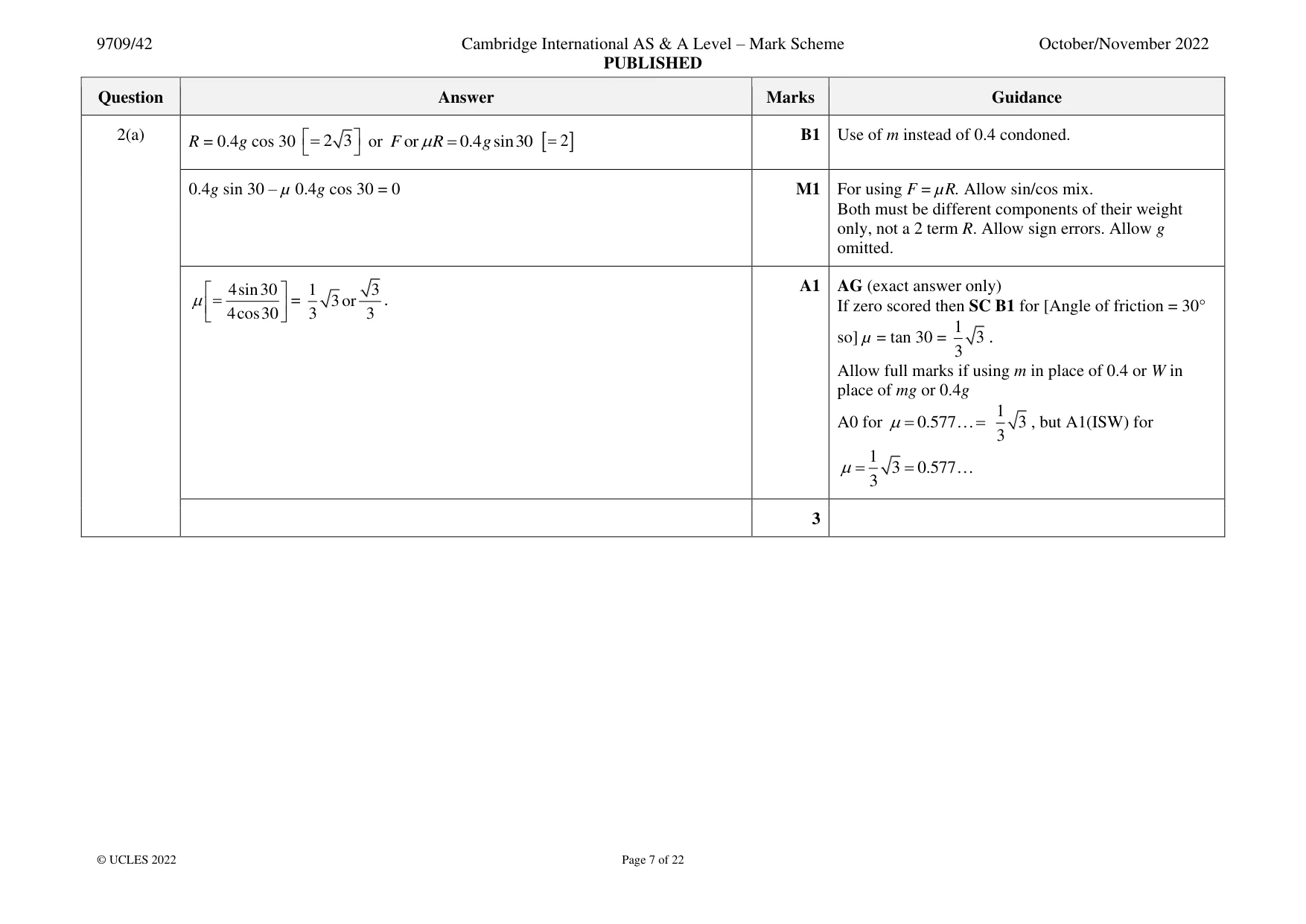
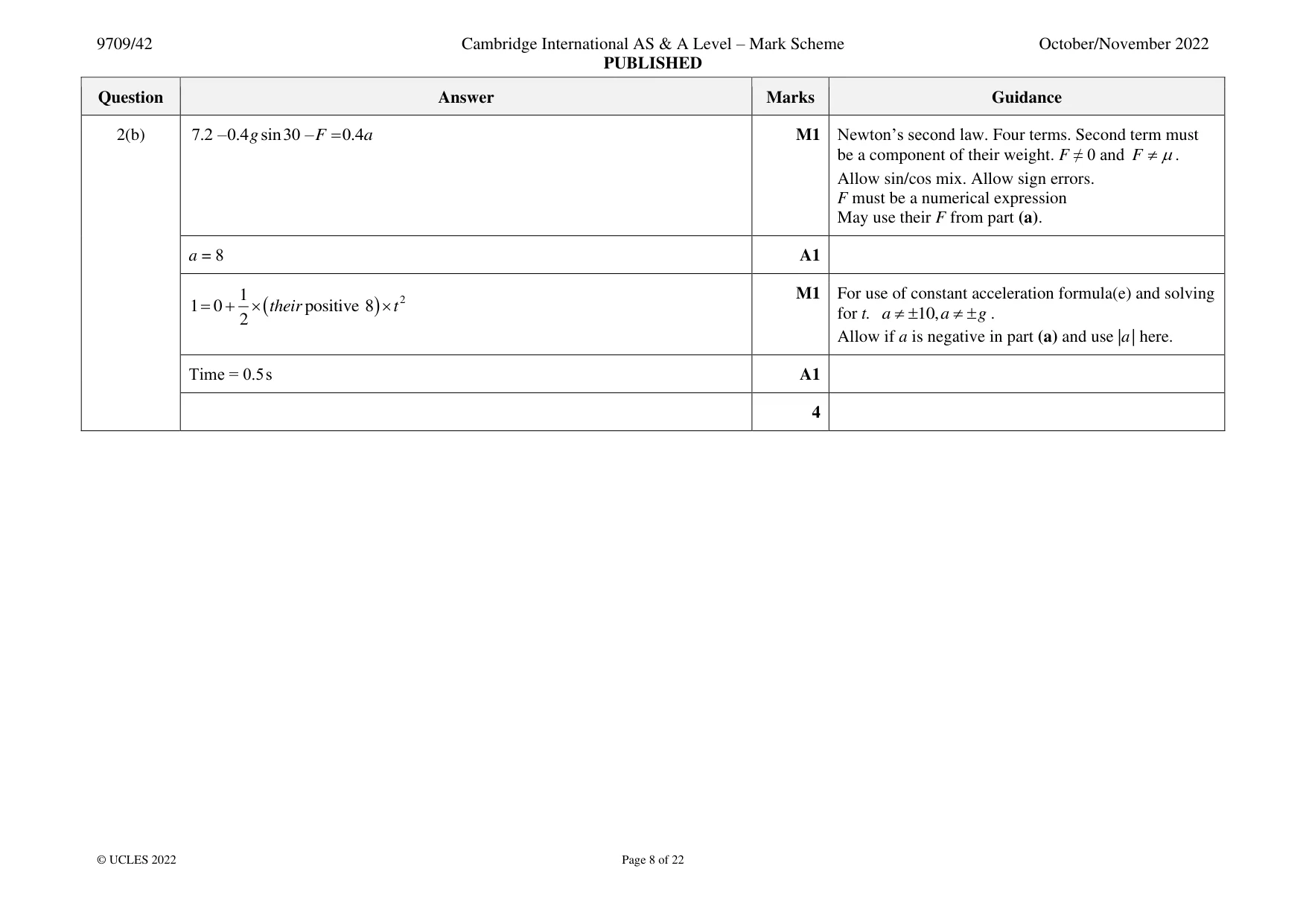
Mark scheme: 2(a) R = 0.4g cos 30 = 2 3 or F or R = 0.4 g sin30 = 2 B1 Use of m instead of 0.4 condoned. 0.4g sin 30 – µ 0.4g cos 30 = 0 M1 For using F = µR. Allow sin/cos mix. Both must be different components of their weight only, not a 2 term R. Allow sign errors. Allow g omitted. = 4sin30 = 1 3 or 3 . A1 AG (exact answer only) If zero scored then SC B1 for [Angle of friction = 30° 4cos30 3 3 1 so] µ = tan 30 = 3 . 3 Allow full marks if using m in place of 0.4 or W in place of mg or 0.4g 1 A0 for = 0.577 = 3 , but A1(ISW) for 3 1 = 3 = 0.577 3 3 2(b) 7.2 – 0.4 g sin 30 – F = 0.4 a M1 Newton’s second law. Four terms. Second term must be a component of their weight. F ≠ 0 and F . Allow sin/cos mix. Allow sign errors. F must be a numerical expression May use their F from part (a). a = 8 A1 1 2 M1 For use of constant acceleration formula(e) and solving 1 = 0 + ( their positive 8 ) t for t. a 10, a g . 2 Allow if a is negative in part (a) and use |a | here. Time = 0.5 s A1 4
Q3 · A particle of mass 0.3kg is held at rest by two light inextensible strings
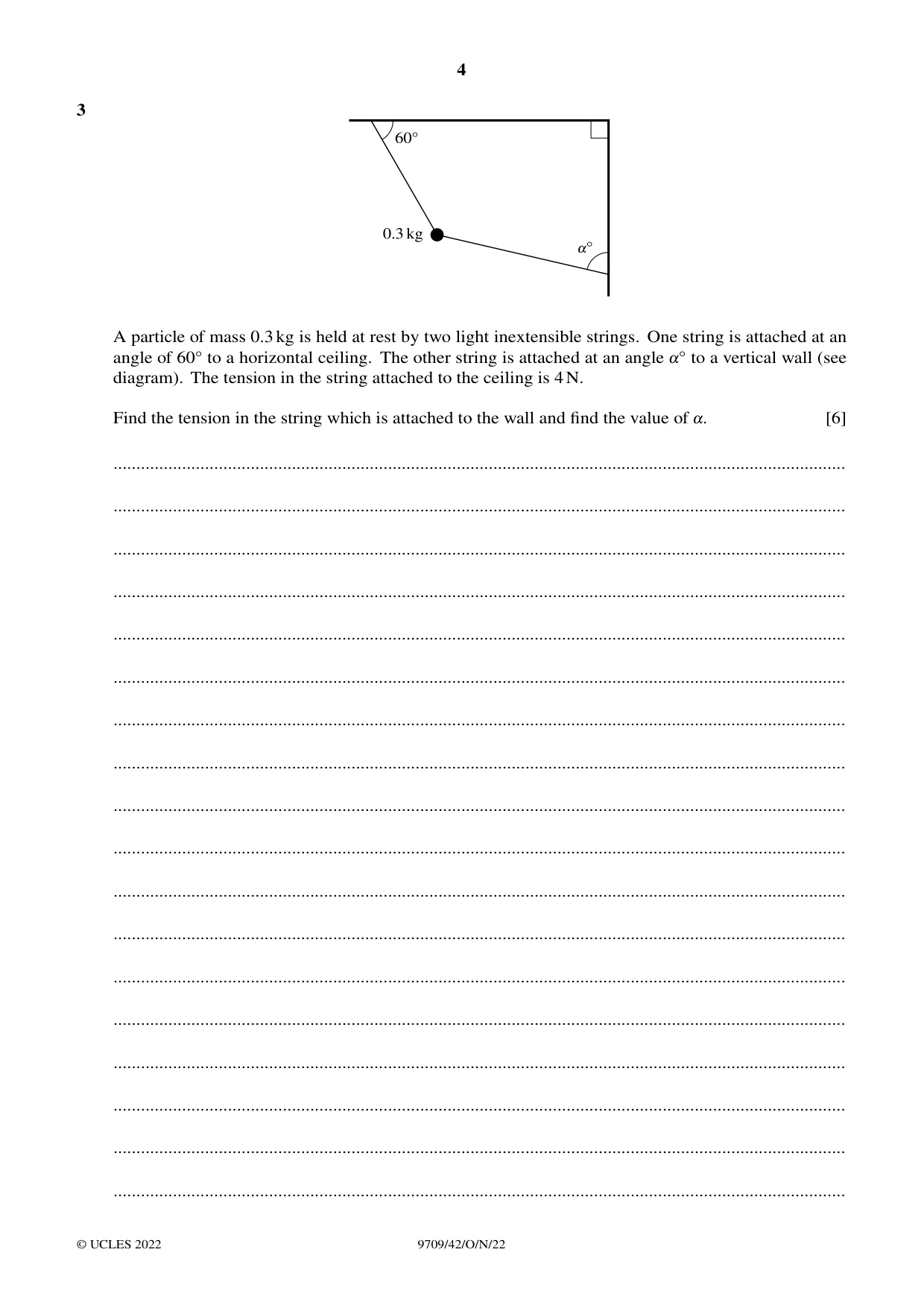
3 A particle of mass 0.3kg is held at rest by two light inextensible strings. One string is attached at an angle of 60Å to a horizontal ceiling. The other string is attached at an angle !Å to a vertical wall (see diagram). The tension in the string attached to the ceiling is 4N. Find the tension in the string which is attached to the wall and find the value of !. [6] ................................................................................................................................................................ ................................................................................................................................................................ ................................................................................................................................................................ ................................................................................................................................................................ ................................................................................................................................................................ ................................................................................................................................................................ ................................................................................................................................................................ ................................................................................................................................................................ ................................................................................................................................................................ ................................................................................................................................................................ ................................................................................................................................................................ ................................................................................................................................................................ ................................................................................................................................................................ ................................................................................................................................................................ ................................................................................................................................................................ ................................................................................................................................................................ ................................................................................................................................................................ ................................................................................................................................................................
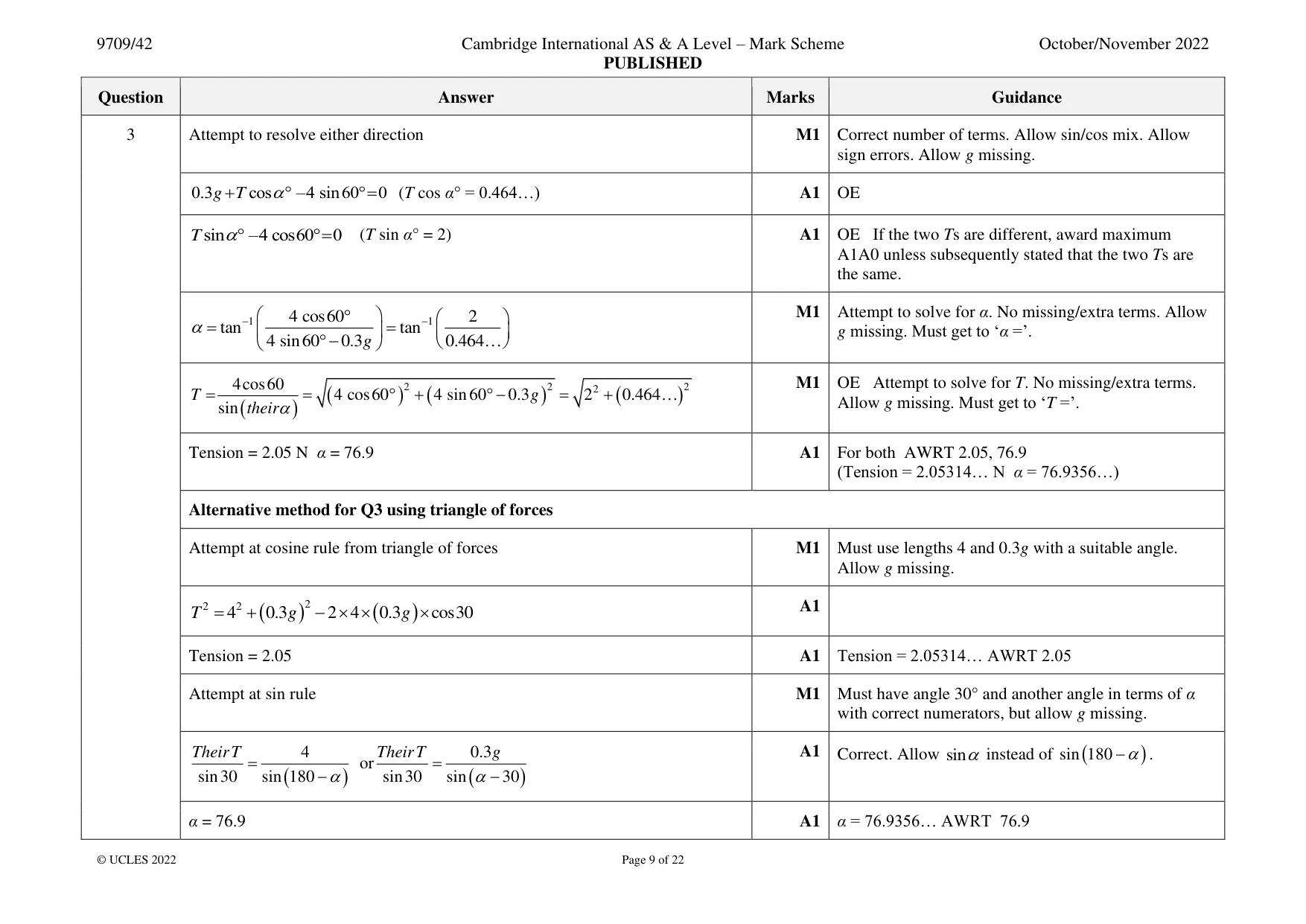
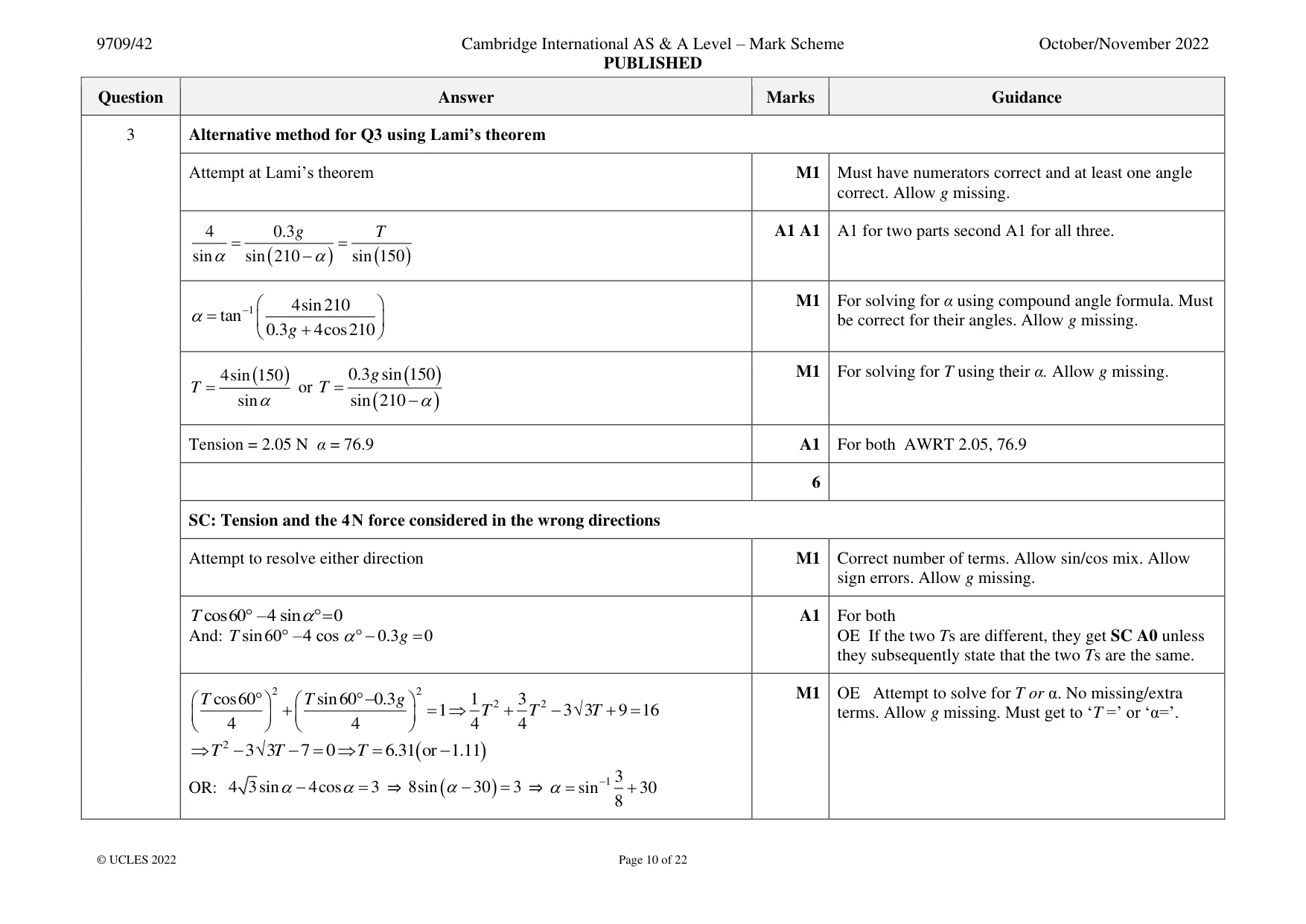
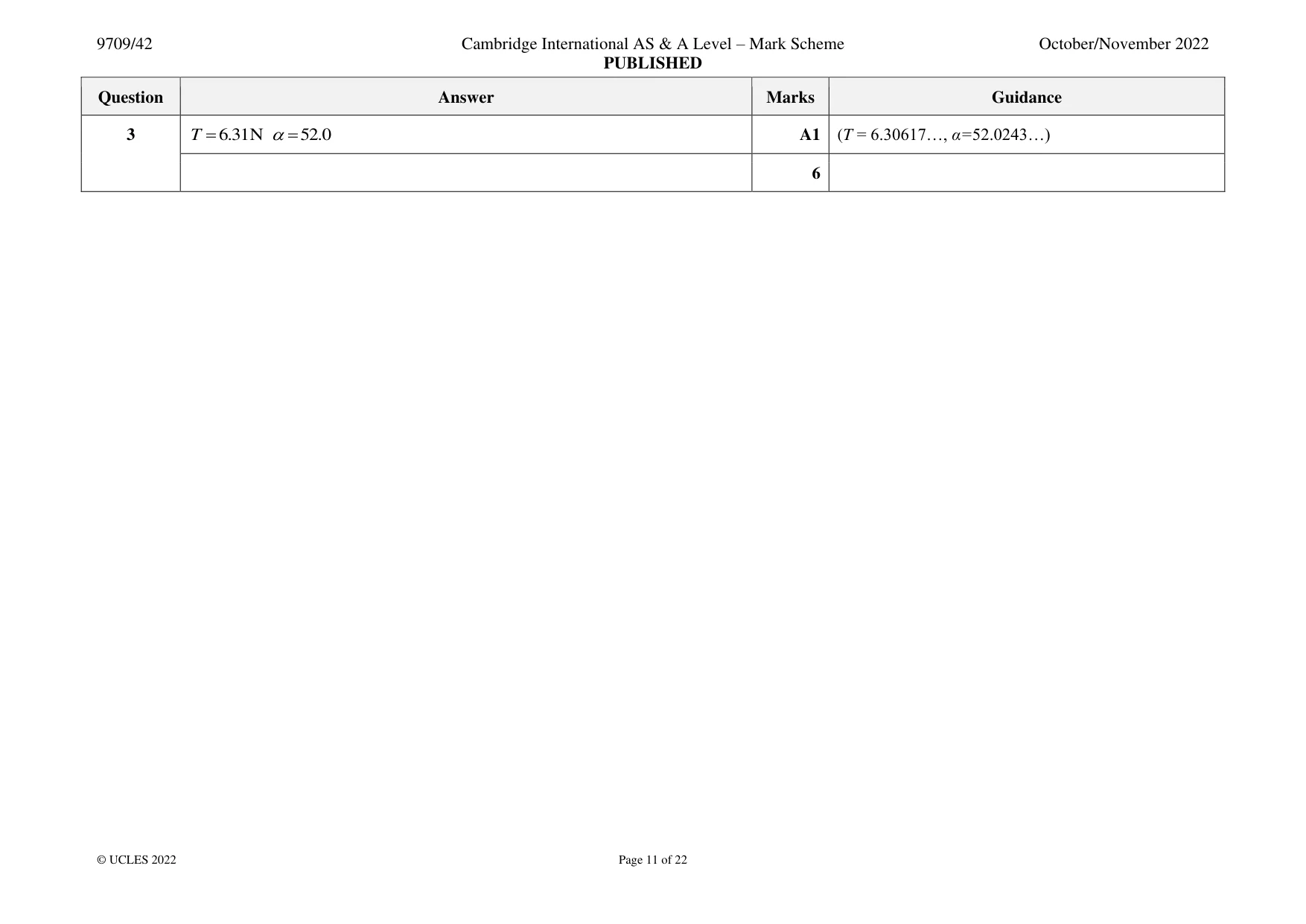
Mark scheme: 3 Attempt to resolve either direction M1 Correct number of terms. Allow sin/cos mix. Allow sign errors. Allow g missing. 0.3 g + T cos – 4 sin 60= 0 (T cos α° = 0.464…) A1 OE T sin – 4 cos 60= 0 (T sin α° = 2) A1 OE If the two Ts are different, award maximum A1A0 unless subsequently stated that the two Ts are the same. −1 4 cos 60 −1 2 M1 Attempt to solve for α. No missing/extra terms. Allow = tan = tan g missing. Must get to ‘α =’. 4 sin 60− 0.3 g 0.464 4cos60 2 2 2 2 M1 OE Attempt to solve for T. No missing/extra terms. T = = ( 4 cos 60 ) + ( 4 sin 60 − 0.3 g ) = 2 + ( 0.464 ) Allow g missing. Must get to ‘T =’. sin ( their) Tension = 2.05 N α = 76.9 A1 For both AWRT 2.05, 76.9 (Tension = 2.05314… N α = 76.9356…) Alternative method for Q3 using triangle of forces Attempt at cosine rule from triangle of forces M1 Must use lengths 4 and 0.3g with a suitable angle. Allow g missing. 2 2 2 A1 T = 4 + ( 0.3 g ) −2 4 ( 0.3 g ) cos30 Tension = 2.05 A1 Tension = 2.05314… AWRT 2.05 Attempt at sin rule M1 Must have angle 30° and another angle in terms of α with correct numerators, but allow g missing. TheirT 4 TheirT 0.3 g A1 Correct. Allow sin instead of sin (180 − ) . = or = sin30 sin (180 − ) sin30 sin (− 30 ) α = 76.9 A1 α = 76.9356… AWRT 76.9 3 Alternative method for Q3 using Lami’s theorem Attempt at Lami’s theorem M1 Must have numerators correct and at least one angle correct. Allow g missing. 4 0.3 g T A1 A1 A1 for two parts second A1 for all three. = = sin sin ( 210 − ) sin (150 ) −1 4sin210 M1 For solving for α using compound angle formula. Must = tan be correct for their angles. Allow g missing. 0.3 g + 4cos210 4sin (150 ) 0.3 g sin (150 ) M1 For solving for T using their α. Allow g missing. T = or T = sin sin ( 210 − ) Tension = 2.05 N α = 76.9 A1 For both AWRT 2.05, 76.9 6 SC: Tension and the 4 N force considered in the wrong directions Attempt to resolve either direction M1 Correct number of terms. Allow sin/cos mix. Allow sign errors. Allow g missing. T cos 60 – 4 sin= 0 A1 For both And: T sin 60 – 4 cos − 0.3g = 0 OE If the two Ts are different, they get SC A0 unless they subsequently state that the two Ts are the same. 2 2 M1 OE Attempt to solve for T or α. No missing/extra T cos 60 T sin 60−0.3 g 1 2 3 2 + = 1 T + T −3 3T + 9 = 16 terms. Allow g missing. Must get to ‘T =’ or ‘α=’. 4 4 4 4 T 2 −3 3T − 7 = 0 T = 6.31( or − 1.11) −1 3 OR: 4 3sin− 4cos= 3 ⇒ 8sin (− 30 ) = 3 ⇒ = sin + 30 8 3 T = 6.31 N = 52.0 A1 (T = 6.30617…, α=52.0243…) 6
Q4 · A car of mass 1200kg is travelling along a straight horizontal road AB
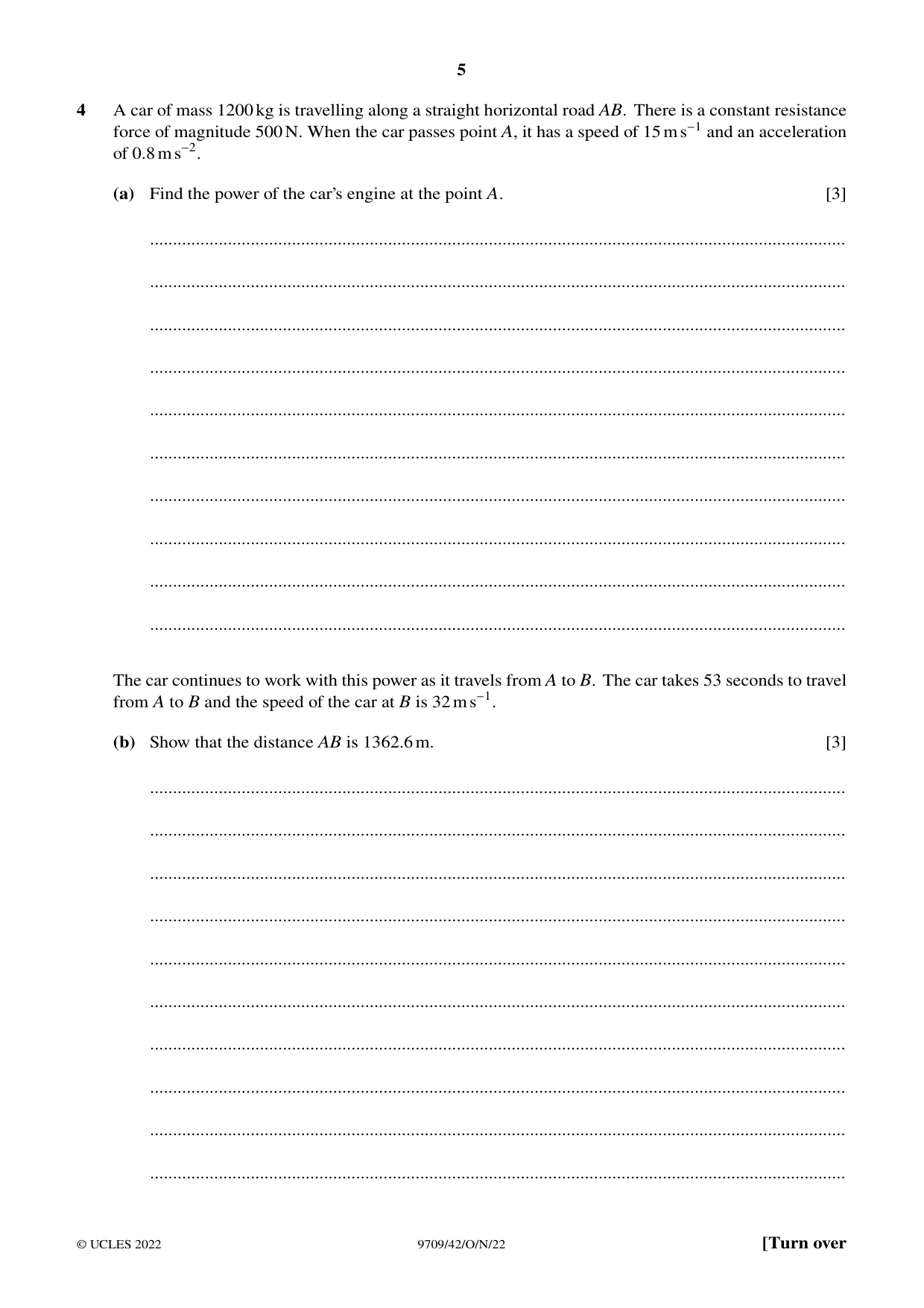
4 A car of mass 1200kg is travelling along a straight horizontal road AB. There is a constant resistance force of magnitude 500N. When the car passes point A, it has a speed of 15ms−1 and an acceleration of 0.8ms−2. (a) Find the power of the car’s engine at the point A. [3] ........................................................................................................................................................ ........................................................................................................................................................ ........................................................................................................................................................ ........................................................................................................................................................ ........................................................................................................................................................ ........................................................................................................................................................ ........................................................................................................................................................ ........................................................................................................................................................ ........................................................................................................................................................ ........................................................................................................................................................ The car continues to work with this power as it travels from A to B. The car takes 53 seconds to travel from A to B and the speed of the car at B is 32ms−1. (b) Show that the distance AB is 1362.6m. [3] ........................................................................................................................................................ ........................................................................................................................................................ ........................................................................................................................................................ ........................................................................................................................................................ ........................................................................................................................................................ ........................................................................................................................................................ ........................................................................................................................................................ ........................................................................................................................................................ ........................................................................................................................................................ ........................................................................................................................................................
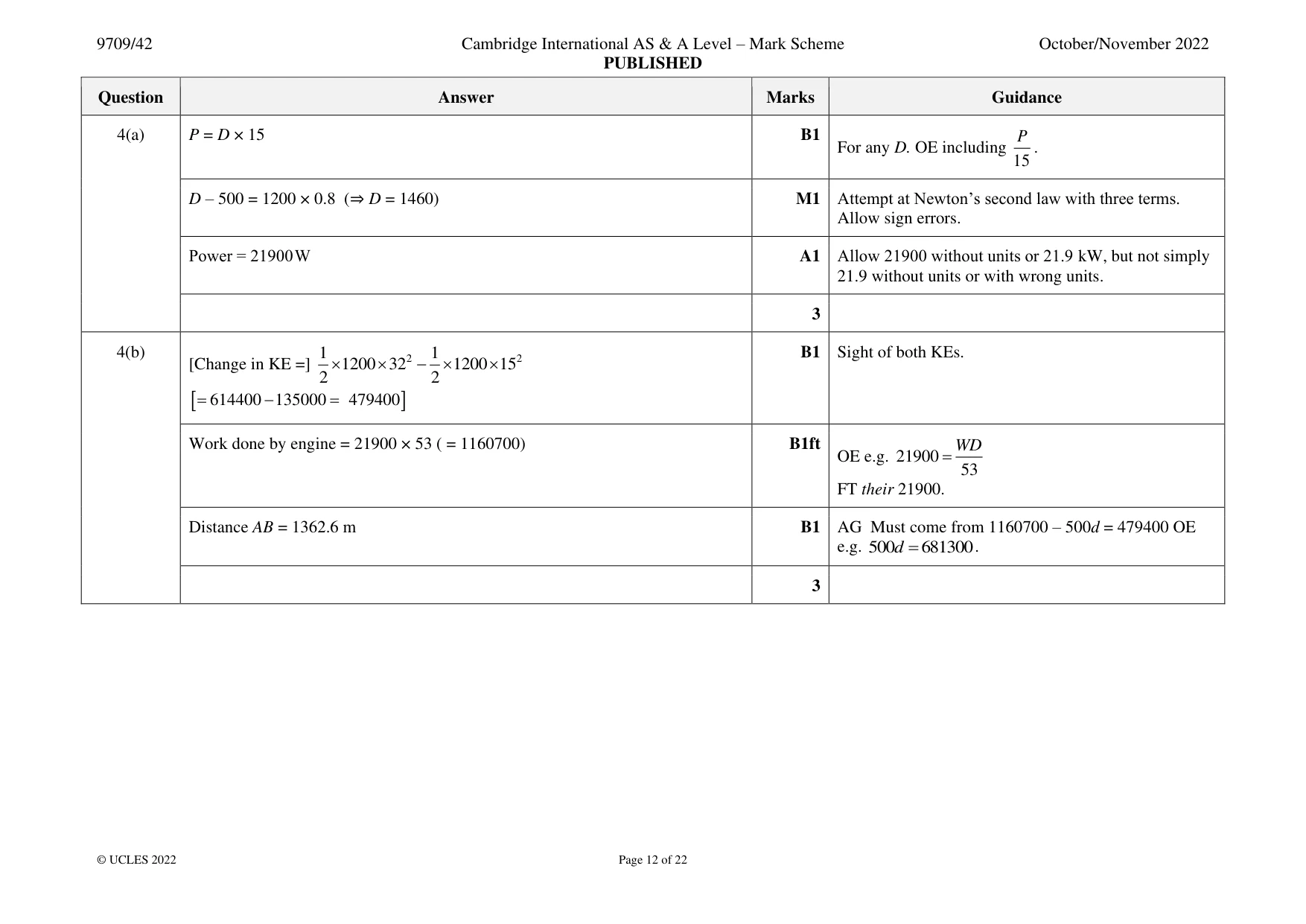
Mark scheme: 4(a) P = D × 15 B1 P For any D. OE including . 15 D – 500 = 1200 × 0.8 (⇒ D = 1460) M1 Attempt at Newton’s second law with three terms. Allow sign errors. Power = 21900 W A1 Allow 21900 without units or 21.9 kW, but not simply 21.9 without units or with wrong units. 3 4(b) 1 2 1 2 B1 Sight of both KEs. [Change in KE =] 1200 32 − 1200 15 2 2 = 614400 − 135000 = 479400 Work done by engine = 21900 × 53 ( = 1160700) B1ft WD OE e.g. 21900 = 53 FT their 21900. Distance AB = 1362.6 m B1 AG Must come from 1160700 – 500d = 479400 OE e.g. 500d = 681300 . 3
Q5 · A block A of mass 80kg is connected by a light, inextensible rope to a block B of mass…
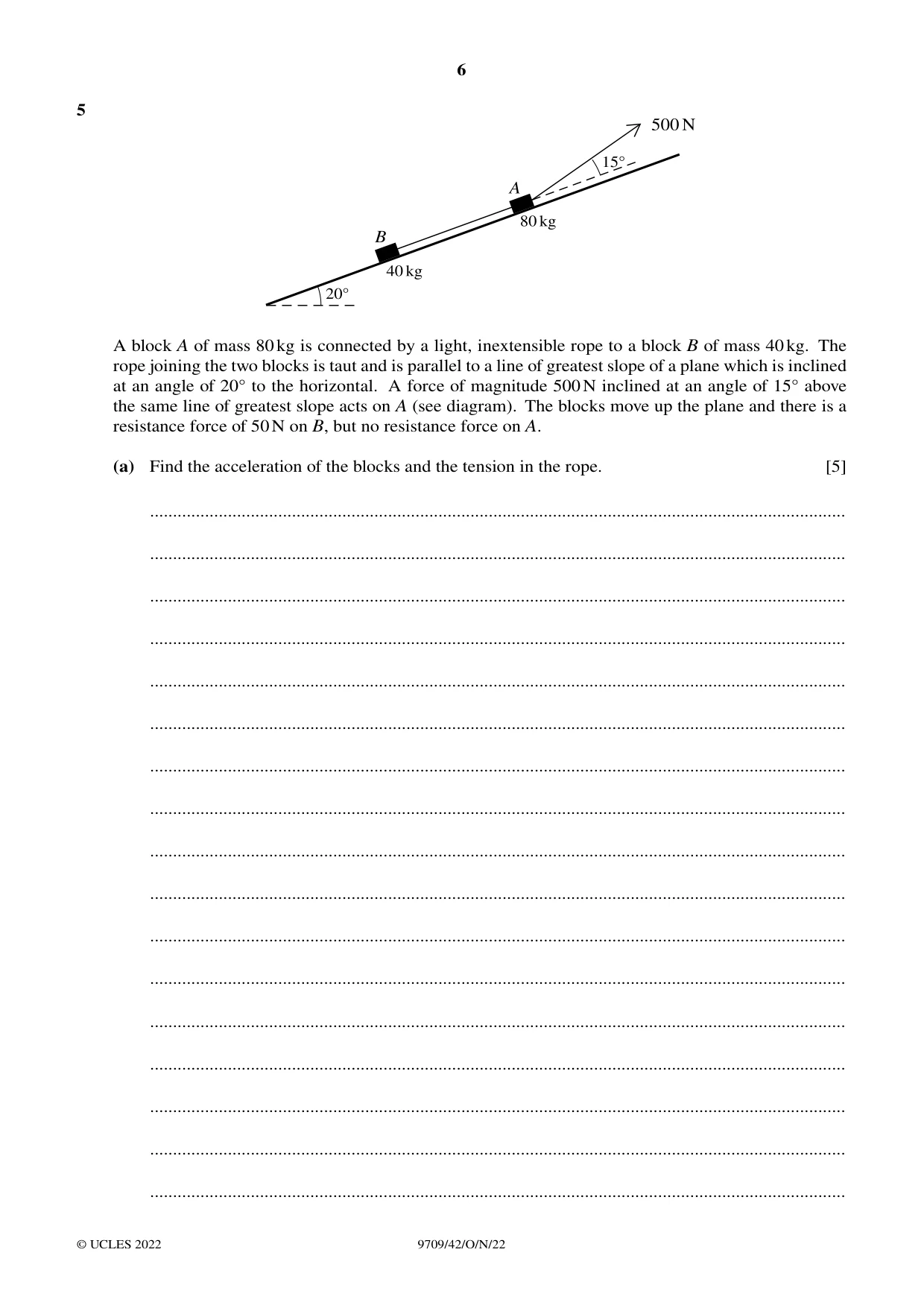
5 A block A of mass 80kg is connected by a light, inextensible rope to a block B of mass 40kg. The rope joining the two blocks is taut and is parallel to a line of greatest slope of a plane which is inclined at an angle of 20Å to the horizontal. A force of magnitude 500N inclined at an angle of 15Å above the same line of greatest slope acts on A (see diagram). The blocks move up the plane and there is a resistance force of 50N on B, but no resistance force on A. (a) Find the acceleration of the blocks and the tension in the rope. [5] ........................................................................................................................................................ ........................................................................................................................................................ ........................................................................................................................................................ ........................................................................................................................................................ ........................................................................................................................................................ ........................................................................................................................................................ ........................................................................................................................................................ ........................................................................................................................................................ ........................................................................................................................................................ ........................................................................................................................................................ ........................................................................................................................................................ ........................................................................................................................................................ ........................................................................................................................................................ ........................................................................................................................................................ ........................................................................................................................................................ ........................................................................................................................................................ ........................................................................................................................................................ ........................................................................................................................................................ ........................................................................................................................................................ ........................................................................................................................................................ ........................................................................................................................................................ ........................................................................................................................................................ ........................................................................................................................................................ ........................................................................................................................................................ ........................................................................................................................................................ ........................................................................................................................................................ ........................................................................................................................................................ (b) Find the time that it takes for the blocks to reach a speed of 1.2ms−1 from rest. [2] ........................................................................................................................................................ ........................................................................................................................................................ ........................................................................................................................................................ ........................................................................................................................................................ ........................................................................................................................................................ ........................................................................................................................................................ ........................................................................................................................................................ ........................................................................................................................................................ ........................................................................................................................................................ ........................................................................................................................................................ ........................................................................................................................................................ ........................................................................................................................................................ ........................................................................................................................................................ ........................................................................................................................................................
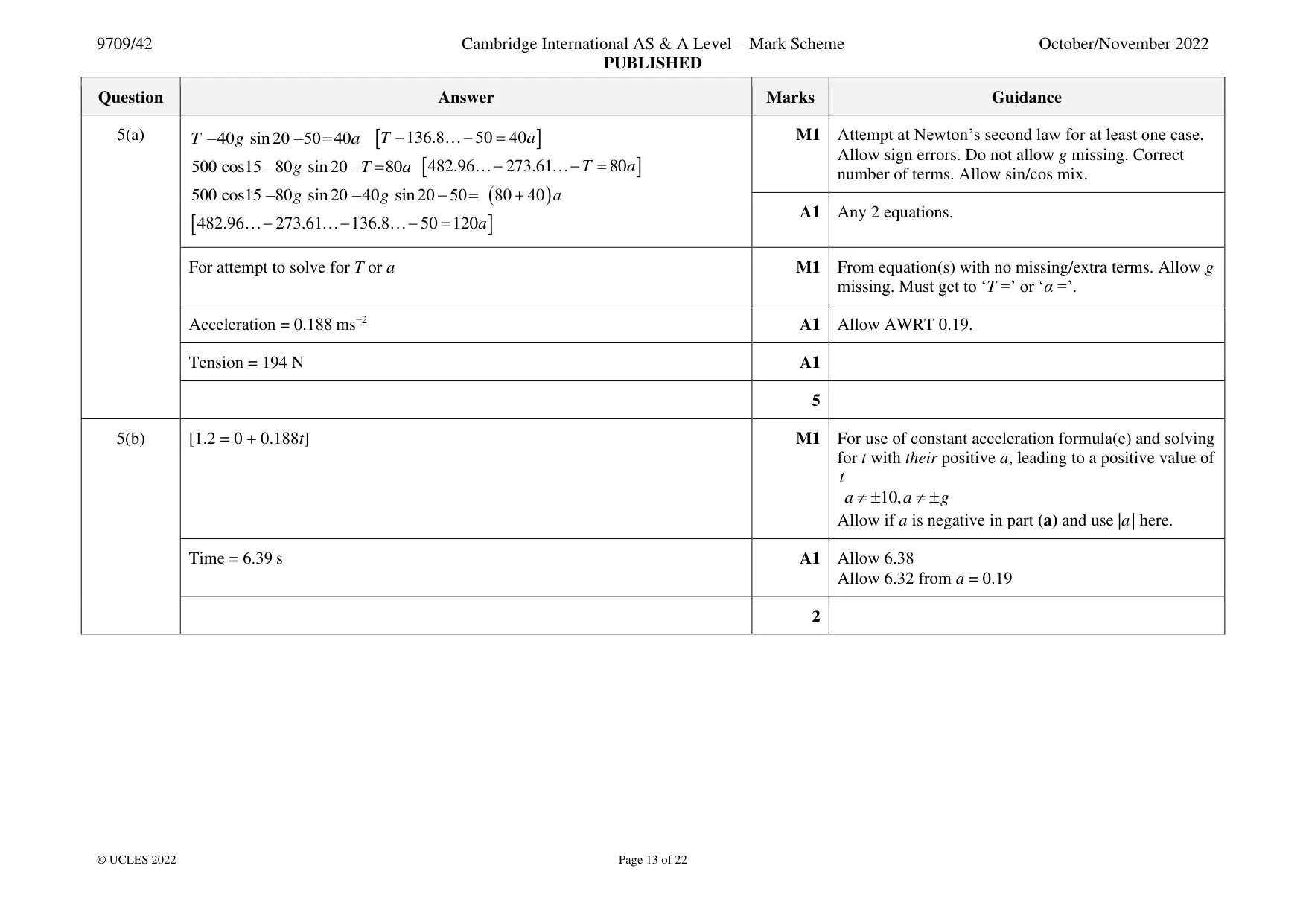
Mark scheme: 5(a) T – 40 g sin20 – 50 = 40a T − 136.8 − 50 = 40 a M1 Attempt at Newton’s second law for at least one case. Allow sign errors. Do not allow g missing. Correct 500 cos15 – 80 g sin20 –T = 80a 482.96 − 273.61− T = 80 a number of terms. Allow sin/cos mix. 500 cos15 – 80 g sin20 – 40 g sin20 − 50 = ( 80 + 40 ) a 482.96 − 273.61− 136.8− 50 = 120 a A1 Any 2 equations. For attempt to solve for T or a M1 From equation(s) with no missing/extra terms. Allow g missing. Must get to ‘T =’ or ‘α =’. Acceleration = 0.188 ms−2 A1 Allow AWRT 0.19. Tension = 194 N A1 5 5(b) [1.2 = 0 + 0.188t] M1 For use of constant acceleration formula(e) and solving for t with their positive a, leading to a positive value of t a 10, a g Allow if a is negative in part (a) and use |a | here. Time = 6.39 s A1 Allow 6.38 Allow 6.32 from a = 0.19 2
Q6 · Three particles A, B and C of masses 0.3kg, 0.4kg and mkg respectively lie at rest in a…
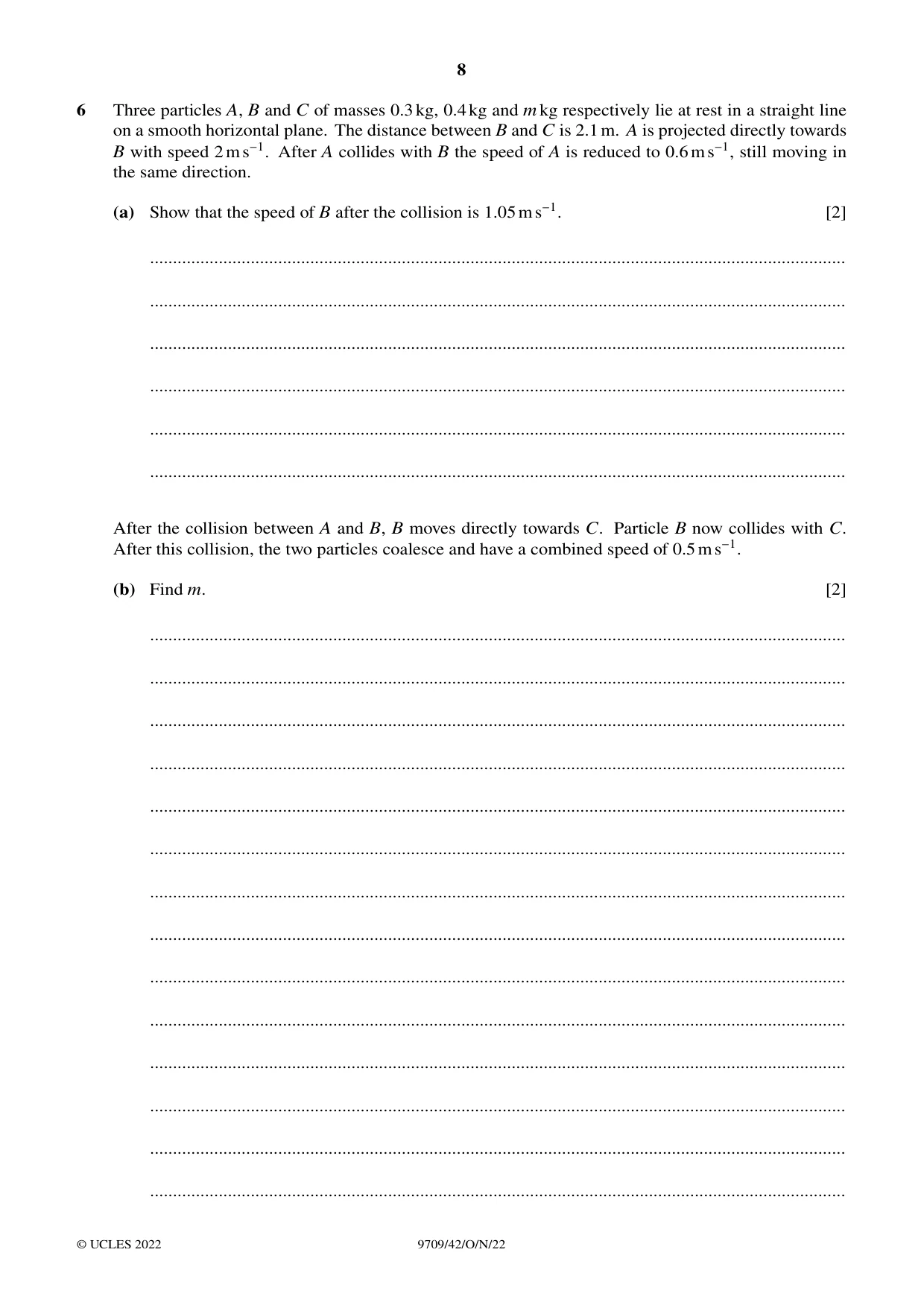
6 Three particles A, B and C of masses 0.3kg, 0.4kg and mkg respectively lie at rest in a straight line on a smooth horizontal plane. The distance between B and C is 2.1m. A is projected directly towards B with speed 2ms−1. After A collides with B the speed of A is reduced to 0.6ms−1, still moving in the same direction. (a) Show that the speed of B after the collision is 1.05ms−1. [2] ........................................................................................................................................................ ........................................................................................................................................................ ........................................................................................................................................................ ........................................................................................................................................................ ........................................................................................................................................................ ........................................................................................................................................................ After the collision between A and B, B moves directly towards C. Particle B now collides with C. After this collision, the two particles coalesce and have a combined speed of 0.5ms−1. (b) Find m. [2] ........................................................................................................................................................ ........................................................................................................................................................ ........................................................................................................................................................ ........................................................................................................................................................ ........................................................................................................................................................ ........................................................................................................................................................ ........................................................................................................................................................ ........................................................................................................................................................ ........................................................................................................................................................ ........................................................................................................................................................ ........................................................................................................................................................ ........................................................................................................................................................ ........................................................................................................................................................ ........................................................................................................................................................ (c) Find the time that it takes, from the instant when B and C collide, until A collides with the combined particle. [5] ........................................................................................................................................................ ........................................................................................................................................................ ........................................................................................................................................................ ........................................................................................................................................................ ........................................................................................................................................................ ........................................................................................................................................................ ........................................................................................................................................................ ........................................................................................................................................................ ........................................................................................................................................................ ........................................................................................................................................................ ........................................................................................................................................................ ........................................................................................................................................................ ........................................................................................................................................................ ........................................................................................................................................................ ........................................................................................................................................................ ........................................................................................................................................................ ........................................................................................................................................................ ........................................................................................................................................................ ........................................................................................................................................................ ........................................................................................................................................................ ........................................................................................................................................................ ........................................................................................................................................................ ........................................................................................................................................................ ........................................................................................................................................................ ........................................................................................................................................................
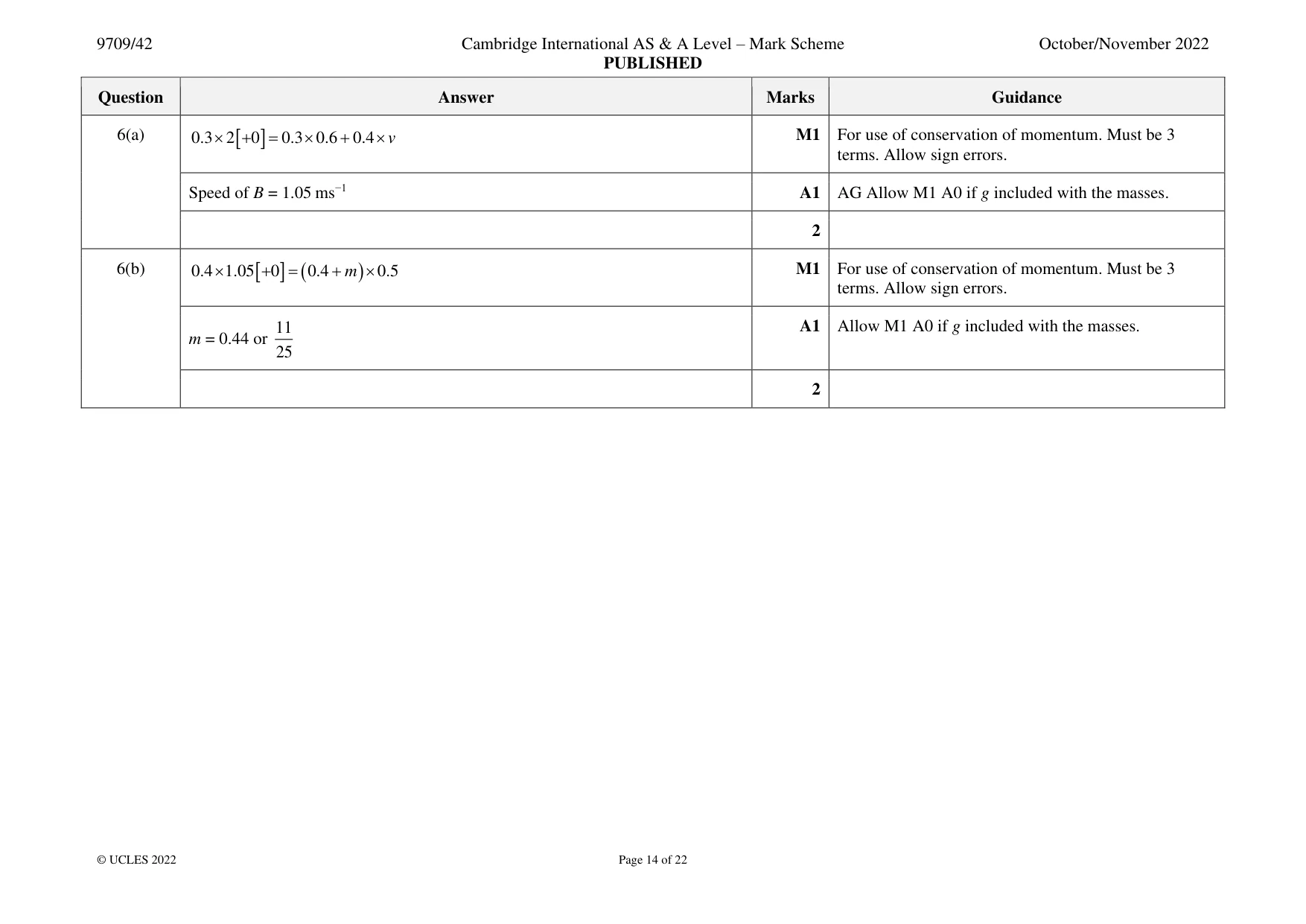
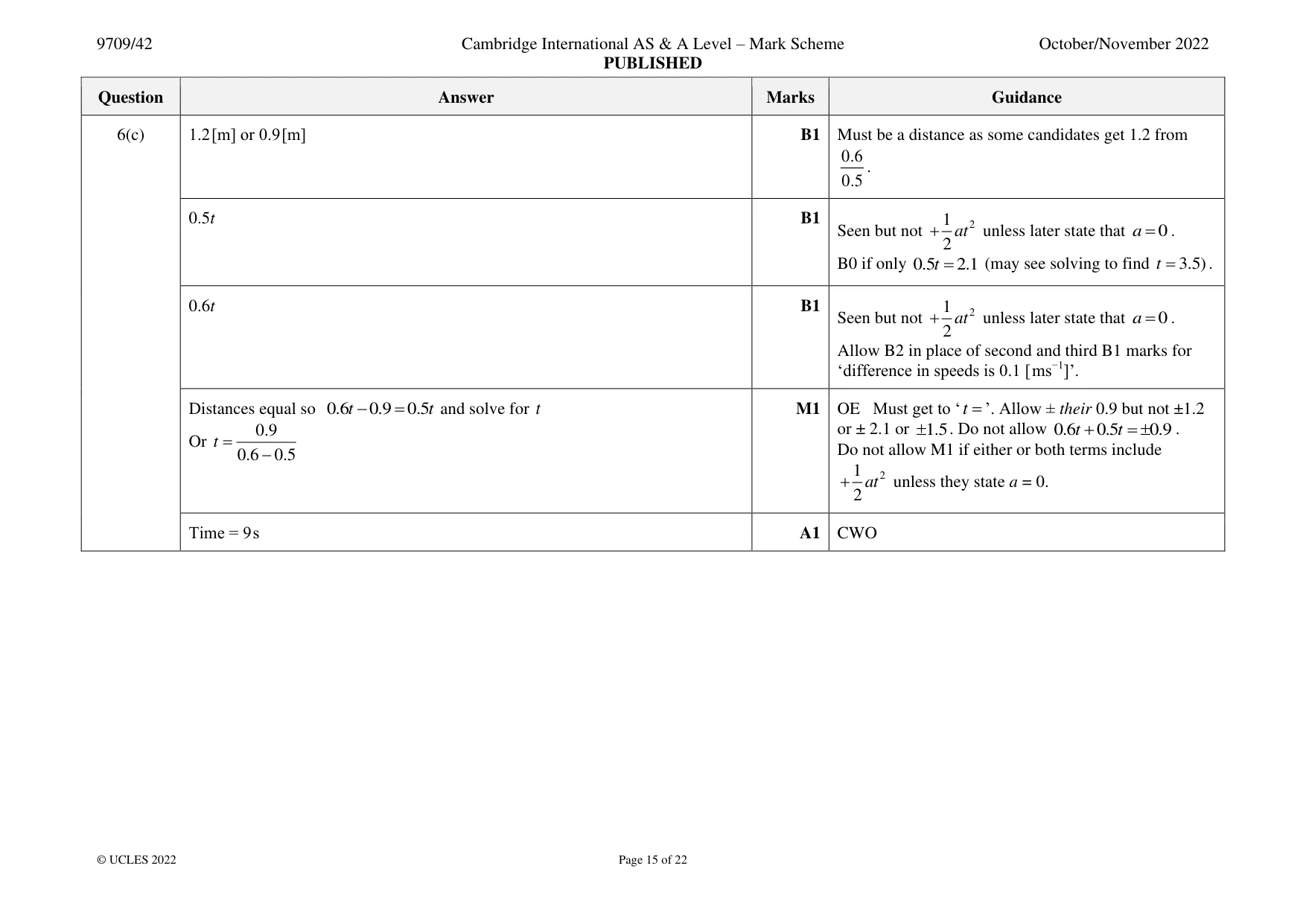
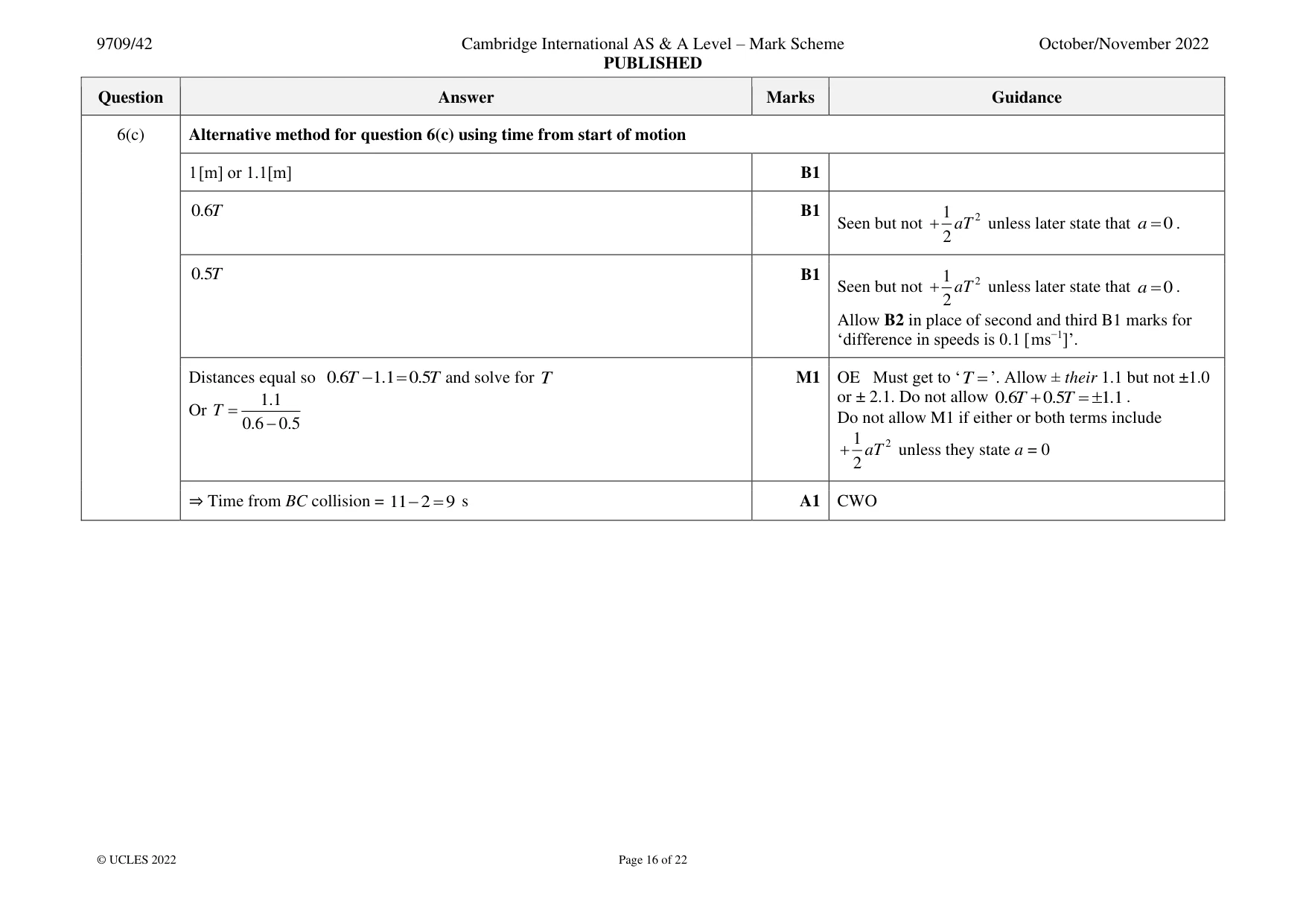
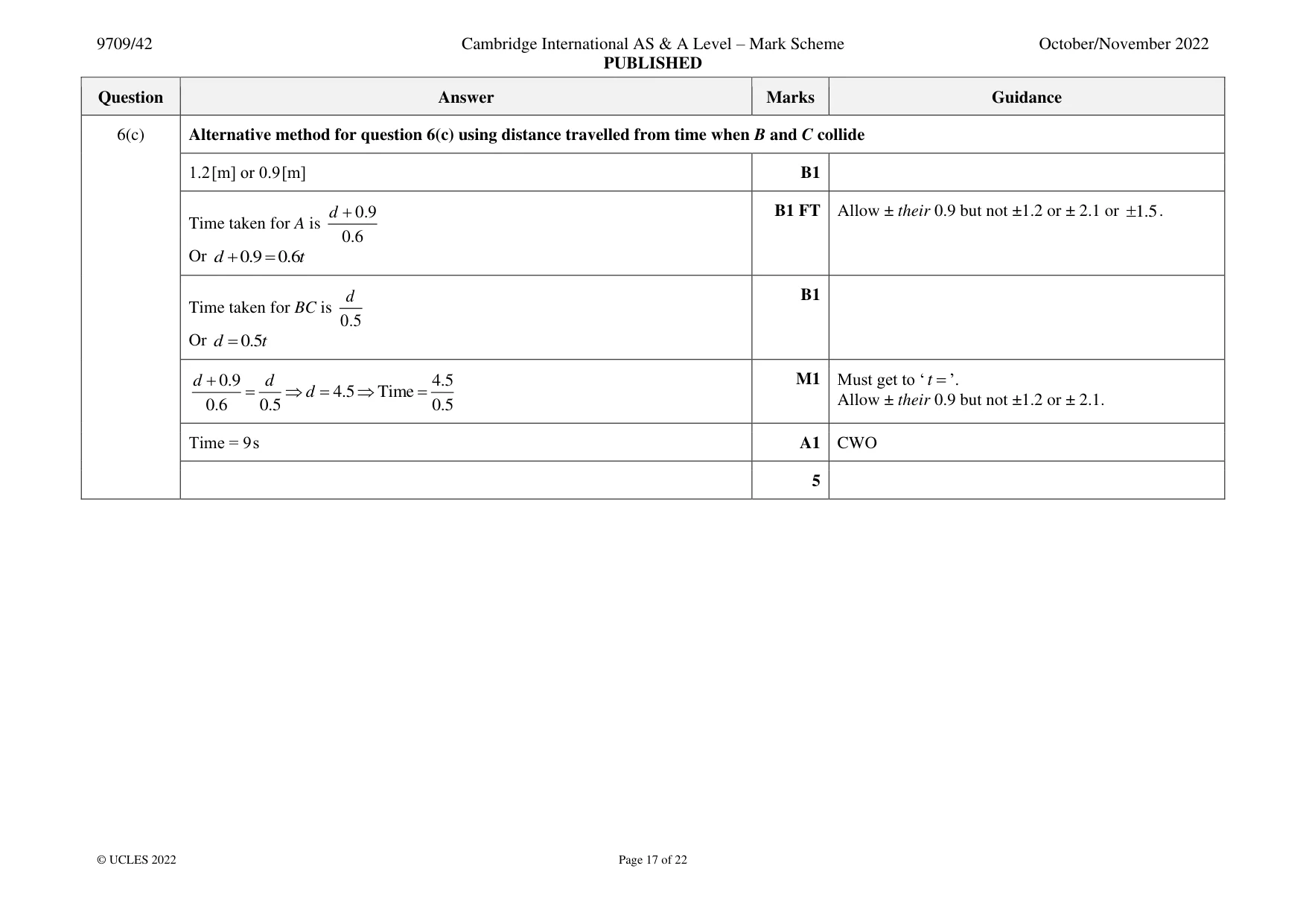
Mark scheme: 6(a) 0.3 2 +0 = 0.3 0.6 + 0.4 v M1 For use of conservation of momentum. Must be 3 terms. Allow sign errors. Speed of B = 1.05 ms−1 A1 AG Allow M1 A0 if g included with the masses. 2 6(b) 0.4 1.05 +0 = ( 0.4 + m ) 0.5 M1 For use of conservation of momentum. Must be 3 terms. Allow sign errors. 11 A1 Allow M1 A0 if g included with the masses. m = 0.44 or 25 2 6(c) 1.2 [m] or 0.9 [m] B1 Must be a distance as some candidates get 1.2 from 0.6 . 0.5 0.5t B1 1 2 Seen but not + at unless later state that a = 0 . 2 B0 if only 0.5t = 2.1 (may see solving to find t = 3.5) . 0.6t B1 1 2 Seen but not + at unless later state that a = 0 . 2 Allow B2 in place of second and third B1 marks for ‘difference in speeds is 0.1 [ ms−1]’. Distances equal so 0.6t − 0.9 = 0.5t and solve for t M1 OE Must get to ‘ t = ’. Allow ± their 0.9 but not ±1.2 0.9 or ± 2.1 or 1.5 . Do not allow 0.6t + 0.5t = 0.9 . Or t = Do not allow M1 if either or both terms include 0.6 − 0.5 1 2 + at unless they state a = 0. 2 Time = 9 s A1 CWO 6(c) Alternative method for question 6(c) using time from start of motion 1 [m] or 1.1[m] B1 0.6T B1 1 2 Seen but not + aT unless later state that a = 0 . 2 0.5T B1 1 2 Seen but not + aT unless later state that a = 0 . 2 Allow B2 in place of second and third B1 marks for ‘difference in speeds is 0.1 [ ms−1]’. Distances equal so 0.6T − 1.1 = 0.5T and solve for T M1 OE Must get to ‘ T = ’. Allow ± their 1.1 but not ±1.0 1.1 or ± 2.1. Do not allow 0.6T + 0.5T = 1.1 . Or T = Do not allow M1 if either or both terms include 0.6 − 0.5 1 2 + aT unless they state a = 0 2 ⇒ Time from BC collision = 11 − 2 = 9 s A1 CWO 6(c) Alternative method for question 6(c) using distance travelled from time when B and C collide 1.2 [m] or 0.9 [m] B1 d + 0.9 B1 FT Allow ± their 0.9 but not ±1.2 or ± 2.1 or 1.5 . Time taken for A is 0.6 Or d + 0.9 = 0.6t d B1 Time taken for BC is 0.5 Or d = 0.5t d + 0.9 d 4.5 M1 Must get to ‘ t = ’. = d = 4.5 Time = Allow ± their 0.9 but not ±1.2 or ± 2.1. 0.6 0.5 0.5 Time = 9 s A1 CWO 5
Q7 · A particle P travels in a straight line, starting at rest from a point O
7 A particle P travels in a straight line, starting at rest from a point O. The acceleration of P at time t s after leaving O is denoted by ams−2, where 1 a = 0.3t 2 for 0 ≤t ≤4, a = −kt−3 2 for 4 < t ≤T, where k and T are constants. (a) Find the velocity of P at t = 4. [2] ........................................................................................................................................................ ........................................................................................................................................................ ........................................................................................................................................................ ........................................................................................................................................................ ........................................................................................................................................................ ........................................................................................................................................................ ........................................................................................................................................................ (b) It is given that there is no change in the velocity of P at t = 4 and that the velocity of P at t = 16 is 0.3ms−1. Show that k = 2.6 and find an expression, in terms of t, for the velocity of P for 4 ≤t ≤T. [4] ........................................................................................................................................................ ........................................................................................................................................................ ........................................................................................................................................................ ........................................................................................................................................................ ........................................................................................................................................................ ........................................................................................................................................................ ........................................................................................................................................................ ........................................................................................................................................................ ........................................................................................................................................................ ........................................................................................................................................................ ........................................................................................................................................................ ........................................................................................................................................................ (c) Given that P comes to instantaneous rest at t = T, find the exact value of T. [2] ........................................................................................................................................................ ........................................................................................................................................................ ........................................................................................................................................................ ........................................................................................................................................................ ........................................................................................................................................................ ........................................................................................................................................................ ........................................................................................................................................................ (d) Find the total distance travelled between t = 0 and t = T. [4] ........................................................................................................................................................ ........................................................................................................................................................ ........................................................................................................................................................ ........................................................................................................................................................ ........................................................................................................................................................ ........................................................................................................................................................ ........................................................................................................................................................ ........................................................................................................................................................ ........................................................................................................................................................ ........................................................................................................................................................ ........................................................................................................................................................ ........................................................................................................................................................ ........................................................................................................................................................ ........................................................................................................................................................ ........................................................................................................................................................ ........................................................................................................................................................ ........................................................................................................................................................
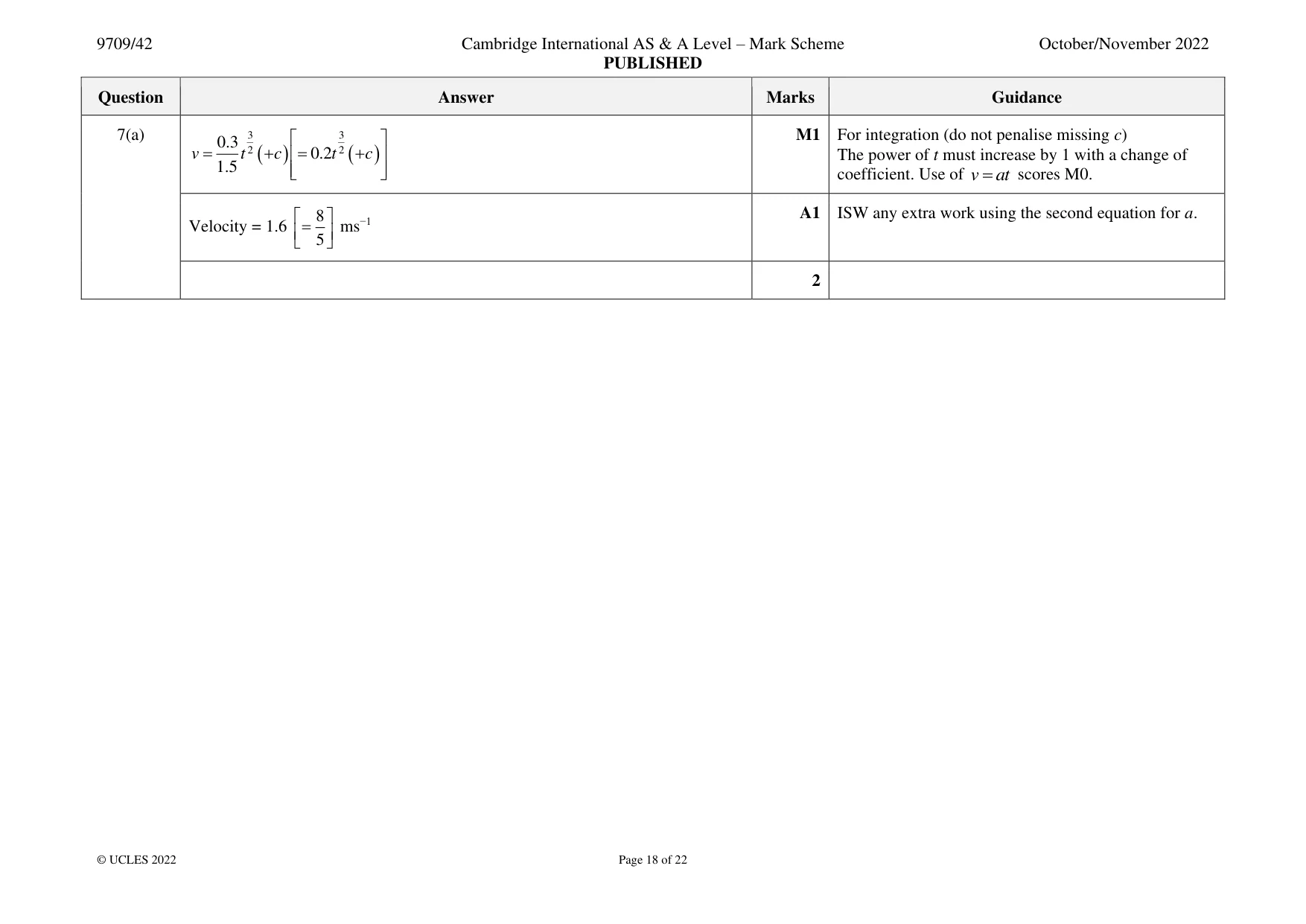
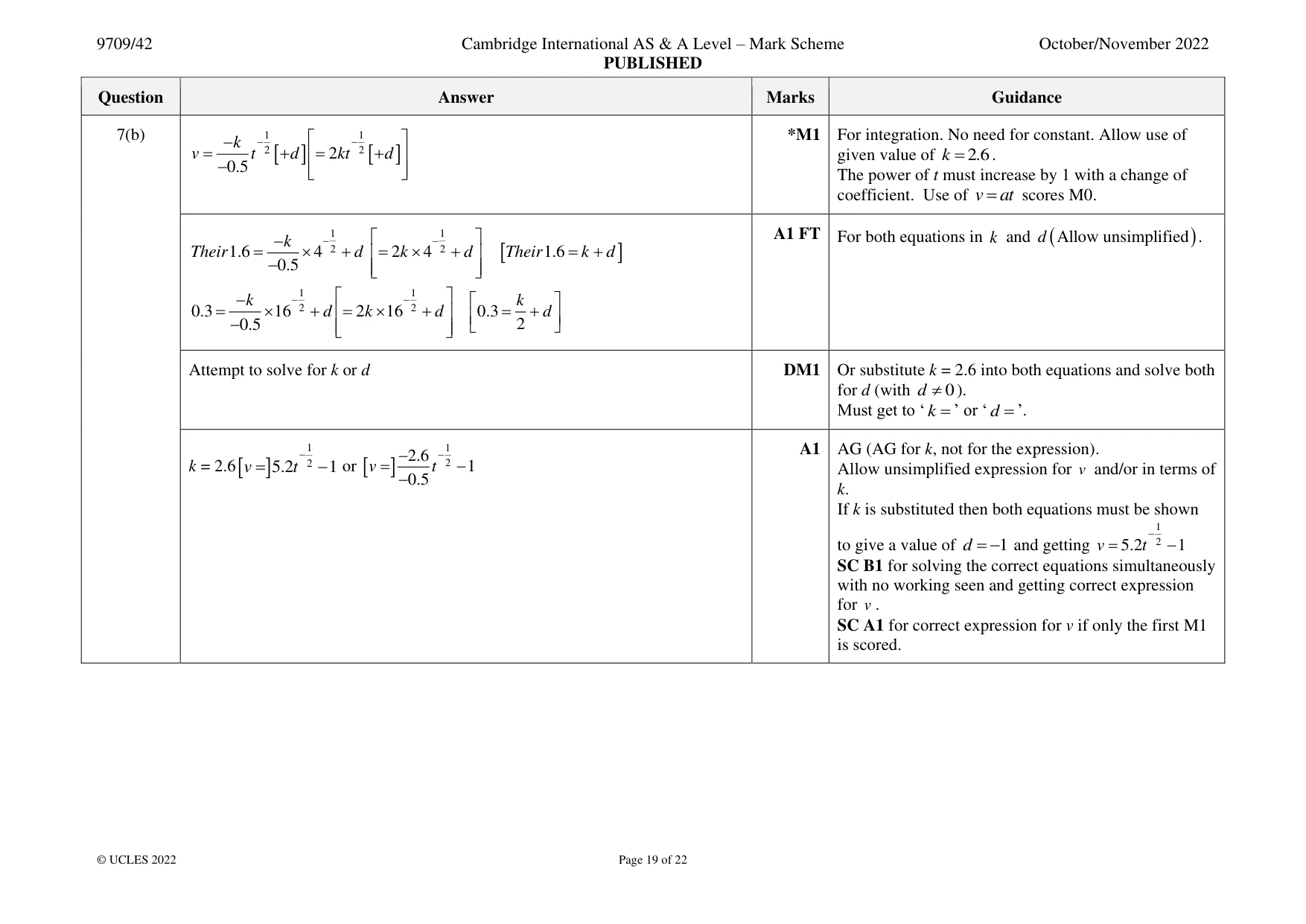
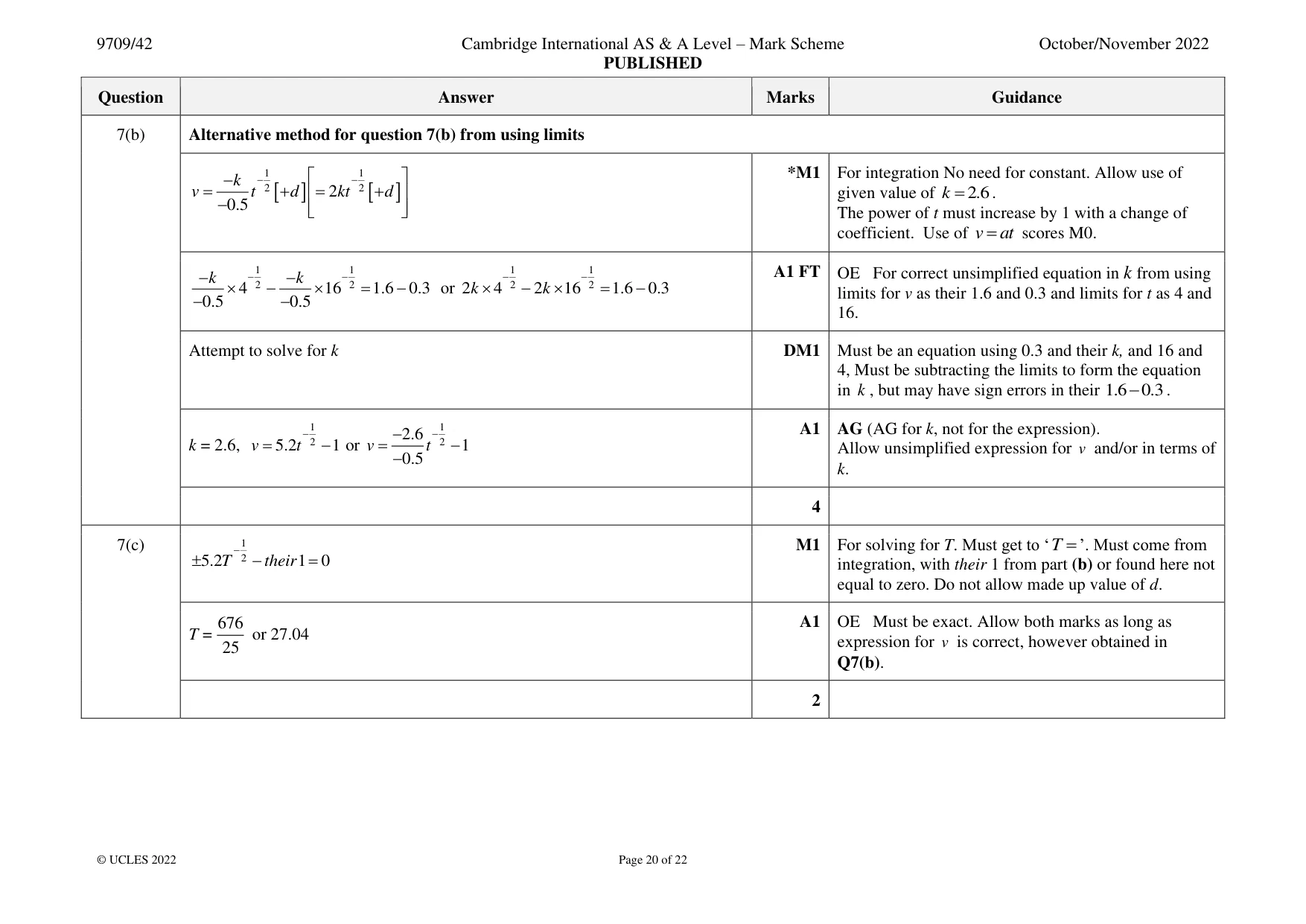
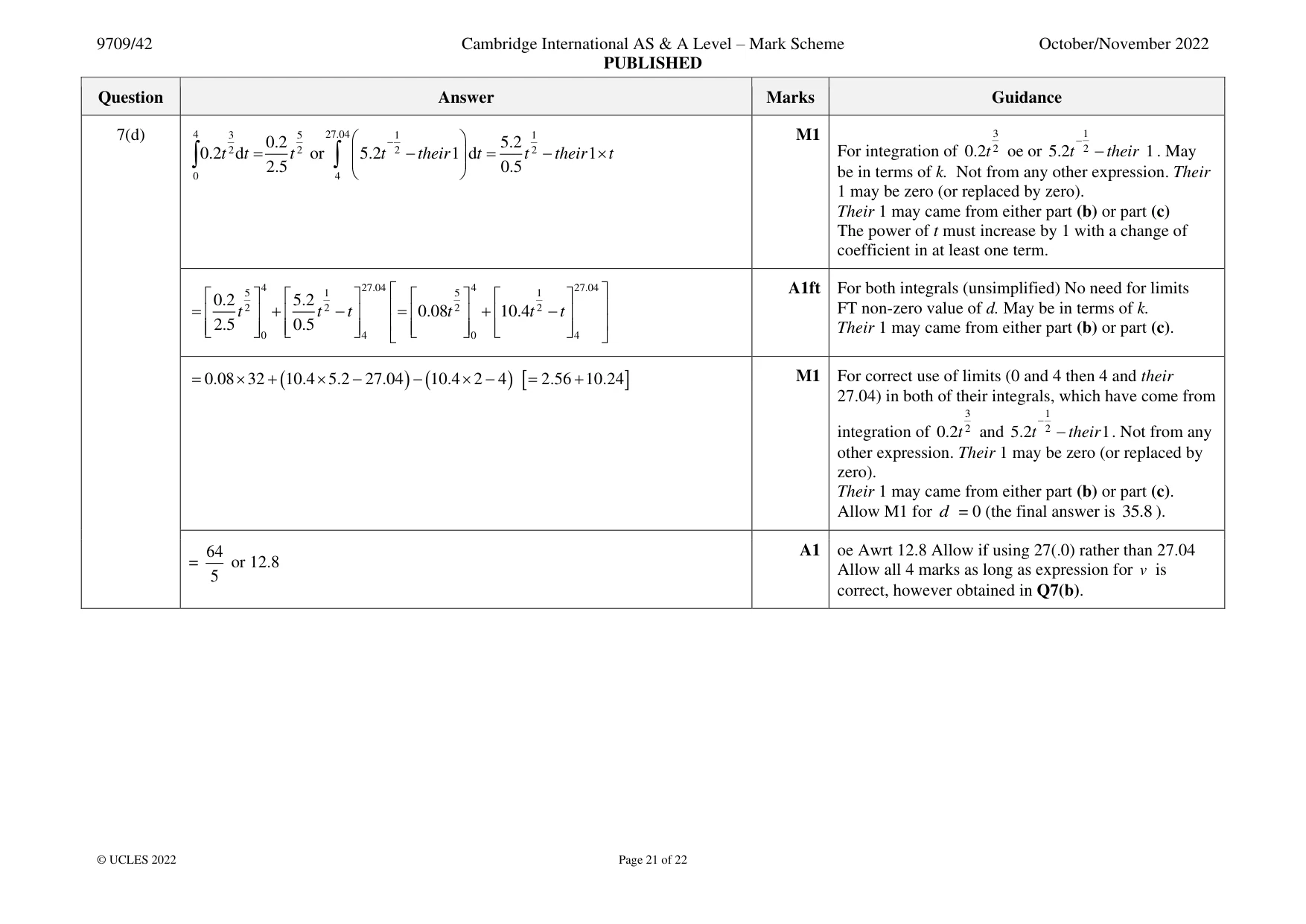
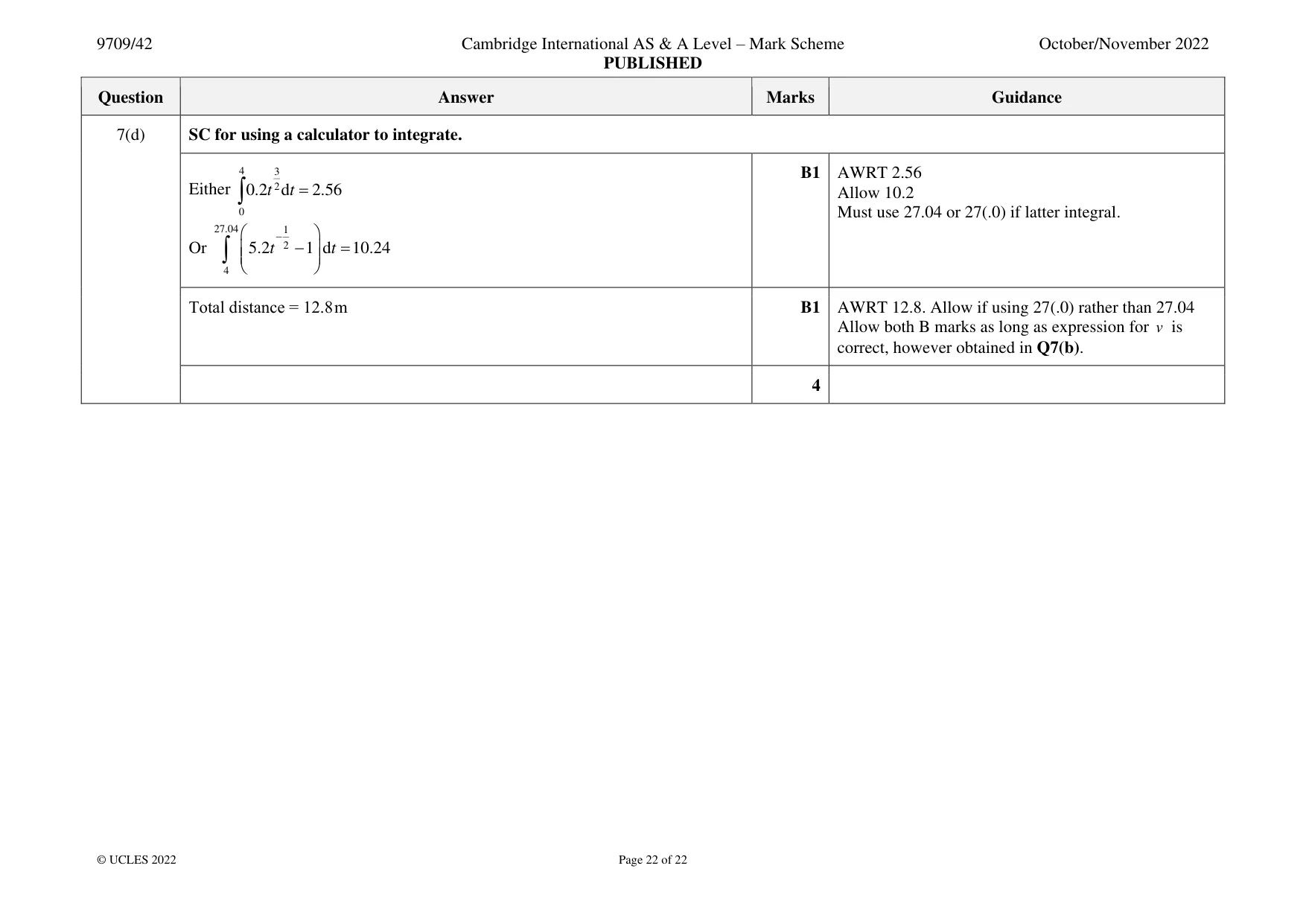
Mark scheme: 7(a) 0.3 32 32 M1 For integration (do not penalise missing c) v = t ( + c ) = 0.2t ( + c ) The power of t must increase by 1 with a change of 1.5 coefficient. Use of v = at scores M0. 8 A1 ISW any extra work using the second equation for a. Velocity = 1.6 = ms−1 5 2 17(b) − *M1 For integration. No need for constant. Allow use of − k − 12 2 v = t + d = 2 kt + d given value of k = 2.6 . −0.5 The power of t must increase by 1 with a change of coefficient. Use of v = at scores M0. 1 − A1 FT For both equations in k and d ( Allow unsimplified ) . − k − 12 2 Their 1.6 = 4 + d = 2 k 4 + d Their 1.6 = k + d −0.5 − k − k − 12 1 2 0.3 = 16 + d = 2 k 16 + d 0.3 = + d −0.5 2 Attempt to solve for k or d DM1 Or substitute k = 2.6 into both equations and solve both for d (with d 0 ). Must get to ‘ k = ’ or ‘ d = ’. 1 − −2.6 − 12 A1 AG (AG for k, not for the expression). 2 k = 2.6 v = 5.2t − 1 or v = t − 1 Allow unsimplified expression for v and/or in terms of −0.5 k. If k is substituted then both equations must be shown 1 − to give a value of d = −1 and getting v = 5.2t 2 − 1 SC B1 for solving the correct equations simultaneously with no working seen and getting correct expression for v . SC A1 for correct expression for v if only the first M1 is scored. 7(b) Alternative method for question 7(b) from using limits 1 − *M1 For integration No need for constant. Allow use of − k − 12 2 v = t + d = 2 kt + d given value of k = 2.6 . −0.5 The power of t must increase by 1 with a change of coefficient. Use of v = at scores M0. 1 1 1 − − − A1 FT OE For correct unsimplified equation in k from using − k − 12 − k 2 2 2 4 − 16 = 1.6 − 0.3 or 2 k 4 − 2 k 16 = 1.6 − 0.3 limits for v as their 1.6 and 0.3 and limits for t as 4 and −0.5 −0.5 16. Attempt to solve for k DM1 Must be an equation using 0.3 and their k, and 16 and 4, Must be subtracting the limits to form the equation in k , but may have sign errors in their 1.6 − 0.3 . 1 − 2 −2.6 − 12 A1 AG (AG for k, not for the expression). k = 2.6, v = 5.2t − 1 or v = t − 1 Allow unsimplified expression for v and/or in terms of −0.5 k. 4 7(c) − 1 M1 For solving for T. Must get to ‘ T = ’. Must come from 5.2T 2 − their 1 = 0 integration, with their 1 from part (b) or found here not equal to zero. Do not allow made up value of d. 676 A1 OE Must be exact. Allow both marks as long as T = or 27.04 expression for v is correct, however obtained in 25 Q7(b). 2 3 1 3 5 1 17(d) 4 M1 − 27.04 0.2 5.2 For integration of 0.2t 2 oe or 5.2t −− 0.2t 2 dt = t 2 or 2 − their 1 t 2 − their 1 t 5.2t dt = 2.5 0.5 2 their 1 . May 0 4 be in terms of k. Not from any other expression. Their 1 may be zero (or replaced by zero). Their 1 may came from either part (b) or part (c) The power of t must increase by 1 with a change of coefficient in at least one term. 4 5 1 27.04 5 4 1 27.04 A1ft For both integrals (unsimplified) No need for limits 0.2 5.2 FT non-zero value of d. May be in terms of k. = t 2 t 2 − t = + 0.08t 2 + 10.4t 2 − t Their 1 may came from either part (b) or part (c). 2.5 0 0.5 4 0 4 = 0.08 32 + (10.4 5.2 − 27.04 ) − (10.4 2 − 4 ) = 2.56 + 10.24 M1 For correct use of limits (0 and 4 then 4 and their 27.04) in both of their integrals, which have come from 3 1 integration of 0.2t 2 and 5.2t −− 2 their 1 . Not from any other expression. Their 1 may be zero (or replaced by zero). Their 1 may came from either part (b) or part (c). Allow M1 for d = 0 (the final answer is 35.8 ). 64 A1 oe Awrt 12.8 Allow if using 27(.0) rather than 27.04 = or 12.8 Allow all 4 marks as long as expression for v is 5 correct, however obtained in Q7(b). 7(d) SC for using a calculator to integrate. 4 3 B1 AWRT 2.56 Either 0.2t 2 dt = 2.56 Allow 10.2 0 Must use 27.04 or 27(.0) if latter integral. 27.04 − 1 Or 5.2t 2 − 1 dt = 10.24 4 Total distance = 12.8 m B1 AWRT 12.8. Allow if using 27(.0) rather than 27.04 Allow both B marks as long as expression for v is correct, however obtained in Q7(b). 4
What was in this paper
The subtopics covered by these 7 questions, and how many questions each got. Open one in a new tab to see every Cambridge question on it.
What you needed in this session
Cambridge’s own grade thresholds for 2022 Oct/Nov, Paper 4 · Variant 2. A higher threshold means an easier paper — the bar moves with how the cohort did.