Cambridge A Level Mathematics 9709 — 2019 Oct/Nov Paper 4 · Variant 2
9709/42/O/N/19 · 7 questions · 50 marks · ≈56 min
The question paper and its mark scheme, free to read here and free to download. This is Cambridge’s own paper, exactly as it was sat.
Question paper16 pages

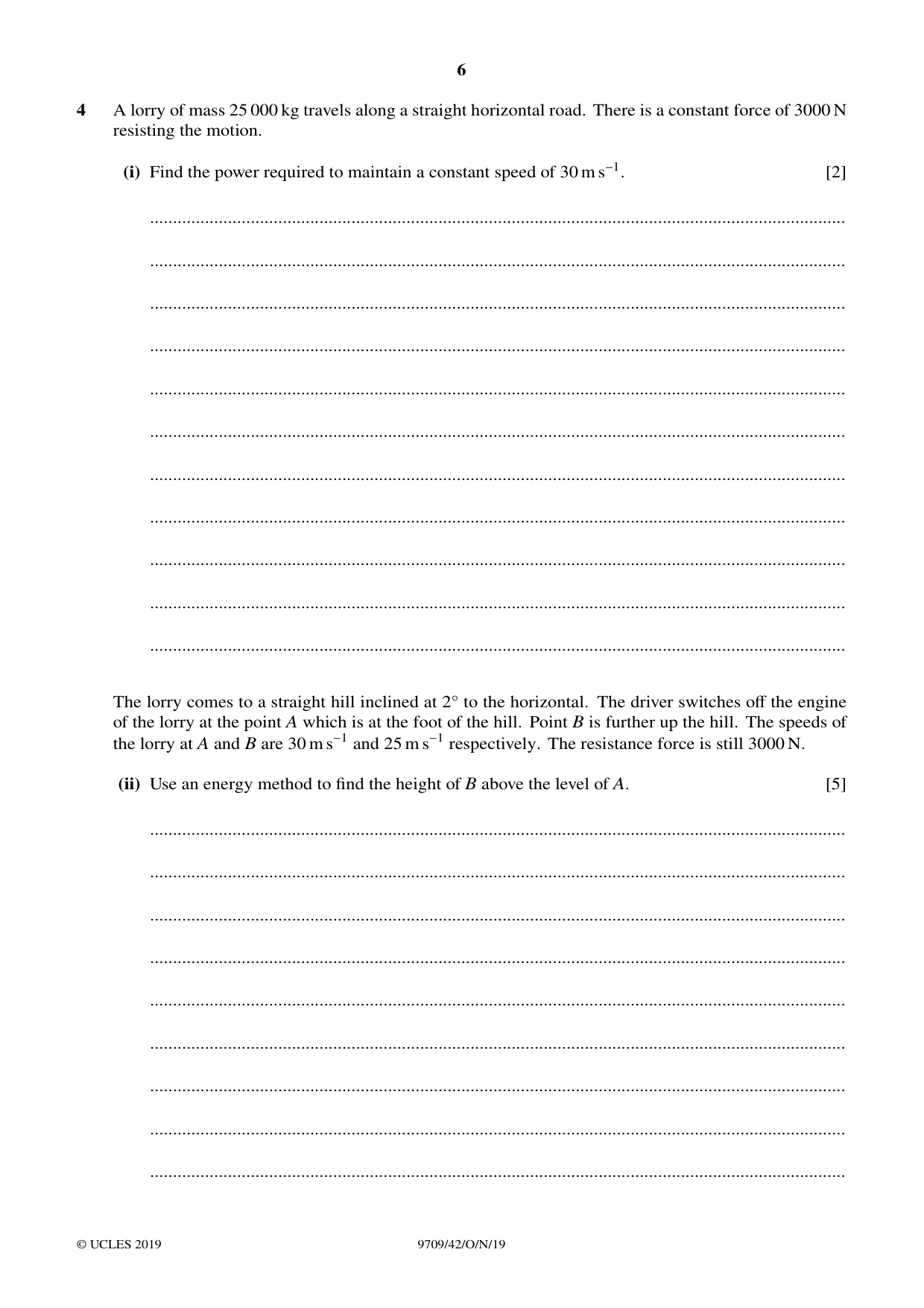

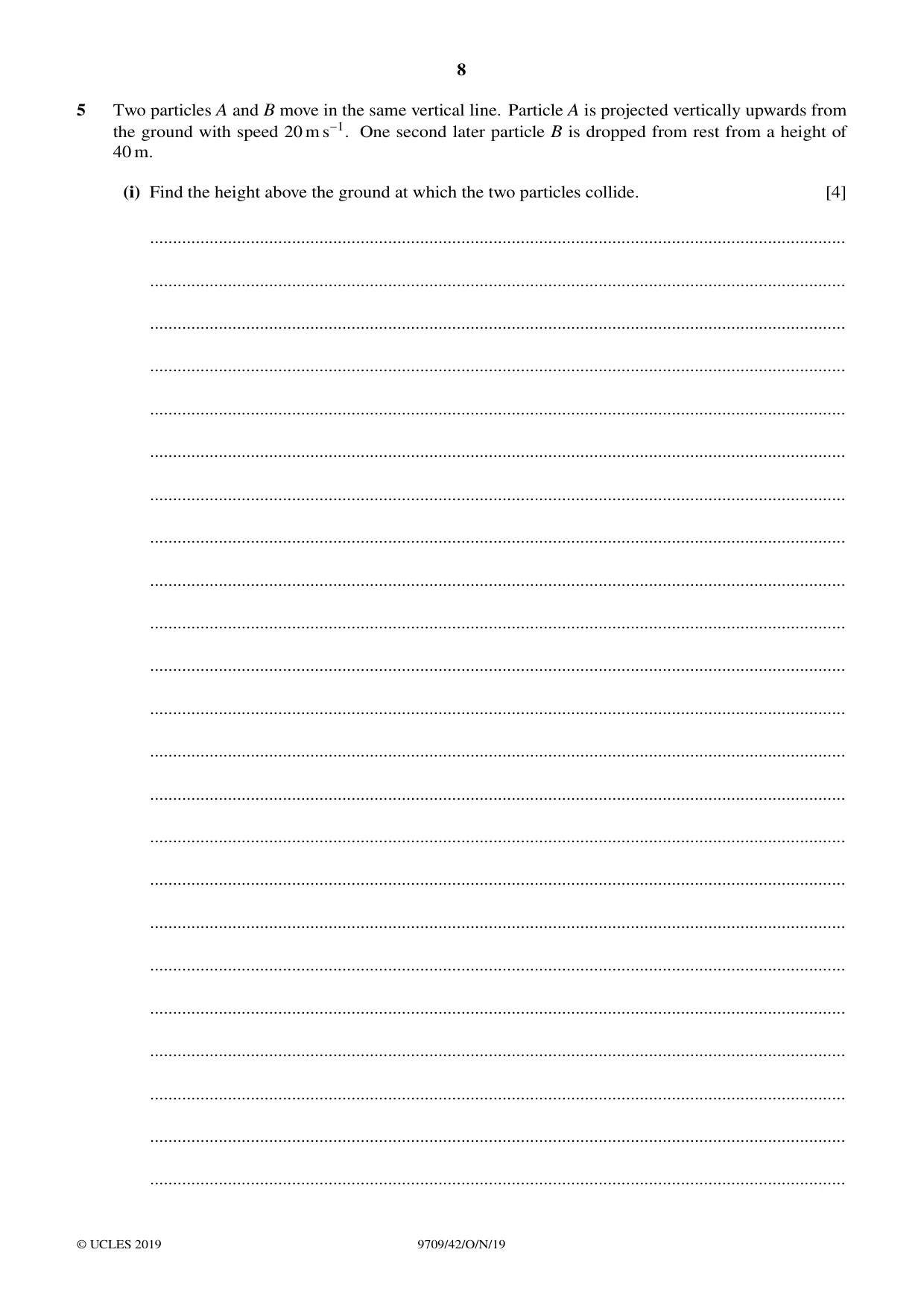
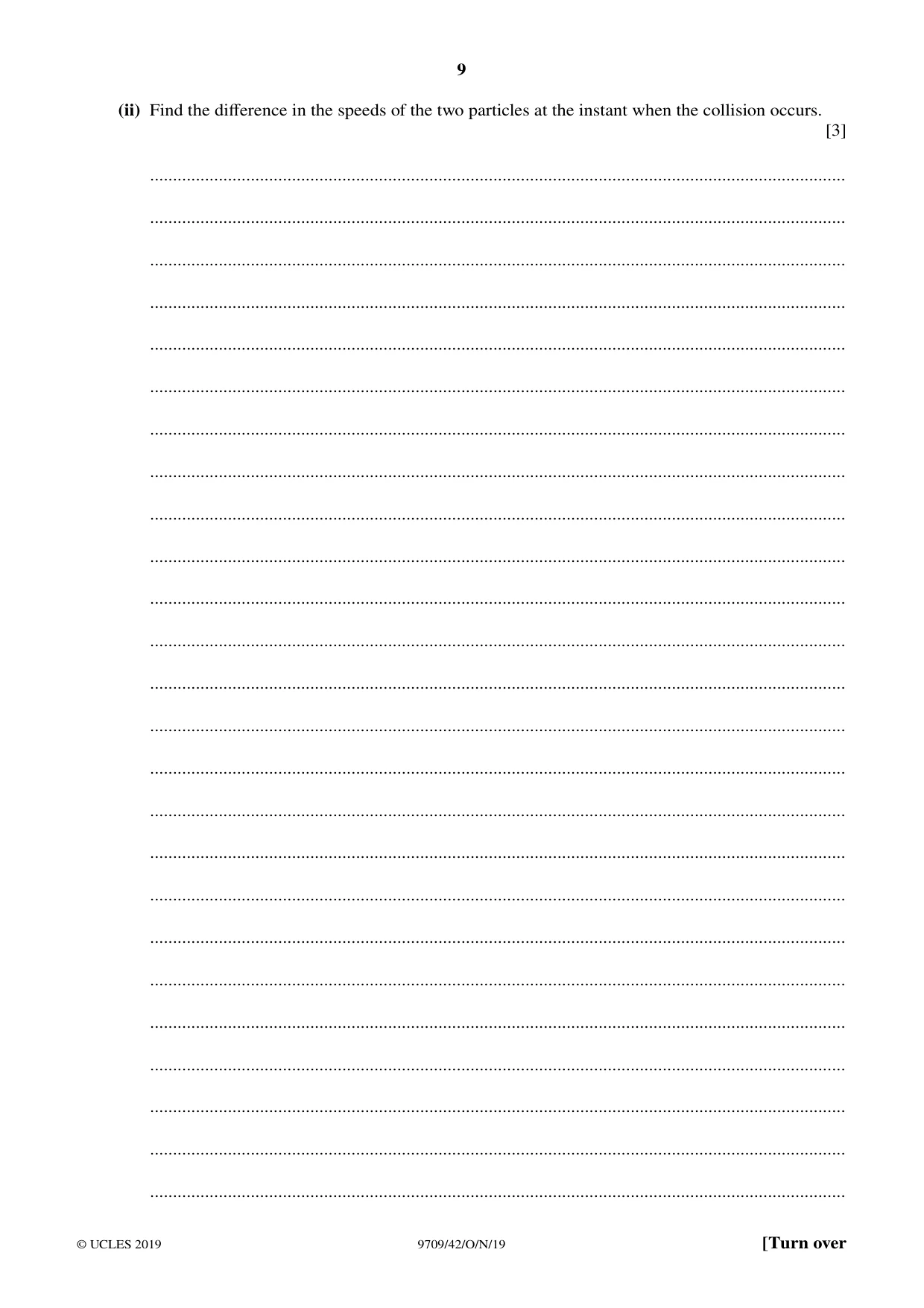
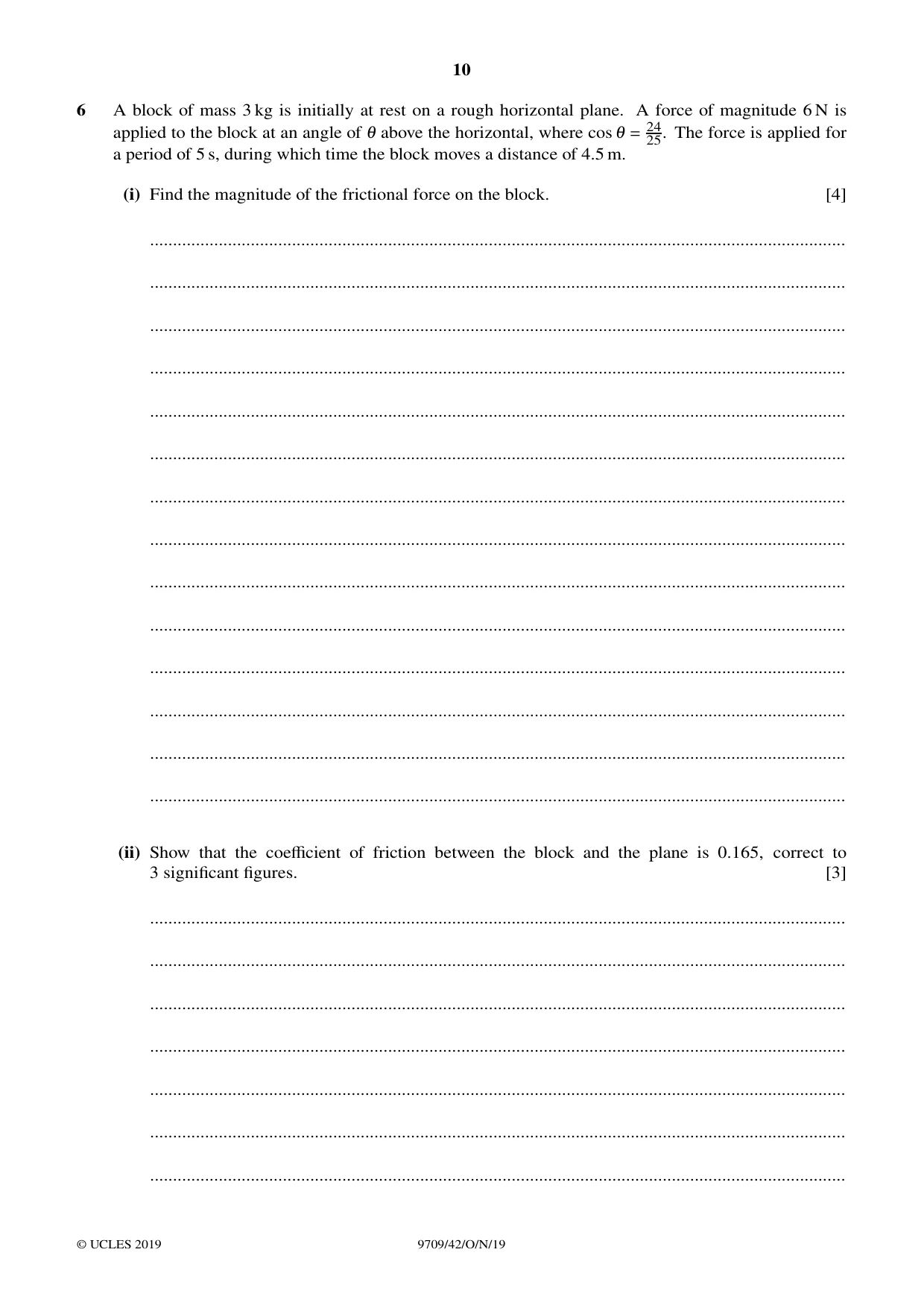

Mark scheme13 pages
Answers below. Sit the paper first if you are practising.
Questions as text
Q1 · A particle moves in a straight line
1 A particle moves in a straight line. The displacement of the particle at time t s is s m, where s = t3 −6t2 + 4t. Find the velocity of the particle at the instant when its acceleration is zero. [4] ................................................................................................................................................................ ................................................................................................................................................................ ................................................................................................................................................................ ................................................................................................................................................................ ................................................................................................................................................................ ................................................................................................................................................................ ................................................................................................................................................................ ................................................................................................................................................................ ................................................................................................................................................................ ................................................................................................................................................................ ................................................................................................................................................................ ................................................................................................................................................................ ................................................................................................................................................................ ................................................................................................................................................................ ................................................................................................................................................................ ................................................................................................................................................................ ................................................................................................................................................................ ................................................................................................................................................................ ................................................................................................................................................................ ................................................................................................................................................................ ................................................................................................................................................................ ................................................................................................................................................................ ................................................................................................................................................................
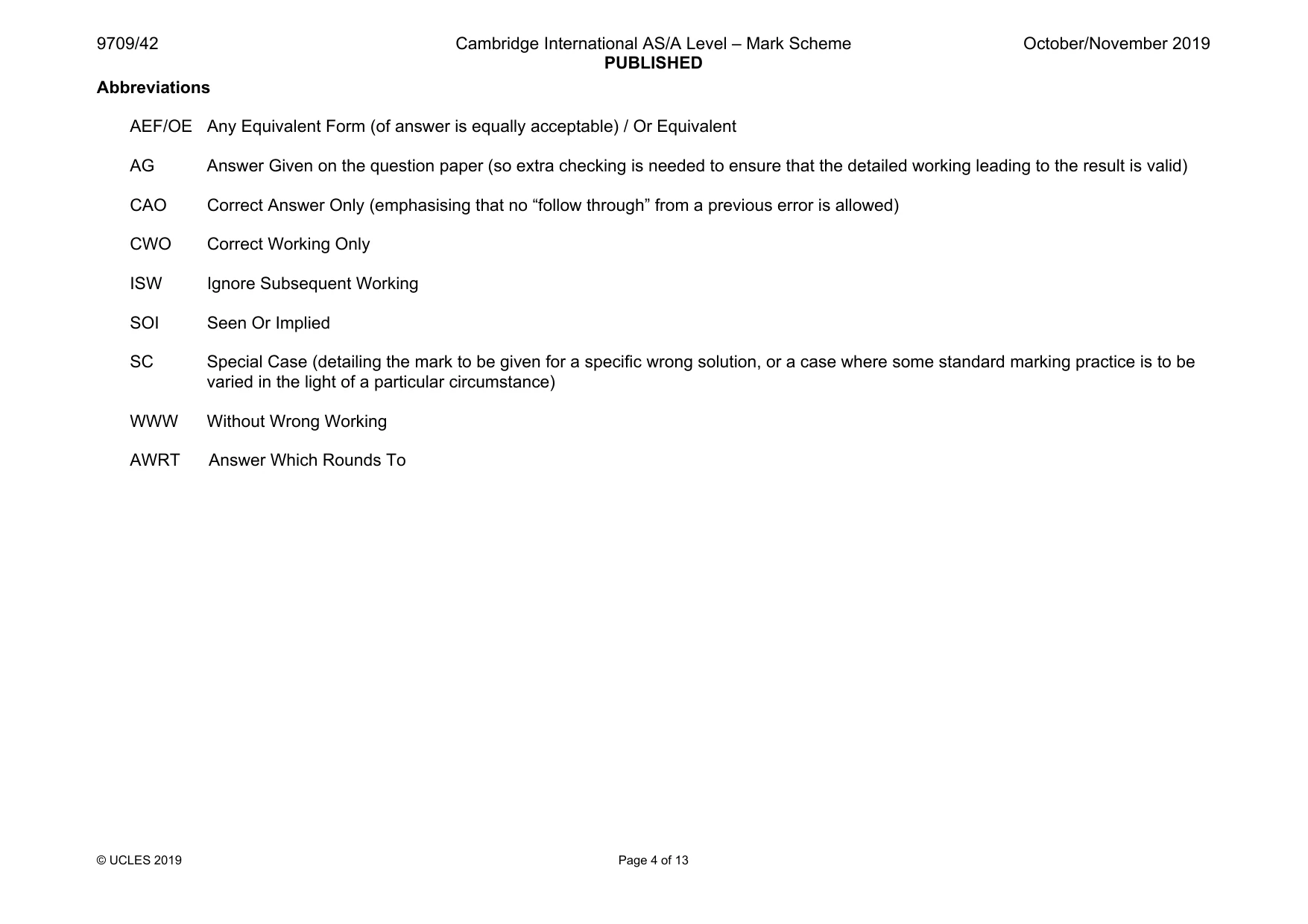
Mark scheme: 1 *M1 Attempt at differentiation of s to find v (a =) 6t – 12 *M1 Attempt at differentiation of v to find a [When a = 0, t = 2] DM1 Solve to find t when a = 0 and find v at this time v = –8 ms–1 A1 Alternative method for question 1 (v =) 3t2 – 12t + 4 M1 Attempt at differentiation of s to find v (v =) 3(t – 2)2 – 8 or 12 2 2 6 − = = = b t a M1 For using the method of completing the square or using the value of‘ ' ' 2 b a − to find the t value of the minimum velocity M1 Use of the t value at minimum velocity to find v v = –8 ms–1 A1 4
Q2 · V (m s−1) 12 V U 0 t (s) 0 5 30 35 50 The diagram shows a velocity-time graph which…
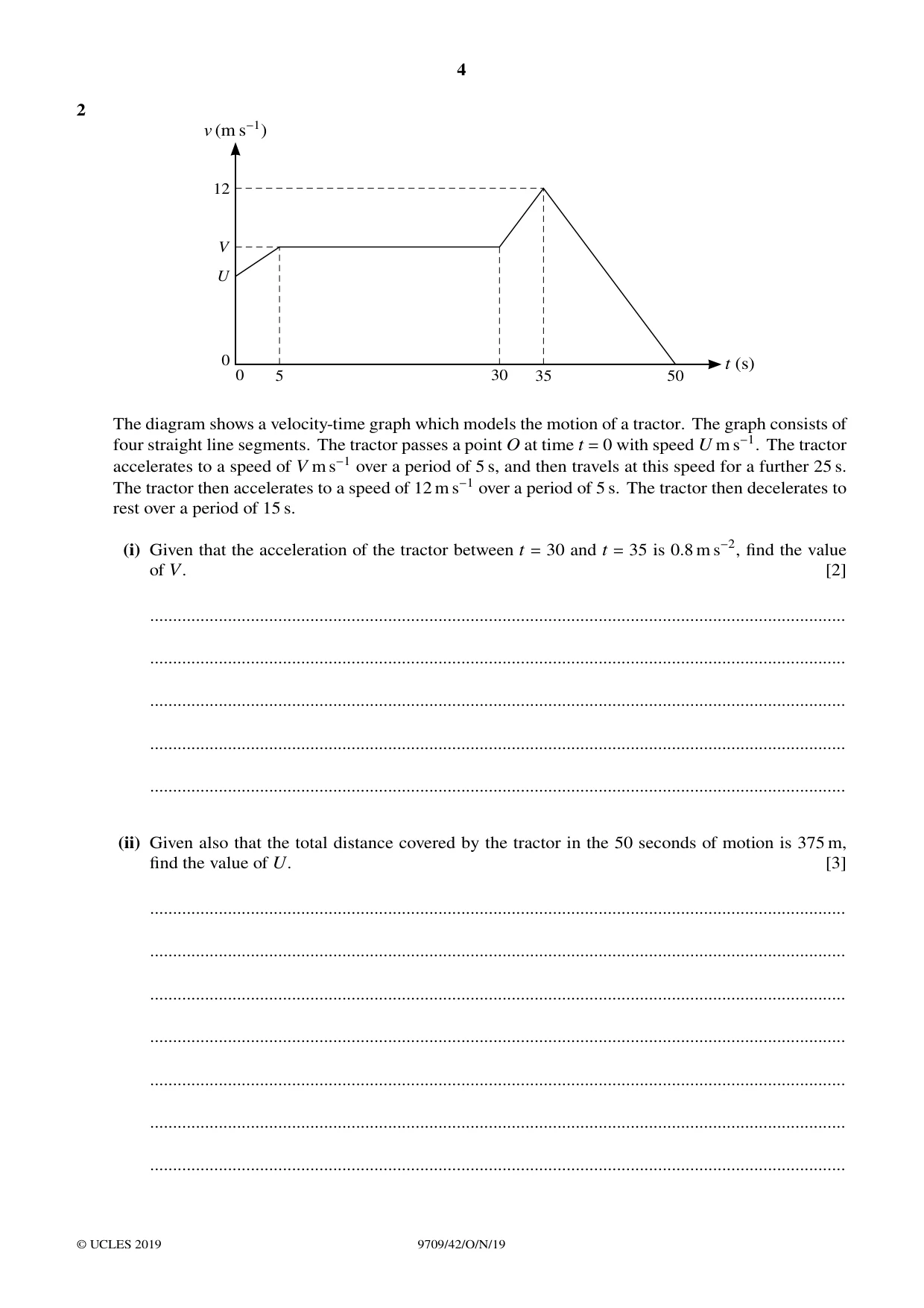
2 v (m s−1) 12 V U 0 t (s) 0 5 30 35 50 The diagram shows a velocity-time graph which models the motion of a tractor. The graph consists of four straight line segments. The tractor passes a point O at time t = 0 with speed U m s−1. The tractor accelerates to a speed of V m s−1 over a period of 5 s, and then travels at this speed for a further 25 s. The tractor then accelerates to a speed of 12 m s−1 over a period of 5 s. The tractor then decelerates to rest over a period of 15 s. (i) Given that the acceleration of the tractor between t = 30 and t = 35 is 0.8 m s−2, find the value of V. [2] ........................................................................................................................................................ ........................................................................................................................................................ ........................................................................................................................................................ ........................................................................................................................................................ ........................................................................................................................................................ (ii) Given also that the total distance covered by the tractor in the 50 seconds of motion is 375 m, find the value of U. [3] ........................................................................................................................................................ ........................................................................................................................................................ ........................................................................................................................................................ ........................................................................................................................................................ ........................................................................................................................................................ ........................................................................................................................................................ ........................................................................................................................................................
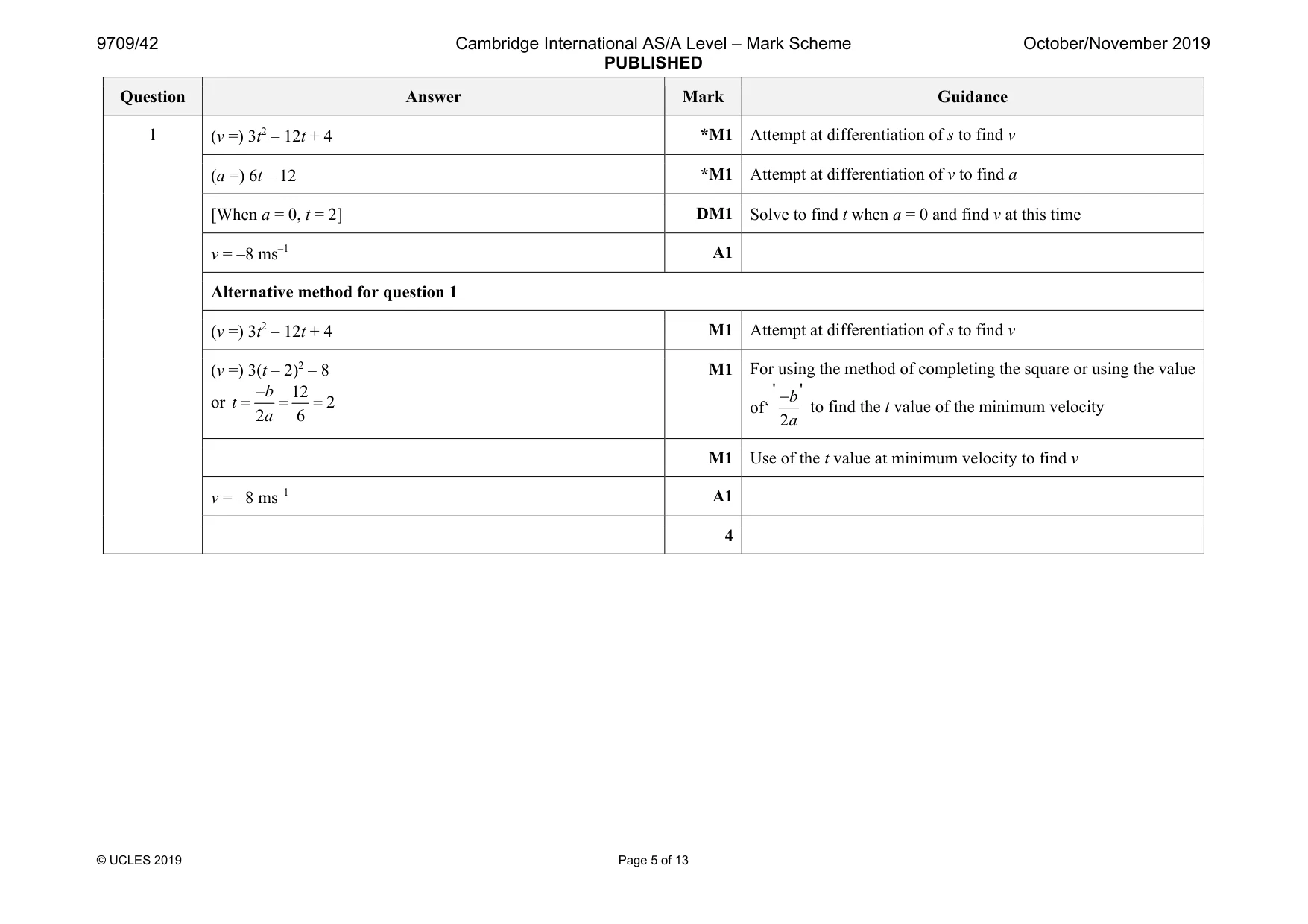
Mark scheme: 2(i) ( ) 12 0.8 35 30 − = − V or 12 = V + 0.8 × 5 an equation in V V = 8 A1 2 2(ii) ( ) 1 25 8 5 10 15 6 8 5 375 2 × + × + × + × + × = U M1 Attempt to find total distance travelled by the tractor in 50s to set up an equation for U using EITHER areas OR suvat equations OR a combination of areas and suvat In either case total distance must be attempted A1FT Correct equation FT on their V from (i) U = 6 A1 3
Q3 · 5 N P 0.3 kg 0.9 m 1.2 m A B A particle P of mass 0.3 kg is held in equilibrium above a…
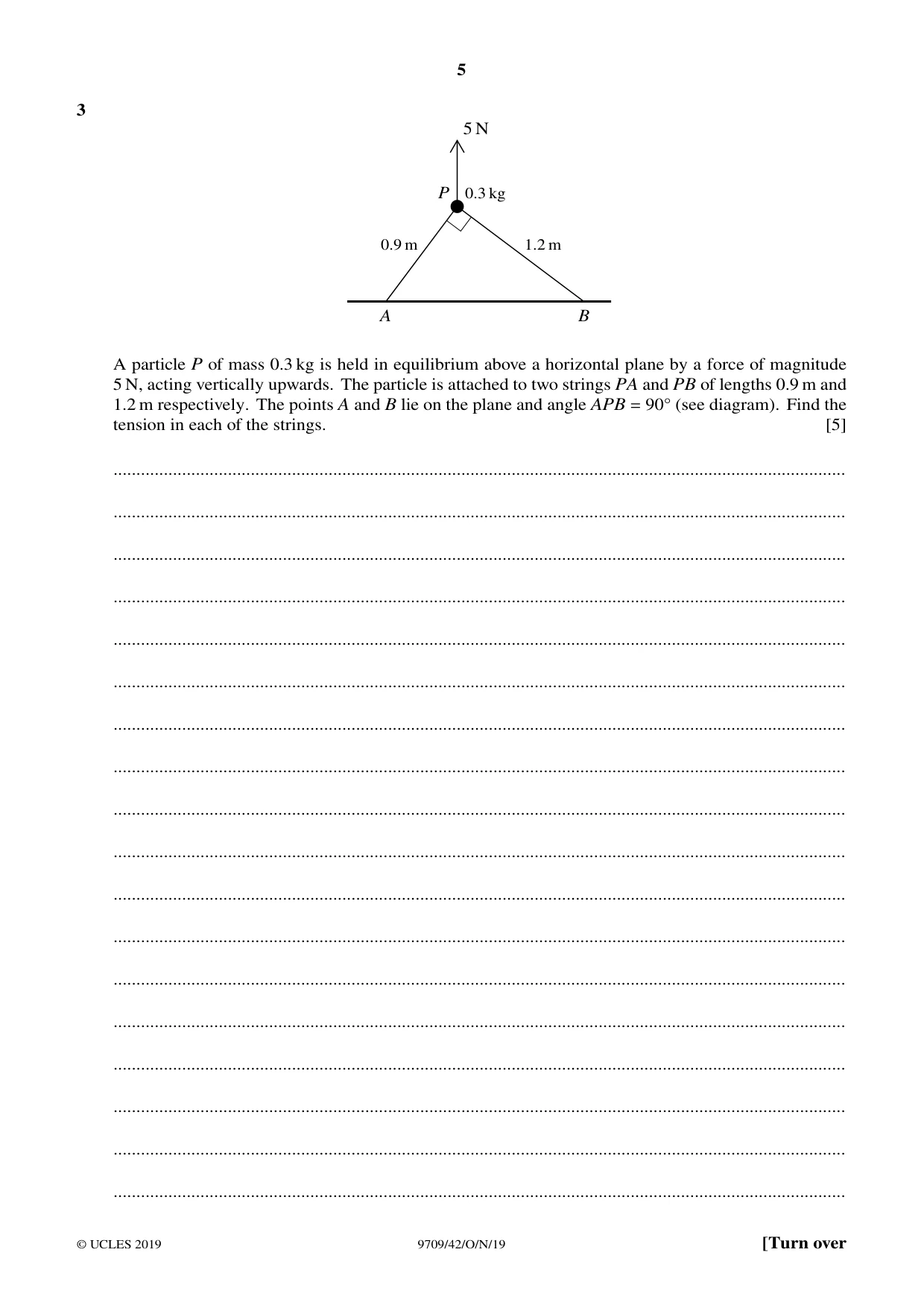
3 5 N P 0.3 kg 0.9 m 1.2 m A B A particle P of mass 0.3 kg is held in equilibrium above a horizontal plane by a force of magnitude 5 N, acting vertically upwards. The particle is attached to two strings PA and PB of lengths 0.9 m and 1.2 m respectively. The points A and B lie on the plane and angle APB = 90Å (see diagram). Find the tension in each of the strings. [5] ................................................................................................................................................................ ................................................................................................................................................................ ................................................................................................................................................................ ................................................................................................................................................................ ................................................................................................................................................................ ................................................................................................................................................................ ................................................................................................................................................................ ................................................................................................................................................................ ................................................................................................................................................................ ................................................................................................................................................................ ................................................................................................................................................................ ................................................................................................................................................................ ................................................................................................................................................................ ................................................................................................................................................................ ................................................................................................................................................................ ................................................................................................................................................................ ................................................................................................................................................................ ................................................................................................................................................................
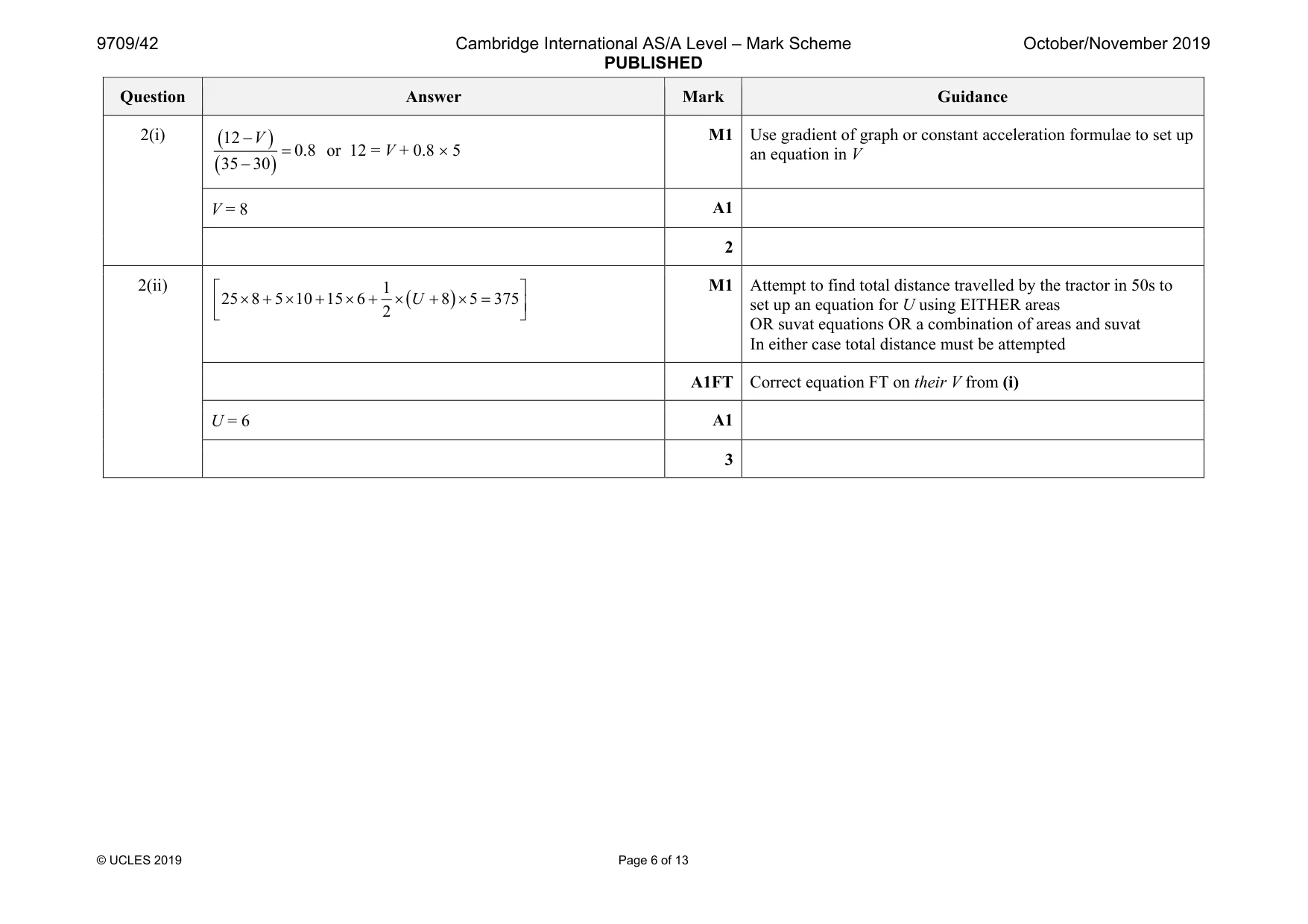
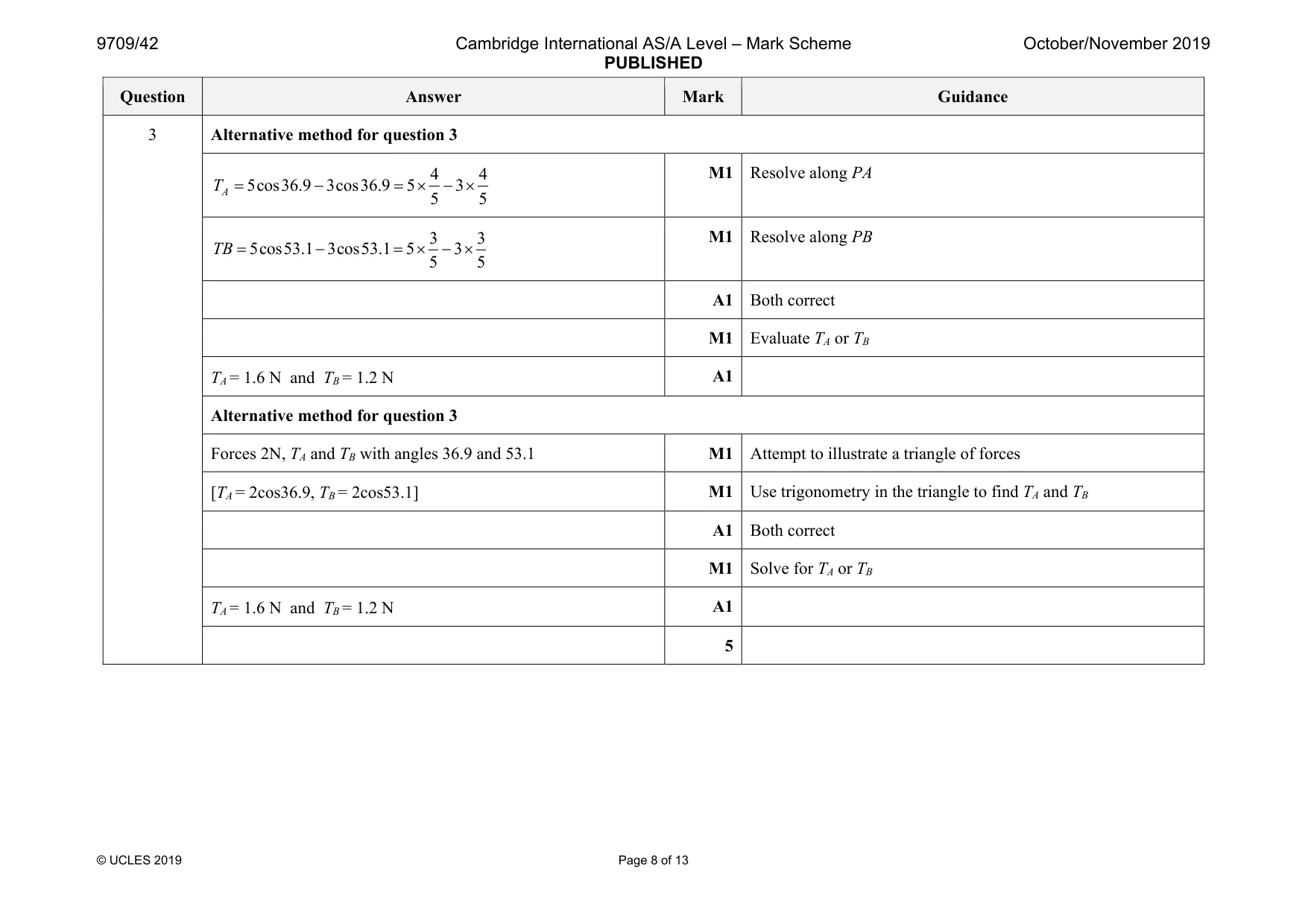
Mark scheme: 3 4 3 0.3 5 5 5 × + × + = A B T T g M1 Resolving vertically 3 4 5 5 × = × A B T T M1 Resolving horizontally A1 Both correct M1 Solve for TA or TB TA = 1.6 N and TB = 1.2 N A1 Alternative method for question 3 5 3 sin90 sin126.9 sin143.1 − = = A B T T M1 Attempt one pair of Lami’s equations M1 Attempt a second pair of Lami equations A1 Equations all correct M1 Evaluate TA or TB TA = 1.6 N and TB = 1.2 N A1 Question Answer Mark Guidance 3 Alternative method for question 3 4 4 5cos36.9 3cos36.9 5 3 5 5 = − = × −× A T M1 Resolve along PA 3 3 5cos53.1 3cos53.1 5 3 5 5 = − = × −× TB M1 Resolve along PB A1 Both correct M1 Evaluate TA or TB TA = 1.6 N and TB = 1.2 N A1 Alternative method for question 3 Forces 2N, TA and TB with angles 36.9 and 53.1 M1 Attempt to illustrate a triangle of forces [TA = 2cos36.9, TB = 2cos53.1] M1 Use trigonometry in the triangle to find TA and TB A1 Both correct M1 Solve for TA or TB TA = 1.6 N and TB = 1.2 N A1 5
Q4 · A lorry of mass 25 000 kg travels along a straight horizontal road
4 A lorry of mass 25 000 kg travels along a straight horizontal road. There is a constant force of 3000 N resisting the motion. (i) Find the power required to maintain a constant speed of 30 m s−1. [2] ........................................................................................................................................................ ........................................................................................................................................................ ........................................................................................................................................................ ........................................................................................................................................................ ........................................................................................................................................................ ........................................................................................................................................................ ........................................................................................................................................................ ........................................................................................................................................................ ........................................................................................................................................................ ........................................................................................................................................................ ........................................................................................................................................................ The lorry comes to a straight hill inclined at 2Å to the horizontal. The driver switches offthe engine of the lorry at the point A which is at the foot of the hill. Point B is further up the hill. The speeds of the lorry at A and B are 30 m s−1 and 25 m s−1 respectively. The resistance force is still 3000 N. (ii) Use an energy method to find the height of B above the level of A. [5] ........................................................................................................................................................ ........................................................................................................................................................ ........................................................................................................................................................ ........................................................................................................................................................ ........................................................................................................................................................ ........................................................................................................................................................ ........................................................................................................................................................ ........................................................................................................................................................ ........................................................................................................................................................ ........................................................................................................................................................ ........................................................................................................................................................ ........................................................................................................................................................ ........................................................................................................................................................ ........................................................................................................................................................ ........................................................................................................................................................ ........................................................................................................................................................ ........................................................................................................................................................ ........................................................................................................................................................ ........................................................................................................................................................ ........................................................................................................................................................ ........................................................................................................................................................ ........................................................................................................................................................ ........................................................................................................................................................ ........................................................................................................................................................ ........................................................................................................................................................ ........................................................................................................................................................ ........................................................................................................................................................ ........................................................................................................................................................ ........................................................................................................................................................ ........................................................................................................................................................ ........................................................................................................................................................ ........................................................................................................................................................ ........................................................................................................................................................ ........................................................................................................................................................
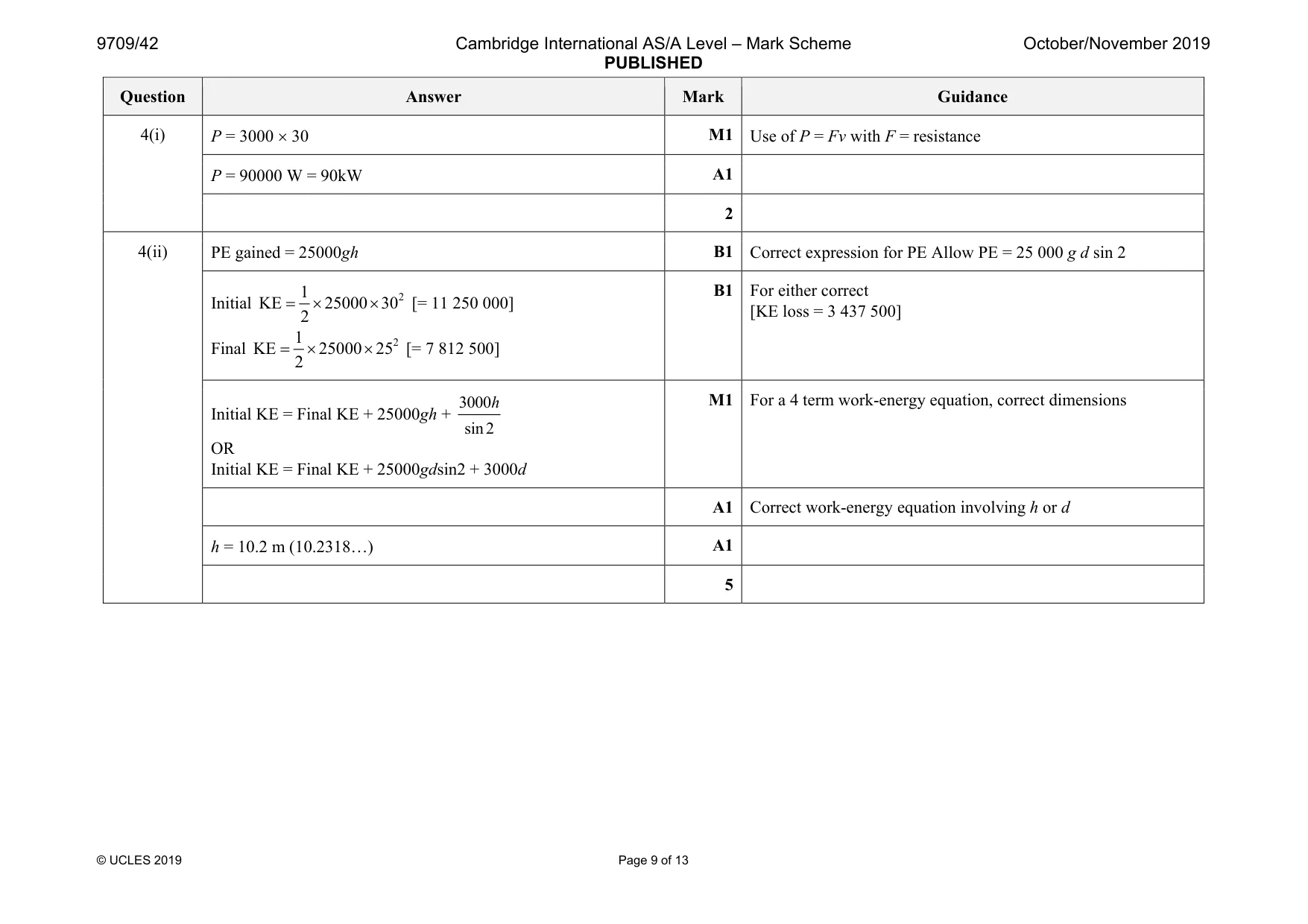
Mark scheme: 4(i) M1 Use of P = Fv with F = resistance P = 90000 W = 90kW A1 2 4(ii) PE gained = 25000gh B1 Correct expression for PE Allow PE = 25 000 g d sin 2 Initial 2 1 KE 25000 30 2 = × × [= 11 250 000] Final 2 1 KE 25000 25 2 = × × [= 7 812 500] B1 For either correct [KE loss = 3 437 500] Initial KE = Final KE + 25000gh + 3000 sin2 h OR Initial KE = Final KE + 25000gdsin2 + 3000d M1 For a 4 term work-energy equation, correct dimensions A1 Correct work-energy equation involving h or d h = 10.2 m (10.2318…) A1 5
Q5 · Two particles A and B move in the same vertical line
5 Two particles A and B move in the same vertical line. Particle A is projected vertically upwards from the ground with speed 20 m s−1. One second later particle B is dropped from rest from a height of 40 m. (i) Find the height above the ground at which the two particles collide. [4] ........................................................................................................................................................ ........................................................................................................................................................ ........................................................................................................................................................ ........................................................................................................................................................ ........................................................................................................................................................ ........................................................................................................................................................ ........................................................................................................................................................ ........................................................................................................................................................ ........................................................................................................................................................ ........................................................................................................................................................ ........................................................................................................................................................ ........................................................................................................................................................ ........................................................................................................................................................ ........................................................................................................................................................ ........................................................................................................................................................ ........................................................................................................................................................ ........................................................................................................................................................ ........................................................................................................................................................ ........................................................................................................................................................ ........................................................................................................................................................ ........................................................................................................................................................ ........................................................................................................................................................ ........................................................................................................................................................ (ii) Find the difference in the speeds of the two particles at the instant when the collision occurs. [3] ........................................................................................................................................................ ........................................................................................................................................................ ........................................................................................................................................................ ........................................................................................................................................................ ........................................................................................................................................................ ........................................................................................................................................................ ........................................................................................................................................................ ........................................................................................................................................................ ........................................................................................................................................................ ........................................................................................................................................................ ........................................................................................................................................................ ........................................................................................................................................................ ........................................................................................................................................................ ........................................................................................................................................................ ........................................................................................................................................................ ........................................................................................................................................................ ........................................................................................................................................................ ........................................................................................................................................................ ........................................................................................................................................................ ........................................................................................................................................................ ........................................................................................................................................................ ........................................................................................................................................................ ........................................................................................................................................................ ........................................................................................................................................................ ........................................................................................................................................................
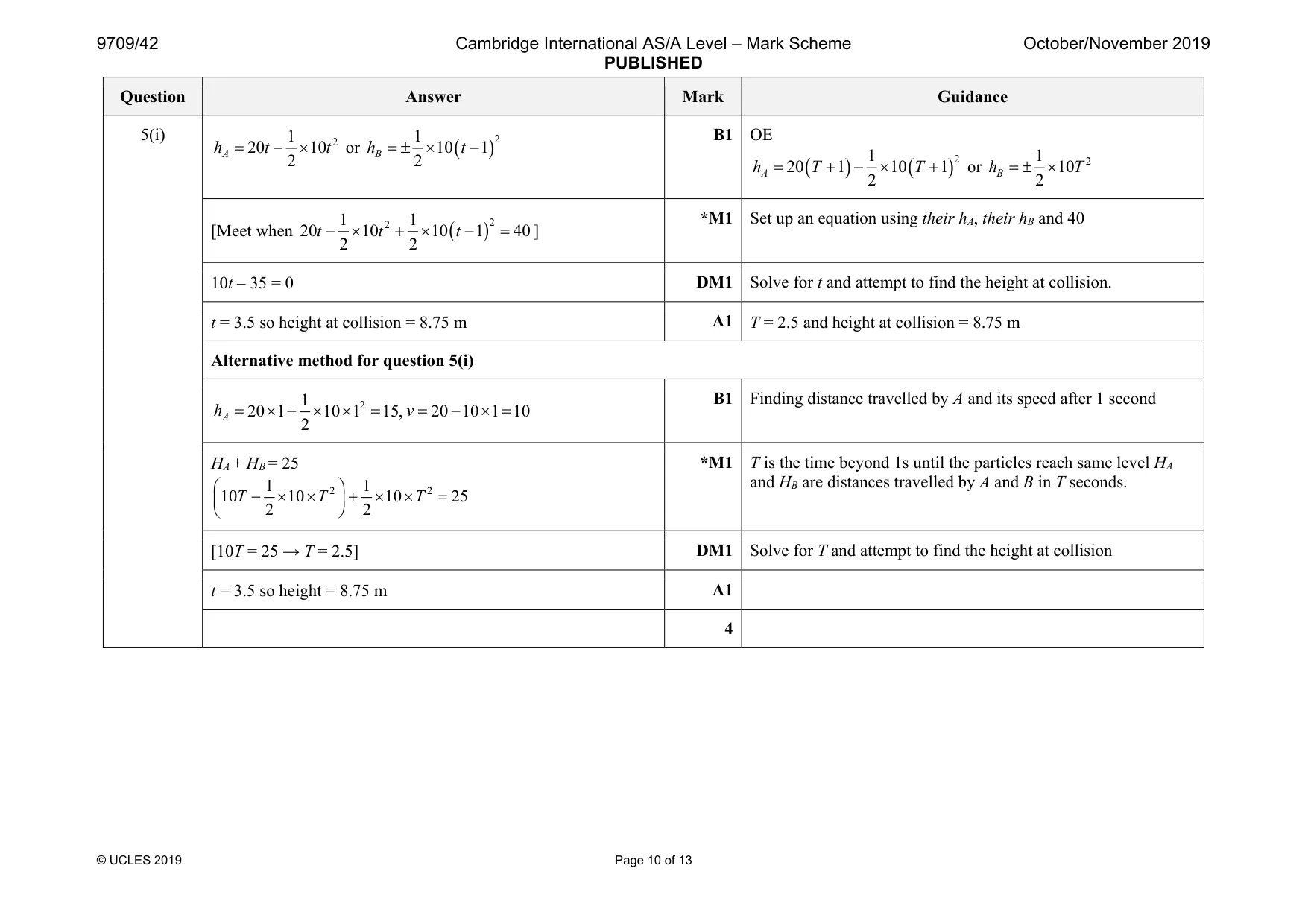
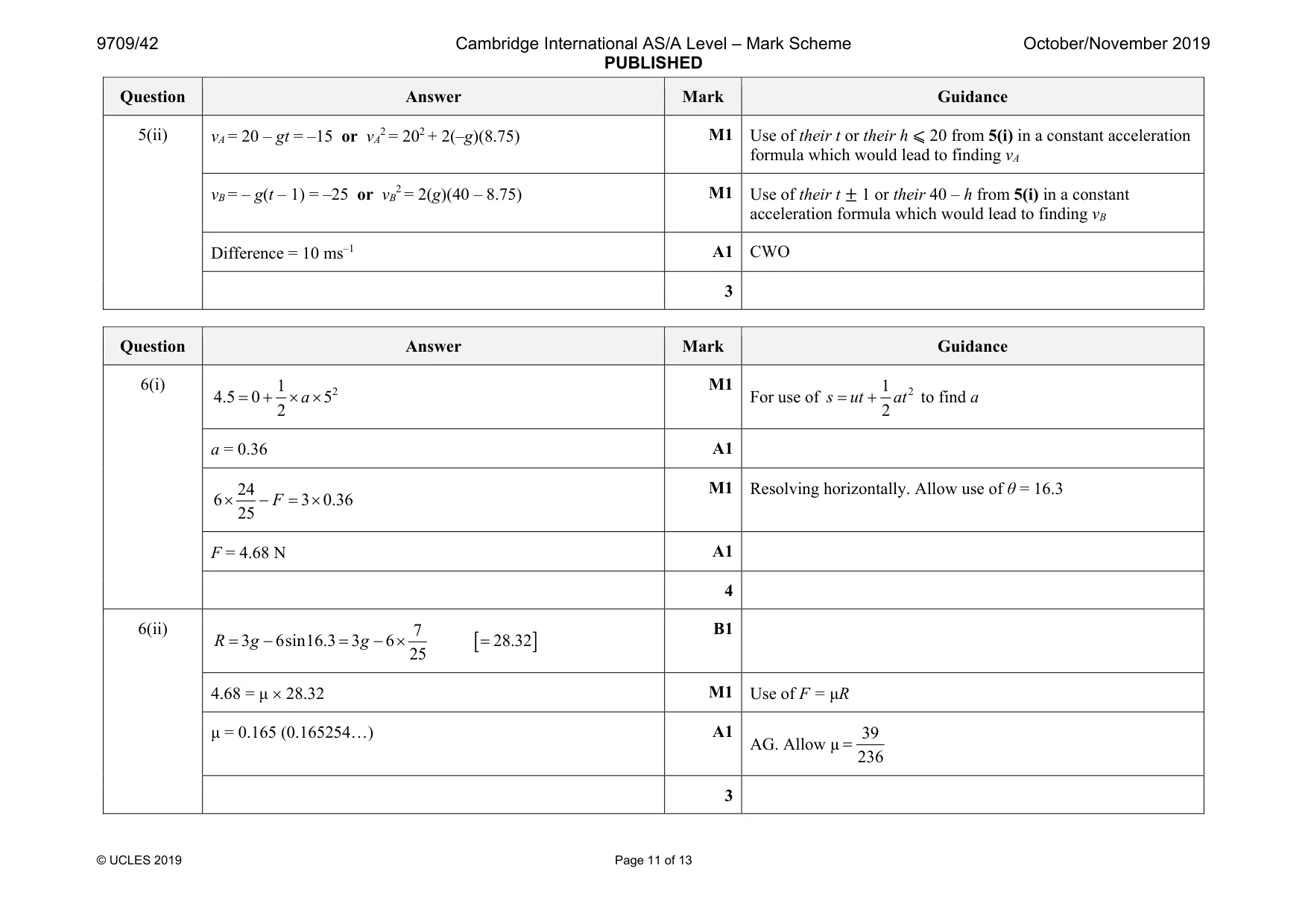
Mark scheme: 5(i) 2 1 20 10 2 A h t t = − × or ( ) 2 1 10 1 2 B h t = ± × − B1 OE ( ) ( ) 2 1 20 1 10 1 2 A h T T = + − × + or 2 1 10 2 B h T = ± × [Meet when ( ) 2 2 1 1 20 10 10 1 40 2 2 t t t − × + × − = ] *M1 Set up an equation using their hA, their hB and 40 10t – 35 = 0 DM1 Solve for t and attempt to find the height at collision. t = 3.5 so height at collision = 8.75 m A1 T = 2.5 and height at collision = 8.75 m Alternative method for question 5(i) 2 1 20 1 10 1 15, 20 10 1 10 2 A h v = × − × × = = − × = B1 Finding distance travelled by A and its speed after 1 second HA + HB = 25 2 2 1 1 10 10 10 25 2 2 T T T − × × + × × = *M1 T is the time beyond 1s until the particles reach same level HA and HB are distances travelled by A and B in T seconds. [10T = 25 → T = 2.5] DM1 Solve for T and attempt to find the height at collision t = 3.5 so height = 8.75 m A1 4 Question Answer Mark Guidance 5(ii) vA = 20 – gt = –15 or vA2 = 202 + 2(–g)(8.75) M1 Use of their t or their h ⩽ 20 from 5(i) in a constant acceleration formula which would lead to finding vA vB = – g(t – 1) = –25 or vB2 = 2(g)(40 – 8.75) M1 Use of their t ± 1 or their 40 – h from 5(i) in a constant acceleration formula which would lead to finding vB Difference = 10 ms–1 A1 CWO 3
Q6 · A block of mass 3 kg is initially at rest on a rough horizontal plane
6 A block of mass 3 kg is initially at rest on a rough horizontal plane. A force of magnitude 6 N is applied to the block at an angle of 1 above the horizontal, where cos 1 = 2425. The force is applied for a period of 5 s, during which time the block moves a distance of 4.5 m. (i) Find the magnitude of the frictional force on the block. [4] ........................................................................................................................................................ ........................................................................................................................................................ ........................................................................................................................................................ ........................................................................................................................................................ ........................................................................................................................................................ ........................................................................................................................................................ ........................................................................................................................................................ ........................................................................................................................................................ ........................................................................................................................................................ ........................................................................................................................................................ ........................................................................................................................................................ ........................................................................................................................................................ ........................................................................................................................................................ ........................................................................................................................................................ (ii) Show that the coefficient of friction between the block and the plane is 0.165, correct to 3 significant figures. [3] ........................................................................................................................................................ ........................................................................................................................................................ ........................................................................................................................................................ ........................................................................................................................................................ ........................................................................................................................................................ ........................................................................................................................................................ ........................................................................................................................................................ ........................................................................................................................................................ ........................................................................................................................................................ ........................................................................................................................................................ ........................................................................................................................................................ ........................................................................................................................................................ ........................................................................................................................................................ (iii) When the block has moved a distance of 4.5 m, the force of magnitude 6 N is removed and the block then decelerates to rest. Find the total time for which the block is in motion. [4] ........................................................................................................................................................ ........................................................................................................................................................ ........................................................................................................................................................ ........................................................................................................................................................ ........................................................................................................................................................ ........................................................................................................................................................ ........................................................................................................................................................ ........................................................................................................................................................ ........................................................................................................................................................ ........................................................................................................................................................ ........................................................................................................................................................ ........................................................................................................................................................ ........................................................................................................................................................ ........................................................................................................................................................ ........................................................................................................................................................ ........................................................................................................................................................ ........................................................................................................................................................ ........................................................................................................................................................
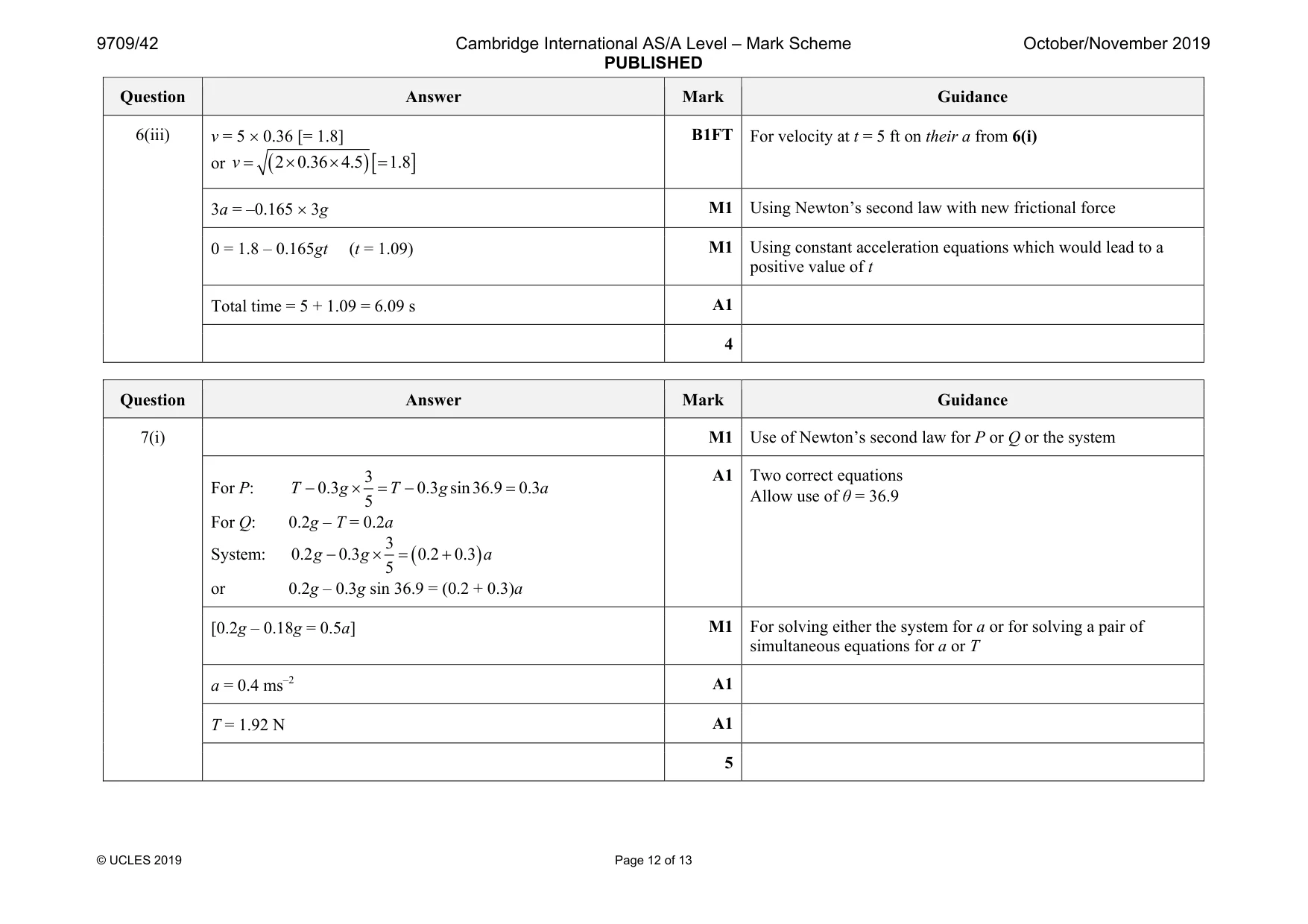
Mark scheme: 6(i) 2 1 4.5 0 5 2 a = + × × M1 For use of 2 1 2 s ut at = + to find a a = 0.36 A1 24 6 3 0.36 25 F × − = × M1 Resolving horizontally. Allow use of θ = 16.3 F = 4.68 N A1 4 6(ii) [ ] 7 3 6sin16.3 3 6 28.32 25 R g g = − = −× = B1 4.68 = µ × 28.32 M1 Use of F = µR µ = 0.165 (0.165254…) A1 AG. Allow µ 39 236 = 3 Question Answer Mark Guidance 6(iii) v = 5 × 0.36 [= 1.8] or ( )[ ] 2 0.36 4.5 1.8 v = × × = B1FT For velocity at t = 5 ft on their a from 6(i) 3a = –0.165 × 3g M1 Using Newton’s second law with new frictional force 0 = 1.8 – 0.165gt (t = 1.09) M1 Using constant acceleration equations which would lead to a positive value of t Total time = 5 + 1.09 = 6.09 s A1 4
Q7 · Q 0.2 kg P 0.3 kg 0.8 m 1 Two particles P and Q, of masses 0.3 kg and 0.2 kg…
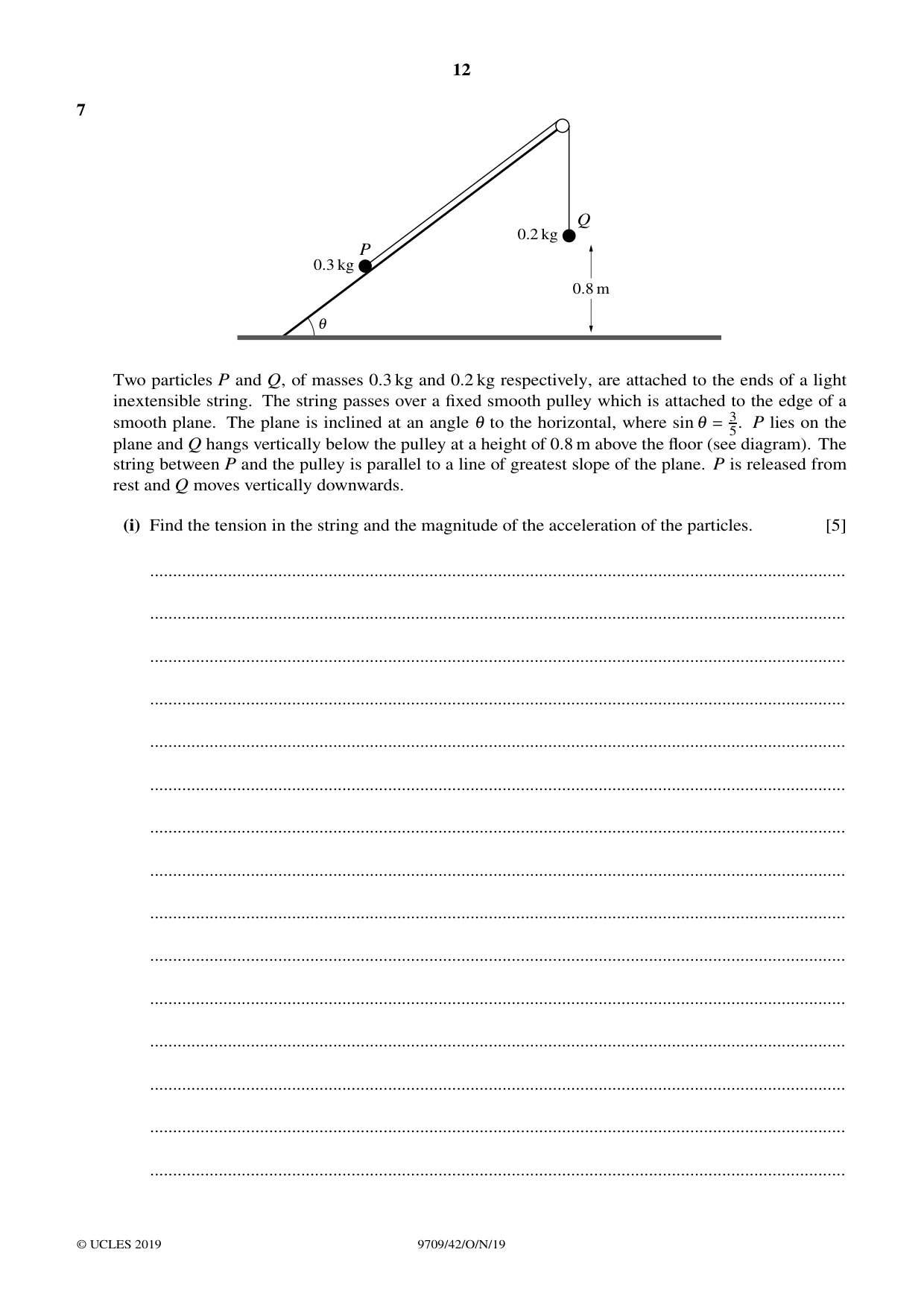
7 Q 0.2 kg P 0.3 kg 0.8 m 1 Two particles P and Q, of masses 0.3 kg and 0.2 kg respectively, are attached to the ends of a light inextensible string. The string passes over a fixed smooth pulley which is attached to the edge of a smooth plane. The plane is inclined at an angle 1 to the horizontal, where sin 1 = 35. P lies on the plane and Q hangs vertically below the pulley at a height of 0.8 m above the floor (see diagram). The string between P and the pulley is parallel to a line of greatest slope of the plane. P is released from rest and Q moves vertically downwards. (i) Find the tension in the string and the magnitude of the acceleration of the particles. [5] ........................................................................................................................................................ ........................................................................................................................................................ ........................................................................................................................................................ ........................................................................................................................................................ ........................................................................................................................................................ ........................................................................................................................................................ ........................................................................................................................................................ ........................................................................................................................................................ ........................................................................................................................................................ ........................................................................................................................................................ ........................................................................................................................................................ ........................................................................................................................................................ ........................................................................................................................................................ ........................................................................................................................................................ ........................................................................................................................................................ Q hits the floor and does not bounce. It is given that P does not reach the pulley in the subsequent motion. (ii) Find the time, from the instant at which P is released, for Q to reach the floor. [2] ........................................................................................................................................................ ........................................................................................................................................................ ........................................................................................................................................................ ........................................................................................................................................................ ........................................................................................................................................................ ........................................................................................................................................................ (iii) When Q hits the floor the string becomes slack. Find the time, from the instant at which P is released, for the string to become taut again. [4] ........................................................................................................................................................ ........................................................................................................................................................ ........................................................................................................................................................ ........................................................................................................................................................ ........................................................................................................................................................ ........................................................................................................................................................ ........................................................................................................................................................ ........................................................................................................................................................ ........................................................................................................................................................ ........................................................................................................................................................ ........................................................................................................................................................ ........................................................................................................................................................ ........................................................................................................................................................ ........................................................................................................................................................ ........................................................................................................................................................ ........................................................................................................................................................
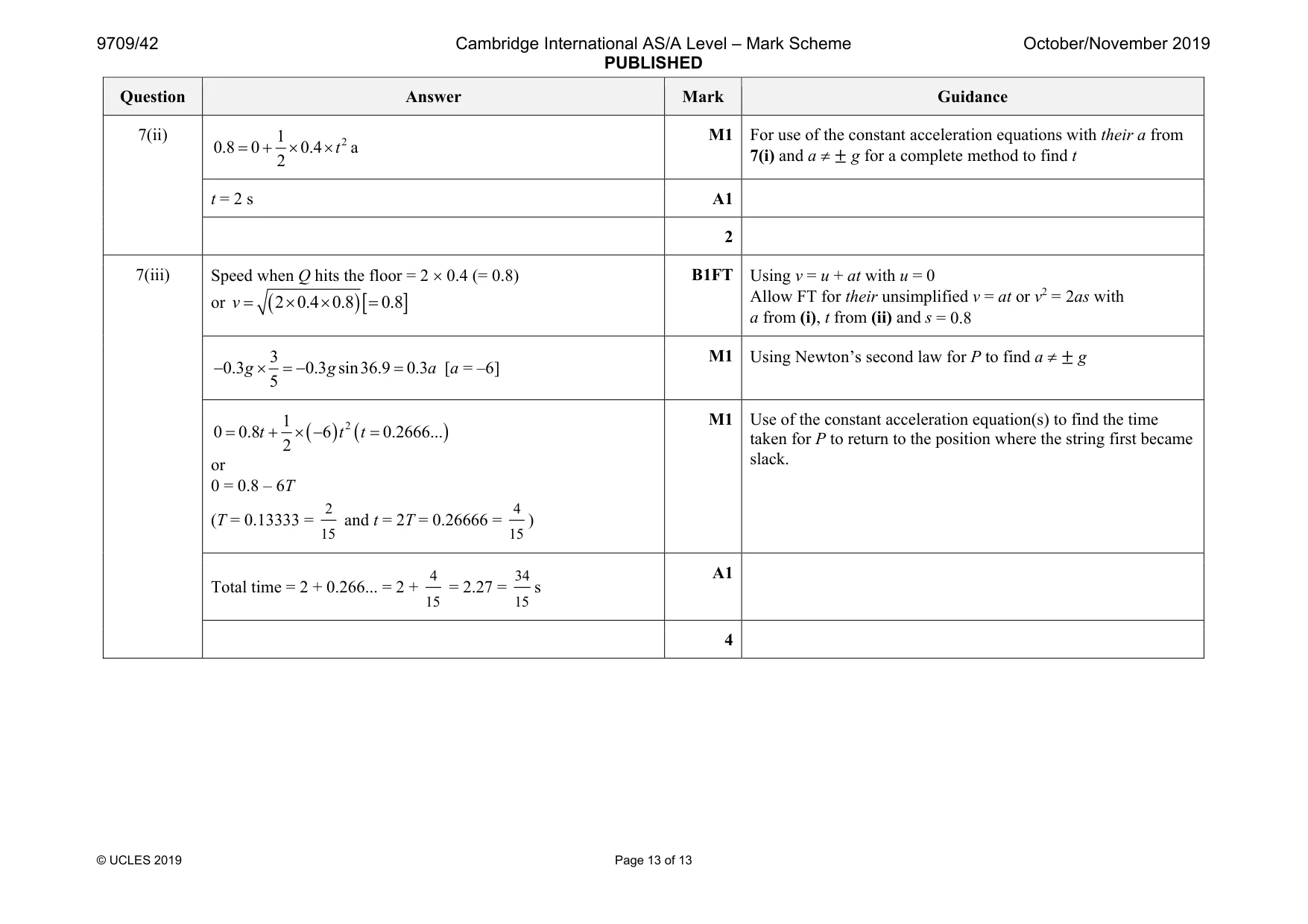
Mark scheme: 7(i) M1 Use of Newton’s second law for P or Q or the system For P: 3 0.3 0.3 sin36.9 0.3 5 T g T g a − × = − = For Q: 0.2g – T = 0.2a System: ( ) 3 0.2 0.3 0.2 0.3 5 g g a − × = + or 0.2g – 0.3g sin 36.9 = (0.2 + 0.3)a A1 Two correct equations Allow use of θ = 36.9 [0.2g – 0.18g = 0.5a] M1 For solving either the system for a or for solving a pair of simultaneous equations for a or T a = 0.4 ms–2 A1 T = 1.92 N A1 5 Question Answer Mark Guidance 7(ii) 2 1 0.8 0 0.4 2 t = + × × a M1 For use of the constant acceleration equations with their a from 7(i) and a ≠ ± g for a complete method to find t t = 2 s A1 2 7(iii) Speed when Q hits the floor = 2 × 0.4 (= 0.8) or ( )[ ] 2 0.4 0.8 0.8 v = × × = B1FT Using v = u + at with u = 0 Allow FT for their unsimplified v = at or v2 = 2as with a from (i), t from (ii) and s = 0.8 3 0.3 0.3 sin36.9 0.3 5 g g a − × = − = [a = –6] M1 Using Newton’s second law for P to find a ≠ ± g ( ) ( ) 2 1 0 0.8 6 0.2666... 2 t t t = + × − = or 0 = 0.8 – 6T (T = 0.13333 = 2 15 and t = 2T = 0.26666 = 4 15 ) M1 Use of the constant acceleration equation(s) to find the time taken for P to return to the position where the string first became slack. Total time = 2 + 0.266... = 2 + 4 15 = 2.27 = 34 15 s A1 4
What was in this paper
The subtopics covered by these 7 questions, and how many questions each got. Open one in a new tab to see every Cambridge question on it.
What you needed in this session
Cambridge’s own grade thresholds for 2019 Oct/Nov, Paper 4 · Variant 2. A higher threshold means an easier paper — the bar moves with how the cohort did.