Cambridge A Level Law 9084 — 2014 Oct/Nov Paper 1 · Variant 1
9084/11/O/N/14 · 75 marks · ≈84 min
The question paper and its mark scheme, free to read here and free to download. This is Cambridge’s own paper, exactly as it was sat.
Question paper4 pages


Mark scheme4 pages
Answers below. Sit the paper first if you are practising.
Paper as text
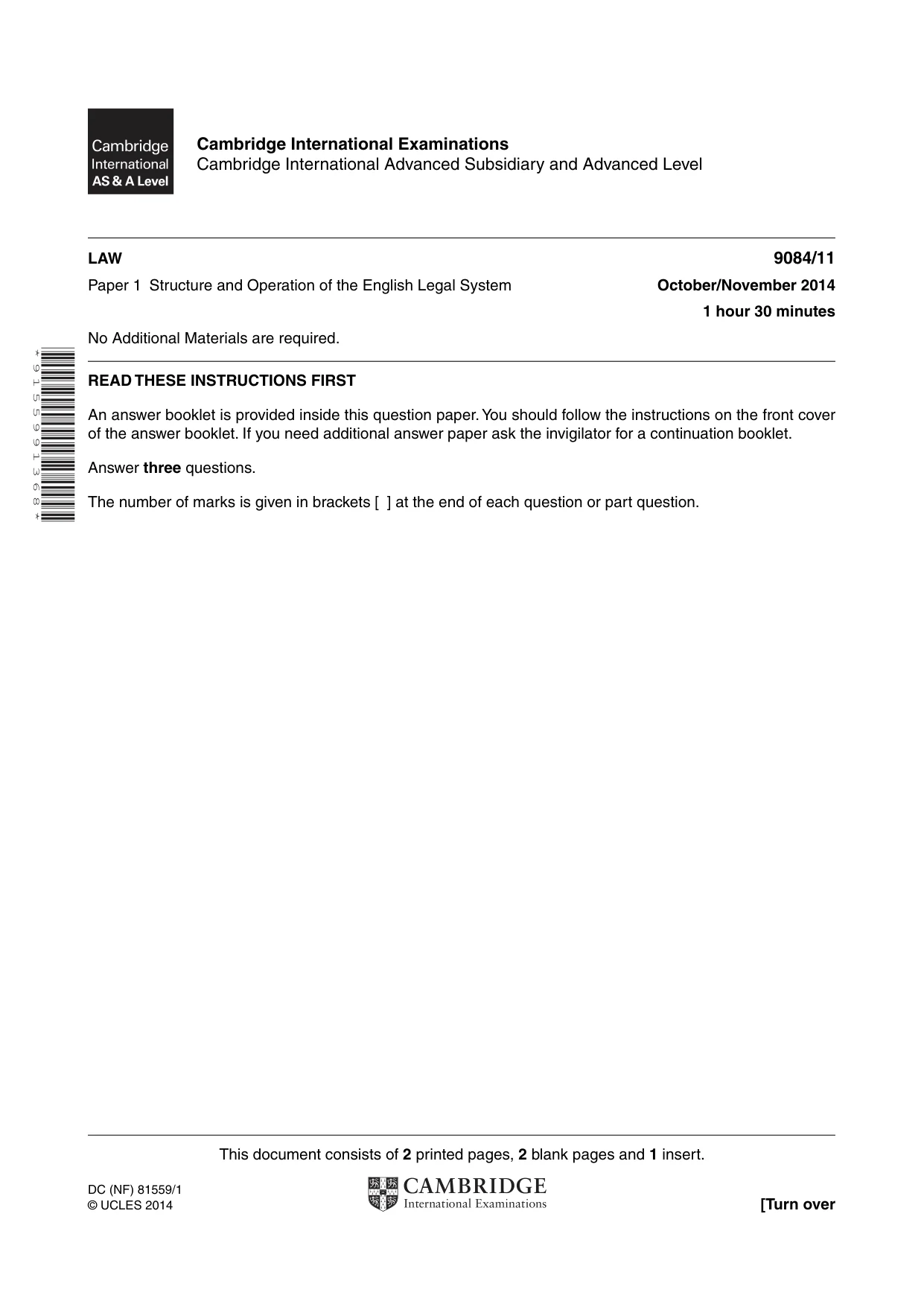
Question paper, page 1
This document consists of 2 printed pages, 2 blank pages and 1 insert. DC (NF) 81559/1 © UCLES 2014 [Turn over Cambridge International Examinations Cambridge International Advanced Subsidiary and Advanced Level * 9 1 5 5 9 9 1 3 6 8 * LAW 9084/11 Paper 1 Structure and Operation of the English Legal System October/November 2014 1 hour 30 minutes No Additional Materials are required. READ THESE INSTRUCTIONS FIRST An answer booklet is provided inside this question paper. You should follow the instructions on the front cover of the answer booklet. If you need additional answer paper ask the invigilator for a continuation booklet. Answer three questions. The number of marks is given in brackets [ ] at the end of each question or part question.
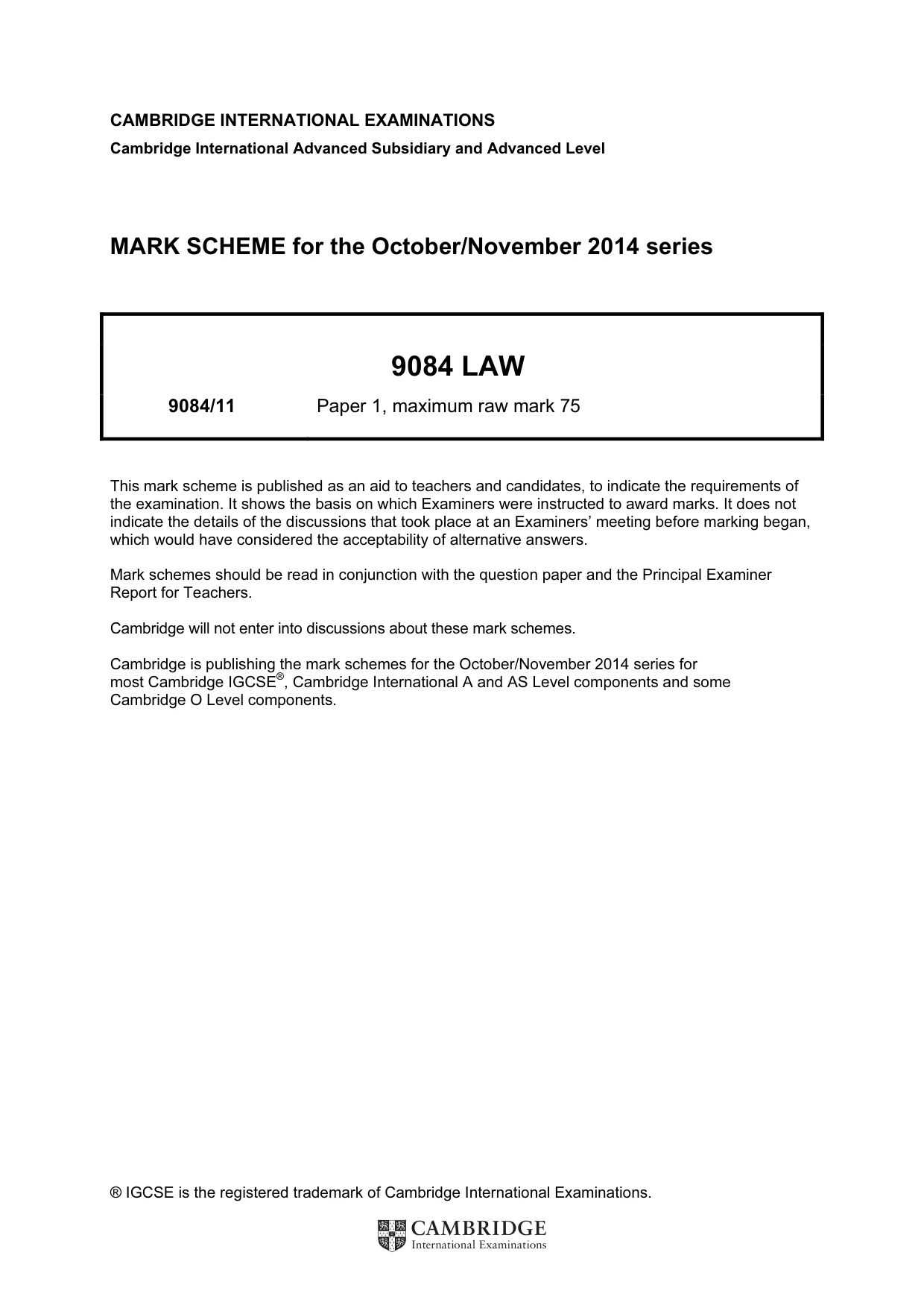
Question paper, page 2
2 9084/11/O/N/14 © UCLES 2014 Answer three questions. 1 The true value of the jury must be measured against the alternative that might be put in its place. Discuss the selection and role of the jury in criminal trials and any alternatives that could be used to replace it. [25] 2 How can we account for the growth in Equity? Assess its relevance to the law today. [25] 3 Parliament makes law; it is the duty of judges to interpret it. Critically discuss the role of judges in the interpretation of statutes. [25] 4 Explain the different methods of alternative dispute resolution and assess whether they are preferable to civil litigation. [25] 5 The main aims of sentencing should be denunciation of and retribution for the crime. Considering the range of aims of sentencing, to what extent do you agree with this statement? [25] 6 Bansal, aged 21, was found guilty by Dunchester Crown Court of robbery, an indictable offence. He had threatened a passer-by with a knife and took his mobile phone. Bansal said he only wanted to borrow it to telephone his girlfriend to tell her that he would be late getting home. The court imposes a prison sentence of a year. He wishes to appeal. Identify to which court such an appeal would lie and on what grounds. Critically assess whether the appeal system properly protects defendants. [25]
Question paper, page 3
3 9084/11/O/N/14 © UCLES 2014 BLANK PAGE
Question paper, page 4
4 9084/11/O/N/14 © UCLES 2014 Permission to reproduce items where third-party owned material protected by copyright is included has been sought and cleared where possible. Every reasonable effort has been made by the publisher (UCLES) to trace copyright holders, but if any items requiring clearance have unwittingly been included, the publisher will be pleased to make amends at the earliest possible opportunity. Cambridge International Examinations is part of the Cambridge Assessment Group. Cambridge Assessment is the brand name of University of Cambridge Local Examinations Syndicate (UCLES), which is itself a department of the University of Cambridge. BLANK PAGE
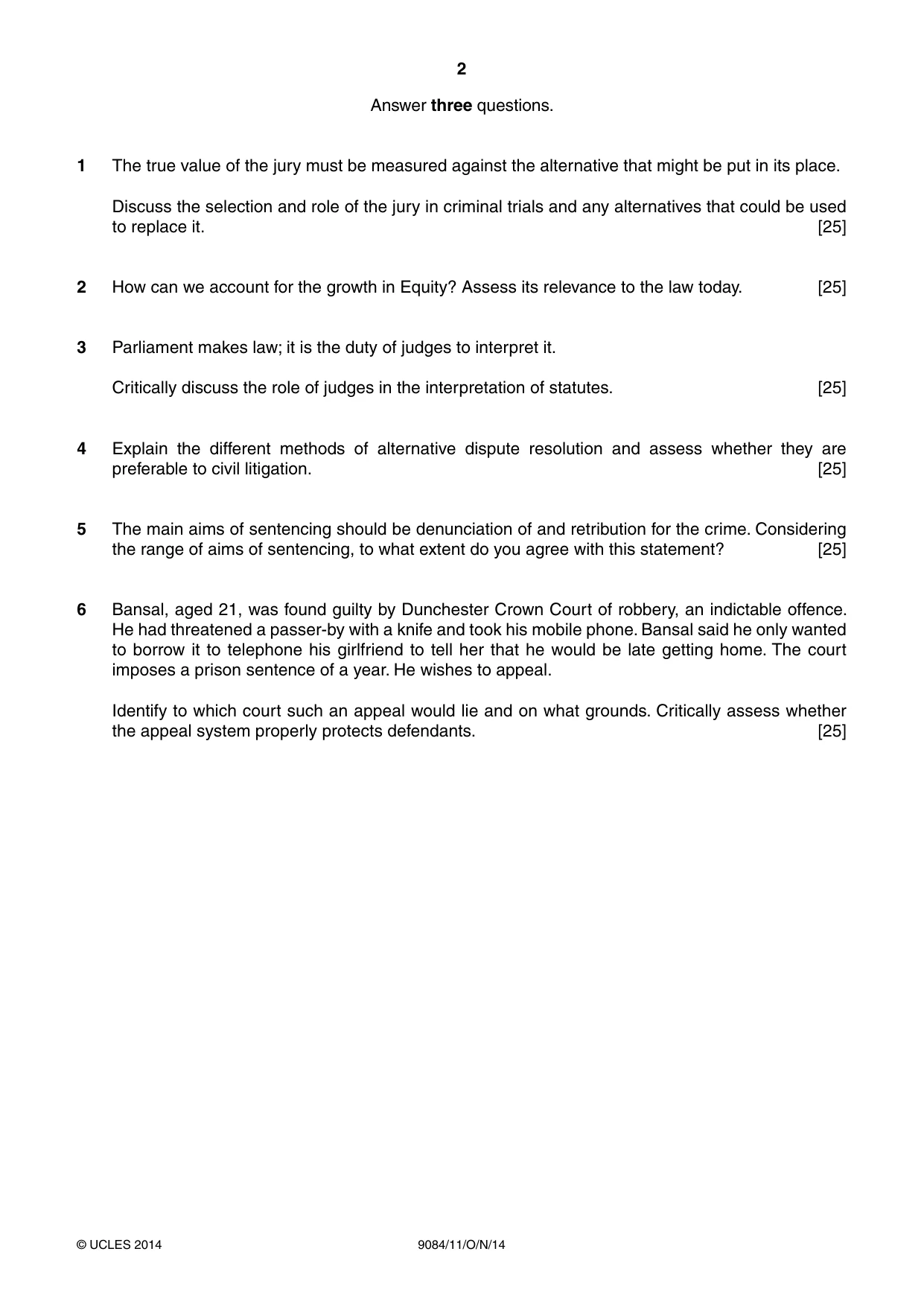
Mark scheme, page 1
® IGCSE is the registered trademark of Cambridge International Examinations. CAMBRIDGE INTERNATIONAL EXAMINATIONS Cambridge International Advanced Subsidiary and Advanced Level MARK SCHEME for the October/November 2014 series 9084 LAW 9084/11 Paper 1, maximum raw mark 75 This mark scheme is published as an aid to teachers and candidates, to indicate the requirements of the examination. It shows the basis on which Examiners were instructed to award marks. It does not indicate the details of the discussions that took place at an Examiners’ meeting before marking began, which would have considered the acceptability of alternative answers. Mark schemes should be read in conjunction with the question paper and the Principal Examiner Report for Teachers. Cambridge will not enter into discussions about these mark schemes. Cambridge is publishing the mark schemes for the October/November 2014 series for most Cambridge IGCSE®, Cambridge International A and AS Level components and some Cambridge O Level components.
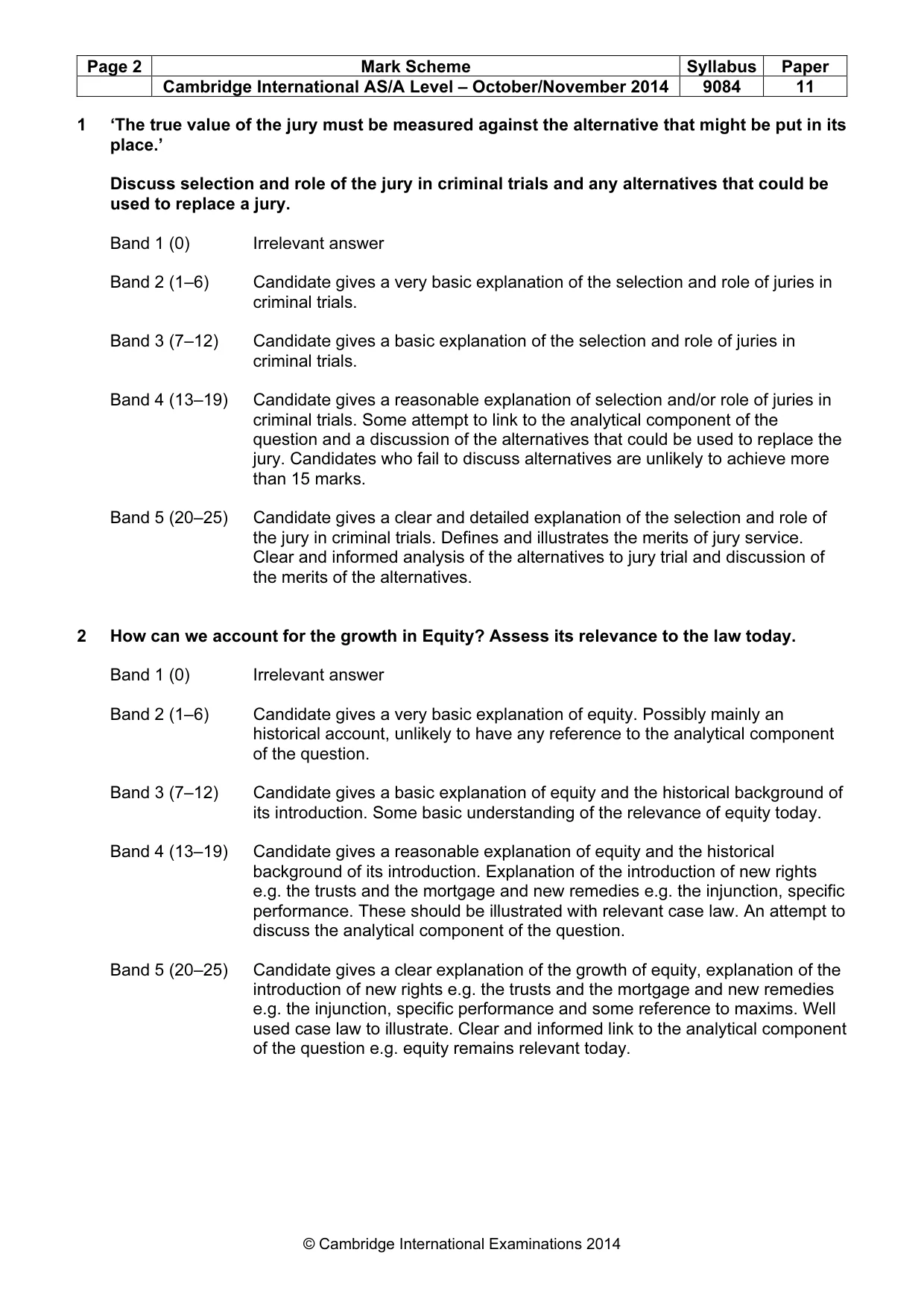
Mark scheme, page 2
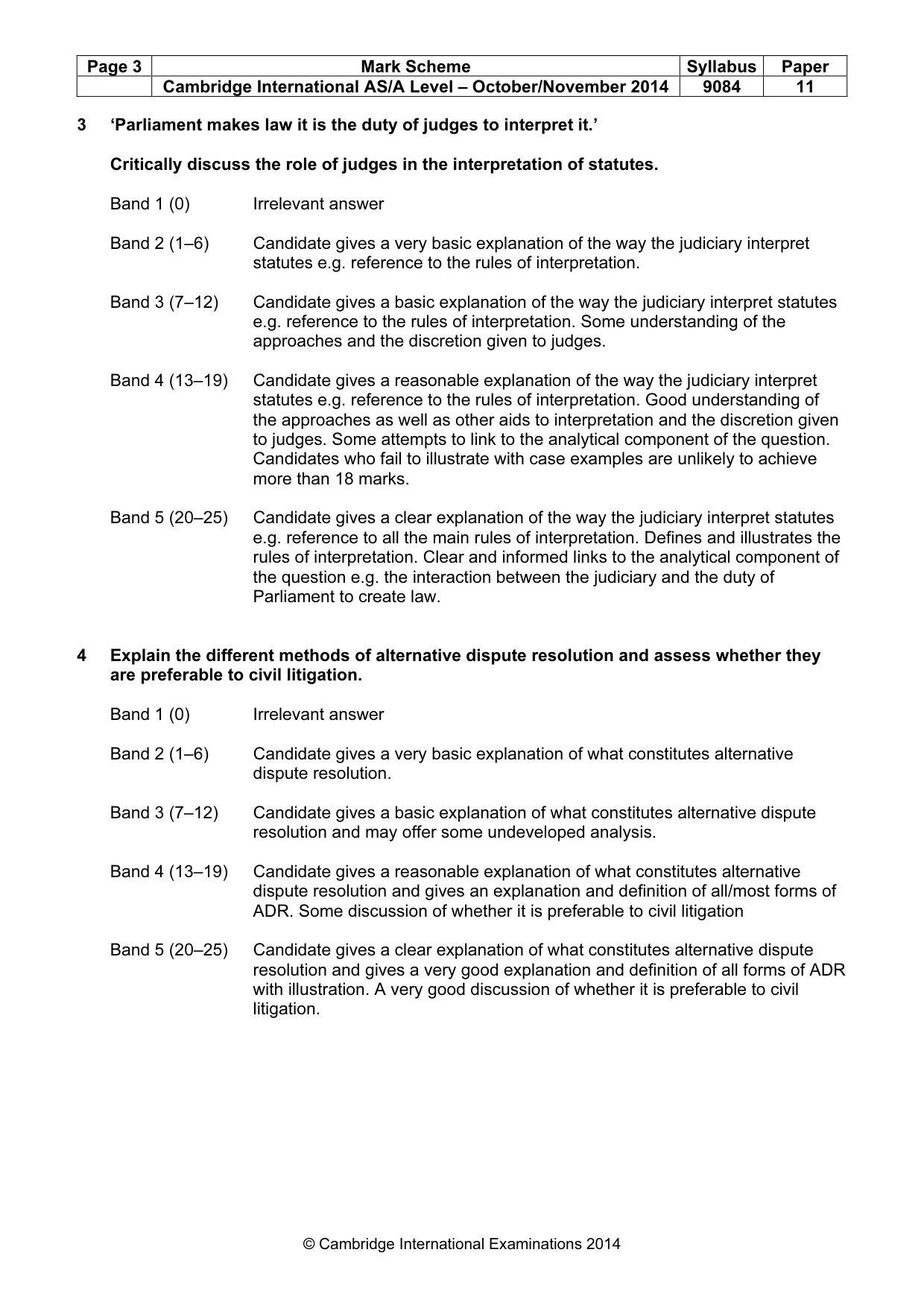
Page 2 Mark Scheme Syllabus Paper Cambridge International AS/A Level – October/November 2014 9084 11 © Cambridge International Examinations 2014 1 ‘The true value of the jury must be measured against the alternative that might be put in its place.’ Discuss selection and role of the jury in criminal trials and any alternatives that could be used to replace a jury. Band 1 (0) Irrelevant answer Band 2 (1–6) Candidate gives a very basic explanation of the selection and role of juries in criminal trials. Band 3 (7–12) Candidate gives a basic explanation of the selection and role of juries in criminal trials. Band 4 (13–19) Candidate gives a reasonable explanation of selection and/or role of juries in criminal trials. Some attempt to link to the analytical component of the question and a discussion of the alternatives that could be used to replace the jury. Candidates who fail to discuss alternatives are unlikely to achieve more than 15 marks. Band 5 (20–25) Candidate gives a clear and detailed explanation of the selection and role of the jury in criminal trials. Defines and illustrates the merits of jury service. Clear and informed analysis of the alternatives to jury trial and discussion of the merits of the alternatives. 2 How can we account for the growth in Equity? Assess its relevance to the law today. Band 1 (0) Irrelevant answer Band 2 (1–6) Candidate gives a very basic explanation of equity. Possibly mainly an historical account, unlikely to have any reference to the analytical component of the question. Band 3 (7–12) Candidate gives a basic explanation of equity and the historical background of its introduction. Some basic understanding of the relevance of equity today. Band 4 (13–19) Candidate gives a reasonable explanation of equity and the historical background of its introduction. Explanation of the introduction of new rights e.g. the trusts and the mortgage and new remedies e.g. the injunction, specific performance. These should be illustrated with relevant case law. An attempt to discuss the analytical component of the question. Band 5 (20–25) Candidate gives a clear explanation of the growth of equity, explanation of the introduction of new rights e.g. the trusts and the mortgage and new remedies e.g. the injunction, specific performance and some reference to maxims. Well used case law to illustrate. Clear and informed link to the analytical component of the question e.g. equity remains relevant today.
Mark scheme, page 3
Page 3 Mark Scheme Syllabus Paper Cambridge International AS/A Level – October/November 2014 9084 11 © Cambridge International Examinations 2014 3 ‘Parliament makes law it is the duty of judges to interpret it.’ Critically discuss the role of judges in the interpretation of statutes. Band 1 (0) Irrelevant answer Band 2 (1–6) Candidate gives a very basic explanation of the way the judiciary interpret statutes e.g. reference to the rules of interpretation. Band 3 (7–12) Candidate gives a basic explanation of the way the judiciary interpret statutes e.g. reference to the rules of interpretation. Some understanding of the approaches and the discretion given to judges. Band 4 (13–19) Candidate gives a reasonable explanation of the way the judiciary interpret statutes e.g. reference to the rules of interpretation. Good understanding of the approaches as well as other aids to interpretation and the discretion given to judges. Some attempts to link to the analytical component of the question. Candidates who fail to illustrate with case examples are unlikely to achieve more than 18 marks. Band 5 (20–25) Candidate gives a clear explanation of the way the judiciary interpret statutes e.g. reference to all the main rules of interpretation. Defines and illustrates the rules of interpretation. Clear and informed links to the analytical component of the question e.g. the interaction between the judiciary and the duty of Parliament to create law. 4 Explain the different methods of alternative dispute resolution and assess whether they are preferable to civil litigation. Band 1 (0) Irrelevant answer Band 2 (1–6) Candidate gives a very basic explanation of what constitutes alternative dispute resolution. Band 3 (7–12) Candidate gives a basic explanation of what constitutes alternative dispute resolution and may offer some undeveloped analysis. Band 4 (13–19) Candidate gives a reasonable explanation of what constitutes alternative dispute resolution and gives an explanation and definition of all/most forms of ADR. Some discussion of whether it is preferable to civil litigation Band 5 (20–25) Candidate gives a clear explanation of what constitutes alternative dispute resolution and gives a very good explanation and definition of all forms of ADR with illustration. A very good discussion of whether it is preferable to civil litigation.
Mark scheme, page 4
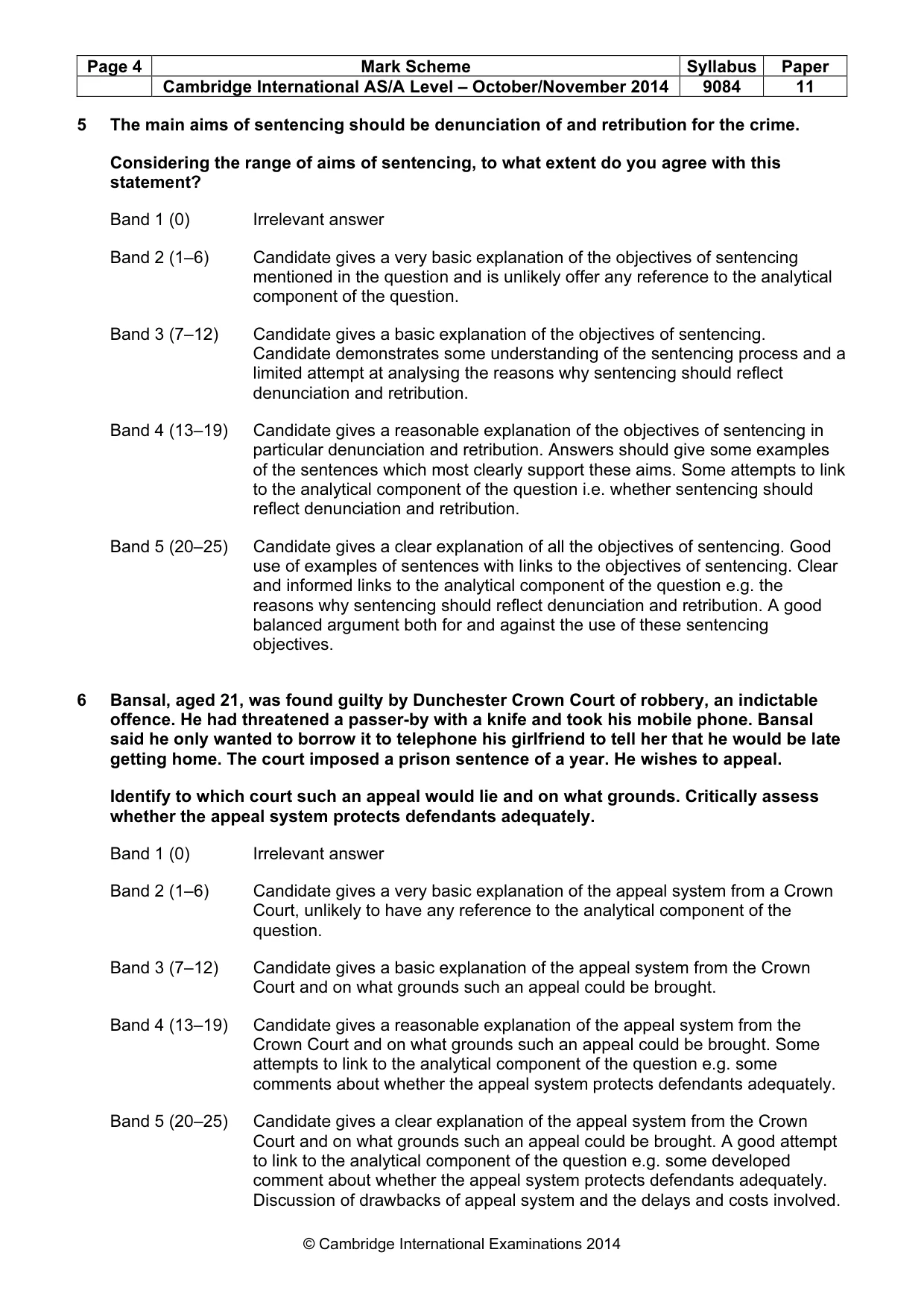
Page 4 Mark Scheme Syllabus Paper Cambridge International AS/A Level – October/November 2014 9084 11 © Cambridge International Examinations 2014 5 The main aims of sentencing should be denunciation of and retribution for the crime. Considering the range of aims of sentencing, to what extent do you agree with this statement? Band 1 (0) Irrelevant answer Band 2 (1–6) Candidate gives a very basic explanation of the objectives of sentencing mentioned in the question and is unlikely offer any reference to the analytical component of the question. Band 3 (7–12) Candidate gives a basic explanation of the objectives of sentencing. Candidate demonstrates some understanding of the sentencing process and a limited attempt at analysing the reasons why sentencing should reflect denunciation and retribution. Band 4 (13–19) Candidate gives a reasonable explanation of the objectives of sentencing in particular denunciation and retribution. Answers should give some examples of the sentences which most clearly support these aims. Some attempts to link to the analytical component of the question i.e. whether sentencing should reflect denunciation and retribution. Band 5 (20–25) Candidate gives a clear explanation of all the objectives of sentencing. Good use of examples of sentences with links to the objectives of sentencing. Clear and informed links to the analytical component of the question e.g. the reasons why sentencing should reflect denunciation and retribution. A good balanced argument both for and against the use of these sentencing objectives. 6 Bansal, aged 21, was found guilty by Dunchester Crown Court of robbery, an indictable offence. He had threatened a passer-by with a knife and took his mobile phone. Bansal said he only wanted to borrow it to telephone his girlfriend to tell her that he would be late getting home. The court imposed a prison sentence of a year. He wishes to appeal. Identify to which court such an appeal would lie and on what grounds. Critically assess whether the appeal system protects defendants adequately. Band 1 (0) Irrelevant answer Band 2 (1–6) Candidate gives a very basic explanation of the appeal system from a Crown Court, unlikely to have any reference to the analytical component of the question. Band 3 (7–12) Candidate gives a basic explanation of the appeal system from the Crown Court and on what grounds such an appeal could be brought. Band 4 (13–19) Candidate gives a reasonable explanation of the appeal system from the Crown Court and on what grounds such an appeal could be brought. Some attempts to link to the analytical component of the question e.g. some comments about whether the appeal system protects defendants adequately. Band 5 (20–25) Candidate gives a clear explanation of the appeal system from the Crown Court and on what grounds such an appeal could be brought. A good attempt to link to the analytical component of the question e.g. some developed comment about whether the appeal system protects defendants adequately. Discussion of drawbacks of appeal system and the delays and costs involved.
What you needed in this session
Cambridge’s own grade thresholds for 2014 Oct/Nov, Paper 1 · Variant 1. A higher threshold means an easier paper — the bar moves with how the cohort did.