Cambridge A Level Islamic Studies 9013 — 2019 Oct/Nov Paper 2 · Variant 3
9013/23/O/N/19 · 12 questions · 100 marks · ≈113 min
The question paper and its mark scheme, free to read here and free to download. This is Cambridge’s own paper, exactly as it was sat.
Question paper4 pages
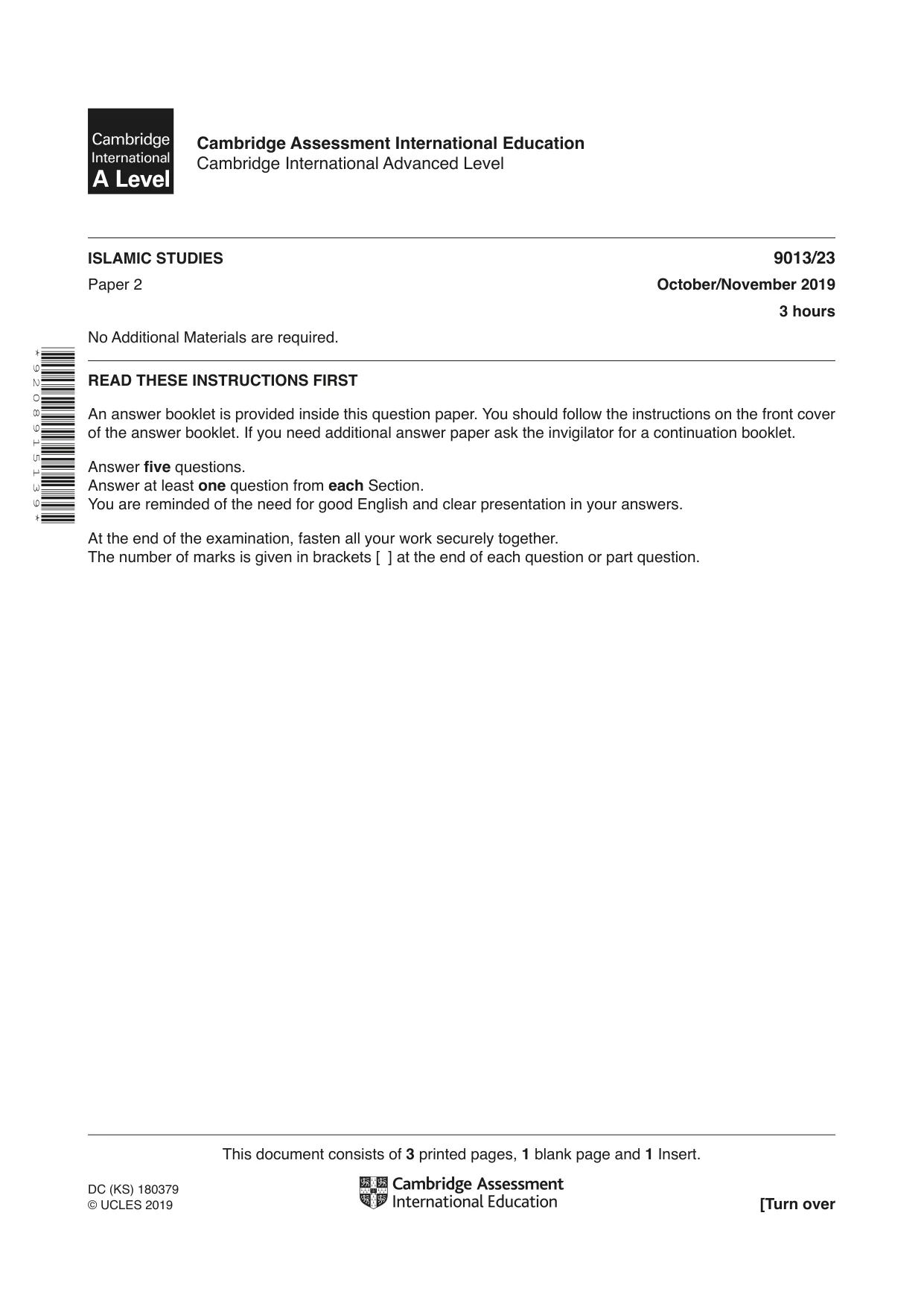
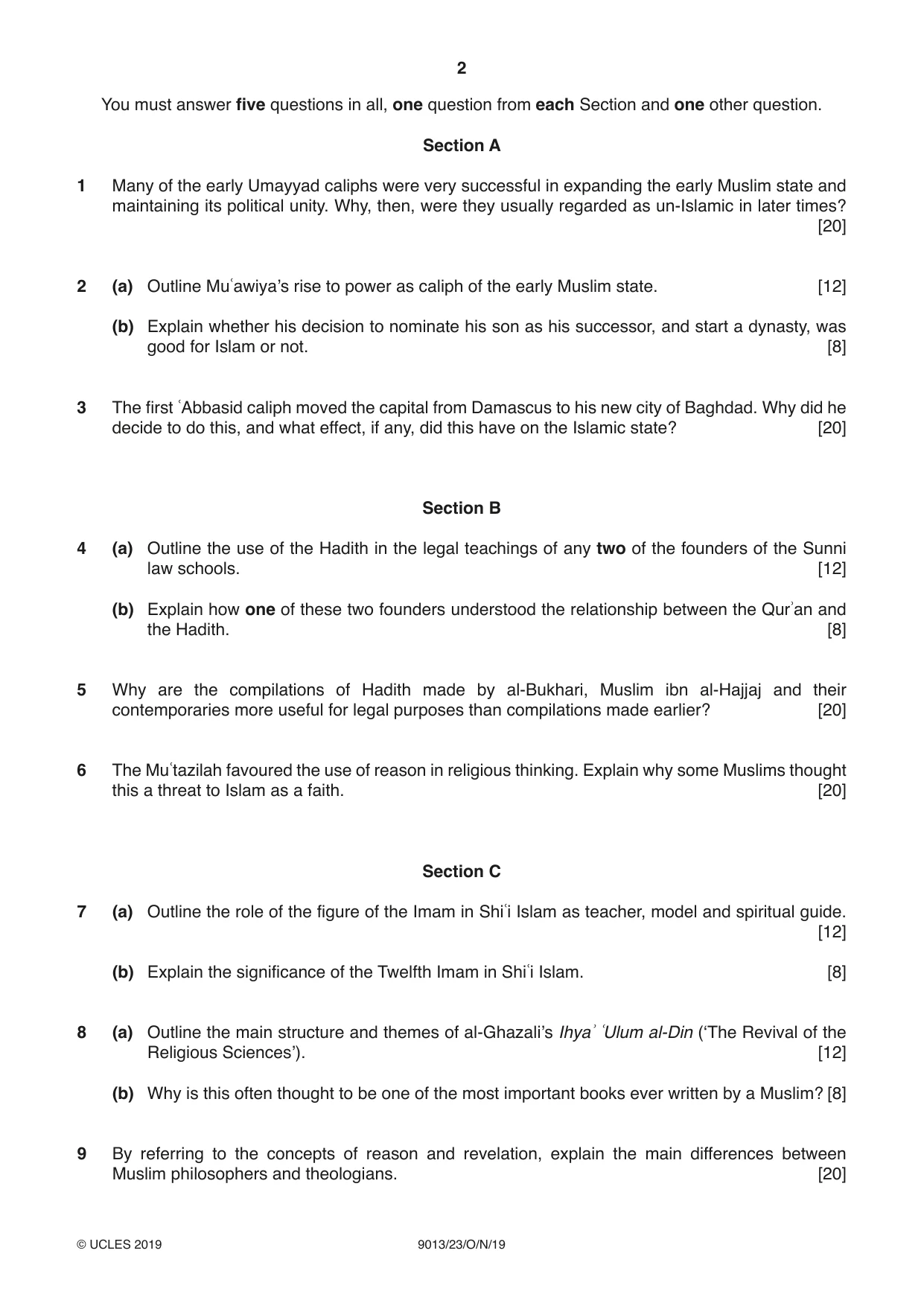
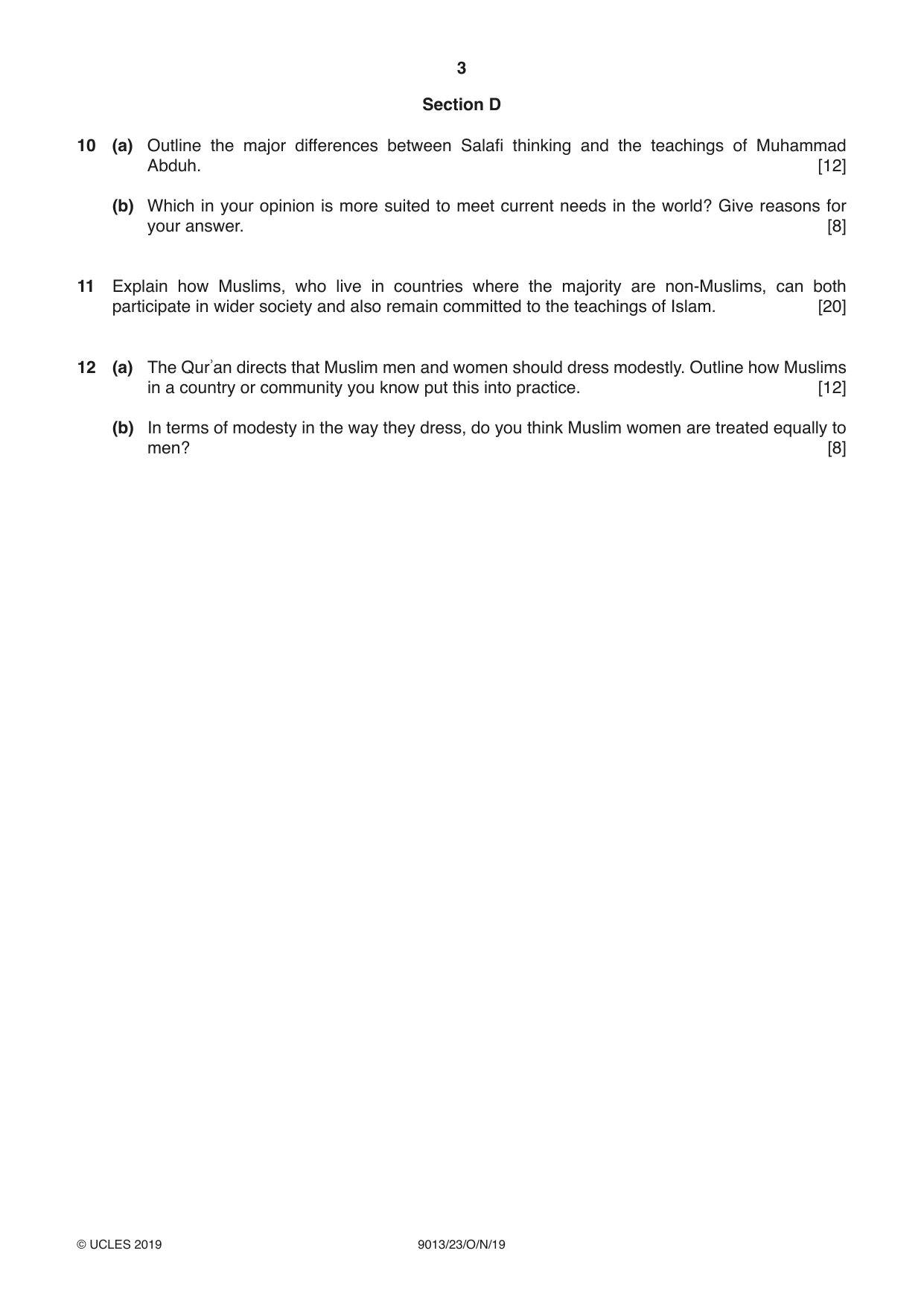

Mark scheme11 pages
Answers below. Sit the paper first if you are practising.
Questions as text
Q1 · Many of the early Umayyad caliphs were very successful in expanding the early Muslim…
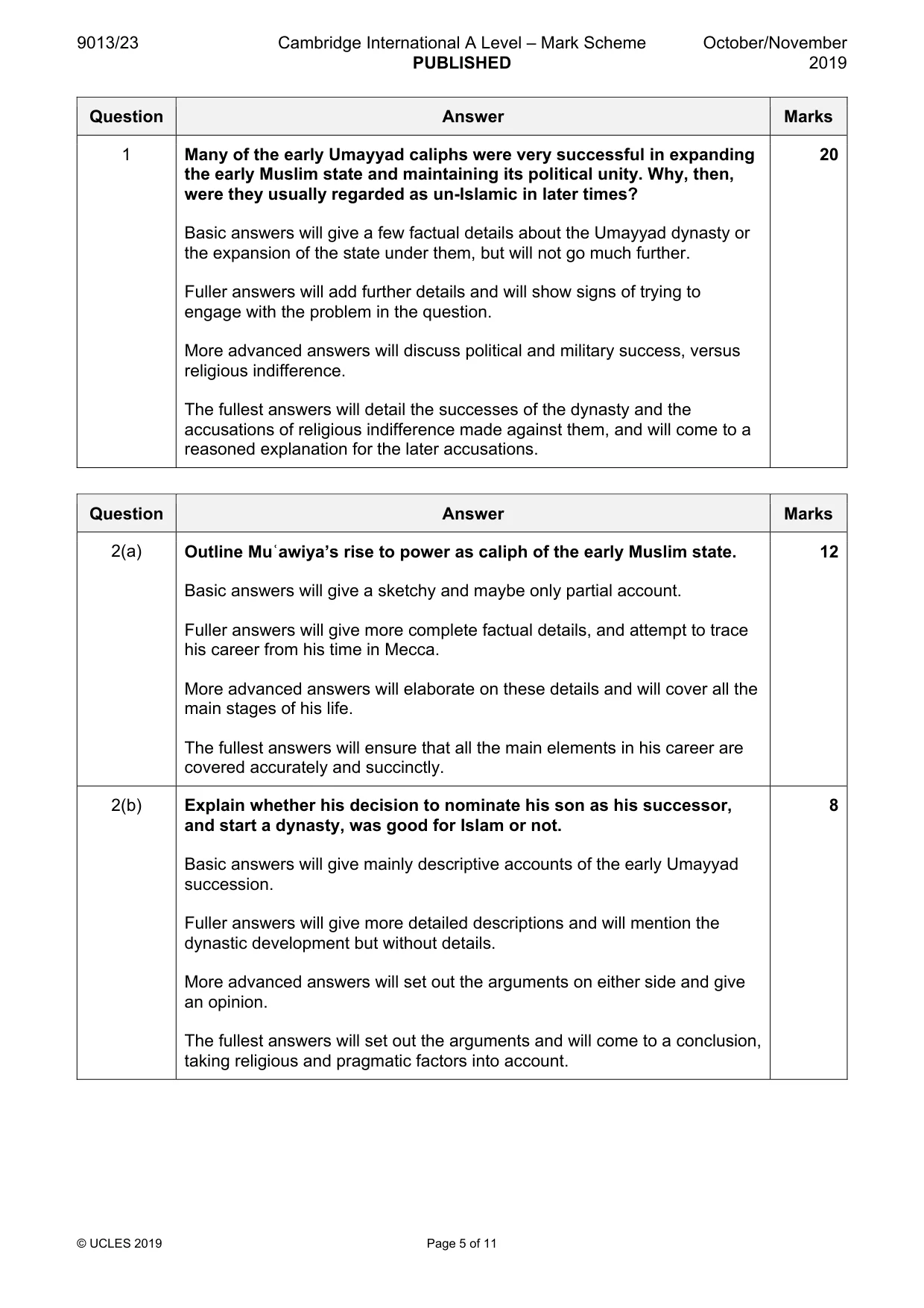
1 Many of the early Umayyad caliphs were very successful in expanding the early Muslim state and maintaining its political unity. Why, then, were they usually regarded as un-Islamic in later times? [20]
Mark scheme: Question Answer Marks 1 Many of the early Umayyad caliphs were very successful in expanding 20 the early Muslim state and maintaining its political unity. Why, then, were they usually regarded as un-Islamic in later times? Basic answers will give a few factual details about the Umayyad dynasty or the expansion of the state under them, but will not go much further. Fuller answers will add further details and will show signs of trying to engage with the problem in the question. More advanced answers will discuss political and military success, versus religious indifference. The fullest answers will detail the successes of the dynasty and the accusations of religious indifference made against them, and will come to a reasoned explanation for the later accusations.
Q2 · Outline Muʿawiya’s rise to power as caliph of the early Muslim state
2 (a) Outline Muʿawiya’s rise to power as caliph of the early Muslim state. [12] (b) Explain whether his decision to nominate his son as his successor, and start a dynasty, was good for Islam or not. [8]
Mark scheme: 2(a) Outline Muʿawiya’s rise to power as caliph of the early Muslim state. 12 Basic answers will give a sketchy and maybe only partial account. Fuller answers will give more complete factual details, and attempt to trace his career from his time in Mecca. More advanced answers will elaborate on these details and will cover all the main stages of his life. The fullest answers will ensure that all the main elements in his career are covered accurately and succinctly. 2(b) Explain whether his decision to nominate his son as his successor, 8 and start a dynasty, was good for Islam or not. Basic answers will give mainly descriptive accounts of the early Umayyad succession. Fuller answers will give more detailed descriptions and will mention the dynastic development but without details. More advanced answers will set out the arguments on either side and give an opinion. The fullest answers will set out the arguments and will come to a conclusion, taking religious and pragmatic factors into account.
Q3 · The first ʿAbbasid caliph moved the capital from Damascus to his new city of Baghdad
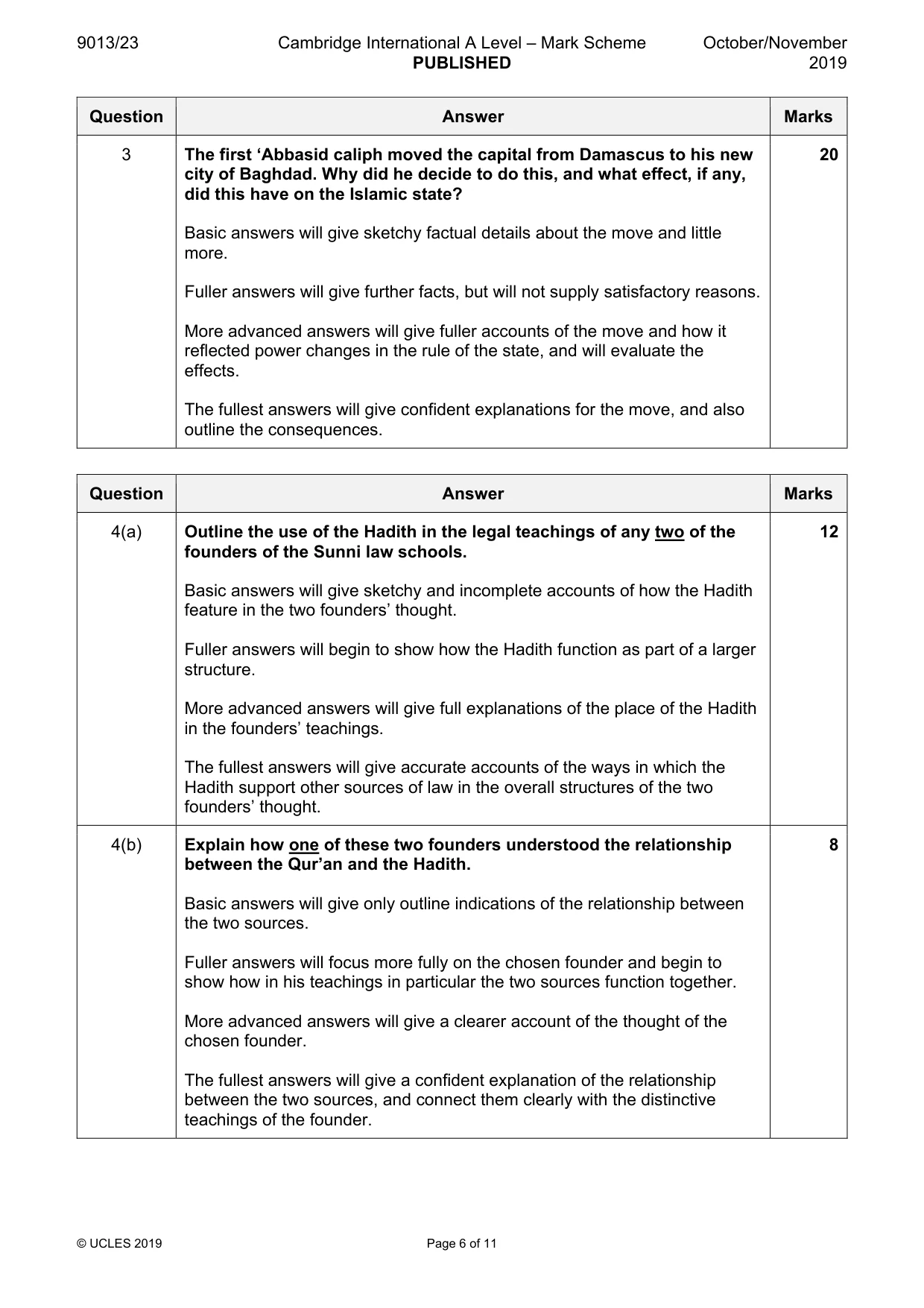
3 The first ʿAbbasid caliph moved the capital from Damascus to his new city of Baghdad. Why did he decide to do this, and what effect, if any, did this have on the Islamic state? [20]
Mark scheme: 3 The first ‘Abbasid caliph moved the capital from Damascus to his new 20 city of Baghdad. Why did he decide to do this, and what effect, if any, did this have on the Islamic state? Basic answers will give sketchy factual details about the move and little more. Fuller answers will give further facts, but will not supply satisfactory reasons. More advanced answers will give fuller accounts of the move and how it reflected power changes in the rule of the state, and will evaluate the effects. The fullest answers will give confident explanations for the move, and also outline the consequences.
Q4 · Outline the use of the Hadith in the legal teachings of any two of the founders of the…
4 (a) Outline the use of the Hadith in the legal teachings of any two of the founders of the Sunni law schools. [12] (b) Explain how one of these two founders understood the relationship between the Qurʾan and the Hadith. [8]
Mark scheme: 4(a) Outline the use of the Hadith in the legal teachings of any two of the 12 founders of the Sunni law schools. Basic answers will give sketchy and incomplete accounts of how the Hadith feature in the two founders’ thought. Fuller answers will begin to show how the Hadith function as part of a larger structure. More advanced answers will give full explanations of the place of the Hadith in the founders’ teachings. The fullest answers will give accurate accounts of the ways in which the Hadith support other sources of law in the overall structures of the two founders’ thought. 4(b) Explain how one of these two founders understood the relationship 8 between the Qur’an and the Hadith. Basic answers will give only outline indications of the relationship between the two sources. Fuller answers will focus more fully on the chosen founder and begin to show how in his teachings in particular the two sources function together. More advanced answers will give a clearer account of the thought of the chosen founder. The fullest answers will give a confident explanation of the relationship between the two sources, and connect them clearly with the distinctive teachings of the founder.
Q5 · Why are the compilations of Hadith made by al-Bukhari, Muslim ibn al-Hajjaj and their…
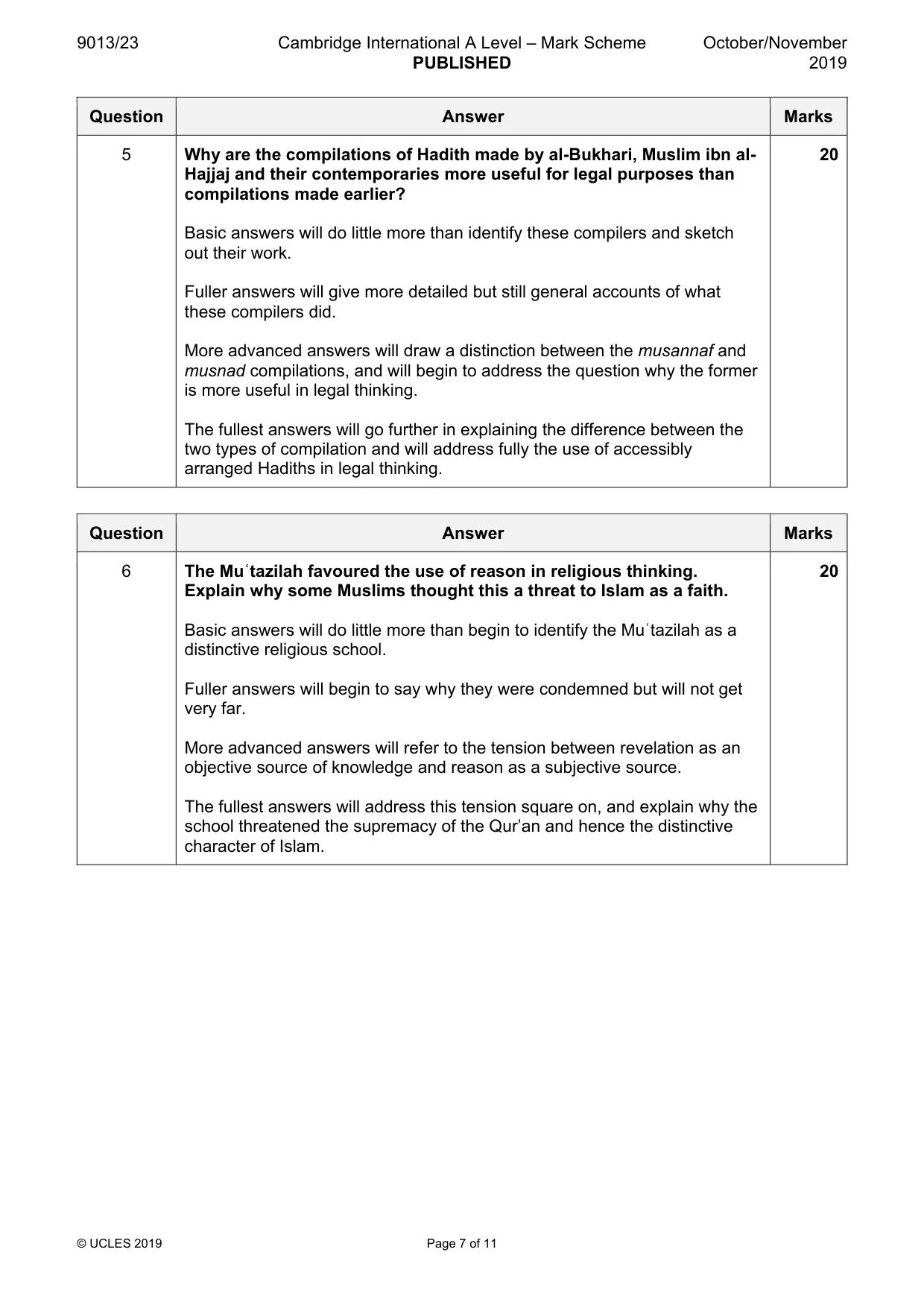
5 Why are the compilations of Hadith made by al-Bukhari, Muslim ibn al-Hajjaj and their contemporaries more useful for legal purposes than compilations made earlier? [20]
Mark scheme: 5 Why are the compilations of Hadith made by al-Bukhari, Muslim ibn al- 20 Hajjaj and their contemporaries more useful for legal purposes than compilations made earlier? Basic answers will do little more than identify these compilers and sketch out their work. Fuller answers will give more detailed but still general accounts of what these compilers did. More advanced answers will draw a distinction between the musannaf and musnad compilations, and will begin to address the question why the former is more useful in legal thinking. The fullest answers will go further in explaining the difference between the two types of compilation and will address fully the use of accessibly arranged Hadiths in legal thinking.
Q6 · The Muʿtazilah favoured the use of reason in religious thinking
6 The Muʿtazilah favoured the use of reason in religious thinking. Explain why some Muslims thought this a threat to Islam as a faith. [20] Section C
Mark scheme: 6 The Muʿtazilah favoured the use of reason in religious thinking. 20 Explain why some Muslims thought this a threat to Islam as a faith. Basic answers will do little more than begin to identify the Muʿtazilah as a distinctive religious school. Fuller answers will begin to say why they were condemned but will not get very far. More advanced answers will refer to the tension between revelation as an objective source of knowledge and reason as a subjective source. The fullest answers will address this tension square on, and explain why the school threatened the supremacy of the Qur’an and hence the distinctive character of Islam.
Q7 · Outline the role of the figure of the Imam in Shiʿi Islam as teacher, model and spiritual…
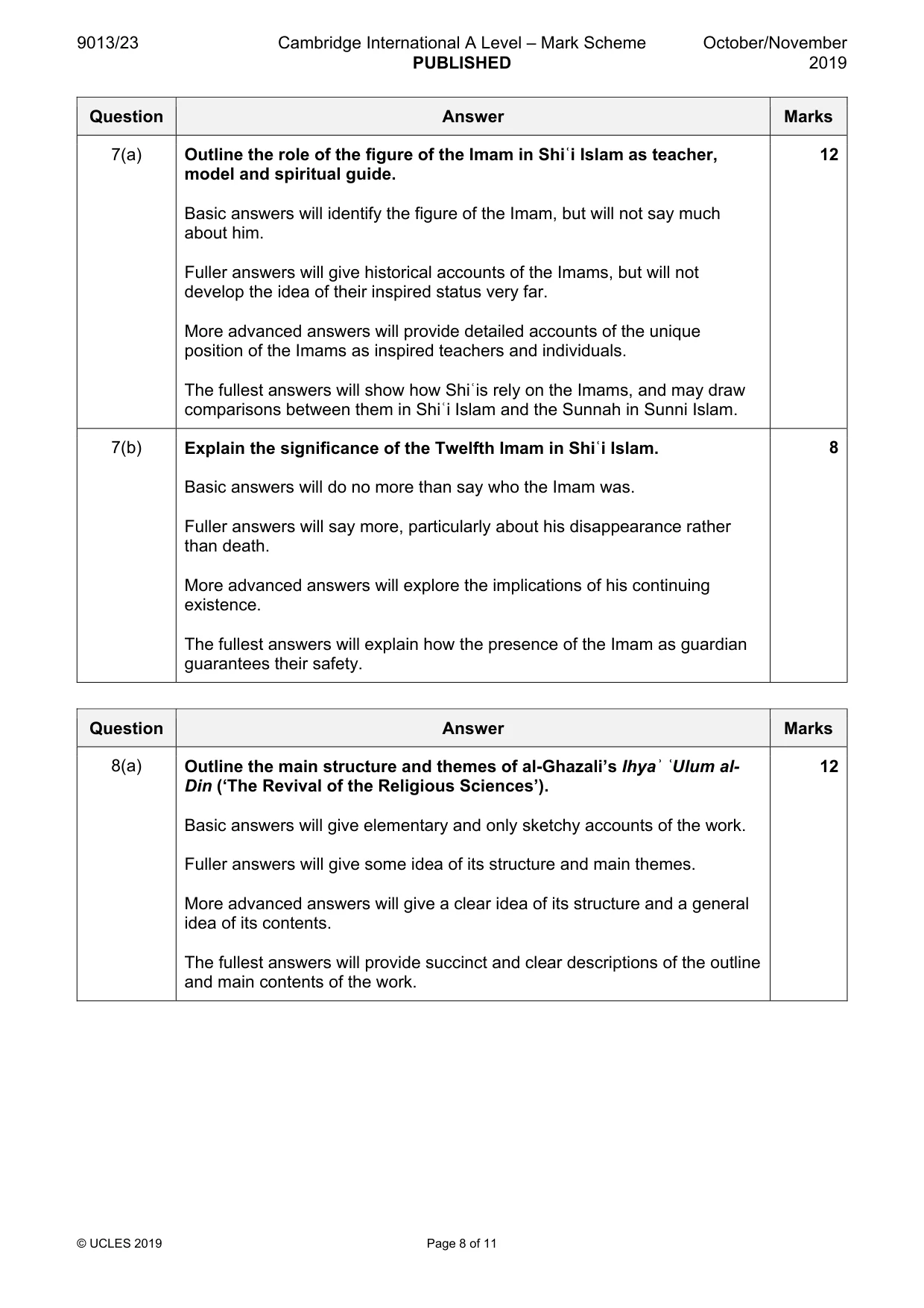
7 (a) Outline the role of the figure of the Imam in Shiʿi Islam as teacher, model and spiritual guide. [12] (b) Explain the significance of the Twelfth Imam in Shiʿi Islam. [8]
Mark scheme: 7(a) Outline the role of the figure of the Imam in Shiʿi Islam as teacher, 12 model and spiritual guide. Basic answers will identify the figure of the Imam, but will not say much about him. Fuller answers will give historical accounts of the Imams, but will not develop the idea of their inspired status very far. More advanced answers will provide detailed accounts of the unique position of the Imams as inspired teachers and individuals. The fullest answers will show how Shiʿis rely on the Imams, and may draw comparisons between them in Shiʿi Islam and the Sunnah in Sunni Islam. 7(b) Explain the significance of the Twelfth Imam in Shiʿi Islam. 8 Basic answers will do no more than say who the Imam was. Fuller answers will say more, particularly about his disappearance rather than death. More advanced answers will explore the implications of his continuing existence. The fullest answers will explain how the presence of the Imam as guardian guarantees their safety.
Q8 · Outline the main structure and themes of al-Ghazali’s Ihyaʾ ʿUlum al-Din (‘The Revival of…
8 (a) Outline the main structure and themes of al-Ghazali’s Ihyaʾ ʿUlum al-Din (‘The Revival of the Religious Sciences’). [12] (b) Why is this often thought to be one of the most important books ever written by a Muslim? [8]
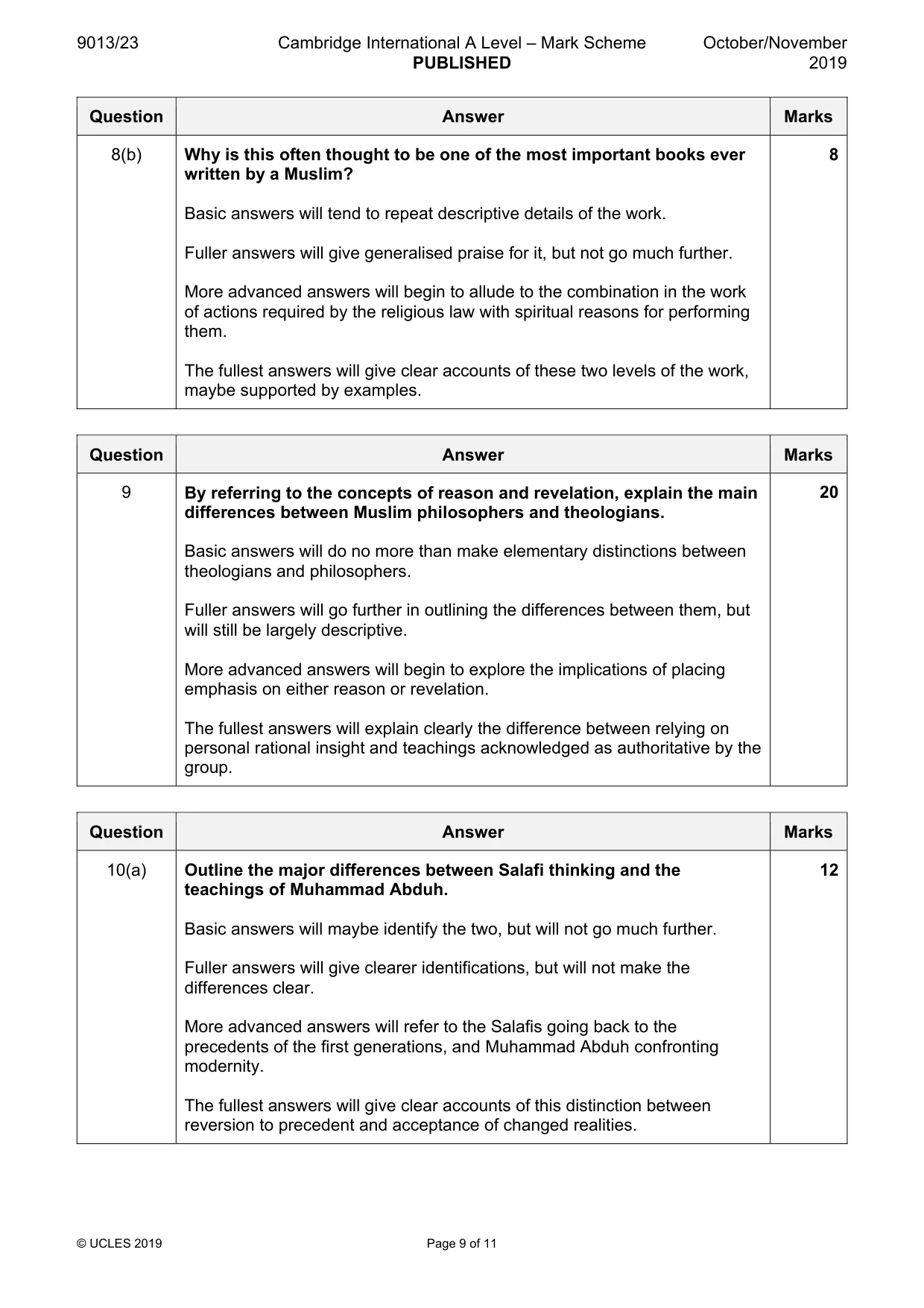
Mark scheme: 8(a) Outline the main structure and themes of al-Ghazali’s Ihyaʾ ʿUlum al- 12 Din (‘The Revival of the Religious Sciences’). Basic answers will give elementary and only sketchy accounts of the work. Fuller answers will give some idea of its structure and main themes. More advanced answers will give a clear idea of its structure and a general idea of its contents. The fullest answers will provide succinct and clear descriptions of the outline and main contents of the work. 8(b) Why is this often thought to be one of the most important books ever 8 written by a Muslim? Basic answers will tend to repeat descriptive details of the work. Fuller answers will give generalised praise for it, but not go much further. More advanced answers will begin to allude to the combination in the work of actions required by the religious law with spiritual reasons for performing them. The fullest answers will give clear accounts of these two levels of the work, maybe supported by examples.
Q9 · By referring to the concepts of reason and revelation, explain the main differences…
9 By referring to the concepts of reason and revelation, explain the main differences between Muslim philosophers and theologians. [20] Section D
Mark scheme: 9 By referring to the concepts of reason and revelation, explain the main 20 differences between Muslim philosophers and theologians. Basic answers will do no more than make elementary distinctions between theologians and philosophers. Fuller answers will go further in outlining the differences between them, but will still be largely descriptive. More advanced answers will begin to explore the implications of placing emphasis on either reason or revelation. The fullest answers will explain clearly the difference between relying on personal rational insight and teachings acknowledged as authoritative by the group.
Q10 · Outline the major differences between Salafi thinking and the teachings of Muhammad Abduh
10 (a) Outline the major differences between Salafi thinking and the teachings of Muhammad Abduh. [12] (b) Which in your opinion is more suited to meet current needs in the world? Give reasons for your answer. [8]
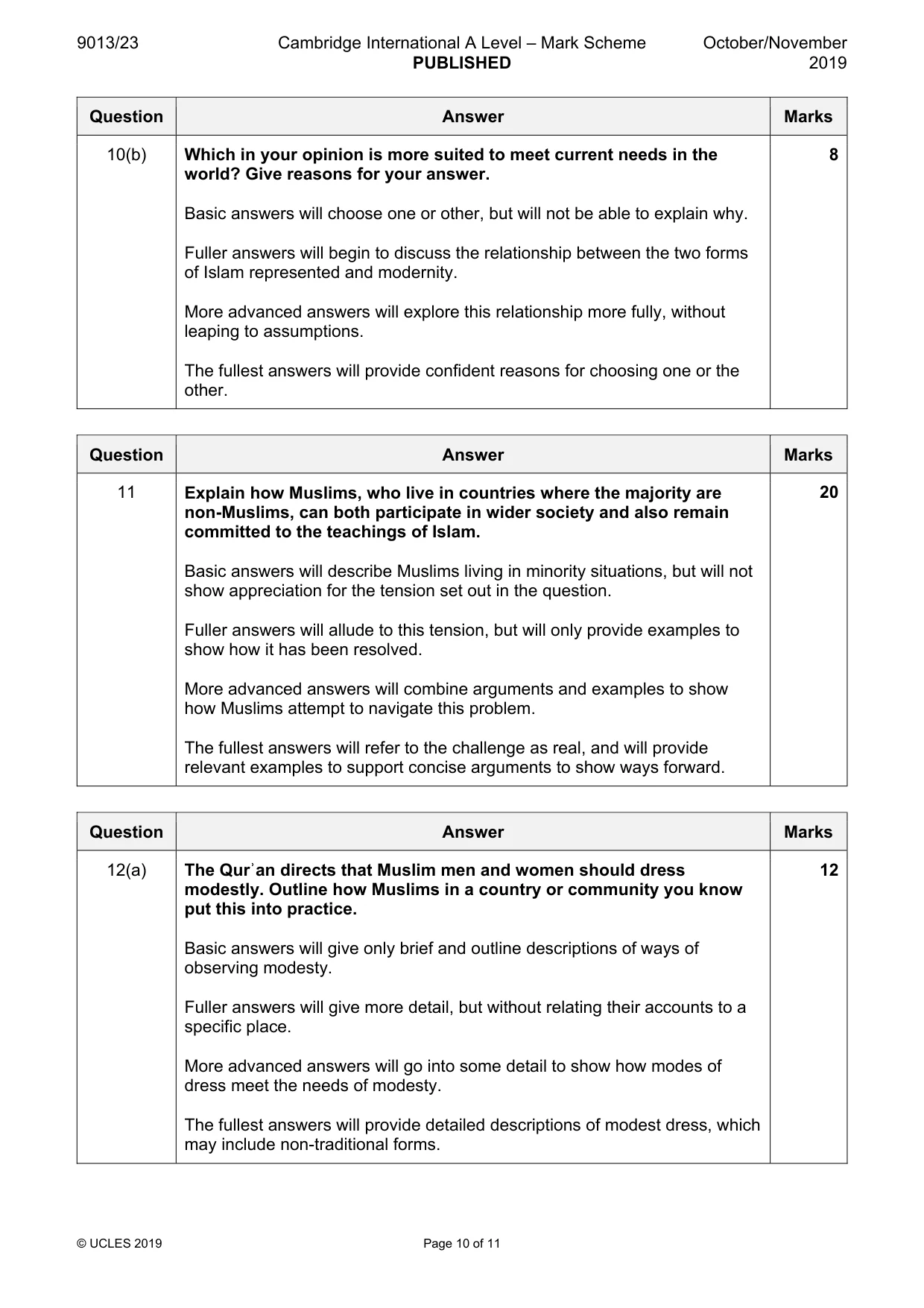
Mark scheme: 10(a) Outline the major differences between Salafi thinking and the 12 teachings of Muhammad Abduh. Basic answers will maybe identify the two, but will not go much further. Fuller answers will give clearer identifications, but will not make the differences clear. More advanced answers will refer to the Salafis going back to the precedents of the first generations, and Muhammad Abduh confronting modernity. The fullest answers will give clear accounts of this distinction between reversion to precedent and acceptance of changed realities. 10(b) Which in your opinion is more suited to meet current needs in the 8 world? Give reasons for your answer. Basic answers will choose one or other, but will not be able to explain why. Fuller answers will begin to discuss the relationship between the two forms of Islam represented and modernity. More advanced answers will explore this relationship more fully, without leaping to assumptions. The fullest answers will provide confident reasons for choosing one or the other.
Q11 · Explain how Muslims, who live in countries where the majority are non-Muslims, can both…
11 Explain how Muslims, who live in countries where the majority are non-Muslims, can both participate in wider society and also remain committed to the teachings of Islam. [20]
Mark scheme: 11 Explain how Muslims, who live in countries where the majority are 20 non-Muslims, can both participate in wider society and also remain committed to the teachings of Islam. Basic answers will describe Muslims living in minority situations, but will not show appreciation for the tension set out in the question. Fuller answers will allude to this tension, but will only provide examples to show how it has been resolved. More advanced answers will combine arguments and examples to show how Muslims attempt to navigate this problem. The fullest answers will refer to the challenge as real, and will provide relevant examples to support concise arguments to show ways forward.
Q12 · The Qurʾan directs that Muslim men and women should dress modestly
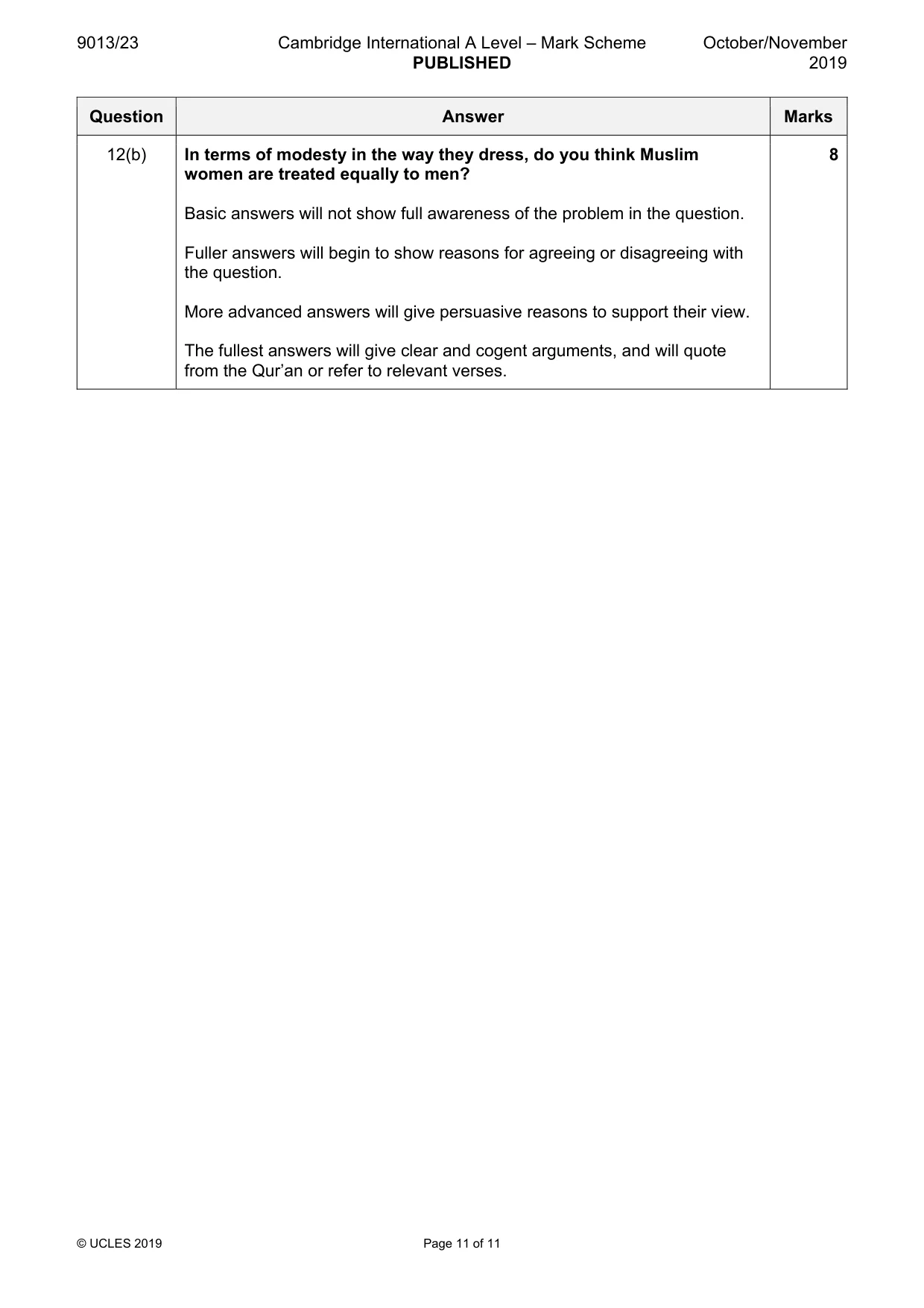
12 (a) The Qurʾan directs that Muslim men and women should dress modestly. Outline how Muslims in a country or community you know put this into practice. [12] (b) In terms of modesty in the way they dress, do you think Muslim women are treated equally to men? [8]
Mark scheme: 12(a) The Qurʾan directs that Muslim men and women should dress 12 modestly. Outline how Muslims in a country or community you know put this into practice. Basic answers will give only brief and outline descriptions of ways of observing modesty. Fuller answers will give more detail, but without relating their accounts to a specific place. More advanced answers will go into some detail to show how modes of dress meet the needs of modesty. The fullest answers will provide detailed descriptions of modest dress, which may include non-traditional forms. 12(b) In terms of modesty in the way they dress, do you think Muslim 8 women are treated equally to men? Basic answers will not show full awareness of the problem in the question. Fuller answers will begin to show reasons for agreeing or disagreeing with the question. More advanced answers will give persuasive reasons to support their view. The fullest answers will give clear and cogent arguments, and will quote from the Qur’an or refer to relevant verses.
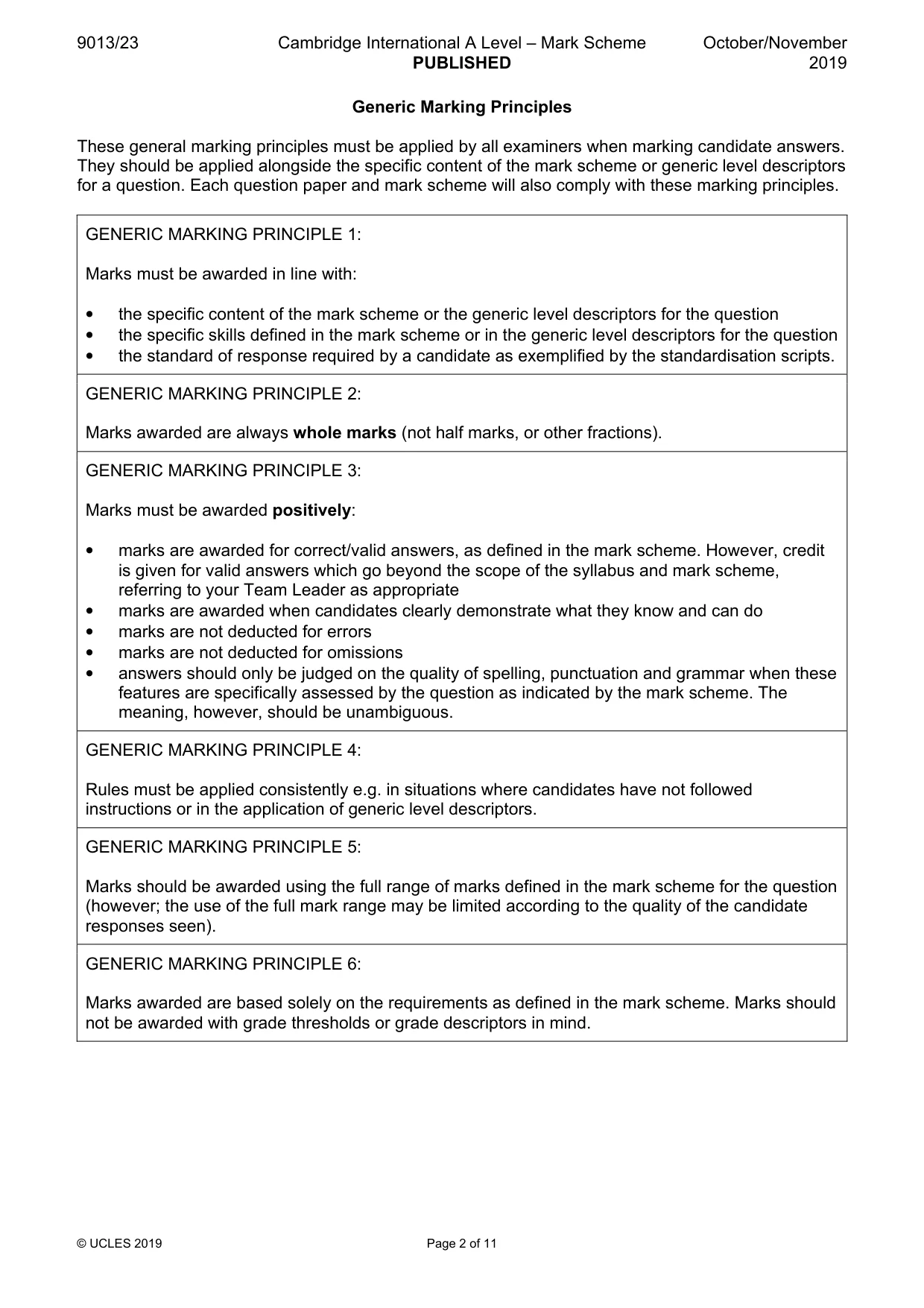
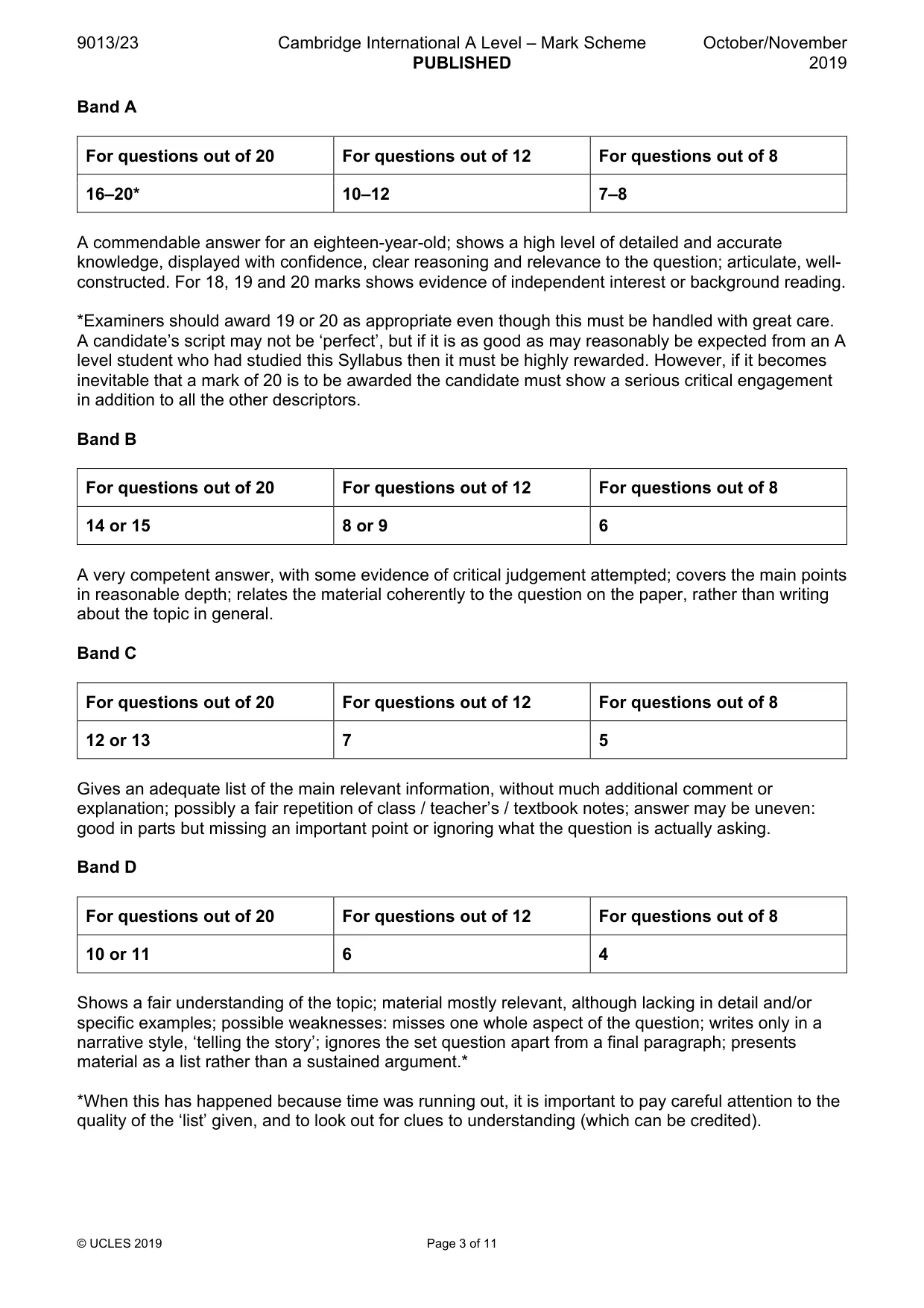
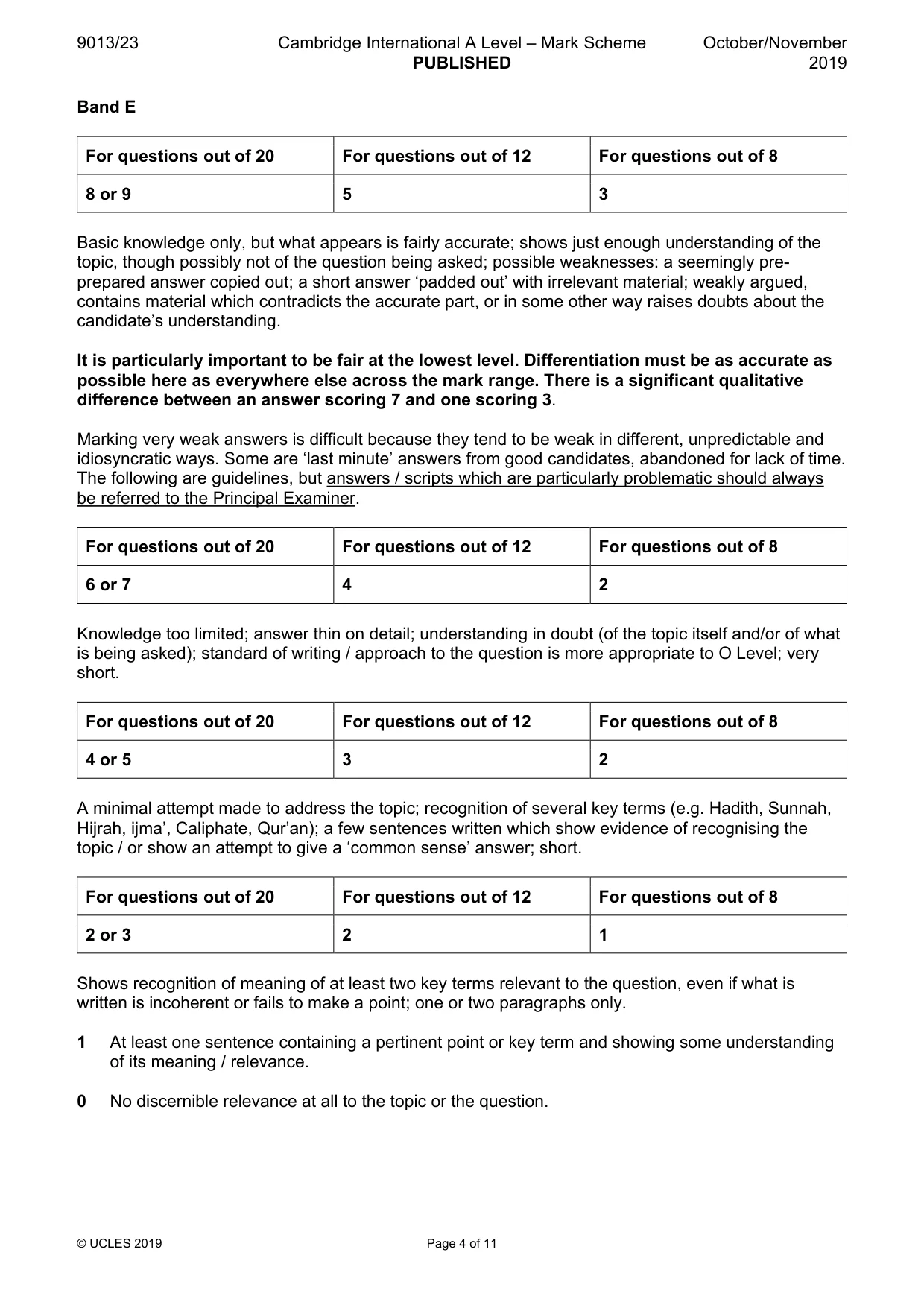
What you needed in this session
Cambridge’s own grade thresholds for 2019 Oct/Nov, Paper 2 · Variant 3. A higher threshold means an easier paper — the bar moves with how the cohort did.