Cambridge A Level Islamic Studies 9013 — 2017 Oct/Nov Paper 2 · Variant 3
9013/23/O/N/17 · 12 questions · 100 marks · ≈113 min
The question paper and its mark scheme, free to read here and free to download. This is Cambridge’s own paper, exactly as it was sat.
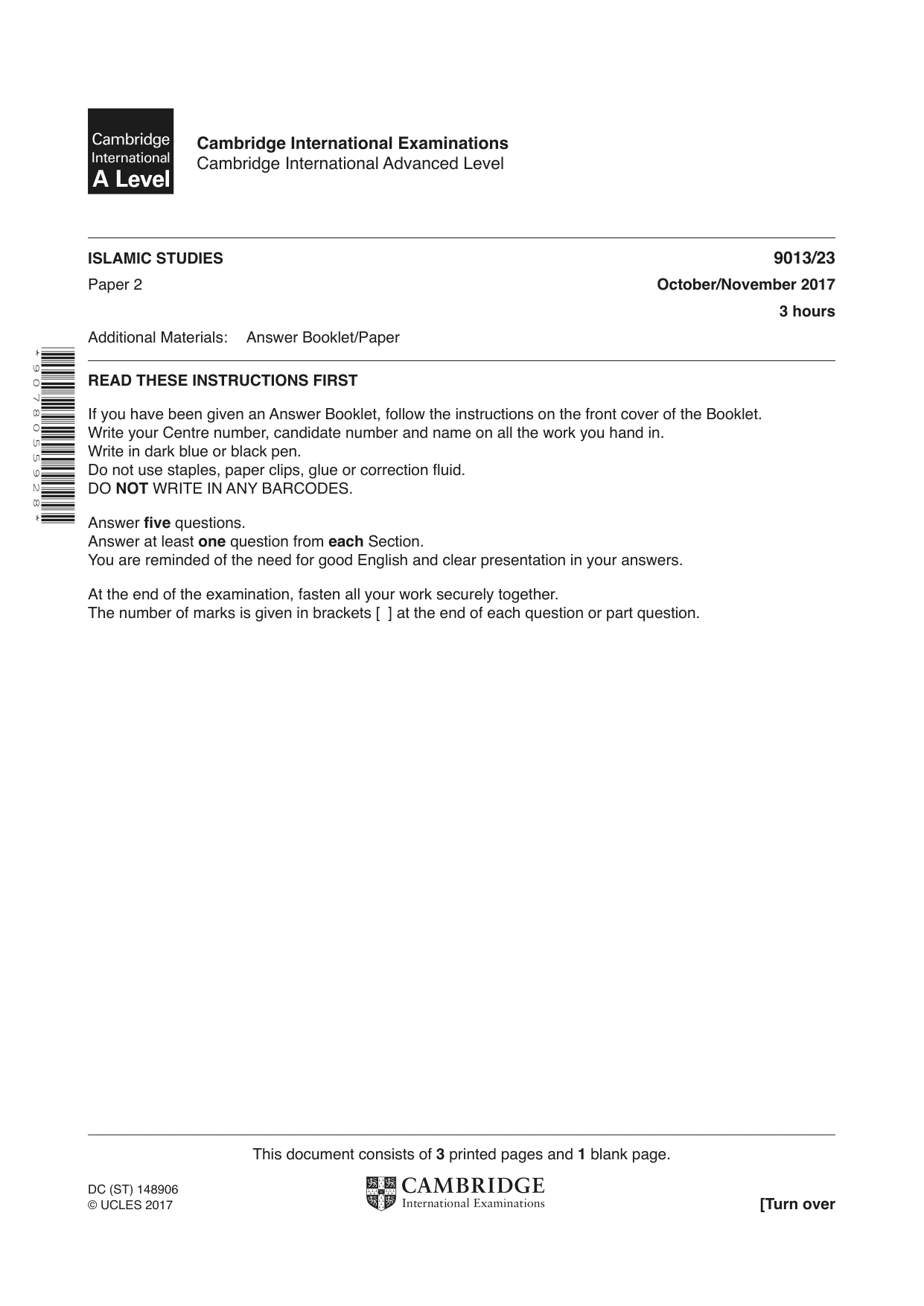
Question paper4 pages

Mark scheme6 pages
Answers below. Sit the paper first if you are practising.
Questions as text
Q1 · ‘The main cause of the collapse of the Umayyad dynasty was the weakness of their rulers.’…
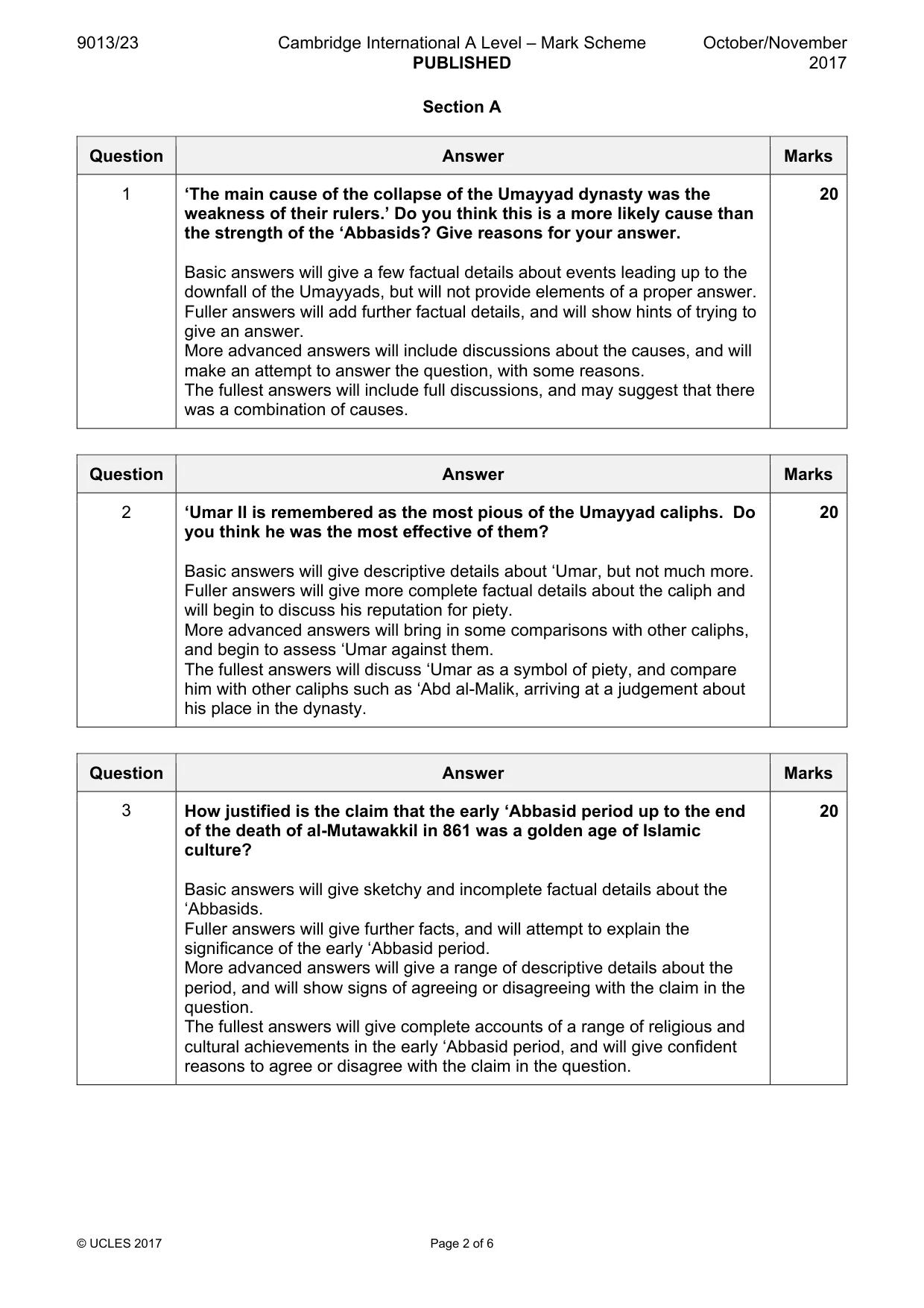
1 ‘The main cause of the collapse of the Umayyad dynasty was the weakness of their rulers.’ Do you think this is a more likely cause than the strength of the ‘Abbasids? Give reasons for your answer. [20]
Mark scheme: Question Answer Marks 1 ‘The main cause of the collapse of the Umayyad dynasty was the 20 weakness of their rulers.’ Do you think this is a more likely cause than the strength of the ‘Abbasids? Give reasons for your answer. Basic answers will give a few factual details about events leading up to the downfall of the Umayyads, but will not provide elements of a proper answer. Fuller answers will add further factual details, and will show hints of trying to give an answer. More advanced answers will include discussions about the causes, and will make an attempt to answer the question, with some reasons. The fullest answers will include full discussions, and may suggest that there was a combination of causes.
Q2 · ‘Umar II is remembered as the most pious of the Umayyad caliphs
2 ‘Umar II is remembered as the most pious of the Umayyad caliphs. Do you think he was the most effective of them? [20]
Mark scheme: 2 ‘Umar II is remembered as the most pious of the Umayyad caliphs. Do 20 you think he was the most effective of them? Basic answers will give descriptive details about ‘Umar, but not much more. Fuller answers will give more complete factual details about the caliph and will begin to discuss his reputation for piety. More advanced answers will bring in some comparisons with other caliphs, and begin to assess ‘Umar against them. The fullest answers will discuss ‘Umar as a symbol of piety, and compare him with other caliphs such as ‘Abd al-Malik, arriving at a judgement about his place in the dynasty.
Q3 · How justified is the claim that the early ‘Abbasid period up to the end of the death of…
3 How justified is the claim that the early ‘Abbasid period up to the end of the death of al-Mutawakkil in 861 was a golden age of Islamic culture? [20]
Mark scheme: 3 How justified is the claim that the early ‘Abbasid period up to the end 20 of the death of al-Mutawakkil in 861 was a golden age of Islamic culture? Basic answers will give sketchy and incomplete factual details about the ‘Abbasids. Fuller answers will give further facts, and will attempt to explain the significance of the early ‘Abbasid period. More advanced answers will give a range of descriptive details about the period, and will show signs of agreeing or disagreeing with the claim in the question. The fullest answers will give complete accounts of a range of religious and cultural achievements in the early ‘Abbasid period, and will give confident reasons to agree or disagree with the claim in the question. Section B
Q4 · Each of the four founders of the Sunni law schools followed his own particular principles…
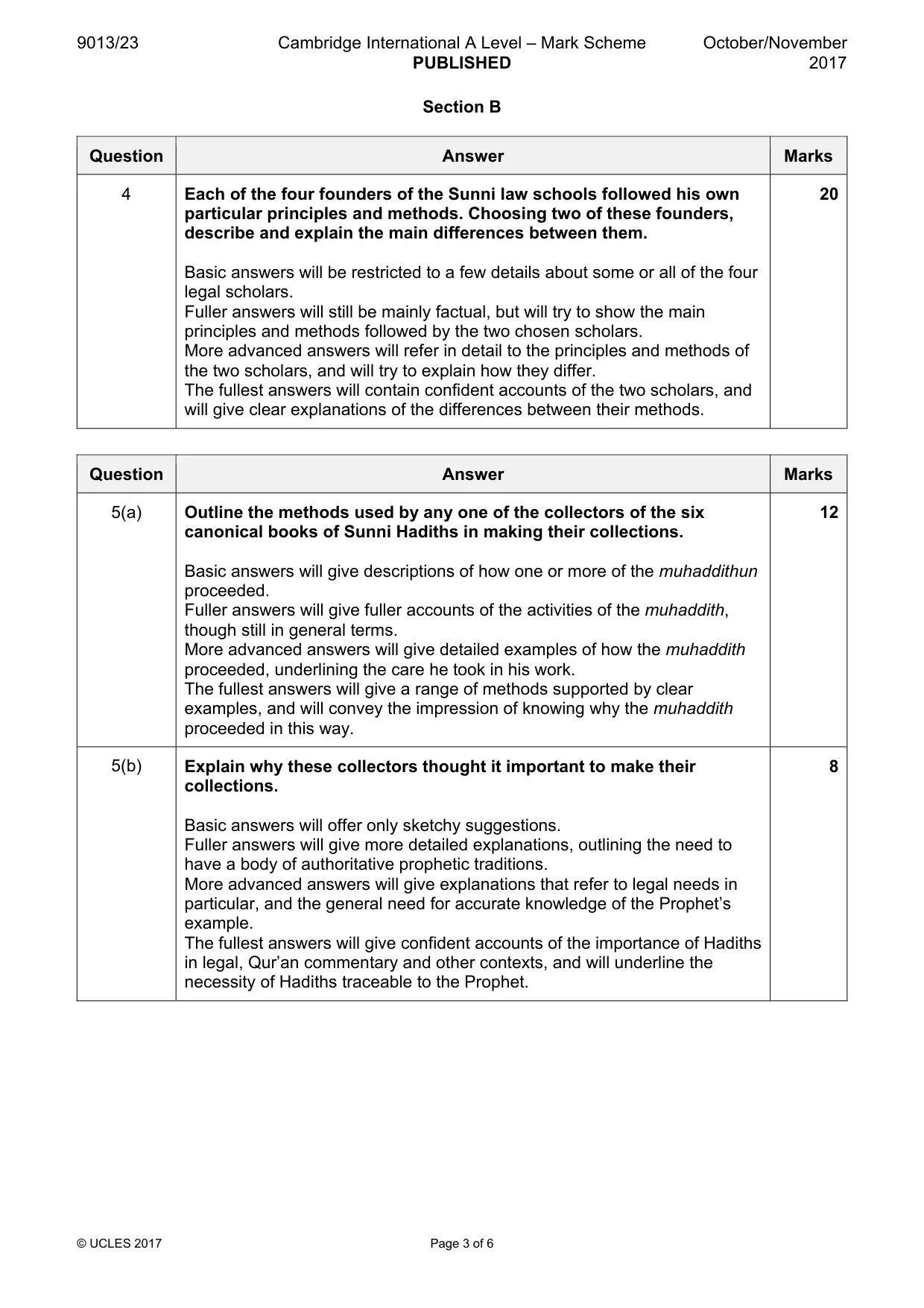
4 Each of the four founders of the Sunni law schools followed his own particular principles and methods. Choosing two of these founders, describe and explain the main differences between them. [20]
Mark scheme: 4 Each of the four founders of the Sunni law schools followed his own 20 particular principles and methods. Choosing two of these founders, describe and explain the main differences between them. Basic answers will be restricted to a few details about some or all of the four legal scholars. Fuller answers will still be mainly factual, but will try to show the main principles and methods followed by the two chosen scholars. More advanced answers will refer in detail to the principles and methods of the two scholars, and will try to explain how they differ. The fullest answers will contain confident accounts of the two scholars, and will give clear explanations of the differences between their methods.
Q5 · Outline the methods used by any one of the collectors of the six canonical books of Sunni…
5 (a) Outline the methods used by any one of the collectors of the six canonical books of Sunni Hadiths in making their collections. [12] (b) Explain why these collectors thought it important to make their collections. [8]
Mark scheme: 5(a) Outline the methods used by any one of the collectors of the six 12 canonical books of Sunni Hadiths in making their collections. Basic answers will give descriptions of how one or more of the muhaddithun proceeded. Fuller answers will give fuller accounts of the activities of the muhaddith, though still in general terms. More advanced answers will give detailed examples of how the muhaddith proceeded, underlining the care he took in his work. The fullest answers will give a range of methods supported by clear examples, and will convey the impression of knowing why the muhaddith proceeded in this way. 5(b) Explain why these collectors thought it important to make their 8 collections. Basic answers will offer only sketchy suggestions. Fuller answers will give more detailed explanations, outlining the need to have a body of authoritative prophetic traditions. More advanced answers will give explanations that refer to legal needs in particular, and the general need for accurate knowledge of the Prophet’s example. The fullest answers will give confident accounts of the importance of Hadiths in legal, Qur’an commentary and other contexts, and will underline the necessity of Hadiths traceable to the Prophet.
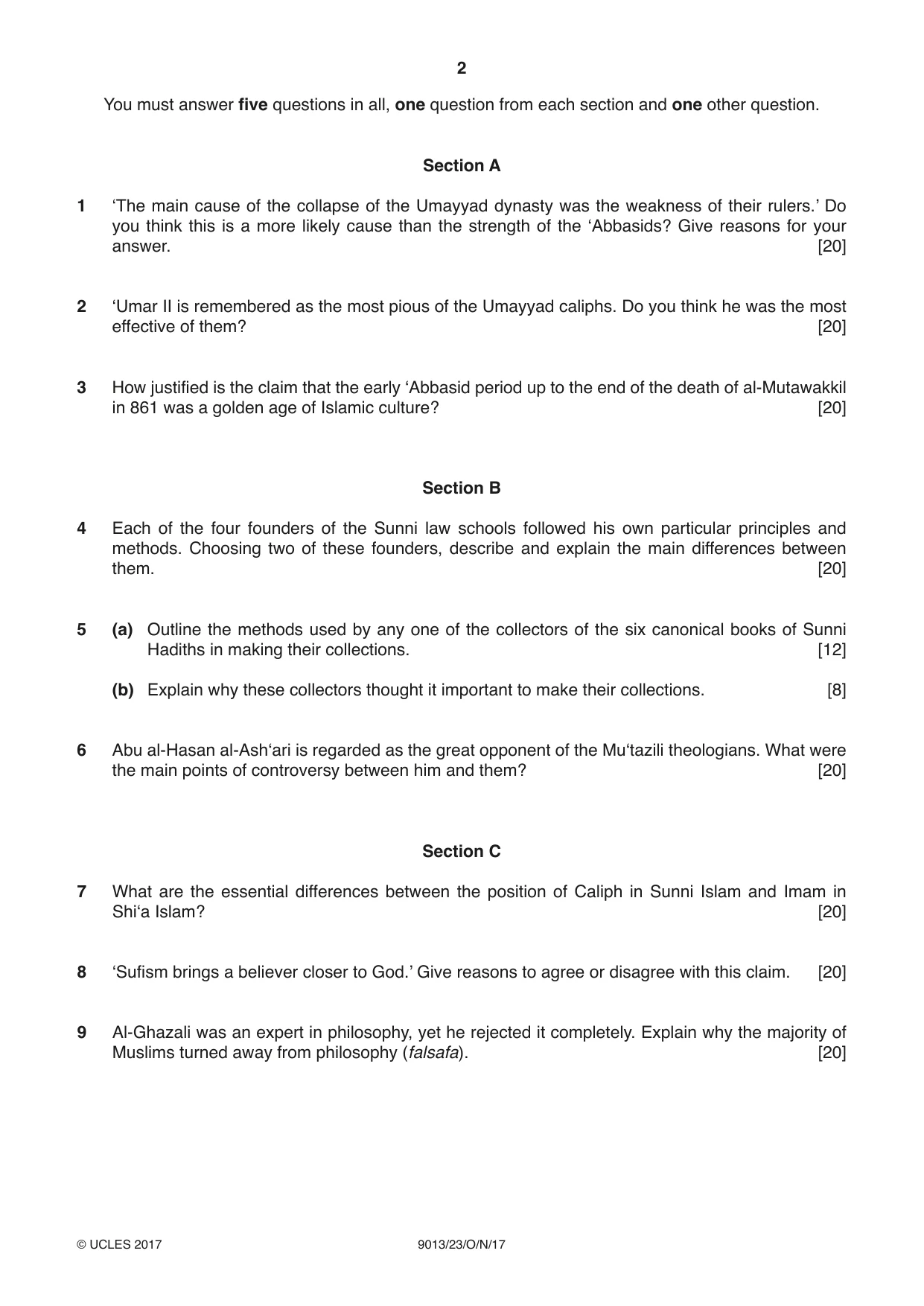
Q6 · Abu al-Hasan al-Ash‘ari is regarded as the great opponent of the Mu‘tazili theologians
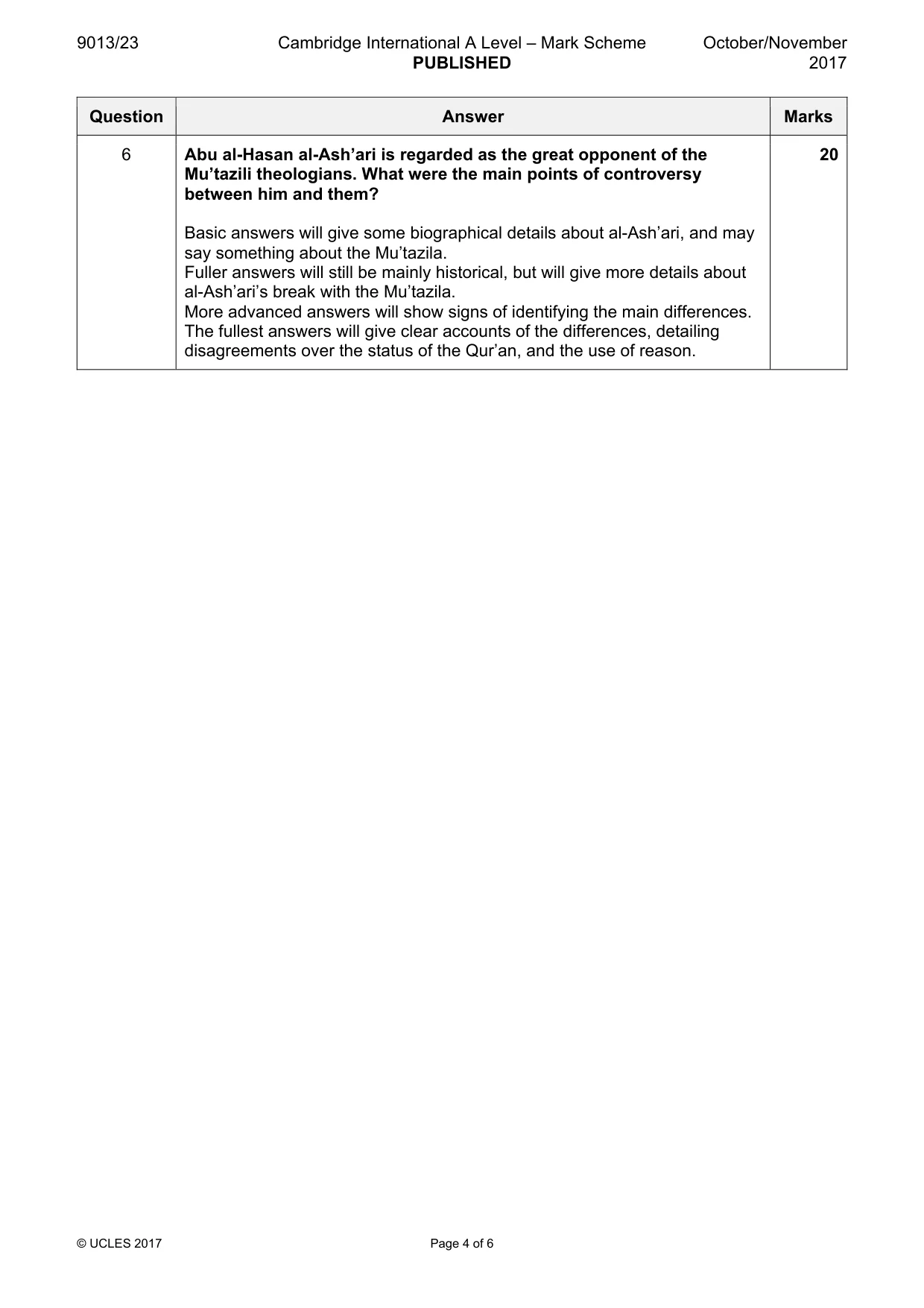
6 Abu al-Hasan al-Ash‘ari is regarded as the great opponent of the Mu‘tazili theologians. What were the main points of controversy between him and them? [20] Section C
Mark scheme: 6 Abu al-Hasan al-Ash’ari is regarded as the great opponent of the 20 Mu’tazili theologians. What were the main points of controversy between him and them? Basic answers will give some biographical details about al-Ash’ari, and may say something about the Mu’tazila. Fuller answers will still be mainly historical, but will give more details about al-Ash’ari’s break with the Mu’tazila. More advanced answers will show signs of identifying the main differences. The fullest answers will give clear accounts of the differences, detailing disagreements over the status of the Qur’an, and the use of reason. Section C
Q7 · What are the essential differences between the position of Caliph in Sunni Islam and Imam…
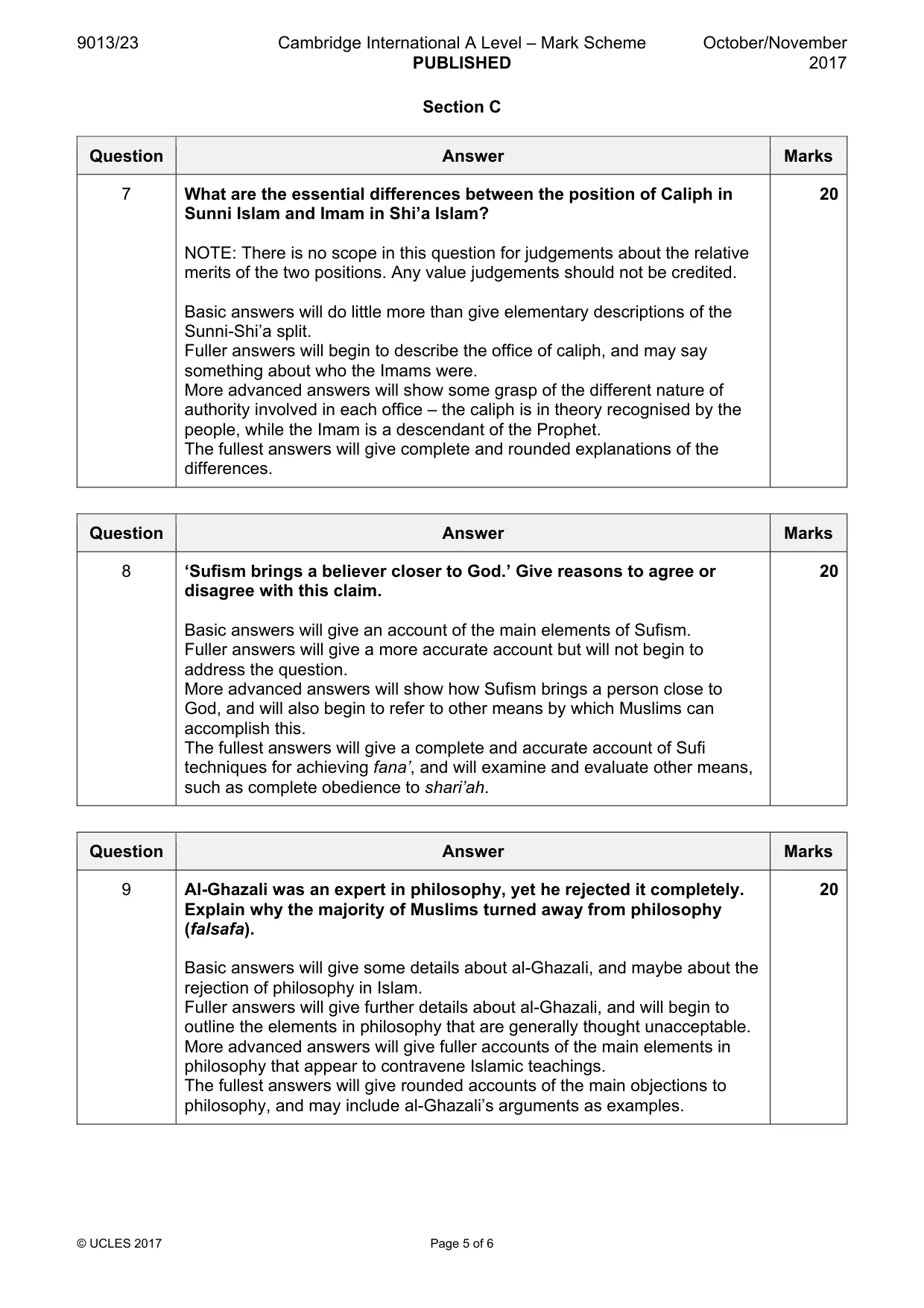
7 What are the essential differences between the position of Caliph in Sunni Islam and Imam in Shi‘a Islam? [20]
Mark scheme: 7 What are the essential differences between the position of Caliph in 20 Sunni Islam and Imam in Shi’a Islam? NOTE: There is no scope in this question for judgements about the relative merits of the two positions. Any value judgements should not be credited. Basic answers will do little more than give elementary descriptions of the Sunni-Shi’a split. Fuller answers will begin to describe the office of caliph, and may say something about who the Imams were. More advanced answers will show some grasp of the different nature of authority involved in each office – the caliph is in theory recognised by the people, while the Imam is a descendant of the Prophet. The fullest answers will give complete and rounded explanations of the differences.
Q8 · ‘Sufism brings a believer closer to God.’ Give reasons to agree or disagree with this…
8 ‘Sufism brings a believer closer to God.’ Give reasons to agree or disagree with this claim. [20]
Mark scheme: 8 ‘Sufism brings a believer closer to God.’ Give reasons to agree or 20 disagree with this claim. Basic answers will give an account of the main elements of Sufism. Fuller answers will give a more accurate account but will not begin to address the question. More advanced answers will show how Sufism brings a person close to God, and will also begin to refer to other means by which Muslims can accomplish this. The fullest answers will give a complete and accurate account of Sufi techniques for achieving fana’, and will examine and evaluate other means, such as complete obedience to shari’ah.
Q9 · Al-Ghazali was an expert in philosophy, yet he rejected it completely
9 Al-Ghazali was an expert in philosophy, yet he rejected it completely. Explain why the majority of Muslims turned away from philosophy (falsafa). [20] Section D
Mark scheme: 9 Al-Ghazali was an expert in philosophy, yet he rejected it completely. 20 Explain why the majority of Muslims turned away from philosophy (falsafa). Basic answers will give some details about al-Ghazali, and maybe about the rejection of philosophy in Islam. Fuller answers will give further details about al-Ghazali, and will begin to outline the elements in philosophy that are generally thought unacceptable. More advanced answers will give fuller accounts of the main elements in philosophy that appear to contravene Islamic teachings. The fullest answers will give rounded accounts of the main objections to philosophy, and may include al-Ghazali’s arguments as examples. Section D
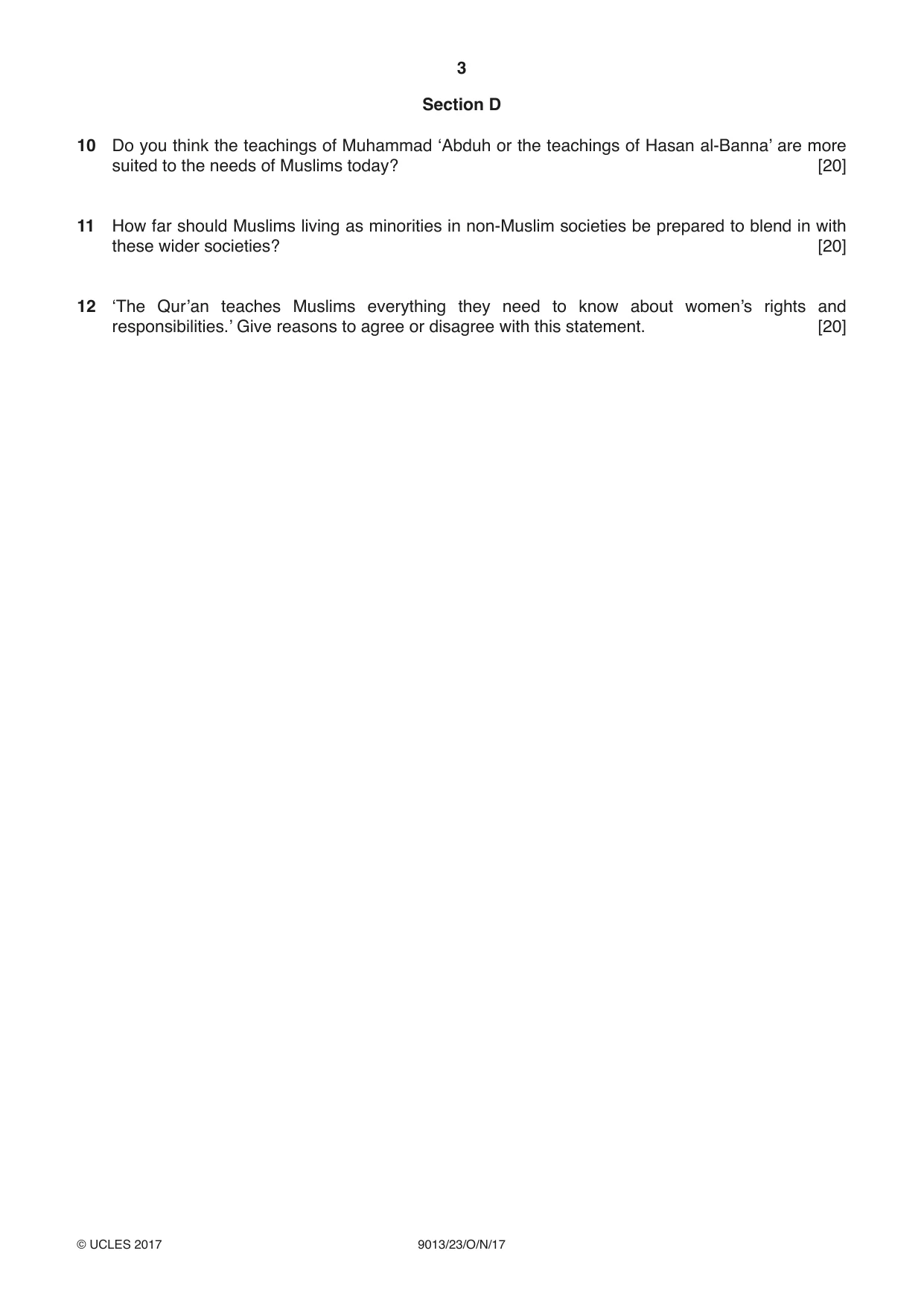
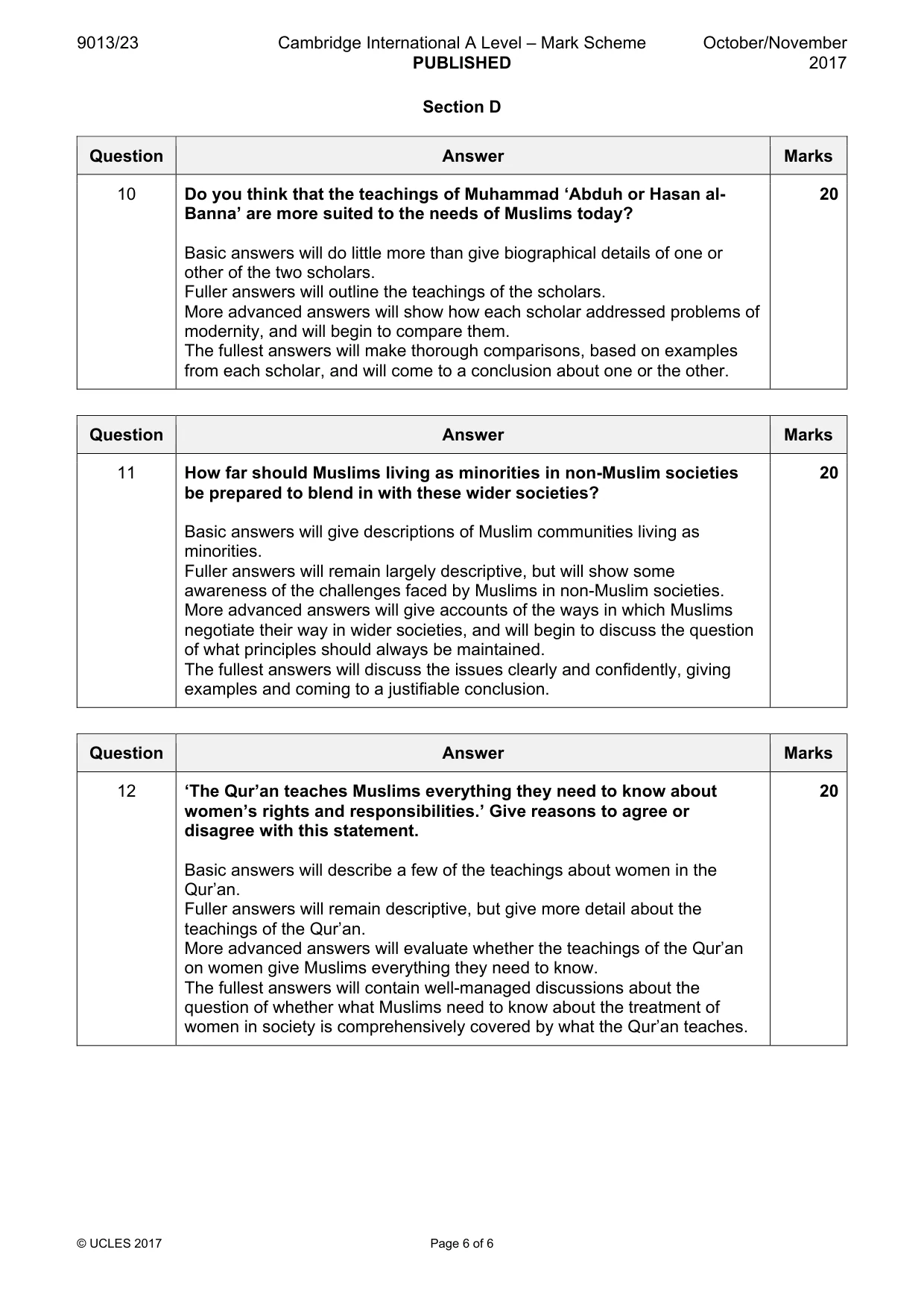
Q10 · Do you think the teachings of Muhammad ‘Abduh or the teachings of Hasan al-Banna’ are…
10 Do you think the teachings of Muhammad ‘Abduh or the teachings of Hasan al-Banna’ are more suited to the needs of Muslims today? [20]
Mark scheme: 10 Do you think that the teachings of Muhammad ‘Abduh or Hasan al- 20 Banna’ are more suited to the needs of Muslims today? Basic answers will do little more than give biographical details of one or other of the two scholars. Fuller answers will outline the teachings of the scholars. More advanced answers will show how each scholar addressed problems of modernity, and will begin to compare them. The fullest answers will make thorough comparisons, based on examples from each scholar, and will come to a conclusion about one or the other.
Q11 · How far should Muslims living as minorities in non-Muslim societies be prepared to blend…
11 How far should Muslims living as minorities in non-Muslim societies be prepared to blend in with these wider societies? [20]
Mark scheme: 11 How far should Muslims living as minorities in non-Muslim societies 20 be prepared to blend in with these wider societies? Basic answers will give descriptions of Muslim communities living as minorities. Fuller answers will remain largely descriptive, but will show some awareness of the challenges faced by Muslims in non-Muslim societies. More advanced answers will give accounts of the ways in which Muslims negotiate their way in wider societies, and will begin to discuss the question of what principles should always be maintained. The fullest answers will discuss the issues clearly and confidently, giving examples and coming to a justifiable conclusion.
Q12 · ‘The Qur’an teaches Muslims everything they need to know about women’s rights and…
12 ‘The Qur’an teaches Muslims everything they need to know about women’s rights and responsibilities.’ Give reasons to agree or disagree with this statement. [20]
Mark scheme: 12 ‘The Qur’an teaches Muslims everything they need to know about 20 women’s rights and responsibilities.’ Give reasons to agree or disagree with this statement. Basic answers will describe a few of the teachings about women in the Qur’an. Fuller answers will remain descriptive, but give more detail about the teachings of the Qur’an. More advanced answers will evaluate whether the teachings of the Qur’an on women give Muslims everything they need to know. The fullest answers will contain well-managed discussions about the question of whether what Muslims need to know about the treatment of women in society is comprehensively covered by what the Qur’an teaches.
What you needed in this session
Cambridge’s own grade thresholds for 2017 Oct/Nov, Paper 2 · Variant 3. A higher threshold means an easier paper — the bar moves with how the cohort did.