Cambridge A Level Hindi (A Level only) 9687 — 2017 Oct/Nov Paper 2 · Variant 1
9687/21/O/N/17 · 70 marks · ≈79 min
The question paper and its mark scheme, free to read here and free to download. This is Cambridge’s own paper, exactly as it was sat.
Question paper12 pages
Mark scheme12 pages
Answers below. Sit the paper first if you are practising.
Paper as text
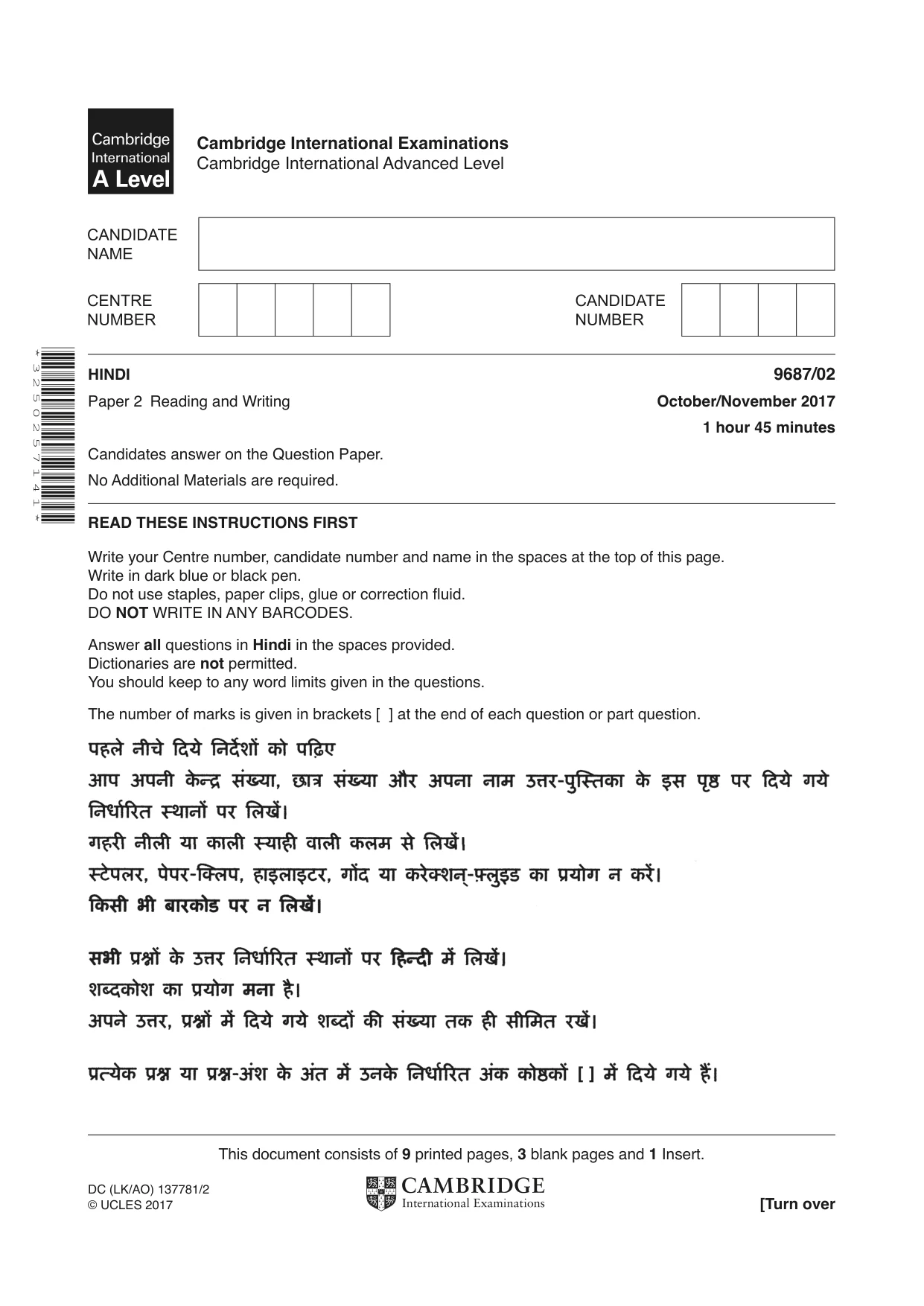
Question paper, page 1
* 3 2 5 0 2 5 7 1 4 1 * This document consists of 9 printed pages, 3 blank pages and 1 Insert. DC (LK/AO) 137781/2 © UCLES 2017 [Turn over Cambridge International Examinations Cambridge International Advanced Level HINDI 9687/02 Paper 2 Reading and Writing October/November 2017 1 hour 45 minutes Candidates answer on the Question Paper. No Additional Materials are required. READ THESE INSTRUCTIONS FIRST Write your Centre number, candidate number and name in the spaces at the top of this page. Write in dark blue or black pen. Do not use staples, paper clips, glue or correction fluid. DO NOT WRITE IN ANY BARCODES. Answer all questions in Hindi in the spaces provided. Dictionaries are not permitted. You should keep to any word limits given in the questions. The number of marks is given in brackets [ ] at the end of each question or part question. [ ]
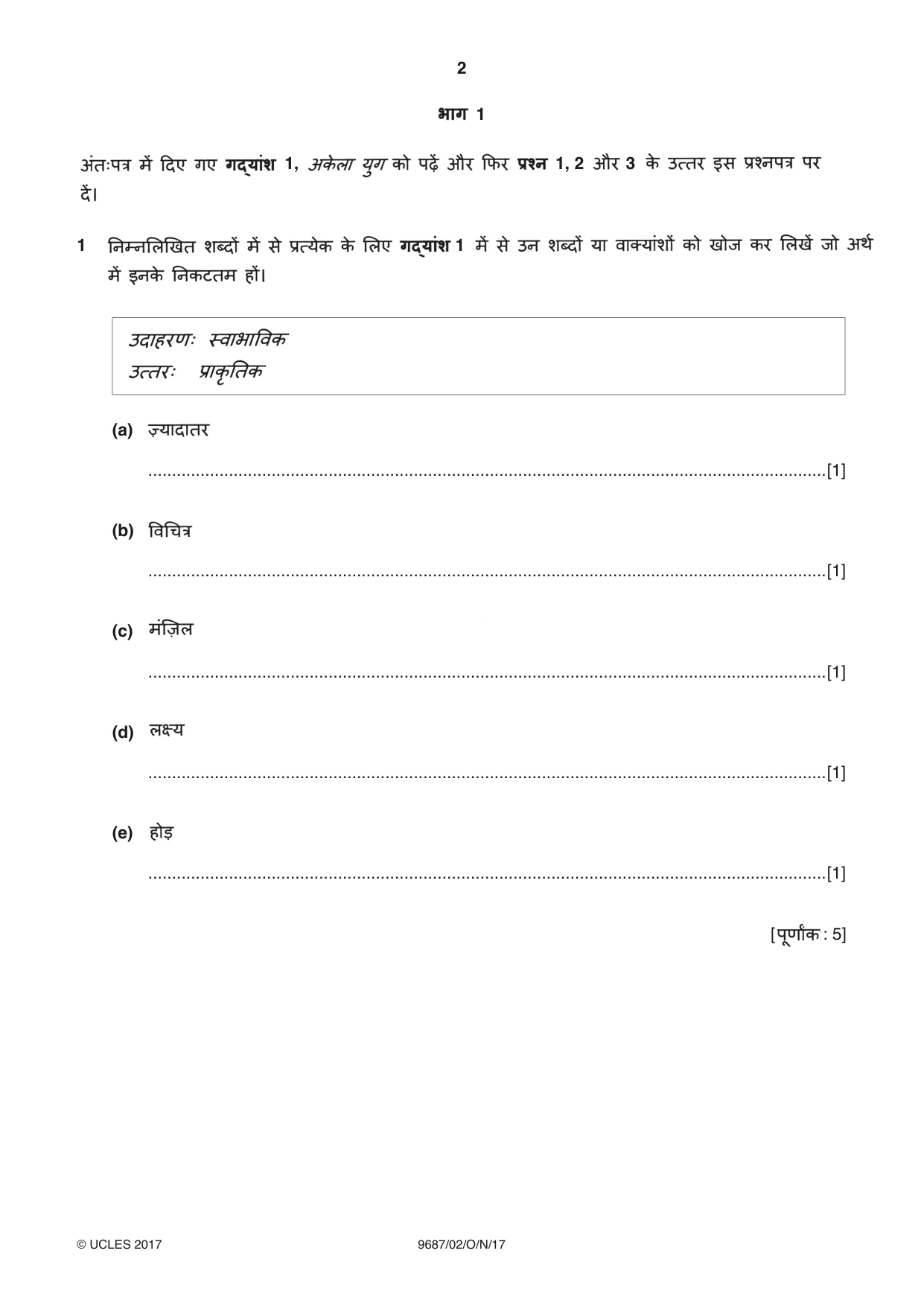
Question paper, page 2
2 9687/02/O/N/17 © UCLES 2017 1 1, 2 3 1, 1 1 (a) …[1] (b) …[1] (c) …[1] (d) …[1] (e) …[1] [ : 5]
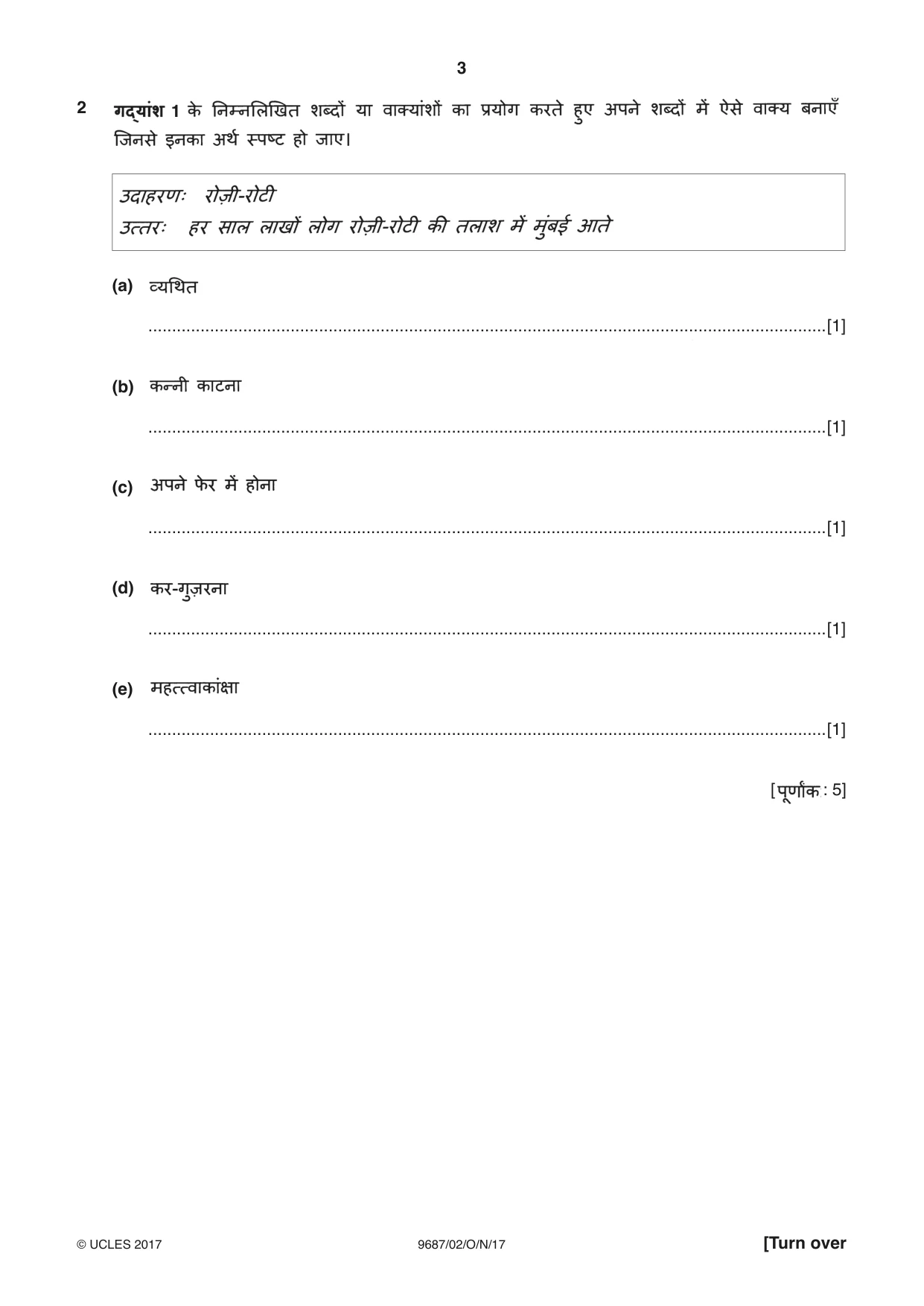
Question paper, page 3
3 9687/02/O/N/17 © UCLES 2017 [Turn over 2 1 (a) …[1] (b) …[1] (c) …[1] (d) …[1] (e) …[1] [ : 5]
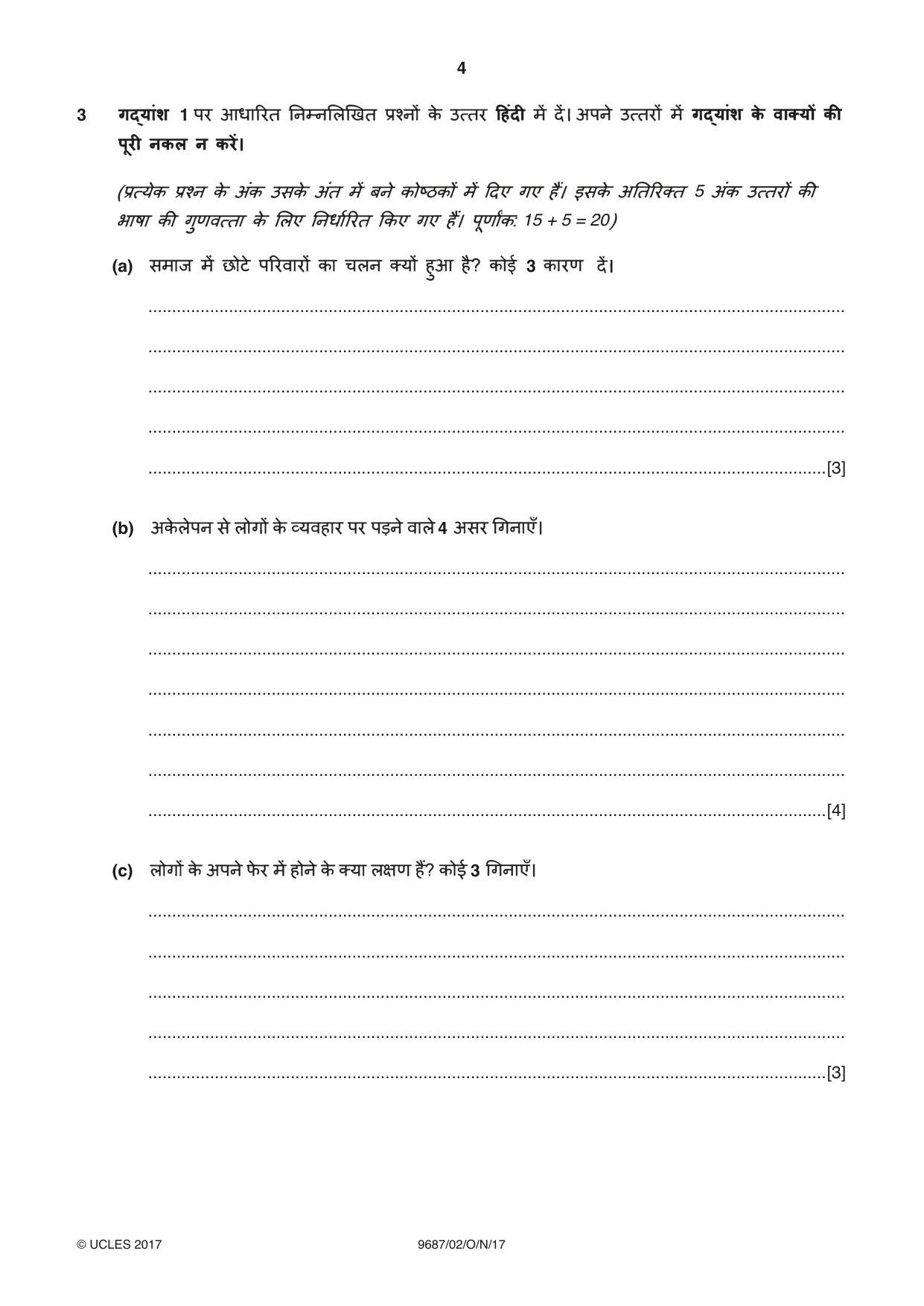
Question paper, page 4
4 9687/02/O/N/17 © UCLES 2017 3 1 5 15 + 5 = 20 (a) 3 … … … … …[3] (b) 4 … … … … … … …[4] (c) 3 … … … … …[3]
Question paper, page 5
5 9687/02/O/N/17 © UCLES 2017 [Turn over (d) 2 … … … …[2] (e) 3 … … … … …[3] [ :15 + 5 = 20]
Question paper, page 6
6 9687/02/O/N/17 © UCLES 2017 2 2, 4 5 4 2 5 15 + 5 = 20 (a) 3 … … … … …[3] (b) 2 … … … …[2] (c) 2 … … … …[2]
Question paper, page 7
7 9687/02/O/N/17 © UCLES 2017 [Turn over (d) (i) … … … …[2] (ii) … … … …[2] (e) 4 … … … … … … …[4] [ :15 + 5 = 20]
Question paper, page 8
8 9687/02/O/N/17 © UCLES 2017 5 140 5 15 + 5 = 20 (a) 2 1 [10] (b) [5] … … … … … … … … … … … … … … … … … … … … … …
Question paper, page 9
9 9687/02/O/N/17 © UCLES 2017 … … … … … … … … … … … … … … … … … … … … … … … … … [ :15 + 5 = 20]
Question paper, page 10
10 9687/02/O/N/17 © UCLES 2017 BLANK PAGE
Question paper, page 11
11 9687/02/O/N/17 © UCLES 2017 BLANK PAGE
Question paper, page 12
12 9687/02/O/N/17 © UCLES 2017 Permission to reproduce items where third-party owned material protected by copyright is included has been sought and cleared where possible. Every reasonable effort has been made by the publisher (UCLES) to trace copyright holders, but if any items requiring clearance have unwittingly been included, the publisher will be pleased to make amends at the earliest possible opportunity. To avoid the issue of disclosure of answer-related information to candidates, all copyright acknowledgements are reproduced online in the Cambridge International Examinations Copyright Acknowledgements Booklet. This is produced for each series of examinations and is freely available to download at www.cie.org.uk after the live examination series. Cambridge International Examinations is part of the Cambridge Assessment Group. Cambridge Assessment is the brand name of University of Cambridge Local Examinations Syndicate (UCLES), which is itself a department of the University of Cambridge. BLANK PAGE
Mark scheme, page 1
® IGCSE is a registered trademark. This document consists of 12 printed pages. © UCLES 2017 [Turn over Cambridge Assessment International Education Cambridge International Advanced Level HINDI 9687/02 Paper 2 Reading and Writing October/November 2017 MARK SCHEME Maximum Mark: 70 Published This mark scheme is published as an aid to teachers and candidates, to indicate the requirements of the examination. It shows the basis on which Examiners were instructed to award marks. It does not indicate the details of the discussions that took place at an Examiners’ meeting before marking began, which would have considered the acceptability of alternative answers. Mark schemes should be read in conjunction with the question paper and the Principal Examiner Report for Teachers. Cambridge International will not enter into discussions about these mark schemes. Cambridge International is publishing the mark schemes for the October/November 2017 series for most Cambridge IGCSE®, Cambridge International A and AS Level components and some Cambridge O Level components.
Mark scheme, page 2
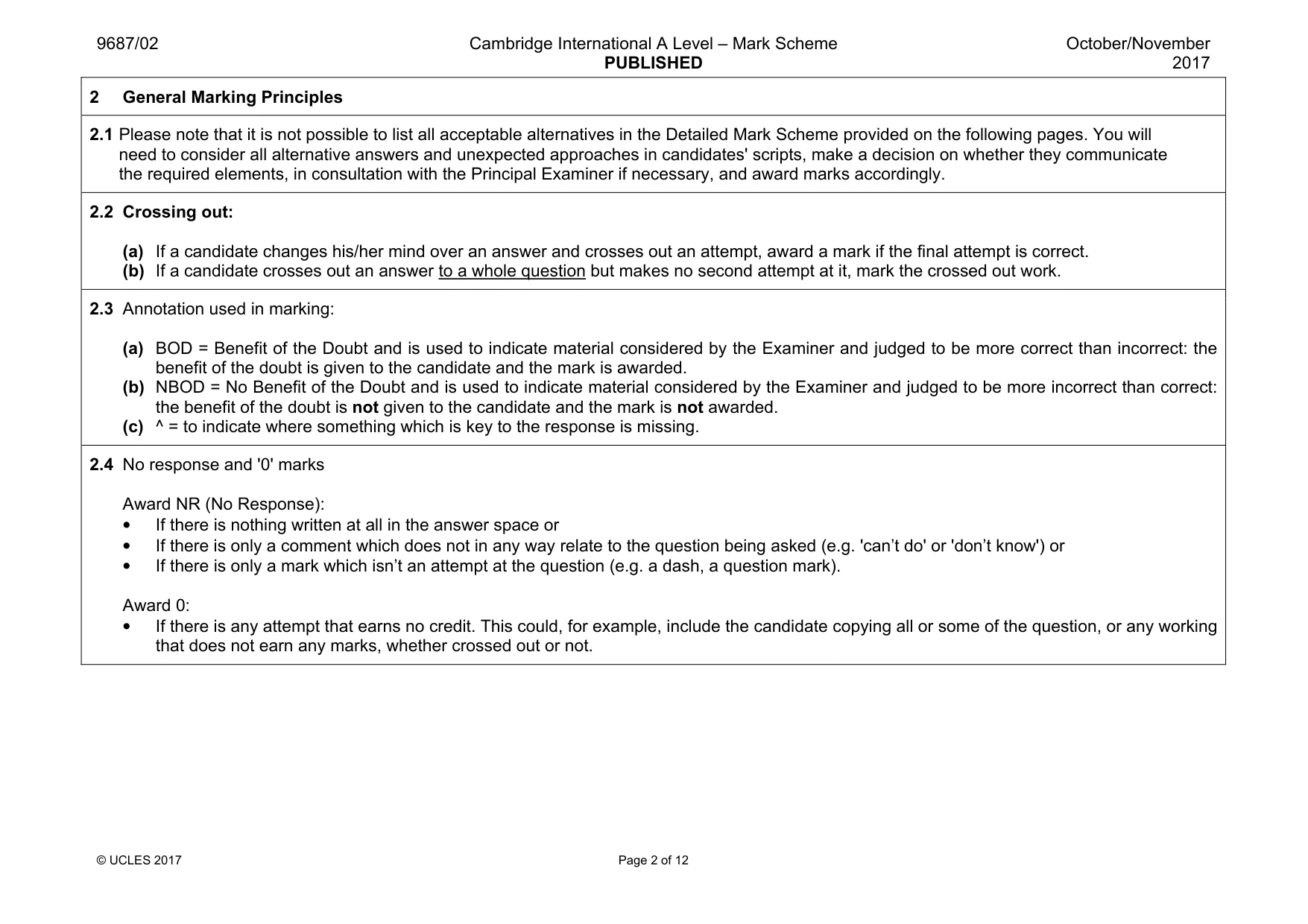
9687/02 Cambridge International A Level – Mark Scheme PUBLISHED October/November 2017 © UCLES 2017 Page 2 of 12 2 General Marking Principles 2.1 Please note that it is not possible to list all acceptable alternatives in the Detailed Mark Scheme provided on the following pages. You will need to consider all alternative answers and unexpected approaches in candidates' scripts, make a decision on whether they communicate the required elements, in consultation with the Principal Examiner if necessary, and award marks accordingly. 2.2 Crossing out: (a) If a candidate changes his/her mind over an answer and crosses out an attempt, award a mark if the final attempt is correct. (b) If a candidate crosses out an answer to a whole question but makes no second attempt at it, mark the crossed out work. 2.3 Annotation used in marking: (a) BOD = Benefit of the Doubt and is used to indicate material considered by the Examiner and judged to be more correct than incorrect: the benefit of the doubt is given to the candidate and the mark is awarded. (b) NBOD = No Benefit of the Doubt and is used to indicate material considered by the Examiner and judged to be more incorrect than correct: the benefit of the doubt is not given to the candidate and the mark is not awarded. (c) ^ = to indicate where something which is key to the response is missing. 2.4 No response and '0' marks Award NR (No Response): • If there is nothing written at all in the answer space or • If there is only a comment which does not in any way relate to the question being asked (e.g. 'can’t do' or 'don’t know') or • If there is only a mark which isn’t an attempt at the question (e.g. a dash, a question mark). Award 0: • If there is any attempt that earns no credit. This could, for example, include the candidate copying all or some of the question, or any working that does not earn any marks, whether crossed out or not.
Mark scheme, page 3
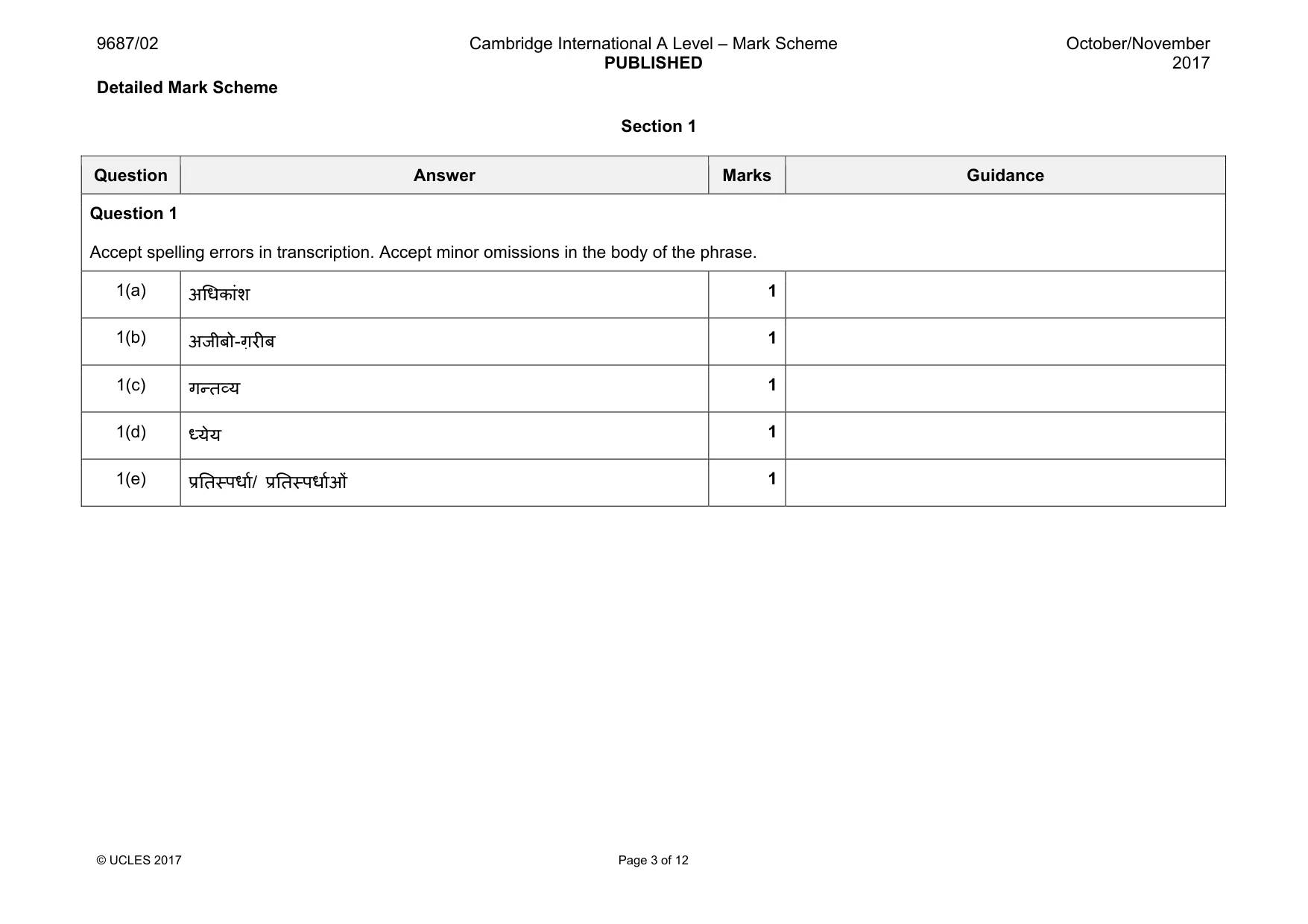
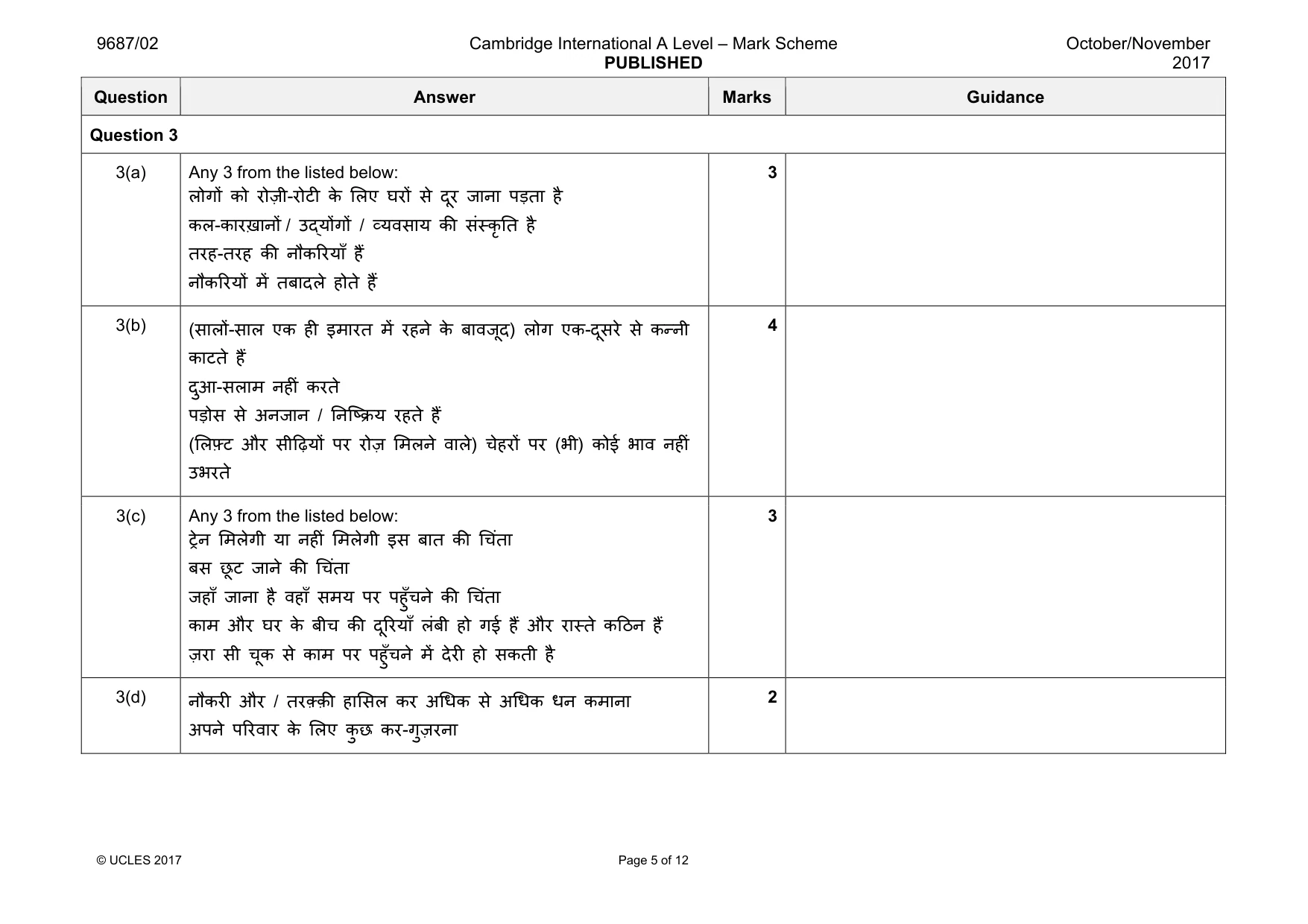
9687/02 Cambridge International A Level – Mark Scheme PUBLISHED October/November 2017 © UCLES 2017 Page 3 of 12 Detailed Mark Scheme Section 1 Question Answer Marks Guidance Question 1 Accept spelling errors in transcription. Accept minor omissions in the body of the phrase. 1(a) अͬधकांश 1 1(b) अजीबो-ग़रȣब 1 1(c) गÛतåय 1 1(d) Úयेय 1 1(e) ĤǓतèपधा[/ ĤǓतèपधा[ओं 1
Mark scheme, page 4
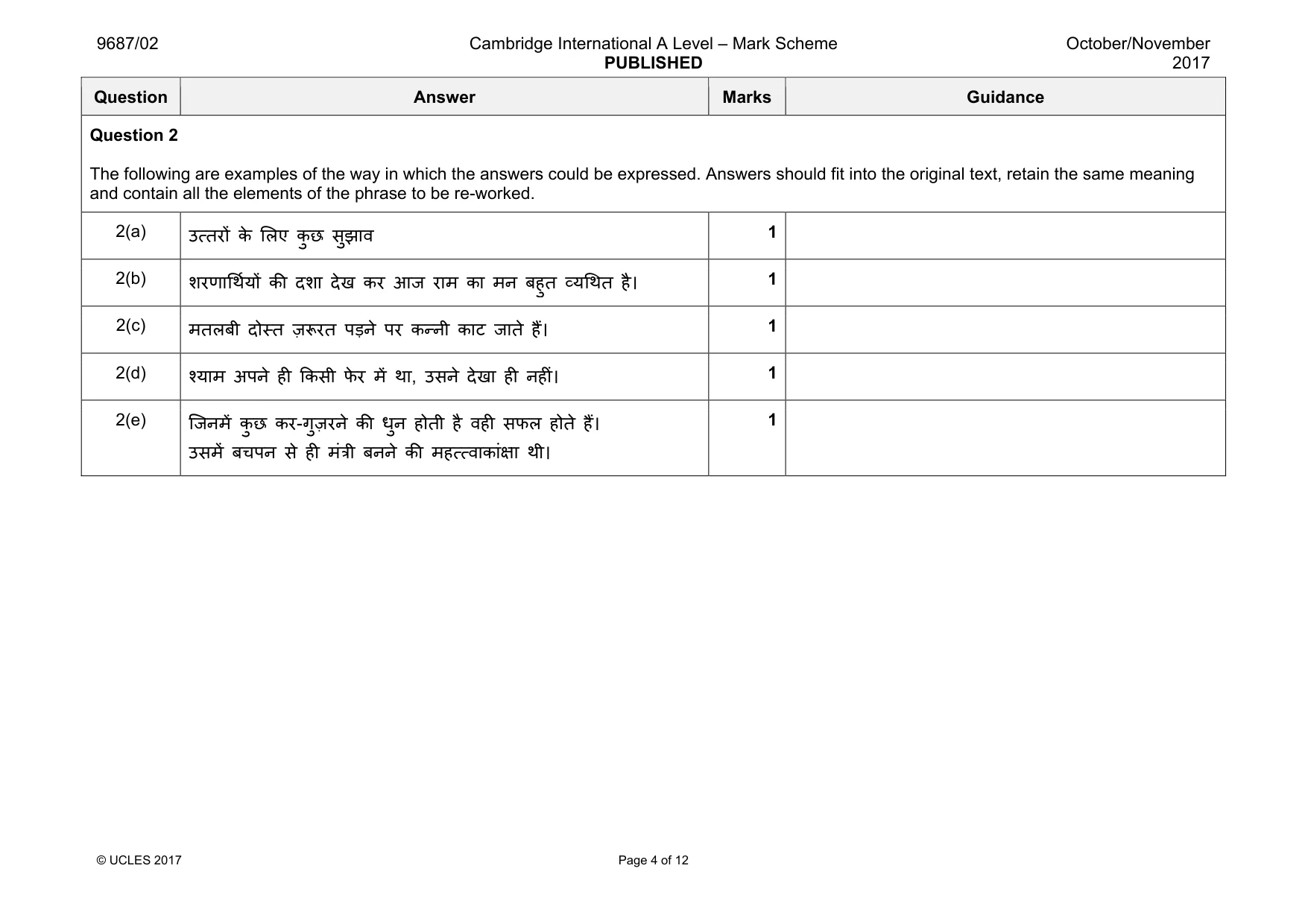
9687/02 Cambridge International A Level – Mark Scheme PUBLISHED October/November 2017 © UCLES 2017 Page 4 of 12 Question Answer Marks Guidance Question 2 The following are examples of the way in which the answers could be expressed. Answers should fit into the original text, retain the same meaning and contain all the elements of the phrase to be re-worked. 2(a) उ×तरɉ के ͧलए कुछ सुझाव 1 2(b) शरणाͬथ[यɉ कȧ दशा देख कर आज राम का मन बहुत åयͬथत है। 1 2(c) मतलबी दोèत ज़Ǿरत पड़ने पर कÛनी काट जाते हɇ। 1 2(d) æयाम अपने हȣ ͩकसी फेर मɅ था, उसने देखा हȣ नहȣं। 1 2(e) िजनमɅ कुछ कर-गुज़रने कȧ धुन होती है वहȣ सफल होते हɇ। उसमɅ बचपन से हȣ मंğी बनने कȧ मह××वाकां¢ा थी। 1
Mark scheme, page 5
9687/02 Cambridge International A Level – Mark Scheme PUBLISHED October/November 2017 © UCLES 2017 Page 5 of 12 Question Answer Marks Guidance Question 3 3(a) Any 3 from the listed below: लोगɉ को रोज़ी-रोटȣ के ͧलए घरɉ से दूर जाना पड़ता है कल-कारख़ानɉ / उɮयɉगɉ / åयवसाय कȧ संèकृǓत है तरह-तरह कȧ नौकǐरयाँ हɇ नौकǐरयɉ मɅ तबादले होते हɇ 3 3(b) (सालɉ-साल एक हȣ इमारत मɅ रहने के बावजूद) लोग एक-दूसरे से कÛनी काटते हɇ दुआ-सलाम नहȣं करते पड़ोस से अनजान / ǓनिçĐय रहते हɇ (ͧलāट और सीǑढ़यɉ पर रोज़ ͧमलने वाले) चेहरɉ पर (भी) कोई भाव नहȣं उभरते 4 3(c) Any 3 from the listed below: Ěेन ͧमलेगी या नहȣं ͧमलेगी इस बात कȧ ͬचंता बस छूट जाने कȧ ͬचंता जहाँ जाना है वहाँ समय पर पहुँचने कȧ ͬचंता काम और घर के बीच कȧ दूǐरयाँ लंबी हो गई हɇ और राèते कǑठन हɇ ज़रा सी चूक से काम पर पहुँचने मɅ देरȣ हो सकती है 3 3(d) नौकरȣ और / तरìक़ȧ हाͧसल कर अͬधक से अͬधक धन कमाना अपने पǐरवार के ͧलए कुछ कर-गुज़रना 2
Mark scheme, page 6
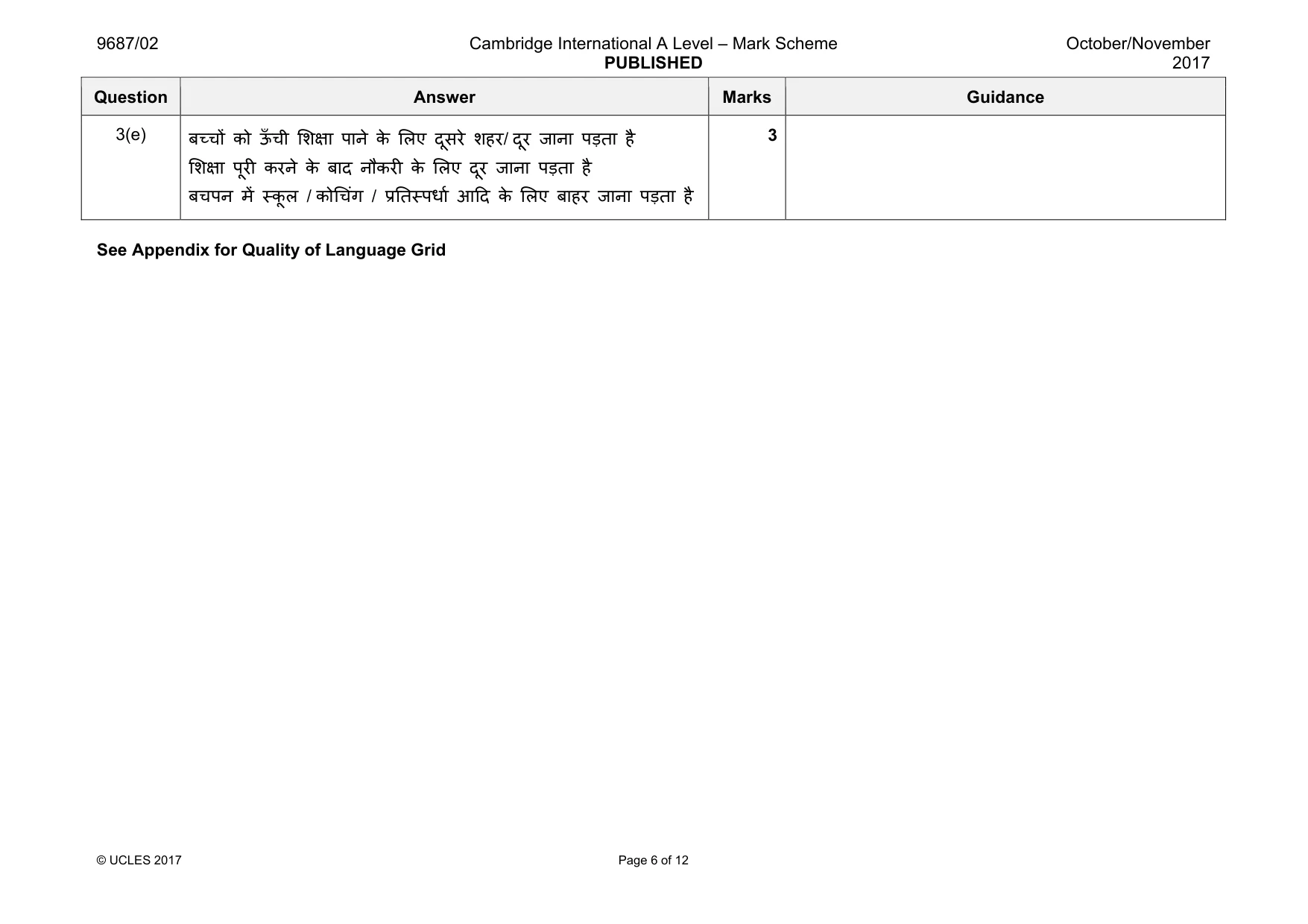
9687/02 Cambridge International A Level – Mark Scheme PUBLISHED October/November 2017 © UCLES 2017 Page 6 of 12 Question Answer Marks Guidance 3(e) बÍचɉ को ऊँची ͧश¢ा पाने के ͧलए दूसरे शहर/ दूर जाना पड़ता है ͧश¢ा पूरȣ करने के बाद नौकरȣ के ͧलए दूर जाना पड़ता है बचपन मɅ èकूल / कोͬचंग / ĤǓतèपधा[ आǑद के ͧलए बाहर जाना पड़ता है 3 See Appendix for Quality of Language Grid
Mark scheme, page 7
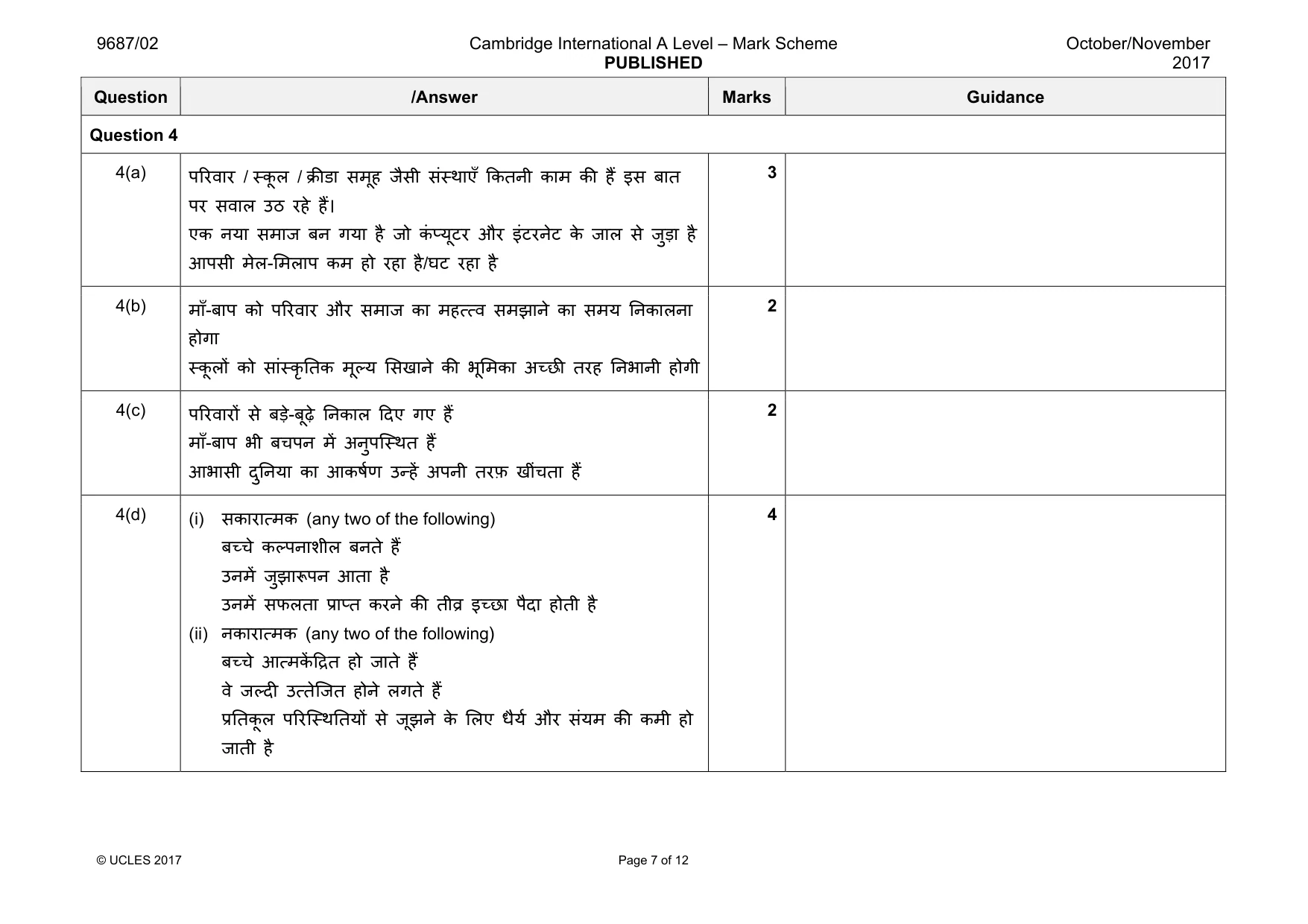
9687/02 Cambridge International A Level – Mark Scheme PUBLISHED October/November 2017 © UCLES 2017 Page 7 of 12 Question /Answer Marks Guidance Question 4 4(a) पǐरवार / èकूल / Đȧडा समूह जैसी संèथाएँ ͩकतनी काम कȧ हɇ इस बात पर सवाल उठ रहे हɇ। एक नया समाज बन गया है जो कंÜयूटर और इंटरनेट के जाल से जुड़ा है आपसी मेल-ͧमलाप कम हो रहा है/घट रहा है 3 4(b) माँ-बाप को पǐरवार और समाज का मह××व समझाने का समय Ǔनकालना होगा èकूलɉ को सांèकृǓतक मूãय ͧसखाने कȧ भूͧमका अÍछȤ तरह Ǔनभानी होगी 2 4(c) पǐरवारɉ से बड़े-बूढ़े Ǔनकाल Ǒदए गए हɇ माँ-बाप भी बचपन मɅ अनुपिèथत हɇ आभासी दुǓनया का आकष[ण उÛहɅ अपनी तरफ़ खींचता हɇ 2 4(d) (i) सकारा×मक (any two of the following) बÍचे कãपनाशील बनते हɇ उनमɅ जुझाǾपन आता है उनमɅ सफलता ĤाÜत करने कȧ तीĭ इÍछा पैदा होती है (ii) नकारा×मक (any two of the following) बÍचे आ×मकɅ Ǒġत हो जाते हɇ वे जãदȣ उ×तेिजत होने लगते हɇ ĤǓतकूल पǐरिèथǓतयɉ से जूझने के ͧलए धैय[ और संयम कȧ कमी हो जाती है 4
Mark scheme, page 8
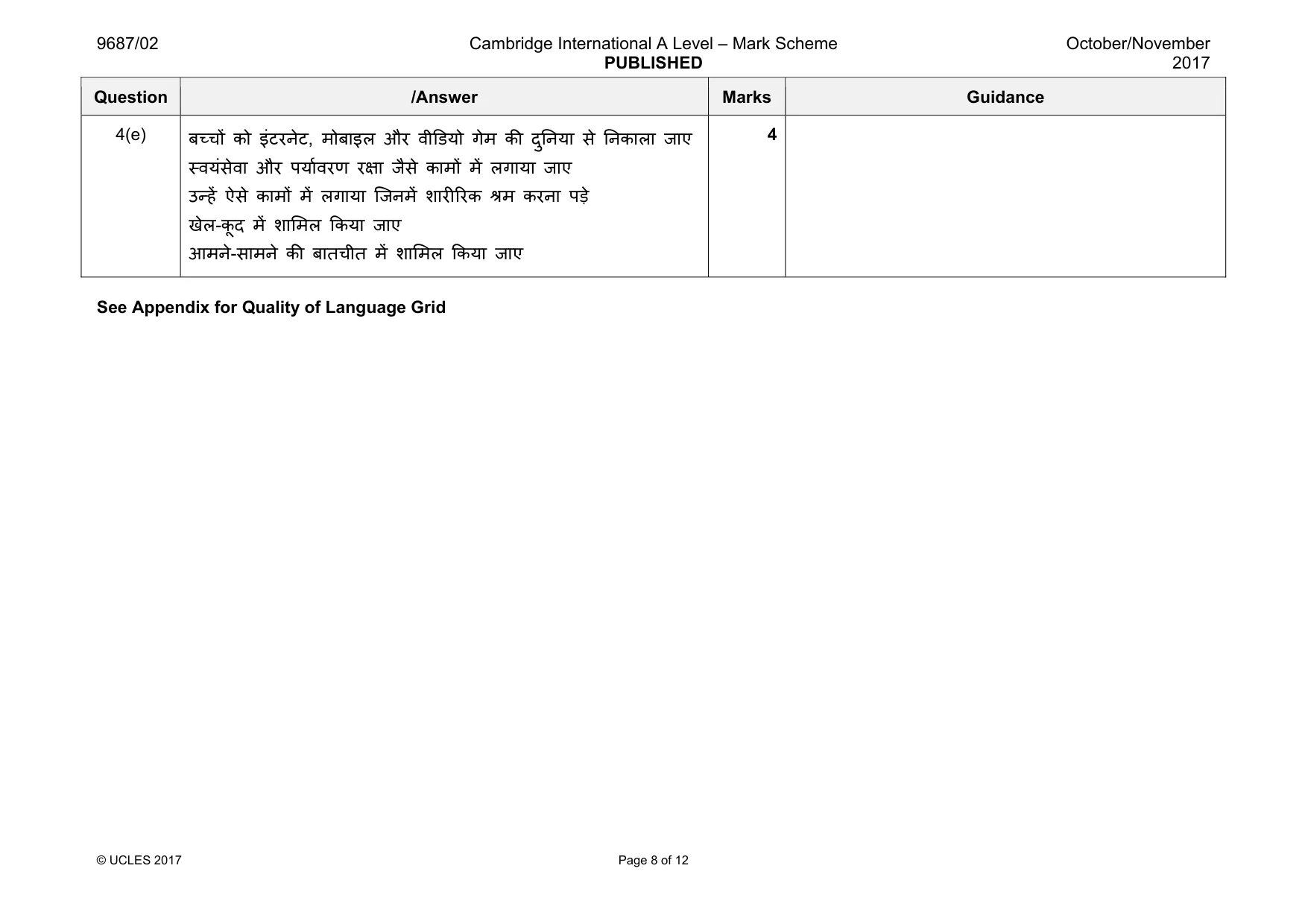
9687/02 Cambridge International A Level – Mark Scheme PUBLISHED October/November 2017 © UCLES 2017 Page 8 of 12 Question /Answer Marks Guidance 4(e) बÍचɉ को इंटरनेट, मोबाइल और वीͫडयो गेम कȧ दुǓनया से Ǔनकाला जाए èवयंसेवा और पया[वरण र¢ा जैसे कामɉ मɅ लगाया जाए उÛहɅ ऐसे कामɉ मɅ लगाया िजनमɅ शारȣǐरक Įम करना पड़े खेल-कूद मɅ शाͧमल ͩकया जाए आमने-सामने कȧ बातचीत मɅ शाͧमल ͩकया जाए 4 See Appendix for Quality of Language Grid
Mark scheme, page 9
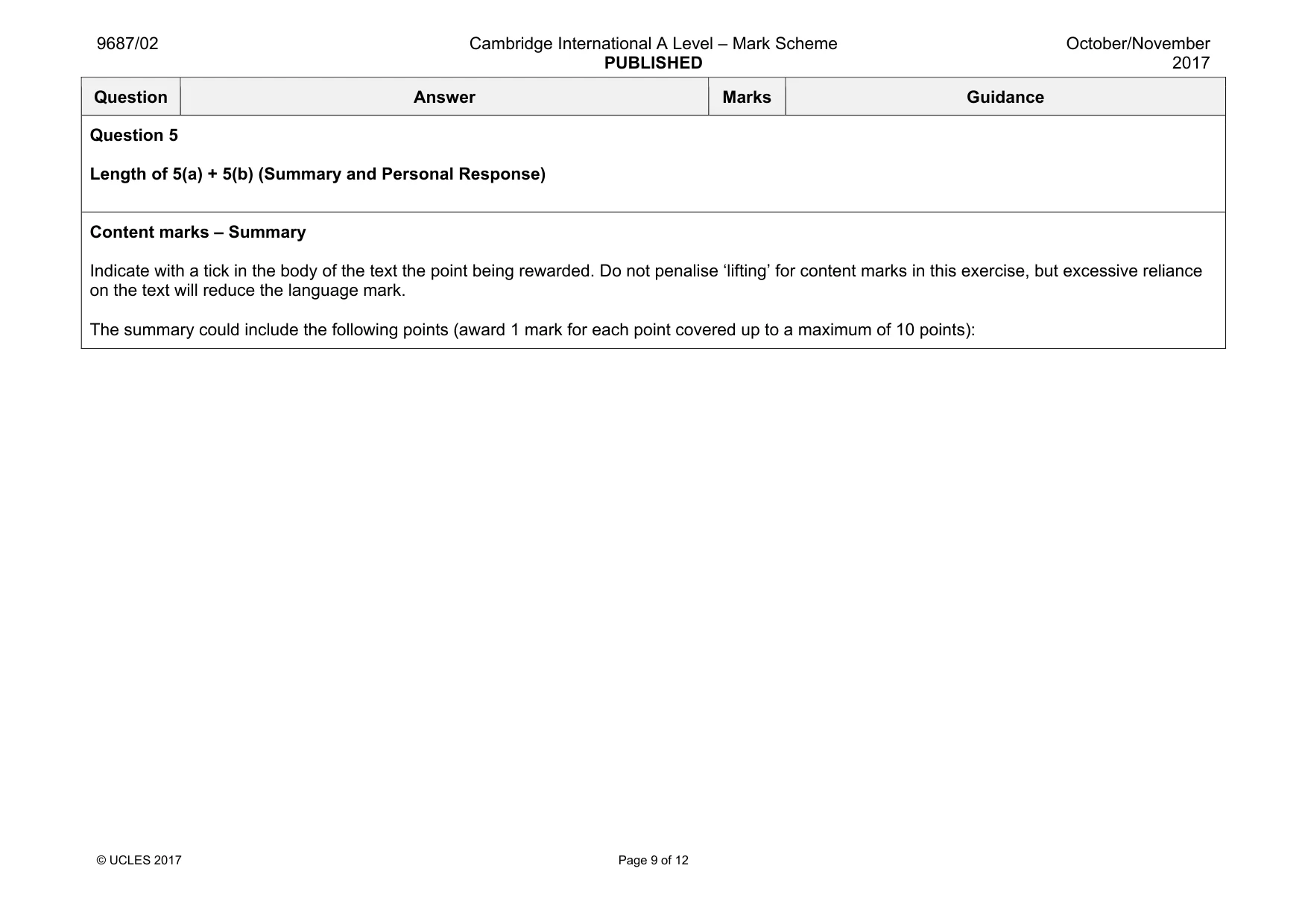
9687/02 Cambridge International A Level – Mark Scheme PUBLISHED October/November 2017 © UCLES 2017 Page 9 of 12 Question Answer Marks Guidance Question 5 Length of 5(a) + 5(b) (Summary and Personal Response) Content marks – Summary Indicate with a tick in the body of the text the point being rewarded. Do not penalise ‘lifting’ for content marks in this exercise, but excessive reliance on the text will reduce the language mark. The summary could include the following points (award 1 mark for each point covered up to a maximum of 10 points):
Mark scheme, page 10
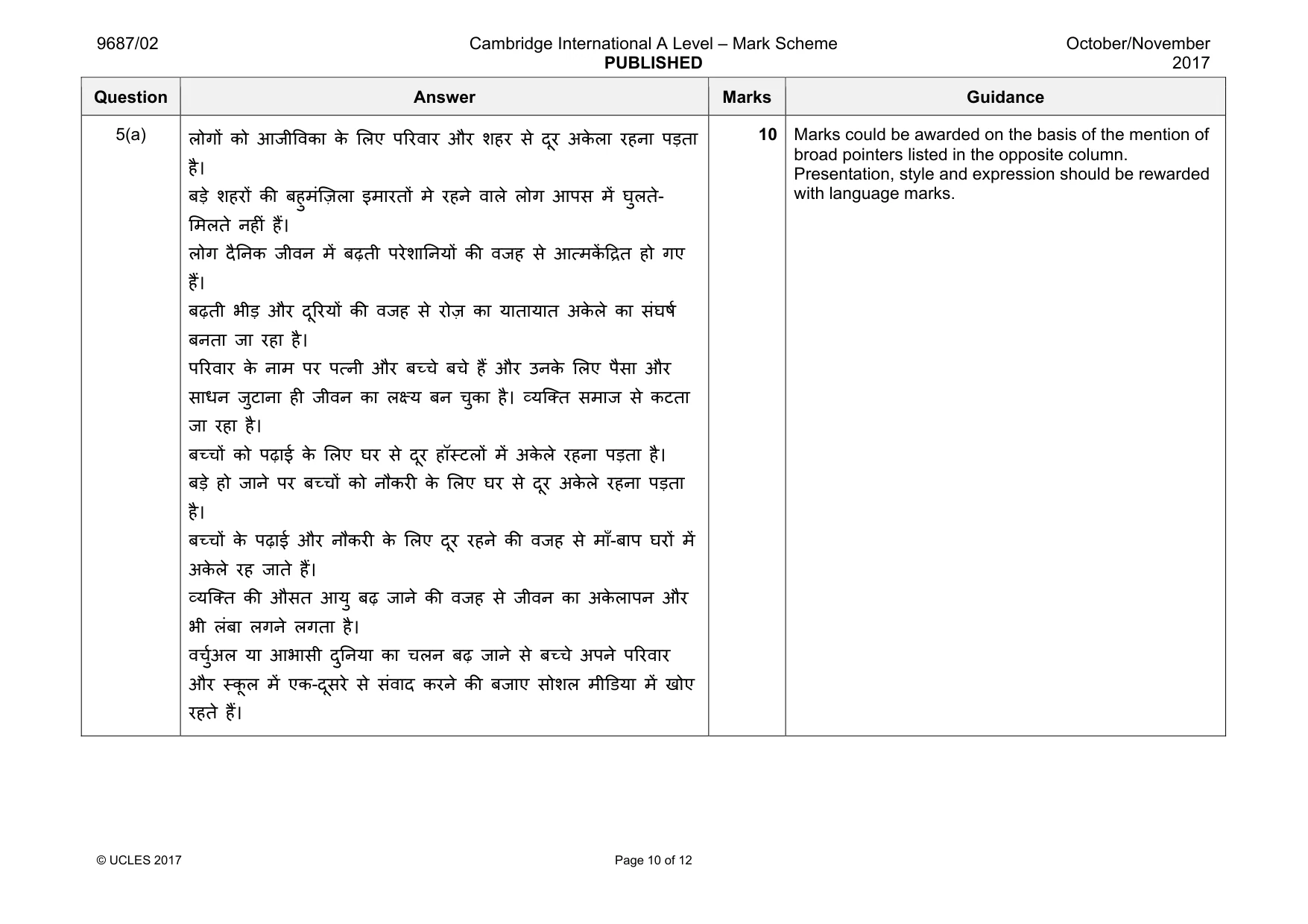
9687/02 Cambridge International A Level – Mark Scheme PUBLISHED October/November 2017 © UCLES 2017 Page 10 of 12 Question Answer Marks Guidance 5(a) लोगɉ को आजीͪवका के ͧलए पǐरवार और शहर से दूर अकेला रहना पड़ता है। बड़े शहरɉ कȧ बहुमंिज़ला इमारतɉ मे रहने वाले लोग आपस मɅ घुलते- ͧमलते नहȣं हɇ। लोग दैǓनक जीवन मɅ बढ़ती परेशाǓनयɉ कȧ वजह से आ×मकɅ Ǒġत हो गए हɇ। बढ़ती भीड़ और दूǐरयɉ कȧ वजह से रोज़ का यातायात अकेले का संघष[ बनता जा रहा है। पǐरवार के नाम पर प×नी और बÍचे बचे हɇ और उनके ͧलए पैसा और साधन जुटाना हȣ जीवन का लêय बन चुका है। åयिÈत समाज से कटता जा रहा है। बÍचɉ को पढ़ाई के ͧलए घर से दूर हॉèटलɉ मɅ अकेले रहना पड़ता है। बड़े हो जाने पर बÍचɉ को नौकरȣ के ͧलए घर से दूर अकेले रहना पड़ता है। बÍचɉ के पढ़ाई और नौकरȣ के ͧलए दूर रहने कȧ वजह से माँ-बाप घरɉ मɅ अकेले रह जाते हɇ। åयिÈत कȧ औसत आयु बढ़ जाने कȧ वजह से जीवन का अकेलापन और भी लंबा लगने लगता है। वचु[अल या आभासी दुǓनया का चलन बढ़ जाने से बÍचे अपने पǐरवार और èकूल मɅ एक-दूसरे से संवाद करने कȧ बजाए सोशल मीͫडया मɅ खोए रहते हɇ। 10 Marks could be awarded on the basis of the mention of broad pointers listed in the opposite column. Presentation, style and expression should be rewarded with language marks.
Mark scheme, page 11
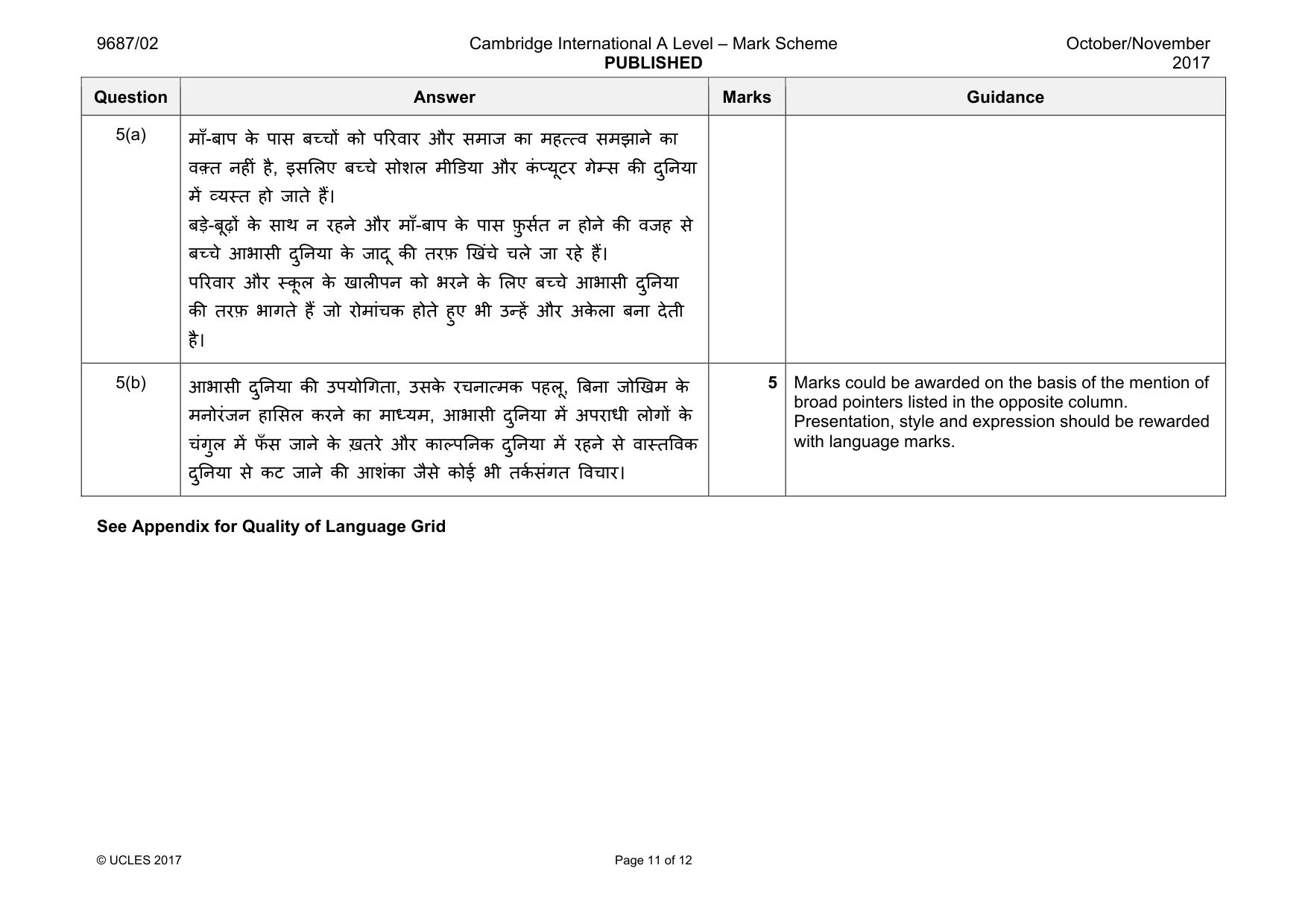
9687/02 Cambridge International A Level – Mark Scheme PUBLISHED October/November 2017 © UCLES 2017 Page 11 of 12 Question Answer Marks Guidance 5(a) माँ-बाप के पास बÍचɉ को पǐरवार और समाज का मह××व समझाने का वìत नहȣं है, इसͧलए बÍचे सोशल मीͫडया और कंÜयूटर गेàस कȧ दुǓनया मɅ åयèत हो जाते हɇ। बड़े-बूढ़ɉ के साथ न रहने और माँ-बाप के पास फ़ुस[त न होने कȧ वजह से बÍचे आभासी दुǓनया के जादू कȧ तरफ़ ͨखंचे चले जा रहे हɇ। पǐरवार और èकूल के खालȣपन को भरने के ͧलए बÍचे आभासी दुǓनया कȧ तरफ़ भागते हɇ जो रोमांचक होते हुए भी उÛहɅ और अकेला बना देती है। 5(b) आभासी दुǓनया कȧ उपयोͬगता, उसके रचना×मक पहलू, ǒबना जोͨखम के मनोरंजन हाͧसल करने का माÚयम, आभासी दुǓनया मɅ अपराधी लोगɉ के चंगुल मɅ फँस जाने के ख़तरे और काãपǓनक दुǓनया मɅ रहने से वाèतͪवक दुǓनया से कट जाने कȧ आशंका जैसे कोई भी तक[ संगत ͪवचार। 5 Marks could be awarded on the basis of the mention of broad pointers listed in the opposite column. Presentation, style and expression should be rewarded with language marks. See Appendix for Quality of Language Grid
Mark scheme, page 12
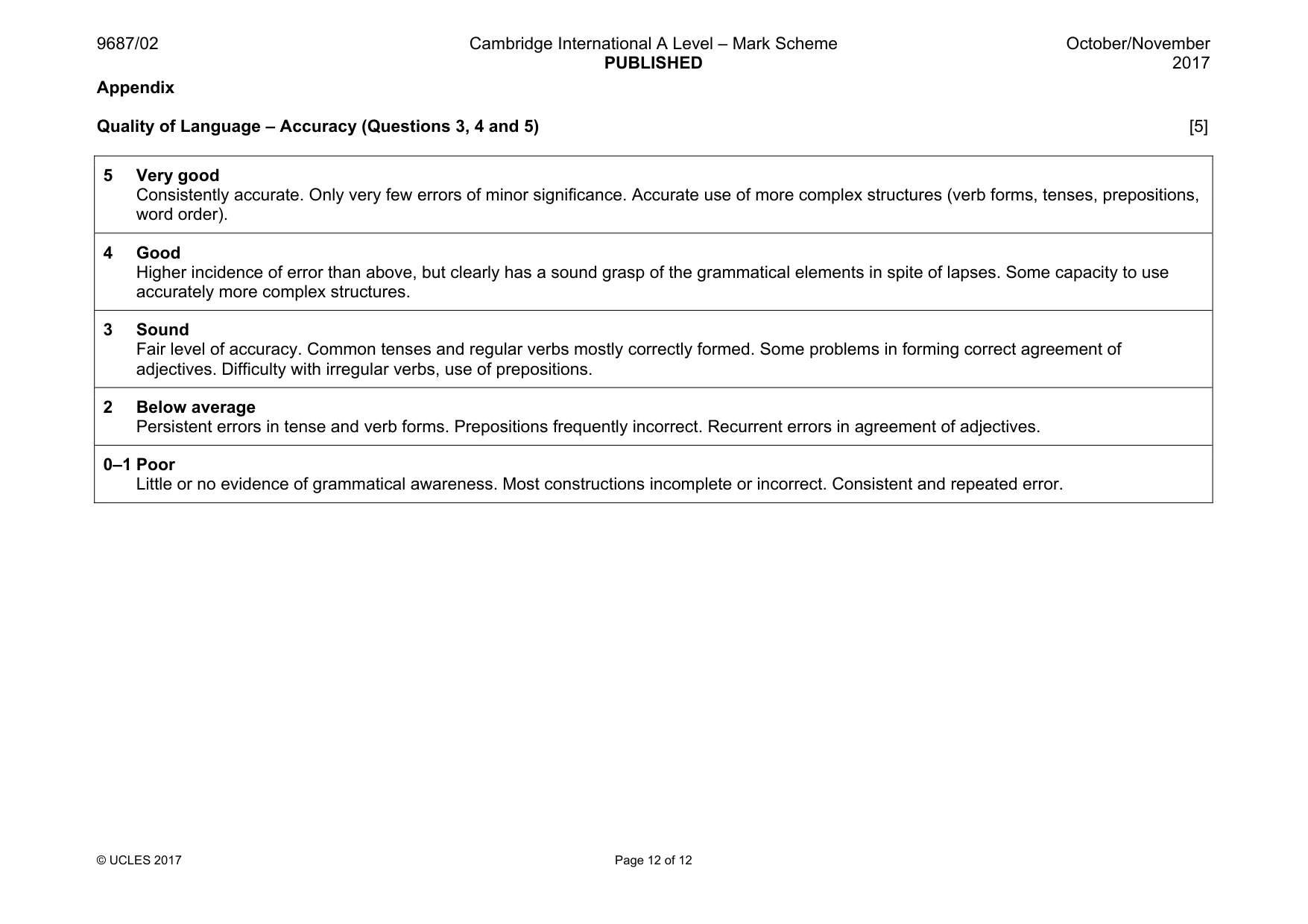
9687/02 Cambridge International A Level – Mark Scheme PUBLISHED October/November 2017 © UCLES 2017 Page 12 of 12 Appendix Quality of Language – Accuracy (Questions 3, 4 and 5) [5] 5 Very good Consistently accurate. Only very few errors of minor significance. Accurate use of more complex structures (verb forms, tenses, prepositions, word order). 4 Good Higher incidence of error than above, but clearly has a sound grasp of the grammatical elements in spite of lapses. Some capacity to use accurately more complex structures. 3 Sound Fair level of accuracy. Common tenses and regular verbs mostly correctly formed. Some problems in forming correct agreement of adjectives. Difficulty with irregular verbs, use of prepositions. 2 Below average Persistent errors in tense and verb forms. Prepositions frequently incorrect. Recurrent errors in agreement of adjectives. 0–1 Poor Little or no evidence of grammatical awareness. Most constructions incomplete or incorrect. Consistent and repeated error.
What you needed in this session
Cambridge’s own grade thresholds for 2017 Oct/Nov, Paper 2 · Variant 1. A higher threshold means an easier paper — the bar moves with how the cohort did.