Cambridge IGCSE Thai - First Language 0518 — 2019 May/June Paper 1 · Variant 1
0518/11/M/J/19 · 50 marks · ≈56 min
The question paper and its mark scheme, free to read here and free to download. This is Cambridge’s own paper, exactly as it was sat.
Question paper8 pages
Mark scheme11 pages
Answers below. Sit the paper first if you are practising.
Paper as text
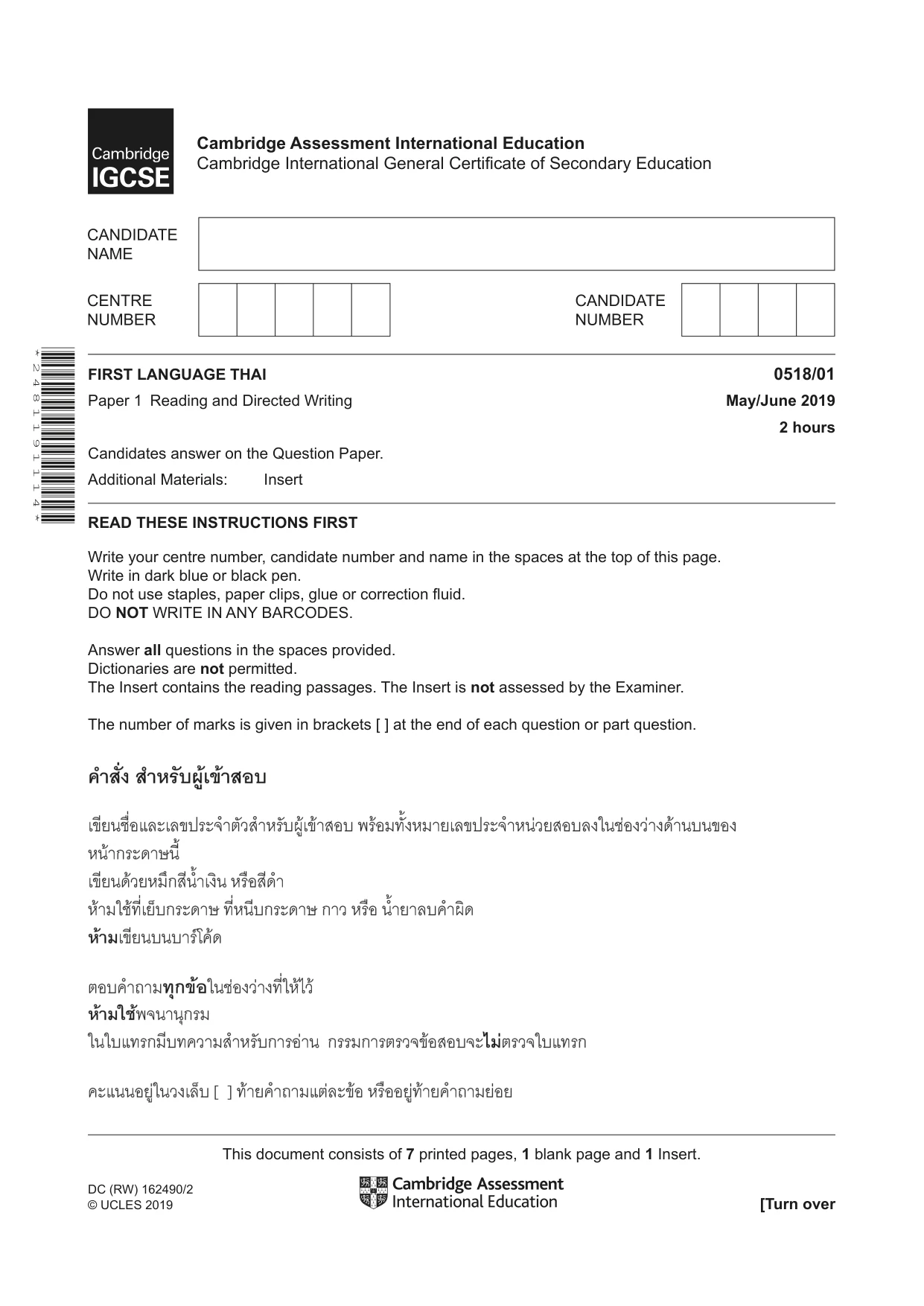
Question paper, page 1
Cambridge Assessment International Education Cambridge International General Certificate of Secondary Education * 2 4 8 1 1 9 1 1 1 4 * This document consists of 7 printed pages, 1 blank page and 1 Insert. DC (RW) 162490/2 © UCLES 2019 [Turn over FIRST LANGUAGE THAI 0518/01 Paper 1 Reading and Directed Writing May/June 2019 2 hours Candidates answer on the Question Paper. Additional Materials: Insert READ THESE INSTRUCTIONS FIRST Write your centre number, candidate number and name in the spaces at the top of this page. Write in dark blue or black pen. Do not use staples, paper clips, glue or correction fluid. DO NOT WRITE IN ANY BARCODES. Answer all questions in the spaces provided. Dictionaries are not permitted. The Insert contains the reading passages. The Insert is not assessed by the Examiner. The number of marks is given in brackets [ ] at the end of each question or part question.
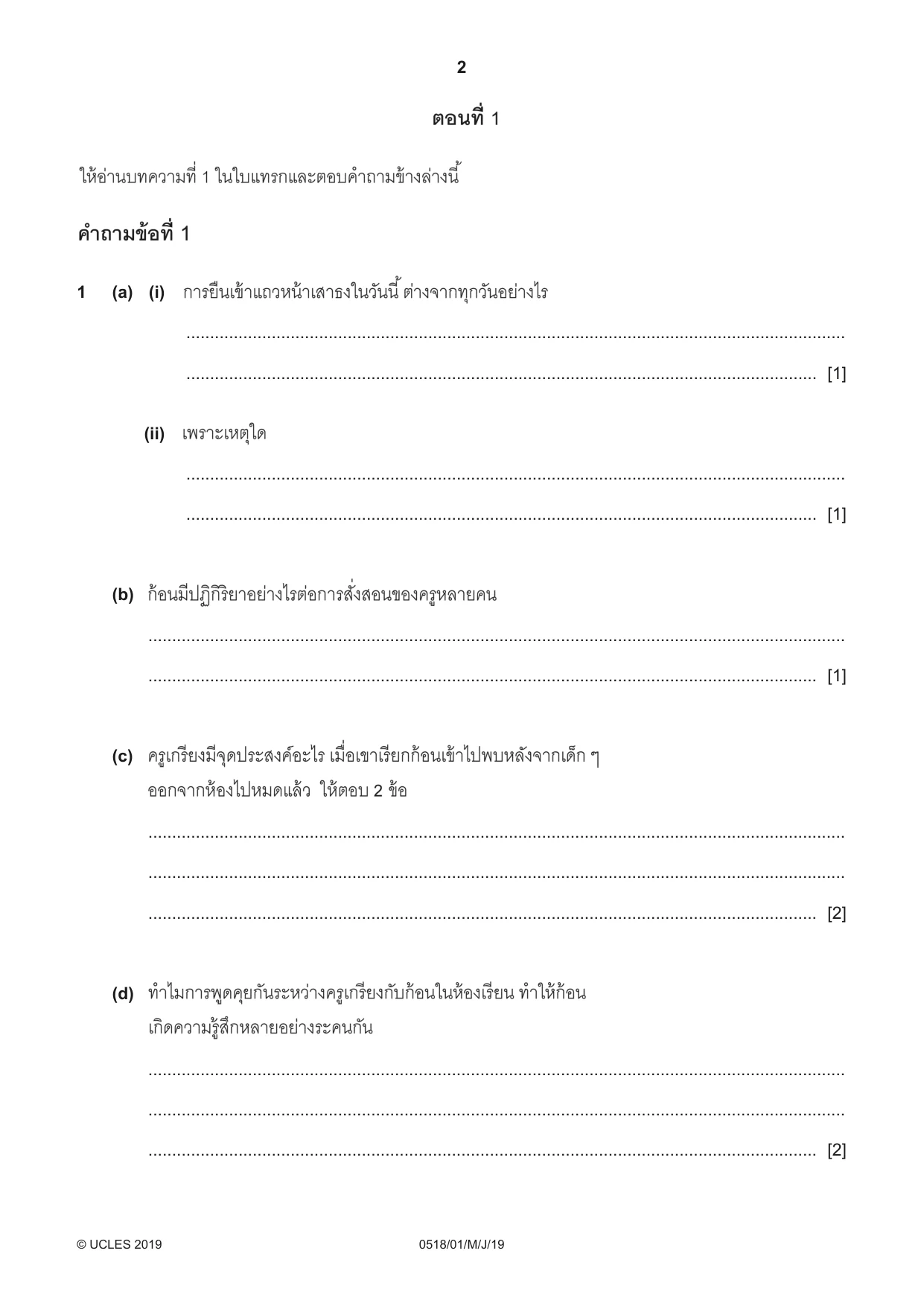
Question paper, page 2
2 0518/01/M/J/19 © UCLES 2019 1 (a) (i) … … [1] (ii) … … [1] (b) … … [1] (c) … … … [2] (d) … … … [2]
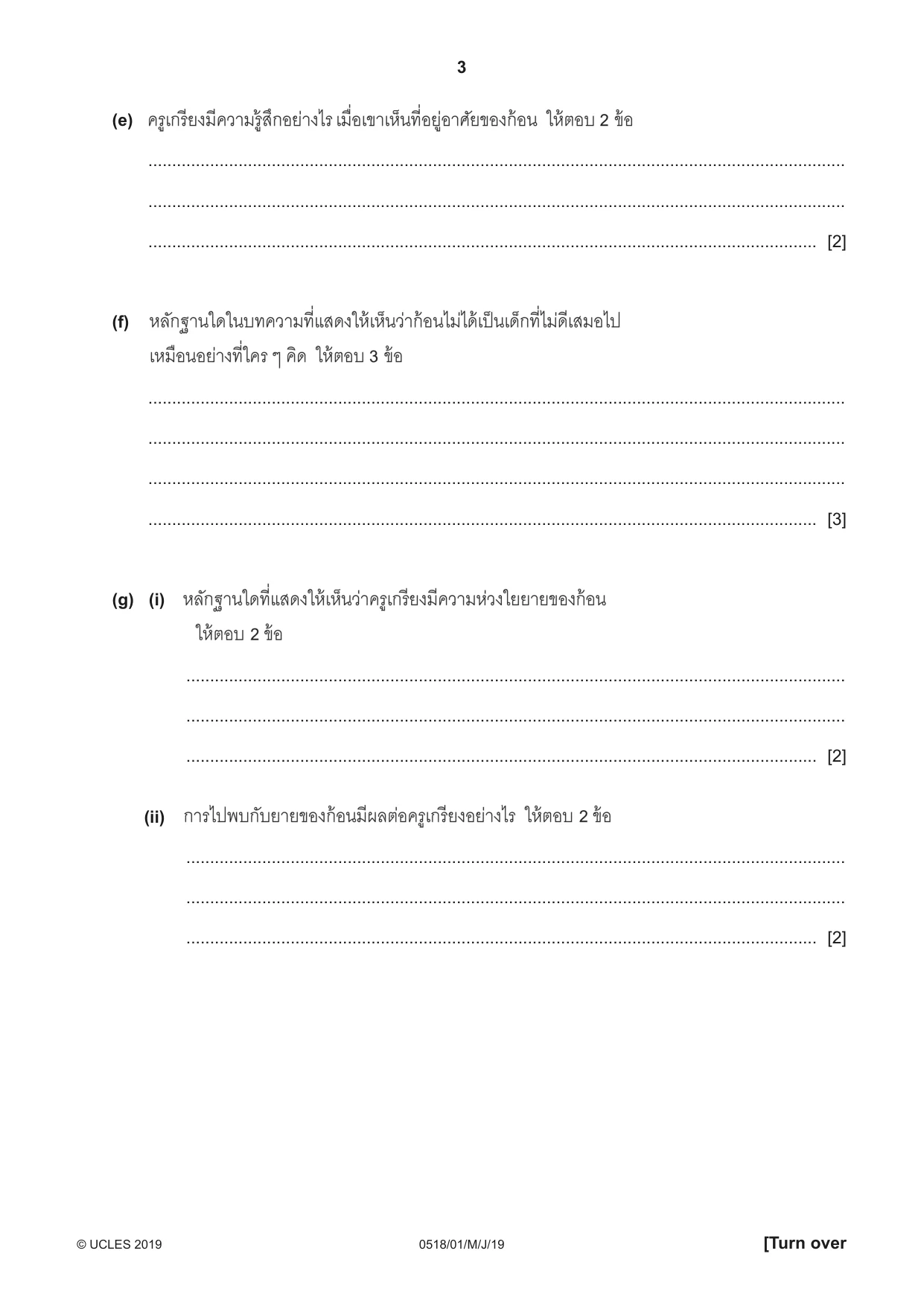
Question paper, page 3
3 0518/01/M/J/19 © UCLES 2019 [Turn over (e) … … … [2] (f) … … … … [3] (g) (i) … … … [2] (ii) … … … [2]
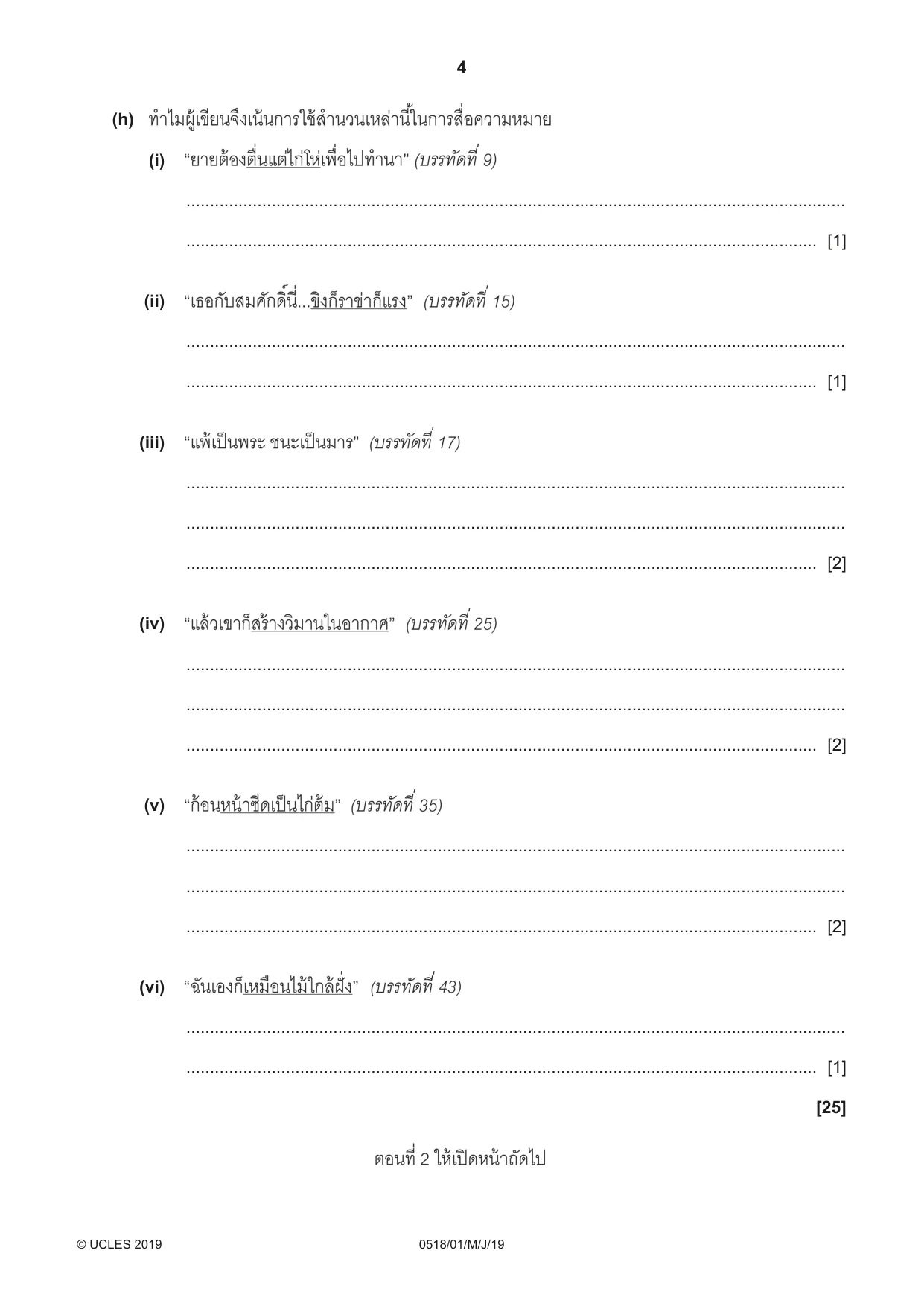
Question paper, page 4
4 0518/01/M/J/19 © UCLES 2019 (h) (i) … … [1] (ii) … … [1] (iii) … … … [2] (iv) … … … [2] (v) … … … [2] (vi) … … [1] [25]
Question paper, page 5
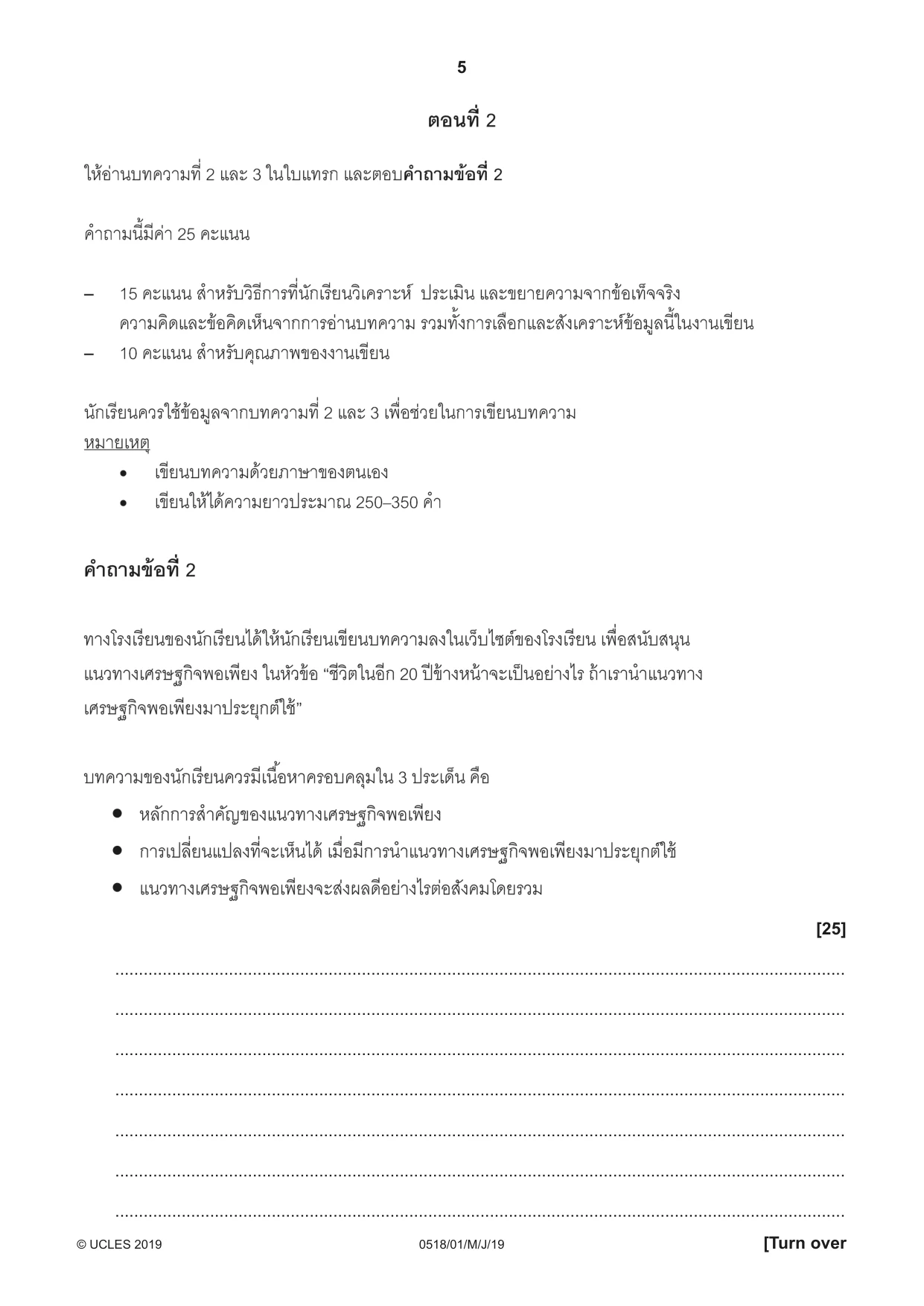
5 0518/01/M/J/19 © UCLES 2019 [Turn over [25] … … … … … … …
Question paper, page 6
6 0518/01/M/J/19 © UCLES 2019 … … … … … … … … … … … … … … … … … … … … … … … … … … … …
Question paper, page 7
7 0518/01/M/J/19 © UCLES 2019 … … … … … … … … … … … … … … … … … … … … … … … … … … … …
Question paper, page 8
8 0518/01/M/J/19 © UCLES 2019 Permission to reproduce items where third-party owned material protected by copyright is included has been sought and cleared where possible. Every reasonable effort has been made by the publisher (UCLES) to trace copyright holders, but if any items requiring clearance have unwittingly been included, the publisher will be pleased to make amends at the earliest possible opportunity. To avoid the issue of disclosure of answer-related information to candidates, all copyright acknowledgements are reproduced online in the Cambridge Assessment International Education Copyright Acknowledgements Booklet. This is produced for each series of examinations and is freely available to download at www.cambridgeinternational.org after the live examination series. Cambridge Assessment International Education is part of the Cambridge Assessment Group. Cambridge Assessment is the brand name of the University of Cambridge Local Examinations Syndicate (UCLES), which itself is a department of the University of Cambridge. BLANK PAGE
Mark scheme, page 1
This document consists of 11 printed pages. © UCLES 2019 [Turn over Cambridge Assessment International Education Cambridge International General Certificate of Secondary Education FIRST LANGUAGE THAI 0518/01 Paper 1 Reading and Directed Writing May/June 2019 MARK SCHEME Maximum Mark: 50 Published This mark scheme is published as an aid to teachers and candidates, to indicate the requirements of the examination. It shows the basis on which Examiners were instructed to award marks. It does not indicate the details of the discussions that took place at an Examiners’ meeting before marking began, which would have considered the acceptability of alternative answers. Mark schemes should be read in conjunction with the question paper and the Principal Examiner Report for Teachers. Cambridge International will not enter into discussions about these mark schemes. Cambridge International is publishing the mark schemes for the May/June 2019 series for most Cambridge IGCSE™, Cambridge International A and AS Level and Cambridge Pre-U components, and some Cambridge O Level components.
Mark scheme, page 2
0518/01 Cambridge IGCSE – Mark Scheme PUBLISHED May/June 2019 © UCLES 2019 Page 2 of 11 Generic Marking Principles These general marking principles must be applied by all examiners when marking candidate answers. They should be applied alongside the specific content of the mark scheme or generic level descriptors for a question. Each question paper and mark scheme will also comply with these marking principles. GENERIC MARKING PRINCIPLE 1: Marks must be awarded in line with: • the specific content of the mark scheme or the generic level descriptors for the question • the specific skills defined in the mark scheme or in the generic level descriptors for the question • the standard of response required by a candidate as exemplified by the standardisation scripts. GENERIC MARKING PRINCIPLE 2: Marks awarded are always whole marks (not half marks, or other fractions). GENERIC MARKING PRINCIPLE 3: Marks must be awarded positively: • marks are awarded for correct/valid answers, as defined in the mark scheme. However, credit is given for valid answers which go beyond the scope of the syllabus and mark scheme, referring to your Team Leader as appropriate • marks are awarded when candidates clearly demonstrate what they know and can do • marks are not deducted for errors • marks are not deducted for omissions • answers should only be judged on the quality of spelling, punctuation and grammar when these features are specifically assessed by the question as indicated by the mark scheme. The meaning, however, should be unambiguous. GENERIC MARKING PRINCIPLE 4: Rules must be applied consistently e.g. in situations where candidates have not followed instructions or in the application of generic level descriptors.
Mark scheme, page 3
0518/01 Cambridge IGCSE – Mark Scheme PUBLISHED May/June 2019 © UCLES 2019 Page 3 of 11 GENERIC MARKING PRINCIPLE 5: Marks should be awarded using the full range of marks defined in the mark scheme for the question (however; the use of the full mark range may be limited according to the quality of the candidate responses seen). GENERIC MARKING PRINCIPLE 6: Marks awarded are based solely on the requirements as defined in the mark scheme. Marks should not be awarded with grade thresholds or grade descriptors in mind.
Mark scheme, page 4
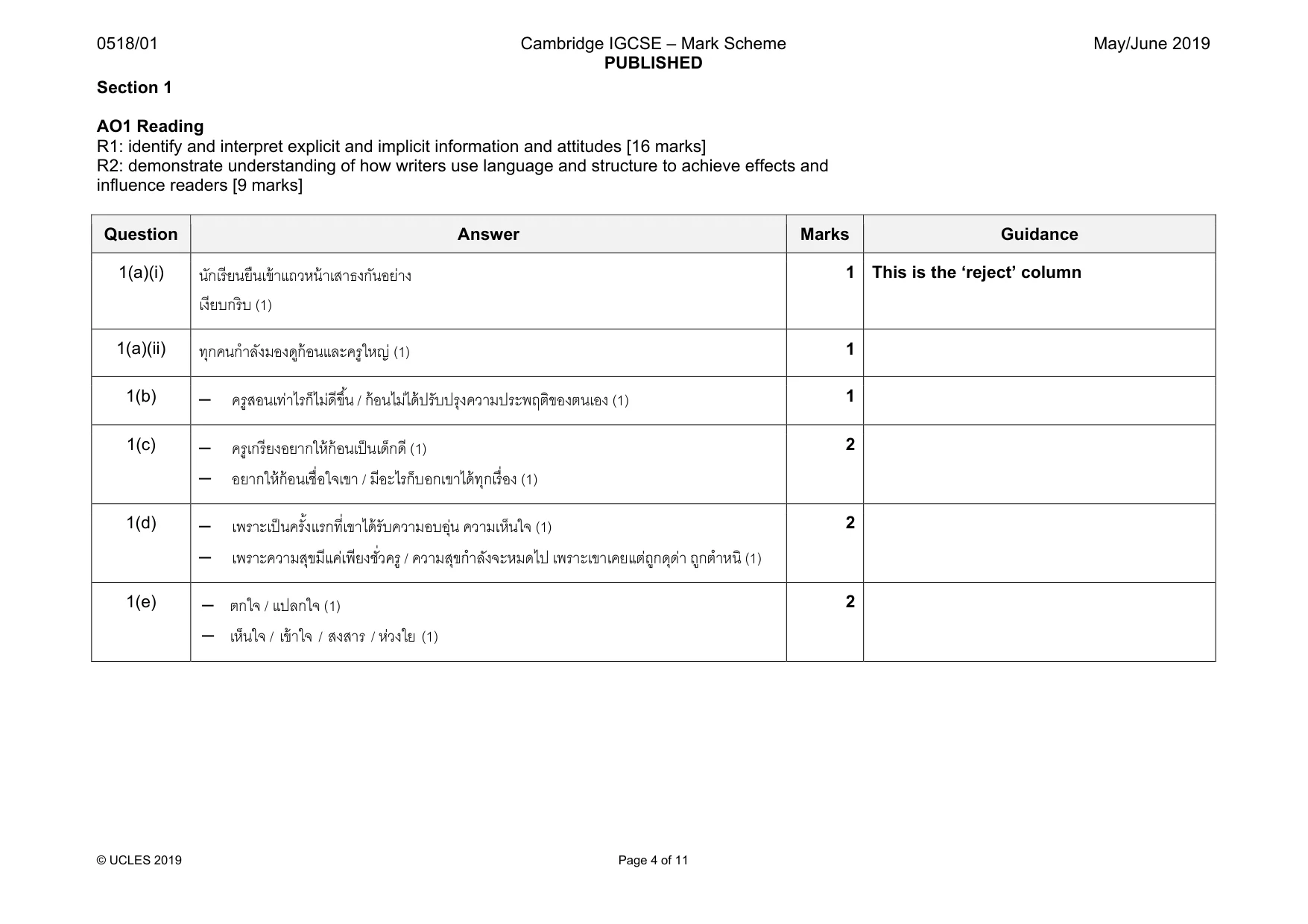
0518/01 Cambridge IGCSE – Mark Scheme PUBLISHED May/June 2019 © UCLES 2019 Page 4 of 11 Section 1 AO1 Reading R1: identify and interpret explicit and implicit information and attitudes [16 marks] R2: demonstrate understanding of how writers use language and structure to achieve effects and influence readers [9 marks] Question Answer Marks Guidance 1(a)(i) นักเรียนยืนเข้าแถวหน้าเสาธงกันอย่าง เงียบกริบ (1) 1 This is the ‘reject’ column 1(a)(ii) ทุกคนกําลังมองดูก้อนและครูใหญ่(1) 1 1(b) – ครูสอนเท่าไรก็ไม่ดีขึÊน / ก้อนไม่ได้ปรับปรุงความประพฤติของตนเอง (1) 1 1(c) – ครูเกรียงอยากให้ก้อนเป็นเด็กดี (1) – อยากให้ก้อนเชืÉอใจเขา / มีอะไรก็บอกเขาได้ทุกเรืÉอง (1) 2 1(d) – เพราะเป็นครัÊงแรกทีÉเขาได้รับความอบอุ่น ความเห็นใจ (1) – เพราะความสุขมีแค่เพียงชัÉวครู / ความสุขกําลังจะหมดไป เพราะเขาเคยแต่ถูกดุด่า ถูกตําหนิ (1) 2 1(e) – ตกใจ / แปลกใจ (1) – เห็นใจ / เข้าใจ / สงสาร / ห่วงใย (1) 2
Mark scheme, page 5
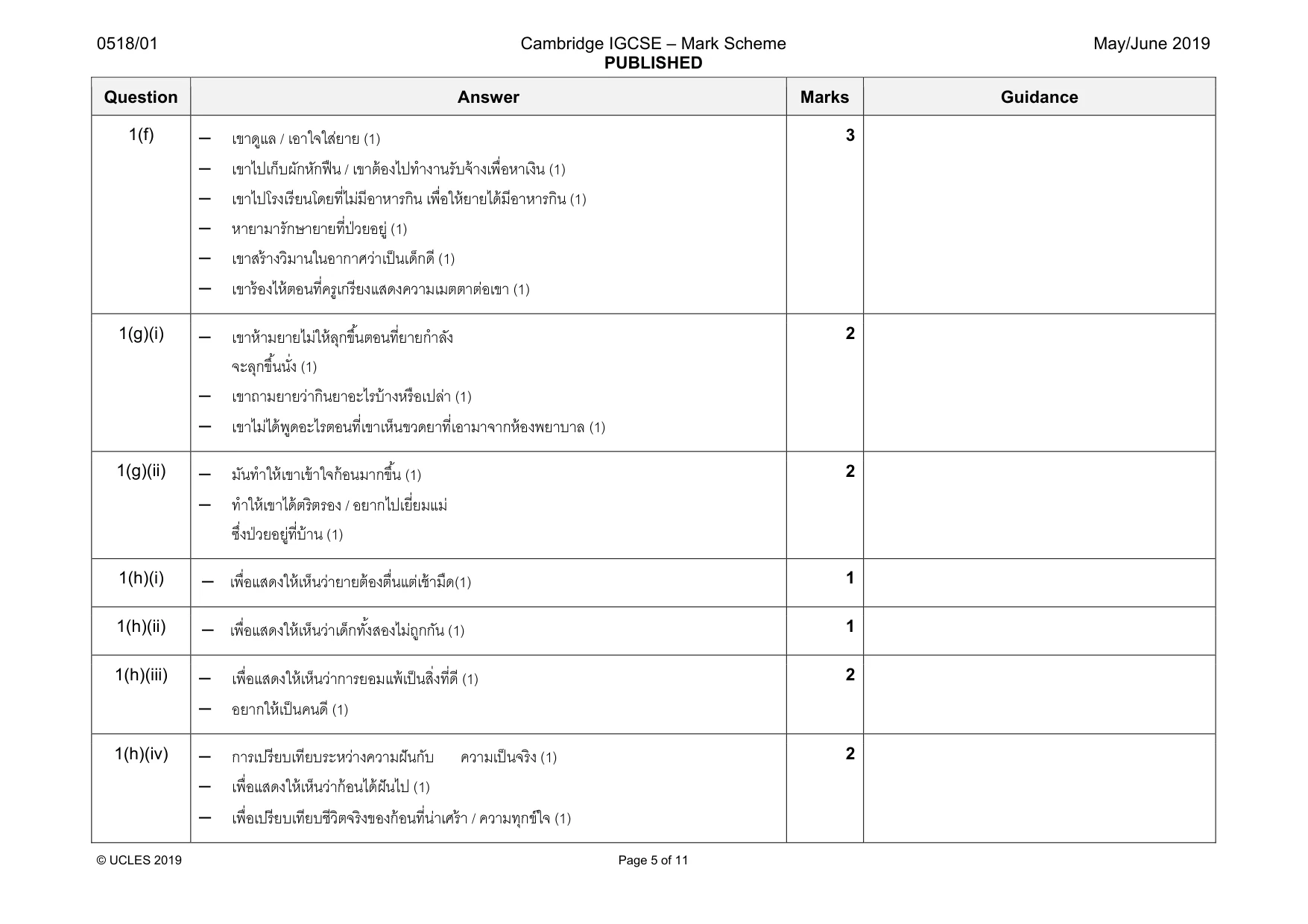
0518/01 Cambridge IGCSE – Mark Scheme PUBLISHED May/June 2019 © UCLES 2019 Page 5 of 11 Question Answer Marks Guidance 1(f) – เขาดูแล / เอาใจใส่ยาย (1) – เขาไปเก็บผักหักฟืน / เขาต้องไปทํางานรับจ้างเพืÉอหาเงิน (1) – เขาไปโรงเรียนโดยทีÉไม่มีอาหารกิน เพืÉอให้ยายได้มีอาหารกิน (1) – หายามารักษายายทีÉป่วยอยู่ (1) – เขาสร้างวิมานในอากาศว่าเป็นเด็กดี (1) – เขาร้องไห้ตอนทีÉครูเกรียงแสดงความเมตตาต่อเขา (1) 3 1(g)(i) – เขาห้ามยายไม่ให้ลุกขึÊนตอนทีÉยายกําลัง จะลุกขึÊนนัÉง (1) – เขาถามยายว่ากินยาอะไรบ้างหรือเปล่า (1) – เขาไม่ได้พูดอะไรตอนทีÉเขาเห็นขวดยาทีÉเอามาจากห้องพยาบาล (1) 2 1(g)(ii) – มันทําให้เขาเข้าใจก้อนมากขึÊน (1) – ทําให้เขาได้ตริตรอง / อยากไปเยีÉยมแม่ ซึÉงป่วยอยู่ทีÉบ้าน (1) 2 1(h)(i) – เพืÉอแสดงให้เห็นว่ายายต้องตืÉนแต่เช้ามืด(1) 1 1(h)(ii) – เพืÉอแสดงให้เห็นว่าเด็กทัÊงสองไม่ถูกกัน (1) 1 1(h)(iii) – เพืÉอแสดงให้เห็นว่าการยอมแพ้เป็นสิÉงทีÉดี (1) – อยากให้เป็นคนดี (1) 2 1(h)(iv) – การเปรียบเทียบระหว่างความฝันกับ ความเป็นจริง (1) – เพืÉอแสดงให้เห็นว่าก้อนได้ฝันไป (1) – เพืÉอเปรียบเทียบชีวิตจริงของก้อนทีÉน่าเศร้า / ความทุกข์ใจ (1) 2
Mark scheme, page 6
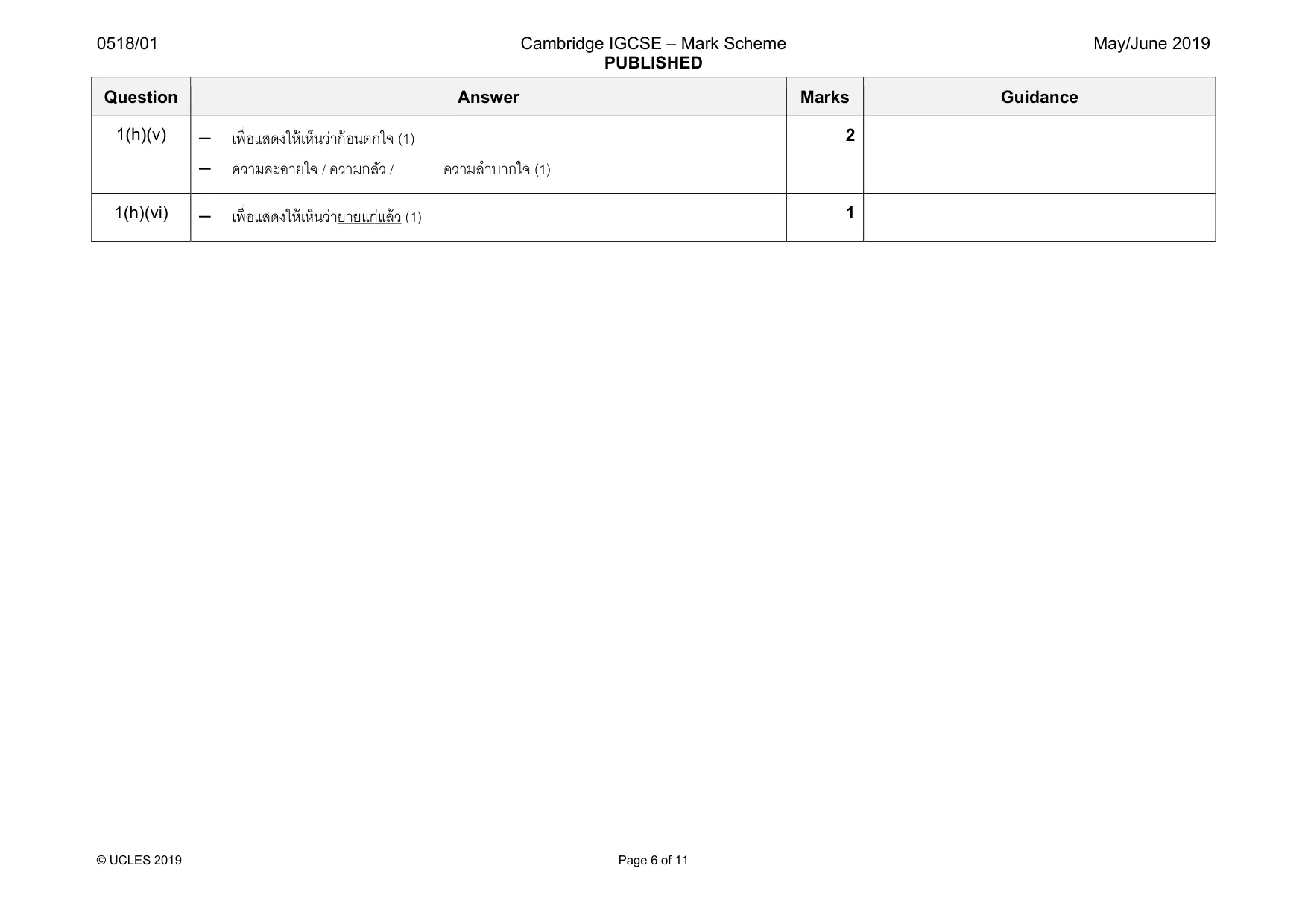
0518/01 Cambridge IGCSE – Mark Scheme PUBLISHED May/June 2019 © UCLES 2019 Page 6 of 11 Question Answer Marks Guidance 1(h)(v) – เพืÉอแสดงให้เห็นว่าก้อนตกใจ (1) – ความละอายใจ / ความกลัว / ความลําบากใจ (1) 2 1(h)(vi) – เพืÉอแสดงให้เห็นว่ายายแก่แล้ว (1) 1
Mark scheme, page 7
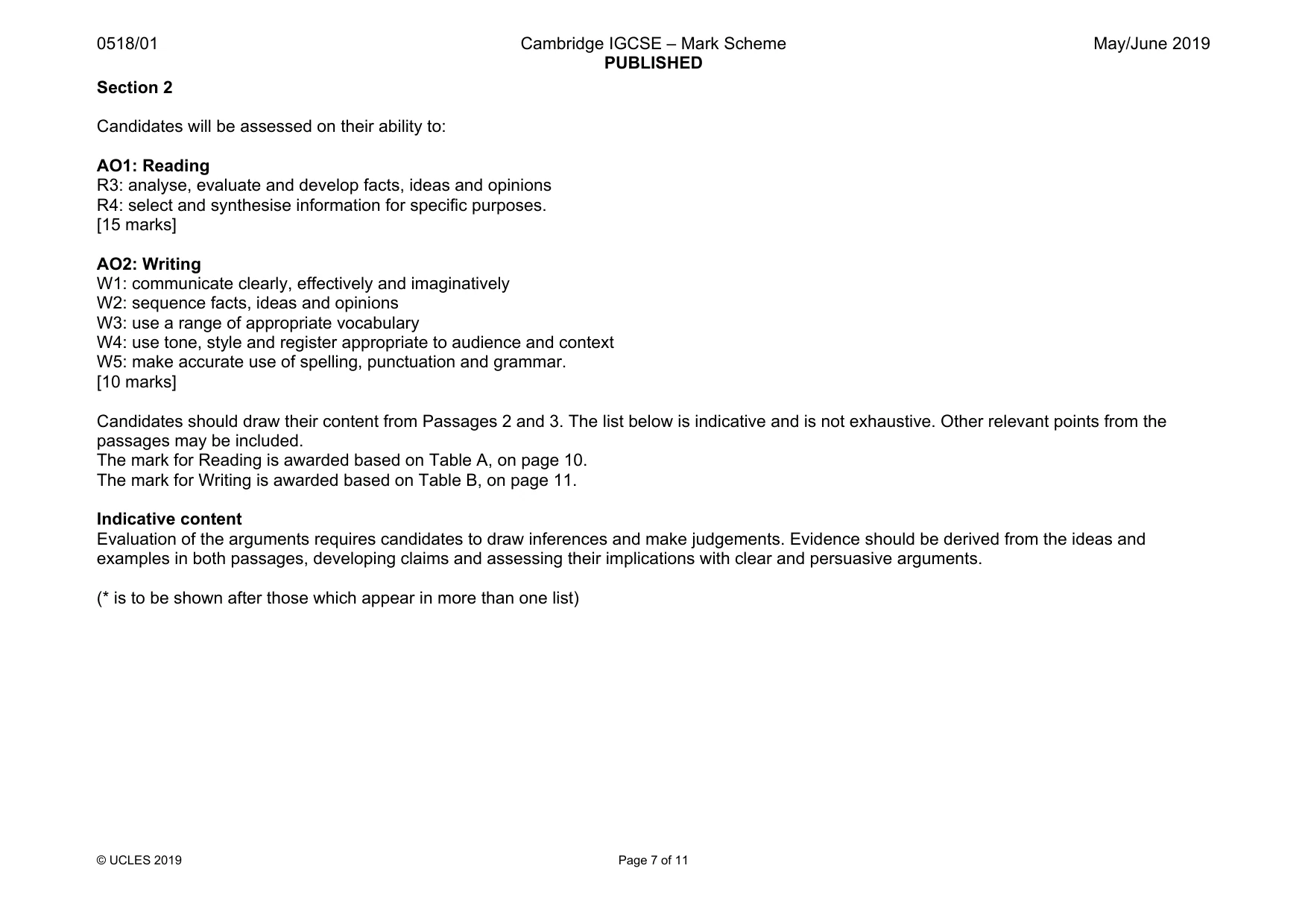
0518/01 Cambridge IGCSE – Mark Scheme PUBLISHED May/June 2019 © UCLES 2019 Page 7 of 11 Section 2 Candidates will be assessed on their ability to: AO1: Reading R3: analyse, evaluate and develop facts, ideas and opinions R4: select and synthesise information for specific purposes. [15 marks] AO2: Writing W1: communicate clearly, effectively and imaginatively W2: sequence facts, ideas and opinions W3: use a range of appropriate vocabulary W4: use tone, style and register appropriate to audience and context W5: make accurate use of spelling, punctuation and grammar. [10 marks] Candidates should draw their content from Passages 2 and 3. The list below is indicative and is not exhaustive. Other relevant points from the passages may be included. The mark for Reading is awarded based on Table A, on page 10. The mark for Writing is awarded based on Table B, on page 11. Indicative content Evaluation of the arguments requires candidates to draw inferences and make judgements. Evidence should be derived from the ideas and examples in both passages, developing claims and assessing their implications with clear and persuasive arguments. (* is to be shown after those which appear in more than one list)
Mark scheme, page 8
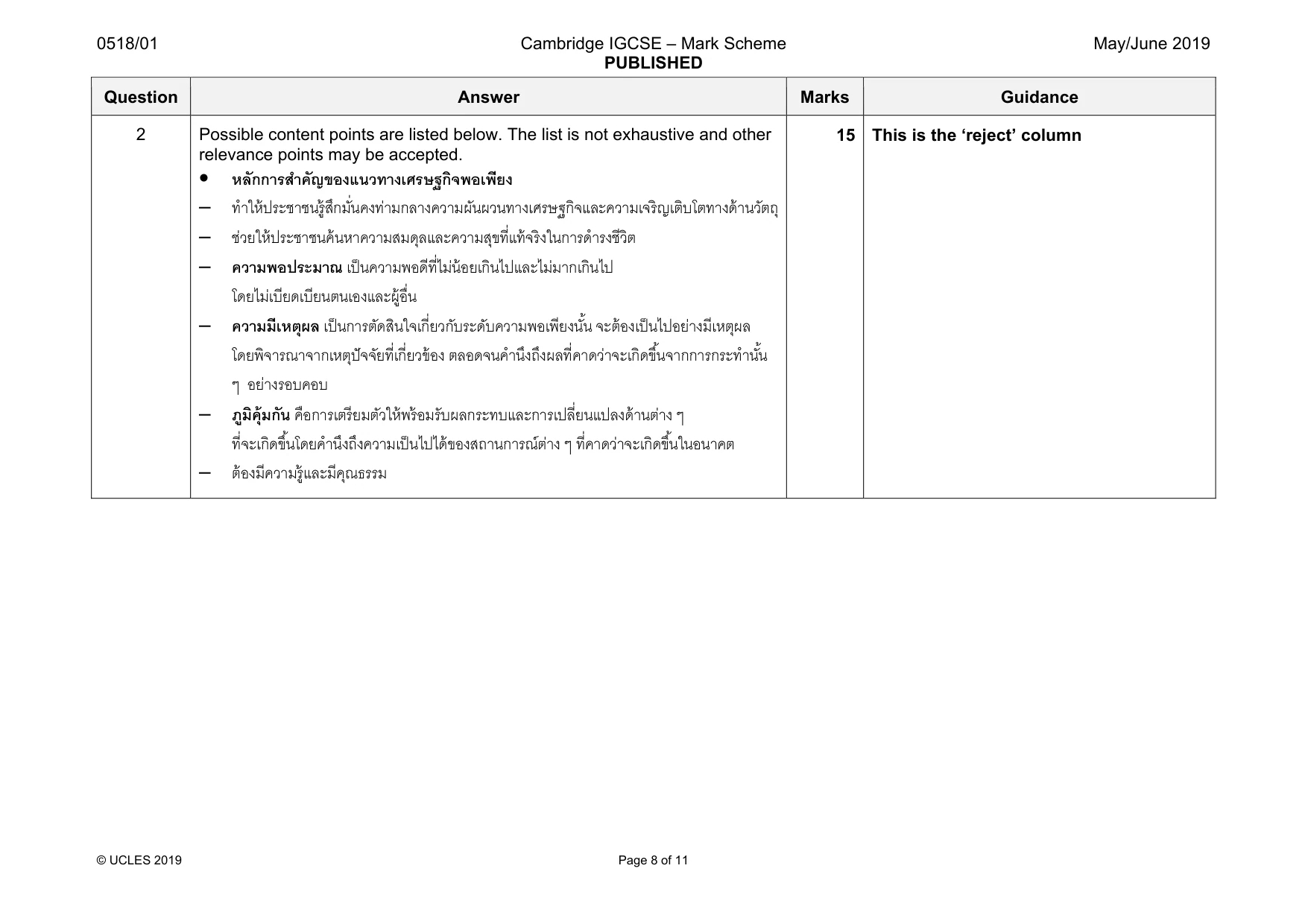
0518/01 Cambridge IGCSE – Mark Scheme PUBLISHED May/June 2019 © UCLES 2019 Page 8 of 11 Question Answer Marks Guidance 2 Possible content points are listed below. The list is not exhaustive and other relevance points may be accepted. • หลักการสําคัญของแนวทางเศรษฐกิจพอเพียง – ทําให้ประชาชนรู้สึกมัÉนคงท่ามกลางความผันผวนทางเศรษฐกิจและความเจริญเติบโตทางด้านวัตถุ – ช่วยให้ประชาชนค้นหาความสมดุลและความสุขทีÉแท้จริงในการดํารงชีวิต – ความพอประมาณ เป็นความพอดีทีÉไม่น้อยเกินไปและไม่มากเกินไป โดยไม่เบียดเบียนตนเองและผู้อืÉน – ความมีเหตุผล เป็นการตัดสินใจเกีÉยวกับระดับความพอเพียงนัÊน จะต้องเป็นไปอย่างมีเหตุผล โดยพิจารณาจากเหตุปัจจัยทีÉเกีÉยวข้อง ตลอดจนคํานึงถึงผลทีÉคาดว่าจะเกิดขึÊนจากการกระทํานัÊน ๆ อย่างรอบคอบ – ภูมิคุ้มกัน คือการเตรียมตัวให้พร้อมรับผลกระทบและการเปลีÉยนแปลงด้านต่าง ๆ ทีÉจะเกิดขึÊนโดยคํานึงถึงความเป็นไปได้ของสถานการณ์ต่าง ๆ ทีÉคาดว่าจะเกิดขึÊนในอนาคต – ต้องมีความรู้และมีคุณธรรม 15 This is the ‘reject’ column
Mark scheme, page 9
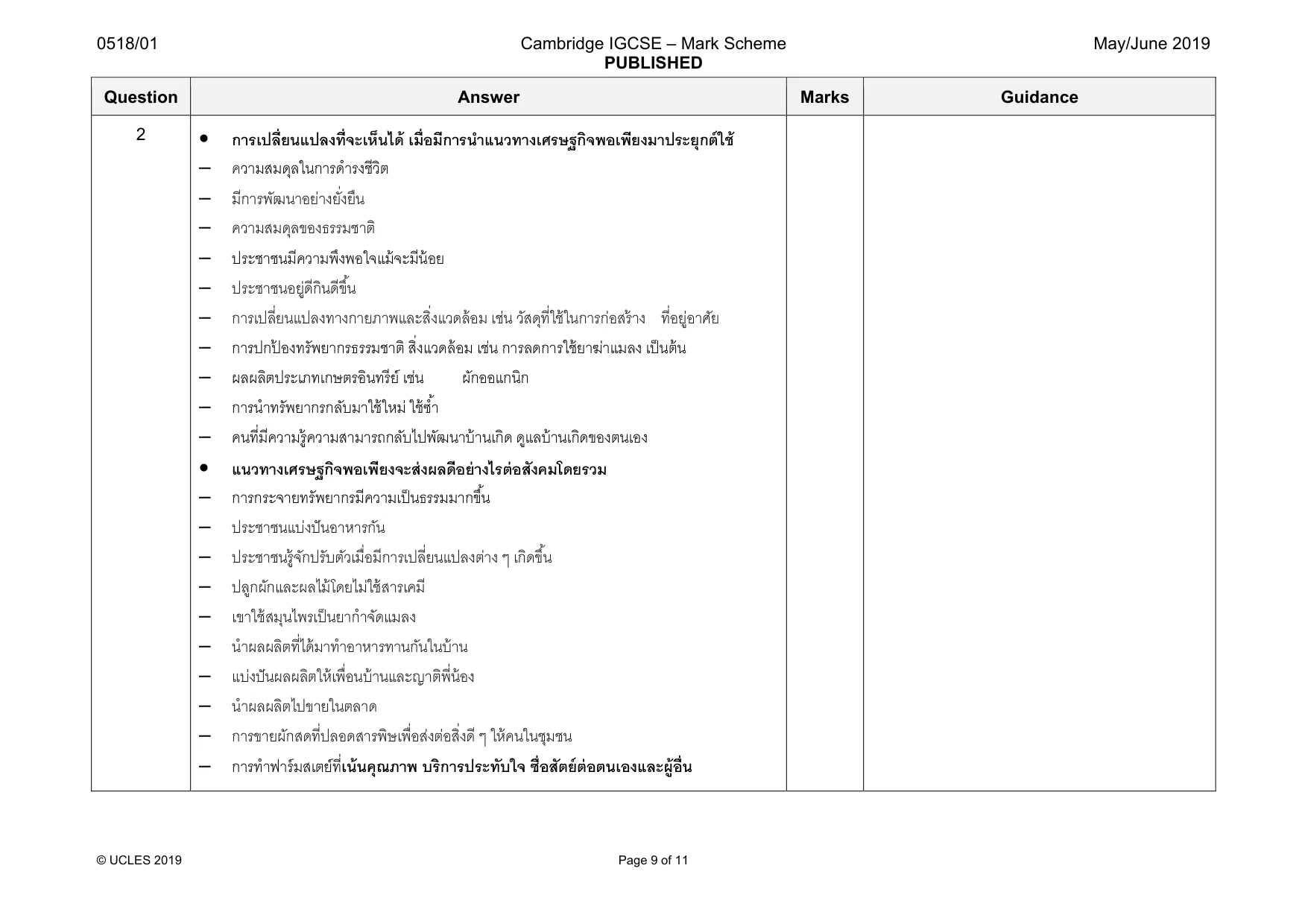
0518/01 Cambridge IGCSE – Mark Scheme PUBLISHED May/June 2019 © UCLES 2019 Page 9 of 11 Question Answer Marks Guidance 2 • การเปลีÉยนแปลงทีÉจะเห็นได้ เมืÉอมีการนําแนวทางเศรษฐกิจพอเพียงมาประยุกต์ใช้ – ความสมดุลในการดํารงชีวิต – มีการพัฒนาอย่างยัÉงยืน – ความสมดุลของธรรมชาติ – ประชาชนมีความพึงพอใจแม้จะมีน้อย – ประชาชนอยู่ดีกินดีขึÊน – การเปลีÉยนแปลงทางกายภาพและสิÉงแวดล้อม เช่น วัสดุทีÉใช้ในการก่อสร้าง ทีÉอยู่อาศัย – การปกป้องทรัพยากรธรรมชาติ สิÉงแวดล้อม เช่น การลดการใช้ยาฆ่าแมลง เป็นต้น – ผลผลิตประเภทเกษตรอินทรีย์ เช่น ผักออแกนิก – การนําทรัพยากรกลับมาใช้ใหม่ ใช้ซํÊา – คนทีÉมีความรู้ความสามารถกลับไปพัฒนาบ้านเกิด ดูแลบ้านเกิดของตนเอง • แนวทางเศรษฐกิจพอเพียงจะส่งผลดีอย่างไรต่อสังคมโดยรวม – การกระจายทรัพยากรมีความเป็นธรรมมากขึÊน – ประชาชนแบ่งปันอาหารกัน – ประชาชนรู้จักปรับตัวเมืÉอมีการเปลีÉยนแปลงต่าง ๆ เกิดขึÊน – ปลูกผักและผลไม้โดยไม่ใช้สารเคมี – เขาใช้สมุนไพรเป็นยากําจัดแมลง – นําผลผลิตทีÉได้มาทําอาหารทานกันในบ้าน – แบ่งปันผลผลิตให้เพืÉอนบ้านและญาติพีÉน้อง – นําผลผลิตไปขายในตลาด – การขายผักสดทีÉปลอดสารพิษเพืÉอส่งต่อสิÉงดี ๆ ให้คนในชุมชน – การทําฟาร์มสเตย์ทีÉเน้นคุณภาพ บริการประทับใจ ซืÉอสัตย์ต่อตนเองและผู้อืÉน
Mark scheme, page 10
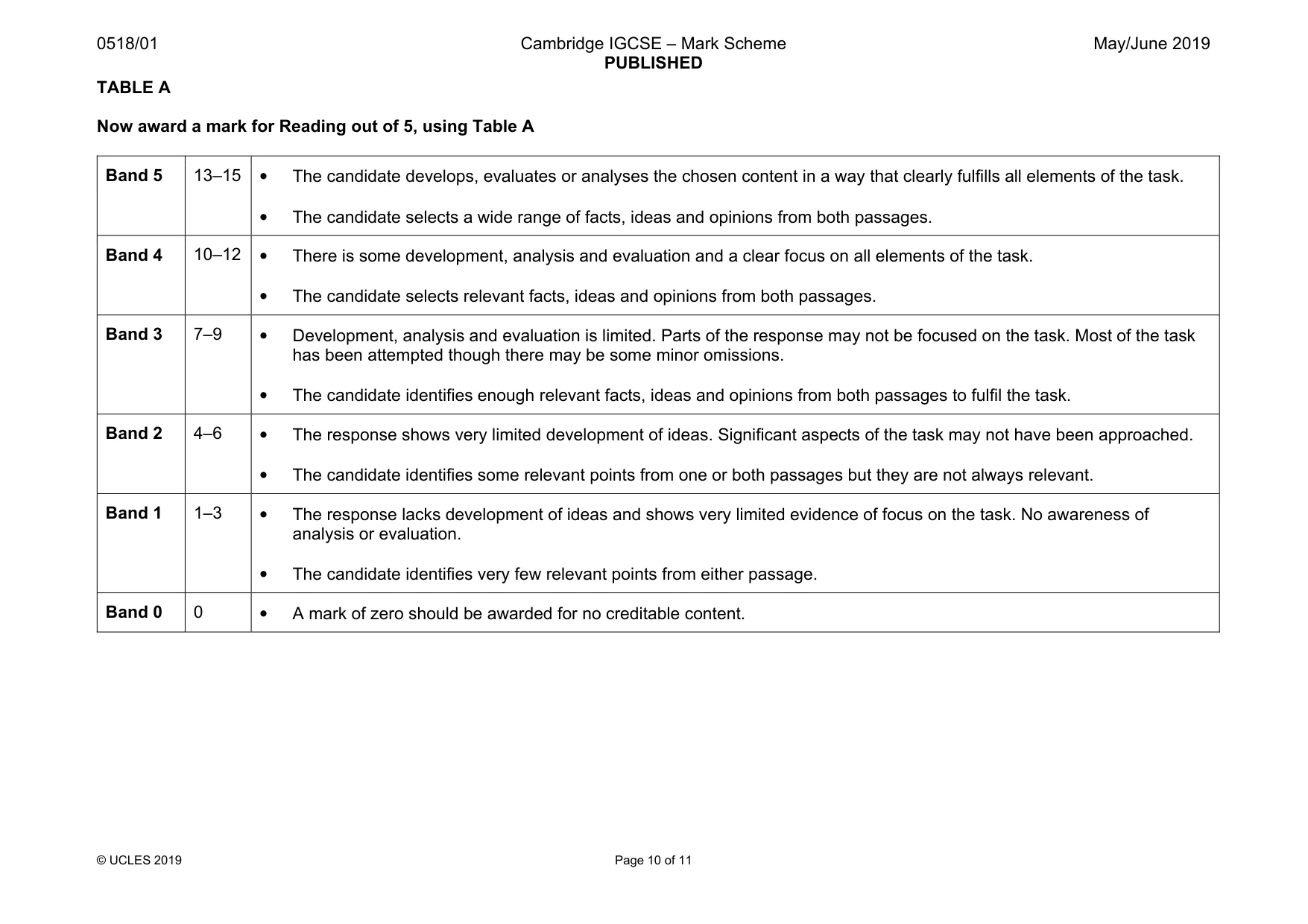
0518/01 Cambridge IGCSE – Mark Scheme PUBLISHED May/June 2019 © UCLES 2019 Page 10 of 11 TABLE A Now award a mark for Reading out of 5, using Table A Band 5 13–15 • The candidate develops, evaluates or analyses the chosen content in a way that clearly fulfills all elements of the task. • The candidate selects a wide range of facts, ideas and opinions from both passages. Band 4 10–12 • There is some development, analysis and evaluation and a clear focus on all elements of the task. • The candidate selects relevant facts, ideas and opinions from both passages. Band 3 7–9 • Development, analysis and evaluation is limited. Parts of the response may not be focused on the task. Most of the task has been attempted though there may be some minor omissions. • The candidate identifies enough relevant facts, ideas and opinions from both passages to fulfil the task. Band 2 4–6 • The response shows very limited development of ideas. Significant aspects of the task may not have been approached. • The candidate identifies some relevant points from one or both passages but they are not always relevant. Band 1 1–3 • The response lacks development of ideas and shows very limited evidence of focus on the task. No awareness of analysis or evaluation. • The candidate identifies very few relevant points from either passage. Band 0 0 • A mark of zero should be awarded for no creditable content.
Mark scheme, page 11
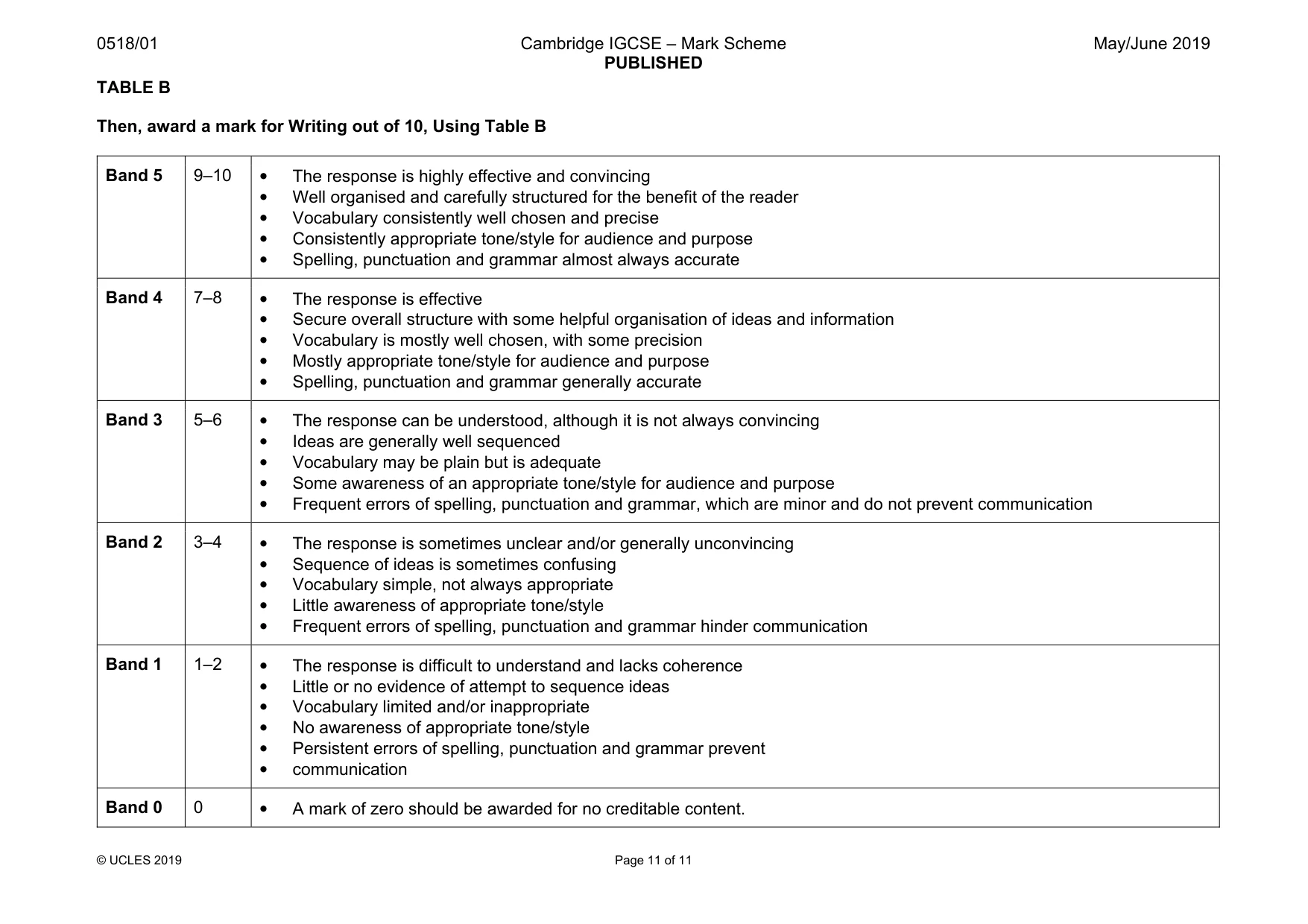
0518/01 Cambridge IGCSE – Mark Scheme PUBLISHED May/June 2019 © UCLES 2019 Page 11 of 11 TABLE B Then, award a mark for Writing out of 10, Using Table B Band 5 9–10 • The response is highly effective and convincing • Well organised and carefully structured for the benefit of the reader • Vocabulary consistently well chosen and precise • Consistently appropriate tone/style for audience and purpose • Spelling, punctuation and grammar almost always accurate Band 4 7–8 • The response is effective • Secure overall structure with some helpful organisation of ideas and information • Vocabulary is mostly well chosen, with some precision • Mostly appropriate tone/style for audience and purpose • Spelling, punctuation and grammar generally accurate Band 3 5–6 • The response can be understood, although it is not always convincing • Ideas are generally well sequenced • Vocabulary may be plain but is adequate • Some awareness of an appropriate tone/style for audience and purpose • Frequent errors of spelling, punctuation and grammar, which are minor and do not prevent communication Band 2 3–4 • The response is sometimes unclear and/or generally unconvincing • Sequence of ideas is sometimes confusing • Vocabulary simple, not always appropriate • Little awareness of appropriate tone/style • Frequent errors of spelling, punctuation and grammar hinder communication Band 1 1–2 • The response is difficult to understand and lacks coherence • Little or no evidence of attempt to sequence ideas • Vocabulary limited and/or inappropriate • No awareness of appropriate tone/style • Persistent errors of spelling, punctuation and grammar prevent • communication Band 0 0 • A mark of zero should be awarded for no creditable content.
What you needed in this session
Cambridge’s own grade thresholds for 2019 May/June, Paper 1 · Variant 1. A higher threshold means an easier paper — the bar moves with how the cohort did.