Cambridge IGCSE Italian (9-1) 7164 — 2019 May/June Paper 4 · Variant 1
7164/41/M/J/19 · 1 question · 50 marks · ≈56 min
The question paper and its mark scheme, free to read here and free to download. This is Cambridge’s own paper, exactly as it was sat.
Question paper8 pages


Mark scheme23 pages
Answers below. Sit the paper first if you are practising.
Questions as text
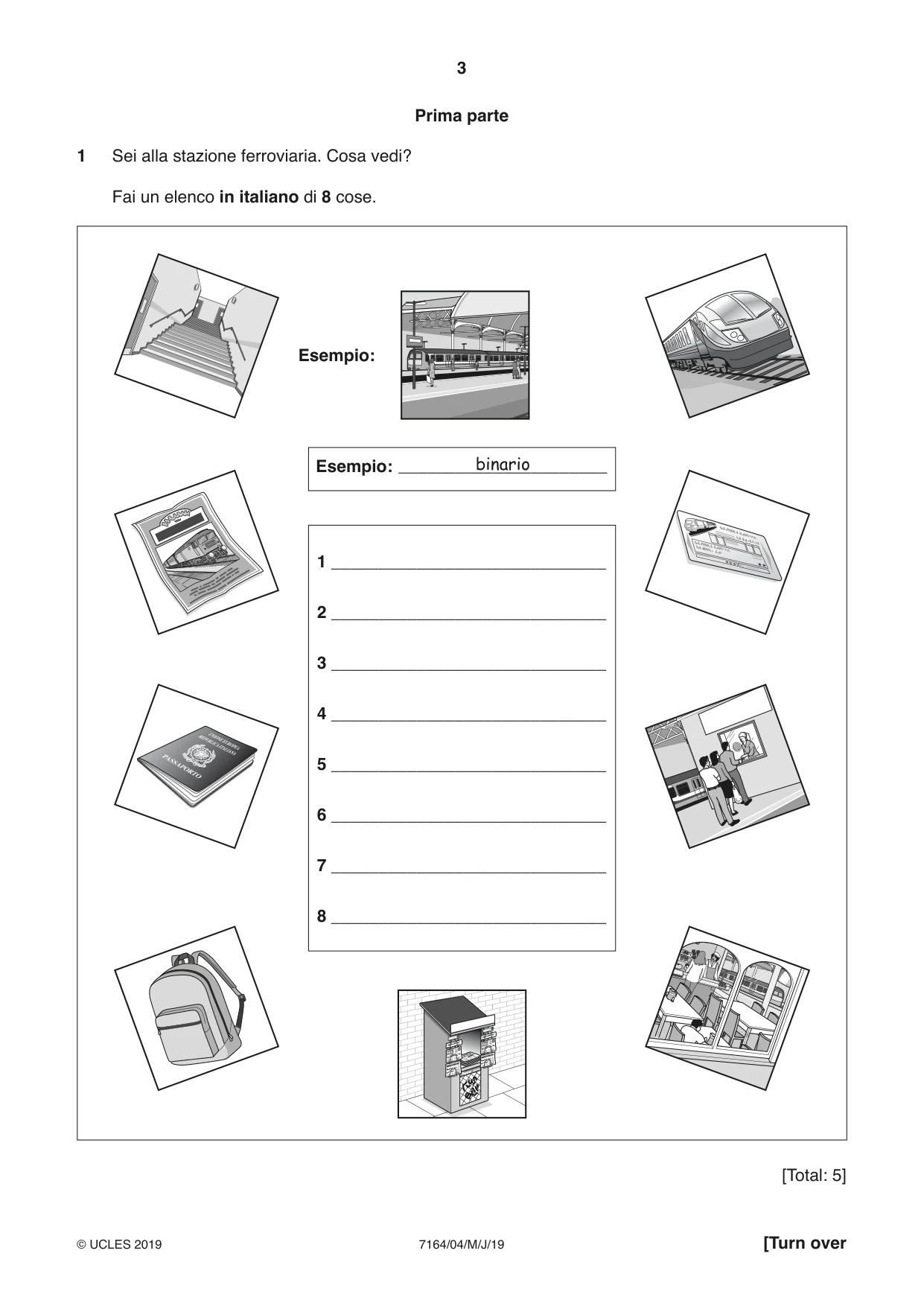
Q1 · Sei alla stazione ferroviaria
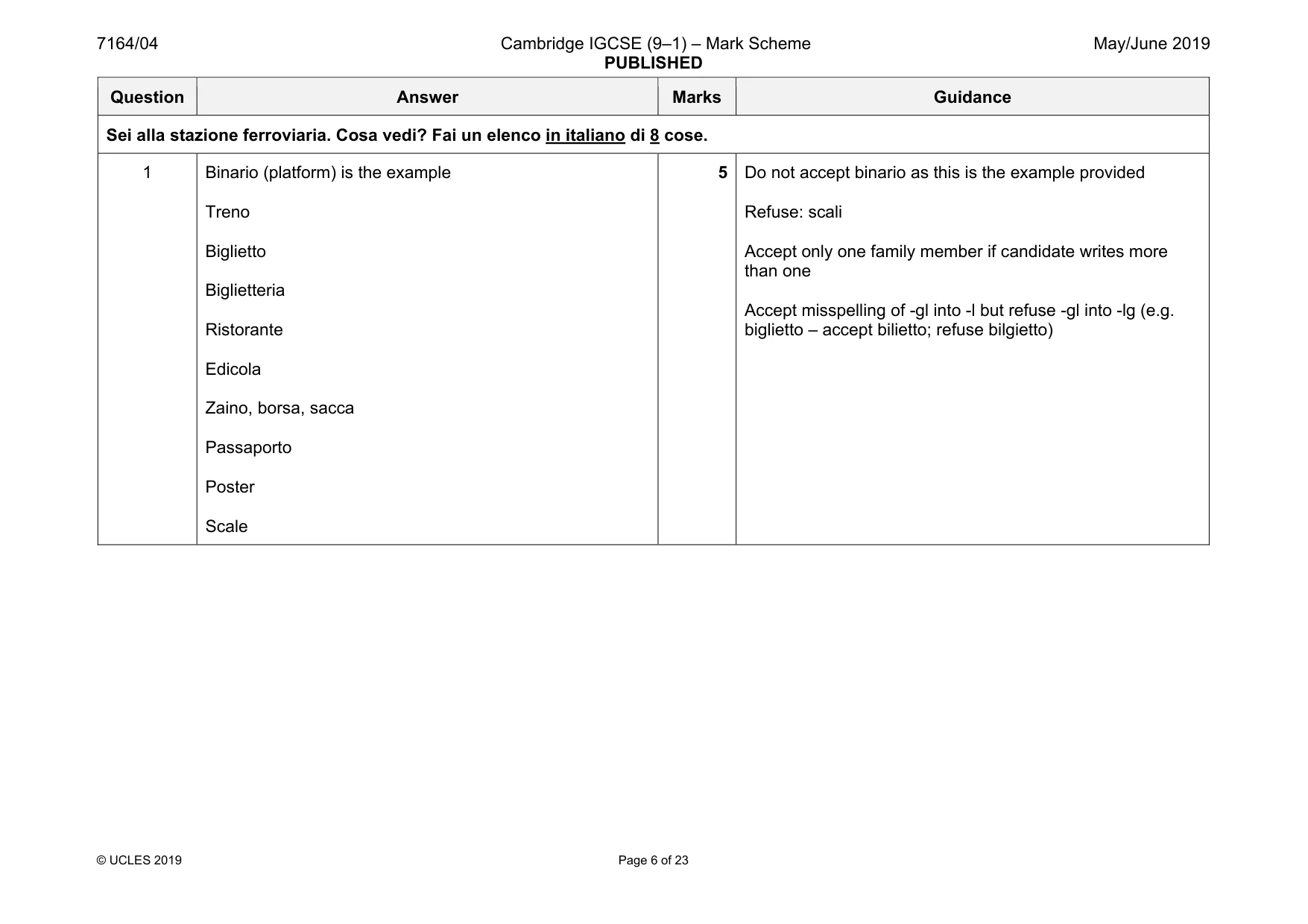
1 Sei alla stazione ferroviaria. Cosa vedi? Fai un elenco in italiano di 8 cose. Esempio: Esempio: ______________________binario 1 _____________________________ 2 _____________________________ 3 _____________________________ 4 _____________________________ 5 _____________________________ 6 _____________________________ 7 _____________________________ 8 _____________________________ [Total: 5] 2 I lavori domestici • Quando aiuti in casa? • Quali lavori domestici non ti piace fare? • Preferisci aiutare i genitori in casa o in giardino? Perché? • Che lavori domestici farai il prossimo fine settimana? Scrivi 80–90 parole in italiano. .......................................................................................................................................................... .......................................................................................................................................................... .......................................................................................................................................................... .......................................................................................................................................................... .......................................................................................................................................................... .......................................................................................................................................................... .......................................................................................................................................................... .......................................................................................................................................................... .......................................................................................................................................................... .......................................................................................................................................................... .......................................................................................................................................................... .......................................................................................................................................................... .......................................................................................................................................................... .......................................................................................................................................................... [Total: 15] Voltare la pagina per la Seconda parte.
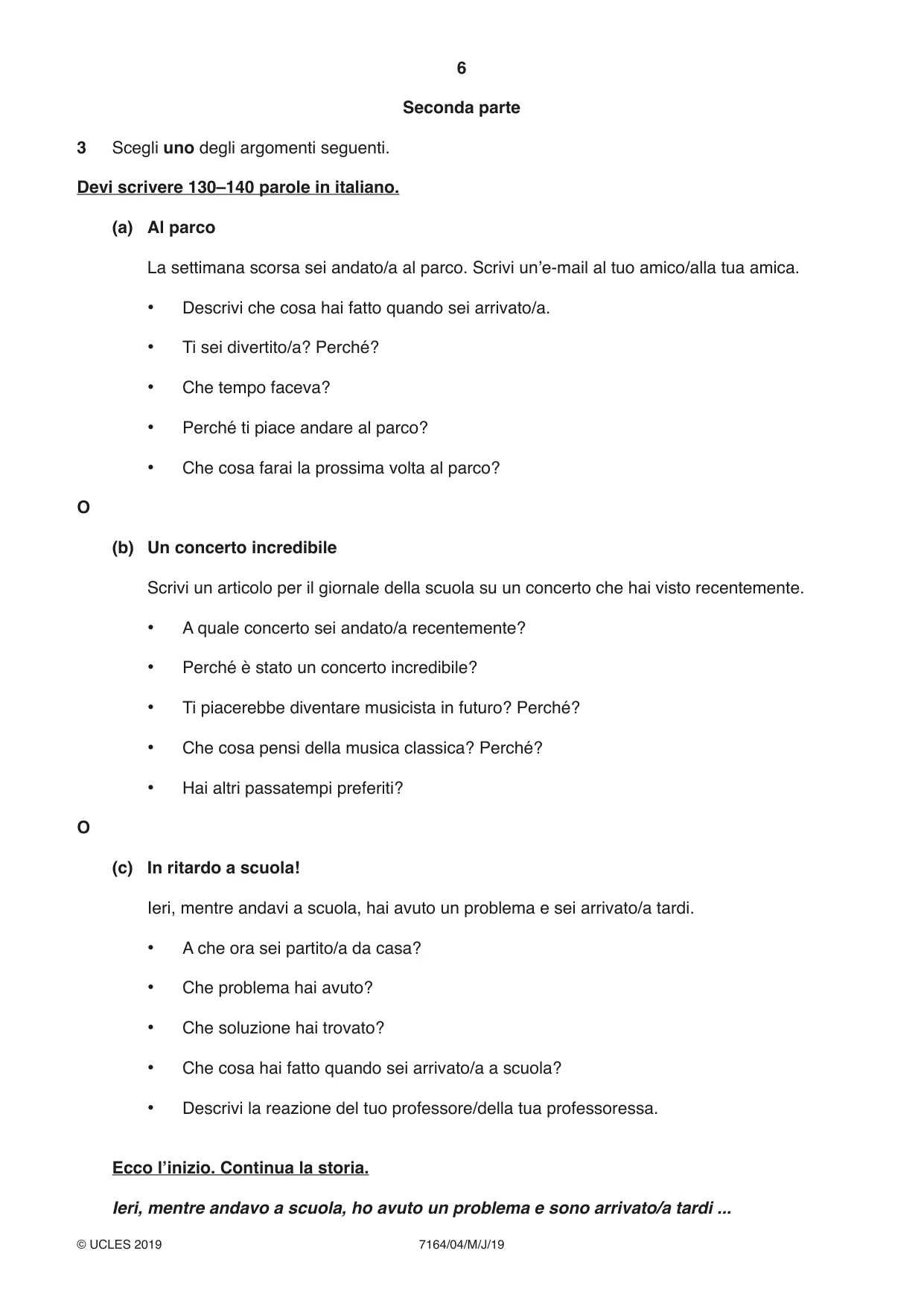
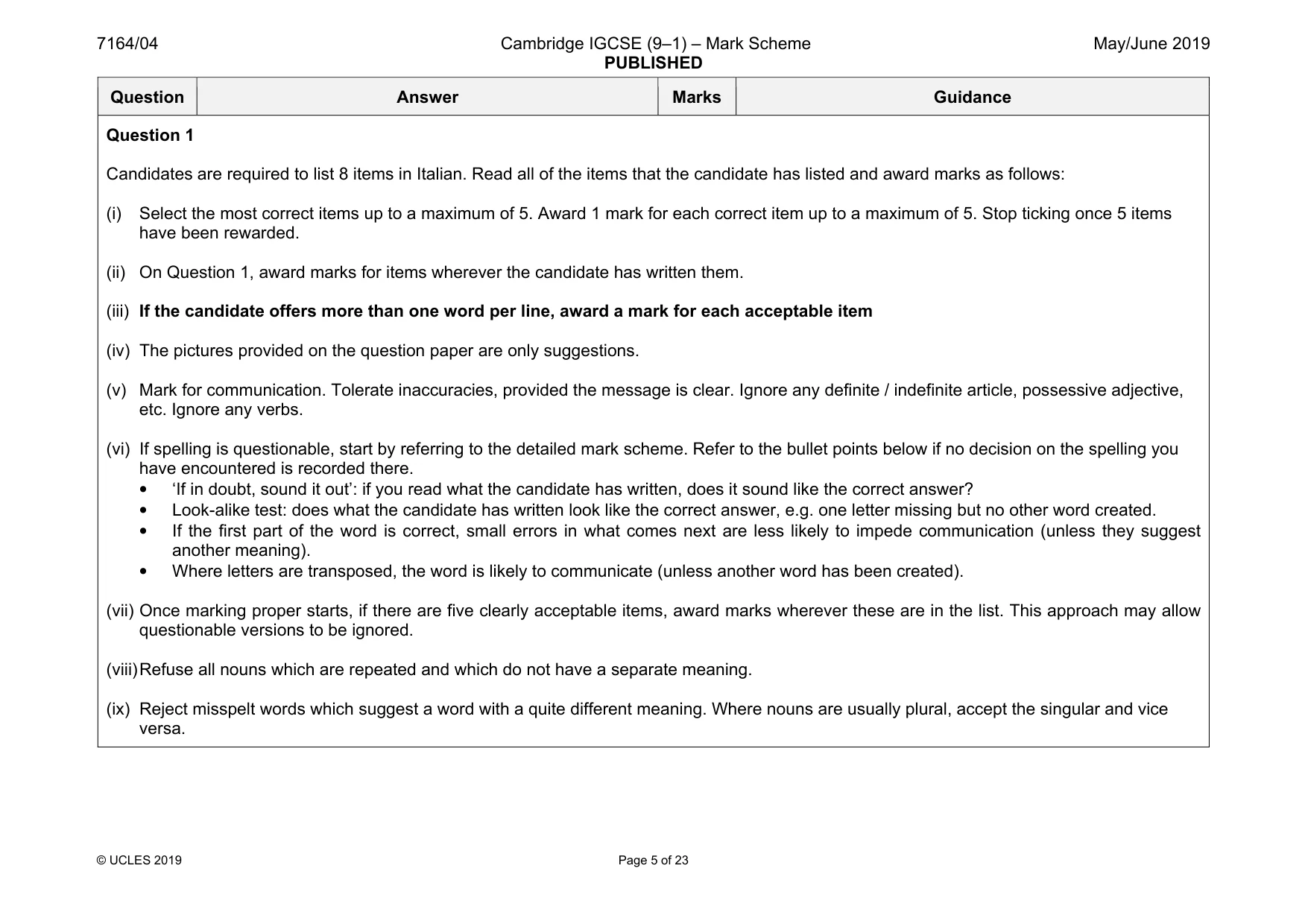
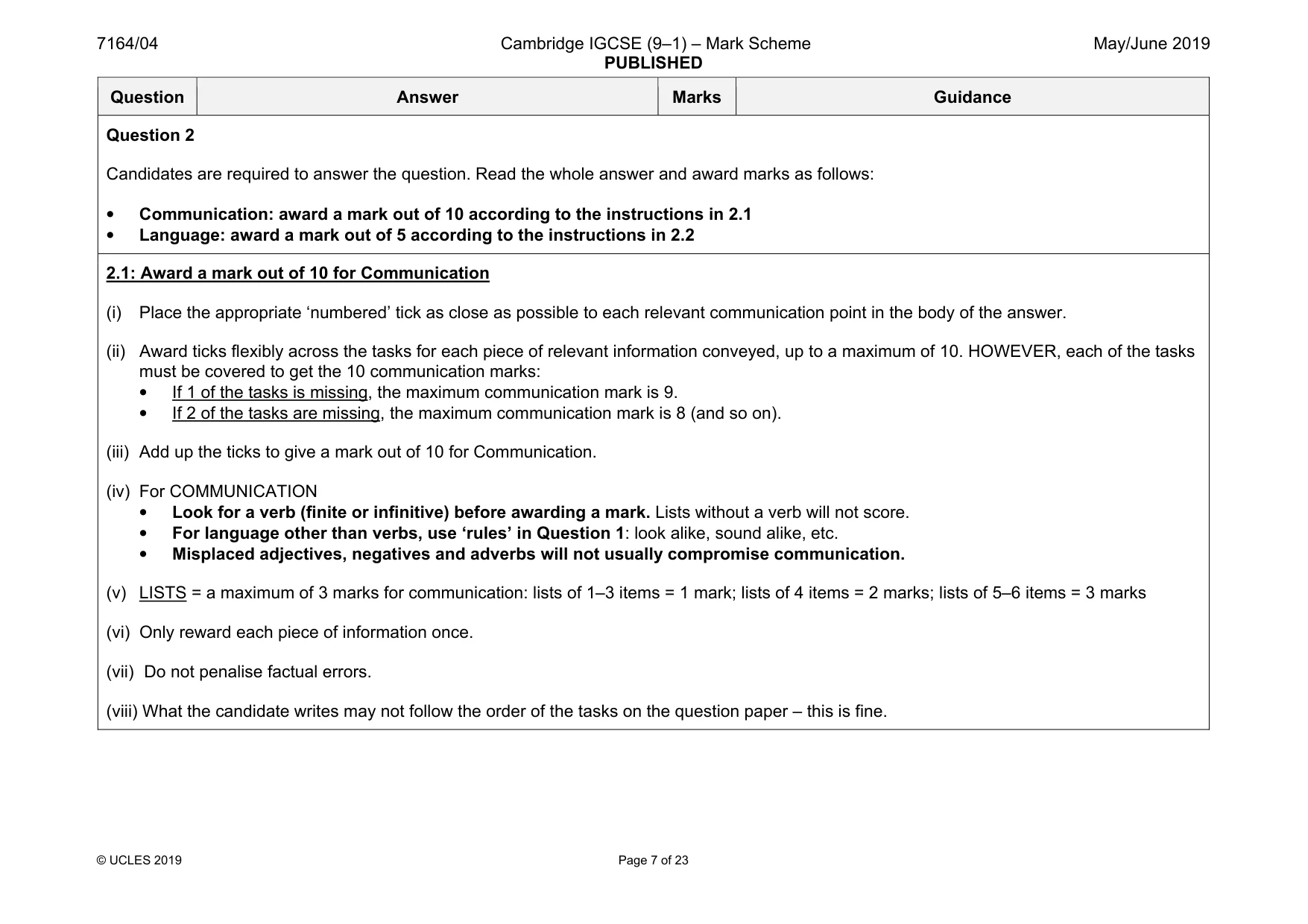
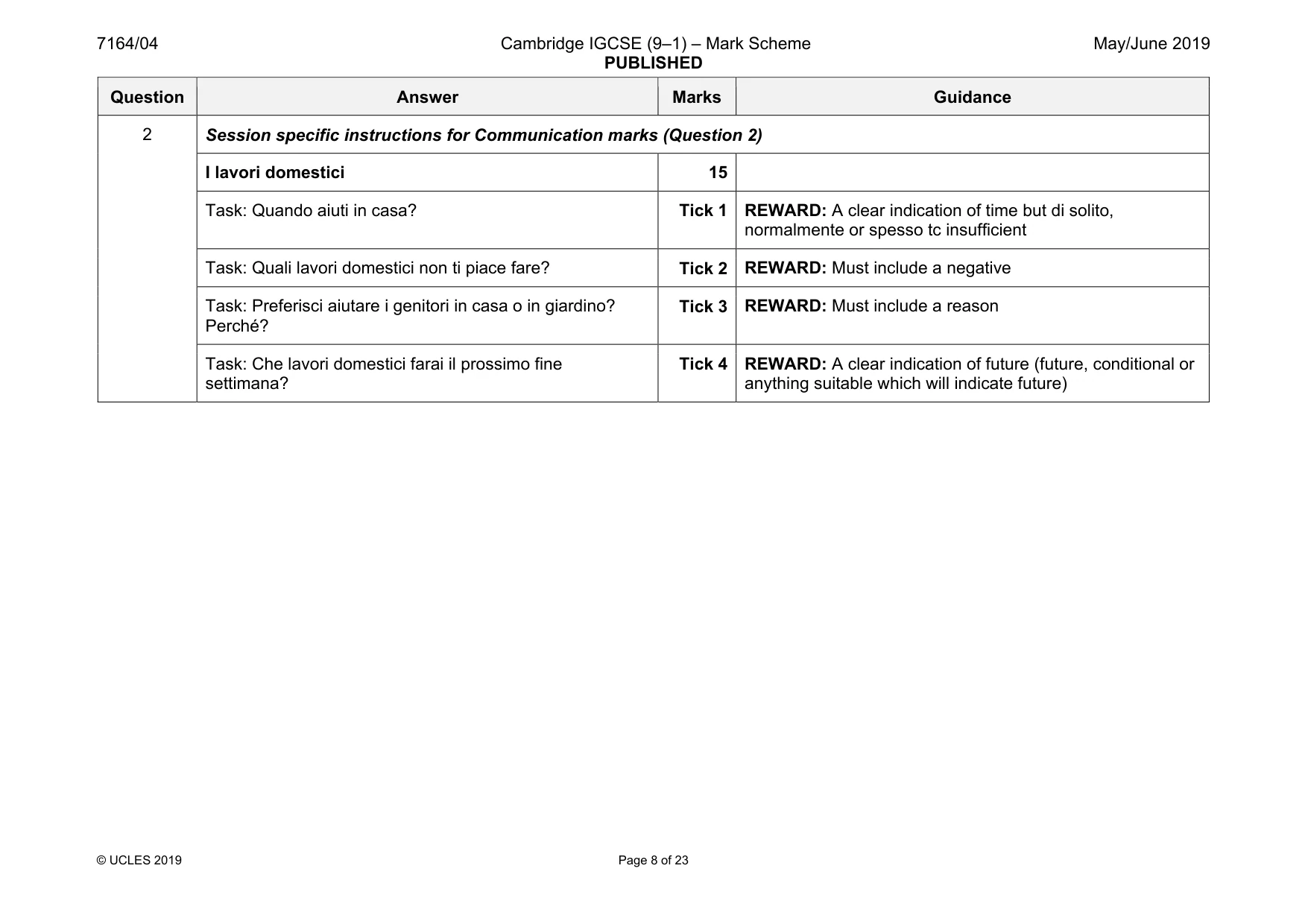
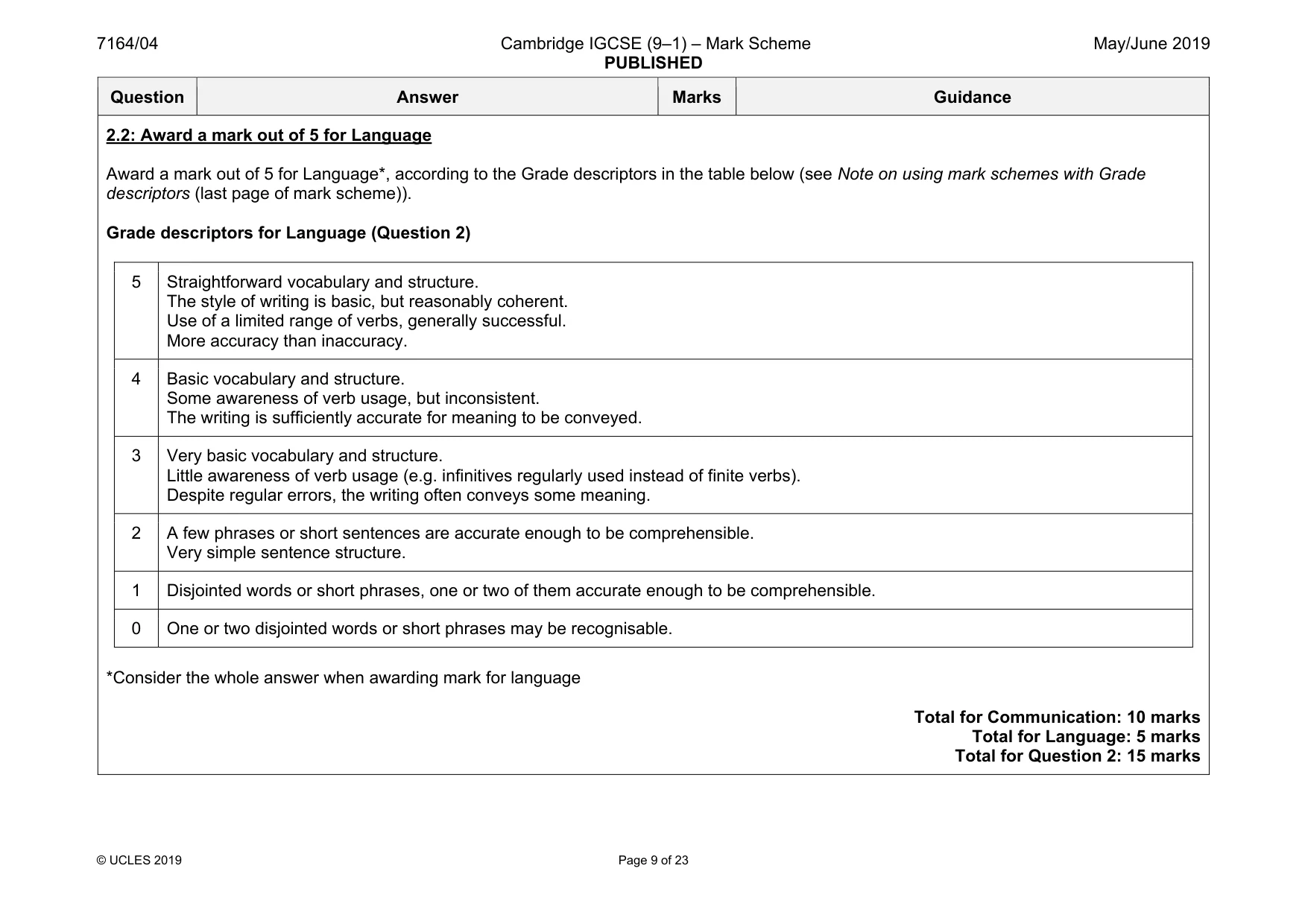
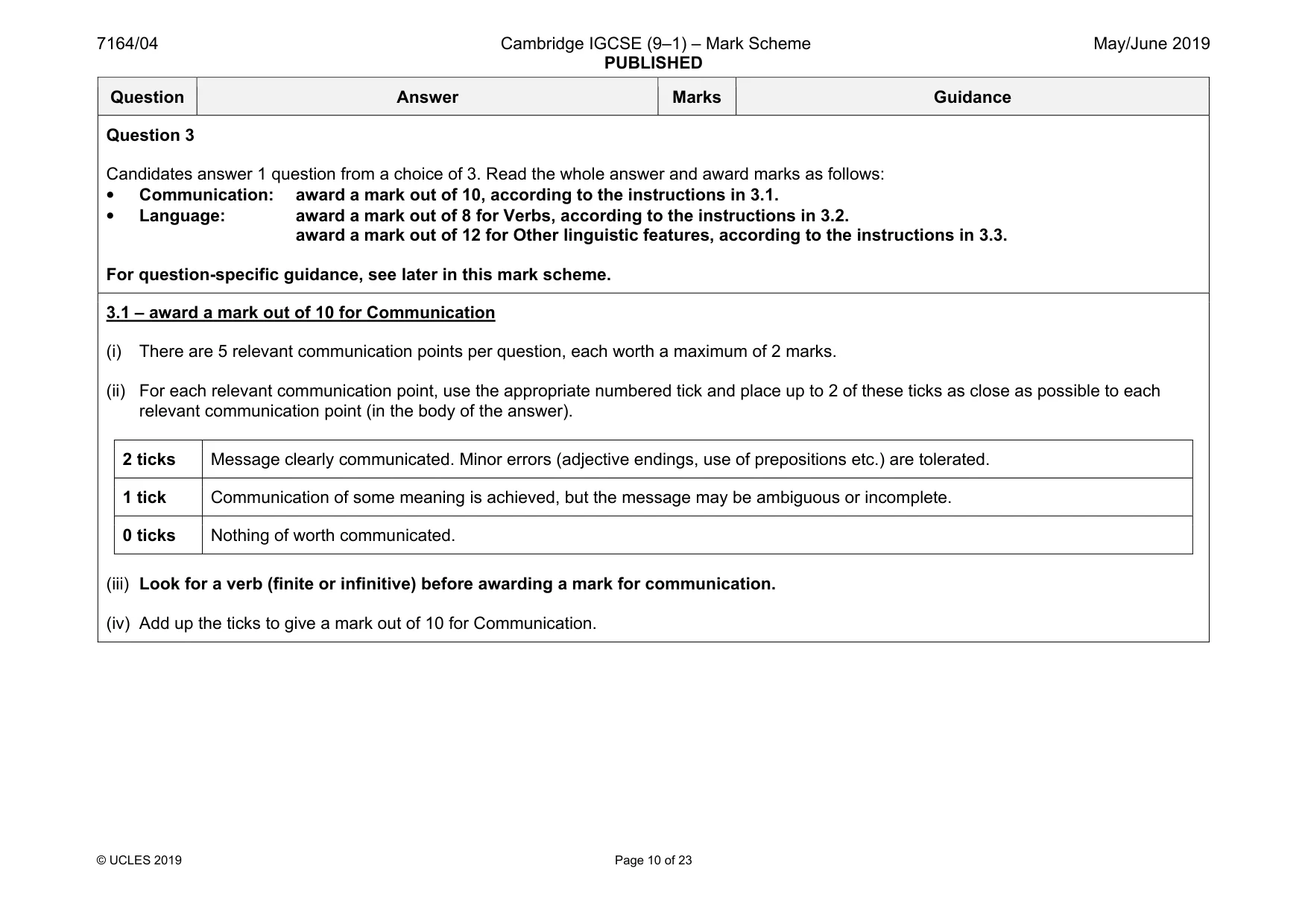
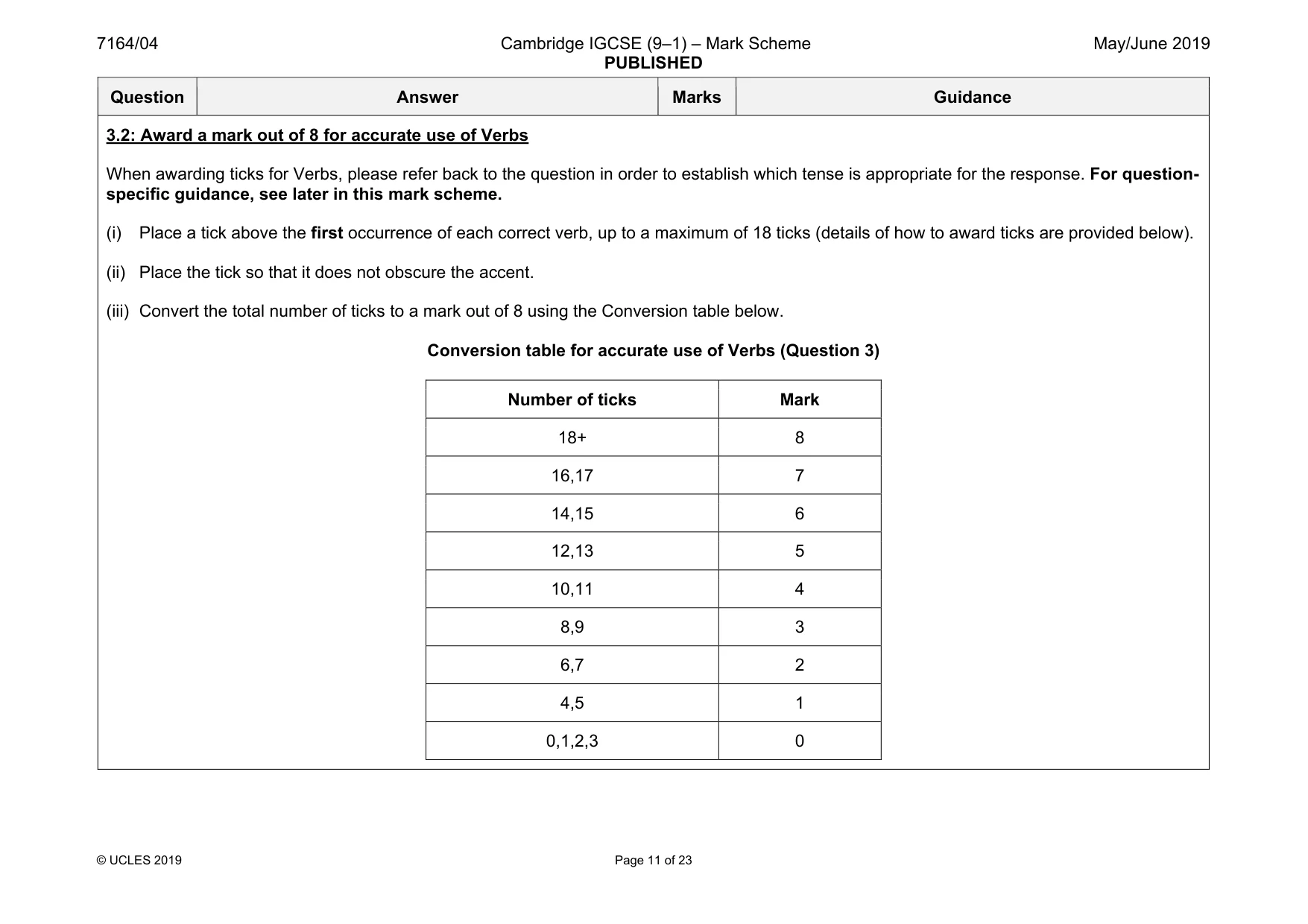
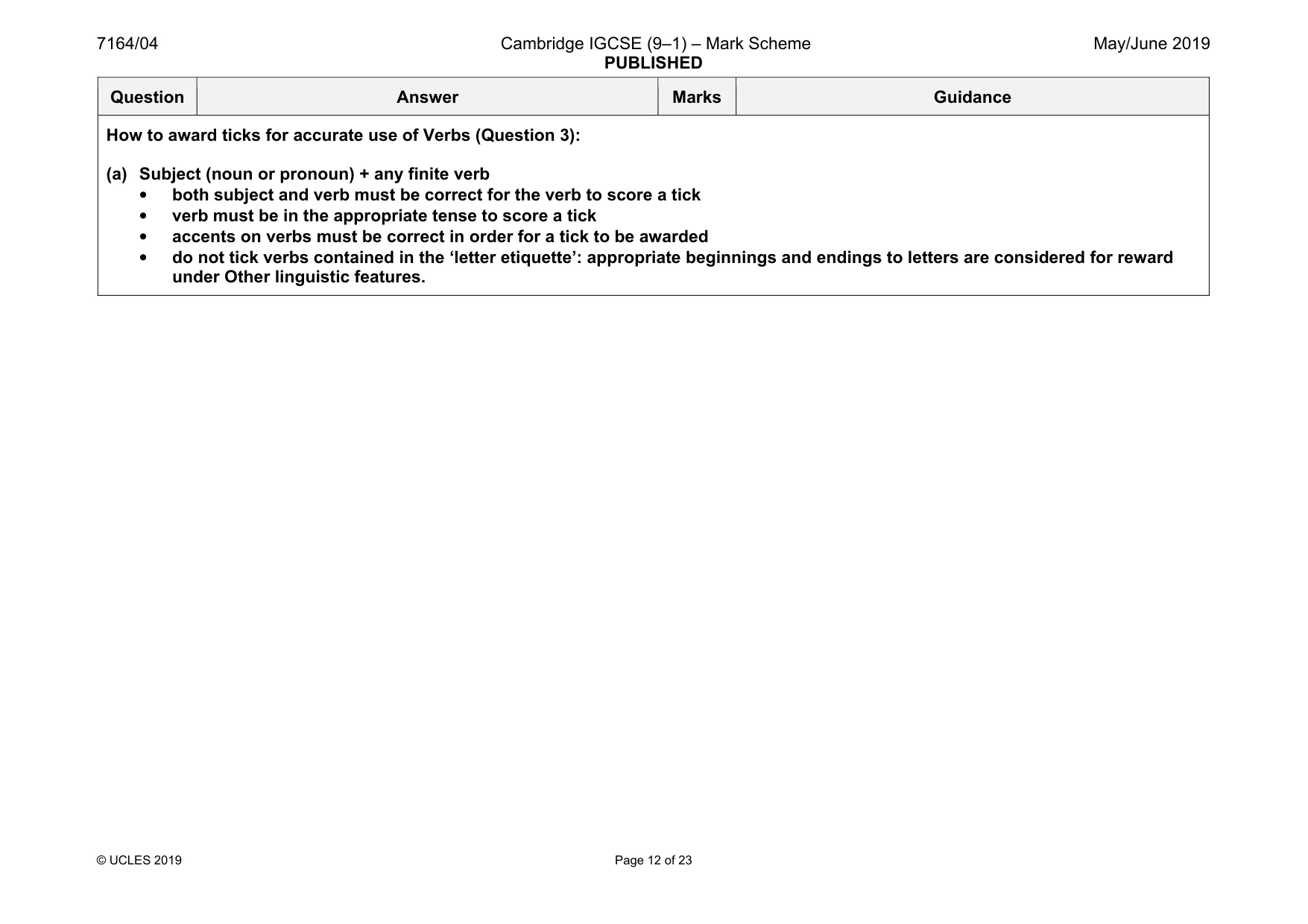
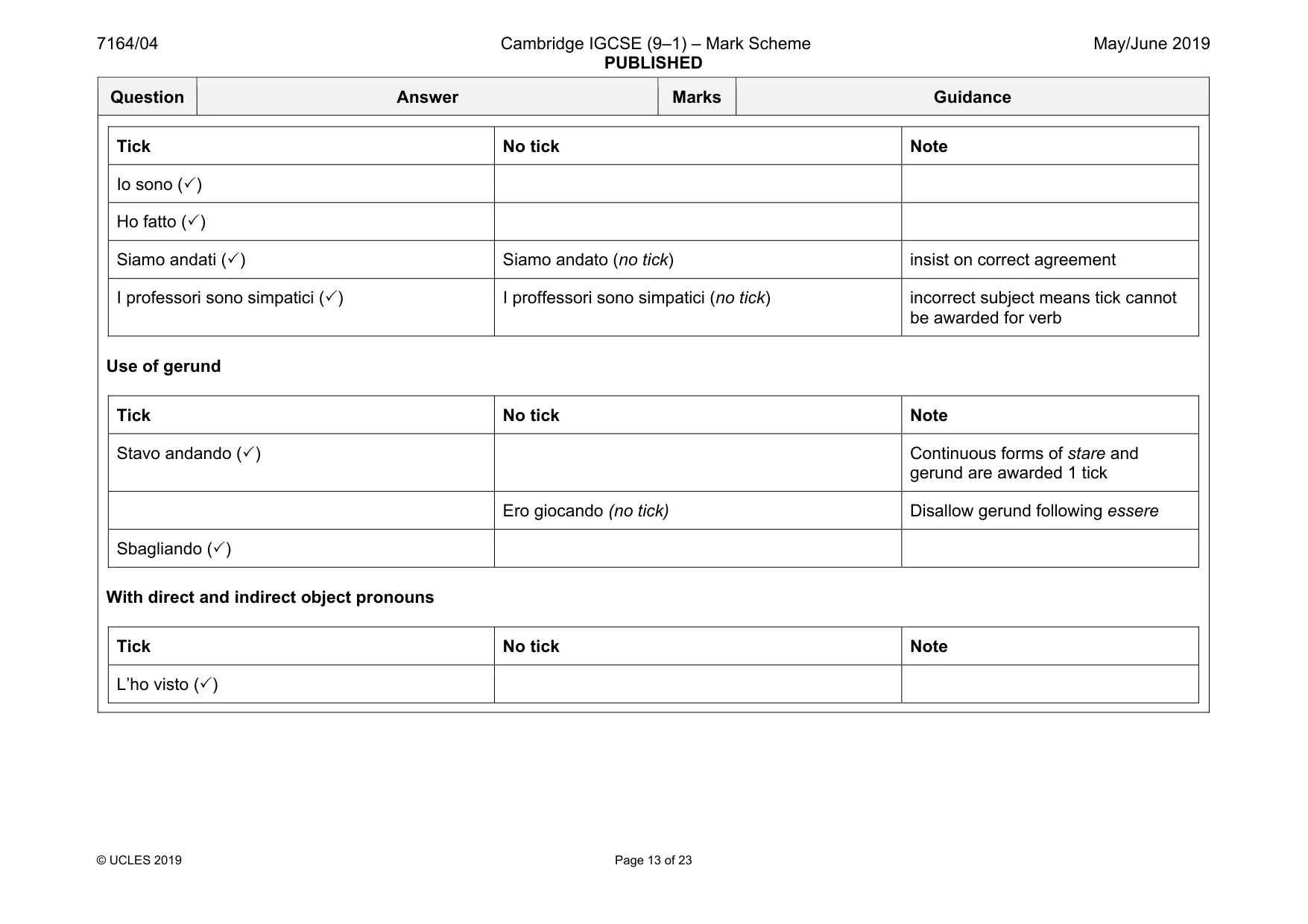
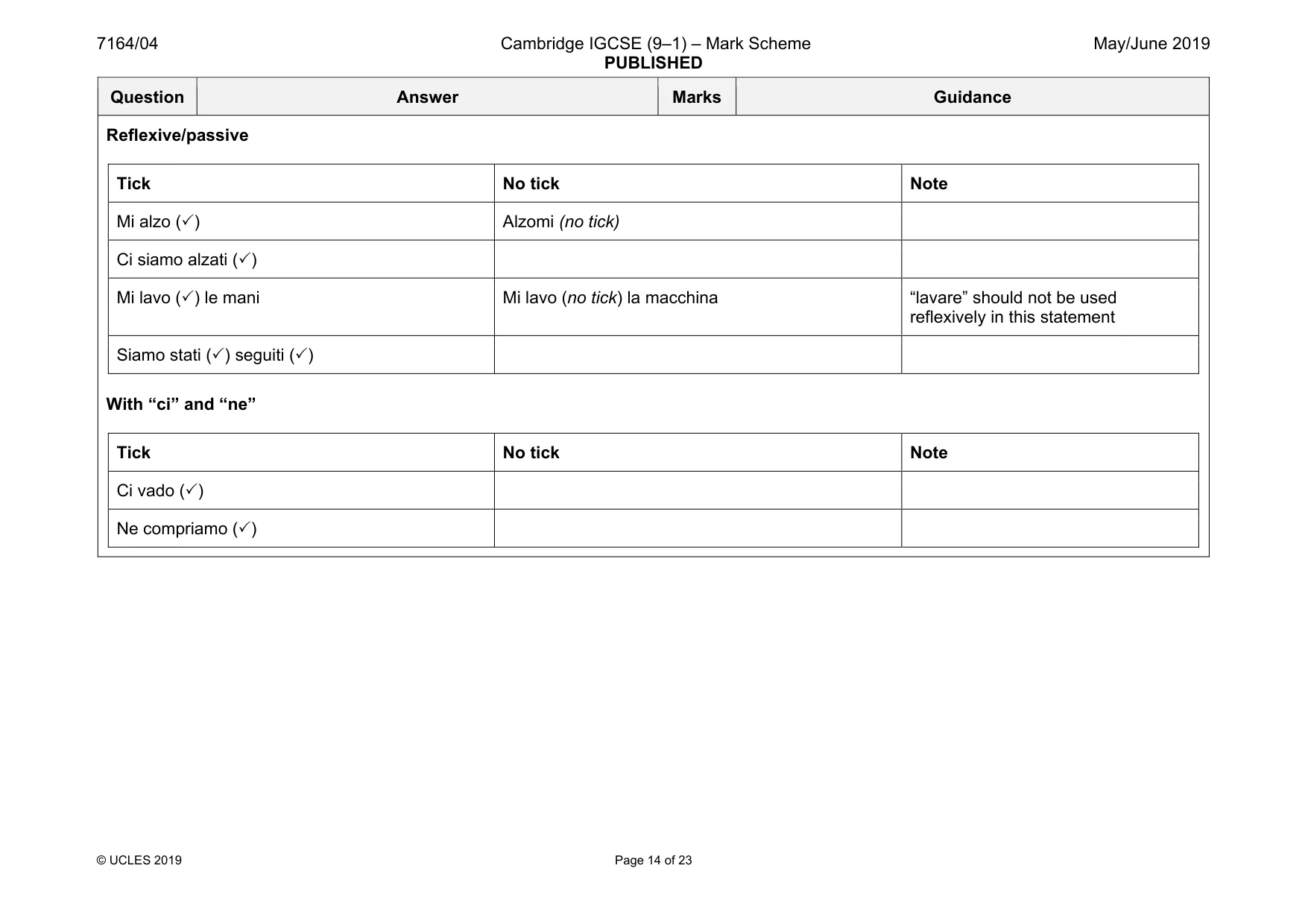
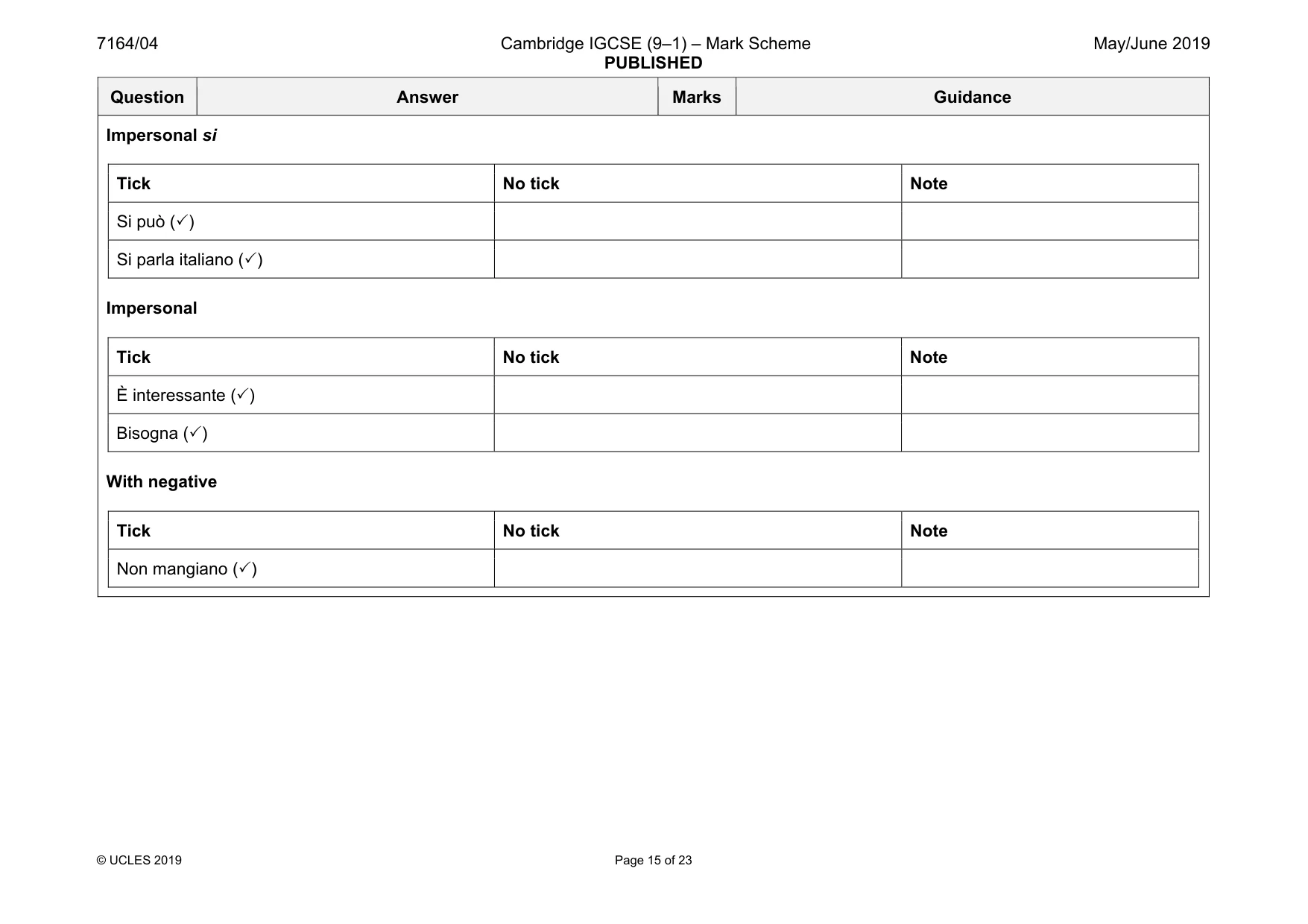
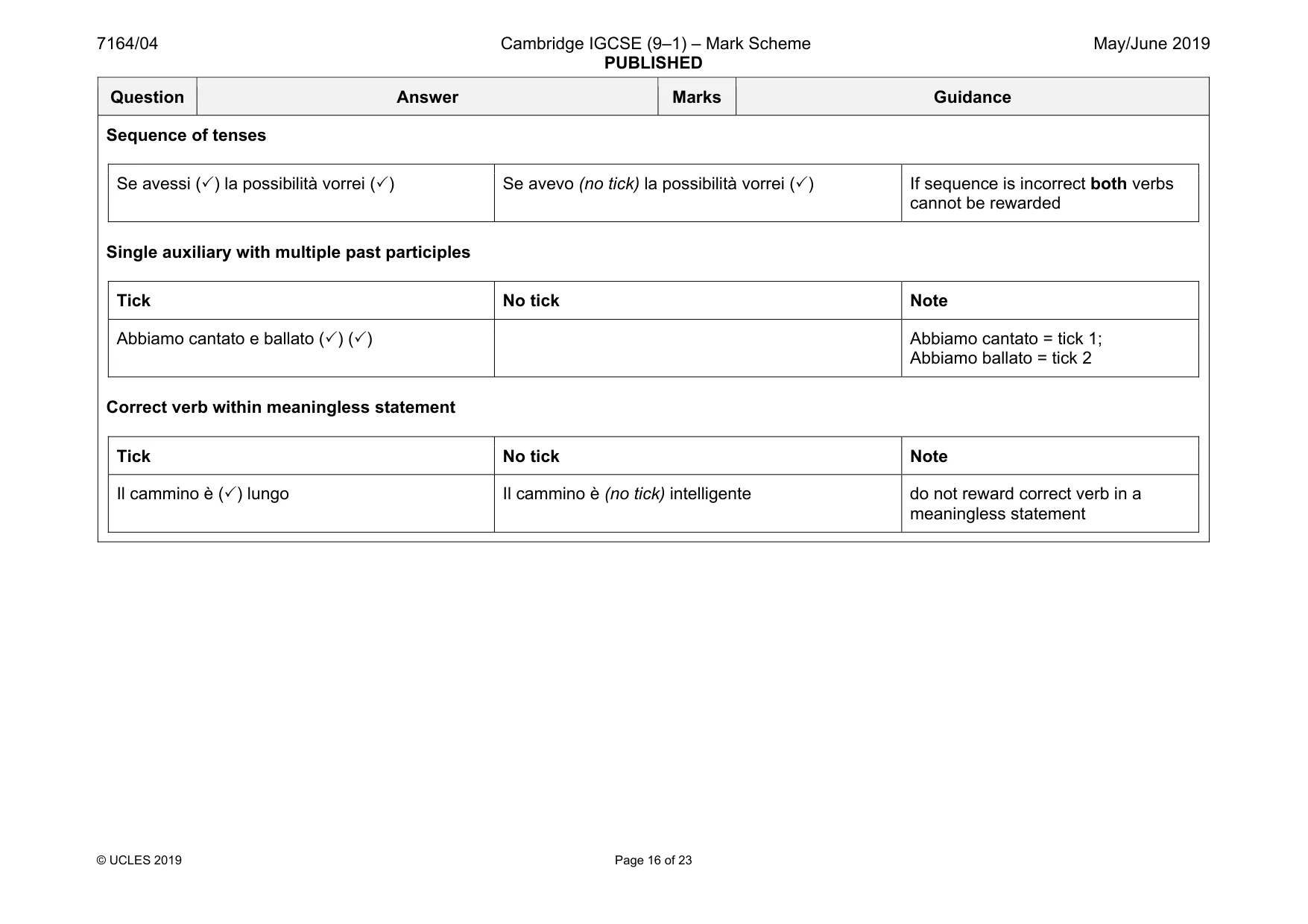
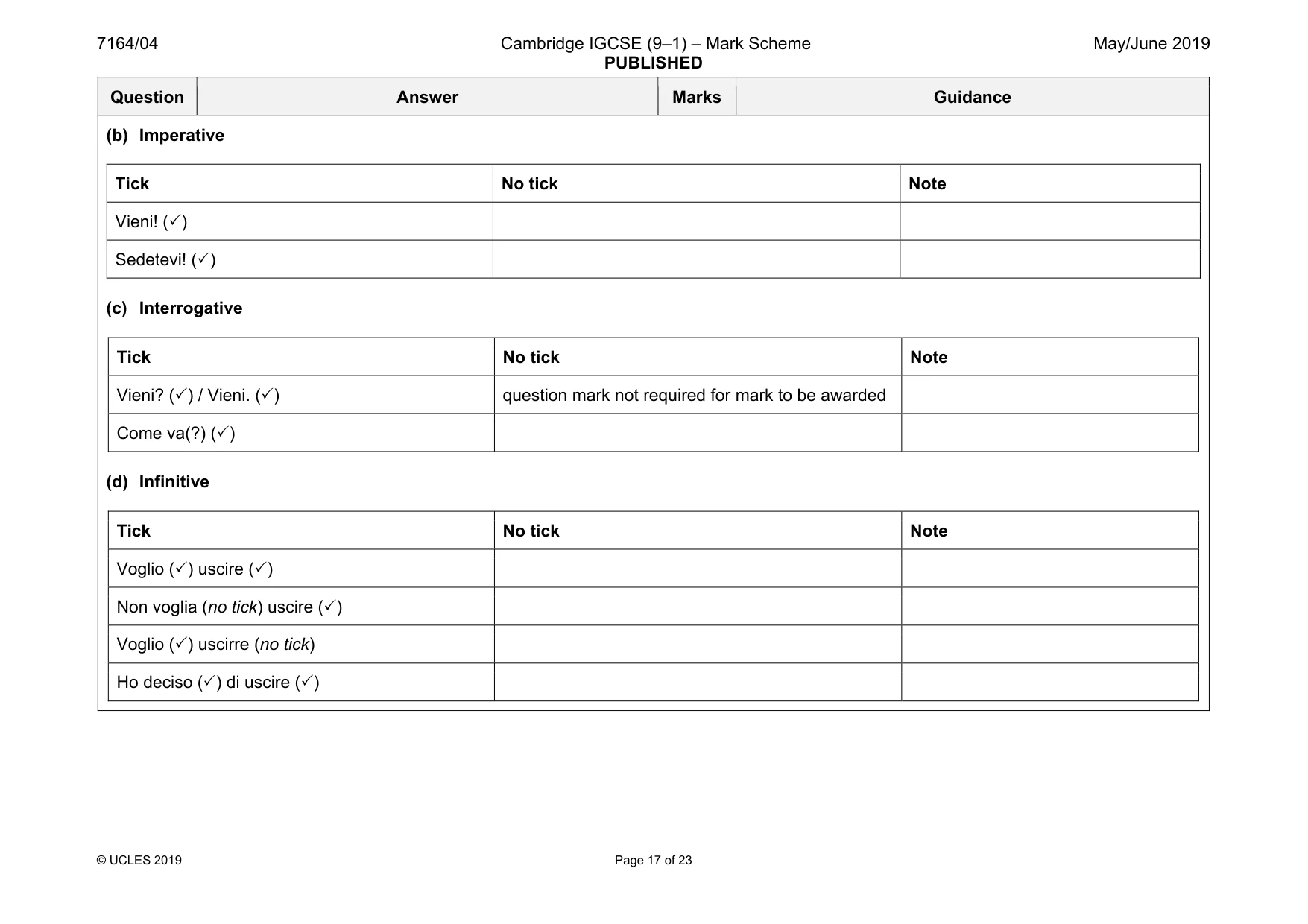
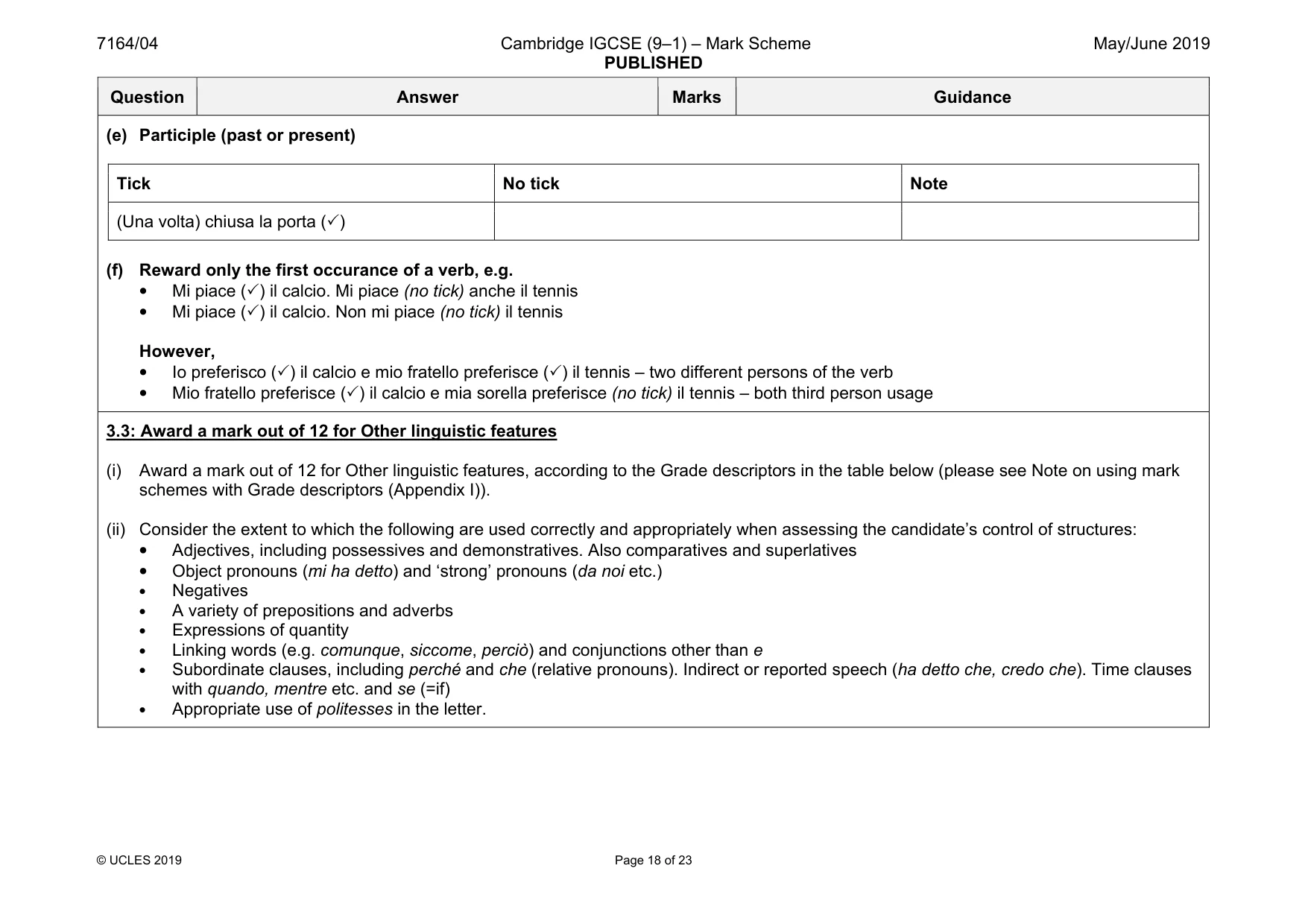
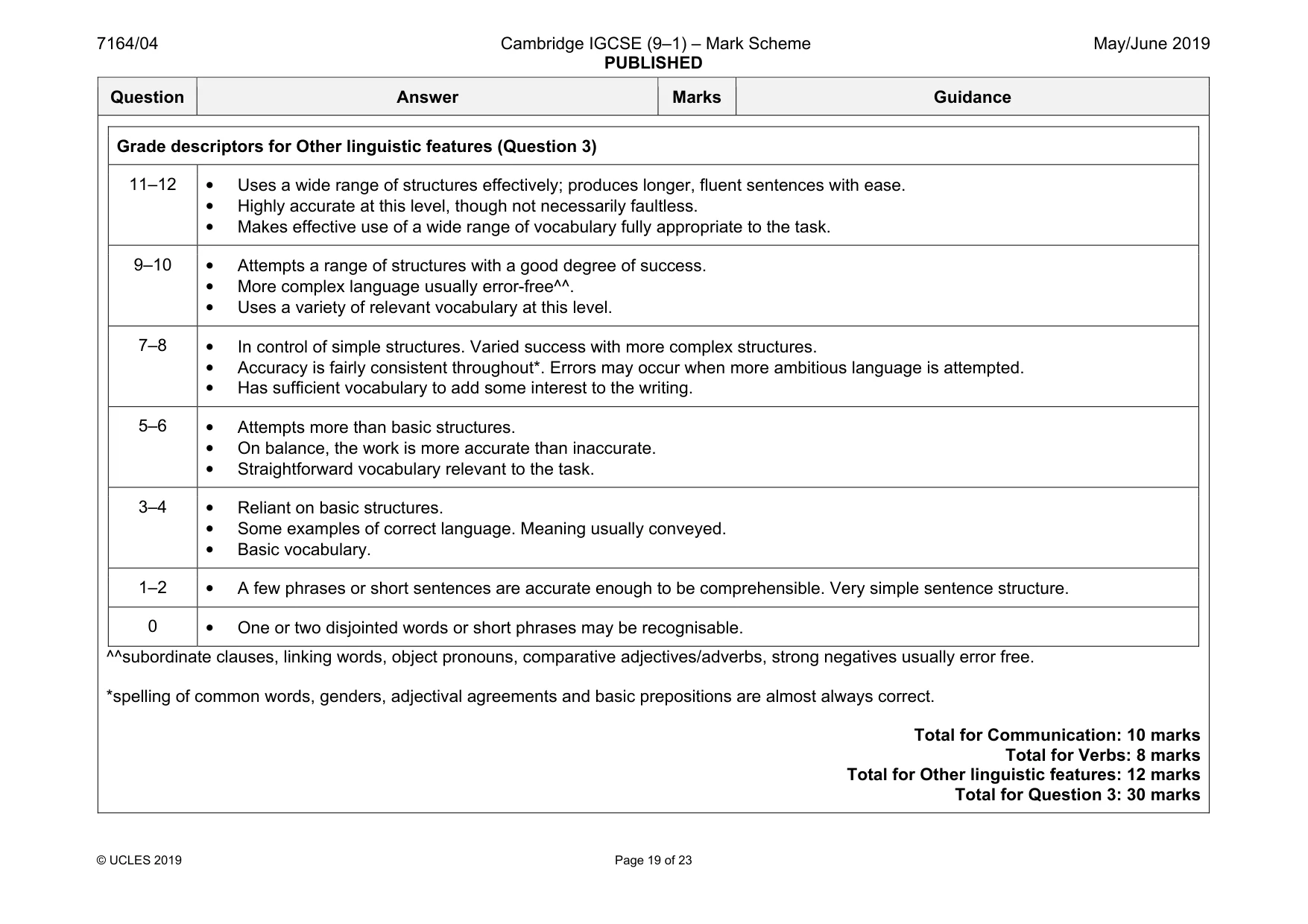
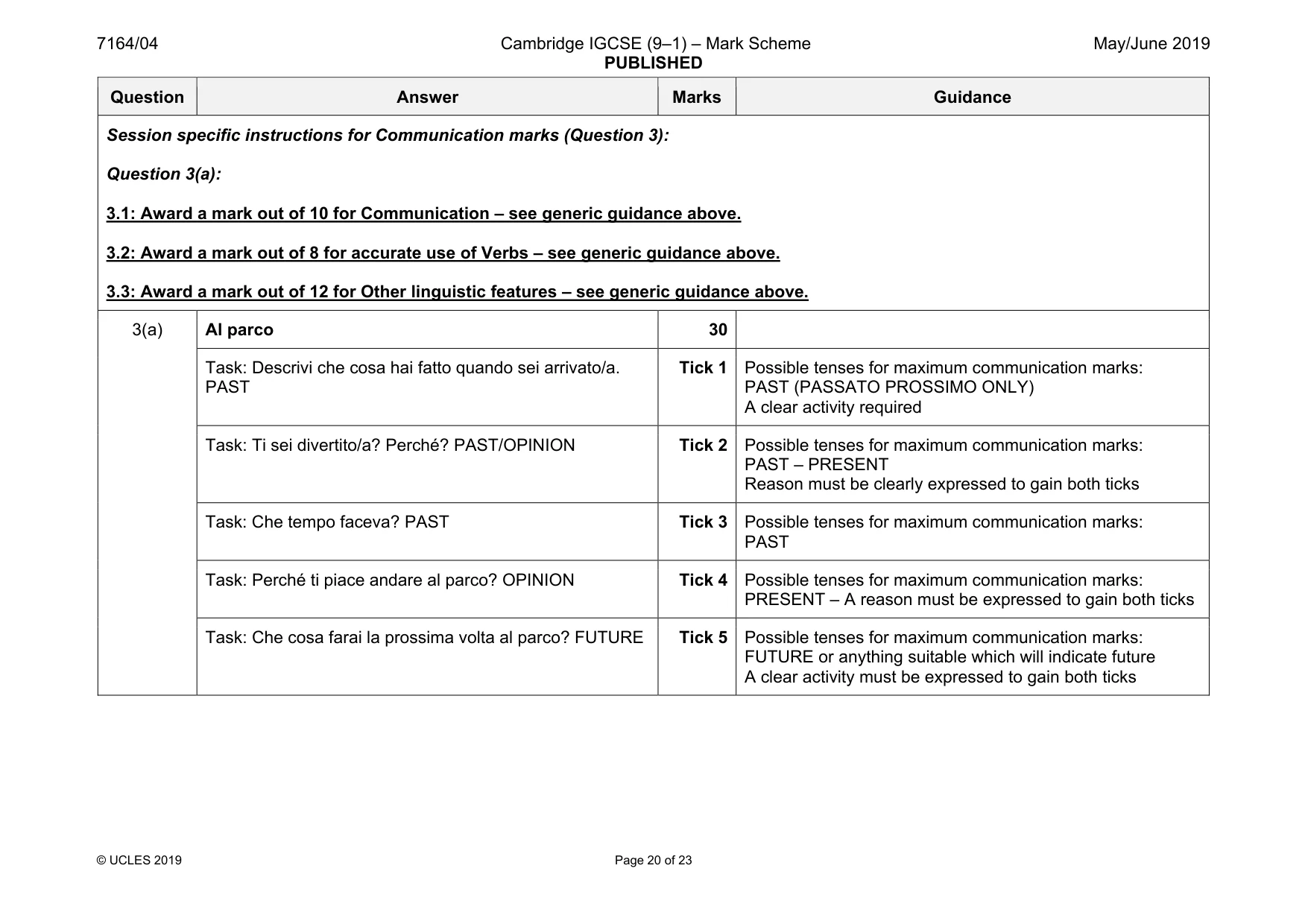
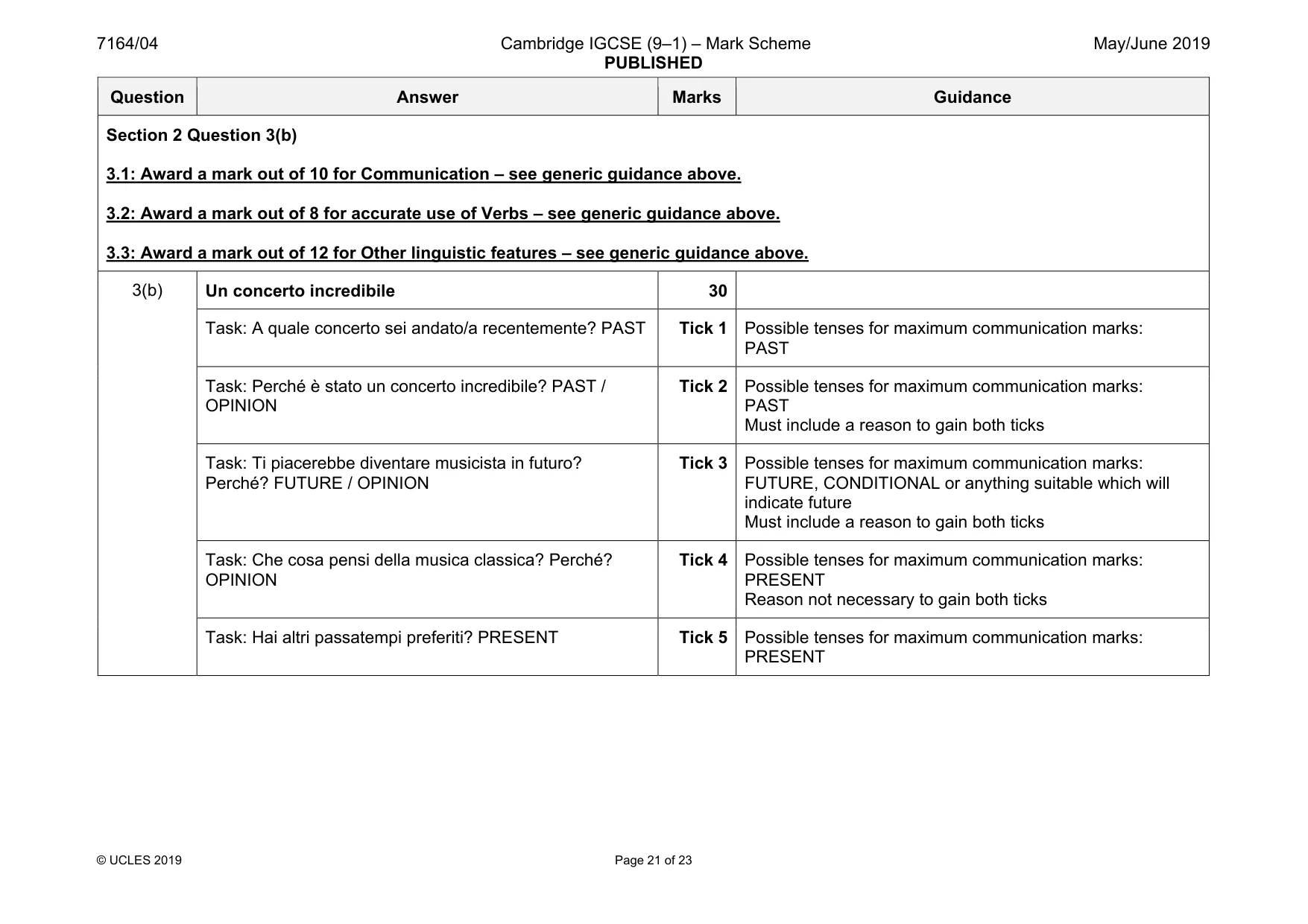
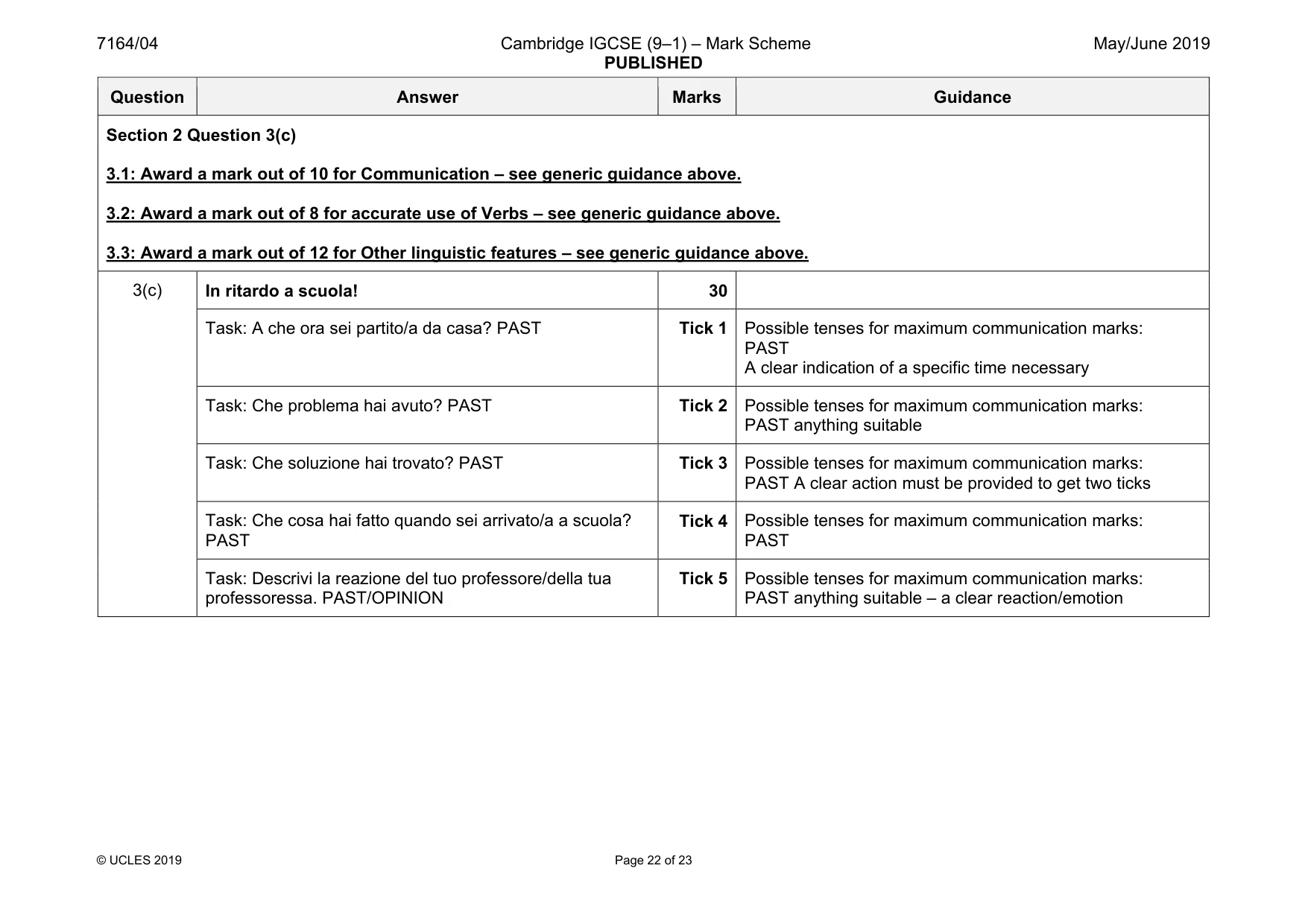
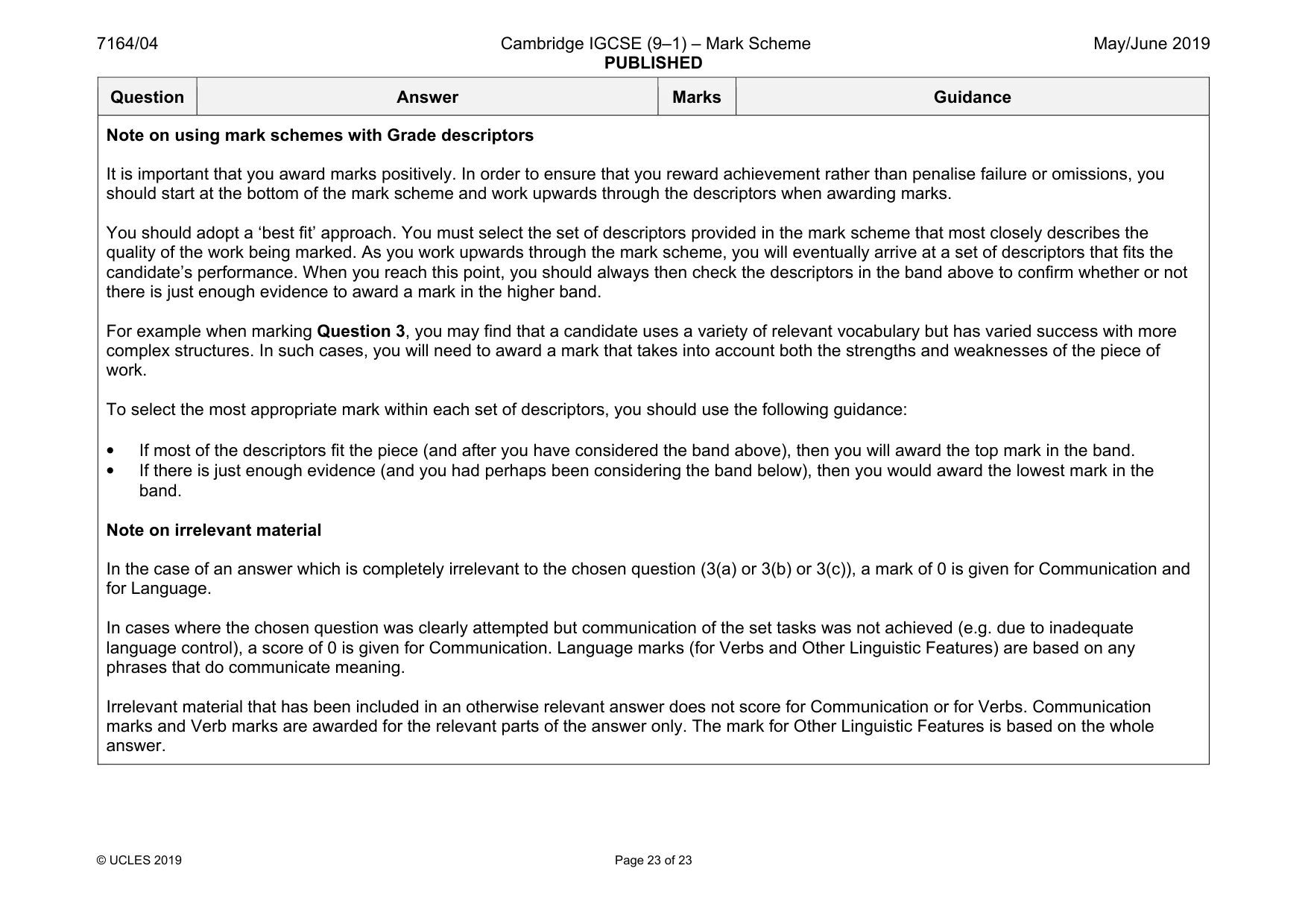
Mark scheme: 1 Binario (platform) is the example Treno Biglietto Biglietteria Ristorante Edicola Zaino, borsa, sacca Passaporto Poster Scale Refuse: scali Accept only one family member if candidate writes more than one Accept misspelling of -gl into -l but refuse -gl into -lg (e.g. biglietto – accept bilietto; refuse bilgietto) Question Answer Marks Guidance Question 2 Candidates are required to answer the question. Read the whole answer and award marks as follows: • Communication: award a mark out of 10 according to the instructions in 2.1 • Language: award a mark out of 5 according to the instructions in 2.2 2.1: Award a mark out of 10 for Communication (i) Place the appropriate ‘numbered’ tick as close as possible to each relevant communication point in the body of the answer. (ii) Award ticks flexibly across the tasks for each piece of relevant information conveyed, up to a maximum of 10. HOWEVER, each of the tasks must be covered to get the 10 communication marks: • If 1 of the tasks is missing, the maximum communication mark is 9. • If 2 of the tasks are missing, the maximum communication mark is 8 (and so on). (iii) Add up the ticks to give a mark out of 10 for Communication. (iv) For COMMUNICATION • Look for a verb (finite or infinitive) before awarding a mark. Lists without a verb will not score. • For language other than verbs, use ‘rules’ in Question 1: look alike, sound alike, etc. • Misplaced adjectives, negatives and adverbs will not usually compromise communication. (v) LISTS = a maximum of 3 marks for communication: lists of 1–3 items = 1 mark; lists of 4 items = 2 marks; lists of 5–6 items = 3 marks (vi) Only reward each piece of information once. (vii) Do not penalise factual errors. (viii) What the candidate writes may not follow the order of the tasks on the question paper – this is fine. Question Answer Marks Guidance 2 Session specific instructions for Communication marks (Question 2) I lavori domestici 15 Task: Quando aiuti in casa? Tick 1 REWARD: A clear indication of time but di solito, normalmente or spesso tc insufficient Task: Quali lavori domestici non ti piace fare? Tick 2 REWARD: Must include a negative Task: Preferisci aiutare i genitori in casa o in giardino? Perché? Tick 3 REWARD: Must include a reason Task: Che lavori domestici farai il prossimo fine settimana? Tick 4 REWARD: A clear indication of future (future, conditional or anything suitable which will indicate future) Question Answer Marks Guidance 2.2: Award a mark out of 5 for Language Award a mark out of 5 for Language*, according to the Grade descriptors in the table below (see Note on using mark schemes with Grade descriptors (last page of mark scheme)). Grade descriptors for Language (Question 2) 5 Straightforward vocabulary and structure. The style of writing is basic, but reasonably coherent. Use of a limited range of verbs, generally successful. More accuracy than inaccuracy. 4 Basic vocabulary and structure. Some awareness of verb usage, but inconsistent. The writing is sufficiently accurate for meaning to be conveyed. 3 Very basic vocabulary and structure. Little awareness of verb usage (e.g. infinitives regularly used instead of finite verbs). Despite regular errors, the writing often conveys some meaning. 2 A few phrases or short sentences are accurate enough to be comprehensible. Very simple sentence structure. 1 Disjointed words or short phrases, one or two of them accurate enough to be comprehensible. 0 One or two disjointed words or short phrases may be recognisable. *Consider the whole answer when awarding mark for language Total for Communication: 10 marks Total for Language: 5 marks Total for Question 2: 15 marks Question Answer Marks Guidance Question 3 Candidates answer 1 question from a choice of 3. Read the whole answer and award marks as follows: • Communication: award a mark out of 10, according to the instructions in 3.1. • Language: award a mark out of 8 for Verbs, according to the instructions in 3.2. award a mark out of 12 for Other linguistic features, according to the instructions in 3.3. For question-specific guidance, see later in this mark scheme. 3.1 – award a mark out of 10 for Communication (i) There are 5 relevant communication points per question, each worth a maximum of 2 marks. (ii) For each relevant communication point, use the appropriate numbered tick and place up to 2 of these ticks as close as possible to each relevant communication point (in the body of the answer). 2 ticks Message clearly communicated. Minor errors (adjective endings, use of prepositions etc.) are tolerated. 1 tick Communication of some meaning is achieved, but the message may be ambiguous or incomplete. 0 ticks Nothing of worth communicated. (iii) Look for a verb (finite or infinitive) before awarding a mark for communication. (iv) Add up the ticks to give a mark out of 10 for Communication. Question Answer Marks Guidance 3.2: Award a mark out of 8 for accurate use of Verbs When awarding ticks for Verbs, please refer back to the question in order to establish which tense is appropriate for the response. For question- specific guidance, see later in this mark scheme. (i) Place a tick above the first occurrence of each correct verb, up to a maximum of 18 ticks (details of how to award ticks are provided below). (ii) Place the tick so that it does not obscure the accent. (iii) Convert the total number of ticks to a mark out of 8 using the Conversion table below. Conversion table for accurate use of Verbs (Question 3) Number of ticks Mark 18+ 8 16,17 7 14,15 6 12,13 5 10,11 4 8,9 3 6,7 2 4,5 1 0,1,2,3 0 Question Answer Marks Guidance How to award ticks for accurate use of Verbs (Question 3): (a) Subject (noun or pronoun) + any finite verb • both subject and verb must be correct for the verb to score a tick • verb must be in the appropriate tense to score a tick • accents on verbs must be correct in order for a tick to be awarded • do not tick verbs contained in the ‘letter etiquette’: appropriate beginnings and endings to letters are considered for reward under Other linguistic features. Question Answer Marks Guidance Tick No tick Note Io sono (3) Ho fatto (3) Siamo andati (3) Siamo andato (no tick) insist on correct agreement I professori sono simpatici (3) I proffessori sono simpatici (no tick) incorrect subject means tick cannot be awarded for verb Use of gerund Tick No tick Note Stavo andando (3) Continuous forms of stare and gerund are awarded 1 tick Ero giocando (no tick) Disallow gerund following essere Sbagliando (3) With direct and indirect object pronouns Tick No tick Note L’ho visto (3) Question Answer Marks Guidance Reflexive/passive Tick No tick Note Mi alzo (3) Alzomi (no tick) Ci siamo alzati (3) Mi lavo (3) le mani Mi lavo (no tick) la macchina “lavare” should not be used reflexively in this statement Siamo stati (3) seguiti (3) With “ci” and “ne” Tick No tick Note Ci vado (3) Ne compriamo (3) Question Answer Marks Guidance Impersonal si Tick No tick Note Si può (3) Si parla italiano (3) Impersonal Tick No tick Note È interessante (3) Bisogna (3) With negative Tick No tick Note Non mangiano (3) Question Answer Marks Guidance Sequence of tenses Se avessi (3) la possibilità vorrei (3) Se avevo (no tick) la possibilità vorrei (3) If sequence is incorrect both verbs cannot be rewarded Single auxiliary with multiple past participles Tick No tick Note Abbiamo cantato e ballato (3) (3) Abbiamo cantato = tick 1; Abbiamo ballato = tick 2 Correct verb within meaningless statement Tick No tick Note Il cammino è (3) lungo Il cammino è (no tick) intelligente do not reward correct verb in a meaningless statement Question Answer Marks Guidance (b) Imperative Tick No tick Note Vieni! (3) Sedetevi! (3) (c) Interrogative Tick No tick Note Vieni? (3) / Vieni. (3) question mark not required for mark to be awarded Come va(?) (3) (d) Infinitive Tick No tick Note Voglio (3) uscire (3) Non voglia (no tick) uscire (3) Voglio (3) uscirre (no tick) Ho deciso (3) di uscire (3) Question Answer Marks Guidance (e) Participle (past or present) Tick No tick Note (Una volta) chiusa la porta (3) (f) Reward only the first occurance of a verb, e.g. • Mi piace (3) il calcio. Mi piace (no tick) anche il tennis • Mi piace (3) il calcio. Non mi piace (no tick) il tennis However, • Io preferisco (3) il calcio e mio fratello preferisce (3) il tennis – two different persons of the verb • Mio fratello preferisce (3) il calcio e mia sorella preferisce (no tick) il tennis – both third person usage 3.3: Award a mark out of 12 for Other linguistic features (i) Award a mark out of 12 for Other linguistic features, according to the Grade descriptors in the table below (please see Note on using mark schemes with Grade descriptors (Appendix I)). (ii) Consider the extent to which the following are used correctly and appropriately when assessing the candidate’s control of structures: • Adjectives, including possessives and demonstratives. Also comparatives and superlatives • Object pronouns (mi ha detto) and ‘strong’ pronouns (da noi etc.) • Negatives • A variety of prepositions and adverbs • Expressions of quantity • Linking words (e.g. comunque, siccome, perciò) and conjunctions other than e • Subordinate clauses, including perché and che (relative pronouns). Indirect or reported speech (ha detto che, credo che). Time clauses with quando, mentre etc. and se (=if) • Appropriate use of politesses in the letter. Question Answer Marks Guidance Grade descriptors for Other linguistic features (Question 3) 11–12 • Uses a wide range of structures effectively; produces longer, fluent sentences with ease. • Highly accurate at this level, though not necessarily faultless. • Makes effective use of a wide range of vocabulary fully appropriate to the task. 9–10 • Attempts a range of structures with a good degree of success. • More complex language usually error-free^^. • Uses a variety of relevant vocabulary at this level. 7–8 • In control of simple structures. Varied success with more complex structures. • Accuracy is fairly consistent throughout*. Errors may occur when more ambitious language is attempted. • Has sufficient vocabulary to add some interest to the writing. 5–6 • Attempts more than basic structures. • On balance, the work is more accurate than inaccurate. • Straightforward vocabulary relevant to the task. 3–4 • Reliant on basic structures. • Some examples of correct language. Meaning usually conveyed. • Basic vocabulary. 1–2 • A few phrases or short sentences are accurate enough to be comprehensible. Very simple sentence structure. 0 • One or two disjointed words or short phrases may be recognisable. ^^subordinate clauses, linking words, object pronouns, comparative adjectives/adverbs, strong negatives usually error free. *spelling of common words, genders, adjectival agreements and basic prepositions are almost always correct. Total for Communication: 10 marks Total for Verbs: 8 marks Total for Other linguistic features: 12 marks Total for Question 3: 30 marks
What you needed in this session
Cambridge’s own grade thresholds for 2019 May/June, Paper 4 · Variant 1. A higher threshold means an easier paper — the bar moves with how the cohort did.