Cambridge IGCSE Biology (BES) 0438 — 2018 May/June Paper 4 · Variant 3
0438/43/M/J/18 · 80 marks · ≈90 min
The question paper and its mark scheme, free to read here and free to download. This is Cambridge’s own paper, exactly as it was sat.
Question paper20 pages



Mark scheme12 pages
Answers below. Sit the paper first if you are practising.
Paper as text
Question paper, page 1
This document consists of 17 printed pages and 3 blank pages. DC (NF/SW) 164671 © UCLES 2018 [Turn over Cambridge International Examinations Cambridge International General Certificate of Secondary Education * 6 3 9 6 4 9 5 5 9 2 * BIOLOGY (US) 0438/43 Paper 4 Theory (Extended) May/June 2018 1 hour 15 minutes Candidates answer on the Question Paper. No Additional Materials are required. READ THESE INSTRUCTIONS FIRST Write your Center number, candidate number and name on all the work you hand in. Write in dark blue or black pen. You may use an HB pencil for any diagrams or graphs. Do not use staples, paper clips, glue or correction fluid. DO NOT WRITE IN ANY BARCODES. Answer all questions. Electronic calculators may be used. You may lose marks if you do not show your working or if you do not use appropriate units. At the end of the examination, fasten all your work securely together. The number of marks is given in brackets [ ] at the end of each question or part question.
Question paper, page 2
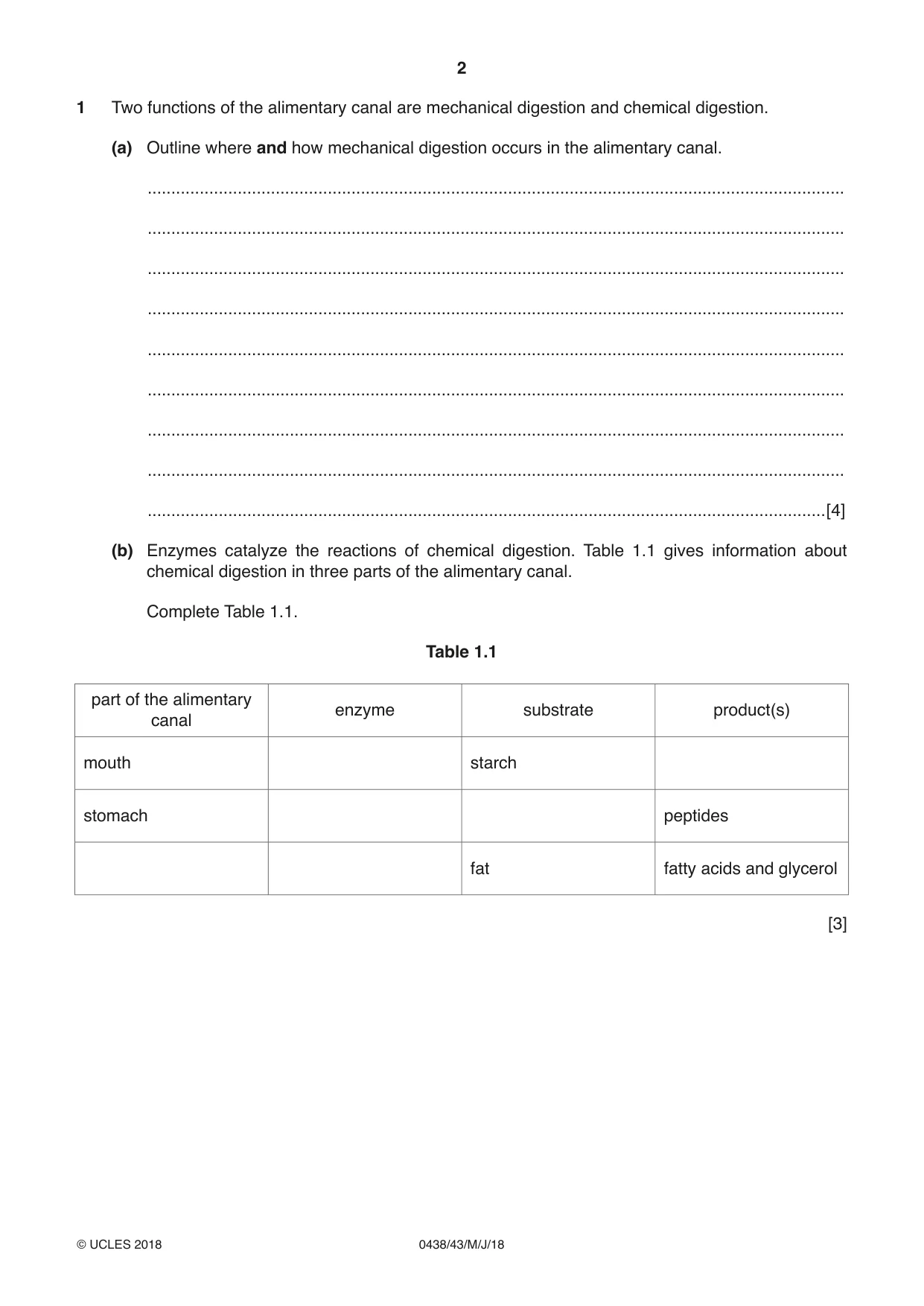
2 0438/43/M/J/18 © UCLES 2018 1 Two functions of the alimentary canal are mechanical digestion and chemical digestion. (a) Outline where and how mechanical digestion occurs in the alimentary canal. … … … … … … … … …[4] (b) Enzymes catalyze the reactions of chemical digestion. Table 1.1 gives information about chemical digestion in three parts of the alimentary canal. Complete Table 1.1. Table 1.1 part of the alimentary canal enzyme substrate product(s) mouth starch stomach peptides fat fatty acids and glycerol [3]
Question paper, page 3
3 0438/43/M/J/18 © UCLES 2018 [Turn over (c) Substances that are absorbed from the alimentary canal may enter cells and become part of the cells. (i) State the storage carbohydrate made from glucose in liver cells. …[1] (ii) State the type of protein used in the immune system that is produced from amino acids by lymphocytes. …[1] (iii) Fat is produced from fatty acids and glycerol by cells in the fatty tissue beneath the skin. State one function of this layer of fat. …[1] [Total: 10]
Question paper, page 4
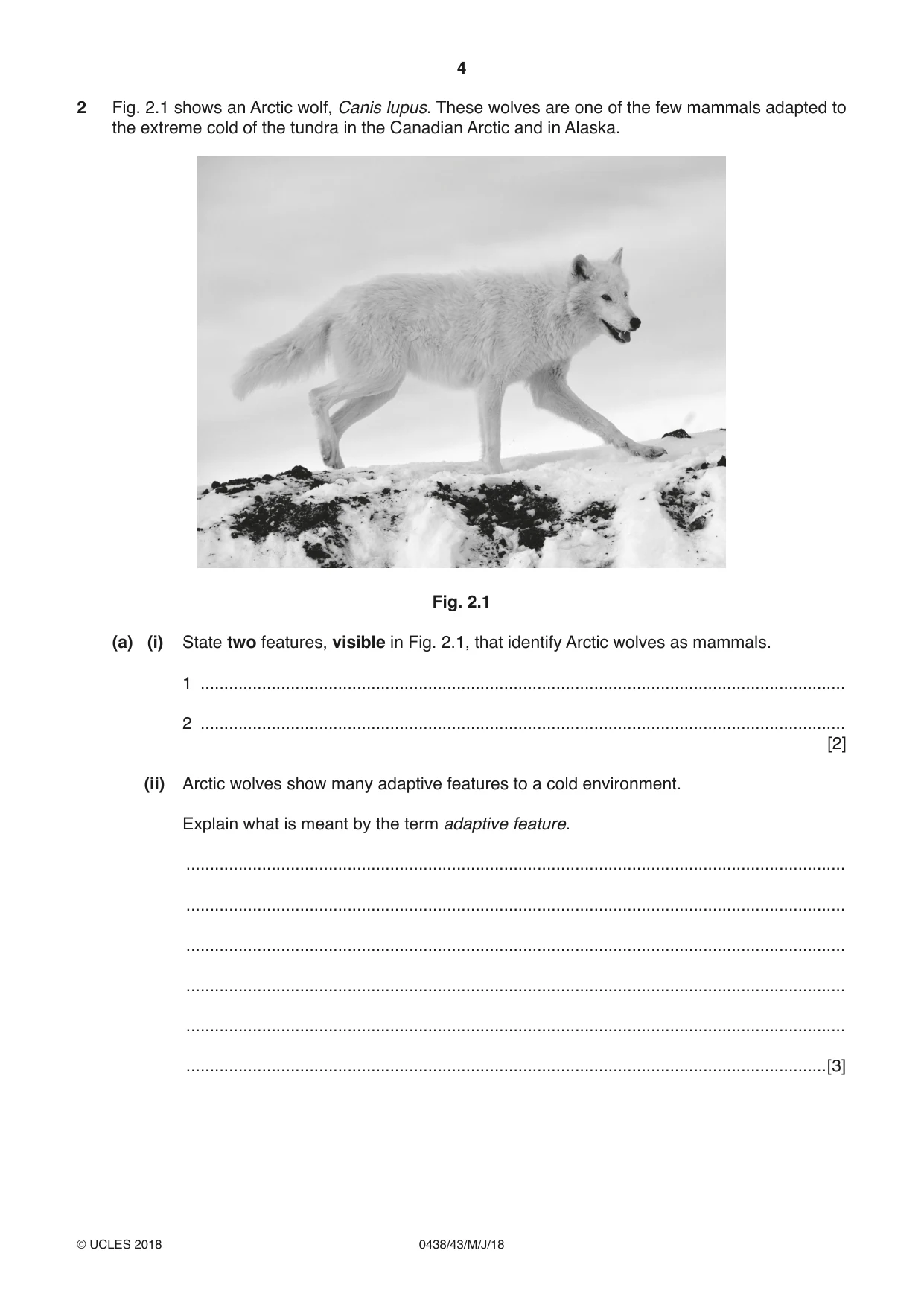
4 0438/43/M/J/18 © UCLES 2018 2 Fig. 2.1 shows an Arctic wolf, Canis lupus. These wolves are one of the few mammals adapted to the extreme cold of the tundra in the Canadian Arctic and in Alaska. Fig. 2.1 (a) (i) State two features, visible in Fig. 2.1, that identify Arctic wolves as mammals. 1 … 2 … [2] (ii) Arctic wolves show many adaptive features to a cold environment. Explain what is meant by the term adaptive feature. … … … … … …[3]
Question paper, page 5
5 0438/43/M/J/18 © UCLES 2018 [Turn over (b) The food available to animals in the Arctic tundra is limited. There is a short growing season for plants and the environmental conditions do not favor high rates of photosynthesis and growth compared with temperate and tropical ecosystems. State three conditions that limit plant growth rates. 1 … 2 … 3 … [3] (c) Arctic wolves are the top carnivores in the food web in the tundra. Explain why the number of Arctic wolves is so small in this ecosystem. … … … … … … … … … … … … … …[6] [Total: 14]
Question paper, page 6
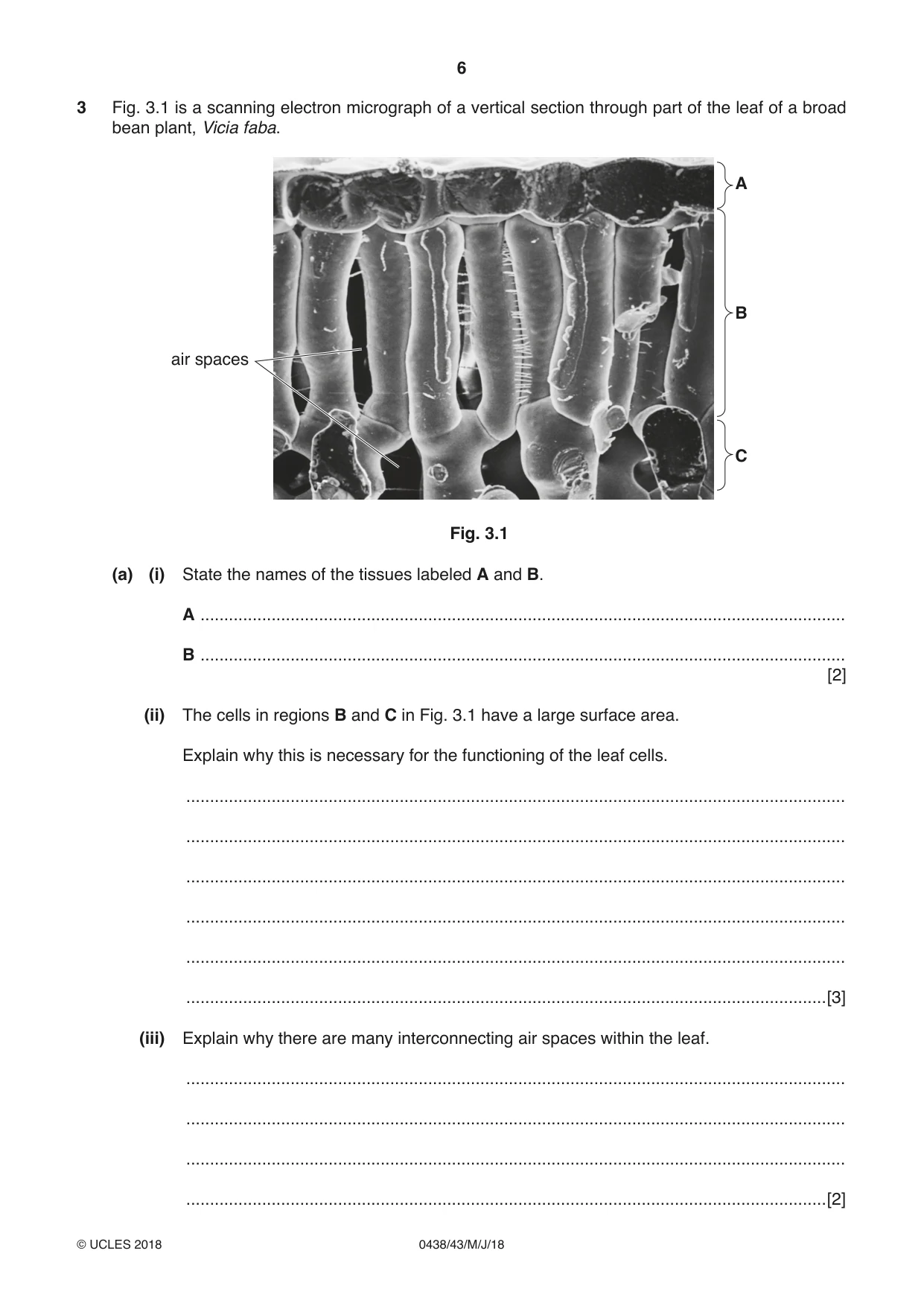
6 0438/43/M/J/18 © UCLES 2018 3 Fig. 3.1 is a scanning electron micrograph of a vertical section through part of the leaf of a broad bean plant, Vicia faba. air spaces A B C Fig. 3.1 (a) (i) State the names of the tissues labeled A and B. A … B … [2] (ii) The cells in regions B and C in Fig. 3.1 have a large surface area. Explain why this is necessary for the functioning of the leaf cells. … … … … … …[3] (iii) Explain why there are many interconnecting air spaces within the leaf. … … … …[2]
Question paper, page 7
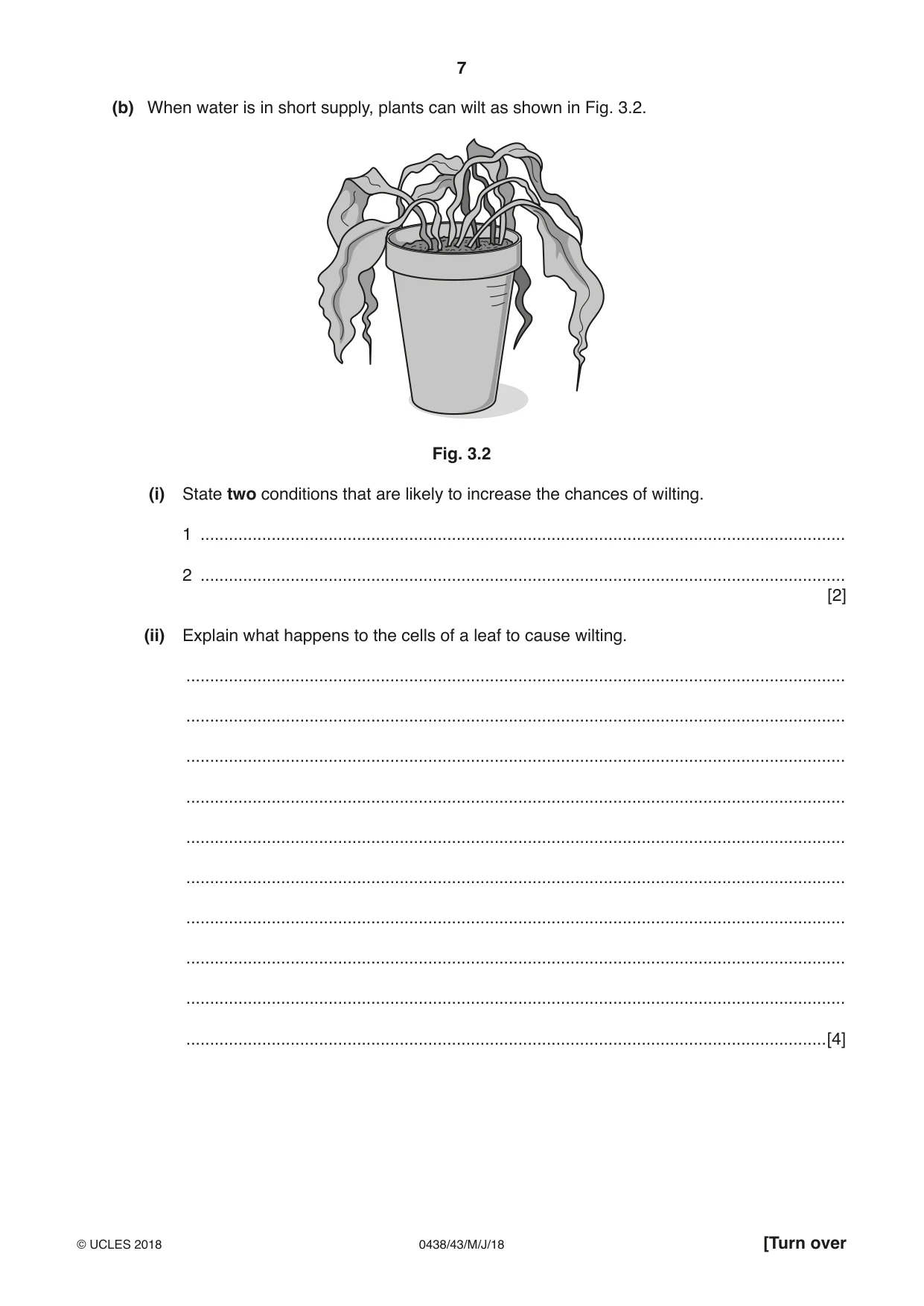
7 0438/43/M/J/18 © UCLES 2018 [Turn over (b) When water is in short supply, plants can wilt as shown in Fig. 3.2. Fig. 3.2 (i) State two conditions that are likely to increase the chances of wilting. 1 … 2 … [2] (ii) Explain what happens to the cells of a leaf to cause wilting. … … … … … … … … … …[4]
Question paper, page 8
8 0438/43/M/J/18 © UCLES 2018 (iii) Wilting may look harmful, but it is often a strategy for survival. Suggest the advantages to a plant of wilting. … … … … … …[2] [Total: 15]
Question paper, page 9
9 0438/43/M/J/18 © UCLES 2018 [Turn over BLANK PAGE
Question paper, page 10
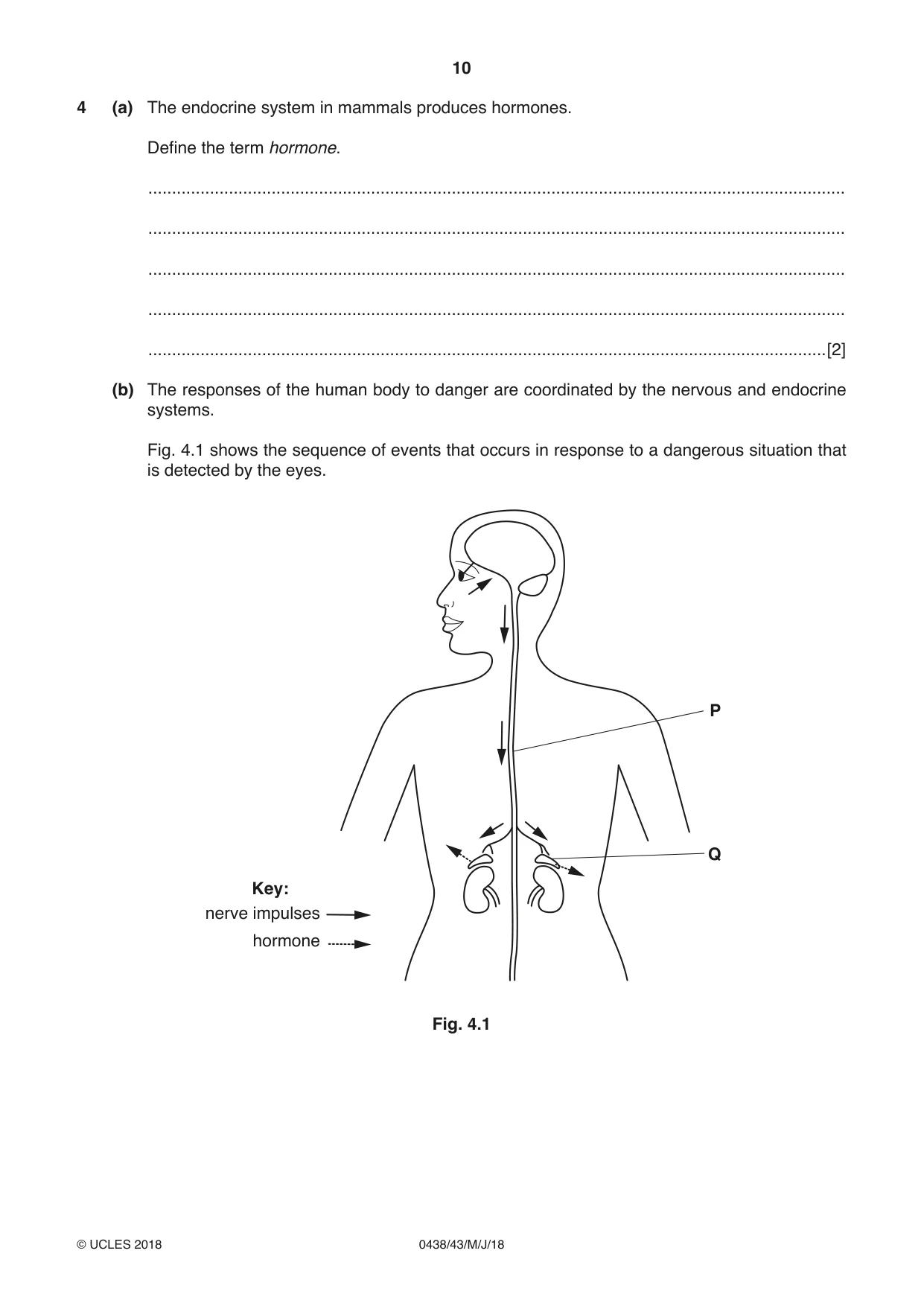
10 0438/43/M/J/18 © UCLES 2018 4 (a) The endocrine system in mammals produces hormones. Define the term hormone. … … … … …[2] (b) The responses of the human body to danger are coordinated by the nervous and endocrine systems. Fig. 4.1 shows the sequence of events that occurs in response to a dangerous situation that is detected by the eyes. nerve impulses Key: P Q hormone Fig. 4.1
Question paper, page 11
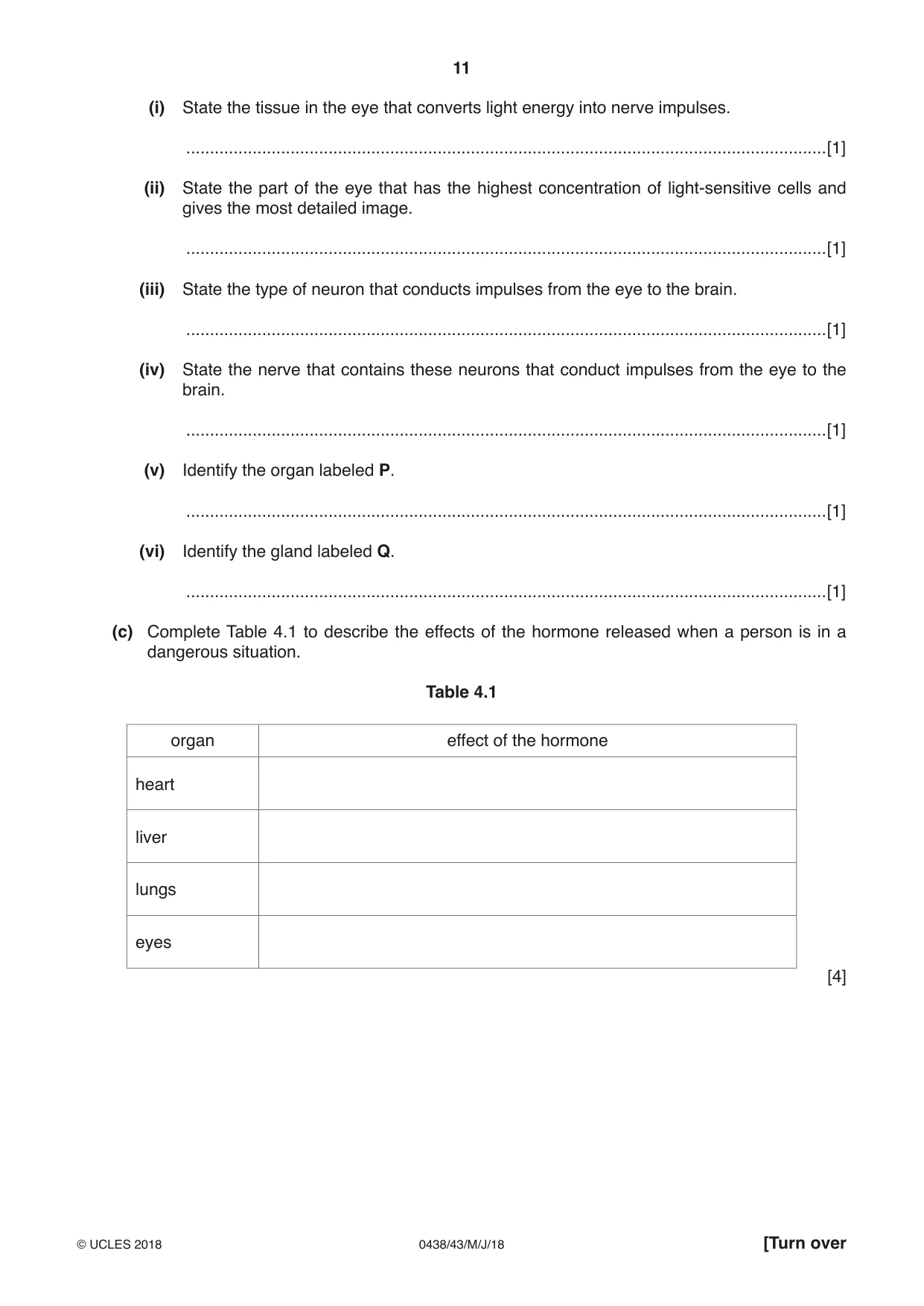
11 0438/43/M/J/18 © UCLES 2018 [Turn over (i) State the tissue in the eye that converts light energy into nerve impulses. …[1] (ii) State the part of the eye that has the highest concentration of light-sensitive cells and gives the most detailed image. …[1] (iii) State the type of neuron that conducts impulses from the eye to the brain. …[1] (iv) State the nerve that contains these neurons that conduct impulses from the eye to the brain. …[1] (v) Identify the organ labeled P. …[1] (vi) Identify the gland labeled Q. …[1] (c) Complete Table 4.1 to describe the effects of the hormone released when a person is in a dangerous situation. Table 4.1 organ effect of the hormone heart liver lungs eyes [4]
Question paper, page 12
12 0438/43/M/J/18 © UCLES 2018 (d) Explain the advantages of coordinating the response to a dangerous situation using both the nervous system and the endocrine system. … … … … … … …[4] (e) (i) Plants also make hormones. State the name of one hormone made by plants. …[1] (ii) Some plant hormones are manufactured and applied to crops to alter aspects of plant growth. Describe how the synthetic plant hormone 2,4-D is used in agriculture. … … … … …[2] [Total: 19]
Question paper, page 13
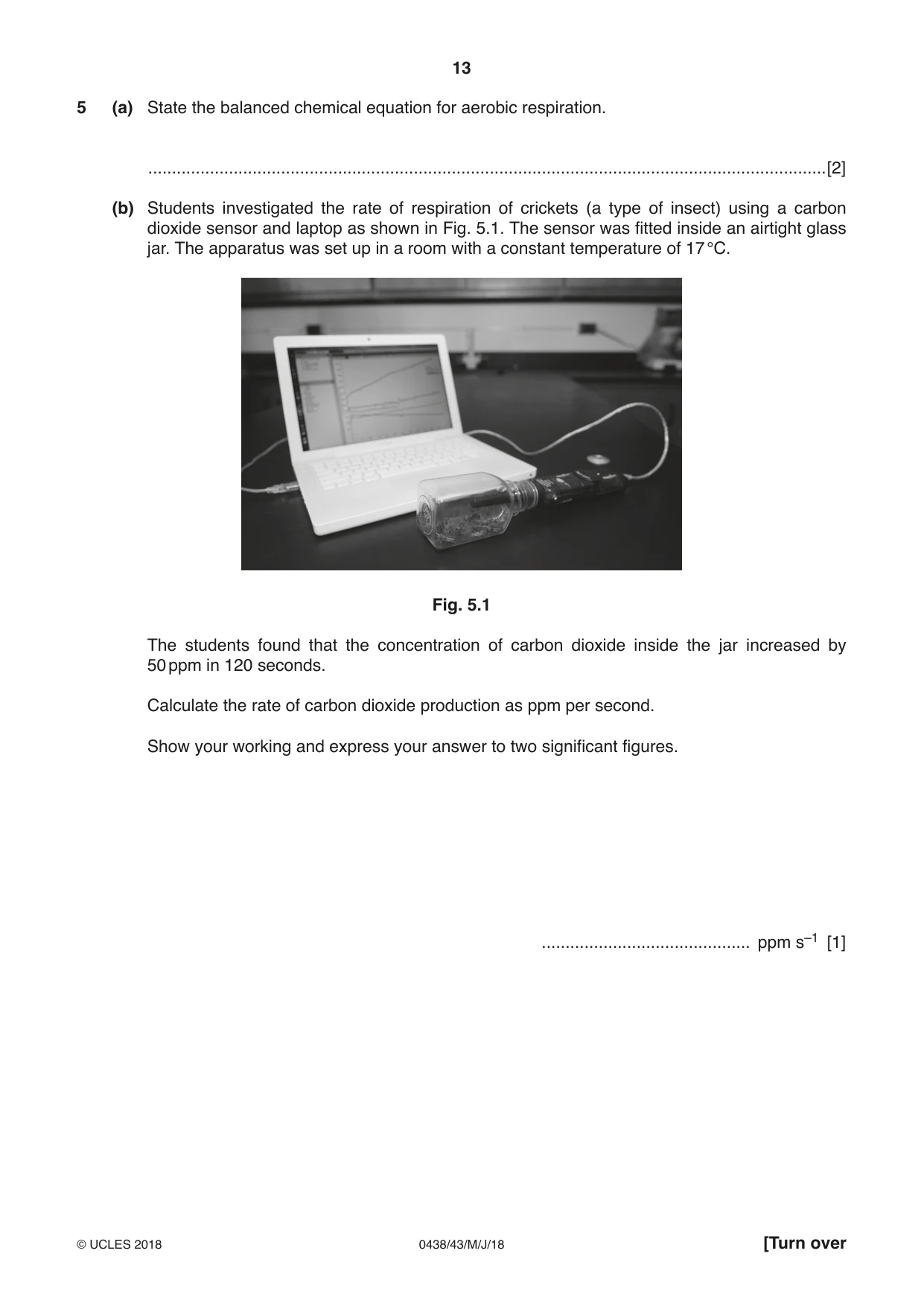
13 0438/43/M/J/18 © UCLES 2018 [Turn over 5 (a) State the balanced chemical equation for aerobic respiration. …[2] (b) Students investigated the rate of respiration of crickets (a type of insect) using a carbon dioxide sensor and laptop as shown in Fig. 5.1. The sensor was fitted inside an airtight glass jar. The apparatus was set up in a room with a constant temperature of 17 °C. Fig. 5.1 The students found that the concentration of carbon dioxide inside the jar increased by 50 ppm in 120 seconds. Calculate the rate of carbon dioxide production as ppm per second. Show your working and express your answer to two significant figures. … ppm s–1 [1]
Question paper, page 14
14 0438/43/M/J/18 © UCLES 2018 (c) After 10 minutes, the students opened the jar by removing the sensor. They left the jar open for 5 minutes but made sure that the crickets remained in the jar. They then replaced the sensor and took more readings for another 10 minutes. State and explain one reason for opening the jar after 10 minutes. … … … … …[2] (d) During the investigation the temperature inside the jar increased. The temperature outside the jar remained constant. Explain why the temperature inside the jar increased. … … … … …[2]
Question paper, page 15
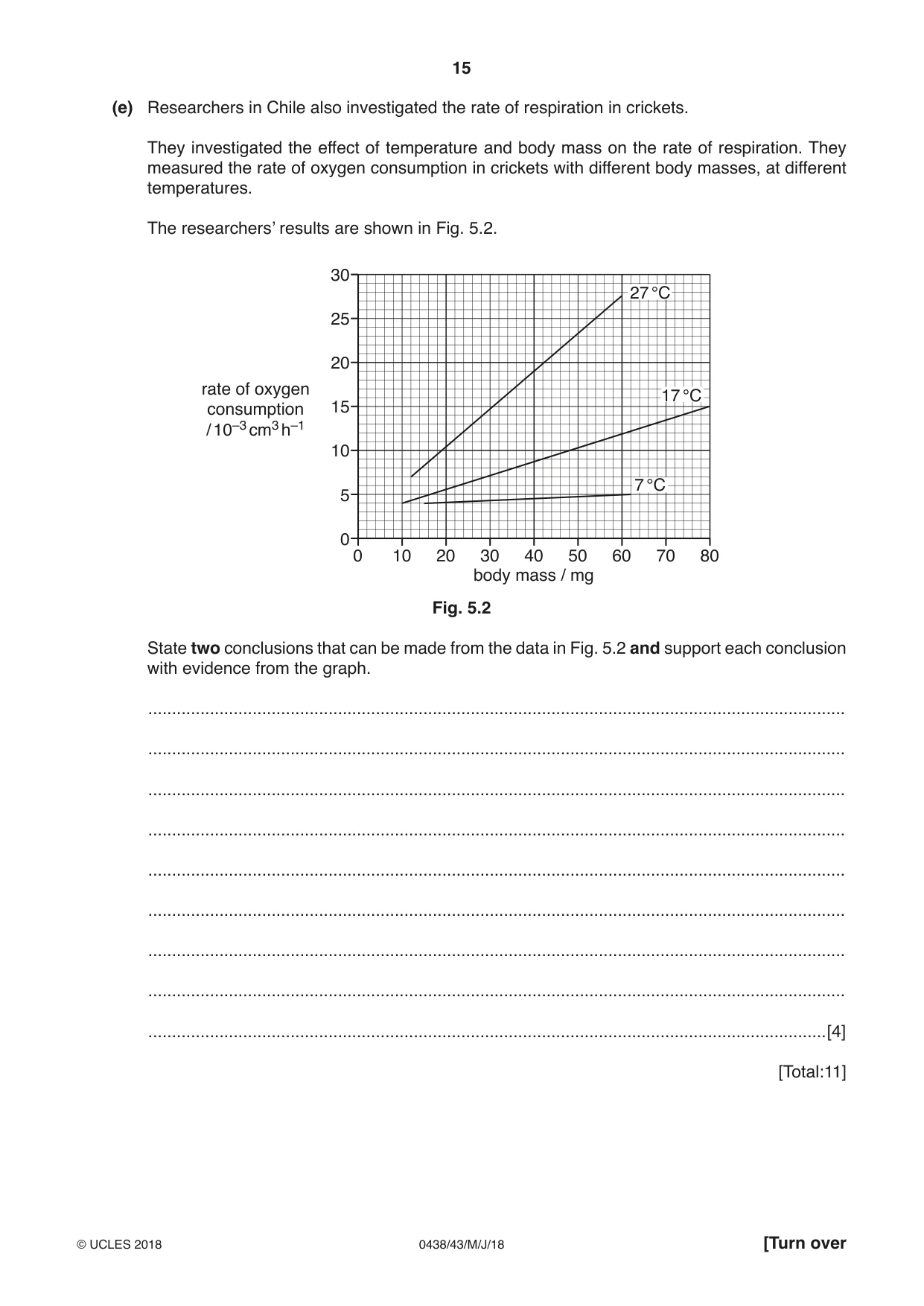
15 0438/43/M/J/18 © UCLES 2018 [Turn over (e) Researchers in Chile also investigated the rate of respiration in crickets. They investigated the effect of temperature and body mass on the rate of respiration. They measured the rate of oxygen consumption in crickets with different body masses, at different temperatures. The researchers’ results are shown in Fig. 5.2. 0 0 5 10 15 20 25 30 10 20 30 40 body mass / mg rate of oxygen consumption / 10–3 cm3 h–1 50 60 70 80 27 °C 7 °C 17 °C Fig. 5.2 State two conclusions that can be made from the data in Fig. 5.2 and support each conclusion with evidence from the graph. … … … … … … … … …[4] [Total:11]
Question paper, page 16
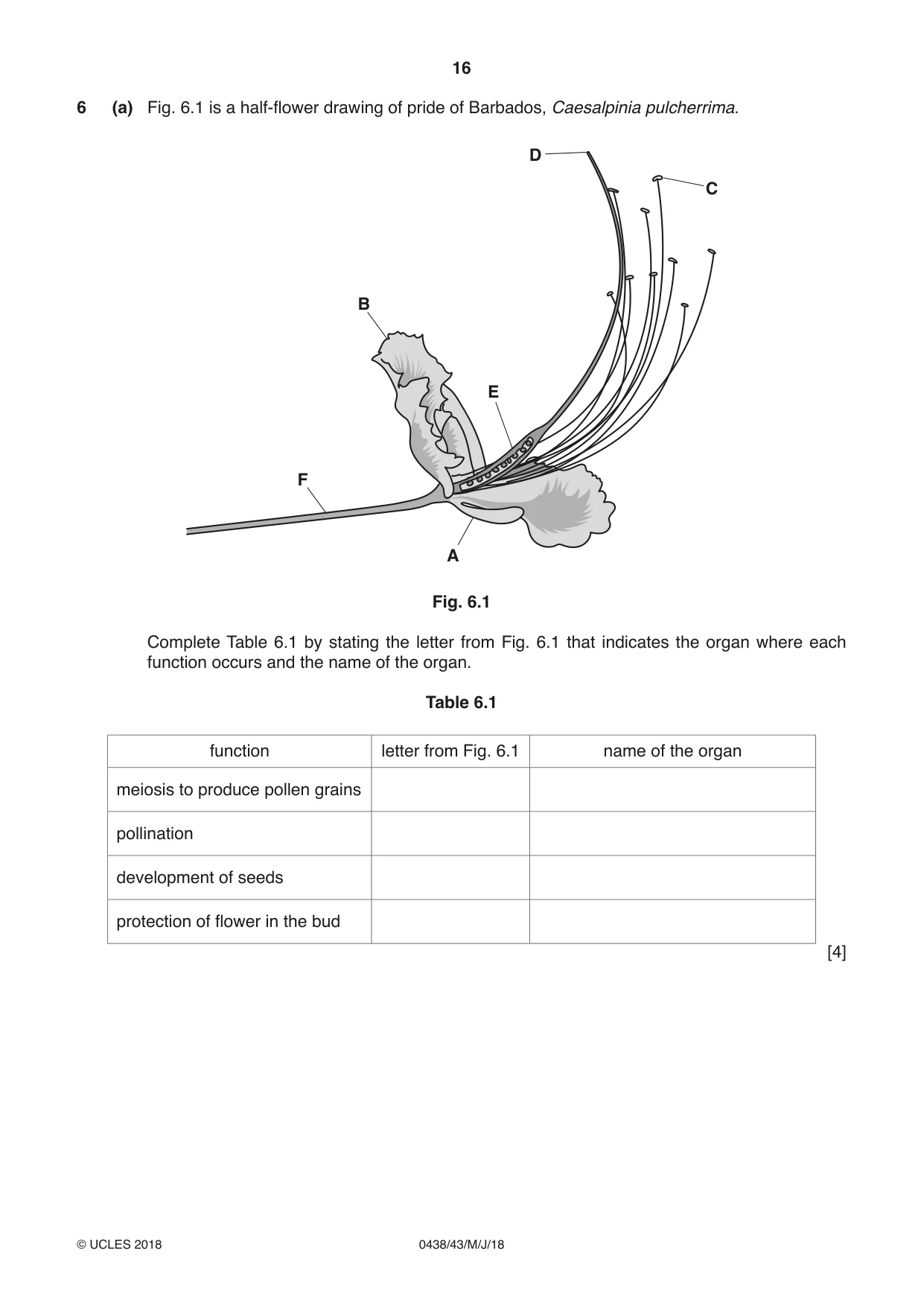
16 0438/43/M/J/18 © UCLES 2018 6 (a) Fig. 6.1 is a half-flower drawing of pride of Barbados, Caesalpinia pulcherrima. B A E D C F Fig. 6.1 Complete Table 6.1 by stating the letter from Fig. 6.1 that indicates the organ where each function occurs and the name of the organ. Table 6.1 function letter from Fig. 6.1 name of the organ meiosis to produce pollen grains pollination development of seeds protection of flower in the bud [4]
Question paper, page 17
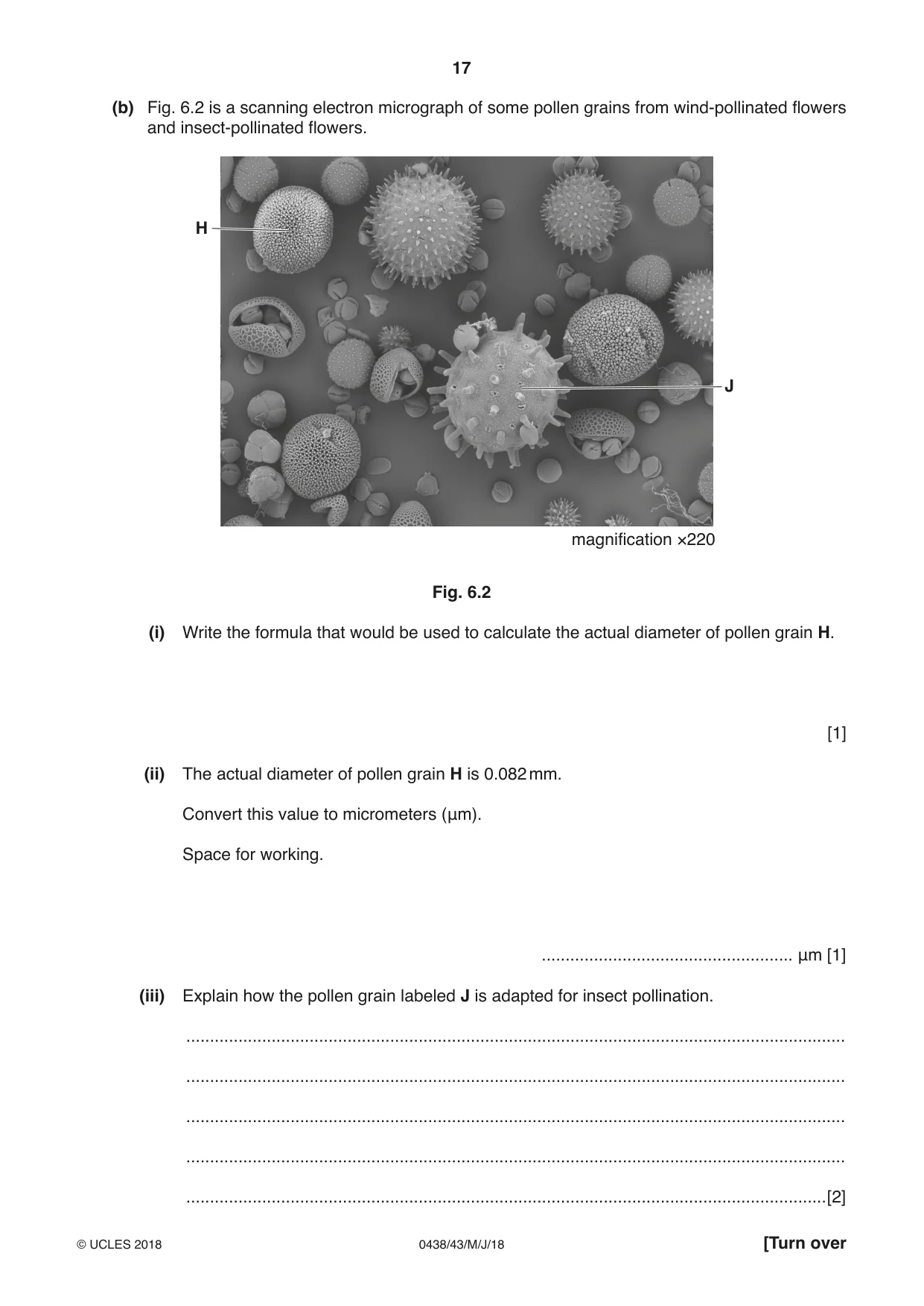
17 0438/43/M/J/18 © UCLES 2018 [Turn over (b) Fig. 6.2 is a scanning electron micrograph of some pollen grains from wind-pollinated flowers and insect-pollinated flowers. magnification ×220 H J Fig. 6.2 (i) Write the formula that would be used to calculate the actual diameter of pollen grain H. [1] (ii) The actual diameter of pollen grain H is 0.082 mm. Convert this value to micrometers (μm). Space for working. … μm [1] (iii) Explain how the pollen grain labeled J is adapted for insect pollination. … … … … …[2]
Question paper, page 18
18 0438/43/M/J/18 © UCLES 2018 (c) Pollen grains grow tubes, which contain haploid male gamete nuclei. (i) One of these male gamete nuclei fuses with the female gamete. State the part of the flower that contains the female gamete. …[1] (ii) Define the term haploid nucleus. … … …[1] (iii) Explain why it is important for gametes to be haploid. … … …[1] [Total: 11]
Question paper, page 19
19 0438/43/M/J/18 © UCLES 2018 BLANK PAGE
Question paper, page 20
20 0438/43/M/J/18 © UCLES 2018 Permission to reproduce items where third-party owned material protected by copyright is included has been sought and cleared where possible. Every reasonable effort has been made by the publisher (UCLES) to trace copyright holders, but if any items requiring clearance have unwittingly been included, the publisher will be pleased to make amends at the earliest possible opportunity. To avoid the issue of disclosure of answer-related information to candidates, all copyright acknowledgements are reproduced online in the Cambridge International Examinations Copyright Acknowledgements Booklet. This is produced for each series of examinations and is freely available to download at www.cie.org.uk after the live examination series. Cambridge International Examinations is part of the Cambridge Assessment Group. Cambridge Assessment is the brand name of University of Cambridge Local Examinations Syndicate (UCLES), which is itself a department of the University of Cambridge. BLANK PAGE
Mark scheme, page 1
IGCSE™ is a registered trademark. This document consists of 12 printed pages. © UCLES 2018 [Turn over Cambridge Assessment International Education Cambridge International General Certificate of Secondary Education BIOLOGY (US) 0438/43 Paper 4 Theory (Extended) May/June 2018 MARK SCHEME Maximum Mark: 80 Published This mark scheme is published as an aid to teachers and candidates, to indicate the requirements of the examination. It shows the basis on which Examiners were instructed to award marks. It does not indicate the details of the discussions that took place at an Examiners’ meeting before marking began, which would have considered the acceptability of alternative answers. Mark schemes should be read in conjunction with the question paper and the Principal Examiner Report for Teachers. Cambridge International will not enter into discussions about these mark schemes. Cambridge International is publishing the mark schemes for the May/June 2018 series for most Cambridge IGCSE™, Cambridge International A and AS Level and Cambridge Pre-U components, and some Cambridge O Level components.
Mark scheme, page 2
0438/43 Cambridge IGCSE – Mark Scheme PUBLISHED May/June 2018 © UCLES 2018 Page 2 of 12 Generic Marking Principles These general marking principles must be applied by all examiners when marking candidate answers. They should be applied alongside the specific content of the mark scheme or generic level descriptors for a question. Each question paper and mark scheme will also comply with these marking principles. GENERIC MARKING PRINCIPLE 1: Marks must be awarded in line with: • the specific content of the mark scheme or the generic level descriptors for the question • the specific skills defined in the mark scheme or in the generic level descriptors for the question • the standard of response required by a candidate as exemplified by the standardisation scripts. GENERIC MARKING PRINCIPLE 2: Marks awarded are always whole marks (not half marks, or other fractions). GENERIC MARKING PRINCIPLE 3: Marks must be awarded positively: • marks are awarded for correct/valid answers, as defined in the mark scheme. However, credit is given for valid answers which go beyond the scope of the syllabus and mark scheme, referring to your Team Leader as appropriate • marks are awarded when candidates clearly demonstrate what they know and can do • marks are not deducted for errors • marks are not deducted for omissions • answers should only be judged on the quality of spelling, punctuation and grammar when these features are specifically assessed by the question as indicated by the mark scheme. The meaning, however, should be unambiguous. GENERIC MARKING PRINCIPLE 4: Rules must be applied consistently e.g. in situations where candidates have not followed instructions or in the application of generic level descriptors.
Mark scheme, page 3
0438/43 Cambridge IGCSE – Mark Scheme PUBLISHED May/June 2018 © UCLES 2018 Page 3 of 12 GENERIC MARKING PRINCIPLE 5: Marks should be awarded using the full range of marks defined in the mark scheme for the question (however; the use of the full mark range may be limited according to the quality of the candidate responses seen). GENERIC MARKING PRINCIPLE 6: Marks awarded are based solely on the requirements as defined in the mark scheme. Marks should not be awarded with grade thresholds or grade descriptors in mind.
Mark scheme, page 4
0438/43 Cambridge IGCSE – Mark Scheme PUBLISHED May/June 2018 © UCLES 2018 Page 4 of 12 Mark schemes will use these abbreviations • ; separates marking points • / alternatives • I ignore • R reject • A accept (for answers correctly cued by the question, or guidance for examiners) • AW alternative wording (where responses vary more than usual) • AVP any valid point • ecf credit a correct statement / calculation that follows a previous wrong response • ora or reverse argument • ( ) the word / phrase in brackets is not required, but sets the context • underline actual word given must be used by candidate (grammatical variants excepted) • max indicates the maximum number of marks that can be given
Mark scheme, page 5
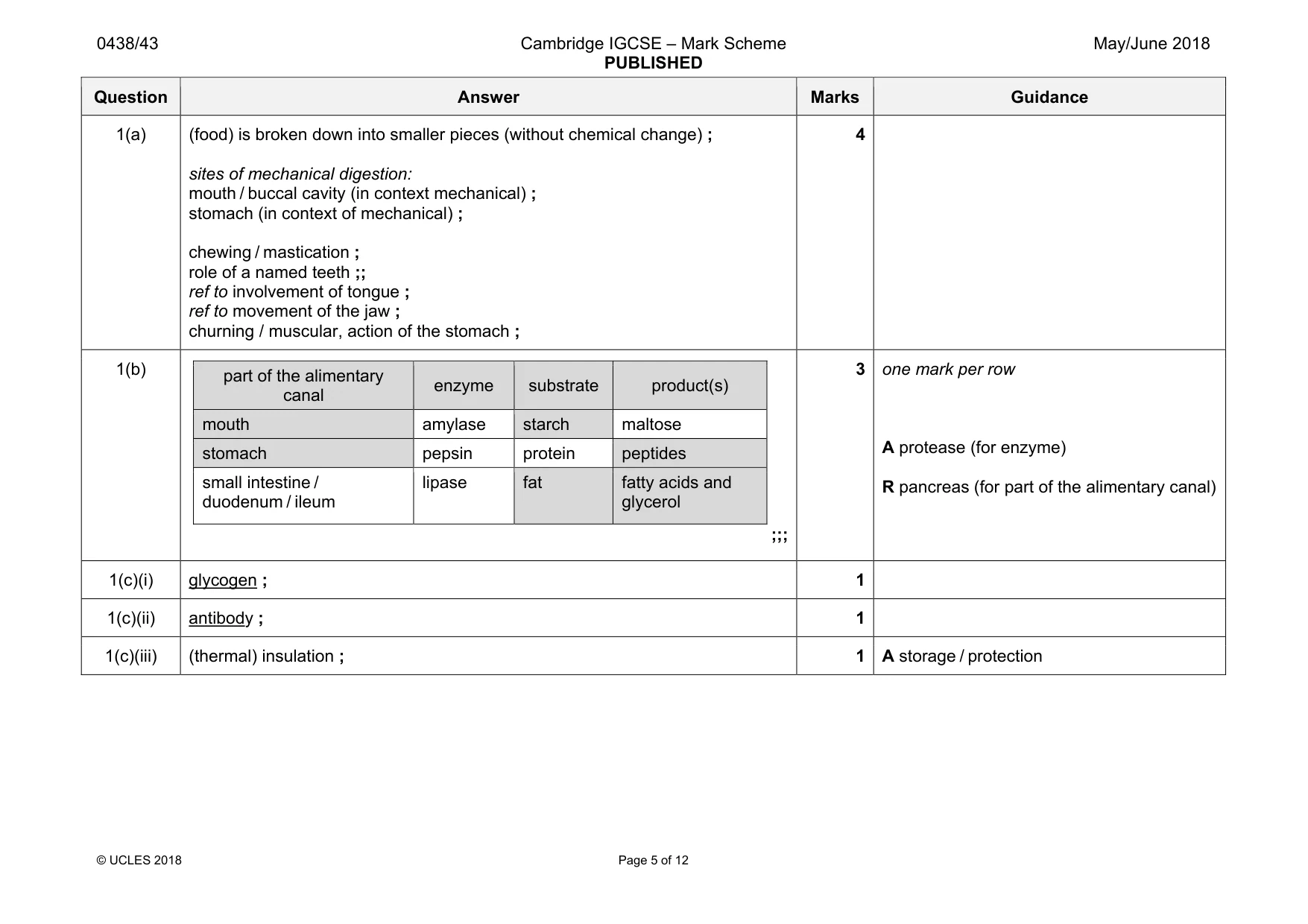
0438/43 Cambridge IGCSE – Mark Scheme PUBLISHED May/June 2018 © UCLES 2018 Page 5 of 12 Question Answer Marks Guidance 1(a) (food) is broken down into smaller pieces (without chemical change) ; sites of mechanical digestion: mouth / buccal cavity (in context mechanical) ; stomach (in context of mechanical) ; chewing / mastication ; role of a named teeth ;; ref to involvement of tongue ; ref to movement of the jaw ; churning / muscular, action of the stomach ; 4 1(b) part of the alimentary canal enzyme substrate product(s) mouth amylase starch maltose stomach pepsin protein peptides small intestine / duodenum / ileum lipase fat fatty acids and glycerol ;;; 3 one mark per row A protease (for enzyme) R pancreas (for part of the alimentary canal) 1(c)(i) glycogen ; 1 1(c)(ii) antibody ; 1 1(c)(iii) (thermal) insulation ; 1 A storage / protection
Mark scheme, page 6
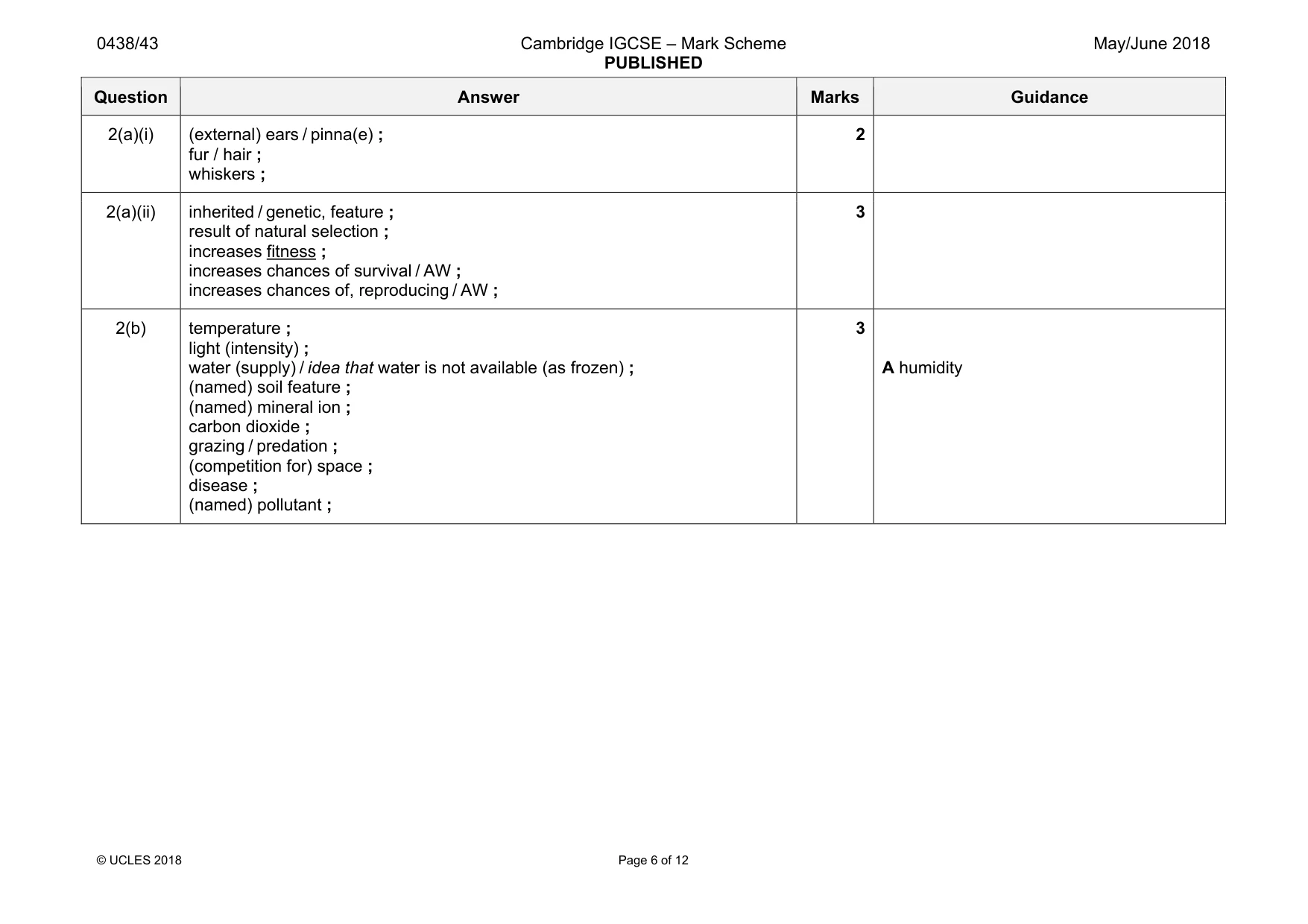
0438/43 Cambridge IGCSE – Mark Scheme PUBLISHED May/June 2018 © UCLES 2018 Page 6 of 12 Question Answer Marks Guidance 2(a)(i) (external) ears / pinna(e) ; fur / hair ; whiskers ; 2 2(a)(ii) inherited / genetic, feature ; result of natural selection ; increases fitness ; increases chances of survival / AW ; increases chances of, reproducing / AW ; 3 2(b) temperature ; light (intensity) ; water (supply) / idea that water is not available (as frozen) ; (named) soil feature ; (named) mineral ion ; carbon dioxide ; grazing / predation ; (competition for) space ; disease ; (named) pollutant ; 3 A humidity
Mark scheme, page 7
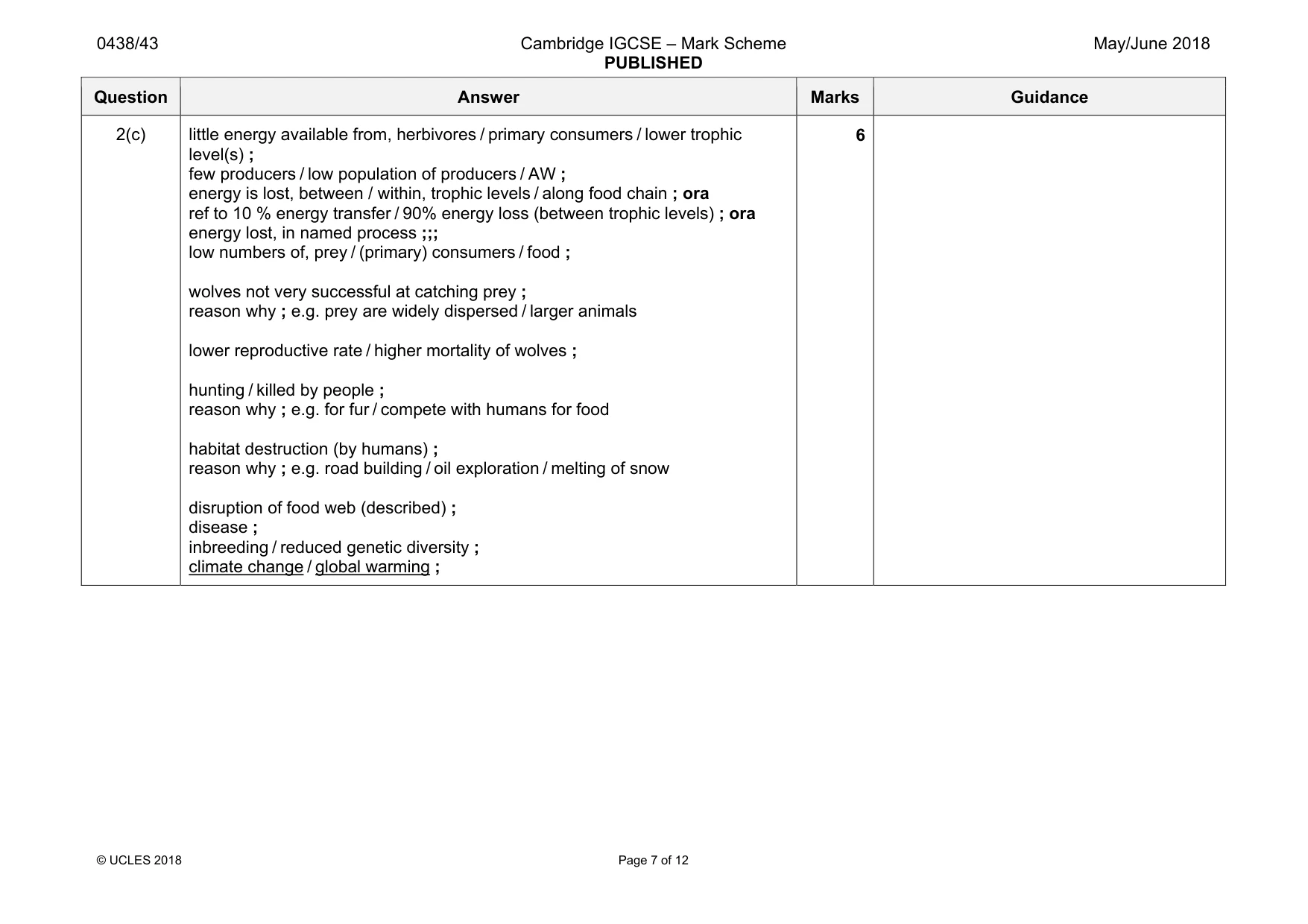
0438/43 Cambridge IGCSE – Mark Scheme PUBLISHED May/June 2018 © UCLES 2018 Page 7 of 12 Question Answer Marks Guidance 2(c) little energy available from, herbivores / primary consumers / lower trophic level(s) ; few producers / low population of producers / AW ; energy is lost, between / within, trophic levels / along food chain ; ora ref to 10 % energy transfer / 90% energy loss (between trophic levels) ; ora energy lost, in named process ;;; low numbers of, prey / (primary) consumers / food ; wolves not very successful at catching prey ; reason why ; e.g. prey are widely dispersed / larger animals lower reproductive rate / higher mortality of wolves ; hunting / killed by people ; reason why ; e.g. for fur / compete with humans for food habitat destruction (by humans) ; reason why ; e.g. road building / oil exploration / melting of snow disruption of food web (described) ; disease ; inbreeding / reduced genetic diversity ; climate change / global warming ; 6
Mark scheme, page 8
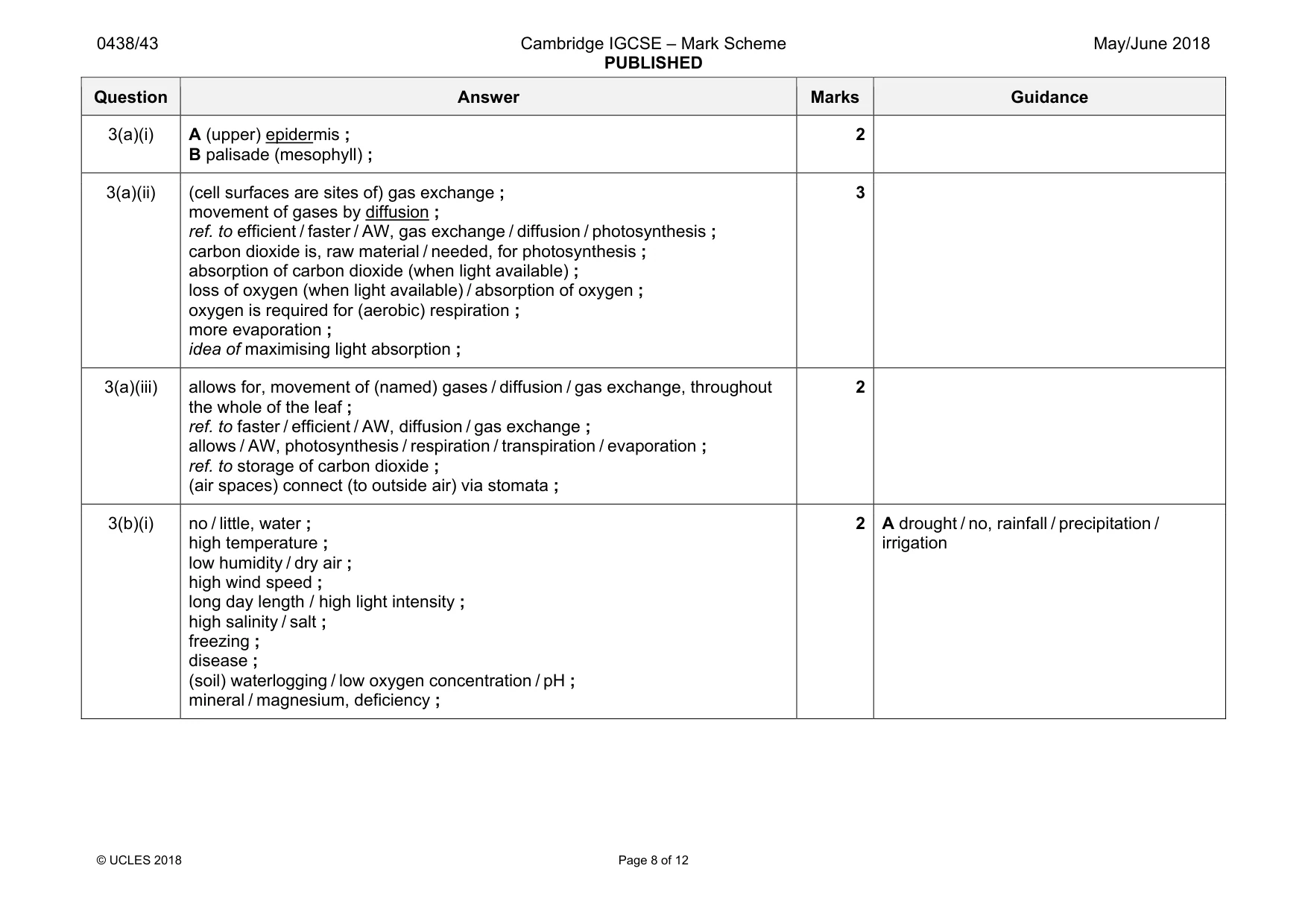
0438/43 Cambridge IGCSE – Mark Scheme PUBLISHED May/June 2018 © UCLES 2018 Page 8 of 12 Question Answer Marks Guidance 3(a)(i) A (upper) epidermis ; B palisade (mesophyll) ; 2 3(a)(ii) (cell surfaces are sites of) gas exchange ; movement of gases by diffusion ; ref. to efficient / faster / AW, gas exchange / diffusion / photosynthesis ; carbon dioxide is, raw material / needed, for photosynthesis ; absorption of carbon dioxide (when light available) ; loss of oxygen (when light available) / absorption of oxygen ; oxygen is required for (aerobic) respiration ; more evaporation ; idea of maximising light absorption ; 3 3(a)(iii) allows for, movement of (named) gases / diffusion / gas exchange, throughout the whole of the leaf ; ref. to faster / efficient / AW, diffusion / gas exchange ; allows / AW, photosynthesis / respiration / transpiration / evaporation ; ref. to storage of carbon dioxide ; (air spaces) connect (to outside air) via stomata ; 2 3(b)(i) no / little, water ; high temperature ; low humidity / dry air ; high wind speed ; long day length / high light intensity ; high salinity / salt ; freezing ; disease ; (soil) waterlogging / low oxygen concentration / pH ; mineral / magnesium, deficiency ; 2 A drought / no, rainfall / precipitation / irrigation
Mark scheme, page 9
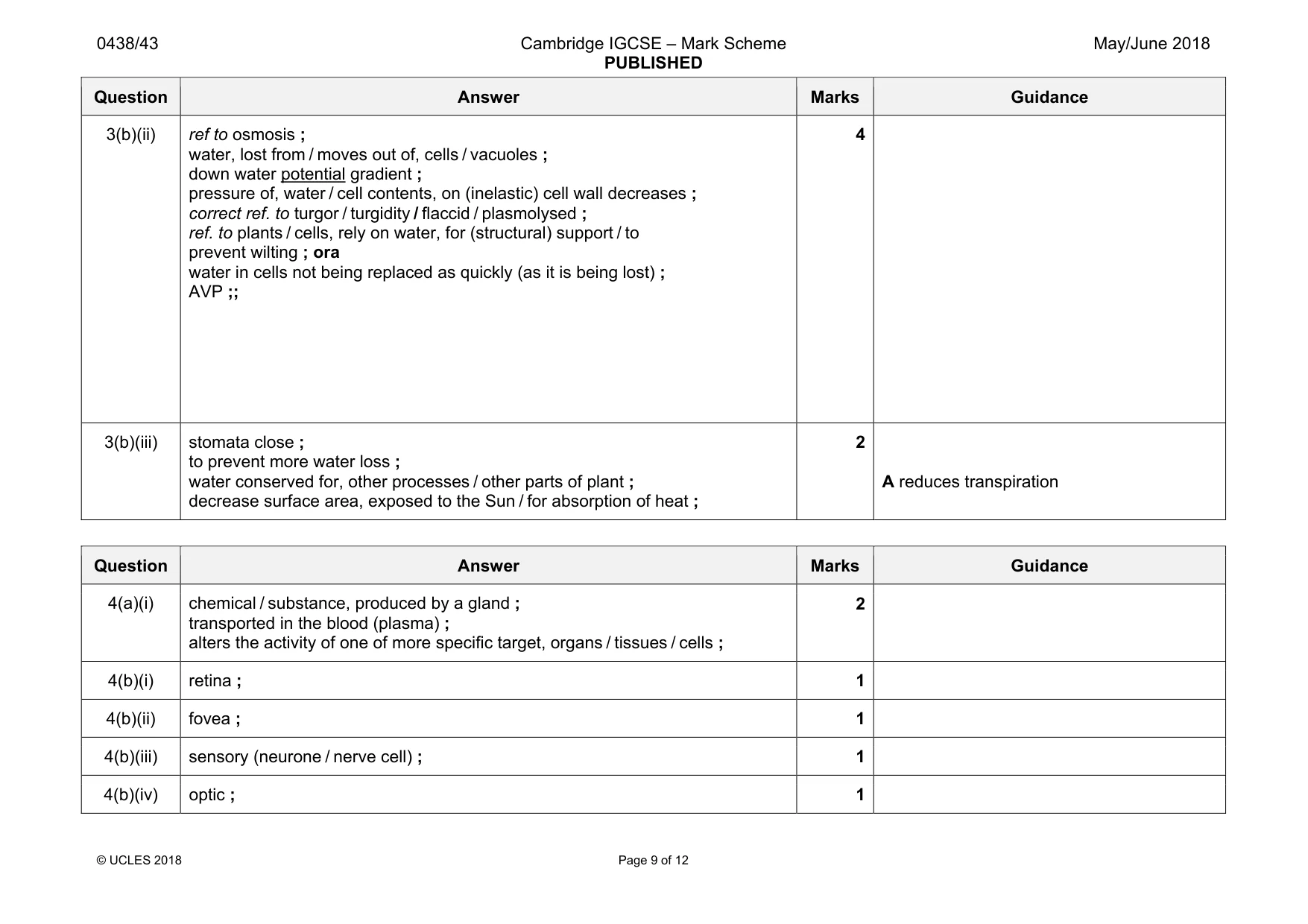
0438/43 Cambridge IGCSE – Mark Scheme PUBLISHED May/June 2018 © UCLES 2018 Page 9 of 12 Question Answer Marks Guidance 3(b)(ii) ref to osmosis ; water, lost from / moves out of, cells / vacuoles ; down water potential gradient ; pressure of, water / cell contents, on (inelastic) cell wall decreases ; correct ref. to turgor / turgidity / flaccid / plasmolysed ; ref. to plants / cells, rely on water, for (structural) support / to prevent wilting ; ora water in cells not being replaced as quickly (as it is being lost) ; AVP ;; 4 3(b)(iii) stomata close ; to prevent more water loss ; water conserved for, other processes / other parts of plant ; decrease surface area, exposed to the Sun / for absorption of heat ; 2 A reduces transpiration Question Answer Marks Guidance 4(a)(i) chemical / substance, produced by a gland ; transported in the blood (plasma) ; alters the activity of one of more specific target, organs / tissues / cells ; 2 4(b)(i) retina ; 1 4(b)(ii) fovea ; 1 4(b)(iii) sensory (neurone / nerve cell) ; 1 4(b)(iv) optic ; 1
Mark scheme, page 10
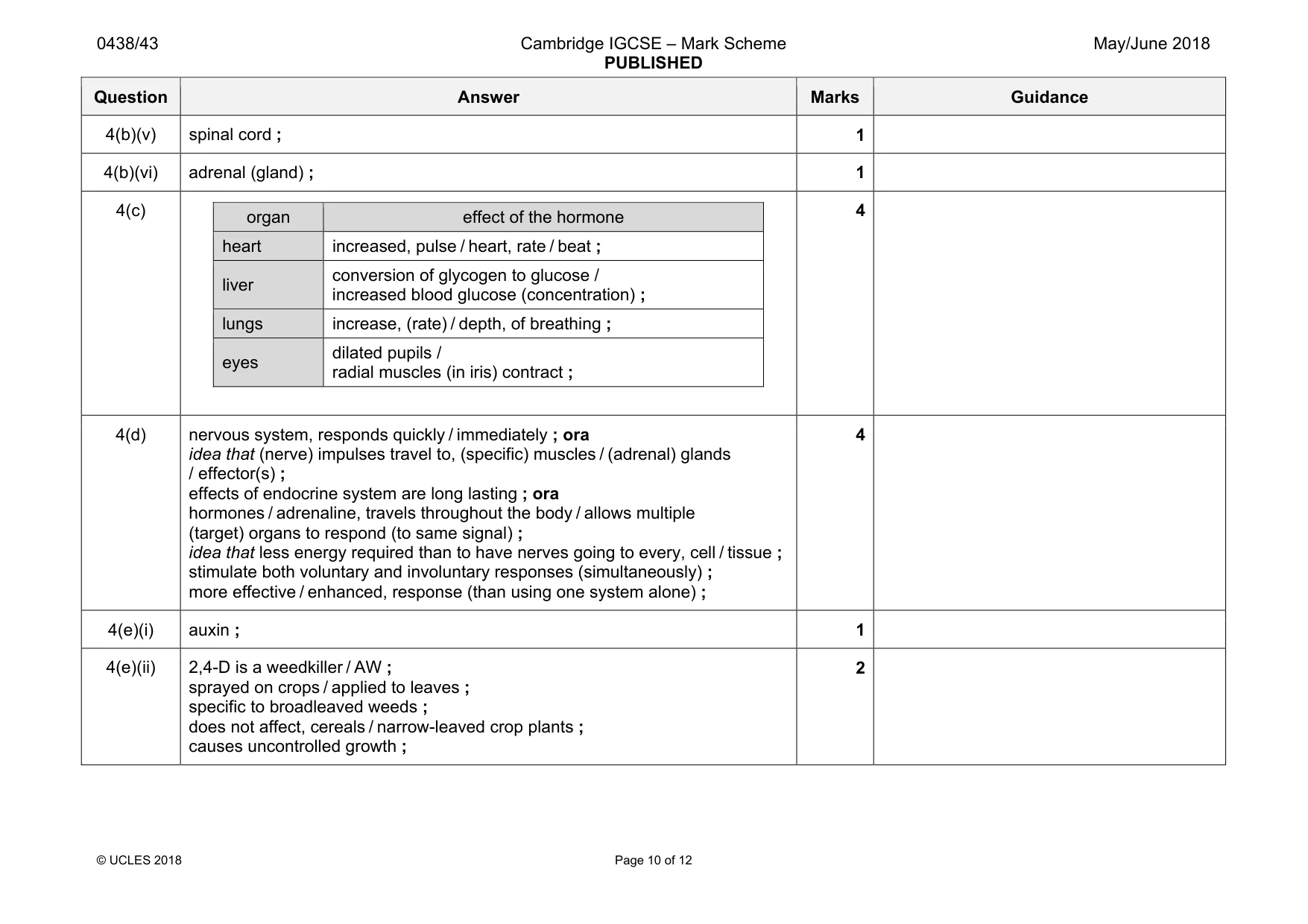
0438/43 Cambridge IGCSE – Mark Scheme PUBLISHED May/June 2018 © UCLES 2018 Page 10 of 12 Question Answer Marks Guidance 4(b)(v) spinal cord ; 1 4(b)(vi) adrenal (gland) ; 1 4(c) organ effect of the hormone heart increased, pulse / heart, rate / beat ; liver conversion of glycogen to glucose / increased blood glucose (concentration) ; lungs increase, (rate) / depth, of breathing ; eyes dilated pupils / radial muscles (in iris) contract ; 4 4(d) nervous system, responds quickly / immediately ; ora idea that (nerve) impulses travel to, (specific) muscles / (adrenal) glands / effector(s) ; effects of endocrine system are long lasting ; ora hormones / adrenaline, travels throughout the body / allows multiple (target) organs to respond (to same signal) ; idea that less energy required than to have nerves going to every, cell / tissue ; stimulate both voluntary and involuntary responses (simultaneously) ; more effective / enhanced, response (than using one system alone) ; 4 4(e)(i) auxin ; 1 4(e)(ii) 2,4-D is a weedkiller / AW ; sprayed on crops / applied to leaves ; specific to broadleaved weeds ; does not affect, cereals / narrow-leaved crop plants ; causes uncontrolled growth ; 2
Mark scheme, page 11
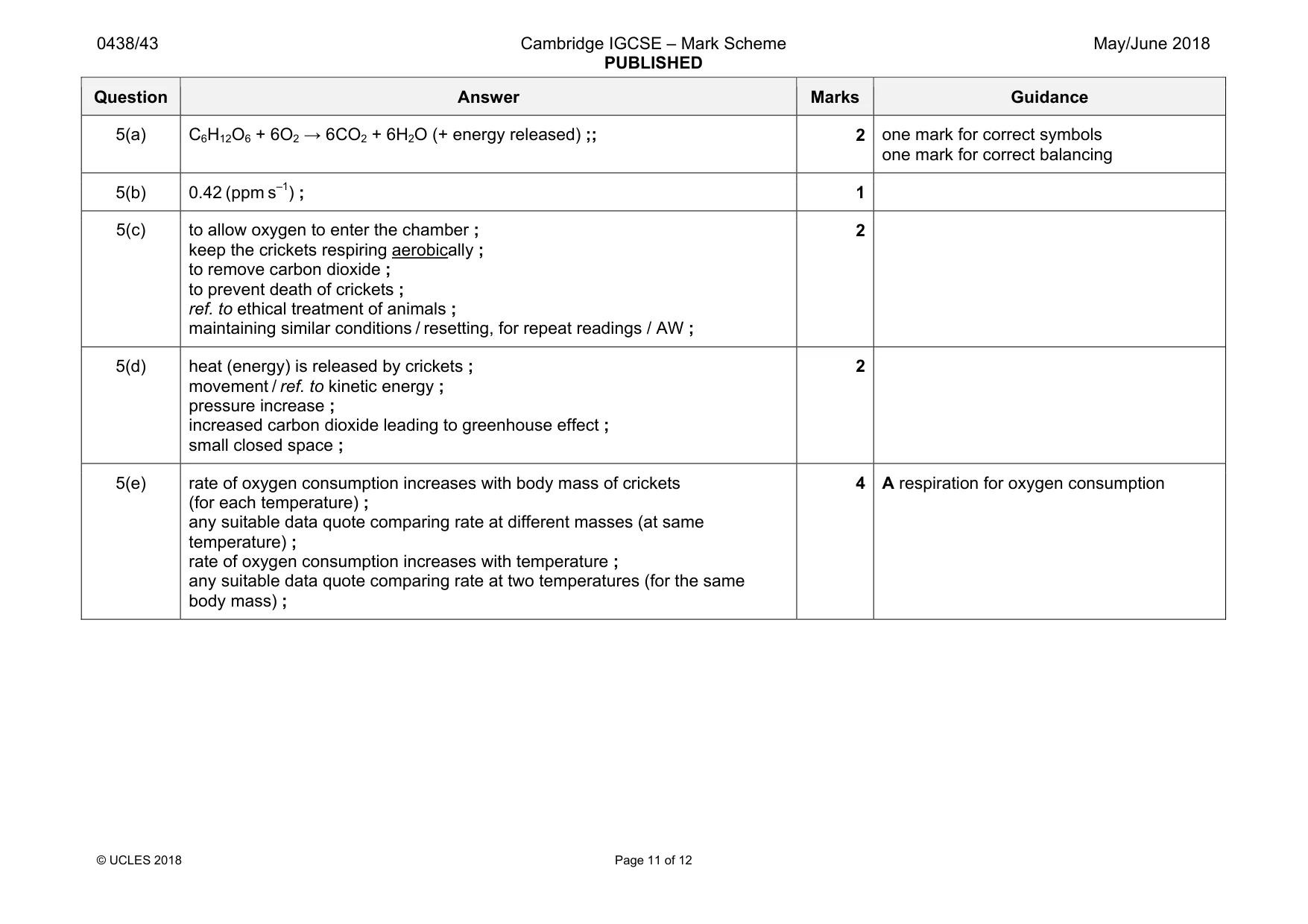
0438/43 Cambridge IGCSE – Mark Scheme PUBLISHED May/June 2018 © UCLES 2018 Page 11 of 12 Question Answer Marks Guidance 5(a) C6H12O6 + 6O2 → 6CO2 + 6H2O (+ energy released) ;; 2 one mark for correct symbols one mark for correct balancing 5(b) 0.42 (ppm s–1) ; 1 5(c) to allow oxygen to enter the chamber ; keep the crickets respiring aerobically ; to remove carbon dioxide ; to prevent death of crickets ; ref. to ethical treatment of animals ; maintaining similar conditions / resetting, for repeat readings / AW ; 2 5(d) heat (energy) is released by crickets ; movement / ref. to kinetic energy ; pressure increase ; increased carbon dioxide leading to greenhouse effect ; small closed space ; 2 5(e) rate of oxygen consumption increases with body mass of crickets (for each temperature) ; any suitable data quote comparing rate at different masses (at same temperature) ; rate of oxygen consumption increases with temperature ; any suitable data quote comparing rate at two temperatures (for the same body mass) ; 4 A respiration for oxygen consumption
Mark scheme, page 12
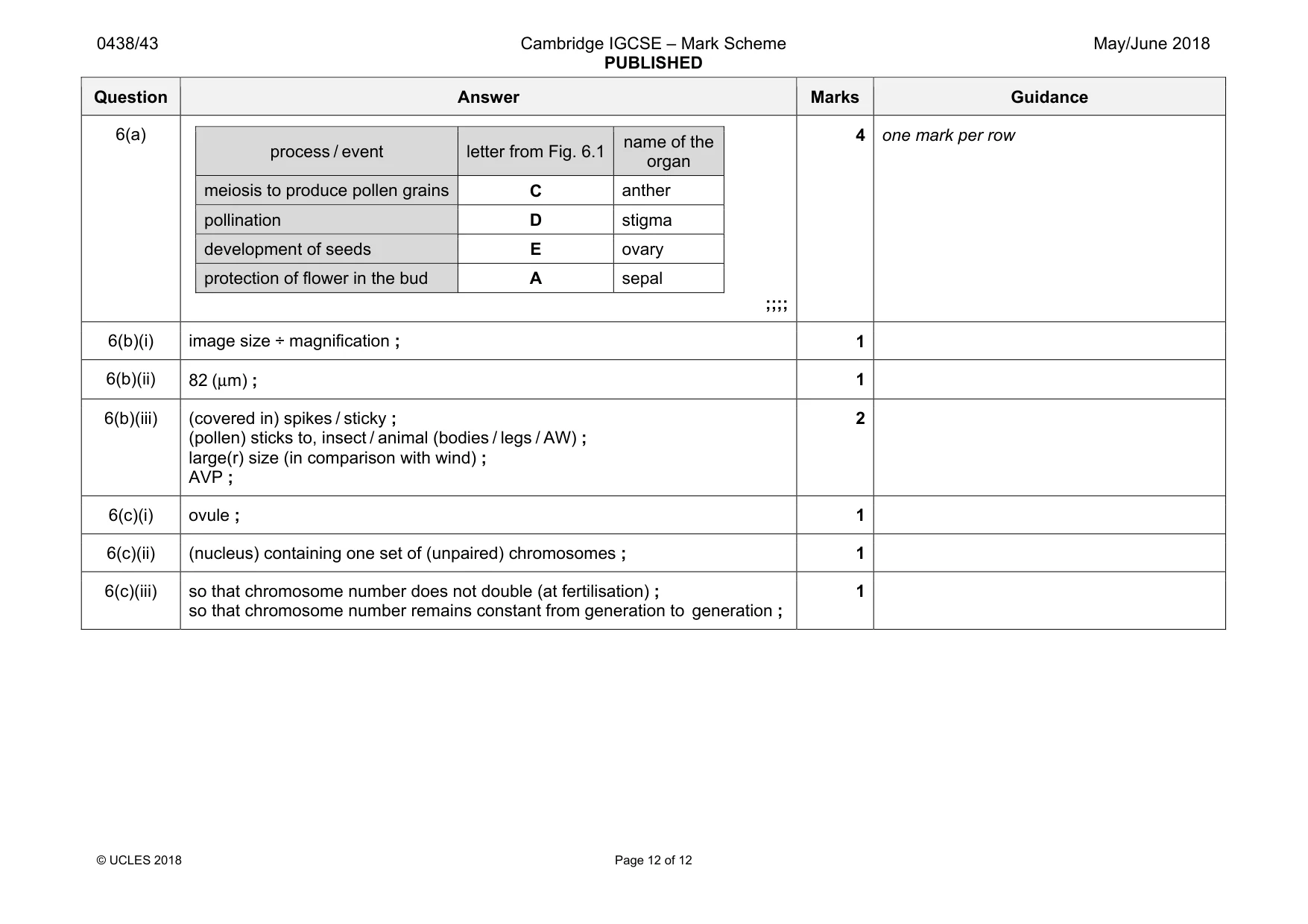
0438/43 Cambridge IGCSE – Mark Scheme PUBLISHED May/June 2018 © UCLES 2018 Page 12 of 12 Question Answer Marks Guidance 6(a) process / event letter from Fig. 6.1 name of the organ meiosis to produce pollen grains C anther pollination D stigma development of seeds E ovary protection of flower in the bud A sepal ;;;; 4 one mark per row 6(b)(i) image size ÷ magnification ; 1 6(b)(ii) 82 (µm) ; 1 6(b)(iii) (covered in) spikes / sticky ; (pollen) sticks to, insect / animal (bodies / legs / AW) ; large(r) size (in comparison with wind) ; AVP ; 2 6(c)(i) ovule ; 1 6(c)(ii) (nucleus) containing one set of (unpaired) chromosomes ; 1 6(c)(iii) so that chromosome number does not double (at fertilisation) ; so that chromosome number remains constant from generation to generation ; 1
What you needed in this session
Cambridge’s own grade thresholds for 2018 May/June, Paper 4 · Variant 3. A higher threshold means an easier paper — the bar moves with how the cohort did.