Cambridge A Level Physics 9702 — 2023 May/June Paper 5 · Variant 1
9702/51/M/J/23 · 2 questions · 30 marks · ≈34 min
The question paper and its mark scheme, free to read here and free to download. This is Cambridge’s own paper, exactly as it was sat.
Question paper8 pages

Mark scheme12 pages
Answers below. Sit the paper first if you are practising.
Questions as text
Q1 · A wooden cube of mass A is placed on an inclined plane
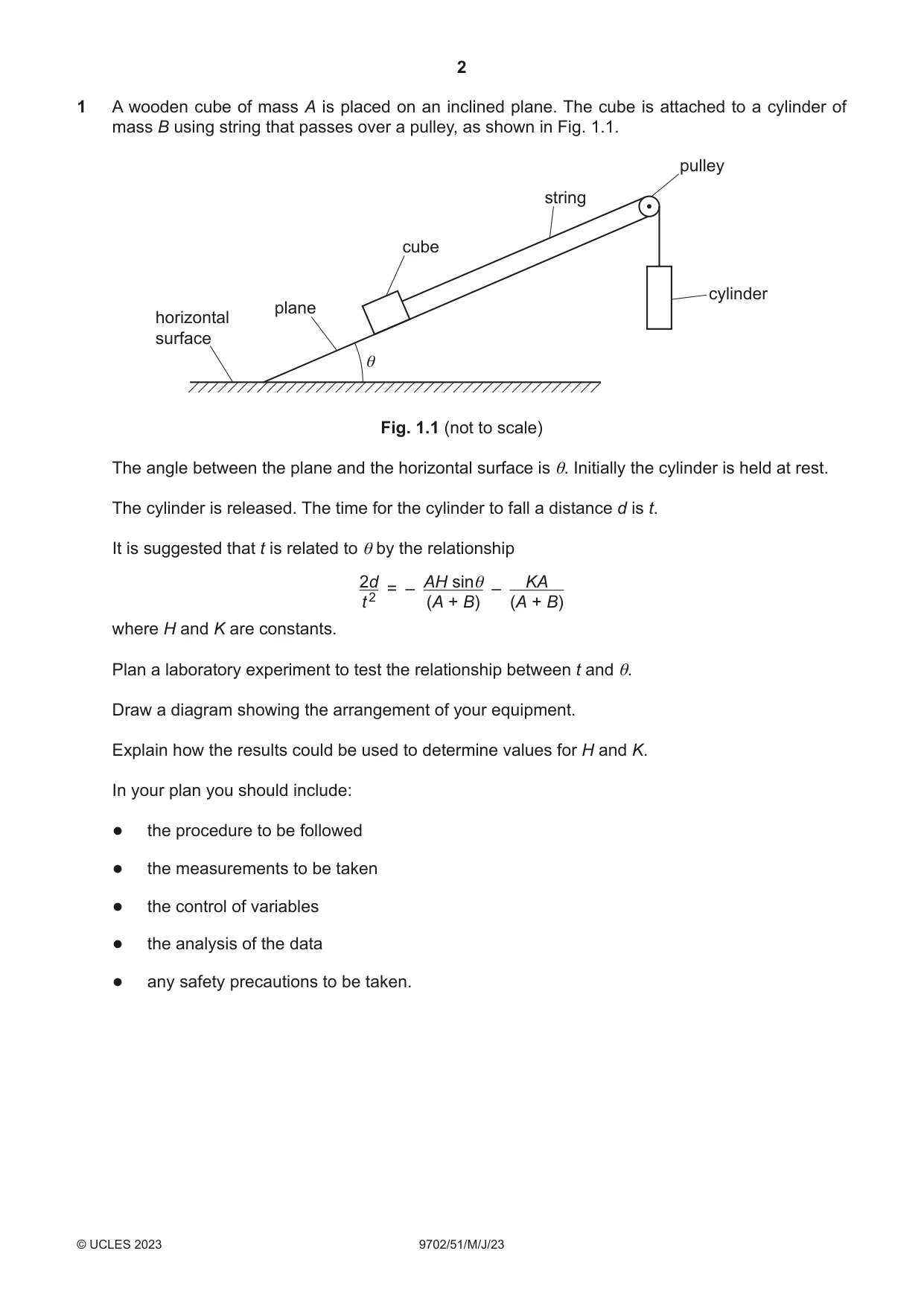
1 A wooden cube of mass A is placed on an inclined plane. The cube is attached to a cylinder of mass B using string that passes over a pulley, as shown in Fig. 1.1. pulley string cube cylinder plane horizontal surface θ Fig. 1.1 (not to scale) The angle between the plane and the horizontal surface is θ. Initially the cylinder is held at rest. The cylinder is released. The time for the cylinder to fall a distance d is t. It is suggested that t is related to θ by the relationship 2d AH sinθ KA = – – t 2 (A + B) (A + B) where H and K are constants. Plan a laboratory experiment to test the relationship between t and θ. Draw a diagram showing the arrangement of your equipment. Explain how the results could be used to determine values for H and K. In your plan you should include: ● the procedure to be followed ● the measurements to be taken ● the control of variables ● the analysis of the data ● any safety precautions to be taken. Diagram .................................................................................................................................................................. .................................................................................................................................................................. .................................................................................................................................................................. .................................................................................................................................................................. .................................................................................................................................................................. .................................................................................................................................................................. .................................................................................................................................................................. .................................................................................................................................................................. .................................................................................................................................................................. .................................................................................................................................................................. .................................................................................................................................................................. .................................................................................................................................................................. .................................................................................................................................................................. .................................................................................................................................................................. .................................................................................................................................................................. .................................................................................................................................................................. .................................................................................................................................................................. .................................................................................................................................................................. .................................................................................................................................................................. .................................................................................................................................................................. .................................................................................................................................................................. .................................................................................................................................................................. .................................................................................................................................................................. .................................................................................................................................................................. .................................................................................................................................................................. .................................................................................................................................................................. .................................................................................................................................................................. .................................................................................................................................................................. .................................................................................................................................................................. .................................................................................................................................................................. .................................................................................................................................................................. .................................................................................................................................................................. .................................................................................................................................................................. .................................................................................................................................................................. .................................................................................................................................................................. .................................................................................................................................................................. .................................................................................................................................................................. .................................................................................................................................................................. .................................................................................................................................................................. .................................................................................................................................................................. .......................................................................................................................................................... [15]
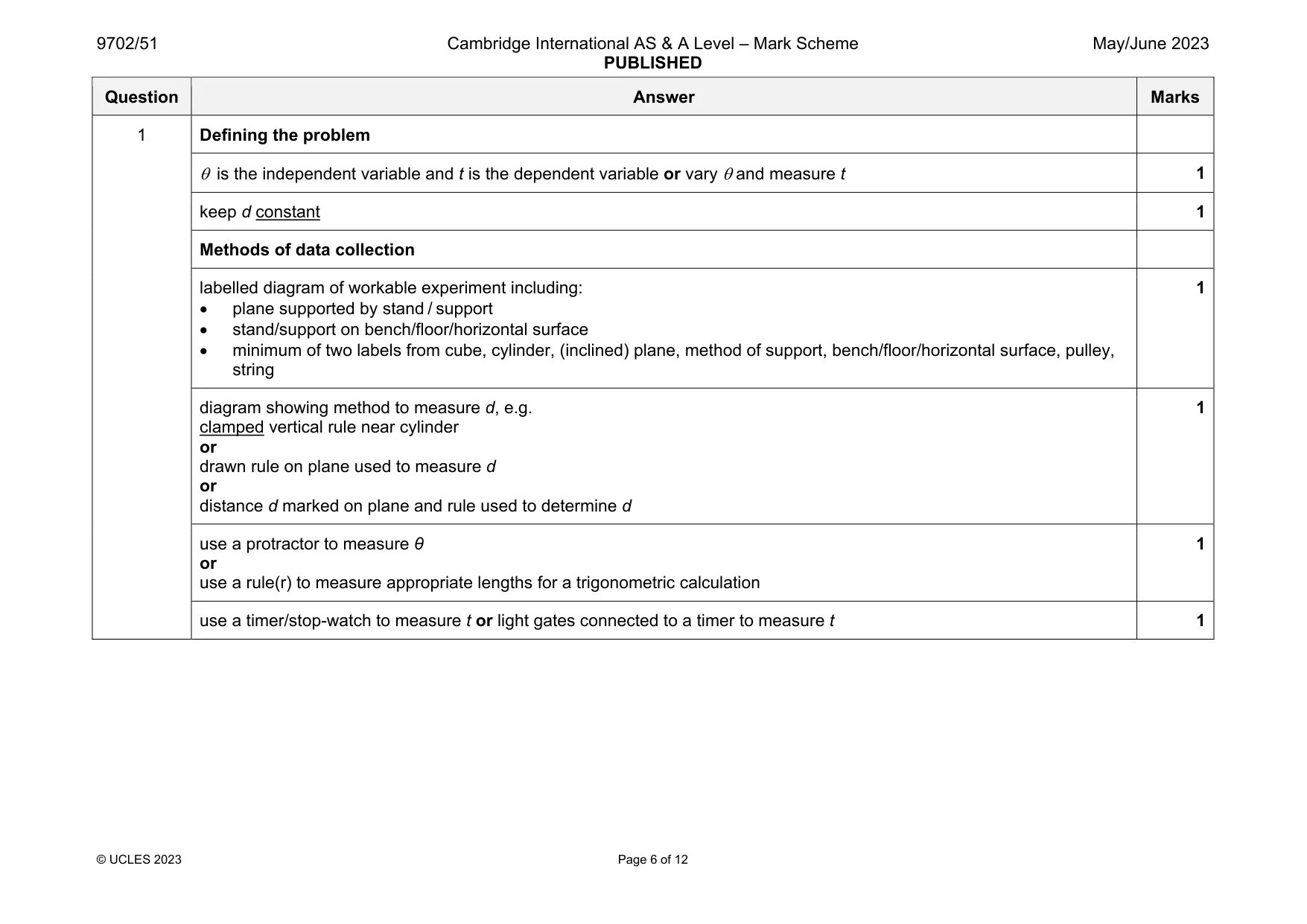
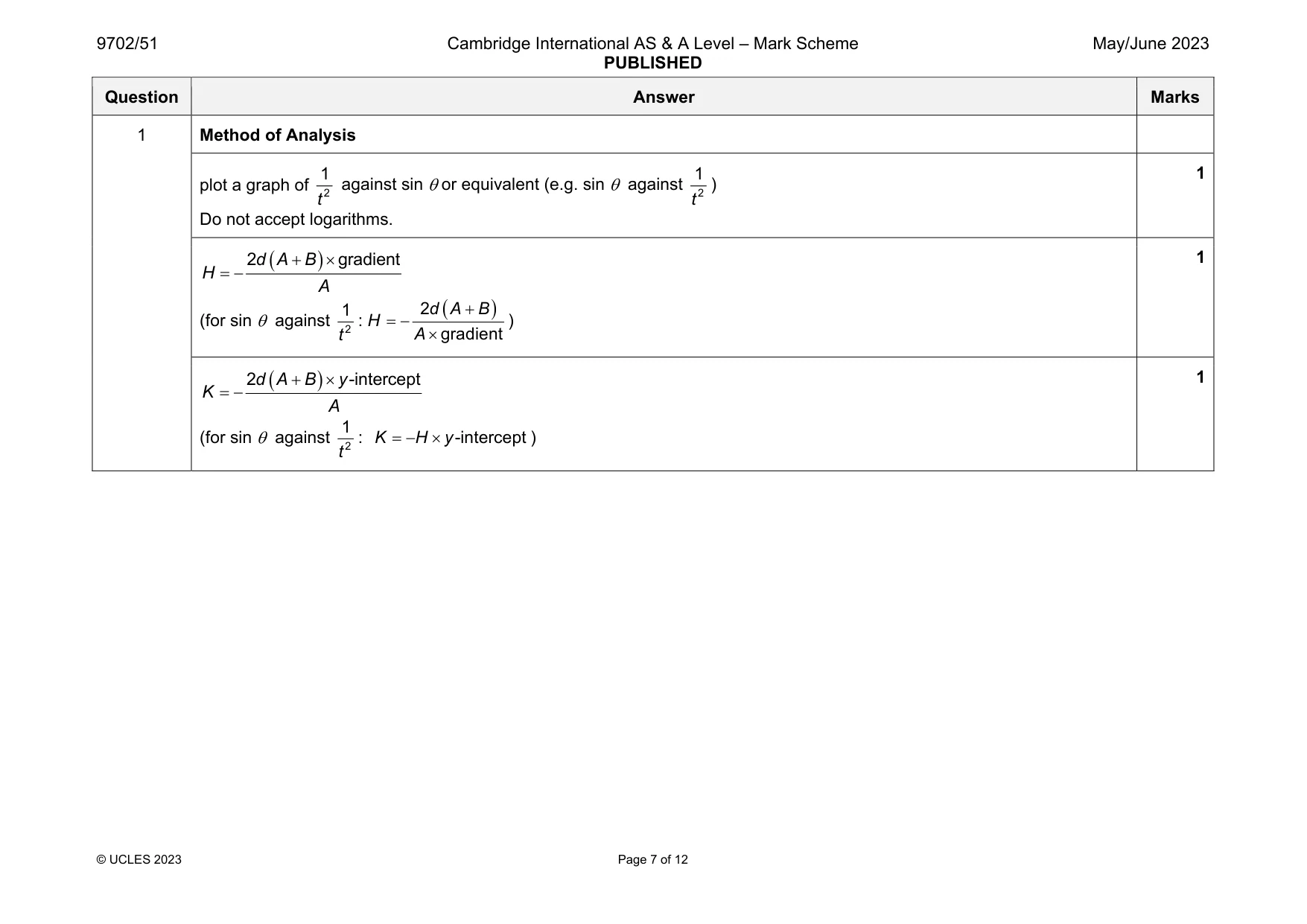
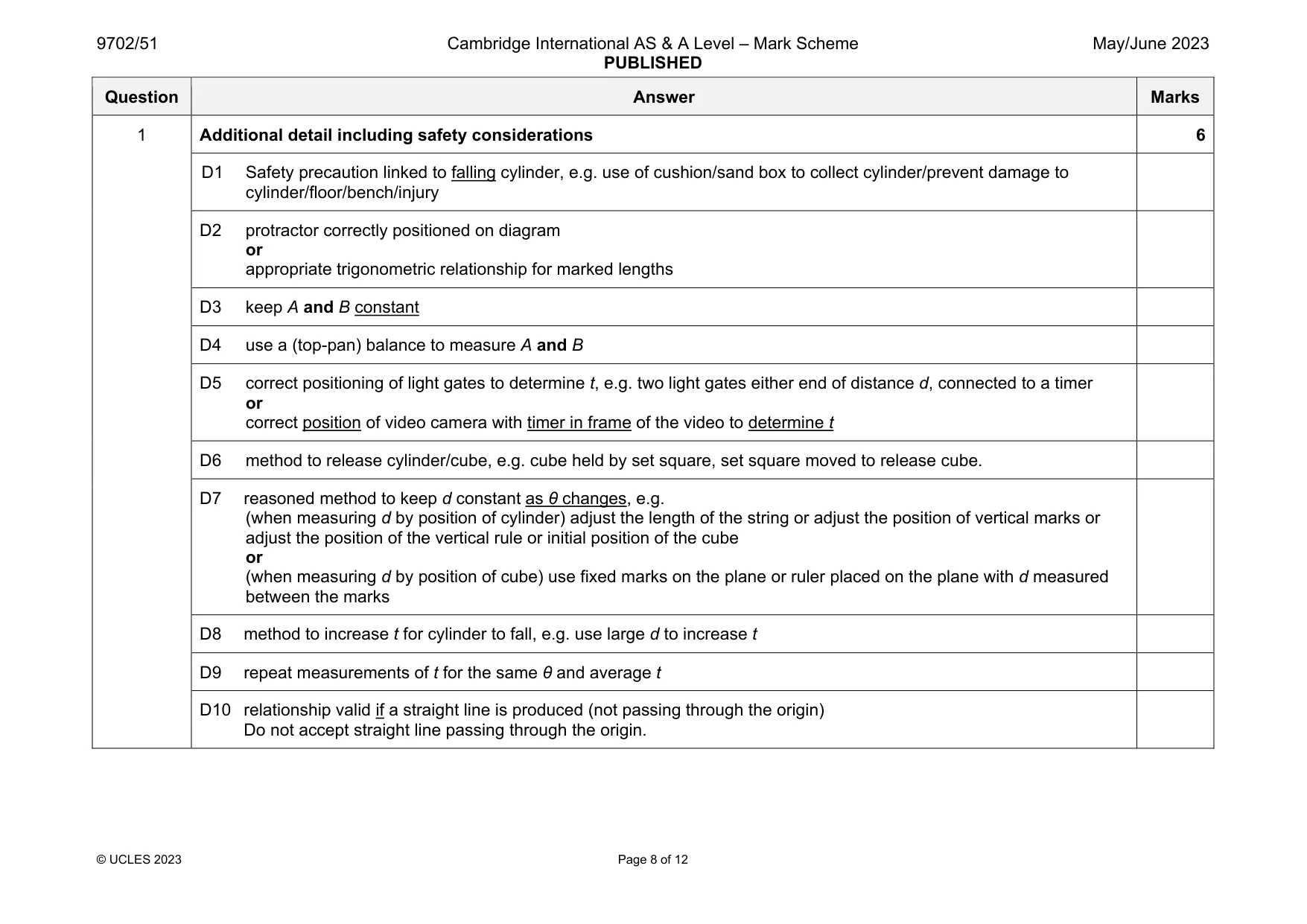
Mark scheme: 1 Defining the problem is the independent variable and t is the dependent variable or vary and measure t 1 keep d constant 1 Methods of data collection labelled diagram of workable experiment including: plane supported by stand / support stand/support on bench/floor/horizontal surface minimum of two labels from cube, cylinder, (inclined) plane, method of support, bench/floor/horizontal surface, pulley, string 1 diagram showing method to measure d, e.g. clamped vertical rule near cylinder or drawn rule on plane used to measure d or distance d marked on plane and rule used to determine d 1 use a protractor to measure θ or use a rule(r) to measure appropriate lengths for a trigonometric calculation 1 use a timer/stop-watch to measure t or light gates connected to a timer to measure t 1 Question Answer Marks 1 Method of Analysis plot a graph of 2 1 t against sin or equivalent (e.g. sin against 2 1 t ) Do not accept logarithms. 1 2 gradient d A B H A (for sin against 2 1 t : H 2 gradient d A B A ) 1 2 -intercept d A B y K A (for sin against 2 1 t : -intercept K H y ) 1 Question Answer Marks 1 Additional detail including safety considerations 6 D1 Safety precaution linked to falling cylinder, e.g. use of cushion/sand box to collect cylinder/prevent damage to cylinder/floor/bench/injury D2 protractor correctly positioned on diagram or appropriate trigonometric relationship for marked lengths D3 keep A and B constant D4 use a (top-pan) balance to measure A and B D5 correct positioning of light gates to determine t, e.g. two light gates either end of distance d, connected to a timer or correct position of video camera with timer in frame of the video to determine t D6 method to release cylinder/cube, e.g. cube held by set square, set square moved to release cube. D7 reasoned method to keep d constant as θ changes, e.g. (when measuring d by position of cylinder) adjust the length of the string or adjust the position of vertical marks or adjust the position of the vertical rule or initial position of the cube or (when measuring d by position of cube) use fixed marks on the plane or ruler placed on the plane with d measured between the marks D8 method to increase t for cylinder to fall, e.g. use large d to increase t D9 repeat measurements of t for the same θ and average t D10 relationship valid if a straight line is produced (not passing through the origin) Do not accept straight line passing through the origin.
Q2 · A student investigates the discharge of capacitors in the circuit shown in Fig
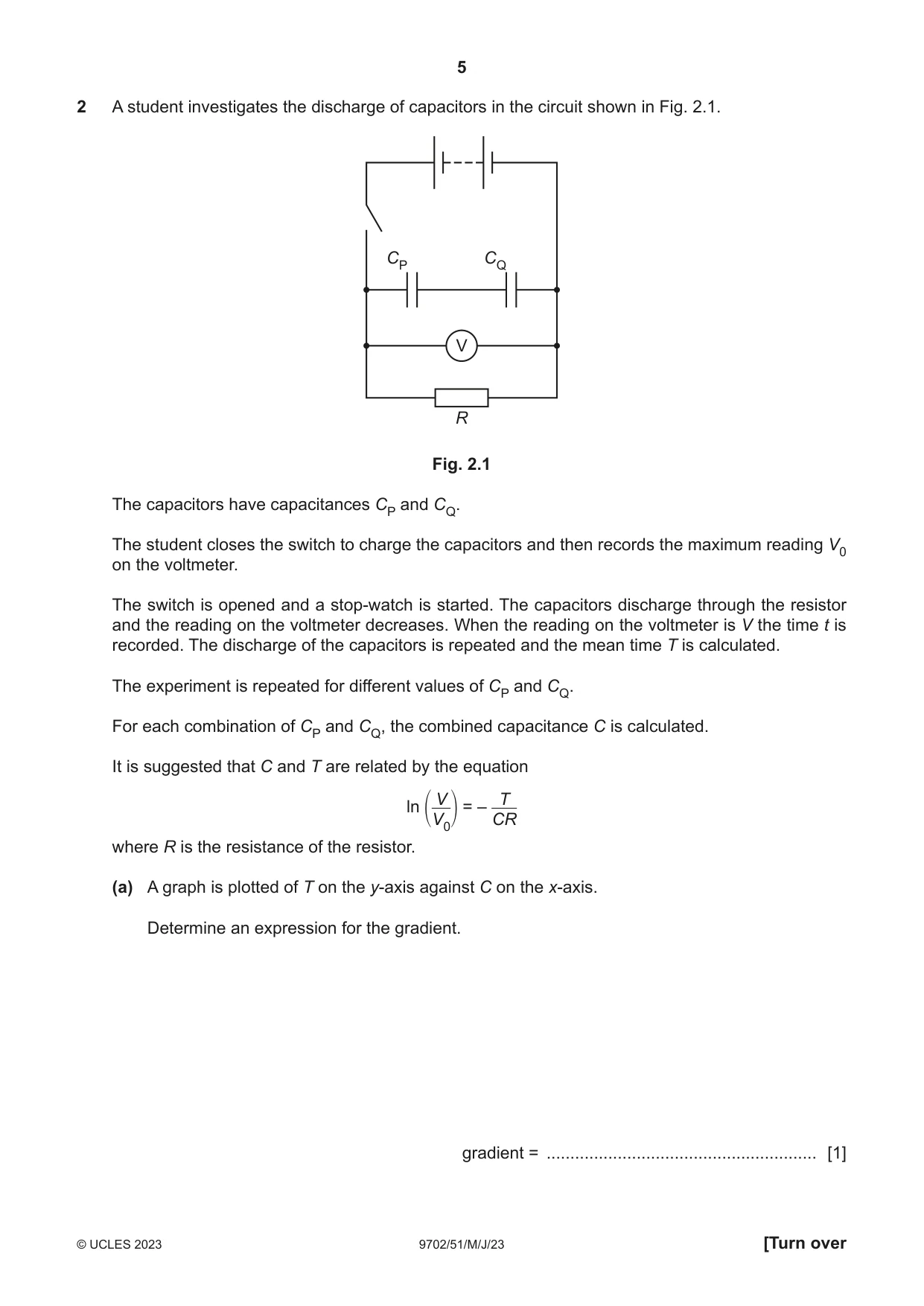
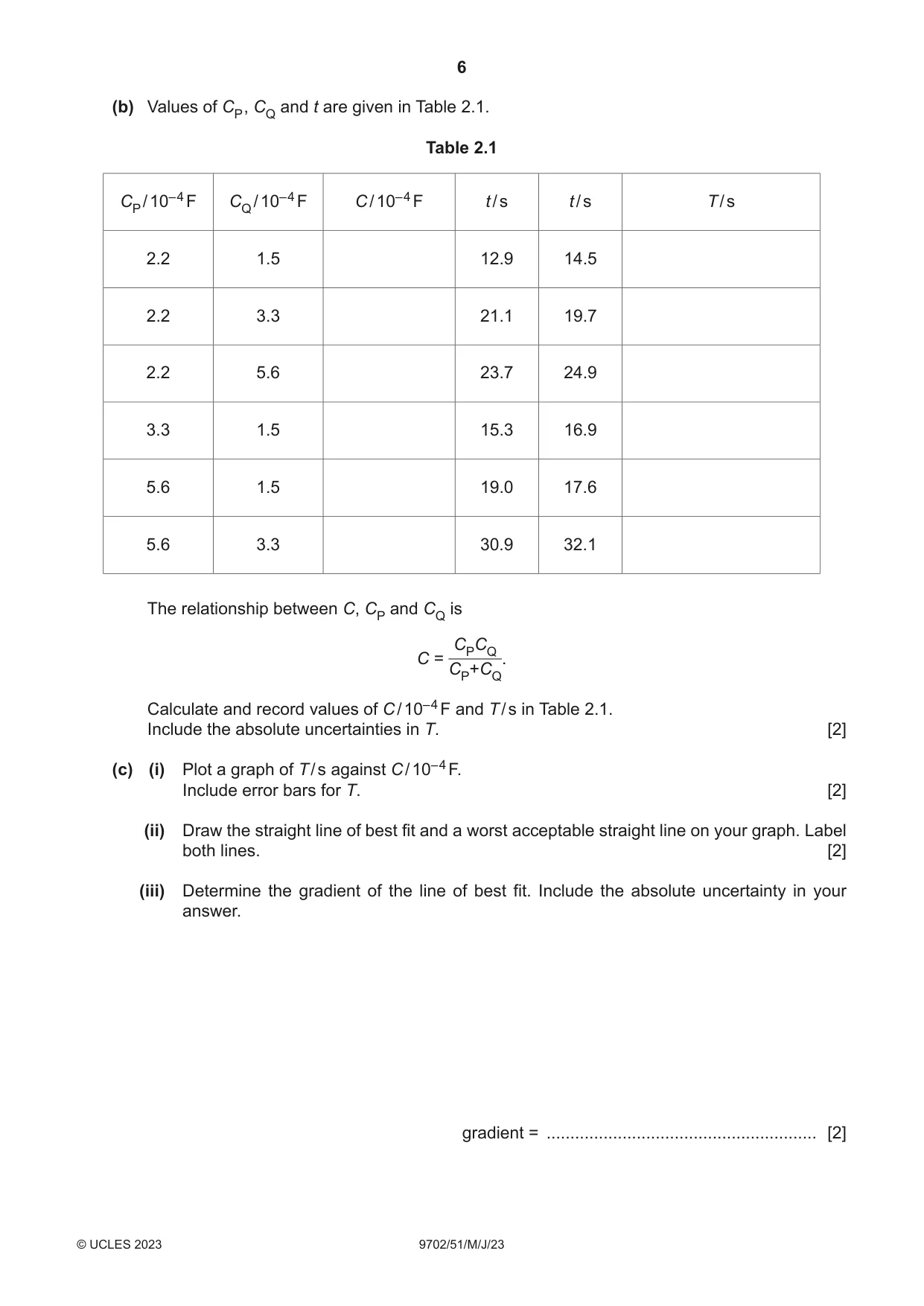
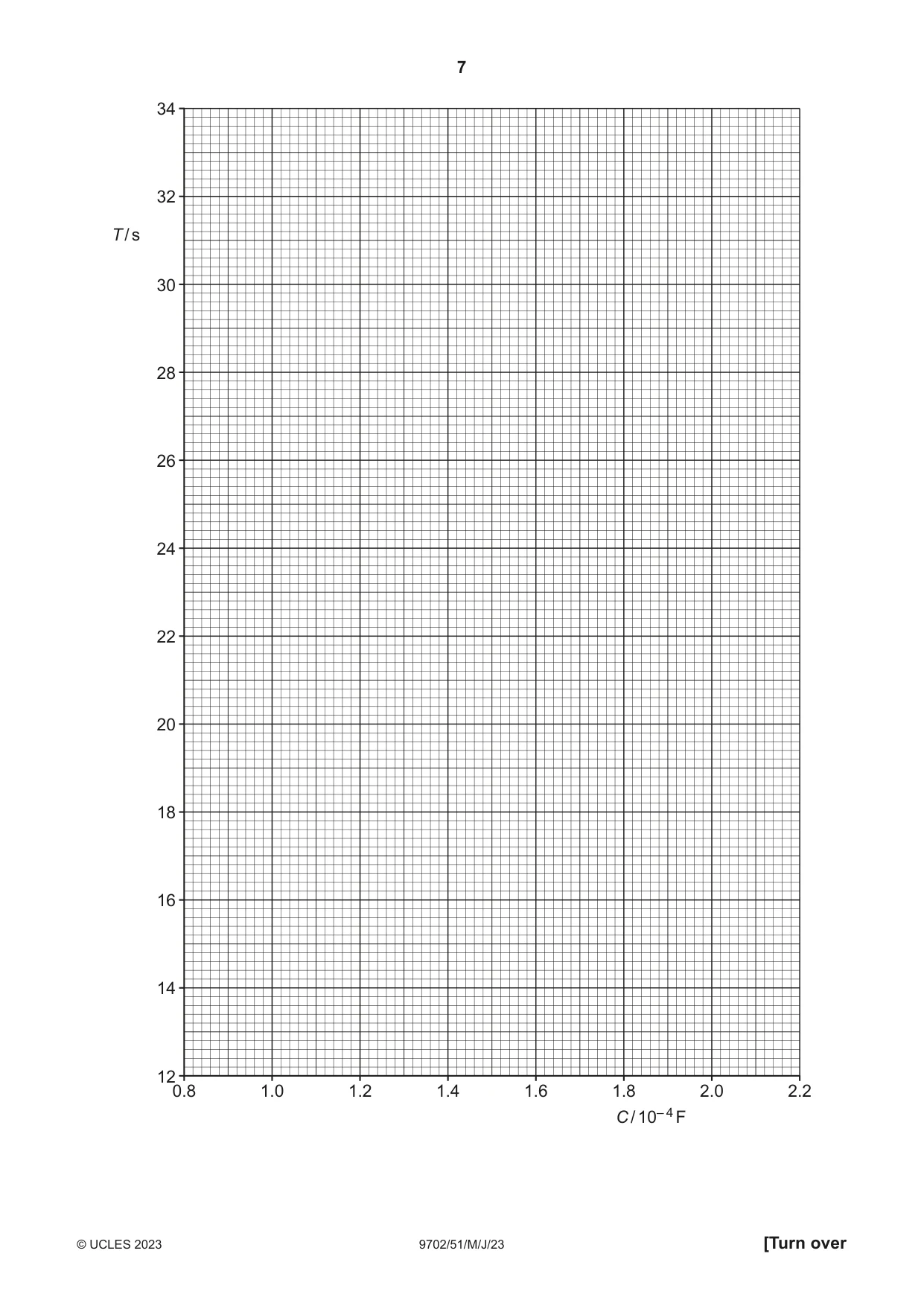
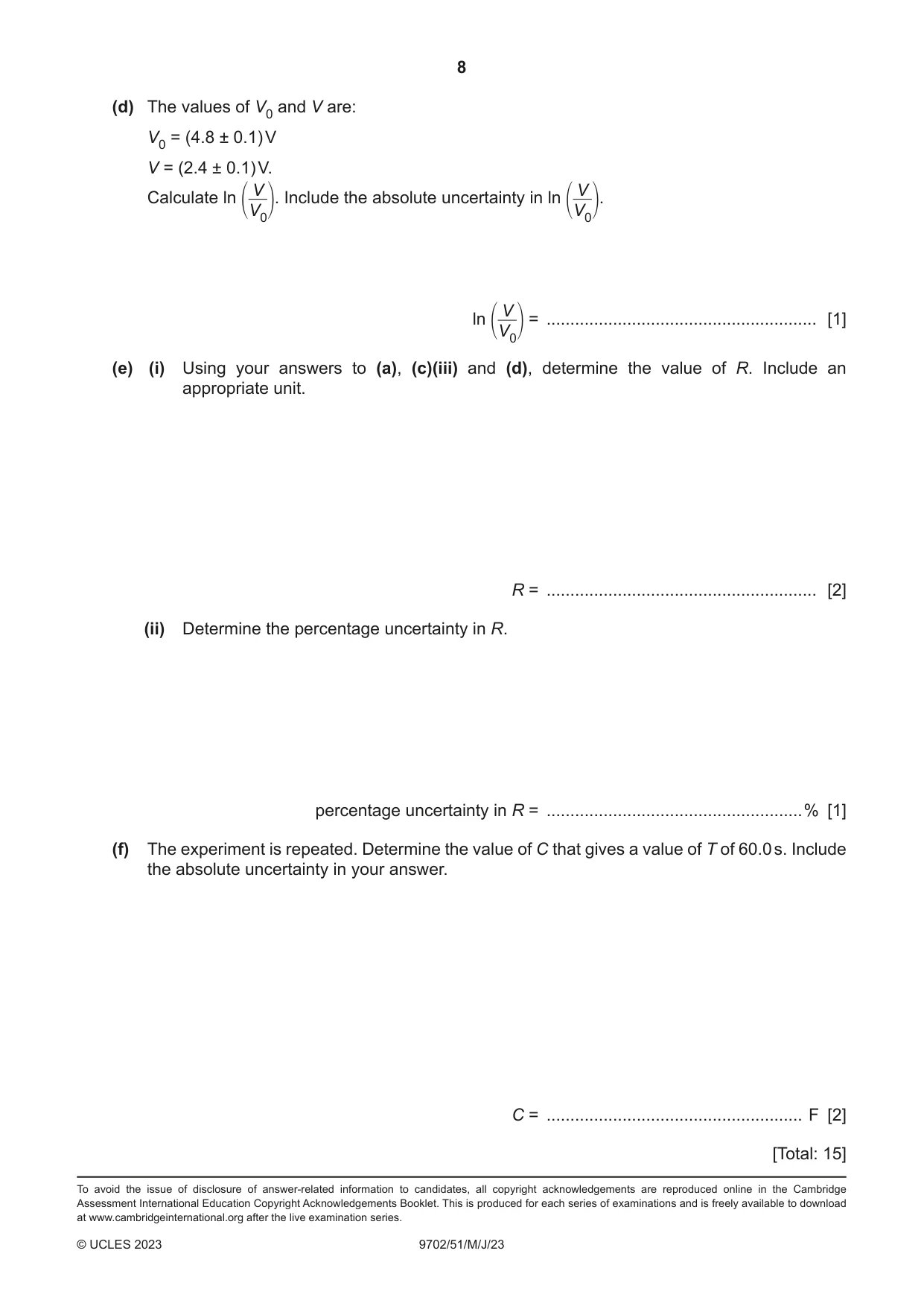
2 A student investigates the discharge of capacitors in the circuit shown in Fig. 2.1. CP CQ V R Fig. 2.1 The capacitors have capacitances CP and CQ. The student closes the switch to charge the capacitors and then records the maximum reading V0 on the voltmeter. The switch is opened and a stop‑watch is started. The capacitors discharge through the resistor and the reading on the voltmeter decreases. When the reading on the voltmeter is V the time t is recorded. The discharge of the capacitors is repeated and the mean time T is calculated. The experiment is repeated for different values of CP and CQ. For each combination of CP and CQ, the combined capacitance C is calculated. It is suggested that C and T are related by the equation V T ln = – V0 CR where R is the resistance of the resistor. (a) A graph is plotted of T on the y‑axis against C on the x‑axis. Determine an expression for the gradient. gradient = ......................................................... [1] (b) Values of CP , CQ and t are given in Table 2.1. Table 2.1 CP / 10– 4 F CQ / 10– 4 F C / 10– 4 F t / s t / s T / s 2.2 1.5 12.9 14.5 2.2 3.3 21.1 19.7 2.2 5.6 23.7 24.9 3.3 1.5 15.3 16.9 5.6 1.5 19.0 17.6 5.6 3.3 30.9 32.1 The relationship between C, CP and CQ is CPCQ C = . CP+CQ Calculate and record values of C / 10– 4 F and T / s in Table 2.1. Include the absolute uncertainties in T. [2] (c) (i) Plot a graph of T / s against C / 10– 4 F. Include error bars for T. [2] (ii) Draw the straight line of best fit and a worst acceptable straight line on your graph. Label both lines. [2] (iii) Determine the gradient of the line of best fit. Include the absolute uncertainty in your answer. gradient = ......................................................... [2]
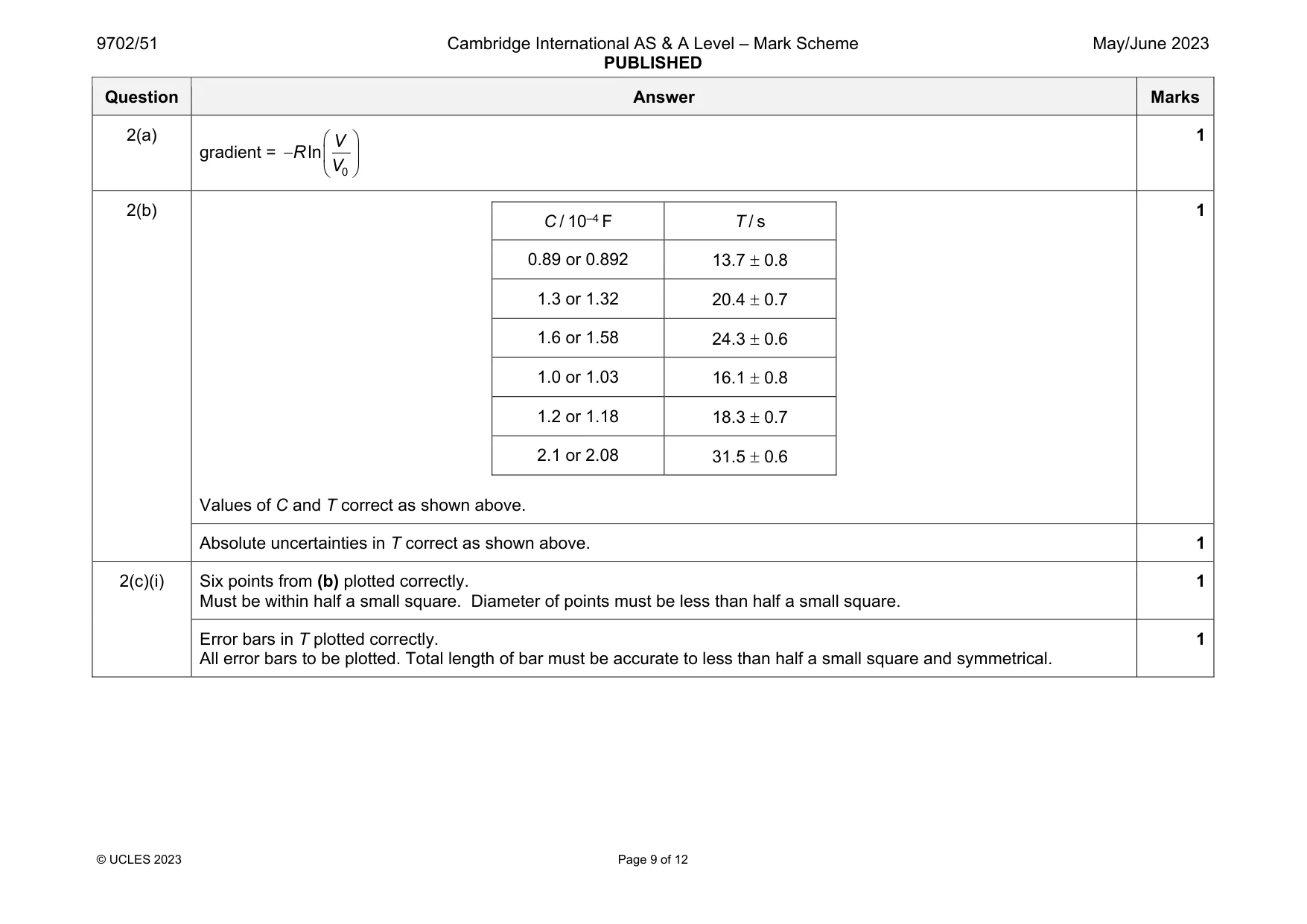
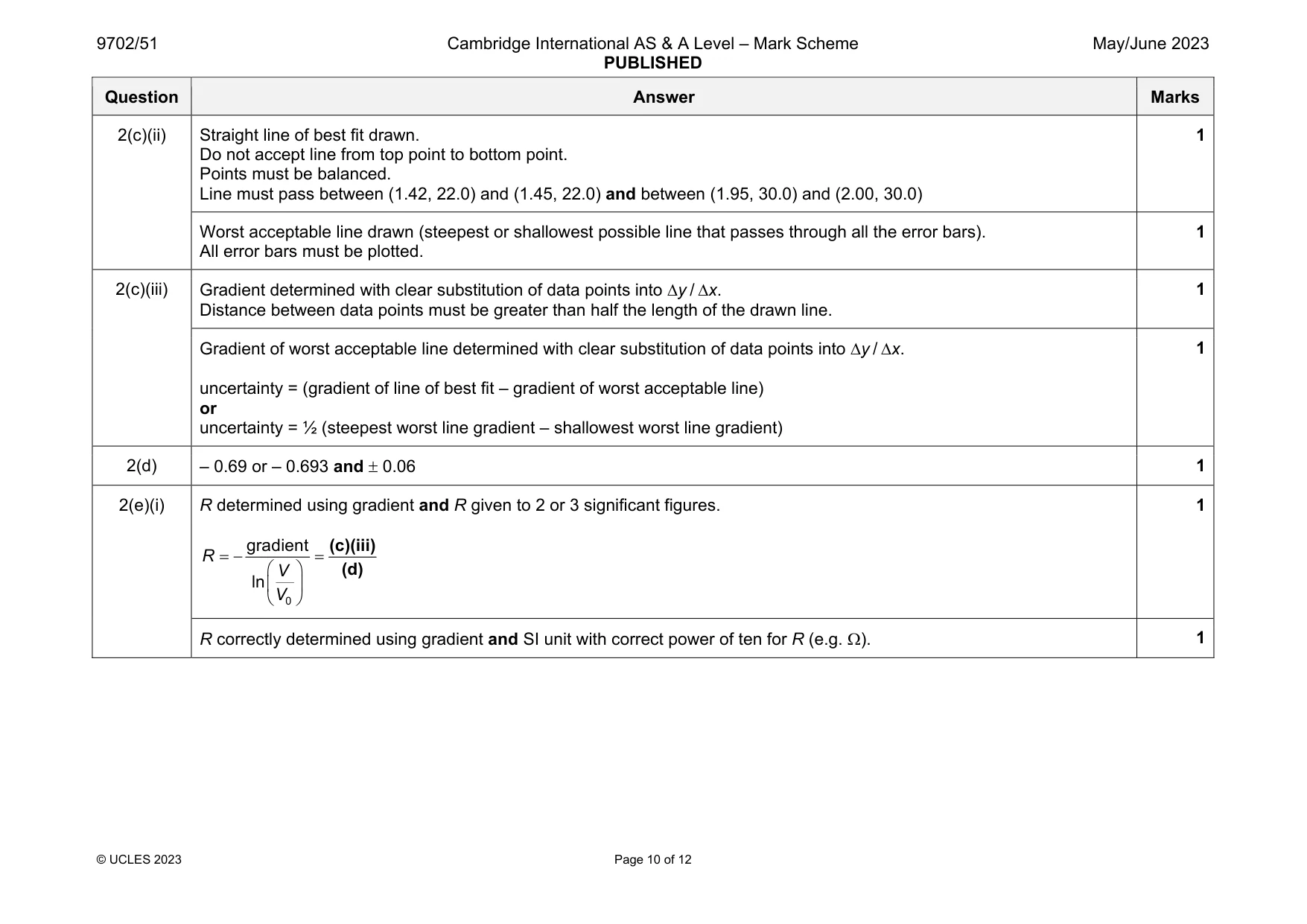
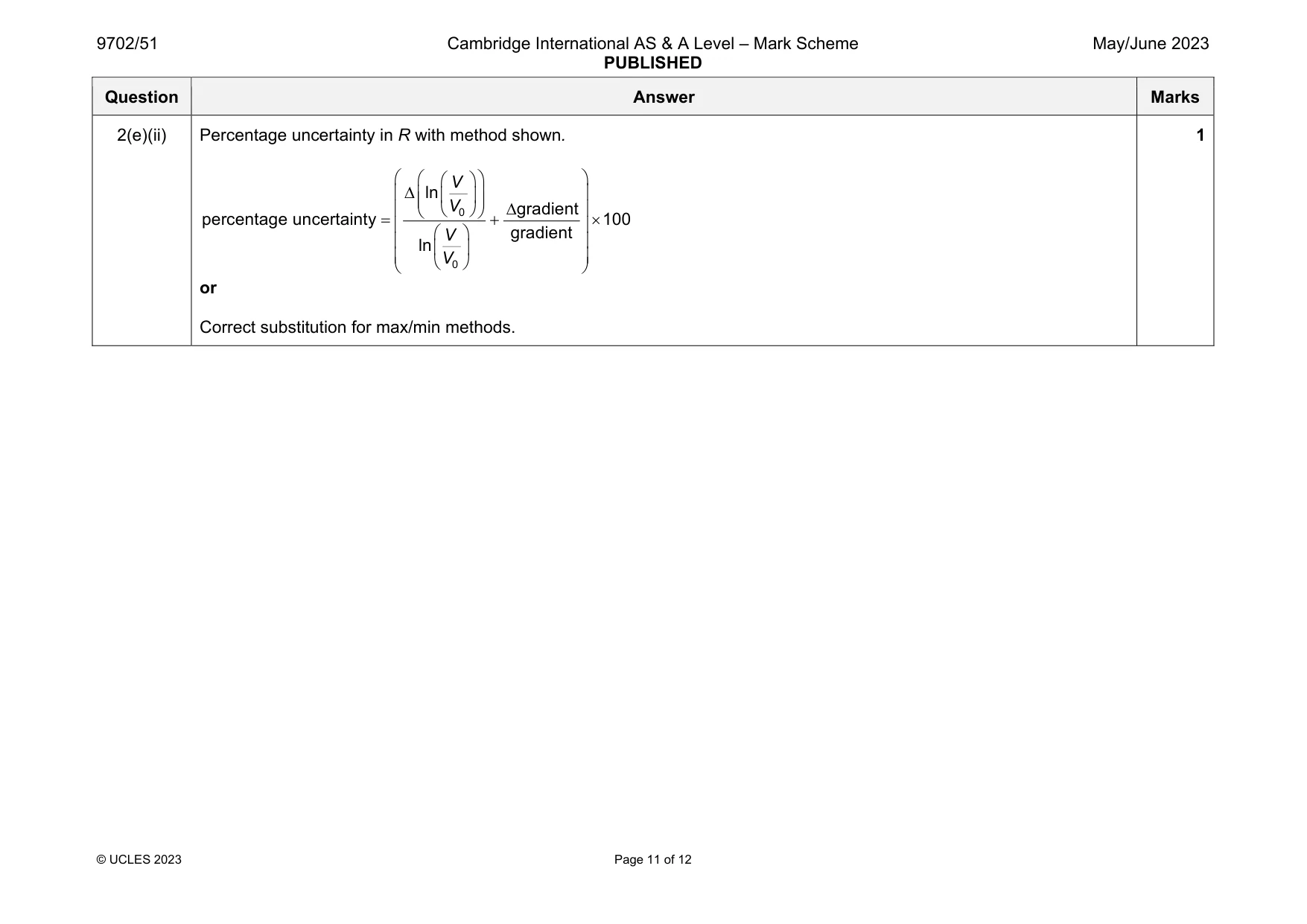
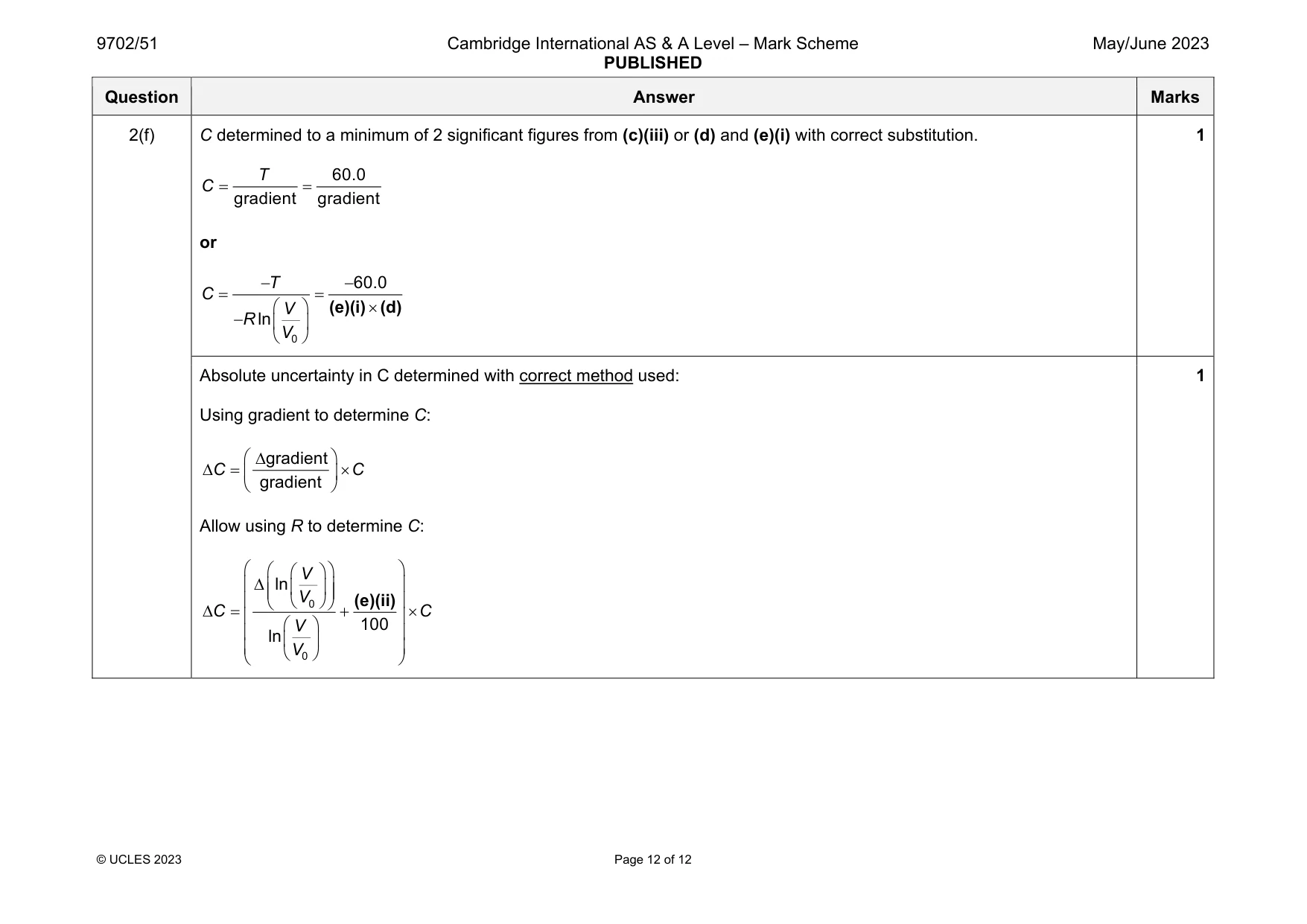
Mark scheme: 2(a) gradient = 0 ln V R V 1 2(b) C / 10–4 F T / s 0.89 or 0.892 13.7 0.8 1.3 or 1.32 20.4 0.7 1.6 or 1.58 24.3 0.6 1.0 or 1.03 16.1 0.8 1.2 or 1.18 18.3 0.7 2.1 or 2.08 31.5 0.6 Values of C and T correct as shown above. 1 Absolute uncertainties in T correct as shown above. 1 2(c)(i) Six points from (b) plotted correctly. Must be within half a small square. Diameter of points must be less than half a small square. 1 Error bars in T plotted correctly. All error bars to be plotted. Total length of bar must be accurate to less than half a small square and symmetrical. 1 Question Answer Marks 2(c)(ii) Straight line of best fit drawn. Do not accept line from top point to bottom point. Points must be balanced. Line must pass between (1.42, 22.0) and (1.45, 22.0) and between (1.95, 30.0) and (2.00, 30.0) 1 Worst acceptable line drawn (steepest or shallowest possible line that passes through all the error bars). All error bars must be plotted. 1 2(c)(iii) Gradient determined with clear substitution of data points into y / x. Distance between data points must be greater than half the length of the drawn line. 1 Gradient of worst acceptable line determined with clear substitution of data points into y / x. uncertainty = (gradient of line of best fit – gradient of worst acceptable line) or uncertainty = ½ (steepest worst line gradient – shallowest worst line gradient) 1 2(d) – 0.69 or – 0.693 and 0.06 1 2(e)(i) R determined using gradient and R given to 2 or 3 significant figures. 0 gradient ln R V V (c)(iii) (d) 1 R correctly determined using gradient and SI unit with correct power of ten for R (e.g. ). 1 Question Answer Marks 2(e)(ii) Percentage uncertainty in R with method shown. 0 0 ln gradient percentage uncertainty 100 gradient ln V V V V or Correct substitution for max/min methods. 1 Question Answer Marks 2(f) C determined to a minimum of 2 significant figures from (c)(iii) or (d) and (e)(i) with correct substitution. 60.0 gradient gradient T C or 0 60.0 ln T C V R V (e)(i) (d) 1 Absolute uncertainty in C determined with correct method used: Using gradient to determine C: gradient gradient C C Allow using R to determine C: 0 0 ln 100 ln V V C C V V (e)(ii) 1
What was in this paper
The subtopics covered by these 2 questions, and how many questions each got. Open one in a new tab to see every Cambridge question on it.
What you needed in this session
Cambridge’s own grade thresholds for 2023 May/June, Paper 5 · Variant 1. A higher threshold means an easier paper — the bar moves with how the cohort did.