Cambridge A Level Design and Textiles 9631 — 2018 Oct/Nov Paper 3 · Variant 0
9631/30/O/N/18 · 5 questions · 125 marks · ≈141 min
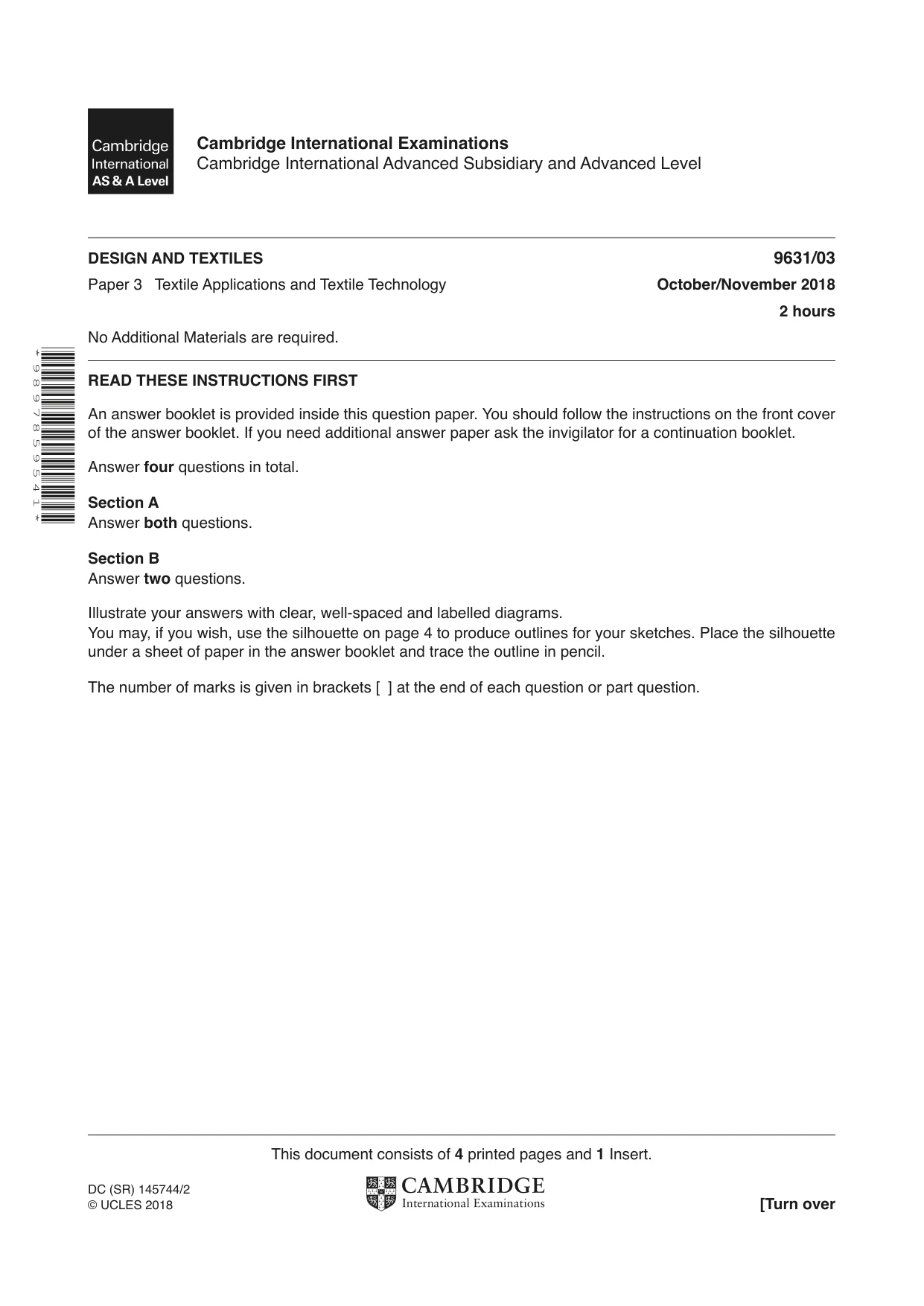
The question paper and its mark scheme, free to read here and free to download. This is Cambridge’s own paper, exactly as it was sat.
Question paper4 pages
Mark scheme
No mark scheme is in the library for this paper.
Questions as text
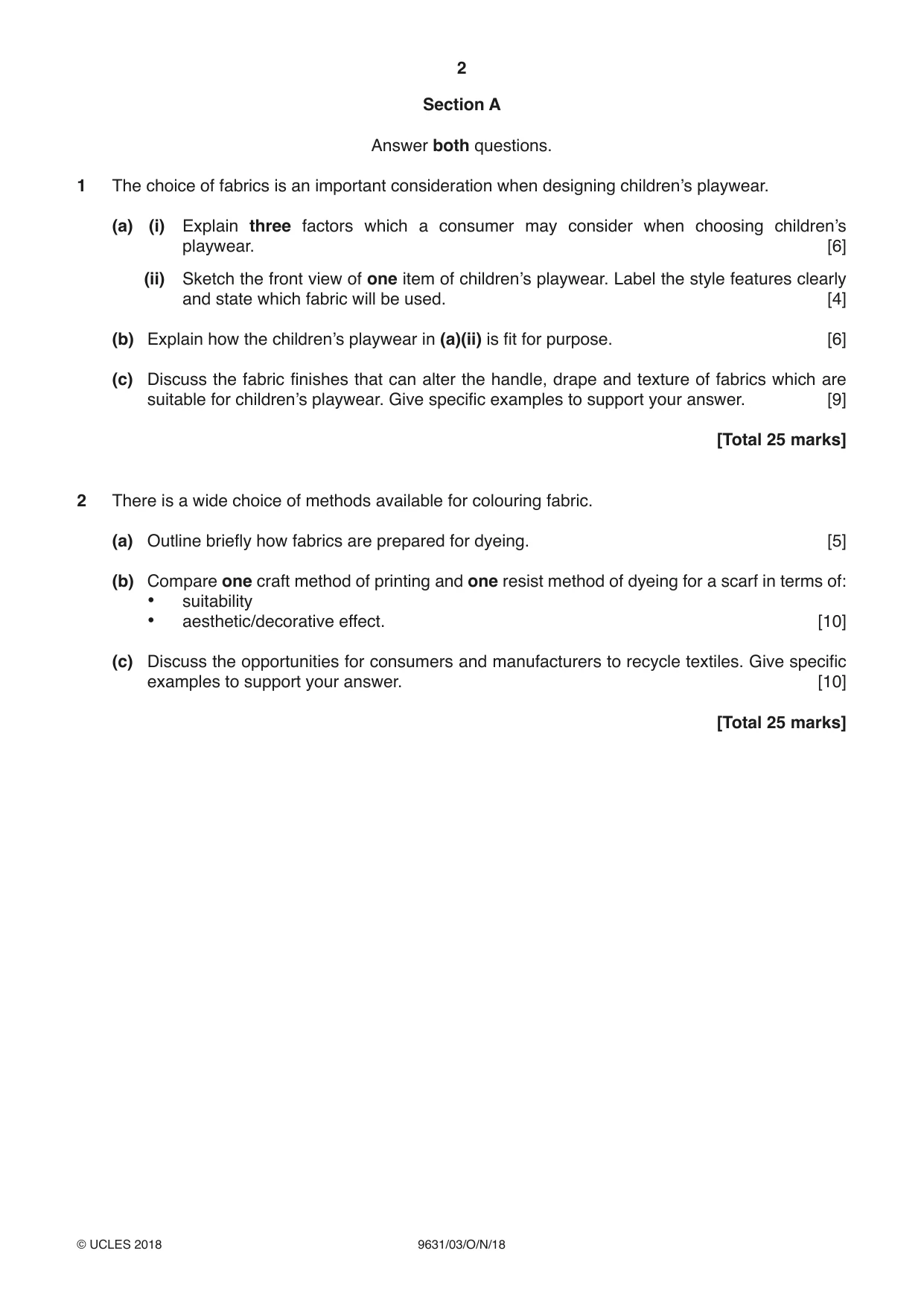
Q1 · The choice of fabrics is an important consideration when designing children’s playwear
1 The choice of fabrics is an important consideration when designing children’s playwear. (a) (i) Explain three factors which a consumer may consider when choosing children’s playwear. [6] (ii) Sketch the front view of one item of children’s playwear. Label the style features clearly and state which fabric will be used. [4] (b) Explain how the children’s playwear in (a)(ii) is fit for purpose. [6] (c) Discuss the fabric finishes that can alter the handle, drape and texture of fabrics which are suitable for children’s playwear. Give specific examples to support your answer. [9] [Total 25 marks]
Q2 · There is a wide choice of methods available for colouring fabric
2 There is a wide choice of methods available for colouring fabric. (a) Outline briefly how fabrics are prepared for dyeing. [5] (b) Compare one craft method of printing and one resist method of dyeing for a scarf in terms of: • suitability • aesthetic/decorative effect. [10] (c) Discuss the opportunities for consumers and manufacturers to recycle textiles. Give specific examples to support your answer. [10] [Total 25 marks]
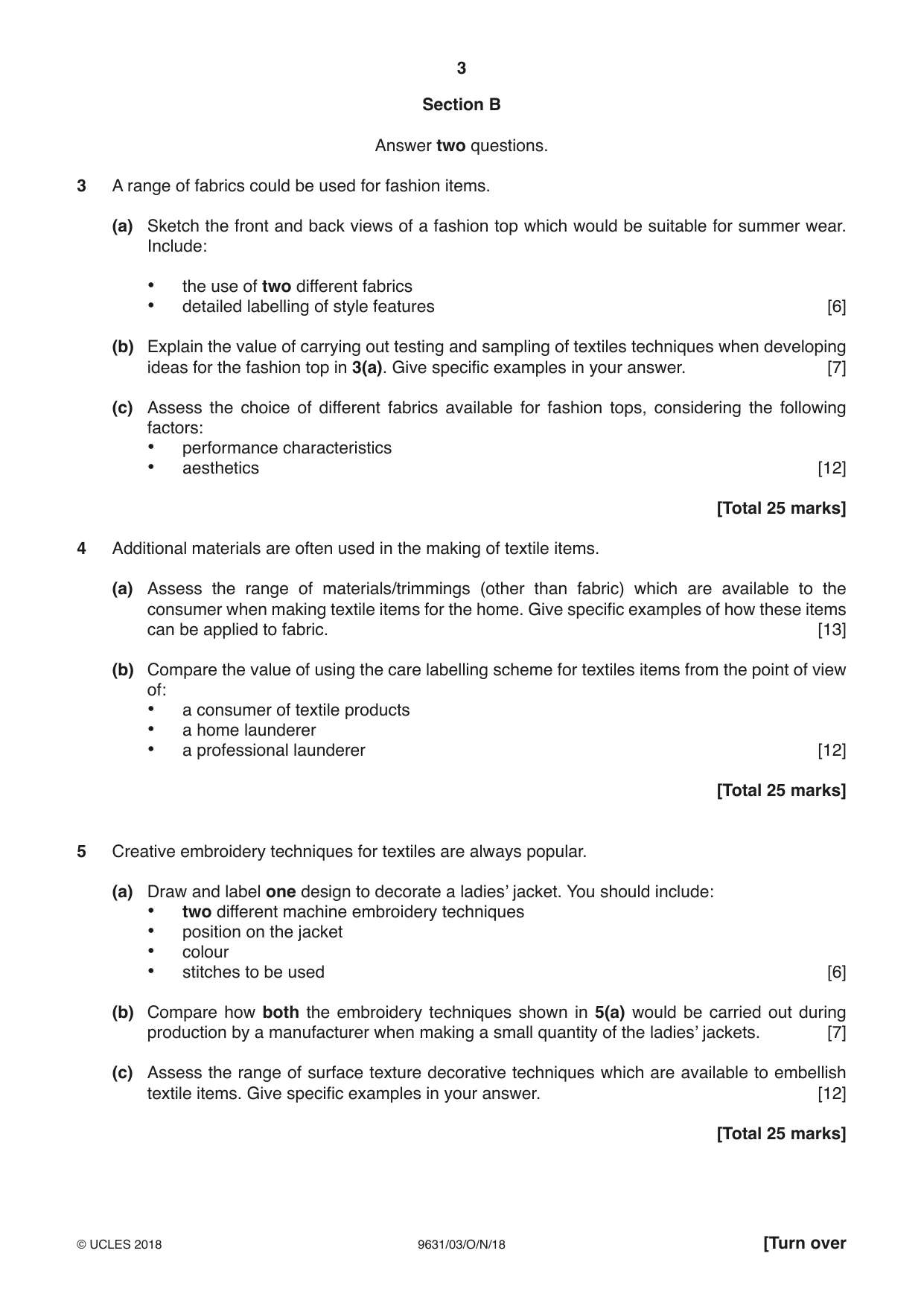
Q3 · A range of fabrics could be used for fashion items
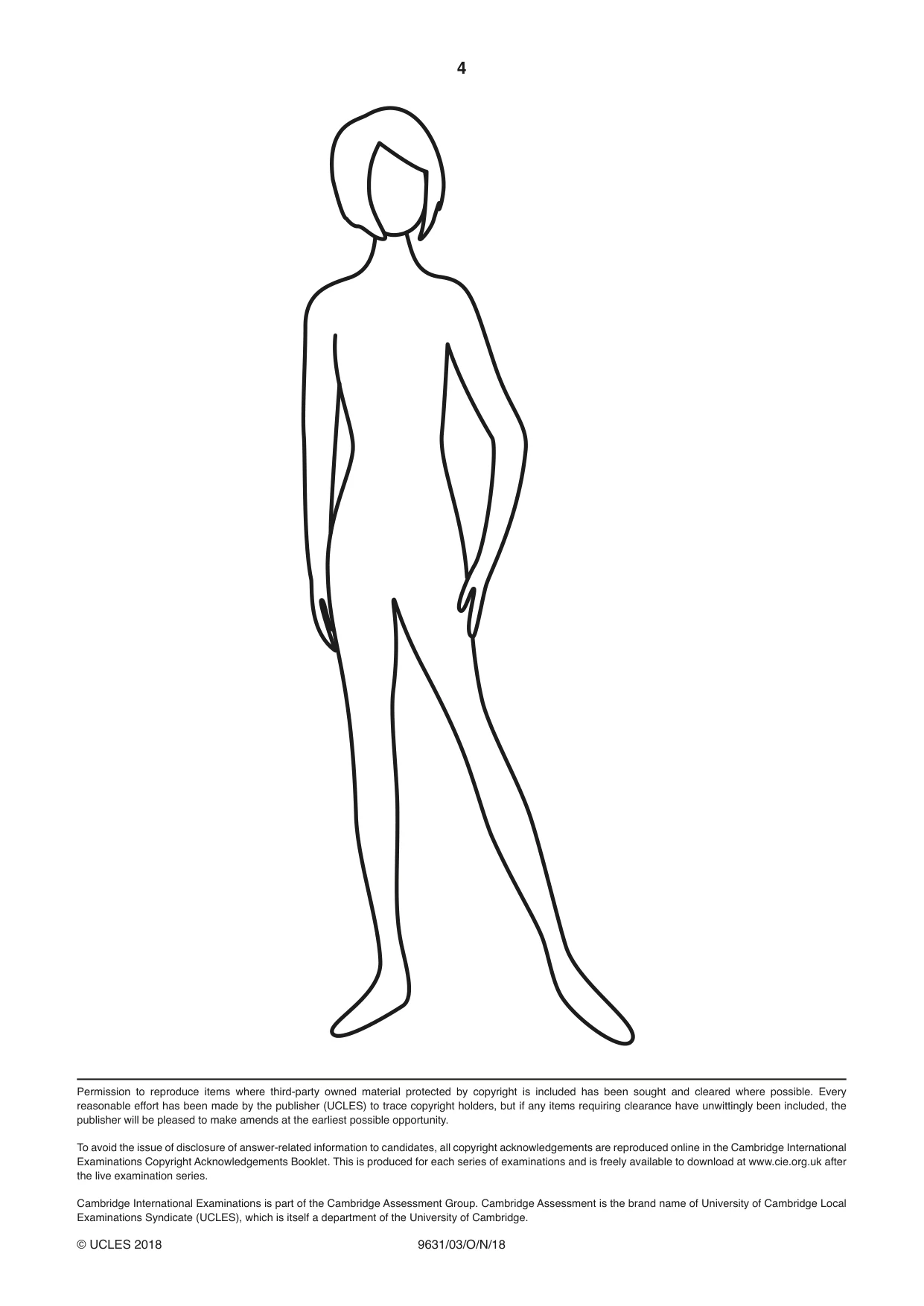
3 A range of fabrics could be used for fashion items. (a) Sketch the front and back views of a fashion top which would be suitable for summer wear. Include: • the use of two different fabrics • detailed labelling of style features [6] (b) Explain the value of carrying out testing and sampling of textiles techniques when developing ideas for the fashion top in 3(a). Give specific examples in your answer. [7] (c) Assess the choice of different fabrics available for fashion tops, considering the following factors: • performance characteristics • aesthetics [12] [Total 25 marks]
Q4 · Additional materials are often used in the making of textile items
4 Additional materials are often used in the making of textile items. (a) Assess the range of materials/trimmings (other than fabric) which are available to the consumer when making textile items for the home. Give specific examples of how these items can be applied to fabric. [13] (b) Compare the value of using the care labelling scheme for textiles items from the point of view of: • a consumer of textile products • a home launderer • a professional launderer [12] [Total 25 marks]
Q5 · Creative embroidery techniques for textiles are always popular
5 Creative embroidery techniques for textiles are always popular. (a) Draw and label one design to decorate a ladies’ jacket. You should include: • two different machine embroidery techniques • position on the jacket • colour • stitches to be used [6] (b) Compare how both the embroidery techniques shown in 5(a) would be carried out during production by a manufacturer when making a small quantity of the ladies’ jackets. [7] (c) Assess the range of surface texture decorative techniques which are available to embellish textile items. Give specific examples in your answer. [12] [Total 25 marks]